


Abstract
Women have unique experiences with mental health challenges that require relevant strategies and interventions that effectively support their mental health. Empowerment interventions that vary in nature and format have the potential to play a key role in supporting women’s mental health. The purpose of this scoping review is to outline empowerment interventions targeting improvement in the mental health of women living in Canada.A search was undertaken using major databases including Medline, Cumulative Index for Nursing and Allied Health Literature (CINAHL), PsycINFO, and the Cochrane Library for studies published between 2013 and 2023. A total of 243 articles were identified, from which 12 were ultimately included in this review. All included studies were conducted in Canada but were diverse in design, setting, and sample size. A total of four types of interventions were identified including mental health and emotional awareness, reading, peer support, and skill building and engagement. The findings of the review inform key insights for mental health care and service providers to focus on sustainable outcomes for women’s mental health. The findings also guide the need for a systematic review to appraise the existing empowerment interventions for women’s mental health outcomes.
1. Introduction
1.1. Background
Globally, mental health disorders remain among the leading causes of disease burden [1]. Men and women experience and report mental health conditions differently [2]. Various mental health disorders—such as anxiety, depression, and eating disorders are more common among women than men [2]. During the COVID-19 pandemic, women in Canada were among the most vulnerable to be diagnosed with mood disorders and anxiety [3]. Beyond this, there are notable differences in the way women access help for their mental health concerns; for example, compared to men, women were less likely to discuss challenges related to the use of alcohol with their healthcare providers [4]. Women also experience unique mental health challenges associated with hormonal changes, the menstrual cycle, pregnancy, postpartum, and menopause [2].
Further, women may face a variety of barriers when accessing mental health resources. For example, socioeconomic elements such as the cost of resources in contrast to available financial means can hinder access to essential mental services [4]. Additionally, the societal stigma that still surrounds mental illness can pose another barrier to accessing mental health services [4]. Beyond stigma, some geographic areas may suffer from unavailability of appropriate mental health resources, so women may not even have access to essential services [4]. Also, women may experience competing demands on their time—such as taking care of children, transportation, and securing leave from work—that make it difficult to access mental health support and care [4]. Therefore, it is critical to consider strategies to support women’s mental health.
There have been several biopsychosocial interventions that have been developed to improve women’s health. One way to better support the mental health of women is through empowerment interventions. Empowerment has been defined as an active and collaborative intervention that assists people toward enhancing both autonomy and control in their lives [5]. Empowerment initiatives are where people in a social group acquire the skills that are essential for being in control of their own lives and can engage in supporting the empowerment of others within their social group [6]. Thus, the positive impacts of empowerment can be seen among individuals and through their community [6]. Women empowerment initiatives may take a variety of forms, ranging from in-house support to online mobile applications to drop-in classes at local community centres and have been associated with a positive impact for not only women, but their children as well [7,8]. Facilitators of empowerment initiatives can be diverse, including, but not limited to, peers, counsellors, social workers, and health care providers. Specifically, empowerment initiatives targeting women have the potential to significantly improve their mental well-being [9]. Therefore, the study of empowerment initiatives that target women and their children is of interest as it has the potential to improve their well-being.
1.2. Objective and Research Question
Given the notable mental health challenges and barriers women face when accessing mental health support services and the potential of women empowerment initiatives, this scoping review aims to outline various empowerment interventions targeting to improve the mental health of women living in Canada. Thus, the research question this review aims to answer is what is known from the existing literature about empowerment interventions and their association with women’s mental health in Canada.
2. Results
2.1. Study Characteristics
Of the 12 included studies, 5 studies were randomized control trials [10,11,12,13,14], 4 were non-randomized control trials [15,16,17,18], 1 was a single-group longitudinal study [19], 1 a prospective cohort study [20], and 1 a qualitative study [21]. The sample size of the included studies ranged from 13 women to 725 women. The studies took place in the Canadian provinces of Alberta [14,18,19,20,21], Manitoba [14,18], New Brunswick [15], Nova Scotia [13,16], and Ontario [10,11,12,17]. These articles included mothers with a variety of lived experiences, including mothers who had mental health challenges, adolescent mothers, and refugee mothers.
2.2. Interventions
We identified four types of interventions that aimed to empower women to their better mental health outcomes. Table 1 summarizes the review findings.

Table 1.
Scoping review findings.
2.3. Mental Health and Emotional Awareness Interventions
Four studies evaluated the effectiveness of mental health awareness interventions. Dol and colleagues [16] conducted a non-randomized, pre–post-intervention study evaluating a six-week text message program via the TextIt platform and Twilio gateway service for 88 postpartum mothers in Nova Scotia. These messages included support for newborn care and maternal mental health; the messages covered a variety of topics ranging from anxiety to safe sleep. This information helped to empower mothers by directly reaching out to them. This program was shown to reduce maternal anxiety and increase self-efficacy. Further, a randomized control trial (RCT) of the same program conducted in Nova Scotia found that it improved the psychosocial well-being and self-efficacy of 171 mothers, while also reducing postpartum anxiety [13].
Another study under this theme reported the use of mobile app [14]. This RCT of the Building Emotional Awareness and Mental Health (BEAM) app-based program was conducted in Alberta and Manitoba with 65 mothers. This program was delivered through both a mobile app and additional Zoom sessions over the course of 10 weeks. The program consisted of weekly psychoeducational videos, moderated online forum activities, and weekly group sessions on Zoom to review the content of the program and foster connections between participants. Mothers who participated in this program showed a reduction in both anxiety and sleep symptoms. Further, the same program was tested for 46 mothers of toddlers in Alberta and Manitoba [18]. Participation in the program was associated with statistically significant reductions in maternal depression, anxiety, and parenting stress. Additionally, in children, there was a reduction in internalizing symptoms.
2.4. Reading Intervention
Kumar et al. [10] conducted an RCT assessing a Reach Out and Read Program (ROaR), a clinic-based reading intervention for 28 teen mothers and their children in Toronto. The intervention consisted of three components: giving the child a personal book, explaining the benefits of reading aloud/discussing techniques, and providing a literacy-rich environment with guidance and counselling with mothers about reading techniques. This intervention showed significant reductions in maternal depression, compared to controls. Additionally, in the intervention group, reading was shown more likely to be the child’s favourite activity.
2.5. Peer Support Intervention
We found a peer-support intervention that assessed the impact of a peer-support telephone-based intervention in New Brunswick [15]. The intervention entailed support telephone calls from peers who had recovered from postpartum depression. The calls allowed mothers to receive affirmational, emotional, and informational support. This intervention showed that mean levels of depression among participants had declined significantly.
2.6. Skill-Building and Engagement Interventions
Six studies included in this review reported interventions that focused on the skill building of mothers through various programs. Graham-Bermann [11] and colleagues conducted an RCT with 120 mothers of preschool-aged children who experienced intimate partner violence living in Ontario. This study tested a 10-session “Moms’ Empowerment Program” intervention focusing on building a sense of safety, trust, social connections, and support and strengthening protective skills such as parenting, seeking support, coping, and problem solving. This platform allowed women to receive support from other women in the group and also the therapist, who gave them feedback and additional support. Attending at least seven sessions was associated with a reduction in post-traumatic stress disorder (PTSD) symptoms. Further, participation in the program led women to a more empowered position and improved their mental health outcomes.
Another study [17] under this category evaluated the impact of a 12-week postpartum group intervention on maternal mental health in Ontario for 13 mother–infant dyads. The intervention included mindfulness training, psychotherapy and education, dyadic infant-led play, and group discussion. Mothers reported improvements in their anxiety and depressive symptoms, feelings of social isolation, and relationships with their infants.
We found that another skill-building intervention evaluated the experiences of women in the Centering Pregnancy program against women who received standard care [20]. During the first part of each session, women received an individual physical assessment from the physician in the group space and also performed self-care activities, such as measuring and recording their own blood pressure and weight. This was followed by a discussion that focused on general topics related to pregnancy, childbirth, or parenting. Women also had opportunities to interact socially with each other during the sessions. Women who participated in the Centering Pregnancy program were more likely to report better mental health and less likely to consume alcohol prior to pregnancy.
Two studies assessed the impact of parenting programs on women’s mental health [19,21]. Zivot and team [21] assessed the impact of the Multicultural Home Instruction for Parents of Preschool Youngsters (HIPPY) program for 28 refugee mothers residing in Calgary. The HIPPY program is an evidence-based home visiting program that aims to empower newcomer parents—particularly mothers—to support readiness for school and enhance parental efficacy. After participation in this program, mothers felt the activities and material provided by the HIPPY program helped prevent them from becoming burned out and mothers were better able to cope with additional responsibilities related to childcare. A similar program called the Welcome to Parenthood Program (W2P) in Alberta tested parental education, mentoring, and an engagement tool to improve women’s mental health [19]. This intervention showed a significant improvement in mothers’ depressive symptoms.
We also included a study under this theme that evaluated the impact of a one-day online workshop in Ontario for 403 women [12]. This interactive workshop involved didactic teaching, group activities, and role-playing focusing on postpartum depression literacy, cognitive and behavioural skills, goal setting, and action planning. It was facilitated by a registered psychotherapist, clinical psychology graduate student, or a psychiatrist. The study revealed improvements in anxiety, postpartum depressive symptoms, and social support.
3. Materials and Methods
A scoping review of the scientific literature was undertaken on empowerment interventions targeting women living in Canada using Arksey and O’Malley’s [22] five-stage scoping review framework. This five-stage framework was used in designing the methodology of this review. These stages include (i) identifying the research question, (ii) identifying relevant studies, (iii) selection of literature, (iv) data extraction, and (v) collating, summarizing, and reporting the results. This framework was chosen in order to ensure that our scoping review followed systematic steps and captured all possible information that was relevant to our review question. We also followed the guidelines of the Preferred Reporting Items for Systematic Reviews and Meta-Analyses extension for Scoping Reviews (PRISMA-ScR). Through following this framework and guidelines, we ensured that our review was conducted in a methodologically rigorous manner. We have discussed key aspects of each stage of the Arksey and O’Malley [22] framework in the rest of the methodology section.
3.1. Stage 1: Identify the Research Question
The first step of the Arksey and O’Malley [22] framework is to identify the research question. Our scoping review aimed to address the following research question:
What is known from existing literature about empowerment interventions and their association with women’s mental health in Canada?
3.2. Stage 2: Identifying Relevant Studies
Our search strategy was developed with the assistance of a subject-expert librarian. Table 2 showcases our search terms. We searched the databases Medline, Cumulative Index for Nursing and Allied Health Literature (CINAHL), PsycINFO, and the Cochrane Library. We selected these four subject-specific databases to optimize the diversity of data included in our review.
Table 2.
Search Terms Used in the Literature Search.
3.3. Stage 3: Selection of Literature: Inclusion and Exclusion Criteria
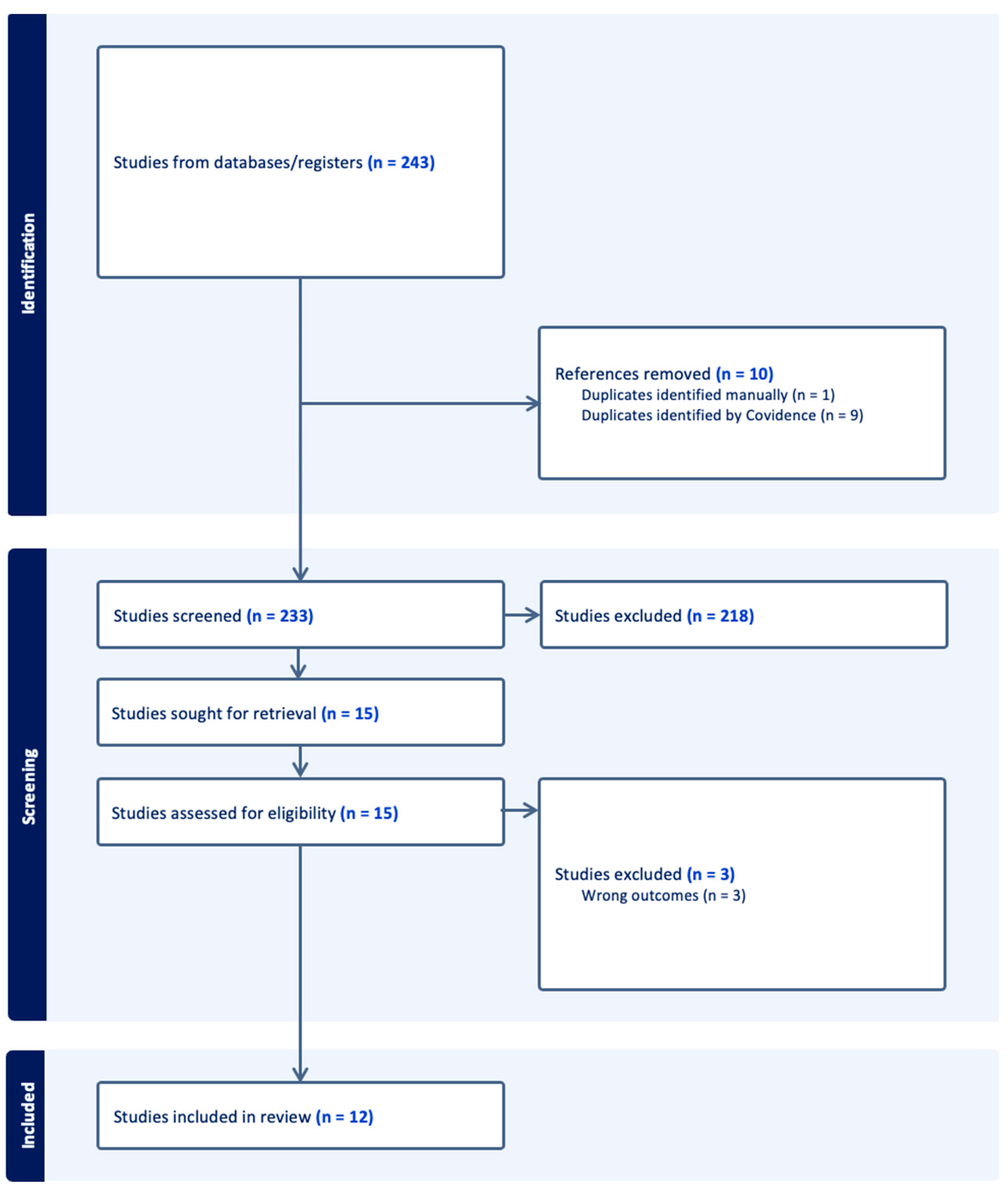
A total of 243 papers identified by our search strategy were imported into the review software Covidence for screening. Of this number, 10 duplicates were removed, leaving 233 papers to be screened. Two independent reviewers conducted a title and abstract screening of the 233 papers based on the inclusion criteria outlined below.
3.3.1. Types and Scope of Studies
This review included quantitative, qualitative, and mixed-methods studies from all Canadian settings that discussed women empowerment interventions, such as those that reported measures to enhance or promote intrinsic power to move on, published in the last 10 years (2013–2023) highlighting mental health outcomes. We sought to include studies that discussed skill building, and psychological, social, and economic empowerment interventions. Also, we included all forms of interventions, including, but not limited to, face-to-face, online, hybrid, telephonic, individual, and group interventions.
3.3.2. Key Concepts
This review focused on two key concepts: (1) empowerment interventions for women in the Canadian context and; (2) mental health outcomes (such as resilience, self-efficacy, social support, quality of life, self-esteem, coping, positivity and well-being) and changes to mental health issues (such as depression and anxiety).
3.3.3. Participants
We included studies that focused on women of any age living in Canada and experiencing disadvantaged or vulnerable social circumstances, and with or without mental illness.
Following these criteria and after completion of the title and abstract screening, 15 peer-reviewed full-text papers were assessed, and 3 more studies were excluded because the papers reported irrelevant outcomes. To capture studies related to the Canadian context and recent data, only studies focused on women in Canada published during or after 2013 were included. Hence, we excluded all studies published before 2013. We excluded papers that did not have a translated English version available, and articles that were not peer-reviewed. A PRISMA flow chart is provided in Figure 1. showcasing these steps.
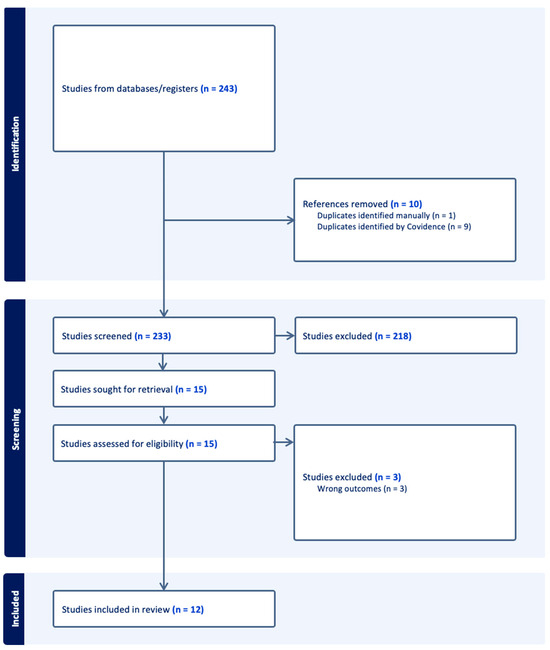
Figure 1.
PRISMA Flow Diagram.
3.4. Stage 4: Data Extraction
A data documenting form was co-developed by the review team. We recorded authors, title, journal, publication year, country, study objective, study design, context, participant characteristics (age, sample size), and findings on the extraction tool, which was uploaded onto Covidence [23]. Two reviewers independently extracted data for each study. A third independent reviewer assessed the articles if there was any conflict or disagreement. Inherent to the design of a scoping review, we did not conduct a critical appraisal of individual articles.
3.5. Stage 5: Collating, Summarizing, and Reporting the Results
We summarized the data using the demographic characteristics of the reviewed studies and intervention categories as the main themes from each study. These themes include (1) mental health and emotional awareness interventions, (2) reading intervention, (3) peer support interventions, and (4) skill-building and engagement interventions.
4. Discussion
This scoping review showcases various empowerment interventions conducted in Canada over the last 10 years. The 12 articles included in this review highlight diverse findings in relation to empowerment interventions and their impact on women’s mental health, and, in some scenarios, their children as well. Empowerment is a complex social construct that aims to empower an individual’s autonomy and control over their lives [5]. The findings from this scoping review offer a variety of ways that operationalize empowerment through mental health and emotional awareness, reading, peer support, and skill building and women’s engagement. Despite the variance in nature, all of these empowerment interventions showed a positive impact on studied participants and played a key role in promoting women’s mental well-being.
It is evident that mothers have unique experiences with mental health challenges [2], which underscores the importance of implementing diverse empowerment interventions. Considering the findings from this scoping review, it is clear that empowerment interventions can improve the mental health outcomes of mothers, such as by reducing anxiety, depression, post-traumatic stress, stress, and improving self-efficacy [11,13,14,16,18]. Additionally, some virtual interventions also found that internalizing symptoms for children could be reduced as well [18]. This calls our attention for future research to not only include mental health outcomes that assess symptom reduction but also reflect positive mental health and well-being, such as resilience and quality of life. It is promising to notice that a few of the studies included in this review have included community women participants and invited us to think beyond clinical symptoms. For example, Corrigan and colleagues’ [24] study reported that assessment for women during the postpartum period should focus beyond the responsibilities of childcare and should take into account the other myriad of challenges that women may experience. Understanding these challenges, such as the emotional and social transitions of women, can help us better recognize how to provide mental health support that not only temporarily helps women but empowers them so they can effectively lead their lives.
The findings from this scoping review identified that a wide variety of interventions, including in-person, telephonic, and virtual outcomes all showed positive outcomes [10,11,12,14,15,17,18,19,20,21]. It is encouraging to know that various intervention modes can be employed when implementing an empowerment intervention with women. This finding is particularly useful considering the increased availability and delivery of programs virtually as a result of the COVID-19 pandemic [25]. There is a need to consider optimal delivery modes for empowerment interventions that meet the needs of women. Specifically, understanding effective delivery modes will support the meaningful engagement of women and ensure that the women have sufficient exposure and resources to the intervention.
While there was only a single article that discussed peer-led intervention included in this scoping review, the evidence describes the benefits of peer and social support [26,27,28]. Letourneau et al. [15] found that their peer-led telephone-based intervention greatly improved the depression of mothers. Enlisting the support of peers can take multiple forms, such as in formal treatment settings or as peer-led agencies [27]. There is great potential for the implementation of peer-led mental health programs for women. However, it is important that peers receive adequate training and support in order to carry out their important role. This also speaks to the importance of having empowerment interventions that are co-created with women to include their pertinent needs. This will help to ensure that a more inclusive approach is taken in the co-creation of empowerment interventions. There is also a need to translate these evidence-based interventions into practice on a larger scale. However, once again, it is necessary to consider the needs of the specific populations of women that the interventions target. Future interventional and knowledge translation research should focus on these areas to bring sustainable outcomes for enhancing women’s and their families’ mental well-being.
We would like to acknowledge some key limitations of this review. Specifically, we only looked at data within the Canadian context, and studies conducted in the international setting were outside the scope of this review objective. We acknowledge that this review includes a diverse population of women who might have unique mental health needs; however, given the limited evidence available on this topic, the findings of this review provide a baseline overview of empowerment interventions that have been implemented to improve women’s mental health and well-being in the Canadian context. These findings have the potential to set a stage for future studies to be conducted in this area. Also, we only included studies published in the last 10 years in order to capture the recent evidence, thus some valuable foundational research published before this time might have been excluded. Inherent to the design of a scoping review, we did not carry out a quality assessment; this emphasizes the need for a systematic review on this topic that could assess the quality of these studies.
5. Conclusions
This scoping review has outlined various empowerment interventions for women’s mental health carried out in Canada within the last 10 years. A total of 12 articles were included in this review reporting mental health and emotional awareness, reading, peer support, and skill building and engagement as empowerment interventions. The findings of this review support the positive outcomes associated with the empowerment of women and their children. These findings can be considered to develop and implement future programs/interventions for improving the well-being of women. These findings also invite policy makers, governments, and non-government organizations to understand the power of women’s empowerment and take action to sustain such interventions.
Author Contributions
Conceptualization, N.A.B., S.M.F.A.-A.and S.H.; methodology, N.A.B., S.M.F.A.-A. and S.H.; formal analysis, N.A.B., S.M.F.A.-A. and S.H.; investigation, N.A.B., S.M.F.A.-A., A.Z. and S.H.; writing—original draft preparation, N.A.B.; writing—review and editing, N.A.B., S.M.F.A.-A., A.Z. and S.H.; supervision, S.H.; project administration, S.H. All authors have read and agreed to the published version of the manuscript.
Funding
This research received no external funding.
Institutional Review Board Statement
Not applicable.
Informed Consent Statement
Not applicable.
Data Availability Statement
Not applicable.
Conflicts of Interest
The authors declare no conflict of interest.
References
- GBD 2019 Mental Disorders Collaborators. Global, Regional, and National Burden of 12 Mental Disorders in 204 Countries and Territories, 1990–2019: A Systematic Analysis for the Global Burden of Disease Study 2019. Lancet Psychiatry 2022, 9, 137–150. [Google Scholar] [CrossRef]
- Women and Mental Health—National Institute of Mental Health (NIMH). Available online: https://www.nimh.nih.gov/health/topics/women-and-mental-health (accessed on 21 May 2024).
- Findings of Poll 6. Available online: https://www.mhrc.ca/national-poll-covid/findings-of-poll-6 (accessed on 21 May 2024).
- Richards, M.; Van Niel, M.S. Mental Health Disparities: Women’s Mental Health; American Psychiatric Association: Washington, DC, USA, 2017. [Google Scholar]
- Peterson, N.A. Empowerment Theory: Clarifying the Nature of Higher-Order Multidimensional Constructs. Am. J. Community Psychol. 2014, 53, 96–108. [Google Scholar] [CrossRef]
- García-Lastra, M.; Osoro Sierra, J.M. Territory and Treatment of Diversity: The Case of the Communities of Cantabria, Asturias, Andalusia, and Valencia (Spain). Int. J. Intercult. Relat. 2021, 84, 181–190. [Google Scholar] [CrossRef]
- Bliznashka, L.; Udo, I.E.; Sudfeld, C.R.; Fawzi, W.W.; Yousafzai, A.K. Associations between Women’s Empowerment and Child Development, Growth, and Nurturing Care Practices in Sub-Saharan Africa: A Cross-Sectional Analysis of Demographic and Health Survey Data. PLoS Med. 2021, 18, e1003781. [Google Scholar] [CrossRef]
- Lépine, A.; Strobl, E. The Effect of Women’s Bargaining Power on Child Nutrition in Rural Senegal. World Dev. 2013, 45, 17–30. [Google Scholar] [CrossRef]
- Leight, J.; Pedehombga, A.; Ganaba, R.; Gelli, A. Women’s Empowerment, Maternal Depression, and Stress: Evidence from Rural Burkina Faso. SSM Ment. Health 2022, 2, 100160. [Google Scholar] [CrossRef]
- Kumar, M.; Cowan, H.; Erdman, L.; Kaufman, M.; Hick, K. Reach Out and Read Is Feasible and Effective for Adolescent Mothers: A Pilot Study. Matern. Child Health J. 2016, 20, 630–638. [Google Scholar] [CrossRef]
- Graham-Bermann, S.A.; Howell, K.H.; Miller-Graff, L.E.; Galano, M.M.; Lilly, M.M.; Grogan-Kaylor, A. The Moms’ Empowerment Program Addresses Traumatic Stress in Mothers with Preschool-Age Children Experiencing Intimate Partner Violence. J. Aggress. Maltreatment Trauma 2019, 28, 1151–1172. [Google Scholar] [CrossRef]
- Van Lieshout, R.J.; Layton, H.; Savoy, C.D.; Brown, J.S.L.; Ferro, M.A.; Streiner, D.L.; Bieling, P.J.; Feller, A.; Hanna, S. Effect of Online 1-Day Cognitive Behavioral Therapy-Based Workshops Plus Usual Care vs Usual Care Alone for Postpartum Depression: A Randomized Clinical Trial. JAMA Psychiatry 2021, 78, 1200–1207. [Google Scholar] [CrossRef]
- Dol, J.; Aston, M.; Grant, A.; McMillan, D.; Tomblin Murphy, G.; Campbell-Yeo, M. Effectiveness of the “Essential Coaching for Every Mother” Postpartum Text Message Program on Maternal Psychosocial Outcomes: A Randomized Controlled Trial. Digit. Health 2022, 8, 20552076221107886. [Google Scholar] [CrossRef]
- MacKinnon, A.L.; Simpson, K.M.; Salisbury, M.R.; Bobula, J.; Penner-Goeke, L.; Berard, L.; Rioux, C.; Giesbrecht, G.F.; Giuliano, R.; Lebel, C.; et al. Building Emotional Awareness and Mental Health (BEAM): A Pilot Randomized Controlled Trial of an App-Based Program for Mothers of Toddlers. Front. Psychiatr. 2022, 13, 880972. [Google Scholar] [CrossRef]
- Letourneau, N.L.; Kozyrskyj, A.L.; Cosic, N.; Ntanda, H.N.; Anis, L.; Hart, M.J.; Campbell, T.S.; Giesbrecht, G.F. Maternal Sensitivity and Social Support Protect against Childhood Atopic Dermatitis. Allergy Asthma Clin. Immunol. 2017, 13, 26. [Google Scholar] [CrossRef] [PubMed]
- Dol, J.; Aston, M.; Grant, A.; McMillan, D.; Tomblin Murphy, G.; Campbell-Yeo, M. Implementing Essential Coaching for Every Mother during the COVID-19 Pandemic: A Pre-post Intervention Study. Birth Issues Perinat. Care 2022, 49, 273–280. [Google Scholar] [CrossRef]
- de Camps Meschino, D.; Philipp, D.; Israel, A.; Vigod, S. Maternal-Infant Mental Health: Postpartum Group Intervention. Arch. Women Ment. Health 2016, 19, 243–251. [Google Scholar] [CrossRef] [PubMed]
- Xie, E.B.; Freeman, M.; Penner-Goeke, L.; Reynolds, K.; Lebel, C.; Giesbrecht, G.F.; Rioux, C.; MacKinnon, A.; Sauer-Zavala, S.; Roos, L.E.; et al. Building Emotional Awareness and Mental Health (BEAM): An Open-Pilot and Feasibility Study of a Digital Mental Health and Parenting Intervention for Mothers of Infants. Pilot Feasibility Stud. 2023, 9, 27. [Google Scholar] [CrossRef]
- Benzies, K.M.; Gasperowicz, M.; Afzal, A.; Loewen, M. Welcome to Parenthood Is Associated with Reduction of Postnatal Depressive Symptoms during the Transition from Pregnancy to 6 Months Postpartum in a Community Sample: A Longitudinal Evaluation. Arch. Women Ment. Health 2021, 24, 493–501. [Google Scholar] [CrossRef] [PubMed]
- Benediktsson, I.; McDonald, S.W.; Vekved, M.; McNeil, D.A.; Dolan, S.M.; Tough, S.C. Comparing CenteringPregnancy R to Standard Prenatal Care plus Prenatal Education. BMC Pregnancy Childbirth 2013, 13 (Suppl. 1), S5. [Google Scholar] [CrossRef] [PubMed]
- Zivot, C.; Dewey, C.; Brockington, M.; Nwebube, C.; Asfour, G.; Vattikonda, N.; Bell, D.; Srinivasan, S.; Little, M. Experiences of Wellbeing and Resilience among Refugee Mothers and Families in Calgary during the COVID-19 Pandemic, and the Role of Participation in HIPPY, a Home Visiting Program. AIMS Public Health 2022, 9, 521–541. [Google Scholar] [CrossRef]
- Arksey, H.; O’Malley, L. Scoping Studies: Towards a Methodological Framework. Int. J. Soc. Res. Methodol. 2005, 8, 19–32. [Google Scholar] [CrossRef]
- Veritas Health Innovation. Covidence—Better Systematic Review Management. Available online: https://www.covidence.org/ (accessed on 19 April 2023).
- Corrigan, C.P.; Kwasky, A.N.; Groh, C.J. Social Support, Postpartum Depression, and Professional Assistance: A Survey of Mothers in the Midwestern United States. J. Perinat. Educ. 2015, 24, 48–60. [Google Scholar] [CrossRef]
- Patterson, P.B.; Roddick, J.; Pollack, C.A.; Dutton, D.J. Virtual Care and the Influence of a Pandemic: Necessary Policy Shifts to Drive Digital Innovation in Healthcare. Healthc. Manag. Forum 2022, 35, 272–278. [Google Scholar] [CrossRef]
- Dixon, L.B.; Holoshitz, Y.; Nossel, I. Treatment Engagement of Individuals Experiencing Mental Illness: Review and Update. World Psychiatry 2016, 15, 13–20. [Google Scholar] [CrossRef] [PubMed]
- Tracy, K.; Burton, M.; Nich, C.; Rounsaville, B. Utilizing Peer Mentorship to Engage High Recidivism Substance-Abusing Patients in Treatment. Am. J. Drug Alcohol Abuse 2011, 37, 525–531. [Google Scholar] [CrossRef] [PubMed]
- Hirani, S.; Shah, Z.; Dubicki, T.C.; Bandara, N.A. Social Support and Mental Well-Being of Newcomer Women and Children Living in Canada: A Scoping Review. Women 2024, 4, 172–187. [Google Scholar] [CrossRef]
Disclaimer/Publisher’s Note: The statements, opinions and data contained in all publications are solely those of the individual author(s) and contributor(s) and not of MDPI and/or the editor(s). MDPI and/or the editor(s) disclaim responsibility for any injury to people or property resulting from any ideas, methods, instructions or products referred to in the content. |
© 2024 by the authors. Licensee MDPI, Basel, Switzerland. This article is an open access article distributed under the terms and conditions of the Creative Commons Attribution (CC BY) license (https://creativecommons.org/licenses/by/4.0/).