Abstract
One common theme in the international construction sector is project variation, which influences project outcomes. This study argued that variation could occur during the lifecycle of a construction project that might affect the contracted project success criteria (PSC), including cost, time, quality, or scope parameters. These variations can originate from the owner, consultant, contractor, or external factors. The construction industry is a critical partner in operationalizing and implementing the long-term sustainability objectives of Vision 2030 in the Kingdom of Saudi Arabia (KSA). The present study identified 18 factors that can cause variation orders by the owners of construction projects and evaluated them using statistical and fuzzy-based methods. To estimate the influence of variation orders on PSC in Saudi Arabia, over 70 experienced professionals, including project managers (58%), engineers (26%), and strategic management officers (16%) working in the construction industry evaluated the identified factors through a questionnaire survey. A 1–4 Likert scale, no impact (1) to high impact (4) on PSC, was used to rank identified factors. Analysis of variance and Tukey tests found no statistically significant difference between the respondents’ opinions. Out of the four PSC, cost and time with 14 out of 18 factors obtaining scores higher than “3” superseded quality with seven and scope with six factors. The Fuzzy Synthetic Evaluation identified inadequate planning, managerial corruption, the method of lowest bidding procurement, the inadequate experience of owner’s staff, additional work added by the owners, delayed starts, mode of financing and payments, and public works contract rigidity as the most critical factors affecting PSC of the construction projects in the view of participated stakeholders. Conversely, shortening the project period, long intervals between design and project initiation, and restrictions against foreign companies were identified as the least important factors. The study helps stakeholders achieve long-term sustainability by focusing on the top-ranked factors in KSA’s construction industry and the Gulf Region with similar working environments, rules, and regulations.
1. Introduction
Variations in the construction context refer to the eventual differences in the planned and actual materialization of events [1]. Identifying the causes of variations to minimize the consequences caused by variations has gained particular attention from professionals working in the modern construction industry of the 21st century [2,3]. As an alteration in the planned start time of activity would inevitably disrupt other tasks, the project’s quality and (or) cost could be affected. Any addition, removal, or amendment to project objectives, the scope of work, contract drawings, specifications, and (or) bills of quantities also causes variations [4,5]. As an outcome, a variation order is issued after the implementation of the contract to authorize a change, addition, or complete omission in (or of) the contract, which essentially amends the original agreement and is considered an additional reference of the contractual relationship [6,7].
KSA has regularly reported its progress toward the United Nations Sustainable Development Goals for the long-term sustainability of the country’s industrial growth initiatives [8]. In line with Vision 2030 of KSA, construction thrived on developing a sustainable society with many residential, industrial, and commercial projects. Because of the complex activities during construction, it is impossible to finish a construction project without any variations in plans or the construction process [9,10]. Variation orders caused by the stakeholders, including owners, consultants, contractors, and external factors, impact the project’s success. Variation orders compromise the performance of construction projects in the Kingdom of Saudi Arabia (KSA) by delaying the duration (from a few months to more than double the planned course) and surpassing the project budget [11]. Delay and over-running the budget have negative consequences, especially in public sector projects. The present research is an effort to explore the causes of variation orders caused by the owners of construction projects in KSA and investigate the relationship between the grounds and the success factors to identify the impacts on success criteria, including cost, time, quality, and scope.
Time is one of the most crucial factors in construction projects. Yogeswaran et al. [12] investigated the occurrence of excusable time extensions during 67 construction projects in Hong Kong. They found that excusable and non-excusable delays impacted 85% of the completed projects. Oladapo [13] identified the complexity of a project, uncertainty within the industry, the process of delivering the buildings or infrastructure, and the fragmentation of the business entities assigned to the delivery of the construction project as the main issues behind variations. In the specific scenario of KSA, the government had been pushing to modernize urban centers. At the same time, the primary source of national revenue—oil and gas—has had market difficulties due to global economic factors [14].
In addition to the time-related factors, issues such as recalculating the network schedule for construction, overhead costs, and time-related charges such as the liquidated and ascertained damages also impact the project’s success. The cost-related variations include reworks, standing time for subcontractors, changes in cash flow, and costs related to loss of earnings [15]. Arain et al. [3] variation orders commonly increase total project cost, followed by contractor revenue. Their study proposed involving professionals in the design process, practical and constant communication, and thorough briefing for the contractor to combat unwanted variations. A variation in plans or project scope by the employer, design discrepancies, construction site conditions, and problems in project finances caused by a contractor’s financial difficulties would lead to overall high costs, which would undoubtedly affect the delivery of the desired quality [16]. The present research assumes that the causes of variations will majorly impact the cost overruns and quality of projects in KSA.
Poor definition of project and product scope significantly contributes to the unsuccessful delivery of projects [17]. As the project team prepares the scope of the work, they have to engage all stakeholders to enhance the identification and definition of the scope. Fageha and Aibinu [18] reported forty-two scope factors for a public building project in the KSA to establish the engagement of all stakeholders in defining the scope. The variation’s source could be external or internal project customers [19]. The team can assess the impact of variation orders on the scope if stakeholders had established the scope factors before the commencement of the project [18]. The effect of variation on scope is not limited to cost, schedule, quality, and performance; it could also include the possibility of affecting contractual relations, stakeholder relations, and the overall poor delivery of the project [1,17]. The present study assumed that the causes of variation in scope undermine the project’s success.
Not all projects’ designs use mechanized tools and equipment, but all projects require operatives. Projects that rely heavily on investigators over the life cycle tend to be more negatively impacted by variation orders than those that depend on mechanized means of production. The sources for variation orders can be triggered by design changes, owner-initiated changes, weak performance ratio between planned labor output and actual labor output, the weak ratio between planned delivery duration and the actual delivery schedule, and the time that managers spend supervising and or monitoring the performance of the project indicators [20]. The level of variability and complexity concerning productivity could be massive, even in a simple project [21]. In cases where the project is labor intensive, variation orders bring huge human resource problems to projects because the workers need to be retained even though progress is at a standstill. If the project is mechanized, productivity is also affected because the operators of the mechanical equipment are not working; as a result, the variability in the level of productivity will be high. This study hypothesizes that the causes of variation influencing productivity result in delays and cost overruns. It assessed the association between productivity and causes of variation through the proxy of time, cost, and quality consequences.
Several recent studies attempted to investigate variations from different perspectives. Asamaoh and Nyako [22] identified the root causes, effects, and mitigation of variation orders for construction projects. Ogunsanmi [23] investigated the impact of procurement-related factors of procurement selection criteria, tendering methods, and variation orders on project performance. Aziz [10] categorized causes of variation into four groups according to the variation initiator (client/owner, contractor, design/consultant, and miscellaneous) and found that the owners mainly initiate the variation orders. Alsuliman et al. [24] specified a general lack of knowledge about managing variation orders in public construction projects and presented participants’ suggestions regarding the most appropriate ways of doing so. Enshassi et al. [25] investigated the causes of variation in construction projects. They found the lack of materials and spare parts due to closure the most crucial cause of variation orders in the Gaza Strip. Alnuaimi et al. [2] identified schedule delays, disputes among the stakeholders, and cost overruns as the most critical factors causing variations in public construction projects in Oman. Wang et al. [26] focused their research on the causes of variation in concrete slab production and the subsequent impacts of these variations. Arain and Pheng [3] sought to provide information for a detailed exploration of the potential effects of variation in building projects. Oyewobi et al. [27] conducted a study to identify and test the impact of variation causes on time and cost performance. Mohammad et al. [28] investigated the causes and effects of variation orders in housing construction in Selangor, Malaysia. Based on the data of over 60 projects, they highlighted that changes made in scope, materials, and specifications by the owners are the most significant causes of variation orders’ initiation.
The literature review revealed that no study had identified the variation orders caused by the owners of construction projects in KSA. This study argues that variations can occur during all construction project phases. It can be defined as any change during the project cycle that might affect the contracted cost, time, or quality parameters. This work also assumes that variation in construction projects has four primary sources—the client, the contractor, the consultant, and external sources. The main objectives of the present study were to (i) identify the primary sources, causes, and impacts of variation caused by the owners and (ii) examine the relationship between causes of variations and their impacts on project success criteria (PSC) of construction projects in KSA. The outcome will undoubtedly help the construction industry in KSA and the Gulf Region with similar strategic, organizational, and cultural setup.
2. Methodology
2.1. Research Framework
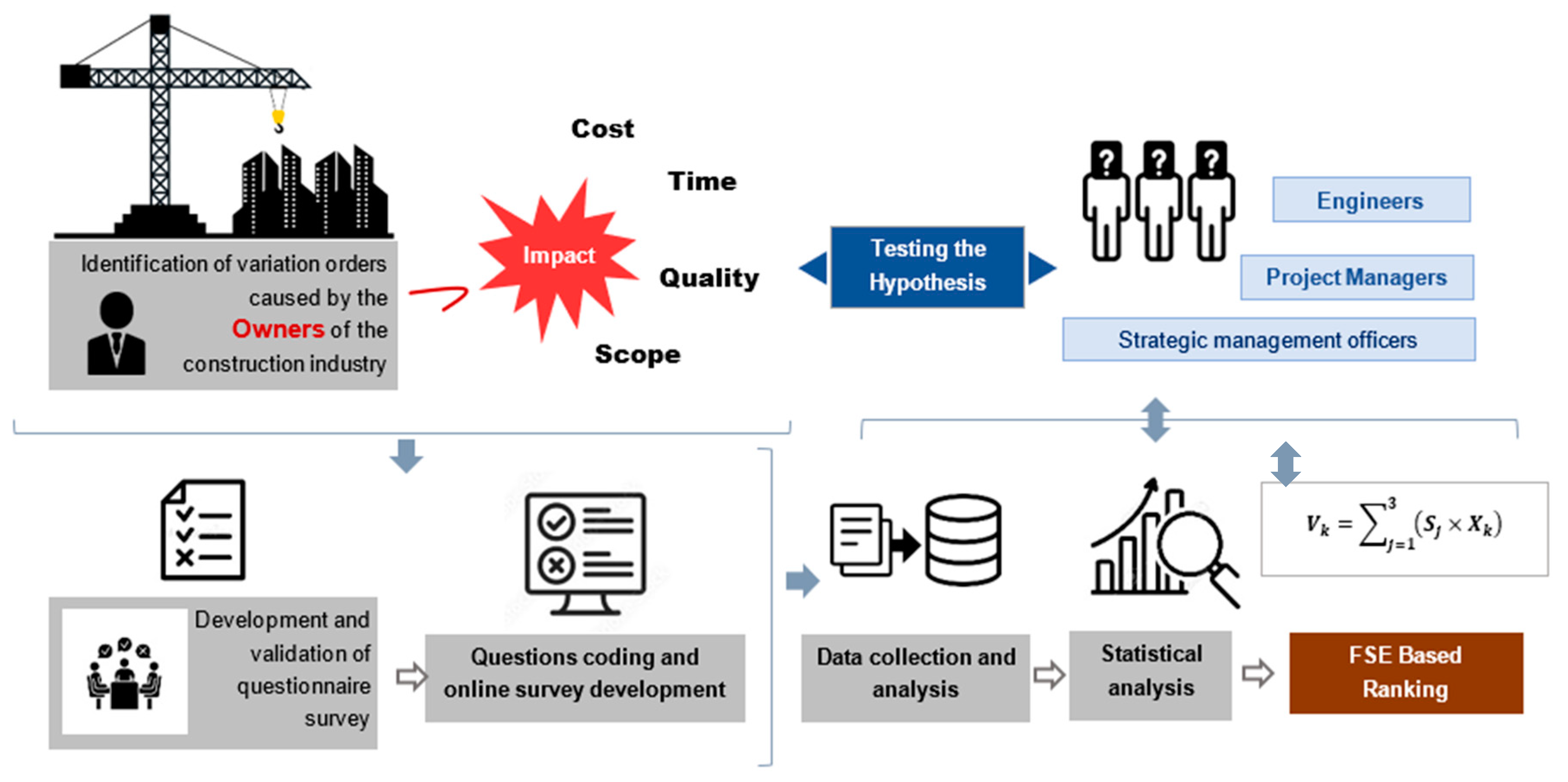
Figure 1 presents the framework adopted in the present research to evaluate the impact of variation orders caused by owners of construction projects in KSA. The framework consists of four main phases initiating with identifying sources of variations caused by the owners of the construction industry impacting project successes through a detailed literature review. In the second phase, a questionnaire survey was developed and validated, along with the coding of questions for an online survey. The third phase analyzed the responses and ranked the variation sources, while the fourth phase tested the hypothesis based on the input of owners, consultants, and contractors working on real-time construction projects in KSA. The following sections describe the details of each framework’s phase.
Figure 1.
Framework to assess the impact of variation orders caused by owners of the construction industry in KSA.
2.2. Construction Industry in KSA
KSA covers the largest area of what is known as the Arabian Peninsula, with an area of 2.3 million km2. Presently, the leadership in the KSA has been promoting construction standards to the same level as that found on the international market to secure economic prosperity. Despite the strong cultural, religious, and social influence in the politics of the construction industry, the Government of KSA realized in the 2030 vision that the industry requires foreign direct investment [29]. By allowing foreign investment to trickle into the local economy, the industry expects to have an internationally acceptable reputation that could ensure long-term mutual benefit [30]. The KSA 2030 Vision realized that the business environment would need political and societal support to increase the FDI at the regional level; this has been the case in other regions of the world that have acted as a benchmark for development [31,32].
Several subsectors critically influence the overall economic development of the country [33,34]. Traditionally, the construction sector was legally organized using the Latin Civil Code, cascaded via the French Civil Code law of 1949 and the Egyptian codes [35,36]. However, the KSA has not stagnated in allowing the deployment of internationally recognized legal frameworks and contracts such as the International Federation of Consulting Engineers [37]. The government prefers structuring contractual relations; however, the public sector projects reported performance-related challenges regarding government-funded projects [14]. The industry recognized a need to apply the principles of commercial management in areas to model causes of variations, such as the definition of scope, monitoring, and controlling business processes regarding production, including the supply chain management relationships for government clients, customers, and suppliers alike [38].
Vision 2030 aims at socioeconomic development with less dependency on oil and gas revenue [39], which earmarks the construction industry as a critical partner in operationalizing and implementing visionary leadership. The demand for construction-related products has been increasing at a higher rate after the announcement of the 2030 vision. The anticipated growth of KSA’s construction sector is 3.2%, holding 35% market share (31 Billion USD) of all contracts in the Middle East/North Africa (MENA) by 2022 [40]. There are many economic spin-offs under critical examination because of the Saudi Vision 2030; however, the present research focuses on the level of readiness for the construction industry to deliver the needed infrastructure that would underpin the vision [29]. As the output anticipates being impacted by project variations, it is necessary to examine the general structure of the construction industry to facilitate the eventual examination of the sources and causes of variations and their impacts on the KSA [10,11].
2.3. Development and Validation of Questionnaire Survey
The online survey is a cost-effective data collection method by a well-written questionnaire survey to obtain the statistically reliable opinion of professionals on variation causes instigated by the owners. The fully engaged respondents in various activities of construction projects were categorized into three groups, depending on their roles. Project managers collaborate with owners and other stakeholders and are responsible for timely delivery. Engineers are primarily involved in implementing design, maintaining PSC, and reporting progress to the project manager. The management and(or) strategic officers are essential for the survival of the businesses by playing a pivotal role in decision-making, and their involvement in the issue of variations is inevitable.
Due to the lack of a database for professionals working in the construction industry at the time of the study, the authors used the LinkedIn website to search for companies, engineers, and other professionals. In addition, friends and colleagues working in different construction companies and municipalities were also contacted.
The objective of the survey was to achieve an optimum response rate by allowing respondents to answer the questionnaire at their convenience willingly. Secondly, the questionnaire permitted maximum accuracy and relevancy concerning the desired data. The questionnaire stated the goals and objectives of the study for the participants’ convenience. The survey length was optimized by providing only accurate and relevant information to the prescribed questions in terms of having a well-defined order and layout.
Without a record of the total number of professionals involved in KSA’s construction projects, a sample size of 120 was selected based on past studies. For instance, Amusan et al. [41] used a sample size of 70 professionals to explore factors influencing the cost and time of construction projects in Nijeria. Recently, Hamadani et al. [42] selected a sample size of 128 to investigate constructability practices in Muscat. An online link was provided so the respondents could receive a formal invitation and participate in the survey without giving out their personal information.
2.4. Identification of Owner/Client-Originated Variations
The client is a party who finances the project (government, public, or private) or who orders the construction project for a specific purpose. The client has a significant role in initiating project variations [10,28,43,44]. The variations can occur using a direct request to alter a contracted work or through a representative act from the consultant on the client’s behalf [13], whether in the design phase or the subsequent stages, such as procurement, contractual agreements, and construction. There are four primary sources of variations in a construction project (i) client—owner or promotor, (ii) consultants—design and cost professional, including architects and engineers, (iii) contractors—physically involved in construction), and (iv) external factors not directly related to the project (e.g., weather conditions, safety, changes in economic and environmental protocols) [45].
Several studies identified owner-stated variations as the most common source of time and cost overruns [2,46,47]. The past studies highlighted the following reasons that make owners the primary cause of variations (i) lack of design and construction experience [48], (ii) cash-flow issues that prevent the owner from being able to pay the contractor on time, or the owner may make variations to bring the cost of the project within their revised budget, such as changing construction materials [49], (iii) poor initial estimation of project cost [5]. As a result, owners initiate variations orders, changing scope, schedules, financial standings, and even project goals [3]. Hence, the present study focuses on the impact of variations in orders caused by the owners of construction projects in KSA.
The literature review process should compare a literature set against an established set of criteria [50]. As the present research focused on assessing the impact of variation orders caused by owners on PSC, the study reviewed published literature for quality, cost, time, and scope criteria. Table 1 summarizes the variations initiated by the owner.
Table 1.
Variation causes instigated by the owners of construction projects. Source: [2,3,6,9,10,13,18,22,27,44,45,51,52,53,54,55,56,57,58,59,60,61,62,63].
2.5. Design of the Questionnaire and Data Coding
The primary objective of the questionnaire was to examine how various groups of respondents could rank or rate the factors that have the potential to cause variations in any project. Each section of the sample had a set of factors gathered from the literature and was summarized in the form of Table 1 so the respondents could rank them following their perceptions.
2.5.1. Development of Primary Questionnaire through a Pilot Study
Bryman and Bell [64] encouraged using methods that can test the resilience of the data-gathering tools to ensure that the data collection process can be as error-proof as possible, even though all errors cannot be eliminated. First, a pilot survey with a list of questions was evaluated by a small sample of people operating in the industry. The rationale for developing a pilot study was to create a list of questions that could be commented upon to use the feedback as the basis for developing the complete survey. Copies of the primary questionnaire were distributed to individual staff to provide their opinions on whether it was understandable and clear. Several valuable suggestions and comments were received, such as adding numbering to the questionnaire’s slides and the time remaining to complete the questionnaire to help participants know the required effort and time needed to complete it.
2.5.2. Final Form of Questionnaire
The feedback from the pilot survey finalized the questionnaire. The questions were standardized to be coded to make them ideal for a stipulated set of participants within the sample. For instance, there were sets of questions emphasizing project owners; others were related to consultants, while contractors had their way of looking at project variations as precisely as being the same as external factors.
Eighteen factors were identified (coded as OC1 to OC18) and linked to and triggered by the project’ owner’ or project sponsors (see Table 1). The list of factors—herein called variables related to owners—is not exhaustive; instead, it covers issues identified as cardinal to the construction industry in KSA. In this questionnaire, respondents were asked to rate the factors using a Likert scale of (1) to (4)—whereby (1) stood for “not applicable or disagree”, (2) stood for “slightly agree or low impact”, (3) stood for “significant impact moderately agree”, and (4) stood for “major or (high) impact or strongly agree” with the question. All factors were of equal importance to the research and had the same likelihood of appearing at any position in the table. The order of the factors in Table 1 did not affect the relative importance.
2.6. Statistical Analysis and Ranking
The questionnaire findings explored the causes of variation orders by the owners of construction projects in KSA. Thus, the four main criteria that influence the project due to variation orders are (1) cost, (2) time, (3) quality, and (4) scope.
The following hypothesis was established to facilitate selecting the actual situation based on the primary data.
Hypothesis one
There is a unique combination of variation causes that have been impacting construction project outcomes in the KSA.
H01:
β1 = 0. There is no statistically significant difference between the respondents’ perceptions of the impact of variation caused by the owners on PSC criteria (time, cost, quality, and scope).
Ha1:
β1 ≠ 0. There is a statistically significant difference between the respondents’ perceptions of the impact of variation caused by the owners on PSC (time, cost, quality, and scope).
The common methods of ranking the various factors are based on mean rank analysis, standard deviation, and profession ranking to find out the different views of the respondents.
ANOVA test analyzed the agreement among participants in the various professions and overall group factors ranking to determine the respondent’s ranking on each factor according to their importance and impact on variation in the PSC. The coefficient of variation was used as an identical measure of the spread of a probability distribution or frequency distribution. The severity index (SI) provided homogenous criteria to ensure inter-rater equality in assigning severity. From the survey results, the factors were ranked based on their impact and significance.
The current study used SPSS and Microsoft Excel for the ranking analysis. The method of analysis and ranking was based on statistical analysis [65], using average weighted mean, standard deviation, and coefficient of variation (COV). The COV is the ratio of standard deviation as a percentage (%) of the mean and compares the relative variability of various responses. The lower the variation coefficient, the better the variability. The higher the percentage (%), the more significant the factor.
The weighted mean rating for each variation cause was calculated to show the importance of each indicator using the following Equation:
where R represents the rating of each variation cause (1, 2, 3, 4), F is the frequency of responses, and n is the total number of responses (n = 73).
The SI measure ranked the indicators based on their significance using the following Equation:
where W represents the weight of each rating (1/4, 2/4, 3/4, 4/4).
The standard deviation (SD) ratio as a percentage of the mean is called the COV and compares the relative variability of responses.
where S is the standard deviation, and M denotes the weighted mean sample.
The list of variation causes in Table 1 was provided to the respondents, who were asked to rate the impact of variation causes on the PSC. The scores allocated by the respondents were statistically analyzed, and Mean, SD, SI, and COV were determined. The most crucial factor is the sensitivity of the scores concerning selected factors and how such factors influence variations in a project. Therefore, the severity index assessed the ranking of factors based on a Likert scale of 1 to 4. The neutral element of the Likert scale lies between 3 and 4, meaning that if the score is less than 3.0, the factor can be ranked as low or no impact. If the score is 3.0 or more, it means the factor is ranked medium or high depending on the percentage of the severity index score. Therefore, a high mean average and an increased severity index ranking would conclude that the factor is perceived to have a high impact on PSC.
2.7. Fuzzy Set-Based Ranking
The statistical analysis ranked the factors under each project’s success criteria. Fuzzy set theory was employed to integrate all the respondents’ inputs on all the PSC for the final ranking of factors. Fuzzy sets theory-based Fuzzy Synthetic Evaluation (FSE) has been used for multicriteria problems, and the present study used the following FSE procedure [66,67].
First, the respondents’ inputs in the form Likert scale were transformed into a fuzzy number using a four-level linguistic rating (Sj = 1, 2, 3, 4)—(1) no impact, (2) low impact, (3) moderate impact, and (4) high impact. The term and defines the association degree of each perception or sustainability indicator. Equation (6) provides the matrix form for residents’ perception assessment:
where represents the project success criteria (i = 1, 2, …, n), and n is the total PSC (n = 4).
Second, the Equation (7) calculates the overall score for each indicator:
Third, Equation (6) estimates the relative weight of each project success criteria for each factor.
Fourth, the membership functions of variation factors were calculated through fuzzy decomposition of the matrices developed in Equations (6) and (4).
where k denotes the factors affecting PSC, and n is the number of PSC.
Finally, Equation (8) estimated the overall score for each factor affecting variation orders caused by the owners of construction projects in KSA.
3. Results
3.1. Descriptive Statisctics of Respondants
Even though the target sample was 120 participants, requests to participate in the survey were made to more than 120 participants working in the construction industry in the KSA. With a 61% response rate, 73 returned valid questionnaires with all sections fully responded to.
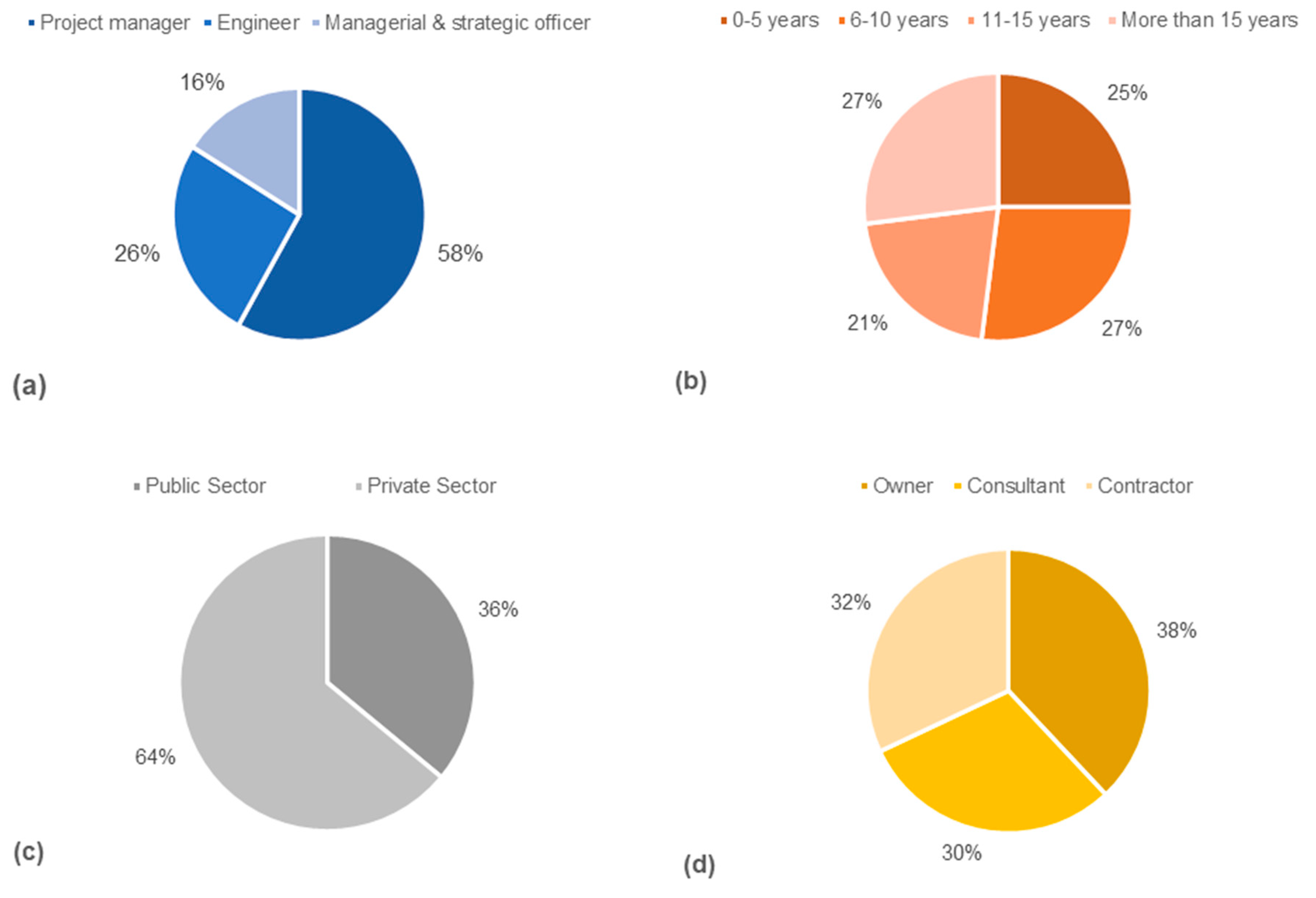
Figure 2a describes the participants’ information relating to their job titles at the time of the survey. The figure shows that 42 respondents (58%) were working as project managers, 19 respondents (26%) were working as engineers, and 12 respondents (16%) were working as managerial and(or) strategic management officers.
Figure 2.
Description statistics of participants, (a) Breakdown of the respondents under the job title category, (b) Breakdown of the respondents under the years of experience in their post, (c) Breakdown of the respondents under the sector in which they worked at the time of the survey, (d) Breakdown of the respondents under the role they played in projects.
The second piece of demographic information required from the respondents was their years of experience in the construction industry. The question asked them to state the category that fitted their years of experience at the time of the survey. It was vital to attract highly experienced respondents because the chances of them having gone through a “variation experience” were high. Figure 2b shows that 20 respondents (27%) had six to 10 years of experience, and another 20 respondents (27%) had more than 15 years of experience. However, 18 respondents (25%) had less than five years of experience, while 15 respondents (21%) had 11 to 15 years of experience. The breakdown of respondents in terms of experience was finely balanced because, even though 25% had less than five years of experience, the other 75% had an extremely high level of industrial experience. The overall high level of experience can be expressed as a factor in assuring the reliability of the respondents’ opinions about the issue of variations in the construction industry.
The third question asked respondents to state the sector in which they worked at the time of the survey because the response to variations can vary from sector to sector. For instance, public institutions would have to seek approval at various levels of government before responding to variations. At the same time, the private sector may also use assorted forms of contractual clauses to anticipate variations. Figure 2c shows that 47 respondents (64%) worked in the private sector, while 26 (36%) worked in the public sector. The government is the primary source of funding for all public sector works. As for the private sector, there is a lot of variation in project sponsors; hence, the categorization of sectors in Figure 2c highlights the varied nature between the public and the private sector.
Question 4 categorized the respondents based on their role in projects during the survey. This question measured how the respondents could influence (or be influenced) by the issue of variations in their workplace. There were 28 respondents (38%) who had owner responsibilities, 23 respondents (32%) who had contractor responsibilities, and 22 respondents (30%) who played the role of consultant, as summarized in Figure 2d. Even though more research participants represented project owners, a relatively large number of respondents worked as consultants and contractors, meaning there was a fairly even balance between owners, consultants, and contractors in the total number of respondents.
3.2. Ranking of Variation Cases Influencing Project Success by the Owners
The subsequent subsections describe the data analysis and ranking of the variation orders caused by the owners of construction projects in KSA, affecting PSC: cost, time, quality, and scope.
3.2.1. Analysis and Ranking of Variation Cases Influencing Project Cost
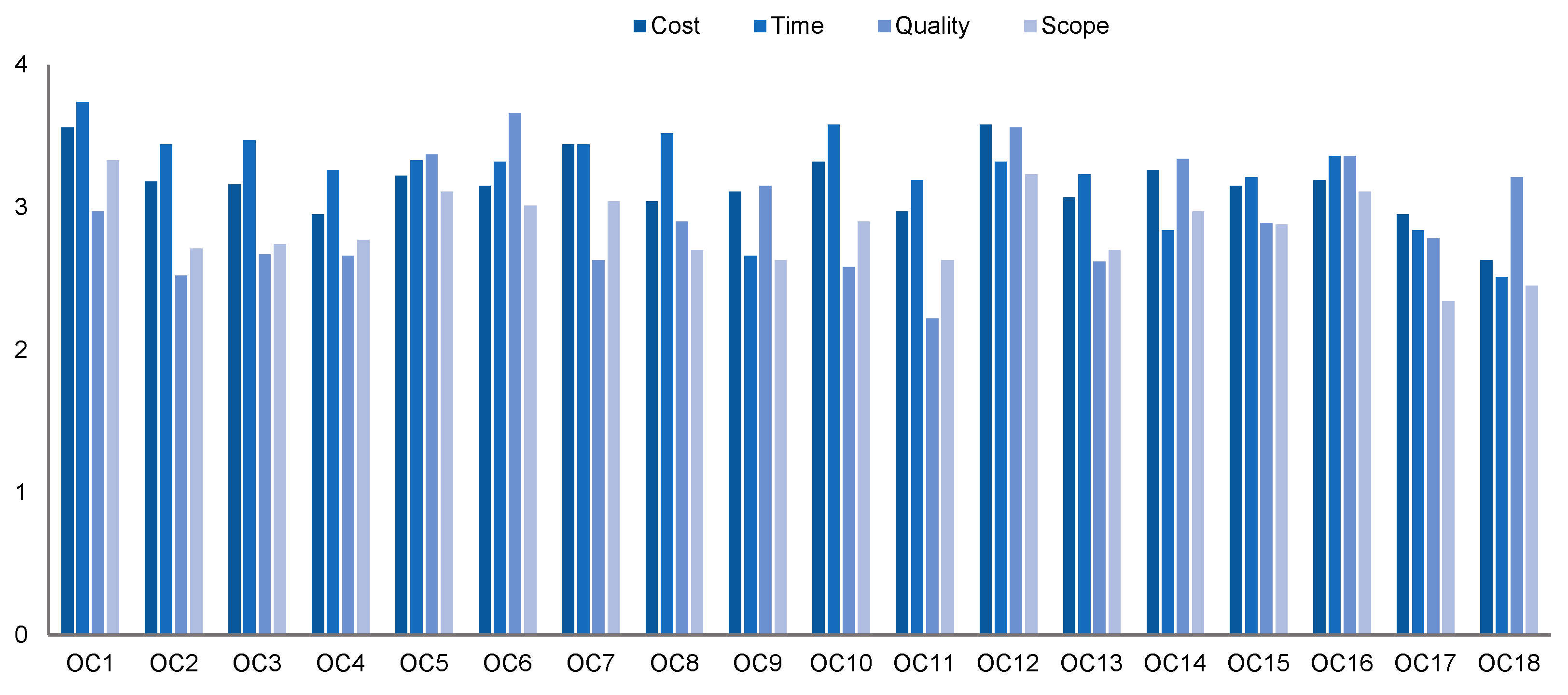
Eighteen selected causes of cost variation were related to the owner group. Fourteen factors out of the eighteen had mean scores above the neutral point of 3.0, representing 72% of the group factors. This high percentage indicates how related owner-group factors could impact project variation cost. Table 2 shows the ranking of variation causes that affected cost by the owner-related category. The highest ranked factor in this group was OC12: Managerial corruption, with a severity index score of 89.38 and a mean score of 3.58. The second highest ranked score was OC1: Inadequate planning led to changes in project purpose and scope, with a severity index score of 89.04 and a mean score of 3.56. OC7: Additional works added by the owner obtained the third highest rank with a severity index score of 85.96 and a mean score of 3.44. The fourth highest ranked score was OC10: Obstacles in the project site had not been solved before starting the project, with a severity index of 82.88 and a mean of 3.32. The lowest ranked factor within the owner group is OC18: Restrictions against foreign companies, OC17: Absence of continuous supervision from the top management, OC4: Obstinate nature of the owner, and OC11: The long period between design and time of implementation’s start, with the severity index between 65.75 and 74.32 and mean scores between 2.63 and 2.97. Although these four factors obtained mean scores below the neutral point of 3.0, very close values (2.63–2.97) reflect the critical impact of these factors on project cost variation. Figure 3 presents the calculated ranks for variation causes ranks calculated for each PSC.
Table 2.
Ranking Owner-related variation causes that influence project cost.
Figure 3.
Ranking of variation causes by the owners of construction projects in KSA for each project success criteria. Detailed results are shown for only project cost criteria in Table 2 due to space limitations.
3.2.2. Analysis and Ranking of Variation Cases Influencing Project Time
Figure 3 shows the ranking of variation causes concerning time according to owner-induced factors. Detailed results are not shown due to space limitations. The average weighted mean in this group ranges from 2.51 to 3.74. The severity indices between 62.67% and 93.49% indicate their importance level with standard deviations between 0.578 and 1.121. Regarding the SI, the highest ranked factor was OC1: Inadequate planning led to change in project purpose and scope, at 93.49 and a mean score of 3.74, which was close to the maximum of 4 from the Likert scale. The second most crucial factor in this group was OC10: Obstacles in the project site had not been solved before starting the project at 89.38 severity index and a mean score of 3.58. The third highest score was OC8: Mode of financing and payment for completed work at 88.01 and a mean score of 3.52. OC3: Bureaucracy in the immediate decision-making process secured fourth rank in Figure 3, OC2: Change of implementing schedule by owner obtained fifth rank, and OC7: Additional works added by the owner, with a severity score of 85.96 and a mean score of 3.44, was sixth. The four lowest ranked factors in this group were OC18: Restrictions against foreign companies, OC9: Shortening in the project period, OC17: Absence of continuous supervision from top management, and OC14: Political pressure to speed up construction processes. The severity indices varied between 62.67% and 70.89%. The mean between 2.51 and 2.84 indicates the limited importance of these factors with a low impact on time variation.
3.2.3. Analysis and Ranking of Variation Cases Influencing Project Quality
Even if the quality of the design was specified, achieving the specifications can be a challenge for many businesses in the construction industry. Therefore, the legal framework would be there to ensure that what was specified is being achieved. Figure 3 shows the ranking for causes of variation concerning quality according to the owner-related category of factors. Using the severity index, which varies between 55.48% to 91.44%, the highest ranked factor was OC6: Lowest bidding procurement method, at 91.44 and a mean score for the Likert scale of 3.66; the second highest ranked factor was OC12: Managerial corruption, at 89.04 with a mean score of 3.56; and the third highest ranked factor was OC5: Inadequate experience of owner’s staff, at 84.25 and a mean score of 3.37. Therefore, selecting the lowest bidder, coupled with corruption and lack of experience, were considered formidable factors that led to variances in the quality of the work. Three additional factors were identified OC16: Rigidity of public works contract, OC14: Political pressure to speed up construction processes, and OC18: Restrictions against foreign companies, with mean scores higher than 3.
3.2.4. Analysis and Ranking of Variation Cases Influencing Project Scope
The impact of variations on the scope is vital as it tends to change contractual agreements and set the work into a spiral of claims and counterclaims. Figure 3 presents information about the ranking of causes for variation concerning scope according to the owner-related category of factors. There are 18 factors with mean scores ranging between 3.33 and 2.34. Using the severity index, the highest score was OC1: Inadequate planning led to change in project purpose and scope, at 83.22 and a mean score of 3.33; the second highest score was OC12: Managerial corruption, at 80.82 and a mean score of 3.23; and the third highest score was OC5: Inadequate experience of owner’s staff, at 77.74 and a mean score of 3.11. This implies that poor planning, corruption at a strategic level, and lack of flexibility in institutions have been triggering scope variations.
Additionally, OC16: Rigidity of public works contract had a score of 77.74 and a mean score of 3.11; OC7: Additional works added by owner scored 76.03 and a mean score of 3.04 for the Likert scale; and OC6: Lowest bidding procurement method had a 75.34 severity index score and a mean score of 3.01. The results in the table indicate that only six factors scored a mean value above the neutral point of 3.0, which is less than 50% of the total factors in this group. That means the impact from the owner group on the scope variation is low. The lowest ranked factors include OC17: Absence of continuous supervision from top management, OC18: Restrictions against foreign companies, OC11: Long period between design and time of implementation’s start, and OC9: Shortening in the project period with a mean score less than 3.
3.3. Hypothesis Testing
Table 3 presents the hypothesis formulated based on the above notions of ANOVA tests. The SPSS software (version 22.0.0.1) computed the hypothesis tests with a significance level of 0.05 and alpha = 0.05 while observing the F-statistic and the p-value. The analysis using ANOVA determined if there were any significant differences between the respondents’ perceptions of variation in construction projects based on the causes related to the owner, and the calculation of the means, standard deviations, and variations between all three groups based on their experience and their different specialties (Project managers, Engineers, and Managerial officers and(or) Surveyors), where they were asked to give a rating between the values of 1 and 4. The factors between which significant differences were observed, Tukey and Post Hoc tests were carried out to determine the difference in specific means between the respondents. The details of each analysis are explained in the following sections and the analysis are attached as Appendix A and Appendix B.
Table 3.
Research Hypotheses—Causes of Variation Related to Owner Issues.
Similarly, there was a need to test the variance for cost using the scores where the p-value > 0.05. No significant differences were identified between the respondents’ views for these factors—except for factors OC2, OC7, OC8, and OC16, shown in Table 4. Hence, the H0 hypothesis is still accepted for the causes of variation related to the owner regarding cost. However, there is a need for further tests to determine the difference in specific means between the respondents using the Tukey test as one of the honest significant difference (HSD) tests.
Table 4.
ANOVA test for owner variation factors related to cost.
The Tukey tests for OC2, OC7, OC8, and OC16 show the varied levels of significance in the perception of cost between respondents, especially project managers and general management and surveyors—as shown in Appendix A. However, multiple comparisons in Appendix B indicate that project managers and engineers differ in their perception of cost. This difference could be attributed to the difference in training and education of the two groups. Also relevant is that managers tend to concentrate on soft success issues, whereas engineers focus on the technical aspects of project success. The result in Appendix A indicates that, even though the significance level is subtle, it shows a difference in how engineers, project managers, and managerial staff look at the cost issue.
An ANOVA analysis for time (schedule) justified the statistical differences in the groups’ responses. SPSS software with a significance level 0.05 computed the hypothesis test using alpha = 0.05 and observed the F-statistic and the p-values. All 18 factors showed no significant differences (results not shown) between respondents’ perceptions of causes of variation based on the owner source; thus, zero hypotheses were retained. The p-value > 0.05 showed no significant differences between the respondents’ mean scores for these factors. Likewise, ANOVA results identified no significant differences between the respondents’ views and the project owners for all the factors on project quality. Therefore, the null hypothesis H0 was accepted for the causes of variation in terms of quality related to the owner. In this case, there is no need for further tests to determine the difference in specific means between the respondents. Similar findings were found for the project scope.
3.4. Final Ranking Using FSE
The FSE method discussed in the methodology section allocates relative weights to the criteria given higher importance by the decision-makers.
Equation (4) appraised each factor’s association degree to the 4-level-rating (Sj = 1, 2, 3, 4). The following is an example of in Table 1 indicating cost criteria for OC1 “Inadequate planning led to changes in project purpose and scope”.
where 0.2055 = 15/73 (impact rating frequency/ total number of respondents). Similarly, , , and were calculated for time, quality, and scope, respectively.
Next, the performance score for each PSC was estimated using Equation (5) as
Likewise, = 3.74, = 2.97, and = 3.33 were calculated.
Equation (6) estimated the relative weights of each project success criteria for OC1.
Similarly, relative weights for the remaining PSC were , .
In the subsequent step, Equation (7) generated the membership functions for PSC:
Finally, Equation (8) estimated the overall score of OC1.
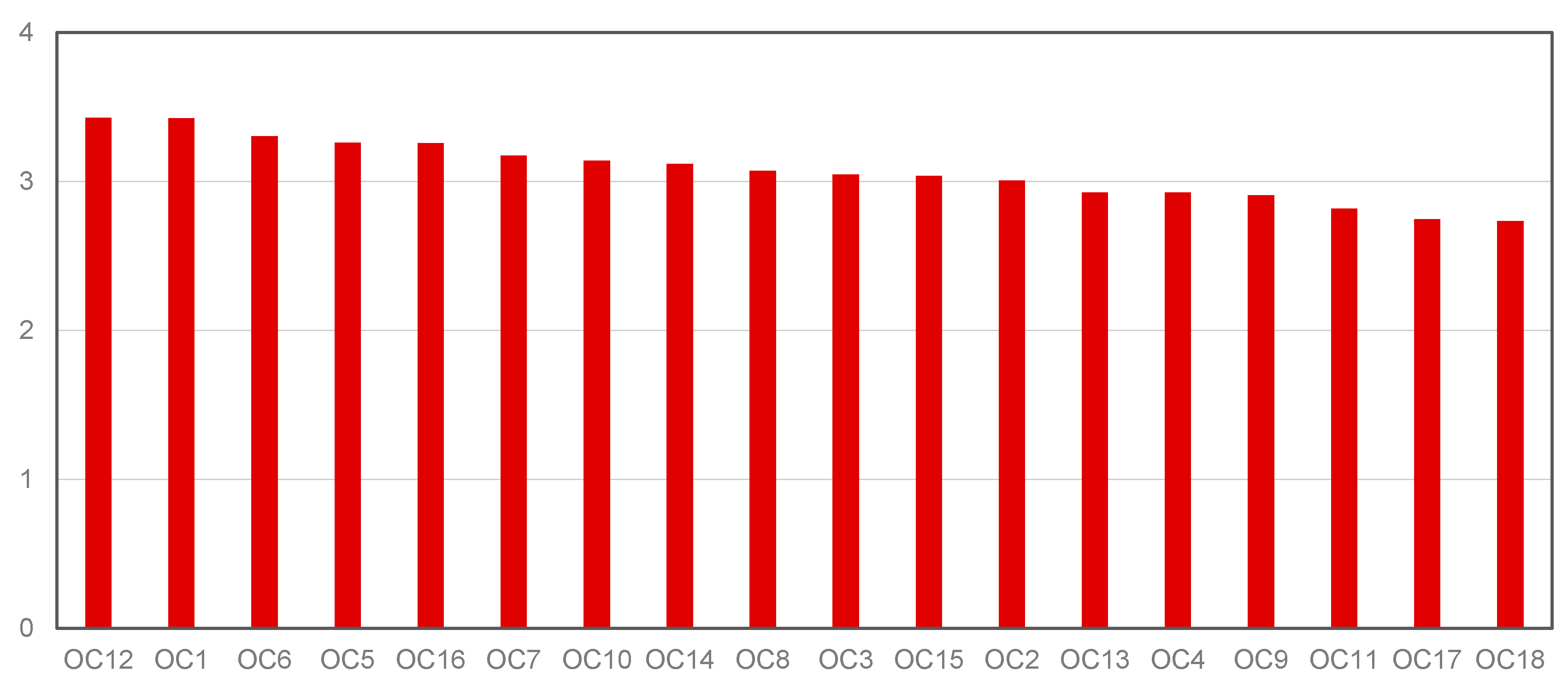
The similar procedure scores for all the factors were calculated and ranked accordingly. Figure 4 presents the ranking of all the variation causes.
Figure 4.
Overall ranking of variation caused by the owners of construction projects in KSA based on aggregated cost, time, quality, and scope scores.
4. Discussion
A questionnaire survey determined the factors causing the initiation of the variation orders and their consequences on construction projects in KSA during the project life cycle. Findings from the organized survey ranked the importance of the recognized factors affecting project performance due to variation orders caused by the owners of construction projects and their associated consequences on PSC. Figure 3 presents the ranking of 18 identified factors for all the project success, while Figure 4 shows the overall ranking based on aggregated (with equal weight to all PSC) scores obtained by FSE. Cost and time, with an average (18 factors) score of 3.2, each superseded quality and scope with average scores of 2.9 and 2.8, respectively. These findings align with past studies on the impact of variation orders on construction projects [68,69,70,71]. FSE also supports this finding, where cost and time obtained average weights of 0.26 and 0.27, while average relative weights for quality and scope were 0.24 and 0.23.
Figure 4 shows that managerial corruption (OC12), inadequate planning (OC1), method of lowest bidding procurement (OC6), the inadequate experience of owner’s staff (OC5), and public works contract rigidity (OC16) are the top five factors identified by the stakeholders. The findings align with the study conducted by Aiyetan and Das [68] on factors and strategies evaluation for water infrastructure projects in South Africa. They found that lack of organization, construction and project management, and sociopolitical influences are significant causes of completion delays and cost overruns. Management-related issues are mostly associated with OC1, OC12, OC6, and OC5, while OC16 is a sociopolitical factor. Cheng and Darsa [72] also identified OC12 as a significant factor affecting PSC in Ethiopian Construction Industry.
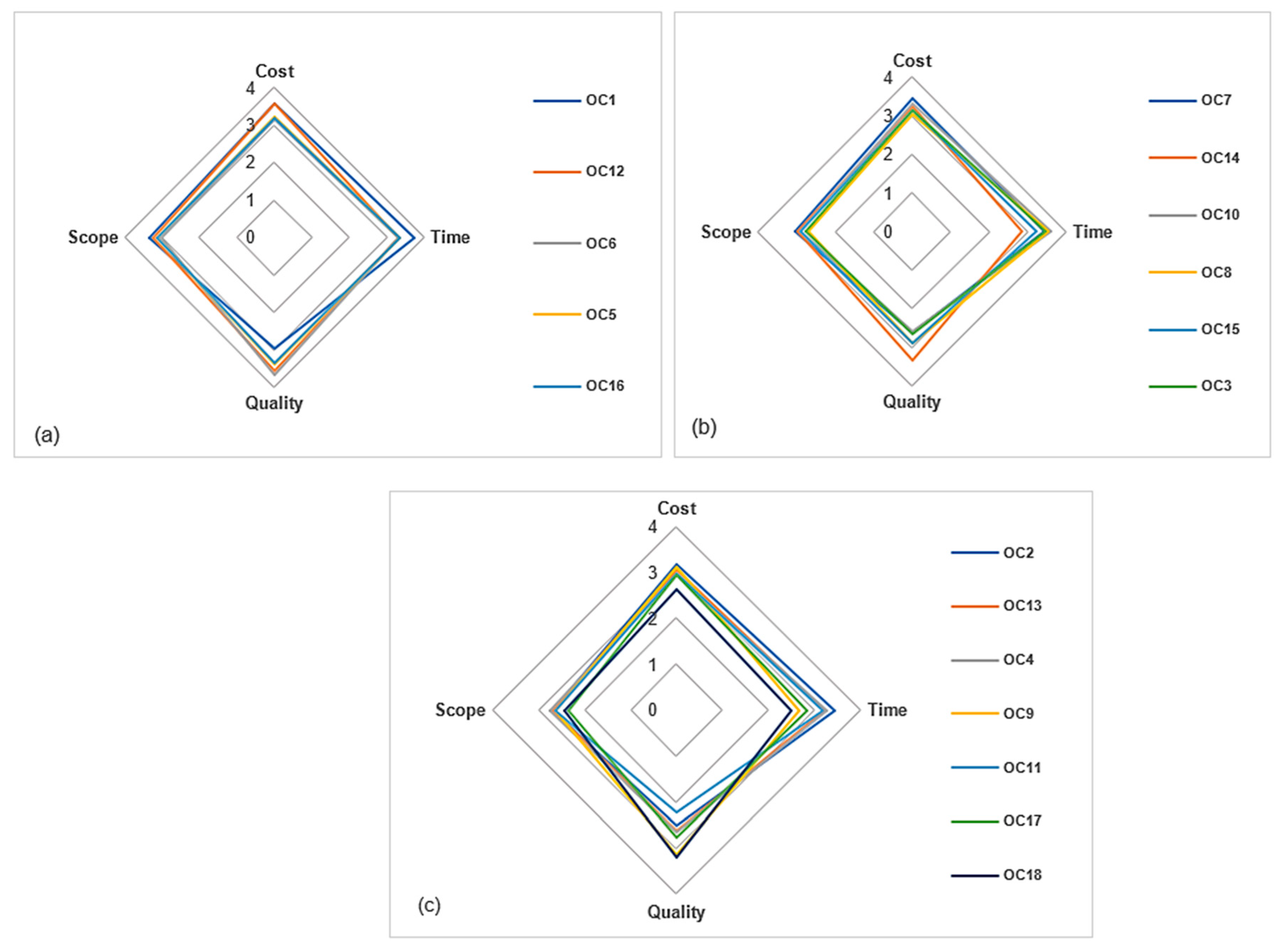
Although 12 out of 18 factors obtained scores higher than 3 (significant impact), Figure 5 categorizes them into three groups based on their overall scores. Figure 5a illustrates the impact of the top five factors with an aggregated score of more than 3.25 (significant to high impact), Figure 5b represents six factors with scores between 3 and 3.14 (significant impact), and Figure 5c shows the scores for the bottom seven factors with scores less than 3 (low impact). The top five factors obtained scores higher than “3” for all four PSC, which shows their overall importance for construction projects.
Figure 5.
Impact of variation causes on project successes: (a) top five ranked with all scores higher than “3”, (b) six middle order causes with some scores less than “3”, (c) bottom seven ranked with several scores less than “3”.
Based on the stakeholders’ opinions, 13 out of 18 factors with more than a “3” score impact the cost criteria of construction projects in KSA (Figure 5). The factors with scores less than “3” revealed that the obstinate nature of the owner (OC4), shortening in the project duration (OC9), long period between design and start phase (OC11), absence of continuous supervision from top management (OC17), and restrictions against foreign companies (OC18) cannot significantly impact the PSC as per the stakeholder’s opinions in KSA.
For time criteria, 14 out of 18 factors obtained scores higher than “3”. The aggregate of the factors demonstrates that the owners mapped causes for variations from the time aspect and believe that inadequate planning (OC1), changes in implementation schedules introduced by the owner (OC2), the impact of bureaucracy (OC3), site obstacles (OC11), mode of financing and payments (OC8), and unsolved obstacles at the site before project’s initiation (OC10) were the top five factors in time criteria (Figure 5a). Although OC11 was ranked higher in time criteria with a score of “3.19”, OC14, OC17, and OC18 once again achieved the lowest ranks (Figure 2c). Mohajeri Borje Ghaleh et al. [68] found financial and credit problems (i.e., OC8) as one of the most crucial risks of project delays.
Only 7 of the 18 factors in the quality group scored a mean above the neutral point of 3.0; less than 50% of the factors could affect the project quality variation. In another way, the owner group presents less impact on the project quality. The response from the lowest ranking scores also shows that the long period between design and time of implementation’s start (OC11) is the lowest ranked cause of variations in quality from the owners’ perspective; it had a score of 63 for severity index; a mean score of 2.22, and a standard deviation of 1.003. The second lowest ranked factor was the change of implementing schedule by the owner (OC2) with 2.52, while OC10 obtained the third lowest rank with a score of 2.58 (Figure 5c). Nevertheless, OC18, with a score of 3.21, shows that restrictions against foreign companies can be a hurdle to the quality enhancement process of a construction project. It is worth mentioning that the Saudi Arabian General Investment Authority (SAGIA) supports foreign companies with an easy and transparent investment process by particularly facilitating (i) accelerated investment applications and setup process, (ii) direct ownership of property, (iii) easy transfer of capital and profits, (iv) flexibility for transfer of shares, (v) sponsorship for investors and their employees, and (vi) no personal income tax, and (vii) access to generous regional and international financial programs and incubators [73].
Only 6 (OC1, OC5, OC6, OC7, OC12, and OC16) out of 18 factors with scores higher than “3” shows the most (noticeable) impact of the variation orders caused by the owners on scope criteria. The lowest ranked factors, OC9, OC11, OC17, and OC18, indicate that constant supervision from top management representing the client is of low importance because there is a chance that the work can proceed without corners being cut for reasons beyond the client’s knowledge, as has been indicated by the ranking. The same four factors were ranked lowest by the stakeholders in cost criteria. In addition to technical and financial factors, the emotional intelligence of top management [74] and risk management [75,76] improves the PSC. Future research can establish the relationship between emotional intelligence-related and risk-related factors with variations in construction projects in KSA.
5. Conclusions
The construction industry is a critical partner in operationalizing and implementing the long-term sustainability objectives of Vision 2030 in KSA. The present study identified 18 factors, encompassing the project planning, scope, and implementation schedule variations, that can cause variation orders by the owners of construction projects. The analysis also included some critical factors, such as variations due to the involvement of bureaucracy, political pressure, managerial corruption, and the obstinate nature of the owner.
Statistical analysis revealed several causes indicating a statistical difference between respondents’ views about these factors; however, the total number is insignificant if calculated as a ratio of the total. Thus, overall statistical analysis found no significant differences between the respondents in the three groups.
With 67% of factors obtaining scores higher than “3”, the investigations found cost and time to be more critical PSC than quality and scope, with fewer (38%) factors of high significance. Planning, managerial corruption, the method of bidding procurement, the experience of owner’s staff, additional work added by the owners, delayed starts, mode of financing and payments, and contract rigidity primarily affect construction projects in the view of participated stakeholders.
The results of the present study identify the most important causes of variation orders originated by the owners of construction projects in KSA and their impacts on project success criteria. This research’s findings help stakeholders achieve the long-term sustainability of the construction industry in KSA by focusing on the top-ranked factors. The results are also helpful for the construction industry in the Gulf Region with similar working environments, rules, and regulations. The findings can develop a model for assessing the cost and duration overruns due to causes of variation in construction projects. Future work can determine the impact of variation caused by the consultants, contractors, and external factors on the success criteria of KSA’s rapidly growing construction industry. Studies should also focus on the sustainability evaluation of construction projects in KSA.
Author Contributions
Conceptualization, N.K.A. and W.A.; methodology, N.K.A.; software, N.K.A.; validation, W.A. and H.H.; formal analysis, N.K.A.; investigation, N.K.A. and H.H.; resources, N.K.A.; data curation, N.K.A. and W.A.; writing—original draft preparation, N.K.A.; writing—review and editing, W.A. and H.H.; visualization, H.H. All authors have read and agreed to the published version of the manuscript.
Funding
No funding was secured for this research.
Data Availability Statement
The data not given in the manuscript are not publicly available due to a confidentiality agreement between the researchers and respondents.
Acknowledgments
The authors acknowledge the participants from the Kingdom of Saudi Arabia’s construction industry for sharing their experienced judgment about the research topics. The authors would also like to thank Halim Boussabaine for the supervision.
Conflicts of Interest
The authors declare no conflict of interest.
Appendix A. Results for Tukey Tests for OC2, OC7, OC8, and OC16
| OC2 | |||
| Tukey HSD a,b | |||
| Job title | N | Subset for alpha = 0.05 | |
| 1 | 2 | ||
| Project manager | 42 | 3.02 | |
| Engineer | 19 | 3.21 | 3.21 |
| Managerial and Surveyor | 12 | 3.67 | |
| Sig. | 0.724 | 0.153 | |
| Means for groups in homogeneous subsets are displayed. | |||
| a Uses Harmonic Mean Sample Size = 18.8. | |||
| b The group sizes are unequal. The harmonic mean of the group sizes is used. Type I error levels are not guaranteed. | |||
| OC7 | |||
| Tukey HSD a,b | |||
| Job title | N | Subset for alpha = 0.05 | |
| 1 | 2 | ||
| Project manager | 42 | 3.29 | |
| Engineer | 19 | 3.53 | 3.53 |
| Managerial and Surveyor | 12 | 3.83 | |
| Sig. | 0.489 | 0.315 | |
| Means for groups in homogeneous subsets are displayed. | |||
| a Uses Harmonic Mean Sample Size = 18.8. | |||
| b The group sizes are unequal. The harmonic mean of the group sizes is used. Type I error levels are not guaranteed. | |||
| OC8 | |||
| Tukey HSD a,b | |||
| Job title | N | Subset for alpha = 0.05 | |
| 1 | 2 | ||
| Engineer | 19 | 2.89 | |
| Project manager | 42 | 2.93 | |
| Managerial and Surveyor | 12 | 3.67 | |
| Sig. | 0.993 | 1.000 | |
| Means for groups in homogeneous subsets are displayed. | |||
| a Uses Harmonic Mean Sample Size = 18.8. | |||
| b The group sizes are unequal. The harmonic mean of the group sizes is used. Type I error levels are not guaranteed. | |||
| OC16 | |||
| Tukey HSD a,b | |||
| Job title | N | alpha = 0.05 | |
| 1 | 2 | ||
| Project manager | 42 | 3.05 | |
| Engineer | 19 | 3.11 | |
| Managerial and Surveyor | 12 | 3.83 | |
| Sig. | 0.978 | 1.00 | |
| Means for groups in homogeneous subsets are displayed. | |||
| a Uses Harmonic Mean Sample Size = 18.8. | |||
| b The group sizes are unequal. The harmonic mean of the group sizes is used. Type I error levels are not guaranteed. | |||
Appendix B. Post Hoc Tests multiple comparisons for OC2, OC7, OC8, and OC16
| Post Hoc Tests | |||||||
| Multiple Comparisons | |||||||
| Tukey HSD | |||||||
| Dependent Variable | (I) Job Title | (J) Job Title | Mean Difference (I-J) | Std. Error | Sig. | 95% Confidence Interval | |
| Lower Bound | Upper Bound | ||||||
| OC2 | Project manager | Engineer | −0.187 | 0.206 | 0.638 | −0.68 | 0.31 |
| Managerial and Surveyor | −0.643 | 0.244 | 0.027 | −1.23 | −0.06 | ||
| Engineer | Project manager | 0.187 | 0.206 | 0.638 | −0.31 | 0.68 | |
| Managerial and Surveyor | −0.456 | 0.275 | 0.227 | −1.11 | 0.20 | ||
| Managerial and Surveyor | Project manager | 0.643 | 0.244 | 0.027 | 0.06 | 1.23 | |
| Engineer | 0.456 | 0.275 | 0.227 | −0.20 | 1.11 | ||
| OC7 | Project manager | Engineer | -0.241 | 0.178 | 0.371 | −0.67 | 0.19 |
| Managerial and Surveyor | −.548 | 0.211 | 0.030 | −1.05 | −0.04 | ||
| Engineer | Project manager | 0.241 | 0.178 | 0.371 | −0.19 | 0.67 | |
| Managerial and Surveyor | −0.307 | 0.237 | 0.403 | −0.88 | 0.26 | ||
| Managerial and Surveyor | Project manager | 0.548 | 0.211 | 0.030 | 0.04 | 1.05 | |
| Engineer | 0.307 | 0.237 | 0.403 | −0.26 | 0.88 | ||
| OC8 | Project manager | Engineer | 0.034 | 0.254 | 0.990 | −0.58 | 0.64 |
| Managerial and Surveyor | −0.738 | 0.301 | 0.044 | −1.46 | −0.02 | ||
| Engineer | Project manager | −0.034 | 0.254 | 0.990 | −0.64 | 0.58 | |
| Managerial and Surveyor | −0.772 | 0.339 | 0.066 | −1.58 | 0.04 | ||
| Managerial and Surveyor | Project manager | 0.738 | 0.301 | 0.044 | 0.02 | 1.46 | |
| Engineer | 0.772 | 0.339 | 0.066 | −0.04 | 1.58 | ||
| OC16 | Project manager | Engineer | −0.058 | 0.246 | 0.970 | −0.65 | 0.53 |
| Managerial and Surveyor | −0.786 | 0.291 | 0.023 | −1.48 | −0.09 | ||
| Engineer | Project manager | 0.058 | 0.246 | 0.970 | −0.053 | 0.65 | |
| Managerial and Surveyor | −0.728 | 0.328 | 0.075 | −1.51 | 0.06 | ||
| Managerial and Surveyor | Project manager | 0.786 | 0.291 | 0.023 | 0.09 | 1.48 | |
| Engineer | 0.728 | 0.328 | 0.075 | −0.06 | 1.51 | ||
References
- Kerzner, H. Project Management: A Systems Approach to Planning, Scheduling and Controlling; John Wiley and Sons: Hoboken, NJ, USA, 2017; ISBN 471225770. [Google Scholar]
- Alnuaimi, A.S.; Taha, R.A.; Al Mohsin, M.; Al-Harthi, A.S. Causes, effects, benefits, and remedies of change orders on public construction projects in Oman. J. Constr. Eng. Manag. 2009, 136, 615–622. [Google Scholar] [CrossRef]
- Arain, F.; Sui Pheng, L. The potential effects of variation orders on institutional building projects. Facilities 2005, 23, 496–510. [Google Scholar] [CrossRef]
- Ibbs, W.; Chih, Y.Y. Alternative methods for choosing an appropriate project delivery system (PDS). Facilities 2011, 29, 527–541. [Google Scholar] [CrossRef]
- Bin-Ali, A.Z. Causes and Steps to Minimize Variations in Construction Projects. Master’s Thesis, University Technology Malaysia, Skudai, Malaysia, 2008. [Google Scholar]
- O’Brien, R. Um Exame da Abordagem Metodológica da Pesquisa Ação [An Overview of the Methodological Approach of Action Research]. In Teoria e Prática da Pesquisa Ação [Theory and Practice of Action Research]; Richardson, R., Ed.; Universidade Federal da Paraíba: João Pessoa, Brazil, 2001; Available online: http://www.web.ca/~robrien/papers/arfinal.html (accessed on 15 May 2023). (In English)
- IDB. Guidance Note on Variation Orders, Contract Addendums and Expiration, Islamic Development Bank. 2020. Available online: https://www.isdb.org/project-procurement/sites/pproc/files/media/documents/Guidance%20Note%20on%20Variation%20Orders%2C%20Contract%20Addendums%20and%20Expiration.pdf (accessed on 15 May 2023).
- Umar, T.; Umeokafor, N. Exploring the GCC progress towards United Nations sustainable development goals. Int. J. Soc. Ecol. Sustain. Dev. (IJSESD) 2022, 13, 1–32. [Google Scholar] [CrossRef]
- Ssegawa, J.K.; Mfolwe, K.M.; Makuke, B.; Kutua, B. Construction Variations: A scourge or a Necessity. In Proceedings of the First International Conference of CIB W107, Capetown, South Africa, 11–13 November 2002; pp. 11–13. [Google Scholar]
- Aziz, R.F. Factors causing cost variation for constructing wastewater projects in Egypt. Alex. Eng. J. 2013, 52, 51–66. [Google Scholar] [CrossRef]
- Al-Dubaisi, A.H. Change orders in construction projects in Saudi Arabia. Master’s Thesis, King Fahd University of Petroleum and Minerals, Dhahran, Saudi Arabia, 2000. [Google Scholar]
- Yogeswaran, K.; Kumaraswamy, M.M.; Miller, D.R. Claims for extensions of time in civil engineering projects. Constr. Manag. Econ. 1998, 16, 283–293. [Google Scholar] [CrossRef]
- Oladapo, A.A. A quantitative assessment of the cost and time impact of variation orders on construction projects. J. Eng. Des. Technol. 2007, 5, 35–48. [Google Scholar] [CrossRef]
- Saudi Gazette Report. King Announces New Austerity Measures. Saudi Gazette, 27 September 2016. Available online: http://saudigazette.com.sa/saudi-arabia/king-announces-new-austerity-measures/ (accessed on 25 February 2018).
- Bower, D. A systematic approach to the evaluation of indirect costs of contract variations. Constr. Manag. Econ. 2000, 18, 263–268. [Google Scholar] [CrossRef]
- Ismail, A.; Pourrostam, T.; Soleymanzadeh, A.; Ghouyounchizad, M. Factors causing variation orders and their effects in roadway construction projects. Res. J. Appl. Sci. Eng. Technol. 2012, 4, 4969–4972. [Google Scholar]
- Mirza, M.N.; Pourzolfaghar, Z.; Shahnazari, M. Significance of scope in project success. Procedia Technol. 2013, 9, 722–729. [Google Scholar] [CrossRef]
- Fageha, M.K.; Aibinu, A.A. Identifying stakeholders’ involvement that enhances project scope definition completeness in Saudi Arabian public building projects. Built Environ. Proj. Asset Manag. 2016, 6, 6–29. [Google Scholar] [CrossRef]
- Hobbs, B.; Besner, C. Projects with internal vs. external customers: An empirical investigation of variation in practice. Int. J. Proj. Manag. 2016, 34, 675–687. [Google Scholar] [CrossRef]
- Hanna, A.S.; Gunduz, M. Impact of change orders on small labor-intensive projects. J. Constr. Eng. Manag. 2004, 130, 726–733. [Google Scholar] [CrossRef]
- Radosavljević, M.; Horner, R.M.W. The evidence of complex variability in construction labour productivity. Constr. Manag. Econ. 2002, 20, 3–12. [Google Scholar] [CrossRef]
- Asamaoh, R.O.; Offei-Nyako, K. Variation determinants in building construction: Ghanaian professionals perspective. J. Constr. Eng. Proj. Manag. 2013, 3, 20–25. [Google Scholar] [CrossRef]
- Ogunsanmi, O. Effects of procurement related factors on construction project performance in Nigeria. Ethiop. J. Environ. Stud. Manag. 2013, 6, 215–222. [Google Scholar] [CrossRef]
- Alsuliman, J.; Bowles, G.; Chen, Z.; Smith, S.D. Current practice of variation order management in the Saudi construction industry. Assoc. Res. Constr. Manag. 2012, 1–10. [Google Scholar]
- Enshassi, A.; Arain, F.; Al-Raee, S. Causes of variation orders in construction projects in the Gaza Strip. J. Civ. Eng. Manag. 2010, 16, 540–551. [Google Scholar] [CrossRef]
- Wang, X.; Love, P.E.; Sing, C.P.; Tiong, R.L. Determining the probability of project cost overruns. J. Constr. Eng. Manag. 2012, 139, 321–330. [Google Scholar]
- Oyewobi, L.O.; Windapo, A.O.; Rotimi, J.O.B. Measuring strategic performance in construction companies: A proposed integrated model. J. Facil. Manag. 2015, 13, 109–132. [Google Scholar] [CrossRef]
- Mohammad, N.; Ani, A.C.; Rakmat, R.A.O.K.; Yusof, M.A. Investigation on the causes of variation orders in the construction of building project—A study in the state of Selangor, Malaysia. J. Build. Perform. 2010, 1, 73–82. [Google Scholar]
- KSA Vision. Available online: https://www.vision2030.gov.sa/thekingdom/invest/ (accessed on 29 April 2023).
- Djokoto, J.; Yao Srofenyoh, F.; Gidiglo, K. Domestic and foreign direct investment in Ghanaian agriculture. Agric. Financ. Rev. 2014, 74, 427–440. [Google Scholar] [CrossRef]
- Young, S.; Ross, D.; MacKay, B. Inward foreign direct investment and constitutional change in Scotland. Multinatl. Bus. Rev. 2014, 22, 118–138. [Google Scholar] [CrossRef]
- Denisia, V. Foreign direct investment theories: An overview of the main FDI theories. Eur. J. Interdiscip. Stud. 2010, 2, 104–110. [Google Scholar]
- Alqarni, A.S.; Owayss, A.A.; Mahmoud, A.A. Physicochemical characteristics, total phenols and pigments of national and international honeys in Saudi Arabia. Arab. J. Chem. 2016, 9, 114–120. [Google Scholar] [CrossRef]
- Singh, K. Decennial Liability under Muqawala Contracts in the United Arab Emirates-A Tough Pill to Swallow. Const. L. Intl. 2014, 9, 7. [Google Scholar]
- Sayed-Gharib, T.; Lord, W.E.; Price, A.D. Barriers to Alternative Dispute Resolution in the Construction Industry: The Kuwaiti Experience. In Proceedings of the RICS Construction and Property Conference, Salford, UK, 12–13 September 2011. [Google Scholar]
- Alhajeri, M.A. A critical approach to the Kuwaiti Law of Judicial Arbitration no. 11 of 1995 with Reference to the UNCITRAL Model Law on International Commercial Arbitration. Arab Law Q. 2000, 15, 48–62. [Google Scholar]
- FIDIC. Module 0: The FIDIC Suite of Services Agreements; The International Federation of Consulting Engineers: Geneve, Switzerland, 2021; Available online: https://fidic.org/events/fidic-module-0-fidic-suite-services-agreements-saudi-arabia (accessed on 5 May 2023).
- Royal Institution of Chartered Surveyors (RICS). UK Commercial Management of Construction, 1st ed.; RICS: London, UK, 2016. [Google Scholar]
- Husain, S.R. Vision 2030—General Expectations. Saudi Gazette, 19 May 2016. p. 30922. Available online: http://saudigazette.com.sa/saudi-arabia/saudi-vision-2030/vision-2030-general-expectations/ (accessed on 25 February 2018).
- Arab News. Driven by Economic Diversification, KSA’s Construction Industry Leads the MENA Region: JLL. Available online: https://www.arabnews.com/node/2212276/business-economy (accessed on 22 May 2023).
- Amusan, L.M.; Afolabi, A.; Ojelabi, R.; Omuh, I.; Okagbue, H.I. Data exploration on factors that influences construction cost and time performance on construction project sites. Data Brief 2018, 17, 1320–1325. [Google Scholar] [CrossRef]
- Al Hamadani, S.; Al Alawi, M.; Al Nuaimi, A. Constructability practices in construction industry in Muscat: Case study. Asian J. Civ. Eng. 2022, 23, 1141–1153. [Google Scholar] [CrossRef]
- Jawad, R.S.; Abdulkader, R.; Ali, A.A.A. Variation orders in construction projects. J. Eng. Appl. Sci. 2009, 4, 170–176. [Google Scholar]
- Ndihokubwayo, R.; Haupt, T. Variation Orders on Construction Projects: Value-Adding or Waste? Int. J. Constr. Proj. Manag. 2009, 1, 1–18. [Google Scholar]
- Eigbe, S. Empirical Study of the Origins and Causes of Variation Orders in Building Projects. Int. J. Eng. Res. Appl. 2016, 6, 34–48. [Google Scholar]
- Ayininuola, G.M.; Olalusi, O.O. Assessment of Building Failures in Nigeria: Lagos and Ibadan Case Study. Afr. J. Sci. Technol. 2004, 5, 73–78. [Google Scholar] [CrossRef]
- Love, P.E.; Edwards, D.J. Determinants of rework in building construction projects. Eng. Constr. Archit. Manag. 2004, 11, 259–274. [Google Scholar] [CrossRef]
- Akinsola, A.O.; Potts, K.F.; Ndekugri, I.; Harris, F.C. Identification and evaluation of factors influencing variations in building projects. Int. J. Proj. Manag. 1997, 15, 263–267. [Google Scholar] [CrossRef]
- Pourrostam, T.; Ismail, A. Causes and effects of delay in Iranian construction projects. Int. J. Eng. Technol. 2012, 4, 598. [Google Scholar] [CrossRef]
- Umar, T. Key factors influencing the implementation of three-dimensional printing in construction. Proc. Inst. Civ. Eng. Manag. Procure. Law 2020, 174, 104–117. [Google Scholar] [CrossRef]
- Hibberd, P.R. Variations in Construction Contracts; Collins: New York, NY, USA, 1986. [Google Scholar]
- Fisk, R.P.; Grove, S.J. The impact of other customers on service experiences: A critical incident examination of “getting along”. J. Retail. 1997, 73, 63–85. [Google Scholar]
- Weisfeld, M.; Ciccozzi, J. Software Project Management-Software by Committee. Proj. Manag. 1999, 5, 30–36. [Google Scholar]
- Wang, S.Q.; Tiong, R.L.; Ting, S.K.; Ashley, D. Evaluation and management of foreign exchange and revenue risks in China’s BOT projects. Constr. Manag. Econ. 2000, 18, 197–207. [Google Scholar] [CrossRef]
- Bassili, A.; Mokhtar, S.A.; Dabous, N.I.; Zaher, S.R.; Mokhtar, M.M.; Zaki, A. Risk factors for congenital heart diseases in Alexandria, Egypt. Eur. J. Epidemiol. 2000, 16, 805–814. [Google Scholar] [CrossRef]
- Gray, C.; Hughes, W. Building Design Management; Routledge: London, UK, 2007. [Google Scholar]
- Gbeleyi, S.A. An Evaluation of the Causes and Effects of Variation on Building Project Execution in Nigeria. Bachelor’s Thesis, Department of Quantity Surveying, Obafemi Awolowo University, Ile-Ife, Nigeria, 2002. [Google Scholar]
- Arain, F.M. Strategic management of variation orders for institutional buildings: Leveraging on information technology. Proj. Manag. J. 2005, 36, 66. [Google Scholar] [CrossRef]
- Gelos, R.G.; Wei, S.J. Transparency and international portfolio holdings. J. Financ. 2005, 60, 2987–3020. [Google Scholar] [CrossRef]
- Arain, F.; Sui Pheng, L. Modeling for management of variations in building projects. Eng. Constr. Archit. Manag. 2007, 14, 420–433. [Google Scholar] [CrossRef]
- Sunday, O.A. September. Impact of variation orders on public construction projects. In Proceedings of the 26th Annual ARCOM Conference, Leeds, UK, 6–8 September 2010. [Google Scholar]
- Babalola, J.A.; Idehen, A.F. Causes of Variations on Building Projects in Nigeria. In Proceedings of the West Africa Built Environment Research (Waber) Conference, Accra, Ghana, 19–21 July 2011; p. 229. [Google Scholar]
- Fallahnejad, M.H. Delay causes in Iran gas pipeline projects. Int. J. Proj. Manag. 2013, 31, 136–146. [Google Scholar] [CrossRef]
- Bryman, A.; Bell, E. Ethics in business research. In Business Research Methods; Oxford University Press: Oxford, UK, 2011. [Google Scholar]
- Field, A. Discovering Statistics Using IBM SPSS Statistics; Sage: Newcastle upon Tyne, UK, 2013. [Google Scholar]
- Zhao, X.; Hwang, B.G.; Gao, Y. A fuzzy synthetic evaluation approach for risk assessment: A case of Singapore’s green projects. J. Clean. Prod. 2016, 115, 203–213. [Google Scholar] [CrossRef]
- Alinizzi, M.; Haider, H.; Alresheedi, M. Assessing Traffic Congestion Hazard Period due to Commuters’ Home-to-Shopping Center Departures after COVID-19 Curfew Timings. Computation 2022, 10, 132. [Google Scholar] [CrossRef]
- Mohajeri Borje Ghaleh, R.; Pourrostam, T.; Mansour Sharifloo, N.; Majrouhi Sardroud, J.; Safa, E. Delays in the road construction projects from risk management perspective. Infrastructures 2021, 6, 135. [Google Scholar] [CrossRef]
- Alzara, M. Exploring the Impacts of Change Orders on Performance of Construction Projects in Saudi Arabia. Adv. Civ. Eng. 2022, 2022, 5775926. [Google Scholar] [CrossRef]
- Pokharel, J.; Joshi, B.R. Impact of Variation Orders on Construction Project Cost: A Case Study of Land Pooling Project at Kathmandu of Ichangu Narayan, Nepal. Saudi J. Eng. Technol. 2020, 5, 203–230. [Google Scholar] [CrossRef]
- Aiyetan, A.O.; Das, D.K. Evaluation of the factors and strategies for water infrastructure project delivery in South Africa. Infrastructures 2021, 6, 65. [Google Scholar] [CrossRef]
- Cheng, M.Y.; Darsa, M.H. Construction schedule risk assessment and management strategy for foreign general contractors working in the Ethiopian construction industry. Sustainability 2021, 13, 7830. [Google Scholar] [CrossRef]
- Oxford Business Group. New Legislation in Saudi Arabia to Attract Foreign Investment, Saudi Arabia—Legal Framework. Available online: https://oxfordbusinessgroup.com/reports/saudi-arabia/2018-report/economy/regulatory-updates-new-legislation-geared-towards-attracting-foreign-investment-and-enhancing-job-opportunities-for-saudi-nationals (accessed on 12 May 2023).
- Montenegro, A.; Dobrota, M.; Todorovic, M.; Slavinski, T.; Obradovic, V. Impact of construction project managers’ emotional intelligence on project success. Sustainability 2021, 13, 10804. [Google Scholar] [CrossRef]
- Garrido Martins, C.; Bogus, S.M.; Valentin, V. Quantitative Risk Assessment Model and Optimization in Infrastructure Fast-Track Construction Projects. Infrastructures 2023, 8, 78. [Google Scholar] [CrossRef]
- Alattyih, W.; Haider, H.; Boussabaine, H. Risk factors impacting the project value created by green buildings in Saudi Arabia. Appl. Sci. 2020, 10, 7388. [Google Scholar] [CrossRef]
Disclaimer/Publisher’s Note: The statements, opinions and data contained in all publications are solely those of the individual author(s) and contributor(s) and not of MDPI and/or the editor(s). MDPI and/or the editor(s) disclaim responsibility for any injury to people or property resulting from any ideas, methods, instructions or products referred to in the content. |
© 2023 by the authors. Licensee MDPI, Basel, Switzerland. This article is an open access article distributed under the terms and conditions of the Creative Commons Attribution (CC BY) license (https://creativecommons.org/licenses/by/4.0/).