
Conserving the Memory of Hammurabi: A Sustainable Model for Ancient Heritage Management at the Old Babylonian Site of Tell Muhammad, Iraq

 , , ,
, , ,
Abstract
1. Introduction
- -
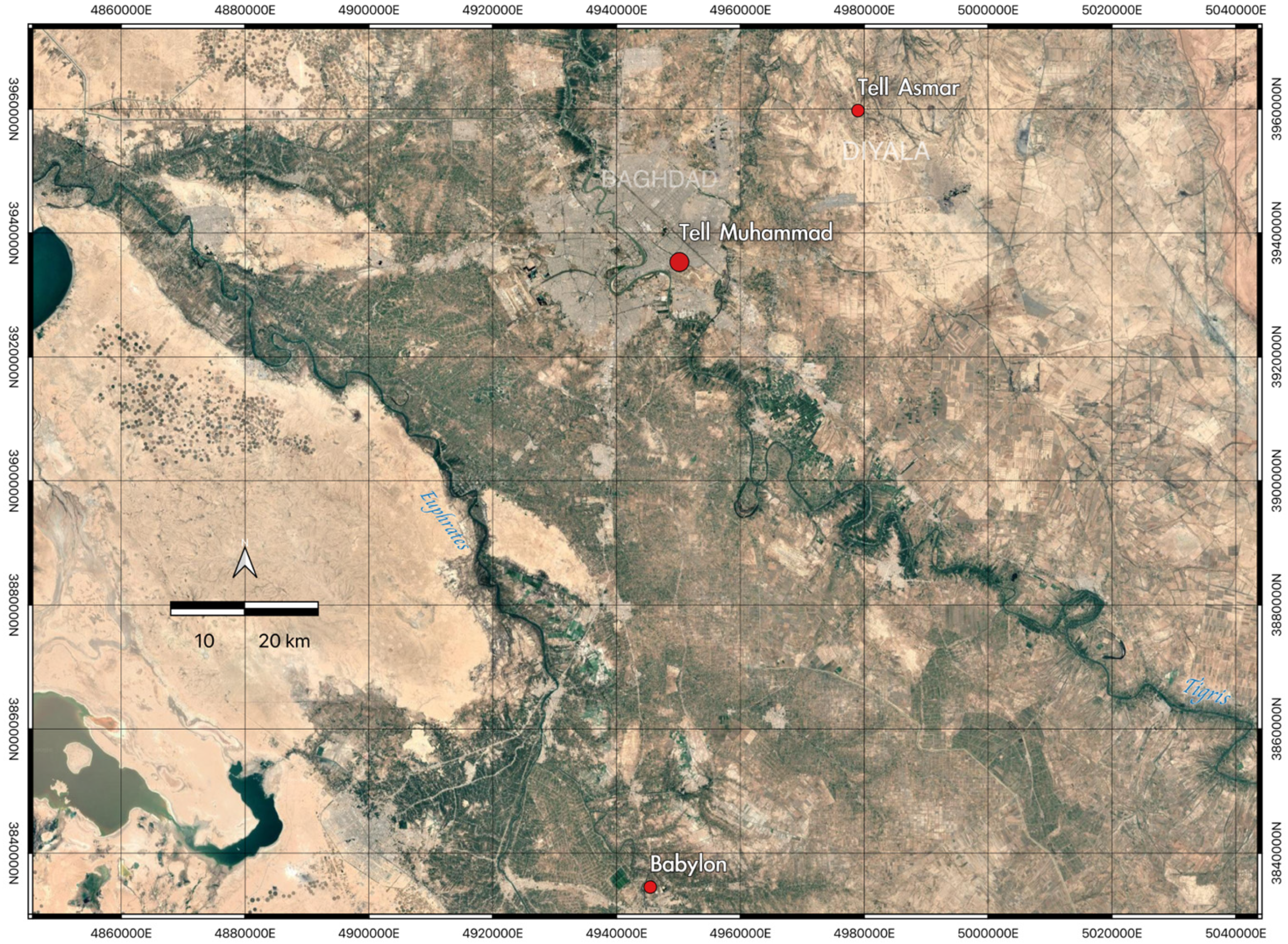
- Archaeological excavation at the site of Tell Muhammad, where in the 1850s Captain Felix Jones and Sir Austen Henry Layard discovered copper-alloy mace-heads with inscriptions referring to a possible “palace of Hammurabi” [3];
- -
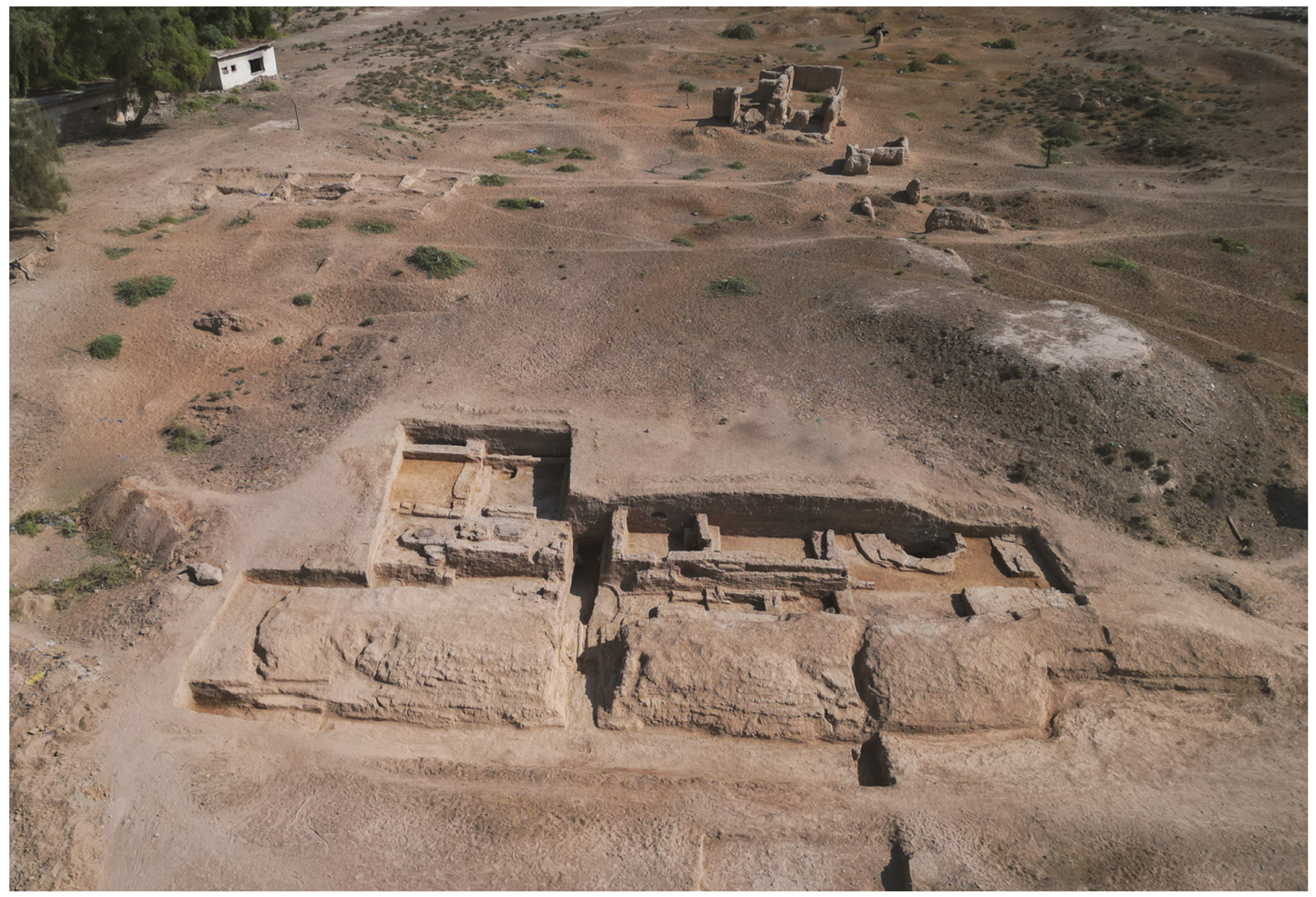
- Restoration of the adobe architecture uncovered during excavations conducted both in the 1850s and, especially, in the 1970s and 1980s by an Iraqi team from the SBAH [4,5], through a sustainable architectural conservation program carried out in collaboration with an expert in mudbrick architecture (i.e., Claudio Prosperi Porta);
- -
- Planning of an archaeological park at the site of Tell Muhammad, dedicated to the time of Hammurabi, to foster a sense of historical continuity with ancient Mesopotamia for both local and international visitors;
- -
- Public outreach associated with the project’s activities through a temporary exhibition at the Museo dei Saperi e delle Mirabilia Siciliane of the University of Catania in 2024–2025 [6].
2. Conceptual Background: Why Doing Archaeology? From Excavation to Public Engagement: Applying an Ancient Heritage Management Model in Context
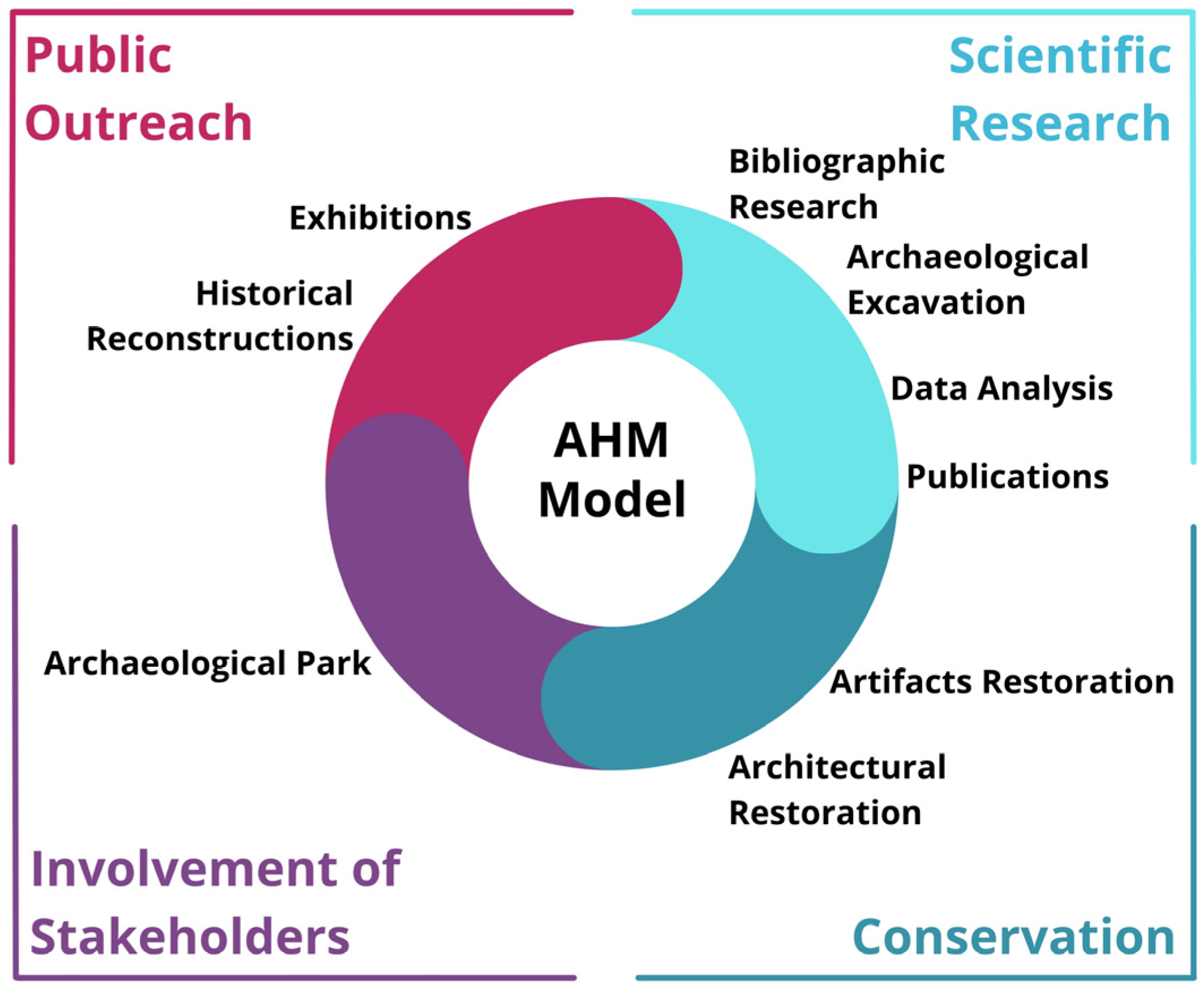
- (1)
- Rigorous scientific research through archaeological excavation, bibliographic research, publications, data storage, and analyses;
- (2)
- Archaeological and architectural conservation;
- (3)
- Involvement of local stakeholders for recognizing the importance of the site as ancient heritage for the communities as well as for tourism through, for example, the creation of an archaeological park at the site;
- (4)
- Public engagement through the creation of historical reconstruction as well as temporary exhibits useful for promoting the historical importance of the ancient heritage within a broader local as well as international general public.
3. Materials and Methods: A Sustainable Model for Researching, Preserving, and Promoting Ancient Mesopotamian Heritage
4. Results: Applying an Ancient Heritage Management (AHM) Model at Tell Muhammad, Baghdad (Iraq)
- Continuing the excavation and research at the ancient site of Tell Muhammad;
- Conserving the archaeological and adobe architectural remains;
- Establishing, together with the local authorities, an archaeological park in the city of Baghdad to present the results of the archaeological project to a broader public;
- Creating a broader framework for public engagement through events.
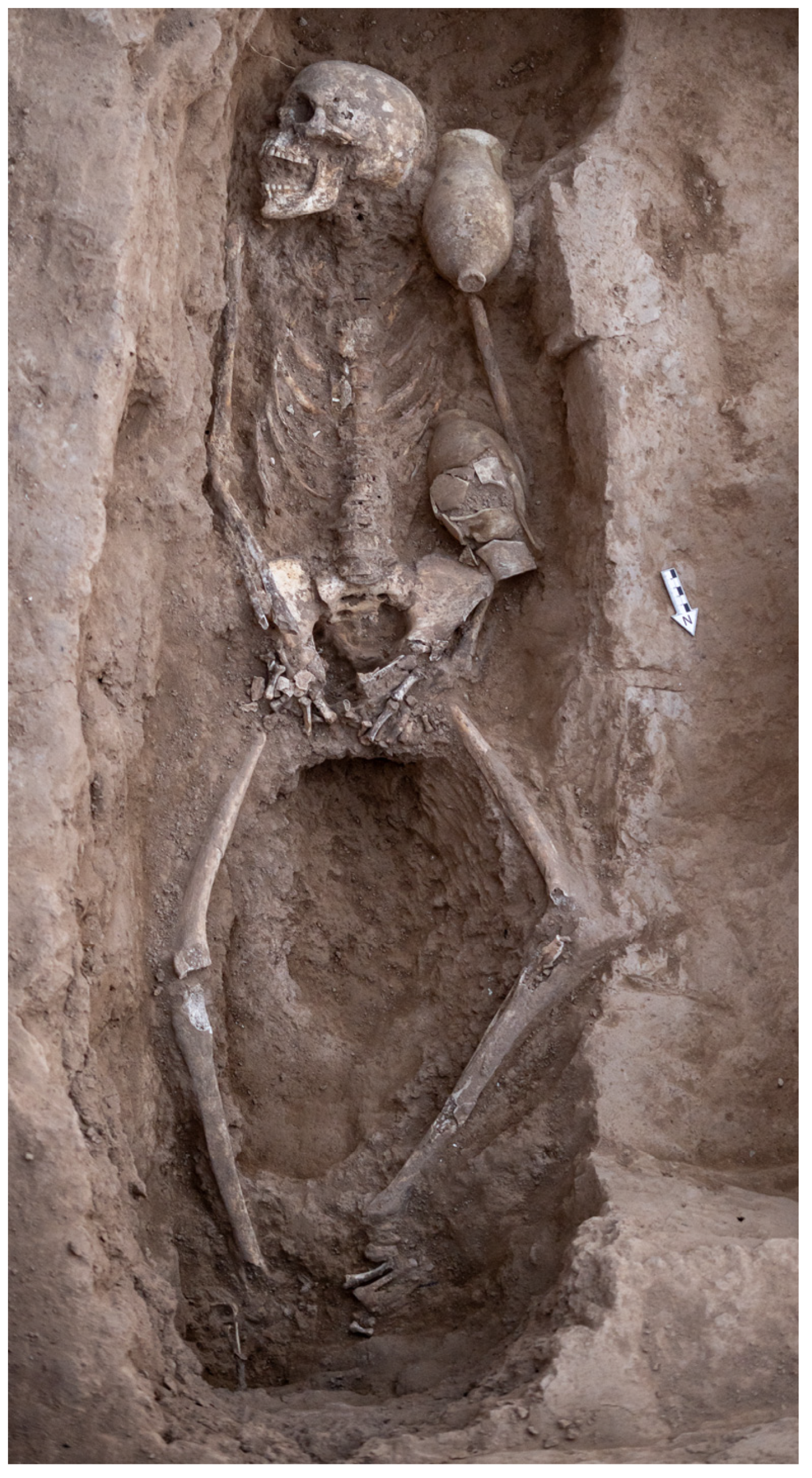
4.1. The Archaeological Excavation and Scientific Research
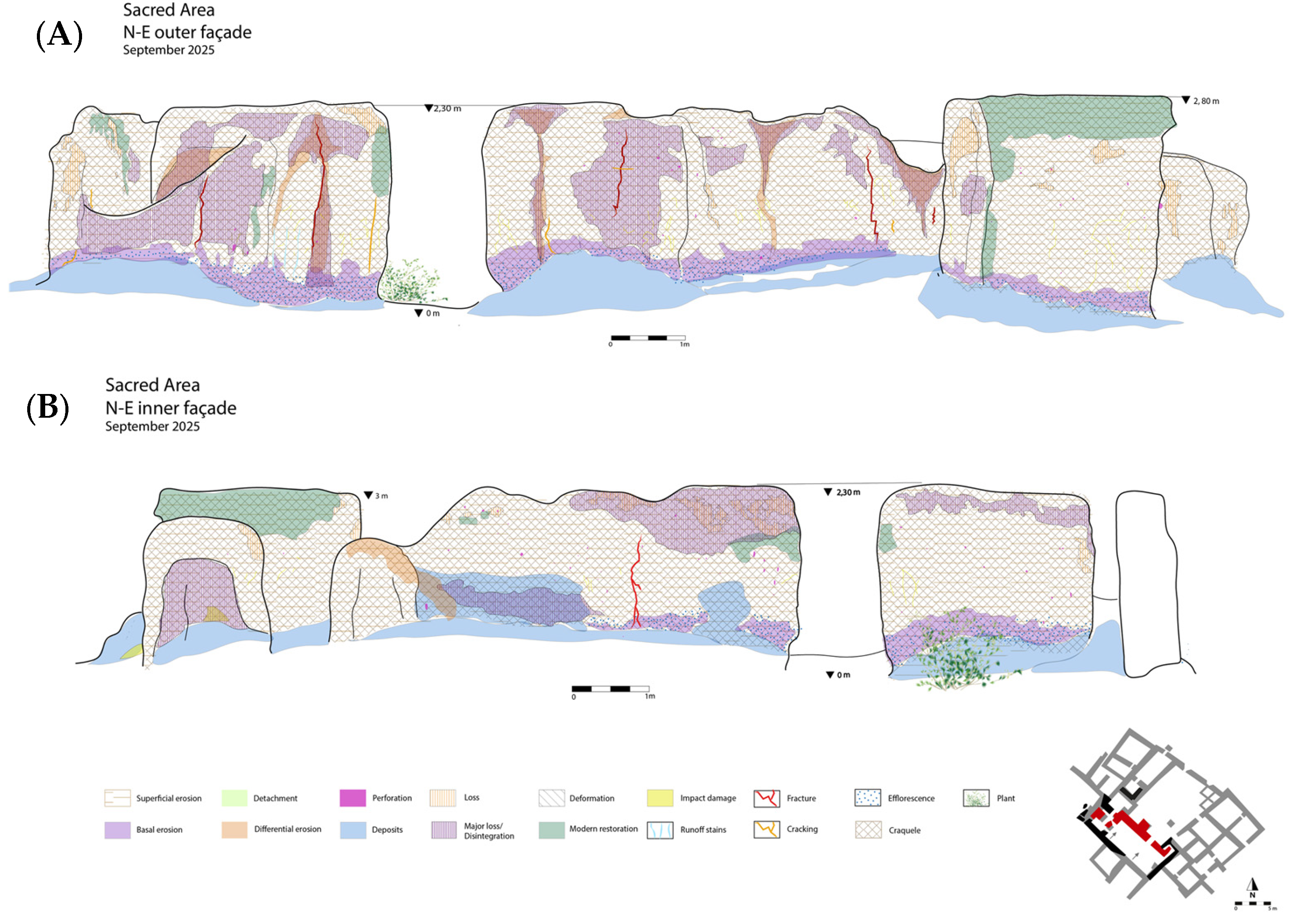
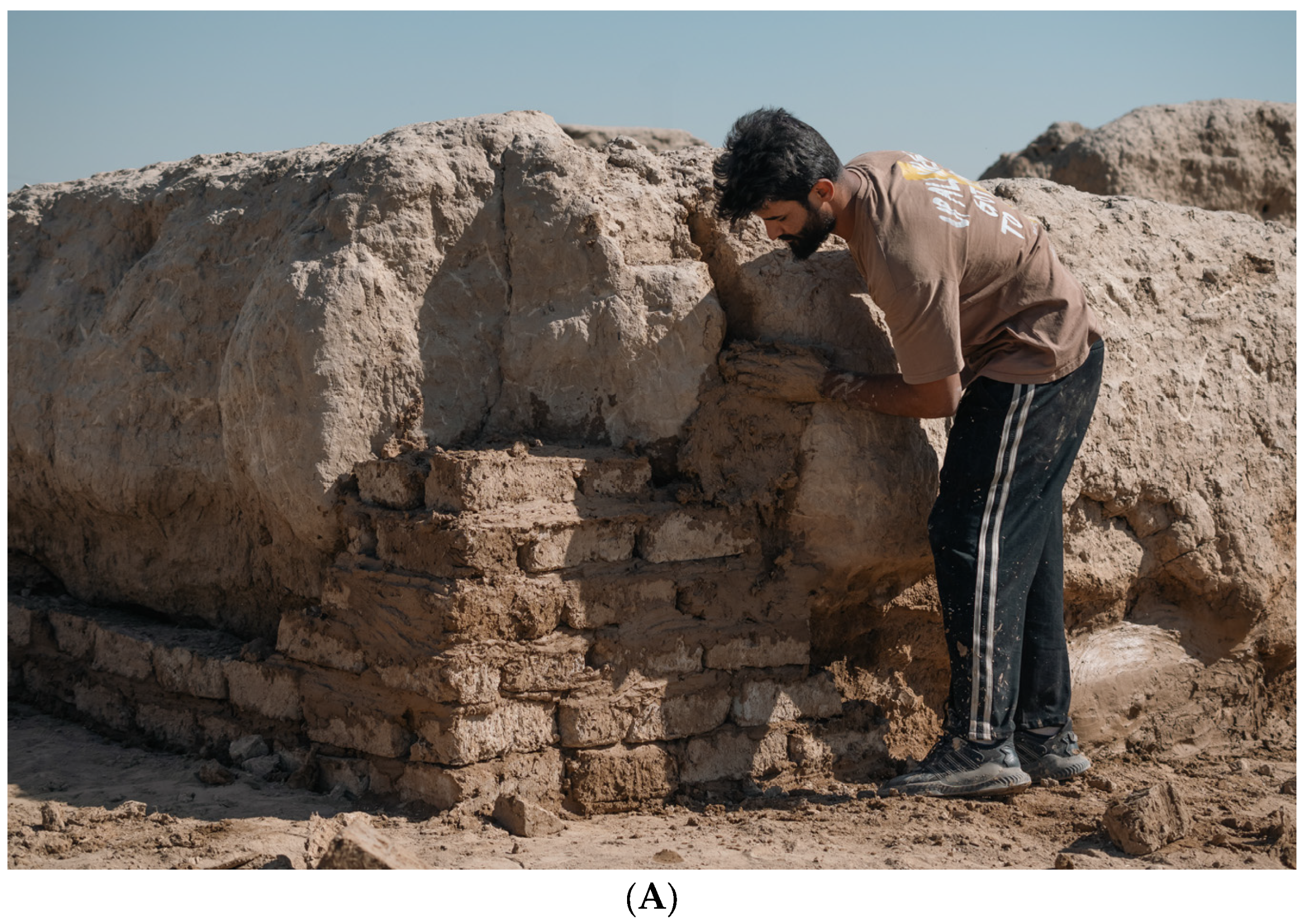
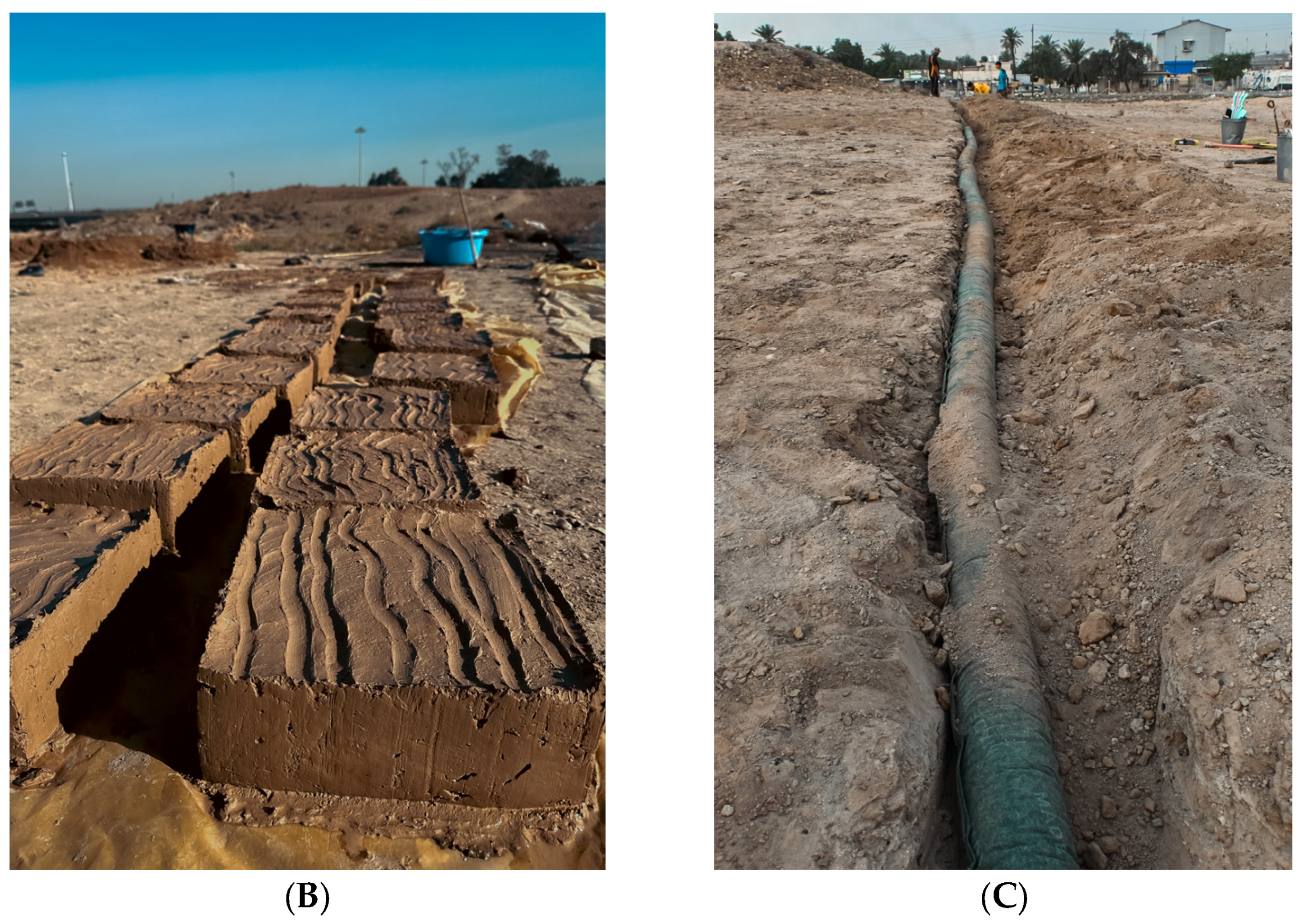
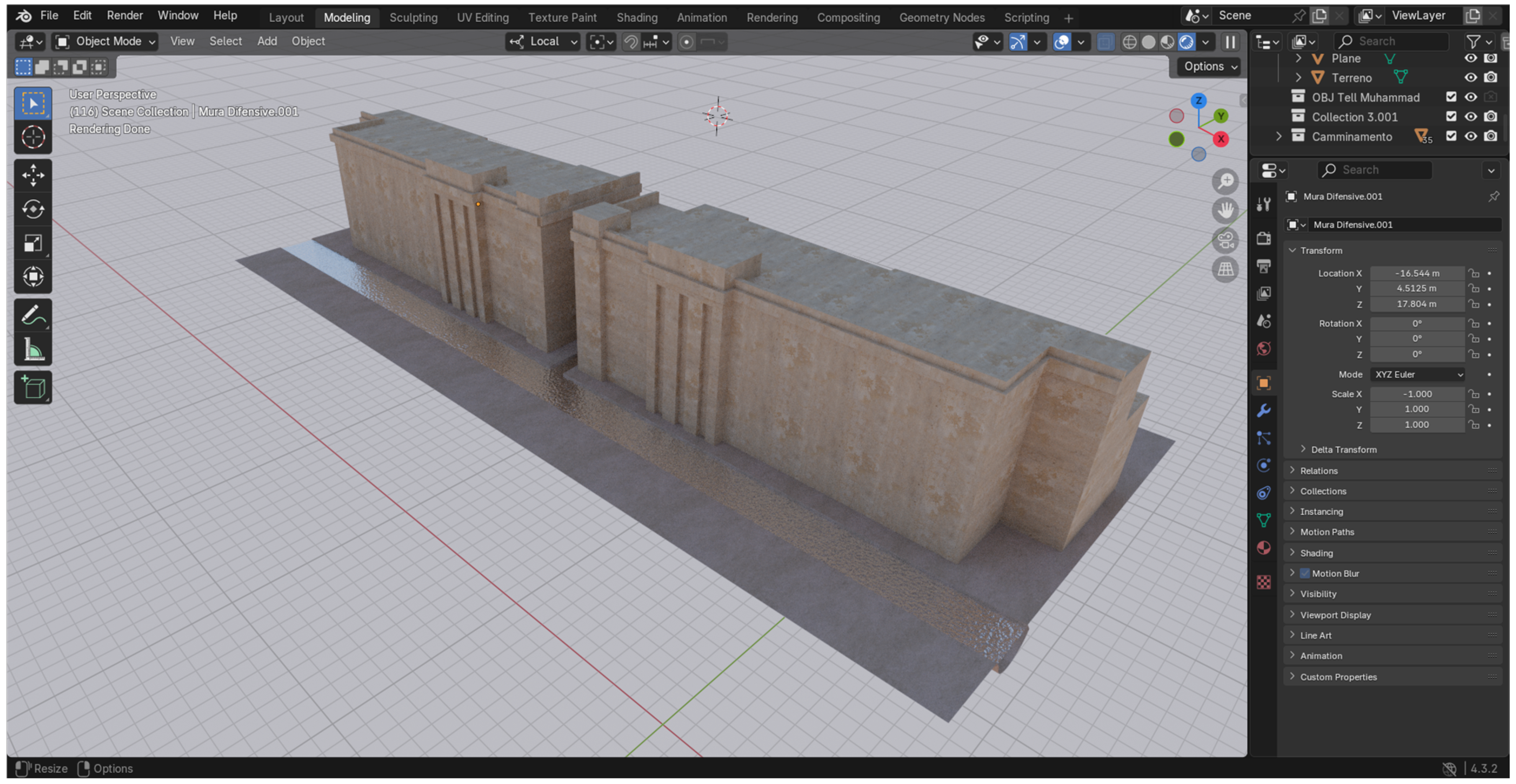
4.2. The Conservation of the Adobe Architecture
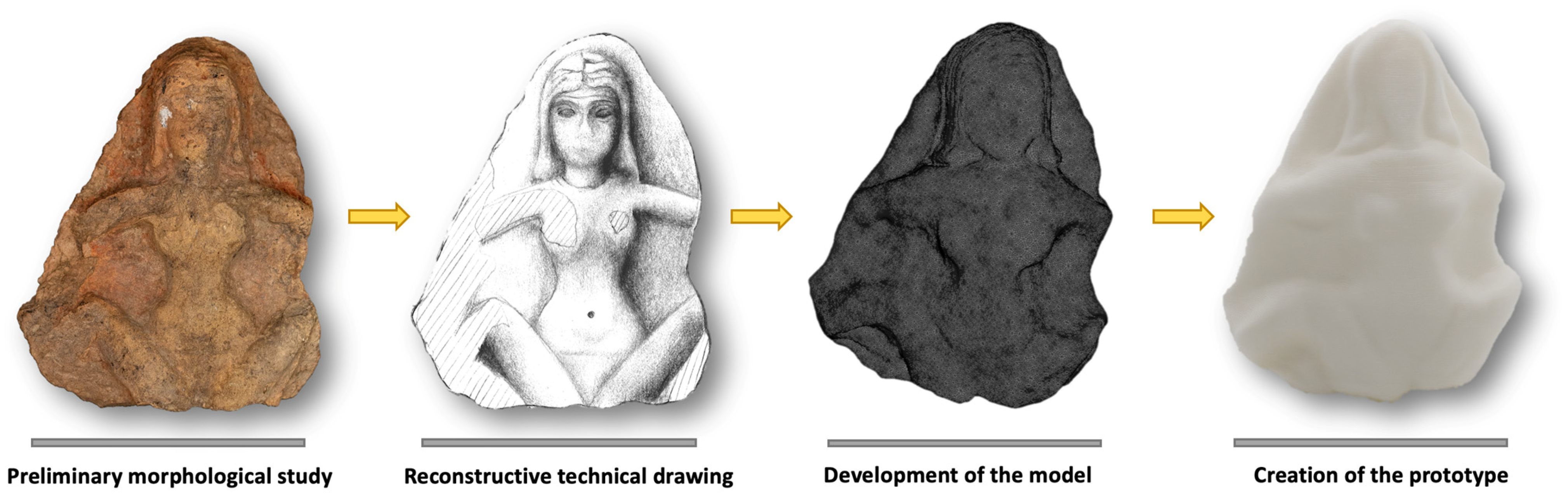
4.3. Public Engagement and Involvement of Local Stakeholders: A Plan for the Tell Muhammad Archaeological Park
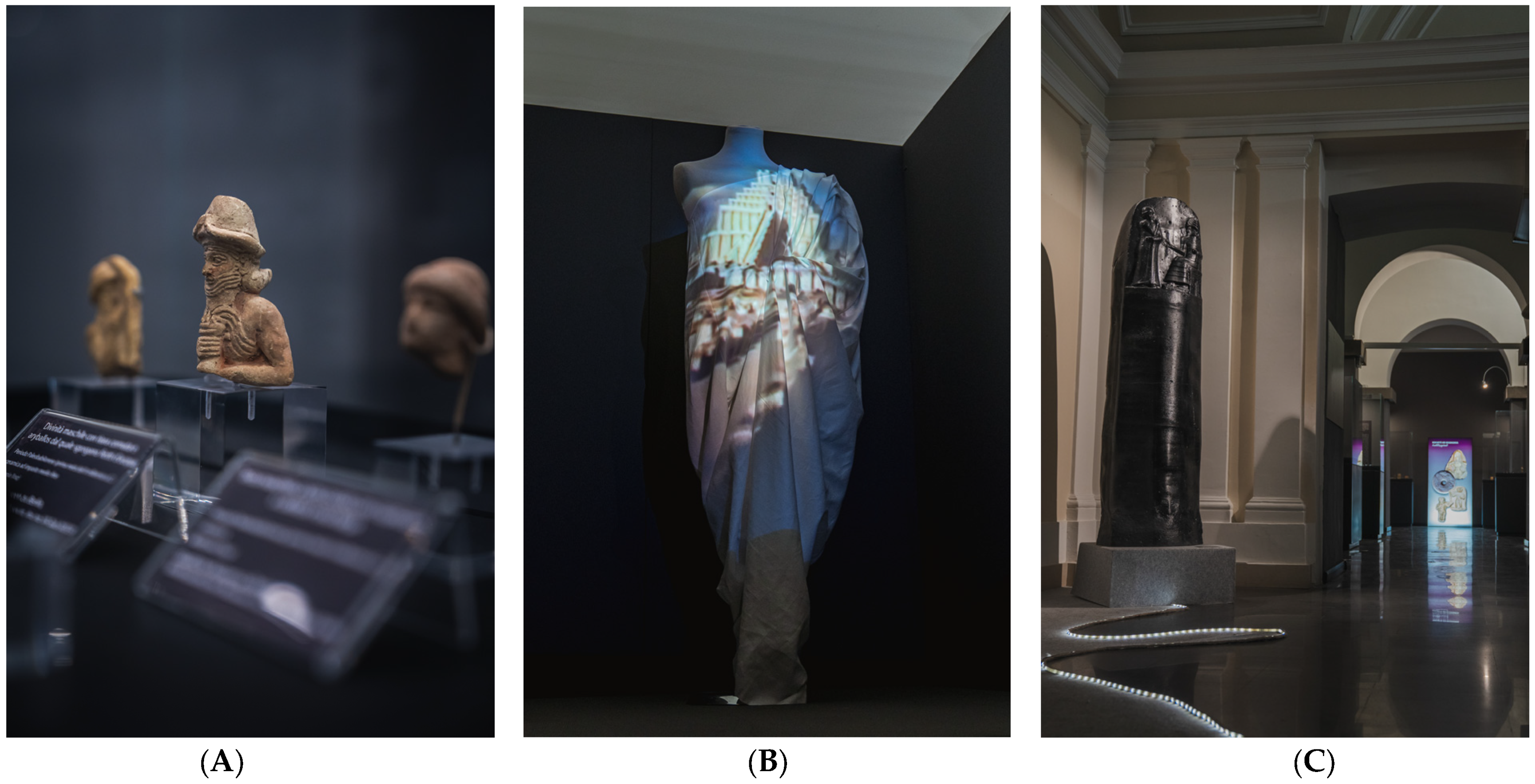
4.4. Public Outreach—On Hammurabi’s Path: An Exhibit Dedicated to an Iconic Figure
5. Discussion: Hammurabi and His Time, the Past for the Future
5.1. Envisioning a Model for AHM in Iraq
5.2. How to Control the Results
- Annual monitoring of the stability of preserved adobe architecture through a GIS that—thanks to the application of machine learning processes, whether ontology-based or Artificial Intelligence-based—can help scientists adjust practices in response, for example, to weather conditions or political instabilities [37];
- Measuring increases in the number of visitors (especially school groups) to the site, as well as requests from schools in Iraq or Italy for scholarly involvement in explaining the importance of the Old Babylonian period in human history;
- Tracking increases in internet searches related to specific keywords (e.g., Hammurabi, Baghdad heritage, Tell Muhammad, Babylon, etc.) or the number of views of videos or online content dedicated to these topics [38].
5.3. The Future Outcome of the AHM Model Applied at Tell Muhammad
6. Conclusions
Author Contributions
Funding
Data Availability Statement
Acknowledgments
Conflicts of Interest
References
- Charpin, D. Hammurabi of Babylon, 2nd ed.; I.B.Tauris: London, UK; New York, NY, USA, 2012. [Google Scholar]
- Van de Mieroop, M. King Hammurabi of Babylon. A Biography; Blackwell Publishing: Malden, MA, USA; Oxford, UK; Carlton, Australia, 2005. [Google Scholar]
- Curtis, J.B. Maceheads from Tell Mohammed in the British Museum. In From the Upper Sea to the Lower Sea. Studies on the History of Assyria and Babylonia in Honour of A.K. Grayson; Frame, G., Wilding, L.S., Eds.; NINO: Leiden, The Netherlands, 2004; pp. 57–66. [Google Scholar]
- Hamza, H.A. Tall Muhammad. The Eighth Season of Excavations. In Between the Cultures. The Central Tigris Region from the 3rd to the 1st Millennium BC (HSAO); Miglus, P.A., Mühl, S., Eds.; PUB: Heidelberg, Germany, 2011; Volume 14, pp. 405–416. [Google Scholar]
- Metaab, A.; Hamza, H.A.; Rasheed, M.; Shakir, S. Tell Mohammed Excavations. Sumer 1989–1990, 46, 128–149. [Google Scholar]
- Laneri, N.; Barone, G. Da Babilonia a Baghdad: Sulle Tracce di Hammurabi; Museo dei Saperi e della Mirabilia Siciliane; Fondazione Oelle: Catania, Italy, 2024. [Google Scholar]
- King, T.F. Doing Archaeology: A Cultural Resource Management Perspective; Routledge: London, UK, 2007. [Google Scholar]
- King, T.F. Cultural Resource Management: A Collaborative Primer for Archaeologists; Berghahn Books: New York, NY, USA; Oxford, UK, 2020. [Google Scholar] [CrossRef]
- Belford, P.; Wait, G. Ethics in Archaeological Practice; Routledge: London, UK, 2025. [Google Scholar] [CrossRef]
- McManamon, F.P. (Ed.) New Perspectives in Cultural Resource Management; Routledge: London, UK, 2018. [Google Scholar]
- De Giosa, P. World Heritage and Urban Politics in Melaka, Malaysia A Cityscape below the Winds; Routledge: London, UK, 2021. [Google Scholar] [CrossRef]
- UNESCO United Nations Educational; Scientific and Cultural Organization. Convention Concerning the Protection of the World Cultural and Natural Heritage. In Proceedings of the General Conference at Its Seventeenth Session Paris, Paris, France, 16 November 1972. [Google Scholar]
- Adams, M.C.R. Land Behind Baghdad: A History of Settlement on the Diyala Plains; University of Chicago Press: Chicago, IL, USA, 1965. [Google Scholar]
- Laneri, N.; Rositani, A.; Russo, S.G.; Mendola, A.; Mammana, R.C.; Hinks, M.R.; Borgesi, A. The Baghdad Urban Archaeological Project: A Preliminary Report on the First Two Seasons (2022–2023) of Archaeological Research at the Old Babylonian Site of Tell Muhammad (Baghdad). EVOA 2025, 47, 139–168. [Google Scholar] [CrossRef]
- Baqir, T. Excavations at Tell Harmal II: Tell Harmal. A Preliminary Report. Sumer 1946, 22–30. [Google Scholar]
- Goetze, A. The Laws of Eshnunna. AASOR 1956, 31. [Google Scholar] [CrossRef]
- Yaron, R. The Laws of Eshnunna, 2nd ed.; The Magnes Press: Jerusalem, Israel; The Hebrew University: Jerusalem, Israel; E.J. Brill: Leiden, The Netherlands, 1988. [Google Scholar]
- Moorey, P.R.S. Ancient Mesopotamian Materials and Industries; The Archaeological Evidence; Clarendon Press: Oxford, UK, 1994. [Google Scholar]
- Quenet, P. Ana Ziqquratim. Sur la Piste de Babel; Presses Universitaires de Strasbourg: Strasbourg, France, 2016. [Google Scholar]
- Achenza, M.; Sanna, U. Il manuale tematico della terra cruda. In I Manuali del Recupero dei Centri Storici Della Sardegna; DEI: Rome, Italy, 2009. [Google Scholar]
- De Vito, L. Eco-Architettura: Studio, Recupero e Valorizzazione Delle Antiche Strutture in Mattone Crudo. Unpublished Ph.D. Dissertation, La Sapienza, Rome, Italy, 2025. [Google Scholar]
- Nadali, D. How to Deal with Adobe Architecture in the Ancient Near East: The Case of Ebla in Syria. Heritage 2023, 6, 1856–1870. [Google Scholar] [CrossRef]
- ICOMOS-ISCS. Illustrated Glossary on Stone Deterioration Patterns/Glossaire Illustré sur les Formes D’altération de la Pierre; ICOMOS: Paris, France, 2008; Volume 15. [Google Scholar]
- EN 16455:2014; Conservation of Cultural Heritage—Extraction and Determination of Soluble Salts in Natural Stone and Related Materials Used in and from Cultural Heritage. European Committee for Standardization (CEN): Brussels, Belgium, 2014.
- Lewin, S.Z. The weathering of masonry decay through crystallization. In Preprints Conservation Historic Stone Building Monument; Barkin, S.M., Ed.; National Academic Press: Washinghton, DC, USA, 1982; pp. 120–144. [Google Scholar]
- Amoroso, G.G.; Fassina, V. Stone Decay and Conservation; Elsevier: Amsterdam, The Netherlands, 1983. [Google Scholar]
- Rodriguez Navarro, C.; Dohene, E. Salt weathering: Influence of evaporation rate, supersaturation and crystallization pattern. Earth Surf. Process Landf. 1999, 24, 191–209. [Google Scholar] [CrossRef]
- Nora, P. Les Lieux de mémoire. In La Nation; Gallimard: Paris, France, 1986; Volume 2/3. [Google Scholar]
- Jones, J.F. Memoirs by Commander James Felix Jones; Government at the Bombay Education Society’s Press: Bombay, India, 1857. [Google Scholar]
- Layard, A.H. Discoveries Among the Ruins of Nineveh and Babylon; Putnam & Co.: New York, NY, USA, 1853. [Google Scholar]
- Lo Brutto, M.; Girelli, V.A. 3D Virtual Reconstruction for Archaeological Sites; MDPI: Basel, Switzerland, 2022. [Google Scholar]
- Buscemi, F.; Figuera, M.; Gallo, G.; Lo Duca, A.; Marchetti, A. Sharing structured archaeological 3D data: Open source tools for artificial intelligence applications and collaborative frameworks. Archeol. E Calc. 2023, 34, 145–156. [Google Scholar] [CrossRef]
- Garcìa-Molina, D.F.; Carmona-Avila, R.; Moltavo-Gil, J.M.; Rubio-Paramio, M.A. Comprehensive design of the 3D printing process for architectural models. A case study: The medieval walled enclosure of Priego De Cordoba. Multimed. Tools Appl. 2025, 84, 4881–4905. [Google Scholar] [CrossRef]
- Sánchez-Martínez, J.; Calmet, K.; Martínez Moreno, J.; Roda Gilabert, X. Virtual reconstruction of stone tool refitting by using 3D modelling and the Blender Engine: The application of the “ReViBE” protocol to the archaeological record. PLoS ONE 2025, 19, e0309611. [Google Scholar] [CrossRef] [PubMed]
- Neglia, G.; Angrisano, M.; Mecca, I.; Fabbrocino, F. Cultural Heritage at Risk in World Conflicts: Digital Tools’ Contribution to Its Preservation. Heritage 2024, 7, 6343–6365. [Google Scholar] [CrossRef]
- Paloma, G.; Cathy, D. Integrating cultural resources and heritage in climate action: A review of nine climate plans. Environ. Sci. Policy 2025, 171, 104127. [Google Scholar] [CrossRef]
- Acierno, M.; Fiorani, D. Conservation Process Model. An ontology for Conservation in Architecture; Sapienza Università Editrice: Roma, Italy, 2025. [Google Scholar] [CrossRef]
- Casparri, G. Instagram ss a Tool for Archaeological Science Communication. Digit. Appl. Archaeol. Cult. Herit. 2022, 24, e00219. [Google Scholar] [CrossRef]
- Meskell, L. Archaeology Under Fire. Nationalism, Politics and Heritage in the Eastern Mediterranean and Middle East; Routledge: London, UK, 1999. [Google Scholar]
- Bokova, I. 2013. Available online: https://www.unesco.org/en/articles/stop-destruction-syrian-cultural-heritage-urges-unesco-director-general-0 (accessed on 10 September 2013).
- Matthiae, P. Distruzioni, Saccheggi e Rinascite. Gli Attacchi al Patrimonio Artistico Dall’antichità all’Isis; Electa: Milan, Italy, 2015. [Google Scholar]
- Rothfield, L. The Rape of Mesopotamia: Behind the Looting of the Iraq Museum; University of Chicago Press: Chicago, IL, USA, 2009. [Google Scholar] [CrossRef]
- González-Ruibal, A.; González, P.A.; Criado-Boado, F. Against reactionary populism: Towards a new public archaeology. Antiquity 2018, 92, 507–515. [Google Scholar] [CrossRef]
- Hutchings, R.M.; La Salle, M. Salvaging archaeology: Why cultural resource management is not part of the ‘new public archaeology. Antiquity 2018, 92, e10. [Google Scholar] [CrossRef]



Disclaimer/Publisher’s Note: The statements, opinions and data contained in all publications are solely those of the individual author(s) and contributor(s) and not of MDPI and/or the editor(s). MDPI and/or the editor(s) disclaim responsibility for any injury to people or property resulting from any ideas, methods, instructions or products referred to in the content. |
© 2026 by the authors. Licensee MDPI, Basel, Switzerland. This article is an open access article distributed under the terms and conditions of the Creative Commons Attribution (CC BY) license.
Share and Cite
Laneri, N.; Barone, G.; Mazzoleni, P.; Pappalardo, C.; Mendola, A.; Mammana, R.; Fugazzotto, M.; Borgesi, A.; Azzaro, V.; Spironello, M. Conserving the Memory of Hammurabi: A Sustainable Model for Ancient Heritage Management at the Old Babylonian Site of Tell Muhammad, Iraq. Heritage 2026, 9, 47. https://doi.org/10.3390/heritage9020047
Laneri N, Barone G, Mazzoleni P, Pappalardo C, Mendola A, Mammana R, Fugazzotto M, Borgesi A, Azzaro V, Spironello M. Conserving the Memory of Hammurabi: A Sustainable Model for Ancient Heritage Management at the Old Babylonian Site of Tell Muhammad, Iraq. Heritage. 2026; 9(2):47. https://doi.org/10.3390/heritage9020047
Chicago/Turabian StyleLaneri, Nicola, Germana Barone, Paolo Mazzoleni, Chiara Pappalardo, Alice Mendola, Rachele Mammana, Maura Fugazzotto, Aurora Borgesi, Vittorio Azzaro, and Marilisa Spironello. 2026. "Conserving the Memory of Hammurabi: A Sustainable Model for Ancient Heritage Management at the Old Babylonian Site of Tell Muhammad, Iraq" Heritage 9, no. 2: 47. https://doi.org/10.3390/heritage9020047
APA StyleLaneri, N., Barone, G., Mazzoleni, P., Pappalardo, C., Mendola, A., Mammana, R., Fugazzotto, M., Borgesi, A., Azzaro, V., & Spironello, M. (2026). Conserving the Memory of Hammurabi: A Sustainable Model for Ancient Heritage Management at the Old Babylonian Site of Tell Muhammad, Iraq. Heritage, 9(2), 47. https://doi.org/10.3390/heritage9020047