1. Introduction
In recent years, the demand for long focal infrared cameras has been increasing in the defense and security fields. DRI, an important specification for infrared cameras for surveillance, is a simulation value provided by each company. In this article, we will introduce some images taken with a long focal infrared camera to show how we actually obtained the images.
2. Experiment
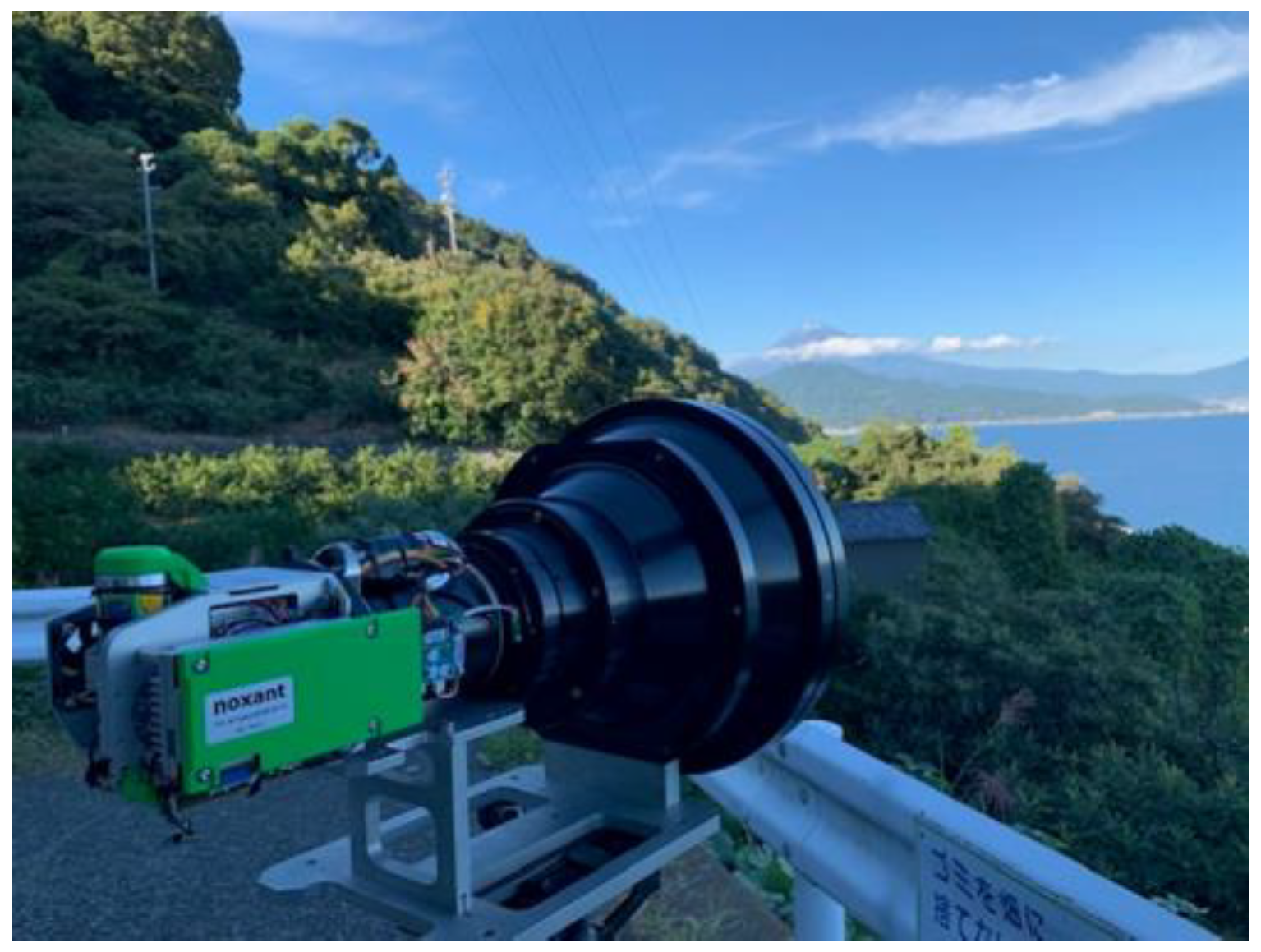
The cameras we used for this experiment were cooled infrared cameras (products from Noxant SAS, Paris, France) with a resolution of 1280 × 720 pixels and maximum focal lengths of 900 mm and 690 mm. The chosen scene is shown in
Figure 1.
Also, the DRI of these cameras is shown in
Table 1. However, the performance of DRI is affected by various environmental factors such as the atmospheric path, temperature, and humidity. So, it is difficult to quantitatively evaluate it through this observation.
2.1. Image of a Ship and a Bird About 20 km Away
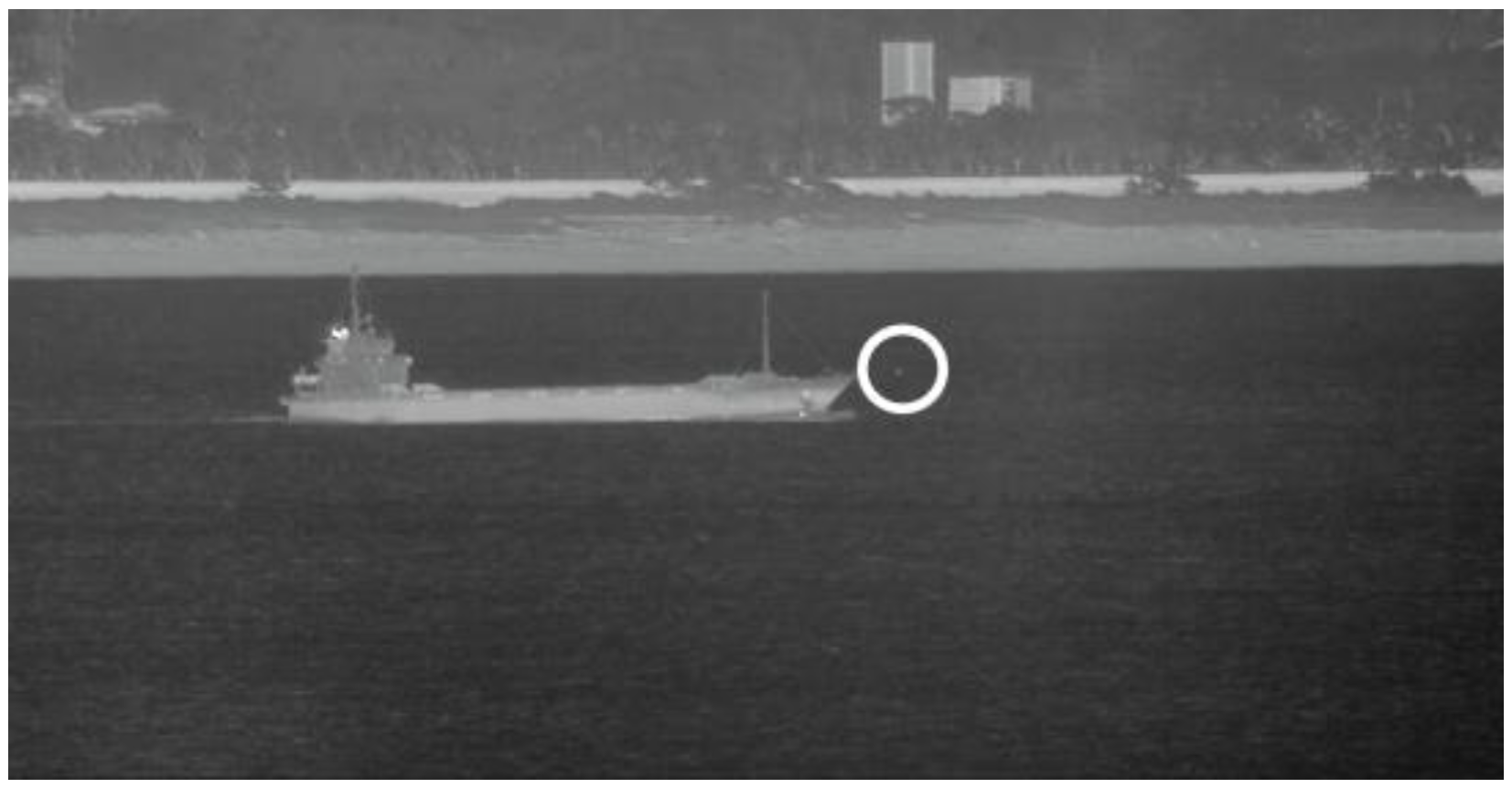
Figure 2 shows an image of a ship and a bird traveling 20 km ahead taken by an infrared camera with a focal length of 900 mm.
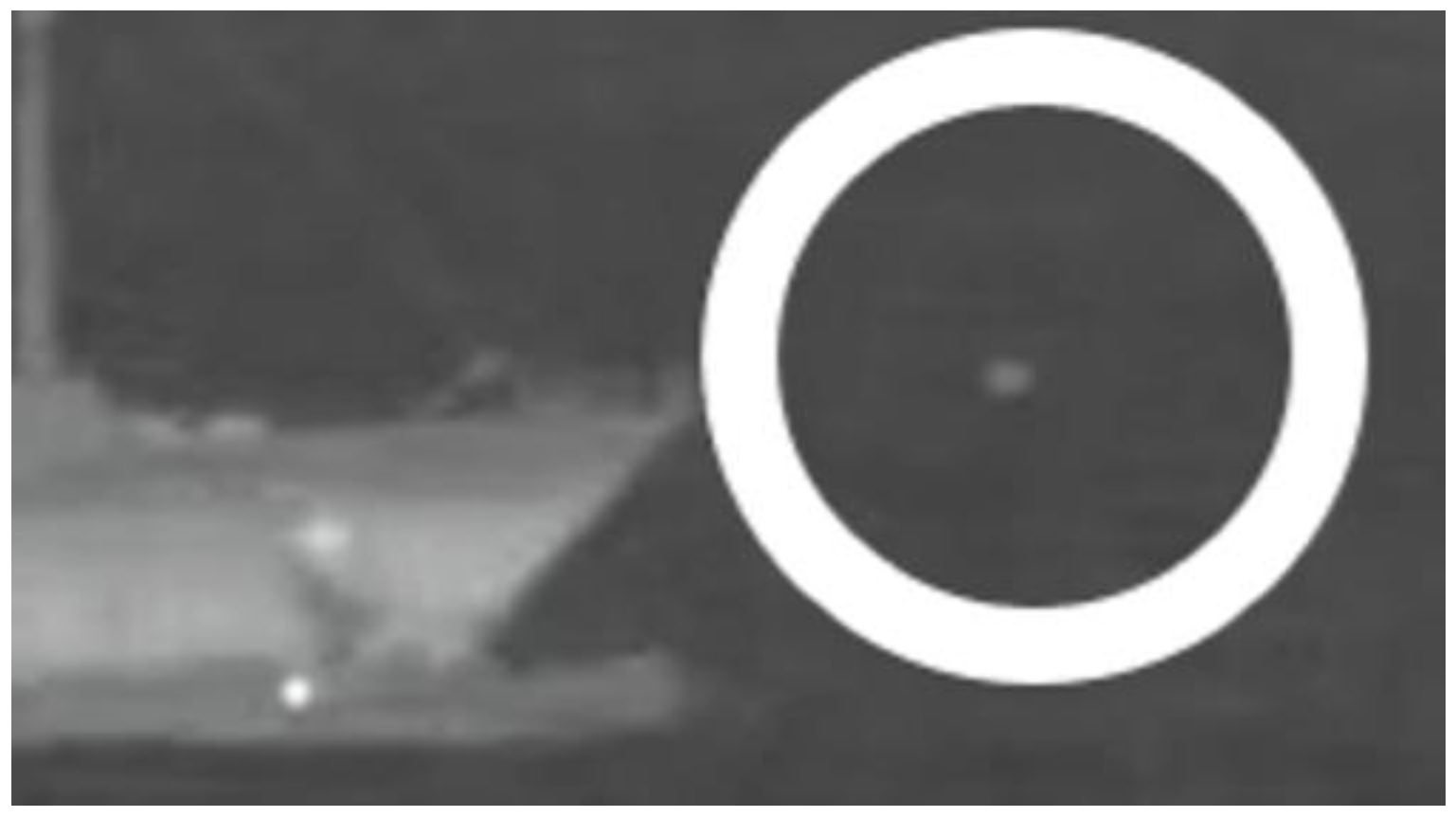
Figure 3 shows an enlarged image of the bird in
Figure 2.
The bird’s size is estimated to be about 40 to 60 cm. The DRI of the UAV (assuming 0.5 m × 0.3 m) holds a D value is 12.7 km, but it can actually be detected from 20 km away.
2.2. Image of a Yacht About 30 km Away
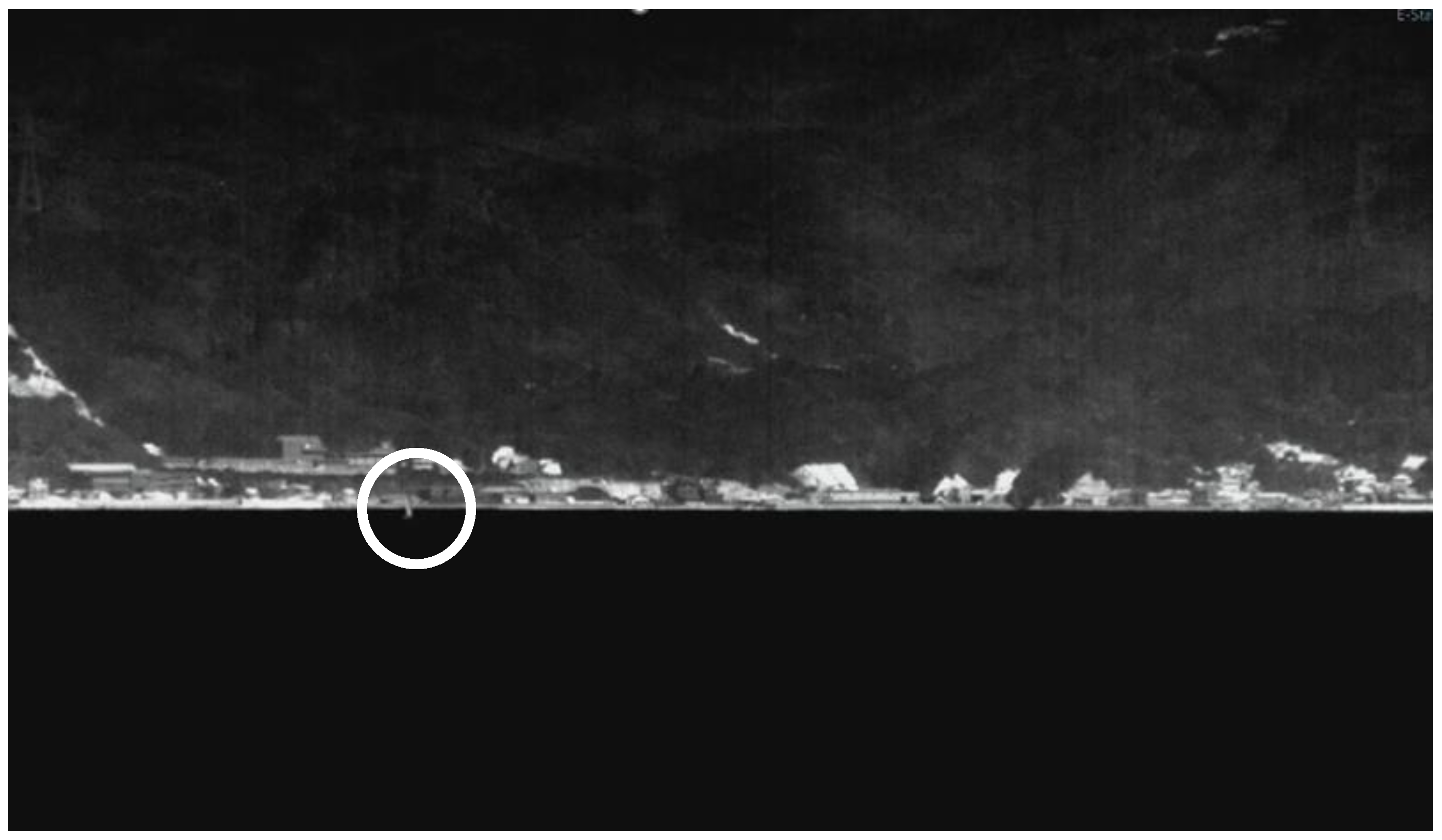
Figure 4 is an image of a yacht about 30 km away. This is clearly an image we can judge as a yacht, so it corresponds to R; the vehicle’s R is 28.5 km according to the specifications, but it can actually be recognized even from a distance of about 30 km.
2.3. Comparison of Maximum Wide Angle and Maximum Narrow Angle Between Focal Lengths of 900 mm and 690 mm
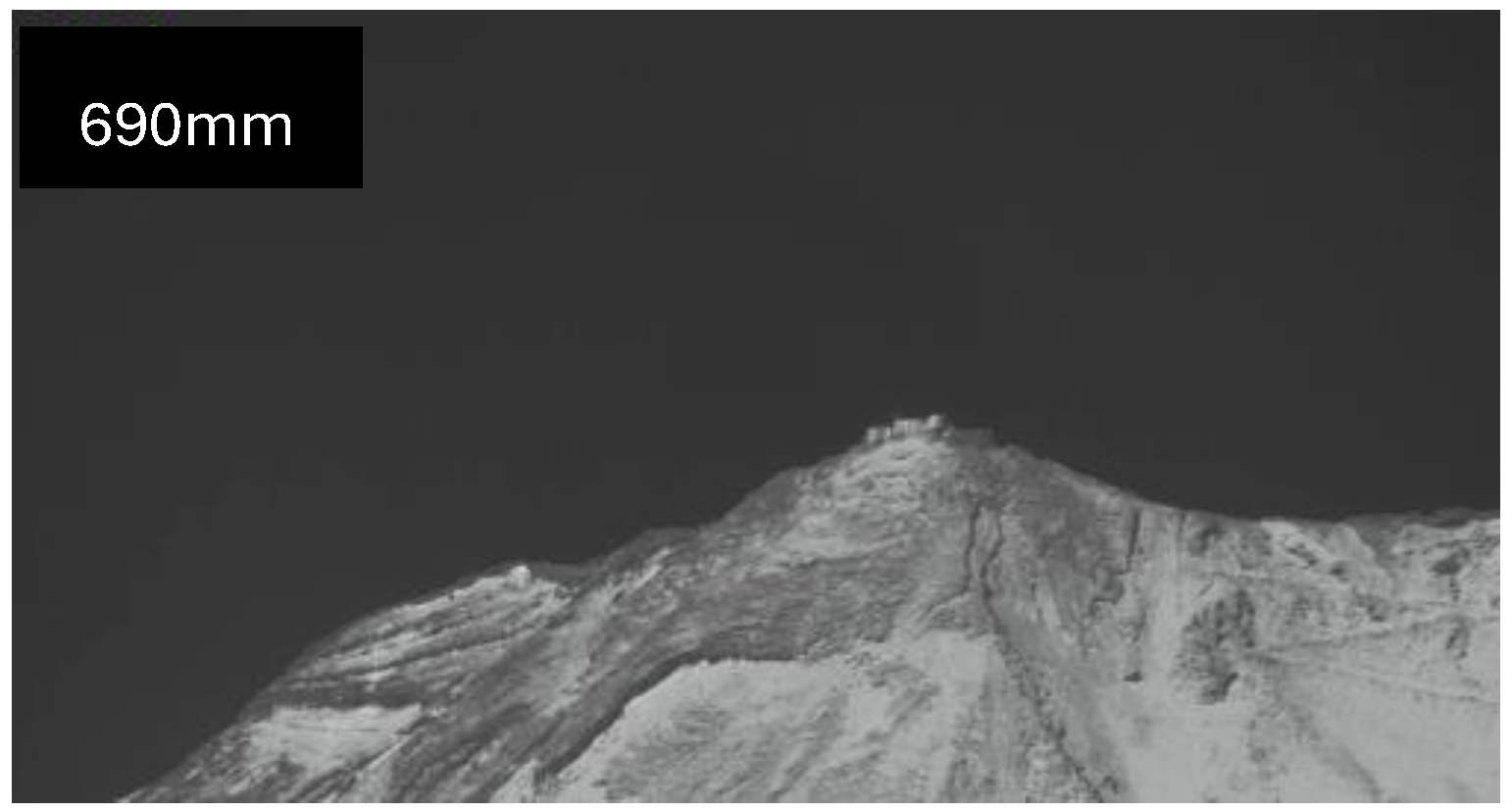
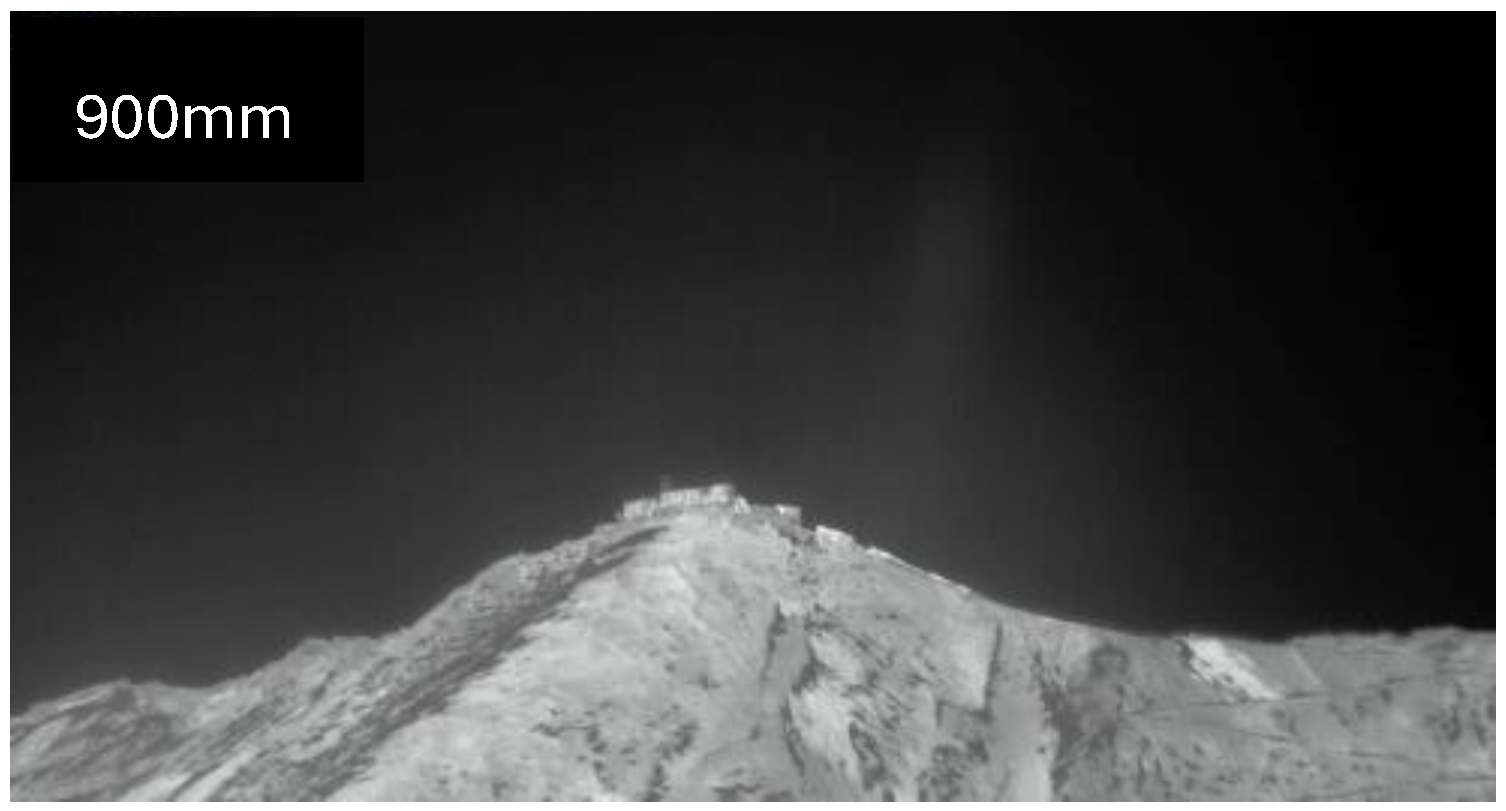
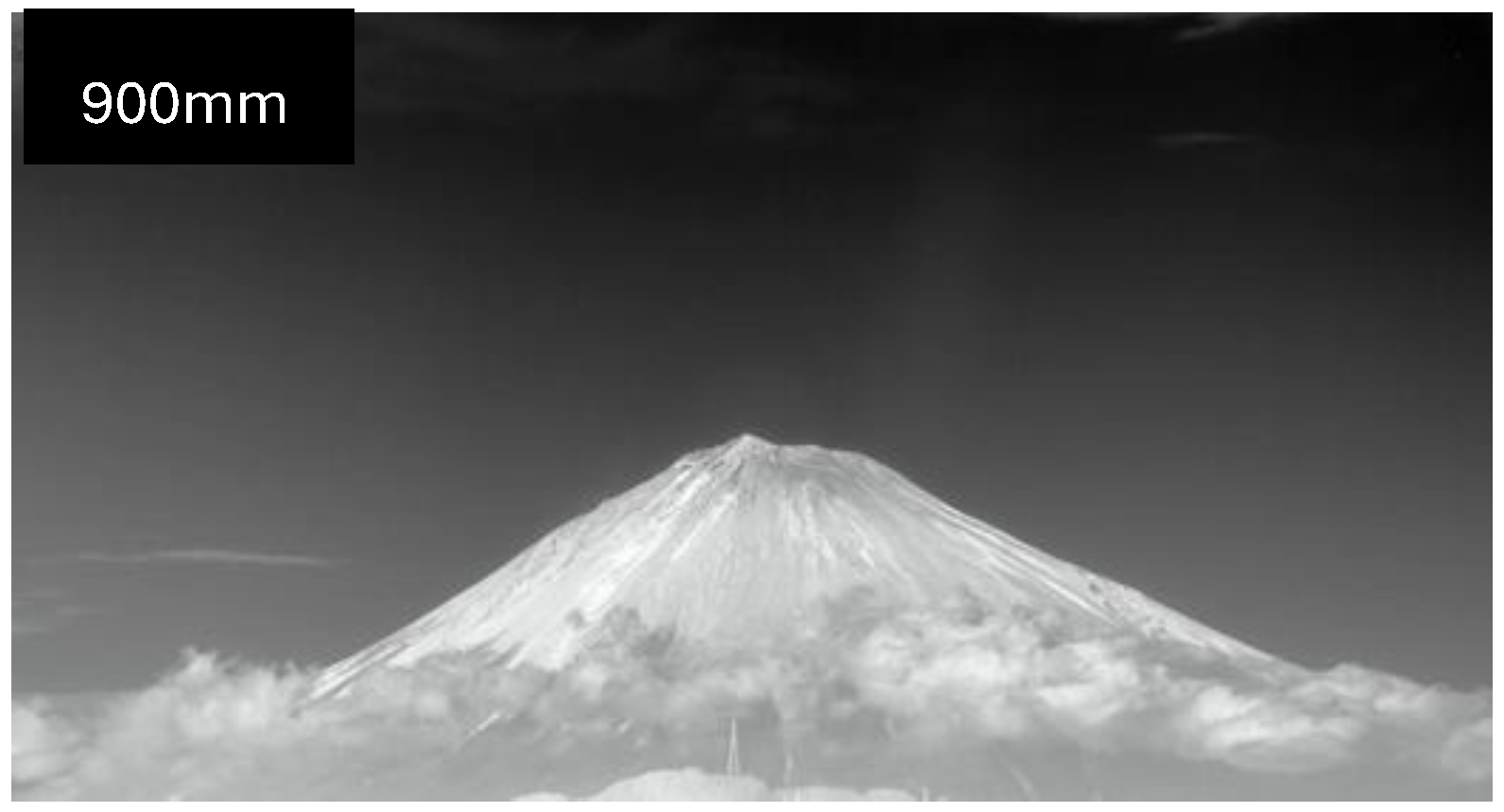
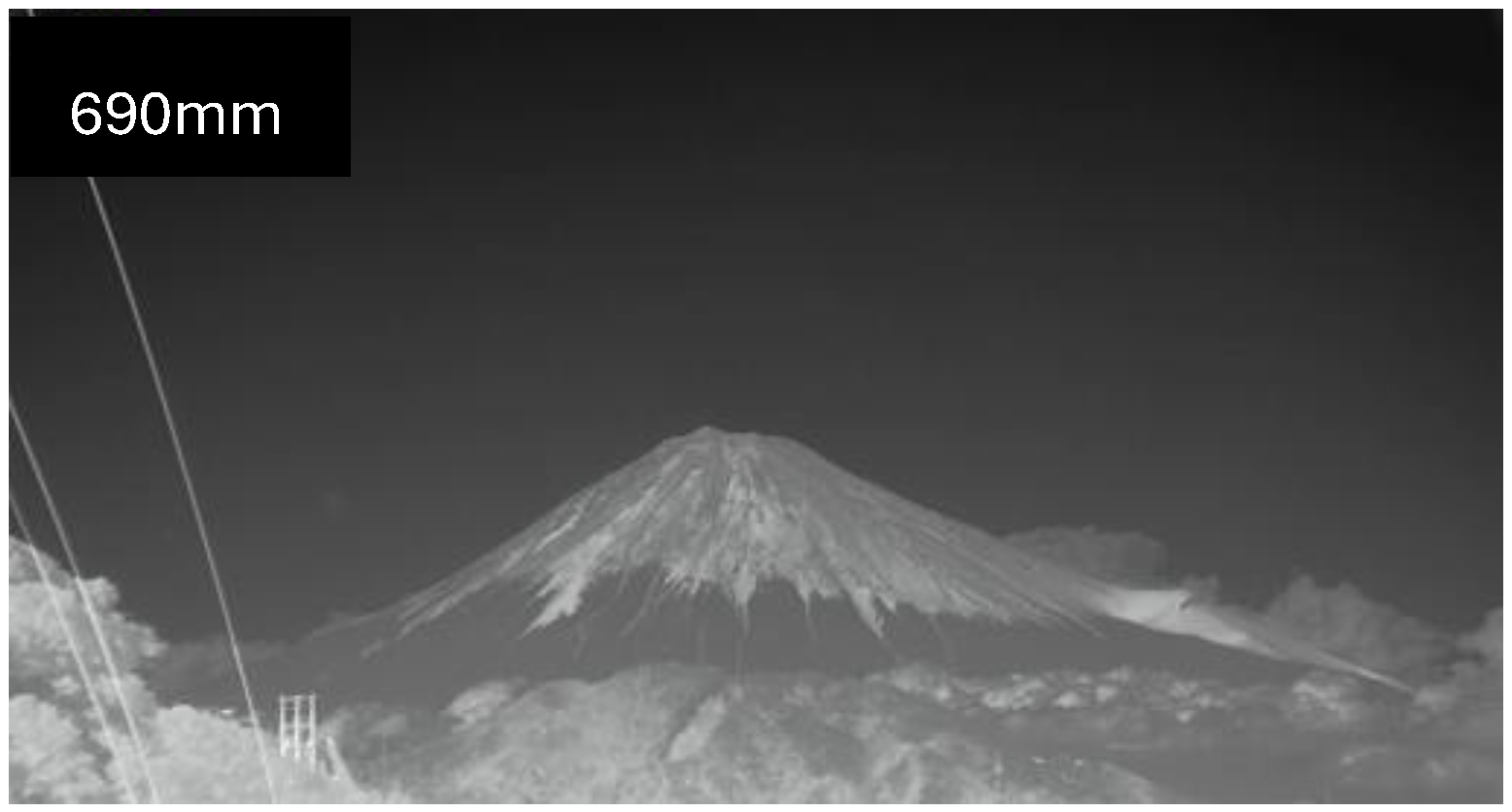
These are the images taken from about 36 km away from the summit of Mt. Fuji to compare the maximum wide angle and maximum narrow angle of 900 mm and 690 mm. The images were taken on different days, but at the same location (
Figure 5,
Figure 6,
Figure 7 and
Figure 8).
Although there are differences between
Figure 5 and
Figure 6, when used for actual surveillance purposes, we think there is little difference if the purpose is detection.
Also, when comparing
Figure 7 and
Figure 8,
Figure 8 has a narrower angle. So, the wide-angle side is also narrow, giving the impression that it is not sufficient for surveillance purposes to see the whole picture.
3. Summary
We introduced some images taken with a long focal infrared camera. As a result, it is possible for the actual DRI value to exceed the specification value. However, this is difficult to define precisely because it is affected by weather, and the atmospheric path between the target and the camera becomes more complex at longer distances. Therefore, it is very important to check the performance under all possible conditions, assuming actual environment.
Also, as we understand from the comparison of images of the summit of Mt. Fuji, selecting a camera for long focal surveillance is not as simple as choosing a camera with a long maximum focal length. It is important to select the focal length range comprehensively according to the application (target size, detection range, etc.).
Author Contributions
Conceptualization, D.T.; methodology, D.T.; validation, D.T.; formal analysis, D.T.; investigation, D.T. and T.Y.; resources, D.T.; data curation, D.T.; writing—original draft preparation, D.T.; writing—review and editing, T.Y.; visualization, D.T.; supervision, T.Y.; project administration, T.Y. All authors have read and agreed to the published version of the manuscript.
Funding
This research received no external funding.
Institutional Review Board Statement
Not applicable.
Informed Consent Statement
Not applicable.
Data Availability Statement
The data presented in this study are available on request from the corresponding author due to privacy.
Conflicts of Interest
All authors Dai Toriyama and Tatsuya Yaoita were employed by the company KEN AUTOMATION, INC. All authors declare that the research was conducted in the absence of any commercial or financial relationships that could be construed as a potential conflict of interest.
| Disclaimer/Publisher’s Note: The statements, opinions and data contained in all publications are solely those of the individual author(s) and contributor(s) and not of MDPI and/or the editor(s). MDPI and/or the editor(s) disclaim responsibility for any injury to people or property resulting from any ideas, methods, instructions or products referred to in the content. |
© 2025 by the authors. Licensee MDPI, Basel, Switzerland. This article is an open access article distributed under the terms and conditions of the Creative Commons Attribution (CC BY) license (https://creativecommons.org/licenses/by/4.0/).