


Abstract
Taylor expansion is a remarkable tool with broad applications in analysis, science, engineering, and mathematics. In this manuscript, we derive a proof of generalized Taylor expansion for polynomials and write its particular case in symmetric quantum calculus. In addition, we define a novel type of calculus that is called symmetric - or dual basic symmetric quantum calculus. Moreover, we derive a symmetric -Taylor expansion for polynomials based on this calculus. After that, we investigate Taylor’s formulae through an example. Furthermore, we define symmetric definite -integral and derive a fundamental law of symmetric -calculus. Finally, we derive the symmetric -Cauchy formula for integrals that enables us to construct the fractional perspectives of -symmetric integrals.
1. Introduction
Taylor’s theorem is an essential part of calculus and analysis because it enables us to examine the nature of functions, including their derivatives. It provides information on the power series of that contains all the orders of derivatives at and is expressed as follows:
where and is a non-negative integer. This is a method for approximating complex functions via less complicated polynomials and is essential for numerous applications in science and mathematics. It also significantly impacts computer science, economics, physics, engineering, scientific simulation, and error analysis. For instance, Taylor’s theorem plays a key role in the finite element methods (FEMs) [1] used for finding the numerical solutions of differential equations in mechanical and civil engineering. In 2021, L. Wei et al. explained neural tensor networks mathematically using Taylor’s formula [2]. L. Gabor and his co-authors used Taylor’s theorem to find the numerical solutions of kinetic differential equations [3]. In 2017, the Taylor expansion was utilized by Y. Ding et al. to identify emotion in faces from image frames [4]. For further readings regarding applications of Taylor’s theorem, see [5,6]. In short, we can approximate a continuous function with a discrete or piecewise continuous function through the Taylor expansion. As stated below, the Taylor expansion is studied in [7] as a generalized form for polynomials.
Theorem 1
([7]). Let be the linear operator defined on a space of polynomials and for any , this list of polynomials satisfies the following conditions:
- (i)
- and for any ,
- (ii)
- is the degree of the polynomial ,
- (iii)
- for any , and .
Then, for any positive integer , the Taylor’s formula for any polynomial of degree is
Throughout this paper, our concern about Taylor expansion is only for the polynomial perspective. The -version of (1) is also studied in [7]. For this purpose, let the polynomial , which satisfies all conditions of Theorem 1, where will be defined below later, and can be defined as
The -Taylor formula for a polynomial is stated as.
Theorem 2
([7]). For any number β and the polynomial with degree , then
is called a -Taylor expansion of .
Many applications of the -Taylor expansion can be seen in the literature. See [8,9,10]. The symmetric -analogue or power of is also studied in [7], which can be written as
We can see that
So, the degree of the polynomial is equal to . In a similar fashion, one thing also noticed in [7] is that the polynomial does not satisfy the first condition of Theorem 1. The author of [7] later proposed another generalized form for the polynomial in [11] that we will mention in the next section. The author has suggested a method for proving the newly suggested result, but the proof is not yet in the literature. So, we will provide proof of the newly suggested result. But before proceeding, we will review some literature about -, symmetric -, and -calculus that is the inspiration for deriving new results in mathematics.
Let an integer and ; then, the -analogue of can be defined as [7]
and is called the -number. Similarly, for any number , the symmetric -analogue of (called the symmetric -number) can be defined as [7]
The classical binomial coefficients can be written as
and play a key role in combinatorics. Its and symmetric version are defined as [7]
and
respectively. Here, and .
Definition 1
([7]). For any function , then
is called a -differential of .
Its corresponding derivative can be defined as.
Definition 2
([7]). For any function , then
is called a -derivative of .
For further details on quantum calculus, the readers can also see [12].
Definition 3
([7]). For any function , then
is called symmetric -differential of .
Definition 4
([7]). For any function , then
is called symmetric -derivative of .
Cruz et al. have introduced a new approach to the study of quantum calculus in [13], namely q-symmetric variational calculus. As a result, they constructed the optimal conditions of the Euler–Lagrange type to study symmetrical variation problems. Many studies have been conducted on symmetric derivatives and integrals in order to get around the drawbacks of classical derivatives and integral operators. In [14], applications of symmetric quantum calculus to the class of harmonic functions, convexity, compactness, radii of starlike and convex functions of order , and extreme points for this recently described class of harmonic functions were among the novel conclusions they established. In [15], the authors investigated quantum-symmetric derivatives on finite intervals. They also introduced the concept of integral operators and right quantum symmetric derivatives and also examined a number of their features on inequality theory (see also [16]). Butt et al. in [17] presented some Hermite-Hadamard and midpoint-type inequalities in symmetric quantum calculus and extended them on a finite rectangular plane in [18] and for symmetric Hahn calculus in [19].
For any number , R. Jagannathan et al. [20] extended the -number into ()-number or basic twin number that is derived below:
If , it becomes a -number. They also extended (4) into a ()-binomial coefficient that is written below.
where , for and . If , it becomes (4).
P. Njionou Sadjang [21] extended the idea of (6) into a ()-differential of a function that is defined below.
Definition 5
([21]). For any function , then
is called a ()-differential of .
The -Taylor’s formula for a polynomial is studied in [21] and stated below.
Theorem 3
([21]). For any number β and the polynomial with degree , then
is called the -Taylor expansion of .
Corollary 1
Inspired by the (7), R. Chakrabarti et al. [22] studied (7) at ()-level briefly. See [23,24,25] for more details about the -calculus.
Definition 6
([22]). For any function , then
is called the ()-derivative of .
2. Preliminary Results in Symmetric Quantum Calculus
At the beginning of this section, we give the proof of the newly suggested result that is discussed above and can be written as
Theorem 4.
Let be the linear operator defined on a space of polynomials and for any non-negative integer , this list of polynomials satisfies the following conditions:
- (i)
- , and if is odd, then and if is positive even, then ;
- (ii)
- is the degree of the polynomial ;
- (iii)
- for any , and .
Then, Taylor’s formula for any polynomial of degree is
Proof.
Let be a space of polynomials of degree . Therefore, the dim. According to condition (ii), the degrees of the sequence of polynomials are strictly increasing. Therefore, these polynomials are linearly independent and form the basis of . For any polynomial, can be written as
We can split it into two parts, where is an even index and is an odd index term:
For any even and , applying on both sides of (15) and using the (iii) condition, we have
where and . If we put in (16), we obtain
For any odd and , applying on both sides of (15) and using the (iii) condition, the even index terms of the polynomial become odd and odd index terms become even, and we have
where and . We put in (18); then,
Putting (17) and (19) in (15), we obtain (14). □
Since the polynomial satisfies all the conditions of Theorem 4, we can write -symmetric Taylor’s or -Taylor’s formula as follows.
Theorem 5.
For any number β and polynomial with degree , then
is called the symmetric -Taylor expansion of .
Corollary 2.
3. New Definitions and Results
For any non-negative integer , we can define a symmetric ()-number or a dual basic symmetric number and write it as
If , it becomes a symmetric -number. In addition, we can also extend the symmetric -binomial coefficients into a symmetric ()-version that can be defined as
where .
Now, let us introduce a dual basic symmetric differential of a function.
Definition 7.
For any function , then
is called a symmetric ()-differential or dual basic symmetric differential of .
Proposition 1.
For any two functions and , then
is called the product rule of a symmetric ()-differential.
Proof.
□
Induced by the symmetric ()-differential, we can also define the symmetric ()-derivative.
Definition 8.
For any function , then
is called symmetric ()-derivative or dual basic symmetric derivative of .
If in (25), it will become a symmetric -derivative.
Example 1.
Let , where is a positive integer, and its symmetric ()-derivative is
Proposition 2.
For any two functions and , then there exist two integers and such that the
equality holds.
Proof.
This is obvious from the definition of the symmetric ()-derivative. □
Proposition 3.
For any two functions and , then
are called the product rules of symmetric ()-derivatives.
Proposition 4.
For any two functions and with , then
is called the quotient rule of symmetric ()-derivatives.
Proof.
□
Definition 9.
The symmetric ()-power can be written as
with .
If in (29), it will become a symmetric -power, which is described in [7].
Proposition 5.
If
with any positive integer , then
Proof.
Use induction on .
- Since it is true for , now assume that it is true for with .
Remark 1.
It is obvious that if ; then .
Proposition 5 can be extended to higher-order derivatives.
Proposition 6.
If
then for any integer ,
Proof.
We are applying induction on . Since it is obvious for , we start induction from . Since for , it becomes (30), now, suppose that it is true for with .
As
□
Now, we construct the symmetric -Taylor’s formula for polynomials.
Theorem 6.
For any real number β and a polynomial with degree , then
is called symmetric -Taylor’s or -Taylor’s expansion of .
Proof.
Suppose a polynomial with degree , then
This can be split into two parts: is an even index and is an odd index term.
For any even and , applying on both sides of (34) and using (32), we have
where and . If we put in (35), we obtain
For any odd and , applying on both sides of (34) and using (32), then, the even index terms of the polynomial becomes odd and odd index terms become even, and we have
where and . If we put in (37), then,
Putting (36) and (38) in (34), we obtain (33). □
Corollary 3.
Now, we provide an example that differentiates the classical, quantum, and newly obtained Taylor’s formulae for an arbitrary polynomial function. In addition, this example will be useful for finding new approximations of other functions in quantum, post-quantum, and their symmetric versions in upcoming research.
Example 2.
Let and .
- Case 1.
- Classical Taylor expansion of : The classical Taylor expansion of around is
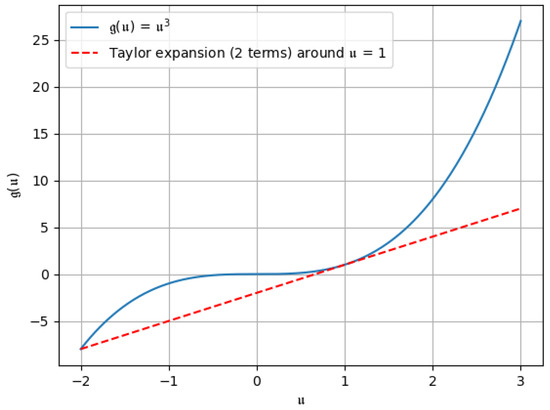 Figure 1. Taylor expansion up to the 1st two terms, i.e., .
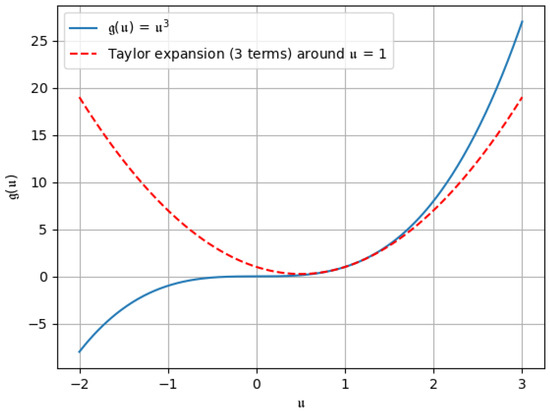 Figure 2. Taylor expansion up to the 1st three terms, i.e., .
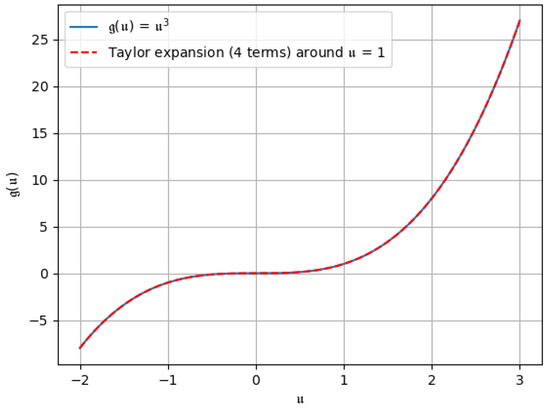 Figure 3. Taylor expansion up to all four terms.
 - Case 2.
- The -Taylor expansion of : The -Taylor expansion of around with is
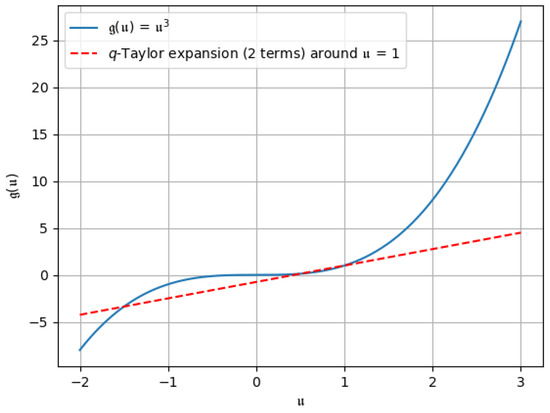 Figure 4. -Taylor expansion up to the first two terms, i.e., .
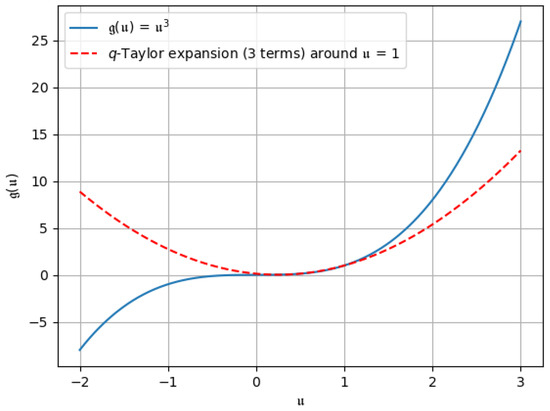 Figure 5. -Taylor expansion up to the first three terms, i.e., .
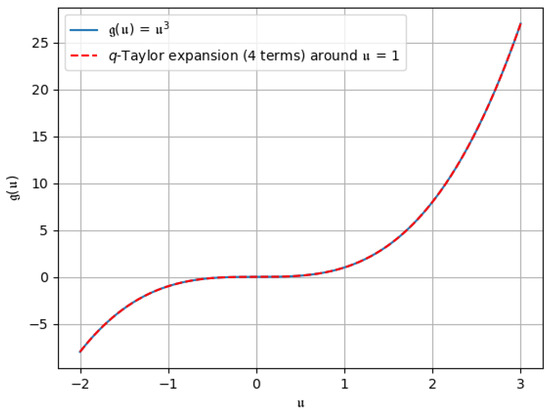 Figure 6. -Taylor expansion up to all four terms.
 - Case 3.
- The -symmetric Taylor expansion of : Using Corollary 2, put and in (21), we obtain the -symmetric Taylor expansion of and write it asThe graphical representation of the -symmetric Taylor expansion of is provided in Figure 7, Figure 8 and Figure 9.
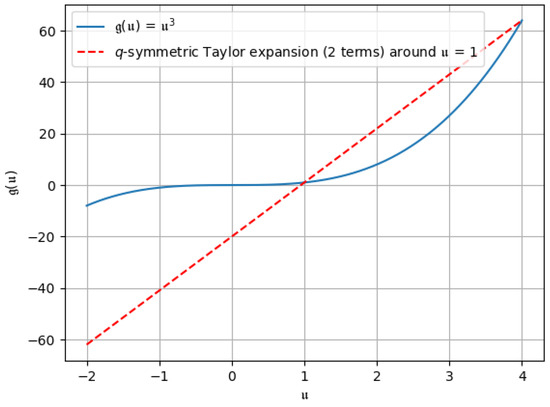 Figure 7. -symmetric Taylor expansion up to the first two terms.
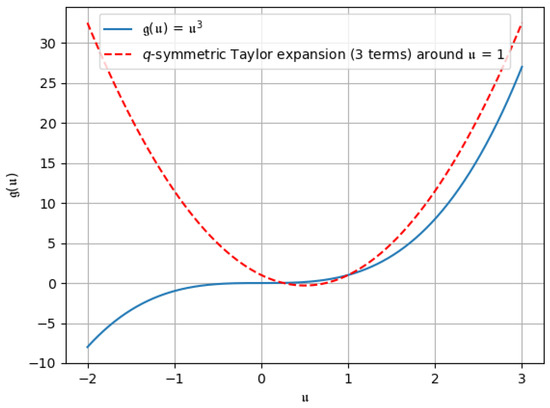 Figure 8. -symmetric Taylor expansion up to the first three terms.
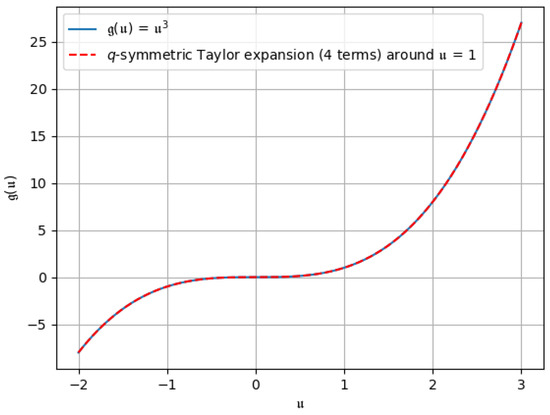 Figure 9. -symmetric Taylor expansion up to all four terms.
 - Case 4.
- The -Taylor expansion of : Put and in Corollary 1; the -Taylor expansion of isLet us set and ; then, the above expansion will becomeThe graphical representation of -Taylor expansion of around is given below in the Figure 10, Figure 11 and Figure 12.
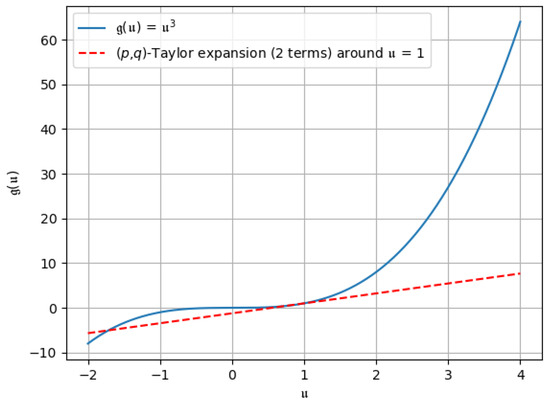 Figure 10. -Taylor expansion up to the first two terms.
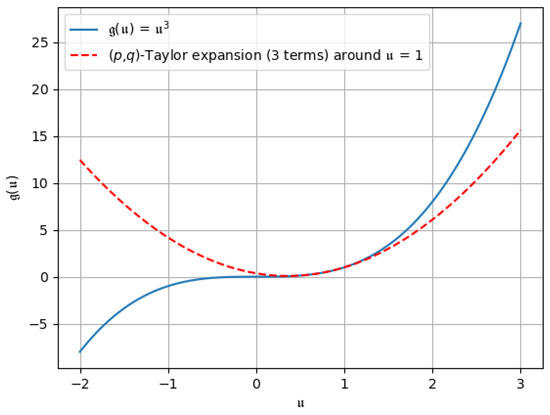 Figure 11. -Taylor expansion up to the first three terms.
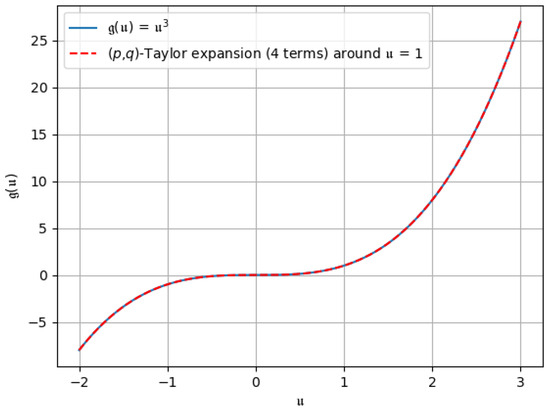 Figure 12. -Taylor expansion up to all four terms.
 - Case 5.
- The symmetric -Taylor expansion of : If we put and in (39), then the symmetric -Taylor expansion of can be derived asHere, put and ; then, the symmetric -Taylor expansion becomesThe graphical representation of the symmetric -Taylor expansion of around can be seen in Figure 13, Figure 14 and Figure 15.
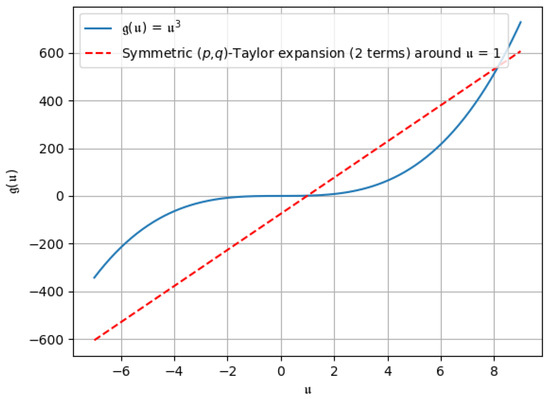 Figure 13. The symmetric -Taylor expansion up to the first two terms.
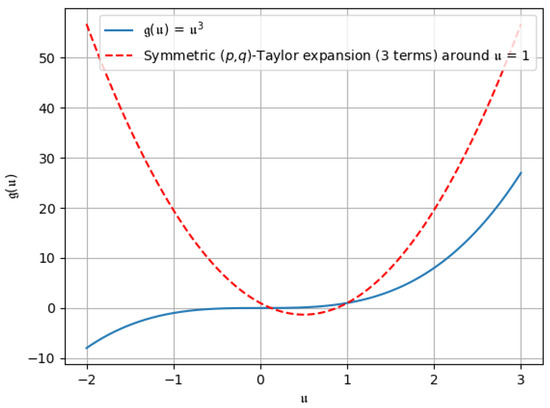 Figure 14. The symmetric -Taylor expansion up to the first three terms.
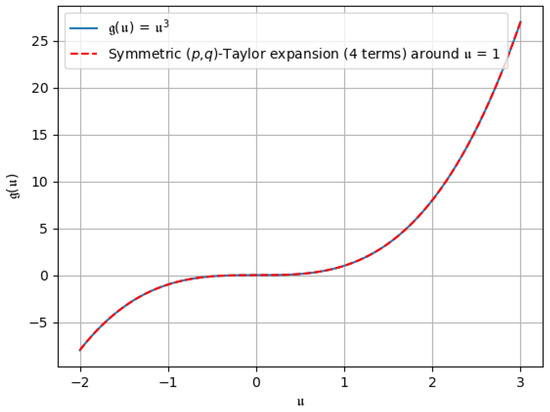 Figure 15. The symmetric -Taylor expansion up to all four terms.
It can therefore be seen that all of Taylor’s formulae for the cubic function give different approximations (term to term) and converge to the original curve.
Remark 2.
It can be seen that .
Proposition 7.
For any integer ,
Proof.
The proof is the same as Proposition 5. □
The Proposition 7 can also be generalized for higher-order derivatives.
Proposition 8.
If
with any non-negative integer , then for any integer ,
Proof.
The proof is similar to Proposition 6. □
Theorem 7.
For any real number β and the polynomial with degree , then
is called symmetric -Taylor or -Taylor expansion of .
Proof.
We can prove it the same as (33). □
Corollary 4.
Now, we introduce the symmetric -integration. For this, we have to define some operators, which are described below.
Definition 10.
Let and be the two linear operators in the field of polynomials that are defined as
Proposition 9.
If and are the linear operator in the field of polynomials, then
- (i)
- (ii)
- (iii)
- .
Proof.
(i) Since for any polynomial , we have
which endorses our desired result. Similarly, we can verify (ii) and (iii). □
Let be the symmetric -antiderivative of . Then by using , we can write
Hence
where is an odd integer. It is obvious that if the R.H.S. of (41) converges, then is the symmetric -antiderivative of , and it becomes zero at . As a consequence, we define the symmetric definite -integrals that are mentioned below.
Definition 11.
For any arbitrary function , then
where
is called a symmetric definite -integral or definite -integral of .
If in (42), it reduces to the definite -integral that is mentioned in [7].
Theorem 8
(Fundamental theorem of symmetric -calculus). For any arbitrary continuous function, where and is its symmetric -antiderivative, then
where .
4. Fractional Dual Basic Symmetric Quantum Integral
In this section, we define another -number, which can be written as
The factorial of this number can be defined as
Another -symmetric analogue of can be written as
It can be extended to and written as
For , the -symmetric gamma function can be derived as
The definite -integral can also be written as
here
Moreover, for a nonnegative integer , is called the higher-order -derivative of . Therefore, it is obvious that
Furthermore, we can define the operator for these derivatives, and the following results exist:
- (i)
- ,
- (ii)
- ,
- (iii)
- ,
- (iv)
- .
Now, we derive a lemma that is very useful to construct the -symmetric Cauchy’s formula.
Lemma 1.
For any positive integer η,
holds.
Proof.
Expanding the summation of the left side of (50), we have
□
Theorem 9.
Let be denoted as multiple definite -integrals; then,
exists, where .
Proof.
Using induction on . For ,
Hence, (51) is true for . Suppose it is true for . As
Using Lemma 1,
Thus, it is also true for . □
Remark 3.
Now, we introduce the fractional -integral formula.
Definition 12.
For any positive real number , then
is said to be a fractional -integral formula. Moreover, it is obvious that it shrinks into a fractional -symmetric integral formula when .
5. Conclusions
In this work, we wrote out the specific case of generalized Taylor expansions for polynomials in symmetric quantum calculus and derived a proof for it. Furthermore, we established a new kind of calculus known as dual basic symmetric quantum calculus or symmetric -calculus. Furthermore, using this calculus, we obtained the symmetric -Taylor expansion for polynomials. Next, we examined Taylor’s formulas for classical, quantum, symmetric quantum, -, and dual basic symmetric quantum calculus using an example. Moreover, we defined symmetric definite -integral and deduced the fundamental law of symmetric -calculus. Lastly, we derived the symmetric -Cauchy formula for integrals, and using this notion, we introduced fractional -symmetric integrals. In upcoming papers, this new calculus might be more useful in obtaining new results in mathematics and engineering. For example, it can be used to create several integral inequalities and to obtain new findings for Z-Transforms in engineering and physics. Furthermore, this kind of calculus will provide fresh perspectives on the field of fractional calculus.
Author Contributions
Conceptualization, S.I.B. and Y.S.; methodology, S.I.B.; software, M.N.A.; validation, S.I.B., M.N.A. and Y.S.; formal analysis, M.N.A.; investigation, S.I.B.; writing—original draft preparation, M.N.A.; writing—review and editing, S.I.B. and M.N.A.; visualization, Y.S.; supervision, S.I.B.; project administration, Y.S.; funding acquisition, Y.S. All authors have read and agreed to the published version of the manuscript.
Funding
This research recevied no external funding.
Data Availability Statement
No data are used.
Acknowledgments
This research was supported by Dong-A University, Busan 49315, Korea.
Conflicts of Interest
The authors declare no conflicts of interest.
References
- Marks, T. Taylor expansion in the finite element method for a two-point boundary value problem. Demonstr. Math. 1976, 9, 173–182. [Google Scholar] [CrossRef]
- Wei, L.; Luyao, Z.; Erik, C. Taylor’s theorem: A new perspective for neural tensor networks. Knowl.-Based Syst. 2021, 228, 107258. [Google Scholar]
- Gabor, L.; Fursenko, A.; Szabo, R. Use of the Taylor theorem to predict kinetic curves in an arbitrary mechanism. Chem. Eng. J. 2022, 445, 136676. [Google Scholar]
- Yuanyuan, D.; Qin, Z.; Baoqing, L.; Yuan, X. Facial expression recognition from image sequence based on LBP and Taylor expansion. IEEE Access 2017, 5, 19409–19419. [Google Scholar]
- Radim, H. Expressing the remainder of the Taylor polynomial when the function lacks smoothness. Elem. Math. 2017, 72, 126–130. [Google Scholar]
- Guan, X.; Yang, Y.; Li, J.; Xu, X.; Shen, H.T. Mind the remainder: Taylor’s theorem view on recurrent neural networks. IEEE Trans. Neural Netw. Learn. Syst. 2021, 33, 1507–1519. [Google Scholar] [CrossRef]
- Kac, V.; Cheung, P. Quantum Calculus; Springer: Berlin/Heidelberg, Germany, 2002. [Google Scholar]
- Ismail, M.E.H.; Stanton, D. Applications of q-Taylor theorems. J. Comput. Appl. Math. 2003, 153, 259–272. [Google Scholar] [CrossRef]
- Jing, S.C.; Fan, H.Y. q-Taylor’s formula with its q-remainder. Comm. Theor. Phys. 1995, 23, 117–120. [Google Scholar] [CrossRef]
- Ismail, M.E.H.; Stanton, D. q-Taylor theorems, polynomial expansions, and interpolation of entire functions. J. Approx. Theory 2003, 123, 125–146. [Google Scholar] [CrossRef]
- Kac, V. Corrections to the Book ‘Quantum Calculus’ by Victor Kac and Pokman Cheung. Corrections to Quantum Calculus Book. Available online: https://www.google.com/url?sa=t&source=web&rct=j&opi=89978449&url=https://extras.springer.com/downloads/sgw-extras/2002/978-1-4613-0071-7&ved=2ahUKEwidhtfS5cyMAxW1a_UHHX2eEQUQFnoECA4QAQ&usg=AOvVaw2VRaeTaZEkivifSubefsR7 (accessed on 5 March 2025).
- Ernst, T. A Comprehensive Treatment of q-Calculus; Birkhäuser: Basel, Switzerland, 2012. [Google Scholar]
- Da-Cruz, A.M.C.B.; Martins, N. The q-symmetric variational calculus. Comput. Math. Appl. 2012, 64, 2241–2250. [Google Scholar] [CrossRef]
- Khan, M.F.; Al-Shbeil, I.; Aloraini, N.; Khan, N.; Khan, S. Applications of Symmetric Quantum Calculus to the Class of Harmonic Functions. Symmetry 2022, 14, 2188. [Google Scholar] [CrossRef]
- Vivas-Cortez, M.; Javed, M.Z.; Awan, M.U.; Dragomir, S.S.; Zidan, A.M. Properties and Applications of Symmetric Quantum Calculus. Fractal Fract. 2024, 8, 107. [Google Scholar] [CrossRef]
- Nosheen, A.; Ijaz, S.; Khan, K.A.; Awan, K.M.; Budak, H. Quantum symmetric integral inequalities for convex functions. Math. Methods Appl. Sci. 2024, 47, 14878–14895. [Google Scholar] [CrossRef]
- Butt, S.I.; Aftab, M.N.; Nabwey, H.A.; Etemad, S. Some Hermite-Hadamard and midpoint type inequalities in symmetric quantum calculus. AIMS Math. 2024, 9, 5523–5549. [Google Scholar] [CrossRef]
- Butt, S.I.; Aftab, M.N.; Seol, Y. Symmetric quantum inequalities on finite rectangular plane. Mathematics 2024, 12, 1517. [Google Scholar] [CrossRef]
- Butt, S.I.; Aftab, M.N.; Fahad, A.; Wang, Y.; Mohsin, B.B. Novel notions of symmetric Hahn calculus and related inequalities. J. Inequalities Appl. 2024, 2024, 147. [Google Scholar] [CrossRef]
- Jagannathan, R.; Sridhar, R. (p,q)-Rogers-Szegö Polynomials and the (p,q)- Oscillator. In The Legacy of Alladi Ramakrishnan in the Mathematical Sciences; Springer: New York, NY, USA, 2010; pp. 491–501. [Google Scholar]
- Sadjang, P.N. On the fundamental theorem of (p,q)-calculus and some (p,q)-Taylor formulas. arXiv 2013, arXiv:1309.3934. [Google Scholar]
- Chakrabarti, R.; Jagannathan, R. A (p,q)-oscillator realization of two-parameter quantum algebras. J. Phys. Math. Gen. 1991, 24, 711–718. [Google Scholar] [CrossRef]
- Burban, I.M.; Klimyk, A.U. (p,q)-differentiation, (p,q)-integration, and (p,q)-hypergeometric functions related to quantum groups. Integral Transform. Spec. Funct. 1994, 2, 15–36. [Google Scholar] [CrossRef]
- Jagannathan, R. (p,q)-Special Functions. arXiv 1998, arXiv:math/9803142. [Google Scholar]
- Jagannathan, R.; Rao, K.S. Tow-parameter quantum algebras, twin-basic numbers, and associated generalized hypergeometric series. arXiv 2006, arXiv:math/0602613. [Google Scholar]
- Sun, M.; Jin, Y.; Hou, C. Certain fractional q-symmetric integrals and q-symmetric derivatives and their application. Adv. Differ. Equ. 2016, 2016, 222. [Google Scholar] [CrossRef]
Disclaimer/Publisher’s Note: The statements, opinions and data contained in all publications are solely those of the individual author(s) and contributor(s) and not of MDPI and/or the editor(s). MDPI and/or the editor(s) disclaim responsibility for any injury to people or property resulting from any ideas, methods, instructions or products referred to in the content. |
© 2025 by the authors. Licensee MDPI, Basel, Switzerland. This article is an open access article distributed under the terms and conditions of the Creative Commons Attribution (CC BY) license (https://creativecommons.org/licenses/by/4.0/).