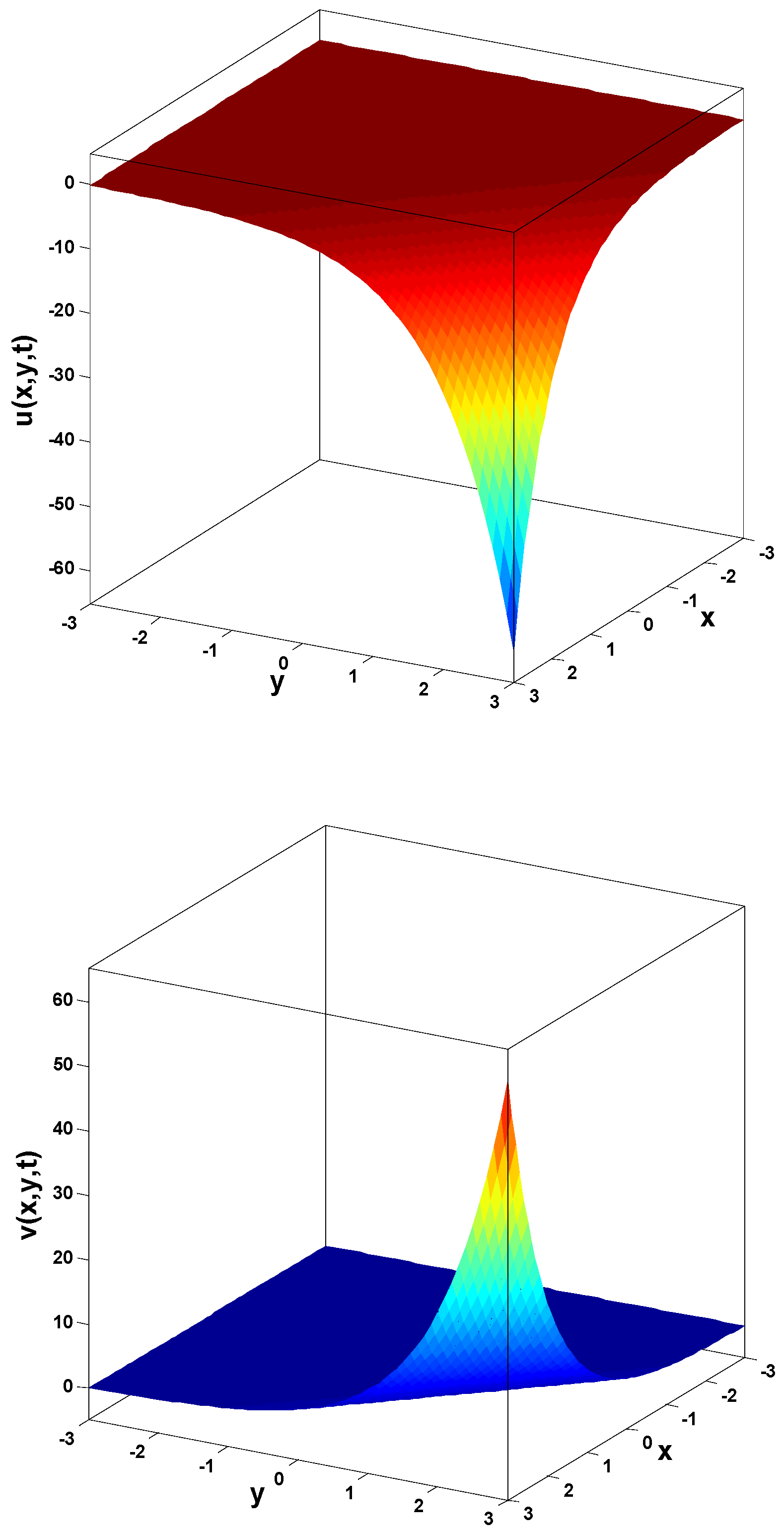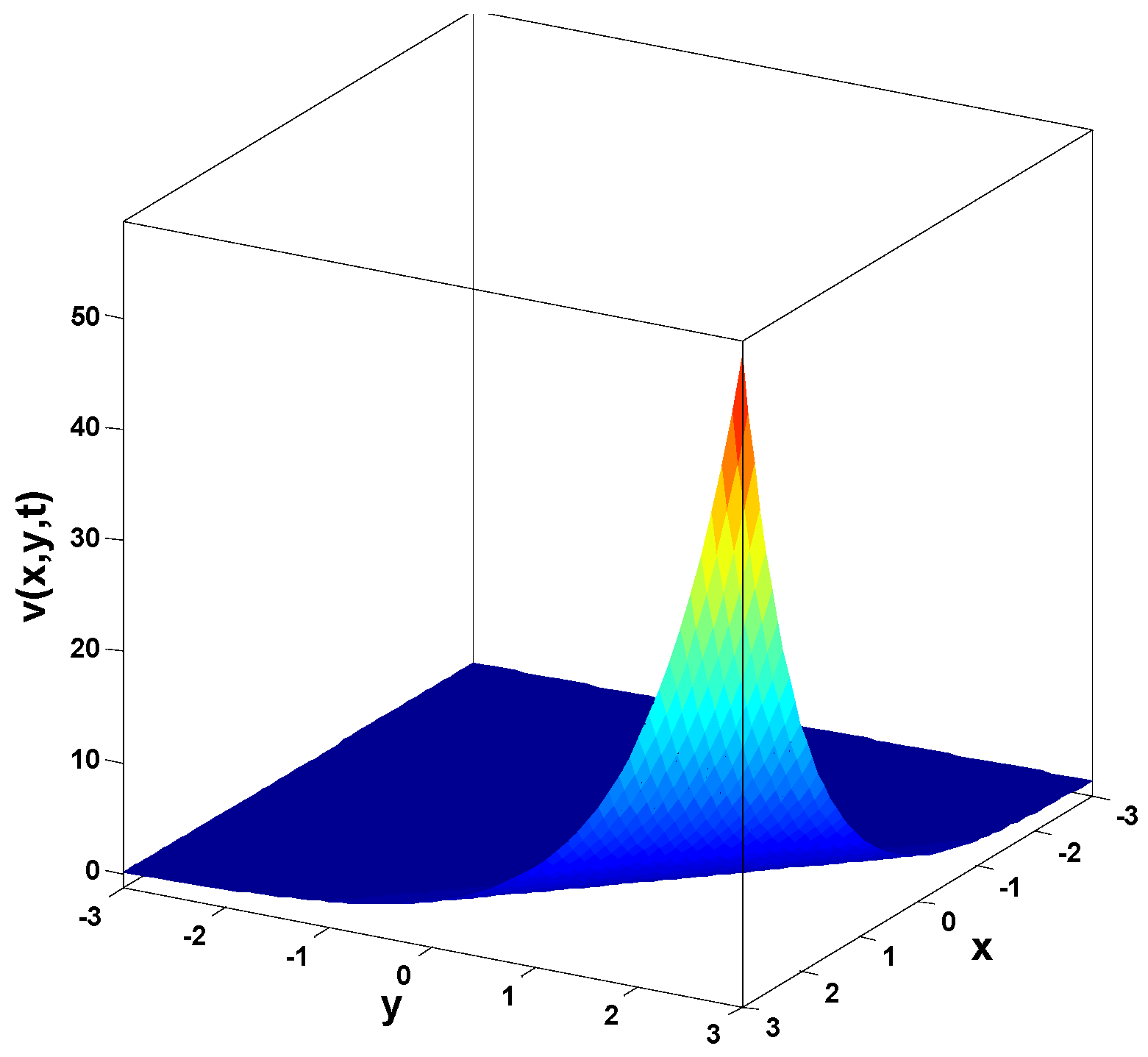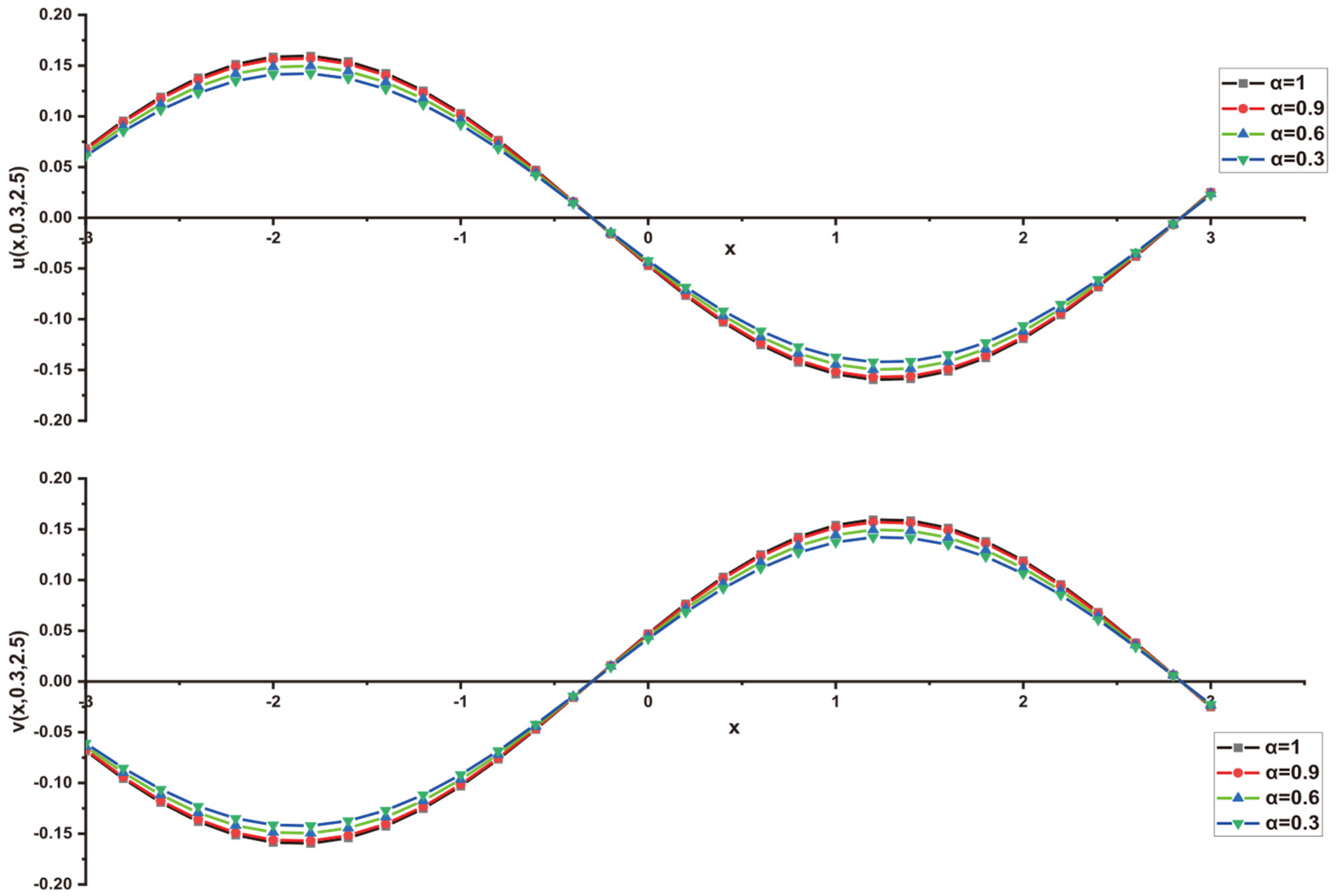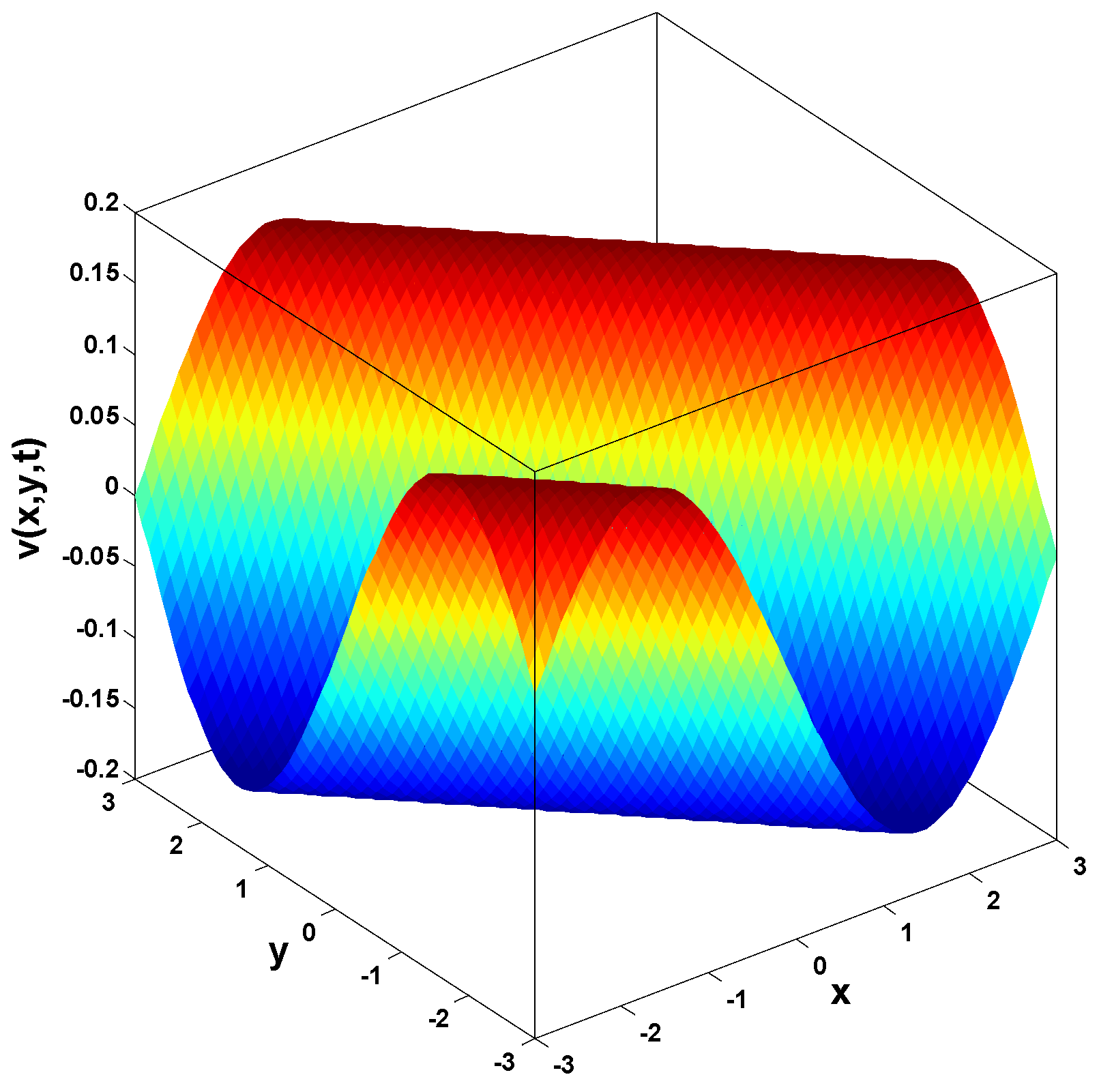


Abstract
The aim of this article is to introduce analytical and approximate techniques to obtain the solution of time-fractional Navier–Stokes equations. This proposed technique consists is coupling the homotopy perturbation method (HPM) and Laplace transform (LT). The time-fractional derivative used is the Caputo–Hadamard fractional derivative (CHFD). The effectiveness of this method is demonstrated and validated through two test problems. The results show that the proposed method is robust, efficient, and easy to implement for both linear and nonlinear problems in science and engineering. Additionally, its computational efficiency requires less computation compared to other schemes.
1. Introduction
A significant area of practical mathematics is fractional calculus (FC), which studies integral and differential operators with non-integral powers. In addition, as a consequence of its proven broad variety of applications in rheology, viscoelasticity, electrochemistry, electromagnetism, fluid dynamics, etc., fractional calculus has gained popularity; for further information, refer to West et al.’s monographs [1], Oldham and Spanier [2], Miller and Ross [3], Kilbas and Srivastava [4], Podlubny [5], Klafter and Lim [6], Baleanu and Machado [7], Goldfain [8], as they provide some foundational works on various facets of fractional calculus. Additionally, the method for solving differential equations of arbitrary real order is outlined, along with applications of these methods across various fields. Nevertheless, numerous analytical and approximate techniques have recently been developed to solve fractional differential equations [9,10]. Moreover, there are many methods used, including the Adomian decomposition method (ADM) [11,12,13], variational iteration method (VIM) [14], homotopy perturbation method (HPM) [15,16,17,18], differential transform method (DTM) [19,20], and several other methods. Most importantly, the homotopy perturbation method, originally developed by Chinese researcher J.H. He in 1998, has proven to be the most significant among all the methods mentioned above, as it directly addresses the problem without the need for any kind of transformation and linearization. Moreover, the proposed method does not need the problem to be discriminated against to obtain numerical results; we can evaluate the approximate solution by using the -term approximation, solved with the aid of well-known transforms, such as Laplace, Elzaki, and Sumudu. El-Shahed and Salem [21] used the Laplace transform (LT), finite Hankel transforms (FHT), and Fourier sine transforms to solve the traditional Navier–Stokes equation. Likewise, Kumar et al.’s analytical solution of a nonlinear fractional NS equation [22] used the HPM and LT algorithms in conjunction. Above and beyond, Birajdar [23] and Momani et al. [24] used the ADM, by using the homotopy analysis approach, to solve the fractional Navier–Stokes equation, whilst Sunil Kumar et al. [25] solved the same equation by combining LT with FHT, and then Chaurasia and Kumar [26] obtained the analytical answer of the fractional Navier–Stokes equation using the ADM and LT technique. In order to obtain an approximate analytical solution for the time-fractional order multi-dimensional Navier–Stokes equation, Dhiman and Chauhan [27] employed the fractional reduced differential transformation technique (FRDTM). The residual power series (RPS) approach was employed by Jaber and Ahmad [28] to solve the two-dimensional nonlinear time-fractional Navier–Stokes equation. Nevertheless, numerical approximations, for a class of Navier–Stokes equations with time-fractional derivatives, were proposed by Zhang and Wang [29] and H Eltayeb, IBachar, SMesloub [30] applied the Sumudu-generalized Laplace transform decomposition method (DGLTDM), which combines Sumudu-generalized Laplace transform and the decomposition method. In addition, Prakash et al. [31] proposed the q-homotopy analysis transform method (q-HATM). Mahmood et al. [32] used the Laplace Adomian decomposition method (LADM), which stands for a combination of the Laplace transform and ADM is used for the analytical solution of the system of time fractional Navier–Stokes equation. The present paper gives an approximate solution for the proposed problem of the time-fractional Navier–Stokes equation by using the homogony perturbation–Laplace transform method (HP–LTM) under Caputo–Hadamard memory. For more important works, we refer the reader to the works [33,34] related to the fractional calculus, [35,36,37,38,39] for fractional Navier–Stokes equation and [40,41] for the Caputo–Hadamard fractional differential equations.
The paper is organized as follows: Section 2 discusses some fundamental aspects of Caputo–Hadamard fractional derivatives in relation to the stated issues. Section 3 and Section 4 contain the Laplace transform and the expanded version of the HP–LTM, respectively. Section 5 contains convergence analysis and error estimation. In Section 6, we present the approximate analytic solutions of two test problems involving the time-fractional order Navier–Stokes equation with Caputo–Hadamard memory to confirm the efficacy and precision of the suggested approach. Lastly, a conclusion is provided in Section 7.
2. Preliminaries and Definitions
In this section, we provide the necessary definitions, properties, and lemmas of FC theory which will be used throughout this work [3,4,33,34,40,41].
Definition 1
([33]). Let represent a finite or infinite interval on the positive half-axis . The left-sided and right-sided Hadamard fractional integrals of order are defined by the following:
respectively, if the integrals exist.
The left-sided and right-sided Hadamard fractional derivatives of order , with , are defined by the following:
respectively, where represents the Gamma function.
Remark 1.
The number can be taken as a complex number with a positive real part in the previous definitions.
Caputo–Hadamard Fractional Derivatives
We introduce the Caputo adaptation of the left-sided and right-sided Hadamard fractional derivatives, respectively, as follows:
Theorem 1.
([33,34]). Let If , where
and : be the spaces of absolutely continuous functions on .
Then exist everywhere on and Caputo-type Hadamard fractional derivatives are defined by the following:
Lemma 1
([33]). Let , if, then
Lemma 2
([33]). Let , and . Then
Definition 2.
A two-parameter Mittag–Leffler function is defined by the following series:
If , we have the one-parameter Mittag–Leffler function:
3. The Amended Laplace Transforms
Definition 3
([40]). The amended Laplace transform of a given function with is defined by the following:
The inverse amended Laplace transform is given by the following:
At this point, we take the principal value branch in the logarithmic function since the variable is a complex number.
The amended Laplace transform of a function defined on , exists. If the function is -exponential order, i.e.,
- (i)
- is continuous or piecewise continuous on every finite subinterval of ,
- (ii)
- There exist a positive constant and a such that for a given large ,
In the sense of -derivative, it follows from the amended Laplace transform the following:
In addition, by applying the Laplace transform on both sides of Equation (4), we find that Laplace transform of the Caputo–Hadamard fractional derivative is given by the following:
Theorem 2
([40]). Let such that are -exponential order. Then, the amended Laplace transform of exists and
Definition 4
([40]). Supposes that functions and are defined on
The integral is called the convolution of and , that is
Lemma 3
(Convolution property). If and
or equivalently,
Lemma 4.
4. Homotopy Perturbation–Laplace Transform Method (HP–LTM)

For elucidation purpose of the HP–LTM concept, we examine a fractional order nonlinear non-homogeneous partial differential equation with an initial condition (IC), as presented hereunder:
where is the time fractional derivative of in Caputo–Hadamard sense, R, N are the linear and nonlinear differential operators and is the source term. At this moment, by taking LT on both sides of Equation (15), we have the following:
Now, using the property (12) of the amended Laplace transform for the fractional derivative
on simplifying of Equation (19), we have the following:
Operating the inverse Laplace transform on both sides in Equation (20), we obtain the following:
where denotes the term arising from the initial condition and source term.
Through the application of the HPM to Equation (21), we obtain the following:
The homotopy parameter p is employed to expand the solution as follows:
The nonlinear term is decomposed in the following manner:
where is He’s polynomials and is given by the following:
Through substituting Equations (23) and (24) in Equation (22), we obtain the following:
Possibly, the following equations may be derived by comparing the coefficients of equal powers of p from both sides:
Finally, we find the solution in this manner, which can be written as follows:
which represents the analytical solution of problem (15) with initial condition (16).
5. Convergence Analysis and Error Estimation
In fact, converging the HPM towards a solution for the fractional NS equation, as well as estimating the errors of HPM, are established through the two theorems hereunder. Consider as an opened and bounded domain, and let T be a positive constant with For illustration purposes of the HPM technique, let us consider the fractional NS equation for any .
Theorem 3
([39]). Let be the function in a Banach space defined by Equation (29) for any . The infinite series converges to the solution of Equation (15) if there exists a constant such that for all . Define that is the sequence of the partial sums of the series .
Thus, is a Cauchy sequence in ; consequently, the solution converge to .
Subsequently, we present the theorem for truncating an imprecise solution as follows:
Theorem 4
([39]). The maximum absolute error of the series solution, defined in Equation (29), is estimated as follows:
6. Application of HP–LTM on NS Equation
In this section, we apply the homotopy perturbation–Laplace transform method (HP–LTM) to solve time-fractional Navier–Stokes equation. The time-fractional NS equation with constant density and kinematic viscosity is given as follows:
here, U represents the velocity vector, P stands for pressure, denotes the kinematic viscosity where η represents dynamic viscosity and is density. Additionally, the first component denotes the local acceleration, reflecting velocity changes over time at a fixed point in the flow as particles pass. Further, the second part signifies convective acceleration, indicating velocity changes in space as particles move within the flow field over infinitesimal time intervals. In addition, represents the pressure term, suggesting fluid flow in the direction of the steepest pressure change. As for , it is the viscous term, illustrating frictional forces due to viscosity acting on fluid particles as they flow with velocity U. Both pressure and viscous forces act on the surface of fluid particles and are classified as external forces. In closing, defines the domain with boundary [35].
Formulation of Equation (30) in Cartesian coordinates following on and z is written as follows:
7. Conclusions
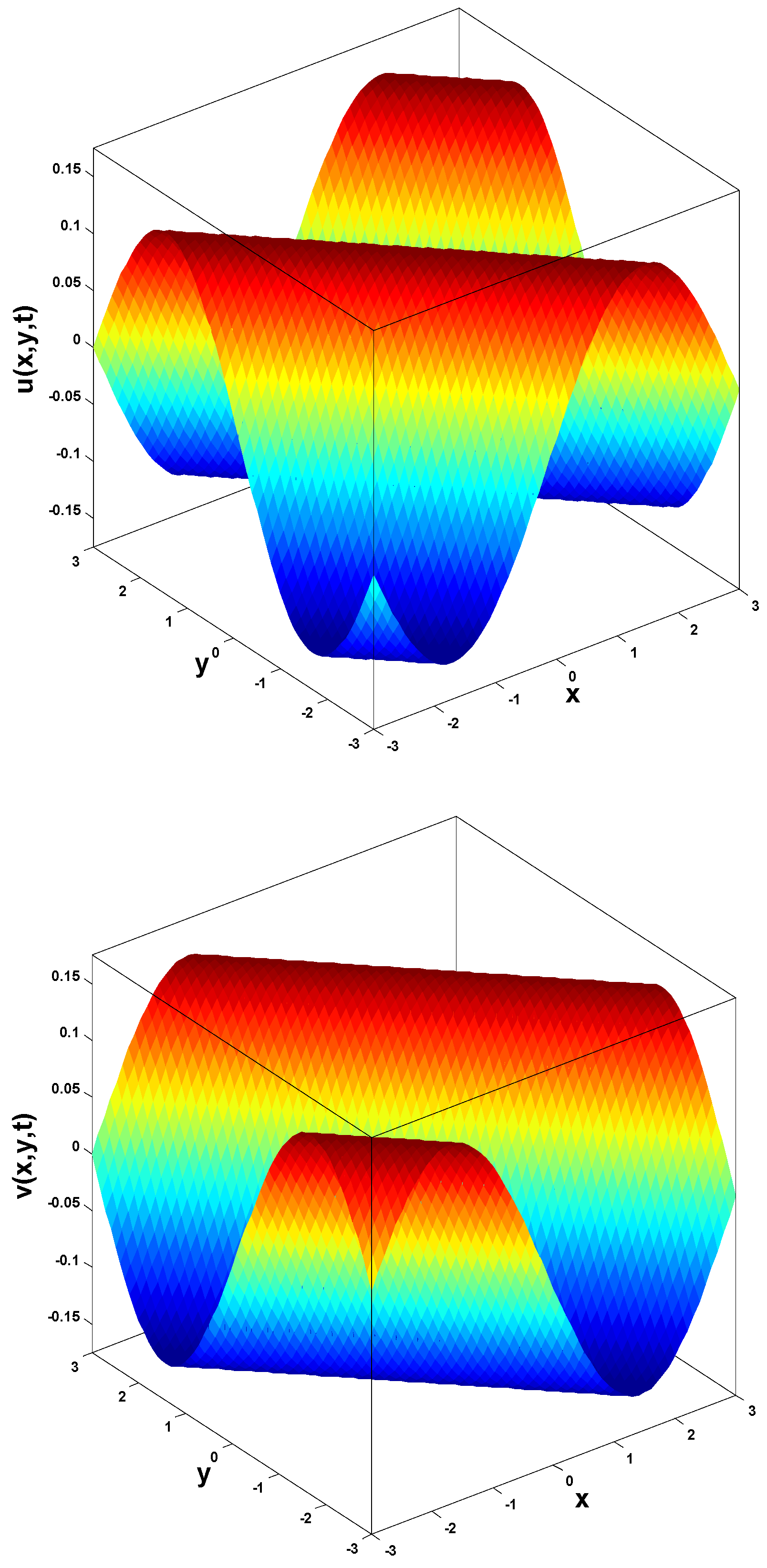
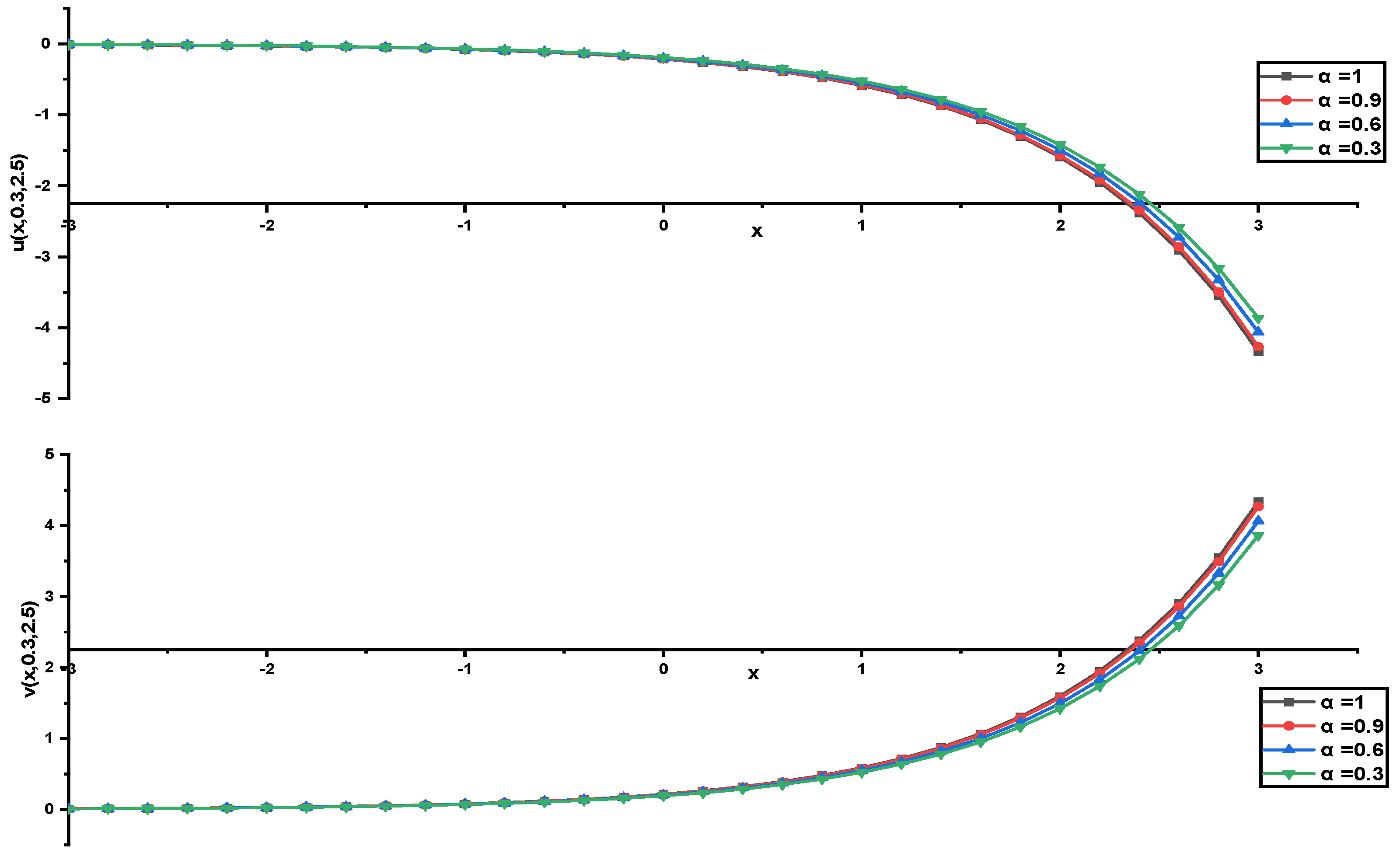
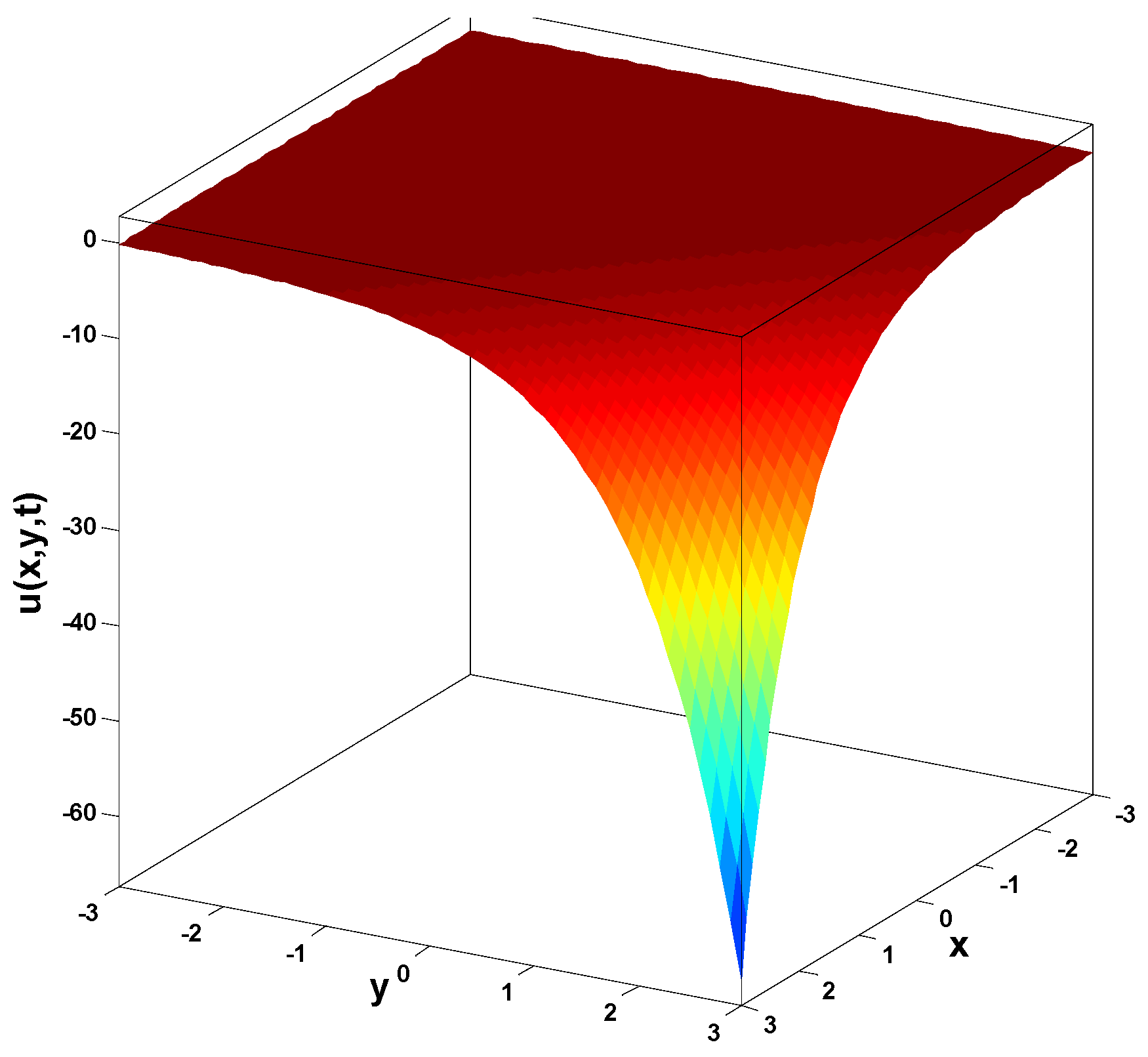
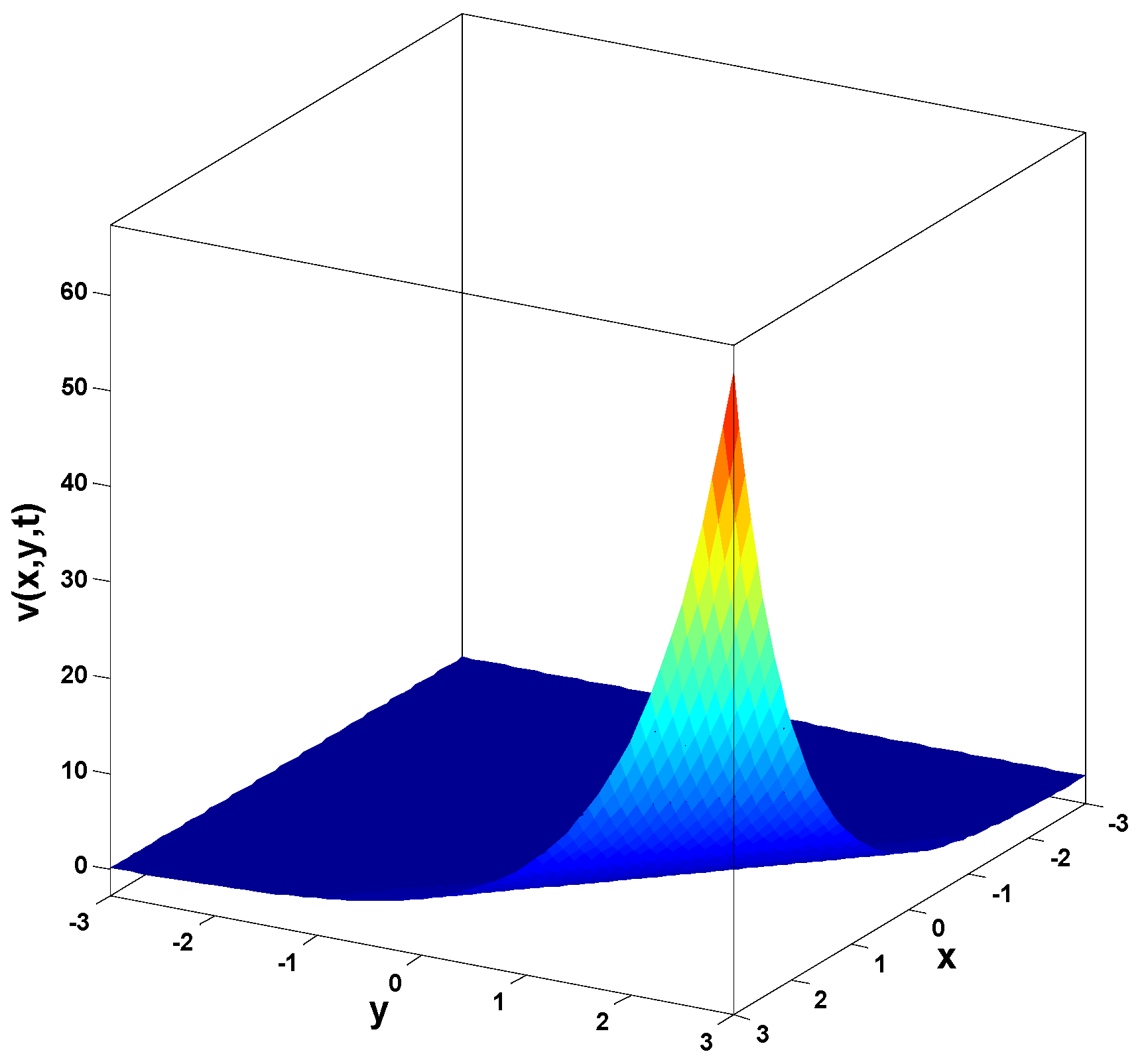
In this research, a numerical simulation of the fractional-time Navier–Stokes equations was performed using the homotopy perturbation–Laplace transform technique (HP–LTM), with the Caputo–Hadamard fractional derivative. The solutions are obtained in the form of a power series expressed by the Mittag–Leffler function. Two test problems are implemented for verification purposes and to demonstrate the effectiveness of the approach. The proposed solutions are approximated without discretization, transformation, perturbation, or constraint conditions, and they agree well with HPETM [36], HAM [37], and FRDTM [38]. The proposed approach also demonstrates a relatively modest computational cost compared to ADM polynomials and other methods, efficiently finding both analytical and approximate solutions in a robust manner.
We hope this work represents a step towards expanding the use of the HP–LTM to solve linear and nonlinear fractional mathematical physics problems significantly and will be addressed in more detail in future works.
Author Contributions
Methodology, A.M.A., Y.A. and B.B.; Formal analysis, A.M.A., H.M. and Y.A.; Investigation, A.M.A., H.M., Y.A. and B.B.; Resources, Y.A.; Data curation, H.M.; Writing—original draft, H.M.; Writing—review & editing, H.M.; Visualization, Y.A.; Supervision, Y.A. and B.B.; Funding acquisition, A.M.A. All authors have read and agreed to the published version of the manuscript.
Funding
This research received no external funding.
Data Availability Statement
The original contributions presented in the study are included in the article, further inquiries can be directed to the corresponding author/s.
Conflicts of Interest
The authors declare no conflict of interest.
References
- West, B.J.; Bologna, M.; Grigolini, P. Physics of Fractal Operators; Springer: New York, NY, USA, 2003; Volume 35. [Google Scholar]
- Oldham, K.; Spanier, J. The Fractional Calculus Theory and Applications of Differentiation and Integration to Arbitrary Order; Elsevier: Amsterdam, The Netherlands, 1974. [Google Scholar]
- Miller, K.S. An Introduction to the Fractional Calculus and Fractional Differential Equations; John Willey & Sons: Hoboken, NJ, USA, 1993. [Google Scholar]
- Kilbas, A.A.; Srivastava, H.M.; Trujillo, J.J. Theory and Applications of Fractional Differential Equations; Elsevier: Amsterdam, The Netherlands, 2006; Volume 204. [Google Scholar]
- Podlubny, I.; Chechkin, A.; Skovranek, T.; Chen, Y.; Jara, B.M.V. Matrix approach to discrete fractional calculus II: Partial fractional differential equations. J. Comput. Phys. 2009, 228, 3137–3153. [Google Scholar] [CrossRef]
- Klafter, J.; Lim, S.C.; Metzler, R. Fractional Dynamics: Recent Advances; World Scientific: Singapore, 2012. [Google Scholar]
- Baleanu, D.; Machado, J.A.T.; Luo, A.C. (Eds.) Fractional Dynamics and Control; Springer Science & Business Media: Berlin, Germany, 2011. [Google Scholar]
- Goldfain, E. Fractional dynamics, Cantorian space–time and the gauge hierarchy problem. Chaos Solitons Fractals 2004, 22, 513–520. [Google Scholar] [CrossRef]
- Momani, S.; Odibat, Z.; Erturk, V.S. Generalized differential transform method for solving a space-and time-fractional diffusion-wave equation. Phys. Lett. A 2007, 370, 379–387. [Google Scholar] [CrossRef]
- Erturk, V.S.; Momani, S.; Odibat, Z. Application of generalized differential transform method to multi-order fractional differential equations. Commun. Nonlinear Sci. Numer. Simul. 2008, 13, 1642–1654. [Google Scholar] [CrossRef]
- Ahmed, H.F.; Bahgat, M.S.; Zaki, M. Numerical approaches to system of fractional partial differential equations. J. Egypt. Math. Soc. 2017, 25, 141–150. [Google Scholar] [CrossRef]
- Jafari, H.; Khalique, C.M.; Nazari, M. Application of the Laplace decomposition method for solving linear and nonlinear fractional diffusion–wave equations. Appl. Math. Lett. 2011, 24, 1799–1805. [Google Scholar] [CrossRef]
- Daftardar-Gejji, V.; Bhalekar, S. Solving multi-term linear and non-linear diffusion–wave equations of fractional order by Adomian decomposition method. Appl. Math. Comput. 2008, 202, 113–120. [Google Scholar] [CrossRef]
- Chamekh, M.; Elzaki, T.M. Explicit solution for some generalized fluids in laminar flow with slip boundary conditions. J. Math. Comput. Sci. 2018, 18, 272–281. [Google Scholar] [CrossRef]
- Sushila, J.S.; Shishodia, Y.S. A new reliable approach for two-dimensional and axisymmetric unsteady flows between parallel plates. Z. Naturforschung A 2013, 68, 629–634. [Google Scholar] [CrossRef]
- Singh, J.; Kumar, D.; Kılıçman, A. Numerical solutions of nonlinear fractional partial differential equations arising in spatial diffusion of biological populations. In Abstract and Applied Analysis; Hindawi: London, UK, 2014; Volume 2014. [Google Scholar]
- Gad-Allah, M.R.; Elzaki, T.M. Application of new homotopy perturbation method for solving partial differential equations. J. Comput. Theor. Nanosci. 2018, 15, 500–508. [Google Scholar] [CrossRef]
- Wang, Q. Homotopy perturbation method for fractional KdV equation. Appl. Math. Comput. 2007, 190, 1795–1802. [Google Scholar] [CrossRef]
- Kurulay, M.; Bayram, M. Approximate analytical solution for the fractional modified KdV by differential transform method. Commun. Nonlinear Sci. Numer. Simul. 2010, 15, 1777–1782. [Google Scholar] [CrossRef]
- Kurulay, M.; Akinlar, M.A.; Ibragimov, R. Computational solution of a fractional integro-differential equation. In Abstract and Applied Analysis; Hindawi: London, UK, 2013; Volume 2013. [Google Scholar]
- El-Shahed, M.; Salem, A. On the generalized Navier–Stokes equations. Appl. Math. Comput. 2004, 156, 287–293. [Google Scholar] [CrossRef]
- Kumar, D.; Singh, J.; Kumar, S. A fractional model of Navier–Stokes equation arising in unsteady flow of a viscous fluid. J. Assoc. Arab. Univ. Basic Appl. Sci. 2015, 17, 14–19. [Google Scholar] [CrossRef]
- Birajdar, G.A. Numerical solution of time fractional Navier-Stokes equation by discrete Adomian decomposition method. Nonlinear Eng. 2014, 3, 21–26. [Google Scholar] [CrossRef]
- Momani, S.; Odibat, Z. Analytical solution of a time-fractional Navier–Stokes equation by Adomian decomposition method. Appl. Math. Comput. 2006, 177, 488–494. [Google Scholar] [CrossRef]
- Sunil, K.; Kumar, D.; Abbasbandy, S.; Rashidi, M.M. Analytical solution of fractional Navier–Stokes equation by using modified Laplace decomposition method. Ain Shams Eng. J. 2014, 5, 569–574. [Google Scholar]
- Chaurasia, V.B.L.; Kumar, D. Solution of the time-fractional Navier–Stokes equation. Gen. Math. Notes 2011, 4, 49–59. [Google Scholar]
- Dhiman, N.; Chauhan, A. An approximate analytical solution description of time-fractional order Fokker-Plank equation by using FRDTM. Asia Pacific J. Eng. Sci. Technol. 2015, 1, 34–47. [Google Scholar]
- Jaber, K.K.; Ahmad, R.S. Analytical solution of the time fractional Navier-Stokes equation. Ain Shams Eng. J. 2018, 9, 1917–1927. [Google Scholar] [CrossRef]
- Zhang, J.; Wang, J. Numerical analysis for Navier–Stokes equations with time fractional derivatives. Appl. Math. Comput. 2018, 336, 481–489. [Google Scholar] [CrossRef]
- Eltayeb, H.; Bachar, I.; Mesloub, S. A Note on the Time-Fractional Navier–Stokes Equation and the Double Sumudu-Generalized Laplace Transform Decomposition Method. Axioms 2024, 13, 44. [Google Scholar] [CrossRef]
- Prakash, A.; Veeresha, P.; Prakasha, D.G.; Goyal, M. A new efficient technique for solving fractional coupled Navier–Stokes equations using q-homotopy analysis transform method. Pramana J. Phys. 2019, 93, 6. [Google Scholar] [CrossRef]
- Mahmood, S.; Shah, R.; khan, H.; Arif, M. Laplace Adomian Decomposition Method for Multi Dimensional Time Fractional Model of Navier-Stokes Equation. Symmetry 2019, 11, 149. [Google Scholar] [CrossRef]
- Jarad, F.; Abdeljawad, T.; Baleanu, D. Caputo-type modification of the Hadamard fractional derivatives. Adv. Differ. Equ. 2012, 2012, 142. [Google Scholar] [CrossRef]
- Jarad, F.; Abdeljawad, T. Generalized fractional derivatives and Laplace transform. Discret. Contin. Dyn. Syst. S 2020, 13, 709–722. [Google Scholar] [CrossRef]
- Bistafa, S.R. On the development of the Navier-Stokes equation by Navier. Rev. Bras. Ensino Física 2017, 40, e2603. [Google Scholar] [CrossRef]
- Jena, R.M.; Chakraverty, S. Solving time-fractional Navier–Stokes equations using homotopy perturbation Elzaki transform. SN Appl. Sci. 2019, 1, 16. [Google Scholar] [CrossRef]
- Oliveira, D.S.; de Oliveira, E.C. Analytical solutions for Navier–Stokes equations with Caputo fractional derivative. SeMA 2021, 78, 137–154. [Google Scholar] [CrossRef]
- Singh, B.K.; Kumar, P. FRDTM for numerical simulation of multi-dimensional, time-fractional model of Navier–Stokes equation. Ain Shams Eng. J. 2018, 9, 827–834. [Google Scholar] [CrossRef]
- Sripacharasakullert, P.; Sawangtong, W.; Sawangtong, P. An approximate analytical solution of the fractional multi-dimensional Burgers equation by the homotopy perturbation method. Adv. Differ. Equ. 2019, 2019, 252. [Google Scholar] [CrossRef]
- Li, C.P.; Li, Z.Q. Asymptotic behaviors of solution to Caputo-Hadamard fractional partial differential equation with fractional Laplacian. Int. J. Comput. Math. 2021, 98, 305–339. [Google Scholar] [CrossRef]
- Arioua, Y.; Benhamidouche, N. Boundary value problem for Caputo-Hadamard fractional differential equations. Surv. Math. Its Appl. 2017, 12, 103–115. [Google Scholar]
Disclaimer/Publisher’s Note: The statements, opinions and data contained in all publications are solely those of the individual author(s) and contributor(s) and not of MDPI and/or the editor(s). MDPI and/or the editor(s) disclaim responsibility for any injury to people or property resulting from any ideas, methods, instructions or products referred to in the content. |
© 2024 by the authors. Licensee MDPI, Basel, Switzerland. This article is an open access article distributed under the terms and conditions of the Creative Commons Attribution (CC BY) license (https://creativecommons.org/licenses/by/4.0/).