Abstract
Urban environmental settings influence human psychological states, contributing to varying mental health outcomes. This study examines the relationships between objective environmental features and psychological states at a fine scale. Using a geo-enabled survey tool, we collected data on individuals’ perceptions of their immediate environment within their daily activity space on an urban university campus. The psychological assessment included emotional and affective states such as perceived stress, fatigue, and happiness. Objective environmental properties were derived from high-resolution imagery to analyze the association between environmental settings and psychological responses. The data were analyzed using Spearman’s correlation, moderated multiple regression, and partial correlation networks. Our findings revealed that beneficial psychological states were positively associated with the quantity of natural elements in the immediate environment such as trees, water, and grass. Conversely, negative psychological states were positively associated with barren areas, parking lots, buildings, and artificial surfaces. These relationships were not significantly moderated by gender or ethnicity in our experiment. The interconnections of psychological states show distinct patterns in three different environmental settings, which are a mostly green environment, a mixed environment with green and artificial elements, and a mostly artificial environment. A difference in such interconnections between males and females has been observed. These results highlight the complex interplay between environmental features and mental state networks.
1. Introduction
An increase in mental health issues has been found among urban populations [1,2]. One factor that may have contributed to this trend is the lack of contact with nature in built urban environments [1]. The biophilia hypothesis posits that humans have an inherent tendency to seek connections with nature [3]. An abundance of research has indicated that proximity to greenspace and a higher presence of natural elements in one’s living environment correlate positively with improved mental health and well-being [4,5,6,7]. Greenspaces have also been shown to enhance cognitive functions, including attention, memory, and learning [8]. In recognition of such correlations, urban design in recent years has strived to incorporate more greenery into built environments for city dwellers [9].
Stress is a mental state found to trigger mental health disorders and exacerbate other health comorbidities [10,11,12,13]. Nature-based health interventions (NBIs) have been used to reduce stress and enhance overall well-being by leveraging the therapeutic benefits of interacting with nature [14]. Evidence exists in both self-reported psychological measures and biomarkers such as cortisol levels that exposure to greenspace lowers the risks of stress-related disorders, including depression and anxiety [15,16,17]. Happiness is another frequently used measure when assessing the psychological benefit of natural elements in the environment. People’s momentary happiness has been found to correlate with the characteristics of our immediate environment, including the effect of environmental aesthetics [18,19]. Research has also shown that the effects of the environment on psychological well-being are not only individual but can extend to the community and regional scales [20].
Beyond stress and happiness, a broader range of psychological states, including both positive and negative emotions, play a crucial role in well-being and mental health. As an adaptive response to environmental stimuli, emotions prepare the nervous system for potential threats or stress and affect human behaviors and the quality of daily functioning [21]. How individuals cope with potential threats or stress depends on the presence of positive or negative affect and their ability to regulate emotions, which leads to varying mental health results [22,23,24]. Specifically, positive affect strengthens psychological and biological resources, while negative affect can lead to a narrower, often more pessimistic focus [22,25]. This dynamic is further explained by the Broaden-and-Build theory, which proposes that positive emotions expand thought–action repertoires, build resilience, and promote psychological well-being by counteracting the effects of negative emotions [26]. This highlights the importance of cultivating positive emotional experiences, as they significantly impact the interplay of psychological states and broader health outcomes.
Though previous studies have solidified the effect of natural elements on mental health, several issues remain to be addressed. Firstly, while it is recognized that availability, accessibility, and visibility are the three key pathways through which greenspaces influence health [27], most studies have focused on availability and accessibility. Visibility has been less examined although it is believed to play a critical role in promoting mental health through restorative visual stimuli, according to the Attention Restoration Theory (ART) [28,29] and Stress Reduction Theory (SRT) [30]. Specifically, the ART posits that intriguing visual stimuli invoke involuntary attention in a bottom-up fashion, allowing top-down directed attention abilities a chance to replenish, thus enabling restoration from stress and mental fatigue. The SRT indicates that visual stimuli such as natural elements in our surrounding environment evoke an immediate, active affective response, impacting the brain and neuroendocrine system and causing happiness. Secondly, previous studies have often assessed greenspaces at city-wide or broader scales [27,31,32,33,34,35,36]; these overlook the fine-scale visual properties of an environment, such as the specific spatial arrangement of individual natural elements. It has been noted that disaggregated greenspaces reduce psychological distress more effectively than larger, centralized spaces [37], yet these findings did not quantify exposure to the individual environmental elements. Relatedly, the prevalent use of residential proximity [35] or home addresses [38,39] to measure greenspace interaction does not account for people’s dynamic activity spaces that reflect their interactions with the immediate environment. Recent work has started to address these limitations with fine-scale studies and additional analytical methods.
One recent study [40] examined the correlation between momentary psychological states and people’s immediate environment experiment by focusing on the visibility of a set of individual environmental elements. Unlike at city or neighborhood scales where the availability and accessibility of various environments are variables affecting people’s psychological states, in one’s immediate environment within a short distance, it is the visibility of different environmental elements that affects people’s environmental perception. This study found that stress levels are negatively associated with the greater visibility of natural features including trees, water, and grass, while positive associations with the presence of artificial environmental elements are observed [40]. This study also reported substantial individual variability in responses to the same environmental stimuli, which calls for a further examination of the potential impact of individuality on the correlations between people’s momentary psychological states and specific environmental elements. The current study, therefore, uses an instrument modified from a previous experiment to include gender and ethnicity information in data collection.
One other limitation of previous studies is that their analytic methods often fail to capture the dynamic and interconnected nature of emotional experiences. Traditional approaches typically rely on aggregate measures or assume simple linear relationships between individual psychological states such as stress and environmental features such as greenness, overlooking co-occurrence patterns and interdependencies among the psychological states. However, emotional systems often co-regulate, reflecting engagement with the environment by mutually activating or suppressing one another, which helps explain the development of mental health issues [41]. Therefore, a holistic perspective is essential to uncover how various emotional difficulties and psychological states interact. As an essential tool in psychopathology, network analysis captures the complex, interconnected nature of symptoms and components contributing to mental health conditions [42,43]. McElroy and colleagues applied network analysis to address the complexity derived from large numbers of components and their bidirectional and cyclical relationships to investigate the associations between neighborhood characteristics and mental health [44]. This approach highlights the significance of nodes within the network as well as their influence on the overall network [44]. Building on this, Martín-Brufau, Suso-Ribera, and Corbalán demonstrated how emotional network analysis can monitor shifts in mood and adaptation strategies over time, as seen during COVID-19 [45]. These applications illustrate how network analysis can not only map static associations but also reveal dynamic changes, making it an effective tool to examine associations between mental states and the physical environment.
The current study investigates the relationships between urban environmental settings and a set of momentary psychological states including stress, happiness, sadness and interestedness at a fine scale on an urban university campus. We examine how gender and ethnicity moderate such relationships and explore the interplay of psychological states within holistic networks, considering the variability of these networks due to the composition of the environment, as well as individual characteristics and perceptions.
2. Materials and Methods
Following the approach outlined by Qi et al. (2024) [40], we utilized a geo-enabled survey tool to collect information on how individuals perceive their surroundings in their everyday environments. The survey was designed to measure one’s subjective perceptions of the immediate environment in one’s dynamic activity space, as well as the corresponding levels of momentary stress, happiness, fatigue, and additional emotional states, as in a previous study [40]. The current study collected data on demographic information including gender and ethnicity, which were used as moderating factors. The geo-locations of the gathered data were mapped onto a high-resolution aerial image, which was classified to extract relevant environmental features such as trees, grass, water, etc. We applied a variety of quantitative methods to explore the relationships between environmental exposure and psychological reactions at a fine scale.
The study site is a university campus situated in a suburban area approximately 15 miles from New York City. Spanning 150 acres, the campus offers a diverse range of environmental settings that align well with our study objectives, including both abundant natural features and constructed spaces. We recruited students in the fall of 2023 to complete a geo-enabled survey on their cellphones while they were walking around campus in their daily activity environment. Recruitment was conducted in randomly chosen classes held on main campus through class announcements and follow-up emails. Both class announcements and email contents outlined the study’s purpose and provided a thorough explanation of the instrument used. Students who gave consent in an online consent form were then directed to a link to complete the survey using their phones while they were outdoors.
The survey tool we used was ArcGIS Survey123 (version 3.18), with the same survey questions adopted from our previous study [40] and the addition of two questions about gender and ethnicity. The original survey questions were designed to capture participants’ real-time psychological reactions to their immediate surroundings using measures created by Qi et al. [40], including emotional and affective states such as perceived happiness, sadness, stress, and fatigue levels, derived from the Positive and Negative Affect Schedule (PNAS) [46] and Philadelphia Geriatric Center Affect Scales (PGCAS) [47]. A seven-point ordinal scale was adopted for the psychological states. Table 1 lists all survey questions. At the end of the survey, each participant was asked whether they allowed their GPS location to be recorded and used. Upon agreement, their GPS location was mapped in GIS to derive the objective environmental characteristics at the location.
Table 1.
Questions asked in the survey instrument.
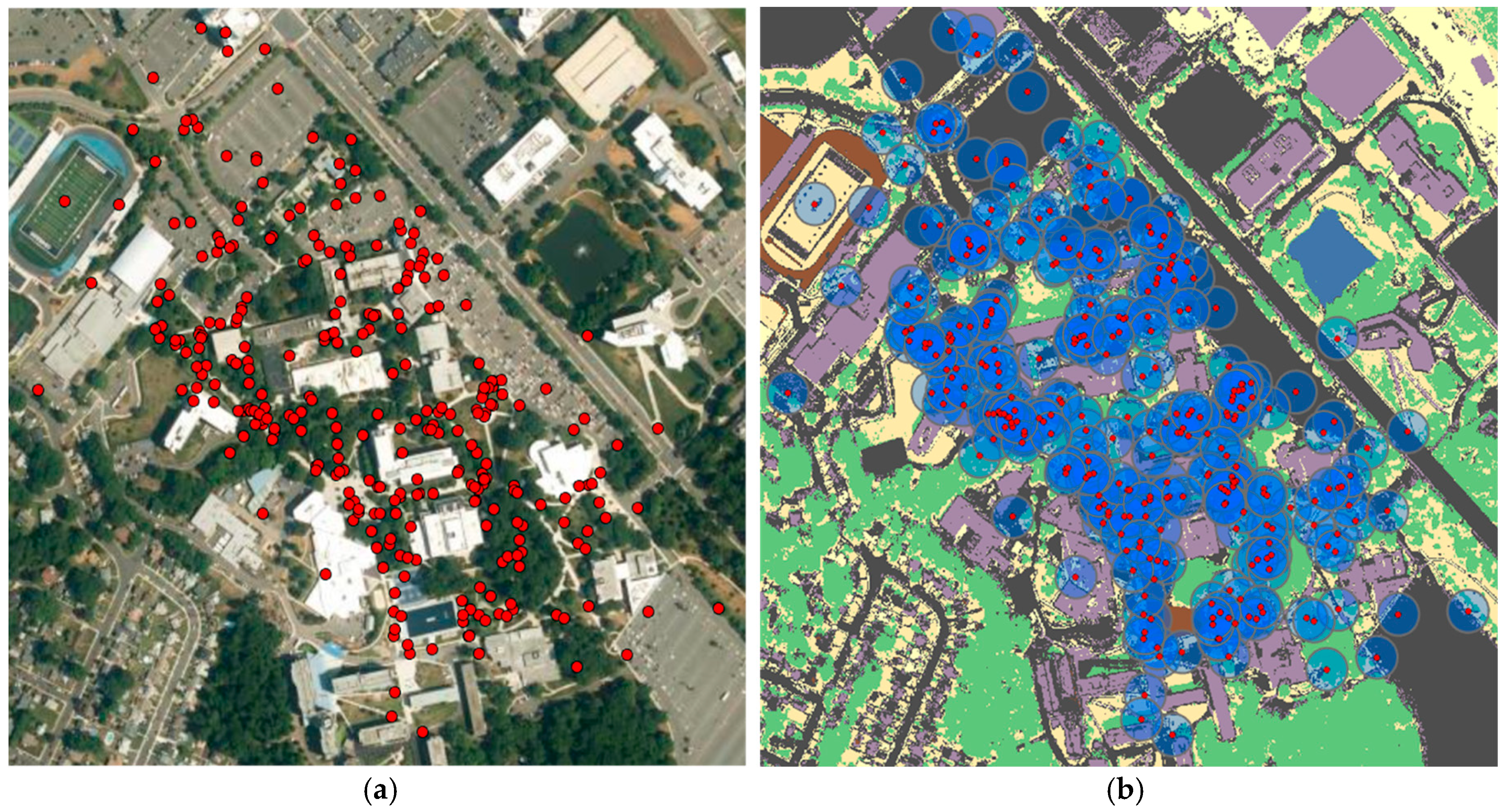
A high-resolution aerial image (0.5 m × 0.5 m) was classified using supervised classification to categorize the various environmental elements, including trees, grass, water, parking lots, buildings, artificial surfaces, and barren surfaces, following the previous study [40]. Thirty-meter buffers were created around the collected survey points. The adoption of 30 m buffers was based on the previous experiment [40], in which pedestrians on the same campus were interviewed about the approximate distance they were paying attention to when walking on campus. Their answers suggested a much smaller buffer size than most previous studies, which often used 100 m + buffers around residential addresses. Because our study focuses on the immediate environment’s impact on psychological status and the visibility of environmental exposure, small buffers offer higher explanatory power for momentary psychological states [19]. The previous study also compared three small buffer sizes, 10 m, 30 m, and 50 m, and found that the 30 m buffers were able to capture the environmental settings described in the participants’ survey answers (question 3 in Table 1), with the percent area of each of the seven environmental elements within the buffers being calculated for each survey location. Figure 1a shows the sample locations over the aerial imagery, and Figure 1b shows the 30 m buffers over the classified images of the seven environmental classes.
Figure 1.
Study set and data. (a) Aerial image of the study site and geo-enabled survey locations; (b) classified image and buffers.
We applied multiple analytical methods to address the research questions and explore the relationships between the environmental variables and subjective psychological measures recorded in the survey, using RStudio (version 2024.12.1). Since the psychological measures were ordinal, Spearman’s correlation was used to evaluate individual associations between environmental elements and psychological states. The moderating effects of gender and ethnicity were examined using moderated multiple regression. The interaction terms between each environmental feature and the moderator variable (e.g., Percent_Trees × Gender, Percent_Water × Ethnicity) were included. For each psychological outcome, a combined linear regression model that incorporated all seven environmental features, the moderator, and their respective interaction terms was estimated.
To assess the combined influence of environmental compositions, we conducted a clustering analysis using the percentage of the seven environmental features calculated from the buffers based on aerial image processing: water, trees, grass, barren land, parking areas, buildings, and artificial surfaces. To preserve the real-world dominance of each feature in the clustering process, the environmental variables were used in their original percentage form without standardization. We performed K-means clustering, a partition-based method that minimizes within-cluster variance. The optimal number of clusters was determined through empirical validation using both the elbow method and silhouette analysis. The elbow method showed a clear inflection point at k = 3, while the silhouette analysis yielded the highest average silhouette width (0.393) at this cluster number, confirming its appropriateness. The within-cluster sum of squares for k = 3 was 130,656.38. The cluster stability was further assessed through a bootstrap resampling procedure, which produced high stability with Jaccard coefficients of 0.89, 0.92, and 0.95 for Clusters 1, 2, and 3, respectively.
For each cluster, we examined the interrelationships among the psychological states using correlation networks. The dataset was first preprocessed by averaging each individual’s emotional responses across multiple measurements within their respective clusters. This step ensured that each participant contributed a single set of emotion scores per cluster. The dataset was then divided into subgroups based on the identified clusters, allowing for separate network analyses. Network models represent these interconnections using nodes and edges [48]. Nodes correspond to the observed psychological states, while edges depict the strength and sign of associations between them, after accounting for potential confounding variables [48]. In the visualized networks, edge color and thickness indicate the sign and magnitude of the partial correlation coefficients. For each cluster, we computed Spearman’s rank-based partial correlation matrices, which estimate the direct associations between variables while controlling for the influence of all other variables in the network. This approach helps reduce the spurious edges that may result from indirect relationships. To maintain spatial consistency across visualizations, a precomputed layout was applied uniformly to all clusters.
3. Results
3.1. Demographics
A total of 272 survey entries were collected in the fall of 2023. The survey collected gender and ethnicity information in addition to the assessment measures. Among the data points collected, 46.7% were female and 53.3% were male. The ethnicity makeup consisted of Asian (3.3%), Black (18.0%), Hispanic (27.2%), and White (51.5%).
3.2. Spearman Correlation
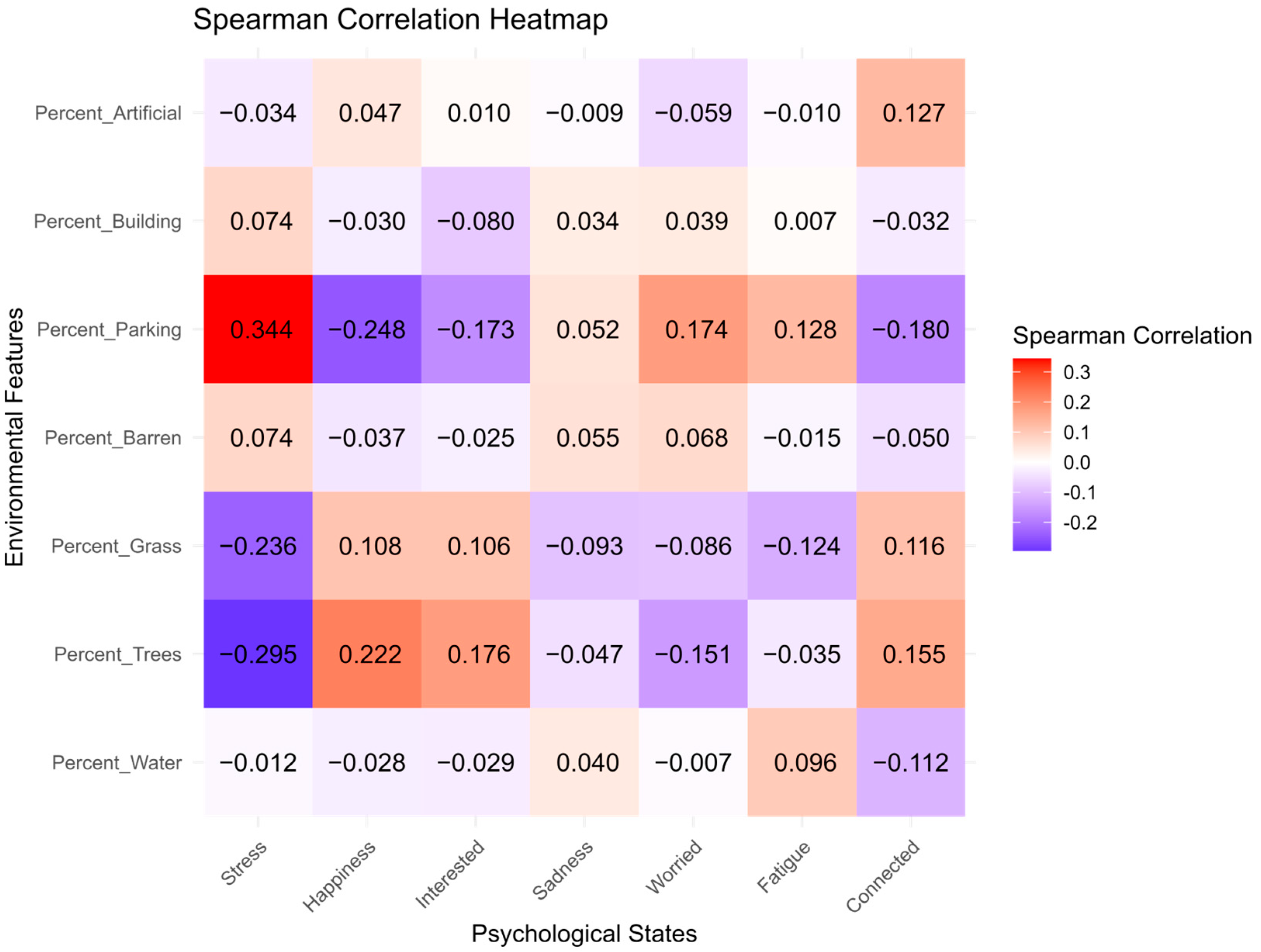
Figure 2 shows the spearman correlation results for the environmental attributes and psychological measures recorded from the survey. The results indicate that perceived stress is negatively correlated with the percentage of natural elements such as trees, grass, and water, as well as artificial surfaces, and positively correlated with the presence of parking lots, buildings, and barren land. Consistent with findings from Qi et al. (2024) [40], most correlations were weak, although slightly stronger associations were observed for trees, grass, and parking lots. In terms of perceived happiness, positive correlations with the percentage of trees, grass, and artificial surfaces emerged, while all other environmental elements showed negative correlations. The strongest positive correlation was with tree cover, and the strongest negative correlation was with parking lot area. As expected, perceived sadness exhibited an inverse pattern compared to happiness. Perceived worry aligned closely with perceived stress, while fatigue showed a similar correlation pattern to sadness. Interestedness and connectedness both followed trends similar to happiness, but with weaker correlations. Among all correlations examined, only five had correlation coefficients greater than ±0.2. These were the positive correlations between perceived stress and the percentage of parking lot area in the environment, the positive correlation between happiness and the percentage of trees in the environment, the negative correlation between stress and the percentage of trees and grass, and the negative correlation between happiness and the percentage of parking lots in the environment.
Figure 2.
Spearman correlation heatmap.
We grouped environmental elements including trees, grass, water, and barren land together as natural elements. The other environmental elements including buildings, parking lots and artificial surfaces were grouped as artificial elements. The Spearman correlations between the amount of these two groups of elements and the psychological measures are listed in Table 2. It shows slightly stronger correlations than those with individual environmental elements. As seen with individual elements, the number of natural elements is positively correlated with happiness, interestedness, and connectedness, and negatively correlated with stress, sadness, worriedness and fatigue. The number of artificial elements in the environment shows the exact opposite effect.
Table 2.
Correlation coefficients between psychological measures and the amount of natural and artificial elements in the environment.
3.3. Moderating Effects of Demographic Factors
Moderated multiple regression analyses were conducted to examine the moderating effects of gender and ethnicity on each psychological state. Each model included all seven environmental features, the moderator variable, and their respective interaction terms within a combined linear regression framework. Appendix A lists the results of the iterations of MMR analyses. Overall, only gender significantly moderated the relationship between the percentage of water and perceived worriedness. No significant moderating effects of gender or ethnicity were found for any other environmental–psychological associations.
3.4. Environmental Clusters
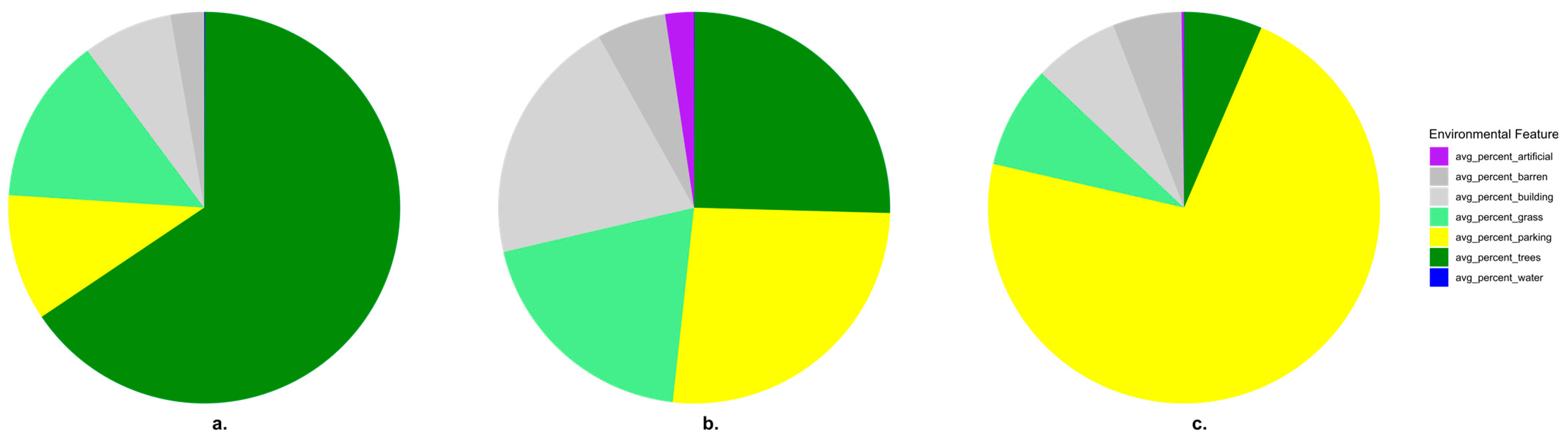
With k-means clustering, three clusters that represent three different environmental settings in our study site were generated. Figure 3 illustrates the environmental composition of each cluster. Cluster 1 has the highest proportion of trees and the lowest proportion of barren land and parking (Figure 3a), which represents a “green environment”. Cluster 2 exhibits a more balanced composition of trees, parking areas, grass, and buildings (Figure 3b), which represents a “mixed environment”. In Cluster 3, the percentage of parking increases substantially, while tree cover declines significantly (Figure 3c), representing an “artificial environment”. From Cluster 1 to Cluster 3, the most pronounced environmental changes are the opposing trends in tree cover and parking areas, whereas the proportions of grass, water, barren land, buildings, and artificial surfaces show relatively minor variations.
Figure 3.
Environmental composition of the three clusters. (a) Cluster 1; (b) Cluster 2; (c) Cluster 3.
Table 3 presents the descriptive statistics of the psychological state scores for each cluster. The scores for stress and sadness increased from Cluster 1 to Cluster 3, whereas those for happiness, interestedness, and connectedness decreased. Fatigue and worriedness both reached their lowest score in Cluster 2 and highest score in Cluster 3.
Table 3.
Descriptive statistics of psychological measures in the three clusters.
A one-way between-subjects ANOVA was conducted to examine the effect of the environmental composition on psychological states across clusters (Table 4). The analysis revealed a significant effect on stress scores with F(2, 269) = 15.44 and p < 0.001. Tukey’s post-hoc comparisons showed that Cluster 3 reported significantly higher stress than Cluster 1 (p < 0.001) and Cluster 2 (p < 0.001), while no significant difference was found between Clusters 1 and 2 (p = 0.39). For happiness, the ANOVA was also significant with F(2, 269) = 10.13 and p < 0.001. Cluster 3 had significantly lower happiness than Cluster 1 (p < 0.001) and Cluster 2 (p = 0.031). The difference between Clusters 1 and 2 was also significant (p = 0.015). There was a significant effect on the interestedness levels with F(2, 269) = 5.01 and p = 0.007. Cluster 3 reported significantly lower interestedness than Cluster 1 (p = 0.006). However, the differences between Clusters 1 and 2 (p = 0.095) and between Clusters 2 and 3 (p = 0.217) were not significant. A significant effect was also found for connectedness with F(2, 269) = 4.41 and p = 0.013. Tukey’s post hoc comparison showed that Cluster 3 reported significantly lower connectedness than Cluster 1 (p = 0.009), while other comparisons were not significant. The effects on sadness, worriedness, and fatigue were not significant: sadness, F(2, 269) = 0.55, p = 0.58; worriedness, F(2, 269) = 2.01, p = 0.14; and fatigue, F(2, 269) = 1.44, p = 0.24.
Table 4.
One-way analysis of variance in psychological measures and environmental compositions.
3.5. Correlation Networks
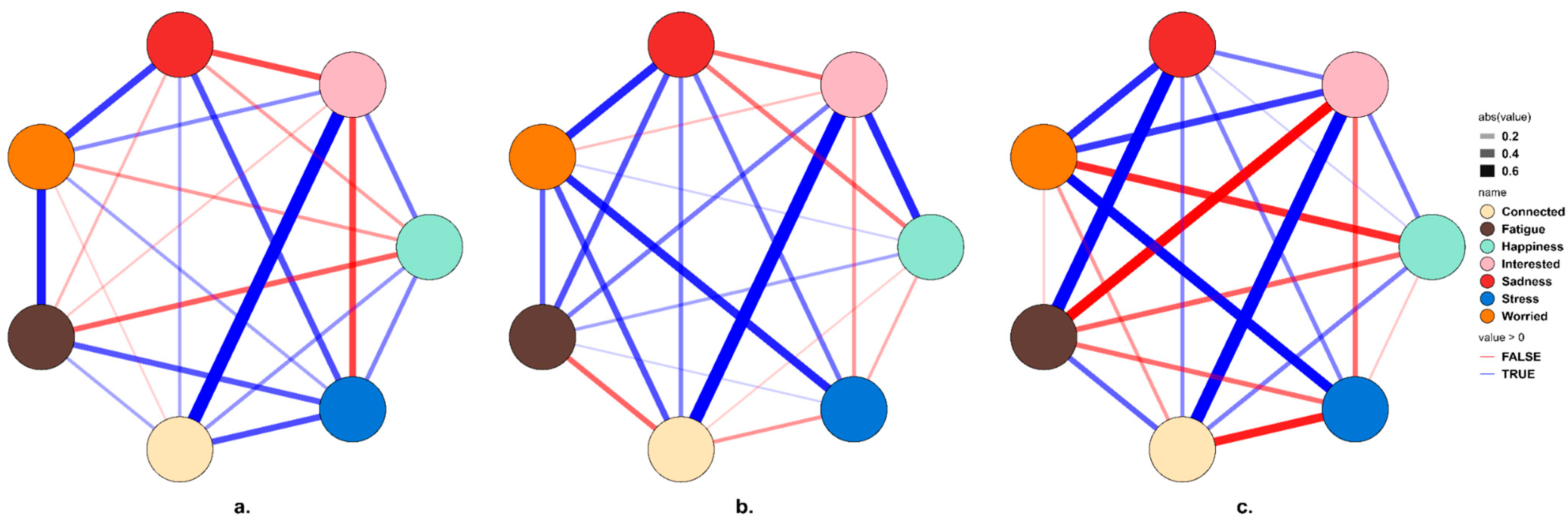
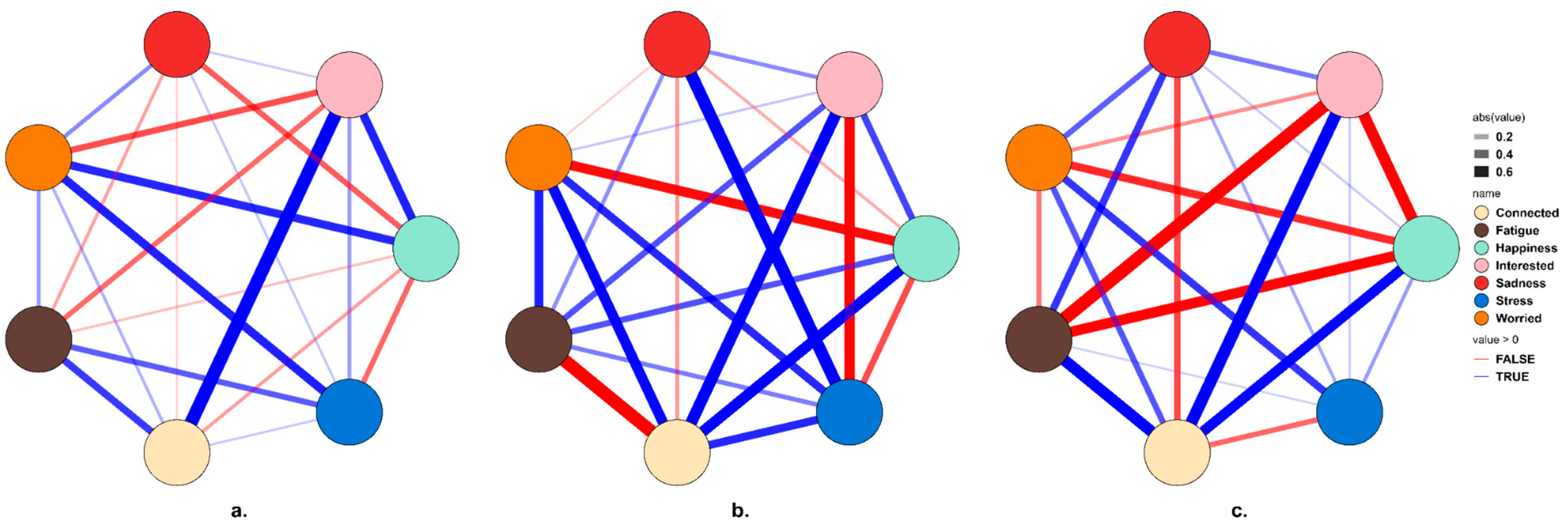
Figure 4 illustrates the correlation networks for the three clusters, depicting the strength and types of interrelationships among the psychological states. It can be observed that across all three clusters, the network density remains relatively consistent, indicating a stable level of interconnectivity among psychological states.
Figure 4.
Overall correlation networks of the three clusters. (a) Cluster 1; (b) Cluster 2; (c) Cluster 3.
Figure 4a shows that the positive psychological states, including happiness, interest, and connectedness, are positively correlated in Cluster 1, as are negative states such as stress, sadness, fatigue, and worriedness. Notable cross-category interconnections include those between stress and interestedness, sadness and interestedness, and happiness and fatigue. In Cluster 2 (Figure 4b), the negative relationships are slightly less pronounced compared to Cluster 1, suggesting a weaker distinction between positive and negative states. Figure 4c illustrates a heightened presence of negative associations in Cluster 3, particularly between stress and connectedness, fatigue and interestedness, and worriedness and happiness. The increase in negative associations in Cluster 3 suggests a more polarized emotional structure, with greater antagonism between negative and positive psychological states.
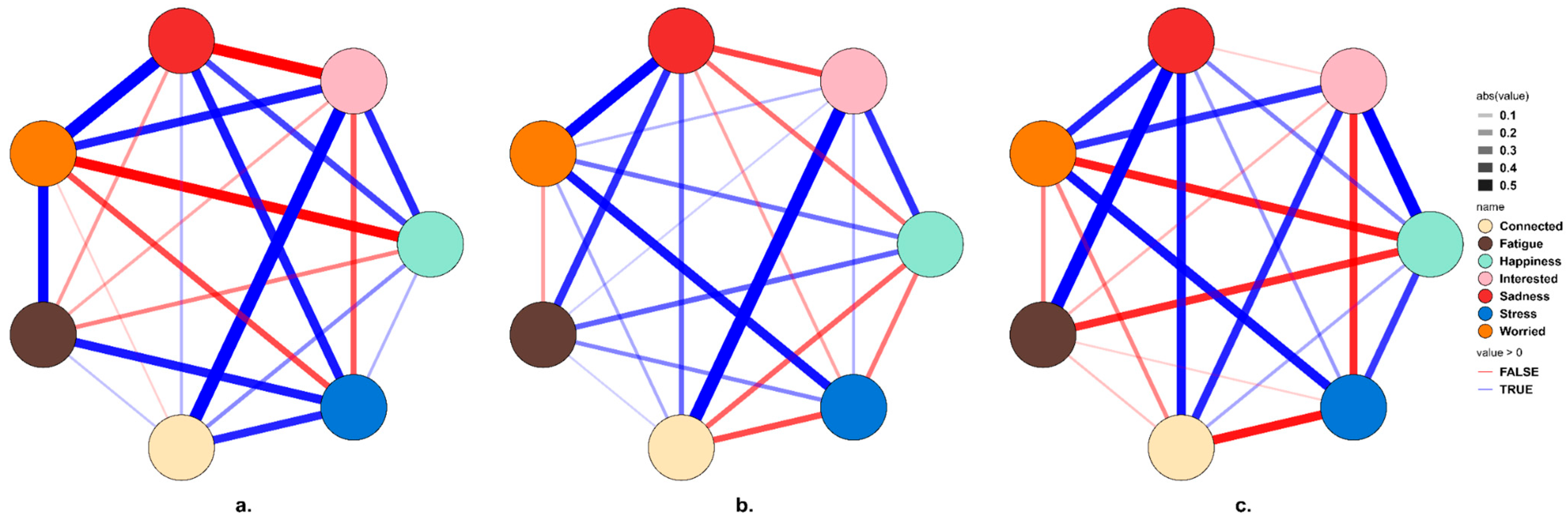
Figure 5 and Figure 6 illustrate the correlation networks for the female and male groups separately across the three clusters. In Cluster 1, the male network (Figure 6a) exhibits a higher density compared to the female one (Figure 5a). Males display stronger negative correlations between positive and negative states, reinforcing a clearer distinction between emotional valence categories. In contrast, the female network shows more moderate interconnections between the two categories. Cluster 2 sees a shift in the pattern, with the female network (Figure 5b) becoming denser than the male network (Figure 6b), especially between stress and interestedness, worriedness and happiness, and fatigue and connection. The negative states in the male group are more interconnected within their category but exhibit fewer bridging connections to positive states. In Cluster 3, both male (Figure 6c) and female (Figure 5c) networks feature a mix of positive and negative correlations. However, the female network displays a sharper contrast between positive and negative states, with more pronounced negative associations between these two categories.
Figure 5.
Female networks of the clusters. (a) Cluster 1; (b) Cluster 2; (c) Cluster 3.
Figure 6.
Male networks of the clusters. (a) Cluster 1; (b) Cluster 2; (c) Cluster 3.
4. Discussion and Conclusions
This study investigates the relationship between environmental settings and psychological states, with a particular emphasis on how these states interact across environments composed of varying natural and artificial elements. The overall correlation matrix indicated that positive psychological states were generally associated with natural features such as trees, water, and grass, while negative states showed positive associations with artificial elements including parking lots, buildings, and paved surfaces. However, most correlations were weak. Among the psychological variables assessed, perceived stress and happiness exhibited the strongest associations with environmental characteristics in participants’ immediate surroundings, aligning with findings from previous research. Of all the environmental features derived from aerial imagery, the tree cover and parking lot area showed the most consistent associations with psychological outcomes. Notably, grass also demonstrated a moderate negative correlation with stress.
One possible explanation for the relatively weak associations between environmental settings and people’s self-reported psychological states is the individual differences among our participants. Such individual differences were shown in gender, ethnicity, sociocultural backgrounds and individual dispositions. Our study attempted to examine how gender and ethnicity might affect the environment–psychology relationship. Our results showed that gender and ethnicity were not critical moderators of the participants’ psychological responses to their immediate environment. This aligns with previous research indicating that individuals respond subjectively to their surroundings, constructing personal narratives by selectively attending to and interpreting environmental attributes [40]. While the physical environment is often viewed as a social ecology that shapes human cognition and behavior, people’s distinct values, personalities, and cultural backgrounds can lead to varied psychological reactions [8]. From an ecological perspective, human perception extends beyond raw sensory data and must be understood within historical and sociocultural contexts [49,50]. People’s past experiences and personal identities shape how they perceive and interact with environmental elements, continuously influencing their thoughts and behaviors in ways that help them adapt to their surroundings.
When we examined the environmental settings by creating three clusters representing distinct environmental compositions, patterns in the measured psychological states and their interconnections emerged. Moving from a green environment (Cluster 1) to one with mostly artificial elements (Cluster 3), there were notable changes in perceived stress, happiness, interest, and connection levels. The ANOVA results confirmed that environmental compositions significantly influenced these psychological measures. In particular, Clusters 1 and 3 exhibited the most pronounced differences, suggesting that an increase in artificial elements is associated with lower happiness, interest, and connectedness, as well as higher stress levels. This observation was further validated with the network visualizations, which showed that negative psychological states exerted relatively stronger negative associations with positive psychological states in Cluster 3 compared to Cluster 1. These findings are consistent with prior research demonstrating a negative correlation between greenspace and stress and a positive association between nature and well-being [14,15,16,17,19]. Additionally, our network analysis results provide direct evidence of an evolving pattern of emotional regulation when the environment changes from greenness dominated to artificial surface dominated. These results support the idea that psychological responses to the environment are highly dynamic and shaped by environmental composition in a complex way.
The networks for male and female participants displayed distinct psychological patterns across the three clusters. In green environments (Cluster 1), male participants showed denser emotional networks and stronger contrasts between positive and negative states, whereas female participants displayed more moderate and diffuse associations. In mixed environments (Cluster 2), female participants’ networks became more interconnected, with notable bridges across emotional valences, while male participants’ networks appeared more internally clustered. In artificial environments (Cluster 3), both genders showed complex emotional patterns, but female participants’ networks again featured a sharper split between positive and negative emotions.
These patterns may reflect differing emotional processing styles and environmental sensitivities. Previous studies have discussed the gender differences in environmental perception and how they moderate the relationship between environment and health [51]. While women may feel less safe or comfortable in unmanaged green environments, resulting in lower psychological engagement, they may find managed and open environments more relatable and cognitively stimulating [52,53,54]. The mixed environment in our study, which is characterized by a balanced presence of trees, grass, buildings, and parking lots, may align more closely with women’s preferences, contributing to their heightened psychological activity in such settings. Men’s consistently higher psychological integration in both green and artificial settings may lead to a more stable affective response across environments, possibly shaped by a greater tolerance for physical isolation in less populated areas [54].
This study highlights the complex and context-dependent relationship between environmental composition and psychological well-being. While natural elements like trees and grass are found to link modestly to positive emotional states, and artificial features correlate with stress, the overall weak associations suggest that individual variabilities, such as gender, perception, and past experiences, play a significant role in shaping such responses. This study examined the gender differences in environmental perception but did not quantify the individual cultural and psychological factors limited by the data we collected in the current experiment. Network analysis has revealed dynamic emotional structures across environments and between genders, underscoring the value of holistic approaches in environmental psychology. Despite weak statistical associations, small positive effects applied across large populations can still exert a meaningful influence on public health [55]. For example, modest increases in tree cover or reductions in paved surfaces on campus may cumulatively enhance community well-being and emotional resilience. These findings offer practical guidance for incorporating nature-based design elements into urban planning and public health, even when individual-level effects appear limited.
It has been suggested [27] that future studies on the association between urban environment and health should consider fine spatial scales and multiple exposure assessment methods for a comprehensive evaluation. The current study is one of the first reported at a fine spatial scale. The scope of the current study, however, is limited in several aspects. First, the study site is a university campus. Although its environment offers a mixture of natural and artificial elements, it may not be generalizable to more complex urban settings with a wider range of environmental characteristics. The sample of college students captures a specific demographic with unique experiences and stressors that might not be representative of the general urban population. Second, data collection occurred at a single time point and at the specific site, making it difficult to disentangle environmental effects from transient or fluctuating emotional states that may vary situationally. The observational nature of the data limits our ability to infer causality, and future studies could incorporate longitudinal or experimental designs to address temporal precedence. Third, the correlations observed between environmental features and psychological states were generally modest, which may reflect limitations in measurement sensitivity, spatial resolution, or the inability of our cross-sectional design to capture temporal lags between environmental exposure and emotional response. Fourth, the current study’s consideration of individuality and its impact on the environment–mental health relationship is limited. The interpretation of gender differences rests primarily on theoretical considerations due to the limited granularity of our data, limiting our ability to fully account for individual-level variability. This study did not include measures of personality traits, cultural identity, or environmental familiarity, which can shape how individuals perceive and respond to their surroundings.
In the future, we will aim to expand upon current methods and findings to address these limitations. We have designed a study to combine aerial imagery measures with street view images to capture multi-dimensional environmental characteristics and expand the study site to a variety of urban environments. This study utilizes Virtual Reality (VR) technology for the visualization of a controlled set of environmental settings. Detailed individual information on not only demographics but also personal traits such as spirituality, environmental familiarity, and types of daily activities, etc., will also be collected from participants to offer insights into the individual differences in the environment–mental health relationships. To address the limitation of single-time-point, site-specific data collection, this study design incorporates both baseline assessments and repeated exposures to controlled VR sessions with varied environments. With more individuality data collected, a more nuanced understanding of the gender effect and the interaction among socio-cultural and behavioral variables can be examined to offer deeper insights into the sources of individual variability. Advanced modeling approaches could also be employed in future studies to test the directional causal relationships among psychological states.

Author Contributions
Conceptualization, F.Q. and F.W.; methodology, F.W. and F.Q.; software, F.W.; validation, F.Q. and F.W.; formal analysis, F.W.; investigation, F.Q.; resources, F.Q.; data curation, F.Q. and F.W.; writing—original draft preparation, F.W.; writing—review and editing, F.Q.; visualization, F.W.; supervision, F.Q.; project administration, F.Q.; funding acquisition, F.Q. All authors have read and agreed to the published version of the manuscript.
Funding
This research received no external funding.
Data Availability Statement
The raw data supporting the conclusions of this article will be made available by the authors upon request.
Conflicts of Interest
The authors declare no conflicts of interest.
Appendix A
Appendix A.1. MMR Results by Gender
Table A1.
MMR results for stress by gender.
Table A1.
MMR results for stress by gender.
| Predictor | Estimate | Std_Error | t_Value | p_Value |
|---|---|---|---|---|
| (Intercept) | −1.851 | 2.028 | −0.913 | 0.362 |
| Percent_Water | 5.486 | 4.532 | 1.210 | 0.227 |
| Percent_Trees | 0.061 | 0.044 | 1.386 | 0.167 |
| Percent_Grass | 0.059 | 0.054 | 1.091 | 0.276 |
| Percent_Barren | 0.172 | 0.090 | 1.911 | 0.057 |
| Percent_Parking | 0.076 | 0.044 | 1.708 | 0.089 |
| Percent_Building | 0.088 | 0.046 | 1.931 | 0.055 |
| Genderm | 2.875 | 2.668 | 1.078 | 0.282 |
| Percent_Water_Gender | −1.890 | 2.703 | −0.699 | 0.485 |
| Percent_Trees_Gender | −0.027 | 0.027 | −1.022 | 0.308 |
| Percent_Grass_Gender | −0.038 | 0.033 | −1.161 | 0.247 |
| Percent_Barren_Gender | −0.088 | 0.056 | −1.583 | 0.115 |
| Percent_Parking_Gender | −0.023 | 0.027 | −0.837 | 0.403 |
| Percent_Building_Gender | −0.035 | 0.028 | −1.261 | 0.208 |
Table A2.
MMR results for happiness by gender.
Table A2.
MMR results for happiness by gender.
| Predictor | Estimate | Std_Error | t_Value | p_Value |
|---|---|---|---|---|
| (Intercept) | 2.701 | 2.716 | 0.995 | 0.321 |
| Percent_Water | −9.604 | 6.069 | −1.582 | 0.115 |
| Percent_Trees | 0.080 | 0.059 | 1.344 | 0.180 |
| Percent_Grass | 0.085 | 0.073 | 1.167 | 0.244 |
| Percent_Barren | −0.097 | 0.121 | −0.805 | 0.421 |
| Percent_Parking | 0.067 | 0.060 | 1.128 | 0.260 |
| Percent_Building | 0.041 | 0.061 | 0.672 | 0.502 |
| Genderm | 3.859 | 3.572 | 1.080 | 0.281 |
| Percent_Water_Gender | 4.352 | 3.620 | 1.202 | 0.230 |
| Percent_Trees_Gender | −0.047 | 0.036 | −1.311 | 0.191 |
| Percent_Grass_Gender | −0.047 | 0.044 | −1.084 | 0.280 |
| Percent_Barren_Gender | 0.072 | 0.074 | 0.972 | 0.332 |
| Percent_Parking_Gender | −0.050 | 0.036 | −1.385 | 0.167 |
| Percent_Building_Gender | −0.030 | 0.037 | −0.818 | 0.414 |
Table A3.
MMR results for interested by gender.
Table A3.
MMR results for interested by gender.
| Predictor | Estimate | Std_Error | t_Value | p_Value |
|---|---|---|---|---|
| (Intercept) | 7.741 | 2.902 | 2.667 | 0.008 |
| Percent_Water | −4.300 | 6.486 | −0.663 | 0.508 |
| Percent_Trees | −0.037 | 0.063 | −0.590 | 0.556 |
| Percent_Grass | −0.084 | 0.078 | −1.079 | 0.282 |
| Percent_Barren | −0.212 | 0.129 | −1.647 | 0.101 |
| Percent_Parking | −0.071 | 0.064 | −1.117 | 0.265 |
| Percent_Building | −0.095 | 0.065 | −1.449 | 0.148 |
| Genderm | −3.070 | 3.818 | −0.804 | 0.422 |
| Percent_Water_Gender | 1.341 | 3.868 | 0.347 | 0.729 |
| Percent_Trees_Gender | 0.013 | 0.038 | 0.329 | 0.743 |
| Percent_Grass_Gender | 0.044 | 0.047 | 0.942 | 0.347 |
| Percent_Barren_Gender | 0.132 | 0.079 | 1.662 | 0.098 |
| Percent_Parking_Gender | 0.025 | 0.039 | 0.647 | 0.518 |
| Percent_Building_Gender | 0.039 | 0.040 | 0.974 | 0.331 |
Table A4.
MMR results for sadness by gender.
Table A4.
MMR results for sadness by gender.
| Predictor | Estimate | Std_Error | t_Value | p_Value |
|---|---|---|---|---|
| (Intercept) | −1.801 | 1.762 | −1.022 | 0.308 |
| Percent_Water | 1.822 | 3.938 | 0.463 | 0.644 |
| Percent_Trees | 0.059 | 0.038 | 1.526 | 0.128 |
| Percent_Grass | 0.049 | 0.047 | 1.039 | 0.300 |
| Percent_Barren | 0.049 | 0.078 | 0.630 | 0.530 |
| Percent_Parking | 0.074 | 0.039 | 1.906 | 0.058 |
| Percent_Building | 0.085 | 0.040 | 2.139 | 0.033 |
| Genderm | 2.518 | 2.318 | 1.087 | 0.278 |
| Percent_Water_Gender | −1.139 | 2.348 | −0.485 | 0.628 |
| Percent_Trees_Gender | −0.025 | 0.023 | −1.084 | 0.279 |
| Percent_Grass_Gender | −0.025 | 0.028 | −0.886 | 0.376 |
| Percent_Barren_Gender | −0.004 | 0.048 | −0.087 | 0.931 |
| Percent_Parking_Gender | −0.034 | 0.023 | −1.436 | 0.152 |
| Percent_Building_Gender | −0.039 | 0.024 | −1.610 | 0.109 |
Table A5.
MMR results for worried by gender.
Table A5.
MMR results for worried by gender.
| Predictor | Estimate | Std_Error | t_Value | p_Value |
|---|---|---|---|---|
| (Intercept) | −1.436 | 2.414 | −0.595 | 0.552 |
| Percent_Water | 13.549 | 5.394 | 2.512 | 0.013 |
| Percent_Trees | 0.036 | 0.053 | 0.680 | 0.497 |
| Percent_Grass | 0.001 | 0.065 | 0.022 | 0.983 |
| Percent_Barren | 0.043 | 0.107 | 0.405 | 0.686 |
| Percent_Parking | 0.066 | 0.053 | 1.240 | 0.216 |
| Percent_Building | 0.067 | 0.054 | 1.234 | 0.218 |
| Genderm | 1.216 | 3.175 | 0.383 | 0.702 |
| Percent_Water_Gender | −8.351 | 3.217 | −2.596 | 0.010 |
| Percent_Trees_Gender | −0.004 | 0.032 | −0.116 | 0.908 |
| Percent_Grass_Gender | 0.008 | 0.039 | 0.215 | 0.830 |
| Percent_Barren_Gender | 0.001 | 0.066 | 0.017 | 0.986 |
| Percent_Parking_Gender | −0.019 | 0.032 | −0.592 | 0.554 |
| Percent_Building_Gender | −0.024 | 0.033 | −0.734 | 0.464 |
Table A6.
MMR results for fatigue by gender.
Table A6.
MMR results for fatigue by gender.
| Predictor | Estimate | Std_Error | t_Value | p_Value |
|---|---|---|---|---|
| (Intercept) | 0.444 | 2.374 | 0.187 | 0.852 |
| Percent_Water | −1.136 | 5.306 | −0.214 | 0.831 |
| Percent_Trees | 0.019 | 0.052 | 0.364 | 0.716 |
| Percent_Grass | −0.016 | 0.064 | −0.248 | 0.804 |
| Percent_Barren | 0.003 | 0.106 | 0.025 | 0.980 |
| Percent_Parking | 0.051 | 0.052 | 0.970 | 0.333 |
| Percent_Building | 0.054 | 0.053 | 1.019 | 0.309 |
| Genderm | 0.884 | 3.123 | 0.283 | 0.777 |
| Percent_Water_Gender | 1.173 | 3.164 | 0.371 | 0.711 |
| Percent_Trees_Gender | −0.003 | 0.031 | −0.083 | 0.934 |
| Percent_Grass_Gender | 0.009 | 0.038 | 0.225 | 0.822 |
| Percent_Barren_Gender | 0.001 | 0.065 | 0.017 | 0.987 |
| Percent_Parking_Gender | −0.020 | 0.032 | −0.634 | 0.527 |
| Percent_Building_Gender | −0.025 | 0.032 | −0.783 | 0.434 |
Table A7.
MMR results for connected by gender.
Table A7.
MMR results for connected by gender.
| Predictor | Estimate | Std_Error | t_Value | p_Value |
|---|---|---|---|---|
| (Intercept) | 5.228 | 3.005 | 1.740 | 0.083 |
| Percent_Water | −4.146 | 6.715 | −0.617 | 0.538 |
| Percent_Trees | 0.000 | 0.066 | 0.000 | 1.000 |
| Percent_Grass | 0.002 | 0.081 | 0.022 | 0.983 |
| Percent_Barren | −0.155 | 0.134 | −1.157 | 0.248 |
| Percent_Parking | −0.032 | 0.066 | −0.489 | 0.625 |
| Percent_Building | −0.045 | 0.068 | −0.670 | 0.504 |
| Genderm | −0.042 | 3.952 | −0.011 | 0.991 |
| Percent_Water_Gender | −1.328 | 4.005 | −0.332 | 0.740 |
| Percent_Trees_Gender | −0.007 | 0.040 | −0.183 | 0.855 |
| Percent_Grass_Gender | −0.004 | 0.048 | −0.076 | 0.939 |
| Percent_Barren_Gender | 0.100 | 0.082 | 1.216 | 0.225 |
| Percent_Parking_Gender | 0.002 | 0.040 | 0.053 | 0.958 |
| Percent_Building_Gender | 0.011 | 0.041 | 0.273 | 0.785 |
Appendix A.2. MMR Results by Ethnicity
Table A8.
MMR results for stress by ethnicity.
Table A8.
MMR results for stress by ethnicity.
| Predictor | Estimate | Std_Error | t_Value | p_Value |
|---|---|---|---|---|
| (Intercept) | −2.213 | 2.827 | −0.783 | 0.434 |
| Percent_Water | 7.238 | 5.811 | 1.245 | 0.214 |
| Percent_Trees | 0.041 | 0.041 | 0.995 | 0.321 |
| Percent_Grass | 0.041 | 0.055 | 0.743 | 0.458 |
| Percent_Barren | 0.040 | 0.118 | 0.342 | 0.733 |
| Percent_Parking | 0.071 | 0.043 | 1.643 | 0.102 |
| Percent_Building | 0.051 | 0.046 | 1.100 | 0.272 |
| Ethnicityblack | 1.405 | 1.303 | 1.079 | 0.282 |
| Ethnicityhispanic | 2.288 | 2.592 | 0.883 | 0.378 |
| Ethnicitywhite | 3.230 | 3.924 | 0.823 | 0.411 |
| Percent_Water_Ethnicity | −1.360 | 1.684 | −0.807 | 0.420 |
| Percent_Trees_Ethnicity | −0.009 | 0.013 | −0.655 | 0.513 |
| Percent_Grass_Ethnicity | −0.014 | 0.017 | −0.816 | 0.415 |
| Percent_Barren_Ethnicity | −0.003 | 0.034 | −0.089 | 0.929 |
| Percent_Parking_Ethnicity | −0.011 | 0.014 | −0.777 | 0.438 |
| Percent_Building_Ethnicity | −0.007 | 0.015 | −0.484 | 0.629 |
Table A9.
MMR results for happiness by ethnicity.
Table A9.
MMR results for happiness by ethnicity.
| Predictor | Estimate | Std_Error | t_Value | p_Value |
|---|---|---|---|---|
| (Intercept) | 3.643 | 3.720 | 0.979 | 0.328 |
| Percent_Water | −8.245 | 7.648 | −1.078 | 0.282 |
| Percent_Trees | 0.015 | 0.054 | 0.273 | 0.785 |
| Percent_Grass | 0.047 | 0.072 | 0.655 | 0.513 |
| Percent_Barren | 0.104 | 0.156 | 0.671 | 0.503 |
| Percent_Parking | 0.009 | 0.057 | 0.157 | 0.876 |
| Percent_Building | 0.063 | 0.061 | 1.034 | 0.302 |
| Ethnicityblack | −0.107 | 1.715 | −0.062 | 0.950 |
| Ethnicityhispanic | 0.609 | 3.411 | 0.179 | 0.858 |
| Ethnicitywhite | 1.867 | 5.164 | 0.362 | 0.718 |
| Percent_Water_Ethnicity | 1.546 | 2.216 | 0.698 | 0.486 |
| Percent_Trees_Ethnicity | −0.002 | 0.018 | −0.106 | 0.915 |
| Percent_Grass_Ethnicity | −0.011 | 0.022 | −0.471 | 0.638 |
| Percent_Barren_Ethnicity | −0.027 | 0.045 | −0.596 | 0.552 |
| Percent_Parking_Ethnicity | −0.006 | 0.018 | −0.331 | 0.741 |
| Percent_Building_Ethnicity | −0.021 | 0.019 | −1.087 | 0.278 |
Table A10.
MMR results for interested by ethnicity.
Table A10.
MMR results for interested by ethnicity.
| Predictor | Estimate | Std_Error | t_Value | p_Value |
|---|---|---|---|---|
| (Intercept) | 9.929 | 3.957 | 2.509 | 0.013 |
| Percent_Water | −3.435 | 8.136 | −0.422 | 0.673 |
| Percent_Trees | −0.083 | 0.058 | −1.432 | 0.153 |
| Percent_Grass | −0.051 | 0.077 | −0.661 | 0.509 |
| Percent_Barren | 0.038 | 0.165 | 0.231 | 0.818 |
| Percent_Parking | −0.118 | 0.060 | −1.959 | 0.051 |
| Percent_Building | −0.065 | 0.064 | −1.004 | 0.316 |
| Ethnicityblack | −2.657 | 1.824 | −1.457 | 0.146 |
| Ethnicityhispanic | −4.810 | 3.628 | −1.326 | 0.186 |
| Ethnicitywhite | −6.212 | 5.493 | −1.131 | 0.259 |
| Percent_Water_Ethnicity | 0.065 | 2.357 | 0.027 | 0.978 |
| Percent_Trees_Ethnicity | 0.024 | 0.019 | 1.275 | 0.204 |
| Percent_Grass_Ethnicity | 0.015 | 0.024 | 0.618 | 0.537 |
| Percent_Barren_Ethnicity | −0.009 | 0.048 | −0.179 | 0.858 |
| Percent_Parking_Ethnicity | 0.029 | 0.019 | 1.494 | 0.137 |
| Percent_Building_Ethnicity | 0.012 | 0.020 | 0.597 | 0.551 |
Table A11.
MMR results for sadness by ethnicity.
Table A11.
MMR results for sadness by ethnicity.
| Predictor | Estimate | Std_Error | t_Value | p_Value |
|---|---|---|---|---|
| (Intercept) | −0.264 | 2.440 | −0.108 | 0.914 |
| Percent_Water | 3.118 | 5.016 | 0.622 | 0.535 |
| Percent_Trees | 0.010 | 0.036 | 0.288 | 0.774 |
| Percent_Grass | 0.020 | 0.047 | 0.421 | 0.674 |
| Percent_Barren | 0.112 | 0.102 | 1.096 | 0.274 |
| Percent_Parking | 0.010 | 0.037 | 0.260 | 0.795 |
| Percent_Building | 0.000 | 0.040 | −0.007 | 0.995 |
| Ethnicityblack | 0.079 | 1.124 | 0.070 | 0.944 |
| Ethnicityhispanic | −0.270 | 2.237 | −0.121 | 0.904 |
| Ethnicitywhite | −0.718 | 3.387 | −0.212 | 0.832 |
| Percent_Water_Ethnicity | −0.914 | 1.453 | −0.629 | 0.530 |
| Percent_Trees_Ethnicity | 0.004 | 0.011 | 0.314 | 0.754 |
| Percent_Grass_Ethnicity | −0.001 | 0.015 | −0.090 | 0.929 |
| Percent_Barren_Ethnicity | −0.018 | 0.030 | −0.614 | 0.539 |
| Percent_Parking_Ethnicity | 0.004 | 0.012 | 0.347 | 0.729 |
| Percent_Building_Ethnicity | 0.008 | 0.013 | 0.613 | 0.540 |
Table A12.
MMR results for worried by ethnicity.
Table A12.
MMR results for worried by ethnicity.
| Predictor | Estimate | Std_Error | t_Value | p_Value |
|---|---|---|---|---|
| (Intercept) | 0.583 | 3.311 | 0.176 | 0.860 |
| Percent_Water | 13.027 | 6.808 | 1.913 | 0.057 |
| Percent_Trees | −0.002 | 0.048 | −0.035 | 0.972 |
| Percent_Grass | −0.001 | 0.064 | −0.009 | 0.993 |
| Percent_Barren | −0.084 | 0.138 | −0.604 | 0.546 |
| Percent_Parking | 0.007 | 0.050 | 0.144 | 0.886 |
| Percent_Building | −0.002 | 0.054 | −0.033 | 0.974 |
| Ethnicityblack | 0.041 | 1.526 | 0.027 | 0.979 |
| Ethnicityhispanic | −1.316 | 3.037 | −0.433 | 0.665 |
| Ethnicitywhite | −1.637 | 4.597 | −0.356 | 0.722 |
| Percent_Water_Ethnicity | −3.715 | 1.973 | −1.883 | 0.061 |
| Percent_Trees_Ethnicity | 0.009 | 0.016 | 0.546 | 0.585 |
| Percent_Grass_Ethnicity | 0.005 | 0.020 | 0.267 | 0.789 |
| Percent_Barren_Ethnicity | 0.042 | 0.040 | 1.029 | 0.304 |
| Percent_Parking_Ethnicity | 0.008 | 0.016 | 0.488 | 0.626 |
| Percent_Building_Ethnicity | 0.009 | 0.017 | 0.511 | 0.610 |
Table A13.
MMR results for fatigue by ethnicity.
Table A13.
MMR results for fatigue by ethnicity.
| Predictor | Estimate | Std_Error | t_Value | p_Value |
|---|---|---|---|---|
| (Intercept) | −0.439 | 3.217 | −0.136 | 0.892 |
| Percent_Water | 3.666 | 6.614 | 0.554 | 0.580 |
| Percent_Trees | 0.019 | 0.047 | 0.396 | 0.692 |
| Percent_Grass | 0.027 | 0.063 | 0.436 | 0.663 |
| Percent_Barren | −0.041 | 0.135 | −0.303 | 0.762 |
| Percent_Parking | 0.044 | 0.049 | 0.888 | 0.375 |
| Percent_Building | 0.021 | 0.052 | 0.398 | 0.691 |
| Ethnicityblack | 1.879 | 1.483 | 1.267 | 0.206 |
| Ethnicityhispanic | 1.649 | 2.950 | 0.559 | 0.577 |
| Ethnicitywhite | 2.846 | 4.466 | 0.637 | 0.525 |
| Percent_Water_Ethnicity | −0.621 | 1.916 | −0.324 | 0.746 |
| Percent_Trees_Ethnicity | −0.005 | 0.015 | −0.297 | 0.766 |
| Percent_Grass_Ethnicity | −0.011 | 0.019 | −0.571 | 0.568 |
| Percent_Barren_Ethnicity | 0.013 | 0.039 | 0.319 | 0.750 |
| Percent_Parking_Ethnicity | −0.011 | 0.016 | −0.673 | 0.501 |
| Percent_Building_Ethnicity | −0.005 | 0.017 | −0.276 | 0.783 |
Table A14.
MMR results for connected by ethnicity.
Table A14.
MMR results for connected by ethnicity.
| Predictor | Estimate | Std_Error | t_Value | p_Value |
|---|---|---|---|---|
| (Intercept) | 9.278 | 4.099 | 2.264 | 0.024 |
| Percent_Water | −1.252 | 8.427 | −0.149 | 0.882 |
| Percent_Trees | −0.075 | 0.060 | −1.250 | 0.212 |
| Percent_Grass | −0.058 | 0.080 | −0.726 | 0.469 |
| Percent_Barren | −0.043 | 0.171 | −0.252 | 0.801 |
| Percent_Parking | −0.105 | 0.062 | −1.677 | 0.095 |
| Percent_Building | −0.065 | 0.067 | −0.968 | 0.334 |
| Ethnicityblack | −1.946 | 1.889 | −1.030 | 0.304 |
| Ethnicityhispanic | −4.755 | 3.758 | −1.265 | 0.207 |
| Ethnicitywhite | −6.004 | 5.690 | −1.055 | 0.292 |
| Percent_Water_Ethnicity | −1.526 | 2.442 | −0.625 | 0.532 |
| Percent_Trees_Ethnicity | 0.022 | 0.019 | 1.121 | 0.264 |
| Percent_Grass_Ethnicity | 0.019 | 0.025 | 0.767 | 0.444 |
| Percent_Barren_Ethnicity | 0.014 | 0.050 | 0.283 | 0.777 |
| Percent_Parking_Ethnicity | 0.025 | 0.020 | 1.243 | 0.215 |
| Percent_Building_Ethnicity | 0.013 | 0.021 | 0.640 | 0.523 |
References
- Ventriglio, A.; Torales, J.; Castaldelli-Maia, J.M.; De Berardis, D.; Bhugra, D. Urbanization and Emerging Mental Health Issues. CNS Spectr. 2021, 26, 43–50. [Google Scholar] [CrossRef] [PubMed]
- Okkels, N.; Kristiansen, C.B.; Munk-Jørgensen, P.; Sartorius, N. Urban Mental Health: Challenges and Perspectives. Curr. Opin. Psychiatry 2018, 31, 258–264. [Google Scholar] [CrossRef]
- Kellert, S.R.; Wilson, E.O. The Biophilia Hypothesis; Island Press/Shearwater Books: Washington, DC, USA, 1993. [Google Scholar]
- Ward Thompson, C.; Roe, J.; Aspinall, P.; Mitchell, R.; Clow, A.; Miller, D. More Green Space Is Linked to Less Stress in Deprived Communities: Evidence from Salivary Cortisol Patterns. Landsc. Urban Plan. 2012, 105, 221–229. [Google Scholar] [CrossRef]
- Beyer, K.; Kaltenbach, A.; Szabo, A.; Bogar, S.; Nieto, F.; Malecki, K. Exposure to Neighborhood Green Space and Mental Health: Evidence from the Survey of the Health of Wisconsin. Int. J. Environ. Res. Public Health 2014, 11, 3453–3472. [Google Scholar] [CrossRef] [PubMed]
- Triguero-Mas, M.; Dadvand, P.; Cirach, M.; Martínez, D.; Medina, A.; Mompart, A.; Basagaña, X.; Gražulevičienė, R.; Nieuwenhuijsen, M.J. Natural Outdoor Environments and Mental and Physical Health: Relationships and Mechanisms. Environ. Int. 2015, 77, 35–41. [Google Scholar] [CrossRef] [PubMed]
- Ward Thompson, C.; Aspinall, P.; Roe, J.; Robertson, L.; Miller, D. Mitigating Stress and Supporting Health in Deprived Urban Communities: The Importance of Green Space and the Social Environment. Int. J. Environ. Res. Public Health 2016, 13, 440. [Google Scholar] [CrossRef]
- Oishi, S. Socioecological Psychology. Annu. Rev. Psychol. 2014, 65, 581–609. [Google Scholar] [CrossRef]
- McCay, L.; Bremer, I.; Endale, T.; Jannati, M.; Yi, J. Urban Design and Mental Health. In Mental Health and Illness in the City; Okkels, N., Kristiansen, C.B., Munk-Jorgensen, P., Eds.; Springer: Singapore, 2017; Volume 1, pp. 1–24. [Google Scholar]
- Monroe, S.M.; Simons, A.D. Diathesis-Stress Theories in the Context of Life Stress Research: Implications for the Depressive Disorders. Psychol. Bull. 1991, 110, 406–425. [Google Scholar] [CrossRef]
- World Health Organization. Promoting Mental Health: Concepts, Emerging Evidence, Practice; WHO: Geneva, Switzerland, 2004; Available online: https://iris.who.int/bitstream/handle/10665/42940/9241591595.pdf?sequence=1 (accessed on 4 March 2025).
- Scott, K.M.; Von Korff, M.; Alonso, J.; Angermeyer, M.C.; Bromet, E.; Fayyad, J.; De Girolamo, G.; Demyttenaere, K.; Gasquet, I.; Gureje, O.; et al. Mental–Physical Co-Morbidity and Its Relationship with Disability: Results from the World Mental Health Surveys. Psychol. Med. 2009, 39, 33–43. [Google Scholar] [CrossRef]
- Phelan, M. Physical Health of People with Severe Mental Illness. BMJ 2001, 322, 443–444. [Google Scholar] [CrossRef]
- Shanahan, D.; Astell–Burt, T.; Barber, E.; Brymer, E.; Cox, D.; Dean, J.; Depledge, M.; Fuller, R.; Hartig, T.; Irvine, K.; et al. Nature–Based Interventions for Improving Health and Wellbeing: The Purpose, the People and the Outcomes. Sports 2019, 7, 141. [Google Scholar] [CrossRef] [PubMed]
- Jimenez, M.P.; DeVille, N.V.; Elliott, E.G.; Schiff, J.E.; Wilt, G.E.; Hart, J.E.; James, P. Associations between Nature Exposure and Health: A Review of the Evidence. Int. J. Environ. Res. Public Health 2021, 18, 4790. [Google Scholar] [CrossRef] [PubMed]
- Song, C.; Ikei, H.; Miyazaki, Y. Physiological Effects of Nature Therapy: A Review of the Research in Japan. Int. J. Environ. Res. Public Health 2016, 13, 781. [Google Scholar] [CrossRef] [PubMed]
- Hunter, M.R.; Gillespie, B.W.; Chen, S.Y.-P. Urban Nature Experiences Reduce Stress in the Context of Daily Life Based on Salivary Biomarkers. Front. Psychol. 2019, 10, 722. [Google Scholar] [CrossRef]
- Seresinhe, C.I.; Preis, T.; MacKerron, G.; Moat, H.S. Happiness Is Greater in More Scenic Locations. Sci. Rep. 2019, 9, 4498. [Google Scholar] [CrossRef]
- Su, L.; Zhou, S.; Kwan, M.-P.; Chai, Y.; Zhang, X. The Impact of Immediate Urban Environments on People’s Momentary Happiness. Urban Stud. 2022, 59, 140–160. [Google Scholar] [CrossRef]
- Chu, A.; Thorne, A.; Guite, H. The Impact on Mental Well-being of the Urban and Physical Environment: An Assessment of the Evidence. J. Public Ment. Health 2004, 3, 17–32. [Google Scholar] [CrossRef]
- Farshchi, M.A.; Fisher, N. Emotion and the Environment: The Forgotten Dimension. In Creating the Productive Workplace; Taylor & Francis: New York, NY, USA, 2006; Volume 2, pp. 55–74. [Google Scholar]
- Pandey, R.; Choubey, A.K. Emotion and Health: An Overview. SIS J. Proj. Psychol. Ment. Health 2010, 17, 135–152. [Google Scholar]
- Consedine, N.S.; Moskowitz, J.T. The Role of Discrete Emotions in Health Outcomes: A Critical Review. Appl. Prev. Psychol. 2007, 12, 59–75. [Google Scholar] [CrossRef]
- Folkman, S. Positive Psychological States and Coping with Severe Stress. Soc. Sci. Med. 1997, 45, 1207–1221. [Google Scholar] [CrossRef]
- Tugade, M.M.; Fredrickson, B.L.; Feldman Barrett, L. Psychological Resilience and Positive Emotional Granularity: Examining the Benefits of Positive Emotions on Coping and Health. J. Pers. 2004, 72, 1161–1190. [Google Scholar] [CrossRef]
- Fredrickson, B.L. The Role of Positive Emotions in Positive Psychology: The Broaden-and-Build Theory of Positive Emotions. Am. Psychol. 2001, 56, 218–226. [Google Scholar] [CrossRef] [PubMed]
- Labib, S.M.; Lindley, S.; Huck, J.J. Spatial Dimensions of the Influence of Urban Green-Blue Spaces on Human Health: A Systematic Review. Environ. Res. 2020, 180, 108869. [Google Scholar] [CrossRef] [PubMed]
- Kaplan, R.; Kaplan, S. The Experience of Nature: A Psychological Perspective; Cambridge University Press: Cambridge, UK, 1989. [Google Scholar]
- Kaplan, S. The Restorative Benefits of Nature: Toward an Integrative Framework. J. Environ. Psychol. 1995, 15, 169–182. [Google Scholar] [CrossRef]
- Ulrich, R.S. Aesthetic and affective response to natural environment. In Behavior and the Natural Environment; Altman, I., Wohlwill, J.F., Eds.; Plenum Press: New York, NY, USA, 1983; Volume 6, pp. 85–125. [Google Scholar]
- Collins, R.M.; Spake, R.; Brown, K.A.; Ogutu, B.O.; Smith, D.; Eigenbrod, F. A Systematic Map of Research Exploring the Effect of Greenspace on Mental Health. Landsc. Urban Plan. 2020, 201, 103823. [Google Scholar] [CrossRef]
- Syamili, M.S.; Takala, T.; Korrensalo, A.; Tuittila, E.-S. Happiness in Urban Green Spaces: A Systematic Literature Review. Urban For. Urban Green. 2023, 86, 128042. [Google Scholar] [CrossRef]
- Gianfredi, V.; Buffoli, M.; Rebecchi, A.; Croci, R.; Oradini-Alacreu, A.; Stirparo, G.; Marino, A.; Odone, A.; Capolongo, S.; Signorelli, C. Association between Urban Greenspace and Health: A Systematic Review of Literature. Int. J. Environ. Res. Public Health 2021, 18, 5137. [Google Scholar] [CrossRef]
- Zhang, R.; Zhang, C.-Q.; Rhodes, R.E. The Pathways Linking Objectively-Measured Greenspace Exposure and Mental Health: A Systematic Review of Observational Studies. Environ. Res. 2021, 198, 111233. [Google Scholar] [CrossRef]
- White, M.P.; Elliott, L.R.; Grellier, J.; Economou, T.; Bell, S.; Bratman, G.N.; Cirach, M.; Gascon, M.; Lima, M.L.; Lõhmus, M.; et al. Associations between Green/Blue Spaces and Mental Health across 18 Countries. Sci. Rep. 2021, 11, 8903. [Google Scholar] [CrossRef]
- Callaghan, A.; McCombe, G.; Harrold, A.; McMeel, C.; Mills, G.; Moore-Cherry, N.; Cullen, W. The Impact of Green Spaces on Mental Health in Urban Settings: A Scoping Review. J. Ment. Health 2021, 30, 179–193. [Google Scholar] [CrossRef]
- Ha, J.; Kim, H.J.; With, K.A. Urban Green Space Alone Is Not Enough: A Landscape Analysis Linking the Spatial Distribution of Urban Green Space to Mental Health in the City of Chicago. Landsc. Urban Plan. 2022, 218, 104309. [Google Scholar] [CrossRef]
- Helbich, M.; Poppe, R.; Oberski, D.; Zeylmans Van Emmichoven, M.; Schram, R. Can’t See the Wood for the Trees? An Assessment of Street View- and Satellite-Derived Greenness Measures in Relation to Mental Health. Landsc. Urban Plan. 2021, 214, 104181. [Google Scholar] [CrossRef]
- Qin, B.; Zhu, W.; Wang, J.; Peng, Y. Understanding the Relationship between Neighbourhood Green Space and Mental Wellbeing: A Case Study of Beijing, China. Cities 2021, 109, 103039. [Google Scholar] [CrossRef]
- Qi, F.; Parra, A.O.; Block-Lerner, J.; McManus, J. Psychological Impacts of Urban Environmental Settings: A Micro-Scale Study on a University Campus. Urban Sci. 2024, 8, 73. [Google Scholar] [CrossRef]
- Gilbert, P. An Evolutionary Approach to Emotion in Mental Health With a Focus on Affiliative Emotions. Emot. Rev. 2015, 7, 230–237. [Google Scholar] [CrossRef]
- Borsboom, D.; Cramer, A.O.J. Network Analysis: An Integrative Approach to the Structure of Psychopathology. Annu. Rev. Clin. Psychol. 2013, 9, 91–121. [Google Scholar] [CrossRef] [PubMed]
- McNally, R.J. Network Analysis of Psychopathology: Controversies and Challenges. Annu. Rev. Clin. Psychol. 2021, 17, 31–53. [Google Scholar] [CrossRef]
- McElroy, E.; McIntyre, J.C.; Bentall, R.P.; Wilson, T.; Holt, K.; Kullu, C.; Nathan, R.; Kerr, A.; Panagaki, K.; McKeown, M.; et al. Mental Health, Deprivation, and the Neighborhood Social Environment: A Network Analysis. Clin. Psychol. Sci. 2019, 7, 719–734. [Google Scholar] [CrossRef]
- Martín-Brufau, R.; Suso-Ribera, C.; Corbalán, J. Emotion Network Analysis During COVID-19 Quarantine—A Longitudinal Study. Front. Psychol. 2020, 11, 559572. [Google Scholar] [CrossRef]
- Watson, D.; Clark, L.A.; Tellegen, A. Development and Validation of Brief Measures of Positive and Negative Affect: The PANAS Scales. J. Pers. Soc. Psychol. 1988, 54, 1063–1070. [Google Scholar] [CrossRef]
- Lawton, M.P.; Kleban, M.H.; Dean, J.; Rajagopal, D.; Parmelee, P.A. The Factorial Generality of Brief Positive and Negative Affect Measures. J. Gerontol. 1992, 47, P228–P237. [Google Scholar] [CrossRef] [PubMed]
- Burger, J.; Isvoranu, A.-M.; Lunansky, G.; Haslbeck, J.M.B.; Epskamp, S.; Hoekstra, R.H.A.; Fried, E.I.; Borsboom, D.; Blanken, T.F. Reporting Standards for Psychological Network Analyses in Cross-Sectional Data. Psychol. Methods 2023, 28, 806–824. [Google Scholar] [CrossRef] [PubMed]
- Heft, H. The foundations of ecological psychology. In The Oxford Handbook of Environmental and Conservation Psychology; Clayton, S.D., Ed.; Oxford University Press: Oxford, UK, 2012; pp. 11–40. [Google Scholar]
- Ingold, T. The Perception of the Environment: Essays on Livelihood, Dwelling and Skill; Routledge: London, UK, 2021. [Google Scholar]
- Richardson, E.A.; Mitchell, R. Gender Differences in Relationships between Urban Green Space and Health in the United Kingdom. Soc. Sci. Med. 2010, 71, 568–575. [Google Scholar] [CrossRef] [PubMed]
- O’Brien, E.A. Publics* and Woodlands in England: Well-Being, Local Identity, Social Learning, Conflict and Management. For. Int. J. For. Res. 2005, 78, 321–336. [Google Scholar] [CrossRef]
- Ho, C.-H.; Sasidharan, V.; Elmendorf, W.; Willits, F.K.; Graefe, A.; Godbey, G. Gender and Ethnic Variations in Urban Park Preferences, Visitation, and Perceived Benefits. J. Leis. Res. 2005, 37, 281–306. [Google Scholar] [CrossRef]
- Virden, R.J.; Walker, G.J. Ethnic/Racial and Gender Variations Among Meanings Given to, and Preferences for, the Natural Environment. Leis. Sci. 1999, 21, 219–239. [Google Scholar] [CrossRef]
- Rose, G. Sick Individuals and Sick Populations. Int. J. Epidemiol. 2001, 30, 427–432. [Google Scholar] [CrossRef]
Disclaimer/Publisher’s Note: The statements, opinions and data contained in all publications are solely those of the individual author(s) and contributor(s) and not of MDPI and/or the editor(s). MDPI and/or the editor(s) disclaim responsibility for any injury to people or property resulting from any ideas, methods, instructions or products referred to in the content. |
© 2025 by the authors. Licensee MDPI, Basel, Switzerland. This article is an open access article distributed under the terms and conditions of the Creative Commons Attribution (CC BY) license (https://creativecommons.org/licenses/by/4.0/).