1. Introduction
The urban built environment has a significant impact on the urban climate, which differs greatly from that of the rural environment [
1]. One of the most evident outcomes of this difference is the urban heat island (UHI) effect, characterized by higher air temperatures (Ta) within cities compared to their rural surroundings. In 2018, 55% of the world’s population lived in urban areas, and this is expected to increase to 68% by the year 2050 [
2]. As a result of this, rapid urbanization is triggered, and it will end up affecting the microclimate of urban regions, causing additional Ta.
The first person who discussed UHI was Luke Howard, who noted that cities are hotter than nearby rural areas [
2]. UHI characteristics and their effect on cities were defined by Chandler’s and Tim Oke’s research. The temperature difference between urban and rural areas (∆
Tu − r) is what defines UHI.
The increase in Ta causes higher mortality rates, as demonstrated by numerous studies [
2]. In seven Canadian cities, as reported by Health Canada, the relative mortality goes up by 2.3% with each degree increase in Ta, when the average temperature is above 20 °C [
3]. In another study conducted in Jordan, heat exposure was linked to higher mortality, and districts with lower levels of greenness and higher urbanization had higher mortality risks [
4]. For each degree increase in temperature in the UK, the mortality risk increases by 3% during the summer months [
5]. The risk is even higher in larger urban areas such as London, where the increase in mortality is estimated to be 5%. Similar associations have also been reported in Egypt, where studies in Greater Cairo have demonstrated a significant relationship between elevated Ta and increased mortality, particularly during periods of extreme heat [
6]. In addition, research in Cairo has shown that exposure to elevated thermal stress in outdoor environments can reduce worker satisfaction and productivity, further highlighting the broader human impacts of urban heat [
7]. Urban heat has also been described as a “silent killer,” as prolonged exposure to elevated temperatures can lead to severe health impacts, including heatstroke, respiratory illness, and cardiovascular failure, particularly in densely populated urban environments [
8]. UHI also has many implications impacting energy consumption, pedestrian comfort, the environment, and human health [
2].
Erbil city has undergone a significant transformation within a short period of time over the past decades, driven by rapid population growth, rural to urban migration, forced migration as a result of ethnic and sectarian conflicts, and economic development due to oil discovery, which has also had a significant impact on urbanization patterns [
9]. The number of neighbourhoods within the city went up from 74 in 2010 to 152 by 2020, indicating the increase in urban density and demand for infrastructure [
10]. The increase in population has also necessitated more housing and services, resulting in urban sprawl.
Although the city over time has seen many and various empires, the growth and expansion of the city began after the establishment of Iraq in the 1920s to 2000s. Furthermore, the modernization and growth of the city have been impacted by the political changes of the state. After the establishment of the republic system in 1958, new laws rearranged rural and urban areas, where low-cost housing projects were introduced. The 1979 housing policy set minimum plot sizes of 120 m
2 in cities and 100 m
2 in towns and suburbs. These policies affected the urban fabric by reshaping housing typologies across Iraq [
11].
Another change that had an effect on housing in Erbil was during the Iraq–Iran war between 1980 and 1988, where free land was provided by the government to families of soldiers and martyrs, and new neighbourhoods were developed with plot sizes ranging from 200 m
2 to 600 m
2. Because of this, urbanization became less controlled and led to illegal settlements and slum quarters that arose due to economic crisis and instability. Later on, the 2006–2009 master plan was developed and marked a major shift in Erbil’s urban fabric. This focused planned urbanization directed a rapid change. The periods of change ignored climate-responsive architecture and urban design, and over time, more western architectural styles began dominating the city, where looks and aesthetics were focused on rather than environmental adaptation [
11].
Vatan Kaptan emphasized the importance of considering weather and climate in the design of residential buildings in Erbil for occupants to have thermal comfort, as the city is located in a semi-arid continental climate zone [
11]. The main defining feature of this climate zone is the apparent difference between summer and winter, and the variation of temperature between day and night. The summer season (June–September) is characterized by hot temperatures and dry weather, where temperatures can reach 50 °C, whereas the winter season (November–February) is characterized by cold temperatures that can reach a low of −5 °C. The level of humidity can be as high as 80% in the wintertime and as low as 20% on average in the summer.
Previous studies on urban heat island mitigation and outdoor thermal comfort have consistently highlighted the presence of seasonal thermal trade-offs in urban morphology, particularly in hot arid and continental climates. In this context, a seasonal thermal trade-off refers to the condition in which spatial layouts that reduce heat stress during summer, such as increased shading, compact urban form, and low sky view factor (SVF), simultaneously reduce solar access and may increase cold discomfort during winter, while more open layouts that enhance winter warming can exacerbate summer overheating.
This trade-off is well documented in the literature. For example, shading has been shown to significantly improve outdoor thermal comfort during warmer seasons, while potentially limiting beneficial solar gains in winter [
12]. Similarly, field-based neighbourhood studies have demonstrated that spatial characteristics such as dense street trees, compact canyon geometry, and reduced SVF can lower summer temperatures but may also contribute to colder conditions in winter [
13]. As a result, urban design strategies are often framed as seasonal compromises, where improving thermal conditions in one season leads to unintended impacts in another.
Existing research at the neighbourhood scale has largely approached this challenge in three ways: by prioritizing performance in a dominant season, typically summer; by accepting seasonal compromise as unavoidable; or by attempting to moderate the trade-off through intermediate density or vegetation strategies. However, many neighbourhood-scale ENVI-met studies focus primarily on particular seasonal conditions and evaluate individual factors such as vegetation or shading, rather than systematically comparing different spatial layouts across multiple seasons under consistent modelling assumptions. As a result, there remains limited empirical evidence on how neighbourhood spatial layout influences thermal behaviour across both summer and winter conditions, and whether certain layouts can achieve more balanced performance rather than reflecting a seasonal trade-off.
Therefore, this study aims to determine whether specific neighbourhood-scale design patterns can mitigate summer heat stress without compromising winter thermal conditions in Erbil’s hot arid climate, by comparatively analyzing five neighbourhoods with contrasting spatial layouts.
2. Materials and Methods
2.1. Site Selection
This study focuses on five residential neighbourhoods in Erbil city: Mountain View, Pavilion, Erbil Hills, New Zanko Village, and Shorsh, as shown in
Table 1. These neighbourhoods were deliberately selected to represent a spectrum of contemporary and traditional residential development patterns in Erbil, ranging from compact, high-density neighbourhoods to low-density, open, and master-planned developments. Together, they capture substantial variation in street configuration, plot arrangement, building spacing, and the distribution of vegetation and water features, while remaining comparable in function as predominantly residential areas. This selection of neighbourhoods allows for a comparative analysis of how variations in spatial layout contribute to the formation and intensity of the UHI effect in Erbil city.
In particular, two of the study sites stand out for their distinctive characteristics. Pavilion is characterized by the integration of lagoons and canals surrounding the development, introducing a significant element of blue infrastructure compared to the other neighbourhoods. It is planned around the world’s largest man-made lagoon, covering more than 181 hectares [
14]. In contrast, Erbil Hills is developed around a world-class golf course where the houses are surrounded by greenery from all sides [
15]. The scope and ambitions of these two neighbourhoods make them a unique addition to Erbil’s landscape. Therefore, these two sites provide valuable insights into how large-scale incorporation of water and green features may influence thermal conditions in comparison to more conventional residential layouts.
The geographical maps taken from Google Earth shown in
Table 1 are the latest satellite images, but show three of the projects as incomplete, such as Pavilion, Erbil hills, and Mountain view. These developments are nearing completion, and therefore the simulations were based on the projected spatial layout derived from the available plans rather than the temporary construction state.
2.2. Meteorological Conditions
Representative summer meteorological conditions for Erbil were used for all simulations, on days where UHI effects are more pronounced. Initial atmospheric conditions, including Ta, relative humidity (RH), wind speed (Va), and wind direction, were derived from an EnergyPlus Weather (EPW) file corresponding to the study location. The EPW dataset is based on long-term historical observations recorded at Erbil International Airport, covering the period 2009–2023, and represents typical meteorological conditions rather than a single specific year. It provides hourly climatic inputs based on measured weather data and is commonly used to ensure consistent boundary conditions in simulation studies. Since all neighbourhoods are located within the same city and share similar macroclimatic conditions, the use of a single meteorological dataset ensures consistency across all simulations.
All simulations were initialized at 00:00 local time and run for a total duration of 24 h, allowing sufficient spin-up time prior to analysis. Identical meteorological forcing was applied to all neighbourhoods to isolate the influence of spatial layout on microclimatic conditions and UHI.
2.3. Experiment
The experiment compared multiple neighbourhood spatial layouts under standardized ENVI-met simulation conditions to assess their influence on UHI. All neighbourhoods were modelled with identical meteorological inputs, domain configurations, and a fixed building height of 7 m, regardless of existing variation to isolate the effects of spatial layout on microclimate behaviour. The simulations were conducted for two representative days for winter (15 January) and summer (20 July), selected to reflect periods of more extreme seasonal temperatures in Erbil in order to capture the greatest potential impact of spatial layout on microclimatic conditions. The analysis further focused on key times of the diurnal cycle, specifically 07:00 and 13:00–14:00, which correspond to near-minimum and peak Ta conditions, respectively, thereby representing daily thermal extremes for consistent comparison across neighbourhoods and seasons.
2.4. Experimental Design and Evaluation Metrics
The main parameters that will be studied through ENVI-met are the following:
Based on this setup, spatial layout was evaluated as the primary independent variable, while UHI and thermal comfort were analyzed using the indicators summarized in
Table 2, enabling a consistent comparison of neighbourhood performance under identical boundary conditions.
2.5. Simulation Tool and Setup
ENVI-met 5.7.2 is used to simulate the microclimatic conditions of neighbourhoods in this study. It is a three-dimensional software capable of reproducing the microclimatic and physical behaviours of urban and rural spaces through detailed, simulated model representations [
16]. ENVI-met was chosen for this study because of its ability to capture the effects of spatial layout, vegetation, water, and surface characteristics on thermal performance at the neighbourhood scale, given its proven accuracy in earlier studies [
16], making it suitable for investigating the UHI phenomenon in Erbil.
According to the World Meteorological Organization (WMO), urban climate can be classified into microscale (building/façade level), local scale (neighbourhood level), and mesoscale (city or regional level). This study focuses on neighbourhood-scale (local) urban climate, with each case study covering 400 m × 400 m [
17]. To capture the interactions that shape thermal behaviour at this scale, including building shading, airflow, and surface heating, ENVI-met simulations were used to model microscale processes. These processes are integrated to represent overall thermal conditions at the local scale. Key urban morphology parameters, including building footprint and arrangement, are explicitly represented to ensure that the influence of spatial layout is captured under consistent conditions.
The computational domain was defined with grid dimensions of 200 × 200 × 10 grids, corresponding to a physical extent of 400 m × 400 m in the horizontal plane and approximately 30.52 m in height. Each horizontal grid cell measured 2 m × 2 m, while the base vertical resolution was 2 m. Different levels or urban densities are present in the selected sites, as such in this study the size of the urban plots selected for analysis was unified at 200 m × 200 m, which equals 40,000 m
2. The detailed horizontal and vertical grid configuration applied in the simulations is summarized in
Table 3.
To reduce computational demand and shorten simulation times, while maintaining accuracy near the ground, vertical telescoping was applied above 9 m, with a telescoping factor of 25%. Telescoping means that the vertical grids gradually increase with height, with finer layers used close to the ground (where microclimatic processes such as Ta, radiation, and wind flow are most sensitive), while coarser layers are applied at higher elevations (where detail is less critical). This configuration ensures reliable results at the pedestrian level, while reducing unnecessary computational demand. The lowest gridbox was further subdivided into five subcells to improve the representation of near-ground thermal conditions to improve accuracy.
For consistency cross all case studies, the building height was standardized at 7 m. This assumption was made deliberately to isolate the influence of neighbourhood spatial layout on the UHI effect without the confounding impact of varying building heights.
This approach enables a consistent and controlled comparison of neighbourhood layouts, allowing differences in thermal behaviour to be attributed primarily to spatial layout characteristics. As such, the analysis provides clear insight into how layout alone influences microclimatic performance, which is directly relevant for informing neighbourhood design strategies.
At the same time, it is acknowledged that this simplification does not capture the full complexity of real urban environments, where variations in building height can influence shading, radiative exchange, and airflow patterns. Therefore, the findings are best interpreted as robust comparative evidence of layout effects, rather than exact representations of real neighbourhood conditions.
Moreover, a minimum distance of seven grids (14 m) was maintained between the outermost buildings and the model border. This buffer is recommended in ENVI-met applications to reduce boundary effects, ensuring that airflow and radiation exchange around the neighbourhood is not artificially constrained by the model border. By keeping the study area away from the domain edges, the simulated microclimatic conditions better reflect the influence of the neighbourhood layout itself rather than numerical artifacts.
The site characteristics, simulation settings, and material properties used in all ENVI-met models are summarized in
Table 4. All neighbourhoods were simulated using identical boundary conditions and material assignments to ensure consistency across scenarios. To further ensure comparability, vegetation characteristics, surface materials, and land-cover properties were standardized across all case studies based on typical residential conditions in Erbil. This approach minimizes variability related to material or surface differences and allows the analysis to focus primarily on the influence of spatial layout on microclimatic behaviour. While the spatial layouts were derived from available plans and satellite imagery (Google Earth), environmental and material characteristics such as vegetation properties, surface materials, and thermal parameters (including albedo and heat capacity) were not directly extracted from imagery. Instead, these were defined within ENVI-met using standardized material and vegetation parameters based on typical residential conditions in Erbil. This approach ensures consistency across all case studies and allows the analysis to focus primarily on the influence of spatial layout. Custom material definitions for the house exterior floor ([0100LP] Porcelain Tiles) and water surfaces ([0100LW] Water) were created and added to the ENVI-met database by the author as they were not readily available in ENVI-met. The physical and thermal properties specified for these materials are documented in
Table A1 in
Appendix A.
3. Results
The ENVI-met simulations generated neighbourhood-scale microclimatic data for air temperature (Ta), relative humidity (RH), wind speed (Va), and thermal comfort over the simulated period of time. The outputs were extracted at the pedestrian level of 1.4 m for all the studied neighbourhoods. The results below summarize values as well as temporal variations to enable direct comparison between neighbourhood layouts.
3.1. Sky-View-Factor (SVF)
Sky View Factor (SVF) was used as a morphological indicator to quantify the degree of sky exposure within each neighbourhood layout.
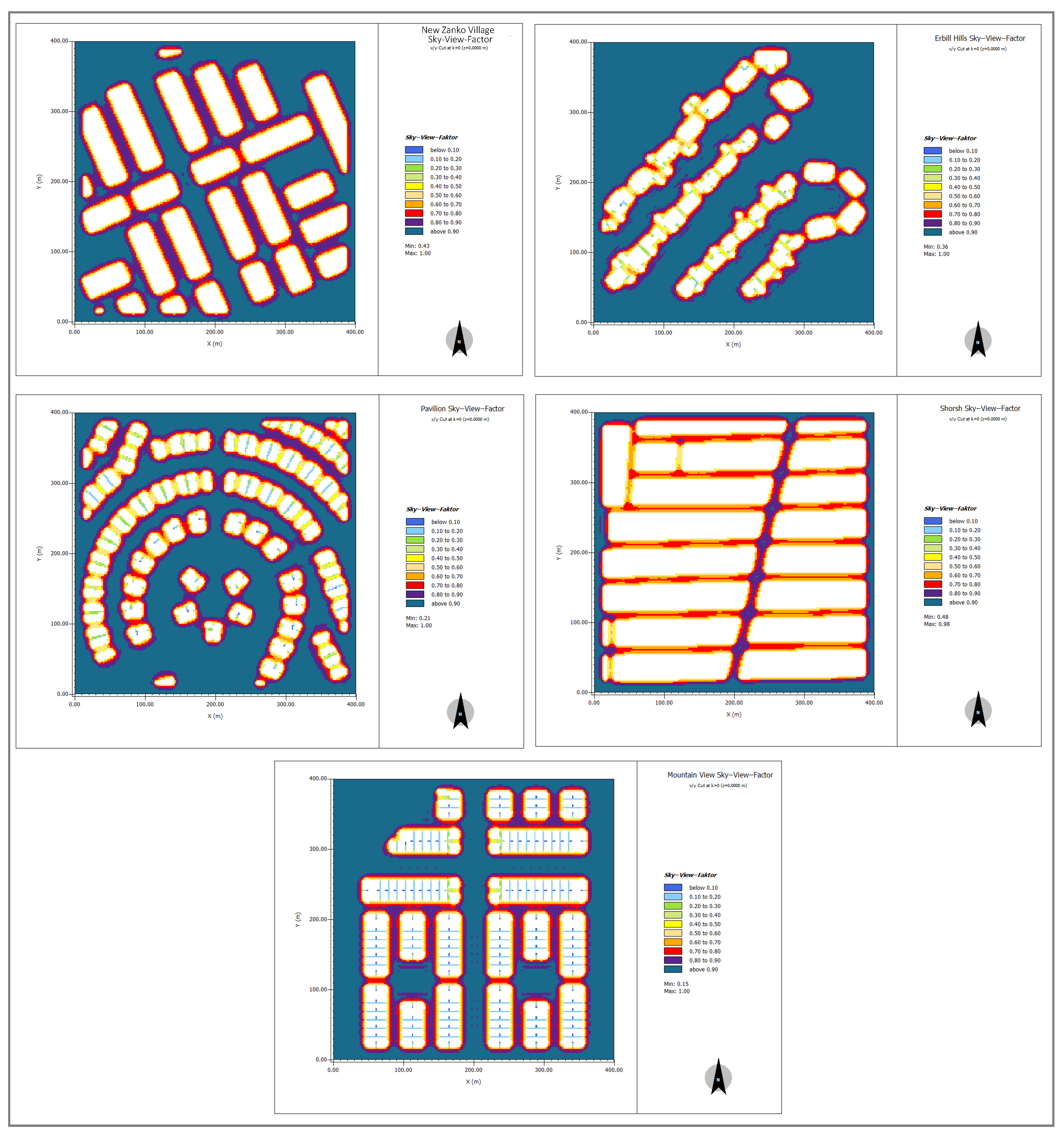
Figure 1 illustrates the spatial distribution of SVF across all studied neighbourhoods, highlighting variations in openness and enclosure resulting from differences in block configuration, street arrangement, and building spacing. These SVF patterns provide a basis for interpreting differences in solar access, radiative exchange, and microclimatic behaviour among the neighbourhoods.
Localized areas of very low SVF are evident within several neighbourhoods, particularly in the narrow spaces between detached buildings, where increased enclosure reduces sky exposure and creates shaded pockets that can promote lower air and surface temperatures. These low-SVF zones contribute to the formation of cooler microclimatic pockets, the thermal implications of which are examined in subsequent sections through air temperature and thermal comfort analyses. Among the studied layouts, the highest concentration and continuity of low-SVF areas are observed in Shorsh, followed by New Zanko Village and Mountain View, where wider road widths result in moderately higher SVF values. In contrast, Erbil Hills and Pavilion exhibit the widest road sections, leading to the highest SVF values along streets and open spaces.
3.2. Air Temperature and Thermal Metrics
3.2.1. Air Temperature (Ta)
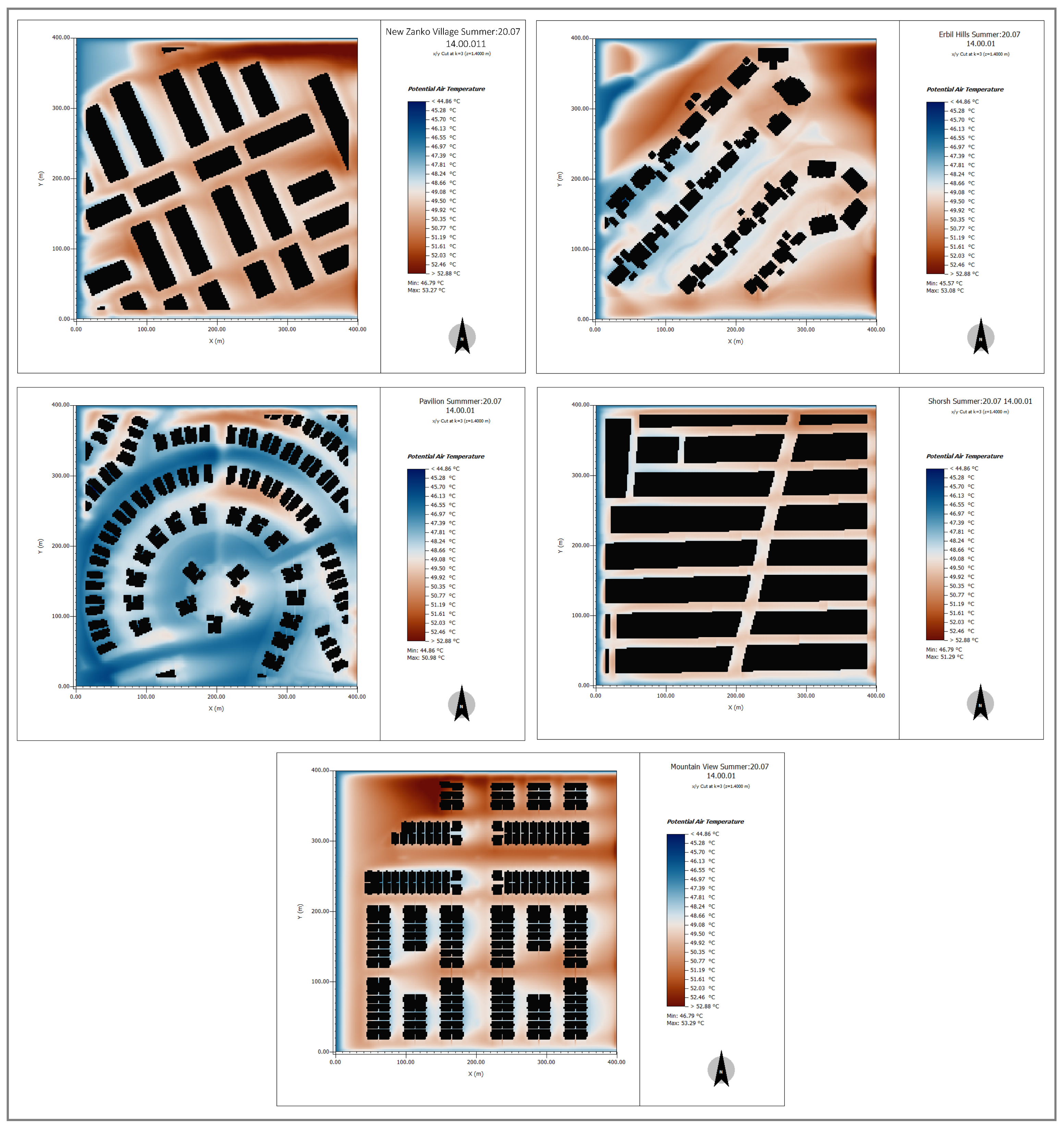
At the selected summer hour (20 July, 14:00), clear differences in Ta are evident between neighbourhood layouts, as shown in
Figure 2. Pavilion exhibits the lowest Ta, with pronounced cooling particularly around the locations of the water lagoons, as well as within narrow spaces between detached buildings where shading creates localized cooling pockets. This is followed by Erbil Hills, where cooling is expressed through distinct low-temperature corridors within the layout. Shorsh shows moderate cooling, largely confined to shaded strips between elongated building blocks. Mountain View and New Zanko Village record higher Ta overall; however, in Mountain View, localized cooler pockets are also observed around west-facing housing blocks and within narrow inter-building spaces, reflecting the combined influence of building orientation and spatial enclosure on microclimatic conditions.
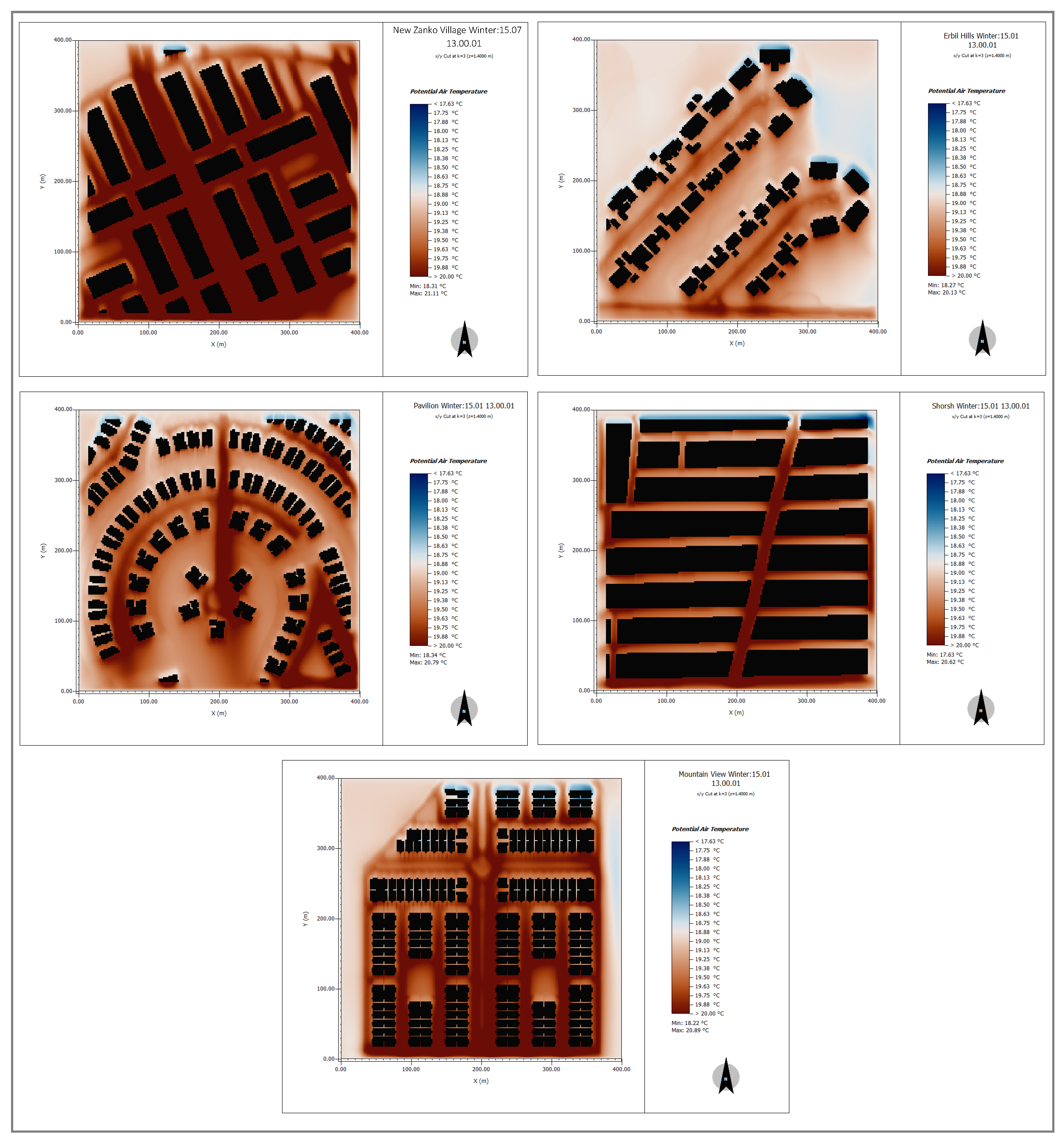
At the selected winter hour (15 January, 13:00), the Ta maps reveal spatial patterns, as shown in
Figure 3. In Erbil Hills, cooler conditions are concentrated around clustered building groups, while slightly warmer zones align with the diagonal open corridors. Pavilion and Mountain View display warmer Ta along their wider internal streets and open central areas, with cooler pockets persisting near building edges and within more enclosed residential clusters. In Shorsh, Ta appears relatively uniform across the neighbourhood, with narrow streets and elongated blocks producing limited internal variation. New Zanko Village shows warmer conditions along its more exposed street network, while cooler areas are mainly confined to spaces immediately adjacent to buildings. Overall, these patterns illustrate how street width, openness, and building arrangement shape winter Ta distribution across different neighbourhood layouts.
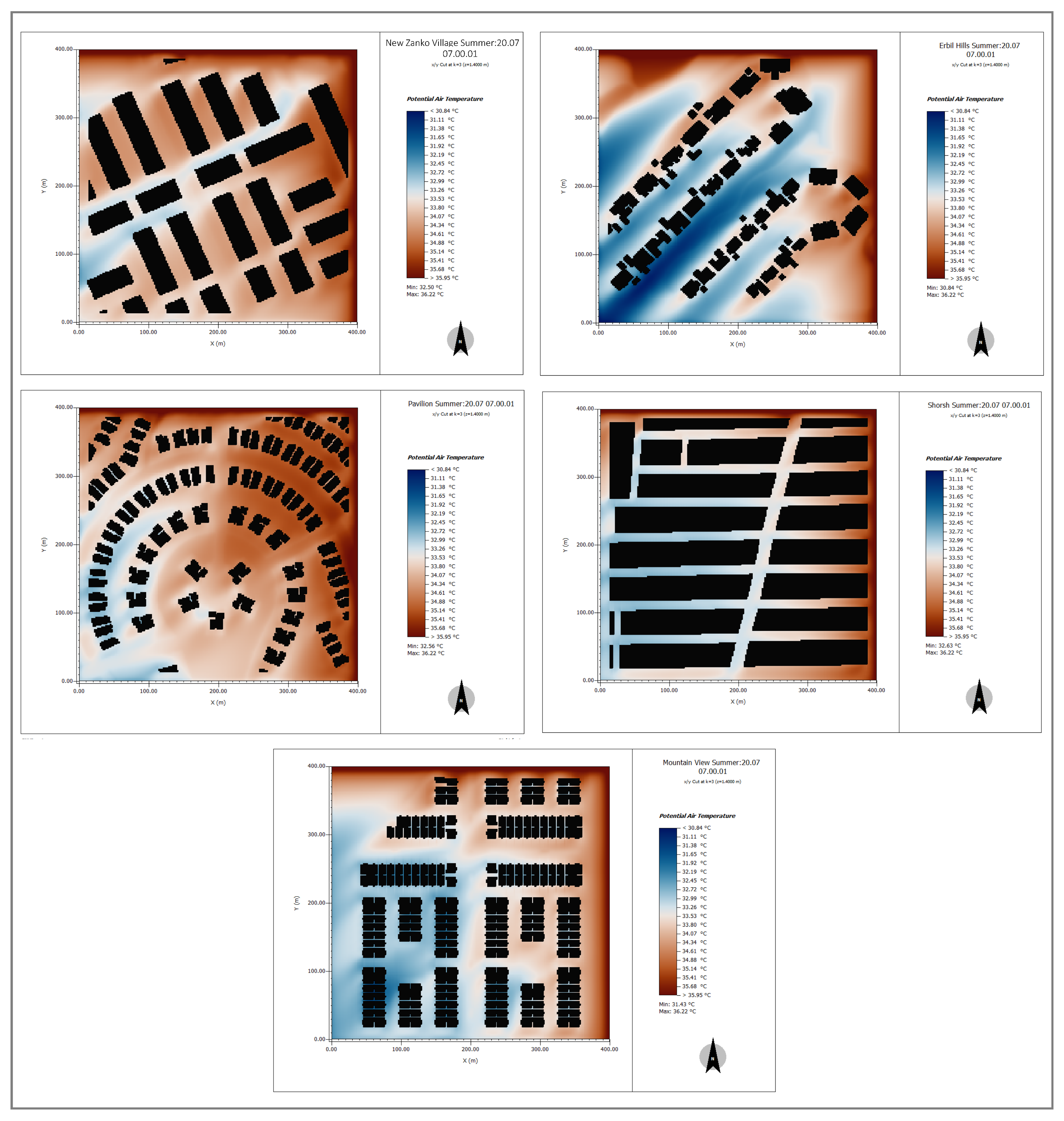
At the selected summer hour (20 July, 07:00), Ta differences between neighbourhoods are small but spatially coherent, as shown in
Figure 4. Pavilion exhibits relatively warmer conditions in the early morning, indicating greater nighttime heat retention within its interior spaces. In contrast, Erbil Hills and Mountain View show cooler air temperatures along open corridors and wind-exposed areas, reflecting enhanced nocturnal cooling. Shorsh and New Zanko Village display more uniform temperature fields, with limited localized variation between streets and internal spaces. These patterns suggest that early morning Ta is influenced primarily by thermal storage and nighttime ventilation rather than daytime shading.
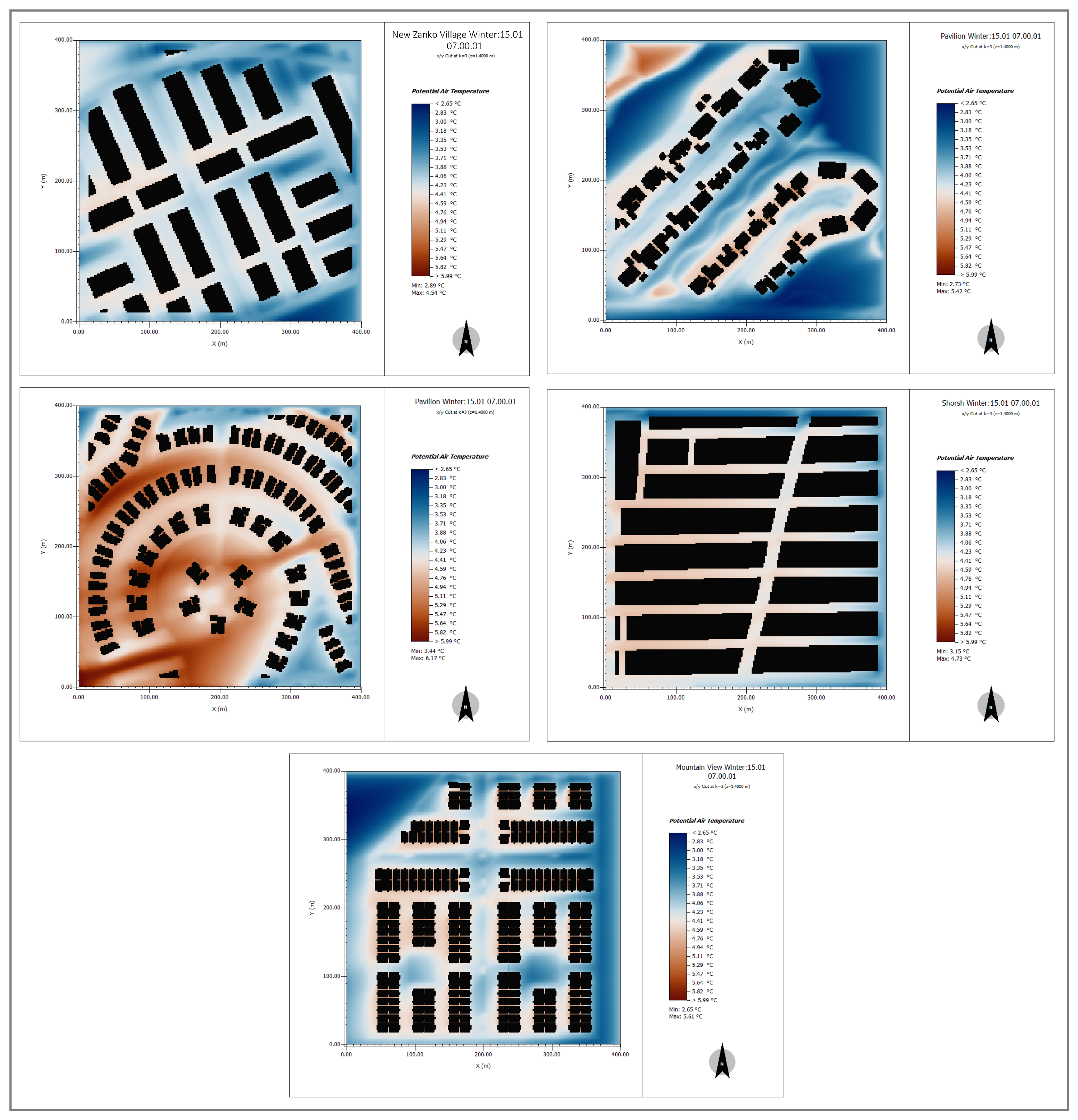
At the selected winter hour (15 January, 07:00), spatial contrasts in Ta are more pronounced, as illustrated in
Figure 5. Cooler conditions are most evident in Erbil Hills, particularly along open and wind-exposed corridors, reflecting enhanced nocturnal heat loss. New Zanko Village and Mountain View also display relatively cooler Ta across exposed streets, while more sheltered internal spaces remain slightly warmer. In Shorsh, warmer pockets are more consistently retained within compact internal areas, indicating greater nighttime heat storage. Pavilion exhibits the strongest thermal retention, with comparatively warmer conditions persisting across its interior spaces. Overall, these winter morning patterns highlight the combined influence of enclosure, openness, and heat storage on early-day air temperature distribution across neighbourhood layouts.
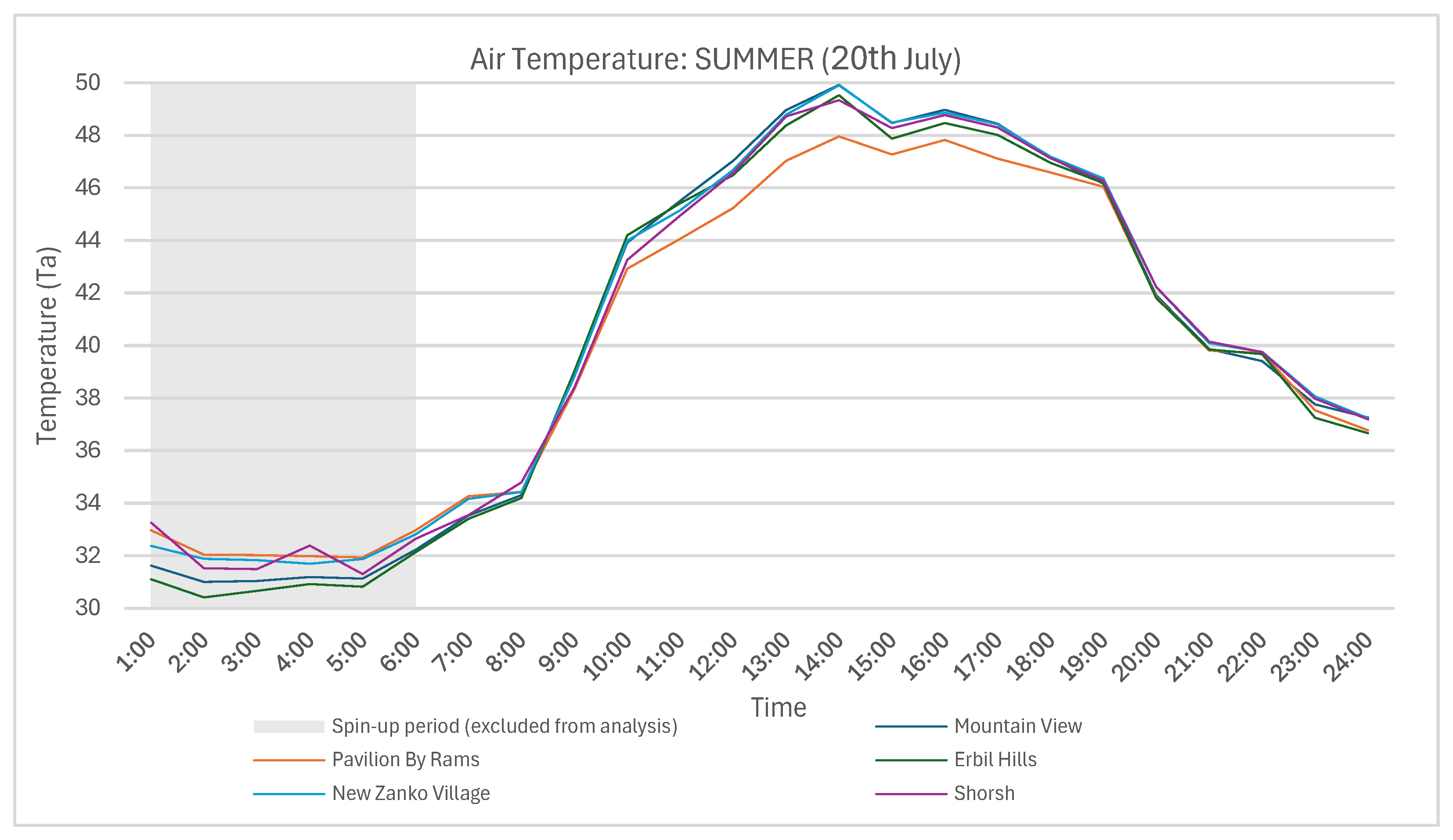
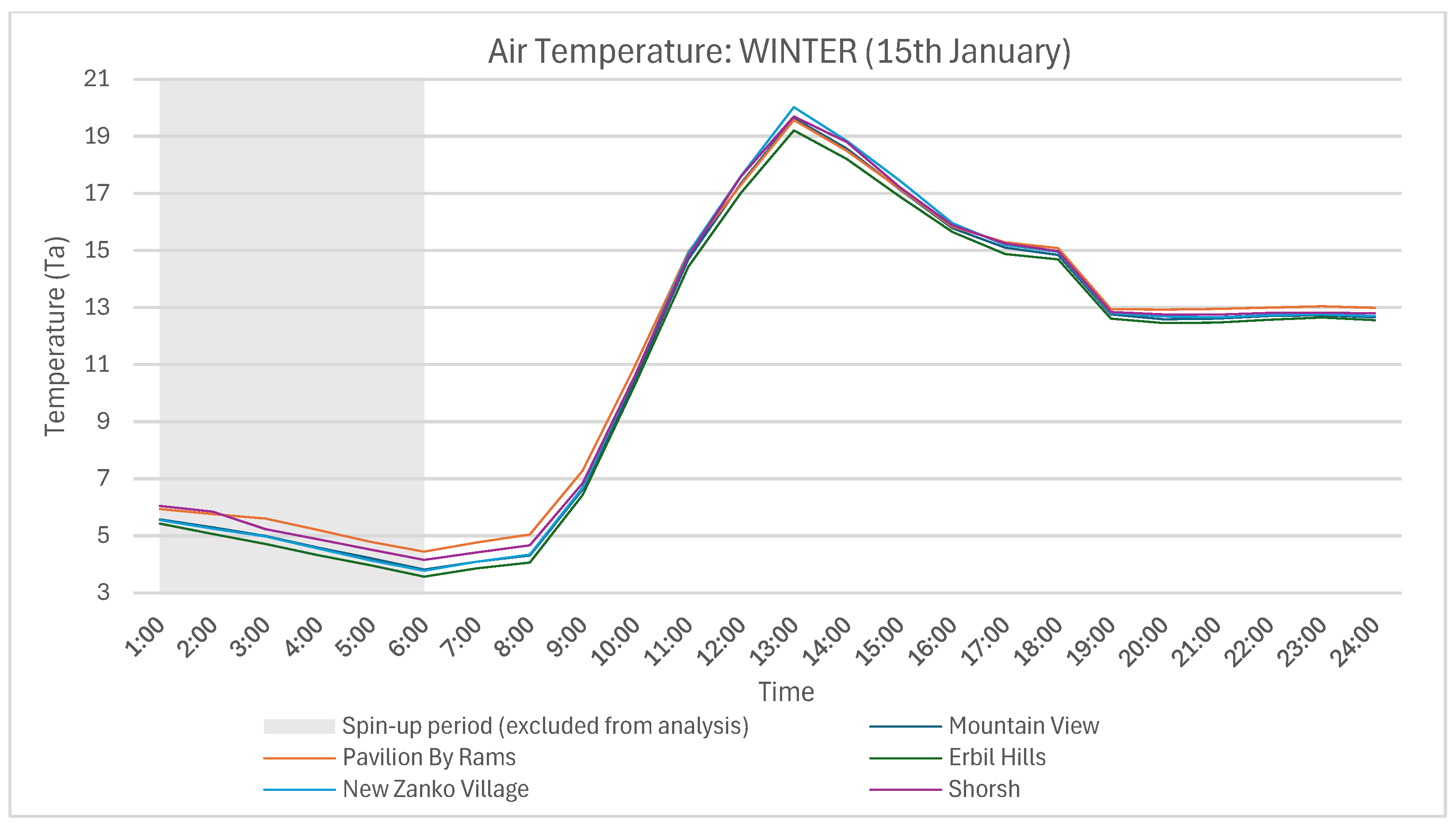
The simulated Ta exhibited clear diurnal and seasonal variations across all studied neighbourhoods, as illustrated in
Figure 6 and
Figure 7. To ensure that the reported values represent stabilized microclimatic conditions rather than numerical initialization effects, the initial spin-up period (00:00–06:00) was excluded from the analysis. This period allows the ENVI-met model to establish equilibrium between atmospheric processes, urban surfaces, and built elements before reliable temperature outputs are produced.
During the summer simulation (20 July), all neighbourhoods showed a similar temporal pattern, with Ta increasing steadily during the morning hours and reaching peak values in the early afternoon. As shown in
Figure 6, the highest average air temperatures occurred between 13:00 and 15:00 across all cases. Mountain View exhibited the highest summer Ta, reaching 49.91 °C at 14:00, followed closely by New Zanko Village (49.90 °C) and Erbil Hills (49.52 °C). Shorsh also recorded high summer Ta, peaking at 49.33 °C, while Pavilion consistently displayed lower Ta values, with a maximum of 47.95 °C during the same period.
In winter (15 January), overall Ta was substantially lower, while maintaining a similar diurnal evolution across neighbourhoods (
Figure 7). Peak winter Ta values occurred around midday, with New Zanko Village recording the highest average air temperature (approximately 20.02 °C), followed by Shorsh and Mountain View. Erbil Hills exhibited the lowest winter Ta among the neighbourhoods, while Pavilion showed intermediate values.
Across both seasons, Pavilion demonstrated consistently lower average Ta during the summer simulation compared to the other neighbourhoods, while exhibiting moderate winter temperatures that neither reached the highest nor lowest values among the cases. In contrast, Mountain View and New Zanko Village tended to record higher Ta in both summer and winter, whereas Erbil Hills showed relatively lower winter Ta. These seasonal differences highlight distinct average Ta responses among the studied neighbourhood spatial layouts.
3.2.2. Minimum and Maximum Temperatures (Tmin and Tmax)
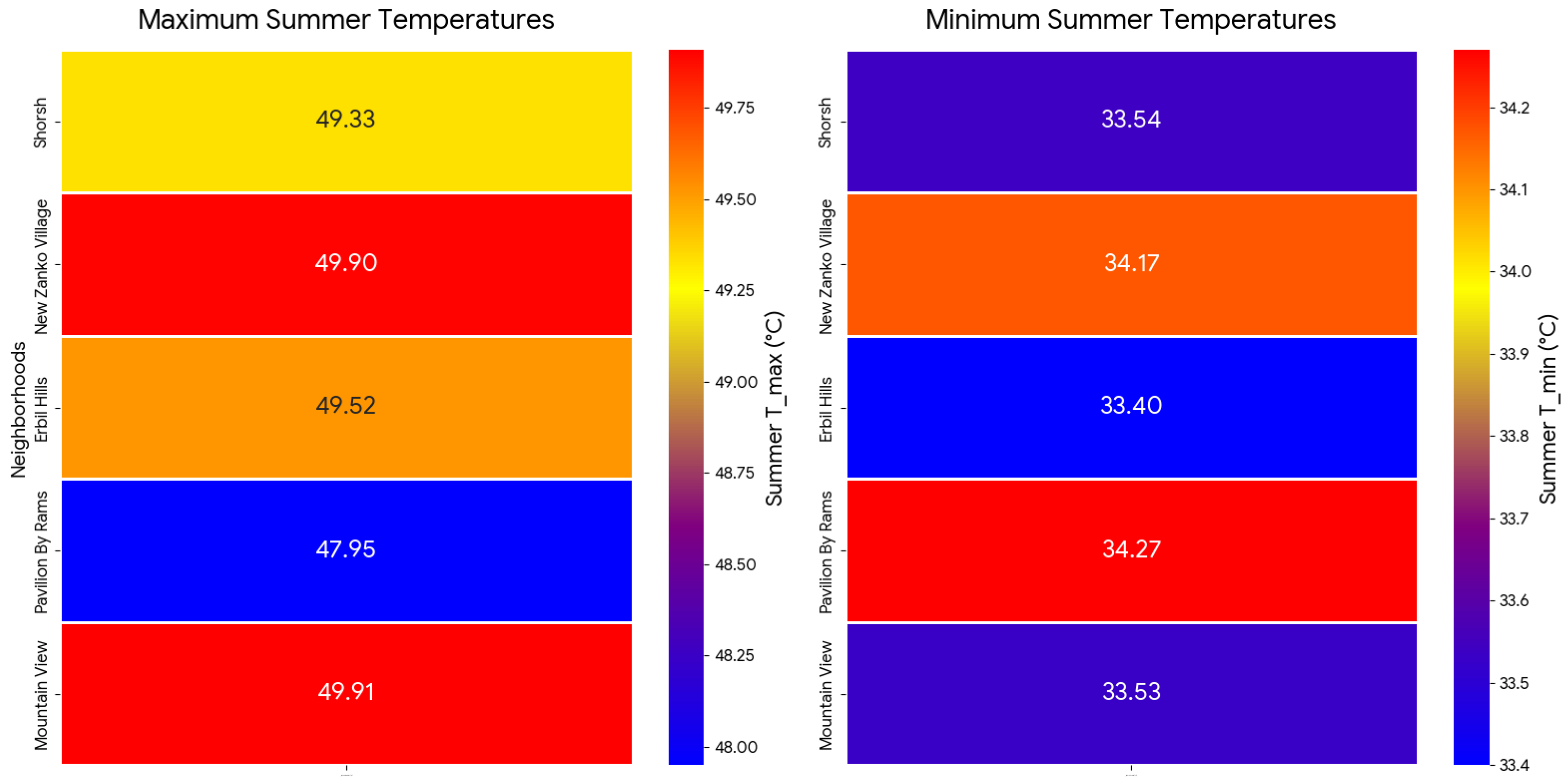
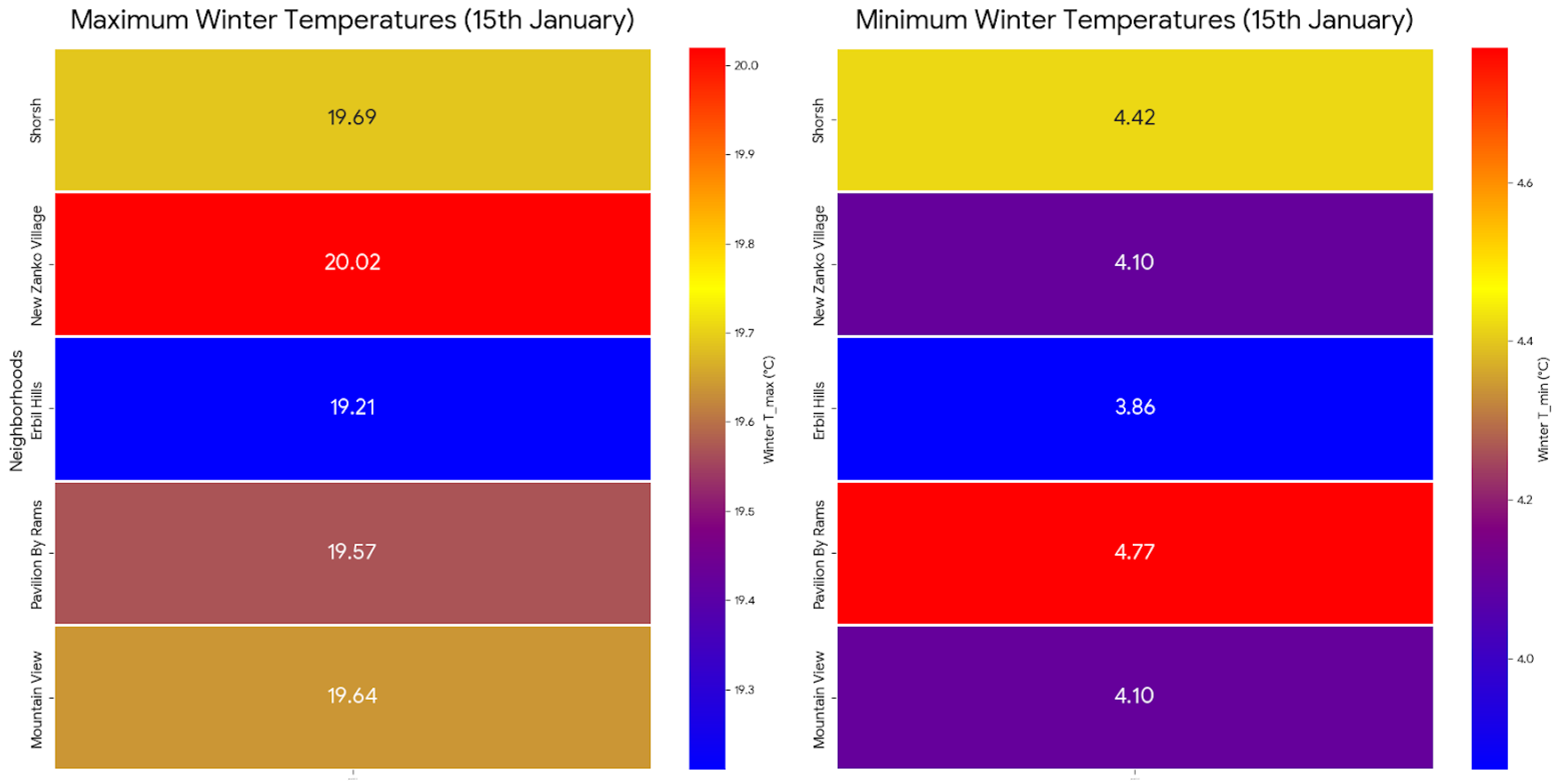
Minimum (Tmin) and maximum air temperatures (Tmax) varied across the studied neighbourhoods in both summer and winter (
Figure 8 and
Figure 9). In summer (20 July), Tmin values ranged from 33.40 °C to 34.27 °C. The lowest Tmin was recorded in Erbil Hills (33.40 °C), followed closely by Mountain View (33.53 °C) and Shorsh (33.54 °C). Slightly higher Tmin values were observed in New Zanko Village (34.17 °C), while Pavilion exhibited the highest summer Tmin at 34.27 °C. Across all neighbourhoods, the minimum air temperature occurred consistently at 07:00 in summer.
Summer Tmax values showed greater variation, ranging from 47.95 °C to 49.91 °C. The highest Tmax was observed in Mountain View (49.91 °C), closely followed by New Zanko Village (49.90 °C) and Erbil Hills (49.52 °C). Shorsh recorded a Tmax of 49.33 °C, whereas Pavilion showed the lowest summer Tmax at 47.95 °C. In all neighbourhoods, peak summer temperatures were reached at 14:00.
In winter (15 January), Tmin values ranged from 3.86 °C to 4.77 °C. The lowest Tmin occurred in Erbil Hills (3.86 °C), while the highest winter Tmin was recorded in Pavilion (4.77 °C). New Zanko Village and Mountain View both recorded Tmin values of 4.10 °C, whereas Shorsh showed a slightly higher Tmin of 4.42 °C. Similar to summer, the minimum winter Ta across all neighbourhoods was observed at 07:00.
Winter Tmax values ranged from 19.21 °C to 20.02 °C. The highest Tmax was observed in New Zanko Village (20.02 °C), while the lowest occurred in Erbil Hills (19.21 °C). Intermediate Tmax values were recorded in Mountain View (19.64 °C), Shorsh (19.69 °C), and Pavilion (19.57 °C). Across all neighbourhoods, maximum winter Ta occurred earlier than in summer, with peak values consistently observed at 13:00.
3.2.3. Diurnal Temperature Range (DTR)
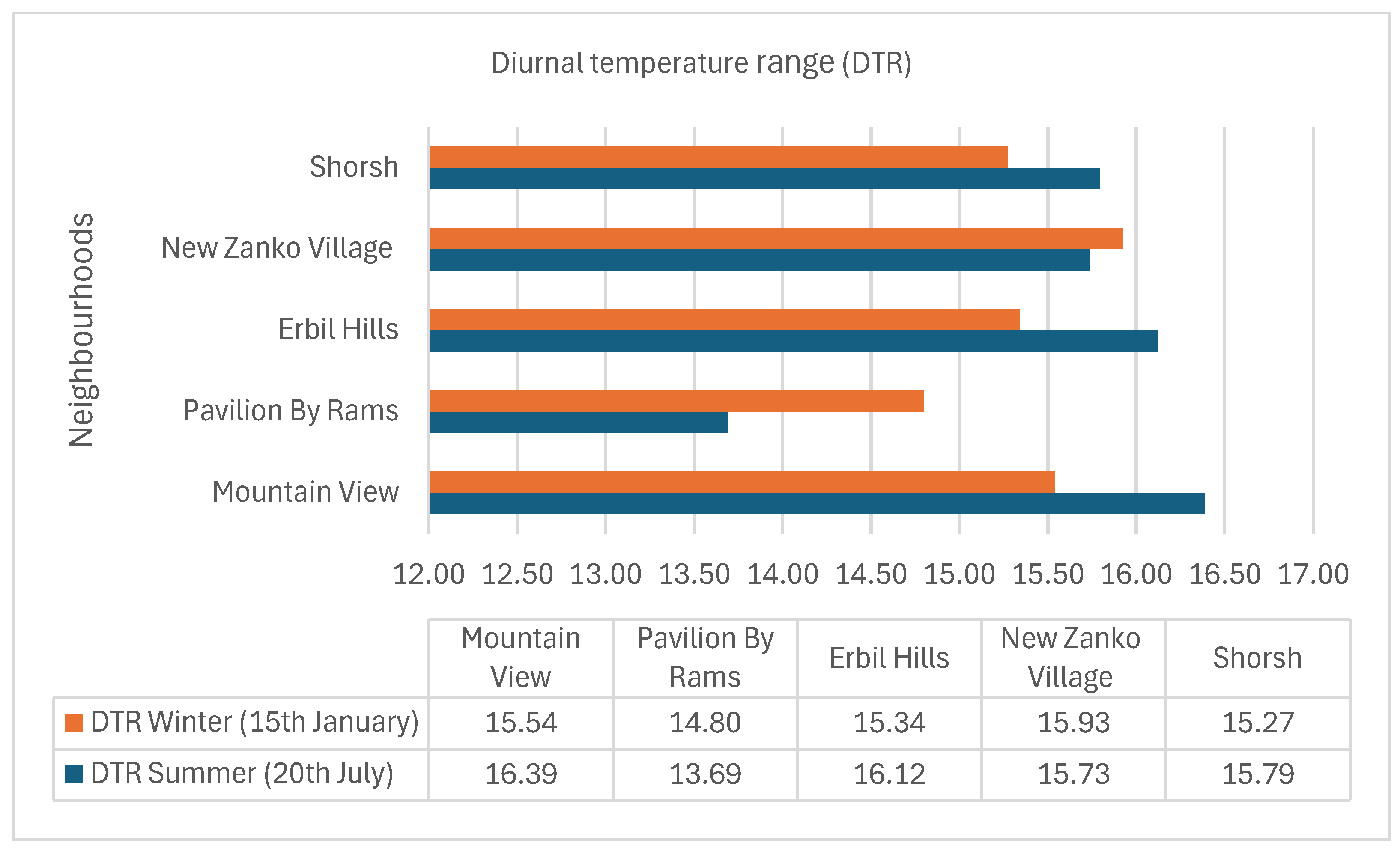
The diurnal temperature range (DTR), defined as the difference between daily maximum and minimum air temperatures, varied across neighbourhoods and seasons, as shown in
Figure 10. In summer (20 July), DTR values ranged from 13.69 °C to 16.39 °C. Mountain View exhibited the highest summer DTR (16.39 °C), followed by Erbil Hills (16.12 °C). Shorsh and New Zanko Village showed comparable summer DTR values of 15.79 °C and 15.73 °C, respectively. In contrast, Pavilion recorded the lowest summer DTR at 13.69 °C.
During winter (15 January), DTR values were slightly lower and exhibited reduced inter-neighbourhood variability, ranging from 14.80 °C to 15.93 °C. New Zanko Village recorded the highest winter DTR (15.93 °C), followed by Mountain View (15.54 °C) and Erbil Hills (15.34 °C). Shorsh exhibited a winter DTR of 15.27 °C, while Pavilion again showed the lowest value (14.80 °C).
Overall, Pavilion consistently exhibited the smallest DTR in both summer and winter, whereas Mountain View and Erbil Hills showed comparatively larger diurnal temperature variations, particularly during summer.
3.2.4. Daytime and Nighttime Temperatures (Tavg_day and Tavg_night)
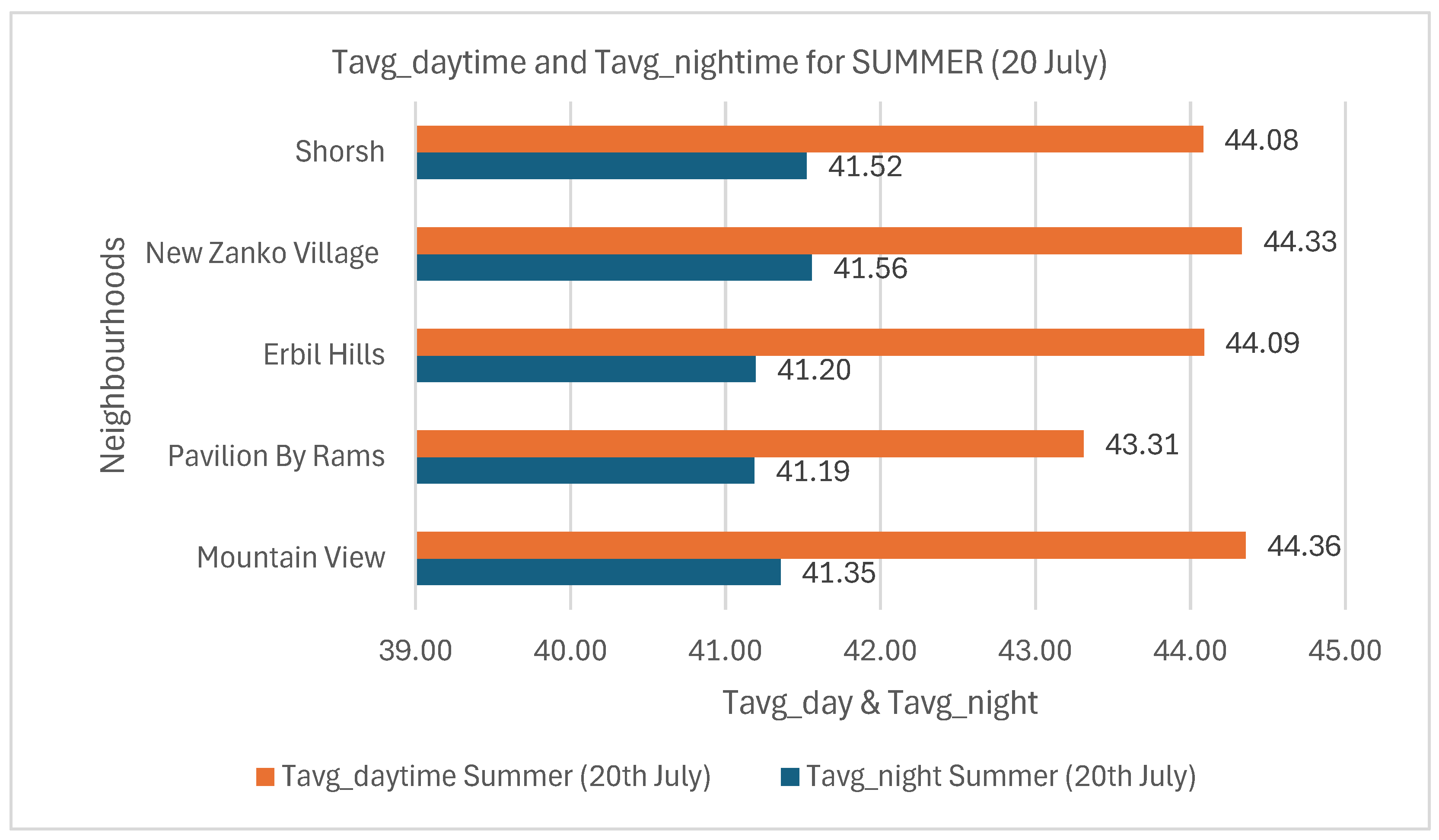
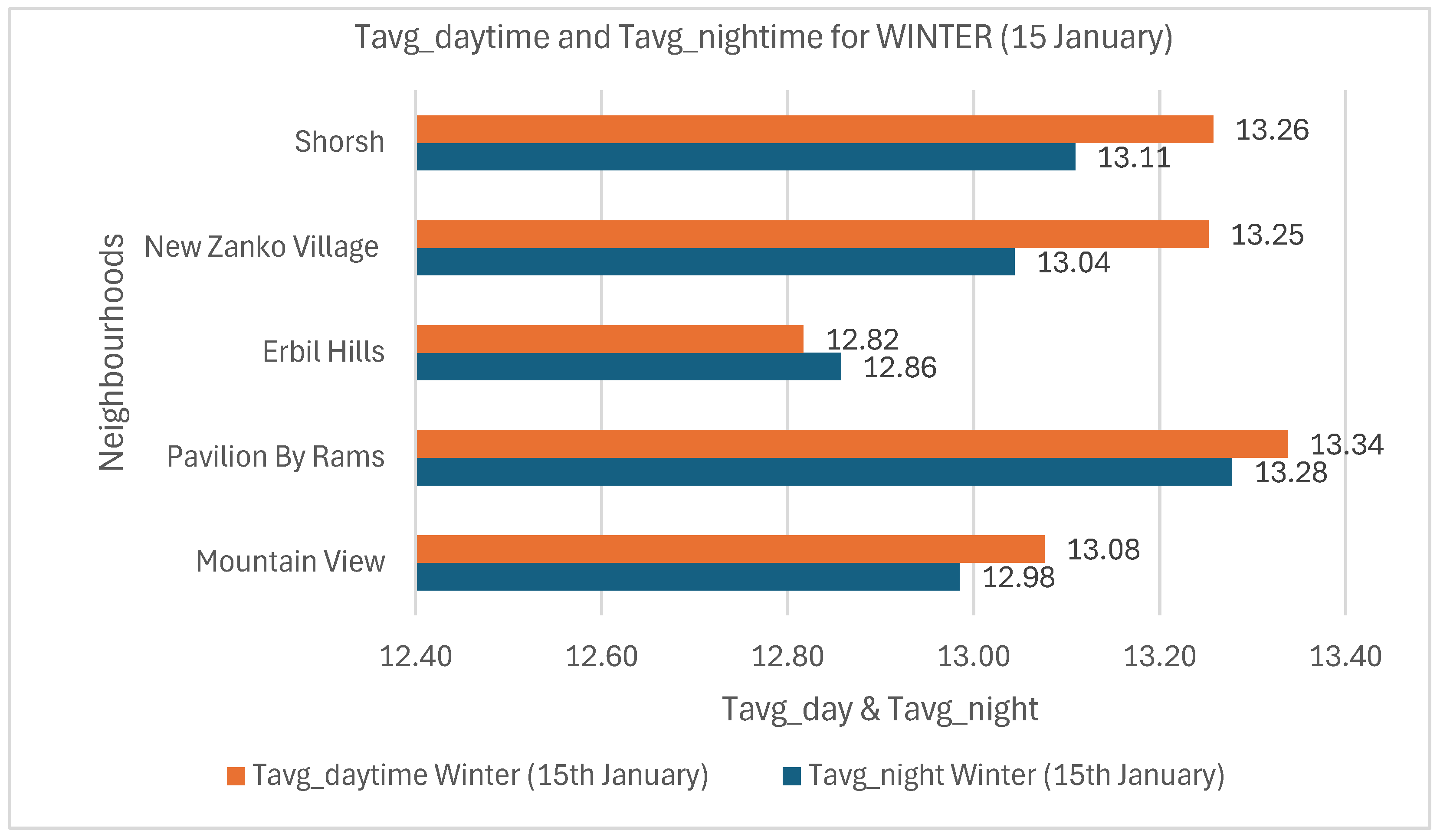
Average daytime (Tavg_daytime) and nighttime air temperatures (Tavg_nighttime) differed across neighbourhoods and seasons, as shown in
Figure 11 and
Figure 12. In summer (20 July), Tavg_daytime ranged from 43.31 °C to 44.36 °C. Mountain View recorded the highest Tavg_daytime (44.36 °C), followed by New Zanko Village (44.33 °C), Erbil Hills (44.09 °C), and Shorsh (44.08 °C). Pavilion exhibited the lowest summer Tavg_daytime (43.31 °C).
Summer nighttime average temperatures (Tavg_nighttime) showed smaller inter-neighbourhood differences, ranging from 41.19 °C to 41.56 °C. New Zanko Village recorded the highest Tavg_nighttime (41.56 °C), while Pavilion (41.19 °C) and Erbil Hills (41.20 °C) exhibited the lowest nighttime averages. Mountain View and Shorsh showed intermediate values of 41.35 °C and 41.52 °C, respectively.
In winter (15 January), Tavg_daytime ranged from 12.82 °C to 13.34 °C (
Figure 12). Pavilion recorded the highest winter Tavg_daytime (13.34 °C), followed by Shorsh (13.26 °C) and New Zanko Village (13.25 °C). Mountain View exhibited a slightly lower value (13.08 °C), while Erbil Hills recorded the lowest winter daytime average (12.82 °C).
Winter nighttime average temperatures varied within a narrow range, from 12.86 °C to 13.28 °C. Pavilion again showed the highest Tavg_nighttime (13.28 °C), whereas Erbil Hills recorded the lowest (12.86 °C). Mountain View, New Zanko Village, and Shorsh exhibited intermediate nighttime values.
Overall, Pavilion consistently exhibited lower Tavg_daytime in summer and higher Tavg_nighttime in winter, whereas Mountain View and New Zanko Village tended to record higher daytime averages in summer. These patterns indicate distinct seasonal day–night thermal responses among the studied neighbourhoods.
3.2.5. Average Temperature (Tavg) for Whole Period Studied
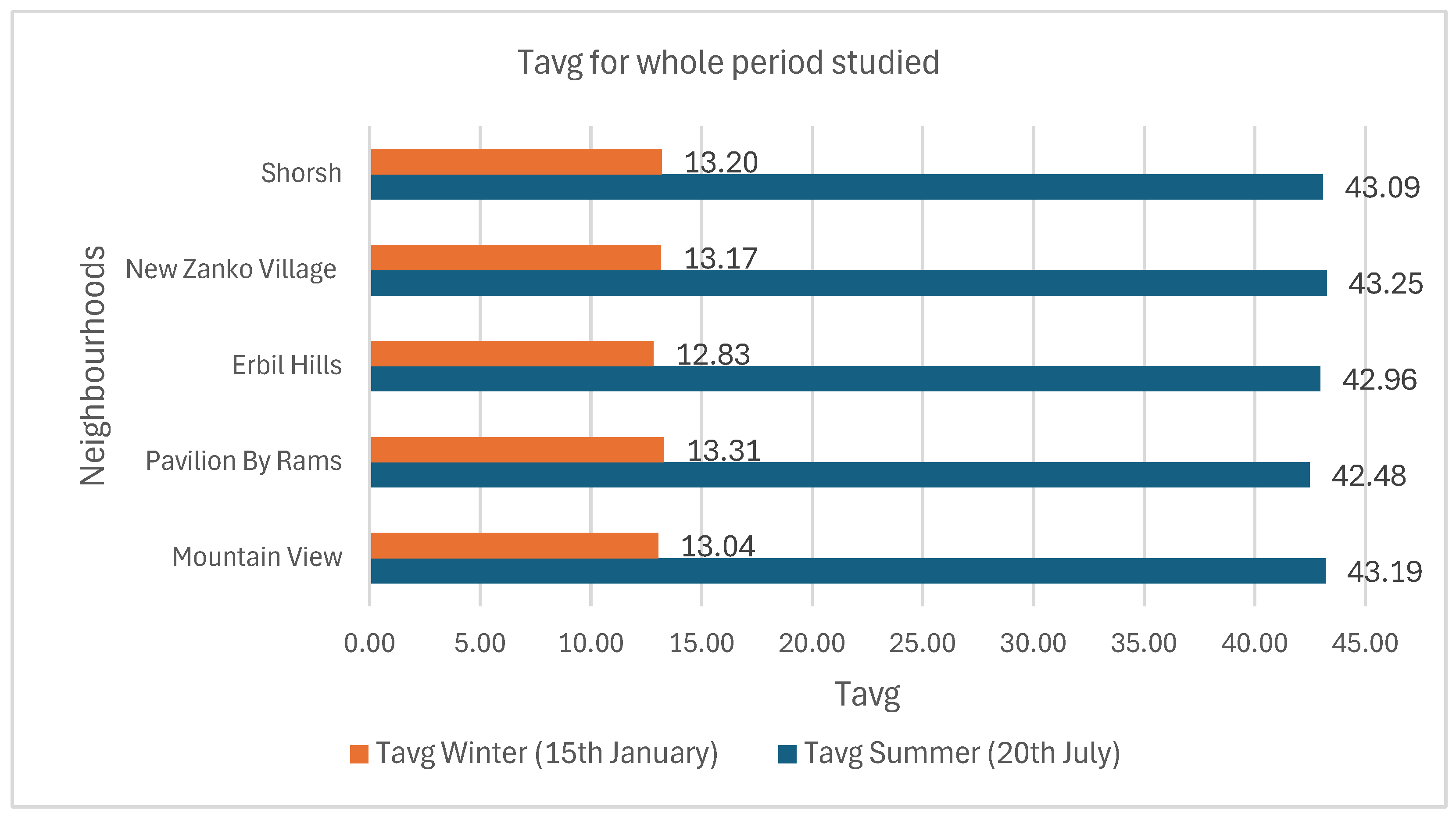
The average air temperature (Tavg), calculated over the entire analysis period for both summer and winter conditions (07.00–24.00), varied across the studied neighbourhoods, as shown in
Figure 13. In summer (20 July), New Zanko Village recorded the highest overall average air temperature (43.25 °C), followed closely by Mountain View (43.19 °C) and Shorsh (43.09 °C). Erbil Hills exhibited a slightly lower summer average (42.96 °C), while Pavilion recorded the lowest summer Tavg (42.48 °C).
In winter (15 January), overall average air temperatures were substantially lower and showed a narrower range among neighbourhoods. Pavilion exhibited the highest winter Tavg (13.31 °C), followed by Shorsh (13.20 °C) and New Zanko Village (13.17 °C). Mountain View recorded a winter average of 13.04 °C, while Erbil Hills exhibited the lowest winter Tavg (12.83 °C).
Across both seasons, Pavilion consistently exhibited lower average air temperatures during summer and higher average temperatures during winter compared to the other neighbourhoods, indicating a comparatively moderated thermal profile. In contrast, New Zanko Village and Mountain View tended to record higher average air temperatures during summer, while Erbil Hills showed lower overall average temperatures across both seasons.
3.3. Relative Humidity, Wind Speed, and Surface Temperature
3.3.1. Relative Humidity (RH)
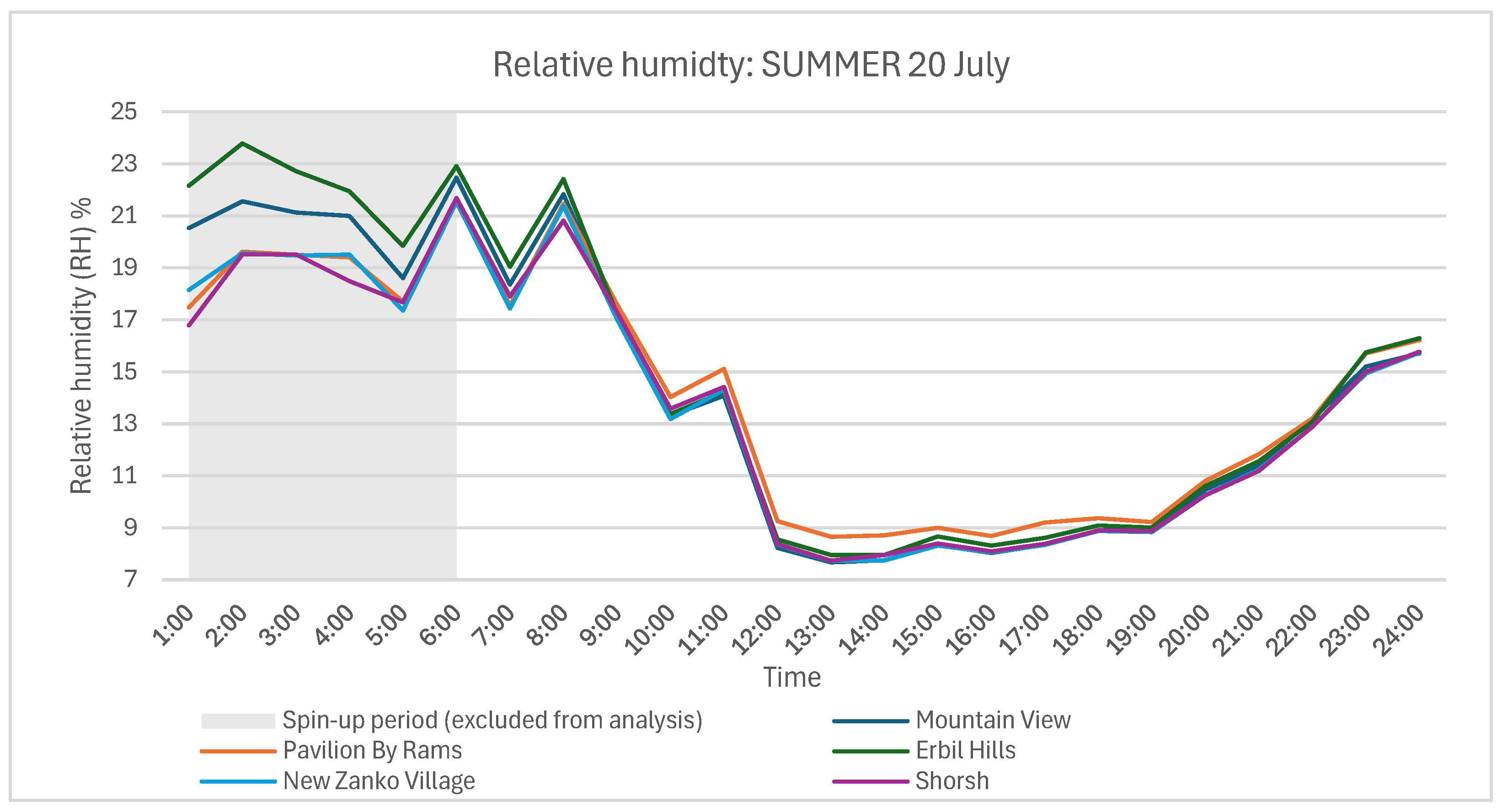
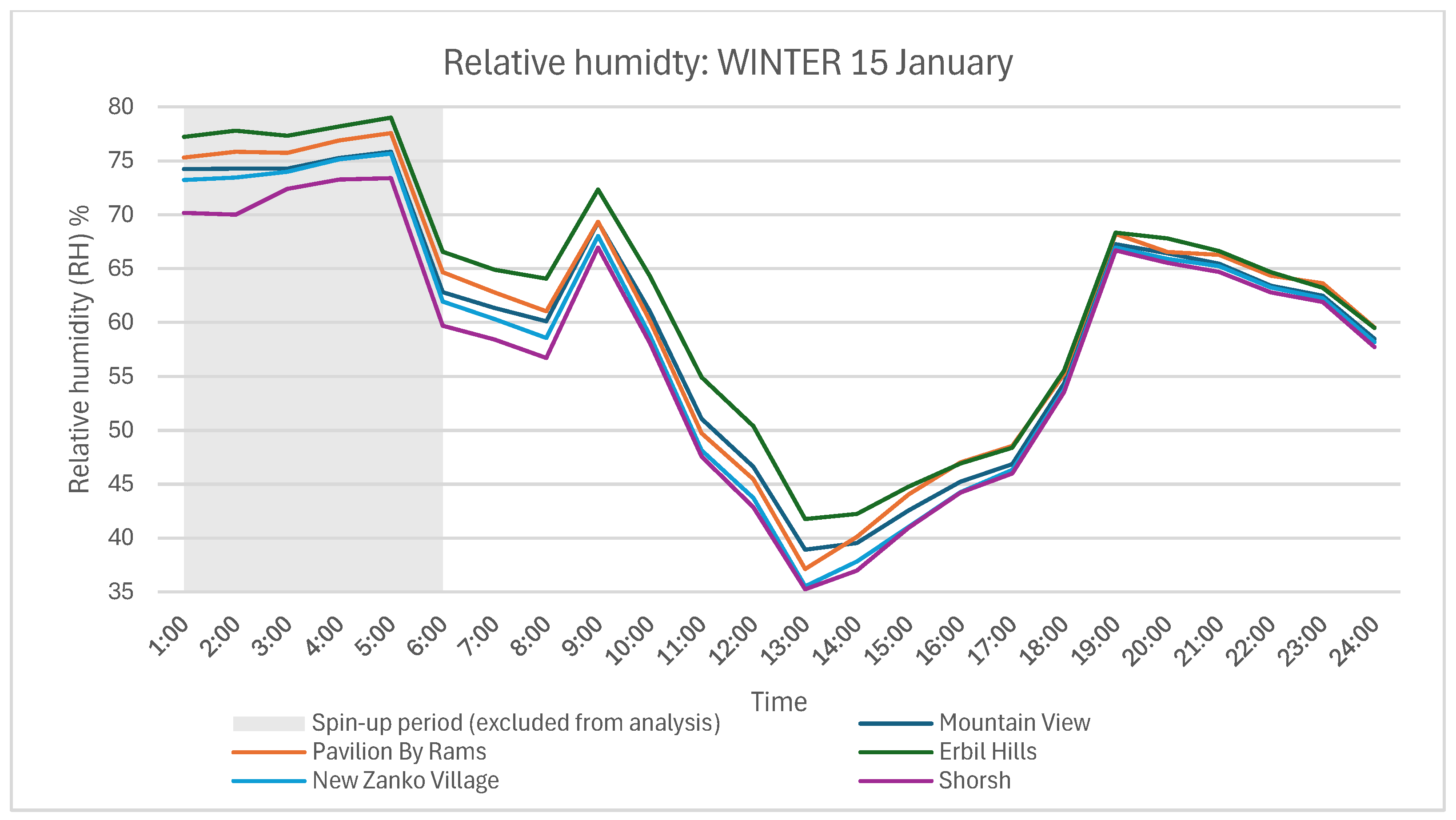
Hourly variations in relative humidity (RH) for the studied neighbourhoods under summer (20 July) and winter (15 January) conditions are presented in
Figure 14 and
Figure 15. To ensure stable model conditions, the initial spin-up period (00:00–06:00) was excluded from the analysis.
During the summer simulation, RH values were generally low across all neighbourhoods, reflecting hot and dry atmospheric conditions. After the spin-up period, early morning RH values ranged between approximately 17% and 23%, with Erbil Hills consistently exhibiting the highest morning RH, reaching values above 22% between 06:00 and 08:00. As shown in
Figure 14, RH decreased sharply toward midday, reaching minimum values between 12:00 and 14:00. The lowest summer RH values ranged from approximately 7.7% to 9.3%, with Shorsh and New Zanko Village recording the lowest midday RH, while Pavilion maintained slightly higher RH levels during this period. In the late afternoon and evening, RH gradually increased across all neighbourhoods, reaching values of approximately 15–16% by 23:00–24:00.
In winter (15 January), RH values were substantially higher and exhibited a broader diurnal range (
Figure 15). Early morning RH values ranged from approximately 70% to 79%, with Erbil Hills consistently recording the highest RH during nighttime and early morning hours, exceeding 77% between 01:00 and 05:00. Following sunrise, RH decreased steadily, reaching minimum values around 12:00–14:00. The lowest winter RH values ranged from approximately 35.2% to 42.2%, with New Zanko Village and Shorsh recording the lowest midday RH, while Erbil Hills maintained comparatively higher values. During the evening hours, RH increased again across all neighbourhoods, reaching approximately 58–60% by 24:00.
Across both seasons, Erbil Hills consistently exhibited higher RH levels compared to the other neighbourhoods, whereas Shorsh and New Zanko Village tended to record lower RH values during midday hours. Despite these differences, all neighbourhoods followed similar diurnal RH patterns, characterized by early morning maxima and midday minima.
3.3.2. Wind Speed (Va)
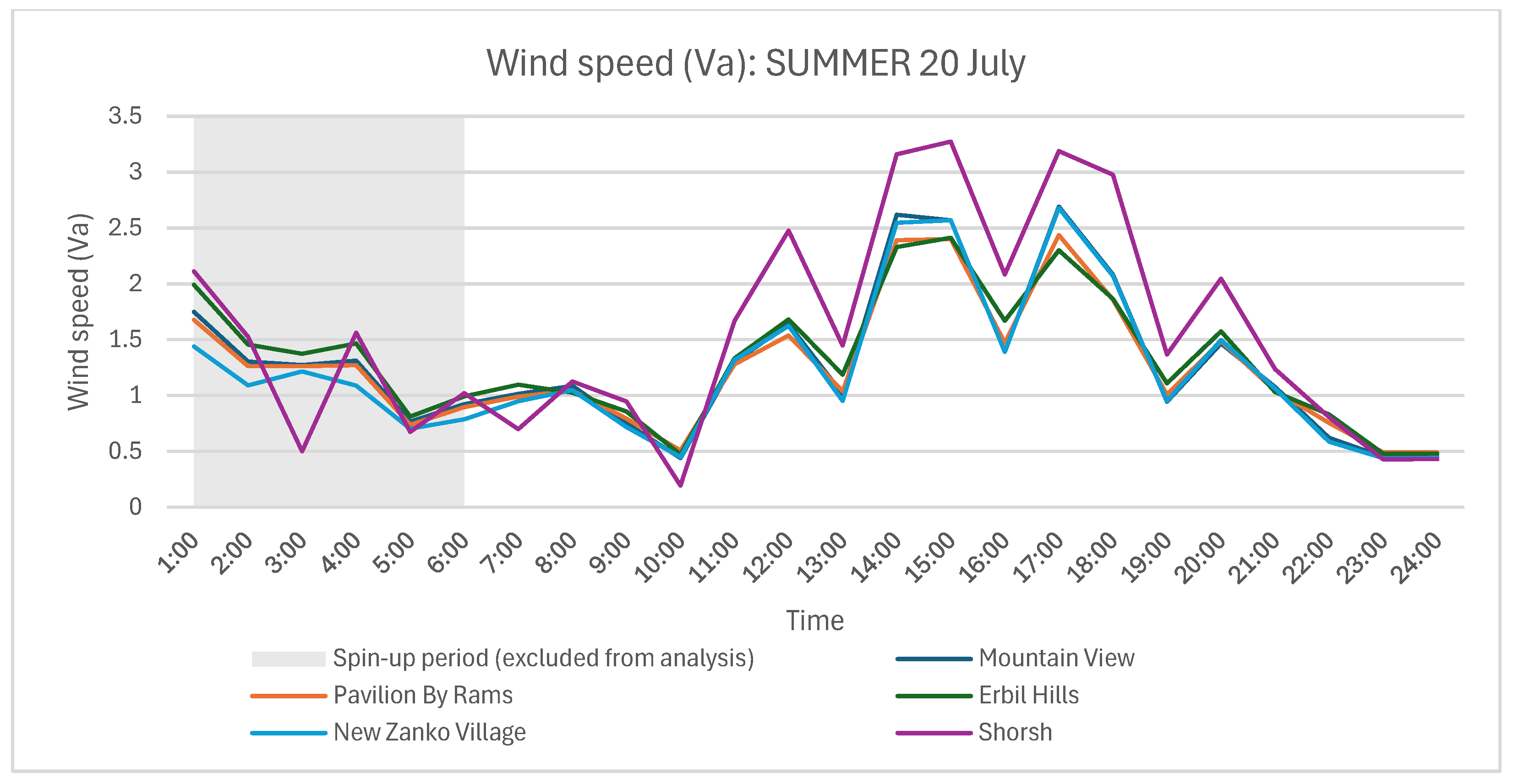
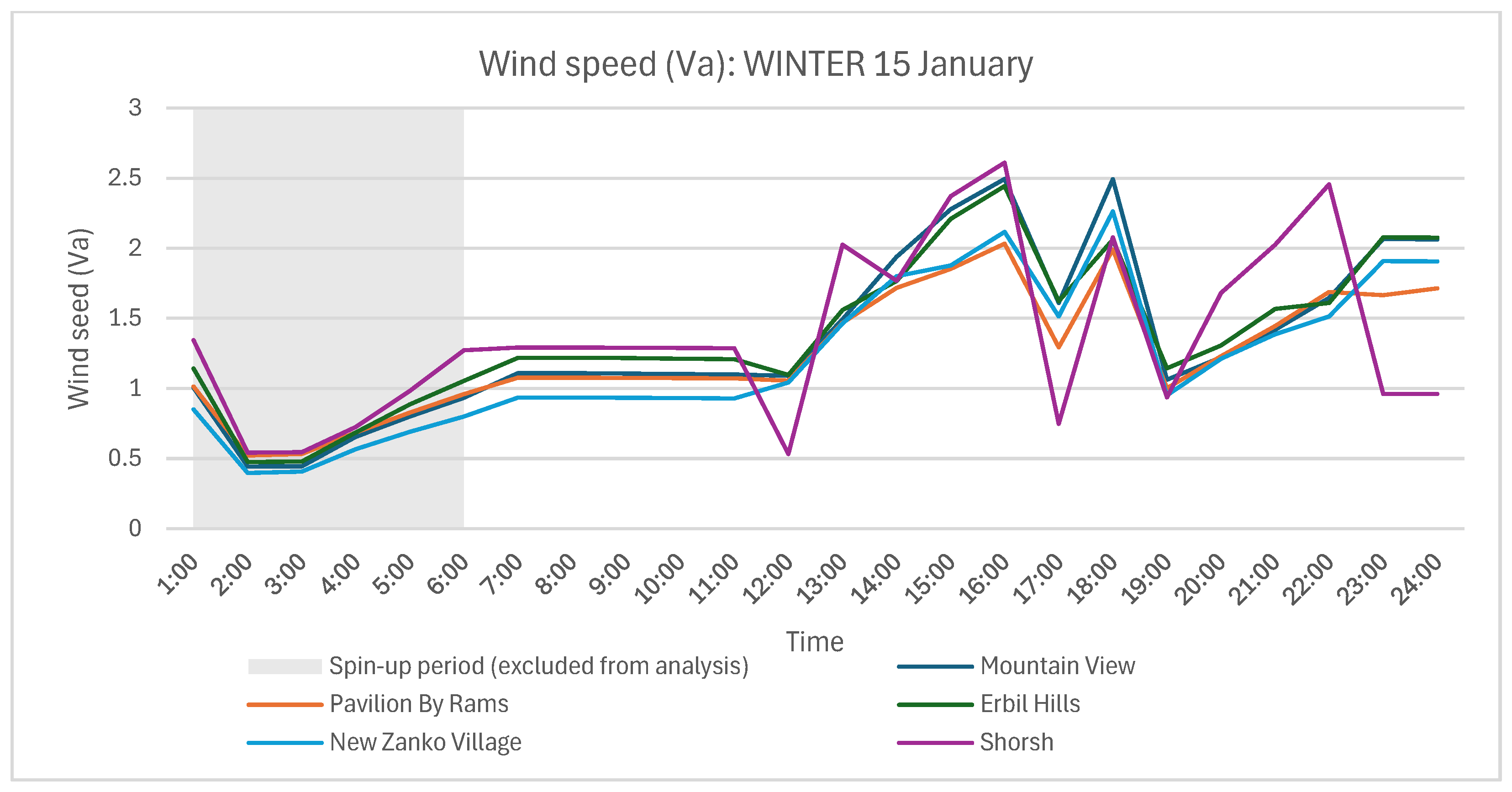
Hourly variations in wind speed (Va) across the studied neighbourhoods under summer (20 July) and winter (15 January) conditions are shown in
Figure 16 and
Figure 17. The initial spin-up period (00:00–06:00) was excluded from the analysis to ensure stabilized flow conditions within the model domain.
During the summer simulation, wind speeds exhibited notable temporal and spatial variability among neighbourhoods (
Figure 16). Following the spin-up period, morning wind speeds generally ranged between 0.7 m/s and 1.2 m/s across most neighbourhoods. Wind speeds increased toward midday and early afternoon, with peak values occurring between 14:00 and 17:00. Shorsh consistently recorded the highest summer wind speeds, reaching values above 3.2 m/s, while New Zanko Village and Mountain View exhibited peak speeds of approximately 2.6–2.7 m/s. Erbil Hills and Pavilion showed comparatively lower peak summer wind speeds, generally remaining below 2.5 m/s. During the evening and nighttime hours, wind speeds decreased steadily across all neighbourhoods, dropping below 0.6 m/s by 23:00–24:00.
In winter (15 January), overall wind speeds were similar during nighttime and early morning hours, with values typically ranging between 0.8 m/s and 1.3 m/s after the spin-up period (
Figure 17). Daytime wind speeds increased gradually, reaching maximum values between 14:00 and 18:00. Mountain View and Erbil Hills recorded the highest winter wind speeds, peaking at approximately 2.5 m/s, while Shorsh exhibited pronounced fluctuations, with peak values exceeding 2.4 m/s during the afternoon. New Zanko Village and Pavilion showed lower winter wind speeds overall, generally remaining below 2.3 m/s throughout the day.
Across both seasons, Shorsh demonstrated the highest variability in wind speed, whereas Pavilion exhibited more moderate and stable wind conditions. Despite these differences, all neighbourhoods followed similar diurnal wind patterns characterized by lower speeds during nighttime and higher speeds during midday and afternoon hours.
3.3.3. Surface Temperature (Tsurf)
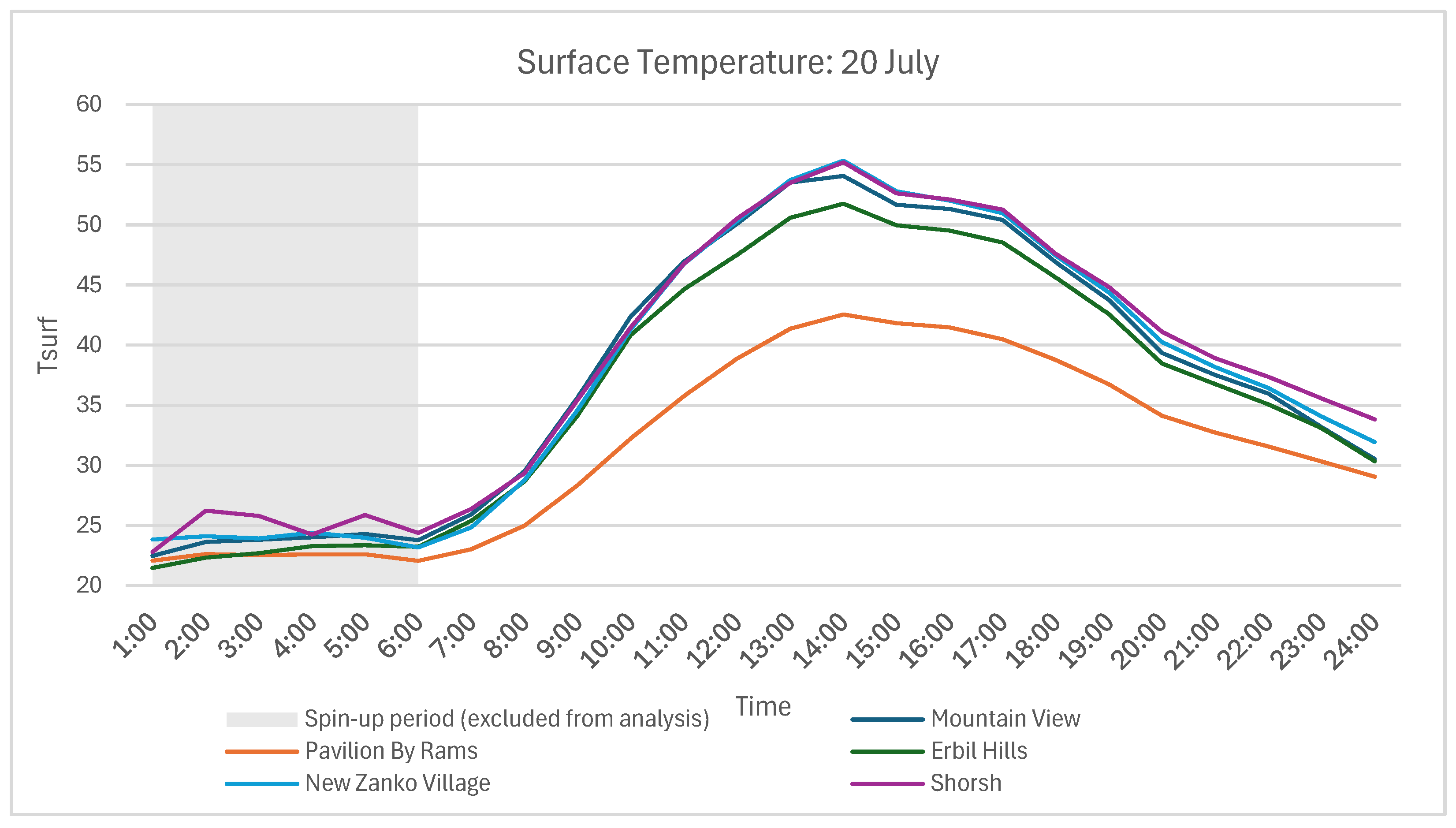
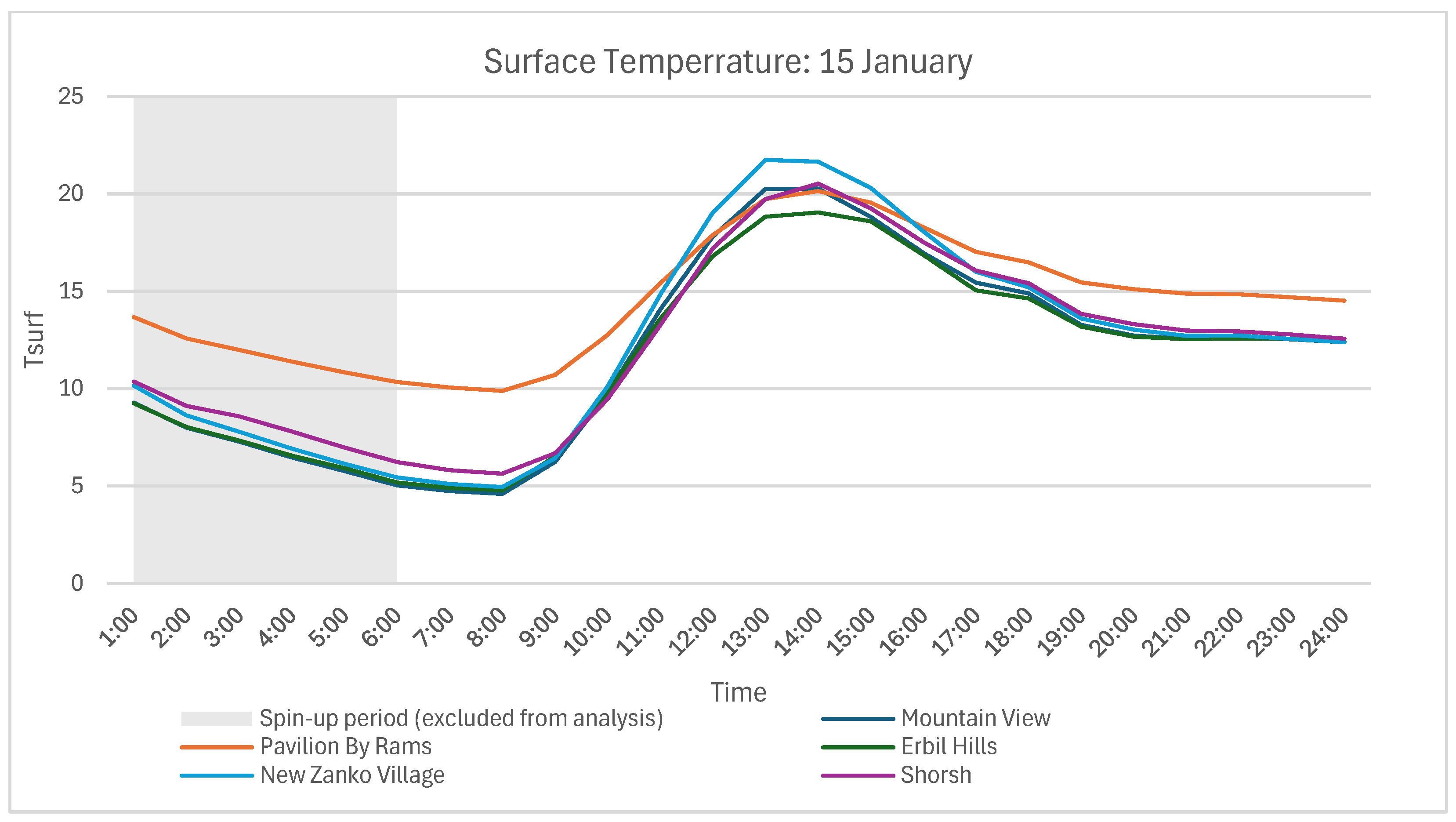
Hourly variations in surface temperature (Tsurf) across the studied neighbourhoods under summer (20 July) and winter (15 January) conditions are presented in
Figure 18 and
Figure 19. The initial spin-up period (00:00–06:00) was excluded from the analysis to ensure stabilized surface–atmosphere interactions.
During the summer simulation, all neighbourhoods exhibited a pronounced diurnal pattern in surface temperature (
Figure 18). Following the spin-up period, early morning Tsurf values ranged between approximately 22 and 26 °C. Tsurf increased rapidly after 08:00, reaching peak values between 13:00 and 15:00. The highest summer surface temperature was recorded in New Zanko Village, reaching 55.34 °C at 14:00, followed closely by Shorsh (55.19 °C at 14:00) and Mountain View (54.06 °C at 14:00). Erbil Hills exhibited a lower summer peak Tsurf of 51.75 °C, while Pavilion consistently recorded substantially lower surface temperatures, with a maximum of 42.54 °C at 14:00. During the evening hours, Tsurf declined steadily across all neighbourhoods, reaching values between 29 and 34 °C by 24:00.
In winter (15 January), surface temperatures were considerably lower and exhibited a reduced diurnal amplitude (
Figure 19). Early morning Tsurf values ranged from approximately 5 to 10 °C, with Pavilion maintaining comparatively higher early-morning surface temperatures than the other neighbourhoods. Surface temperatures increased toward midday, with peak values occurring between 13:00 and 14:00. New Zanko Village recorded the highest winter Tsurf, reaching 21.75 °C at 13:00, followed by Shorsh (20.53 °C at 14:00) and Mountain View (20.27 °C at 14:00). Pavilion reached a peak winter Tsurf of 20.14 °C, while Erbil Hills exhibited the lowest winter maximum at 19.05 °C. By late evening, surface temperatures converged across neighbourhoods, stabilizing between 12 and 14 °C.
Across both seasons, Pavilion consistently exhibited lower Tsurf during peak summer conditions and relatively higher Tsurf during winter mornings. In contrast, New Zanko Village, Shorsh, and Mountain View recorded higher peak surface temperatures, particularly during summer midday hours. Despite these differences in magnitude, all neighbourhoods followed similar diurnal surface temperature trends.
3.3.4. Mean Radiant Temperature (MRT)
Mean Radiant Temperature (MRT) represents the integrated radiative environment experienced by the human body, defined as the uniform temperature of an imaginary enclosure in which the net radiant heat exchange equals that of the actual outdoor surroundings [
18]. MRT accounts for shortwave solar radiation, longwave radiation from surrounding surfaces, surface temperatures, sky view factor, and urban geometry, making it highly sensitive to shading conditions, building configuration, and surface materials. As a result, MRT often exerts a stronger influence on outdoor thermal comfort than air temperature, particularly during daytime summer conditions.
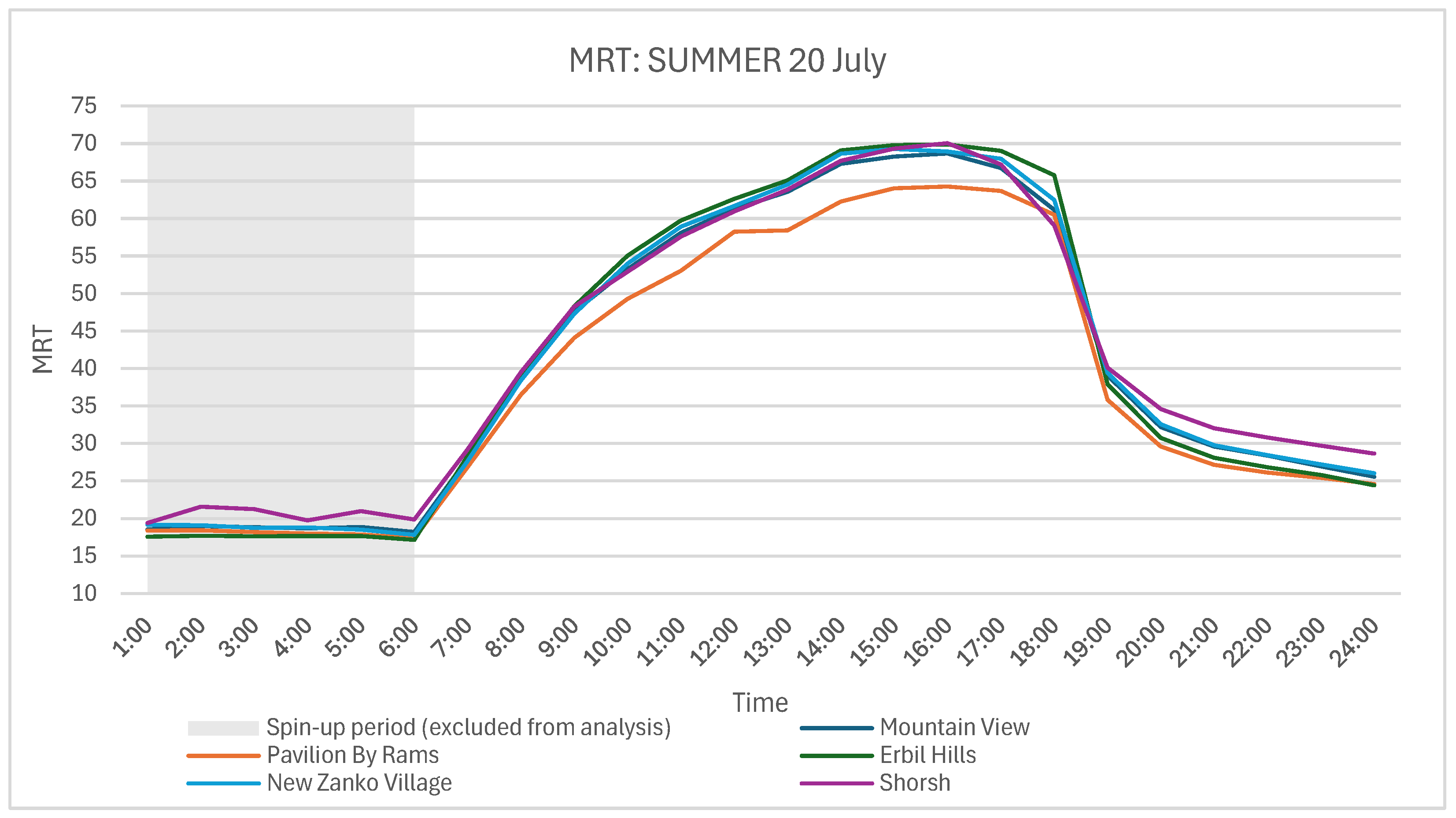
Hourly variations in MRT across the studied neighbourhoods for summer (20 July) and winter (15 January) are shown in
Figure 20 and
Figure 21. The spin-up period (00:00–06:00) was excluded from the analysis to ensure stabilized radiative and surface energy conditions within the ENVI-met model domain.
During summer, MRT exhibited a pronounced diurnal pattern across all neighbourhoods (
Figure 20). Following the spin-up period, early morning MRT values were relatively low, ranging between approximately 18 and 25 °C, reflecting limited solar exposure. MRT increased rapidly after sunrise, reaching peak values between 14:00 and 16:00, coinciding with maximum solar radiation and surface heating.
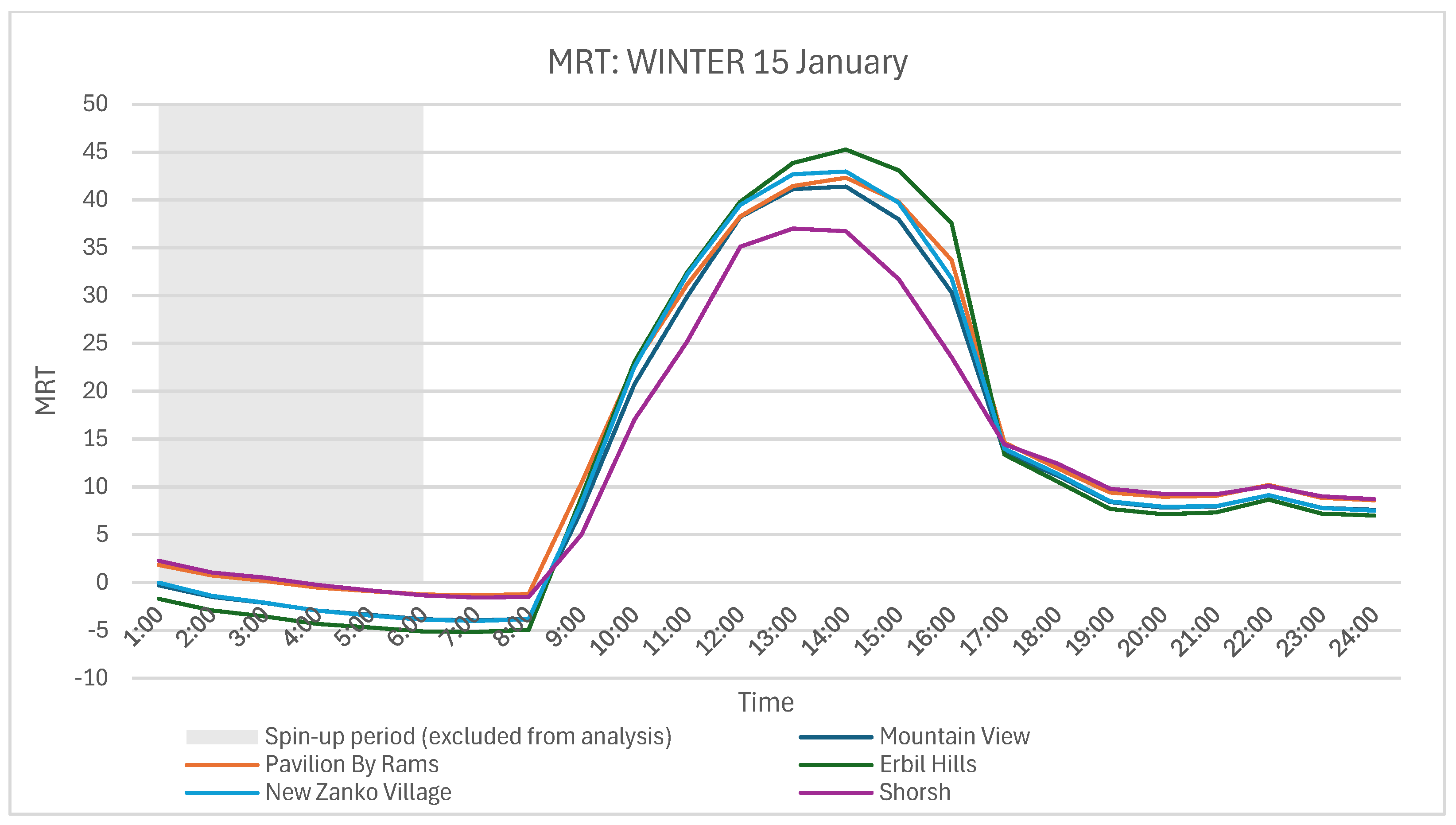
The highest summer MRT values were observed in Shorsh, reaching approximately 70.05 °C at 16:00, followed closely by Erbil Hills (69.88 °C at 16:00), New Zanko Village (69.28 °C at 15:00), and Mountain View (68.67 °C at 16:00). In contrast, Pavilion consistently recorded lower MRT values, with a peak of approximately 64.27 °C at 16:00, indicating more effective radiative mitigation. During the evening hours, MRT declined sharply across all neighbourhoods as solar input decreased, reaching values between 25 and 35 °C by 24:00. Despite this convergence, neighbourhoods with higher daytime MRT (e.g., Shorsh and Erbil Hills) remained slightly warmer into the evening, suggesting greater heat storage and delayed radiative cooling.
In winter, MRT values were substantially lower and showed a reduced diurnal amplitude compared to summer (
Figure 21). Early morning MRT values were close to or below 0 °C in several neighbourhoods, particularly in Erbil Hills and Mountain View, reflecting limited solar gains and enhanced longwave radiative losses. MRT increased toward midday, reaching peak values between 13:00 and 15:00. The highest winter MRT was observed in Erbil Hills (45.26 °C at 14:00), followed by New Zanko Village (42.97 °C at 14:00) and Mountain View (41.39 °C at 14:00). Pavilion again exhibited comparatively lower MRT values, with a maximum of approximately 42.32 °C at 14:00, while Shorsh recorded the lowest winter peak MRT (approximately 36.71 °C at 14:00). After sunset, MRT values decreased gradually across all neighbourhoods, stabilizing between 7 and 13 °C by 24:00, with relatively small inter-neighbourhood differences, indicating a more uniform nocturnal radiative environment in winter.
Across both seasons, neighbourhoods such as Shorsh, Erbil Hills, and New Zanko Village consistently exhibited higher MRT values, particularly during summer peak hours, indicating greater radiative heat exposure. In contrast, Pavilion maintained lower MRT values in both summer and winter, suggesting a more favourable radiative environment likely linked to urban layout, shading availability, and surface characteristics. These MRT patterns help explain the observed differences in UTCI, confirming the critical role of radiative conditions in shaping neighbourhood-scale thermal comfort.
3.4. Thermal Comfort Indices
Universal Thermal Climate Index (UTCI)
Hourly variations in the Universal Thermal Climate Index (UTCI) across the studied neighbourhoods under summer (20 July) and winter (15 January) conditions are presented in
Figure 22 and
Figure 23. UTCI represents the equivalent air temperature that reflects the combined effects of air temperature, mean radiant temperature, wind speed, and relative humidity on human thermal perception [
19]. To ensure stabilized thermal conditions within the model domain, the initial spin-up period (00:00–06:00) was excluded from the analysis.
Table 5 shows the classification of thermal stress levels for UTCI.
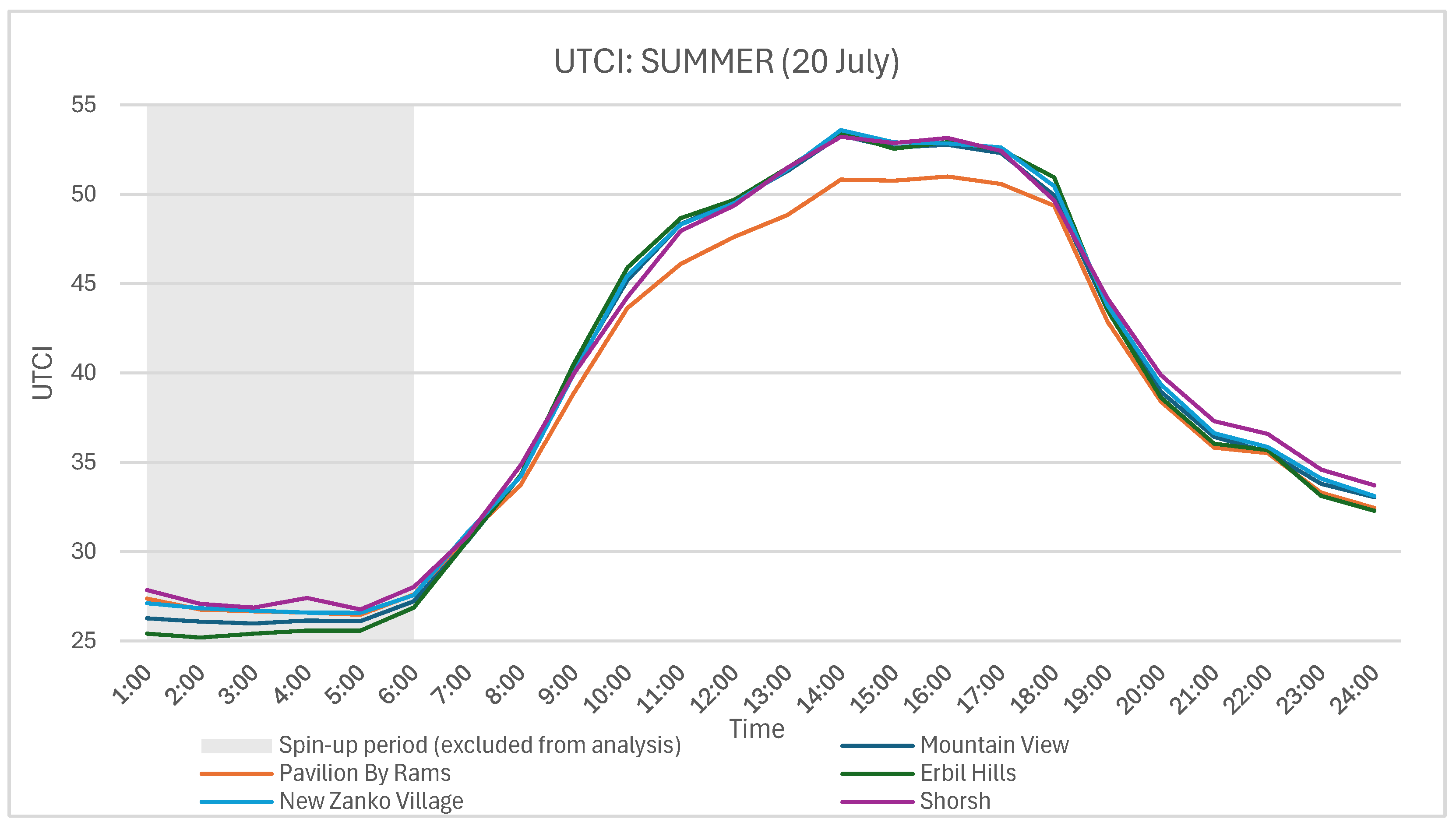
During the summer simulation, UTCI values exhibited a pronounced diurnal pattern across all neighbourhoods (
Figure 22). Following the spin-up period, early morning UTCI values ranged between approximately 26 and 28 °C, corresponding to moderate heat stress conditions. UTCI increased rapidly during the morning hours, reaching peak values between 13:00 and 15:00. The highest summer UTCI was recorded in Mountain View, reaching 53.29 °C at 14:00, closely followed by New Zanko Village (53.59 °C at 14:00) and Shorsh (53.22 °C at 14:00). Erbil Hills exhibited a comparable peak value of 53.41 °C, while Pavilion consistently recorded lower UTCI values, with a maximum of 50.82 °C at 14:00. According to the UTCI classification, these peak values fall within the category of extreme heat stress (UTCI > 46 °C). During the evening hours, UTCI decreased steadily across all neighbourhoods, reaching values between 33 and 36 °C by 24:00, corresponding to strong to very strong heat stress conditions.
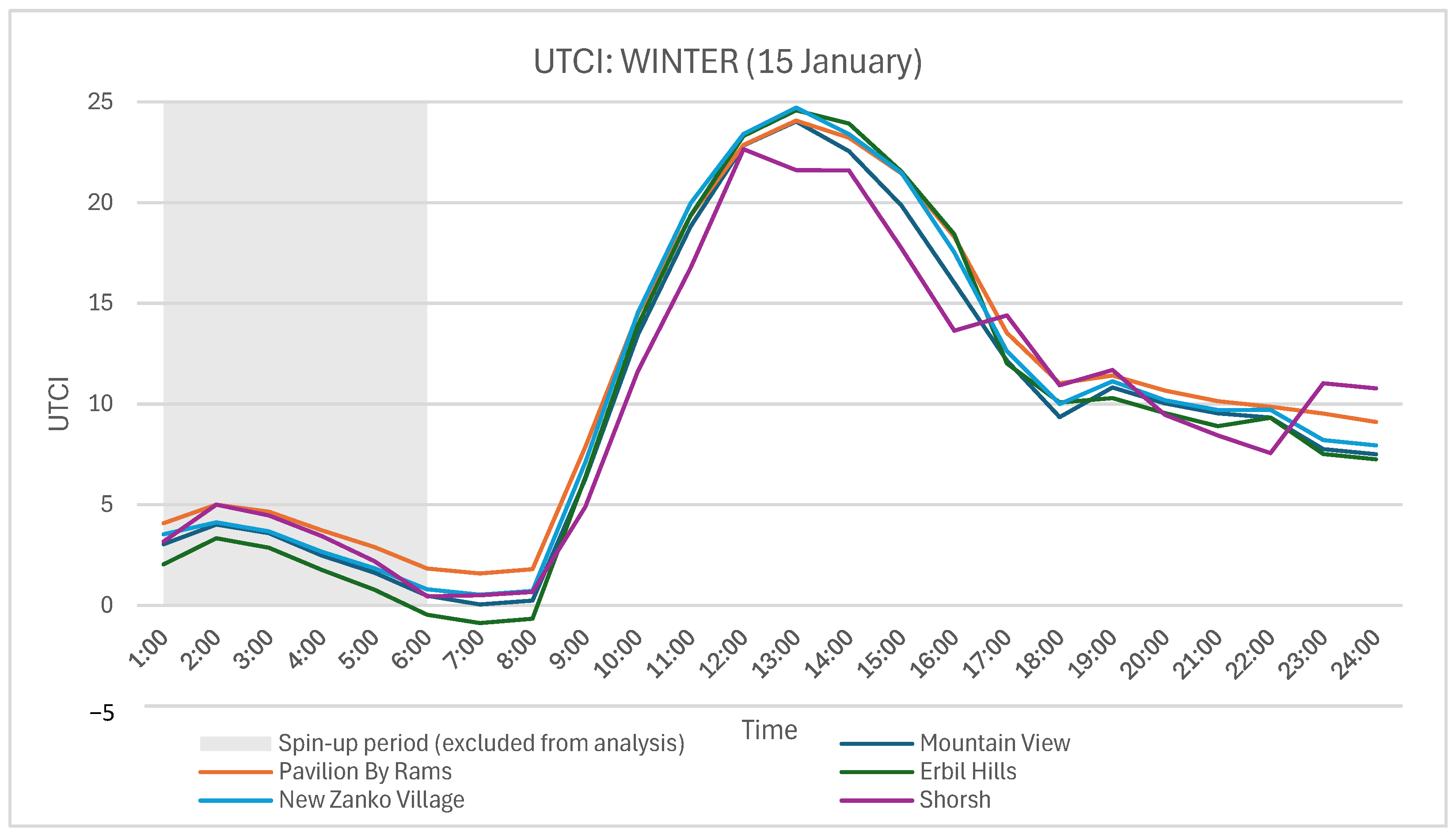
In winter (15 January), UTCI values were substantially lower and exhibited a reduced diurnal amplitude (
Figure 23). Early morning UTCI values ranged from approximately 0 to 5 °C, indicating slight to moderate cold stress, with some neighbourhoods briefly recording values slightly below 0 °C around 06:00–08:00. UTCI increased toward midday, reaching peak values between 13:00 and 14:00. New Zanko Village recorded the highest winter UTCI, reaching 24.72 °C at 13:00, followed by Erbil Hills (24.59 °C at 13:00) and Mountain View (24.03 °C at 13:00). Pavilion and Shorsh exhibited slightly lower winter peak UTCI values of 24.08 °C and 21.61 °C, respectively. These midday winter values fall within the no thermal stress category (9–26 °C). During the late afternoon and evening, UTCI values declined gradually, stabilizing between 7 and 11 °C by 24:00, corresponding to slight cold stress conditions.
Across both seasons, Pavilion exhibited lower UTCI values compared to the other neighbourhoods at higher temperatures and higher values at lower temperatures, while Mountain View, New Zanko Village, and Erbil Hills recorded higher UTCI levels, particularly during summer peak hours. Despite differences in magnitude, all neighbourhoods followed similar diurnal UTCI trends characterized by midday maxima and nighttime minima.
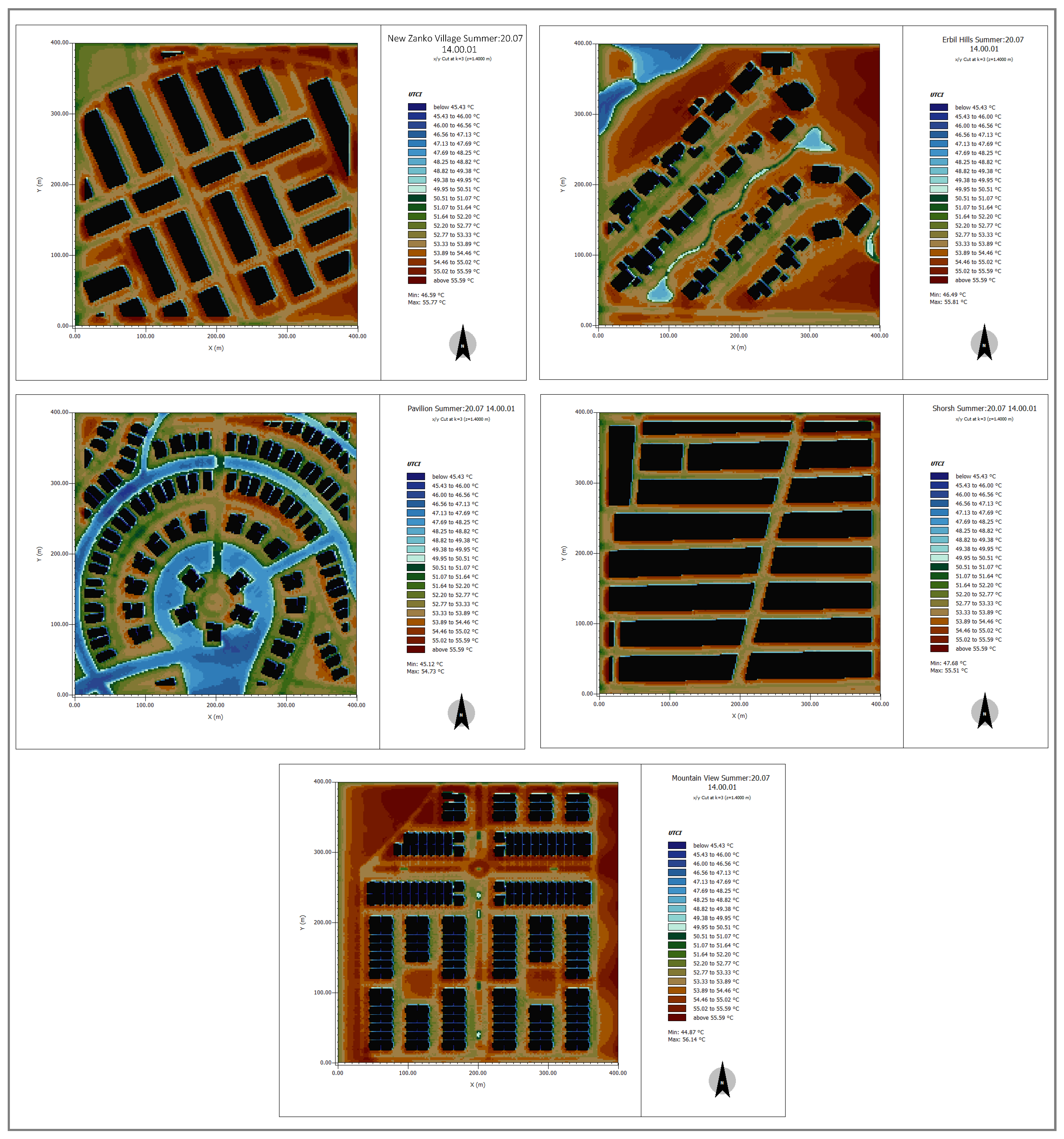
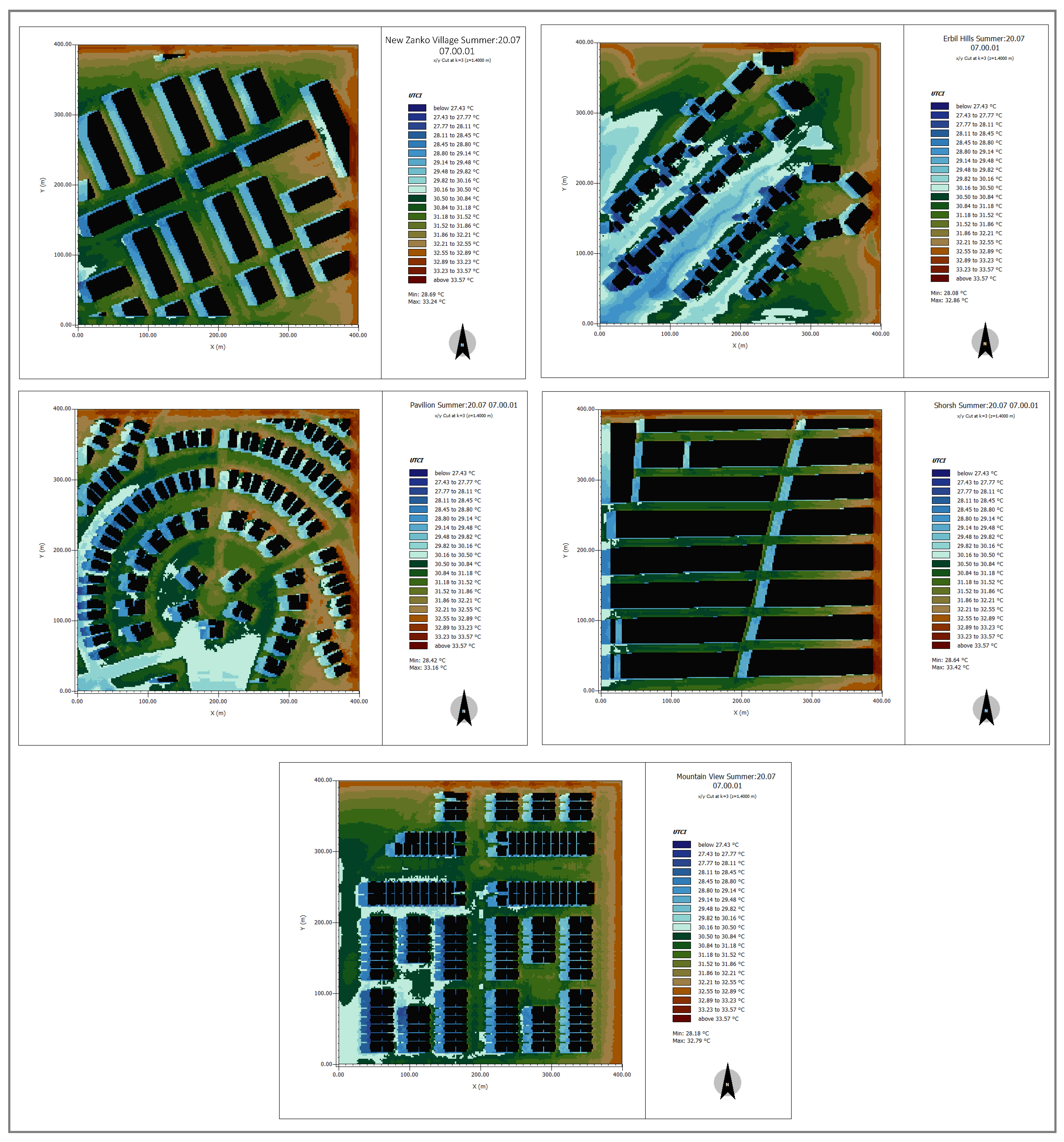
Under summer conditions (20 July, 14:00),
Figure 24, UTCI maps indicate severe heat stress across all neighbourhoods, with localized reductions strongly associated with blue and shaded elements. In Pavilion, the lowest UTCI values are clearly concentrated around the extensive water bodies surrounding and within the site, creating continuous zones of reduced thermal stress that extend into adjacent pedestrian areas. Similar, though more localized, UTCI reductions are also visible in Erbil Hills, particularly along corridors where shading and limited water features coincide. In contrast, neighbourhoods with limited blue–green infrastructure exhibit more uniformly high UTCI values.
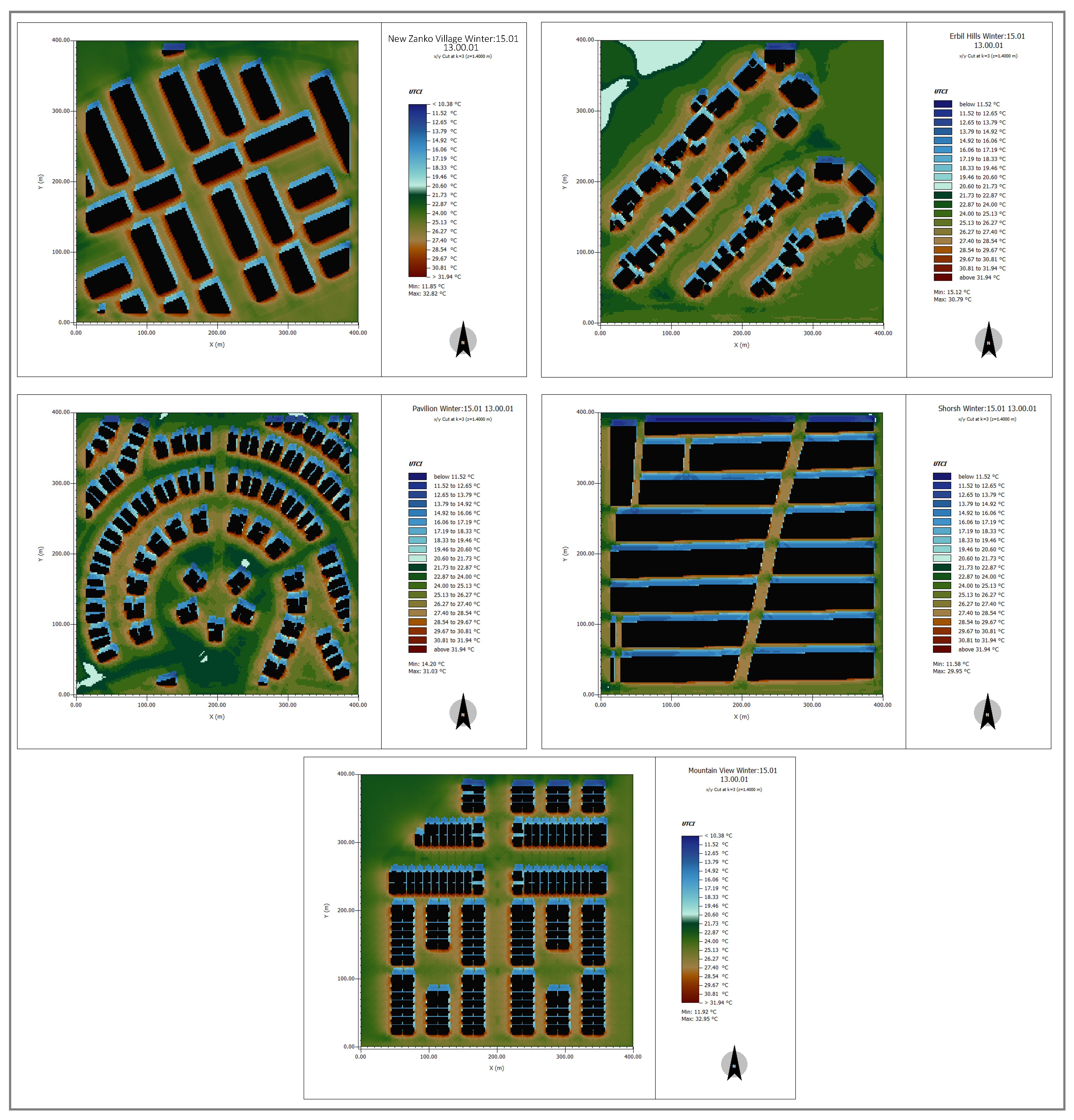
In winter (15 January, 13:00),
Figure 25, UTCI patterns shift toward lower thermal stress and become more spatially uniform. Open and sun-exposed streets generally exhibit higher UTCI values, while shaded and enclosed areas transition into cooler stress categories. Pavilion displays a more balanced UTCI distribution, as its combination of open water surfaces, moderate building spacing, and curved layout allows continued solar exposure while avoiding excessive enclosure. This spatial configuration reduces extreme cold stress compared to more compact layouts, resulting in a more even thermal environment across pedestrian areas. These findings suggest that layouts integrating openness with water elements may moderate seasonal extremes rather than optimizing for a single season.
In summer (20 July, 07:00),
Figure 26, UTCI values are lower and more spatially uniform due to reduced solar exposure and nighttime cooling. Pronounced cooling is evident along shaded streets, narrow inter-building spaces, and ventilated corridors, as well as around water bodies in Pavilion, while other neighbourhoods show more limited localized variation, indicating the combined influence of shading and nocturnal heat storage on early-morning thermal conditions.
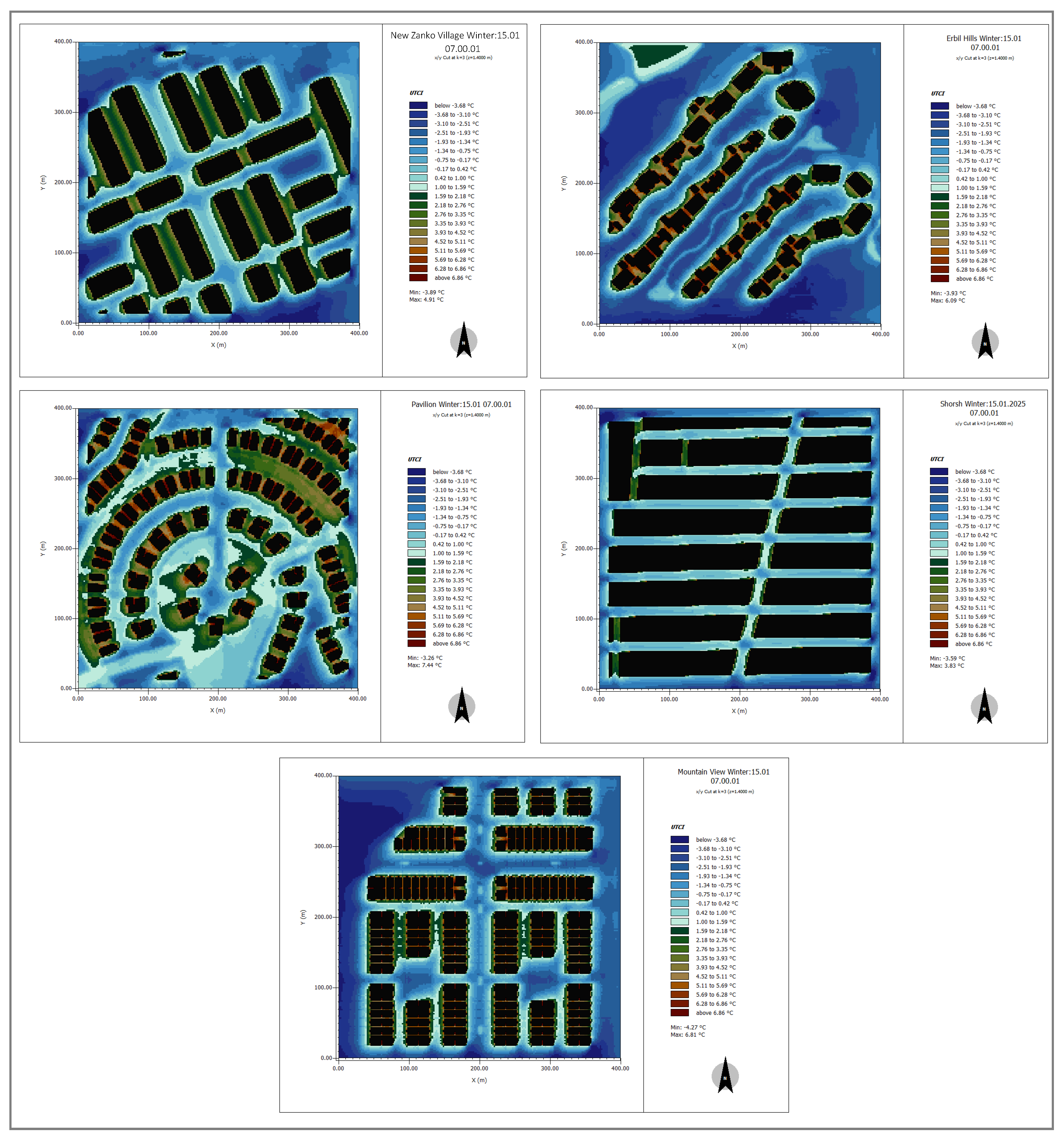
In winter (15 January, 07:00),
Figure 27, UTCI maps show widespread cold stress, with lower values in open and wind-exposed areas and relatively higher values in sheltered spaces. Pavilion exhibits more balanced UTCI conditions due to its combination of openness and enclosure, while compact neighbourhoods retain slightly higher UTCI within internal areas, highlighting the role of heat retention during early morning hours. The spaces between detached buildings also form relatively warmer corridors at this early hour due to retained heat, even though the same spaces contribute to temperature reduction later in the day under higher solar loads. This highlights the time-dependent thermal behaviour of inter-building spacing.
4. Discussion
This study examined the influence of neighbourhood spatial layout on microclimatic conditions and outdoor thermal comfort in Erbil using ENVI-met simulations under standardized modelling assumptions. By unifying building height, surface characteristics, and boundary conditions across all cases, the analysis isolated the role of spatial layout in shaping thermal behaviour across seasons.
Across all neighbourhoods, air temperature (Ta), surface temperature (Tsurf), mean radiant temperature (MRT), wind speed (Va), and thermal comfort followed similar diurnal patterns, with peak thermal stress occurring during early afternoon hours in summer. However, clear morphology-dependent trends were observed. Shorsh, characterized by a compact and linear configuration, exhibited elevated surface temperatures, MRT, and UTCI during summer peak periods, indicating intensified radiative heat exposure and heat storage, despite not consistently recording the highest air temperatures.
Mountain View and New Zanko Village, which display similar and moderate levels of compactness, showed comparable thermal behaviour to one another. Although their peak Ta were among the highest, their MRT and UTCI values in summer were generally lower than those observed in Shorsh, highlighting the importance of radiative exposure rather than Ta alone in shaping thermal stress under hot-arid conditions.
In contrast, the least compact neighbourhoods, Pavilion and Erbil Hills, generally recorded lower Ta and Tsurf during summer. Among these, Pavilion demonstrated a distinctly different thermal response compared to all other cases. In addition to its relatively open spatial configuration, Pavilion incorporates lagoons, water bodies, and extensive landscaping, making it morphologically unique within the study sample. These blue–green features likely contribute to cooling through evaporative processes and increased surface moisture; however, the observed thermal behaviour is more appropriately understood as the result of a combination of factors, including spatial openness, higher sky view factor (SVF), and landscape configuration, which together influence radiative exchange and heat accumulation.
Importantly, Pavilion tended to maintain lower Ta during summer while recording higher Ta during winter, alongside improved overall thermal comfort. This reflects a more balanced seasonal response that reduces summer overheating without amplifying winter cold stress. This dual behaviour is associated with Pavilion’s open spatial layout and integrated blue–green infrastructure, rather than with compact urban form. This behaviour is consistent with the SVF analysis, where more open neighbourhoods such as Pavilion exhibit higher sky exposure, facilitating radiative exchange in summer while maintaining solar access in winter.
While increased Va were observed in some neighbourhoods, particularly Shorsh, enhanced ventilation alone was insufficient to offset the strong radiative heat loads associated with compact and linear layouts. This highlights the dominant role of radiative processes, as captured by MRT, in determining outdoor thermal comfort under semi-arid conditions.
Overall, the findings demonstrate that neighbourhood-scale thermal behaviour in Erbil is primarily influenced by spatial layout under consistent surface and landscape conditions, rather than by compactness alone. Neighbourhoods with balanced openness and integrated blue–green elements, such as Pavilion, show potential to reduce summer thermal stress while maintaining acceptable winter conditions. These results underline the importance of incorporating water features, vegetation, and radiative control strategies alongside spatial planning to enhance outdoor thermal comfort in arid urban environments.
It is important to note that the observed differences in thermal performance cannot be attributed to a single spatial variable. Instead, they reflect the combined influence of multiple interacting factors, including spatial layout, openness, sky view factor, surface characteristics, and landscape elements. Due to the integrated nature of the simulation framework, these variables operate simultaneously, and their individual contributions cannot be fully isolated. Therefore, the results are interpreted as comparative evidence of how different spatial configurations influence microclimatic behaviour, rather than as direct causal relationships.
While the simulations were conducted under standardized modelling assumptions to enable controlled comparison between neighbourhood layouts, it is acknowledged that the use of uniform building height does not capture the full morphological complexity of real urban environments. As such, the findings should be interpreted as comparative insights into the influence of spatial layout, with future research needed to examine the combined effects of layout and height variability. In addition, anthropogenic heat sources such as traffic, air conditioning, and human activity were not explicitly included, as the study focuses on isolating the influence of spatial layout under controlled conditions.
5. Conclusions
This study assessed how neighbourhood spatial layout impacts microclimatic conditions and outdoor thermal comfort in Erbil through ENVI-met simulations conducted under standardized modelling assumptions. By comparing five neighbourhoods with contrasting urban layouts under representative summer and winter conditions, the analysis primarily focused on the influence of spatial layout under standardized surface and material conditions.
The results demonstrate that differences in neighbourhood layout led to pronounced variations in Tsurf, MRT, and thermal comfort. Compact and linear configurations, such as Shorsh, were associated with intermediate radiative heat loads and intermediate thermal stress during summer peak hours. Neighbourhoods with moderate compactness, including Mountain View and New Zanko Village, exhibited intermediate thermal performance. In contrast, the least compact neighbourhoods, Pavilion and Erbil Hills, generally showed reduced summer thermal stress.
Among all the cases, Pavilion exhibited the most balanced year-round thermal performance, recording lower thermal stress during summer while maintaining relatively improved thermal comfort during winter. This favourable behaviour appears to result from a combined effect of spatial openness and integrated blue–green infrastructure, particularly the presence of water lagoons, rather than compactness alone.
Overall, the findings indicate that neighbourhood thermal performance in hot-arid climates is governed by a combination of urban layout and surface and landscape characteristics, with radiative processes playing a dominant role in outdoor thermal comfort. The study highlights the importance of incorporating balanced spatial layouts, shading strategies, and blue–green elements in neighbourhood design to mitigate summer heat stress without exacerbating winter discomfort.
In particular, the results suggest that layouts combining spatial openness with integrated blue–green elements can support reduced summer thermal stress while maintaining more favourable winter conditions. These insights provide an initial basis for informing climate-responsive neighbourhood design.
Building on these findings, future research could develop more detailed design guidelines and parametric frameworks to optimize neighbourhood layouts for semi-arid climates. Such work could systematically test alternative spatial arrangements, water distributions, and vegetation strategies to define thresholds at which cooling benefits in summer do not compromise winter comfort.