1. Introduction
Connected and Automated Vehicles (CAVs) are widely regarded as one of the most transformative innovations in contemporary transport systems, with the potential to reshape mobility patterns, improve road safety, and increase the operational efficiency of transport services [
1,
2]. For this reason, public and stakeholder perceptions of CAVs have become an important topic in research on transport innovation, technology acceptance, and mobility transitions [
1,
3,
4]. Existing studies have typically focused on declarative attitudes, including trust in the technology, perceived benefits, perceived risks, and implementation barriers [
1,
4,
5]. Empirically, this body of research remains largely dominated by descriptive statistics, correlation-based analyses, and demographic segmentation [
1,
5,
6].
From the perspective of urban studies, the significance of Connected and Automated Vehicles extends beyond the technology itself to their prospective role within smart and sustainable urban mobility systems [
2,
7]. In urban environments, CAV deployment is associated with issues such as congestion reduction, improved accessibility for older adults and mobility-impaired users, reorganization of parking demand, lower-emission, more energy-efficient transport, and integration of passenger and freight flows within increasingly data-driven mobility systems [
2]. This is particularly relevant in the Polish context, where the practical implementation of autonomous road transport is likely to emerge first in operational settings shaped by urban infrastructure, institutional coordination, and metropolitan logistics networks. For this reason, examining how autonomous mobility is perceived in Poland is also relevant to understanding cities’ social and institutional readiness for transport automation.
Although such approaches have generated valuable insights, they also involve an important methodological limitation. Most survey-based studies implicitly treat respondents’ answers as direct reflections of stable attitudes, while paying little attention to the fact that survey data also include a subjective component related to response style. In practice, this means that part of the observed variance may reflect individual tendencies to respond in a generally more positive or more critical manner rather than substantive differences in technology perception. At the same time, conventional approaches often treat survey variables as analytically separate, even though many questionnaire items may represent overlapping manifestations of the same underlying cognitive constructs. This creates informational redundancy and may obscure the deeper structure of perceptions.
Despite these advances, the internal structure of perceptions remains comparatively underexplored. Consequently, an important research gap remains in studies of autonomous transport acceptance: the lack of analytical approaches capable of reconstructing the latent structure of perceptions, understood not as isolated opinions but as patterned relationships among perceived benefits, barriers, trust, and implementation conditions. This gap is particularly relevant in survey-based studies, where the structure of responses may be shaped not only by substantive evaluations of technology but also by differences in how respondents use rating scales and organize judgments across questionnaire items.
Part of the empirical material used in this study has been analyzed previously in research on perceptions of autonomous vehicles in Poland, including study [
8], which presented selected findings from the same survey dataset. However, the earlier publication relied primarily on descriptive statistical analysis and did not attempt to reconstruct the latent structure of perceptions, reduce the influence of response style, or identify recurring interpretive profiles. The present article, therefore, does not reproduce earlier findings; rather, it re-examines the same empirical material using a different, more methodologically advanced analytical framework.
The study addresses this gap by proposing an integrated analytical framework that combines quantitative survey analysis (CAWI) with qualitative support based on focus group interviews (FGI). Rather than asking only what respondents declare about CAVs, the study investigates how these evaluations are internally organized. More specifically, the article offers a method-driven reinterpretation of survey evidence by applying a latent-space approach to an existing empirical dataset. To reduce the influence of response style, the survey data are standardized within respondents and then examined using Principal Component Analysis (PCA) and clustering in the component space. This approach is consistent with established practices in exploratory data analysis and segmentation research, where dimensionality reduction combined with clustering is used to identify latent structures in complex datasets (e.g., [
9,
10]).
This approach makes it possible to identify the dominant dimensions organizing perceptions and to reconstruct recurring perception profiles that are not reducible to simple demographic categories. In this framework, the qualitative material serves an interpretative function supporting the assessment of whether the dimensions identified in the quantitative analysis correspond to meaningful interpretive patterns articulated by respondents.
In this sense, the article contributes to empirical knowledge on CAV perceptions in Poland and to the methodological discussion of how survey-based evidence on emerging mobility technologies can be analyzed in a more structurally informative way. Its value lies in the reinterpretation of an existing empirical dataset using an exploratory-inferential procedure enabling the reconstruction of latent perception structures.
Research on public acceptance of autonomous vehicles has expanded rapidly over the last decade, with most studies focusing on willingness to use, perceived benefits, perceived risks, trust in technology, and the socio-demographic correlates of acceptance [
1,
3,
4,
5,
11,
12]. Earlier work established that acceptance of autonomous driving cannot be reduced to technical performance alone, but is also shaped by perceived safety, trust, uncertainty, and wider societal expectations [
3,
12]. Systematic and narrative reviews likewise show that AV acceptance research is typically organized around demographic factors, perceived usefulness, risk, safety, and prior familiarity with the technology [
1,
2,
7].
A large body of empirical literature has reinforced the central role of trust, perceived safety, and perceived risk in shaping public responses to Avs [
4,
5,
6,
13,
14,
15]. Studies grounded in innovation-diffusion, TAM, UTAUT, and related frameworks suggest that acceptance depends not only on expected utility but also on broader concerns about uncertainty, system reliability, controllability, and data security [
4,
5,
6,
14,
15]. Recent model-based analyses further indicate that trust and perceived risk are not peripheral variables, but often occupy a central position in explaining acceptance, intended use, and behavioral intention toward autonomous vehicles [
5,
6,
14].
At the same time, much of the existing literature remains organized around explanatory models that treat survey responses as direct indicators of underlying attitudes and analyze them using descriptive statistics, regression-based methods, or structural equation modeling [
1,
4,
5,
6,
8,
14,
15,
16,
17,
18]. These approaches have generated valuable knowledge, especially regarding the roles of trust, risk, and perceived usefulness, but they are less suited to reconstructing the internal organization of perception across multiple interrelated questionnaire items. In practice, this means the literature is often stronger at identifying determinants of acceptance than at examining how perceptions are structured as latent configurations of evaluation.
This limitation is particularly relevant in survey research on emerging mobility technologies, where response patterns may reflect not only substantive beliefs, but also respondent-specific evaluation styles and overlapping cognitive constructs. As a result, analyses based primarily on average item scores or isolated predictors may flatten the structure of perception and obscure recurring profiles of interpretation. From this perspective, there remains a methodological gap between the dominant literature on AV acceptance and approaches capable of reconstructing latent perception structures in a more exploratory, profile-oriented manner. This gap is especially visible when compared with studies that segment attitudes or validate latent constructs across countries, technologies, or user groups [
13,
15,
19,
20,
21].
The present study addresses this gap. It draws on survey material collected in Poland within the AV-PL-ROAD project, part of which has already been published in descriptive form in earlier work [
8]. That earlier publication provided an empirical baseline on perceived benefits, risks, and acceptance of AVs in Poland, but it did not aim to reconstruct the latent structure of perceptions or recurring perception profiles. Unlike the previous study, which relied on descriptive statistical summaries, the present analysis focuses on uncovering latent structures and identifying perception profiles using dimensionality reduction and clustering techniques. A subsequent conference paper further explored barriers to and readiness for autonomous vehicle use in Poland, confirming the continued relevance of regulatory uncertainty, training requirements, and implementation barriers [
16]. The current article, therefore, does not replicate the previous analysis; rather, it reinterprets the same empirical dataset through a different analytical framework based on within-respondent standardization, Principal Component Analysis (PCA), clustering, and qualitative support with focus group interviews. In doing so, it seeks to move beyond variable-by-variable reporting toward a structurally richer account of how perceptions of autonomous vehicles are organized and contextualized.
The aim of this study is to identify the structure of perceptions of autonomous vehicles in Poland based on CAWI survey data and to support the interpretation using qualitative material from focus group interviews (FGI). The objective is operationalized through the identification of latent perception dimensions using PCA and the assessment of statistically significant differences between clusters using non-parametric tests. Rather than classifying respondents or predicting their behavior, the study seeks to reduce the set of observed survey variables to a smaller set of latent dimensions that capture how respondents perceive and internally organize autonomous vehicle technology.
This shift is important because it moves the analysis from what respondents explicitly declare to how their evaluations are structured across multiple questionnaire items. The underlying assumption is that the survey response matrix reflects the superposition of two components: first, a substantive component associated with respondents’ actual beliefs and evaluations; second, an individual component related to response style. To separate these two sources of variation, within-respondent standardization is applied, allowing the analysis to focus on response profiles rather than on their absolute level.
The transformed data are then analyzed using Principal Component Analysis (PCA), interpreted here not merely as a dimensionality-reduction technique, but as a tool for estimating latent dimensions of perception. In this framework, the extracted components represent the dominant axes organizing respondents’ evaluations of autonomous vehicle technology. The next step is to identify recurring configurations of perception through clustering in the principal component space. Importantly, the resulting clusters are not treated as demographic segments, but as recurrent perception profiles reflecting different ways of balancing expected benefits, perceived risks, and implementation constraints.
The final stage of the study is qualitative insight based on FGI material. Here, focus group data are used not as an independent analytical pillar but as an interpretive instrument to assess whether the latent dimensions and perception profiles identified in the quantitative analysis correspond to the interpretive patterns articulated by participants. In this way, the study combines latent-structure reconstruction with qualitative support to provide a more robust, structurally informative account of CAV perceptions in Poland.
Based on the adopted theoretical assumptions and the study’s aim, a set of hypotheses was formulated regarding the structure of perceptions of autonomous vehicles. Unlike in classical explanatory designs, these hypotheses are structural rather than causal, reflecting the exploratory logic of latent-space analysis and profile reconstruction.
H1. The perception of autonomous vehicles is multidimensional and can be reduced to a limited number of latent components that capture the main dimensions organizing respondents’ evaluations.
H2. Survey variables describing perceived benefits, barriers, and implementation conditions are not independent but cluster around shared cognitive constructs, suggesting informational redundancy at the level of individual questionnaire items.
H3. The latent space of responses contains recurring configurations of autonomous vehicle perception that do not map directly onto conventional demographic divisions.
H4. The perception of autonomous vehicles is structured by the tension between perceived systemic benefits and implementation barriers rather than by a single continuum of general technology acceptance.
The hypotheses are operationalized by identifying latent perception dimensions using PCA and by assessing statistically significant differences between clusters using nonparametric tests.
The remainder of this paper is structured as follows.
Section 2 presents the data and methodological framework, including data preparation, response-style correction, and the latent-space analytical approach based on Principal Component Analysis and clustering.
Section 3 reports the empirical results, including the identification of latent dimensions and perception profiles.
Section 4 discusses the findings in relation to existing literature and outlines their methodological and practical implications. Finally,
Section 5 concludes the paper by summarizing the main contributions and limitations of the study.
2. Materials and Methods
2.1. Data Source and Dataset Preparation
The analysis is based on survey data collected in Poland as part of the AV-PL-ROAD project concerning perceptions of connected and automated vehicles. The quantitative dataset comprises 1067 respondents, yielding a representative sample at a 95% confidence level with a maximum error of 3%. The sample was constructed to reflect the structure of the population aged 16 and above in Poland and to be representative across key demographic characteristics. The questionnaire included variables referring to the perceived benefits, barriers, and implementation conditions of autonomous vehicles. The response format was mixed, including both binary variables and ordinal-scale items. All variables were transformed to numerical values and standardized prior to analysis, enabling their joint use in PCA despite differences in measurement scales. Part of this empirical material was previously reported descriptively; in the present study, the same dataset is re-examined using a different analytical framework focused on latent-structure analysis. The reuse of the dataset does not introduce additional methodological bias, as the present study applies a distinct analytical approach rather than replicating the previous descriptive analysis.
The first stage of the analysis involved transforming the dataset into a form suitable for multivariate statistical processing. This included harmonizing variable formats, converting qualitative responses into numerical form, and identifying missing values. Missing data were handled using mean imputation. This approach was adopted due to the relatively low level of missingness and the exploratory nature of the study. While mean imputation may reduce variance, its impact on the results is expected to be limited in this case, as the analysis focuses on the correlation structure and relative patterns rather than absolute values. To improve comparability across variables and reduce distortions resulting from differences in measurement scales, the dataset was standardized prior to the main analytical steps.
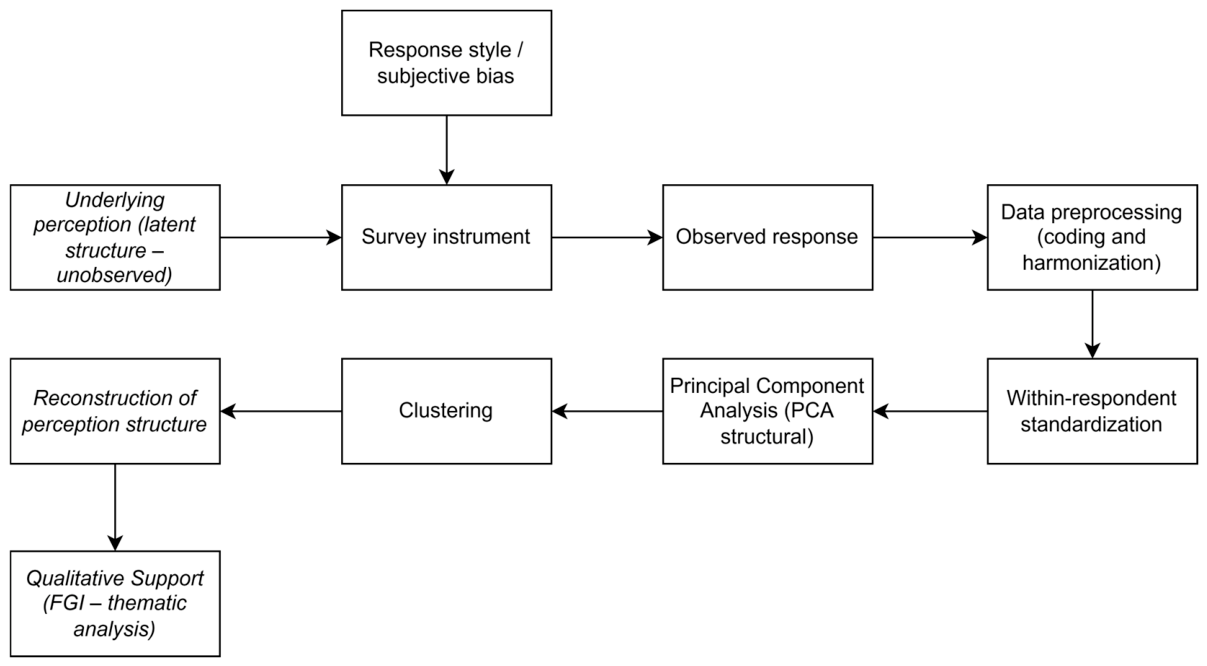
The quantitative survey data constitute the core empirical basis of the study. At the final stage, focus group interviews (FGI) were used as a qualitative support instrument for the structure reconstructed from the survey data, particularly for interpreting latent dimensions and perception profiles (
Figure 1). In this design, FGI was not treated as an independent analytical pillar but rather as a means of assessing whether the configurations identified in the quantitative analysis corresponded to the actual interpretive schemes articulated by participants.
2.2. Reduction in Response-Style Effects
A key methodological element of the study was the application of within-respondent standardization. Formally, for each respondent i and variable j, the standardized value was calculated as where and denote the mean and standard deviation of responses for respondent . This transformation preserves the relative structure of responses while reducing individual response-style bias.
For each respondent, the mean and standard deviation of all valid responses were calculated, and individual item values were then rescaled accordingly. This procedure was introduced to reduce the influence of response style, understood as an individual tendency to provide generally higher or lower ratings irrespective of the specific content of the items. This procedure shifts the interpretation from absolute response levels to relative response patterns within respondents, allowing the analysis to focus on how individuals differentiate between items rather than on their general tendency to provide higher or lower ratings. The procedure is commonly used to reduce response-style bias in survey data [
22,
23]. A comparison with non-transformed data was not the primary focus of the study, as the transformation is intended to improve the interpretability of relational structures rather than to preserve absolute response levels.
The rationale behind this step is that survey responses may reflect not only substantive evaluations of autonomous vehicle technology, but also respondent-specific scoring habits. By reducing the effects of these individual response tendencies, the transformation enables a more direct focus on response profiles and the relational structure among variables rather than on the absolute rating levels. In this sense, the procedure improves the interpretability of latent relationships in the dataset and supports a more structurally informative analysis of perceptions.
2.3. Principal Component Analysis as a Latent-Space Approach
Principal Component Analysis (PCA) was applied to the transformed dataset in order to identify the dominant dimensions organizing perceptions of autonomous vehicles. In the present study, PCA is interpreted not merely as a dimensionality-reduction technique, but as an analytical tool for estimating the latent structure of perception. This interpretation is consistent with established approaches in exploratory multivariate data analysis, where PCA is used to identify underlying structures of shared variance (e.g., [
9,
24]). The extracted components are treated as orthogonal axes of shared variance that reflect the principal ways in which respondents organize their evaluations across questionnaire items. The adequacy of the correlation structure for this analysis was confirmed using the KMO measure (0.72) and Bartlett’s test of sphericity (
p < 0.001). These results indicate shared variance among the variables, consistent with informational redundancy.
The interpretation of components was based on factor loadings, which indicate each variable’s relative contribution to each dimension. In interpreting the components, a loading threshold of 0.20 (in absolute value) was used to identify variables that contributed meaningfully to each dimension. Variables with strong, convergent loadings were interpreted as manifestations of shared cognitive constructs, whereas variables with weak or highly specific loadings were considered less informative for reconstructing the broader perception structure. This approach enabled the transition from a surface-level reading of individual responses to the identification of dominant dimensions organizing perceptions of CAV technology.
2.4. Clustering in the Latent Space
To identify recurring patterns of perception, k-means clustering was performed in the principal component space. The number of clusters was determined using clustering quality indicators, including the silhouette coefficient and the elbow method, and was complemented by interpretability considerations.
Clustering in the latent space helps reduce distortions that would otherwise result from redundancy among observed variables and from differences in response scales. In this framework, clusters are not interpreted as demographic segments but as recurring perception profiles that reflect different ways of balancing perceived benefits, perceived risks, and implementation constraints associated with autonomous vehicle technology.
2.5. Interpretive Reconstruction
The final analytical step involved moving from the latent space back to the original variable level by examining average response values within clusters. This enabled the identification of the variables that most strongly differentiated particular perception profiles and assigned them a substantive interpretation. In this way, the analysis links latent dimensions and cluster configurations to concrete patterns of responses observed in the original questionnaire data.
2.6. Qualitative Support with FGI
At the final stage of the study, the structure reconstructed from the CAWI data was compared with qualitative evidence from focus group interviews. The purpose of this step was not to develop an independent qualitative model, but to provide interpretative support for the structures identified in the quantitative analysis.
The analysis of FGI material was conducted using a thematic approach. Participants’ statements were coded and grouped into higher-level categories reflecting recurring themes in the discussion. These categories were subsequently mapped onto the principal components identified in the quantitative analysis, allowing the identification of correspondences between latent statistical structures and qualitative patterns of interpretation.
This integrated CAWI–FGI design combined the structural advantages of latent-space analysis with the contextual depth of qualitative material. As a result, the study sought not only to identify statistical regularities but also to assess whether these regularities have meaningful counterparts in respondents’ interpretive frameworks [
25].
3. Results
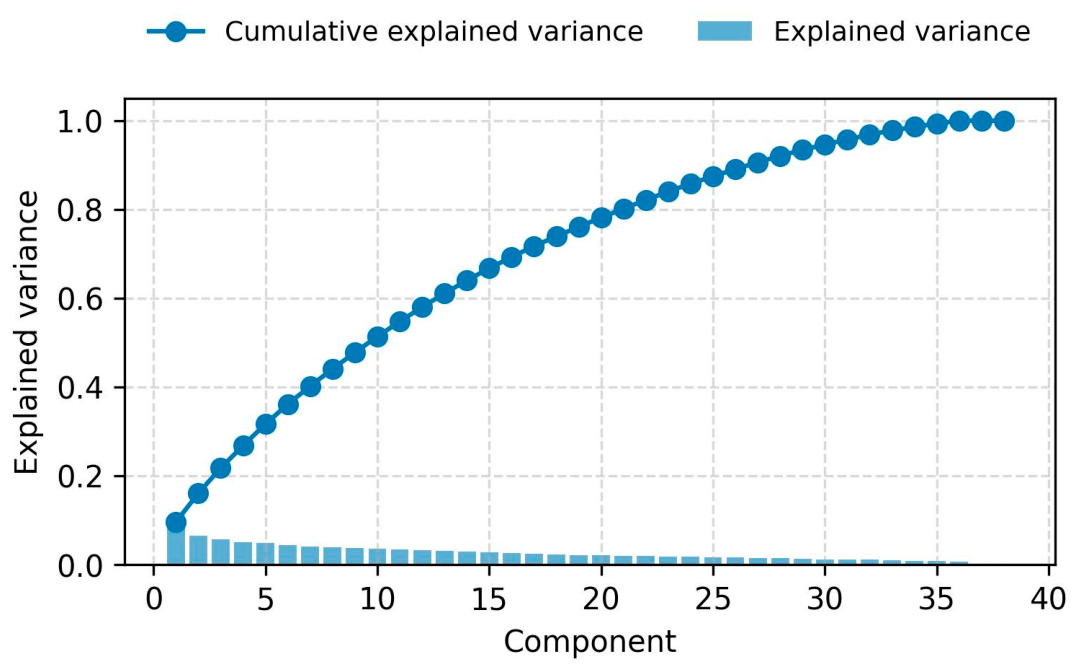
Principal Component Analysis enabled the identification of the main dimensions organizing perceptions of autonomous vehicles. The cumulative explained variance plot (
Figure 2) shows a gradual rather than abrupt increase in explained variance across successive components. The cumulative explained variance indicates the proportion of information retained after dimensionality reduction and provides a basis for assessing the adequacy of the selected number of components. The absence of a clear elbow suggests that the dataset’s structure is not dominated by a single or a few strongly influential factors but is instead relatively dispersed. This pattern is consistent with the nature of perception-based survey data, in which opinions are typically organized by several partially overlapping evaluative dimensions rather than by a single underlying attitude.
At the same time, the first components account for only a limited share of the total variance, which is typical for perceptual and survey-based data, where responses are inherently heterogeneous and influenced by multiple factors. This reflects the fact that part of the total variance corresponds to dispersed individual differences rather than structured latent dimensions. In such datasets, a substantial proportion of variance is associated with dispersed individual differences and residual response heterogeneity rather than strongly consolidated perception structures. For this reason, the PCA results should be interpreted as indicating the dominant axes of organization within the data rather than as providing an exhaustive representation of all variation present in respondents’ views.
The selection of components was based on multiple criteria, including the Kaiser criterion (
eigenvalue > 1) and cumulative explained variance, rather than relying solely on the visual elbow criterion. Accordingly, the analysis follows an interpretive strategy, focusing on the first three principal components. This decision does not rely on the expectation that these components would explain most of the total variance, but on their analytical usefulness in capturing the main dimensions that structure perceptions of CAV technology while limiting the influence of more diffuse and less systematic variation.
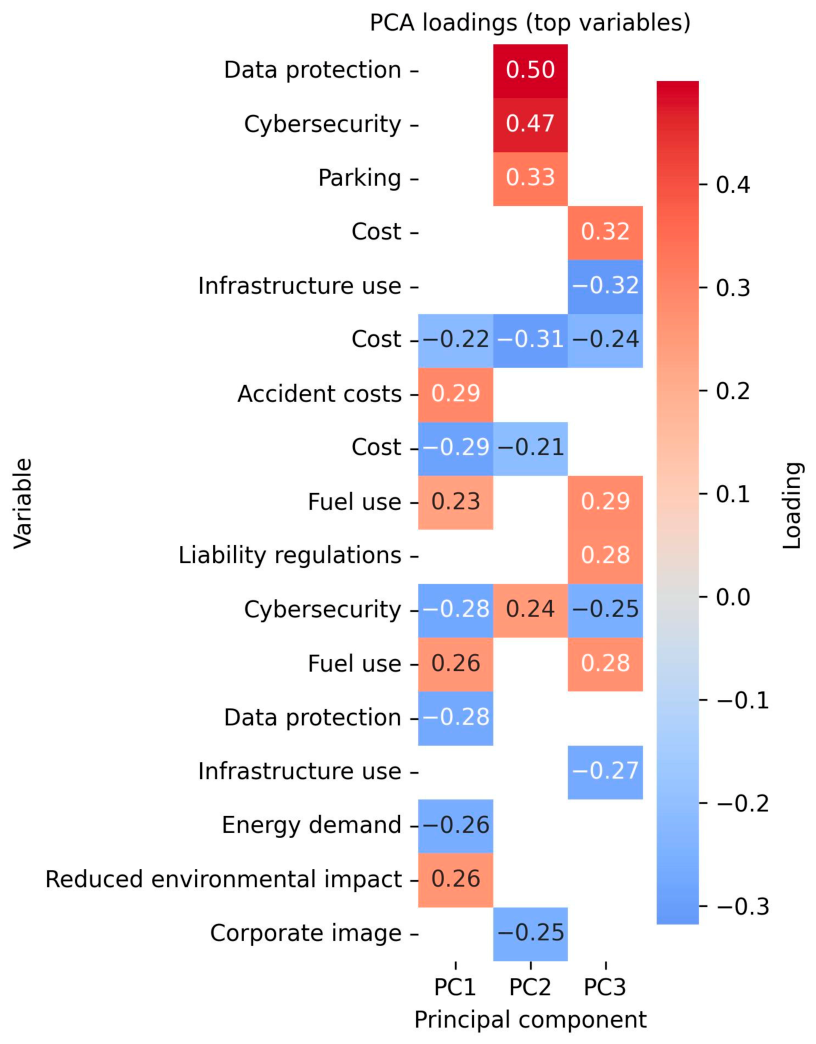
Figure 3 presents the loading matrix for the first three components, while
Table 1 summarizes the variables with the strongest loadings and their interpretive significance. The magnitude of the loadings is moderate, which reflects the dispersed nature of perceptual data. In survey-based studies, individual variables often contribute to latent dimensions in a distributed rather than highly concentrated manner, leading to lower loading values than in more homogeneous datasets. Therefore, the interpretation focuses on consistent patterns of loadings across variables rather than on single high-loading indicators. The variables presented in
Table 1 were selected based on their relatively highest loadings within each component and their interpretative relevance for identifying the underlying latent dimensions.
The loading structure indicates that these components are unlikely to be random statistical artifacts, but interpretable dimensions that reflect different ways in which respondents organize their evaluations of autonomous vehicles. Importantly, the components should not be understood as fixed psychological traits, but as dominant dimensions of variation in the response space. In this sense, PCA is used here as a tool for reconstructing the latent structure of perception rather than for producing a definitive factor model.
3.1. PC1: Tension Between Systemic Benefits and Implementation Barriers
The first principal component represents one of the main dimensions identified in the analysis and can be interpreted as reflecting a tension between perceived systemic benefits and institutional or organizational barriers to implementation. Positive loadings are primarily associated with expected benefits of autonomous vehicle deployment, including reductions in accident-related costs, improvements in transport efficiency, lower environmental burden, and lower energy use. Negative loadings, by contrast, are concentrated around variables referring to implementation constraints, such as deployment costs, training requirements, regulatory and insurance-related conditions, and energy demand.
Interpretively, this component can be viewed as an axis balancing the perceived system-level potential of the technology against the practical constraints of its implementation. Higher positive values indicate a more benefit-oriented and development-oriented perception, whereas negative values reflect a more cautious orientation shaped by institutional and organizational concerns. This finding is consistent with the view that perceptions of autonomous vehicles are not solely structured by a simple level of acceptance, but by the balance between expected gains and anticipated implementation burdens. Overall, this component reflects a system-level trade-off between expected performance gains and the practical constraints of deployment.
3.2. PC2: Information Security and Technological Trust
The second component is centered on issues of data protection, cybersecurity, and trust in the technological system. The strongest positive loadings are observed for variables linked to the protection of sensitive data, cybersecurity, informational control, and the safe functioning of the technology under operational conditions. At the same time, this component also includes selected aspects of perceived usefulness, such as comfort and the productive use of time, suggesting that trust in autonomous technology is not an entirely isolated category but is partly intertwined with functional evaluation.
The negative side of this component is associated with uncertainty, distance from technological innovation, and elements of skepticism toward autonomous systems. For this reason, PC2 may be interpreted as reflecting a dimension of technological trust, in which information security plays a central role as a condition for broader acceptance of autonomous vehicles. This result indicates that cybersecurity concerns may function as more than a single barrier among many, but also as a relatively distinct dimension shaping how respondents evaluate the technology. Taken together, these elements can be interpreted as forming a coherent dimension of technological trust, in which both security concerns and perceived system reliability jointly shape respondents’ confidence in autonomous vehicle technology.
3.3. PC3: Operational Efficiency Versus Regulatory-Ethical Readiness
The third component indicates a more complex dimension in which operational efficiency is combined with regulatory and ethical conditions of implementation. Positive loadings include improved infrastructure use, reduced energy consumption, shorter transport time, the need for ethical standards, and regulations concerning responsibility and accountability. Negative loadings are more strongly associated with variables related to mobility, accessibility, and user-oriented or individually framed aspects of technology assessment.
Interpreting this component reveals a tension between system efficiency and the need for institutional and ethical ordering of the technology. In other words, perceptions of operational benefits appear to be linked to the conditions under which they can be legitimately and effectively implemented. This component, therefore, broadens the interpretation of autonomous vehicle perception beyond the benefit–barrier distinction and suggests that respondents may also organize their evaluations around questions of governance, accountability, and implementation readiness. Overall, this component can be interpreted as reflecting the role of institutional readiness in shaping how operational benefits are evaluated, although the relationship between efficiency-related and regulatory-ethical aspects remains partly overlapping in the context of autonomous vehicle deployment.
3.4. Clustering Results
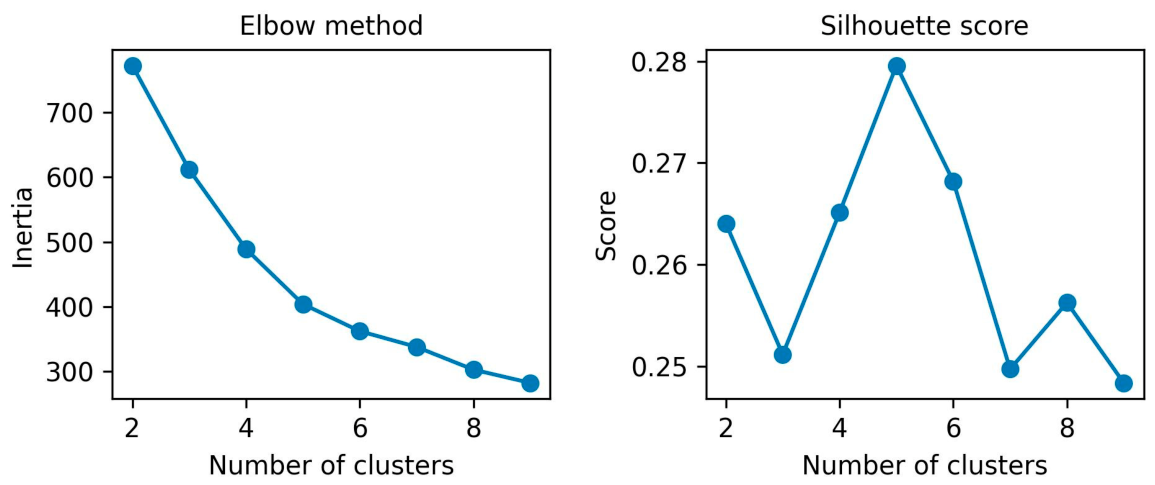
In the next stage of the analysis, clustering was performed in the space defined by the first three principal components. Respondents were segmented using the k-means algorithm in the principal component space. The number of clusters was chosen based on both the elbow plot and the silhouette coefficient (
Figure 4). The silhouette coefficient ranged from 0.25 to 0.28 across the tested solutions (
k = 2–9), with the highest value observed for
k = 5. The solution with
k = 4 achieved a comparable silhouette score (0.265) and showed high stability across different initializations (
mean = 0.265,
SD = 0.0002). Although the solution with
k = 5 produced a slightly higher silhouette value, the selection of the four-cluster solution was based on a combination of statistical criteria and interpretative considerations, as it provided clearer substantive differentiation between perception profiles. The obtained silhouette values indicate a moderate level of cluster separation, which is typical for perceptual and survey-based data.
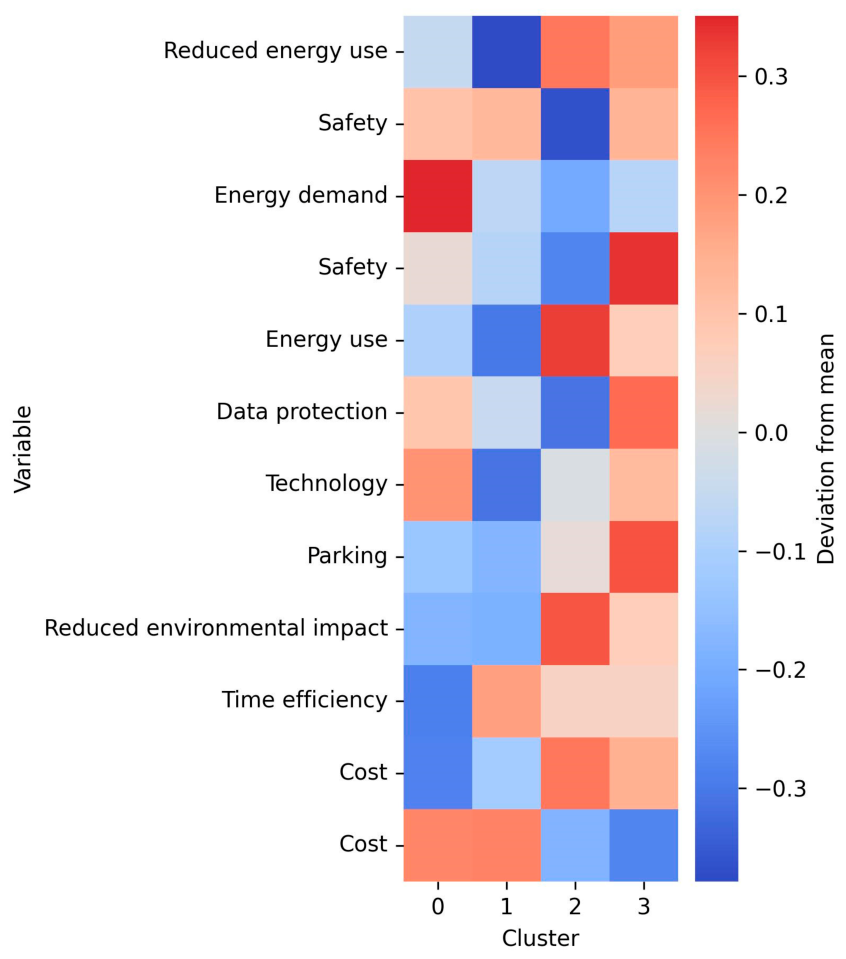
Importantly, the resulting clusters should not be interpreted as demographic groups, but as recurring configurations of perception of autonomous vehicle technology. Their analytical role is to reflect distinct ways in which respondents balance perceived benefits, risks, and implementation conditions. The cluster profiles are summarized in
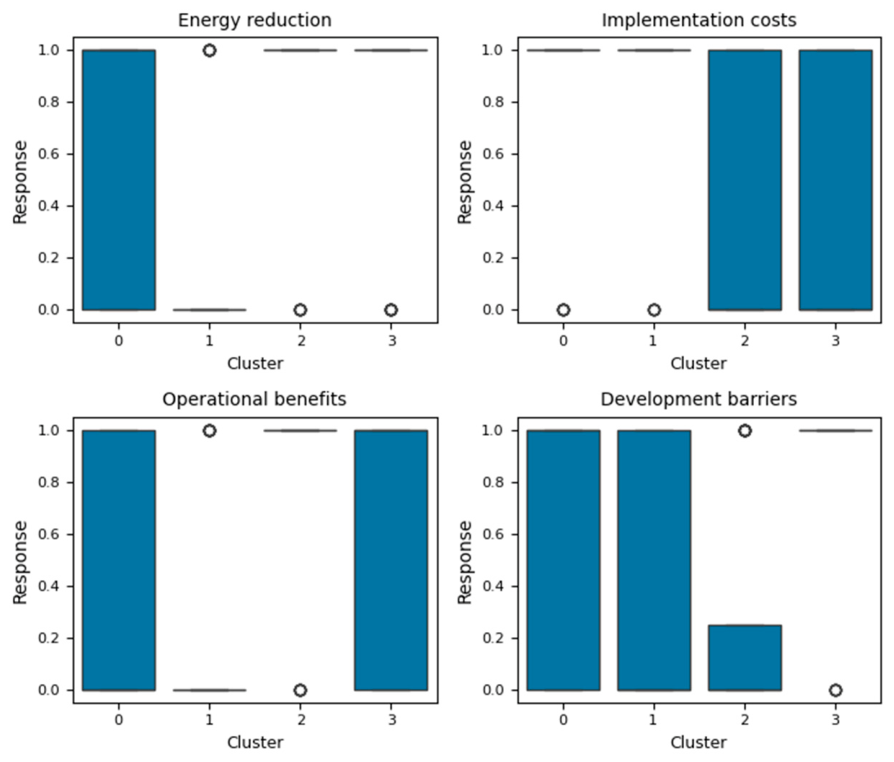
Figure 4, which presents deviations of cluster means from the global mean for the most differentiating variables. Additional support for the identified structure is provided by statistically significant differences between clusters, as indicated by the Kruskal–Wallis test with Dunn–Šidák post hoc analysis. These differences are presented in
Figure 5, which presents the distribution of selected variables across clusters.
3.4.1. Cluster 0: Operational-Pragmatic Profile
Cluster 0 is characterized by a moderately positive evaluation of autonomous vehicle technology, coupled with continued awareness of implementation constraints. Respondents assigned to this profile recognize the operational benefits of CAVs, but their enthusiasm is not unambiguous. Instead, acceptance appears to depend on whether institutional, organizational, and economic conditions of deployment are adequately addressed. This profile may therefore be interpreted as operational-pragmatic: the technology is viewed as potentially useful, but only under realistic implementation conditions.
3.4.2. Cluster 1: Cautious-Institutional Profile
Cluster 1 represents a more skeptical orientation in which implementation barriers play a central role. In this profile, particular importance is attached to costs, regulations, and system security. Respondents in this group do not necessarily reject the potential benefits of autonomous vehicles, but their perception is strongly filtered through risk awareness and institutional uncertainty. This profile may therefore be described as cautious-institutional, reflecting a defensive orientation focused on minimizing implementation risks.
3.4.3. Cluster 2: Technologically Balanced Profile
Cluster 2 is marked by a relatively coherent pattern of evaluations in which technological benefits are balanced against systemic constraints. Respondents in this group display a moderate level of acceptance grounded in a realistic assessment of both opportunities and limitations. The profile may therefore be interpreted as technologically balanced: neither overtly skeptical nor strongly enthusiastic but organized around a comparatively stable balancing of expected gains and implementation conditions.
3.4.4. Cluster 3: Pro-Innovation Profile
Cluster 3 displays the strongest positive orientation toward autonomous vehicle technology. Respondents associated with this profile place greater emphasis on system-level and operational benefits, while assigning comparatively less importance to implementation barriers. This configuration may be interpreted as pro-innovation, expressing a relatively high readiness to accept and support the deployment of autonomous vehicles.
Taken together, the clustering results support the conclusion that perceptions of autonomous vehicles in Poland are not organized along a simple binary distinction between acceptance and rejection. Instead, they form several recurring profiles that differ in how they balance systemic benefits, security concerns, regulatory conditions, and practical implementation barriers. This confirms that the latent space of responses contains interpretable configurations of perception that extend beyond conventional demographic segmentation.
3.5. Reconstruction of Cluster Profiles at the Variable Level
To assign substantive meaning to the identified clusters, the analysis was extended from the latent space back to the original variables.
Figure 6 presents deviations of cluster means from the global mean for the variables with the strongest differentiating power. The resulting profiles indicate that the identified clusters differ not through isolated opinions, but through coherent configurations of evaluations concerning the benefits, barriers, and implementation conditions of CAV technology.
The reconstructed profiles reveal clear variation in the way autonomous vehicle technology is interpreted. Post hoc analysis using the Dunn–Šidák procedure indicates that a substantial proportion of pairwise cluster comparisons are statistically significant, indicating that the identified profiles differ not only at the global level but also in specific pairwise configurations. These results suggest that differences between clusters are likely to be systematic rather than incidental. One profile places stronger emphasis on economic and environmental aspects, including costs and energy use, while assigning comparatively less weight to security-related concerns. Another profile is more technology-positive, with stronger evaluations of safety, functionality, and enabling solutions such as parking support systems. A further profile is more strongly organized around the user-oriented and operational dimensions, especially time efficiency, while giving less prominence to other aspects. Finally, one profile is more system-oriented, with a stronger focus on energy demand and on organizational requirements such as training and implementation preparedness.
These findings are consistent with the conclusion that perceptions of CAV technology are multidimensional and structurally organized, and that differences between respondents arise from broader configurations of evaluation rather than from single isolated factors. This also suggests that conventional aggregate indicators of technology acceptance may not fully capture the actual structure of respondents’ views.
Absolute cluster-level values for selected variables are presented in
Table 2, while deviations from the global mean are summarized in
Table 3. The qualitative categories presented in
Table 3 suggest a correspondence between themes emerging from the FGI material and the principal components identified in the quantitative analysis. In particular, categories related to systemic benefits, operational efficiency, and labor market pressures are consistent with the positive pole of PC1, while regulatory barriers and systemic constraints can be associated with its negative pole.
5. Conclusions
The findings of this study offer an alternative perspective to approaches that emphasize demographic variables in explaining perceptions of emerging transport technologies. The analysis suggests that perceptions of autonomous vehicles in Poland are structural and multidimensional rather than one-dimensional and demographically determined. Respondents’ evaluations are organized around several relatively independent dimensions that reflect tensions among perceived benefits, risks, and institutional and implementation-related conditions.
The application of a latent-space approach enabled the identification of recurring perception profiles that remain largely invisible in analyses based on average response values. Of particular importance is the methodological procedure used to reduce the influence of response style, individual scoring habits, and general tendencies toward more positive or more critical evaluations. This made it possible to move from surface-level declarations toward the reconstruction of a more stable structure of views on transport automation. In this sense, the study contributes methodologically by capturing not only the level of technology acceptance but also how respondents organize their evaluations, despite the typical distortions inherent in survey-based data.
The inclusion of FGI as an interpretative support further strengthens the interpretive credibility of the results. The qualitative analysis indicated that the identified components correspond to recognizable interpretive patterns articulated by respondents, rather than being purely statistical artifacts. At the same time, the FGI material revealed aspects that the survey instrument could not fully capture, especially the implementation gap between recognizing the potential of the technology and assessing the system’s actual capacity to deploy it, as well as the strongly contextual character of perceptions of automation.
One of the conclusions is that the key differentiating factor is not demographic background, but the operational context of respondents’ activity and the institutional conditions under which the technology would be implemented. This observation applies to the analyzed dataset and should be interpreted with caution. This suggests that perceptions of autonomous vehicle technology are rooted primarily in the logic of transport-system functioning rather than in individual-level characteristics.
The study also illustrates that the same empirical material, previously examined mainly through descriptive statistical approaches, can yield a more structured and informative interpretation when reanalyzed within a latent-structure framework. Rather than reproducing earlier findings, the present article reinterprets an existing dataset and shows that what initially appeared as dispersed individual opinions can be reconstructed as a set of coherent, recurring, and context-embedded perception profiles. This reinterpretation is one of the study’s main contributions, as it reveals dimensions of perception that remain largely inaccessible in conventional survey analysis.
Consequently, the results suggest the need to move beyond generalized models of technology acceptance toward approaches that account for the heterogeneity of perception structures. The proposed framework increases the interpretive value of survey-based evidence and also provides a more useful basis for designing public policies and implementation strategies. Its originality lies in combining the reconstruction of latent opinion structures with qualitative support, enabling the identification of robust perception profiles even when survey responses are affected by response tendencies, cognitive routines, and heterogeneous evaluation styles. This study has several limitations that should be acknowledged. First, the analysis is based on a previously collected dataset, and although a different analytical framework was applied, no new empirical data were introduced. Second, the study follows an exploratory–inferential approach, which limits the extent to which causal conclusions can be drawn. Third, the use of mean imputation, while necessary to preserve dataset completeness, may reduce data variance. Finally, the results are context-specific and relate to perceptions of autonomous vehicles in Poland, which may limit their generalizability to other settings.