


Abstract
This paper pursues a phenomenological investigation of the nature of absorbed listening in Western, classical music concert audiences. This investigation is based on a data-set of 16 in-depth phenomenological interviews with audience members from three classical concerts with the Stavanger Symphony Orchestra and the Norwegian Radio Orchestra conducted in spring 2024. We identify seven major themes, namely “sharedness”, “attention”, “spontaneous thought/mental imagery”, “modes of listening” “absorption”, “distraction”, and “strong emotional experiences”, and interpret these in light of relevant ideas in phenomenology, cognitive psychology, and ecological aesthetics, more precisely “passive synthesis” from Husserl, the “sense of agency” from Gallagher, and “mind surfing” from Høffding, Nielsen, and Laeng. We show that, like absorbed musical performance, absorbed musical listening comes in many shapes and can be grasped as instantiating variations of passive synthesis, the sense of agency, and mind surfing. We conclude that absorbed listening circles around a kind of paradox of passivity, characterised by a sense of loss of egoic control arising from particular forms of invested, intensive perceptual, cognitive, and affective engagement.
1. Introduction
Coming from a background of phenomenology and musicology, broadly conceived, this paper analyses classical music audiences’ absorbed listening experiences. These are highly valued to us as individuals and as groups, and so it is paramount to get a better grasp of why this is so: what is it that we experience in a concert such that it is pleasurable, worthwhile, or even existentially significant? We approach this question from a specific theoretical and methodological vantage point. Having spent about a decade charting the phenomenology of absorbed concert performance from the perspective of professional musicians, we now want to know the extent to which absorbed concert listening is equally intense and has a similar structure. This inquiry responds to the call of the current Special Issue concerning the “interplay between aesthetics and the performing arts”.
Most people have probably experienced more or less intense emotional or engaging episodes of absorption while listening to live music—irrespective of genre—and yet there is surprisingly little systematic investigation of what and how we experience in such situations. Most standard methods of qualitative interviewing could give us a precise grasp of the content of such experiences. In distinction, this paper maintains a strong phenomenological commitment to grasp more than the experiential content. Our analysis is aimed at the structure, or the ”how”, of experience [1]. Getting to this “how” requires a more explicit theoretical framework, allows for more enlightening comparisons with performance experience, and generally lends itself better toward generalisation. Presenting the “how” of an experience from an interview also requires a specific methodology, namely the frame of a “phenomenological interview” [2].
Although there is a comprehensive body of literature on audience experience and on the listening experience in the context of Western classical music, it does not aim at analysing the “how”, i.e., the structures of experience that are necessary for the emergence of absorbed listening. Addressing this lacuna, we aim to accomplish two goals: (1) to generate data that avail such knowledge by interviewing 16 students of musicology about their experience of absorbed musical listening and (2) to allow for theory to inform the interpretation of interview data, by using insights from the phenomenology of performative musical absorption to examine the similarities and peculiarities of performing and listening. From the work on performative musical absorption, we apply broad, classical phenomenological concepts such as “passive synthesis” [3,4,5] and the “sense of agency” [6], as well as a new and more specific concept of “mind surfing” [7]. We conclude that these concepts can be aptly generalised to understand the experience of absorbed listening but also that their internal structure is different, not least due to the less restrained emotional engagement of the audience members when compared to the engagement of performers.
The paper is structured first with a literature survey and theoretical framing, then a presentation of the employed methodology, a data presentation with analysis, and finally with a discussion of and conclusion to the findings.
2. Theory
2.1. Literature Survey
There is a diverse body of literature on absorption, musical experience, and music listening. This body of literature, moreover, draws on different traditions such as classical phenomenology, ecological psychology, enactivism, ethnography, survey-based investigations, and experimental psychology. As we present an overview of this literature, it should be kept in mind that our object of investigation is the nature and structure of experiences of musical absorption while listening to live, classical music.
Within classical phenomenology, Saulius Genuisas [8] has recently written an informative overview of “Absorption, as a Theme in Phenomenology”. He investigates what it means for consciousness to “undergo experiences from a displaced standpoint” (ibid, p. 1), examining cases such as religious, meditative, or aesthetic experience. This chapter is helpful for understanding what early phenomenologists such as Husserl have written about absorption as a general capacity of consciousness, but without drawing on empirical work, it cannot specifically tell us what one experiences when listening to live music.
Shifting to listening, we find engaging studies inspired by approaches from ecological psychology, philosophical enactivism, and psychologically oriented ethnography. Eric Clarke’s seminal application of ecological theory in Ways of Listening [9] warrants mention here, as do his contributions to debates on the nature of “primary” musical consciousness [10] and recent arguments for (the possibility of) an ecological aesthetics [11] centred on James Gibson’s concept of affordance. An aesthetics of this kind, Clarke asserts, acknowledges “profoundly interested” and embodied perception and attention, rather than disinterested contemplation [11], p. 56. Philosopher Joel Krueger’s published works on enactive listening are also noteworthy [12,13,14]. Crucially, both Clarke and Krueger help us understand that music listening is not passive or a result of indirect “processing”, but is constituted by direct, active perception and sense-making guided by the allure—including affective and bodily—of environmental affordances [14], ([9], p. 45). This linking of music perception with gesture and embodiment in its affective and cognitive dimensions has also been the subject of extensive investigation by Marc Leman and his laboratory, IPEM, in Ghent [15,16]. Listening in everyday life has been examined by several key scholars, most notably by sociological theorist Tia DeNora [17] and more recently music psychologist Ruth Herbert, who has published enlightening work on how teenagers use music listening in their everyday lives [18]. We are sympathetic to the theories, analyses, and findings of these scholars and look to pick up several threads while focusing, in particular, on the phenomenal reality of live music listening.
Moving on to empirical work on live music listening, we find another large body of material on audience engagement in live music settings. Initially coming out of the University of Sheffield, researchers Stephanie Pitts, Sarah Price, and Lucy Dearn have published numerous articles and chapters on classical music listening experiences. Impressively, for one paper they interviewed “187 attenders of contemporary arts events across four UK cities” [19], having to develop new methods to handle such a huge data set [20] investigating audiences’ capacity to engage with classical music. In other work, they examine the motivations for young audiences to attend “old” classical music concerts [21]. In this work, we certainly get a close peek into audience members’ actual experience of listening to music. Theoretically, this work is aimed at understanding motivations, cultural clashes, and similar background factors, which is undoubtedly helpful for motivation theorists and concert managers, as well as actors in the social and political sphere. The aim for our current work, however, is to offer a novel angle on the nature and quality of absorption as experienced in live music settings.
In the tradition of music psychology, there is also much interesting work on music listening and absorption. First, Toelle and Sloboda [22] investigated the idea of “the audience as artist”, focusing on participation, interaction, and shifting power relationships showing “high levels of cognitive and affective engagement” (ibid, p. 1). This intense engagement is certainly something we will see represented in the current study, and our study contributes experiential detail to their findings, which are based on survey data. More recently, Wald-Fuhrmann et al. [23] produced a comprehensive overview article of music listening studies. They suggest the sociological concept of the “frame” for grasping embedded and affordance-based musical experience. The article is co-written with Martin Tröndle and Wolfgang Tschacher, who have been instrumental in the foundation of concert research [24], focusing on embodied synchronicities between musicians and audiences [25]. The current paper contributes to this framing of the classical concert, as it will provide nuanced descriptions of “states, emotions, attention, and listening mode” [23], that partake in in their “frame”.
The final part of the relevant psychological literature familiar to us stems from physiological experiments, testing correlations between musical absorption and eye-movement and blinking. In this work, we find a curious double definition of absorption as involving both heightened attention and mind-wandering [26,27]. This definition seemed so puzzling that Høffding, Nielsen, and Laeng [7] revisited the qualitative findings with expert musicians and coined the notion of “mind surfing” to try to make sense of this idiosyncratic form of absorption. We shall turn to this term at the end of this theory section.
Summing up this short overview, we have pointed to many fascinating studies and disciplines investigating musicking [28] in its listening mode, but none which can explicitly answer the questions driving this paper, namely what phenomenological structure absorbed musical listening relies on and whether this structure is similar to absorbed musical performance. In order to prepare the ground for answering these questions, we now turn to some phenomenological key concepts that define absorbed musical performance.
2.2. Phenomenology of Musical Absorption: Passive Synthesis and Altered Sense of Agency
In previous studies, Høffding has attempted to establish a phenomenology of musical absorption based on short-term ethnographic fieldwork and in-depth, qualitative, or “phenomenological” interviews [2] with expert musicians, informed by core ideas from phenomenology, aesthetics, enactivism, and music psychology. This work sought to grasp how embodied self-awareness, intentionality, perception, and affect are structured when musicians have intense experiences with performance, sometimes characterised as “being in the zone”, “getting carried away”, and “losing oneself in the music”. It is far from simple to understand how such experiences are possible. On the one hand, musical experts must minutely control every little movement, in an awareness that is time-pressured, and yet must give way to fresh aesthetic interpretation. On the other hand, these musicians at the same time experience that it is the music that plays them or plays itself. Sometimes musicians even feel at a distance from themselves as if observing the performance from the outside. In cognitive psychology and sports psychology, the prevailing explanation for this kind of experience, which seemingly also happens to other artists and athletes, has been that experts are working from an automatised movement repertoire, i.e., procedural memory, and should better direct their attention away from their own performance [29,30]. And while it is true that expert musicians’ movements, to a great extent, are automatized—as is also expressed in the phenomenological idea of the habitualised body schema [31,32]—the experiences in question are not automatised in some another-day-at-the-job-like manner. Rather, they are imbued with intense emotional and affective valence, as well as existential significance, sometimes as if these experiences sum up the very purpose of being a musician.
Phenomenology can help give us a better understanding of these kinds of experiences through the concepts of “passive synthesis” and “the sense of agency”.1 [33,34] The first comes from Edmund Husserl’s work, while the latter is the subject of much of Shaun Gallagher’s output. Throughout his life, Husserl investigated different kinds of self-consciousness, different kinds of reflection, and their co-constitutive relationships. Dispersed in works such as Analyses Concerning Active and Passive Synthesis [5], Ideas II [4], and Experience and Judgment [3], Husserl touches on the notion of passive synthesis as a pre-egoic layer for sense making, which “indicates a primordial regularity of sense-genesis in which the ego does not participate; it characterises a pre-reflective dimension of experience of pregivenness of object-like formations, a dimension that is founding for activity” (Steinbock in [26], p. xliii). This “soil upon which the free activity of the ego moves” ([5], p. 386) is foundational for the ego which, in lack of a precise definition, at least can be said to operate in specific acts of attention, judgment, volition, and reflection.
In the domain of musical expertise, passive synthesis is apposite because intense absorption is not something that one can control or plan. Rather, it is something that “happens” to one. Passivity also goes together with the notion of receptivity, the ability to be open to new impressions or ideas, and responsivity, namely being prepared to respond creatively to new impulses.2 [35] To give an example from the Danish String Quartet (DSQ), the violinist Frederik Øland claims that when rehearsing, he tries to be “like a parabol” ([36], p. 132) that picks up everything. In doing so, he is in fact paying attention to nothing in particular but rather practicing an expansive receptive intentionality. The idea of passivity in musical absorption is that, while it can be trained, it cannot be willed forth.3 [37] And what is trained is not doing something in particular, acting egoically, but being intensively receptive in order to be responsive. In other words, the expert in absorbed moments mostly does not worry about playing right or about remembering a certain phrasing but has the capacity to be moved by the music, the other musicians, and the performative situation as such. This we can call “performative passivity” [36]. Høffding’s work spells out three primary “sources of passivity”, namely the body schema, emotions, and the music ([36], chapter 10), that intertwine and mesh in various ways in performance. Our empirical analysis will assess how and to what extent these sources of passivity are also found in absorbed listening.
When one is moved, one also in a sense gives up control—hence the notion of letting the music express itself on its own terms or even of being a medium for the music or composer. To analyse this moment of subjectivity, Shaun Gallagher’s work on minimal consciousness, distinguishing between the “sense of ownership” and the “sense of agency” is useful [6]. The sense of ownership is the sense that whatever is happening, it is happening to me, while the sense of agency is that I am the one doing this. These two normally go together but can occasionally come apart, like in involuntary movement, such as if one is tripped. One did not do this oneself, but surely it happened to one as testified by one’s aching knee, sore after the fall. In the musical domain, performers are not in doubt about whether the performance and music happened to them, but they might express doubt as to whether they were the agent of the actions. Here is an example from an interview with DSQ cellist Fredrik Sjölin on practicing a Bach fugue:
“The deeper you are in, the less you observe the world around you…and I had this especially powerful experience…where I completely disappeared. I remember that it was an incredibly pleasant feeling in the body. And it was incredibly strange to come back and at that point I spent a few seconds to realise where I had been. I had been completely gone and with no possibility of observing…It was this intense euphoric joy.”
“Ok, but if you are certain of having played, you cannot have been completely gone, so you must have known that you were playing, or…?”
“Weeell…in this case I cannot completely answer you.” ([36], p. 66)
This is an experience of performative passivity, also labelled “absorbed-not-being-there” [36], where something happened to Sjölin, such that he “disappeared”. The episode can equally be described as involving a change in the sense of agency, such that he cannot “completely answer” whether he was the one doing the playing or not.
The performative passivity delineated here is close but not identical to terms such as pre-reflective self-awareness or pre-predicative experience. As we shall see, much of the absorbed listening to be presented contains descriptions of self-reflection and autobiographical and even historical memory, none of which qualify as pre-reflective or pre-predicative. For the purposes of the present discussion, the most important distinction pertains to what we might call the mode of production of the experience. While the content of a memory can be both predicative and reflective in character, it is—in our case—not produced on purpose but in a passive, yet invested, receptivity to the music.
2.3. Mind Surfing
Genuisas’ initial definition of absorption involves “undergo[ing] experiences from a displaced standpoint” [8]. This idea latches on to a specific category of absorbed performance, called “ex-static absorption” [36], in which one feels like a kind of spectator to one’s own play, in what might be labelled a quasi-out-of-body experience. Here is an example from DSQ violist Asbjørn Nørgaard:
“You are both less conscious and a lot more conscious I think. Because I still think that if you’re in the zone, then I know how I’m sitting on the chair, I know if my knees are locked, I know if I am flexing my thigh muscle, I know if my shoulders are lifted, I know if my eyes are strained, I know who is sitting on the first row, I know more or less what they are doing, but it is somewhat more, like disinterested, neutrally registering, I am not like inside, I am not kind of a part of the set-up, I am just looking at it, while I’m in the zone.” ([36], pp. 60–61)
Compared to Sjölin’s blackout-like experience above, Nørgaard’s description involves heightened perceptual awareness, but it is likewise affectively charged,4 [36] memorable, and expresses a change in the sense of agency. In a recent paper, Høffding, Nielsen, and Laeng [7] took this category of “ex-stasis” as a point of departure to inquire into a number of recent works and chapters, which independently of one another claim that musical absorption is characterised by both heightened or total attention and mind-wandering [18,26]. As this double association seems paradoxical, Høffding, Nielsen and Laeng wanted to examine what it could mean and whether it was possible, theoretically as well as empirically. Implementing theories from cognitive neuroscience and ecological psychology on scaffolding, they showed that this double association was indeed possible, but also that it had been mischaracterised. As there is currently little scholarly agreement on exactly what mind-wandering is [38] and as it is probably a psychologically secondary process derived from several primary processes, it is unfortunate to use in contradistinction to attention, a primary process for which there is a more robust neuro-psychological understanding [39]. The solution Høffding, Nielsen and Laeng instead proposed, working from the “ex-static” category, was that such absorption could be understood as an unusual coupling of the “intensive” and “selective” dimensions of attention, such that the absorbed musician was both intensively attentive and attentive to a wide selection of elements, spanning from interoception (as expressed by Nørgaard above), to perception of the music, other musicians, and the surroundings, like Øland’s mentioning of being a “parabol”. The heightened attention to, and coupling with, the music, provides the unique flowing character of the experience (which in the aforementioned literature is mistaken for mind-wandering). This integrated mode of experience was labelled “mind surfing” [7]. Mind surfing is interesting because it testifies to enhanced mental and affective capacities that under most normal circumstances would not be available or possible. In a world where our surroundings, and in particular our screens and social media, are vying for and disrupting our attention, fostering mind surfing could potentially be important for societal and mental health.
3. Methodology
3.1. Background
The current investigation was conducted using a phenomenological framework [2,29,40,41,42,43,44,45,46,47] 5 that, instead of following a strict, stepwise methodology, emphasises the integration of foundational phenomenological concepts with qualitative interview data. The phenomenological framework takes its departure from an ethnographic semi-structured qualitative interview (for descriptions interview pragmatics and basic analyses see [48,49]), conducted relying on scientific criteria endemic to that tradition, a tradition that values transparency and consistency over strict reproducibility [50]. The interview is interpreted using ideas from phenomenology or related schools such as pragmatism or enactivism (though it need not be restricted to these traditions). The framework has been used in initial exploratory efforts (constructing coherent phenomenologies of, for instance, Cerebral Palsy [51], bodily self-awareness in dance [52], or musical absorption [36], but recently also in slightly more deductive forms. Anthony Fernandez and Alan Køster have developed the “phenomenologically grounded qualitative research” (PGQR) in which one “front-loads” specific phenomenological themes to be explored in the interview [42]. The notion of front-loading comes from Shaun Gallagher and originally refers to an experimental approach in which one tests hypotheses only after their constituent concepts have been philosophically clarified or defined [31]. Since we already have rich knowledge of the phenomenology of musical performance, we take inspiration from PGQR: from the performative domain, we front-load the central concepts of “passive synthesis”, “sense of agency”, and “mind surfing” into our interview, i.e., the listening domain.6
3.2. The Concerts
Our interviews were part of a large interdisciplinary research effort collecting qualitative and quantitative data from full symphony orchestras and their audiences involving more than a dozen researchers and numerous concerts in spring 2024 performed by two orchestras: the Stavanger Symphony Orchestra (SSO) and the Norwegian Radio Orchestra (KORK). The qualitative interviews concerned three concerts: two with SSO and one with KORK. This paper is restricted to only analysing this qualitative data-set. The first concert performed by the SSO included around five-hundred school children who filled the floor and first balcony of the large hall with an energy atypical for symphonic concerts but accommodated for in the concert programming and educational ambitions of this particular concert initiative.7 The audience of the second SSO concert, with an equal amount of listeners, were families of children accompanied by their parents, leading to a less erratic concert experience. The final concert was with KORK in a packed and smaller single-floor hall seating with just over two hundred audience members. The audience here was more typical of classical concerts, i.e., more still during the performance. However, none of the concerts were entirely regular concerts: all of them included visible science components for the purpose of concert research, citizen science, and edutainment. To suit the children, the SSO concerts featured shorter or abbreviated pieces from the classical repertoire (Grieg, Vivaldi, etc.), often accompanied by film, images, or games, and also mixed styles with rap music. One of the few pieces that was performed undisturbed, was Kjempeviseslåtten (The Ballad of Revolt) (1943) by Norwegian composer Harald Sæverud, at the request of the research team, who analysed this piece across all concerts. In contrast, the KORK concert consisted of longer pieces, including full movements by Beethoven, Elgar, and Sæverud, among others.8
3.3. The Interviewees
Across the three concerts, we interviewed 16 local conservatory or university musicology students. We wanted a homogeneous group with some musical expertise and the expected ability to articulate nuanced musical experiences. Our sample is not representative of most classical music listeners but seeks to build an epistemic bridge from first understanding expert musicians (from the theoretical background), then expert listeners (namely our 16 students), and then, finally, non-expert listeners, who will be interviewed in a later stage of this research project. Our interviewees signed consent forms for GDPR compliance before the interviews, which all took place in the hours after a given concert or the following day. The 16 interviews, of which we each conducted 6, 5, and 5, lasted between 35 and 65 min. They were recorded using the recording app, “Nettskjema”, that blocks personal access to the recording while uploading it to a secure university server. The interviews were transcribed using the program “Autotekst” and then checked and edited by a research assistant.
3.4. Data Analysis
Prior to data generation we organised joint literature overview meetings and methodology discussions to plan for consistent strategy, coding, and analysis. After data generation, we each coded our individual interviews and compared codes to establish more general themes using the program “Xmind” to generate an overview (see Figure 1).9 To ensure that our coding did not just reproduce our assumptions, i.e., in order to ensure a reasonable degree of objectivity, we coded all interviews in two phases, namely “emic” and “etic” [43,53]. In the emic phase, after a close line-by-line reading of the entire transcription, we look for the most salient themes as they are voiced by the interviewees, constituting a more inductive take on the data. Each central emic code (see Figure 1) represents topics mentioned by most interviewees. The second round of coding, the etic phase, is a more deductive and theoretical look at the emic codes, consistent with the PGQR framework, front-loading phenomenological themes of passive synthesis, the sense of agency, and mind surfing. Our etic analyses are focused on (1) musical sharedness, (2) emotions, and (3) mind surfing. Qualitative research analysis is fundamentally a hermeneutic and iterative process that is never finished as such. As a rule of thumb, this process reaches a satisfactory level of reliability once a consistent theoretical view, representing all or most of the data, has been achieved and once this view is placed in a meaningful dialogue with surrounding, relevant theory—what Martiny and Høffding call “internal” and “external phenomenological consistency” [2].
Figure 1.
Emic coding tree.
We now present the analyses first of the emic, then of the etic codes.
4. Analysis
4.1. Emic Analysis: Experiences of Listening
Many of our interviewees had intense and memorable experiences during the concerts. We were surprised that even during the highly distracting children’s concerts some of the students managed to maintain at least short stretches of focused attention, such that they could enjoy the music. As low-hanging emic fruit, we may already claim that intense aesthetic music listening experiences do not necessarily require dozens of minutes or even hours of attentive listening. A minute or two can be enough to make an impact. We did, however, also see interviewees who explicitly disliked the children’s and family concerts because the setting was too distracting. In contrast, all interviewees found the KORK concert highly enjoyable, although some found the radio talk between pieces unnecessarily long.
In Figure 1, we present our coding tree with sub-codes clustered into larger categories. The tree represents our joint analysis of the most salient codes and themes, such that all of them are addressed by all or most interviewees. We identified seven overall themes, namely “sharedness”, “attention”, “spontaneous thought/mental imagery”, “modes of listening” “absorption”, “distraction”, and “strong emotional experiences”.
“Sharedness” is a comprehensive category that we will take into our etic analysis. It charts any experience of feeling physically or mentally as sharing the space with the music, with the audience members, and/or musicians. Physically, this could be perceptions of moving or breathing together with other audience members, the musicians, or even the music.10 [15,16] Mentally, it could be a sense of shared emotions mediated by the music or a feeling of being in close proximity to or surrounded by the music.
“Attention” is a smaller category that has several overlaps with “modes of listening”. It also covers visual attention to other audience members or musicians.
“Spontaneous thought/mental imagery” covers interviewees’ descriptions of different forms of daydreaming, some more closely tied to the music than others. For instance, on hearing the famous Grieg Morning Mood, which was accompanied by aerial shots of grandiose Norwegian nature, one interviewee said: “Well, I think during the Grieg piece, I got the same experience as if I’ve been on a hike. You know, you reach the mountain top and you can just see so far. And you just like… lifted up inside you, and you think, oh, this is so beautiful, and it’s fantastic, and you think that you just love nature”. From here, he went into long descriptions of specific hikes he had completed around his cabin in a very mountaineous part of Norway. On hearing Morning Mood, he was reminiscing about these hikes and sceneries.
While such imagery certainly suggests musical engagement and is often accompanied by intense emotions, “Modes of listening” indicates a more professional, (remember, all interviewees are advanced musicology students) precise, and analytic attention to the music. As a consequence of their training, the interviewees can choose to selectively attend to dynamics, phrasing, instrumental technique, or instrumental group when listening to the concert. While one did so because the SSO concert set-up musically was too “boring”, others maintained this kind of analytic stance while being highly engaged in the music itself.
“Absorption” is a main category of ours and comes in different shapes and sizes. Importantly, to many interviewees the degree of absorption seems to co-vary with different kinds of expectations. This is hardly surprising given the well-documented relations between expectation, prediction, or anticipation and musical enjoyment found in various parts of neuro-musicology [54,55]. Our interviews reveal two distinct kinds of expectations with relevance for absorption: the first is a more narrow musicological expectation through which the students express surprise by a certain interpretation of a piece, for instance. The second is a more overarching, normative expectation about the overall quality of the concert experience. Many interviewees did not know what to expect from the concerts and were then pleasantly surprised. Another major sub-theme that we will delve into in the etic analysis is the role of emotional experience and attention in absorption. While some seem to be highly absorbed while employing the aforementioned analytic attentive listening, others, once deeply absorbed, abandoned this form of attention and instead experienced intense emotional engagement. An interviewee states:
“Like, going into the music. You understand, like, you forget about yourself. Like, you just engage too much listening… It happens, for example, when we practice. We can sit for two hours and it feels like two minutes. Because you’re too much into it. For example, I can turn the heater on when I enter the room, but I forget it. And when I finish practicing, I feel that it’s like already a sauna in there, but I don’t feel it. So it’s the same [as when listening].”
We shall return to the various dimensions of absorption in music in greater detail in the etic analysis.
The category of “distraction” is pervasive in all our interviews. Even if many interviewees did not bring this up, we asked for detailed descriptions of the different kinds and sources of distractions in order to provide experiential detail to our colleagues’ behavioural analyses of audience motion patterns. For this reason, we will not go into this category further in the paper.
The final category, “Emotions” is perhaps not surprising given the amount of work on the emotional aspects of musical experience, not least as described in Gabrielsson’s seminal work Strong Experiences with Music [56], as well as that of Patrick Juslin and John Sloboda such as in the Oxford Handbook of Music and Emotion [57]. Our interviews are pervaded by descriptions of emotions and affect. This ranges from more basic emotions such a happiness of hearing a well-known theme beautifully performed or fear and worry that the conductor is losing control. But we also find more interesting existential and perhaps even specifically “musically-directed” emotions, as we shall return to in the etic part of the paper.
4.2. Etic Analysis: Musical Sharedness, Absorption and Mind Surfing, and Intense Emotions
4.2.1. Musical Sharedness
- (i)
- Shared embodiment (breathing, movement, physical sensations, shared energy)
Most interviewees reported distinct and rich descriptions of embodied experiences during the concerts that we etically interpret as “shared embodiment”. From our emic codes, the descriptions in particular included statements on shared breathing, movement, physical sensations, and shared “energy”. In the following, we offer a selection of salient examples.
The first thing to note is that many interviewees were often consciously self-aware of their breathing patterns, i.e., breathing was an experience that interviewees were able to recall and tell us about in detail at the interview afterwards. One interviewee articulated a distinct perspective that breathing, breath, and collective breath were powerful and important moments across the performing arts. For her experience at this particular concert, she accounted for how the feeling of the vest (used for quantitative measurements) against her chest, enhanced her awareness (in a positive way) of where she experienced those moments: “I got kind of self-aware about my breathing, and not in a bad way, but I feel like a lot of my emotions kind of sit in my breath or in my breathing, but it’s a response to the emotions in a way”. In a similar self-reflective manner, she noted later in the interview that “when there are these intense moments of emotion, then my breath responds to it. I maybe breathe deeper”.
The fact that breathing was not just experienced in a personal space but extended to something experienced as a shared embodied engagement, was articulated by another interviewee who had a particularly deep emotional and absorbing experience with Elgar’s Nimrod, even if she did not know the piece: “I recognised the kind of music, but not the music itself. So it was like something familiar, but something totally new as well. And I don’t know what it was, but I felt like Elgar yesterday was perfect for the soundtrack of my day. It was just like, wow, they’re playing this for me”. Despite a strongly experienced—and well-remembered—attention inwards, this interviewee had an equally well-articulated attention outwards as well. When invited to talk about the most memorable moment during the concert, she recounted her experience with Elgar as follows, clearly moving from a personal to a shared space: “I really like when they, when the orchestra breathes together. And they did that a lot on Elgar. And it was like… One of the things I loved with the Elgar piece was the way they like conducted and played it with their whole body maybe. And not only Kolbjørn Holthe (the conductor), but the whole orchestra were like breathing the music and they were the music. And that, I think that transmitted to me or something”. When asked the follow-up question “in which way?”, she answered: “I felt like I could breathe with them maybe. And then be on the same wavelength” (…) “it was like the whole orchestra was one organism at Elgar, more than the other pieces. So it was not individual musicians anymore. It was just this really big organism breathing together. And yeah, it was so amazing”.
When it came to the experience of movement, this occurred similarly both as a self-aware experience of individual movement and also as the shared kind of embodiment that we would like to emphasise here. One particularly salient description was an account of the “energy” shared both with fellow musicians in the audience and those on stage. One interviewee, a singer, vividly accounted for her own experience of not being able to sit still to (the lively excerpt from) the Overture from Rossini’s William Tell and the different kind of energy coming from the orchestra during that piece. She related that to her awareness of fellow audience members and shared how she was aware that her audience “neighbours” were also moving along to the Rossini. Further, she elaborated on the shared embodiment experienced in the form of a shared energy, as follows:
“when I go to a concert in Kiev to a premiere for example and all of the other singers that are not singing the premiere are sitting around me the energy that we all have is crazy because every single one of us is going to breathe with the colleagues on stage and is going like is the high note how they wanted it to be or is the conductor catching this yeah yeah the energy is different.”
At the interview, this interviewee reflectively contrasted the experience of the shared energy with going to concerts with her mother, where the shared energy and attention was quite different.
- (ii)
- Shared space
Senses of position and proximity—of space shared with the music—are also revealed as noteworthy dimensions of perceptual and experiential framing, impacting appraisals of the music and experiences of intensive engagement. Several interviews featured straightforward reflections on positioning in the concert hall. “Maybe if I was more in the middle”, one interviewee noted, “then I would have had a different musical experience. Maybe I would have experienced Kjempeviseslåtten as a more balanced sound”. Elsewhere it was suggested that the distribution of sound across the orchestra undermined potential affordances of musical absorption. In several interviews this point was made in comparison to the “compact” sonic impressions provided by headphones. Jacob Downes offers a rich phenomenological account of contemporary headphone listening, finding “all encompassing”, “condensed”, “immediate”, and “cemented” in-head sonic spatiality ([58], pp. 51–53). In contrast, the same interviewee who commented on the balance of sound in the performance of Kjempeviseslåtten described how:
“it feels very strange to hear it live and not to hear it not as this compact thing in your ears, but spread out over an orchestra where I was sitting close to some of the musicians and the other musicians were on the other side of the room. So, I don’t know if that was a positive or negative thing for me. I think maybe it was a bit negative because I’m so used to that like compact sound in my ears in my head.”
Another interviewee made a distinction between classical concerts and other musical audience settings as well as positioning in relation to performers, noting “usually when I’m at classical concerts with orchestras, I feel kind of distant. Because I like to be immersed in the music and feel more a part of it, I guess. And to have it closer and to be surrounded by it”. Elsewhere we see the attentional push and pull of the concert experience localised in spatial terms. Otherwise put, spatial dynamics come to define the perceptual reality of absorbed concert listening. One interviewee understood moments of distraction in terms of being pulled away from the “centre” of the music: “for me, like being engaged with the music means like being into it, literally in the centre. So, every time something like this happens, it feels like something is pulling you away from there”. Shaun Gallagher’s [59] analysis of how agency, autonomy, affect, and affordance co-vary in social interactions is instructive of what is happening in moments such as these. In this case, it seems the listener’s sense of agency is undermined and affordances of intensive musical involvement diminished, impacting the affective profile of the concert experience. The same interviewee offered a long and vivid description of increasing intensity in a musical climax as increasing proximity, stating “I think it kind of feels like you’re in the middle of something. It’s like it’s around you. It’s like all over the hall…when the music gets louder it feels like it’s closer. And I think it kind of feels even more real”. Of the KORK science concert, one interviewee noted that sitting in the front row “made me feel like I was surrounded by the music almost”. The same interviewee’s desire for proximity—“if I could I’d be in the middle of the orchestra. But I think that’s just the way I like to experience the world”—is echoed in some of the other interviewees’ experiential statements. Proximity, then, is not just about the pleasure of being up-close to the performers or the improved sonic image or visual perspective, but a sense of being in the music that defines intensive involvement and the particular ecological-affective niche of the concert [11,60,61,62,63,64] 11.
4.2.2. Absorption and Mind Surfing
“Absorption” in figure one is rich in sub-themes. This already indicates that, like in absorbed performance, there are many different kinds of absorbed listening. Some instantiate the romantic trope of the absorbed artist who disappears, termed “absorbed-not-being-there”. One interviewee likens this experience to the experience of performing:
“When you’re performing, you can go into the music and be so absorbed in playing it. And when you’re done playing it and you come out, you’re like, oh shit, where were I? It was a bit more that same sensation where I’m so absorbed in how the piece is making me feel that I stop thinking about myself and about all the things that are happening. It’s just the music and how it’s moving me.”
This listener, becoming increasingly absorbed in a piece, stops analysing the music, stops thinking about all kinds of things, and also mentions not going into all kinds of memories: “It is just the music and how it is moving me”, i.e., an intense perceptual and affective intentional presence.
Others mention strong affective relations to memories and past times, while absorbed, such as going on a certain hike, remembering a deceased family member, or performing pieces of grand personal and historical significance, for instance in the way Sæverud’s piece is strongly tied to the Norwegian spirit of resistance during WW2. These memories and nostalgic experiences do not disrupt or detract from the musical experience but are seamlessly woven into their fabric as essential dimensions of the absorbed experience. Hence, these experiences effectively couple the emic categories of “absorption” and “spontaneous thought/mental imagery”.
Finally, a number of interviewees mention maintaining a highly analytic relation to the music, while being absorbed. For instance, one interviewee claims that absorbed musical listening for her is not relaxing but more demanding, as “it’s always now combined with thinking”. Another passage illustrates a similar intertwinement of being carried away and thinking:
“But does that mean that you don’t get so carried away, that you have a distance and you’re thinking about all these more structural elements? What would you say?
I think it’s both at the same time. Okay. I get carried away, but I also am thinking, analysing.”
These experiences then integrate the two themes of “modes of listening” and “absorption”. It should be remembered that intense musical experiences are difficult to put into words. From our interviews, the above illustrate repeated and significant interactions between heightened attention, imagery, and affective “getting carried away”, but it might not be possible to determine if the musically absorbed mind in these kinds of states synchronically incorporates all of them, or if it diachronically switches between them at lightning speed. In either case, we clearly see a category of musical absorption radically different from “not-being-there”, in so far as it is full of detailed, heightened attentional presence primarily in the form of various kinds of musical analysis but also includes what could easily be mistaken as states of mind-wandering. As argued in Høffding, Nielsen, and Laeng [7], however, this is precisely not mind-wandering, because the mental imagery, with its associated strong affectivity, is coupled with, or responsive to, the music. In other words, these states constitute forms of “mind surfing” and hence expand the region of this mode of experience from the domain of absorbed performance to absorbed listening.
4.2.3. Intense Emotions
Although we did not front-load the category of emotions into the research design, we present the role of emotions here in the etic analysis for three reasons. The first is that we encountered some interesting descriptions that may point to a distinct class of emotions. The second is that all instances of intense absorption were accompanied or perhaps co-constituted by equally intense emotions. As affective and receptive phenomena, such emotions play an important role in passive synthesis. The third reason is that our findings related to emotional experience in the encounter with music have proven to offer a valuable contribution to current music-philosophical research that—instead of granting ontological status to the musical work—emphasises the world-disclosive, dynamic, embodied, and relational nature of musical experience.
As mentioned, the interviewees experienced all kinds of simple emotions from the joy of hearing a beloved musical theme to irritation directed at the children sitting in the row behind and kicking the back of one’s chair. There are, however, two other distinct yet connected classes of emotions that deserve attention. The first we might call existential emotions, i.e., emotions directed at one’s own existence, [65,66] 12 while the second is a grand, ineffable emotion tied to the music.
Of existential emotions, one interviewee at the SSO concert was overwhelmed with emotions upon hearing Sæverud’s Kjempeviseslåtten. He had performed it many times, not least in a military marching band, but had never heard the version for full symphonic orchestra, in which the strings add an entirely new dimension. This surprised and greatly pleased him and he spent much of the piece reminiscing the good times he had had while in the band as well as the significance of the piece as an expression of the Norwegian resistance during WW2:
“when…the Second World War was over…he wrote this piece to, you know, to honour…the fallen Norwegians. But even though I did this in the military knowing this, kind of feeling the connection between the soldiers of the 45 [in WW2] and meeting a soldier in 2015 when I played the first time…It was the best year of my life so whenever I hear music that is connected with that, I get really emotional.”
In other words, engaging with the interviewee’s personal history as well as Norwegian national history, the music produces intense nostalgia in him. Similarly, another student nostalgically mourns the loss of her father during another piece.
We also find emotions of gratitude, such as when one student comments on the most memorable concert of her life: “I was very, very impressed. I was like, wow. I’m just happy that I’m a musician. And I’m a part of this world. I guess. And thankful also”. One of the students who enjoyed the SSO concert the least, instead describes one of the most memorable concerts, namely a performance of Mass in G-minor by J.S. Bach: “It was amazing. It was, I can’t describe it. It was very emotional. Made me serious about classical music… In what sense? Appreciating it and studying it. And being a more serious person”. Here, we see a musical experience exerting a strong imperative and normative demand, compelling the experiencing subject to a certain course of action.
Finally, we find a class of emotions that are more directly tied to the nature and structure of the music and which are more difficult to classify. They are connected to the aforementioned feelings of gratitude and emotional grandeur and often accompanied by an “I can’t describe it”:
“It’s very hard [to describe] especially the feeling I had from Nimrod because I didn’t have, I would say moved is the only kind of… it’s kind of larger than any feeling that I can name is a feeling that I often get. Often the reason I also thought that I have to become a musician is that I only get this type of feeling in music, and this feeling to me is very important. I only get it through music, I don’t get it through any other type of art. But yes, it’s like an emotional wave. But it’s not sad, it’s not happy, it’s both, it’s neither. It’s definitely, I feel moved. And I think there is a… It feels very big to me, this feeling. So I guess if I’m going to put a word on it, it’s a big feeling.”
Note the mentioning of “an emotional wave”, which is also a description of the musical structure or development of the piece intricately and powerfully developing and swelling. Experiencing the same piece, another student expresses:
“Yeah, the overall sense for me of the piece is calmness. And… But also, like, initially it is relief. To me it’s a piece very much like a like the beginning of dawn after some sense of turmoil okay and it’s that kind of stillness of the morning yeah after a tumultuous night or that kind of thing so there’s this calmness stillness which is also a sense of relief but also that it builds to a more… Again, not quite joyous, but more joyous. And then at the end, there’s more relief as the tension kind of builds.”
These descriptions contain affective tendencies toward joy and sadness, but also tension and relief, stillness or calmness. Yet they are not identified as actual emotions of neither sadness nor joy, but ineffable emotions that are uniquely bound up with the musical structure. The interviewee claims to only experience these kinds of emotions in connection with music, which directly taps into mixed senses of the aforementioned existential nostalgia and gratitude for being a kind of human being who lives surrounded by this medium.
A scholarly focus on music as the expression and/or representation of emotion [67,68,69] has, over the years, arguably left a lacuna to be filled with novel approaches accounting for music as a medium for affective and embodied involvement: the findings presented in this paper help fill this gap and tap into several current discussions on music and emotion. For instance, and as already mentioned, Krueger has developed an account of music and emotion where we use music to scaffold emotions and create emotional niches we may not otherwise be able to experience [14]. Elsewhere, Remy Martin and Nanette Nielsen have situated the emotional experience of music within Michelle Maiese’s notion of “affective framing” [70], arguing that the encounter with live music is a dynamic, relational, embodied–enactive experience where emotions can be viewed as a means of environmental contact and sense-making [71]. Further, the domain of psychology has revived the historical debate on whether musical emotions exist at all [72,73]. Neither our empirical investigation, nor the current paper is set up to answer this question. Rather, we present the analysis above to illustrate that qualitative interviews might be a promising methodology with which to contribute to the debate.
For the purposes of this paper, the emotions portrayed above elucidate the source of passivity to do with emotions, which, qua affectivity and receptivity, are at the ground of the Husserlian notion of passive synthesis. Thus, as Zahavi writes: “the intentionality of passivity is one of “affectivity” or “receptivity”” ([74], p. 117). Whether a basic emotion, an existential one, or a musically related one, our interviewees consistently mention being “overwhelmed” by and “open” to intense emotions. Musical absorption is couched in this emotional landscape and, as we have seen, the intense perceptual presence of the live setting of the musical display and probably the bodily experience of sharing the concert contribute to the sense of being compelled to give oneself over to the music, i.e., a shifting in the sense of agency toward the receptivity that at the same time denotes a heightened emotionally or affectively based passivity.
5. Discussion
In this paper, we have analysed qualitative material from 16 musicology students in a fashion tailor-made to explicate the most important and general themes across the interviews. Rather than conducting an entirely exploratory analysis, we have front-loaded the concepts “passive synthesis”, “sense of agency”, and “mind surfing” into the research design. We have, from the outset, presumed that the phenomenological framework of absorbed musical performance ought to be relevant and informative for this data-set. This framework precisely claims that pervasive changes in passive synthesis and the sense of agency are the sine qua non of musical absorption both in its “not-being-there” and its “mind surfing” instantiations.
We now firstly summarise our qualitative findings to provide an overall characterisation of absorbed listening in live classical concerts. Secondly, we evaluate the extent to which the phenomenological framework of absorbed performance pertains to our data. This is another way of asking the question of whether, phenomenologically considered, musical performing is like musical listening—a question that holds a scientific promise of anchoring a phenomenology of musical absorption that covers both performing and listening, what Small [28] might have labelled “absorbed musicking”. Finally, we look at our analysis of mind surfing, comparing its performative and listening forms.
For the first point of discussion, our data suggests that experiences of listening to live Western, classical music are highly diverse and that absorption seems to come in different degrees and forms. This invites us to rethink the utility of “quick” psychological concepts such as “flow” or “being-in-the-zone”. Yet, there are significant common traits in experiences of more intense absorption that can be entered even in settings of high distraction. These traits consist in intense perceptual engagement with the music and musicians, for instance analysing the music, picking up on certain instrumental techniques, or feeling surrounded by the music. We also find traits of senses of shared presence, whether experienced as certain shared emotions or shared bodily responses, such as breathing in the same way. Finally, absorbed listening is pervaded by emotions of different kinds. Most importantly, these can be existential emotions or kinds of musically related emotions that follow the musical contour. In the most intense forms, such emotions can seemingly engulf one’s entire intentional presence.
Building on this first point, having presented this general “what-it-is-likeness” of absorbed listening, we can secondly evaluate the appropriateness of the phenomenological framework of absorbed performance. Here, it is of immediate interest that several of our informants, without prompting, compare their listening experience to that of performance. In particular, the experiences in the category of “absorbed not-being-there” are clearly recognisable and probably identical across the two musical practices: performing and listening. Music sometimes overpowers one’s mind such that normal cognitive functioning gives way to an intensely affective experience from which one “wakes up” afterwards with a sense that something tremendously significant and meaningful has just occurred. This kind of experience, where one is fully receptive or affectively open to the music, manifests a significant change in passive synthesis, as well as in the sense of agency—“something happened to me”.
At the same time, outside of the relatively rare intense absorbed-not-being-there, there is a difference in how changes in the sense of agency and passivity are experienced. For musicians, performance is often given with a pervasive sense that things are coming by themselves and that one need not interfere too much in their unfolding. This can give rise to the sense that it is not really me who is playing, that I am a “disinterested, neutral” observer of the music unfolding by itself ([36], pp. 60–63). In contrast, for listeners, the music is, as a matter of fact, unfolding by itself. The salient difference here is one of perspective and direction. As an absorbed listener, the music powerfully comes at me and surrounds me, whereas as I as an absorbed performer enter a mode of performative passivity and perceive the music coming by itself. Accordingly, our interviewees do not consistently claim that it is as if they are not really there. Rather, they are highly present but also entirely free to drift on imaginary or emotional tangents. The role of the liberty to engage with one’s emotions sets listening and performing apart. An interviewee, training to become a conductor voices this difference in emotion regulation:
“[when conducting] I don’t have the luxury of basking in the emotion because I’m doing something practical. And also because my job as a conductor is to stay connected to the musicians…if I’m connected…inwards and not connected outwards and I lose this connection, the connection between me and the… “machine”… that I’m operating [is lost] and then that’s the whole point I guess.”
When listening, I can bask in my emotions, I am free to lose connection, without any practical consequences, but if this happens while performing, it can ruin the whole thing or “the whole point”. Interestingly, the same observation is made by the pianist Tanja Zapolski, who speaks of the importance of not identifying too closely with one’s emotions, but rather of being a kind of “container”:
“You can become too overwhelmed, obviously, because the music is so full of emotion. And if you become too overwhelmed by it, then you lose that other thing, which is more rational…I become so carried away by emotions, that I…do not include the details.” ([36], p. 206)
As a performer, letting one’s emotions run loose and opening too widely to this source of passive synthesis risks an inferior performance. One way to describe expert performance is exactly the fine-tuned balancing of the three principled sources of passivity, namely body-schema, emotions, and the music. To the listener, this balance is different. Here, there is no explicit demand on the body schema because one is not engaged in a performative motor project. Phenomenologically, we might then say that while both absorbed performing and absorbed listening are expressive of a changed sense of passivity and agency, the experiential structure is still different because the balance between body schema and emotions is differentially constituted relative to the social demands of being a performer and a listener.
Finally, with respect to mind surfing, we have seen clear indications of its presence in absorbed listening in the form of various combinations of heightened, analytic attention coupled with spontaneous imagery and/or affective engagement. The initial suggestion of the possibility of mind surfing was made on the basis of interviews with the Danish String Quartet, one of the world’s best chamber ensembles. Coupled with music, or similar sources of absorption [7], mind surfing is promising because it seems to enable unusual mental powers that fuse different forms of attention with various kinds of imagery—mental abilities that are normally considered contrasting or even mutually exclusive. If an activity helps bring about enhanced mental capacities, that is a good argument for more people engaging more in that activity. Further, as this qualitative data-set has shown, mind surfing has occurred across a variety of interviewees, indicating that it is not restricted to be experienced by highly trained experts. Nevertheless, although not experts like the Danish String Quartet, it should be kept in mind that our interviewees were young, skilled musicians themselves. Hence, it remains to be seen whether mind surfing occurs to such an extent in listeners without some degree of musical training.
6. Conclusions
We conclude by explicating the particular interplay of aesthetics and performing arts in this paper. What informs our phenomenology of concert listening is an ecological aesthetic [11] that foregrounds intensive and (existentially) invested attention. It is also ecological in the sense of being an empirically situated rather than purely theoretical endeavour, applying a qualitative phenomenological method to explore the meaning(s) of concrete musical encounters. This is an approach that, we believe, will contribute much to current interdisciplinary directions in concert research and empirical aesthetics. Not only through the insight gained from listeners’ experiential statements but as an empirical method imbricated with concepts and theory that have explanatory power and that can illuminate new angles of understanding and inquiry. Furthermore, our work extends an interplay of aesthetics and performing arts already established in phenomenologies of absorption in skilled musical performance [36]. Skilled audience members’ musicking similarly reveals rich aesthetic interaction characterised by profound changes in passive synthesis and the sense of agency, as well as meaningful embodied engagement, affective transformation, and imaginative exploration.
Supplementary Materials
The following supporting information can be downloaded at: https://www.mdpi.com/article/10.3390/philosophies10020038/s1, The interview guide can be found in Supplementary materials.
Author Contributions
Conceptualisation, S.H., R.H.-M. and N.N.; methodology, S.H., R.H.-M. and N.N.; data-generation, S.H., R.H.-M. and N.N.; software, R.H.-M.; formal analysis, S.H., R.H.-M. and N.N.; writing—original draft preparation, S.H., R.H.-M. and N.N.; writing—review and editing, N.N., R.H.-M. and S.H.; visualisation, R.H.-M. All authors have read and agreed to the published version of the manuscript.
Funding
The writing of this article and the empirical work was supported by the Research Council of Norway through its Centres of Excellence scheme, project number 262762 and the European Union’s Horizon research and innovation program under the Marie Skłodowska-Curie grant agreement No. 101108755.
Institutional Review Board Statement
The study was conducted according to the guidelines of the Declaration of Helsinki, and approved by the Institutional Review Board, Norwegian Agency for Shared Services in Education and Research, SIKT (672557).
Informed Consent Statement
Informed consent was obtained from all subjects involved in the study.
Data Availability Statement
Per standard protocol for qualitative research methods, interviews and transcriptions are not publicly available, as they disclose interviewee identity.
Acknowledgments
We thank Sara D’Amario for helping to recruit and organise our interviews in Stavanger in early spring 2024. We also thank the young students and musicians who took time to freely share their experiences of listening with us.
Conflicts of Interest
The authors declare no conflicts of interest.
Notes
| 1 | There are arguably many other fascinating and relevant phenomenological concepts that could be used to enlighten experiences of absorbed musical listening and we thank our reviewers for mentioning possible future avenues of analysis. First, concert halls are permeated with an intense atmosphere that surely structures the musical experience. Here, it would be apt to employ Herman Schmitz’ work, as well as the application of atmosphere to music as found in Bertinetto, [33] or Di Stefano [34] 2023. Our phenomenological focus on passivity could also appropriately be widened with perspectives from Bernhard Waldenfels’ work on responsivity or Michel Henry’s on affectivity and self-affection. |
| 2 | Here, it is apposite to ask how one can integrate “passive synthesis” and enactive, ecological cognition that stresses the activity of all perception into the same framework. Elsewhere, we have argued that these two strands of thinking are indeed compatible [35]. |
| 3 | Though absorption cannot be fully controlled, it could be that certain mental techniques akin to hypnosis or meditation could lead one to more reliably enter such states. In meditation studies, for instance, something as uncontrollable as the startle effect has been shown to be modulable for expert Buddhist monks [37]. |
| 4 | It is difficult to perceive this affective charge from the quotation without knowing the context. See [36] for details. |
| 5 | The meaning of phenomenology in the field of qualitative research methods has recently been the subject of heated discussions. Well-established schools claiming to be doing “phenomenology” (and sometimes questioning the phenomenological integrity of one another) such as “Interpretative Phenomenological Analysis” [44], “Hermeneutic Phenomenology” [45] and “Phenomenological Psychology” [41] were confronted by one of the world’s leading Husserl scholars, Dan Zahavi, who was sceptical of their methods, claiming that they had misunderstood much of Husserl’s thought [46,47]. In parallel, a new frame for the interdisciplinary approach of combining phenomenology and ethnographically inspired, qualitative research methods was developed [2,42,43]. |
| 6 | See interview guide in Supplementary Materials. |
| 7 | https://www.uio.no/ritmo/english/projects/Bodies-in-Concert/events/lydo-2024/ (accessed on 20 March 2025) |
| 8 | One might ask why we interviewed audience members at such unusual concerts. The answer has to do with practical necessity. Our data-set is part of a multifaceted investigation with physiological and behavioural measurements of musicians and audiences. Obtaining access to entire symphonic orchestras is difficult, and the research team had to accept working primarily with children’s concerts. As the qualitative data will later be cross-analysed with the quantitative date, we were then forced to interview for these unusual concerts. Designwise, however, there are advantages in comparing experiences and physiological patterns in concerts with varying degrees of distraction, but this advantage will primarily play out in the later mixed-methods papers. |
| 9 | It seems likely that some or most of such coding efforts will soon be handled by AIs or LLMs either assisting or fully supplanting the coding performed by the researchers. There is lots to discuss about the pros and cons of this development, not least when one considers that interview analysis is a hermeneutic exercise relying on tacit, embodied knowledge generated between interviewer and interviewee in the live interview situation. This discussion merits several studies and papers on its own, which we look forward to learning from. |
| 10 | From previous studies, we know that listening to the same music elicits similar movement patterns. In several publications, Leman uses such findings to support a strong embodiment thesis coupling mind, gesture and music [15] or the full network of “sensory, motor, affective, and cognitive systems involved in music perception”. ([16], p. 236). |
| 11 | Undoubtedly, a treatment of this through the lens of conceptual metaphor, which has guided philosophical and musicological analysis [60,61,62], would be interesting. Furthermore, the spatialised experiences described here could also be analysed through proxemic theory, which has found useful application in key musicological literature ([63,64]), albeit in the context of recorded music. |
| 12 | These should not be confused with Matthew Rattcliffe’s “Existential Feeling” [66], though a comparative analysis could possibly show some connections. These kinds of emotions also seem to be central to other domains of aesthetic experience, see [65]. |
References
- Gallagher, S.; Zahavi, D. The Phenomenological Mind: An Introduction to Philosophy of Mind and Cognitive Science; Routledge: London, UK; New York, NY, USA, 2008. [Google Scholar]
- Høffding, S.; Martiny, K. Framing a Phenomenological Interview: What, Why and How. Phenomenol. Cogn. Sci. 2016, 15, 539–564. [Google Scholar] [CrossRef] [Scilit]
- Husserl, E. Experience and Judgment; Northwestern University Press: Evanston, IL, USA, 1973. [Google Scholar]
- Husserl, E. Ideas Pertaining to a Pure Phenomenology and to a Phenomenological Philosophy: Second Book Studies in the Phenomenology of Constitution; Springer: Amsterdam, The Netherlands, 1990. [Google Scholar]
- Husserl, E. Analyses Concerning Passive and Active Synthesis: Lectures on Transcendental Logic; Springer: Amsterdam, The Netherlands, 2001; Volume 9. [Google Scholar]
- Gallagher, S. How the Body Shapes the Mind; Clarendon Press: Oxford, UK; New York, NY, USA, 2005. [Google Scholar]
- Høffding, S.; Nielsen, N.; Laeng, B. Mind surfing: Attention in musical absorption. Cogn. Syst. Res. 2024, 83, 101180. [Google Scholar] [CrossRef] [Scilit]
- Genuisas, S. Absorption, as a Theme in Phenomenology. In Encyclopedia of Phenomenology; de Warren, N., Toadvine, T., Eds.; Springer Nature: Cham, Switzerland, 2023. [Google Scholar] [CrossRef] [Scilit]
- Clarke, E.F. Ways of Listening: An Ecological Approach to the Perception of Musical Meaning; Oxford University Press: Oxford, UK, 2005. [Google Scholar]
- Clarke, E. Music perception and musical consciousness. In Music and Consciousness: Philosophical, Psychological, and Cultural Perspectives, 1st ed.; Clarke, D., Clarke, E., Eds.; 2011 online ed.; Oxford Academic: Oxford, UK, 2012. [Google Scholar] [CrossRef] [Scilit]
- Clarke, E.F. What does musicking afford? Ecol. Psychol. 2024, 36, 56–68. [Google Scholar] [CrossRef] [Scilit]
- Krueger, J. Enacting Musical Experience. J. Conscious. Stud. 2009, 16, 98–123. [Google Scholar]
- Krueger, J. Affordances and the Musically Extended Mind. Front. Psychol. 2013, 4, 1–13. [Google Scholar] [CrossRef] [Scilit]
- Krueger, J. Music as Affective Scaffolding. In Music and Consciousness 2. Worlds, Practices, Modalities; Herbert, R., Clarke, D., Clarke, E., Eds.; Oxford University Press: Oxford, UK, 2019; pp. 55–70. [Google Scholar]
- Leman, M. Music, gesture, and the formation of embodied meaning. In Musical Gestures; Leman, M., Godøy, R.I., Eds.; Routledge: London, UK, 2010; pp. 138–165. [Google Scholar]
- Leman, M.; Maes, P.J. The role of embodiment in the perception of music. Empir. Musicol. Rev. 2014, 9, 236–246. [Google Scholar] [CrossRef] [Scilit]
- DeNora, T. Music in Everyday Life; Cambridge University Press: Cambridge, UK, 2000. [Google Scholar]
- Herbert, R. Absorption and openness to experience: An everyday tale of traits, states, and consciousness changes with music. In Music and Consciousness 2: Worlds, Practices, Modalities; Herbert, R., Clarke, D., Clarke, E., Eds.; Oxford University Press: Oxford, UK, 2019; pp. 223–253. [Google Scholar]
- Pitts, S.E.; Price, S.M. Are you being engaged? Exploring the limits of audience capacity for engagement. J. Audience Recept. Stud. 2021, 18, 266–273. [Google Scholar]
- Pitts, S.E.; Price, S.M. The benefits and challenges of large-scale qualitative research. In Routledge Companion to Audiences and the Performing Arts; Reason, M., Connor, L., Johanson, K., Walmsley, B., Eds.; Routledge: London, UK, 2022; pp. 343–354. [Google Scholar]
- Dearn, L.K.; Pitts, S.E. (Un)popular music and young audiences. Exploring the classical chamber music concert from the perspective of young adult listeners. J. Pop. Music Educ. 2017, 1, 43–62. [Google Scholar] [CrossRef] [Scilit]
- Toelle, J.; Sloboda, J.A. The audience as artist? The audience’s experience of participatory music. Music. Sci. 2021, 25, 67–91. [Google Scholar] [CrossRef] [Scilit]
- Wald-Fuhrmann, M.; Egermann, H.; Czepiel, A.; O’Neill, K.; Weining, C.; Meier, D.; Tschacher, W.; Uhde, F.; Toelle, J.; Tröndle, M. Music listening in classical concerts: Theory, literature review, and research program. Front. Psychol. 2021, 12, 638783. [Google Scholar] [CrossRef] [Scilit]
- Tröndle, M. (Ed.) Classical Concert Studies; Routledge: New York, NY, USA, 2021. [Google Scholar]
- Tschacher, W.; Greenwood, S.; Ramakrishnan, S.; Tröndle, M.; Wald-Fuhrmann, M.; Seibert, C.; Weining, C.; Meier, D. Audience synchronies in live concerts illustrate the embodiment of music experience. Sci. Rep. 2023, 13, 14843. [Google Scholar] [CrossRef] [Scilit] [PubMed]
- Lange, E.; Zweck, F.; Sinn, P. Microsaccade-rate indicates absorption by music listening. Conscious. Cogn. 2017, 55, 59–78. [Google Scholar] [CrossRef] [Scilit] [PubMed]
- Vroegh, T. Zoning-in or tuning-in? Identifying distinct absorption states in response to music. Psychomusicol. Music Mind Brain 2019, 29, 156–170. [Google Scholar] [CrossRef] [Scilit]
- Small, C. Musicking: The meanings of Performing and Listening; Wesleyan University Press: Middletown, CT, USA, 1998. [Google Scholar]
- Beilock, S.L.; Carr, T.H. On the Fragility of Skilled Performance: What Governs Choking Under Pressure? J. Exp. Psychol. Gen. 2001, 130, 701. [Google Scholar] [CrossRef]
- Christensen, W.; Sutton, J.; McIlwain, D. Putting Pressure on Theories of Choking: Towards an Expanded Perspective on Breakdown in Skilled Performance. Phenomenol. Cogn. Sci. 2015, 14, 253–293. [Google Scholar] [CrossRef] [Scilit]
- Gallagher, S. Phenomenology and Experimental Design: Toward a Phenomenologically Enlightened Experimental Science. J. Conscious. Stud. 2003, 10, 85–99. [Google Scholar]
- Merleau-Ponty, M. Phenomenology of Perception; Routledge: London, UK; New York, NY, USA, 2004. [Google Scholar]
- Bertinetto, A. Parker’s mood. Emotional atmospheres and musical expressiveness in jazz. Studi Di Estet. 2019, 14, 23–41. [Google Scholar]
- Di Stefano, N. Musical emotions and timbre: From expressiveness to atmospheres. Philosophia 2023, 51, 2625–2637. [Google Scholar] [CrossRef] [Scilit]
- Høffding, S.; Roald, T. Passivity in Aesthetic Experience: Husserlian and Enactive Perspectives. J. Aesthet. Phenomenol. 2019, 6, 1–20. [Google Scholar] [CrossRef] [Scilit]
- Høffding, S. A Phenomenology of Musical Absorption; Palgrave Macmillan: Hampshire, UK, 2019. [Google Scholar]
- Levenson, R.W.; Ekman, P.; Ricard, M. Meditation and the Startle Response: A Case Study. Emotion 2012, 12, 650–658. [Google Scholar] [CrossRef] [Scilit]
- Seli, P.; Kane, M.J.; Smallwood, J.; Schacter, D.L.; Maillet, D.; Schooler, J.W.; Smilek, D. Mind-Wandering as a Natural Kind: A Family-Resemblances View. Trends Cogn. Sci. 2018, 22, 479–490. [Google Scholar] [PubMed]
- Lavie, N. Distracted and confused: Selective attention under load. TRENDS Cogn. Sci. 2005, 9, 75–82. [Google Scholar] [CrossRef] [Scilit] [PubMed]
- Swarbrick, D.; Martin, R.; Høffding, S.; Nielsen, N.; Vuoskoski, J.K. Audience Musical Absorption: Exploring Attention and Affect in the Live Concert Setting. Music Sci. 2024, 7. [Google Scholar] [CrossRef] [Scilit]
- Giorgi, A. The Descriptive Phenomenological Method in Psychology: A Modified Husserlian Approach; Duquesne University Press: Pittsburgh, PA, USA, 2009. [Google Scholar]
- Køster, A.; Fernandez, A.V. Investigating modes of being in the world: An introduction to Phenomenologically grounded qualitative research. Phenomenol. Cogn. Sci. 2023, 22, 149–169. [Google Scholar] [CrossRef] [Scilit]
- Ravn, S. Integrating qualitative research methodologies and phenomenology—Using dancers’ and athletes’ experiences for phenomenological analysis. Phenomenol. Cogn. Sci. 2023, 22, 107–127. [Google Scholar] [CrossRef] [Scilit]
- Smith, J.A.; Flowers, P.; Larkin, M. Interpretative Phenomenological Analysis: Theory, Method and Research, 1st ed.; Sage: Los Angeles, CA, USA, 2009. [Google Scholar]
- van Manen, M. Researching Lived Experience: Human Science for an Action Sensitive Pedagogy; SUNY Press: New York, NY, USA, 2010. [Google Scholar]
- Zahavi, D. Phenomenology: The Basics; Routledge: London, UK, 2019. [Google Scholar]
- Zahavi, D. Applied phenomenology: Why it is safe to ignore the epoché. Cont. Philos. Rev. 2021, 54, 259–273. [Google Scholar]
- Brinkmann, S.; Kvale, S. InterViews: Learning the Craft of Qualitative Research Interviewing, 3rd ed.; Sage: Los Angeles, CA, USA, 2014. [Google Scholar]
- Hammersley, M.; Atkinson, P. Ethnography: Principles in Practice; Routledge: London, UK; New York, NY, USA, 2007. [Google Scholar]
- Høffding, S.; Martiny, K.; Roepstorff, A. Can we trust the phenomenological interview? Metaphysical, epistemological, and methodological objections. Phenomenol. Cogn. Sci. 2021, 21, 33–51. [Google Scholar] [CrossRef] [Scilit]
- Martiny, K.M. How to develop a phenomenological model of disability. Med. Health Care Philos. 2015, 18, 553–565. [Google Scholar] [CrossRef] [Scilit]
- Legrand, D.; Ravn, S. Perceiving Subjectivity in Bodily Movement: The Case of Dancers. Phenomenol. Cogn. Sci. 2009, 8, 389–408. [Google Scholar]
- Olive, J.L. Reflecting on the tension between emic and etic perspectives in life history research: Lessons learned. Forum Qual. Soc. Res. 2014, 15, 2. [Google Scholar]
- Huron, D.B. Sweet Anticipation: Music and the Psychology of Expectation; MIT Press: Cambridge, MA, USA, 2006. [Google Scholar]
- Vuust, P.; Ostergaard, L.; Pallesen, K.J.; Bailey, C.; Roepstorff, A. Predictive Coding of Music—Brain Responses to Rhythmic Incongruity. Cortex 2009, 45, 80–92. [Google Scholar] [CrossRef] [Scilit] [PubMed]
- Gabrielsson, A. Strong Experiences with Music; Oxford University Press: Oxford, UK, 2011. [Google Scholar]
- Juslin, P.N.; Sloboda, J. Handbook of Music and Emotion: Teory, Research, Applications; Oxford University Press: Oxford, UK, 2011. [Google Scholar]
- Downes, J.K. Headphone Listening: Space, Embodiment, Materiality. Doctoral Dissertation, University of Sheffield, Sheffield, UK, 2021. [Google Scholar]
- Gallagher, S. The 4Es and the 4As (affect, agency, affordance, autonomy) in the meshed architecture of social cognition. In Handbook of Embodied Psychology; Robinson, M.D., Thomas, L.E., Eds.; Springer: Berlin/Heidelberg, Germany, 2021; pp. 357–379. [Google Scholar] [CrossRef] [Scilit]
- Cox, A. Music and Embodied Cognition: Listening, Moving, Feeling, and Thinking; Indiana University Press: Bloomington, IA, USA, 2016. [Google Scholar] [CrossRef] [Scilit]
- Johnson, M. The Meaning of the Body: The Aesthetics of Human Understanding; The University of Chicago Press: Chicago, IL, USA, 2007. [Google Scholar]
- Moore, A.F. Song Means: Analysing and Interpreting Recorded Popular Music; Routledge: London, UK; New York, NY, USA, 2012. [Google Scholar]
- Moore, A.F.; Schmidt, P.; Dockwray, R. A Hermeneutics of Spatialization for Recorded Song. Twent.-Century Music 2009, 6, 83–114. [Google Scholar]
- Høffding, S.; Vara Sánchez, C.; Roald, T. Being Moved by Art: A Phenomenological and Pragmatist Dialogue. Estet. Eur. J. Aesthet. 2022, LIX/XV, 85–102. [Google Scholar] [CrossRef] [Scilit]
- Ratcliffe, M. Feelings of Being: Phenomenology, Psychiatry and the Sense of Reality; Oxford University Press: Oxford, UK, 2008. [Google Scholar]
- Davies, S. Musical Understandings and Other Essays on the Philosophy of Music; Oxford University Press: Oxford, UK, 2011. [Google Scholar]
- Nussbaum, C. The Musical Representation: Meaning, Ontology, and Emotion; MIT Press: Cambridge, MA, USA, 2007. [Google Scholar]
- Robinson, J. Music and Emotions. J. Lit. Theory 2008, 1, 395–419. [Google Scholar] [CrossRef] [Scilit]
- Maiese, M. How can emotions be both cognitive and bodily? Phenomenol. Cogn. Sci. 2014, 13, 513–531. [Google Scholar] [CrossRef] [Scilit]
- Martin, R.; Nielsen, N. Enacting Musical Aesthetics: The Embodied Experience of Live Music. Music Sci. 2024, 7. [Google Scholar] [CrossRef] [Scilit]
- Menninghaus, W.; Wagner, V.; Wassiliwizky, E.; Schindler, I.; Hanich, J.; Jacobsen, T.; Koelsch, S. What are aesthetic emotions? Psychol. Rev. 2019, 126, 171–195. [Google Scholar] [CrossRef] [Scilit]
- Skov., M.; Nadal, M. There Are No Aesthetic Emotions: Comment on Menninghaus et al. (2019). Psychol. Rev. 2020, 127, 640–649. [Google Scholar] [CrossRef] [Scilit]
- Zahavi, D. Self-Awareness and Alterity: A Phenomenological Investigation; Northwestern University Press: Evanston, IL, USA, 1999. [Google Scholar]
- Zbikowski, L.M. Music, Analogy, and Metaphor. In The Routledge Companion to Music Cognition; Ashley, R., Timmers, R., Eds.; Routledge: London, UK, 2017; pp. 501–512. [Google Scholar]
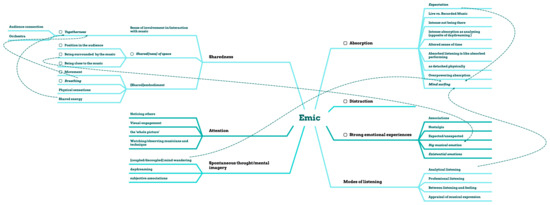
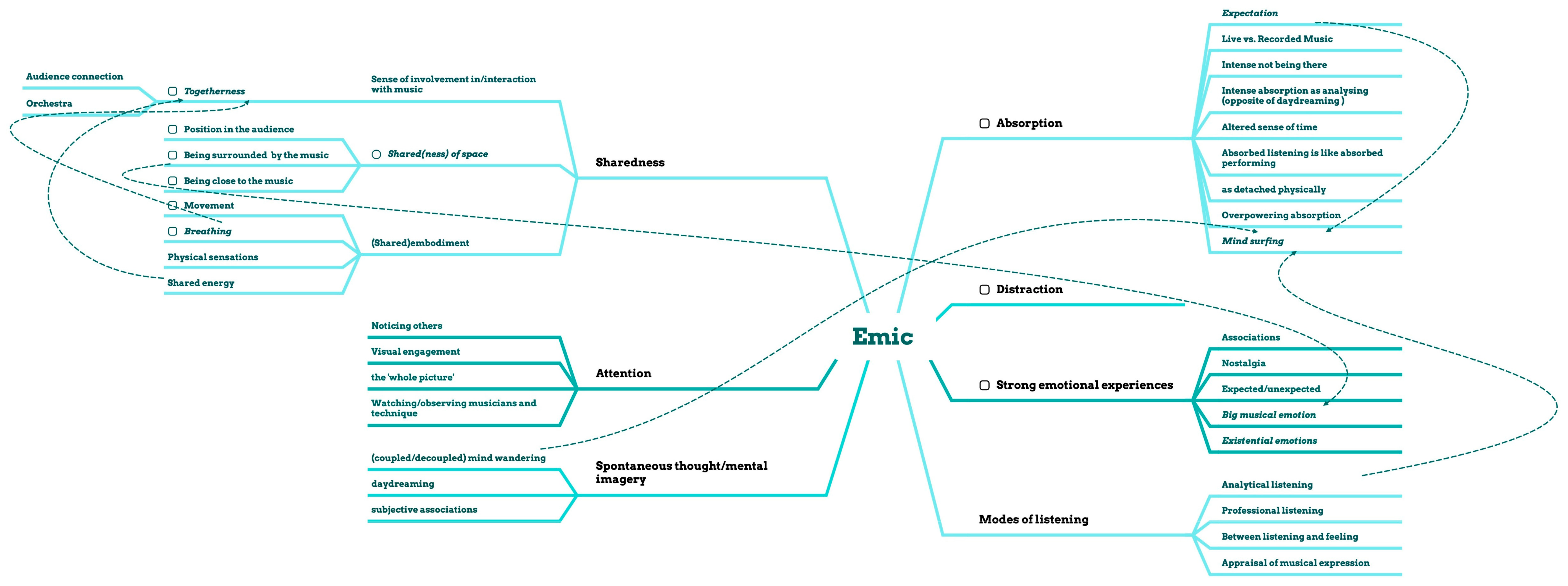
Disclaimer/Publisher’s Note: The statements, opinions and data contained in all publications are solely those of the individual author(s) and contributor(s) and not of MDPI and/or the editor(s). MDPI and/or the editor(s) disclaim responsibility for any injury to people or property resulting from any ideas, methods, instructions or products referred to in the content. |
© 2025 by the authors. Licensee MDPI, Basel, Switzerland. This article is an open access article distributed under the terms and conditions of the Creative Commons Attribution (CC BY) license (https://creativecommons.org/licenses/by/4.0/).