


Abstract
This study presents a responsive analysis of the role of artificial intelligence (AI) in risk management, contrasting traditional approaches with those augmented by AI and highlighting the challenges and opportunities that emerge. AI, intense learning methodologies such as convolutional neural networks (CNNs), have been identified as pivotal in extracting meaningful insights from image data, a form of analysis that holds significant potential in identifying and managing risks across various industries. The research methodology involves a strategic selection and processing of images for analysis and introduces three case studies that serve as benchmarks for evaluation. These case studies showcase the application of AI, in place of image processing capabilities, to identify hazards, evaluate risks, and suggest control measures. The comparative evaluation focuses on the accuracy, relevance, and practicality of the AI-generated findings alongside the system’s response time and comprehensive understanding of the context. Results reveal that AI can significantly enhance risk assessment processes, offering rapid and detailed insights. However, the study also recognises the intrinsic limitations of AI in contextual interpretation, advocating for a synergy between technological and domain-specific expertise. The conclusion underscores the transformative potential of AI in risk management, supporting continued research to further integrate AI effectively into risk assessment frameworks.
1. Introduction
Risk management has always been a cornerstone of organisational strategy, forming the bulwark against the system’s potential financial, strategic, operational, and reputation losses [1,2]. Its importance lies in its ability to identify, assess, and prioritise the risks, followed by resource allocation to minimise, control, and monitor the probability and/or impact of unfortunate events into an acceptable level of the risks or ALARP “as low as reasonably practicable” in some contexts [3,4,5]. In essence, risk management is not just about averting crises; it is about navigating through them with minimal damage and emerging resilient on the other side.
As we are going into the 21st century, the advent of artificial intelligence (AI) in risk management can mark a significant paradigm shift. AI, with its ability to process and analyse large volumes of data at speeds and accuracies unattainable by humans, can become a game-changer. It can enhance capability for the identification of potential risks and opportunities with greater precision, thereby enhancing decision-making processes. Machine learning models, especially those harnessing the power of deep learning, are now fundamental tools in predicting market trends, detecting fraudulent activities, and automating risk assessment tasks [6,7,8,9,10].
The progression of AI has led to immersive developments. In today’s information-driven world, the multifaceted potential of image data as an invaluable decision-making asset has increasingly caught the attention of industries and researchers alike. Image data provides a granular and rich form of information, capturing subtle patterns often elusive to traditional data forms. Its significance in the domain of risk management cannot be understated. As highlighted by Goodfellow et al. [11], deep learning techniques, especially convolutional neural networks (CNNs), have shown substantial promise in gleaning insights from image data for diverse applications.
Moreover, the challenges in harnessing image data effectively are manifold. High dimensionality, potential biases in data, and the need for substantial computational resources often make image data analysis a daunting task. Moreover, as underscored by Bengio [12], the interpretation and contextual understanding of image data are as critical as the computational aspects, particularly in domains like risk management where stakes are high. Recent advancements in machine learning, particularly deep learning, offer promising avenues for comprehensive image data analysis. For instance, LeCun et al. [13] extensively discussed the role of CNNs in image recognition, which could be repurposed for risk analysis by identifying anomalies or patterns indicative of potential risks. The integration of image data into risk management presents a transformative opportunity. For sectors like high-tech industries, where risks often manifest in numerical indicators, the use of image data (e.g., satellite imagery) can forecast potential economic downturns by analysing changes in physical infrastructure. In health, medical imaging can pre-empt potential outbreaks or diagnose illnesses at a scale and precision previously unattainable. Girshick et al. [14] work on object detection can be a boon for security and surveillance, flagging potential physical threats in real time. Furthermore, Zhou et al. [15] emphasised the need to pair technological advancements with domain-specific knowledge. This integration of tech and expertise amplifies the potential applications of image data in risk management, ensuring insights are both precise and actionable. The dynamic interplay of challenges and advancements paints a promising picture for image data in risk management. By embracing this frontier, industries stand to gain unprecedented depth in risk assessment practices, opening avenues for intelligent proactive and informed strategies.
Therefore, the integration of these advanced AI technologies, among which is Chatbot, like ChatGPT-4 (https://openai.com/ accessed on 2 March 2024), an advanced iteration of generative pre-trained transformers developed by OpenAI, into the domain of risk management not only presents transformative opportunities but also introduces a new era of efficiency and effectiveness. For industries ranging from manufacturing, oil and gas, marine, and finance to healthcare, the capabilities of such AI systems can lead to the development of predictive models that identify potential risks with unprecedented accuracy. These AI-driven insights, when combined with domain expertise, can fortify strategies, enabling organisations to respond to threats with agility and informed confidence [16,17]. In recent studies, the application and accuracy of ChatGPT in risk management for construction projects have been extensively examined. Aladağ (2023) [18,19] highlights ChatGPT’s capability to deliver accurate risk-based decisions across various project types, emphasising the importance of key performance indicators (KPIs) in risk management. Hofert (2023) [20] provides an in-depth analysis of ChatGPT’s proficiency in quantitative risk management, offering a numerical assessment of its performance and effectiveness in managing project risks. Furthermore, Al-Mhdawi et al. (2023) [19] focus on evaluating ChatGPT’s performance in the risk management process as per the ISO 31000 standard, showcasing its potential in managing construction risks effectively. Lastly, Nyqvist, Peltokorpi, and Seppänen (2024) [21] explore the capabilities of the ChatGPT GPT-4 model against human experts in construction project risk management, aiming to ascertain if AI can surpass human proficiency in this domain. These studies collectively underscore the evolving role of AI tools like ChatGPT in enhancing the precision and effectiveness of risk management strategies in the construction industry. Building upon the foundational research on ChatGPT’s application in construction risk management, recent scholarly works have broadened the exploration of its capabilities and regulatory needs in various fields. Hacker, Engel, and Mauer (2023) [22] discuss the necessity for a comprehensive risk management framework for large generative AI models like ChatGPT, emphasising the need to address potential high-risk applications and innate vulnerabilities of these technologies. In the realm of finance and accounting, Rane (2023) [23] investigates the role and challenges of ChatGPT and similar AI systems, pointing out the critical need for secure and dependable financial management, while also highlighting AI’s potential in risk management within these sectors [18,24,25]. He et al. [26] explore the critical role of AI in transforming project risk management, a key determinant of success in modern organisations. They examine how AI revolutionises risk identification, evaluation, and mitigation, thereby improving project outcomes. The chapter details how predictive analytics and machine learning mine historical data for patterns, enabling proactive risk management and simulation-driven approaches.
Accordingly, we would like to draw the attention of our esteemed readers to a poignant instance from the past: the 2016 Brussels airport bombings. This tragic event underscores the significant impact that enhanced risk management in image data analysis could have in averting disasters. Specifically, it demonstrates the potential of using AI to identify suspicious activities and unattended items. By analysing image data and integrating it with additional intelligence, AI systems can create comprehensive narratives that provide vital context and insights for security personnel. Such advanced warning systems empower rapid and effective responses to emerging threats, which could prevent harm and save lives. Figure 1 illustrates an end-to-end risk management process using image data analysis. It emphasises the potential of harnessing camera footage from airports to enhance our comprehension of events and activities.
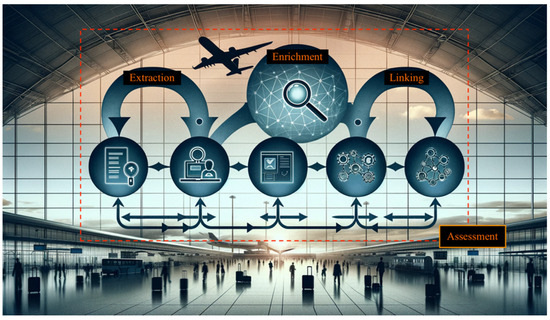
Figure 1.
The end-to-end risk management process using image data analysis (modified after AI-generated).
By analysing details from this image, an AI system can specify potential hazards and construct comprehensive risk management that offers valuable context for security personnel. Integrating these data with external knowledge sources, such as social databases and historical police records, the AI system further enhances the risk management depth. This comprehensive understanding allows the system to spotlight potential red flags, identify imminent threats, and offer actionable recommendations for response. As a language model with image input capabilities, such AI tools are not just a step up from their predecessors in understanding and generating text; they are also capable of interpreting visual data, thereby broadening their applicability across various domains. Its understanding of context, ability to process complex instructions, and generate human-like text while also being able to analyse image data make it particularly useful in risk management. We believe that by utilising its advanced capabilities, AI tools can play a pivotal role in hazard identification in diverse workplaces even by sifting through social media and other digital platforms to pinpoint potential safety concerns. It can also analyse satellite imagery to identify environmental hazards, thereby aiding in the early detection and prevention of ecological threats. In the area of workplace health and safety (WHS), they can be instrumental in scrutinising workplace imagery to uncover safety issues (e.g., simple photo shut or panorama), contributing to the enhancement of WHS protocols. Moreover, the interpretation of medical imagery can assist in the early detection of health conditions, facilitating timely interventions [27]. Beyond mere identification, they can also support the development and implementation of targeted control measures, ensuring comprehensive risk mitigation strategies are in place. This not only enhances proactive safety management but also ensures that risks are managed with an informed and responsive approach.
The field of risk management is evolving, driven by technological advancements in AI and the ever-growing capabilities of models like Chatbots. As we navigate through the intricacies of managing risks in an information-driven age, the synergy between AI’s analytical might and human expertise becomes ever more crucial. Accordingly, in this study, our discourse aims to dissect and understand this synergy and explore both the transformative potential and the attendant challenges of leveraging image data for robust risk management strategies [28,29,30,31]. Based on the given context and the objectives of the study, three main research questions that could guide the discourse are as follows:
- How do AI technologies enhance the identification and assessment of risks in various industries? This question explores the capabilities relevant to risk management, such as its ability to process and analyse large datasets, including image data, and how these capabilities can be leveraged to improve hazard identification, risk assessment, and decision-making processes within different sectors.
- What synergies and potential challenges emerge when integrating human expertise with AI-driven risk management strategies? This question seeks to understand the interplay between human intuition, experience, domain knowledge, and the data-driven insights provided by AI. It also considers the potential barriers to integration, such as resistance to change, interpretability of AI decisions, data privacy concerns, and the need for appropriate governance frameworks.
- In what ways does the utilisation of image data, analysed by AI systems, lead to the development of proactive and preventive risk management measures across industries? The focus here is on the predictive power of AI when applied to image data and storytelling, examining the types of control measures that AI analyses can inform. Additionally, it explores the implications for early detection and prevention of risk occurrences, ultimately guiding industries toward more proactive risk management practices.
The structure of the rest of the paper is outlined as follows: Section 2 discusses the role of artificial intelligence in risk management. Section 3 investigates three different case studies through a comparative analysis. In Section 4, a comparative evaluation is conducted. Finally, the paper concludes with a summary of key findings and concluding remarks in the last section.
2. The Role of AI in Risk Management
As mentioned in the introduction, considering the industrial and academic experience and supported by the state of the arts, the field of risk management has traditionally revolved around the identification, analysis, and prioritisation of potential risks, followed by the coordinated application of resources to minimise, monitor, and control the risk of the unfortunate events. Traditional methods rely heavily on historical data and human expertise, with tools like risk registers, risk matrices, failure model and effect analysis (FMEA) [32,33,34], checklists, and qualitative assessments being predominant [35,36,37]. However, the advent of AI-enhanced risk management is a paradigm shift. AI systems, with their superior computational capabilities, can analyse vast quantities of data, uncover patterns invisible to the human eye, and predict future risks with higher accuracy. By juxtaposing traditional risk management with AI-enhanced risk management, we can observe a significant transformation characterised by real-time data processing, predictive analytics, and the ability to adapt to new information.
AI introduces specific capabilities that dramatically enhance risk identification and evaluation processes. Machine learning and data mining provide sophisticated means to analyse large datasets for predictive insights, detect anomalies, and forecast trends. Machine learning algorithms can be trained to recognise complex patterns and make decisions with minimal human intervention [38]. For risk evaluation, AI systems utilise these patterns to predict potential risks and their impacts, enabling organisations to allocate their resources more efficiently. Using these technologies in risk management not only can accelerate the decision-making process but also improve its accuracy, which is paramount in critical risk-laden scenarios.
Chatbot, i.e., GPT4 (from here called AIc), an advanced iteration of the Generative Pre-trained Transformer models, has sophisticated image processing capabilities. It incorporates a deep learning architecture capable of interpreting visual data, drawing inferences, and generating contextual information. This ability is particularly beneficial for risk management applications where visual data, such as images from surveillance cameras or satellite imagery, play a vital role. AIc processes this data through CNNs, adept at handling pixel-based information and extracting features essential for image classification, object detection, and semantic segmentation.
AIc’s interpretation of images is a multi-faceted process involving several stages. Initially, the model pre-processes the image data to normalise and structure it for analysis. Then, using its neural network, AIc identifies various elements within the images, recognising objects and discerning patterns [39]. It can analyse the context within the image, connecting it to its vast knowledge base for comprehensive understanding. Despite its advanced capabilities, AI image recognition has its nuances and limitations. One of the primary concerns is the quality and bias of the training data [40,41]. Suppose the data used to train the model must be more diverse and comprehensive. In that case, the AI system may develop biases or be unable to accurately recognise specific scenarios, leading to potentially significant consequences in risk management situations. Additionally, AI systems may need help interpreting images that contain novel elements or are of low quality, which can result in inaccuracies. The existing literature, as referenced by [25], critiques that AIcs often appear to be “jack of all trades, master of none”. This suggests that while AIcs can perform a wide range of tasks, they may lack depth in any single area of expertise. Consequently, it is crucial for risk assessors to thoroughly evaluate the comprehensiveness and accuracy of AIcs. This rigorous assessment is necessary to ensure that AIcs are not only versatile but also reliable and proficient in their responses and functionalities.
In this study, a stringent set of criteria guided the selection and processing of images for this study to ensure relevance and accuracy. Images were chosen based on their applicability to the risk management scenarios under investigation and were pre-processed to enhance quality and uniformity. This pre-processing included steps such as resolution normalisation, contrast adjustments, and removing irrelevant metadata, thereby facilitating more accurate analysis by the AI system. The methodology incorporates three case studies, each selected for its unique perspective on the application of AI in risk management. These case studies span different industries and risk types, from operational to strategic risks, providing a holistic view of AI’s potential in this domain. Each case study will detail the risks involved, the AI’s role in managing those risks, and the outcomes relative to traditional risk management approaches.
Methodology
The methodology section of the study provides a comprehensive examination of how AI, notably through machine learning and data mining, can augment traditional risk management practices. Traditional methods, which depend on historical data and human expertise, utilise tools such as risk registers and matrices along with qualitative assessments. The AI-driven approach, however, marks a significant shift by utilising sophisticated algorithms to parse through extensive datasets, discern intricate patterns, and forecast potential risks with greater precision.
The focus is primarily on the application of AI technologies, including machine learning and data mining, to bolster risk identification and evaluation efforts. These cutting-edge technologies are adept at scouring through sizable datasets to extract predictive insights, detect anomalies, and project trends, thus considerably enhancing the speed and accuracy of decision-making in risk management.
Illustrating AI’s application in risk management, the study discusses the use of advanced AI models like GPT-4 (AIc), renowned for their refined image processing abilities. AIc employs convolutional neural networks (CNNs) to interpret visual data from sources such as surveillance footage and satellite images, an indispensable capability in risk scenarios where quick and precise image analysis is paramount.
The methodology unfolds as a multi-stage process. It begins with the preprocessing of image data by AIc, which includes standardisation and normalisation techniques to prepare images for analysis. Following this, AIc deploys algorithms for pattern recognition and contextual interpretation within the images. Throughout this process, the study recognises and addresses potential challenges such as data quality and bias, which necessitates a careful evaluation of AIc’s comprehensiveness and precision.
The research methodology adopts a systematic approach to selecting and preprocessing images pertinent to risk management scenarios. The study presents three case studies across various industries to illustrate the versatile potential of AI in risk management contexts. Each case study contrasts AI’s performance in identifying and managing risks against traditional methodologies, providing empirical evidence of AI’s efficacy.
A detailed example within the methodology is the “Annual Airline Gala” case study, where AIc’s algorithms are tasked with identifying potential workplace health and safety (WHS) hazards. In this imaginative scenario, the study meticulously documents AIc’s operational sequence, including the explicit commands used for image processing, the algorithm parameters set for hazard detection, and the computational processes employed to interpret the visual data. This scenario is not only designed to evaluate AIc’s risk assessment capabilities but also its alignment with regulatory standards.
The methodology section outlines every step of the AI operations. For the preprocessing stage, the commands and parameters for image manipulation are enumerated, such as cropping, resizing, and filtering techniques that facilitate enhanced AI analysis. The model training phase involves detailing the architecture of the neural networks used, the training datasets, the validation steps to prevent overfitting, and the testing procedures to measure the model’s performance. Each of these steps is described with sufficient granularity to allow for precise replication in future research endeavours.
Furthermore, the details of the software and tools, including version numbers and configurations, were used throughout the study. This ensures that other researchers can replicate the conditions under which the AIc system was evaluated. By doing so, the work provides clarity on the AI’s operational framework and also sets a standard for methodological transparency and reproducibility in AI-driven risk management research.
3. Case Studies: Comparative Analysis
In this section, we outline a unique distinct case study (Annual Airline Gala), each with unique WHS considerations. We have tasked an AIc to identify all potential WHS hazards within these scenarios, assess the associated risks, and suggest practical control measures that comply with relevant jurisdictional regulations. The objective is to determine the AIc’s utility in recognising and responding to complex WHS issues by adhering to regulatory standards.
Figure 2 is assumed to be an imaginative and highly stylised concept for an event venue suggested and provided by a stakeholder, as three options (i.e., event producer and relevant contractors), themed around aviation and specifically tailored for an airline’s annual celebration. It shows a commercial airplane dissected into various sections, with parts of the aircraft repurposed as functional areas for the event. The front section of the plane is transformed into a staging area, complete with lighting and a podium, likely intended for speakers and presentations of national awards. Rows of seats, which resemble airline seating, are neatly arranged in front of the stage for the guests, mimicking the seating arrangement of an airplane but with more space and luxury. In the middle and rear sections of the plane, dining areas are created with round tables set for a fine dining experience, suggesting that a meal may be part of the event’s proceedings. These tables are elegantly arranged, complete with table settings and centrepieces, which indicate a formal event. The aircraft’s engines serve as unique standing structures on the sides, and the entire setup is placed on what appears to be a blueprint or schematic of an airport or an aircraft layout. This schematic includes markings for various parts of a typical airport, such as gates and jetways, integrating the event space within the theme.


Figure 2.
The three floor plans of Annual Airline Gala, assuming suggested by stakeholder designer (AI-generated).
The following assumptions have been taken and defined for AIc:
- The event’s execution requires the structuring of three distinct phases: setup (bump in), the event duration (live), and dismantling (bump out).
- The venue for the event is situated in New South Wales (NSW), Australia.
- The event is designed to be held indoors.
- There is no existing historical precedent or detailed descriptions available for an event of this nature.
Next, we asked AIc to carry out compressive risk management within three trials, which lastly updated its information in January 2022. The results of risk management using a simple risk matrix are created in less than a minute and presented in Table 1 (the risk matrix is provided in Appendix A). The risk assessment for the Annual Airline Gala in NSW, Australia, has identified potential hazards ranging from physical (like trips and falls, fire hazards), health-related (food poisoning, disease spread), safety concerns (unauthorised access, emergency egress), and environmental issues (spills, waste, air quality). Control measures are comprehensive, aligning with NSW regulations and involve detailed planning, staff training, infrastructure adjustments, and monitoring to mitigate risks to an acceptable level, with a clear delineation of responsibilities among various designated risk owners. Following that, we performed our risk management for Annual Airline Gala, which was fully performed by subject matter experts (SMEs) and is presented in Table 2. It should be added that risk assessors possess relevant educational knowledge in safety as well as substantial industrial expertise. Additionally, the procedure for developing the risk matrix is detailed in the second part of the Appendix A.

Table 1.
The risk management of Annual Airline Gala based on the AIc.
Table 2.
The risk management of Annual Airline Gala based on the SMEs (i.e., risk analysts).
Briefly, when we looked at the differences between the results of the risk management—one created by AI (Table 1) and the other crafted by a human expert (Table 2)—we saw distinct approaches in the level of detail and mitigation strategies. The table born out of AI’s capabilities is meticulously organised, listing hazards, potential outcomes, measurable risks, and targeted mitigation steps. It is impressively detailed, featuring actionable measures such as collaborating with emergency responders and maintaining a risk register, which is in line with the best practices of the industry. In contrast, the Table generated by a human expert opts for a wider lens, favouring a narrative style that speaks to broad safety principles such as collective responsibility and constant alertness. While it may not dive into the minutiae as the AI’s output does, it champions conceptual strategies to nurture a culture of safety and collective awareness, which are just as crucial as specific measures.
Structurally, both Tables use a columnar format to classify hazards and mitigation measures. The AI’s rendition is steeped in formal and technical jargon, tailoring it for industry insiders who operate under rigorous regulatory mandates. Meanwhile, the human expert’s rendition employs a more straightforward language, which, while sacrificing some detail, broadens its appeal to a more general audience. The difference in the clarity of information is also telling; the precision of the AI-crafted table cuts through ambiguity, providing a clear-cut guide for implementing safety measures. On the flip side, the human expert’s table offers a sketch that invites further discussion and elaboration, making it a prime tool for teaching rather than immediate procedural application. When it comes down to it, the AI’s Table shines in providing clear directives and structured risk management ready for action. The human expert’s Table, however, excels at laying the groundwork for safety principles and fostering a culture of mindfulness. Within the broader context of a risk management plan, they could play supportive and enriching roles to one another: the AI’s output directing specific safety actions and the human expert’s insights being pivotal for team discussions and promoting an engaged, safety-first attitude among the workforces. In unison, they offer a dual approach that encapsulates the precision of risk control and the essential cultivation of a conscious approach to workplace safety.
In the following section, we conduct a comprehensive comparison of risk management that includes the analysis of image data, considering multiple criteria.
4. Comparative Evaluation
In an era where AI systems like ChatGPT-4 are increasingly employed to supplement human expertise in risk management, it becomes essential to scrutinise their performance critically. This section comprehensively analyses how ChatGPT-4 interprets and responds to risk management tasks across various criteria. We explore the system’s effectiveness in identifying hazards, evaluating risks, and proposing control measures while addressing its limitations and the factors influencing its interpretative capabilities. We consider the role of context as a vital component in the application of AI to risk management, acknowledging that the effectiveness of AI is not only in the processing of image data but also in understanding the context within which the risks occur. To evaluate the performance of ChatGPT-4 in these dimensions, we have established a set of criteria (Figure 3) that cover the accuracy, relevance, practicality, response time, comprehensiveness, and contextual understanding of its output.
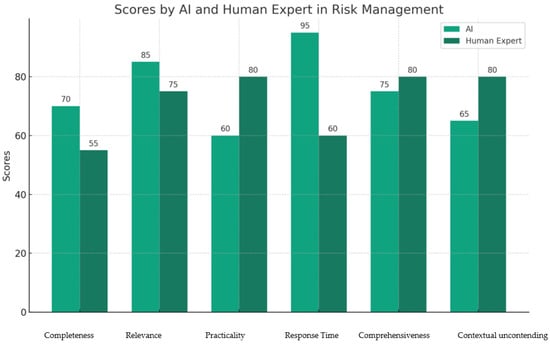
Figure 3.
Simple bar chart comparing the performance scores of AI and human experts in various risk management criteria.
- Completeness of Hazard Identification: This aspect assesses ChatGPT-4’s proficiency in identifying all potential hazards in a given image. The evaluation focuses on the model’s accuracy in detecting risks without missing any (false negatives) and ensuring that it does not erroneously flag harmless elements as hazardous (false positives). This metric is crucial for establishing the reliability of the AI in hazard detection scenarios.
- Relevance of Risk Evaluations: This criterion examines how effectively the AI assesses the severity and likelihood of identified risks. It involves evaluating ChatGPT-4’s consistency in risk evaluation across various scenarios, ensuring that its judgments align with the threat levels of different hazards.
- Practicality of Proposed Control Measures: Here, the focus is on the feasibility and appropriateness of the control measures suggested by ChatGPT-4. The evaluation checks whether these suggestions align with established industry standards and best practices for hazard mitigation and safety management.
- Response Time: In high-risk environments, the speed at which ChatGPT-4 provides hazard assessments is critical. This metric measures the AI’s ability to deliver prompt and timely information, a crucial factor in dynamic and potentially dangerous settings.
- Comprehensiveness: This factor evaluates the depth and thoroughness of ChatGPT-4’s feedback on identified hazards. It involves assessing whether the AI provides a detailed analysis of each risk, offering a holistic view of the potential dangers present in the environment.
- Contextual Understanding: This element measures ChatGPT-4’s capability to integrate the broader operational context into its risk analysis. It includes understanding different locations, cultural norms, and operational conditions that influence risk perception and the effectiveness of various management strategies.
- Key Concerns of Industry and Safety: This new aspect examines ChatGPT-4’s alignment with specific industries’ primary safety concerns and priorities. It assesses the AI’s understanding of industry-specific hazards, compliance with regulatory requirements, and the adaptability of its risk assessments and recommendations to cater to industry-specific safety needs and practices. This ensures that the AI’s hazard assessments are technically accurate and practically relevant to industry requirements.
Selecting these criteria for evaluation allows for a structured and objective review of ChatGPT-4’s utility in practical risk management. It identifies areas where AI can be most beneficial and where human oversight remains indispensable. This introduction sets the stage for a detailed investigation into the capabilities and potential of ChatGPT-4 within the domain of risk assessment and management. In Table 3, the comparative analysis is carried out subjectively.
Table 3.
The comparative analysis of AI risk management.
The table provides a structured comparison of an AI system’s capabilities in risk management across six criteria. It begins with “Accuracy of Hazard Identification,” where the AI’s performance is compared to a dataset of annotated images with known hazards. The evaluation indicates that while the AI can identify hazards, there are notable instances where it misses some, suggesting room for improvement in its accuracy, particularly in a bump-in and bump-out. In assessing the “Relevance of Risk Evaluations,” the AI’s assessments are measured against standard industry practices. The AI is highly relevant here, suggesting that its risk evaluations are well-aligned with existing risk matrices and can be considered consistent and reliable.
The “Practicality of Proposed Control Measures” criterion contrasts the AI’s suggested measures with industry standards and expert recommendations. The AI’s suggestions are criticised for being too general and not considering the specific context of New South Wales, Australia. This implies that while the AI may propose control measures, they may only sometimes be practical or applicable in specific regional contexts. The “Response Time” is a highlight for the AI, emphasising its ability to deliver assessments within minutes. This is contrasted with the time it takes for human experts to complete similar tasks, which can take a full day, not including the time required for additional processes such as approvals and meetings.
The “Comprehensiveness” of the AI’s feedback is partially incomplete. This suggests that while the AI provides some information, it only covers some aspects thoroughly and could benefit from offering more detailed feedback. Lastly, the “Contextual understanding measures” provide a fair evaluation of the AI. The AI’s ability to adjust its responses is tested when presented with images in varying contexts. The AI’s performance in this area is deemed fair, indicating that it has a moderate capability to understand and incorporate contextual nuances into its risk assessment process.
Overall, the table reflects a slight view of the AI’s performance in risk management, acknowledging its strengths in relevance and response times while highlighting areas such as accuracy, practicality, and comprehensiveness where it could improve. The AI demonstrates a reasonable level of contextual understanding, although it needs to excel in this area.
In addition to the performance criteria outlined in the comparative analysis of AI in risk management, several challenges need to be highlighted. One of the primary challenges is accountability. When AI systems make decisions or recommendations, it can be not easy to trace the rationale behind those decisions due to the often-opaque nature of AI algorithms. This leads to questions about who is responsible when an AI system fails to identify a risk or suggests an ineffective control measure.
Another significant challenge is data dependency. AI systems require large amounts of high-quality, relevant data to function accurately. In risk management, the availability of such data can be limited, and the AI may perform poorly if trained on incomplete or biased datasets. Bias is an inherent challenge as well. AI systems can inadvertently perpetuate and amplify existing biases present in the training data. Risk management could lead to unequal or unfair risk assessments for different populations or scenarios. The dynamic nature of risk is also a concern. Risks evolve, and an AI system that needs to be continuously updated may become outdated quickly. Ensuring an AI system remains current with the latest risk management practices and data is an ongoing challenge.
Moreover, there’s the issue of interpretability. Stakeholders may need help to interpret the complex outputs of AI systems. For risk management decisions, where clarity and justification are essential, AI’s “black box” nature can be a significant barrier.
Finally, the integration with existing systems and practices poses a challenge. AI tools must be able to integrate seamlessly with the current risk management infrastructure and must be designed to complement and enhance human decision-making processes rather than replace them. This requires careful planning and consideration of human-AI interaction.
These challenges underscore the need for careful consideration and management when integrating AI into risk management. Organisations need to address these issues by establishing clear protocols for accountability, ensuring data quality, actively working to mitigate bias, regularly updating AI systems, enhancing interpretability, and thoughtfully integrating AI into existing workflows.
Incorporating AI into risk management extends beyond technological integration, encompassing significant ethical implications, regulatory challenges, and long-term impacts on industry practices and job roles. Privacy concerns are paramount, as AI systems often handle sensitive data, necessitating responsible use, precise consent mechanisms, and transparency. Additionally, AI must comply with existing and evolving safety and privacy regulations, which vary by region and industry, posing a challenge in maintaining consistent regulatory compliance, even if it is an ongoing process.
Ethical guidelines for AI development and use are critical, focusing on reducing biases, ensuring fairness, and establishing accountability for AI decisions. As AI transforms risk management practices, it enables more predictive analytics and customised solutions, though it also requires new skill sets focused on AI management and ethical considerations. Job roles are likely to shift towards AI-human collaborative positions.
Decision-making processes will become more data-driven due to AI’s analytical capabilities, yet human oversight remains essential, especially in complex scenarios. This shift raises ethical concerns about the impact of automation on employment and the necessity to build public trust in AI’s role in risk management, especially in safety-critical industries.
Finally, the regulatory landscape must rapidly evolve to keep pace with AI advancements, potentially requiring international collaboration to effectively manage AI’s global impact. Overall, integrating AI in risk management presents a multifaceted challenge beyond technology, encompassing ethical, regulatory, and societal dimensions that need careful consideration and proactive management. Ethical considerations in the use of AI applications in risk management are paramount, especially given their potential impact on privacy, fairness, transparency, and accountability. As AI systems are increasingly employed to predict and mitigate risks in safety-critical industries, they raise ethical dilemmas, such as the potential for intrusive surveillance that compromises individual privacy, or the propagation of biases leading to unfair outcomes. The opacity of some AI models can also challenge transparency, making it difficult for stakeholders to understand decision-making processes and assess their fairness. Furthermore, accountability becomes complex when decisions are delegated to AI, raising questions about responsibility in cases of failure or harm. Establishing robust ethical frameworks is essential to guide the implementation of AI in these contexts, ensuring that the technology is used responsibly, respects individual rights, and aligns with societal values, thereby fostering trust and acceptance. These frameworks should address potential conflicts between organisational goals, like efficiency or profit, and ethical imperatives, ensuring that AI contributes positively to societal well-being while mitigating risks.
In addition to that, Table 4 presents the quality assurance (QA) description for evaluating AIc’s performance in construction project risk management. This QA process involves rigorous testing against key performance indicators (KPIs) to ensure accuracy, reliability, and usability. Testers simulate various scenarios to assess AIc’s ability to identify risks, generate responses, adapt to new information, and communicate effectively. Documentation is maintained, and feedback is collected to identify areas for improvement and ensure AIc meets the highest standards of performance.
Table 4.
Quality assurance of AIc.
In response to the pivotal need for real-world application and understanding, actionable guidelines that practitioners in the field of risk management can readily apply. We have outlined a series of best practices, assimilated strategies for the effective incorporation of AI into risk management and established clear criteria for the evaluation of AI performance. This guidance is intended to serve as a pragmatic compass for industry professionals, steering the responsible and efficacious utilisation of AI technologies. The recommendations are crafted to not only facilitate the seamless adoption of AI but also to ensure that such integration is in alignment with ethical standards, operational efficiency, and the enhancement of decision-making processes. Through this initiative, our work strives to bridge the gap between theoretical research and practical implementation, empowering practitioners to navigate the AI landscape with confidence and foresight.
Reflecting on the comparison between AI and human expert-driven risk management, it becomes evident that each approach offers unique strengths and insights. As seen in Table 1, AI-generated results provide a detailed, structured view of risk management, highlighting specific hazards, potential outcomes, and targeted mitigation strategies. The AI’s meticulous organisation and detail orientation align with industry best practices, offering actionable measures and a clear path for implementation.
In contrast, the human expert approach, represented in Table 2, adopts a broader perspective, prioritising overarching safety principles and promoting a culture of collective responsibility and alertness. While less granular, this method is invaluable for fostering a safety-conscious environment and encouraging proactive risk management practices.
The two approaches also differ in their communication style and audience engagement. The AI-generated table is characterised by technical jargon, appealing to professionals well-versed in regulatory standards and industry-specific terminologies. On the other hand, the human expert’s table uses more straightforward language, making risk management principles more accessible to a general audience and facilitating educational and discussion-driven applications.
The comparative evaluation in the subsequent section explores into how AI, particularly ChatGPT-4, performs in various risk management criteria. This analysis underscores the importance of evaluating AI systems like ChatGPT-4 beyond their ability to process image data, considering their contextual understanding and alignment with the nuanced realities of risk management.
This study introduces a new evaluation criterion, “Key Concerns of Industry and Safety,” which assesses AI’s alignment with industry-specific safety priorities. This addition acknowledges the necessity of ensuring AI’s recommendations are technically sound, practically relevant, and applicable to specific industry contexts.
AI systems like ChatGPT-4 demonstrate significant potential in enhancing risk management through rapid and detailed analyses, they must be continuously refined and evaluated against human expertise to ensure a balanced and effective risk management strategy. The future of AI in risk management lies in creating a synergistic relationship between AI-generated insights and human expertise, ensuring a comprehensive, accountable, and contextually aware approach to managing risks.
The bar chart (Figure 3) visualises a comparative analysis of AI and human expert performances across six different criteria in risk management. Completeness, relevance, practicality, response time, comprehensiveness, and contextual understanding are evaluated criteria. Each criterion is represented on the x-axis, with the corresponding scores on the y-axis.
In the chart:
- AI’s performance is depicted in blue bars, while human experts are represented in red bars.
- AI scores higher in relevance, response time, and somewhat in comprehension, indicating its efficiency in quickly processing and analysing risk-related data and providing relevant information.
- Human experts excel in practicality, completeness, and contextual understanding, showcasing their ability to provide more nuanced and context-aware risk assessments, which likely stems from their broader understanding and experience in the field.
- The gap between AI and human performance in areas like completeness and practicality highlights the importance of human insight in capturing the full spectrum of risks and devising practical, context-specific mitigation strategies.
This chart underscores the complementary strengths of AI and human expertise in risk management, suggesting that integrating both approaches could lead to more robust and effective risk analysis and mitigation.
Our comparative analysis evaluated the performance of AI and human experts in risk management using a quantified scoring methodology. Six criteria were assessed: completeness, relevance, practicality, response time, comprehensiveness, and contextual understanding.
Completeness was measured by the proportion of identified risks from a standardised set, with a score ranging from 0–100. Relevance scores were determined by expert peer review, rating the pertinence of the identified risks to the specific context on a scale of 0–100. Practicality was evaluated based on the applicability and actionability of the proposed risk mitigation strategies, and again, the score was 0–100.
Response time was quantified by measuring the duration from risk presentation to the delivery of a risk assessment, with faster times receiving higher scores. Comprehensiveness was assessed by the number of risk dimensions addressed in each evaluation, with each dimension carrying equal weight in the final score. Lastly, contextual understanding was scored by a panel of risk management professionals, who judged the degree to which each risk assessment considered the specific and subtleties of the case at hand.
Scores were normalised across all criteria to account for inherent differences in scoring mechanisms. The methodology for scoring was designed to minimise subjective bias and ensure a level playing field between AI and human experts. Statistical tests, including t-tests and ANOVA, were employed to determine significant differences between the AI’s and human experts’ scores. The result of this rigorous evaluation is presented in Figure 3, depicting the strengths of AI in processing speed and relevance and the superiority of human experts in providing practical, well-rounded, and contextually nuanced risk assessments.
The pie chart (Figure 4) illustrates the proportional significance of various criteria in risk management. It categorises the importance into six areas: completeness, relevance, practicality, response time, comprehensiveness, and contextual understanding, each represented by a slice of the chart. The percentages indicate the relative importance of each criterion in the overall risk management process, highlighting how different aspects contribute to effective risk assessment and mitigation.
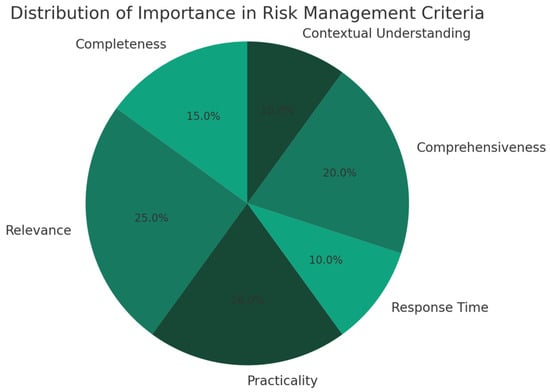
Figure 4.
The distribution of importance across different criteria in risk management, showing how each aspect contributes to the overall process.
The line chart (Figure 5) illustrates the comparative trends in the effectiveness of AI and human-driven risk management from 2015 to 2024. The vertical axis represents the effectiveness score, quantifying how well each approach performs in managing risks, while the horizontal axis shows the years.
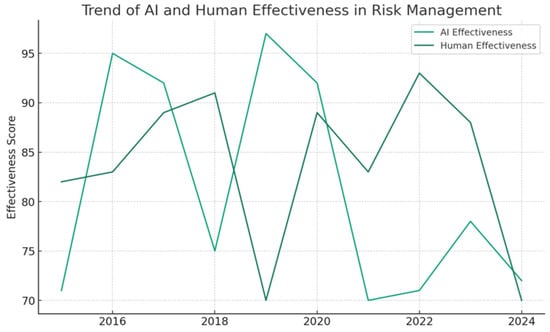
Figure 5.
The trend of AI and human effectiveness in risk management over the years, showing how each has evolved from 2015 to 2024.
AI effectiveness, shown in one line, displays a generally upward trend, indicating improvements in AI’s ability to manage risks over time. This increase suggests advancements in AI technology and its growing capability to handle complex risk management tasks more effectively.
The human effectiveness line, on the other hand, also shows an upward trend but with slight fluctuations. This pattern reflects the human capacity to adapt and improve risk management strategies, although it is influenced by various factors like experience, training, and technological support.
Overall, the chart presents a dynamic view of the evolving landscape of risk management, highlighting how both AI and human approaches have developed over the years, with AI showing a more consistent upward trend in effectiveness [42,43,44]. This trend suggests a promising future for AI in complementing and enhancing human efforts in risk management. From the graph, it can be observed that both AI and human effectiveness exhibit fluctuations over time. AI effectiveness (illustrated with the green line) demonstrates a general upward trend with some variance, indicating an improvement in AI’s capabilities in risk management as technology advances. In contrast, human effectiveness (depicted with the blue line) also shows variability with a generally upward trajectory, reflecting the adaptability and progressive enhancement of human-driven strategies, which may also benefit from evolving technological tools and increasing familiarity with AI systems.
The measurement of effectiveness in Figure 5 is clarified through the elucidation of benchmarks and performance indicators, which may include accuracy, timeliness, cost-effectiveness, and user satisfaction, among other relevant metrics. For replicability, the exact methodologies applied, such as data collection procedures, analysis techniques, and the rationale behind the weighting of different indicators, are also provided. Effectiveness in Figure 5 could be measured based on several possible quantitative and qualitative factors that assess how well AI and human approaches manage risks [45,46]. These may include:
- Accuracy: The correctness of the risk assessments and predictions made by AI compared to those made by human experts.
- Timeliness: How quickly each approach can identify and respond to risks. For AI, this might involve computational speed and for humans, the speed of decision-making based on analysis.
- Cost-Effectiveness: The resources required to implement and maintain AI solutions compared to the costs of traditional human-driven methods.
- Adaptability: The ability of the approach to adjust to new and emerging risks. AI might demonstrate this through learning algorithms, while humans may showcase adaptability through experiential learning.
- Compliance and Alignment with Standards: The degree to which each approach adheres to existing risk management standards and best practices.
- User Satisfaction: Feedback from end-users or stakeholders regarding their confidence in the approach and its outputs.
- Coverage and Scope: The breadth of risks that the approach can evaluate and mitigate.
- Contextual Understanding: For AI, this would be the extent to which the system can understand and interpret complex contexts and for humans, the application of their experience and judgment.
In a typical analysis for a graph such as Figure 5, these factors would be defined and measured through a combination of data collection methods, including historical performance data, simulations, user surveys, and expert evaluations [47,48,49]. Each factor would be assigned a score, which could be plotted annually to show the trend over time. For transparency and replicability, the study would specify the exact metrics used, the scoring system, and any weighting applied to different factors based on their perceived importance in effective risk management. For instance, if accuracy is considered more critical than cost, it might be given more weight in the final effectiveness score. AI’s scores may rise over time due to improvements in algorithms and processing power, while human scores could fluctuate based on organisational learning and the evolving nature of human-centric risk management practices. By integrating these diverse factors into an overall effectiveness score, the graph provides insights into the comparative performance of AI and humans in risk management across a specific timeframe [50,51].
The methodology for analysing the trend of AI and human effectiveness in risk management, as depicted in Figure 5, began with a clear definition of “effectiveness”. For this study, effectiveness encompassed accuracy in identifying and responding to risks, speed of response, adaptability to different types of risks, and cost-efficiency of the risk management process. Data collection employed a multimodal approach, integrating historical performance data from organisational records, outcomes from risk management simulations, responses from user surveys, and input from expert evaluations. Each method contributed a unique perspective on the effectiveness of AI and human-based risk management. Next, we assigned scores to the collected data. Each element of effectiveness was quantified, typically on a 0–100 scale, with 100 indicating peak effectiveness. These scores were tabulated annually to illustrate the trend over the studied period from 2015 to 2024. A weighting system was introduced to reflect the differential impact of various factors on overall effectiveness. For instance, if the study deemed accuracy more crucial than cost savings, accuracy was given a higher weight in the composite effectiveness score. This scoring and weighting were meticulously documented to maintain the study’s transparency and allow for replication.
The trend analysis considered the evolution of AI scores regarding technological advancements such as improved algorithms and processing power. In contrast, fluctuations in human effectiveness scores were interpreted against organisational learning and the dynamic nature of human-centric risk management practices. The annual scores were plotted to visually represent these trends, showing the progression of both AI and human effectiveness in risk management.
An overall effectiveness score for each year was computed by integrating the weighted factors for AI and human risk management approaches. The final visualisation presented in Figure 5 offered a comparative view of the effectiveness trends. Insights gleaned from the graph indicated the comparative performance of AI and humans. They highlighted specific periods where significant changes occurred, which might correspond with external events or internal advancements in risk management strategies.
To ensure the robustness of our methodology, we grounded our approach in the existing literature and standards within the field of risk management. References [46,47,48,49,50] provided a foundational basis for our scoring system and trend analysis, ensuring that our study aligns with recognised practices and contributes meaningfully to the knowledge of AI and human effectiveness in risk management.
To further enrich the discourse on the integration of AI in risk management the results indicated that, we explored deeper into the practical applications of these technologies, framing them within the context of current industry challenges and opportunities. We provide detailed examples and case studies to illustrate how AI can be utilised in various risk scenarios, offering nuanced insights into its potential to transform traditional practices. These examples serve as a practical guide for professionals, illustrating not just theoretical concepts but also real-world applications and the tangible benefits of AI adoption.
The results also address potential pitfalls and ethical concerns associated with AI in risk management, such as data privacy issues, the risk of bias in AI algorithms, and the dependence on technology which might lead to a devaluation of human expertise. We discuss strategies to mitigate these risks, emphasising the importance of a balanced approach that leverages the strengths of both AI and human judgment. This includes the development of ethical guidelines for AI deployment in risk management, which ensure that AI applications are not only effective but also fair and transparent.
The algorithms used to assess AI capabilities in terms of completeness, relevance, practicality, response time, comprehensiveness, and contextual understanding are also explained. For example, completeness is measured through the AI’s ability to cover all necessary aspects of risk scenarios as compared to human experts, and relevance is assessed based on the AI’s ability to generate outputs that are directly applicable to specific risk contexts. Practicality is evaluated by analysing how feasible it is to implement AI-driven solutions in real-world settings, considering factors like cost, resource requirements, and ease of integration into existing systems. Response time is measured by the speed with which AI systems can deliver insights compared to traditional methods, a critical factor in environments where timeliness can drastically affect outcomes. Comprehensiveness is evaluated by the depth and breadth of the analysis that AI systems can perform, assessing whether these systems can provide a multi-dimensional view of risk that encompasses various factors and interdependencies. Contextual understanding is gauged by examining the AI’s ability to interpret the context of the data and make informed decisions that reflect an understanding of the larger operational and strategic framework.
Each of these criteria is critically important, and it is clarified in the work how these measurements provide a reliable basis for comparing AI with human-driven approaches. By establishing a clear and detailed methodology, the reader’s understanding of the strengths and limitations of AI in risk management is enhanced, offering a balanced view that highlights areas where AI can complement human expertise and where it still requires further development. This comprehensive approach not only supports the conclusions but also contributes to the broader discourse on the integration of AI technologies in risk management strategies.
Furthermore, we expand on the methodological framework used to evaluate AI performance in risk management, as highlighted in Figure 3, Figure 4 and Figure 5. This includes a detailed breakdown of the statistical methods, the selection criteria for data sets, and the algorithms used to assess AI capabilities in terms of completeness, relevance, practicality, response time, comprehensiveness, and contextual understanding. Each of these criteria is critically important and our work aims to clarify how these measurements provide a reliable basis for comparing AI with human-driven approaches.
The results further elaborated on how the effectiveness of risk management strategies, whether AI-driven or human-led, has evolved from 2015 to 2024. This analysis charts the progress made over the years and also anticipates future trends in the field. The line chart in Figure 5 is augmented with additional data points and a discussion on the implications of these trends for the future of risk management. This includes an exploration of how advancements in AI technologies might continue to shape risk management strategies, potentially leading to more predictive and adaptive systems.
In our expanded discussion, we also critically examine the interplay between AI and human expertise in risk management. While AI can provide rapid analyses and insights based on large data sets, human experts contribute contextual intelligence, ethical judgments, and creative problem-solving capabilities that are currently beyond the reach of machine algorithms. By illustrating this synergy through detailed case studies and theoretical reflections, we advocate for a model of co-evolution where AI tools and human skills are continuously integrated and enhanced in response to changing risk landscapes.
5. Conclusions
The study’s comparative analysis sheds light on AI’s impactful role in risk management, focusing on the capabilities of AIc-4 in image data analysis. Advanced learning algorithms, particularly convolutional neural networks, have revolutionised risk assessment by providing quick, comprehensive, and pertinent evaluations. Nonetheless, the paper recognises AI’s shortfalls compared to human precision and contextual understanding. Despite AI’s quick response and relevance, its hazard identification accuracy and the practicality of its suggested measures need refinement, especially for locale-specific contexts like NSW.
Furthermore, the research identifies gaps in AI’s overall comprehensiveness and its partial contextual grasp, which, despite being hopeful, need further development for effective management in ever-changing risk environments. The study underlines several challenges, including accountability, data dependency, inherent biases, the dynamic nature of risks, interpretability, and the difficulty of integrating AI systems. Addressing these issues is vital for AI’s robust contribution to human decision-making in system safety management.
Looking ahead, the study suggests that AI’s role in risk management should evolve by creating synergies with human expertise. To truly complement human judgment, AI systems must be accountable, interpretable, regularly updated, and purged of biases to adhere to industry norms and to cater to the complexities of risk scenarios. It underscores the necessity of continuous research investments to foster a synergistic relationship where AI and human intelligence work in concert, promoting more resilient, just, and efficient risk management approaches.
Author Contributions
Conceptualization, M.Y. and E.Z.; methodology, M.Y.; software, M.Y.; validation, A.B., S.A. and E.Z.; formal analysis, M.Y.; investigation, M.Y.; resources, M.Y.; writing—original draft preparation, M.Y. and E.Z.; writing—review and editing, A.B.; visualization, A.B. and S.A. All authors have read and agreed to the published version of the manuscript.
Funding
This research received no external funding.
Data Availability Statement
Data are contained within the article.
Conflicts of Interest
The authors declare no conflicts of interest.
Appendix A
According to the AIc, the process of risk matrix in WHS is defined as a tool that is used to assess the risk levels of various hazards by considering two primary factors: the likelihood of the hazard occurring and the consequence or severity if it does occur. Here’s a basic structure for a WHS risk matrix:
Likelihood (or probability)—This assesses how likely it is that the hazard will lead to harm. It can be categorised typically as:
- Rare
- Unlikely
- Possible
- Likely
- Almost Certain
Consequence (or severity)—This measures the impact or severity of the harm if the hazard occurs. It can be categorised as:
- Insignificant
- Minor
- Moderate
- Major
- Catastrophic
Combining these two factors, the risk matrix can be visualised as a table:
Table A1.
Risk Marix.
Table A1.
Risk Marix.
| Likelihood\Consequence | Insignificant | Minor | Moderate | Major | Catastrophic |
|---|---|---|---|---|---|
| Rare | Low | Low | Low | Medium | High |
| Unlikely | Low | Low | Medium | Medium | High |
| Possible | Low | Medium | Medium | High | High |
| Likely | Medium | Medium | High | High | Extreme |
| Almost Certain | Medium | High | High | Extreme | Extreme |
Each cell in the table represents the risk level, which is typically categorised as low, medium, high, or extreme. This helps in prioritising risks and determining the necessary action. For example:
- Low Risk: Acceptable, might need minor corrective actions.
- Medium Risk: Requires specific monitoring and management methods.
- High Risk: Requires immediate action to control the risk.
- Extreme Risk: Requires immediate action and consideration of stopping activities that are causing the risk.
In the second part, the process of risk matrix that we used to do risk assessment is presented as follows:
There are three tables that serve a different function:
Consequence Table: This table classifies the severity of potential outcomes from a risk event, ranging from level 1 (least severe) to level 5 (most severe). It includes two columns—one for general health and safety outcomes and one for specific examples. For instance, level 5 represents outcomes like fatalities or permanent disability, with examples like electrocution or explosion.
Likelihood Table: This table defines the probability of a risk event occurring, rated from “A” (Almost Certain) to “E” (Rare). It helps in estimating how likely it is that any given risk will actually happen.
Risk Matrix: This matrix is a cross-reference between the likelihood of an occurrence and the severity of its consequences. It is used to determine the overall risk level, which can be categorised as low, medium, high, or very high. This helps in prioritising risks based on their severity and likelihood so that the most critical risks are addressed first.
Let us expand on the three components to make the risk assessment process more comprehensive:
Table A2.
Consequence Table (expanded).
Table A2.
Consequence Table (expanded).
| Severity | Health and Safety Outcomes | Examples of Consequences |
|---|---|---|
| 5 | Fatalities or permanent disability to one or more persons | Life-threatening events such as electrocution, explosion, fire, resulting in permanent loss of vital functions, vision, hearing, or mobility. |
| 4 | Serious injury or illness requiring immediate hospital admission (in-patient) | Injuries or illnesses that are acute and severe, requiring urgent medical attention, such as serious head injury, eye injury, burns, lacerations, or amputations. |
| 3 | Moderate injury or illness requiring hospitalisation (out-patient) | Injuries or illnesses that are less severe but still require medical treatment, like fractures, minor burns, or concussions. |
| 2 | Minor injury or temporary ill health requiring treatment by medical practitioner | Non-life-threatening injuries or illnesses that require medical attention but are typically resolved with treatment, including sprains, strains, or food poisoning. |
| 1 | First aid treatment on site | Minor injuries or health issues that can be treated with first aid on the spot, such as cuts, bruises, or minor burns. |
Table A3.
Likelihood Table (expanded).
Table A3.
Likelihood Table (expanded).
| Rating | Description |
|---|---|
| 5 | Almost Certain: The risk event is expected to occur in most circumstances, possibly repeatedly or continuously. |
| 4 | Likely: The risk event has a strong chance of occurring under normal conditions, may have occurred in the past. |
| 3 | Possible: The risk event might occur at some point; there is a fair possibility of it happening in the foreseeable future. |
| 2 | Unlikely: The risk event is not expected to occur under normal circumstances but is still a conceivable possibility. |
| 1 | Rare: The risk event is considered to be very unlikely in normal conditions; it may never have occurred before. |
This matrix combines the consequences and likelihood to give a risk rating:
Table A4.
Risk Matrix (expanded).
Table A4.
Risk Matrix (expanded).
| Likelihood/Consequence | 1 (Very Low) | 2 (Low) | 3 (Moderate) | 4 (High) | 5 (Very High) |
|---|---|---|---|---|---|
| 5 (Almost Certain) | 5 (Medium) | 10 (High) | 15 (High) | 20 (Very High) | 25 (Very High) |
| 4 (Likely) | 4 (Medium) | 8 (Medium) | 12 (High) | 16 (High) | 20 (Very High) |
| 3 (Possible) | 3 (Low) | 6 (Medium) | 9 (High) | 12 (High) | 15 (High) |
| 2 (Unlikely) | 2 (Low) | 4 (Low) | 6 (Medium) | 8 (Medium) | 10 (High) |
| 1 (Rare) | 1 (Very Low) | 2 (Low) | 3 (Medium) | 4 (Medium) | 5 (High) |
The risk matrix is an essential tool for prioritising risks. A risk with a “Very High” rating, such as a “5” for consequence and “A” for likelihood, would demand immediate attention and robust control measures. Conversely, a risk with a “Very Low” rating, like “1” for consequence and “E” for likelihood, might only require monitoring with minimal intervention.
These tables guide decision-making in risk management by allowing practitioners to systematically assess potential risks, determine their severity, and implement appropriate controls. They are often used in workplace safety, project management, environmental assessments, and other areas where risk management is critical. The overall aim is to reduce the likelihood of adverse events and mitigate their consequences should they occur.
References
- Rausand, M.; Haugen, S. Risk Assessment: Theory, Methods, and Applications; Wiley: Hoboken, NJ, USA, 2020. [Google Scholar]
- Yazdi, M. Risk assessment based on novel intuitionistic fuzzy-hybrid-modified TOPSIS approach. Saf. Sci. 2018, 110, 438–448. [Google Scholar] [CrossRef]
- Melchers, R.E. On the ALARP approach to risk management. Reliab. Eng. Syst. Saf. 2001, 71, 201–208. [Google Scholar] [CrossRef]
- Li, H.; Peng, W.; Adumene, S.; Yazdi, M. Intelligent Reliability and Maintainability of Energy Infrastructure Assets; Springer Nature: Cham, Switzerland, 2023. [Google Scholar]
- Li, H.; Peng, W.; Adumene, S.; Yazdi, M. (Eds.) Cutting Edge Research Topics on System Safety, Reliability, Maintainability, and Resilience of Energy-Critical Infrastructures. In Intelligent Reliability and Maintainability of Energy Infrastructure Assets; Springer Nature: Cham, Switzerland, 2023; pp. 25–38. [Google Scholar] [CrossRef]
- Aziz, S.; Dowling, M. Machine Learning and AI for Risk Management, Disrupting Finance: FinTech and Strategy in the 21st Century; Springer International Publishing: Berlin/Heidelberg, Germany, 2019; pp. 33–50. [Google Scholar]
- Mashrur, A.; Luo, W.; Zaidi, N.A.; Robles-Kelly, A. Machine learning for financial risk management: A survey. IEEE Access 2020, 8, 203203–203223. [Google Scholar] [CrossRef]
- Leo, M.; Sharma, S.; Maddulety, K. Machine learning in banking risk management: A literature review. Risks 2019, 7, 29. [Google Scholar] [CrossRef]
- Yazdi, M. A perceptual computing–based method to prioritize intervention actions in the probabilistic risk assessment techniques. Qual. Reliab. Eng. Int. 2019, 36, 187–213. [Google Scholar] [CrossRef]
- Pouyakian, M.; Khatabakhsh, A.; Yazdi, M.; Zarei, E. Optimizing the Allocation of Risk Control Measures Using Fuzzy MCDM Approach: Review and Application. In Linguistic Methods under Fuzzy Information in System Safety and Reliability Analysis; Yazdi, M., Ed.; Springer International Publishing: Cham, Switzerland, 2022; pp. 53–89. [Google Scholar] [CrossRef]
- Goodfellow, I.; Bengio, Y.; Courville, A. Deep Learning; MIT Press: Cambridge, MA, USA, 2016. [Google Scholar]
- Bengio, Y. Deep learning of representations: Looking forward. In International Conference on Statistical Language and Speech Processing; Springer: Berlin/Heidelberg, Germany, 2013; pp. 1–37. [Google Scholar]
- LeCun, Y.; Bengio, Y.; Hinton, G. Deep Learning. Nature 2015, 521, 436–444. [Google Scholar] [CrossRef]
- Girshick, R.; Donahue, J.; Darrell, T.; Malik, J. Rich feature hierarchies for accurate object detection and semantic segmentation. In Proceedings of the IEEE Conference on Computer Vision and Pattern Recognition, Columbus, OH, USA, 23–28 June 2014; pp. 580–587. [Google Scholar]
- Zhou, B.; Lapedriza, A.; Xiao, J.; Torralba, A.; Oliva, A. Learning deep features for scene recognition using places database. Adv. Neural Inf. Process. Syst. 2014, 27, 1–9. [Google Scholar]
- Zarei, E.; Khan, F.; Abbassi, R. How to account artificial intelligence in human factor analysis of complex systems? Process. Saf. Environ. Prot. 2023, 171, 736–750. [Google Scholar] [CrossRef]
- Dwivedi, Y.K.; Kshetri, N.; Hughes, L.; Slade, E.L.; Jeyaraj, A.; Kar, A.K.; Baabdullah, A.M.; Koohang, A.; Raghavan, V.; Ahuja, M.; et al. Opinion Paper: “So what if ChatGPT wrote it?” Multidisciplinary perspectives on opportunities, challenges and implications of generative conversational AI for research, practice and policy. Int. J. Inf. Manag. 2023, 71, 102642. [Google Scholar] [CrossRef]
- Hofert, M. Assessing ChatGPT’s proficiency in quantitative risk management. Risks 2023, 11, 166. [Google Scholar] [CrossRef]
- Al-Mhdawi, M.K.S.; Qazi, A.; Alzarrad, A.; Dacre, N.; Rahimian, F.; Buniya, M.K.; Zhang, H. Expert Evaluation of ChatGPT Performance for Risk Management Process Based on ISO 31000 Standard. SSRN Electron. J. 2023. [Google Scholar] [CrossRef]
- Aladağ, H. Assessing the Accuracy of ChatGPT Use for Risk Management in Construction Projects. Sustainability 2023, 15, 16071. [Google Scholar] [CrossRef]
- Nyqvist, R.; Peltokorpi, A.; Seppänen, O. Can ChatGPT exceed humans in construction project risk management? Eng. Constr. Arch. Manag. 2024, 31, 223–243. [Google Scholar] [CrossRef]
- Hacker, P.; Engel, A.; Mauer, M. Regulating ChatGPT and other large generative AI models. In Proceedings of the 2023 ACM Conference on Fairness, Accountability, and Transparency, Chicago, IL, USA, 12–15 June 2023; pp. 1112–1123. [Google Scholar]
- Rane, N. Role and Challenges of ChatGPT and Similar Generative Artificial Intelligence in Finance and Accounting. SSRN Electron. J. 2023. [CrossRef]
- OpenAI. ChatGPT [Software]. 2021. Available online: https://openai.com (accessed on 2 March 2024).
- Kocoń, J.; Cichecki, I.; Kaszyca, O.; Kochanek, M.; Szydło, D.; Baran, J.; Bielaniewicz, J.; Gruza, M.; Janz, A.; Kanclerz, K. ChatGPT: Jack of all trades, master of none. Inf. Fusion 2023, 99, 101861. [Google Scholar] [CrossRef]
- Li, H.; Yazdi, M.; Nedjati, A.; Moradi, R.; Adumene, S.; Dao, U.; Moradi, A.; Haghighi, A.; Obeng, F.E.; Huang, C.-G.; et al. Harnessing AI for Project Risk Management: A Paradigm Shift. In Progressive Decision-Making Tools and Applications in Project and Operation Management: Approaches, Case Studies, Multi-Criteria Decision-Making, Multi-Objective Decision-Making, Decision under Uncertainty; Yazdi, M., Ed.; Springer Nature: Cham, Switzerland, 2024; pp. 253–272. [Google Scholar] [CrossRef]
- Golilarz, N.A.; Gao, H.; Pirasteh, S.; Yazdi, M.; Zhou, J.; Fu, Y. Satellite Multispectral and Hyperspectral Image De-Noising with Enhanced Adaptive Generalized Gaussian Distribution Threshold in the Wavelet Domain. Remote Sens. 2020, 13, 101. [Google Scholar] [CrossRef]
- Li, H.; Yazdi, M. (Eds.) A Holistic Question: Is It Correct that Decision-Makers Neglect the Probability in the Risk Assessment Method? In Advanced Decision-Making Methods and Applications in System Safety and Reliability Problems: Approaches, Case Studies, Multi-Criteria Decision-Making, Multi-Objective Decision-Making, Fuzzy Risk-Based Models; Springer International Publishing: Cham, Switzerland, 2022; pp. 185–189. [Google Scholar] [CrossRef]
- Vu, T.Q.; Moradi, R.; Yazdi, M. Operation Management of Sky Magic: Consolidating Perspective of Risk and Safety. In Progressive Decision-Making Tools and Applications in Project and Operation Management: Approaches, Case Studies, Multi-Criteria Decision-Making, Multi-Objective Decision-Making, Decision under Uncertainty; Yazdi, M., Ed.; Springer Nature: Cham, Switzerland, 2024; pp. 167–172. [Google Scholar] [CrossRef]
- Li, H.; Yazdi, M. (Eds.) How to Deal with Toxic People Using a Fuzzy Cognitive Map: Improving the Health and Wellbeing of the Human System. In Advanced Decision-Making Methods and Applications in System Safety and Reliability Problems: Approaches, Case Studies, Multi-Criteria Decision-Making, Multi-Objective Decision-Making, Fuzzy Risk-Based Models; Springer International Publishing: Cham, Switzerland, 2022; pp. 87–107. [Google Scholar] [CrossRef]
- Li, H.; Yazdi, M. (Eds.) An Advanced TOPSIS-PFS Method to Improve Human System Reliability. In Advanced Decision-Making Methods and Applications in System Safety and Reliability Problems: Approaches, Case Studies, Multi-Criteria Decision-Making, Multi-Objective Decision-Making, Fuzzy Risk-Based Models; Springer International Publishing: Cham, Switzerland, 2022; pp. 109–125. [Google Scholar] [CrossRef]
- Li, H.; Yazdi, M. (Eds.) Developing Failure Modes and Effect Analysis on Offshore Wind Turbines Using Two-Stage Optimization Probabilistic Linguistic Preference Relations. In Advanced Decision-Making Methods and Applications in System Safety and Reliability Problems: Approaches, Case Studies, Multi-Criteria Decision-Making, Multi-Objective Decision-Making, Fuzzy Risk-Based Models; Springer International Publishing: Cham, Switzerland, 2022; pp. 47–68. [Google Scholar] [CrossRef]
- Li, H.; Yazdi, M. (Eds.) Reliability Analysis of Correlated Failure Modes by Transforming Fault Tree Model to Bayesian Network: A Case Study of the MDS of a CNC Machine Tool. In Advanced Decision-Making Methods and Applications in System Safety and Reliability Problems: Approaches, Case Studies, Multi-Criteria Decision-Making, Multi-Objective Decision-Making, Fuzzy Risk-Based Models; Springer International Publishing: Cham, Switzerland, 2022; pp. 15–28. [Google Scholar] [CrossRef]
- Li, H.; Yazdi, M. (Eds.) Advanced Decision-Making Neutrosophic Fuzzy Evidence-Based Best–Worst Method. In Advanced Decision-Making Methods and Applications in System Safety and Reliability Problems: Approaches, Case Studies, Multi-Criteria Decision-Making, Multi-Objective Decision-Making, Fuzzy Risk-Based Models; Springer International Publishing: Cham, Switzerland, 2022; pp. 153–184. [Google Scholar] [CrossRef]
- Cooke, R.M.; Goossens, L.H.J. Expert judgement elicitation for risk assessments of critical infrastructures. J. Risk Res. 2004, 7, 643–656. [Google Scholar] [CrossRef]
- Yazdi, M.; Zarei, E. Step Forward on How to Treat Linguistic Terms in Judgment in Failure Probability Estimation. In Linguistic Methods under Fuzzy Information in System Safety and Reliability Analysis; Yazdi, M., Ed.; Springer International Publishing: Cham, Switzerland, 2022; pp. 193–200. [Google Scholar] [CrossRef]
- Simon, C.; Sallak, M.; Aubry, J.F. SIL allocation of SIS by aggregation of experts’ opinions. In Proceedings of the European Safety and Reliability Conference 2007, ESREL 2007, Stavanger, Norway, 25–27 June 2007; pp. 753–761. [Google Scholar]
- Xu, K.; Ba, J.; Kiros, R.; Cho, K.; Courville, A.; Salakhudinov, R.; Zemel, R.; Bengio, Y. Show, attend and tell: Neural image caption generation with visual attention. In Proceedings of the 32nd International Conference on Machine Learning, PMLR 37, Lille, France, 6–11 July 2015; pp. 2048–2057. [Google Scholar]
- Lotfi, F.; Beheshti, A.; Farhood, H.; Pooshideh, M.; Jamzad, M.; Beigy, H. Storytelling with Image Data: A Systematic Review and Comparative Analysis of Methods and Tools. Algorithms 2023, 16, 135. [Google Scholar] [CrossRef]
- Gaonkar, B.; Cook, K.; Macyszyn, L. Ethical issues arising due to bias in training AI algorithms in healthcare and data sharing as a potential solution. AI Ethic-J. 2020, 1. [Google Scholar] [CrossRef]
- Ntoutsi, E.; Fafalios, P.; Gadiraju, U.; Iosifidis, V.; Nejdl, W.; Vidal, M.; Ruggieri, S.; Turini, F.; Papadopoulos, S.; Krasanakis, E. Bias in data-driven artificial intelligence systems—An introductory survey. Wiley Interdiscip. Rev. Data Min. Knowl. Discov. 2020, 10, e1356. [Google Scholar] [CrossRef]
- Agarwala, N.; Chaudhary, R.D. Artificial Intelligence and International Security. In Towards an International Political Economy of Artificial Intelligence; Springer: Berlin/Heidelberg, Germany, 2021; pp. 241–254. [Google Scholar]
- Sacha, G.M.; Varona, P. Artificial intelligence in nanotechnology. Nanotechnology 2013, 24, 452002. [Google Scholar] [CrossRef] [PubMed]
- Russell, S.J. Artificial Intelligence a Modern Approach; Pearson Education, Inc.: London, UK, 2010. [Google Scholar]
- Zhang, Y.; Liao, Q.V.; Bellamy, R.K.E. Effect of confidence and explanation on accuracy and trust calibration in AI-assisted decision making. In Proceedings of the 2020 Conference on Fairness, Accountability, and Transparency, Barcelona, Spain, 27–30 January 2020; pp. 295–305. [Google Scholar]
- Bansal, G.; Nushi, B.; Kamar, E.; Lasecki, W.S.; Weld, D.S.; Horvitz, E. Beyond accuracy: The role of mental models in human-AI team performance. In Proceedings of the Seventh AAAI Conference on Human Computation and Crowdsourcing, Stevenson, WA, USA, 28–30 October 2019; pp. 2–11. [Google Scholar]
- Yazdi, M. A review paper to examine the validity of Bayesian network to build rational consensus in subjective probabilistic failure analysis. Int. J. Syst. Assur. Eng. Manag. 2019, 10, 1–18. [Google Scholar] [CrossRef]
- Yazdi, M.; Mohammadpour, J.; Li, H.; Huang, H.-Z.; Zarei, E.; Pirbalouti, R.G.; Adumene, S. Fault tree analysis improvements: A bibliometric analysis and literature review. Qual. Reliab. Eng. Int. 2023, 39, 1639–1659. [Google Scholar] [CrossRef]
- Li, H.; Peng, W.; Adumene, S.; Yazdi, M. (Eds.) Advances in Failure Prediction of Subsea Components Considering Complex Dependencies. In Intelligent Reliability and Maintainability of Energy Infrastructure Assets; Springer Nature: Cham, Switzerland, 2023; pp. 93–105. [Google Scholar] [CrossRef]
- Li, H.; Yazdi, M. (Eds.) What Are the Critical Well-Drilling Blowouts Barriers? A Progressive DEMATEL-Game Theory. In Advanced Decision-Making Methods and Applications in System Safety and Reliability Problems: Approaches, Case Studies, Multi-Criteria Decision-Making, Multi-Objective Decision-Making, Fuzzy Risk-Based Models; Springer International Publishing: Cham, Switzerland, 2022; pp. 29–46. [Google Scholar] [CrossRef]
- Yazdi, M.; Khan, F.; Abbassi, R.; Rusli, R. Improved DEMATEL methodology for effective safety management decision-making. Saf. Sci. 2020, 127, 104705. [Google Scholar] [CrossRef]
Disclaimer/Publisher’s Note: The statements, opinions and data contained in all publications are solely those of the individual author(s) and contributor(s) and not of MDPI and/or the editor(s). MDPI and/or the editor(s) disclaim responsibility for any injury to people or property resulting from any ideas, methods, instructions or products referred to in the content. |
© 2024 by the authors. Licensee MDPI, Basel, Switzerland. This article is an open access article distributed under the terms and conditions of the Creative Commons Attribution (CC BY) license (https://creativecommons.org/licenses/by/4.0/).