1. Introduction
Understanding the role of individual determinants in unsafe behaviors and occupational accidents represents a critical area of inquiry within occupational health and safety research [
1]. As industrial workplaces evolve and adopt increasingly complex technologies, the human element remains central to the prevention of accidents and the promotion of safe work practices [
2]. Individual factors encompass a broad spectrum of attributes—including demographic characteristics, psychological and emotional traits, health status, competencies, and personality dimensions—that collectively shape workers’ safety-related decisions and behaviors [
3,
4,
5]. Comprehensive investigation into these factors is therefore vital for mitigating risks, strengthening organizational safety culture, and reducing accident prevalence.
A substantial body of research highlights the influence of demographic characteristics on unsafe behaviors [
6]. Variables such as age, gender, and education level have been shown to significantly affect safety outcomes [
7]. For instance, younger workers—particularly those under 30—demonstrate elevated rates of occupational injuries and fatalities, often linked to inexperience [
8]. Similarly, higher educational attainment has been associated with improved safety knowledge, awareness, and compliance with safety protocols [
9]. Gender-based differences in safety behavior, influenced by social and psychological dynamics, further underscore the complexity of demographic effects on unsafe practices [
10].
Beyond demographic attributes, psychological factors such as risk perception and emotional stability are strongly associated with unsafe behaviors [
11,
12]. Accurate risk perception has been identified as a prerequisite for adherence to safety protocols, with workers who underestimate risks demonstrating higher tendencies toward unsafe actions [
13,
14]. Emotional stability also plays a pivotal role: individuals experiencing stress, fatigue, or emotional exhaustion are more likely to deviate from safe practices [
15]. In parallel, emotional intelligence—encompassing self-awareness, self-regulation, and interpersonal skills—facilitates effective safety communication, proactive hazard recognition, and collaborative problem-solving, thereby contributing to a resilient safety climate [
1,
16,
17].
Health status constitutes another crucial determinant of safety [
18]. Poor physical condition, chronic illness, or fatigue can compromise concentration, reaction time, and decision-making, elevating accident risks [
19]. Additionally, the presence or absence of competencies and skills directly shapes workers’ ability to comply with safety requirements [
20]. Empirical evidence consistently demonstrates that structured training enhances hazard recognition, decision-making, and emergency response capabilities, thus strengthening compliance with safety standards [
21].
Moreover, personality traits have been increasingly recognized as salient predictors of safety behavior [
22]. Conscientiousness, for instance, is positively correlated with adherence to safety regulations, while extraversion may predispose individuals to risk-taking and distraction [
23]. Neuroticism, often linked to anxiety and reduced emotional stability, has been associated with poor focus and impaired judgment in hazardous contexts [
24]. Conversely, agreeableness fosters cooperative interactions and team-based safety compliance, while deficits in this trait may hinder the development of a positive safety culture [
25]. Such findings reinforce the notion that both stable traits (e.g., personality) and malleable attributes (e.g., competencies, attitudes) interact in shaping workers’ engagement in safe or unsafe behaviors [
26].
Despite extensive efforts, the literature reveals persisting gaps in the systematic identification and prioritization of individual factors underlying unsafe behaviors. Although numerous studies have investigated human factors, much of the existing research has examined these determinants in isolation, overlooking their interdependencies and their relative influence on occupational safety outcomes. This issue is particularly critical in Iran, where industrial sectors—especially the steel industry, which is characterized by high-risk operational environments—continue to report substantial rates of unsafe acts and work-related accidents. Understanding the individual determinants of unsafe behaviors in this context is therefore essential for developing effective preventive strategies.
To address these gaps and to respond to the urgent safety needs of high-risk industries in Iran, the present study employs a hybrid methodological framework, integrating Grounded Theory and the Fuzzy Delphi method, to explore, refine, and priorities individual determinants of unsafe behaviors among industrial workers in the steel sector. While non-human determinants (such as organizational, technical, and environmental factors) are also known to influence unsafe behaviors, this study focuses specifically on human factors, given that empirical evidence consistently attributes a substantial proportion of industrial accidents to individual-level characteristics such as cognitive limitations, risk perception, attitudes, and behavioral tendencies.
Accordingly, this study pursues three objectives:
- ❖
Identify key influencing factors: to systematically determine the individual attributes that contribute to unsafe behaviors through empirical investigation and qualitative inquiry.
- ❖
Prioritize effective determinants: to distinguish critical from marginal factors and develop a hierarchy of determinants for targeted interventions.
- ❖
Inform managerial strategies: to generate evidence-based recommendations for organizational policies and practices aimed at effectively managing individual determinants of unsafe behaviors in industrial environments.
By combining the theory-building capacity of Grounded Theory with the systematic prioritization power of the Fuzzy Delphi method, this study contributes both conceptually and practically to advancing occupational safety science, offering actionable insights for researchers, practitioners, and policymakers.
2. Materials and Methods
The present study adopts a hybrid qualitative research approach to systematically identify and prioritize individual determinants of unsafe behaviors in industrial workplaces. This approach was selected due to its ability to capture rich, context-specific insights from participants while also enabling structured prioritization of critical factors, which is essential for evidence-based decision-making in occupational safety management. Specifically, the combination of Grounded Theory Method (GTM) and the Fuzzy Delphi Method (FDM) provides both a theory-building framework and a rigorous mechanism for expert consensus under uncertainty.
The methodology comprises two sequential stages:
Stage 1: Identification of Factors Using Grounded Theory Method (GTM)
In the first stage, the GTM approach was employed to explore and identify factors influencing individual unsafe behaviors based on participants’ experiences. This method involves semi-structured interviews, verbatim transcription, and systematic coding to develop theoretical constructs that are fully grounded in the data. GTM is particularly appropriate in this context because it allows for in-depth exploration of complex, context-dependent phenomena, capturing both explicit and latent factors that may contribute to unsafe behaviors [
27].
Stage 2: Prioritization of Factors Using the Fuzzy Delphi Method (FDM)
The second stage applies the Fuzzy Delphi Method to systematically rank the factors identified in Stage 1. FDM integrates fuzzy set theory with the Delphi technique, which enables nuanced handling of uncertainty in expert judgments and facilitates consensus-building through iterative consultation. This stage ensures that the most critical factors are prioritized, providing actionable guidance for safety interventions [
28].
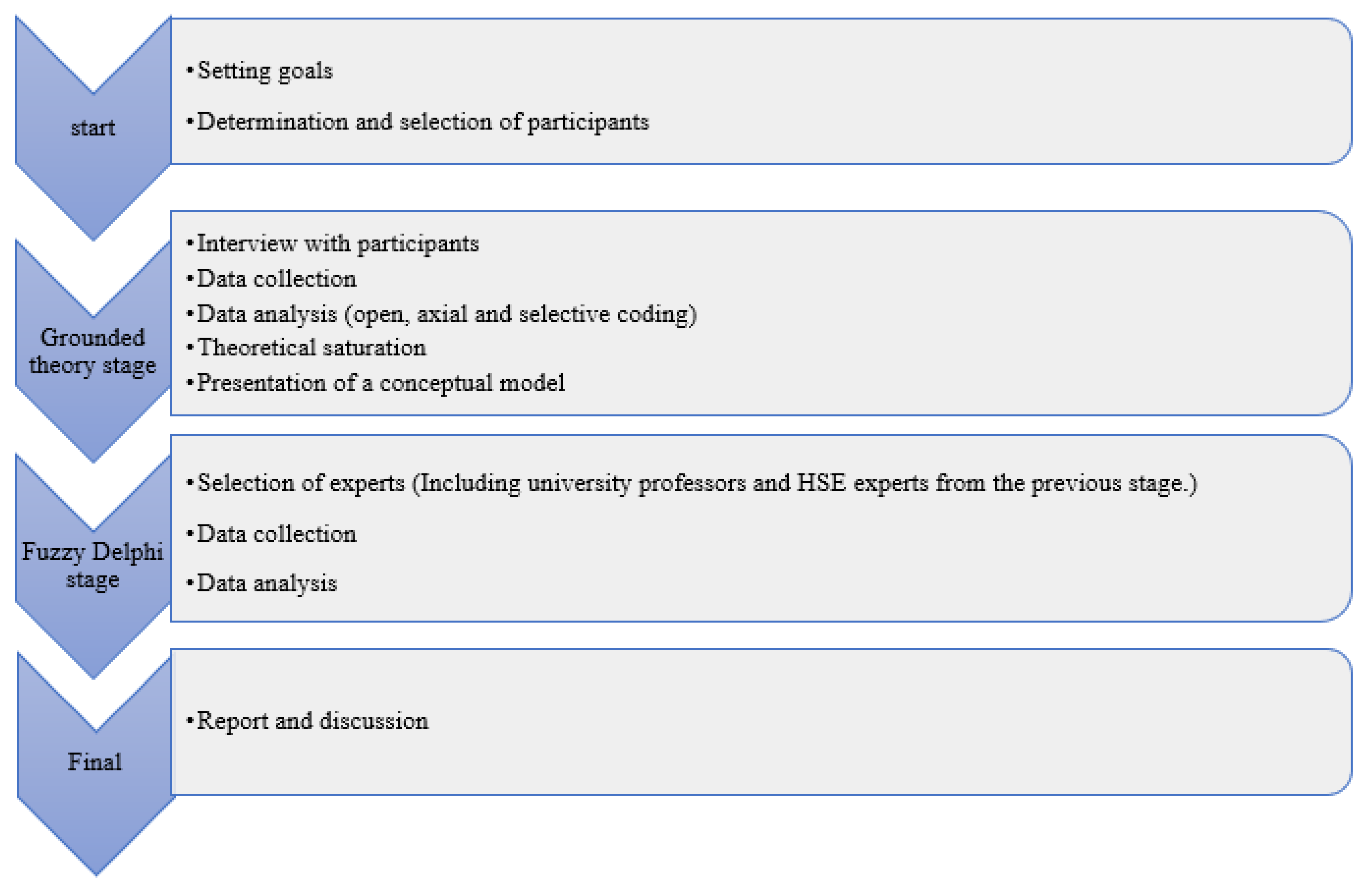
A schematic overview of the study design and research stages is presented in
Figure 1. This structured approach ensures a logical progression from exploration and theory development to quantitative prioritization, aligning with best practices in occupational safety research.
2.1. Identification of Factors Using Grounded Theory Method (GTM)
2.1.1. Participants, Inclusion and Exclusion Criteria
In the first stage of the study, 40 participants were purposefully selected from the steel production units in Isfahan, Iran. They were divided into three groups: industrial workers (n = 20), HSE experts (n = 12), and university professors (n = 8). HSE experts are professionals responsible for identifying, assessing, and controlling workplace hazards, ensuring compliance with safety regulations, and implementing measures to protect workers’ health.
All participants provided informed consent, were assured of confidentiality and anonymity, and could withdraw from the study at any time without penalty. Inclusion criteria ensured that all participants had direct experience with occupational incidents:
Workers: Minimum five years of industry experience and at least one registered occupational accident in the past year.
HSE experts: Minimum five years of experience as safety officers, prior experience in accident investigation, and a master’s degree.
University professors: Safety specialization, research and teaching experience, and a doctoral degree.
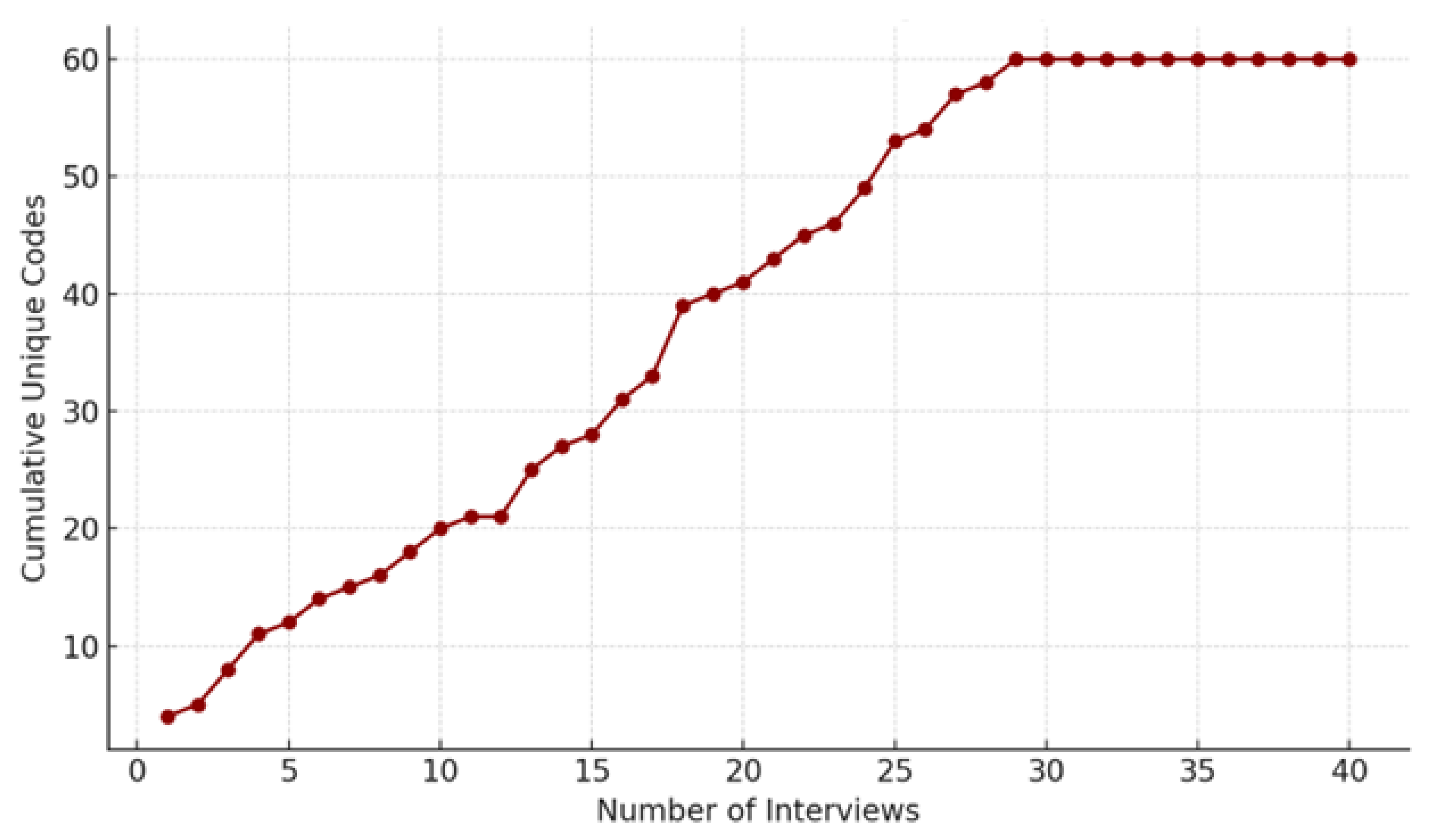
Occupational accidents were defined as events resulting in three or more workdays lost due to injury. Participants were selected based on official accident records maintained by the company’s HSE department. The sample size was determined according to data saturation principles, ensuring sufficient depth and diversity of perspectives for meaningful qualitative analysis.
2.1.2. Sampling and Data Collection
The methodological framework developed by Strauss and Corbin was employed in the present investigation. Strauss and Corbin’s methodology for ascertaining sample size within qualitative research posits that interviews should be conducted until “theoretical saturation” is attained [
29]. This entails the continuation of participant interviews until the emergence of no additional information or insights from the data is observed. The procedure requires the immediate analysis of each interview, with the resultant findings utilized to guide subsequent interviews. This recursive methodology enables scholars to enhance their comprehension of the subject matter and ascertain that they are encompassing the complete spectrum of viewpoints. Consequently, the sampling procedure for this segment of the investigation persisted until the point of theoretical saturation was reached, with the precise quantity of samples being ascertained throughout the course of the research. The observation that the data obtained from the interviews exhibited redundancy and that no novel categories emerged during the data analysis indicates that saturation has been attained [
30]. Thus, it can be inferred that the requisite information pertaining to the research inquiries has been thoroughly amassed.
2.1.3. Interviews
In line with the GTM tradition, we utilized individual interviews as our main method for data collection. The demographic questionnaire featured five questions to confirm that participants met our inclusion criteria. Participants were requested to disclose their age, gender, years of experience, job title, and educational background. Following this, the interview commenced. These interviews aim to generate concepts and explore the connections between them, ultimately facilitating the formulation of a theory. To establish a thorough framework, we initially crafted questions pertaining to individual factors that contribute to unsafe acts or behaviors in the workplace. The inquiries encompassed: What is the definition of unsafe acts or unsafe behaviors? What do you believe is the cause behind the workers’ unsafe actions? What motivates workers to engage in unsafe practices? Do you believe that some workers are more susceptible to accidents or tend to take greater risks than others? Alternatively, do you believe that certain workers are more prone to experiencing accidents in the workplace? If you acknowledge that some individuals have a higher likelihood of encountering accidents, what traits do you think these individuals possess, and how can we recognize them? These inquiries were made. Subsequently, following the initial interviews, to ensure a comprehensive exploration, we also posed additional questions such as when you say … what does that imply? Or others have stated …, what is your perspective?
2.1.4. Data Analysis
After completing the interviews and collecting all the information, data coding was done based on the Strauss and Corbin method [
31] of data coding involves three steps: open coding, axial coding, and selective coding [
32]. Open coding is the first step in GTM analysis, where researchers identify and label key concepts and themes emerging from the data. It involves breaking down the text into smaller units and assigning codes to those units. In this step, the two authors coded transcripts line by line to identify specific data, such as domains, phrases, or keywords, to “summarize and account” for all data. Afterwards, We carefully reviewed and refined our codes to ensure consistency and rigor in the data analysis process.; in cases of discrepancies, other members of the research team were asked to evaluate the coding in order to reach consensus [
33]. This process helped summarize and account for all the important data within the transcripts.
Axial coding is the second phase of GTM, where the researcher examines the relationships between categories and subcategories to develop causal relationships or hypotheses [
34]. This helps to explain the phenomenon being studied. Focus coding was the next step in our research where we analyzed data with a specific theoretical lens in mind. During the focused coding process, we organized and categorized the data in a theoretical direction, relying on literature related to occupational accidents. The unsafe acts or unsafe behaviors relying on individual factors were used as a conceptual framework as we developed our themes from the data via the GTM, particularly in our axial coding process. At this stage in our coding process, we used components of unsafe acts or unsafe behaviors in occupational accidents field based on previous study to provide theoretical structure to our codes.
Selective coding is the final stage of GTM, where a central category or core variable is identified and systematically connected to other categories in a logical manner [
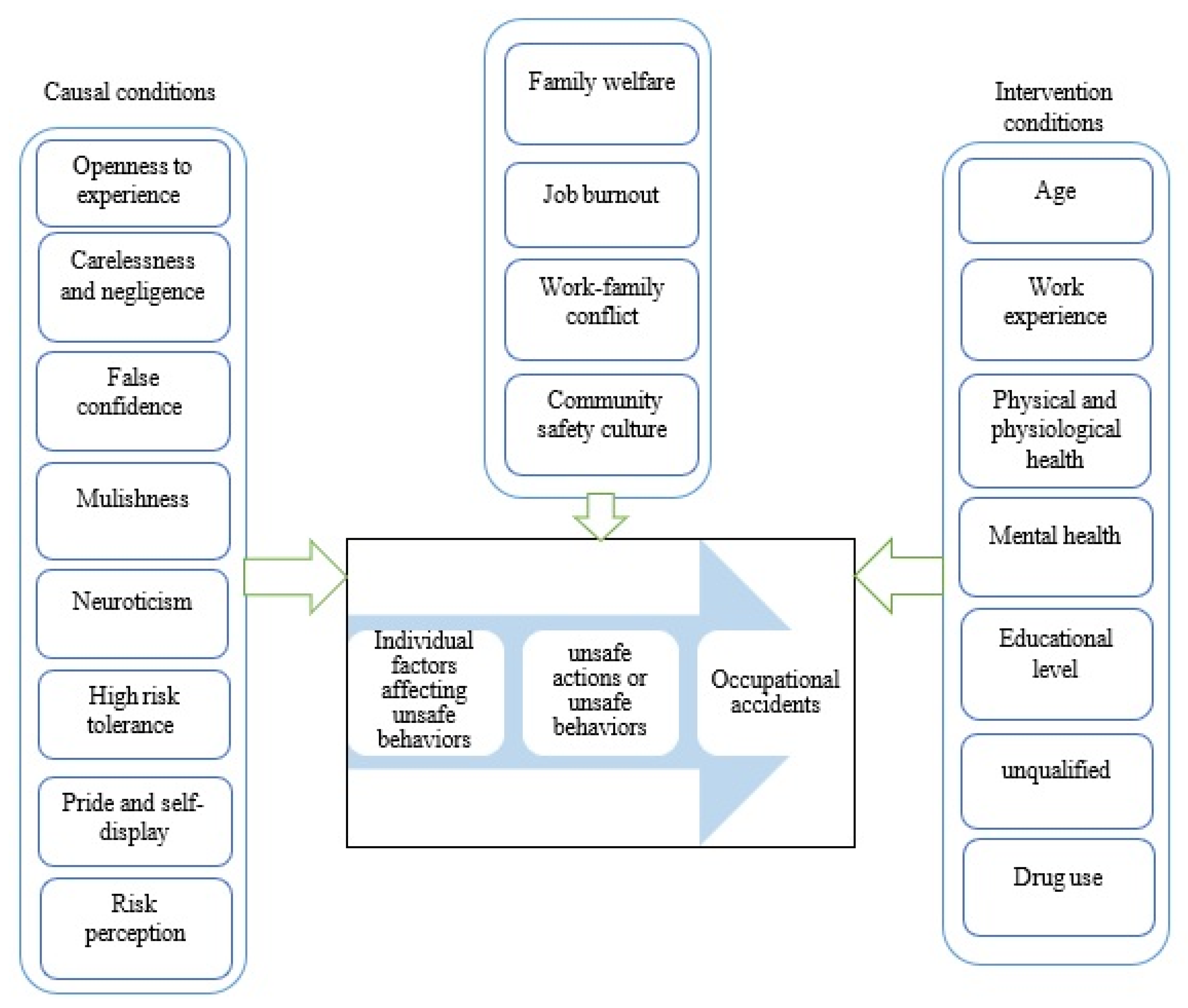
35]. This creates a coherent and comprehensive understanding of the phenomenon we are studying. Based on the previous description, we’ve reached the stage of theoretical modeling, where we organized our axial themes into a visual representation to showcase their connections and interrelationships. This helps to build a more comprehensive and insightful understanding of the data. After coding our data, we then organized and classified the codes into themes, which are overarching concepts that emerge from our data. We then analyzed the relationships between these themes to uncover deeper insights.
2.2. Prioritization of Factors Using the Fuzzy Delphi Method (FDM)
The key factors identified and categorized in the GTM stage were subsequently used to develop the items for the FDM phase, providing a coherent transition and ensuring that the quantitative assessment was directly grounded in the empirical findings of the qualitative stage. To evaluate the relative importance of the factors identified in the qualitative stage, expert perspectives were employed. Recognizing that fuzzy sets are particularly effective in capturing the inherent uncertainty and nuances in linguistic human judgments, a Fuzzy Delphi Method (FDM) was conducted with 20 experts, including HSE specialists and university professors. This approach facilitated robust and practical decision-making by applying fuzzy numbers to quantify the experts’ evaluations. The data analysis followed the FDM procedure developed by Hsu and Yang, ensuring a systematic aggregation of expert opinions and the derivation of consensus on the prioritization of key factors [
36]. In this approach, Triangular Fuzzy Numbers (TFNs) were constructed to represent expert consensus for each theme. The TFN components are derived as follows:
Lower bound (ai1): Minimum value from expert responses on a 5-point Likert scale.
Upper bound (ai3): Maximum value from expert responses on the same scale.
Middle value (ai2): Geometric mean of expert opinions, calculated using:
where xk represents individual expert ratings and
n is the number of experts.
The mapping of 5-point Likert scale responses (presented in
Table 1) to triangular fuzzy numbers TFN is structured as follows to model linguistic uncertainty in expert judgments:
This method aggregates expert judgments while accounting for uncertainty, with the geometric mean reducing skewness from extreme values. The TFN format (ai1, ai2, ai3) enables systematic defuzzification (e.g., using centroid methods) to derive crisp consensus values.
Following the FDM analysis, the TFN representing theme scores were defuzzied to enable quantitative comparisons. This step converts fuzzy sets into crisp values using the following widely validated method:
The determination and ranking of the most important themes were based on the defuzzified scores of each, with variables having higher defuzzified scores considered more significant in their impact on unsafe behaviors. Conclusions and judgments were drawn by comparing the obtained scores to prioritize the themes.
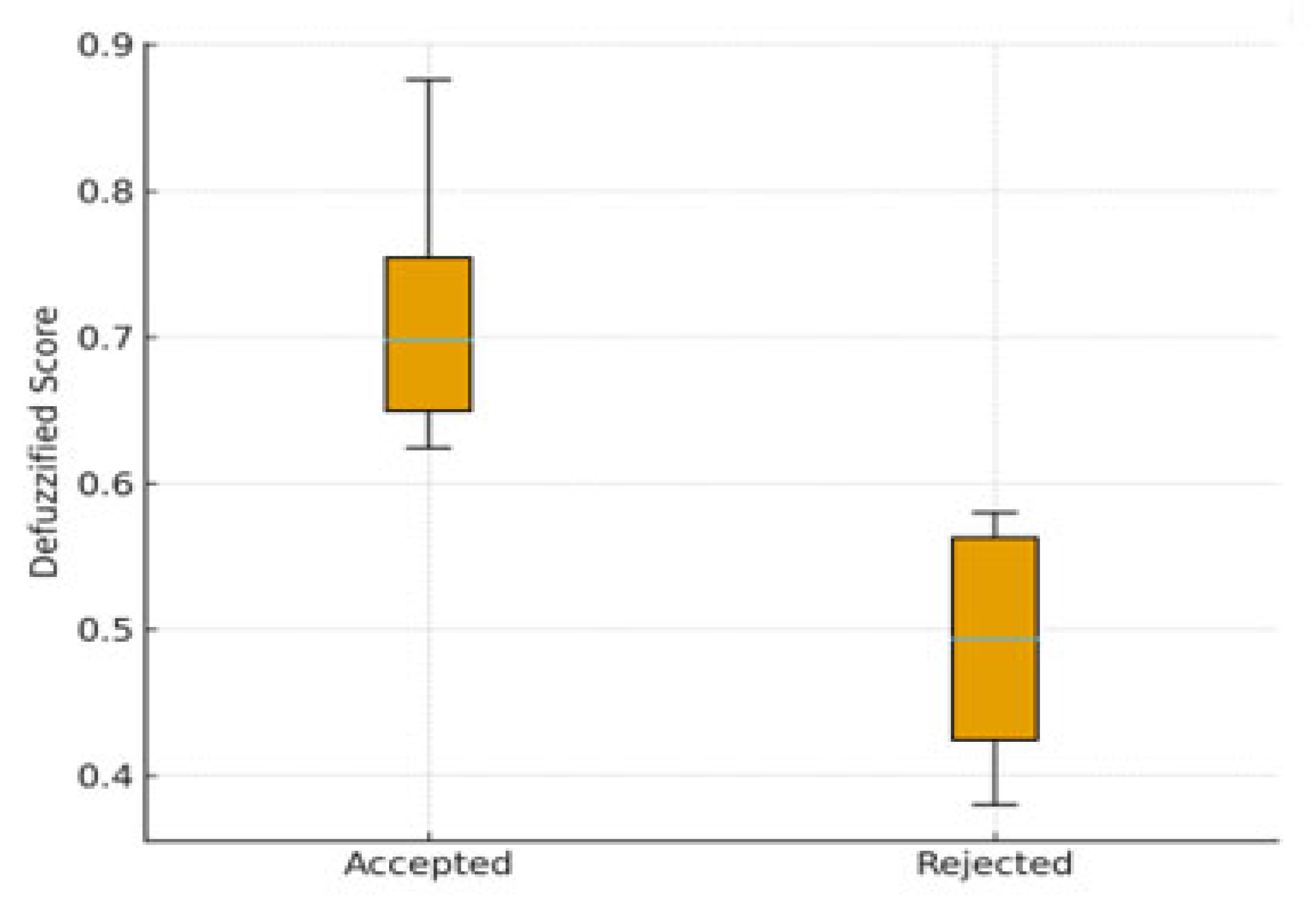
In the Hsu and Yang FDM, the acceptable limit (defuzzification threshold) is a critical parameter determining which factors are retained based on expert consensus. While the default α-cut value is commonly set at 0.5, researchers can adjust this threshold to suit study requirements. In alignment with expert consensus and methodological rigor, this study applied a defuzzification threshold of 0.6 within the Hsu and Yang FDM framework [
37,
38]. Therefore, factors with defuzzified values below 0.6 were excluded, as they failed to meet the minimum threshold of expert-endorsed relevance to unsafe acts and factors scoring ≥0.6 were retained and ranked in descending order of their defuzzified values, ensuring a focus on the most impactful contributors.
4. Discussion
This study aimed to identify and rank individual factors influencing unsafe behaviors in industrial settings. The first objective of this study was to systematically identify the individual factors that contribute to unsafe behaviors in industrial settings. In the first stage, interview analysis revealed 20 themes across five broader categories: psychological factors, personality traits, individual competencies, general health, and demographic characteristics. A 2021 study using grounded theory categorized individual factors into two categories: personality traits and individual competencies [
39]. Another study by Zarei et al. identified four categories: personality traits, demographic factors, physical health status, and psychological characteristics [
5]. Our study identified more factors likely because it focused exclusively on individual factors, whereas other studies also considered socio-economic and organizational factors. Other studies conducted on mining [
40] and construction [
41] workers have demonstrated a significant relationship between behaviors and work-family conflict, which aligns with the findings of this study. Similarly, studies conducted in the oil and gas industries [
42], as well as among firefighters [
43] and nurses [
44], have shown a significant relationship between job burnout and unsafe behaviors. Research indicates that high self-esteem can lead to risky behaviors and poor self-regulation. Individuals with high self-esteem often utilize self-serving cognitive strategies, such as minimizing their personal risk estimates and overestimating the prevalence of risky behaviors among their peers, to shield themselves from acknowledging their vulnerabilities [
19,
44]. Furthermore, risk perception refers to an individual’s subjective evaluation of the likelihood and potential consequences of hazards. This perception plays a crucial role in decision-making and behavior, particularly in high-risk environments. When individuals perceive risks as low, they may engage in unsafe behaviors, believing they are adequately protected. This mindset can lead to a higher incidence of accidents and injuries. The results of this study, which indicate that low risk perception can lead to unsafe behaviors, align completely with the previous literature [
45]. Studies have shown a significant relationship between personality traits such as openness to experience, sensation seeking, and neuroticism, and the occurrence of unsafe behaviors and occupational accidents in industrial environments [
46,
47,
48]. These findings align with the results of the present study. In addition, Studies have shown that individuals who engage in greater risk-taking behaviors in the workplace are more likely to perform unsafe actions, thereby increasing the risk of accidents [
49].
Studies have shown negative correlations between safety knowledge, skills, and abilities and unsafe behaviors [
39], which aligns with the findings of our study. Studies have shown negative correlations between safety knowledge, skills, and abilities and unsafe behaviors [
39], which aligns with the findings of our study. Research indicates a significant relationship between mental health, physical health, and occupational safety across various industries. Poor mental health among workers is associated with increased unsafe behaviors and a higher incidence of occupational accidents [
50]. Both physical and mental fatigue negatively impact workers’ cognitive and motor abilities, potentially leading to unsafe actions [
51]. These findings emphasize the importance of addressing workers’ mental and physical health to improve occupational safety and reduce accidents across industries.
Although our findings are generally consistent with prior studies, it is important to note that some research has reported contrasting results. For example, previous research has shown inconsistent evidence regarding the role of work experience. While many studies have found that higher experience reduces unsafe behavior, others have reported that experienced workers may become overconfident and thus more prone to shortcuts or rule violations [
52,
53]. This divergence highlights the need for a nuanced interpretation of experience-related effects, suggesting that both positive and negative mechanisms may operate simultaneously.
Furthermore, a critical limitation of earlier studies is their predominant reliance on single-method designs, often based solely on surveys or accident reports [
54]. Such approaches may fail to capture the deeper cognitive and perceptual mechanisms underlying unsafe behaviors. By contrast, the present study integrates qualitative and quantitative methods, allowing a more comprehensive understanding of the individual determinants of unsafe actions. This mixed-method design helps address limitations in prior work and strengthens the conceptual contribution of our findings.
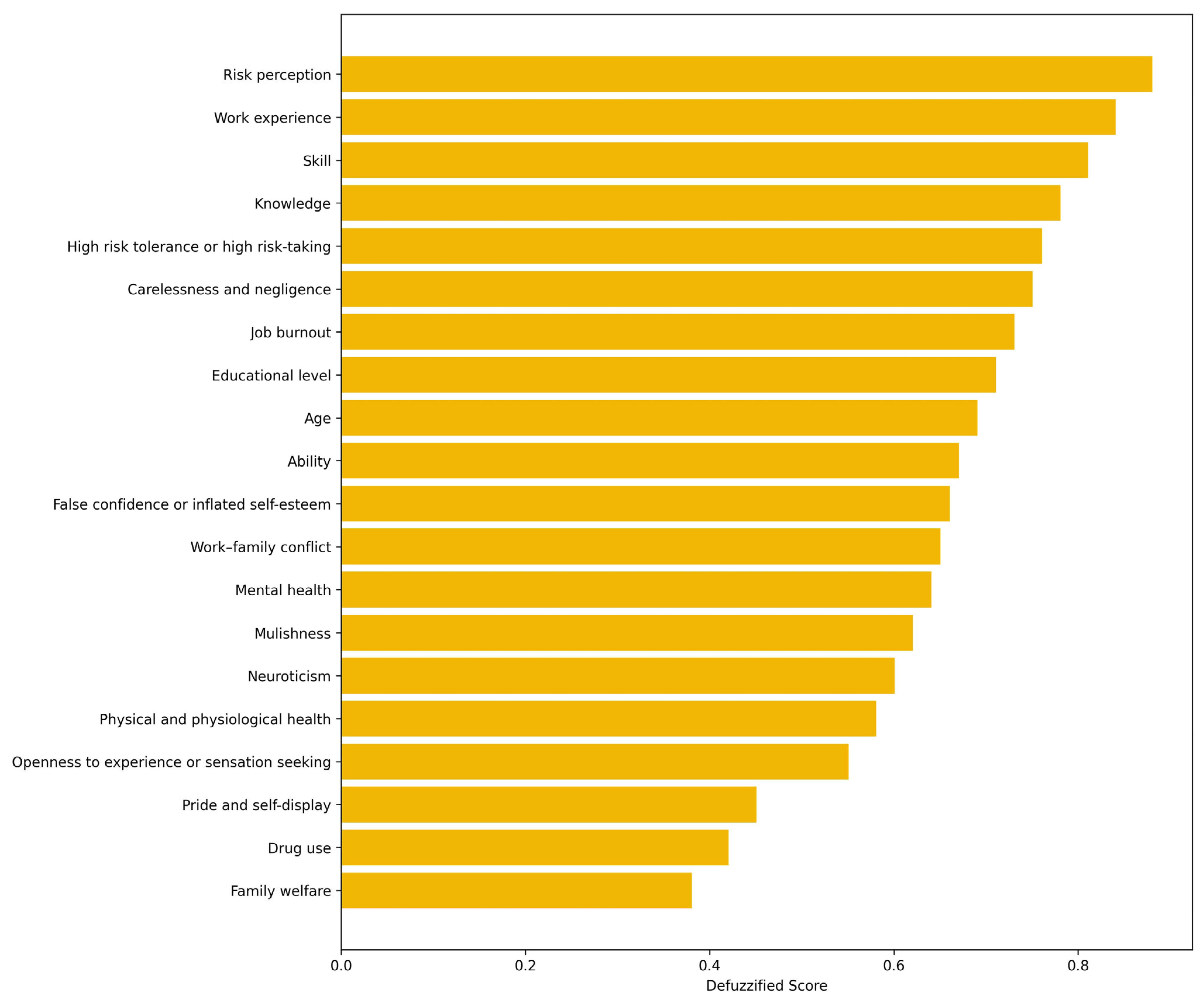
The second objective was to rank and prioritize the identified factors using the Fuzzy Delphi Method (FDM). This quantitative phase built directly on the qualitative findings, as all factors extracted from the Grounded Theory stage were transformed into FDM items for expert evaluation. Data analysis using the fuzzy method reveals the priority and intensity of influence of each theme. As illustrated in
Table 4, the most significant factor is risk perception. Following risk perception, work experience, skills, knowledge, and high-risk tolerance or high risk-taking are the next most important factors in that order. This ranking aligns with recent research findings emphasizing the critical role of risk perception in workplace safety. Studies demonstrate that workers’ risk perceptions significantly influence their safety behavior, incorporating both rational and emotional components. Rational perceptions involve judgments about the probability and severity of risks, while emotional perceptions reflect workers’ feelings and reactions to potential hazards [
55,
56]. The high ranking of work experience, skills, and knowledge underscores the importance of proper training and education in fostering safe workplace practices. Effective training not only enhances cognitive understanding but also helps employees develop accurate risk assessments, reducing unsafe behaviors [
55]. On the other hand, the relatively low impact attributed to factors like drug use and pride suggests that experts view unsafe behaviors as primarily driven by cognitive and experiential factors rather than external influences or personal traits. This perspective highlights the potential effectiveness of interventions focused on improving risk awareness, enhancing job-related competencies, and promoting a safety-oriented culture to mitigate workplace risks. Consequently, in designing intervention programs, this prioritization can be utilized in proportion to the cost and organizational capacity to control individual factors.
Notably, some prior studies utilizing ranking methods such as AHP or DEMATEL have yielded different prioritization patterns, giving higher weight to emotional or health-related factors rather than cognitive constructs [
57,
58]. This difference underscores the methodological advantages of the FDM approach, which captures expert consensus with reduced sensitivity to outliers and subjective bias. Thus, the use of FDM in the present study provides a more stable and reliable prioritization of individual determinants.
5. Conclusions
This study provides a systematic, evidence-based examination of individual factors influencing unsafe behaviors in industrial settings, integrating qualitative insights from in-depth interviews with quantitative prioritization through the Fuzzy Delphi Method. The findings demonstrate that risk perception is the most influential determinant, followed by work experience, skills, knowledge, and high-risk tolerance, highlighting the pivotal role of cognitive and experiential factors in shaping safety behavior. Secondary influences, including personality traits, mental and physical health, and demographic characteristics, further modulate unsafe actions, though their effects are comparatively less pronounced.
By employing a grounded theory-based conceptual framework, this study underscores that individual behaviors are embedded within a broader organizational and social context. Unsafe actions cannot be fully understood in isolation; rather, they emerge from the dynamic interplay between personal attributes and the surrounding work environment.
The research offers a practical, prioritized roadmap for organizational interventions. Targeted efforts to enhance risk awareness, strengthen safety-related competencies, and support workers’ physical and mental well-being are likely to yield substantial reductions in unsafe behaviors and occupational accidents. Furthermore, the integration of grounded qualitative methods with structured expert consensus demonstrates a rigorous and actionable approach to identify high-priority safety interventions.
In conclusion, this study delivers both theoretical and practical contributions, advancing the understanding of individual-level determinants of workplace safety while highlighting the critical interaction between personal and contextual factors. The results provide a robust foundation for evidence-driven safety management programs in high-risk industries, offering guidance for both researchers and practitioners seeking to mitigate occupational hazards effectively. Future research could focus on validating the human factors model identified in this study across diverse industrial sectors. Such cross-industry testing would help assess the generalizability and robustness of the framework, and identify sector-specific adaptations. Additionally, longitudinal studies could examine the dynamic interactions between individual factors and workplace safety outcomes over time, providing deeper insights into causal mechanisms and informing the design of targeted interventions. Expanding the application of the proposed framework in broader contexts can enhance its practical relevance and contribute to more effective safety management strategies across industries.
Limitations:
This study has several limitations that should be taken into account when interpreting the results. Because the research was conducted within the steel industry in Isfahan Province, Iran, the findings may reflect contextual characteristics specific to this industrial and cultural setting. National and organizational cultural norms—such as communication patterns, hierarchical work relationships, and prevailing attitudes toward occupational safety—may have influenced participants’ perceptions and responses, thereby shaping the emergent concepts and priorities identified in the study. Consequently, the generalizability of the findings to other countries, industries, or regulatory environments may be limited. Furthermore, although the methodological rigor applied throughout the research enhances the credibility of the results, future studies would benefit from examining the transferability of the proposed framework through comparative investigations across different industrial sectors and diverse cultural contexts.
Novelty of the Study:
This study presents significant methodological and practical innovation by integrating in-depth qualitative insights from interviews with quantitative consensus from a Fuzzy Delphi panel. Unlike prior research that often isolates individual factors, our work systematically identifies and prioritizes key determinants of unsafe behavior, emphasizing the central role of cognitive and experiential factors such as risk perception, work experience, and skills.
A particularly novel contribution is the use of a grounded theory-based conceptual model to reveal the critical influence of organizational and social environments on individual factors. This finding challenges the common practice of analyzing unsafe behaviors solely at the individual level and highlights that individual actions are embedded within, and shaped by, broader organizational and social contexts.
Furthermore, the study provides a clear, evidence-based framework for designing targeted interventions, bridging theoretical understanding with practical applications, and offering actionable insights for safety management in high-risk industrial settings. This combination of methodological rigor, contextual awareness, and applied relevance positions the study as a significant contribution to both research and practice in occupational safety and organizational psychology.