
An Occupational Risk Analysis in the Bituminous Emulsion Transport and Spreading Process: A Case Study Applied in a Company in Romania



Abstract
1. Introduction
- The identification and assessment of the occupational risks associated with the process of transporting and spreading bituminous emulsion.
- Proposing practical solutions to reduce the identified risks and improve worker safety, adapted to the specific context of the company analyzed.
- Section 2 provides a detailed description of the research methodology used in the process of identifying and assessing occupational risks, highlighting the stages, methods, and tools applied for data collection and analysis.
- Section 3 and Section 4 are dedicated to the centralization and analysis of the data obtained. This approach allows for the identification and centralization of the main occupational risks and the formulation of relevant conclusions by identifying appropriate measures to reduce occupational risks and improve worker safety.
- The last section presents the essential conclusions of this study. The identified limitations are also included, and future research directions are proposed, intended to contribute to deepening knowledge in this field, offering opportunities for improving occupational risk prevention strategies.
2. Materials and Methods
An Analysis of the Bituminous Emulsion Transportation and Spreading Process Carried out Within the Selected Company
- Number of exposed persons: 5 persons.
- Exposure duration: 8 h/day, one work shift.
- Data collection period: 20–29 November 2024.
- The evaluation team included experts in the fields of engineering, psychology, and toxicology.
- Filling the tanker with bituminous emulsion
- Checking the technical condition of the tanker and the spreading components before loading it and setting off on the journey; checking the fuel level (diesel) in the burner tank provided in the bituminous emulsion transport tanker.
- Positioning the tanker at the loading site.
- Participating in connecting the transfer/loading hose to the tanker and to the bituminous emulsion source (checking connections to prevent leaks).
- Participating in the process of loading the tanker with bituminous emulsion while monitoring the loading process and the filling level of the tanker to avoid overloading.
- Participating in the disconnection of the transfer hoses once the tank is filled to the desired level.
- Closing the tank lids to prevent leaks during transport.
- Emulsion transport
- Ensuring the optimal temperature for applying the bituminous emulsion during transport (50 °C).
- Starting the diesel burner (by pressing the piezoelectric button) and regulating the fuel flow to heat and maintain the bituminous emulsion at a constant temperature.
- Emulsion spreading
- Setting the spreading parameters (spreading pressure and flow rate).
- Positioning the tanker at the beginning of the work area and starting the bituminous emulsion spreading/spraying system.
- Preparing the road surface (cleaning and priming, if necessary).
- Spraying the emulsion evenly on the surface.
- Stopping the spreading system at the end of the application area.
- Cleaning the nozzles and the spraying system to prevent emulsion accumulation and clogging.
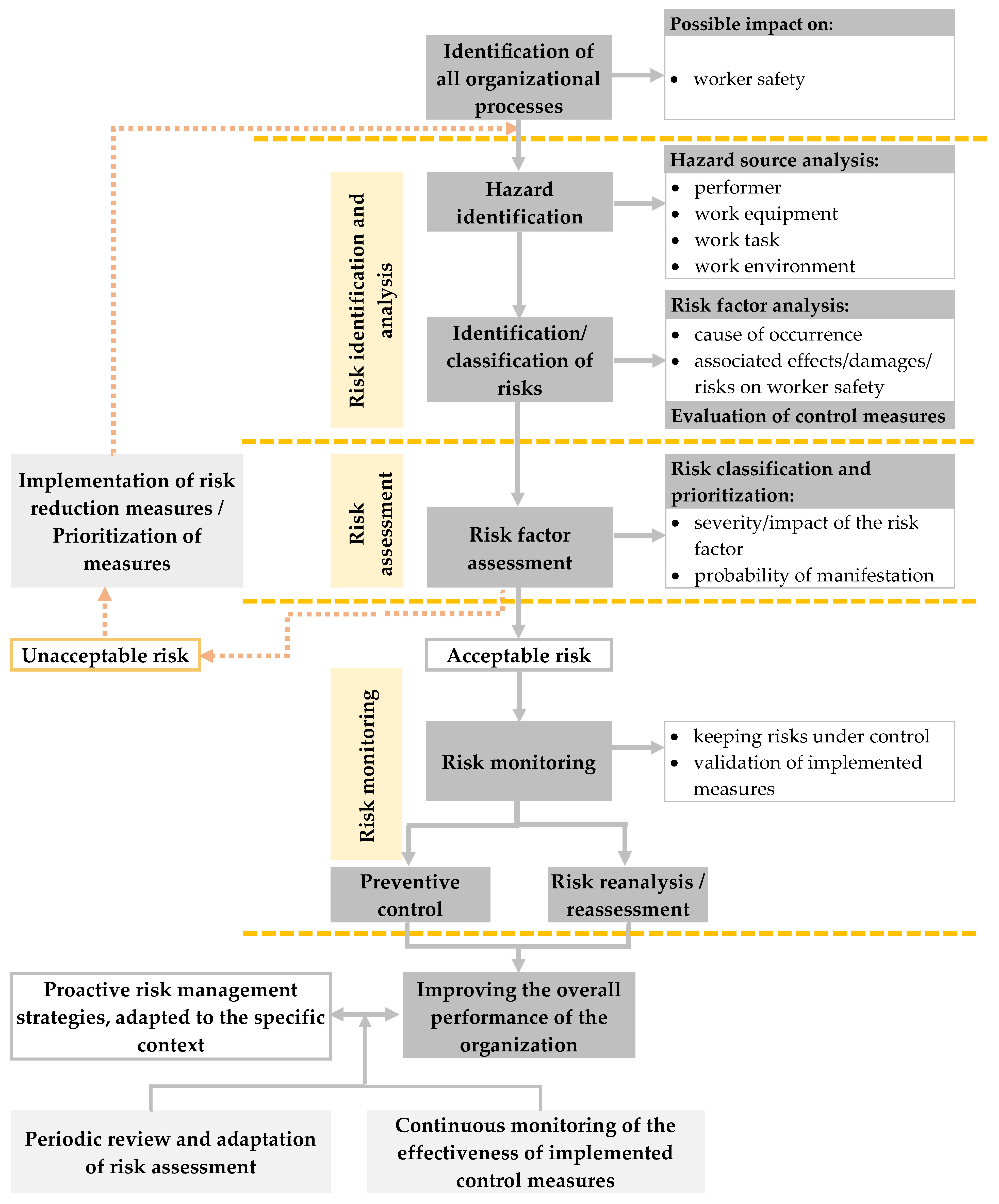
- Qualitative analysis was used to identify the main sources of risk through direct observation and semi-structured interviews with personnel involved in the activities of the transport and application of bituminous emulsion. The interviews were conducted with 5 employees (drivers, operators, technical staff), taking into account professional experience and level of exposure to risks. The questions were aimed in particular to identify activities perceived as critical, opinions on the effectiveness of the safety measures applied, and the perception of risks. The answers were correlated with field observations.
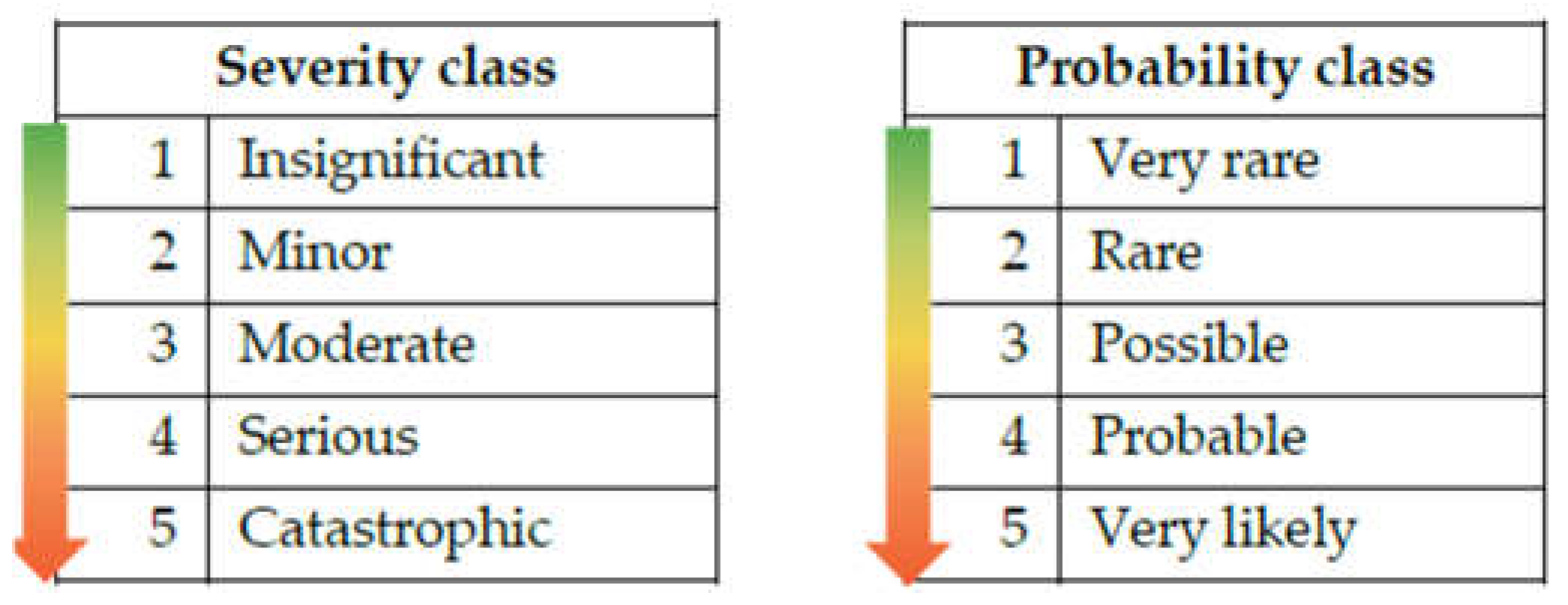
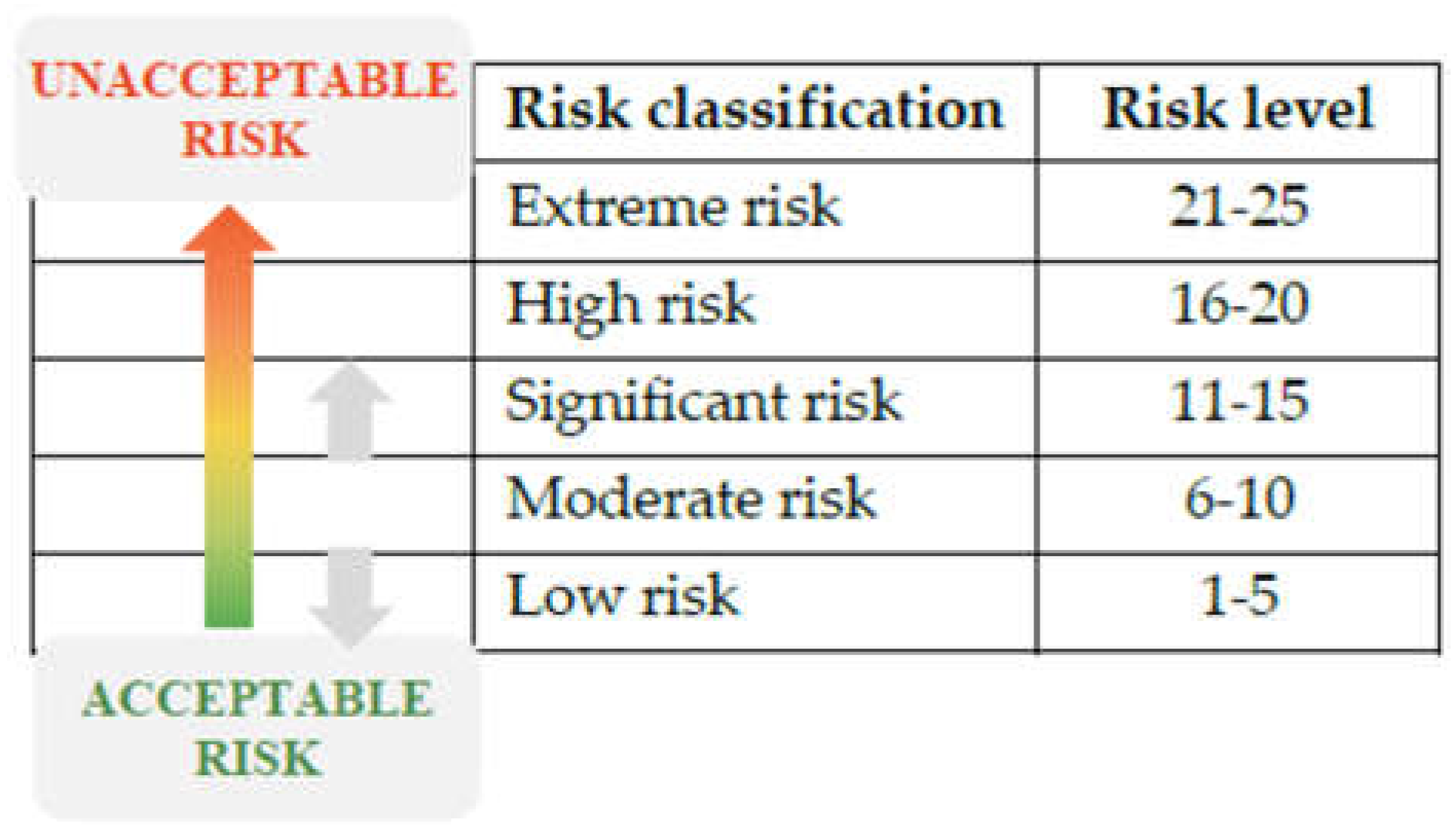
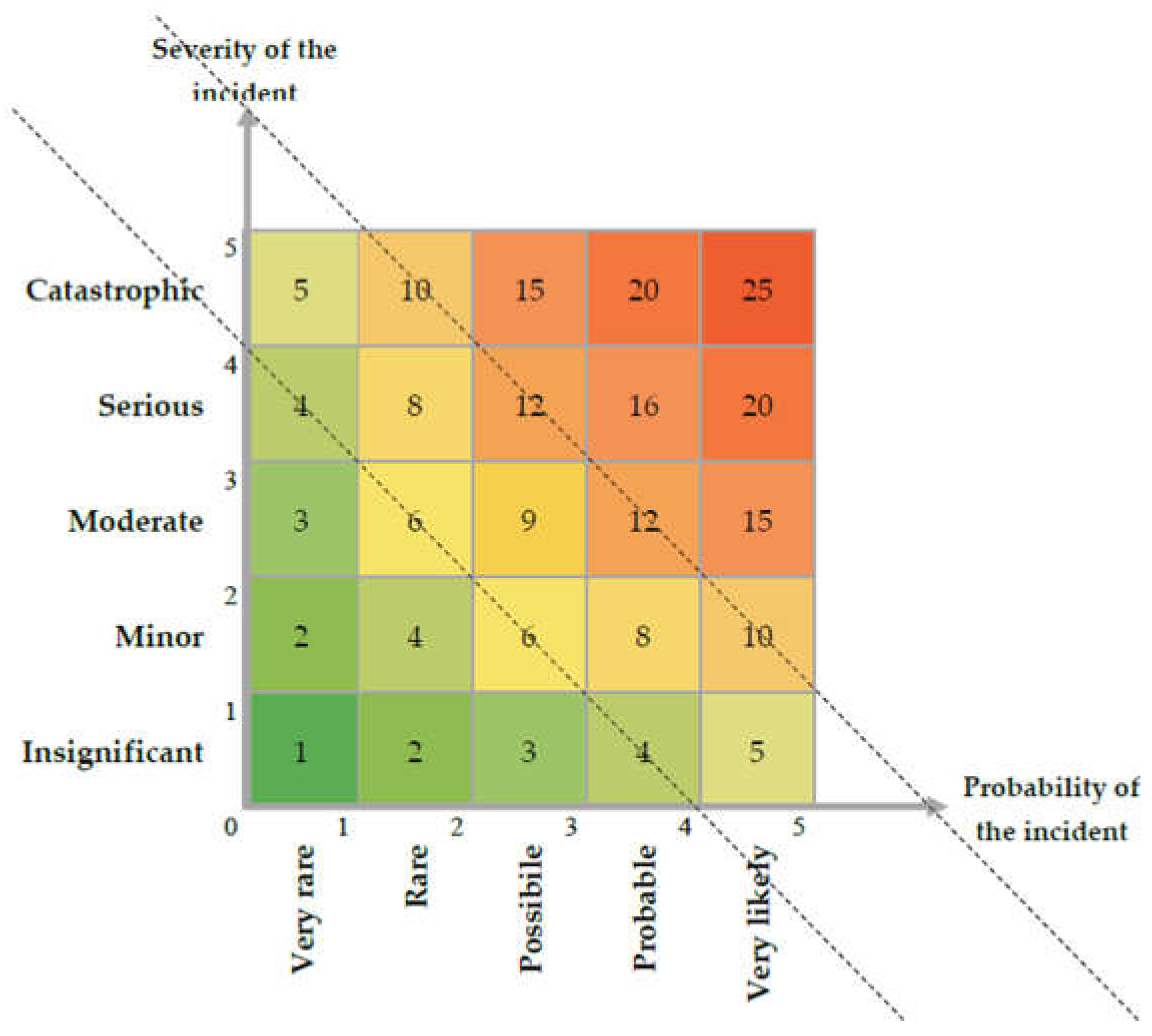
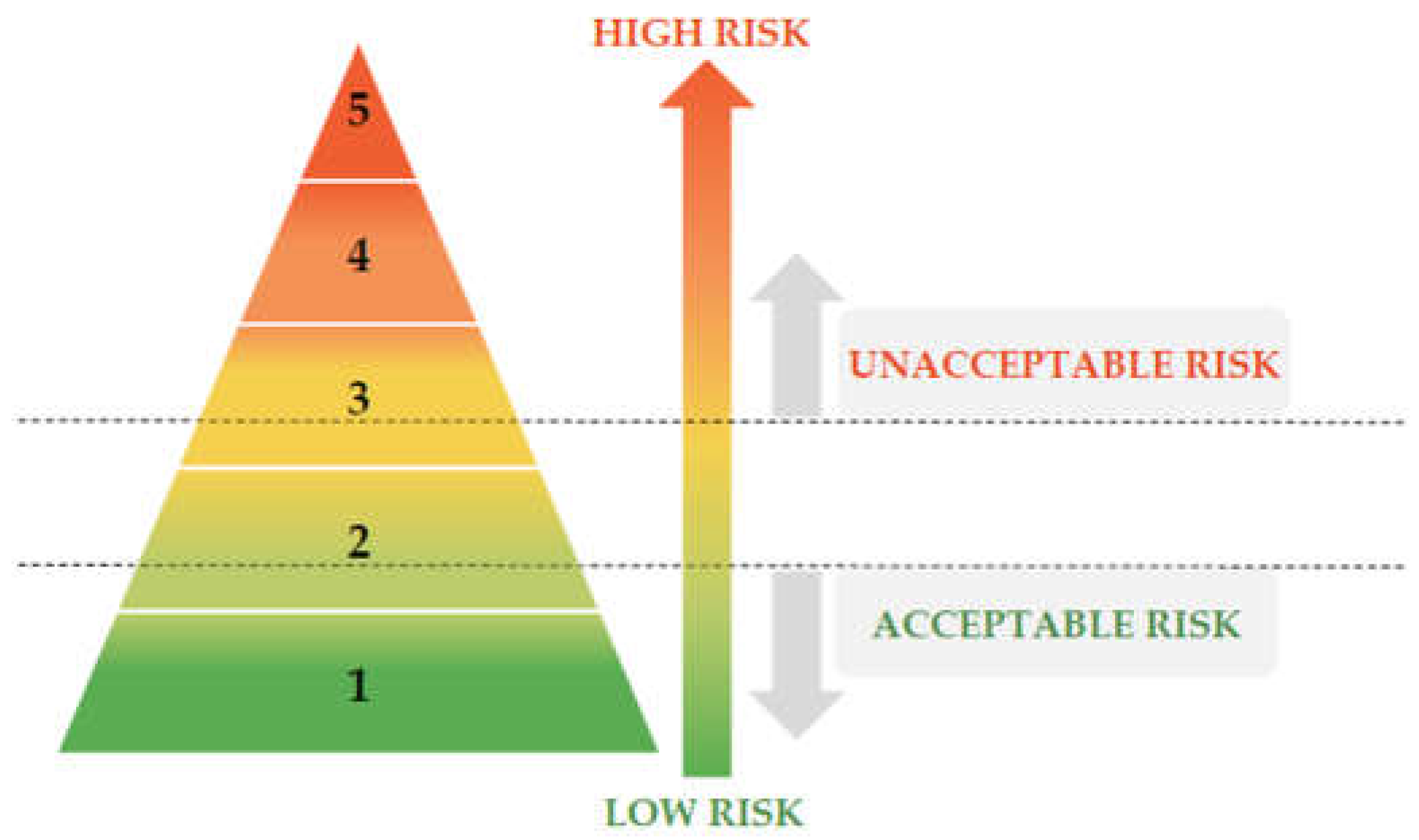
- The quantitative analysis consisted of assessing the identified risks using a standardized assessment grid, based on established occupational risk assessment methodologies. Each risk was assigned probability and severity scores, on a scale from 1 to 5, according to the applicable occupational health and safety standards. The values obtained were used to calculate the risk level, which allowed prioritizing them and formulating recommendations for prevention measures.
- The data necessary for this study were obtained using several methods.
- Direct observation of the bituminous emulsion transport and application activity, as well as the working conditions on the construction site, in order to identify critical processes and associated risk factors.
- Conducting interviews with company employees (operators, drivers, and technical staff) to collect information about the activities carried out, risk perception, and organizational safety culture, as well as previous experiences related to incidents or dangerous situations.
- Analysis of existing documentation (similar studies, occupational health and safety regulations, technical data sheets of equipment and substances used, bituminous emulsion safety data sheet, existing risk assessment reports, incident/accident registers, etc.) to verify the compliance of activities with legal requirements and to understand the existing procedural framework.
3. Results
3.1. Identification and Analysis of Risk Factors That Can Lead to Accidents and Occupational Illnesses in the Process of Transporting and Spreading Bituminous Emulsion
3.2. The Centralization of the Data Obtained
4. Discussion
- Training operators regarding the consequences produced by the manifestation of specific risk factors and regarding their prevention measures.
- The training of personnel on the provisions of work procedures, equipment adjustment instructions, and occupational health and safety instructions when operating them, as well as on the obligation to check the technical condition of equipment, components, work tools, control devices, the existence and condition of fastening and fixing systems, locking and safety, etc., before use.
- Training operators on the mandatory check of the technical condition of all equipment before starting the race: checking the general condition of the tank (tank integrity, closure systems (lids, gaskets, safety valves), braking systems, steering, lights, tires, etc.); checking the fuel level (diesel) in the burner tank provided in the bituminous emulsion transport tank; checking the correct operation of the pumps; checking the transport pipes/hoses to detect any cracks or blockages; ensuring the pumps and pipes/hoses are suitable for the transfer of the emulsion, well maintained, and without defects; checking the correct operation of the level indicators to prevent overloading; and checking the correct operation of the temperature sensors to ensure the appropriate temperature of the emulsion for loading).
- Training workers on the measures to be taken to prevent work accidents and occupational diseases in workplaces where there are chemical substances/preparations that release toxic gases and vapors, and on providing first aid in case of irritations and injuries.
- Ensuring that workers are provided with personal protective equipment appropriate to the existing risks: protective masks, protective helmets with face shields/protective goggles, and chemical-protective neoprene and heat-resistant gloves.
- Equipping the tanker with emergency equipment: a fire extinguisher, a first aid kit, emergency eye and skin washing facilities, and personal protective equipment.
- Driver’s compliance with the provisions regulating traffic on public roads; compliance with speed restrictions, cautious approach to traffic, non-use of drugs or alcohol, adopting civilized behavior, etc.
- Planning travel routes with strict adherence to a driving/rest alternation; avoiding nighttime travel as much as possible.
- Equipment servicing by personnel properly trained and prepared on the operating method and the interventions that can be performed.
- Thus, by using appropriate equipment, through the periodic training of personnel and monitoring of working conditions, a safe and healthy working environment can be ensured for employees.
- To validate the conclusions, the results of this assessment were discussed with experts in the field of occupational health and safety, as well as with representatives of the company being analyzed. Thus, optimal solutions could be identified to improve working conditions and prevent occupational risks while also ensuring compliance with the legal regulations in force.
- Also, through this collaborative approach, the conclusions obtained from the evaluation were validated, and the proposed recommendations were adapted to the specific needs of the company. This approach also contributed to improving the efficiency of the proposed measures and their degree of acceptance within the company.
- However, it must be emphasized that this study is descriptive in nature, being limited to the analysis of a single organizational case, which restricts the possibility of generalizing the results to other companies or fields of activity.
5. Conclusions
- This study was conducted in a single company in Romania, which limits the applicability of the conclusions to other organizations or similar technological processes. Certain factors, such as the specifics of the activities, technological facilities, or organizational culture, may vary significantly from one company to another. The descriptive nature of the research, focused on the detailed analysis of a particular case, does not allow for the formulation of generally valid conclusions for the entire industry. The results obtained strictly reflect the organizational context studied and, therefore, must be interpreted with caution when trying to extrapolate them to other organizational environments. However, the rigorous description of the risk assessment stages can constitute a valuable reference for professionals involved in occupational health and safety management, providing a concrete example of the application of analysis methodologies in a real context.
- The number of employees involved in interviews and direct observation (5 people) can be considered relatively small. Although the data collected are relevant to the company analyzed, the small sample size limits the validation of the conclusions.
- This study was conducted over a limited period of time (8 days), which did not allow for the analysis of risks that may arise seasonally or in different operational contexts. An analysis over a longer period of time would have provided a deeper understanding of the dynamics of those risks.
- Semi-structured interviews with employees were based on their subjective perceptions of workplace risks and safety. While this information is valuable, it may introduce a degree of bias into the overall risk assessment.
- This study did not address in detail the potential of technological innovations (e.g., automation, digitalization) in reducing risks. Integrating these factors could expand the relevance of the research and the proposed solutions.
Author Contributions
Funding
Institutional Review Board Statement
Informed Consent Statement
Data Availability Statement
Conflicts of Interest
Appendix A
References
- Milea (Pârvu), A.; Cioca, L.I. Assessment of Emerging Risks-is the INCDPM Method, Appropriate for the Assessment of Emerging Risks? Proc. Int. Conf. Bus. Excell. Sciendo 2024, 18, 2300–2310. [Google Scholar] [CrossRef] [Scilit]
- Ramos, D.; Cotrim, T.; Arezes, P.; Baptista, J.; Rodrigues, M.; Leitão, J. Frontiers in Occupational Health and Safety Management. Int. J. Environ. Res. Public Health 2022, 19, 10759. [Google Scholar] [CrossRef] [Scilit] [PubMed]
- Moraru, R.I.; Băbuţ, G.B.; Popescu–Stelea, M.; Szabo, Z.-G. Shifting towards Proactive OHS Risk Management in Romanian Organizations: Systematic Benchmarks. MATEC Web Conf. 2021, 343, 10005. [Google Scholar] [CrossRef] [Scilit]
- Moraru, R.I. Occupational and Industrial Security: University Treatise; Universitas Publishing House: Petroșani, Romania, 2023; pp. 166–200. [Google Scholar]
- Lindholm, M.; Reiman, A.; Väyrynen, S. On Future Occupational Safety and Health Challenges. Int. J. Occup. Environ. Saf. 2020, 4, 108–127. [Google Scholar] [CrossRef] [Scilit]
- Drăghici, A.; Căruțașu, N. Occupational Risk Management, 2nd ed.; Politehnica Press Publishing House: Bucharest, Romania, 2020. [Google Scholar]
- Milea, A.; Cioca, L.I. Work evolution and safety and health at work in Industry 4.0/Industry 5.0. MATEC Web Conf. 2024, 389, 00074. [Google Scholar] [CrossRef] [Scilit]
- Banaduc, G.; Balla, A.; Biholar, A.I. A study of well-being impact on work effectiveness. Acta Tech. Napoc. 2024, 67, 249–256. [Google Scholar]
- Bejinariu, C.; Darabont, D.C.; Burduhos-Nergis, P.; Cazac, A.M.; Chiriac-Moruzzi, C. Considerations Regarding the Application of the Occupational Injury and Illness Risk Assessment Method at Workplaces/Workstations, in Relation to the ISO 45001 Standard. Sustainability 2023, 15, 2121. [Google Scholar] [CrossRef] [Scilit]
- Abeje, M. Innovating Safety Risk Assessment in Large-Scale Manufacturing Enterprises: A Holistic Approach. JETIR 2024, 11, 472–489. [Google Scholar]
- Băbuț, G.B.; Moraru, R.I. Critical analysis and ways to improve the I.N.C.D.P.M. Bucharest method for assessing the risks of occupational accidents and illnesses. Qual.-Access Success 2013, 14, 113–120. [Google Scholar]
- ISO. Available online: https://www.iso.org/obp/ui/en/#iso:std:iso:ts:31050:ed-1:v1:en:en (accessed on 23 February 2025).
- SR EN ISO 45001:2023; Sisteme de Management al Sănătății și Securității în Muncă. Cerințe și Îndrumări Pentru Utilizare. ISO: Geneva, Switzerland, 2023.
- Mariken, M.H.C.; Blom, H.A.P. Safety Methods Database. 2020. Available online: https://www.nlr.nl/wp-content/uploads/2021/12/Safety-Assessment-Techniques-Database_1.2_3-Nov-2020.pdf (accessed on 23 February 2025).
- Pece, A.; Dăscălescu, Ș. Method for Assessing the Risks of Occupational Accidents and Diseases in the Workplace; Ministry of Labor and Social Protection-Scientific Research Institute for Labor Protection: Bucharest, Romania, 1998.
- Băbuţ, G.B. Methods for Assessing the Risks of Occupational Injury and Illness–Course Support. 2009. Available online: https://www.researchgate.net/publication/385286127_Methods_for_identifying_and_assessing_risks_of_occupational_injury_and_disease_-_their_suitability_for_assessing_emerging_risks (accessed on 6 May 2025).
- Moraru, R.I.; Păun, A.P.; Dura, C.C.; Dinulescu, R.; Potcovaru, A.-M. Analysis of the drivers of Occupational Health and Safety performance disclosures by Romanian companies. Econ. Comput. Econ. Cybern. Stud. Res. 2020, 54, 197–214. [Google Scholar] [CrossRef] [Scilit]
- Costantino, F.; Falegnami, A.; Fedele, L.; Bernabei, M.; Stabile, S.; Bentivenga, R. New and Emerging Hazards for Health and Safety within Digitalized Manufacturing Systems. Sustainability 2021, 13, 10948. [Google Scholar] [CrossRef] [Scilit]
- Ivascu, L.; Cioca, L.I.; Banciu, D.; Filip, F.G. Digital Transformation. Exploring the Impact of Digital Transformation on Organizational Processes; Springer, Intelligent Systems Reference Library: Berlin/Heidelberg, Germany, 2024. [Google Scholar] [CrossRef] [Scilit]
- Gholamizadeh, K.; Zarei, E.; Kabir, S.; Mamudu, A.; Aala, Y.; Mohammadfam, I. A Knowledge-Driven Model to Assess Inherent Safety in Process Infrastructure. Safety 2023, 9, 37. [Google Scholar] [CrossRef] [Scilit]





| Severity Class | The Impact of Risk Factors on the Safety and Health of Workers | |
|---|---|---|
| 1 | Insignificant | An incident that does not cause injuries or health effects. No medical intervention or incident reporting required. Possible minor, superficial injuries (scratches, bruises) that do not require absence from work. |
| 2 | Minor | Minor injuries that may require basic medical care (providing first aid measures). No or minimal interruption of activity. Possible short-term discomfort, but no long-term consequences. |
| 3 | Moderate | Moderate injuries requiring specialized medical intervention and recovery, with the worker’s absence from work. Possible temporary incapacity for work, but without permanent consequences. |
| 4 | Serious | Serious injuries that may lead to temporary or permanent incapacity for work, requiring hospitalization and long-term treatment (extended absence from work). The possibility of injuries that affect quality of life and long-term work capacity. |
| 5 | Catastrophic | Extremely serious injuries, which can lead to multiple deaths or permanent incapacity for work for a large number of workers. The need for emergency measures and large-scale interventions. Devastating consequences for employees, their families, and the community. |
| Probability Class | The Probability of Manifestation of the Risk Factor on the Safety and Health of Workers | |
|---|---|---|
| 1 | Vary rare | The incident is extremely unlikely and can occur only in exceptional circumstances, such as an unusual combination of several unfavorable factors. The possibility of an injury or illness is very low, perhaps once every 10–20 years or less. |
| 2 | Rare | The incident is unlikely but may occur if certain risk factors are present simultaneously. The injuries or conditions could occur, perhaps once every 5–10 years. |
| 3 | Possible | The incident is likely to occur during normal activities but is not frequent. Injuries or conditions may occur occasionally, perhaps once every 1–5 years. |
| 4 | Probable | The incident is quite likely, possibly occurring regularly under certain conditions. Injuries or illnesses are likely, perhaps several times a year, if preventive measures are not taken. |
| 5 | Very likely | The incident is almost certain to occur under current operating conditions. The injuries or illnesses occur frequently, perhaps monthly or even more often. |
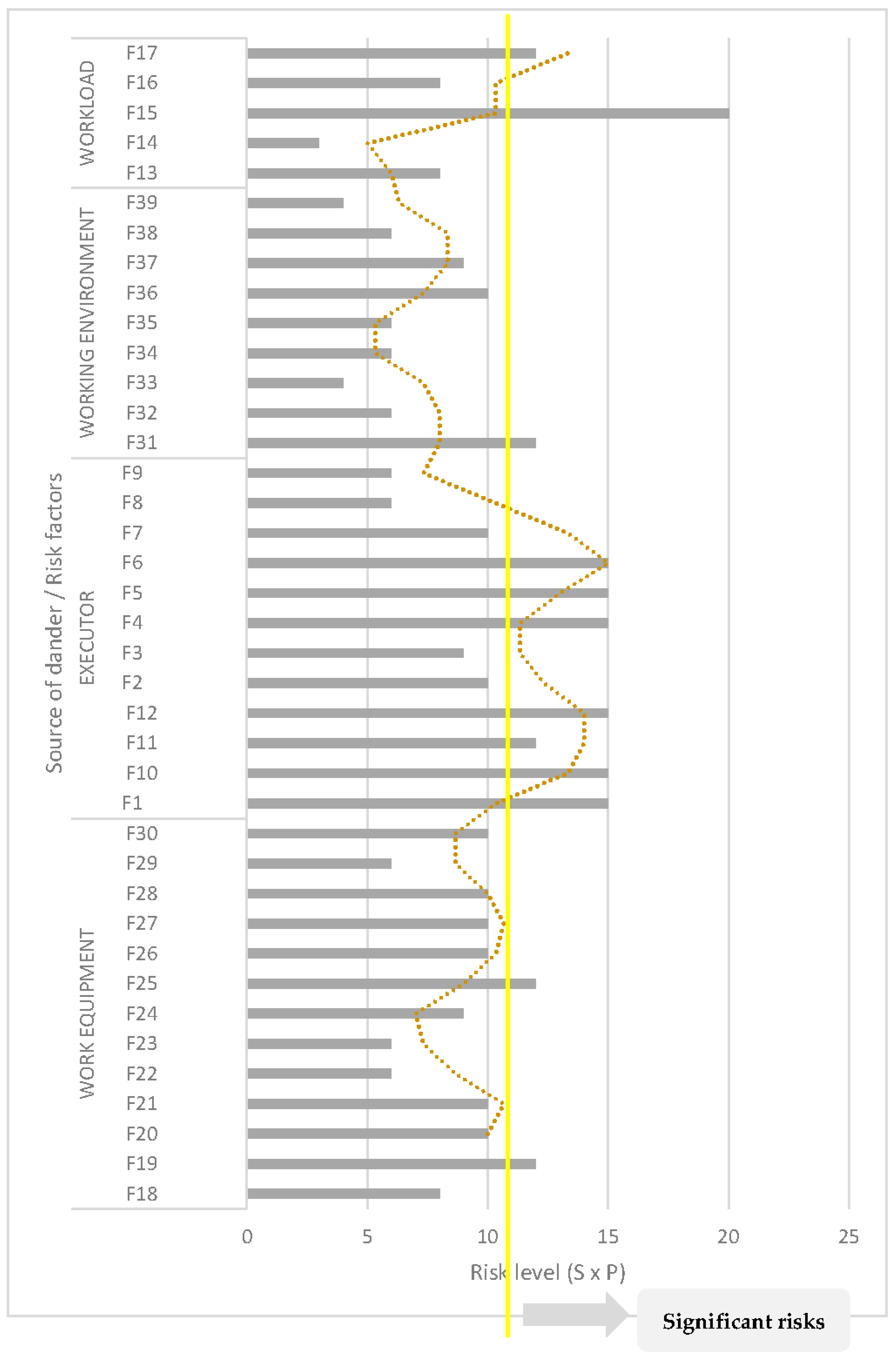
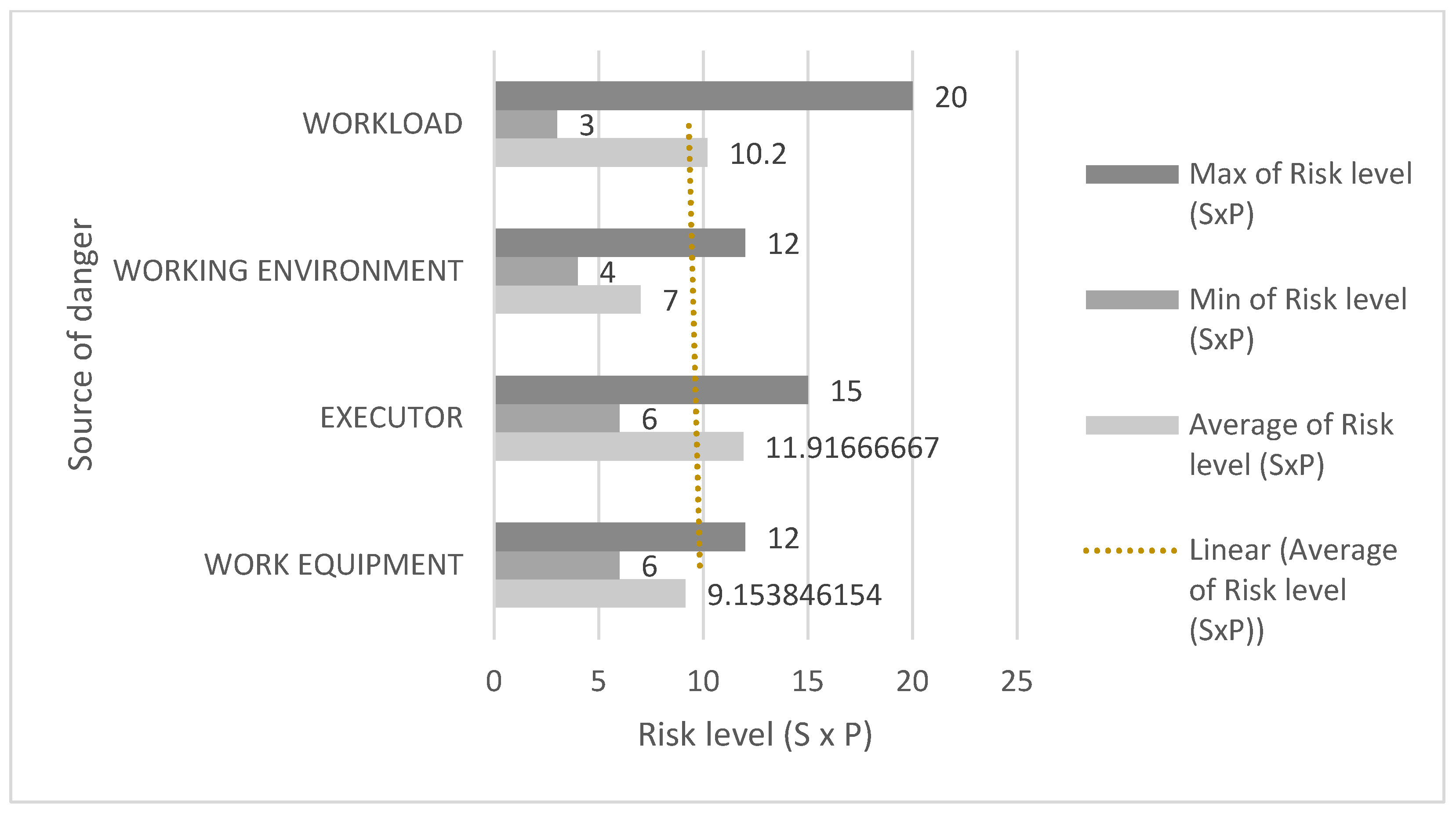
| Danger Source | Risk Factors | Severity (S) | Probability (P) | Risk Level (SxP) |
|---|---|---|---|---|
| EXECUTOR |
| 5 | 3 | 15 |
| 5 | 2 | 10 | |
| 3 | 3 | 9 | |
| 5 | 3 | 15 | |
| 5 | 3 | 15 | |
| 5 | 3 | 15 | |
| 5 | 2 | 10 | |
| 3 | 2 | 6 | |
| 3 | 2 | 6 | |
| 5 | 3 | 15 | |
| 3 | 4 | 12 | |
| 5 | 3 | 15 | |
| WORKLOAD |
| 2 | 4 | 8 |
| 1 | 3 | 3 | |
| 5 | 4 | 20 | |
| 2 | 4 | 8 | |
| 3 | 4 | 12 | |
| WORK EQUIPMENT |
| 4 | 2 | 8 |
| 4 | 3 | 12 | |
| 5 | 2 | 10 | |
| 5 | 2 | 10 | |
| 3 | 2 | 6 | |
| 2 | 3 | 6 | |
| 3 | 3 | 9 | |
| 3 | 4 | 12 | |
| 5 | 2 | 10 | |
| 5 | 2 | 10 | |
| 5 | 2 | 10 | |
| 2 | 3 | 6 | |
| 5 | 2 | 10 | |
| WORKING ENVIRONMENT |
| 3 | 4 | 12 |
| 2 | 3 | 6 | |
| 1 | 4 | 4 | |
| 3 | 2 | 6 | |
| 2 | 3 | 6 | |
| 5 | 2 | 10 | |
| 3 | 3 | 9 | |
| 2 | 3 | 6 | |
| 2 | 2 | 4 |
Disclaimer/Publisher’s Note: The statements, opinions and data contained in all publications are solely those of the individual author(s) and contributor(s) and not of MDPI and/or the editor(s). MDPI and/or the editor(s) disclaim responsibility for any injury to people or property resulting from any ideas, methods, instructions or products referred to in the content. |
© 2025 by the authors. Licensee MDPI, Basel, Switzerland. This article is an open access article distributed under the terms and conditions of the Creative Commons Attribution (CC BY) license (https://creativecommons.org/licenses/by/4.0/).
Share and Cite
Milea, A.; Cioca, L.-I. An Occupational Risk Analysis in the Bituminous Emulsion Transport and Spreading Process: A Case Study Applied in a Company in Romania. Safety 2025, 11, 46. https://doi.org/10.3390/safety11020046
Milea A, Cioca L-I. An Occupational Risk Analysis in the Bituminous Emulsion Transport and Spreading Process: A Case Study Applied in a Company in Romania. Safety. 2025; 11(2):46. https://doi.org/10.3390/safety11020046
Chicago/Turabian StyleMilea (Pârvu), Adriana, and Lucian-Ionel Cioca. 2025. "An Occupational Risk Analysis in the Bituminous Emulsion Transport and Spreading Process: A Case Study Applied in a Company in Romania" Safety 11, no. 2: 46. https://doi.org/10.3390/safety11020046
APA StyleMilea, A., & Cioca, L.-I. (2025). An Occupational Risk Analysis in the Bituminous Emulsion Transport and Spreading Process: A Case Study Applied in a Company in Romania. Safety, 11(2), 46. https://doi.org/10.3390/safety11020046