Article

Rapid Assessment of Relative Hemolysis Amidst Input Uncertainties in Laminar Flow

1
Department of Chemical Engineering, University of North Dakota, UPSON II Room 365, 241 Centennial Drive, Grand Forks, ND 58202, USA
2
Red River High School, 2211 17th Ave S, Grand Forks, ND 58201, USA
*
Author to whom correspondence should be addressed.
Fluids 2025, 10(9), 228; https://doi.org/10.3390/fluids10090228

Submission received: 22 July 2025 / Revised: 20 August 2025 / Accepted: 27 August 2025 / Published: 29 August 2025

Abstract

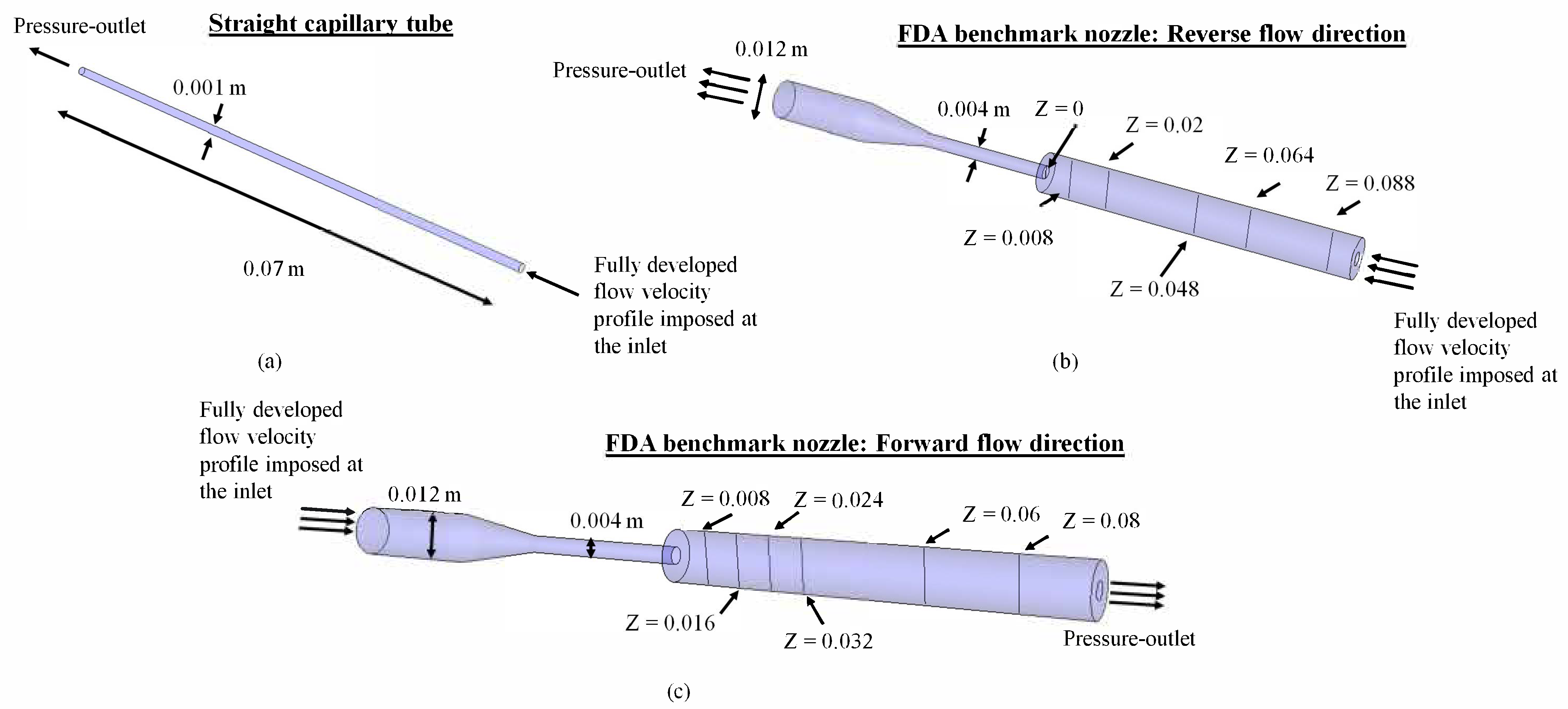
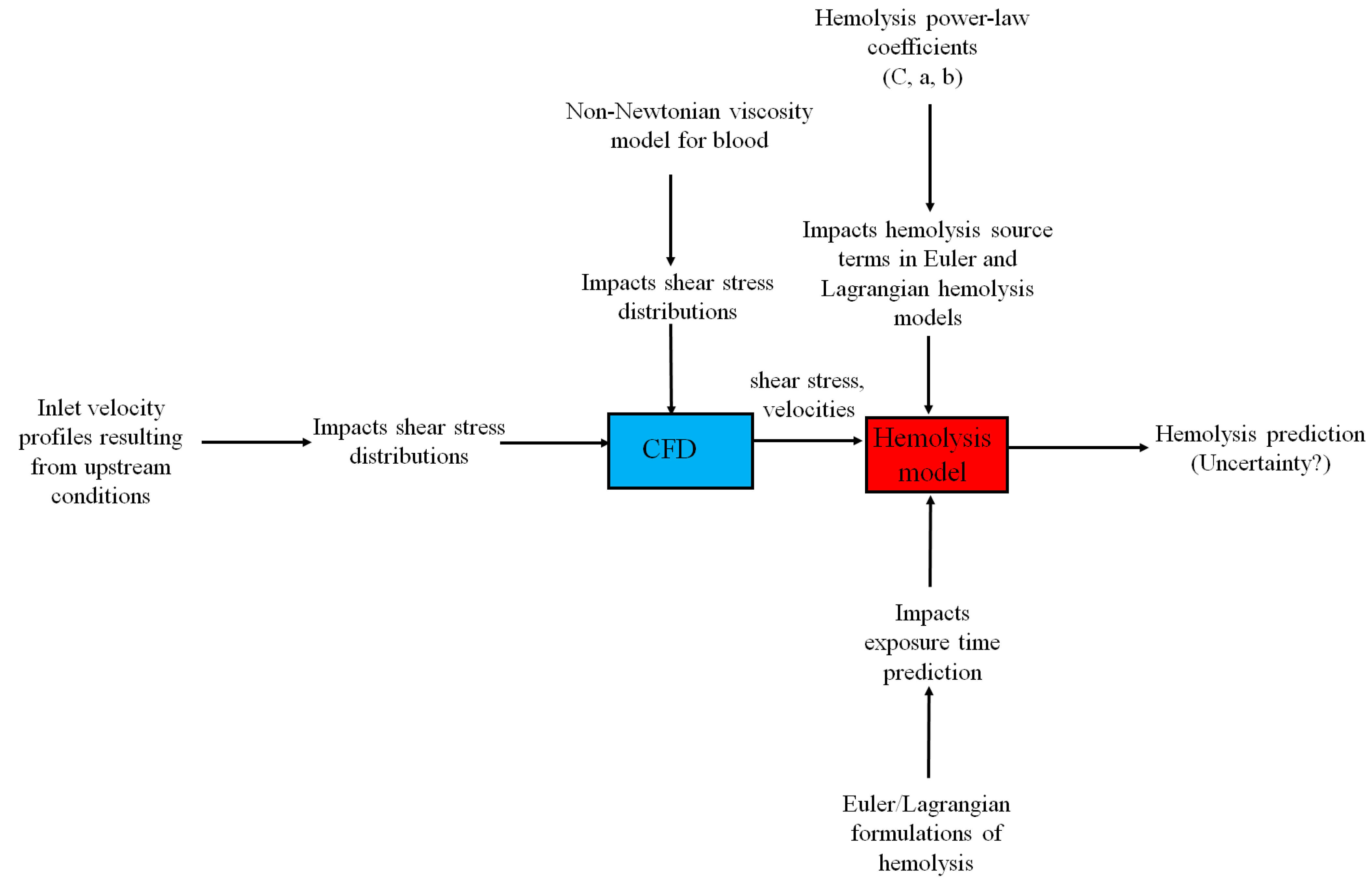
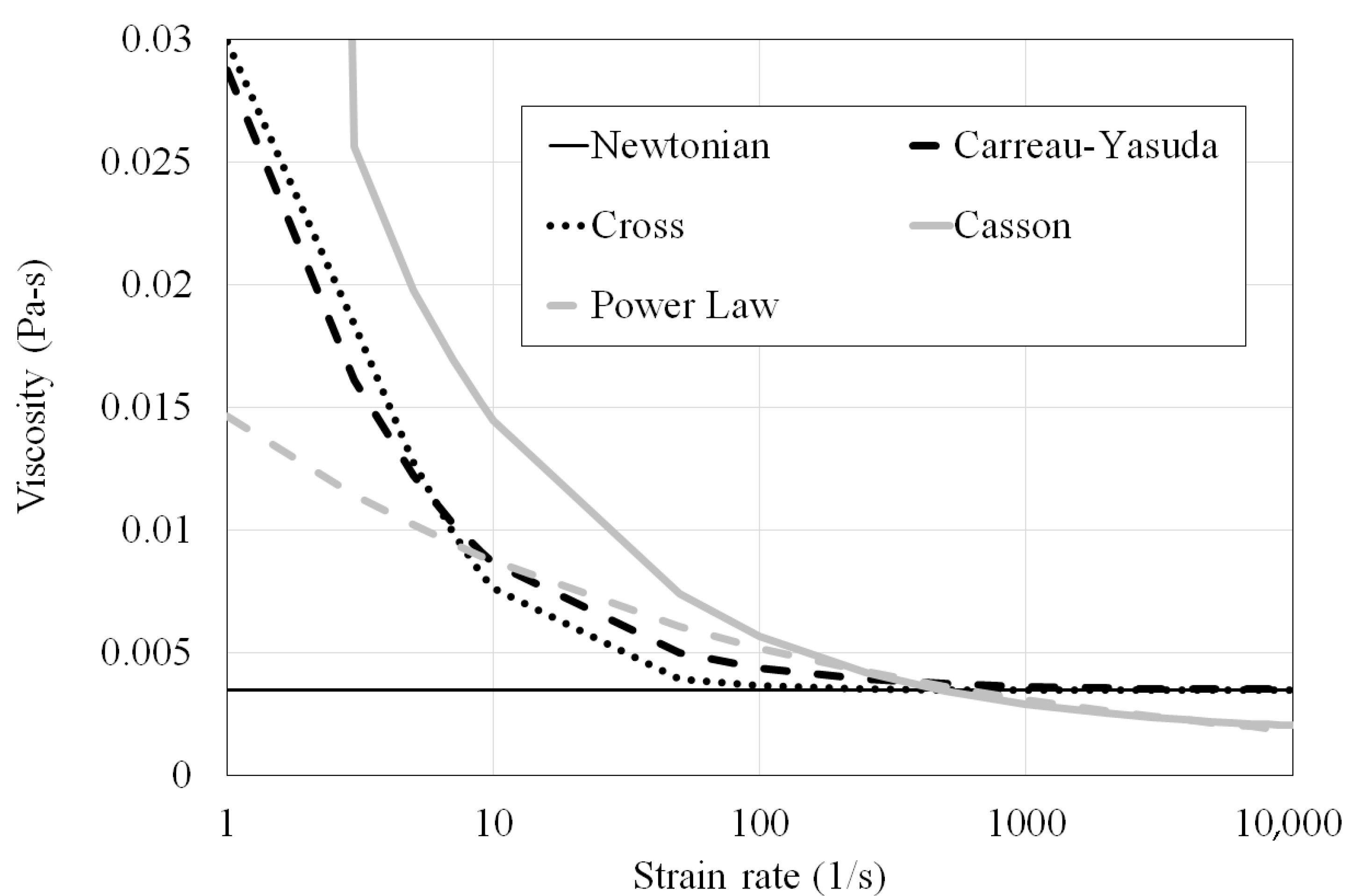
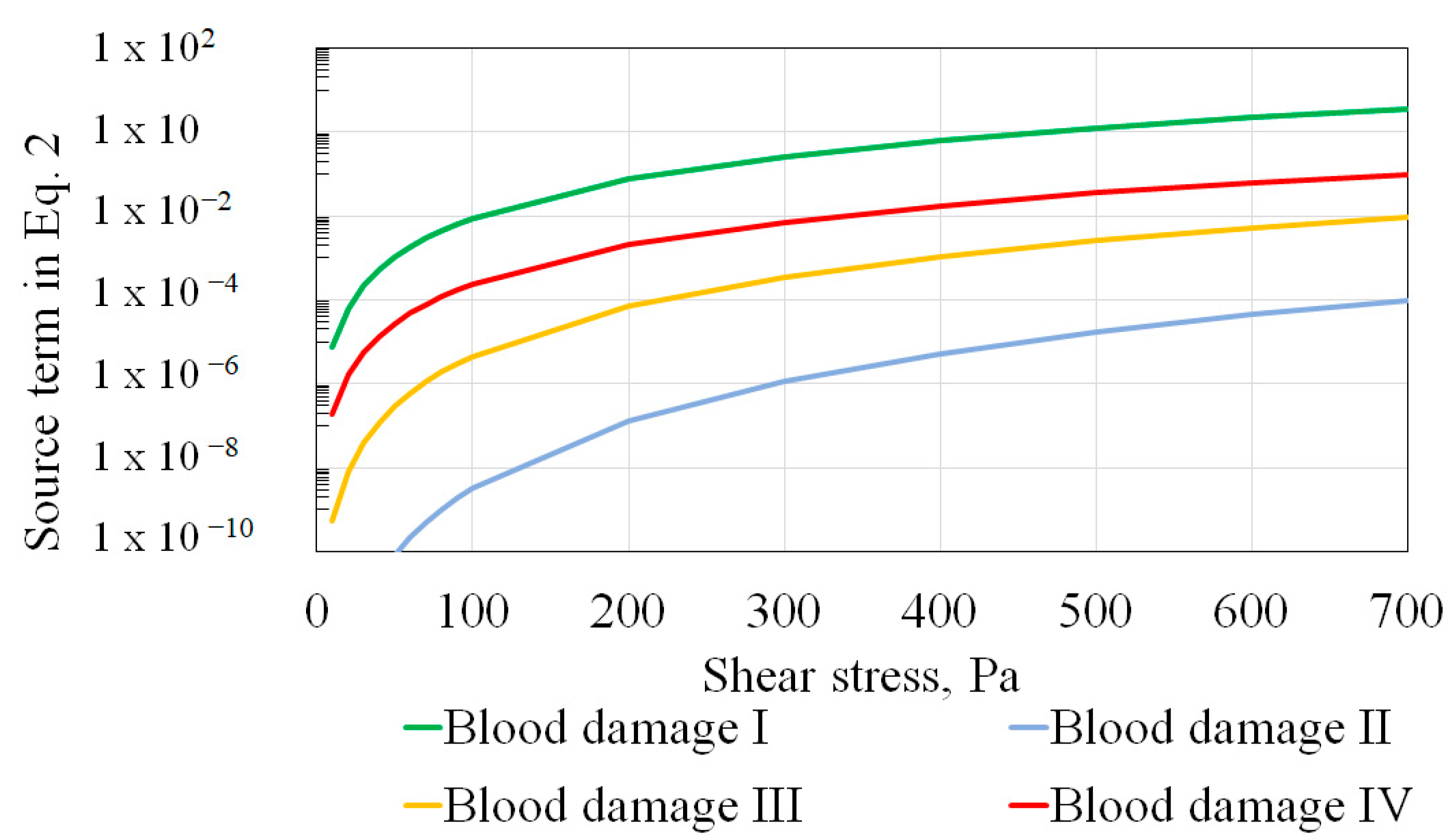
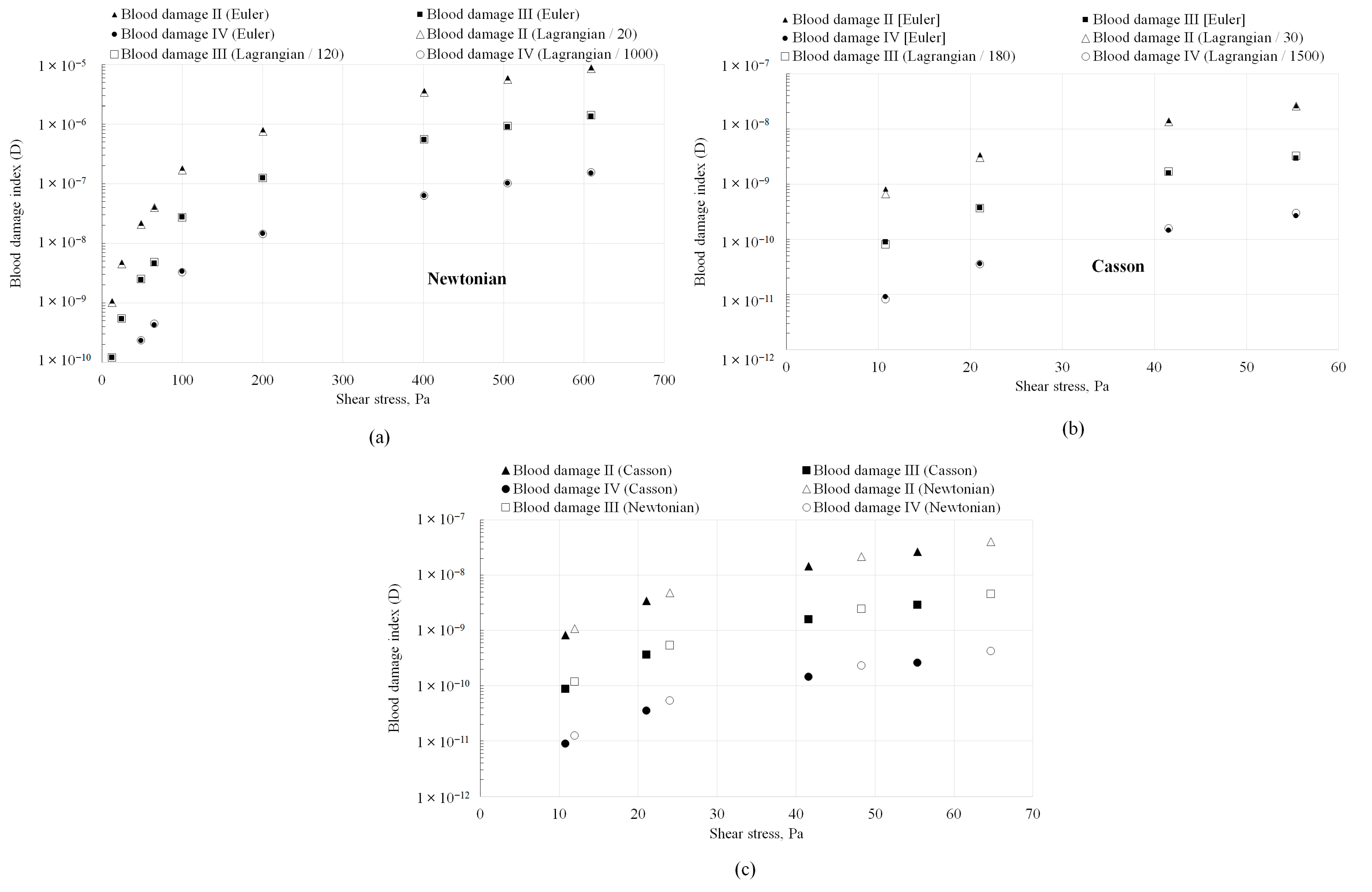
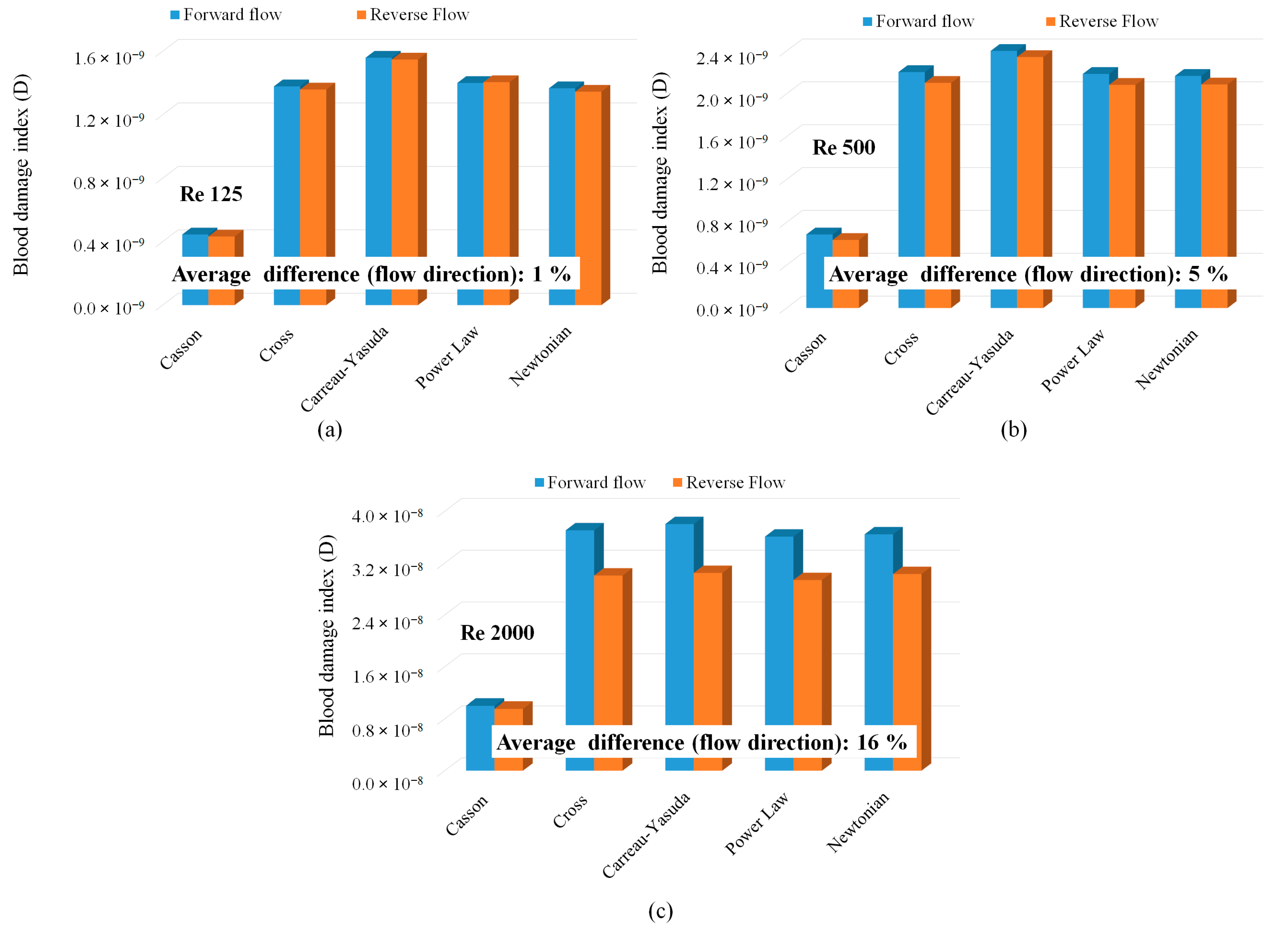
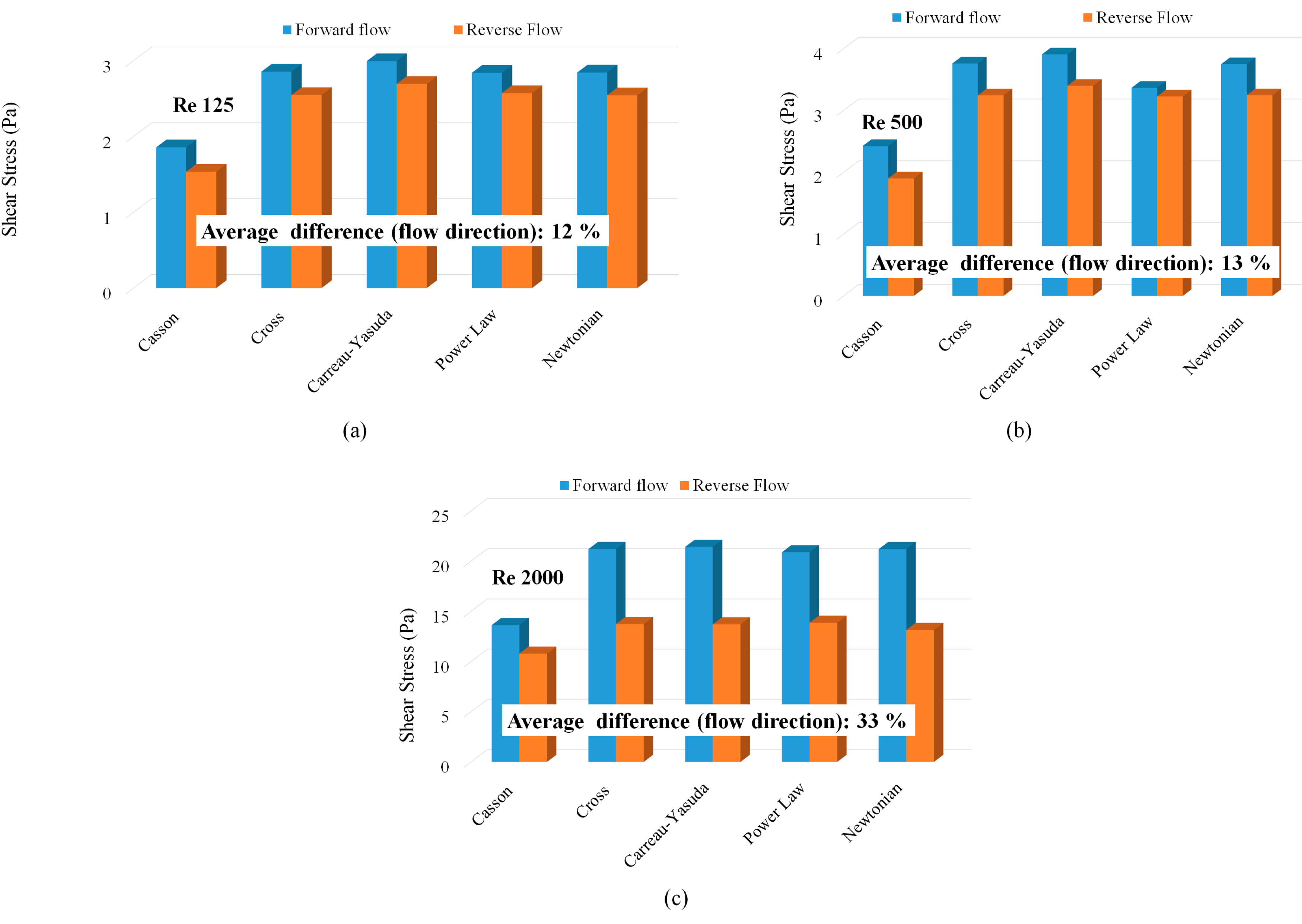
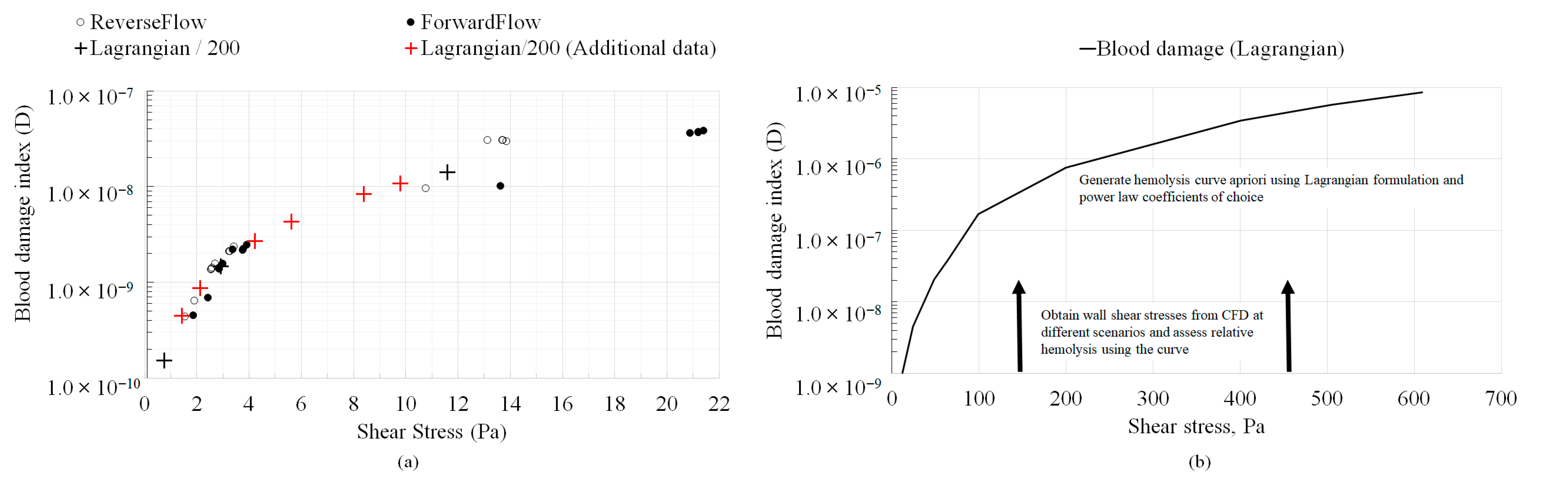
Predicting absolute values of hemolysis using the power law model to guide medical device design is hampered by uncertainties stemming from four sources of model inputs: incoming/upstream velocity profiles, blood viscosity models, power law hemolysis coefficients, and obtaining accurate stress exposure times. Amidst all these uncertainties, enabling rapid assessments and predictions of relative hemolysis would still be valuable for evaluating device design prototypes. Towards achieving this objective, hemolysis data from the Eulerian modeling framework was first generated from computational fluid dynamics simulations encompassing five blood viscosity models, four sets of hemolysis power law coefficients, fully developed as well as developing velocity flow conditions, and a wide range of shear stresses, strain rates, and stress exposure times. Corresponding hemolysis predictions were also made in a Lagrangian framework via numerical integration of shear stress and residence time spatial variations under the assumption of fully developed Newtonian fluid flow. Absolute hemolysis predictions (from both frameworks) were proportional to each other and independent of the blood viscosity model. Further, relative hemolysis trends were not dependent on the hemolysis power law coefficients. However, accuracy in wall shear stresses in developing flow conditions is necessary for accurate relative hemolysis assessments.
Keywords: hemolysis; power law model; non-newtonian; laminar; uncertainty hemolysis; power law model; non-newtonian; laminar; uncertainty