

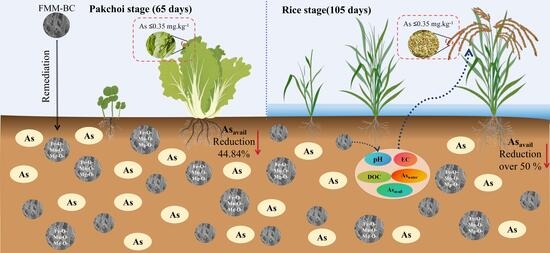
Iron–Manganese–Magnesium Co-Modified Biochar Reduces Arsenic Mobility and Accumulation in a Pakchoi–Rice Rotation System

Abstract
1. Introduction
2. Materials and Methods
2.1. Soil
2.2. Preparation of FMM-BC
2.3. Pot Experimental Design
2.3.1. Pakchoi Cultivation
2.3.2. Rice Cultivation
2.4. Sampling and Analytical Methods
2.4.1. Soil Sample Analysis
2.4.2. Plant Sample Analysis
2.4.3. Characterization of Material
2.5. Data Analysis
3. Results and Discussion
3.1. Preparation Optimization and Structural Characteristics of FMM-BC
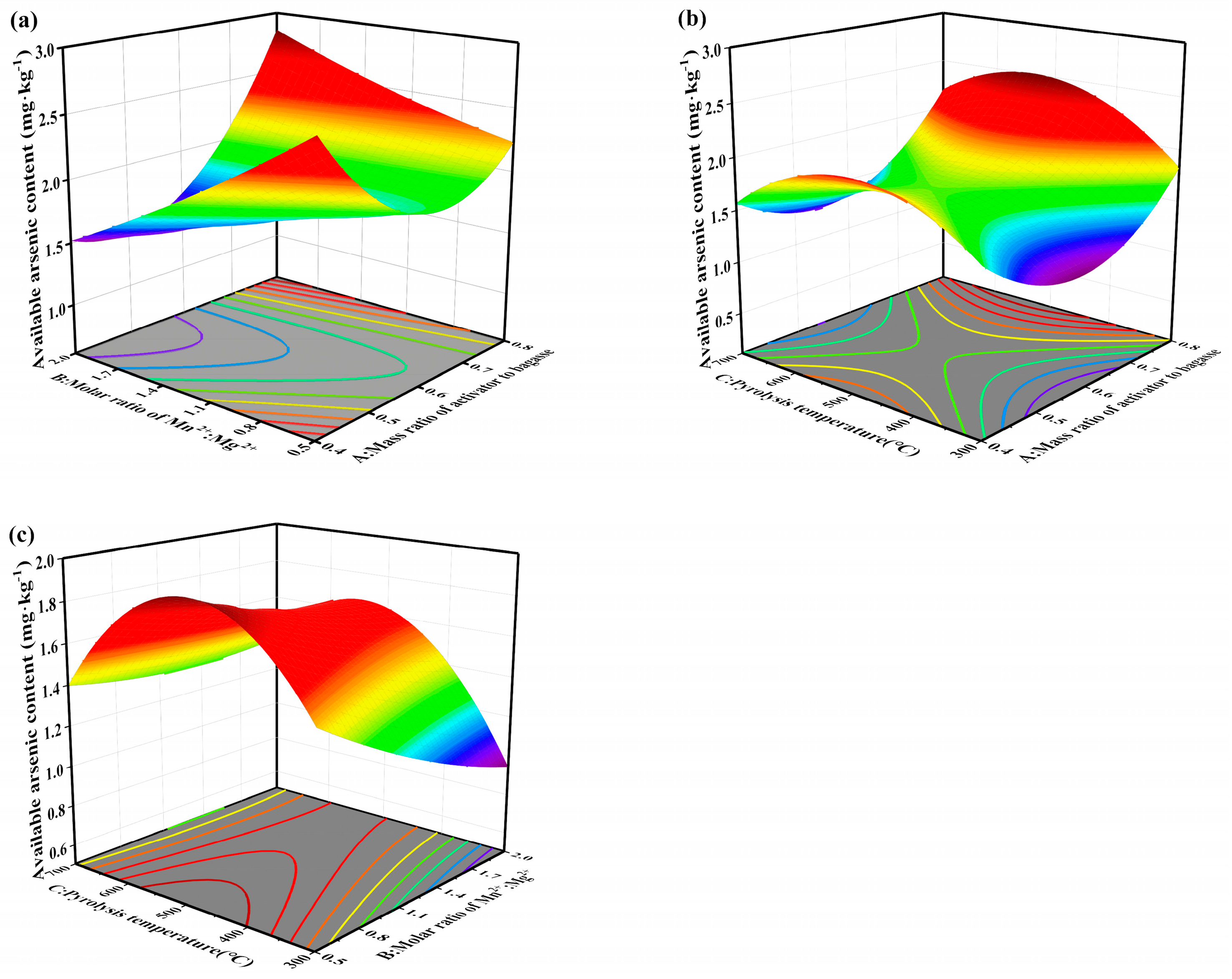
3.1.1. Optimization of FMM-BC Preparation by Response Surface Methodology
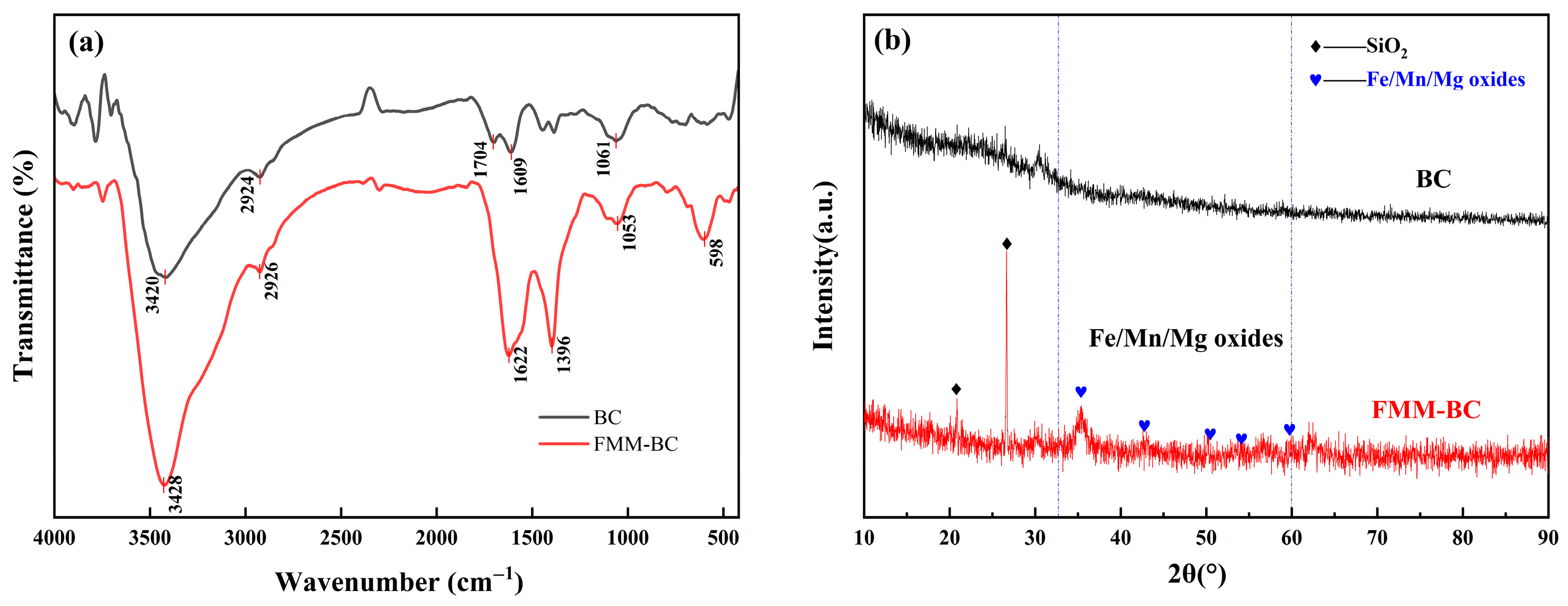
3.1.2. Structural Characteristics of FMM-BC
3.2. Effects of FMM-BC on Soil Properties
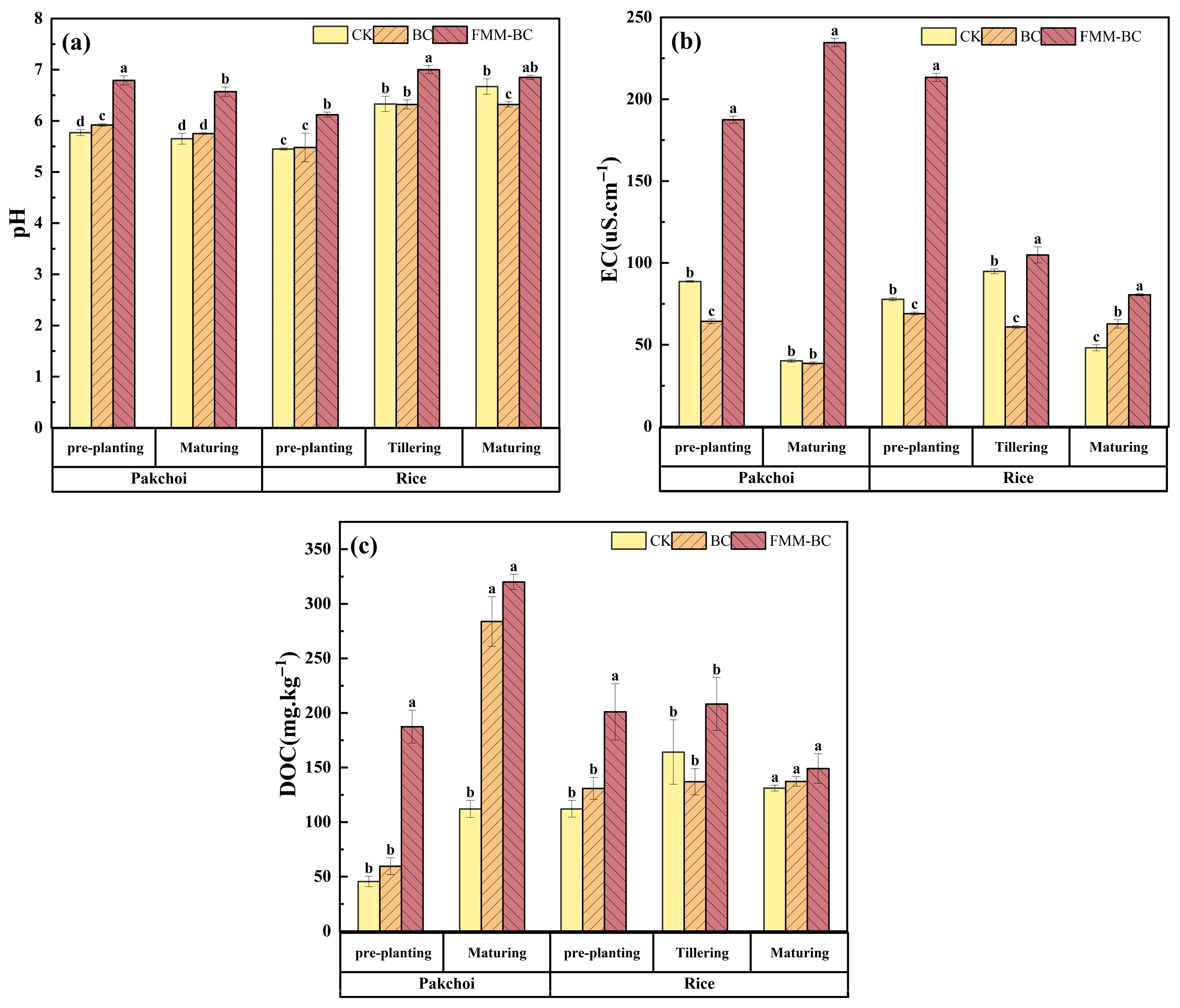
3.2.1. pH
3.2.2. EC
3.2.3. DOC
3.3. Effects of FMM-BC on Arsenic Availability and Fractionation
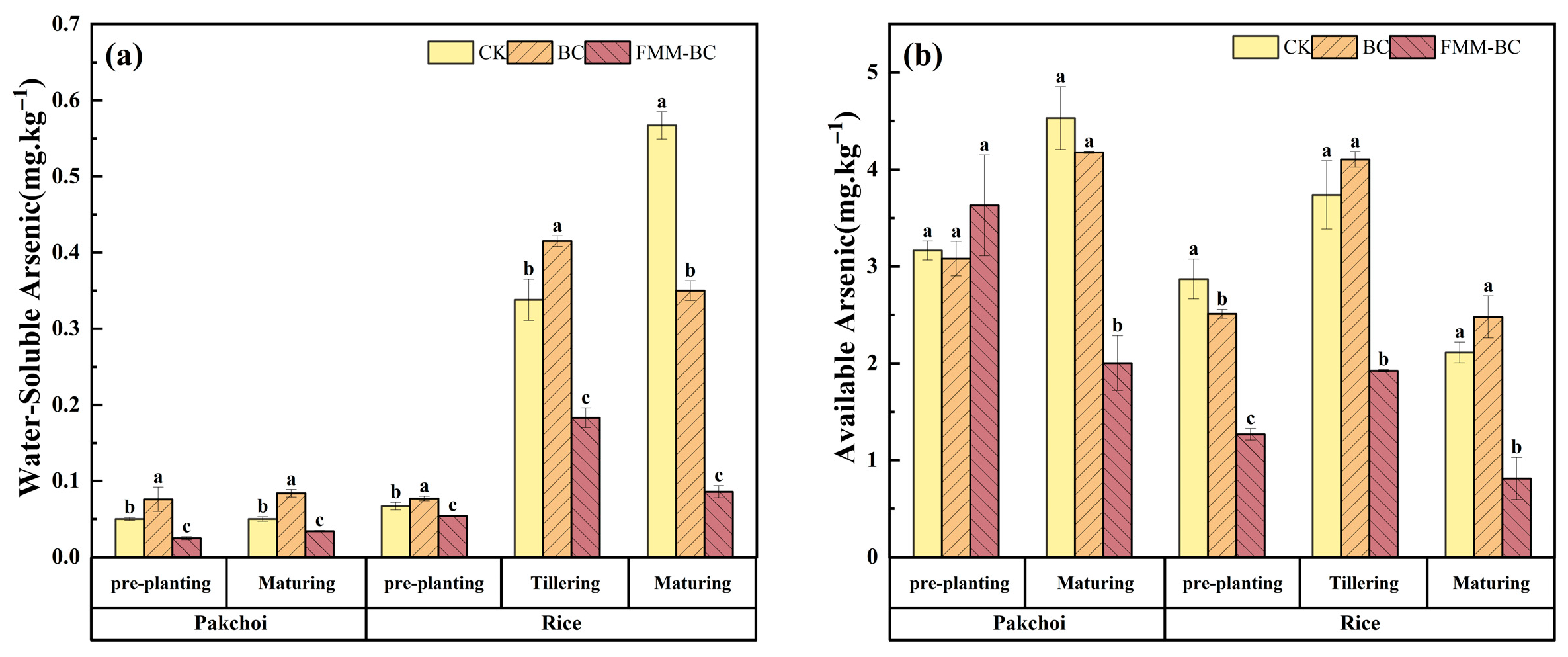
3.3.1. Water-Soluble and Bioavailable Arsenic
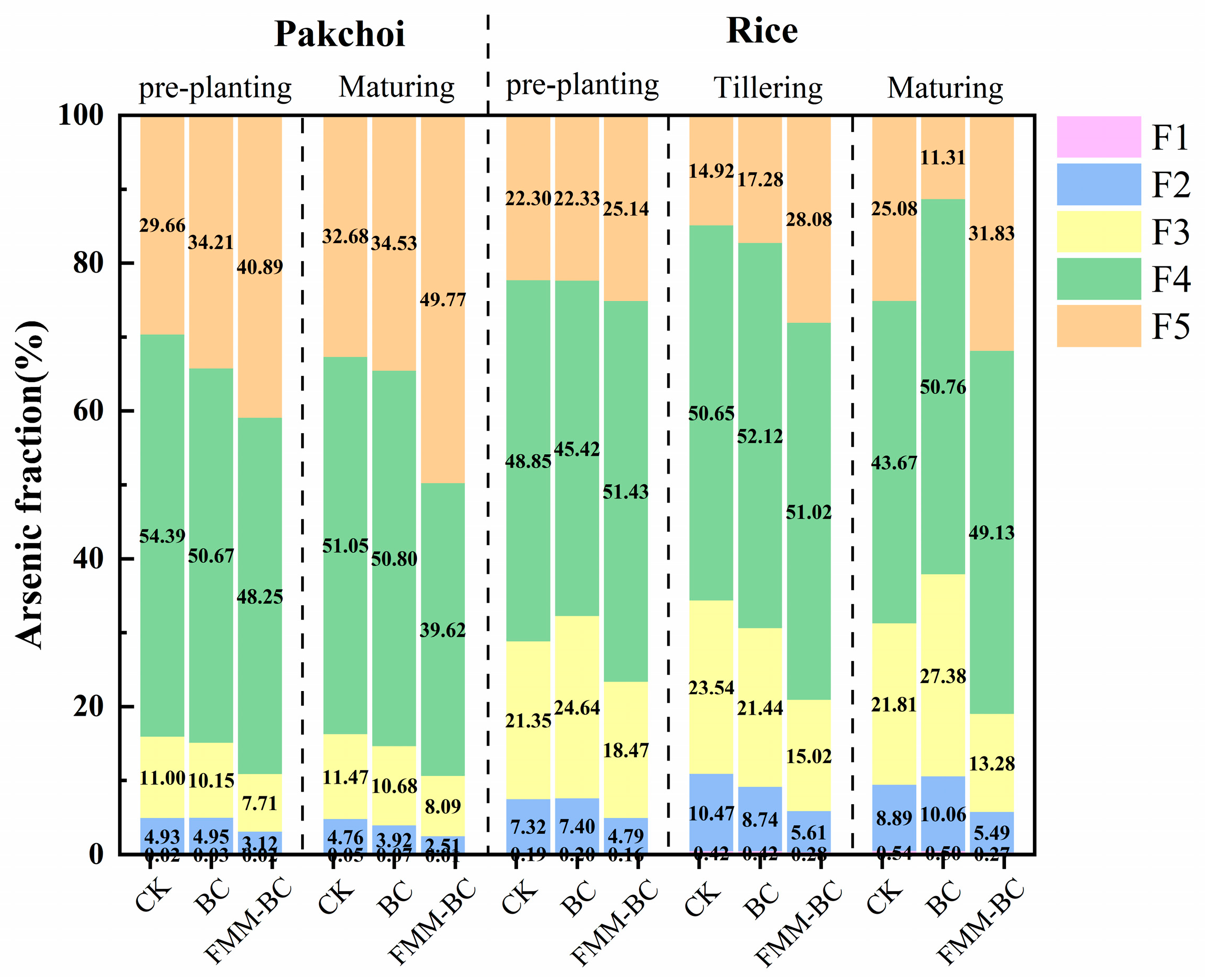
3.3.2. Fractionation of as in Soil
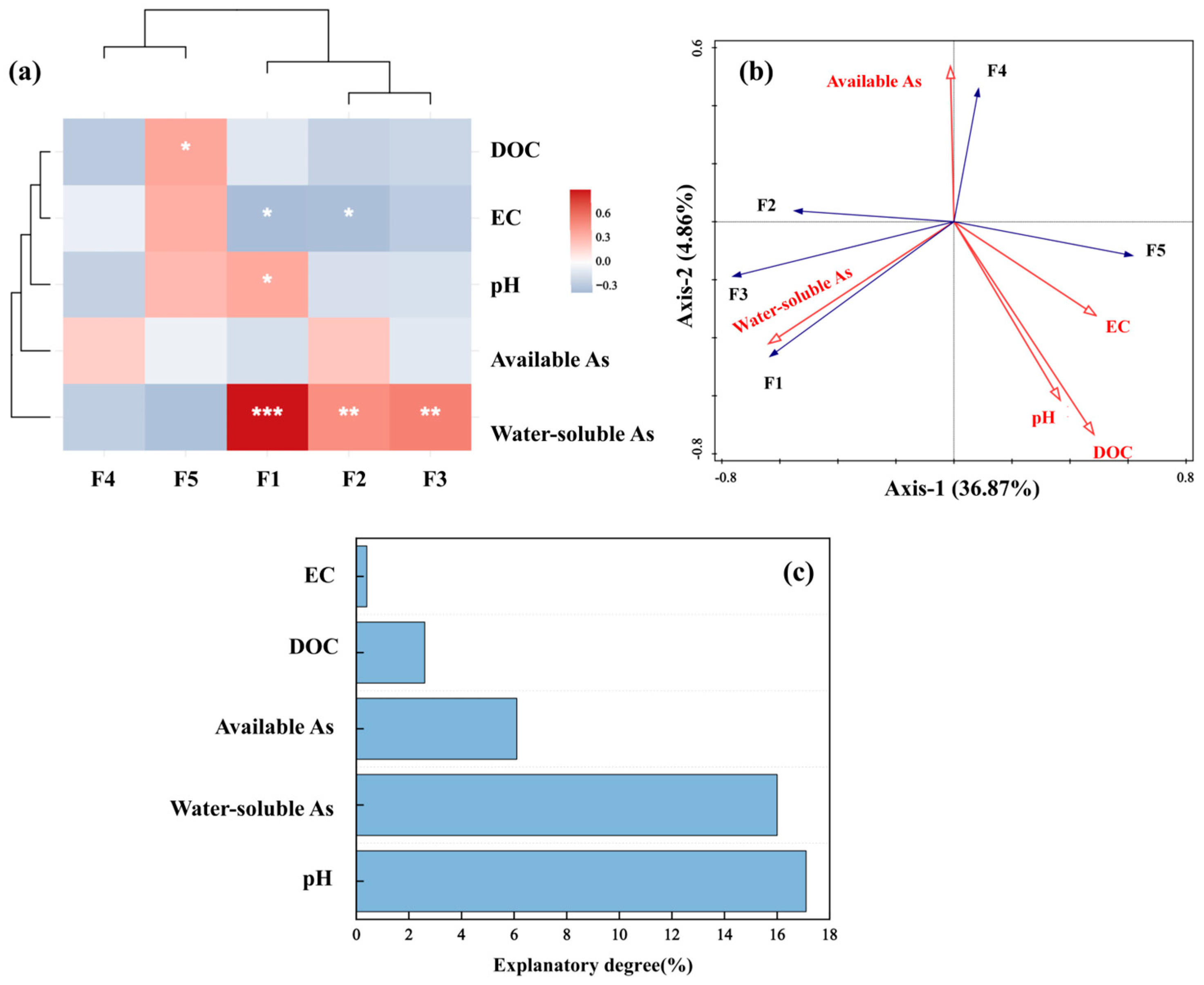
3.3.3. Relationship Between Soil Properties, Available Arsenic, Water-Soluble Arsenic and Soil Arsenic Components Was Explored
3.4. Effects of BC and FMM-BC on Arsenic Uptake and Internal Transport in Pakchoi and Rice
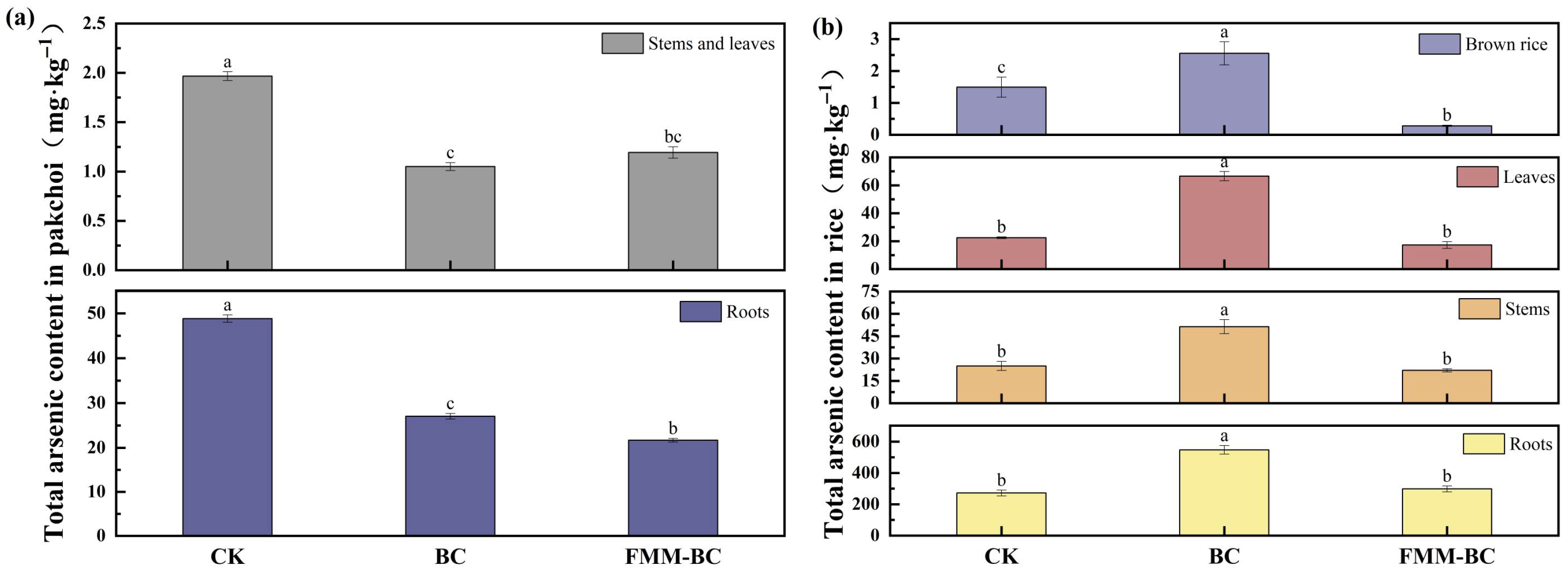
3.4.1. Content of as in Pakchoi and Rice
3.4.2. Arsenic Translocation and Bioconcentration Within Rice Plants
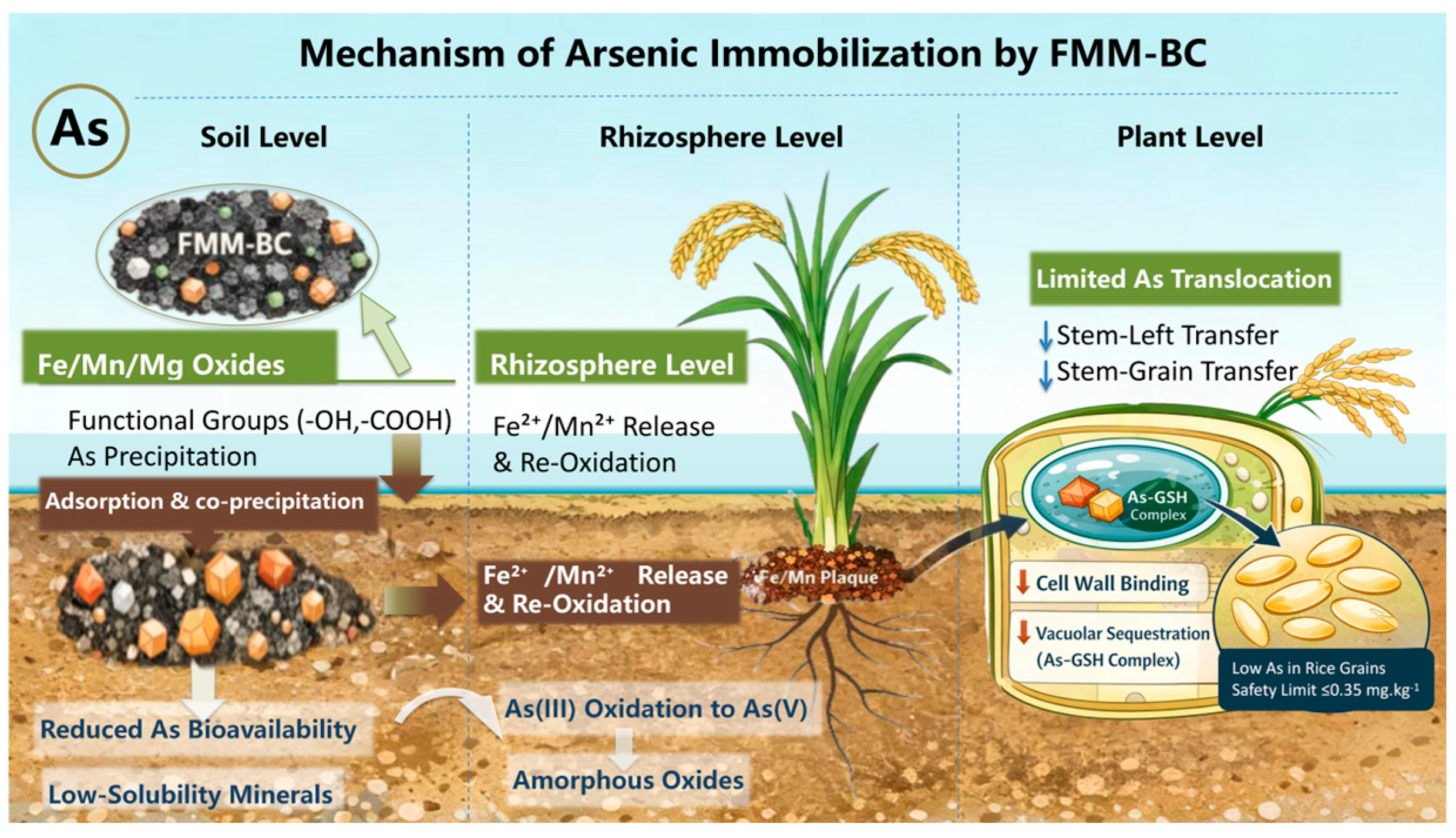
3.4.3. Mechanistic Interpretation of Reduced as Accumulation Under FMM-BC Treatment
4. Conclusions
Supplementary Materials
Author Contributions
Funding
Institutional Review Board Statement
Informed Consent Statement
Data Availability Statement
Acknowledgments
Conflicts of Interest
References
- Chu, S.; Chen, D.; Lu, P. Iron-modified hydrochar mitigates N2O emissions in rice soils by inhibiting nitrification and enhancing complete denitrification: Comparative between hydrochar and pyrolyzed char. Chem. Eng. J. 2025, 507, 160739. [Google Scholar] [CrossRef]
- He, S.; Wang, X.; Wu, X.; Yin, Y.; Ma, L.Q. Using rice as a remediating plant to deplete bioavailable arsenic from paddy soils. Environ. Int. 2020, 141, 105799. [Google Scholar] [CrossRef]
- Islam, M.S.; Magid, A.S.I.A.; Chen, Y.; Weng, L.; Ma, J.; Arafat, M.Y.; Khan, Z.H.; Li, Y. Effect of calcium and iron-enriched biochar on arsenic and cadmium accumulation from soil to rice paddy tissues. Sci. Total Environ. 2021, 785, 147163. [Google Scholar] [CrossRef] [PubMed]
- Samal, A.C.; Bhattacharya, P.; Biswas, P.; Maity, J.P.; Bundschuh, J.; Santra, S.C. Variety-specific arsenic accumulation in 44 different rice cultivars (O. sativa L.) and human health risks due to co-exposure of arsenic-contaminated rice and drinking water. J. Hazard. Mater. 2021, 407, 124804. [Google Scholar] [CrossRef] [PubMed]
- Samal, A.C.; Kar, S.; Bhattacharya, P.; Santra, S.C. Assessment of Potential Health Risk through Arsenic Flow in Food Chain—A Study in Gangetic Delta of West Bengal. In Management and Sustainable Development of Coastal Zone Environments; Ramanathan, A.L., Bhattacharya, P., Dittmar, T., Prasad, M.B.K., Neupane, B.R., Eds.; Springer: Dordrecht, The Netherlands, 2010; pp. 259–269. [Google Scholar]
- Li, G.; Sun, G.-X.; Williams, P.N.; Nunes, L.; Zhu, Y.-G. Inorganic arsenic in Chinese food and its cancer risk. Environ. Int. 2011, 37, 1219–1225. [Google Scholar] [CrossRef] [PubMed]
- Palansooriya, K.N.; Li, J.; Dissanayake, P.D.; Suvarna, M.; Li, L.; Yuan, X.; Sarkar, B.; Tsang, D.C.W.; Rinklebe, J.; Wang, X.; et al. Prediction of Soil Heavy Metal Immobilization by Biochar Using Machine Learning. Environ. Sci. Technol. 2022, 56, 4187–4198. [Google Scholar] [CrossRef]
- Lu, Y.; Gu, K.; Shen, Z.; Tang, C.-S.; Shi, B.; Zhou, Q. Biochar implications for the engineering properties of soils: A review. Sci. Total Environ. 2023, 888, 164185. [Google Scholar] [CrossRef]
- Yang, X.; Hinzmann, M.; Pan, H.; Wang, J.; Bolan, N.; Tsang, D.C.W.; Ok, Y.S.; Wang, S.-L.; Shaheen, S.M.; Wang, H.; et al. Pig carcass-derived biochar caused contradictory effects on arsenic mobilization in a contaminated paddy soil under fluctuating controlled redox conditions. J. Hazard. Mater. 2022, 421, 126647. [Google Scholar] [CrossRef]
- Lu, J.; Zhang, F. Novel Fe–Mn oxide/zeolite composite material for rapid removal of toxic copper ions from aqueous solutions. J. Clean. Prod. 2023, 397, 136496. [Google Scholar] [CrossRef]
- El-Naggar, A.; Chang, S.X.; Cai, Y.; Lee, Y.H.; Wang, J.; Wang, S.-L.; Ryu, C.; Rinklebe, J.; Sik Ok, Y. Mechanistic insights into the (im)mobilization of arsenic, cadmium, lead, and zinc in a multi-contaminated soil treated with different biochars. Environ. Int. 2021, 156, 106638. [Google Scholar] [CrossRef]
- Mawia, A.M.; Hui, S.; Zhou, L.; Li, H.; Tabassum, J.; Lai, C.; Wang, J.; Shao, G.; Wei, X.; Tang, S.; et al. Inorganic Arsenic Toxicity and Alleviation Strategies in Rice. J. Hazard. Mater. 2020, 408, 124751. [Google Scholar] [CrossRef]
- Zhang, L.; Hu, J.; Li, C.; Chen, Y.; Zheng, L.; Ding, D.; Shan, S. Synergistic mechanism of iron manganese supported biochar for arsenic remediation and enzyme activity in contaminated soil. J. Environ. Manag. 2023, 347, 119127. [Google Scholar] [CrossRef]
- Song, P.; Xu, H.; Sun, S.; Xiong, W.; Yang, Z. Remediation of arsenic-spiked soil by biochar-loaded nanoscale zero-valent iron: Performance, mechanism, and microbial response. J. Clean. Prod. 2022, 380, 134985. [Google Scholar] [CrossRef]
- Majumdar, A.; Upadhyay, M.K.; Giri, B.; Karwadiya, J.; Bose, S.; Jaiswal, M.K. Iron oxide doped rice biochar reduces soil-plant arsenic stress, improves nutrient values: An amendment towards sustainable development goals. Chemosphere 2022, 312, 137117. [Google Scholar] [CrossRef]
- Pan, H.; Yang, X.; Chen, H.; Sarkar, B.; Bolan, N.; Shaheen, S.M.; Wu, F.; Che, L.; Ma, Y.; Rinklebe, J.; et al. Pristine and iron-engineered animal- and plant-derived biochars enhanced bacterial abundance and immobilized arsenic and lead in a contaminated soil. Sci. Total Environ. 2021, 763, 144218. [Google Scholar] [CrossRef] [PubMed]
- Yu, Z.; Zhou, L.; Huang, Y.; Song, Z.; Qiu, W. Effects of a manganese oxide-modified biochar composite on adsorption of arsenic in red soil. J. Environ. Manag. 2015, 163, 155–162. [Google Scholar] [CrossRef]
- Wang, J.; Geng, Y.; Hou, H.; Li, X. Iron–Manganese-Modified Hydrochar for Synergistic Stabilization of Antimony and Arsenic in Smelter-Impacted Soils. Toxics 2025, 13, 674. [Google Scholar] [CrossRef]
- Shen, Z.; Jin, J.; Fu, J.; Yang, M.; Li, F. Anchoring Al- and/or Mg-oxides to magnetic biochars for Co-uptake of arsenate and fluoride from water. J. Environ. Manag. 2021, 293, 112898. [Google Scholar] [CrossRef] [PubMed]
- Liang, M.; Li, J.; Zhang, J.; Zhang, Q.; Zhang, X.; Wang, D. Sustainable in-situ arsenic immobilization in paddy soils using magnetic biochar and the role of microbial functional genes. J. Environ. Manag. 2025, 392, 126916. [Google Scholar] [CrossRef] [PubMed]
- Shan, C.; Tong, M. Efficient removal of trace arsenite through oxidation and adsorption by magnetic nanoparticles modified with Fe–Mn binary oxide. Water Res. 2013, 47, 3411–3421. [Google Scholar] [CrossRef]
- Yamaguchi, N.; Nakamura, T.; Dong, D.; Takahashi, Y.; Amachi, S.; Makino, T. Arsenic release from flooded paddy soils is influenced by speciation, Eh, pH, and iron dissolution. Chemosphere 2011, 83, 925–932. [Google Scholar] [CrossRef]
- GB/T 36197-2018; Standard’s Soil Quality—Guidance on Sampling Techniques. Standardization Administration of China: Beijing, China, 2018.
- Li, M.; Chen, L.; Yang, Y.; Wu, S.; Zhang, Q.; Deng, X.; Luo, S.; Zeng, Q. Analysis of the phytoremediation potential, rice safety, and economic benefits of light to moderate Cd-contaminated farmland in oilseed rape-rice rotation with straw removal: A three-year field trial. Environ. Res. 2024, 263, 120280. [Google Scholar] [CrossRef] [PubMed]
- Liang, M.; Lu, L.; Zhang, Q.; Li, J.; Qiao, M.; Wu, Z. Time scale effect of magnetic ferric oxide modified biochar in-situ remediation of arsenic-contaminated paddy soil. Environ. Technol. Innov. 2024, 35, 103727. [Google Scholar] [CrossRef]
- HJ 962-2018; Standard’s Soil—Determination of pH—Potentiometry. Ministry of Ecology and Environment: Beijing, China, 2018.
- HJ 802-2016; Standard’s Soil Quality—Determination of Conductivity—Electrode Method. Ministry of Ecology and Environment: Beijing, China, 2016.
- Kwoczynski, Z.; Burdová, H.; Al Souki, K.S.; Čmelík, J. Extracted rapeseed meal biochar combined with digestate as a soil amendment: Effect on lettuce (Lactuca sativa L.) biomass yield and concentration of bioavailable element fraction in the soil. Sci. Hortic. 2024, 329, 113041. [Google Scholar] [CrossRef]
- Wenzel, W.W.; Kirchbaumer, N.; Prohaska, T.; Stingeder, G.; Lombi, E.; Adriano, D.C. Arsenic fractionation in soils using an improved sequential extraction procedure. Anal. Chim. Acta 2001, 436, 309–323. [Google Scholar] [CrossRef]
- GB/T 22105.2-2008; Standard’s Soil Quality—Analysis of Total Mercury, Arsenic and Lead Contents In Soils—Atomic Fluorescence Spectrometry. Standardization Administration of China: Beijing, China, 2008.
- Jing, F.; Yang, Z.; Chen, X.; Liu, W.; Guo, B.; Lin, G.; Huang, R.; Liu, W. Potentially hazardous element accumulation in rice tissues and their availability in soil systems after biochar amendments. J. Soils Sed. 2019, 19, 2957–2970. [Google Scholar] [CrossRef]
- Ouma, L.; Ofomaja, A. Probing the interaction effects of metal ions in Mnx Fe(3-x)O4 on arsenite oxidation and adsorption. RSC Adv. 2020, 10, 2812–2822. [Google Scholar] [CrossRef]
- Xiao, X.; Chen, B.; Zhu, L. Transformation, morphology, and dissolution of silicon and carbon in rice straw-derived biochars under different pyrolytic temperatures. Environ. Sci. Technol. 2014, 48, 3411–3419. [Google Scholar] [CrossRef]
- Fan, J.; Chen, X.; Xu, Z.; Xu, X.; Zhao, L.; Qiu, H.; Cao, X. One-pot synthesis of nZVI-embedded biochar for remediation of two mining arsenic-contaminated soils: Arsenic immobilization associated with iron transformation. J. Hazard. Mater. 2020, 3398, 122901. [Google Scholar] [CrossRef]
- Lin, L.; Song, Z.; Khan, Z.H.; Liu, X.; Qiu, W. Enhanced As(III) removal from aqueous solution by Fe-Mn-La-impregnated biochar composites. Sci. Total Environ. 2019, 686, 1185–1193. [Google Scholar] [CrossRef]
- Tan, W.-T.; Zhou, H.; Tang, S.-F.; Zeng, P.; Gu, J.-F.; Liao, B.-H. Enhancing Cd(II) adsorption on rice straw biochar by modification of iron and manganese oxides. Environ. Pollut. 2022, 300, 118899. [Google Scholar] [CrossRef] [PubMed]
- Han, Y.-S.; Park, J.-H.; Kim, S.-J.; Jeong, H.Y.; Ahn, J.S. Redox transformation of soil minerals and arsenic in arsenic-contaminated soil under cycling redox conditions. J. Hazard. Mater. 2019, 378, 120745. [Google Scholar] [CrossRef] [PubMed]
- Maguffin, S.C.; Abu-Ali, L.; Tappero, R.V.; Pena, J.; Rohila, J.S.; McClung, A.M.; Reid, M.C. Influence of manganese abundances on iron and arsenic solubility in rice paddy soils. Geochim. Cosmochim. Acta 2020, 276, 50–69. [Google Scholar] [CrossRef]
- Castaldi, P.; Silvetti, M.; Enzo, S.; Melis, P. Study of sorption processes and FT-IR analysis of arsenate sorbed onto red muds (a bauxite ore processing waste). J. Hazard. Mater. 2009, 175, 172–178. [Google Scholar] [CrossRef]
- Xu, X.; Chen, C.; Wang, P.; Kretzschmar, R.; Zhao, F.-J. Control of arsenic mobilization in paddy soils by manganese and iron oxides. Environ. Pollut. 2017, 231, 37–47. [Google Scholar] [CrossRef] [PubMed]
- Fan, J.; Liao, M.; Duan, T.; Hu, Y.; Sun, J. The Mechanism of Arsenic Release in Contaminated Paddy Soil with Added Biochar: The Role of Dissolved Organic Matter, Fe, and Bacteria. Toxics 2024, 12, 661. [Google Scholar] [CrossRef]
- DeVore, C.; Rodriguez-Freire, L.; Villa, N.; Soleimanifar, M.; Gonzalez-Estrella, J.; Ali, A.; Lezama-Pacheco, J.; Ducheneaux, C.; Cerrato, J. Mobilization of As, Fe, and Mn from Contaminated Sediment in Aerobic and Anaerobic Conditions: Chemical or Microbiological Triggers? ACS Earth Space Chem. 2022, 6, 1644–1654. [Google Scholar] [CrossRef]
- Wei, B.; Zhang, D.; Jeyakumar, P.; Trakal, L.; Wang, H.; Sun, K.; Wei, Y.; Zhang, X.; Ling, H.; He, S.; et al. Iron-modified biochar effectively mitigates arsenic-cadmium pollution in paddy fields: A meta-analysis. J. Hazard. Mater. 2024, 469, 133866. [Google Scholar] [CrossRef]
- Kumar, A.; Bhattacharya, T.; Shaikh, W.A.; Roy, A. Sustainable soil management under drought stress through biochar application: Immobilizing arsenic, ameliorating soil quality, and augmenting plant growth. Environ. Res. 2024, 259, 119531. [Google Scholar] [CrossRef]
- Hong, C.; Zhang, J.; Liu, T.; Teng, W.; Fu, R.; Qiu, Y. Simultaneous and long-term effective immobilization of lead, cadmium and arsenic in multi-contaminated soil by ferrihydrite-supported animal-derived biochar. J. Environ. Chem. Eng. 2023, 11, 109989. [Google Scholar] [CrossRef]
- Cao, X.; Ma, L.Q.; Shiralipour, A. Effects of compost and phosphate amendments on arsenic mobility in soils and arsenic uptake by the hyperaccumulator, Pteris vittata L. Environ. Pollut. 2003, 126, 157–167. [Google Scholar] [CrossRef]
- Sun, J.; Li, H.; Zhang, D.; Liu, R.; Zhang, A.; Rengel, Z. Long-term biochar application governs the molecular compositions and decomposition of organic matter in paddy soil. Glob. Change Biol. Bioenergy 2021, 13, 1939–1953. [Google Scholar] [CrossRef]
- Praveen, A.; Khan, E.; Ngiimei, D.S.; Perwez, M.; Sardar, M.; Gupta, M. Iron Oxide Nanoparticles as Nano-adsorbents: A Possible Way to Reduce Arsenic Phytotoxicity in Indian Mustard Plant (Brassica juncea L.). J. Plant Growth Regul. 2017, 37, 612–624. [Google Scholar] [CrossRef]
- Zhao, F.-J.; Wang, P. Arsenic and cadmium accumulation in rice and mitigation strategies. Plant Soil 2020, 446, 1–21. [Google Scholar] [CrossRef]
- Chen, Y.; Xu, J.; Lv, Z.; Xie, R.; Huang, L.; Jiang, J. Impacts of biochar and oyster shells waste on the immobilization of arsenic in highly contaminated soils. J. Environ. Manag. 2018, 217, 646–653. [Google Scholar] [CrossRef] [PubMed]
- Filgueiras, A.V.; Lavilla, I.; Bendicho, C. Chemical sequential extraction for metal partitioning in environmental solid samples. J. Environ. Monit. 2002, 4, 823–857. [Google Scholar] [CrossRef] [PubMed]
- Tang, Z.; Liang, M.; Ding, Y.; Liu, C.; Zhang, Q.; Wang, D.; Zhang, X. Fe3O4/Mulberry Stem Biochar as a Potential Amendment for Highly Arsenic-Contaminated Paddy Soil Remediation. Toxics 2024, 12, 765. [Google Scholar] [CrossRef]
- Yao, B.-M.; Chen, P.; Zhang, H.-M.; Sun, G.-X. A predictive model for arsenic accumulation in rice grains based on bioavailable arsenic and soil characteristics. J. Hazard. Mater. 2021, 412, 125131. [Google Scholar] [CrossRef]
- Yang, X.; Wen, E.; Ge, C.; El-Naggar, A.; Yu, H.; Wang, S.; Kwon, E.E.; Song, H.; Shaheen, S.M.; Wang, H.; et al. Iron-modified phosphorus- and silicon-based biochars exhibited various influences on arsenic, cadmium, and lead accumulation in rice and enzyme activities in a paddy soil. J. Hazard. Mater. 2023, 443, 130203. [Google Scholar] [CrossRef]
- Efrat, R.; Aserin, A.; Garti, N. On structural transitions in a discontinuous micellar cubic phase loaded with sodium diclofenac. J. Colloid Interface Sci. 2008, 321, 166–176. [Google Scholar] [CrossRef] [PubMed]
- Dixit, S.; Hering, J.G. Comparison of Arsenic(V) and Arsenic(III) Sorption onto Iron Oxide Minerals: Implications for Arsenic Mobility. Environ. Sci. Technol. 2003, 37, 4182–4189. [Google Scholar] [CrossRef]
- Chu, D.; Dong, H.; Li, Y.; Xiao, J.; Xiang, S.; Dong, Q.; Hou, X. Insights into the correlation between different adsorption/oxidation/catalytic performance and physiochemical characteristics of Fe-Mn oxide-based composites. J. Hazard. Mater. 2022, 439, 129631. [Google Scholar] [CrossRef] [PubMed]
- Voegelin, A.; Senn, A.-C.; Kaegi, R.; Hug, S.J. Arsenic co-precipitation with iron oxidation products and retention during precipitate aging: Effects of phosphate, silicate and calcium. In Arsenic in the Environment: Bridging Science to Practice for Sustainable Development As2021; CRC Press: Boca Raton, FL, USA, 2024; pp. 323–324. [Google Scholar]
- Huang, L.; Hansen, H.C.B.; Yang, X.; Mu, J.; Xie, Z.; Li, S.; Wu, G.; Hu, Z. Effects of sulfur application on cadmium accumulation in brown rice under wheat-rice rotation. Environ. Pollut. 2021, 287, 117601. [Google Scholar] [CrossRef] [PubMed]
- Wang, Y.; Zhang, C.; Zhao, Y.; Wei, Z.; Li, J.; Song, C.; Chen, X.; Zhao, M. Lignite drove phenol precursors to participate in the formation of humic acid during chicken manure composting. Sci. Total Environ. 2023, 874, 162609. [Google Scholar] [CrossRef]
- Zheng, S.; Xu, C.; Luo, Z.; Zhu, H.; Wang, H.; Zhang, Q.; Zhu, Q.; Huang, D. Co-utilization of sepiolite and ferromanganese ore reduces rice Cd and As concentrations via soil immobilization and root Fe-Mn plaque resistance. Sci. Total Environ. 2024, 908, 168269. [Google Scholar] [CrossRef]
- Lin, L.; Li, Z.; Liu, X.; Qiu, W.; Song, Z. Effects of Fe-Mn modified biochar composite treatment on the properties of As-polluted paddy soil. Environ. Pollut. 2019, 244, 600–607. [Google Scholar] [CrossRef]
- GB 2762-2022; Standard’s National Food Safety Standards: Limits of Contaminants in Foods. National Health Commission of the People’s Republic of China: Beijing, China, 2022.
- Miretzky, P.; Cirelli, A.F. Remediation of Arsenic-Contaminated Soils by Iron Amendments: A Review. Crit. Rev. Environ. Sci. Technol. 2010, 40, 93–115. [Google Scholar] [CrossRef]
- Abbasi, N.A.; Eulaers, I.; Jaspers, V.L.B.; Chaudhry, M.J.I.; Frantz, A.; Ambus, P.L.; Covaci, A.; Malik, R.N. The first exposure assessment of legacy and unrestricted brominated flame retardants in predatory birds of Pakistan. Environ. Pollut. 2017, 220, 1208–1219. [Google Scholar] [CrossRef]
- Seyfferth, A.L.; Amaral, D.; Limmer, M.A.; Guilherme, L.R.G. Combined impacts of Si-rich rice residues and flooding extent on grain As and Cd in rice. Environ. Int. 2019, 128, 301–309. [Google Scholar] [CrossRef]
- Sun, H.; Chen, M.; Wei, L.; Xue, P.; Zhao, Q.; Gao, P.; Geng, L.; Wen, Q.; Liu, W. Roots recruited distinct rhizo-microbial communities to adapt to long-term Cd and As co-contaminated soil in wheat-maize rotation. Environ. Pollut. 2023, 342, 123053. [Google Scholar] [CrossRef]



| Treatment | TFStem/Root | TFLeaf/Stem | TFBrown rice/Stem | BCFRoot | BCFStem | BCFLeaf | BCFBrown rice |
|---|---|---|---|---|---|---|---|
| CK | 0.09 ± 0.01 a | 0.91 ± 0.11 a | 0.06 ± 0.01 a | 1.51 ± 0.10 b | 0.14 ± 0.02 a | 0.13 ± 0.00 b | 0.01 ± 0.00 b |
| BC | 0.09 ± 0.02 a | 1.13 ± 0.35 a | 0.05 ± 0.01 a | 3.05 ± 0.26 a | 0.29 ± 0.07 a | 0.31 ± 0.08 a | 0.01 ± 0.00 a |
| FMM-BC | 0.07 ± 0.00 a | 0.78 ± 0.12 a | 0.01 ± 0.00 b | 1.66 ± 0.10 b | 0.12 ± 0.01 b | 0.10 ± 0.01 b | 0.00 ± 0.01 c |
Disclaimer/Publisher’s Note: The statements, opinions and data contained in all publications are solely those of the individual author(s) and contributor(s) and not of MDPI and/or the editor(s). MDPI and/or the editor(s) disclaim responsibility for any injury to people or property resulting from any ideas, methods, instructions or products referred to in the content. |
© 2026 by the authors. Licensee MDPI, Basel, Switzerland. This article is an open access article distributed under the terms and conditions of the Creative Commons Attribution (CC BY) license.
Share and Cite
Zhang, J.; Liang, M.; Qiao, M.; Zhang, Q.; Zhang, X.; Wang, D. Iron–Manganese–Magnesium Co-Modified Biochar Reduces Arsenic Mobility and Accumulation in a Pakchoi–Rice Rotation System. Toxics 2026, 14, 112. https://doi.org/10.3390/toxics14020112
Zhang J, Liang M, Qiao M, Zhang Q, Zhang X, Wang D. Iron–Manganese–Magnesium Co-Modified Biochar Reduces Arsenic Mobility and Accumulation in a Pakchoi–Rice Rotation System. Toxics. 2026; 14(2):112. https://doi.org/10.3390/toxics14020112
Chicago/Turabian StyleZhang, Jingnan, Meina Liang, Mushi Qiao, Qing Zhang, Xuehong Zhang, and Dunqiu Wang. 2026. "Iron–Manganese–Magnesium Co-Modified Biochar Reduces Arsenic Mobility and Accumulation in a Pakchoi–Rice Rotation System" Toxics 14, no. 2: 112. https://doi.org/10.3390/toxics14020112
APA StyleZhang, J., Liang, M., Qiao, M., Zhang, Q., Zhang, X., & Wang, D. (2026). Iron–Manganese–Magnesium Co-Modified Biochar Reduces Arsenic Mobility and Accumulation in a Pakchoi–Rice Rotation System. Toxics, 14(2), 112. https://doi.org/10.3390/toxics14020112