


Abstract
Background: The number of publications in supply chain management (SCM) and artificial intelligence (AI) has risen significantly in the last two decades, and their quality and outcomes vary widely. This study attempts to synthesise the existing literature in this research area and summarise the findings regarding barriers, drivers, and social implications of using AI in SCM. Methods: The methodology used for this meta-study is based on Kitchenham and Charters guidelines, resulting in a selection of 44 literature reviews published between 2000 and 2021. Results: As a summary of the results, the main areas of AI in SCM were algorithms, followed by the Internet of Things (IoT). The main barriers to AI adoption in SCM are change management, existing technical limitations, and the acceptance of humans for these techniques. The main drivers of AI in SCM are saving costs and increasing efficiency in combination with reducing time and resources. The main social factor is human–robot collaboration. As a result, there will be a decreased amount of labour needed in the future, impacting many existing jobs, especially in low-income areas. Conclusions: Therefore, it is essential for organisations that implement new technology to start as early as possible to inform the organisation about the changes and help them successfully implement them. It is also important to mention that constant learning and improvement of the employees are critical for adopting and successfully using new AI tools. Before investing in new technology, a solid Return on Investment calculation (ROI) and monitoring costs and value are critical to transforming the business successfully.
1. Introduction
The world has globalised over the last decades, and with this movement, today’s supply chains (SC) are highly complex networks with many partners involved in producing products. As we have seen in recent years, especially in 2021, all the SC disruptions and shortages are caused by various reasons. One example is the blocked container ship in the Suez channel, and another one is the COVID lockdowns that resulted in a rethinking of workers and applying for new jobs [1,2,3]. Therefore, in 2021, companies in critical sectors such as warehousing struggled to attract and retain workers [4]. This causes issues at the loading port, transport, and unloading port. To ensure an efficient, effective, and more sustainable circular SC, it is mandatory that applications and tools handle this complexity [5,6].
Papers published in AI, SCM, and a combination of both have increased highly over the last few years, and, therefore, the published systematic literature reviews (SLR) have also increased. In addition, there is an increasing interest in AI itself and AI in SCM.
The quality of the SLRs varies, and so do the reasons why companies and studies successfully implement and use AI in SCM. This research aims to identify barriers, drivers, and social implications of AI in the SC. In more detail, the main barriers and drivers mentioned in the SLRs should be defined and how often they are mentioned. This helps companies to avoid traps and successfully implement AI tools. In addition, the study focuses on identifying the AI tools used in SCM and what limitations and recommendations have been put forward for research and practice.
The paper is structured as follows: Section 2 includes the background of the study and an explanation of the terms used in this study. Section 3 outlines the adopted methodology. Section 4 presents the findings and the analysis. Section 5 highlights the limitations, and finally, Section 6 states the future research direction and conclusion.
2. Background of the Study
This section analyses the actual research state and the relevant background knowledge. It opens with an overview of the state of research, followed by a summary of the different SC domains used in the various SLRs with an explanation. Then, the supply chain reference model (SCOR) is explained to give the process framework for the analysis. Then, AI is explained in the context of the SC, and a summary of the algorithms used in the SC is shown.
2.1. State of the Research
New technological innovations in the SC area seem to be game changers for many companies. Nozari et al. introduced AI of Things (AioT) to use computers instead of humans to control machinery and increase production speed, but some of the significant challenges are proper infrastructure, security, and knowledge [7].
Various authors state that AI in SCM will give companies visibility from the raw material to the end consumer with a shorter time to take corrective actions and make decisions [8,9,10].
By implementing AI, companies can effectively streamline sourcing, making and delivering their products, including increased prediction of maintenance, planning, and scheduling, and reduce the bullwhip effect [11,12,13]. In addition, AI can support specific industries such as food and beverage to improve the previously mentioned topics and increase product quality and trust [14,15].
On the other hand, studies conclude that SC performance cannot be improved by investing in advanced technologies alone. Instead, improvement requires SC participants to be willing to share accurate and complete information and account for SC disruptions quickly to make the SC more cooperative and effective [16,17]. In addition, automation triggers employees’ fear of losing their jobs which causes resistance [18].
2.2. Supply Chain Domains
An overview of the different SCs mentioned in the SLRs with an explanation are outlined in Table 1.

Table 1.
Supply chain domains and explanation.
2.3. Supply Chain Operational Reference Model (SCOR)
The SCOR describes a general business process between a company and the actors in an inter-company value chain and deals with the flow of goods, information, and payment. It was developed by the non-profit organisation APICS Supply Chain Council in the mid-1990s and is regularly adapted and used as a standard for research and seminars on SCM [31].
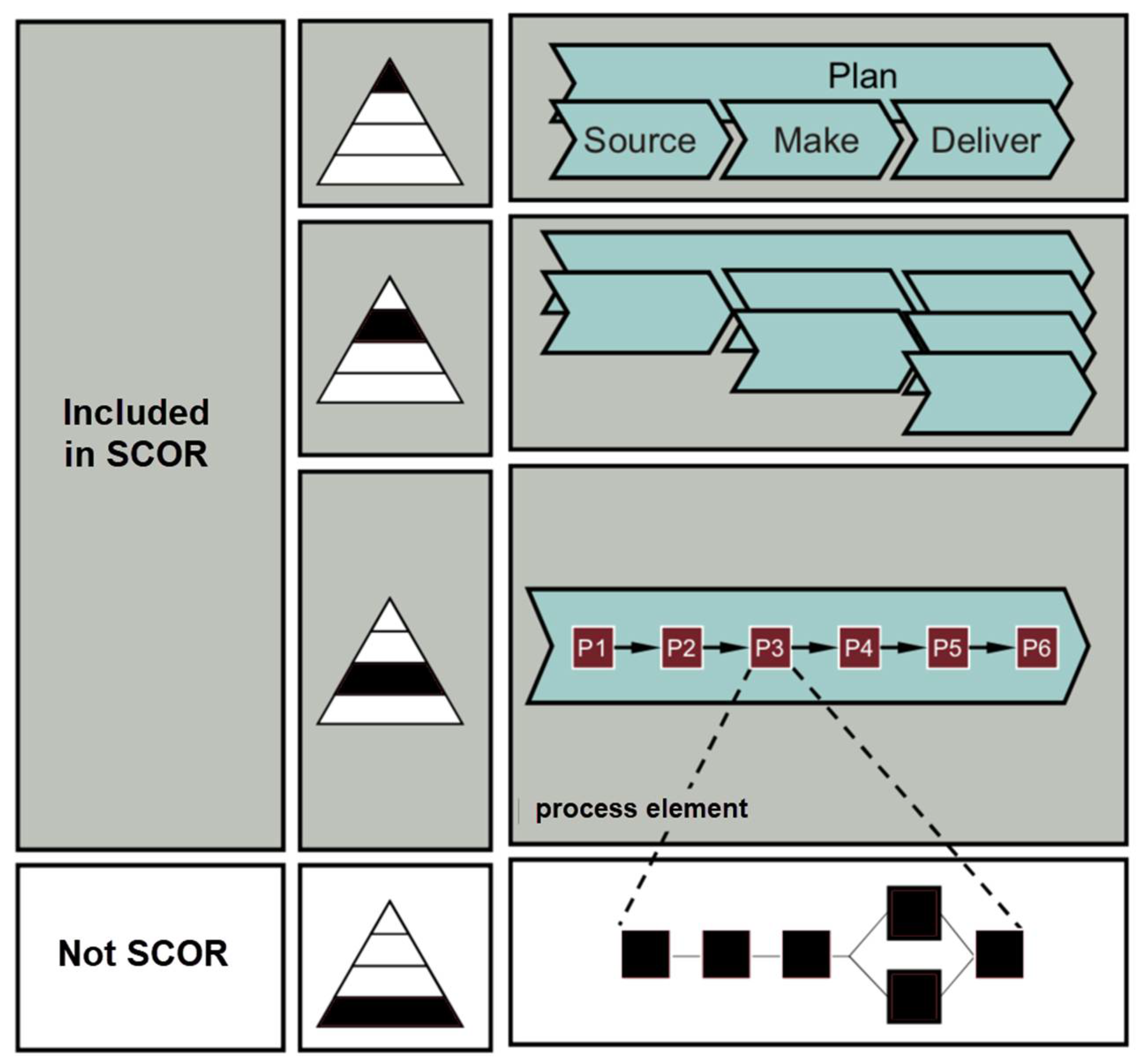
SCOR is a process reference model with the purpose of a process reference model or business process framework visualized in Figure 1, to define process architecture that aligns with essential business functions and goals. The architecture here references how processes interact and perform, how these processes are configured, and the requirements (skills) of staff operating the processes [31].
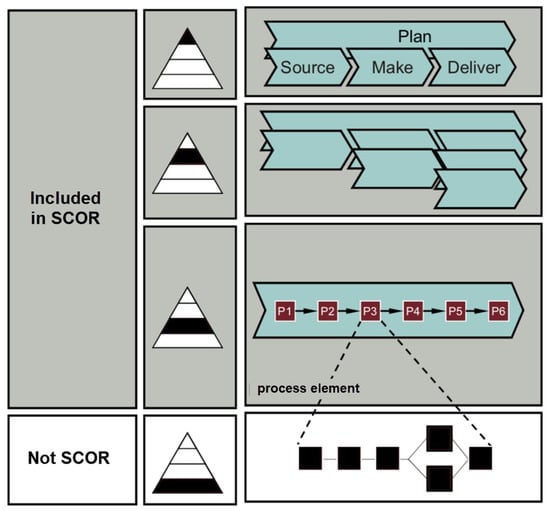
Figure 1.
SCOR process level. Adapted from Ref. [31].
The SCOR reference model consists of four major sections:
- Performance: Standard metrics to describe process performance and define strategic goals.
- Processes: Standard descriptions of management processes and process relationships.
- Practices: Management practices that produce significantly better process performance.
- People: Standard definitions for skills required to perform SC processes [31].
2.4. Artificial Intelligence (AI)
AI can be interpreted in many different ways. John McCarthy, one of the innovators of AI, defined AI as the science of constructing intelligent machines. From today’s perspective, this definition is insufficient to do justice to the subject area. A generally accepted definition is not yet available, but somewhat more accurate would be the following definition [32]:
AI deals with methods that enable a computer to solve tasks/problems that require intelligence similar to humans.
There are different views and opinions on how the topics and sub-topics of AI can be organised. For this work, the in Table 2 explained structure was used.
Table 2.
Topics and sub-topics of AI.
2.5. Commonly Used Algorithms and AI Concepts in Supply Chain
To create artificial intelligence, a computer algorithm is needed. We encounter an algorithm at every turn in mathematics, for example, when solving a system of linear equations [56].
For this work, the following definition of an algorithm is used:
An algorithm is a complete, precise, and finite description, written in a notation or language with an exact definition, of a stepwise problem-solving procedure for determining sought data objects (their values) from given values of data objects, in which each step consists of several executable, unambiguous actions and an indication of the next step [57].
Therefore, an algorithm is an instruction or a problem-solving procedure that shows how a task can be solved. To satisfy the instruction, some inputs are necessary. The algorithm must be generally valid, executable, efficient, understandable, unambiguous, and correct. Furthermore, it must be finite [57].
The Table 3 below is an overview of used algorithms in the SC extracted from the SLRs.
Table 3.
Commonly used algorithms.
3. Methods
An SLR follows quality procedures and a specific review protocol to choose relevant studies. The information is extracted and analysed from the selected studies to answer the research questions. It is possible to conduct a meta-study in domains where several systematic reviews exist. A meta-study or tertiary study is an SLR of SLRs to answer additional research questions [58]. A tertiary review utilises the same methodology as a standard systematic literature review. This research is based on SLR guidelines from Kitchenham et al. [59,60].
3.1. Research Question
Kitchenham et al. recommended questions for all tertiary studies [61]. RQs 1–3 are referred to as this. In addition, more specific questions this study aims to answer are the RQs 4–6.
- RQ1: What is the quality of the SLRs?
- RQ2: What research areas are addressed in the SLRs on AI in SCM?
- RQ3: Which individuals, organisations, and publication venues are most active in the research on AI in SCM?
- RQ4: What are the barriers and drivers to AI adoption in SCM?
- RQ5: What importance is placed on human and social factors in AI applications in SCM?
- RQ6: What recommendations are made for future research on AI in SCM?
- RQ7: What role does the SCOR model play, and which area of the SCOR model was used for the research?
The first RQ will help to determine which of the SLRs has the highest quality. To make a solid rating, factors such as the publisher’s reputation, the journal impact factor (JIF), the role of AI and SCM, and the quality of the RQs and the used studies were considered. Considering the quality, the methodology and the SLR guidelines, combined with the analysis method, were used to identify high-quality studies. In total, 12 quality questions were assigned, which can be found in Section 3.4.
RQ2 should answer the question of what areas of AI are mentioned in the studies and what are the most important ones. RQ3 should answer the question about the most influential individuals and organisations participating in that research. RQ4 is one of the main questions in this paper, which should answer the most important drivers and barriers to AI in SCM. This will also help identify what companies should do to leverage AI and what things should be avoided. People play a central role in SCM and logistics; RQ5 should provide more insights into social and human factors that benefit companies. RQ6 is intended to provide recommendations for future research areas and give scientists a perspective on the areas on which they should focus. Finally, RQ7 is intended to provide information on whether and how the industry standard model is used in the scientific world. All questions help to understand which AI tools should be used in companies, how to avoid obstacles and the main reasons for using AI in SCM. Companies can use this information to implement new AI technologies successfully. The scientific community participates in a summary of the most important topics for future research.
3.2. Search Strategy
One initial search was performed on the 24 August 2021 using the Mendel University search facilities. The MENDELU searches over 200 library databases, including Scopus. Several iterative checks were done by analysing alerts from different publishers such as Web of Science, Scopus, Wiley, and Springer with the same search criteria. This study followed a formal approach to identify the studies involved in the systematic review. Finally, the collected studies were analysed on numerous variables to capture a complete picture of AI applications in SCM. The search string is shown in the Table 4 below:
Table 4.
Search strings used in the library databases.
3.3. Selection Process
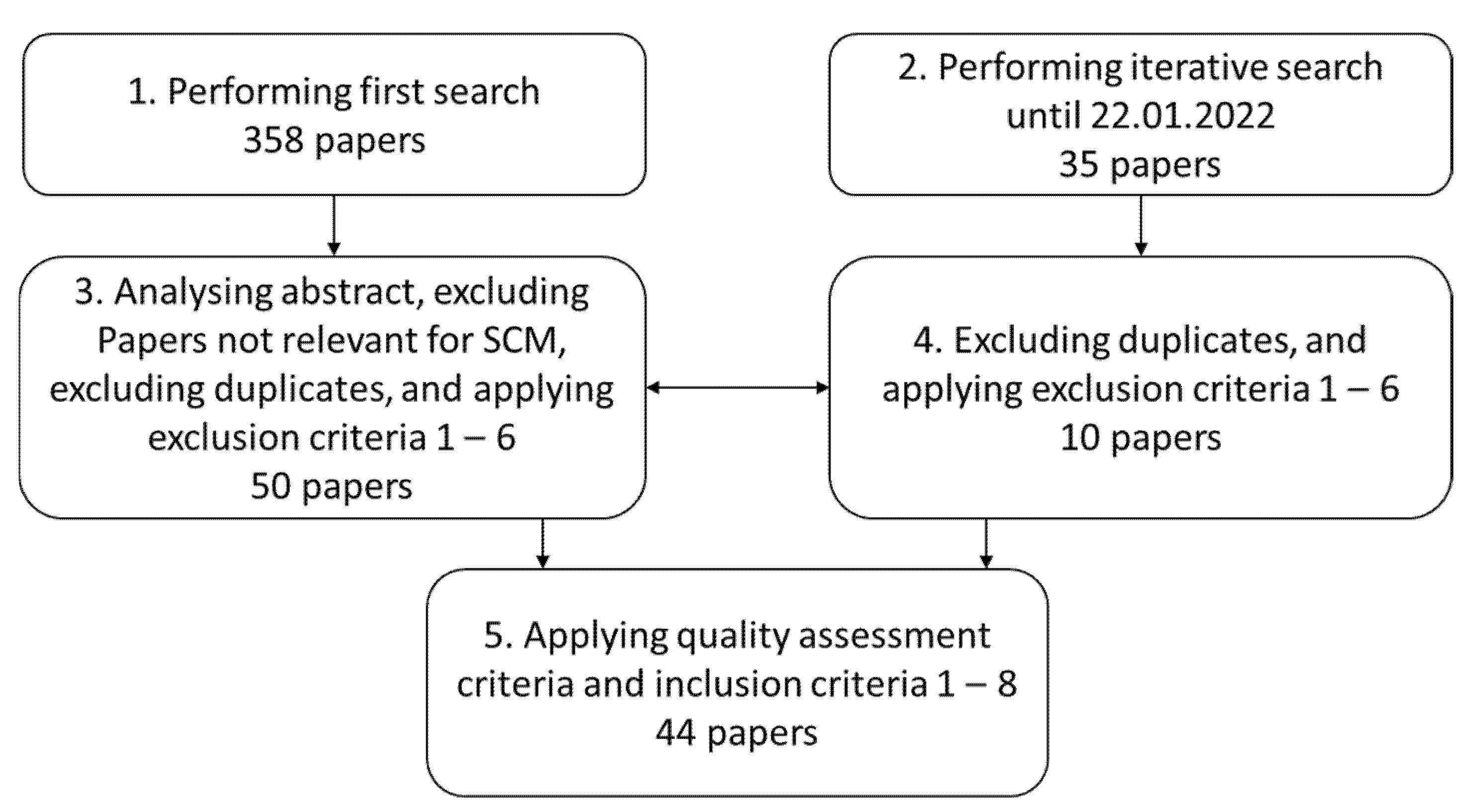
The selection process is shown in Figure 2. Process flow of paper selection.
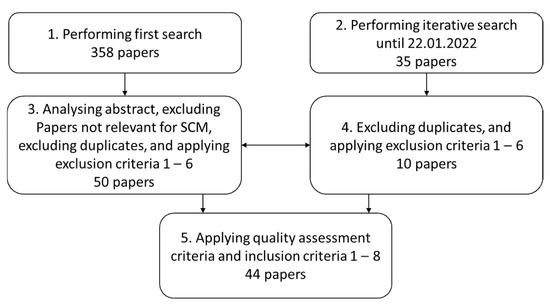
Figure 2.
Process flow of paper selection.
The initial search resulted in 358 SLRs on AI in SCM published between 2000 and 2021. After evaluating the abstracts and utilising the exclusion criteria in Table 5, 44 papers were selected for advanced analysis (step 3). The iterative forward search was done based on alerts for newly released papers using the search string to ensure new papers will be gathered and included in the work. Alerts were set up for Scopus, Web of Science, Google Scholar and Wiley. After applying exclusion criteria, reading abstracts, and determining duplicates (step 4), ten additional papers were found for this work. Finally, after applying the quality assessment described in Section 3.4, 44 publications could be used for further analysis.
Table 5.
Inclusion and exclusion criteria for SLRs.
3.4. Quality Assignment
Twelve quality assessment questions were prepared to assess the reliability, relevance, and consistency of the 44 studies obtained in step 4 of the selection process (Figure 2, Table 6):
- Is the publisher reputable? e.g., Elsevier, Taylor and Francis, Emerald, and Springer were considered among the top publishers.
- What is the journal impact factor (JIF) of the journal where the paper is published?
- Role of AI in the review? e.g., primary technology under consideration, one of the two (or many) technologies considered
- What type of review has been performed?
- Are the research questions clearly defined?
- Has the number and quality of primary studies been reported?
- Were the search strings reported, and in how much detail do they describe the AI and SCM?
- How many online databases were searched?
- Are years covered in the review known?
- Have specific SLR guidelines been reported to be followed during the review?
- Has the data analysis method been described?
- What role has the SCOR model played in the review? E.g., was it only related to a specific SC area such as Enable, Source, Make, Deliver, or Return?
Most of the questions rely on the SLR guidelines [60,62]. The first two questions are added for credibility and the aspects of relevance for the scientific community. The quality score of the reviews was calculated using the following schema: 1 = yes, 0.5 = partial, and 0 = no. The scoring is based on [63].
Table 6.
Quality ranking criteria.
Table 6.
Quality ranking criteria.
| Q | Quick Info | Yes (1) | Somewhat (0.5) | No (0) |
|---|---|---|---|---|
| 1 | Publisher reputable | Top publisher | Reputable open access and professional bodies | Others |
| 2 | Journal impact factor (IF) | Ten or more | Three or more, less than ten | Less than three |
| 3 | Role of AI in the review | Primary | One of the two main techniques compared | One of many techniques |
| 4 | Type of review | SLR | Mapping or scoping study | Others |
| 5 | Clear definition of RQs | Yes | Could be derived No, but the objectives of the review are implicit | No |
| 6 | Number and quality of primary studies | All peer-reviewed | Not all peer-reviewed | No |
| 7 | Search string reported | Yes (3 or more terms) | Yes (1–2 terms) | No |
| 8 | How much databased were searched | Three or more | Two or less | Not reported |
| 9 | Years covered in the review | Yes | Could be derived | No |
| 10 | Specific SLR guidelines | Yes | No, but the review was based on existing SLRs | No |
| 11 | Has the data analysis method been described | Yes | Could be derived | No |
| 12 | Role of SCOR | SCOR areas fully used | Only a few of SCOR areas used | No SCOR areas used |
| 13 | Role of SCM | Primary | One of the two main techniques compared | One of many techniques |
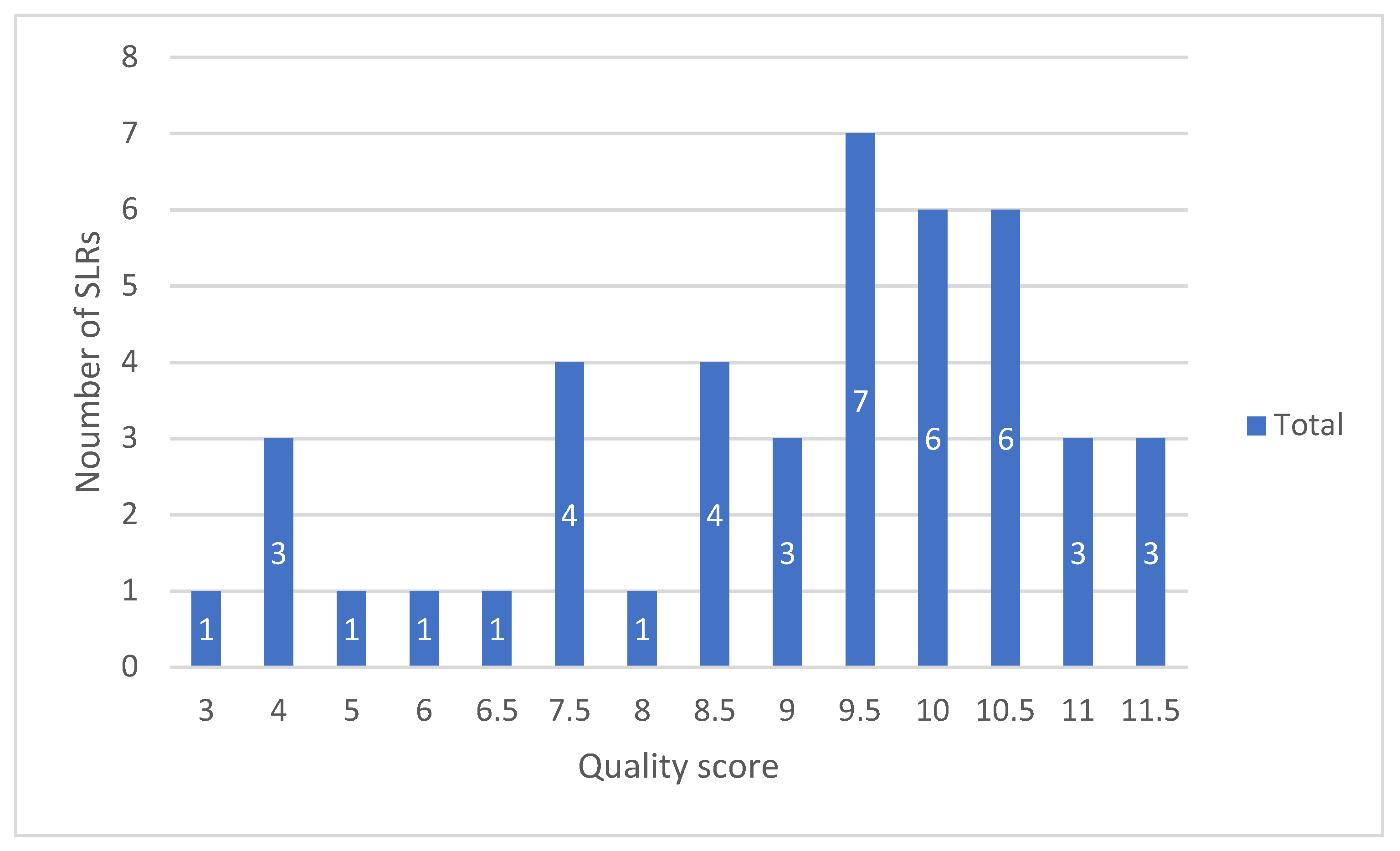
Based on the ranking criterias mentioned in Table 6 the overall score was calculated as a sum of the 12 questions. The results varied between 3 and 11.5, and the average lay at 8.83 with a variance of 4.64.
3.5. Data Extraction and Analysis
The information was extracted from the selected 44 papers and read, interpreted, summarised, and analysed with MaxQDA:
- SLR-related information: publisher, type of review, online databases, number of studies, years covered, SLR guidelines, search strings, data analysis method, and research questions.
- Bibliographic information such as abstract, citation, title, publication year, publication type, publication title, and keywords
- RQ-related information: AI usage, AI types and methods, used algorithms, SCOR model used, related SCM area, main findings, barriers of adoption of the AI in SCM, drivers for AI adoption, recommendations, and future research area.
4. Analysis and Findings
In this section, the data extraction results are described in graphical and tabular form and reviewed in the context of the RQs.
4.1. RQ1: What Is the Quality of the SLRs?
A total of 44 SLRs on AI in SCM were found with an overall average quality score of 8.42. The maximum reachable score is 13, but none of the SLRs reached this. A total of 29 (65.91%) papers had a higher score than the medium of 8.42. The paper with the lowest score had 3.
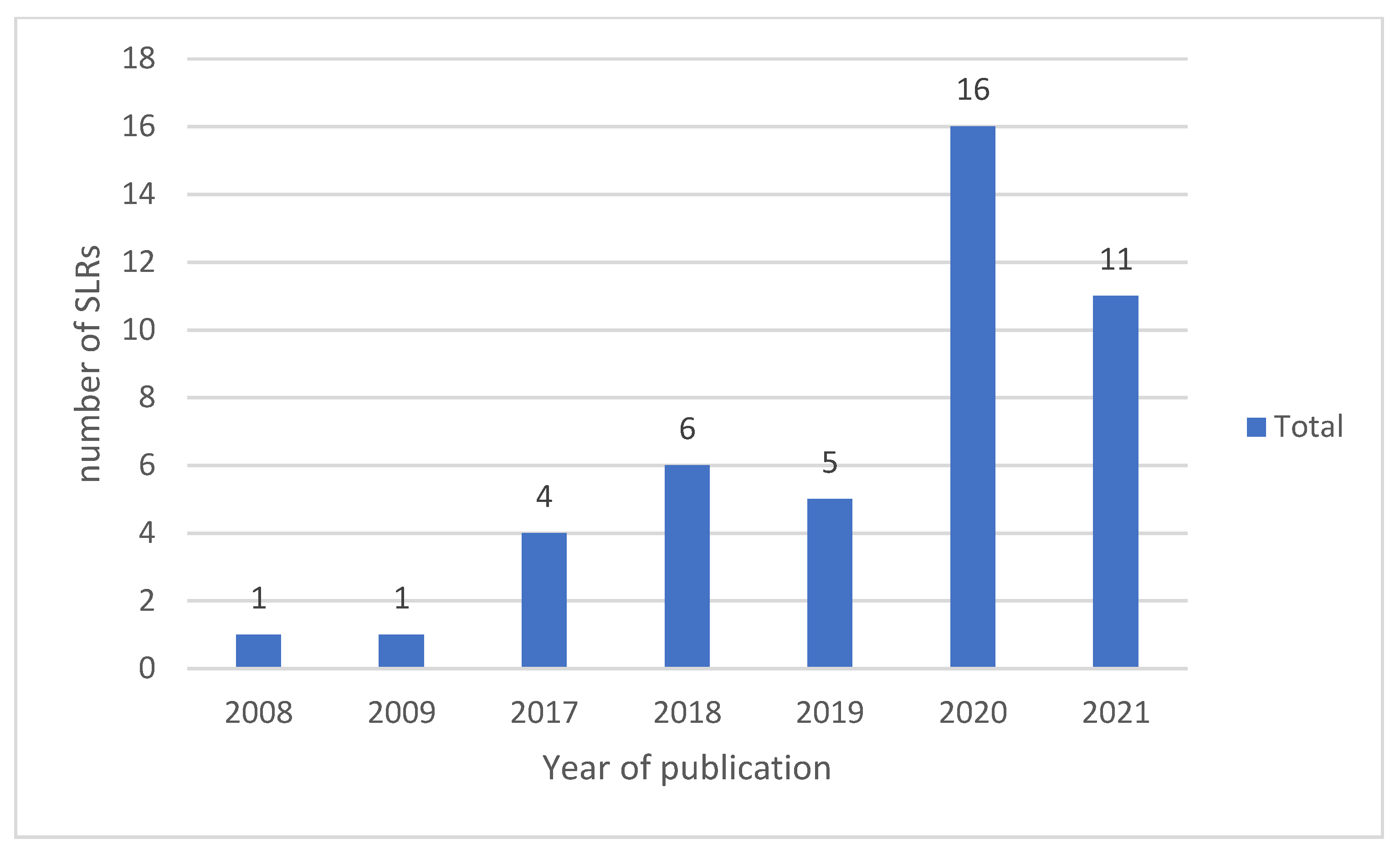
In Figure 3, there is not a clear trend of increasing interest. For example, there are two studies in 2008 and 2009 and the next four in 2017, with an eight-year break. In 2020 16 SLRs were published, with a 220% increase from 2019. However, in 2021, there was a decrease of around −31%, which is unclear because the overall publications in AI and SCM have constantly been increasing over the last years.
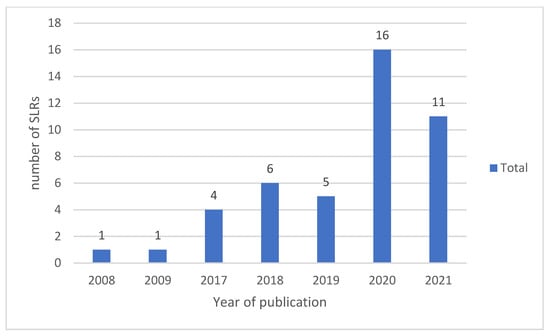
Figure 3.
Total number of SLRs per year.
The quality per SLR is shown in Figure 4. Overall, the total number of primary studies taken into account in the reviews was 7089, with the limitation that no exact number of primary studies was mentioned for two SLRs. The top four papers had a large number of primary studies with 836 (SLR 22), 698 (SLR 28), 689 (SLR 42), and 620 (SLR 3). This is due to the reason that the scope was extensive for all of these studies. SLR 22 focuses on AI in manufacturing, which has a comprehensive approach. SLR 28 and 42 focus on Big Data combined with AI, SCM, and IoT. SLR 3 includes Industry 4.0.
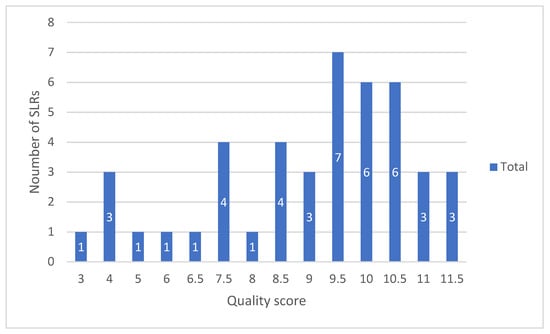
Figure 4.
Quality scores of SLRs.
A total of 9 out of the 44 SLRs (20%) did not describe the source of the SLR guidelines. The majority (22 SLRs = 50%) of the reported guidelines used the works of Tranfield, David; Denyer, David; Smart, Palminder et al. [64,65].
4.2. RQ2: What Research Areas Are Addressed in the SLRs on AI in SCM?
The topic algorithm was mentioned in 37 (84%) papers, and one or many algorithms were named. In 29 (66%) of the papers, Internet of Things (IoT) and 24 (55%) ML topics were mentioned or used. IoT focuses on connecting different objects inside the SC to communicate and transmit information that can be used for further processing. ML can then use this massive amount of data to find patterns and analyse them based on the needs. A total of 21 (48%) papers discussed expert (ES) and agent systems (AS). On the lower end, there were 15 papers (34%) on planning, 12 papers (27%) on robots, and 11 papers (25%) on natural language processing (NLP) and Machine vision (MV). In 5 papers (11%), speech recognition (SR) was used. Table 7 gives an overview of AI topics per SLR.
Table 7.
AI of previewed SLRs.
4.3. RQ3: Which Individuals, Organisations, and Publication Venues Are Most Active in the Research on AI in SCM?
As visualized in Table 8, there is no clear picture of preferred journals to publish the SLRs in—five papers (11%) were published in Computers and Industrial Engineering. The focus on the journals is not clear to technology or the SC. From a publisher perspective (shown in Table 9), around 41% of the publications were in Elsevier, followed by Taylor and Francis with 23%, Emerald with 14%, and Springer with 11%.
Table 8.
Number of SLRs per journal.
Table 9.
Number of SLRs per publisher.
From the years covered in each SLR, there were five papers without any relation to how many years are covered. For two, we only had a starting date but no end date. The paper (SLR16), with the earliest starting date, started in 1950 and has total coverage of 68 years. The majority of the papers considered the years between 2000 and 2018.
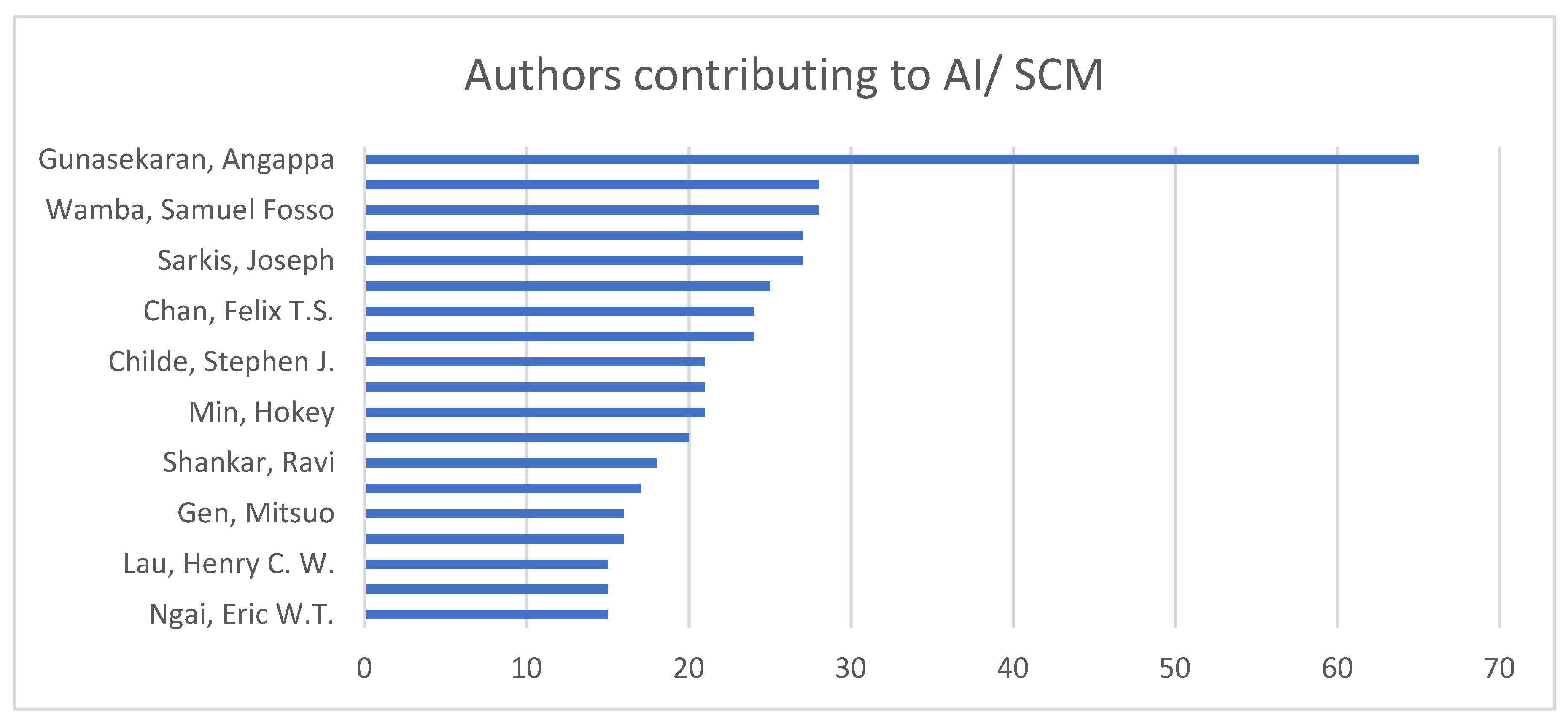
To identify the most active individuals and authors, an enhanced search on the references of the papers has been executed with a program called citationschaser in combination with citavi. The main contributors are mentioned in Figure 5. The results were 5381 references based on the 44 papers analysed. A total of 184 citations were without an author. Furthermore, 11,770 authors have contributed to the research topic, and the top authors with 15 or more contributions are in the figure below. The author with the most contributions is Gunasekaran Angappa, with 65 contributions to the selected papers.
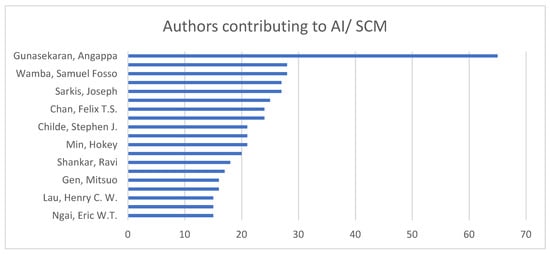
Figure 5.
Authors contributing to AI/SCM research.
The 5381 papers covered a range of 78 years total, whereby 95% of the primary studies were published between 2000–2021.
4.4. RQ4: What Are the Barriers and Drivers to AI Adoption in SCM?
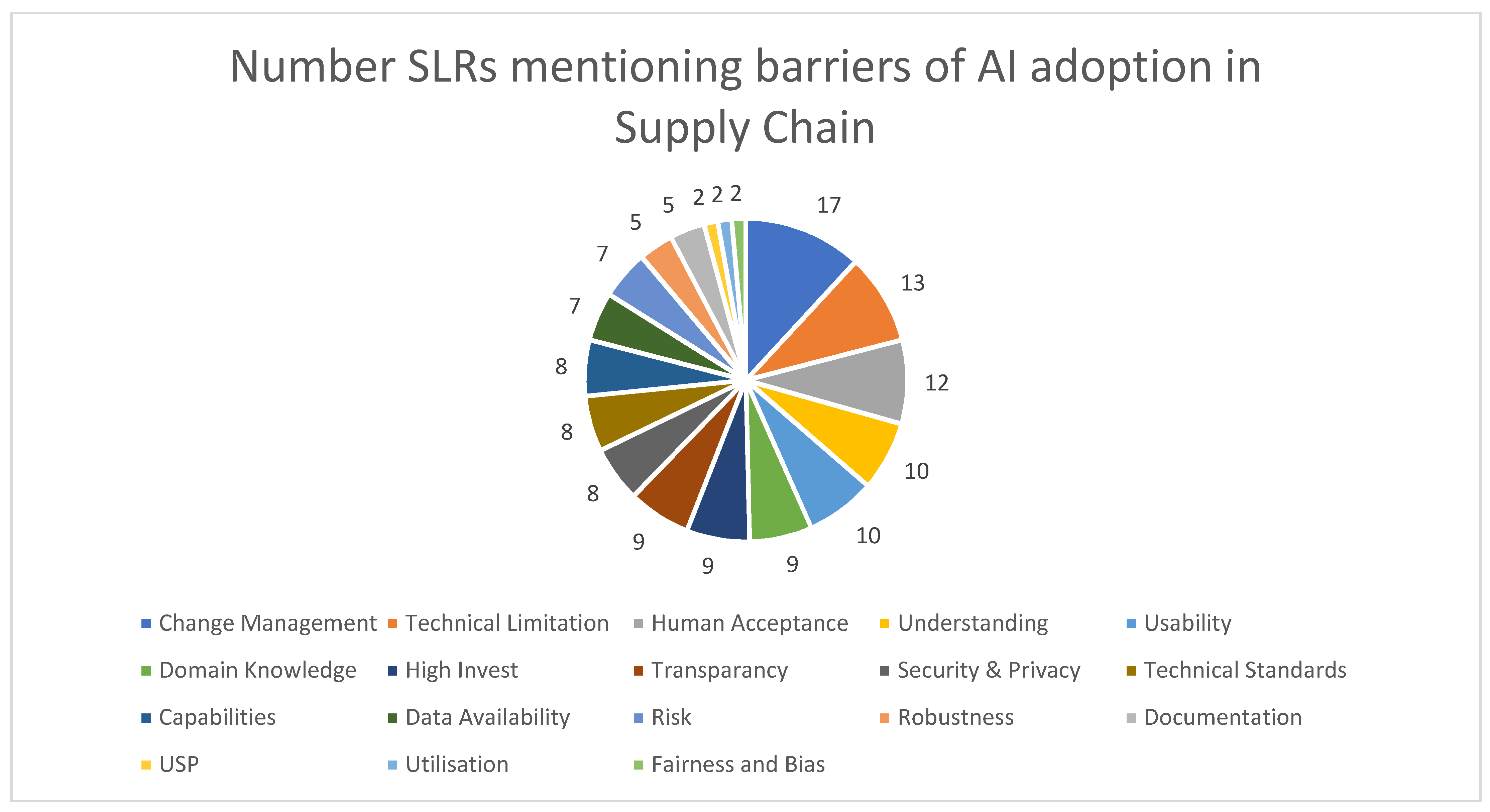
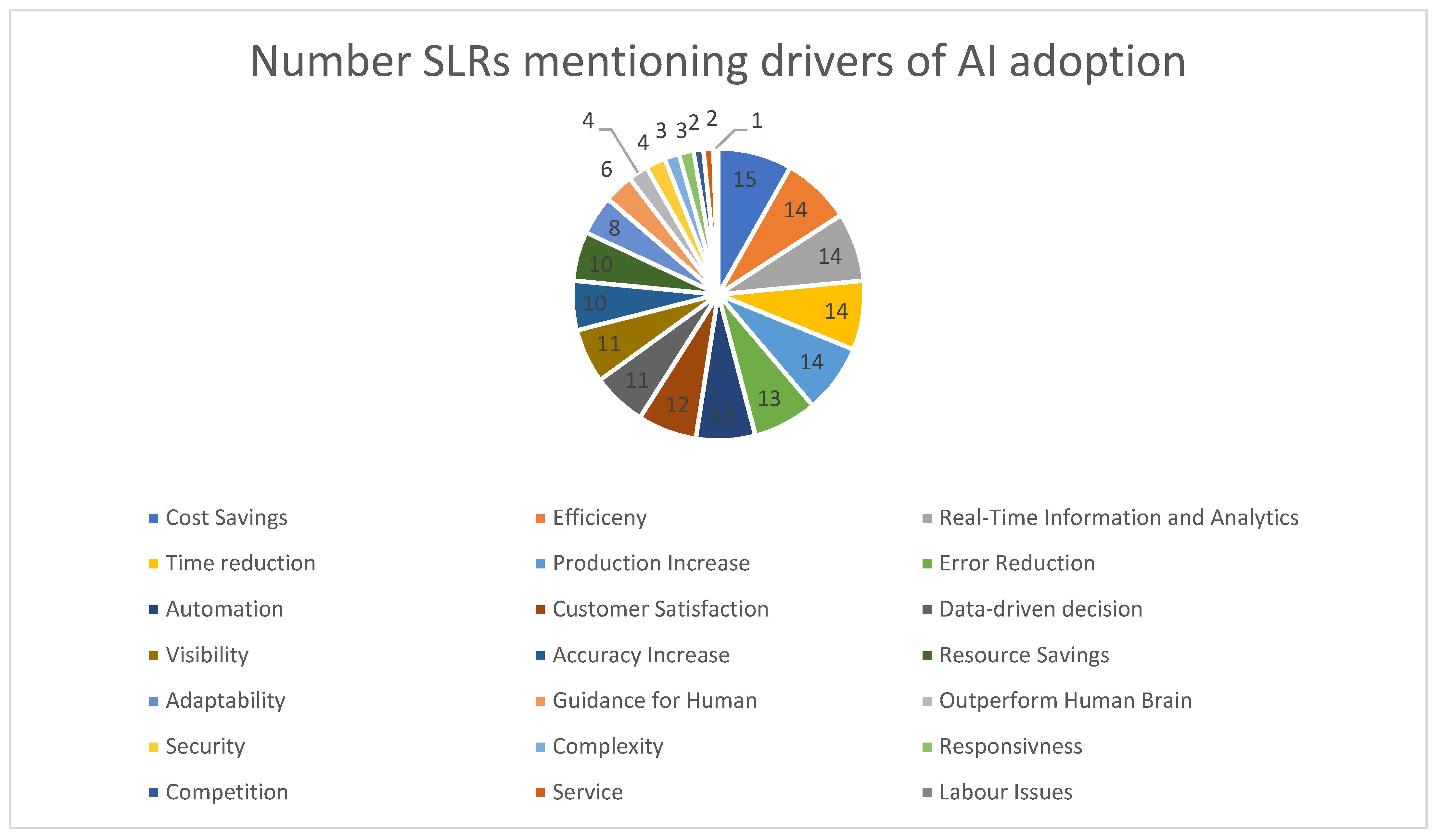
Table 10 papers mentioning barriers and drivers shows an overview of the papers in which we can find barriers and drivers. Figure 6 and Figure 7 summarise and categorise the main barriers and drivers to AI adoption in SCM. The categorisation is based on an iterative screening process done by the authors. The main barriers and drivers are related to process and cost-relevant aspects.
Table 10.
Papers mentioning barriers and drivers.
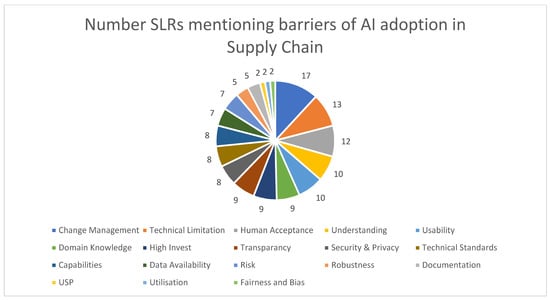
Figure 6.
Barriers to AI adoption in SCM.
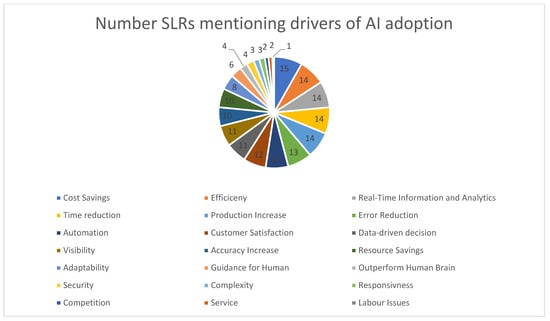
Figure 7.
Drivers of AI adoption in SCM.
One of the main barriers mentioned in 17 SLRs is change management. Ng et al. mentioned that implementing AI requires good organisation and good development to be successful [34]. Pournader et al. mention that firms must recognise the role of SC partners and cross-organisational processes when developing AI and stop thinking in silos [8]. Yang et al. stated that changes in the workflow and business process, which cause internal resistance, need to be managed, and the support of the top management is essential to overcome the internal resistance [84].
The second barrier mentioned in 13 papers is related to technical limitations. Sharma et al. state that even if a large amount of data is generated, it is useless unless it is organised, understood, and meaningful. Therefore, good data analysis tools are needed [84]. Ben-Daya et al. analysed that issues with the technology such as Internet scalability, identification and addressing, heterogeneity of data, and computation efficiency in combination with actual technological limitations are significant issues [85]. Twelve SLRs discuss human acceptance as a barrier. Automation and implementation of AI in the SC heavily rely on humans. The lack of expertise combined with a lack of knowledge and willingness to implement new things is a barrier to implementing and integrating AI in SCM [10,20,34,79,91]. Eight SLRs mention security and privacy as a barrier to AI adoption. They are mainly related to data security, data access, data storage, data ownership and use of the data in combination with non-technical barriers such as the lack of policy regulations on the use of data. In a connected, open world, the doors for less security and privacy are wide open [78,85,97]. Other barriers mentioned in various papers are barriers to technical standards, knowledge of the employees, availability, usability and availability of data, and the high efforts to implement and document robust solutions.
In 27 of the 44 papers, different drivers for AI in SCM are mentioned. The biggest driver mentioned in 15 SLRs is the cost-saving factor, followed by efficiency increase and real-time information and analytics receiving. In combination with reductions in errors, time reduction and production increase are also drivers for AI adoption. Surprisingly, labour issues and the missing human resources seem not to be significant drivers at all and are only mentioned once.
Rejeb et al. analysed that many papers mention cost savings as one of the main drivers due to reduced errors, faster identification, minimised search time for material and information, and easy access to data [69]. Efficiency and cost reduction go hand in hand. With increasing efficiency, there are fewer resources needed, which reduces the cost and time which is needed to execute SC activities [69,70,72,81].
4.5. RQ5: What Importance Is Placed on Human and Social Factors in AI Applications in SCM?
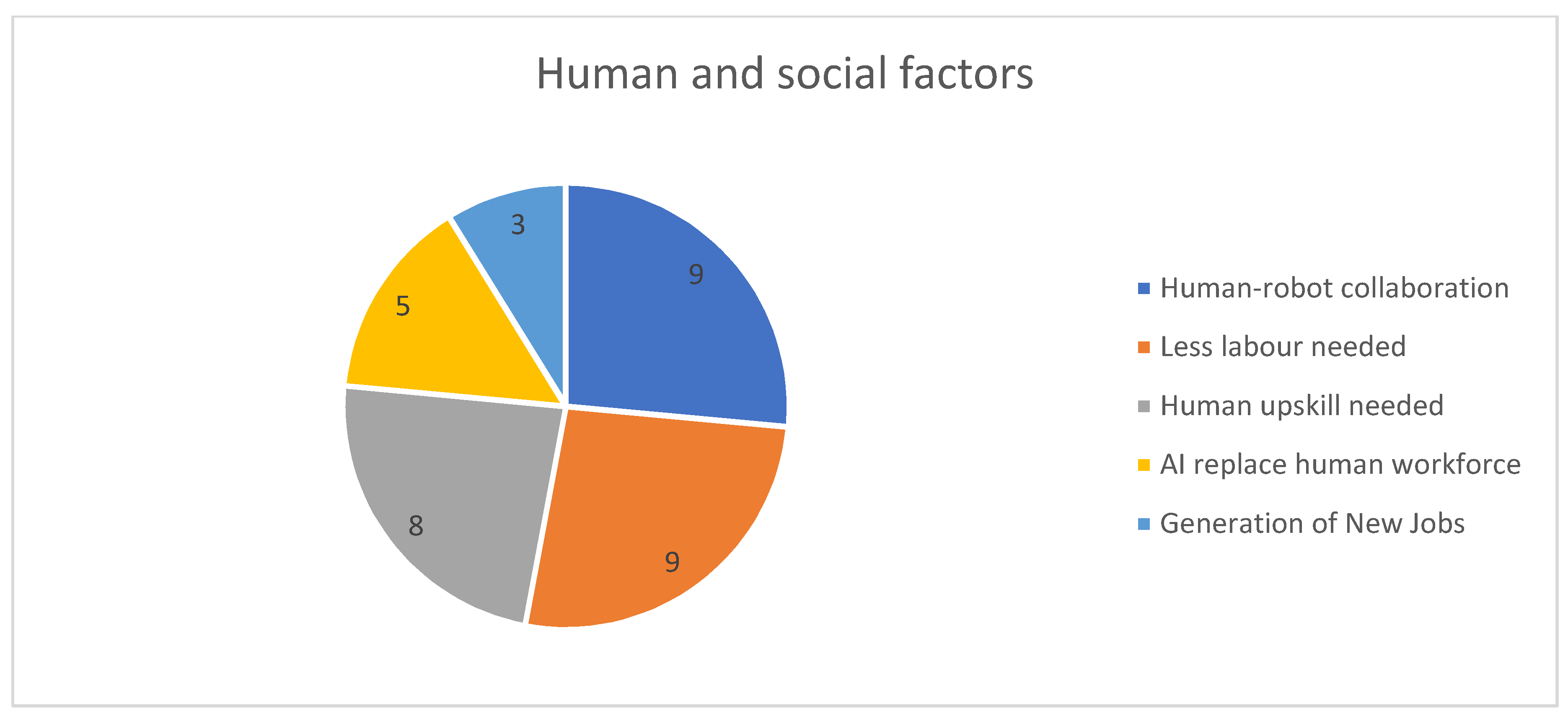
Nineteen SLRs mention human and social factors. The authors clustered the mentioned topics into five areas shown in Figure 8. The two topics mainly mentioned were the need for human-robot collaboration and that less labour will be needed in the future. Three papers mentioned that AI would generate new jobs.
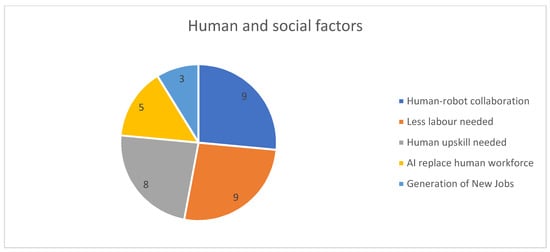
Figure 8.
Overview of human and social factors mentioned in SLRs.
For example, Orzemel and Gursev say that AI generates more human-free manufacturing environments, and no human intervention will be needed [68]. Birkel and Müller mention that AI will create new jobs and eliminate specific jobs. However, manual labour is at risk, and especially lower-income jobs will be replaced by machines [82]. Yang et al. mention that relying on manual work is no longer efficient due to the complexity of operations and the increasing labour costs. Therefore, there is a greater need to cut costs and improve SC efficiency [84]. Sharma et al. discuss the shortage of human resources with necessary skills, and Shashi and others show that it is fundamental that labour needs to upskill and build competency and capabilities in the area of AI [78,79,91].
4.6. RQ6: What Recommendations Are Made for Future Research on AI in SCM?
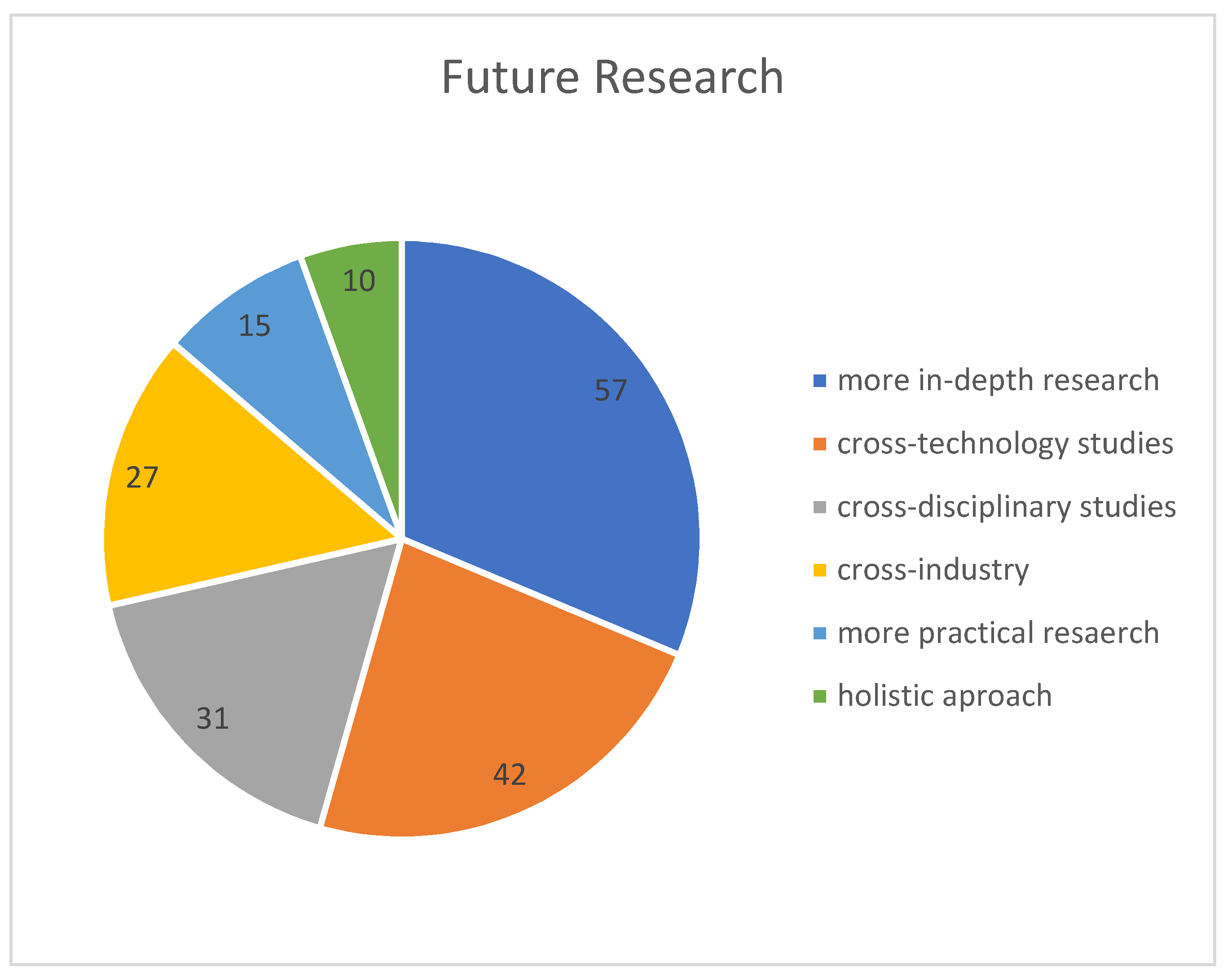
A total of 137 recommendations for potential research on AI in SCM were made in 30 SLRs. These 137 recommendations were categorised into six topics visualised in Figure 9. Many SLRs use different algorithms for the same use cases or multiple different algorithms in combination to see if this has better results. Also necessary is the explainability and more detailed research about the robustness and interpretability of the uses of AI [34,66,69,72]. Other SLRs state that applying different AI models across technology, industry, and disciplines is important, So, for example, combining the IoT, Big Data with ML and using this for better SC Planning and optimisation along the whole End to End SC [34,74,77,78].
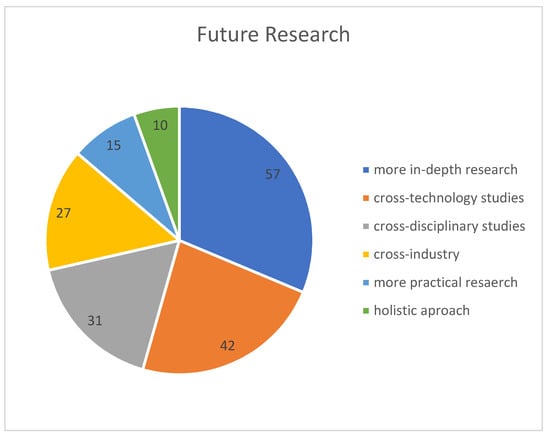
Figure 9.
Overview of future research recommendations.
4.7. RQ7: What Role Is Played by the SCOR Model, and which Area of the SCOR Model Was Used for the Research?
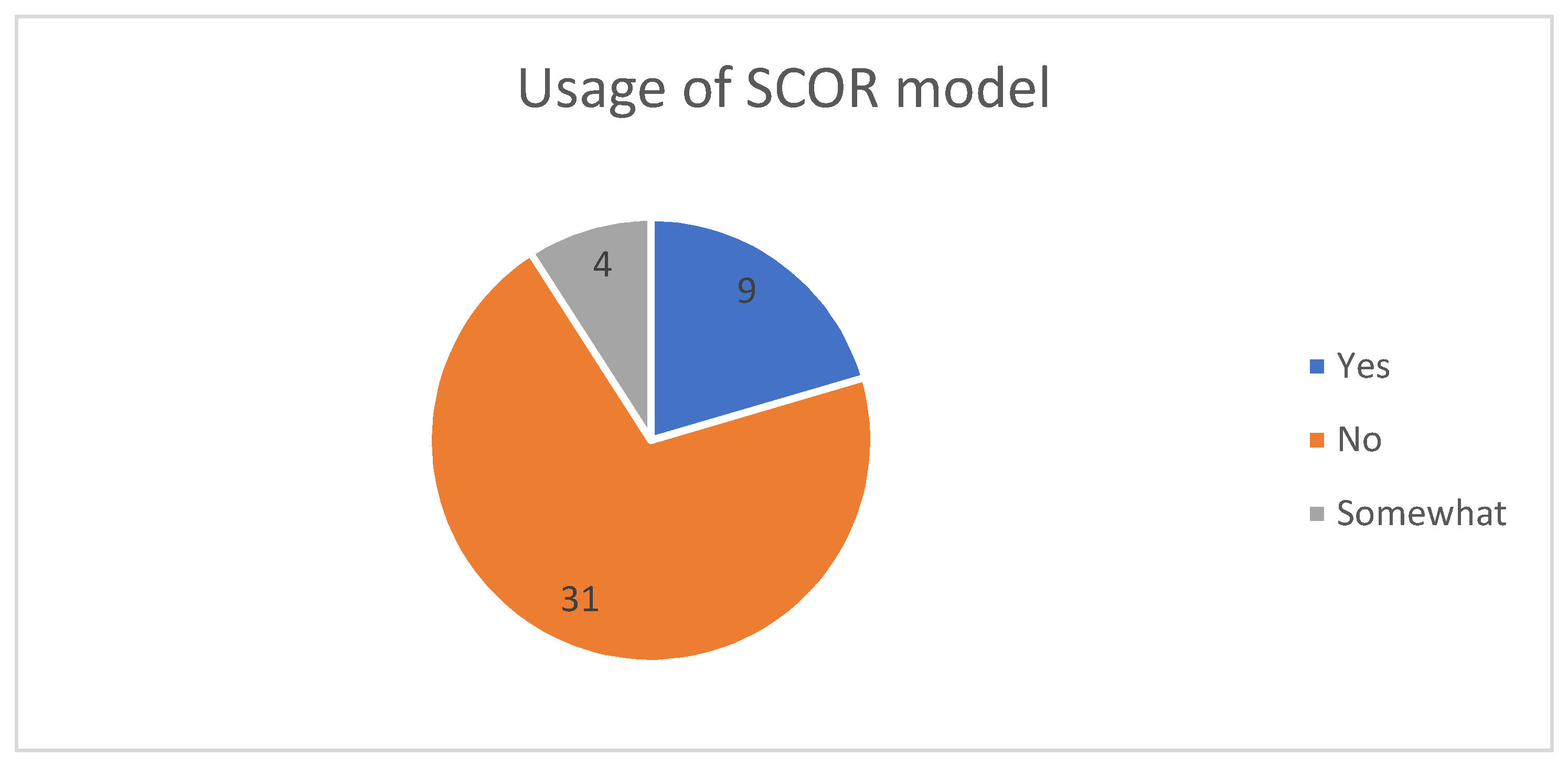
Astonishingly, the standard SCOR reference model is not used in most SLRs. Figure 10 shows an overview how often the SCOR model is used. As mentioned in Section 2.3, the SCOR model is a widely used industry-standard model developed by the APICS SC Council. The SCOR describes the major SC processes from planning, sourcing, and making to delivering, including returning goods and enabling the SC [31]. Therefore, it is unclear why in 31 SLRs, the SCOR model was not used, and only 9 SLRs use the model to explain the SC.
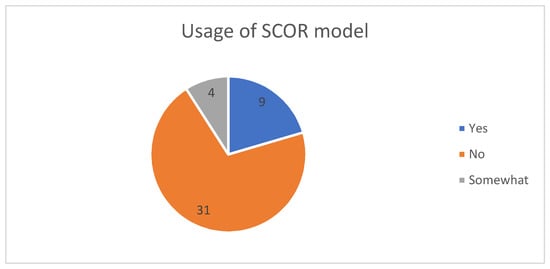
Figure 10.
Overview of usage of the SCOR model.
5. Limitations and Implications
Due to the nature of tertiary studies, this study has many limitations [61,63]. To a certain extent, there is an overlap of primary studies in the papers that may influence the analysis and answers to the research questions. In addition, the quality of the primary studies mentioned in the papers analysed was assessed. The aim was on the quality of the selected papers.
Another potential disadvantage of this study is the distance to the primary studies. Some SLRs authors oversimplify or distort the research topics, influencing answering the research questions. In addition, some of the information can be outdated or incomplete.
Due to the broad area of SCM and AI, much of the time was spent analysing the basic fundament and the concepts and applying the research based on this fundament. It could be the case that due to this broad scope, one or another paper does not perfectly fit the topic. In addition, there could be papers with the same topic but not selected due to limitations in the search engine and search string.
In the analysis and findings chapter, the authors used an iterative process to identify, tag, and classify AI as the barriers and drivers for AI adoption in SCM. This is a subjective classification and may be seen differently. Similar to the section on what importance is placed on human and social factors, for both chapters, we started to code the barriers, drivers, and human and social factors in MAXQDA. After reading the papers, we started to cluster each tag into categories. This was an iterative process of tagging the quotes, summarising, consolidating, and validating them based on the author’s subjective analysis.
The group of authors who worked on this research is small, looking at the broadness of the topic and the fast movement of the research. Thus, the selection, review process, and findings are prone to subjective judgement. The authors decided to maintain an extensive list of inclusion and exclusion criteria to mitigate any impacts so that the process is structured and reproducible.
Focused only on publications related to AI in SCM, there is a possibility that some of the papers not included contain essential information that could help answer the research questions.
6. Conclusions
This study includes 44 SLRs published between 2008 and 2021 on the subject of barriers, drivers, and social considerations for AI adoption in the SC. Out of the initial 60 SLRs, 44 were selected based on exclusion and inclusion criteria. Twenty-seven of the selected SLRs were published in 2020–2021. The primary studies in the SLRs cover content from 1943 to 2021, where 95% of papers were published between 2000–2021. The SLRs quality varies between 3 on the lower end and 11.5 on the higher end, with a maximal achievable score of 13. The author with the most contributions was Gunasekaran Angappa, with 65 contributions for the primary papers (RQ1/3).
There were seven different research areas addressed. The main area was algorithms, followed by IoT, planning, robotics, MV, speech recognition, expert system, NLP, ML, agent systems, and last but not least big data (RQ2). The most popular AI algorithms in SCM are linear and logistic regression, decision trees, naive Bayes, k-nearest neighbours, vectors, random forest, DNN, CNN, RNN, and LSTM [79,81,86,93,101].
The main barriers to AI adoption in SCM are change management, existing technical limitations, the acceptance of humans for these techniques, the understanding and usability of these techniques, and the existing knowledge of the people, in addition to the high costs of implementing such solutions. Additional barriers are the lack of transparency, security and privacy issues, missing technical standards and capabilities, and missing data, documentation, and robustness of these solutions.
The main drivers of AI in SCM are saving costs and increasing efficiency in combination with reducing time and resources. Additionally, the reduction of errors and increased customer satisfaction, and increased organisation responsiveness. Less critical but also worth mentioning is the outperformance of humans and human capabilities and the issues with finding the proper labour (RQ3). However, there is no doubt that AI has many advantages; if used correctly, organisations can get much value from new technology.
Nineteen SLRs mention human and social factors where the most important is the human–robot collaboration, where the focus is that humans will not be entirely replaced but more enhanced with information and capabilities which humans cannot handle. As a result, a smaller amount of labour will be needed in the future, impacting many existing jobs, especially in low-income areas. Some SLRs also mention the fact of entirely new jobs being created, but employees need to upskill to understand these new technologies and fulfil these new requirements (RQ4).
A total of 137 recommendations for future research on AI in SCM were made in 30 SLRs. These 137 recommendations were categorised into six topics referring to using different algorithms for the same use cases or multiple algorithms in combination to see if this has better results. Also necessary is the explainability and more detailed research about the robustness and interpretability of the uses of AI. Other SLRs state applying different AI models across technology, industry, and disciplines (RQ5).
Astonishingly, the standard SCOR reference model was only used in 9 SLRs (RQ6).
The newly published papers in AI and SCM is growing on a fast scale. Therefore, it is essential to continue the work of SLRs in these areas. This study recommends creating ongoing SLRs while research is growing fast. In addition, it would be beneficial if creating SLRs standard models such as the SCOR model which should be used to identify and categorise the whole SC to receive a holistic view. In addition, the SLRs should include human and social factors in more depth.
Therefore, it is essential for organisations that implement new technology to start as early as possible to inform the organisation about the changes and help them successfully implement them. It is also important to mention that constant learning and improvement of the employees are critical for adopting and successfully using new AI tools. Before investing in new technology, a solid Return on Investment calculation (ROI) and monitoring costs and value are critical to transforming the business successfully. Reduction of errors, more automation, and less labour all support the one essential thing of SC: delivering the right things at the right time to the right place with the right quality and price. For organisations, it is important to measure any new technology against this goal and increase external and internal satisfaction. In addition, it is crucial to include human and social factors in any new investment. People are the key to the successful and fruitful implementation of new technology. In the future, there will be a shift in different job activities, but the key for organisations is to give the employees the proper education and possibility to grow and learn and adopt this new way of working.
Despite the limitations of this tertiary study, the review provides excellent and timely implications of research areas in SCM and the barriers and drivers of AI adoption in SCM, and it lays the groundwork for future research, including human and social implications.
Author Contributions
Term, J.H.; Conceptualization, J.H., V.J.B., S.K.; Methodology, J.H., V.J.B., S.K.; Investigation, J.H.; Writing - Original Draft, J.H.; Reviewing and Editing, J.H., V.J.B., S.K.; Project administration, J.H. All authors have read and agreed to the published version of the manuscript.
Funding
This research received no external funding.
Institutional Review Board Statement
Not applicable.
Informed Consent Statement
Not applicable.
Conflicts of Interest
The authors declare no conflict of interest.
References
- Kiers, J.; Seinhorst, J.; Zwanenburg, M.; Stek, K. Which Strategies and Corresponding Competences Are Needed to Improve Supply Chain Resilience: A COVID-19 Based Review. Logistics 2022, 6, 12. [Google Scholar] [CrossRef]
- Stevens, P. The Ship That Blocked the Suez Canal May Be Free, But Experts Warn the Supply Chain Impact Could Last Months. CNBC 2021, 29 March 2021. Available online: https://www.cnbc.com/2021/03/29/suez-canal-is-moving-but-the-supply-chain-impact-could-last-months.html. (accessed on 26 August 2022).
- Dierker, D.; Greenberg, E.; Saxon, S.; Tiruneh, T. Navigating the current disruption in containerised logistics. McKinsey & Company 2022, 14 March 2022. Available online: https://www.mckinsey.com/industries/travel-logistics-and-infrastructure/our-insights/navigating-the-current-disruption-in-containerized-logistics (accessed on 26 August 2022).
- Straight, B. Survey: 73% of Warehouse Operators Can’t Find ENOUGH labor. FreightWaves 2022, 18 February 2022. Available online: https://www.freightwaves.com/news/survey-73-of-warehouse-operators-cant-find-enough-labor (accessed on 26 August 2022).
- Bhonsle, J. Causes and Consequences of Vessel Delays in Container Shipping. Marine Insight 2022. 26 January 2022. Available online: https://www.marineinsight.com/maritime-law/causes-and-consequences-of-vessel-delays-in-container-shipping/ (accessed on 26 August 2022).
- Song, D. A Literature Review, Container Shipping Supply Chain: Planning Problems and Research Opportunities. Logistics 2021, 5, 41. [Google Scholar] [CrossRef]
- Nozari, H.; Szmelter-Jarosz, A.; Ghahremani-Nahr, J. Analysis of the Challenges of Artificial Intelligence of Things (AIoT) for the Smart Supply Chain (Case Study: FMCG Industries). Sensors 2022, 22, 2931. [Google Scholar] [CrossRef]
- Pournader, M.; Ghaderi, H.; Hassanzadegan, A.; Fahimnia, B. Artificial Intelligence Applications in Supply Chain Management. Int. J. Prod. Econ. 2021, 241, 108250. [Google Scholar] [CrossRef]
- Belhadi, A.; Kamble, S.; Jabbour, C.J.C.; Gunasekaran, A.; Ndubisi, N.O.; Venkatesh, M. Manufacturing and service supply chain resilience to the COVID-19 outbreak: Lessons learned from the automobile and airline industries. Technol. Forecast. Soc. Chang. 2021, 163, 120447. [Google Scholar] [CrossRef]
- Riahi, Y.; Saikouk, T.; Gunasekaran, A.; Badraoui, I. Artificial intelligence applications in supply chain: A descriptive bibliometric analysis and future research directions. Expert Syst. Appl. 2021, 173, 114702. [Google Scholar] [CrossRef]
- Helo, P.; Hao, Y. Artificial intelligence in operations management and supply chain management: An exploratory case study. Prod. Plan. Control. 2021, 1–18. [Google Scholar] [CrossRef]
- Oroojlooyjadid, A.; Nazari, M.; Snyder, L.V.; Takáč, M. A Deep Q-Network for the Beer Game: Deep Reinforcement Learning for Inventory Optimization. Manuf. Serv. Oper. Manag. 2022, 24, 285–304. [Google Scholar] [CrossRef]
- Wang, Y.; Skeete, J.-P.; Owusu, G. Understanding the implications of artificial intelligence on field service operations: A case study of BT. Prod. Plan. Control 2021, 1–17. [Google Scholar] [CrossRef]
- Jagtap, S.; Bader, F.; Garcia-Garcia, G.; Trollman, H.; Fadiji, T.; Salonitis, K. Food Logistics 4.0: Opportunities and Challenges. Logistics 2021, 5, 2. [Google Scholar] [CrossRef]
- Sharma, S.; Gahlawat, V.K.; Rahul, K.; Mor, R.S.; Malik, M. Sustainable Innovations in the Food Industry through Artificial Intelligence and Big Data Analytics. Logistics 2021, 5, 66. [Google Scholar] [CrossRef]
- Debnath, B.; Shakur, M.S.; Tanjum, F.; Rahman, M.A.; Adnan, Z.H. Impact of Additive Manufacturing on the Supply Chain of Aerospace Spare Parts Industry—A Review. Logistics 2022, 6, 28. [Google Scholar] [CrossRef]
- Shiralkar, K.; Bongale, A.; Kumar, S.; Kotecha, K.; Prakash, C. Assessment of the Benefits of Information and Communication Technologies (ICT) Adoption on Downstream Supply Chain Performance of the Retail Industry. Logistics 2021, 5, 80. [Google Scholar] [CrossRef]
- Sharma, R.; Shishodia, A.; Gunasekaran, A.; Min, H.; Munim, Z.H. The role of artificial intelligence in supply chain management: Mapping the territory. Int. J. Prod. Res. 2022, 1–24. [Google Scholar] [CrossRef]
- Frederico, G.F.; Garza-Reyes, J.A.; Anosike, A.; Kumar, V. Supply Chain 4.0: Concepts, maturity and research agenda. Supply Chain Manag. 2019, 25, 262–282. [Google Scholar] [CrossRef]
- Frederico, G.F. From Supply Chain 4.0 to Supply Chain 5.0: Findings from a Systematic Literature Review and Research Directions. Logistics 2021, 5, 49. [Google Scholar] [CrossRef]
- Calatayud, A.; Mangan, J.; Christopher, M. The self-thinking supply chain. Supply Chain Manag. Int. J. 2019, 24, 22–38. [Google Scholar] [CrossRef]
- Seyedghorban, Z.; Tahernejad, H.; Meriton, R.; Graham, G. Supply chain digitalisation: Past, present and future. Prod. Plan. Control 2020, 31, 96–114. [Google Scholar] [CrossRef]
- Farooque, M.; Zhang, A.; Thürer, M.; Qu, T.; Huisingh, D. Circular supply chain management: A definition and structured literature review. J. Clean. Prod. 2019, 228, 882–900. [Google Scholar] [CrossRef]
- Batista, L.; Bourlakis, M.; Smart, P.; Maull, R. In search of a circular supply chain archetype–a content-analysis-based literature review. Prod. Plan. Control 2018, 29, 438–451. [Google Scholar] [CrossRef]
- Seuring, S.; Müller, M. From a literature review to a conceptual framework for sustainable supply chain management. J. Clean. Prod. 2008, 16, 1699–1710. [Google Scholar] [CrossRef]
- Gattorna, J. Dynamic Supply Chains: Delivering Value through People, 2nd ed.; Financial Times Prentice Hall: Harlow, UK, 2010. [Google Scholar]
- Goldman, S.L.; Nagel, R.N. Management, technology and agility: The emergence of a new era in manufacturing. Int. J. Technol. Manag. 2014, 8, 18–38. [Google Scholar]
- Goldman, S.L.; Nagel, R.N.; Preiss, K. Agile Competitors and Virtual Organisations: Strategies for Enriching the Customer; Van Nostrand Reinhold: New York, NY, USA; Bonn, Germany, 1995. [Google Scholar]
- Ismail, H.S.; Sharifi, H. A balanced approach to building agile supply chains. Int. J. Phys. Distrib. Logist. Manag. 2006, 36, 431–444. [Google Scholar] [CrossRef]
- Lima, F.R.; Carpinetti, L.C. Quantitative models for supply chain performance evaluation: A literature review. Comput. Ind. Eng. 2017, 113, 333–346. [Google Scholar] [CrossRef]
- APICS (Ed.) Supply Chain Operations Reference Model: SCOR, 21000th ed.; APICS: Chicago, IL, USA, 2017. [Google Scholar]
- McCarthy, J. Defending AI Research: A Collection of Essays and Reviews; McCarthy, J., Ed.; Center for the Study of Language and Information: Stanford, CA, USA, 1996. [Google Scholar]
- Leonetti, M.; Iocchi, L.; Stone, P. A synthesis of automated planning and reinforcement learning for efficient, robust decision-making. Artif. Intell. 2016, 241, 103–130. [Google Scholar] [CrossRef]
- Ng, K.K.; Chen, C.-H.; Lee, C.; Jiao, J.; Yang, Z.-X. A systematic literature review on intelligent automation: Aligning concepts from theory, practice, and future perspectives. Adv. Eng. Inform. 2021, 47, 101246. [Google Scholar] [CrossRef]
- Frey, C.B.; Osborne, M.A. The future of employment: How susceptible are jobs to computerisation? Technol. Forecast. Soc. Chang. 2017, 114, 254–280. [Google Scholar] [CrossRef]
- Kaplan, A.; Haenlein, M. Rulers of the world, unite! The challenges and opportunities of artificial intelligence. Bus. Horiz. 2020, 63, 37–50. [Google Scholar] [CrossRef]
- Cord, M.; Cunningham, P. (Eds.) Machine Learning Techniques for Multimedia: Case Studies on Organization and Retrieval; Springer: Berlin/Heidelberg, Germany, 2008. [Google Scholar]
- Zhu, X. Semi-Supervised Learning Literature Survey; University of Wisconsin-Madison: Madison, WI, USA, 2005. [Google Scholar]
- Celebi, M.E.; Aydin, K. (Eds.) Unsupervised Learning Algorithms; Springer: Cham, Switzerland, 2016. [Google Scholar]
- Sutton, R.S.; Barto, A. Reinforcement Learning, Second Edition: An Introduction, 2nd ed.; MIT Press: Cambridge, MA, USA, 2018. [Google Scholar]
- Zhang, L.; Tan, J.; Han, D.; Zhu, H. From machine learning to deep learning: Progress in machine intelligence for rational drug discovery. Drug Discov. Today 2017, 22, 1680–1685. [Google Scholar] [CrossRef]
- Mamoshina, P.; Vieira, A.; Putin, E.; Zhavoronkov, A. Applications of Deep Learning in Biomedicine. Mol. Pharm. 2016, 13, 1445–1454. [Google Scholar] [CrossRef]
- LeCun, Y.; Bengio, Y.; Hinton, G. Deep learning. Nature 2015, 521, 436–444. [Google Scholar] [CrossRef] [PubMed]
- Chowdhury, G.G. Natural language processing. Ann. Rev. Inf. Sci. Technol. 2003, 37, 51–89. [Google Scholar] [CrossRef]
- Păvăloaia, V.-D.; Teodor, E.-M.; Fotache, D.; Danileţ, M. Opinion Mining on Social Media Data: Sentiment Analysis of User Preferences. Sustainability 2019, 11, 4459. [Google Scholar] [CrossRef]
- Ren, Y.; Tan, X.; Qin, T.; Zhao, S.; Zhao, Z.; Liu, T.-Y. Almost Unsupervised Text to Speech and Automatic Speech Recognition. In Proceedings of the 36th International Conference on Machine Learning, Long Beach, CA, USA, 9–15 June 2019; Chaudhuri, K., Salakhutdinov, R., Eds.; pp. 5410–5419. [Google Scholar]
- Yu, D.; Deng, L. Automatic Recognition: Speech a Deep Learning Approach; Yu, D., Deng, L., Eds.; Springer: London, UK, 2015. [Google Scholar]
- Ballard, D.H.; Brown, C.M. Computer Vision; Prentice-Hall: Englewood Cliffs, NJ, USA; London, UK, 1982. [Google Scholar]
- Sonka, M.; Hlavac, V.; Boyle, R. Image Processing, Analysis, and Machine Vision, 3rd ed.; Thompson Learning: Toronto, ON, Canada, 2008. [Google Scholar]
- Klette, R. Concise Computer Vision: An Introduction into Theory and Algorithms; Klette, R., Ed.; Springer: London, UK, 2014. [Google Scholar]
- Tanguiane, A.S. Artificial Perception and Music Recognition; Springer: Berlin/Heidelberg, Germany; New York, NY, USA, 1993. [Google Scholar]
- Tanguiane, A.S. A Principle of Correlativity of Perception and Its Application to Music Recognition. Music Percept. 1994, 11, 465–502. [Google Scholar] [CrossRef]
- Jackson, P. Introduction to Expert Systems, 3rd ed.; Addison-Wesley: Harlow, UK; Reading, MA, USA, 1998. [Google Scholar]
- Leondes, C.T. Expert Systems Volume 1: The Technology of Knowledge Management and Decision Making for the 21st Century; Academic: San Diego, CA, USA; London, UK, 2002. [Google Scholar]
- Nagori, V.; Trivedi, B. Types of Expert System: Comparative Study. Asian J. Comput. Inf. Syst. 2014, 2. Available online: https://www.ajouronline.com/index.php/AJCIS/article/view/948 (accessed on 1 August 2022).
- Menzel, K. Algorithmen: Vom Problem zum Programm; Vieweg+Teubner Verlag: Wiesbaden, Germany, 1997. [Google Scholar]
- Dobler, H.; Pomberger, G. Algorithmen und Datenstrukturen: Eine systematische Einführung in Die Programmierung; Pearson Studium: München, Germany, 2008. [Google Scholar]
- Grant, M.J.; Booth, A. A typology of reviews: An analysis of 14 review types and associated methodologies. Health Inf. Libr. J. 2009, 26, 91–108. [Google Scholar] [CrossRef] [PubMed]
- Kitchenham, B.A.; Charters, S. Guidelines for performing Systematic Literature Reviews in Software Engineering. Available online: https://www.elsevier.com/__data/promis_misc/525444systematicreviewsguide.pdf (accessed on 1 August 2022).
- Budgen, D.; Brereton, P.; Drummond, S.; Williams, N. Reporting systematic reviews: Some lessons from a tertiary study. Inf. Softw. Technol. 2018, 95, 62–74. [Google Scholar] [CrossRef]
- Kitchenham, B.; Pretorius, R.; Budgen, D.; Brereton, O.P.; Turner, M.; Niazi, M.; Linkman, S. Systematic literature reviews in software engineering–A tertiary study. Inf. Softw. Technol. 2010, 52, 792–805. [Google Scholar] [CrossRef]
- Kitchenham, B.; Pearl Brereton, O.; Budgen, D.; Turner, M.; Bailey, J.; Linkman, S. Systematic literature reviews in software engineering–A systematic literature review. Inf. Softw. Technol. 2009, 51, 7–15. [Google Scholar] [CrossRef]
- Hoda, R.; Salleh, N.; Grundy, J.; Tee, H.M. Systematic literature reviews in agile software development: A tertiary study. Inf. Softw. Technol. 2017, 85, 60–70. [Google Scholar] [CrossRef]
- Tranfield, D.; Denyer, D.; Smart, P. Towards a Methodology for Developing Evidence-Informed Management Knowledge by Means of Systematic Review. Br. J. Manag. 2003, 14, 207–222. [Google Scholar] [CrossRef]
- Denyer, D.; Tranfield, D. Producing a Systematic Review; SAGE: Los Angeles, CA, USA, 2009. [Google Scholar]
- Soheilirad, S.; Govindan, K.; Mardani, A.; Zavadskas, E.K.; Nilashi, M.; Zakuan, N. Application of data envelopment analysis models in supply chain management: A systematic review and meta-analysis. Ann. Oper. Res. 2018, 271, 915–969. [Google Scholar] [CrossRef]
- Golan, M.S.; Jernegan, L.H.; Linkov, I. Trends and applications of resilience analytics in supply chain modeling: Systematic literature review in the context of the COVID-19 pandemic. Environ. Syst. Decis. 2020, 40, 222–243. [Google Scholar] [CrossRef] [PubMed]
- Oztemel, E.; Gursev, S. Literature review of Industry 4.0 and related technologies. J. Intell. Manuf. 2020, 31, 127–182. [Google Scholar] [CrossRef]
- Rejeb, A.; Keogh, J.G.; Wamba, S.F.; Treiblmaier, H. The potentials of augmented reality in supply chain management: A state-of-the-art review. Manag. Rev. Q. 2021, 71, 819–856. [Google Scholar] [CrossRef]
- Ni, D.; Xiao, Z.; Lim, M.K. A systematic review of the research trends of machine learning in supply chain management. Int. J. Mach. Learn. Cyber. 2020, 11, 1463–1482. [Google Scholar] [CrossRef]
- Ko, M.; Tiwari, A.; Mehnen, J. A review of soft computing applications in supply chain management. Appl. Soft Comput. 2010, 10, 661–674. [Google Scholar] [CrossRef]
- Bueno, A.; Godinho Filho, M.; Frank, A.G. Smart production planning and control in the Industry 4.0 context: A systematic literature review. Comput. Ind. Eng. 2020, 149, 106774. [Google Scholar] [CrossRef]
- Chilmon, B.; Tipi, N.S. Modelling and simulation considerations for an end-to-end supply chain system. Comput. Ind. Eng. 2020, 150, 106870. [Google Scholar] [CrossRef]
- Koot, M.; Mes, M.R.; Iacob, M.E. A systematic literature review of supply chain decision making supported by the Internet of Things and Big Data Analytics. Comput. Ind. Eng. 2021, 154, 107076. [Google Scholar] [CrossRef]
- Spieske, A.; Birkel, H. Improving supply chain resilience through industry 4.0: A systematic literature review under the impressions of the COVID-19 pandemic. Comput. Ind. Eng. 2021, 158, 107452. [Google Scholar] [CrossRef]
- Garcia-Buendia, N.; Moyano-Fuentes, J.; Maqueira-Marín, J.M. Lean supply chain management and performance relationships: What has been done and what is left to do. CIRP J. Manuf. Sci. Technol. 2021, 32, 405–423. [Google Scholar] [CrossRef]
- Konovalenko, I.; Ludwig, A. Event processing in supply chain management–The status quo and research outlook. Comput. Ind. 2019, 105, 229–249. [Google Scholar] [CrossRef]
- Sharma, R.; Kamble, S.S.; Gunasekaran, A.; Kumar, V.; Kumar, A. A systematic literature review on machine learning applications for sustainable agriculture supply chain performance. Comput. Oper. Res. 2020, 119, 104926. [Google Scholar] [CrossRef]
- Centobelli, P.; Cerchione, R.; Ertz, M. Agile supply chain management: Where did it come from and where will it go in the era of digital transformation? Ind. Mark. Manag. 2020, 90, 324–345. [Google Scholar] [CrossRef]
- Rejeb, A.; Rejeb, K.; Zailani, S.; Treiblmaier, H.; Hand, K.J. Integrating the Internet of Things in the halal food supply chain: A systematic literature review and research agenda. Internet Things 2021, 13, 100361. [Google Scholar] [CrossRef]
- Toorajipour, R.; Sohrabpour, V.; Nazarpour, A.; Oghazi, P.; Fischl, M. Artificial intelligence in supply chain management: A systematic literature review. J. Bus. Res. 2021, 122, 502–517. [Google Scholar] [CrossRef]
- Birkel, H.; Müller, J.M. Potentials of industry 4.0 for supply chain management within the triple bottom line of sustainability–A systematic literature review. J. Clean. Prod. 2021, 289, 125612. [Google Scholar] [CrossRef]
- Zeba, G.; Dabić, M.; Čičak, M.; Daim, T.; Yalcin, H. Technology mining: Artificial intelligence in manufacturing. Technol. Forecast. Soc. Chang. 2021, 171, 120971. [Google Scholar] [CrossRef]
- Yang, M.; Fu, M.; Zhang, Z. The adoption of digital technologies in supply chains: Drivers, process and impact. Technol. Forecast. Soc. Change 2021, 169, 120795. [Google Scholar] [CrossRef]
- Ben-Daya, M.; Hassini, E.; Bahroun, Z. Internet of things and supply chain management: A literature review. Int. J. Prod. Res. 2019, 57, 4719–4742. [Google Scholar] [CrossRef]
- Baryannis, G.; Validi, S.; Dani, S.; Antoniou, G. Supply chain risk management and artificial intelligence: State of the art and future research directions. Int. J. Prod. Res. 2019, 57, 2179–2202. [Google Scholar] [CrossRef]
- Talwar, S.; Kaur, P.; Fosso Wamba, S.; Dhir, A. Big Data in operations and supply chain management: A systematic literature review and future research agenda. Int. J. Prod. Res. 2021, 59, 3509–3534. [Google Scholar] [CrossRef]
- Chehbi-Gamoura, S.; Derrouiche, R.; Damand, D.; Barth, M. Insights from big Data Analytics in supply chain management: An all-inclusive literature review using the SCOR model. Prod. Plan. Control 2020, 31, 355–382. [Google Scholar] [CrossRef]
- Qian, J.; Dai, B.; Wang, B.; Zha, Y.; Song, Q. Traceability in food processing: Problems, methods, and performance evaluations—A review. Crit. Rev. Food Sci. Nutr. 2020, 62, 679–692. [Google Scholar] [CrossRef] [PubMed]
- Abdirad, M.; Krishnan, K. Industry 4.0 in Logistics and Supply Chain Management: A Systematic Literature Review. Eng. Manag. J. 2021, 33, 187–201. [Google Scholar] [CrossRef]
- Barbosa, M.W.; La Vicente, A.d.C.; Ladeira, M.B.; de Oliveira, M.P.V. Managing supply chain resources with Big Data Analytics: A systematic review. Int. J. Logist. Res. Appl. 2018, 21, 177–200. [Google Scholar] [CrossRef]
- Rejeb, A.; Rejeb, K.; Keogh, J.G. Enablers of Augmented Reality in the Food Supply Chain: A Systematic Literature Review. J. Foodserv. Bus. Res. 2021, 24, 415–444. [Google Scholar] [CrossRef]
- Min, H. Artificial intelligence in supply chain management: Theory and applications. Int. J. Logist. Res. Appl. 2010, 13, 13–39. [Google Scholar] [CrossRef]
- Peres, R.; Jia, X.; Lee, J.; Sun, K.; Colombo, A.; Barata, J. Industrial Artificial Intelligence in Industry 4.0-Systematic Review, Challenges and Outlook. IEEE Access 2020, 8, 220121–220139. [Google Scholar] [CrossRef]
- Jahani, N.; Sepehri, A.; Vandchali, H.R.; Tirkolaee, E.B. Application of Industry 4.0 in the Procurement Processes of Supply Chains: A Systematic Literature Review. Sustainability 2021, 13, 7520. [Google Scholar] [CrossRef]
- Teniwut, W.A.; Hasyim, C.L. Decision support system in supply chain: A systematic literature review. Uncertain Supply Chain Manag. 2020, 8, 131–148. [Google Scholar] [CrossRef]
- Zekhnini, K.; Cherrafi, A.; Bouhaddou, I.; Benghabrit, Y.; Garza-Reyes, J.A. Supply chain management 4.0: A literature review and research framework. Benchmarking Int. J. 2021, 28, 465–501. [Google Scholar] [CrossRef]
- Sahu, S.; Rao, K.N. The thematic landscape of literature on supply chain management in India: A systematic literature review. Benchmarking Int. J. 2020, 28, 881–925. [Google Scholar] [CrossRef]
- Akbari, M.; Do, T.N. A systematic review of machine learning in logistics and supply chain management: Current trends and future directions. Benchmarking-Int. J. 2021, 8, 2977–3005. [Google Scholar] [CrossRef]
- Aryal, A.; Liao, Y.; Nattuthurai, P.; Li, B. The emerging big data analytics and IoT in supply chain management: A systematic review. Supply Chain Manag. 2018, 25, 141–156. [Google Scholar] [CrossRef]
- Manjunath, T.N.; Hegadi, R.S. Literature Review on Big Data Analytics and Demand Modeling in Supply Chain. In Proceedings of the 2018 International Conference on Electrical, Electronics, Communication, Computer, and Optimisation Techniques (ICEECCOT), Mysuru, India, 14–15 December 2018; IEEE: Piscataway, NJ, USA, 2018. [Google Scholar]
Publisher’s Note: MDPI stays neutral with regard to jurisdictional claims in published maps and institutional affiliations. |
© 2022 by the authors. Licensee MDPI, Basel, Switzerland. This article is an open access article distributed under the terms and conditions of the Creative Commons Attribution (CC BY) license (https://creativecommons.org/licenses/by/4.0/).