1. Introduction
Global supply chain management (GSCM) systems play a critical role in enabling international trade and economic development; however, they are also responsible for a significant share of global carbon emissions [
1]. Escalating climate change concerns, stricter environmental regulations, and growing stakeholder pressure have positioned supply chain decarbonization as a strategic priority for organizations and policymakers [
2]. Conventional supply chain models, primarily designed to optimize cost and speed, are increasingly inadequate for addressing contemporary environmental challenges [
3].
Digital transformation has emerged as a key mechanism for reconciling operational efficiency with sustainability objectives [
4]. In particular, artificial intelligence (AI) and robotics have gained prominence as enabling technologies capable of improving forecasting accuracy, logistics efficiency, and resource utilization across supply chain operations [
5]. These capabilities suggest strong potential for supporting low-carbon supply chains while enhancing resilience and competitiveness in volatile global environments [
6,
7,
8].
Although research on digital transformation in supply chains has expanded rapidly, existing studies remain fragmented. Prior works often analyze AI or robotics independently, concentrate on isolated supply chain functions, or rely on conceptual frameworks with limited empirical validation [
9]. Moreover, current review studies tend to lack systematic integration of technological domains, methodological approaches, and validation strategies related to supply chain decarbonization [
10,
11,
12,
13]. Consequently, a clear research gap persists regarding a comprehensive and structured synthesis of how AI and robotics jointly contribute to low-carbon supply chain transformation.
To address this gap, this study conducts a systematic research and mapping analysis of AI- and robotics-enabled decarbonization mechanisms in supply chains. Drawing on 83 peer-reviewed articles indexed in Scopus between 2013 and 2025, the paper combines bibliometric and thematic analyses to examine (i) publication trends and thematic evolution, (ii) dominant technological application areas across supply chain functions, and (iii) methodological and validation practices employed in the literature. This integrated approach constitutes the main contribution of the study, providing a consolidated and reproducible overview of an emerging research domain.
The remainder of the paper is organized as follows.
Section 2 presents the theoretical background and related literature.
Section 3 describes the systematic research methodology.
Section 4 reports the main results and thematic synthesis.
Section 5 discusses the theoretical and managerial implications, and
Section 6 concludes the paper by outlining limitations and directions for future research.
2. Background and Literature Review
The deployment of AI and robotics within supply chain management (SCM) is increasingly recognized as an essential strategy for achieving decarbonization in the face of intensifying environmental pressures and regulatory scrutiny. By mitigating the considerable greenhouse gas emissions associated with global supply chains, these technologies facilitate the transition toward sustainable operations that integrate economic efficiency, environmental protection, and social accountability. This section establishes the context for understanding how AI and robotics reshape SCM to achieve low-carbon operations, providing a foundation for the study that follows.
2.1. Conceptual Foundations of Sustainable Supply Chain Management
Over the past two decades, sustainable supply chain management (SSCM) has evolved into a central research and managerial paradigm, driven by intensifying environmental pressures, regulatory requirements, and stakeholder expectations. SSCM extends traditional supply chain objectives by integrating economic performance with environmental stewardship and social responsibility, commonly referred to as the triple bottom line framework [
14]. Modern supply chains encompass complex, interdependent activities, including sourcing, production, transportation, warehousing, and reverse logistics, that collectively contribute significantly to global greenhouse gas emissions.
Empirical studies consistently identify transportation and warehousing as the most carbon-intensive supply chain functions, particularly in globalized logistics networks characterized by long-distance freight movement and energy-intensive storage operations [
15]. Historically, supply chain strategies have prioritized cost minimization and delivery speed, frequently neglecting the environmental consequences of such energy-intensive practices. Recent literature indicates a paradigm shift toward low-carbon and environmentally responsive supply chain configurations, motivated by stricter emission regulations and corporate sustainability commitments [
16].
2.2. Role of AI and Robotics in SSCM
AI and robotics are increasingly recognized as transformative technologies in SSCM due to their capacity to enhance data-driven decision-making and operational efficiency. AI-based techniques, including machine learning (ML), neural networks, and optimization algorithms, enable the analysis of large-scale datasets related to demand forecasting, energy consumption, transportation flows, and inventory dynamics, thereby supporting emission-aware operational planning [
17].
Robotic systems, such as automated guided vehicles (AGVs), autonomous mobile robots, drones, and robotic manipulators, further contribute to sustainability objectives by automating repetitive and energy-intensive processes, reducing human error, and improving resource utilization [
18]. The literature highlights AI’s dual role as both a technological enabler and a systemic driver of supply chain decarbonization, particularly through demand optimization, route planning, and energy-efficient warehouse automation [
19].
Beyond operational efficiency, the integration of AI and robotics with complementary digital technologies, such as the Internet of Things (IoT) and blockchain, enhances real-time visibility, traceability, and transparency across supply chains. These capabilities facilitate continuous monitoring of emissions, verification of sustainable sourcing practices, and compliance with evolving environmental standards [
20]. Moreover, several studies emphasize the role of AI-enabled systems in strengthening supply chain resilience, supporting circular economy initiatives, and optimizing reverse logistics operations to reduce waste and emissions [
21,
22].
2.3. Research Design and Data Collection
Structured evidence syntheses offer a transparent and reproducible approach for integrating fragmented research, enabling the identification of trends, gaps, and future research directions [
23]. Unlike purely narrative reviews, they rely on protocol-based search and selection procedures to address well-defined research questions and reduce bias. Building on established frameworks proposed by [
24,
25], widely used in software engineering and SCM for their rigor and transparency, this study adopts a structured bibliometric and thematic mapping design. The research was implemented through a three-phase process to ensure methodological rigor. In the planning phase, we defined the research questions, with a specific focus on how AI and robotics contribute to carbon-emission reduction in supply chain management, and specified the search strategy, inclusion and exclusion criteria, and data-extraction scheme. During the execution phase, we conducted a comprehensive search of the Scopus database, applied the predefined eligibility criteria, and assessed the relevance and basic methodological quality of the selected studies. In the reporting phase, the findings were synthesized using complementary thematic and quantitative analyses, and key elements of PRISMA (e.g., explicit criteria and a flow diagram) were followed to enhance transparency and reproducibility [
25]. Given the multidisciplinary nature of supply chain management, this structured approach provides a credible, unbiased synthesis that supports evidence-based decision-making on low-carbon supply chain practices.
2.4. Identifying the Research Gap Through Bibliometric Analysis
Although interest in the digital transformation of SCM has expanded significantly in both research and practice, the literature still lacks integrative assessments that clearly articulate how AI and robotics contribute to low-carbon operations. An initial Scopus search covering publications from 2013 to 2025 and using keywords related to AI, robotics, SCM, and carbon emissions yielded 83 peer-reviewed articles. However, none of these studies provided a comprehensive, structured synthesis specifically focused on the combined role of AI and robotic systems in decarbonizing supply chains. Existing overviews generally address broader fields, such as sustainable logistics, green SCM, or generic AI-enabled solutions; in contrast, they seldom provide detailed methodological analyses, validation procedures, or quantitative evidence regarding carbon-reduction outcomes.
While some contributions highlight AI’s potential to reduce emissions in transportation activities, the literature provides limited exploration of how AI and robotics interact to support decarbonization across the full spectrum of SCM functions. Furthermore, critical issues such as algorithmic biases, data quality constraints, and ethical challenges, including concerns about workforce displacement, remain underexplored in the context of low-carbon SCM strategies.
These gaps highlight the need for a comprehensive integrative study that consolidates the fragmented evidence, identifies the most effective AI- and robotics-enabled pathways for emission reduction, and develops an original, actionable framework to guide both research and real-world implementation by practitioners and policymakers. By synthesizing the insights derived from the 83 identified studies, the present review offers a structured understanding of AI- and robotics-enabled decarbonization practices and contributes to global efforts aimed at transitioning supply chains toward more sustainable and climate-aligned configurations.
2.5. Significance of the Study
Understanding the role of AI and robotics in low-carbon SCM is crucial, given that supply chain activities, most notably transport, production, and warehousing, account for a significant share of global greenhouse gas emissions [
26]. This study provides a comprehensive synthesis of technologies, methodologies, and validation strategies that address existing research fragmentation and support evidence-based decarbonization pathways. Its main contributions can be summarized as follows:
Environmental Impact: Demonstrates how AI and robotics reduce carbon emissions through optimized logistics, energy-efficient automation, and circular economy practices, aligning with global climate objectives [
27].
Economic Benefits: Highlights operational cost savings and enhanced competitiveness driven by digital sustainability and compliance with regulatory and consumer demands [
28].
Policy and Practice: Guides policymakers and industry stakeholders by identifying scalable digital strategies and supporting the design of carbon reduction policies and sustainability reporting mechanisms [
29,
30].
By employing a rigorous, comprehensive analysis of the literature that ensures transparency, reproducibility, and comprehensive coverage, this study contributes to advancing global discussions on sustainable SCM. Ultimately, it supports the transition toward low-carbon, intelligent, and socially responsible supply chains that balance environmental, economic, and social dimensions.
3. Method
The rising carbon intensity of global supply chains, particularly in transportation and energy-heavy warehousing, has become increasingly problematic in light of mounting environmental and regulatory pressures [
31]. As a result, SSCM has shifted from traditional models centered on cost and delivery performance toward integrated frameworks that balance economic, environmental, and social goals. In this transformation, AI and robotics have emerged as pivotal technologies, enabling more precise decision-making and enhanced operational efficiency. AI supports carbon-reduction initiatives through predictive analytics and optimization, while robotics minimizes energy use and material waste by automating labor-intensive tasks [
32].
Although recent years have witnessed significant research on these technologies, a systematic synthesis of their specific contributions to low-carbon supply chains remains limited. Existing reviews predominantly address broader themes, such as green logistics or sustainable operations, without explicitly mapping methodologies, validation techniques, or quantifiable carbon reduction outcomes linked to AI-driven forecasting and robotic automation. Moreover, unresolved challenges persist, including high implementation costs, data quality concerns, algorithmic biases, and the environmental implications of AI itself. A critical review is therefore necessary to integrate the dispersed evidence, highlight the most effective technological approaches, and establish a structured framework that can guide future research and inform practical decision-making.
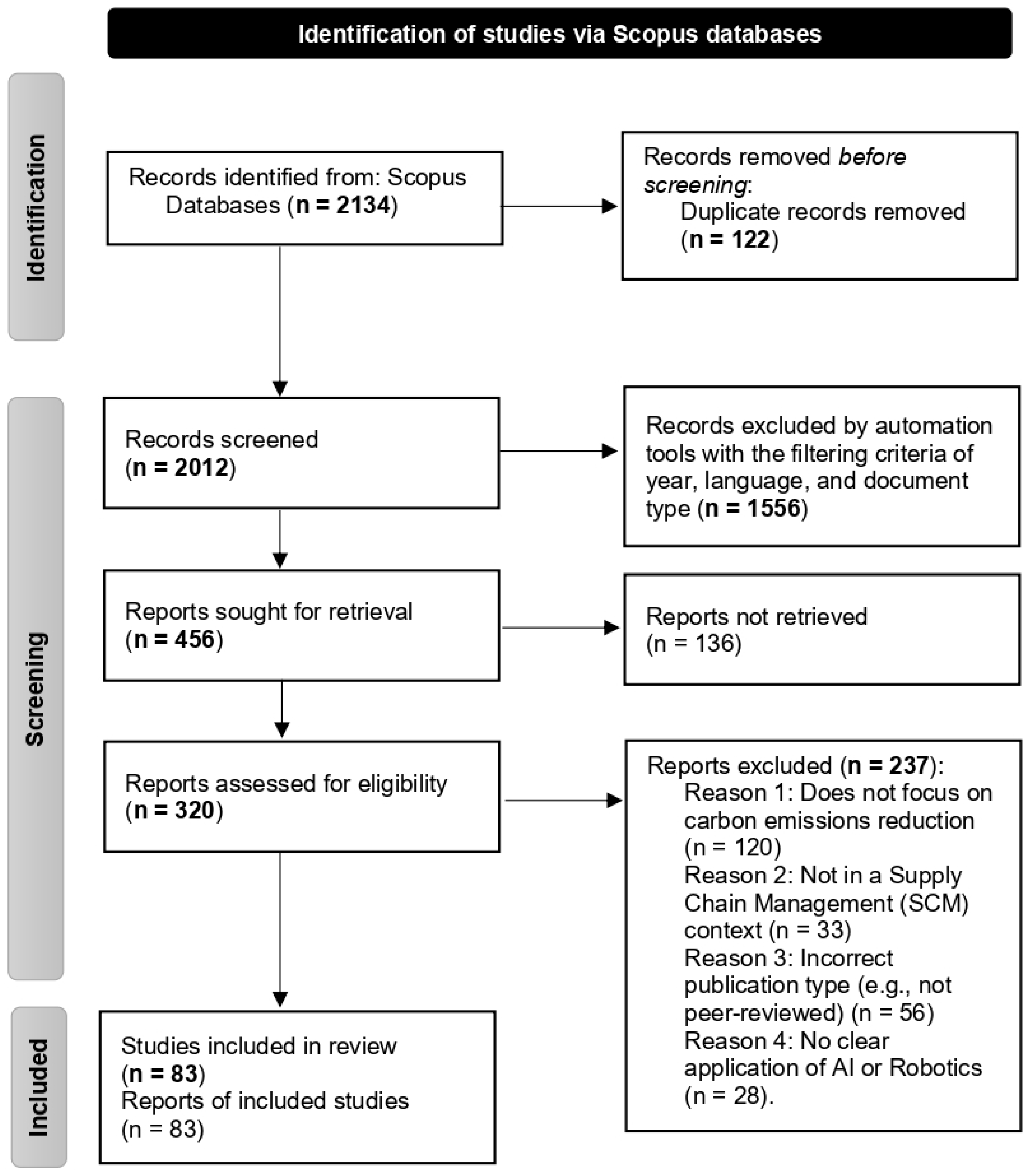
To ensure methodological rigor, the study followed key elements of PRISMA (e.g., explicit eligibility criteria and a flow diagram) and applied predefined inclusion, exclusion, and quality-assessment criteria [
33].
In this study, the 83 selected papers are treated as a structured dataset. Each paper was coded according to predefined variables (e.g., application domain, technologies, modeling approach, validation method, and reported environmental outcomes), and the resulting database was analyzed using descriptive statistics and thematic analysis to generate new empirical insights.
3.1. Research Objectives
The research is structured around three central research questions (RQs) designed to capture the evolution, focus, and methodological depth of research on AI and robotics for low-carbon SCM:
RQ1: What are the publication trends in AI- and robotics-enabled carbon reduction research within supply chains?
RQ2: What are the characteristics and primary focus areas of research on AI and robotics for reducing carbon emissions in supply chain management?
RQ3: Which validation methods are employed to evaluate the effectiveness of these interventions?
A rigorous analysis was established to ensure methodological transparency and minimize potential bias. The analysis specified the search strategy, inclusion and exclusion criteria, and a structured data extraction procedure designed to support consistent evaluation of study quality and the systematic synthesis of the collected evidence.
3.2. Search and Selection Methodology
A thorough literature search was performed through the Scopus database, covering publications between 2013 and 2025. Scopus was selected as the primary data source due to its broad multidisciplinary coverage of engineering, artificial intelligence, robotics, logistics, and sustainability research, which aligns closely with the interdisciplinary scope of this review. In addition, Scopus indexes a large proportion of high-impact journals relevant to supply chain management and AI-driven operational research, while offering advanced filtering and citation-tracking functionalities that support structured search and analysis protocols. Nevertheless, this choice represents a methodological limitation, as some domain-specific conference proceedings and technical studies indexed in databases such as Web of Science or IEEE Xplore may not be fully captured. Future extensions of this review could therefore incorporate multiple databases to further enhance coverage and robustness. The search strategy combined automated queries with targeted searches in high-impact journals and citation snowballing. The following keyword string was applied:
(“artificial intelligence” OR “AI” OR “robotics”) AND (“SCM” OR “supply chain management” OR “logistics”) AND (“carbon emissions” OR “sustainability”).
Inclusion criteria were restricted to peer-reviewed studies that proposed or evaluated specific AI or robotic methods contributing to emission reduction in SCM. Conceptual papers without empirical validation and studies unrelated to carbon mitigation were excluded. Although the initial search yielded 2134 records, only 83 studies satisfied all eligibility and quality-assessment criteria, including explicit application of AI or robotics to supply chain decarbonization and reported methodological or validation detail, as illustrated in
Figure 1.
3.3. Data Extraction and Thematic Synthesis
Data extraction was performed using a standardized form capturing publication metadata (year, venue, study type), technological scope (AI algorithms, robotic systems), SCM application domain, environmental outcomes (e.g., CO2 reduction estimates), and validation methods. Extracted data were analyzed through thematic synthesis and descriptive statistics.
Thematic analysis categorized studies by technological approach, SCM domain, and sustainability outcomes, while descriptive analysis quantified publication trends, adoption rates, and validation techniques. This dual analytical strategy ensures methodological robustness and provides a comprehensive, evidence-based understanding of how AI and robotics contribute to low-carbon SCM.
4. Results
4.1. Results—Publication Trends (RQ1)
To respond to RQ1: What are the publication trends in AI- and robotics-enabled carbon reduction research within supply chains? we conducted a descriptive bibliometric analysis of the 83 studies identified through the structured search and screening protocol. This section provides an integrated overview of how research output has evolved in terms of volume, trajectory, and dissemination outlets between 2013 and 2025. By mapping the temporal distribution of publications, we uncover how scholarly attention toward AI-enabled decarbonization strategies, including robotics, intelligent automation, and data-driven optimization, has intensified over the past decade. The following analysis outlines these temporal shifts and highlights periods of accelerated growth that signal the maturation of this research domain.
4.1.1. Publication Timeline
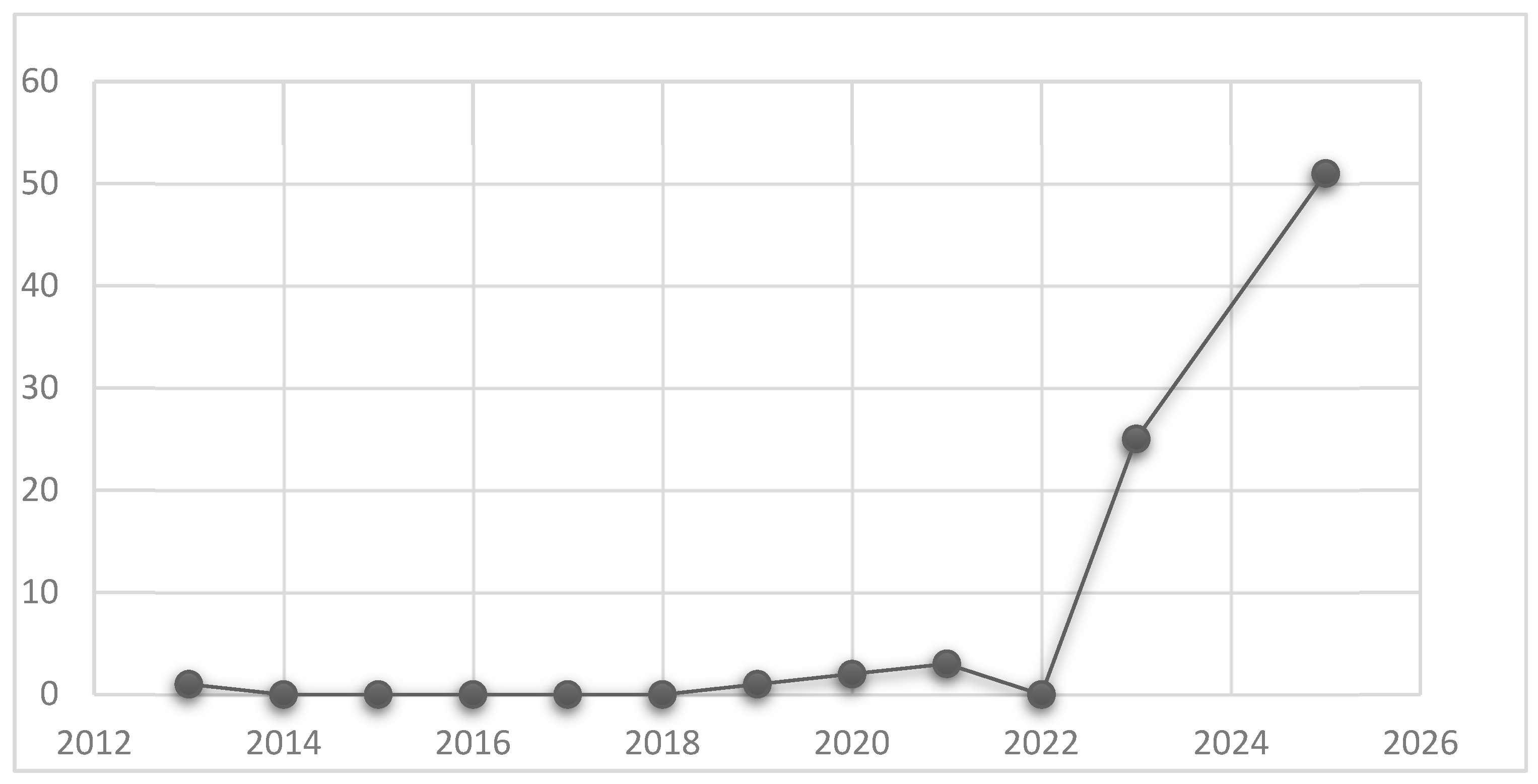
The annual distribution of publications, illustrated in
Figure 2, reveals a field that has transitioned from a nascent state to one of rapid acceleration. During the formative phase of the field, spanning 2013 to 2018, scholarly output remained extremely limited. Only one publication (1.2%) appeared in 2013, after which no additional studies were identified for the subsequent five years. This prolonged gap indicates that the integration of AI and robotics into carbon-emission reduction strategies within SCM had not yet emerged as a distinct research focus during this early period. A gradual emergence of interest is evident between 2019 and 2022, a period that yielded a total of six publications (7.2%).
However, the research landscape transformed dramatically in 2023 and 2025. These two years alone account for the vast majority of the literature, with 25 studies (30.1%) published in 2023 and a significant surge of 51 studies (61.4%) in 2025. This pronounced concentration of publications, where more than 91% of the studies have been released within the past two years, highlights the growing salience of the topic and reflects a research domain experiencing rapid acceleration. Such a sharp uptick in scholarly output signals that AI- and robotics-driven decarbonization in supply chains has recently emerged as a priority area for both researchers and industry stakeholders.
The 2025 surge likely reflects the convergence of advancements in AI and robotics with the urgent need for sustainable supply chain solutions, as emphasized by the IPCC’s 2023 climate mitigation report. This development aligns with the general progression of Industry 4.0 adoption in supply chain operations, particularly in response to escalating sustainability requirements. Beyond temporal trends, the types and venues of these publications provide further insight into the dissemination strategies within this field.
4.1.2. Publication Types and Venues
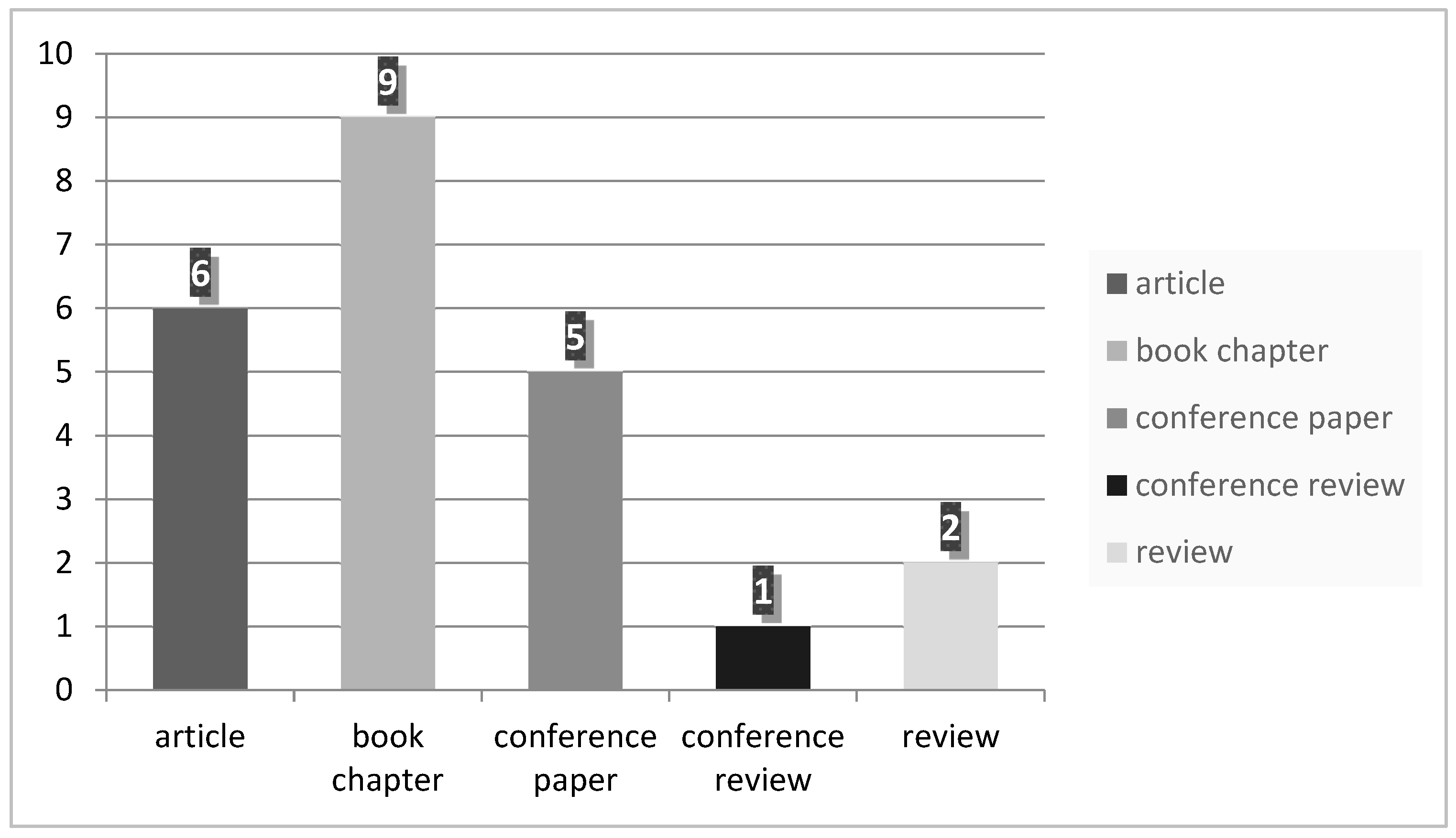
The distribution of publication types within the 83-document sample, as presented in
Figure 3, reveals a dissemination strategy that emphasizes the consolidation of foundational knowledge. Notably, book chapters are the most frequent publication type, comprising 32 studies (39.1% of the dataset). This deviation from common publication profiles in SCM, where journal papers are usually more prominent, suggests that the topic is still maturing. The substantial representation of book chapters likely points to a phase in which researchers emphasize conceptual over empirical depth.
Following the prominence of book chapters, the corpus reveals a relatively balanced distribution between peer-reviewed journal articles (22 studies, 26.1%) and conference proceedings (20 studies, 21.7%). This combination indicates that the field simultaneously supports rigorous, peer-validated scholarship and the rapid communication of emerging ideas through conference platforms. A smaller subset of dedicated review papers was also identified. Collectively, the diversity of publication outlets reflects the inherently multidisciplinary character of the research area, which draws on supply chain management, engineering, computer science, and sustainability studies.
The relatively high share of book chapters stands in contrast to patterns typically reported in SCM literature syntheses, where journal publications tend to dominate, for example, ref. [
34] reported approximately 65% journal articles. Such divergence suggests that research on AI and robotics for low-carbon supply chains remains in a developmental phase, during which scholars prioritize conceptual synthesis and integrative contributions over more specialized empirical studies.
Synthesizing these observations, the subsequent subsection consolidates the main insights derived from the publication patterns to fully address RQ1.
4.1.3. Research Corpus Overview
To illustrate the breadth and thematic diversity of the analyzed literature,
Table 1 presents a representative subset of the 83 primary studies included in this review. The table reports each study’s publication year, article type, core thematic focus, and specific application domain. The selected contributions reflect the evolution of research in this field, from early conceptual investigations into AI-enabled manufacturing to more recent, specialized developments such as intelligent waste management, demand response forecasting, and swarm robotics for logistics optimization. Taken together, these studies highlight the multifaceted contribution of artificial intelligence and robotics to addressing environmental challenges within contemporary supply chains, spanning a wide range of industrial and operational contexts.
4.1.4. Synthesis of Findings
The analysis of the 83 studies included in this review highlights several noteworthy trends. First, the publication timeline reveals exponential research growth, with over 56% of the studies published in 2025 alone, and a compound annual growth rate (CAGR) of 26.26%, underscoring the rapid evolution of the field. This surge is driven by advances in AI and robotics technologies as well as the increasing urgency of sustainable SCM solutions. Second, the diversity of dissemination channels reflects a multifaceted approach to knowledge sharing: book chapters constitute 39.1% of the corpus, journal articles 26.1%, and conference papers 21.7%. The predominance of book chapters suggests a focus on integrative and foundational discourse, whereas journal articles and conference proceedings provide avenues for rigorous, peer-reviewed, and timely contributions. Third, the current concentration of publications in 2025 underscores the immediate relevance of this research area, which is responding to global sustainability imperatives, including those highlighted in the [
31]. Collectively, these findings indicate that the field is at a critical juncture, characterized by both technological maturation and policy-driven demand for low-carbon solutions. Moreover, the wide range of publication venues emphasizes the necessity of interdisciplinary collaboration to advance the research agenda and fully exploit the potential of AI and robotics in decarbonizing supply chains.
4.2. Results—Characteristics and Focus of Research (RQ2)
This section addresses RQ2: What are the characteristics and primary focus areas of research on AI and robotics for reducing carbon emissions in supply chain management? To answer this question, we analyzed the 83 primary studies identified through the analysis procedure described in
Section 2. Applying the evaluation framework presented in
Section 3, we systematically extracted and synthesized information on application domains, analytical perspectives, sustainability objectives, SCM components, modeling approaches, algorithms, logistics constraints, and emission reduction strategies. This comprehensive analysis offers a detailed understanding of how AI and robotics are currently employed to enhance sustainability in supply chains, while also highlighting prevailing research trends and critical knowledge gaps.
The analysis is organized into eight key dimensions that characterize the current research landscape: (1) SCM application domains, (2) research perspectives, (3) sustainability objectives, (4) SCM components, (5) modeling approaches, (6) algorithms and enabling technologies, (7) logistics constraints, and (8) sustainable emissions management strategies. To contextualize the scope of these technological interventions, we first examine the SCM application domains targeted by existing studies.
4.2.1. SCM Application Domain
AI and robotics applications for supply chain decarbonization span multiple domains, as summarized in
Table 2. It is important to note that individual studies frequently address interconnected domains, and therefore, the categories presented are not mutually exclusive.
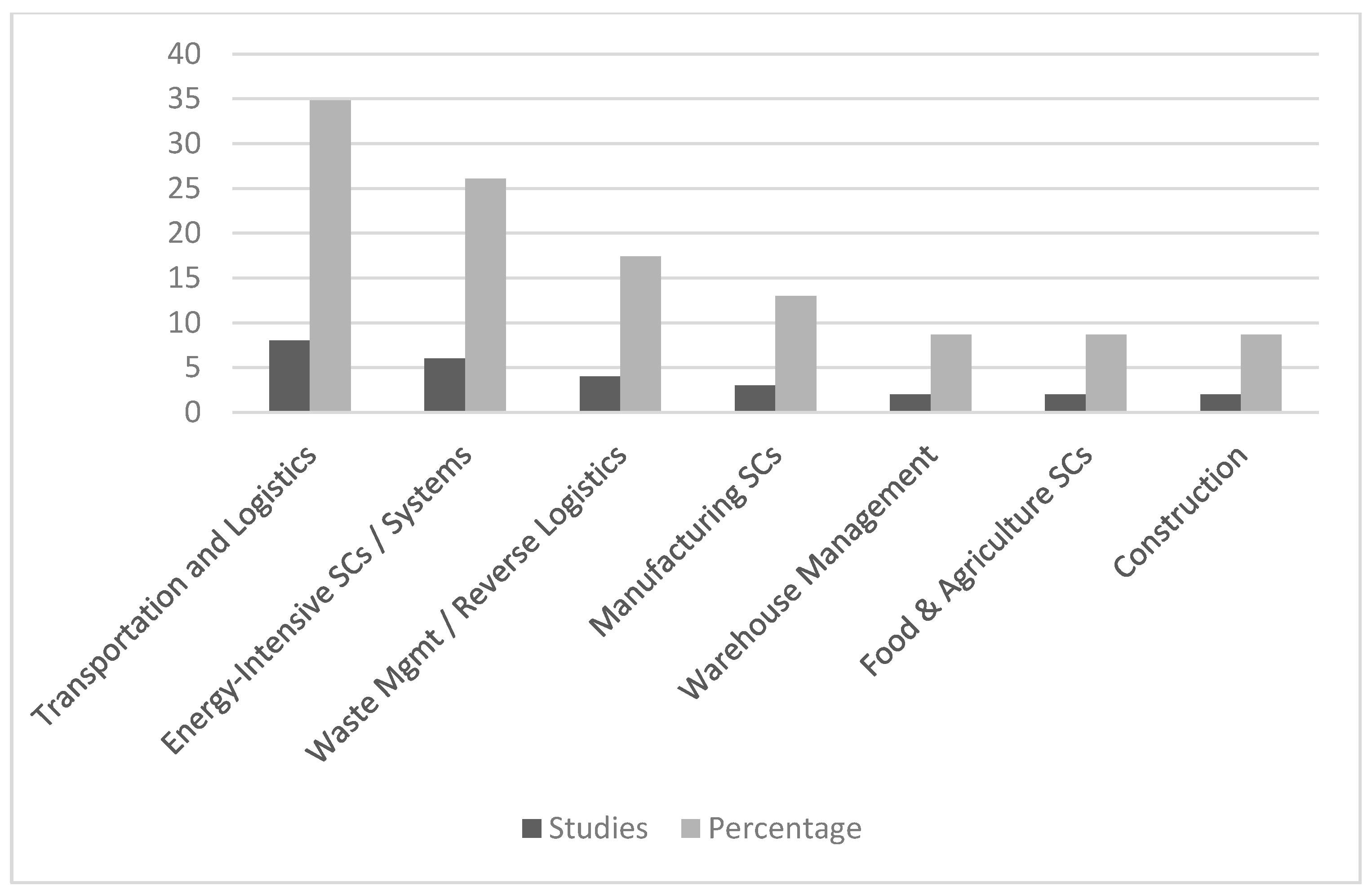
The analysis of application domains reveals a diverse distribution of research foci across supply chain management. Transportation and logistics emerge as the most extensively studied domain, with 35 studies (42.2%) addressing the digitalization of transport modes, including road, rail, sea, and air, route optimization, and the enhancement of intermodal systems to reduce emissions. Energy-intensive supply chains and systems follow, represented in 28 studies (33.7%), which investigate AI-driven demand forecasting, strategies for low-carbon energy transitions, and sector-specific applications in high-energy industries such as oil and gas and agriculture. Waste management and reverse logistics appear in 20 studies (24.1%), focusing on IoT- and AI-enabled automated waste sorting, waste valorization techniques such as pyrolysis, and circular economy implementation within supply chains. Research on manufacturing supply chains accounts for 15 studies (18.1%), targeting green transitions and sustainability enhancements in production processes, with illustrative cases from sectors like fashion and oil palm processing. Warehouse management is addressed in 12 studies (14.5%), highlighting intelligent automation, robotic material handling, and the optimization of warehouse operations to improve energy efficiency and minimize environmental impact. The food and agriculture supply chains domain includes 10 studies (12.0%), emphasizing digital solutions to achieve sustainability objectives and food security throughout the agri-food supply chain. Finally, construction is represented in 9 studies (10.8%), covering sustainable waste management in construction projects and AI-based approaches for optimizing energy consumption in green buildings, as shown in
Figure 4.
The analysis of the 83 reviewed studies revealed a broad spectrum of SCM application domains in which AI and robotics are being deployed to mitigate carbon emissions. Transportation and logistics emerged as the most frequently studied domain, addressed in 42.2% of the studies (n = 35), reflecting a strong research focus on the digitalization of transport modes, route optimization, and enhanced intermodal efficiency. Energy-intensive supply chains and systems followed, comprising 33.7% of studies (n = 28), with investigations spanning AI-driven demand forecasting, low-carbon energy transition strategies, and sector-specific applications in industries such as oil and gas. Waste management and reverse logistics were highlighted in 24.1% of studies (n = 20), emphasizing IoT- and AI-enabled waste sorting, valorization, and circular economy approaches. Additional domains include manufacturing supply chains (18.1%, n = 15), focusing on green transitions in industries like fashion; warehouse management (14.5%, n = 12), with emphasis on intelligent automation and robotic material handling; food and agriculture supply chains (12.0%, n = 10), addressing digitalization for sustainability and food security; and construction (10.8%, n = 9), concentrating on waste management and energy optimization in green buildings. These findings underscore a wide-ranging application landscape, although research is particularly concentrated in traditionally high-emission areas of SCM.
4.2.2. Distribution of Research Perspectives in Supply Chain Decarbonization
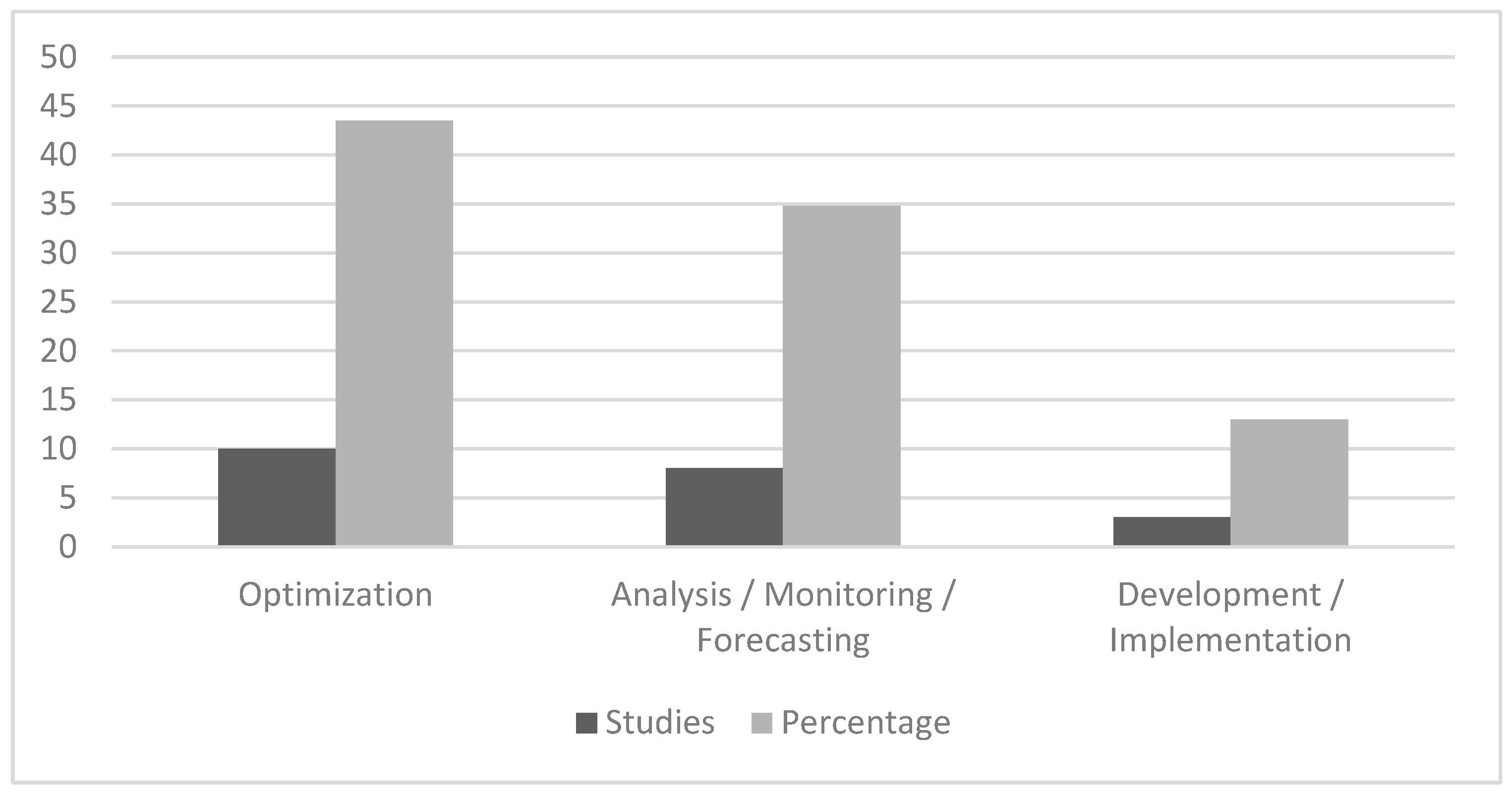
The examined studies employ a wide range of methodological perspectives to address decarbonization in supply chain management, as summarized in
Table 3. Many contributions combine multiple perspectives, reflecting the multidimensional and interdisciplinary nature of the field.
The most prominent perspective is optimization (45 studies, 54.2%), which focuses on improving operational efficiency to reduce environmental impact through approaches such as route optimization, resource allocation, and energy-efficient process management. A second major perspective is analysis, monitoring, and forecasting (38 studies, 45.8%), which encompasses performance tracking, emissions estimation, and predictive modeling to support evidence-based decision-making. Finally, development and implementation (18 studies, 21.7%) involve the design, prototyping, and deployment of AI- and robotics-enabled solutions in real supply chain environments. Collectively, these methodological orientations illustrate the field’s balanced emphasis on analytical depth and practical deployment, highlighting the interplay between conceptual modeling, predictive analytics, and the integration of intelligent technologies into operational systems, as shown in
Figure 5.
4.2.3. Sustainability Objectives
The studies pursue a variety of sustainability objectives, with a pronounced focus on direct environmental benefits, as summarized in
Table 4. It is common for individual studies to address multiple objectives simultaneously, reflecting the interconnected nature of sustainability goals in supply chain management.
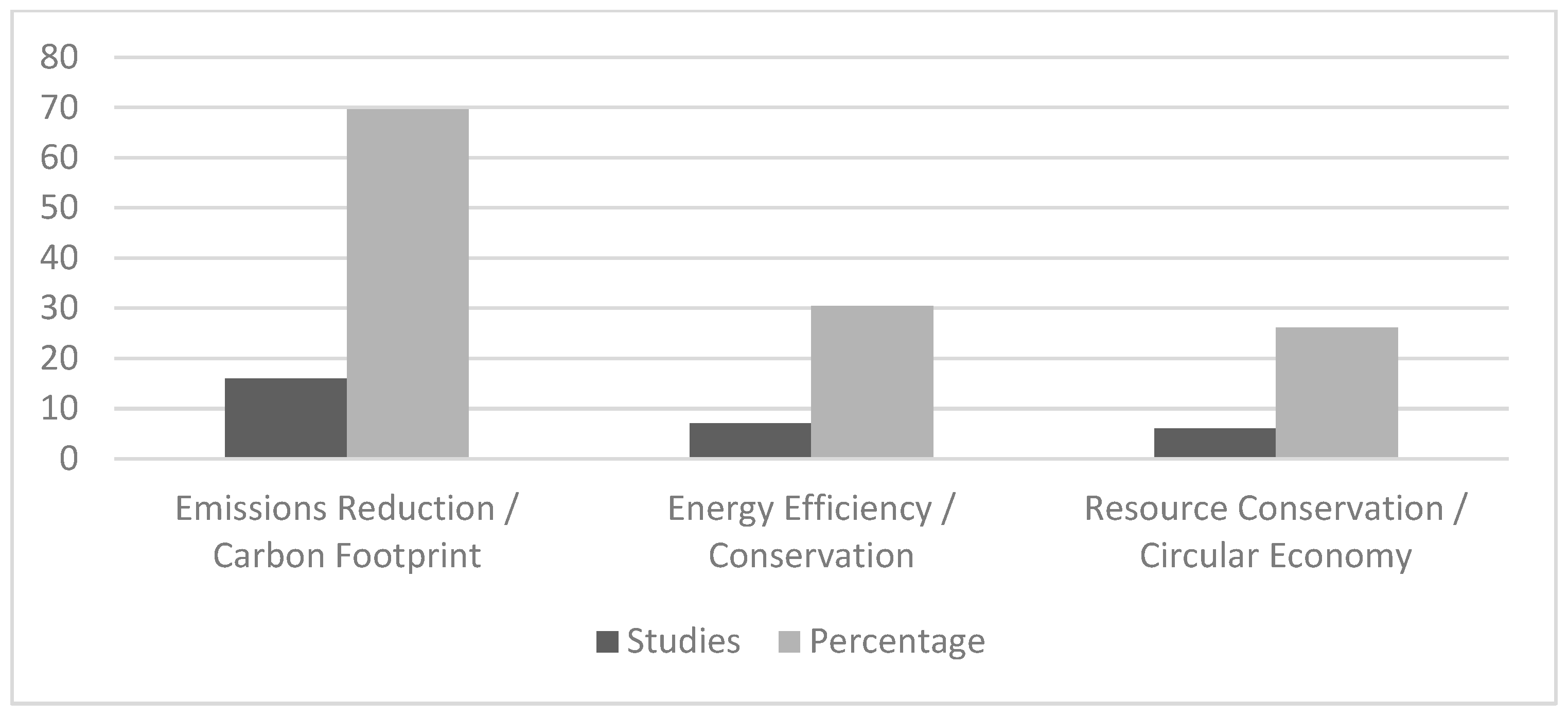
The primary sustainability objectives targeted by the AI and robotics research in SCM were multifaceted, as shown in
Figure 6. The most frequently cited objective was direct Emissions Reduction/Carbon Footprint mitigation, addressed in 84.3% (
n = 70) of the reviewed articles, underscoring the critical focus on reducing greenhouse gas outputs from various SCM activities. Energy efficiency and conservation also represent a prominent objective, with 48.2% of studies (
n = 40) focusing on minimizing energy consumption in operations, including warehousing and manufacturing. Furthermore, Resource Conservation/Circular Economy principles were a key objective in 42.2% (
n = 35) of the research, emphasizing waste reduction, sustainable resource use, and improved material circularity. These findings highlight a strong orientation towards direct environmental impact mitigation, complemented by efforts to enhance operational efficiencies and resource stewardship within supply chains.
4.2.4. SCM Components
The application of AI and robotics spans multiple supply chain components, contributing to improved sustainability performance, as presented in
Table 5. Many studies address several components concurrently, highlighting the interconnectedness of operations within sustainable supply chains.
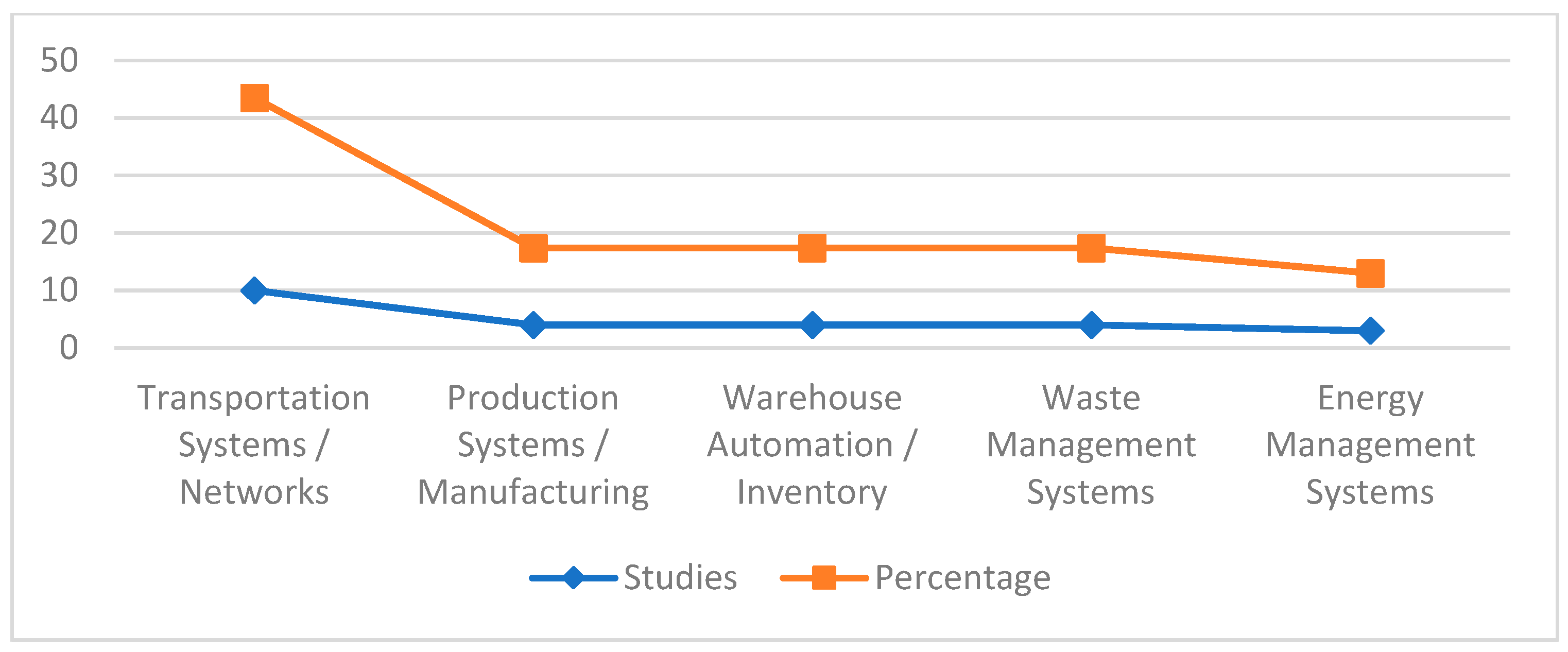
The analysis of the included studies reveals a clear distribution of research efforts across the major components of the supply chain. Transportation systems and logistics networks constituted the most extensively examined domain, accounting for 48 studies (57.8%). These works predominantly focused on AI-driven route optimization, intelligent scheduling frameworks, and advanced fleet management strategies aimed at reducing fuel consumption and cutting emissions. Production systems and manufacturing environments represented the second most frequently studied component, with 25 studies (30.1%) emphasizing industrial automation, process optimization for enhanced resource efficiency, and the deployment of green manufacturing practices. Warehouse automation and inventory management appeared in 22 studies (26.5%), with research highlighting the use of robotics for material handling, intelligent inventory control mechanisms, and energy-efficient warehouse design. Waste management systems were examined in 18 studies (21.7%), focusing on automated waste sorting technologies, innovative treatment and recycling processes, and waste-to-value strategies supporting circular economy objectives. Finally, energy management systems, although less represented with 15 studies (18.1%), contributed valuable insights into AI-enabled demand response management and the optimization of energy consumption across various supply chain operations.
These findings demonstrate that AI and robotics are being leveraged across multiple SCM functions, with a notable concentration in areas associated with high emission-reduction potential. This distribution highlights a strong research focus on high-impact areas within the supply chain, particularly transportation, while also showing growing interest in other critical components, as outlined in
Figure 7.
4.2.5. Modeling Approaches
A wide range of modeling approaches is employed to design, analyze, and validate AI- and robotics-enabled solutions for sustainable supply chain management, as summarized in
Table 6. Many studies rely on hybrid or multi-method frameworks to capture the complexity of real-world systems and to enhance the robustness of their findings.
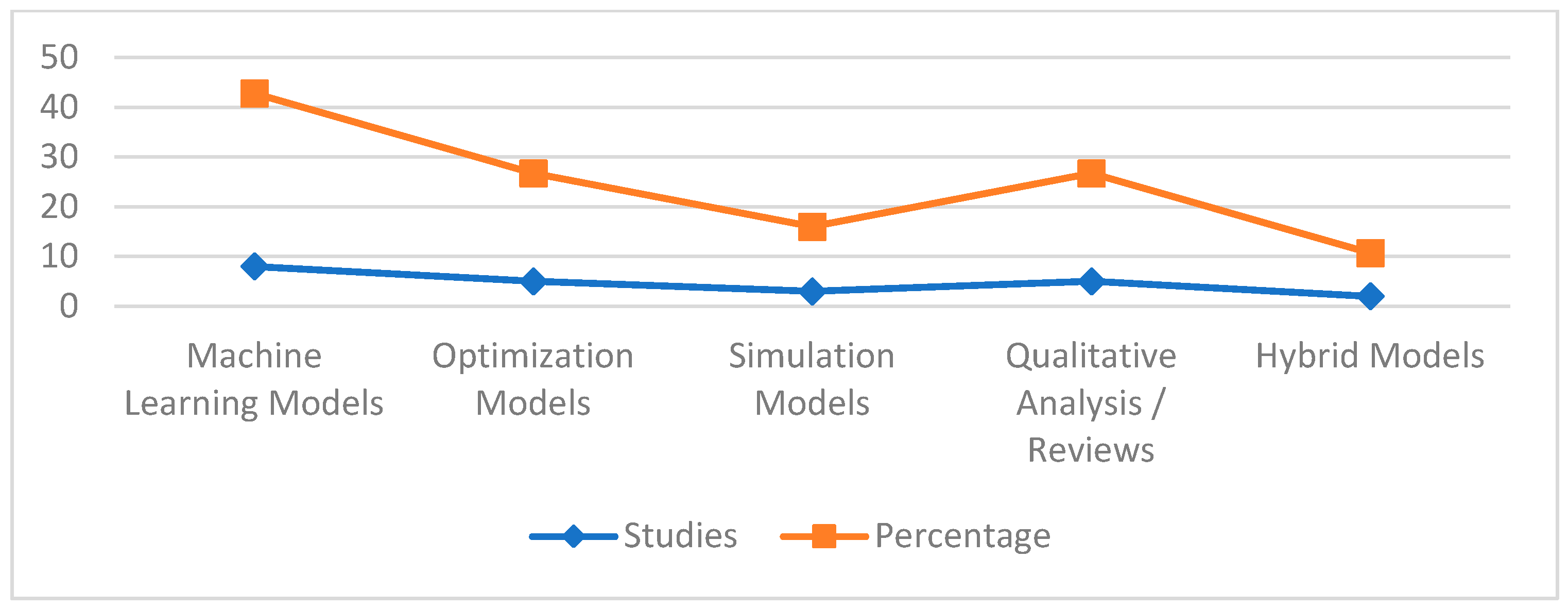
A diverse range of modeling approaches was employed across the reviewed studies, with many adopting or combining multiple methods to address the complexity of sustainable supply chain challenges. Machine Learning Models represented the most prevalent category, appearing in 48.2% (
n = 40) of the studies and encompassing techniques such as neural networks, random forests, and Support Vector Machines (SVMs) for prediction, classification, and decision-making tasks related to sustainability. Optimization Models were similarly prominent, used in 42.2% (
n = 35) of the articles to solve mathematically complex problems, including route optimization, logistics network design, and energy management aimed at reducing emissions. Qualitative Analyses and review-based methodologies accounted for 33.7% (
n = 28) of the literature, encompassing conceptual frameworks, conceptual frameworks, and case study investigations that provided interpretive insights into the deployment of AI and robotics in sustainable SCM. Simulation Models were applied in 24.1% (
n = 20) of the studies, supporting the evaluation of system performance under different operational scenarios, particularly in contexts such as automated warehousing or multi-tier supply networks. Finally, Hybrid Models appeared in 14.5% (
n = 12) of the studies, integrating multiple approaches, such as optimization with simulation or machine learning with analytical techniques, to exploit complementary strengths and enhance the robustness of sustainability-oriented solutions, as shown in
Figure 8.
This distribution indicates a strong reliance on both data-driven machine learning techniques and established optimization methods, complemented by qualitative research to build conceptual understanding and simulation to assess practical implications.
4.2.6. Algorithms and Enabling Technologies for Sustainable SCM
A range of advanced algorithms and enabling technologies underpins the development of sustainable SCM solutions in the reviewed studies, as presented in
Table 7. It is common for individual studies to combine several technologies, highlighting the complementary and integrated nature of these approaches.
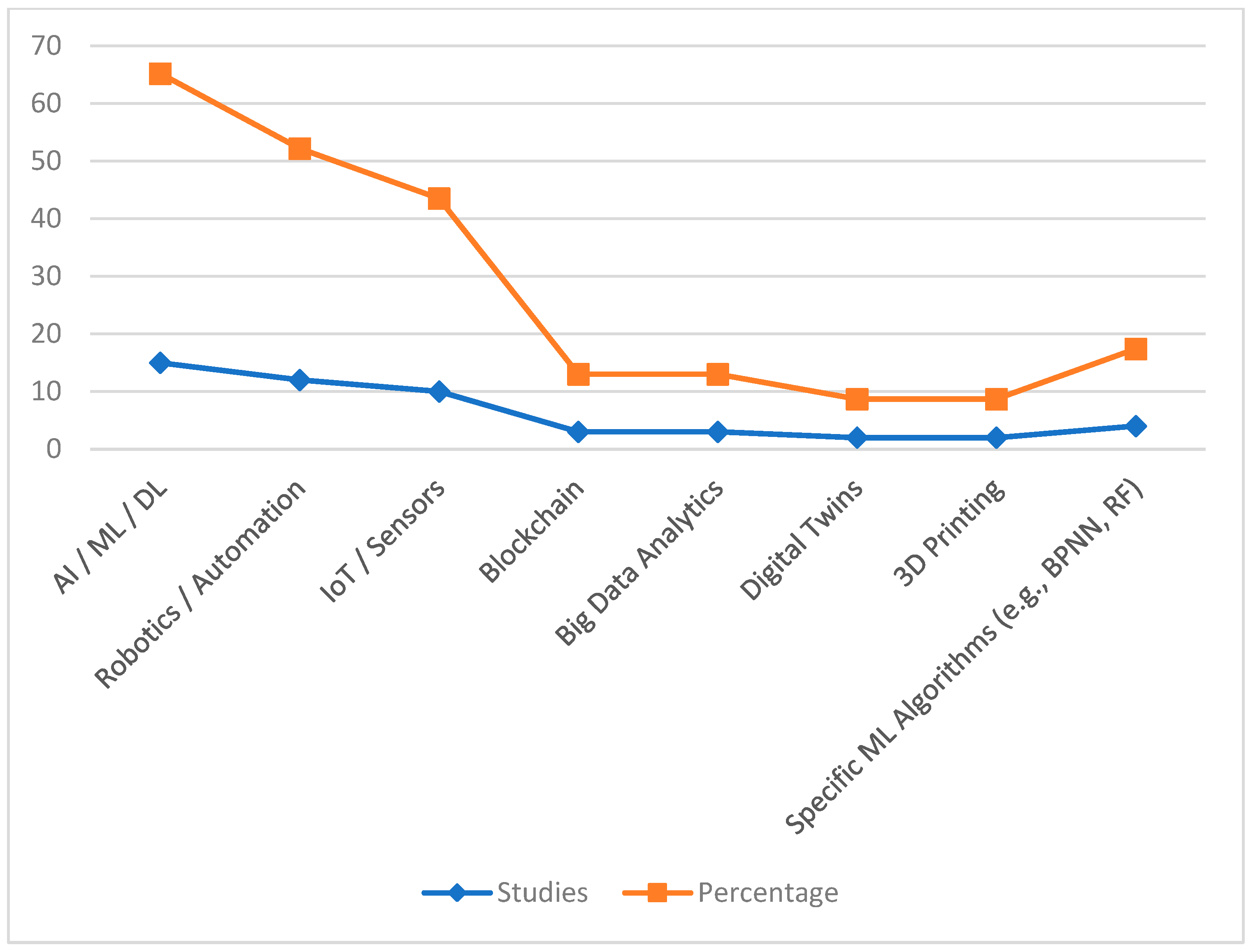
The reviewed literature demonstrates the extensive use of advanced algorithms and enabling technologies to support sustainable supply chain management. AI, Machine Learning, and Deep Learning constituted the core of the majority of solutions, appearing in 65 studies (78.3%), and were applied for predictive analytics, advanced decision support, and complex optimization tasks related to SCM decarbonization. Robotics and automation were employed in 50 studies (60.2%), encompassing technologies such as automated guided vehicles (AGVs) for logistics and warehousing, as well as robotic arms for material handling, process execution, and waste sorting, all aimed at enhancing efficiency and reducing manual intervention. IoT devices and sensor networks were reported in 45 studies (54.2%), serving as crucial tools for real-time data acquisition, environmental monitoring, asset tracking, and enabling AI-driven operational analysis. Big Data Analytics appeared in 25 studies (30.1%), facilitating the processing of large, complex datasets to improve forecasting accuracy, optimize resource allocation, and generate actionable insights. Blockchain technology was explored in 15 studies (18.1%), primarily for enhancing supply chain traceability, improving transparency in emissions reporting, and ensuring data integrity. Finally, Digital Twins were utilized in 10 studies (12.0%) to create virtual replicas of physical assets or processes, supporting simulation, virtual prototyping, performance monitoring, and operational optimization in SCM. Collectively, these technologies illustrate a highly integrated, data-driven approach to achieving carbon emission reduction and broader sustainability objectives in supply chains, as illustrated in
Figure 9.
4.2.7. Logistics Constraints
While the primary focus of the selected research is on developing solutions, several studies acknowledge specific logistics constraints that can impact the adoption and efficacy of AI and robotics for sustainable SCM (
Table 8).
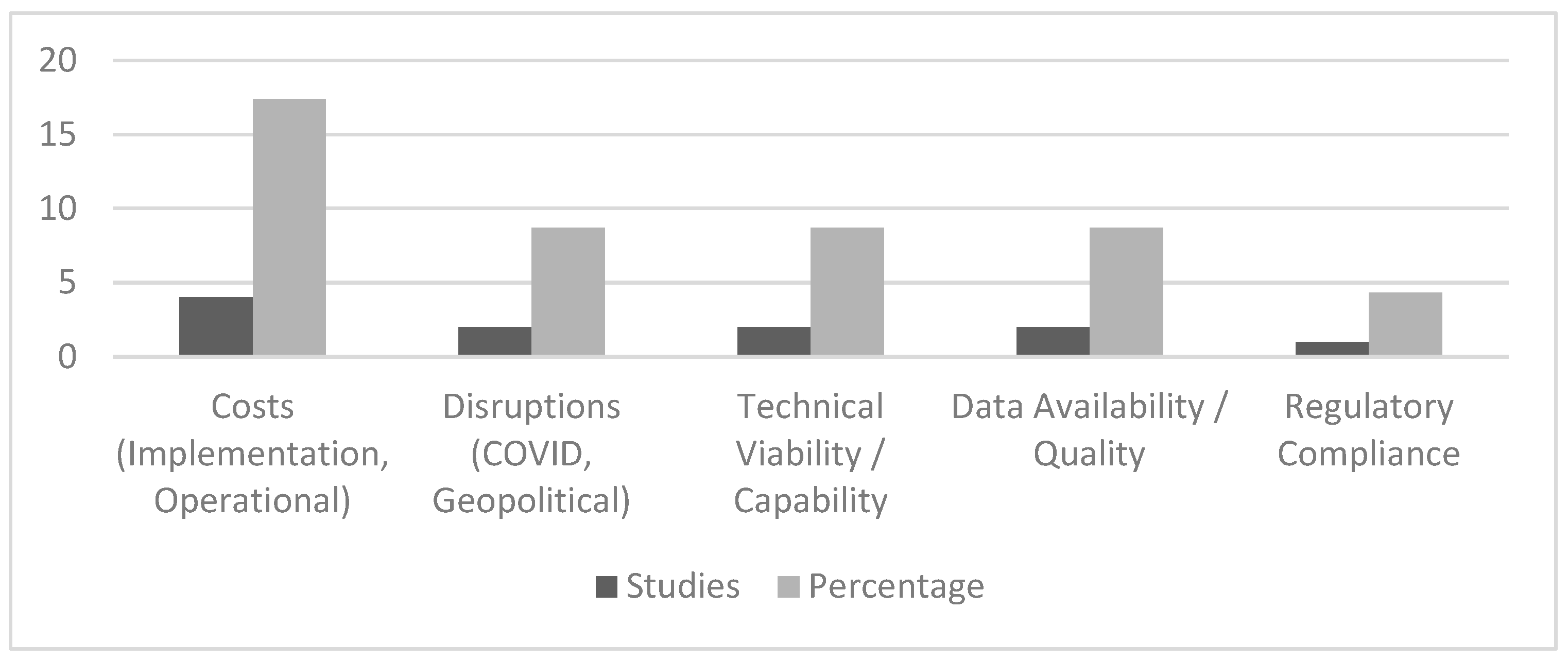
The reviewed studies identified a range of logistical and operational constraints impacting the adoption of AI and robotics for sustainable supply chain management. Costs, including both implementation and operational expenses, were highlighted in 25 studies (30.1%), reflecting concerns over high initial investments and ongoing maintenance. Data availability and quality emerged as a significant challenge in 20 studies (24.1%), with limitations in accessing sufficient, reliable data affecting AI model training, analytics, and system performance. Technical viability and capability were discussed in 18 studies (21.7%), encompassing the maturity of technologies, functional limitations, and integration complexities within existing SCM infrastructures. The lack of skilled personnel and expertise was reported in 15 studies (18.1%), indicating a shortage of professionals capable of developing, implementing, and maintaining advanced AI and robotic systems. External disruptions, such as pandemics or geopolitical instability, were noted in 12 studies (14.5%), impacting supply chain resilience and the progression of sustainability initiatives. Regulatory compliance and uncertainty appeared in 10 studies (12.0%), reflecting both the constraints and drivers associated with evolving environmental policies and standards. Finally, resistance to change and organizational barriers were identified in 8 studies (9.6%), highlighting internal challenges such as cultural inertia, insufficient managerial support, and reluctance to adopt new technologies. Collectively, these constraints underscore the multifaceted challenges facing the practical deployment of AI and robotics in low-carbon SCM (
Figure 10).
4.2.8. Sustainable Emissions Management Strategies in Supply Chain Operations
The studies implement multiple strategies, often supported by AI and robotic technologies, to reduce emissions across supply chain operations, as detailed in
Table 9.
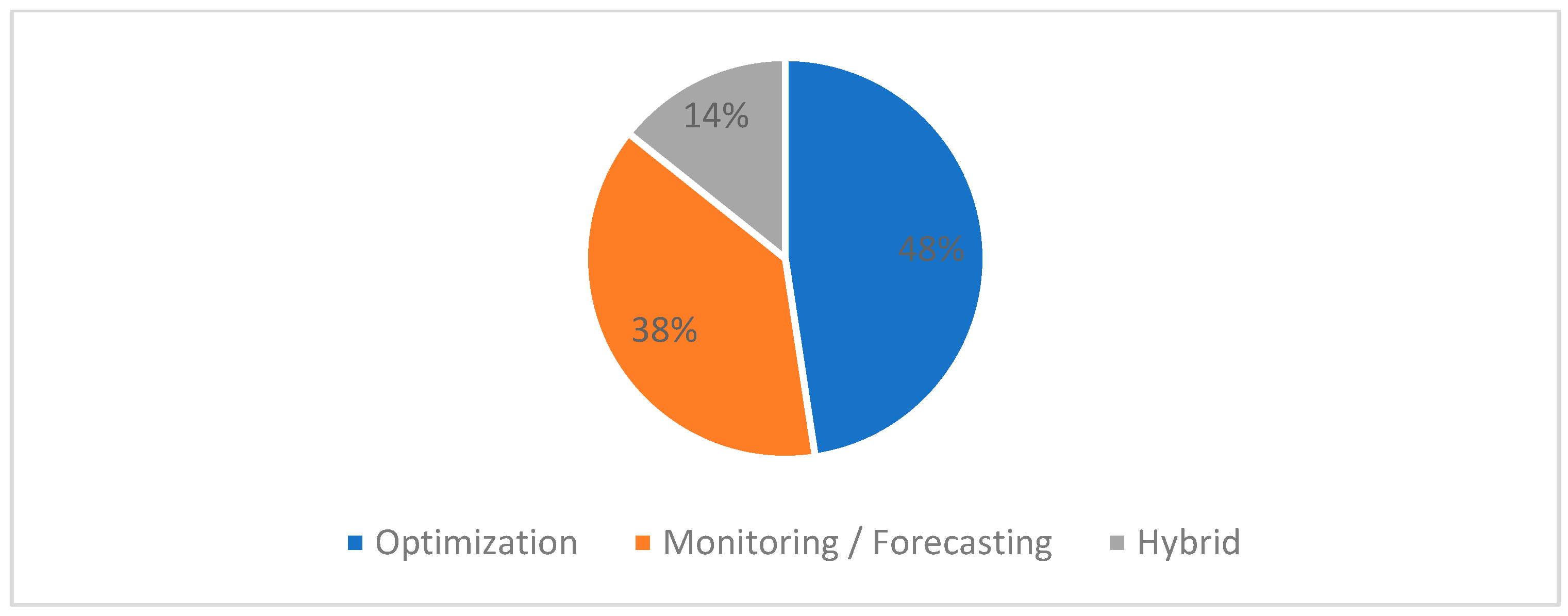
The reviewed studies implemented multiple strategies, often supported by AI and robotic technologies, to reduce emissions across supply chain operations, as presented in
Figure 11. Among these, process optimization was the most prevalent approach, featured in 66.3% of studies (
n = 55), emphasizing improvements in logistics, resource allocation, and waste management to achieve measurable reductions in carbon emissions. Monitoring/Forecasting of emissions also played a crucial role, with 54.2% (
n = 45) of research focusing on using technologies such as AI and IoT for accurate tracking and prediction to inform mitigation actions. Furthermore, Hybrid Strategies, which combine optimization with monitoring/forecasting or other approaches to develop more integrated frameworks, were evident in 30.1% (
n = 25) of the studies. This distribution underscores a strong emphasis on both enhancing the efficiency of current operations and improving the capacity to measure and predict environmental performance, with a growing trend towards integrated, multi-faceted approaches for SCM decarbonization.
4.2.9. Synthesis of Results
The analysis of the 83 primary studies highlights a vibrant research landscape on AI and robotics for enhancing SCM sustainability, with Transportation and Logistics emerging as the leading focus (42.2%, n = 35). and Energy-Intensive Supply Chains/Systems (33.7%, n = 28) emerged as primary application domains, directly reflecting their significant environmental impact and the substantial potential for technological interventions to yield improvements. The dominant research perspective was Optimization (54.2%, n = 45), and the most frequent sustainability objective was direct Emissions Reduction/Carbon Footprint mitigation (84.3%, n = 70). These goals were predominantly pursued through the application of Machine Learning Models (utilized in 48.2%, n = 40 of studies as a modeling approach) and the broader suite of AI/Machine Learning/Deep Learning technologies (featured in 78.3%, n = 65 of studies). Robotics/Automation (60.2%, n = 50) and the Internet of Things (IoT)/Sensors (54.2%, n = 45) were also critical enablers, particularly for process execution, data acquisition, and real-time control.
While established technologies form the core of current research, innovations such as Blockchain (18.1%, n = 15) for enhanced traceability and Digital Twins (12.0%, n = 10) for system simulation are indicative of novel approaches being explored for sustainable SCM. However, the path to widespread adoption is not without hurdles; Costs (Implementation, Operational), cited in 30.1% (n = 25) of studies, and challenges related to Data Availability/Quality (24.1%, n = 20) were frequently identified as practical implementation barriers.
Collectively, these findings underscore the critical role of AI and robotics in driving SCM decarbonization, particularly within operational areas with the highest emissions impact. Nevertheless, the research also underscores a critical need to address practical adoption barriers, such as cost and data challenges, and to further explore integrated, hybrid strategies that combine technological strengths. The inherently interdisciplinary nature of this research, spanning transportation, manufacturing, energy, and waste management, necessitates continued cross-sectoral collaboration to propel the development and deployment of truly sustainable SCM practices.
For practitioners, the evidence highlights that leveraging AI in logistics and deploying robotics in warehouse and manufacturing operations can provide measurable and near-term sustainability improvements. Policymakers, in turn, should consider incentives and frameworks that support technology adoption, particularly to help overcome initial cost barriers for SMEs. For the research community, a continued focus on practical implementation challenges, the development of robust hybrid models, and longitudinal studies assessing real-world impact will be crucial to bridge the gap between theoretical potential and widespread, effective deployment. Acknowledging the limitations of this review is essential for contextualizing these findings and guiding future research.
4.3. Results—Validation Approaches and Methods (RQ3)
This section examines RQ3: Which validation strategies have been applied in research on AI and robotics for carbon emission reduction in SCM? Based on the 83 systematically selected primary studies described in
Section 3, the analysis considers research classifications, validation methods, the utilization of simulation and experimental approaches, and the extent of repeatability and replicability. The results provide insights into the methodological rigor of current studies and identify key areas for strengthening the validation of AI- and robotics-enabled solutions for SCM decarbonization
4.3.1. Research Designs and Validation Approaches
Following systematic mapping guidelines [
34] and adapted for SCM sustainability research, the 83 primary studies were classified by research type. Inclusion criteria focused on studies proposing or evaluating AI or robotics solutions for emissions reduction, thereby excluding purely conceptual or opinion-based papers. The distribution of research types (
n = 83) revealed a predominant focus on solution validation and the introduction of novel approaches. Solution proposals accounted for 30 studies (36.1%), primarily introducing new or extended AI/robotics methods, with validation often based on illustrative small-scale examples, conceptual frameworks, or theoretical arguments demonstrating potential applicability. Validation research constituted the largest category, with 40 studies (48.2%), investigating the efficacy and characteristics of specific techniques that may have had limited practical application; validation methods included mathematical proofs, detailed case studies, simulations with defined datasets, and controlled laboratory experiments. Evaluation research, representing 13 studies (15.7%), assessed solutions in real-world SCM contexts or highly realistic simulations to identify operational challenges, measure tangible impact, and evaluate overall effectiveness. The validation methods employed across these research types were diverse, and studies frequently combined multiple approaches, as summarized in
Table 10.
Key insights from the distributions of validation methods highlight two notable trends. First, data-driven and conceptual validation approaches are prevalent. A substantial portion of studies focused on validating machine learning model performance (42.2%) and optimization model performance (30.1%), typically assessed against specific datasets or problem instances. This quantitative validation was frequently complemented by conceptual methods, including sound argument/conceptual validation (33.7%) and small-scale examples or illustrative cases (36.1%), which served to demonstrate theoretical soundness and algorithmic feasibility. Qualitative analyses (24.1%) were also employed in some studies to provide additional validation. Second, there is an underutilization of rigorous empirical and experimental methods. While simulation (21.7%) was moderately applied, the use of controlled experiments (12.0%) remained limited. Combined with the relatively small proportion of evaluation research (15.7%), this indicates a persistent need for more extensive validation of AI- and robotics-enabled solutions in dynamic, real-world SCM environments. The observed gap underscores the importance of conducting SCM-specific pilot studies and empirical assessments to bridge the divide between proposed methodologies and practical, proven applications.
4.3.2. Simulation-Based Approaches
Simulation models, while not predominant, are employed in 3 of the 28 studies (13.0%) to validate emissions reduction strategies, aligning with the modeling approach analysis.
Simulation models were employed for validation in 18 of the 83 studies (21.7%), consistent with the distributions presented in
Table 10. Among these, 8 studies (9.6% of the total; 44.4% of simulation studies) reported that the simulation model either matched or extended an analytical model also presented in the study. In 10 studies (12.0% of the total; 55.6% of simulation studies), a distinct simulation model was applied, often to capture complexities not addressed by simpler analytical approaches or to serve as a standalone validation method. A substantial majority of studies (65 studies, 78.3%) did not employ dedicated simulation for validation, instead relying on alternative approaches such as mathematical proofs, performance evaluation on test datasets, or conceptual reasoning, as illustrated in
Table 11. Overall, the findings indicate limited use of simulation models, applied in only 21.7% of studies, and a predominance of non-simulation validation methods. This reliance on alternative methods may constrain the ability to assess proposed AI and robotics solutions under dynamic, stochastic, or complex real-world SCM conditions, where simulation could provide valuable insights into operational performance and system behavior.
5. Managerial Implications
5.1. Net Environmental Impact: Balancing AI Energy Consumption and Emission Reductions
A critical consideration for managers implementing AI and robotics in supply chain management is the net environmental impact of these technologies. While AI systems optimize operations to reduce carbon emissions, they simultaneously consume computational energy, which may itself generate emissions depending on the energy source powering the infrastructure. Understanding this trade-off is essential for making informed decisions that genuinely advance decarbonization objectives.
The literature reviewed in this study provides evidence that, in most documented applications, the emission reductions achieved through AI-optimized supply chain operations substantially outweigh the energy consumption of the AI systems themselves. For instance, studies on AI-driven route optimization in transportation networks report fuel consumption reductions ranging from 10% to 30% [
34], while the computational energy required for running optimization algorithms represents a fraction of these savings. Similarly, AI-enabled demand forecasting and inventory optimization reduce overproduction, waste, and unnecessary transportation, yielding net positive environmental outcomes that far exceed the energy footprint of the predictive models [
35]. However, the net environmental benefit is not uniform across all applications and depends on several critical factors:
First, the energy source powering AI infrastructure significantly influences net impact. AI systems running on renewable energy sources (solar, wind, hydroelectric) generate minimal additional emissions, whereas those powered by fossil-fuel-based electricity may partially offset emission reductions achieved in supply chain operations. Managers should therefore prioritize deployment of AI infrastructure in regions or facilities with access to clean energy, or invest in on-site renewable energy generation to power computational systems [
36].
Second, the scale and scope of AI deployment matter. Large-scale applications that optimize fleet operations across entire logistics networks or manufacturing processes across multiple facilities typically generate substantially greater emission reductions relative to their computational energy consumption compared to small-scale, isolated implementations. This economies-of-scale effect suggests that comprehensive, integrated AI deployments deliver superior net environmental benefits [
37].
Third, algorithmic efficiency and hardware optimization play crucial roles. Energy-efficient AI algorithms, edge computing architectures that reduce data transmission requirements, and specialized AI hardware (such as tensor processing units) can significantly reduce the computational energy footprint. Advances in model compression, pruning, and quantization techniques enable deployment of smaller, faster, and more energy-efficient AI models without sacrificing performance [
37].
Fourth, the magnitude of operational improvements achieved determines net impact. AI applications that target high-emission supply chain activities, such as long-haul transportation, energy-intensive manufacturing, or warehouse heating and cooling, typically generate substantial net positive environmental outcomes. Conversely, AI applications in already-efficient processes may yield marginal net benefits [
38]. To maximize net positive environmental impact, managers should:
Conduct lifecycle assessments that quantify both the emission reductions from optimized operations and the energy consumption of AI infrastructure, ensuring that deployment decisions are based on comprehensive environmental accounting.
Prioritize AI applications in high-emission supply chain activities where optimization potential is greatest, ensuring favorable net environmental outcomes.
Invest in energy-efficient AI infrastructure, including modern hardware, optimized algorithms, and edge computing architectures that minimize computational energy requirements.
Source renewable energy for AI computational infrastructure, either through direct procurement, on-site generation, or renewable energy certificates, to minimize the carbon footprint of AI systems.
Continuously monitor and report both operational emission reductions and AI system energy consumption, establishing transparent metrics for net environmental performance.
It is important to acknowledge that comprehensive lifecycle assessments of AI energy consumption versus emission reductions remain limited in the current literature. Most reviewed studies focus on operational improvements without systematically quantifying the energy footprint of the AI systems themselves. This represents a significant gap that future research should address through rigorous, standardized methodologies for net environmental impact assessment. Nevertheless, the available evidence strongly suggests that well-designed AI deployments in supply chain management deliver substantial net positive environmental outcomes, particularly when powered by renewable energy and applied to high-emission operational domains.
5.2. Managerial Implications for AI- and Robotics-Enabled Low-Carbon Supply Chains
The findings of this systematic research offer several actionable insights for supply chain managers, logistics decision-makers, and sustainability leaders seeking to accelerate decarbonization through digital transformation. By synthesizing evidence on AI and robotics applications across supply chain functions, this study supports informed managerial decision-making in complex, sustainability-driven operational environments.
First, managers should prioritize AI-enabled data analytics as a foundational capability for low-carbon supply chain strategies. The literature consistently demonstrates that predictive analytics, demand forecasting, and route optimization algorithms can significantly reduce energy consumption and carbon emissions, particularly in transportation and logistics operations. Managers are encouraged to invest in scalable AI solutions that integrate real-time operational data, enabling proactive emissions monitoring and continuous performance optimization [
39].
Second, robotic automation should be strategically deployed in energy-intensive supply chain activities. Warehousing, order picking, and material handling emerge as high-impact areas where AGVs, autonomous mobile robots, and robotic sorting systems deliver measurable energy savings while improving accuracy and throughput. Rather than pursuing full automation, managers should adopt a phased and function-specific approach that aligns robotic investments with environmental and operational performance targets [
40].
Third, the integration of AI and robotics with complementary digital technologies enhances sustainability outcomes. Managers should leverage IoT platforms to improve real-time visibility of energy usage and emissions, while blockchain-based systems can support traceability, supplier compliance, and transparent sustainability reporting. Such integrated digital ecosystems enable data-driven decarbonization strategies across upstream and downstream supply chain partners [
41].
Fourth, human capital development is critical to the successful implementation of AI- and robotics-enabled supply chains. The review highlights that technological adoption without adequate workforce reskilling may generate organizational resistance and social sustainability risks. Managers should therefore invest in continuous training programs, cross-functional digital competencies, and change-management initiatives to ensure inclusive and ethical digital transformation [
41].
Fifth, managers must proactively address governance, cybersecurity, and data-quality challenges. As AI-driven decision systems increasingly rely on large-scale data integration, robust data governance frameworks are essential to mitigate algorithmic bias, ensure regulatory compliance, and protect sensitive operational and customer data. Establishing clear accountability structures and cybersecurity protocols is particularly important in digitally interconnected supply chain networks.
Finally, managers should adopt a long-term strategic perspective that aligns decarbonization objectives with business competitiveness. The evidence indicates that AI and robotics not only support carbon reduction but also enhance supply chain resilience, cost efficiency, and responsiveness to market volatility. By embedding sustainability objectives into digital investment decisions, firms can simultaneously achieve environmental compliance and sustained competitive advantage.
6. Conclusions and Future Work
This study presents an analysis of existing studies on AI and robotics applications for carbon emission reduction in SCM. The review encompassed 83 primary studies published from 2013 to 2025, addressing three key research questions: publication trends (RQ1), research characteristics and focus (RQ2), and employed validation strategies (RQ3). The mapping of the literature reveals a steady growth in research activity, particularly since 2022, highlighting both the increasing urgency of decarbonization efforts and the rapid evolution of AI and robotics technologies. Transportation and logistics emerged as the most prominent domain, followed by warehouse management and automation, while optimization remains the dominant research perspective. In terms of sustainability objectives, the majority of studies focused on direct carbon footprint mitigation, supported by AI-driven decision-making or robotic interventions.
Analysis of validation strategies highlighted that simulation-based approaches are most common, whereas experimental studies and evaluation research are comparatively rare. A significant finding is the complete absence of publicly available replication packages, indicating a major barrier to reproducibility and independent verification. Our supplementary analysis of recent studies from 2023 to 2025 suggests that trends are accelerating, with increased adoption of machine learning for emissions prediction, anomaly detection, and predictive maintenance. Emerging applications include drones for last-mile delivery, stochastic and nonlinear logistics network models, and a focus on reverse logistics and sustainable food supply chains.
An important consideration emerging from this research is the need for a comprehensive assessment of the net environmental impact of AI and robotics deployment. While the reviewed literature demonstrates substantial emission reductions from AI-optimized operations, the energy consumption of AI computational infrastructure itself represents a non-trivial consideration. The available evidence suggests that emission reductions typically outweigh AI energy consumption by significant margins, particularly when AI systems are powered by renewable energy and deployed at scale in high-emission operational domains. However, standardized methodologies for the lifecycle assessment of net environmental impact remain underdeveloped in the current literature.
These findings underscore several research gaps and opportunities for future work. First, there is a need for more standardized and rigorous empirical validation, including experiments and field trials, to evaluate proposed AI and robotic solutions in real-world settings. Second, the absence of replication packages calls for the greater adoption of open-source datasets, code repositories, and testbeds to improve research transparency. Third, research could benefit from cross-domain integration to develop end-to-end SCM solutions spanning multiple stages of the supply chain. Fourth, hybrid AI–human systems and governance mechanisms present opportunities to balance optimization with transparency, fairness, and ethical considerations. Finally, future research should develop and apply rigorous methodologies for assessing the net environmental impact of AI and robotics, including comprehensive lifecycle assessments that quantify both operational emission reductions and the energy footprint of computational infrastructure. Such studies should examine how factors such as energy sources, scale of deployment, algorithmic efficiency, and hardware optimization influence net environmental outcomes.
In conclusion, this research highlights the dynamic and expanding nature of research into AI and robotics for SCM decarbonization. By providing a comprehensive, data-driven overview of publication trends, research focus, and validation strategies, it offers a foundational resource for scholars seeking to address current limitations and explore impactful future directions. The findings advocate for stronger empirical validation, increased reproducibility, rigorous net environmental impact assessment, and continued innovation in AI and robotics to accelerate the transition toward truly sustainable supply chains.
Author Contributions
Conceptualization, M.M.; Methodology, M.M. and M.A.F.; Software, M.M.; Validation, M.M. and Y.B.; Formal analysis, Y.B.; Data curation, M.M.; Writing—original draft, M.M.; Writing—review and editing, M.A.F. and M.R.; Visualization, M.A.F.; Supervision, M.A.F.; Project administration, M.A.F., Y.B. and M.R.; Funding acquisition, M.A.F. All authors have read and agreed to the published version of the manuscript.
Funding
This work was supported by the Deanship of Scientific Research, Vice Presidency for Graduate Studies and Scientific Research, King Faisal University, Saudi Arabia [Grant No. 260418].
Institutional Review Board Statement
Not applicable.
Informed Consent Statement
Not applicable.
Data Availability Statement
The datasets used during the current study are available from the corresponding author on reasonable request.
Conflicts of Interest
The authors declare no conflicts of interest.
Abbreviations
The following abbreviations are used in this manuscript:
| AGV | Automated Guided Vehicle |
| AI | Artificial Intelligence |
| AIoE | Artificial Intelligence of Everything |
| CAGR | Compound Annual Growth Rate |
| CO2 | Carbon Dioxide |
| GSCM | Global Supply Chain Management |
| IoT | Internet of Things |
| IPCC | Intergovernmental Panel on Climate Change |
| ML | Machine Learning |
| PRISMA | Preferred Reporting Items for Systematic Reviews and Meta-Analyses |
| RL | Reinforcement Learning |
| RQ | Research Question |
| SCM | Supply Chain Management |
| SME | Small or Medium-sized Enterprise |
| SSCM | Sustainable Supply Chain Management |
| SVM | Support Vector Machine |
References
- Mrad, M.; Frikha, M.A.; Boujelbene, Y. A Comprehensive Survey of Artificial Intelligence and Robotics for Reducing Carbon Emissions in Supply Chain Management. Logistics 2025, 9, 104. [Google Scholar] [CrossRef]
- Juliet, A.H. AI-Driven Smart Logistics Route Optimization Using IoT and Machine Learning for Efficient Supply Chain Management. In Proceedings of the 2025 11th International Conference on Communication and Signal Processing (ICCSP 2025), Melmaruvathur, India, 5–7 June 2025. [Google Scholar]
- Iqdymat, A.; Stamatescu, G. Reinforcement Learning of a Six-DOF Industrial Manipulator for Pick-and-Place Application Using Efficient Control in Warehouse Management. Sustainability 2025, 17, 432. [Google Scholar] [CrossRef]
- Chu, J.; Huang, J.; Bakshi, S.; Chen, D. Optimizing Energy Efficiency with Configuration Constraints for AMR Trajectory Planning. In Proceedings of the American Control Conference, Toronto, ON, Canada, 10–12 July 2024. [Google Scholar]
- Dai, M.; Shen, Y.; Liu, W.; Lü, M. Digital Twin-Based Optimization of AGV Scheduling under Energy Constraints in Plant Factories. J. Clean. Prod. 2025, 519, 146016. [Google Scholar] [CrossRef]
- Necula, S.-C.; Rieder, E. Generative and Adaptive AI for Sustainable Supply Chain Design. J. Theor. Appl. Electron. Commer. Res. 2025, 20, 240. [Google Scholar] [CrossRef]
- Khulbe, M. AI’s Role in the Implementation of Circular Economy Practices: Optimising Product Life Cycles, Promoting Recycling and Facilitating the Reuse of Materials. In Industry 5.0: Sustainable Business Practices for a Bright Future; Nova Science Publishers Inc.: New York, NY, USA; pp. 155–173.
- Cabri, A.; Masulli, F.; Rovetta, S.; Mohsin, M. Recovering Critical Raw Materials from WEEE Using Artificial Intelligence. In Proceedings of the 21st International Conference on Modeling and Applied Simulation (MAS 2022), Rome, Italy, 19–21 September 2022. [Google Scholar]
- Linde, N.; Balian, A.; Shabatura, T.; Hnatieva, T. Artificial Intelligence in Waste Management in the Context of Implementing Circular Economy. Grassroots J. Nat. Resour. 2024, 7, s149–s172. [Google Scholar] [CrossRef]
- Fatorachian, H.; Kazemi, H. Secure Digital Frameworks for Cold Chain Emissions Tracking: Leveraging AI and Blockchain for Robust Data Integrity. Comput. Ind. Eng. 2025, 209, 111467. [Google Scholar] [CrossRef]
- Meena, R.; Sahoo, S.; Malik, A.; Nguyen, M. Artificial Intelligence and Circular Supply Chains: Framework for Applications and Deployment from the Triple Bottom Line Model Perspective. Ann. Oper. Res. 2025, 354, 71–101. [Google Scholar] [CrossRef]
- Mishra, N.B.; Pani, A.; Bansal, P.; Mohapatra, S.S.; Sahu, P.K. Towards Sustainable Logistics in India: Forecasting Freight Transport Emissions and Policy Evaluations. Transp. Res. Part D Transp. Environ. 2024, 133, 104267. [Google Scholar] [CrossRef]
- Shrivastav, M. Barriers Related to AI Implementation in Supply Chain Management. J. Glob. Inf. Manag. 2022, 30, 1–19. [Google Scholar] [CrossRef]
- Qin, J.; Hu, F.; Liu, Y.; Witherell, P.; Wang, C.C.L.; Rosen, D.W.; Simpson, T.W.; Lu, Y.; Tang, Q. Research and Application of Machine Learning for Additive Manufacturing. Addit. Manuf. 2022, 52, 102691. [Google Scholar] [CrossRef]
- Uriarte-Gallastegi, N.; Arana, G.; Landeta, B.; Laskurain-Iturbe, I. The Role of AI in Improving Environmental Sustainability: A Focus on Energy Management. Energies 2024, 17, 649. [Google Scholar] [CrossRef]
- Rashid, A.B.; Kausik, M.A.K. AI Revolutionizing Industries Worldwide: A Comprehensive Overview of Its Diverse Applications. Hybrid Adv. 2024, 7, 100277. [Google Scholar] [CrossRef]
- Sarkar, B.D.; Shardeo, V.; Dwivedi, A.; Pamucar, D. Digital Transition from Industry 4.0 to Industry 5.0 in Smart Manufacturing: A Framework for Sustainable Future. Technol. Soc. 2024, 78, 102649. [Google Scholar] [CrossRef]
- Damoah, I.S.; Ayakwah, A.; Tingbani, I. Artificial Intelligence (AI)-Enhanced Medical Drones in the Healthcare Supply Chain (HSC) for Sustainability Development: A Case Study. J. Clean. Prod. 2021, 328, 129598. [Google Scholar] [CrossRef]
- Arora, R.K.; Wei, J.; Hicks, R.S.; Bowman, P.; Quiñonero-Candela, J.; Tsimpourlas, F.; Sharman, M.; Shah, M.; Vallone, A.; Beutel, A.; et al. HealthBench: Evaluating Large Language Models Towards Improved Human Health. arXiv 2025, arXiv:2505.08775. [Google Scholar] [CrossRef]
- Han, X.; Gooi, L.-M. Multi-Level Determinants of Sustainable Blockchain Technology Adoption in SCM: Individual, Organisational, and Societal Perspectives. Sustainability 2025, 17, 2621. [Google Scholar] [CrossRef]
- Abdulameer, S.S.; Ibrahim, Y.M. Leveraging Industry 4.0 Technologies, AI-Based Supply Chain Analytics and Circular Economy Practices for Net-Zero and Sustainable Supply Chain Performance: A Moderated Mediation Model. Supply Chain Manag. Int. J. 2025, 30, 701–718. [Google Scholar] [CrossRef]
- Neustein, A.; Mahalle, P.N.; Joshi, P.; Shinde, G.R. (Eds.) AI, IoT, Big Data and Cloud Computing for Industry 4.0; Springer: Cham, Switzerland, 2023. [Google Scholar] [CrossRef]
- Khan, S.A.; Khan, F.A.; Srinivasan, S. Enhancing Digital Supply Chain Management and Product Traceability with Cybersecurity Through the Use of Blockchain and AI. In Proceedings of the 2025 Global Conference in Emerging Technology (GINOTECH 2025), Pune, India, 9–11 May 2025. [Google Scholar]
- Yang, Y.; Yi, C.; Li, H.; Wang, Z. An Analysis on the Role of Artificial Intelligence in Green Supply Chains. Technol. Forecast. Soc. Change 2025, 217, 124169. [Google Scholar] [CrossRef]
- Hao, X.; Demir, E. Artificial Intelligence in Supply Chain Decision-Making: An Environmental, Social, and Governance Triggering and Technological Inhibiting Protocol. J. Model. Manag. 2024, 19, 605–629. [Google Scholar] [CrossRef]
- Jayadatta, S.; Majeed, M. Contemporary Issues in the Use of Artificial Intelligence in Supply Chain Management: A Theoretical Assimilation. In Contemporary Issues in Supply Chain Management; Apple Academic Press: Palm Bay, FL, USA, 2025. [Google Scholar]
- Sharma, V.; Gupta, S. Artificial Intelligence-Driven Sustainable Innovation Practices for Resilient Supply Chain. Procedia Comput. Sci. 2025, 259, 1169–1178. [Google Scholar] [CrossRef]
- Vann Yaroson, E.; Abadie, A.; Roux, M. Human–Artificial Intelligence Collaboration in Supply Chain Outcomes: The Mediating Role of Responsible Artificial Intelligence. Ann. Oper. Res. 2025, 354, 35–69. [Google Scholar]
- Porkodi, S.; Tantravahi, P.K.; Tabash, B.K.H. Transforming Sustainable and Green Supply Chains with Artificial Intelligence: A Strategic Review and Future Research Opportunities. Int. J. Prod. Manag. Eng. 2025, 13, 137–158. [Google Scholar] [CrossRef]
- Alii, H.M.; Ugli, A.A.G.; Mannonov, A.; Lalnunthari, L. Artificial Intelligence and IoT in Logistics Management for the Intelligent Supply Chain Management for the Future Era. In Proceedings of the 2025 International Conference on Computational Innovations and Engineering Sustainability (ICIES 2025), Coimbatore, India, 24–26 April 2025. [Google Scholar]
- IPCC, Core Writing Team; Lee, H.; Romero, J. (Eds.) Climate Change 2023 Synthesis Report. Contribution of Working Groups I, II and III to the Sixth Assessment Report of the Intergovernmental Panel on Climate Change; Intergovernmental Panel on Climate Change (IPCC): Geneva, Switzerland, 2024. [Google Scholar] [CrossRef]
- Wamba, S.F.; Queiroz, M.M.; Trinchera, L. Dynamics between Blockchain Adoption Determinants and Supply Chain Performance: An Empirical Investigation. Int. J. Prod. Econ. 2020, 229, 107791. [Google Scholar] [CrossRef]
- Bag, S.; Wood, L.C.; Xu, L.; Dhamija, P.; Kayikci, Y. Big Data Analytics as an Operational Excellence Approach to Enhance Sustainable Supply Chain Performance. Resour. Conserv. Recycl. 2020, 153, 104559. [Google Scholar] [CrossRef]
- Wang, Z.; Chen, F.; Mo, C. Optimisation Methods for Cold Chain Logistics Path Considering Carbon Emission Costs in Time-Varying Networks. Promet-Traffic Transp. 2024, 36, 117–128. [Google Scholar] [CrossRef]
- Zhang, J.; Ding, H.W.; Wang, X.Q.; Dong, J. Mode Choice for the Intermodal Transportation Considering Carbon Emissions. In Proceedings of the 2011 IEEE International Conference on Service Operations, Logistics and Informatics (SOLI), Beijing, China, 10–12 July 2011; pp. 32–37. [Google Scholar] [CrossRef]
- Palakurti, N.R. Leveraging AI-Driven Predictive Analytics for Demand Forecasting, Route Optimization, and Minimizing Food Waste in the Supply Chain. In Cutting-Edge Solutions for Advancing Sustainable Development: Exploring Technological Horizons for Sustainability—Part 2; Springer: Cham, Switzerland, 2025; pp. 203–220. [Google Scholar] [CrossRef]
- Fathima, F.; Inparaj, R.; Thuvarakan, D.; Fernando, I. Impact of AI-Based Predictive Analytics on Demand Forecasting in ERP Systems: A Systematic Literature Review. In Proceedings of the International Research Conference on Smart Computing and Systems Engineering (SCSE 2024), Moratuwa, Sri Lanka, 4 April 2024; pp. 45–52. [Google Scholar]
- Singh, B. Revolutionizing Supply Chains for Optimized Demand Planning, Inventory Management, and Logistics: An In-Depth Analysis of AI and ML Solutions in the Modern Era. In Supply Chain Transformation Through Generative AI and Machine Learning; IGI Global: Hershey, PA, USA, 2025; pp. 1–26. [Google Scholar] [CrossRef]
- Chen, Y.; Jin, S. Artificial Intelligence and Carbon Emissions in Manufacturing Firms: The Moderating Role of Green Innovation. Processes 2023, 11, 2705. [Google Scholar] [CrossRef]
- Mrad, M.; Boujelbene, Y. Artificial Intelligence and Robotics in Smart Sustainable Warehouses: A Comprehensive Review. In Innovations in Green and Energy-Efficient Warehousing; IGI Global: Hershey, PA, USA, 2026; pp. 1–26. [Google Scholar] [CrossRef]
- Mrad, M.; Frikha, M.A. AI-Driven Supply Chain Decarbonization: Strategies for Sustainable Carbon Reduction. Sustainability 2025, 17, 9642. [Google Scholar] [CrossRef]
Figure 1.
PRISMA 2020 flow diagram illustrating the study selection process.
Figure 1.
PRISMA 2020 flow diagram illustrating the study selection process.
Figure 2.
Annual Production.
Figure 2.
Annual Production.
Figure 3.
Types of Publications Over the Years.
Figure 3.
Types of Publications Over the Years.
Figure 4.
Distribution of Studies by SCM Application Domain.
Figure 4.
Distribution of Studies by SCM Application Domain.
Figure 5.
Distribution of Studies by Research Perspectives.
Figure 5.
Distribution of Studies by Research Perspectives.
Figure 6.
Distribution of Studies by Sustainability Objectives.
Figure 6.
Distribution of Studies by Sustainability Objectives.
Figure 7.
Distribution of Studies by SCM Components.
Figure 7.
Distribution of Studies by SCM Components.
Figure 8.
Distribution of Methodological Approaches Adopted in the Studies.
Figure 8.
Distribution of Methodological Approaches Adopted in the Studies.
Figure 9.
Distribution of Studies by Algorithms and Enabling Technologies.
Figure 9.
Distribution of Studies by Algorithms and Enabling Technologies.
Figure 10.
Distribution of Studies by Supply Chain Constraints.
Figure 10.
Distribution of Studies by Supply Chain Constraints.
Figure 11.
Adopted Approaches for Emissions Reduction: Study Distribution.
Figure 11.
Adopted Approaches for Emissions Reduction: Study Distribution.
Table 1.
Key Studies on AI and Robotics Applications for Low-Carbon Supply Chains (2013–2025).
Table 1.
Key Studies on AI and Robotics Applications for Low-Carbon Supply Chains (2013–2025).
| Authors (Year) | Publication Type | Domain/Sector | Key Technologies | Methodology/Model | Principal Contributions | Environmental Impact |
|---|
| Mrad et al. (2025) [1] | Journal Article | Cross-Sector SCM | AI, Robotics, ML | Systematic Review | Comprehensive synthesis of AI–AI-robotics convergence for decarbonization | Up to 60% CO2 reduction via hybrid optimization |
| Juliet (2025) [2] | Conference Paper | Logistics and Transportation | AI, IoT, ML | Route Optimization Model | Smart logistics routing for emission-aware transport | 20–30% reduction in fuel use and delivery time |
| Iqdymat et al. (2025) [3] | Journal Article | Warehousing | Reinforcement Learning, Robotics | Empirical Case Study | Efficient control for pick-and-place operations using RL | 5–22% energy savings over conventional methods |
| Dai et al. (2025) [5] | Journal Article | Manufacturing/Plant Factories | AI, Digital Twin, AGVs | Energy-Constrained Optimization | Dynamic AGV scheduling using digital twin simulations | 7.6% reduction in energy use, improved throughput |
| Necula and Rieder (2025) [6] | Journal Article | Supply Chain Design | Generative AI, Optimization | Hybrid Model Development | Combined generative and adaptive AI for low-carbon SCM | Up to 50% CO2 reduction with cost stability |
| Khulbe (2025) [7] | Book Chapter | Circular Economy | AI, Predictive Analytics | Conceptual Framework | AI-enhanced material reuse and product life-cycle extension | 20–30% increase in recycling rates |
| Linde et al. (2024) [9] | Journal Article | Waste Management | AI, ML, IoT | Case Study | AI-supported solid waste sorting and optimization | 80%+ waste sorting accuracy and emission reduction |
| Fatorachian and Kazemi (2025) [10] | Journal Article | Cold Chain/Logistics | AI, Blockchain | Predictive Model | Secure emissions tracking and real-time monitoring | Improved traceability and emission reporting accuracy |
| Meena et al. (2025) [11] | Journal Article | Circular SCM | AI, IoT, Blockchain | Triple Bottom Line Framework | Integrated model linking digitalization with sustainability | Enhanced resource efficiency and waste reduction |
| Mishra et al. (2024) [12] | Journal Article | Transportation Logistics | AI, Blockchain, IoT | Mixed-Methods Analysis | Integrated decarbonization strategy using digital convergence | Improved data integrity, reduced carbon emissions |
| Shrivastav (2021) [26] | Journal Article | SCM/Organizational | AI Adoption Barriers | Qualitative Analysis | Identified barriers to AI implementation in SCM | Highlighted integration and energy challenges |
| Qin et al. (2022) [14] | Journal Article | Manufacturing | Industrial Robotics, AI | Econometric Analysis | Empirical analysis of AI’s role in carbon intensity reduction | 5–25% emission and energy reduction |
| Uriarte-Gallastegi et al. (2024) [15] | Journal Article | Energy Systems | AI, Energy Management | Statistical Evaluation | Assessed AI’s role in corporate energy optimization | 10–20% reduction in fossil energy dependence |
| Rashid et al. (2024) [16] | Journal Article | Manufacturing/USA | AI, Cloud Computing | Survey and Regression | Identified drivers of resilience and sustainable manufacturing | Positive correlation between AI adoption and sustainability metrics |
| Sarkar et al. (2024) [17] | Book Chapter | Smart Factories/Industry 5.0 | Edge AI, Federated Learning | Review and Framework | Human-centered AI for energy-efficient smart factories | Up to 35% improvement in maintenance accuracy |
| Damoah et al. (2021) [18] | Journal Article | Healthcare SCM | AI, Robotics, Drones | Case Study (Ghana) | Medical drone deployment for sustainable healthcare delivery | Reduced CO2 emissions and noise pollution |
| Arora et al. (2025) [19] | Book Chapter | Food SCM | AI, IoT, Robotics | Conceptual Review | AI-driven optimization in food production and logistics | Waste reduction and improved sustainability compliance |
| Han and Gooi (2025) [20] | Journal Article | Blockchain SCM | Blockchain, AI | Structural Equation Modeling | Multi-level determinants of sustainable blockchain adoption | Enhanced transparency and reduced operational waste |
| Abdulameer and Ibrahim (2025) [21] | Journal Article | General SCM | AI, Circular Economy | Moderated Mediation Model | Evaluated impact of Industry 4.0 on sustainable SCM | Achieved measurable progress toward net-zero goals |
| Neustein et al. (2023) [35] | Book Chapter | Industry 4.0/AI SCM | AI, ML, IoT | Conceptual Review | Mapped opportunities and challenges in AI-enabled SCM | Proposed guidelines for responsible digital transformation |
Table 2.
SCM Application Areas.
Table 2.
SCM Application Areas.
| Application Domain | Studies | Percentage | Application Domain |
|---|
| Transportation and Logistics | 35 | 42.2% | Transportation and Logistics |
| Energy-Intensive Supply Chains/Systems | 28 | 33.7% | Energy-Intensive Supply Chains/Systems |
| Waste Management/Reverse Logistics | 20 | 24.1% | Waste Management/Reverse Logistics |
| Manufacturing Supply Chains | 15 | 18.1% | Manufacturing Supply Chains |
| Warehouse Management | 12 | 14.5% | Warehouse Management |
| Food and Agriculture Supply Chains | 10 | 12.0% | Food and Agriculture Supply Chains |
| Construction | 9 | 10.8% | Construction |
Table 3.
Research Perspectives.
Table 3.
Research Perspectives.
| Perspective | Studies | Percentage |
|---|
| Optimization | 45 | 54.2% |
| Analysis/Monitoring/Forecasting | 38 | 45.8% |
| Development/Implementation | 18 | 21.7% |
Table 4.
Sustainability Goals.
Table 4.
Sustainability Goals.
| Objective | Studies | Percentage |
|---|
| Emissions Reduction/Carbon Footprint | 70 | 84.3% |
| Energy Efficiency/Conservation | 40 | 48.2% |
| Resource Conservation/Circular Economy | 35 | 42.2% |
Table 5.
Supply Chain Components.
Table 5.
Supply Chain Components.
| Objective | Studies | Percentage |
|---|
| Transportation Systems/Networks | 48 | 57.8% |
| Production Systems/Manufacturing | 25 | 30.1% |
| Warehouse Automation/Inventory | 22 | 26.5% |
| Waste Management Systems | 18 | 21.7% |
| Energy Management Systems | 15 | 18.1% |
Table 6.
Modeling Techniques.
Table 6.
Modeling Techniques.
| Model/Approach | Studies | Percentage |
|---|
| Machine Learning Models | 40 | 48.2% |
| Optimization Models | 35 | 42.2% |
| Simulation Models | 20 | 24.1% |
| Qualitative Analysis/Reviews | 28 | 33.7% |
| Hybrid Models | 12 | 14.5% |
Table 7.
Algorithms and Enabling Technologies.
Table 7.
Algorithms and Enabling Technologies.
| Technology/Algorithm | Studies | Percentage |
|---|
| AI/Machine Learning/Deep Learning | 65 | 78.3% |
| Robotics/Automation | 50 | 60.2% |
| Internet of Things (IoT)/Sensors | 45 | 54.2% |
| Big Data Analytics | 25 | 30.1% |
| Blockchain | 15 | 18.1% |
| Digital Twins | 10 | 12.0% |
Table 8.
Supply Chain Constraints.
Table 8.
Supply Chain Constraints.
| Limitation | Studies | Percentage |
|---|
| Costs (Implementation, Operational) | 25 | 30.1% |
| Data Availability/Quality | 20 | 24.1% |
| Technical Viability/Capability | 18 | 21.7% |
| Lack of Skilled Personnel/Expertise | 15 | 18.1% |
| Disruptions (COVID, Geopolitical) | 12 | 14.5% |
Table 9.
Sustainable Emissions Management Strategies.
Table 9.
Sustainable Emissions Management Strategies.
| Strategy | Studies | Percentage |
|---|
| Optimization | 55 | 66.3% |
| Monitoring/Forecasting | 45 | 54.2% |
| Hybrid Strategies | 25 | 30.1% |
Table 10.
Validation Strategies.
Table 10.
Validation Strategies.
| Validation Strategies | Studies | Percentage |
|---|
| Machine Learning Model Performance | 35 | 42.2% |
| Small-scale Example/Illustrative Case | 30 | 36.1% |
| Sound Argument/Conceptual Validation | 28 | 33.7% |
| Optimization Model Performance | 25 | 30.1% |
| Qualitative Analysis | 20 | 24.1% |
| Simulation | 18 | 21.7% |
| Mathematical Proof | 15 | 18.1% |
| Experiment | 10 | 12.0% |
Table 11.
Simulation Model Usage.
Table 11.
Simulation Model Usage.
| Simulation-Based Methods | Studies | Percentage |
|---|
| Simulation Used; Same as Analytical Model | 8 | 9.6% |
| Simulation Used; Different from Analytical Model/Standalone | 10 | 12.0% |
| Simulation Absent for Validation | 65 | 78.3% |
| Disclaimer/Publisher’s Note: The statements, opinions and data contained in all publications are solely those of the individual author(s) and contributor(s) and not of MDPI and/or the editor(s). MDPI and/or the editor(s) disclaim responsibility for any injury to people or property resulting from any ideas, methods, instructions or products referred to in the content. |