Grape Seeds: Chromatographic Profile of Fatty Acids and Phenolic Compounds and Qualitative Analysis by FTIR-ATR Spectroscopy


 ,
,  ,
,  ,
, 
 , ,
, ,
Abstract
1. Introduction
2. Materials and Methods
2.1. Plant Materials
2.2. Chemical Analysis
2.2.1. Fatty Acid Analysis
2.2.2. Phenolic Compound Analysis
2.2.3. Statistical Analysis
2.3. FTIR Analysis
2.3.1. Qualitative Analysis of the Spectra
2.3.2. Discrimination Analysis
3. Results and Discussion
3.1. Chemical Analysis
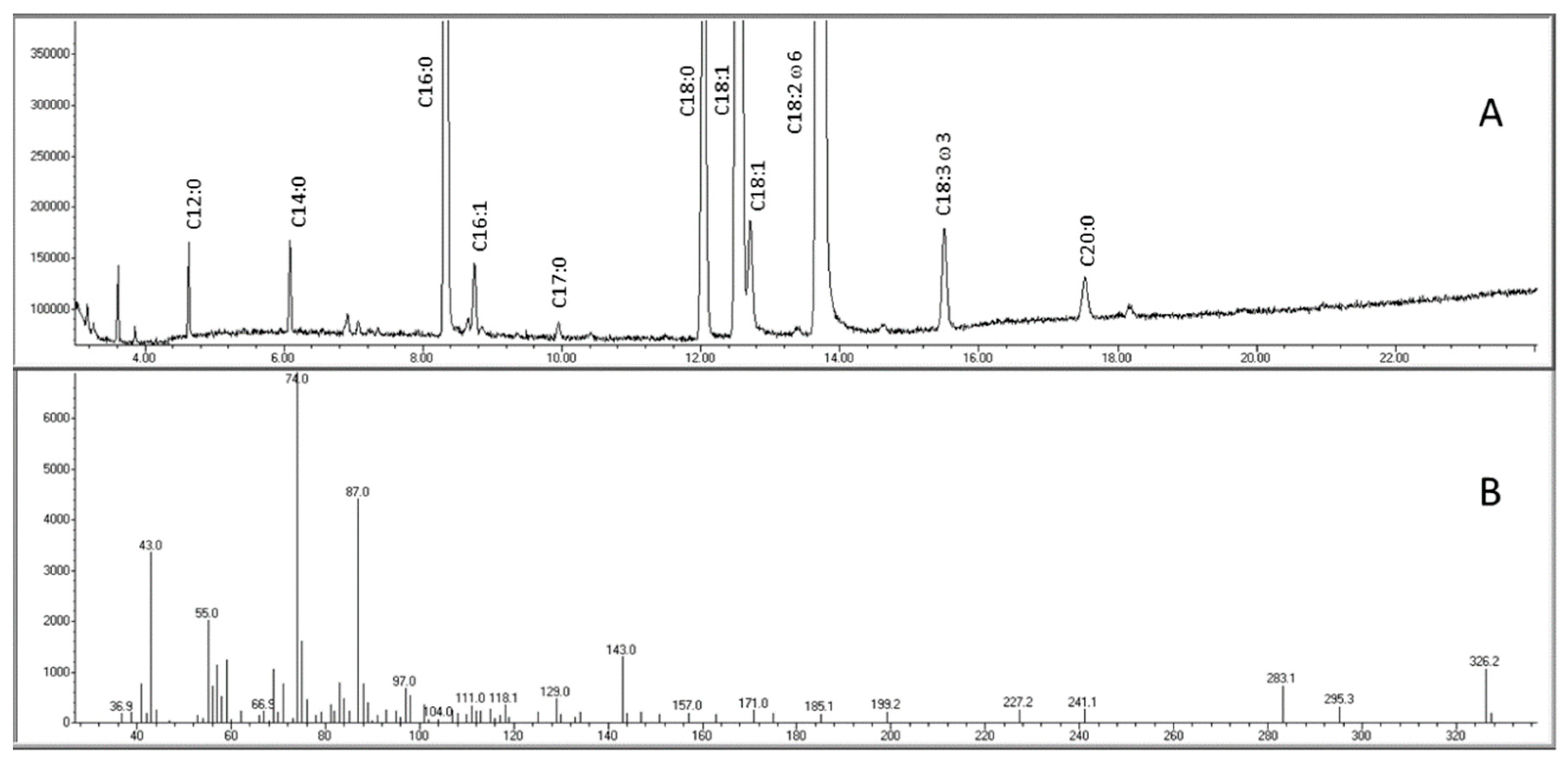
3.1.1. Fatty Acids
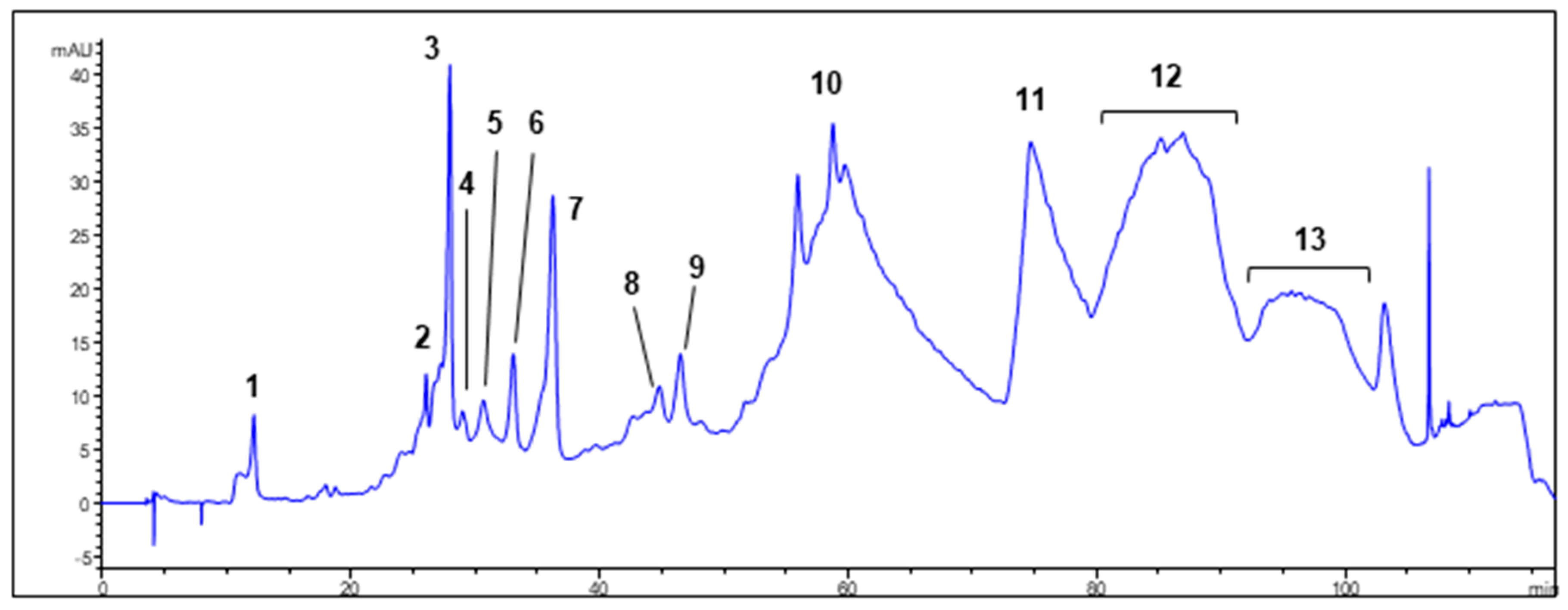
3.1.2. Phenolic Compounds
3.2. FTIR Data
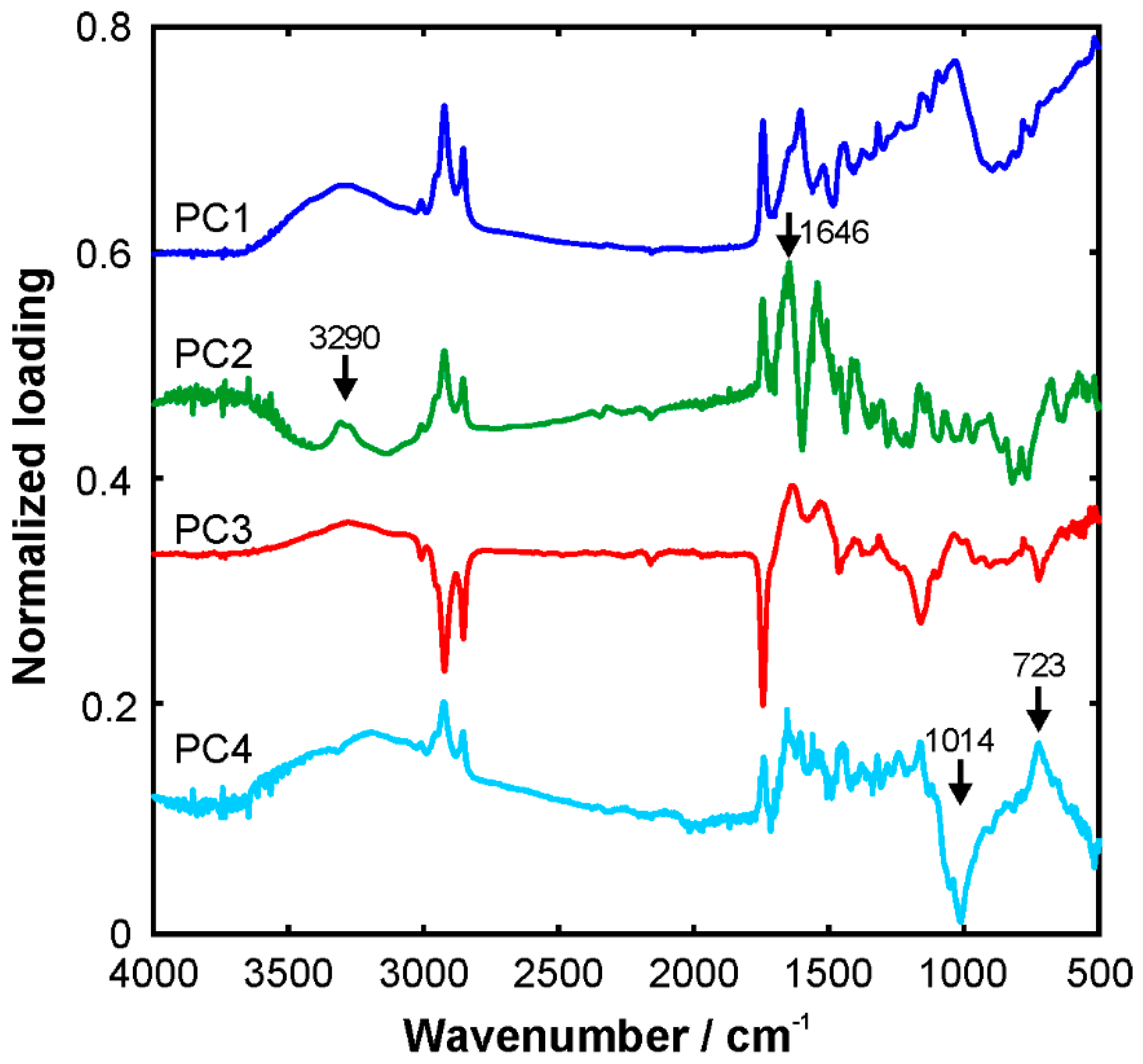
3.2.1. Qualitative Analysis of FTIR Spectra
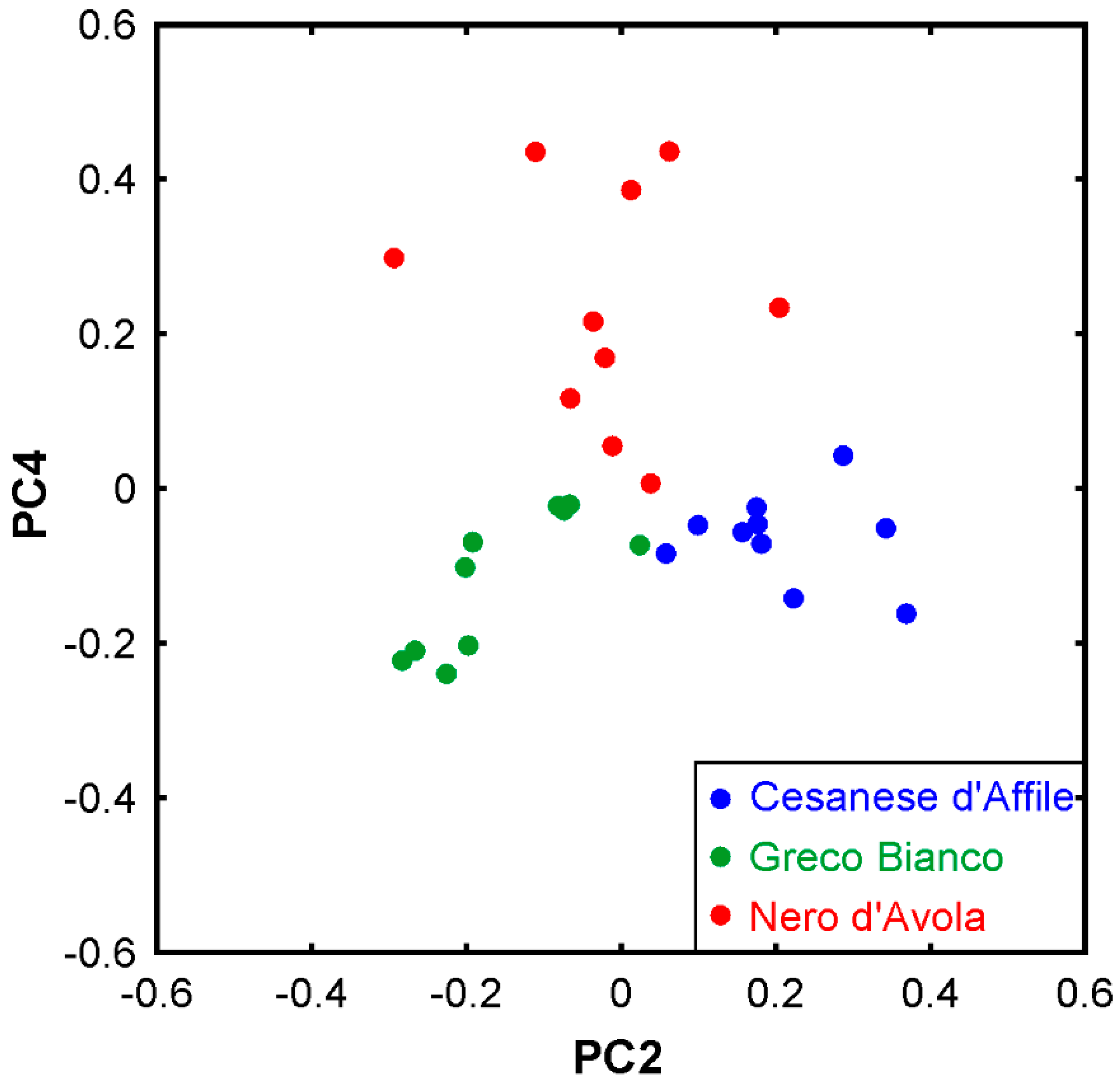
3.2.2. Multivariate Analysis of FTIR Spectra
4. Conclusions
Author Contributions
Funding
Conflicts of Interest
Appendix A
References
- Tuck, C.O.; Perez, E.; Horvath, I.T.; Sheldon, R.A.; Poliakoff, M. Valorization of biomass: Deriving more value from waste. Science 2012, 337, 695–699. [Google Scholar] [CrossRef] [Scilit]
- Lin, C.S.K.; Koutinas, A.A.; Stamatelatou, K.; Mubofu, E.B.; Matharu, A.S.; Kopsahelis, N.; Pfaltzgraff, L.A.; Clark, J.H.; Papanikolaou, S.; Kwan, T.H.; et al. Current and future trends in food waste valorization for the production of chemicals, materials and fuels: A global perspective. Biofuels Bioprod. Biorefin. 2014, 8, 686–715. [Google Scholar] [CrossRef] [Scilit]
- Lin, C.S.K.; Luque, R. Renewable Resources and Biorefineries; Royal Society of Chemistry: Cambridge, UK, 2014. [Google Scholar]
- Zuin, V.G.; Ramin, L.Z. Green and Sustainable Separation of Natural Products from Agro-Industrial Waste: Challenges, Potentialities and Perspectives on Emerging Approach. Top. Curr. Chem. 2018, 376, 1–54. [Google Scholar] [CrossRef] [Scilit]
- Lucarini, M.; Durazzo, A.; Romani, A.; Campo, M.; Lombardi-Boccia, G.; Cecchini, F. Bio-Based Compounds from Grape Seeds: A Biorefinery Approach. Molecules 2018, 23, 1888. [Google Scholar] [CrossRef] [Scilit]
- Ruggieri, L.; Cadena, E.; Martínez-Blanco, J.; Gasol, C.M.; Rieradevall, J.; Gabarrell, X.; Gea, T.; Sort, X.; Sánchez, A. Recovery of organic wastes in the Spanish wine industry. Technical, economic and environmental analyses of the composting process. J. Clean. Prod. 2009, 17, 830–838. [Google Scholar] [CrossRef] [Scilit]
- Ribéreau-Gayon, P.; Glories, Y.; Maujean, A.; Dubourdieu, D. Trattato di Enologia, 3rd ed.; Edagricole: Bologna, Italy, 2007. [Google Scholar]
- Devesa-Rey, R.; Vecino, X.; Varela-Alende, J.L.; Barral, M.T.; Cruz, J.M.; Moldes, A.B. Valorization of winery waste vs. the costs of not recycling. Waste Manag. 2011, 11, 2327–2335. [Google Scholar] [CrossRef] [Scilit]
- Xu, C.; Zhang, Y.; Zhang, Y.; Jun, W.; Lu, J. Extraction, distribution and characterisation of phenolic compounds and oil in grapeseeds. Food Chem. 2010, 122, 688–694. [Google Scholar] [CrossRef] [Scilit]
- Romani, A.; Campo, C.; Pinelli, P. HPLC/DAD/ESI-MS analyses and antiradical activity of hydrolyzable tannins from different vegetal species. Food Chem. 2012, 130, 214–221. [Google Scholar] [CrossRef] [Scilit]
- Garavaglia, J.; Markoski, M.M.; Oliveira, A.; Marcadenti, A. Grape Seed Oil Compounds: Biological and Chemical Actions for Health. Nutr. Metab. Insights 2016, 9, 59–64. [Google Scholar] [CrossRef] [Scilit]
- Durante, M.; Montefusco, A.; Marrese, P.P.; Soccio, M.; Pastore, D.; Piro, G.; Mita, G.; Lenucci, M.S. Seeds of pomegranate, tomato and grapes: An underestimated source of natural bioactive molecules and antioxidants from agri-food by-products. J. Agric. Food Chem. 2017, 63, 65–72. [Google Scholar] [CrossRef] [Scilit]
- Shinagawa, F.B.; de Santana, F.C.; Araujo, E.; Purgatto, E.; Mancini-Filho, J. Chemical composition of cold pressed Brazilian grape seed oil. Food Sci. Technol. 2017, 38, 164–171. [Google Scholar] [CrossRef] [Scilit]
- Durazzo, A.; Lucarini, M. Editorial: The state of science and innovation of bioactive research and applications, health, and diseases. Front. Nutr. 2019, 6, 178. [Google Scholar] [CrossRef] [Scilit]
- Santini, A.; Tenore, G.C.; Novellino, E. Nutraceuticals: A paradigm of proactive medicine. Eur. J. Pharm. Sci. 2017, 96, 53–61. [Google Scholar] [CrossRef] [Scilit]
- Santini, A.; Novellino, E. Nutraceuticals: Shedding light on the grey area between pharmaceuticals and food. Expert Rev. Clin. Pharmacol. 2018, 11, 545–547. [Google Scholar] [CrossRef] [Scilit]
- Abenavoli, L.; Izzo, A.A.; Milić, N.; Cicala, C.; Santini, A.; Capasso, R. Milk thistle (Silybum marianum): A concise overview on its chemistry, pharmacological, and nutraceutical uses in liver diseases. Phytother. Res. 2018, 32, 2202–2213. [Google Scholar] [CrossRef] [Scilit]
- Daliu, P.; Santini, A.; Novellino, E. A decade of nutraceutical patents: Where are we now in 2018? Expert Opin. Ther. Pat. 2018, 28, 875–882. [Google Scholar] [CrossRef] [Scilit]
- Durazzo, A.; Lucarini, M.A. Current shot and re-thinking of antioxidant research strategy. Braz. J. Anal. Chem. 2018, 5, 9–11. [Google Scholar] [CrossRef] [Scilit]
- Daliu, P.; Santini, A.; Novellino, E. From pharmaceuticals to nutraceuticals: Bridging disease prevention and management. Expert Rev. Clin. Pharm. 2019, 12, 1–7. [Google Scholar] [CrossRef] [Scilit]
- Durazzo, A.; Lucarini, M.; Souto, E.B.; Cicala, C.; Caiazzo, E.; Izzo, A.A.; Novellino, E.; Santini, A. Polyphenols: A concise overview on the chemistry, occurrence and human health. Phytother. Res. 2019, 33, 2221–2243. [Google Scholar] [CrossRef] [Scilit]
- Ferhi, S.; Santaniello, S.; Zerizer, S.; Cruciani, S.; Fadda, A.; Sanna, D.; Dore, A.; Maioli, M.; D’hallewin, G. Total phenols from grape leaves counteract cell proliferation and modulate apoptosis-related gene expression in MCF-7 and HepG2 human cancer cell lines. Molecules 2019, 24, 612. [Google Scholar] [CrossRef] [Scilit]
- Di Meo, F.; Aversano, R.; Diretto, G.; Demurtas, O.C.; Villano, C.; Cozzolino, S.; Filosa, S.; Carputo, D.; Crispi, S. Anti-cancer activity of grape seed semi-polar extracts in human mesothelioma cell lines. J. Funct. Foods 2019, 61, 103515. [Google Scholar] [CrossRef] [Scilit]
- Bijak, M.; Sut, A.; Kosiorek, A.; Saluk-Bijak, J.; Golanski, J. Dual Anticoagulant/Antiplatelet Activity of Polyphenolic Grape Seeds Extract. Nutrients 2019, 11, 93. [Google Scholar] [CrossRef] [Scilit]
- Burcova, Z.; Kreps, F.; Schmidt, S.; Strizincova, P.; Jablonsky, M.; Kyselka, J.; Haz, A.; Surina, I. Antioxidant Activity and the Tocopherol and Phenol Contents of Grape Residues. Bioresources 2019, 14, 4146–4156. [Google Scholar]
- Kong, F.; Qin, Y.; Su, Z.; Ning, Z.; Yu, S. Optimization of Extraction of Hypoglycemic Ingredients from Grape Seeds and Evaluation of α-Glucosidase and α-Amylase Inhibitory Effects In Vitro. J. Food Sci. 2018, 83, 1422–1429. [Google Scholar] [CrossRef] [Scilit]
- Sabir, A.; Unver, A.; Kara, Z. The fatty acid and tocopherol constituents of the seed oil extracted from 21 grape varieties (Vitis spp.). J. Sci. Food Agric. 2012, 92, 1982–1987. [Google Scholar] [CrossRef] [Scilit]
- Friedel, M.; Patz, C.D.; Dietrich, H. Comparison of different measurement techniques and variable selection methods for FT-MIR in wine analysis. Food Chem. 2013, 141, 4200–4207. [Google Scholar] [CrossRef] [Scilit]
- He, Z.H.; Duan, X.R.; Ma, Z.H. Measuring Routine Parameters of Wine by ATR-MIR Spectroscopy. Appl. Mech. Mater. 2013, 397, 1749–1752. [Google Scholar] [CrossRef] [Scilit]
- Ismail, E.H.; Khalil, M.M.H.; Al Seif, F.A.; El-Magdoub, F. Biosynthesis of gold nanoparticles using extract of grape (Vitis vinifera) leaves and seeds. Prog. Nanotechnol. Nanomater. 2014, 3, 1–12. [Google Scholar]
- Mohansrinivasan, V.; Devi, C.; Deori, M.; Biswas, A.; Naine, J.S. Exploring the anticancer activity of grape seed extract on skin cancer cell lines A431. Braz. Arch. Biol. Technol. 2015, 58, 540–546. [Google Scholar] [CrossRef] [Scilit]
- Canbay, H.S.; Bardakçı, B. Determination of fatty acid, C, H, N and trace element composition in grape seed by GC/MS, FTIR, elemental analyzer and ICP/OES. SDU J. Sci. 2011, 6, 140–148. [Google Scholar]
- Nogales-Bueno, J.; Baca-Bocanegra, B.; Rodríguez-Pulido, F.J.; Heredia, F.J.; Hernández-Hierro, J.M. Use of near infrared hyperspectral tools for the screening of extractable polyphenols in red grape skins. Food Chem. 2015, 172, 559–564. [Google Scholar] [CrossRef] [Scilit]
- Nogales-Bueno, J.; Baca-Bocanegra, B.; Rooney, A.; Hernández-Hierro, J.M.; Heredia, F.J.; Byrne, H.J. Linking ATR-FTIR and Raman features to phenolic extractability and other attributes in grape skin. Talanta 2017, 167, 44–50. [Google Scholar] [CrossRef] [Scilit]
- Nogales-Bueno, J.; Baca-Bocanegra, B.; Rooney, A.; Hernández-Hierro, J.M.; Byrne, H.J.; Heredia, F.J. Study of phenolic extractability in grape seeds by means of ATR-FTIR and Raman spectroscopy. Food Chem. 2017, 232, 602–609. [Google Scholar] [CrossRef] [Scilit]
- Torres-Climent, A.; Gomis, P.; Martín-Mata, J.; Bustamante, M.A.; Marhuenda-Egea, F.C.; Pérez-Murcia, M.D.; Pérez-Espinosa, A.; Paredes, C.; Moral, R. Chemical, thermal and spectroscopic methods to assess biodegradation of winery-distillery wastes during composting. PLoS ONE 2015, 10, e0138925. [Google Scholar] [CrossRef] [Scilit]
- Hanganu, A.; Todască, M.C.; Chira, N.A.; Maganu, M.; Rosca, S. The compositional characterisation of Romanian grape seed oils using spectroscopic methods. Food Chem. 2012, 134, 2453–2458. [Google Scholar] [CrossRef] [Scilit]
- Nurrulhidayah, A.F.; Che Man, Y.B.; Al-Kahtani, H.A.; Rohman, A. Application of FTIR spectroscopy coupled with chemometrics for authentication of Nigella sativa seed oil. Spectroscopy 2011, 25, 243–250. [Google Scholar] [CrossRef]
- Moretti, S.; Giannini, B.; Cecchini, F.; Garofolo, M. Cambiamenti dell’attività antiossidante, durante il periodo di maturazione della bacca, in due diverse varietà di uva e loro relazione con il contenuto polifenolico. In Proceedings of the Atti del XXXIII Congresso Mondiale Della Vigna e del Vino (OIV), Tbilisi, GA, USA, 20–27 June 2010. [Google Scholar]
- Cecchini, F.; Bevilacqua, N.; Morassut, M. Bioactive compounds of winery by-products: The sustainable development of oenological field. In Proceedings of the 6th International Virtual Conference on Advanced Scientific Results, Ziina, Slovakia, 25–29 June 2018; pp. 236–240. [Google Scholar]
- Giannini, B.; Cecchini, F.; Moretti, S. Nutraceutic property of Italian red and white grape cultivar and wine. In Proceedings of the 2nd International Symposium of Wine Active Compounds, Dijon, France, March 2011; Chassagne, D., Ed.; Oenoplurimédia, Chaintré: Bourgogne, France, 2011; pp. 321–322. [Google Scholar]
- Bligh, E.G.; Dyer, W.J. A rapid method of total lipid extraction and purification. Can. J. Biochem. Physiol. 1959, 37, 911–917. [Google Scholar] [CrossRef] [Scilit]
- Christie, W.W. Preparation of ester derivatives of fatty acids for chromatographic analysis. Adv. Lipid Methodol. 1993, 2, 69–111. [Google Scholar]
- Lucarini, M.; Durazzo, A.; Sánchez del Pulgar, V.; Gabrielli, P.; Lombardi-Boccia, G. Determination of fatty acid content in meat and meat products: The FTIR-ATR approach. Food Chem. 2018, 267, 223–230. [Google Scholar] [CrossRef] [Scilit]
- Romani, A.; Ieri, F.; Turchetti, B.; Mulinacci, N.; Vincieri, F.F.; Buzzini, P. Analysis of condensed and hydrolyzable tannins from commercial plant extracts. J. Pharm. Biomed. Anal. 2006, 41, 415–420. [Google Scholar] [CrossRef] [Scilit]
- Hotelling, H. Analysis of a complex of statistical variables into principal components. J. Educ. Psychol. 1933, 24, 417. [Google Scholar] [CrossRef] [Scilit]
- Jolliffe, I. Principal Component Analysis; John Wiley & Sons: Hoboken, NJ, USA, 2002. [Google Scholar]
- Pearson, K. Principal components analysis. Lond. Edinb. Dublin Philos. Mag. J. Sci. 1901, 6, 559. [Google Scholar] [CrossRef] [Scilit]
- Wold, S.; Esbensen, K.; Geladi, P. Principal Component Analysis. Chemom. Intell. Lab. Syst. 1987, 2, 37–52. [Google Scholar] [CrossRef] [Scilit]
- Pérez-Navarro, J.; Da Ros, A.; Masuero, D.; Izquierdo-Cañas, P.M.; Hermosín-Gutiérrez, I.; Gómez-Alonso, S.; Mattivi, F.; Vrhovsek, U. LC-MS/MS analysis of free fatty acid composition and other lipids in skins and seeds of Vitis vinifera grape cultivars. Food Res. Int. 2019, 125, 108556. [Google Scholar] [CrossRef] [Scilit]
- Messina, C.M.; Manuguerra, S.; Catalano, G.; Arena, R.; Cocchi, M.; Morghese, M.; Montenegro, L.; Santulli, A. Green biotechnology for valorisation of residual biomasses in nutraceutic sector: Characterization and extraction of bioactive compounds from grape pomace and evaluation of the protective effects in vitro. Nat. Prod. Res. 2019, 6, 1–6. [Google Scholar] [CrossRef] [Scilit]
- Zdunić, G.; Gođevac, D.; Šavikin, K.; Krivokuća, D.; Mihailović, M.; Pržić, Z.; Marković, N. Grape Seed Polyphenols and Fatty Acids of Autochthonous Prokupac Vine Variety from Serbia. Chem. Biodivers. 2019, 16, e1900053, Epub 2019 May 29. [Google Scholar] [CrossRef] [Scilit]
- Giannini, B.; Mulinacci, N.; Pasqua, G.; Innocenti, M.; Valletta, A.; Cecchini, F. Phenolics and antioxidant activity in different cultivars/clones of Vitis vinifera L. seeds over two years. Plant Biosyst. 2016, 150, 1408–1416. [Google Scholar] [CrossRef] [Scilit]
- Kennedy, J.A.; Troup, G.J.; Pilbrow, J.R.; Hutton, D.R.; Hewitt, D.; Hunter, C.R.; Jones, G.P. Development of seed polyphenols in berries from Vitis vinifera L. cv. Shiraz. Aust. J. Grape Wine Res. 2000, 6, 244–254. [Google Scholar] [CrossRef] [Scilit]
- Sorolla, S.; Flores, A.; Canals, T.; Cantero, R.; Font, J.; Ollé, L.; Bacardit, A. Study of the Qualitative and Semi-quantitative Analysis of Grape Seed Extract by HPLC. J. Am. Leather Chem. Assoc. 2018, 113, 3. [Google Scholar]
- Smith, B.C. Infrared Spectra Interpretation. A Systematic Approach, 1st ed.; CRC Press LLC: Boca Raton, FL, USA, 1999. [Google Scholar]
- Lupoi, J.S.; Singh, S.; Parthasarathi, R.; Simmons, B.A.; Henry, R.J. Recent innovations in analytical methods for the qualitative and quantitative assessment of lignin. Renew. Sustain. Energy Rev. 2015, 49, 871–906. [Google Scholar] [CrossRef] [Scilit]
- Heredia-Guerrero, J.A.; Benítez, J.J.; Domínguez, E.; Bayer, I.; Cingolani, R.; Athanassiou, A.; Heredia, A. Infrared and Raman spectroscopic features of plant cuticles: A review. Front. Plant Sci. 2014, 5, 305. [Google Scholar] [CrossRef] [Scilit] [PubMed]
- Fasoli, M.; Dell’Anna, R.; Dal Santo, S.; Balestrini, R.; Sanson, A.; Pezzotti, M.; Zenoni, S. Pectins, hemicelluloses and celluloses show specific dynamics in the internal and external surfaces of grape berry skin during ripening. Plant Cell Physiol. 2016, 57, 1332–1349. [Google Scholar] [CrossRef] [Scilit] [PubMed]
- Wilson, R.H.; Smith, A.C.; Kačuráková, M.; Saunders, P.K.; Wellner, N.; Waldron, K.W. The mechanical properties and molecular dynamics of plant cell wall polysaccharides studied by Fourier-transform infrared spectroscopy. Plant Physiol. 2000, 124, 397–406. [Google Scholar] [CrossRef] [Scilit] [PubMed]
- Gao, Y.; Fangel, J.U.; Willats, W.G.T.; Vivier, M.A.; Moore, J.P. Dissecting the polysaccharide-rich grape cell wall changes during winemaking using combined high-throughput and fractionation methods. Carbohydr. Polym. 2015, 133, 567–577. [Google Scholar] [CrossRef] [Scilit]
- Ricci, A.; Olejar, K.J.; Parpinello, G.P.; Kilmartin, P.A.; Versari, A. Application of Fourier transform infrared (FTIR) spectroscopy in the characterization of tannins. Appl. Spectrosc. Rev. 2015, 50, 407–442. [Google Scholar] [CrossRef] [Scilit]
- Mahesar, S.A.; Lucarini, M.; Durazzo, A.; Santini, A.; Lampe, A.I.; Kiefer, J. Application of Infrared Spectroscopy for Functional Compounds Evaluation in Olive Oil: A Current Snapshot. J. Spectrosc. 2019, 2019, 5319024. [Google Scholar] [CrossRef] [Scilit]
- Kiefer, J.; Noack, K.; Bartelmess, J.; Walter, C.; Dörnenburg, H.; Leipertz, A. Vibrational structure of the polyunsaturated fatty acids eicosapentaenoic acid and arachidonic acid studied by infrared spectroscopy. J. Mol. Struct. 2010, 965, 121–124. [Google Scholar] [CrossRef] [Scilit]


| Compound | Nero d’Avola | Cesanese d’ Affile | Greco Bianco |
|---|---|---|---|
| Fat content | 8.66 (0.23) a | 13.65 (0.71) b | 8.06 (0.23) a |
| C12:0 | 0.24 (0.11) b | 0.08 (0.03) ab | 0.05 (0.02) a |
| C14:0 | 0.30 (0.09) a | 0.19 (0.06) a | 0.15 (0.05) a |
| C16:0 | 11.55 (1.18) a | 12.19 (1.75) a | 10.37 (0.72) a |
| C16:1 | 0.39 (0.17) a | 0.25 (0.04) a | 0.43 (0.07) a |
| C17:0 | 0.14 (0.03) a | 0.12 (0.05) a | 0.10 (0.03) a |
| C18:0 | 4.29 (0.21) a | 5.01 (0.36) b | 4.44 (0.09) ab |
| C18:1 | 23.09 (0.74) c | 17.87 (0.11) a | 21.07 (0.50) b |
| C18:2 ω-6 | 59.02 (0.97) a | 63.71 (2.18) b | 62.48 (1.68) ab |
| C18:3 ω-3 | 1.04 (0.19) a | 0.69 (0.09) a | 0.91 (0.23) a |
| C20:0 | 0.40 (0.15) c | n.d. *a | 0.19 (0.13) b |
| Compound | Nero d’Avola | Cesanese d’ Affile | Greco Bianco |
|---|---|---|---|
| gallic acid | 0.04 (0.00) a | 0.15 (0.01) c | 0.11 (0.00) b |
| catechin dimer B3 | 1.32 (0.00) a | 2.81 (0.01) c | 1.91 (0.01) b |
| catechin | 1.77 (0.01) a | 4.89 (0.01) c | 3.09 (0.08) b |
| procyanidin trimer | 0.00 (0.00) a | 0.88 (0.03) c | 0.48 (0.01) b |
| catechin dimer B6 | 1.33 (0.01) b | 1.62 (0.05) c | 0.89 (0.02) a |
| catechin dimer B2 | 0.78 (0.01) a | 1.86 (0.01) c | 0.98 (0.01) b |
| epicatechin | 0.60 (0.00) a | 3.63 (0.03) c | 2.01 (0.01) b |
| catechin trimer | 0.41 (0.02) a | 2.01 (0.01) c | 1.15 (0.02) b |
| epicatechin gallate dimer | 1.66 (0.01) a | 5.46 (0.03) c | 3.46 (0.07) b |
| catechin oligomers expressed as tetramers | 24.80 (0.61) b | 0.62 (0.02) a | 0.29 (0.01) a |
| epicatechin gallate dimer | 17.30 (0.41) b | 1.16 (0.06) a | 0.61 (0.01) a |
| catechin/epicatechin trimers digallate | 30.90 (1.10) c | 11.17 (0.08) b | 9.17 (0.15) a |
| catechin/epicatechin trimers gallate | 5.01 (0.02) a | 21.53 (0.20) b | 22.53 (0.24) c |
| total | 85.92 | 57.80 | 46.68 |
© 2019 by the authors. Licensee MDPI, Basel, Switzerland. This article is an open access article distributed under the terms and conditions of the Creative Commons Attribution (CC BY) license (http://creativecommons.org/licenses/by/4.0/).
Share and Cite
Lucarini, M.; Durazzo, A.; Kiefer, J.; Santini, A.; Lombardi-Boccia, G.; Souto, E.B.; Romani, A.; Lampe, A.; Ferrari Nicoli, S.; Gabrielli, P.; et al. Grape Seeds: Chromatographic Profile of Fatty Acids and Phenolic Compounds and Qualitative Analysis by FTIR-ATR Spectroscopy. Foods 2020, 9, 10. https://doi.org/10.3390/foods9010010
Lucarini M, Durazzo A, Kiefer J, Santini A, Lombardi-Boccia G, Souto EB, Romani A, Lampe A, Ferrari Nicoli S, Gabrielli P, et al. Grape Seeds: Chromatographic Profile of Fatty Acids and Phenolic Compounds and Qualitative Analysis by FTIR-ATR Spectroscopy. Foods. 2020; 9(1):10. https://doi.org/10.3390/foods9010010
Chicago/Turabian StyleLucarini, Massimo, Alessandra Durazzo, Johannes Kiefer, Antonello Santini, Ginevra Lombardi-Boccia, Eliana B. Souto, Annalisa Romani, Anja Lampe, Stefano Ferrari Nicoli, Paolo Gabrielli, and et al. 2020. "Grape Seeds: Chromatographic Profile of Fatty Acids and Phenolic Compounds and Qualitative Analysis by FTIR-ATR Spectroscopy" Foods 9, no. 1: 10. https://doi.org/10.3390/foods9010010
APA StyleLucarini, M., Durazzo, A., Kiefer, J., Santini, A., Lombardi-Boccia, G., Souto, E. B., Romani, A., Lampe, A., Ferrari Nicoli, S., Gabrielli, P., Bevilacqua, N., Campo, M., Morassut, M., & Cecchini, F. (2020). Grape Seeds: Chromatographic Profile of Fatty Acids and Phenolic Compounds and Qualitative Analysis by FTIR-ATR Spectroscopy. Foods, 9(1), 10. https://doi.org/10.3390/foods9010010