Deodorization of Spirulina Extracts by Ozone and Activated Carbon: Effects on Volatile Organic Compounds, Bioactive Pigments, Antioxidant Activity, and Sensory Profile


Abstract
1. Introduction
2. Materials and Methods
2.1. Raw Materials and Chemicals
2.2. Extraction Procedure
2.2.1. Ozone Treatment
2.2.2. Activated Carbon (AC) Treatment
2.3. Determination of Protein Content
2.4. Determination of Total Phycobiliprotein Content
2.5. Determination of Total Chlorophyll and Total Carotenoid Contents
2.6. Determination of Antioxidant Activities
2.6.1. DPPH Assay
2.6.2. ABTS Assay
2.7. Determination of Volatile Organic Compounds (VOCs)
2.8. Orthonasal Sensory Evaluation
2.9. Statistical Analysis
3. Results and Discussion
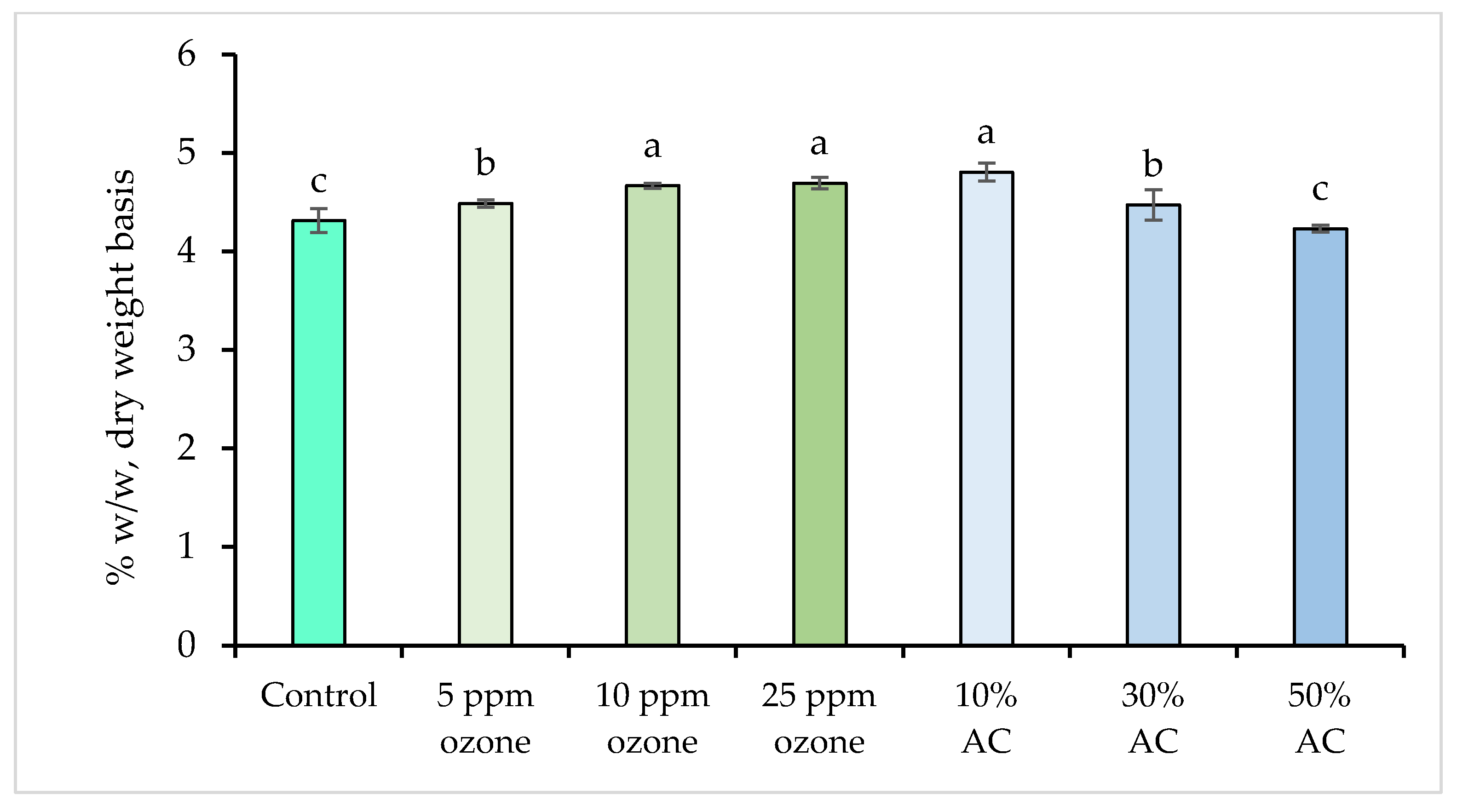
3.1. Protein Content
3.2. Bioactive Pigments and Antioxidant Activities
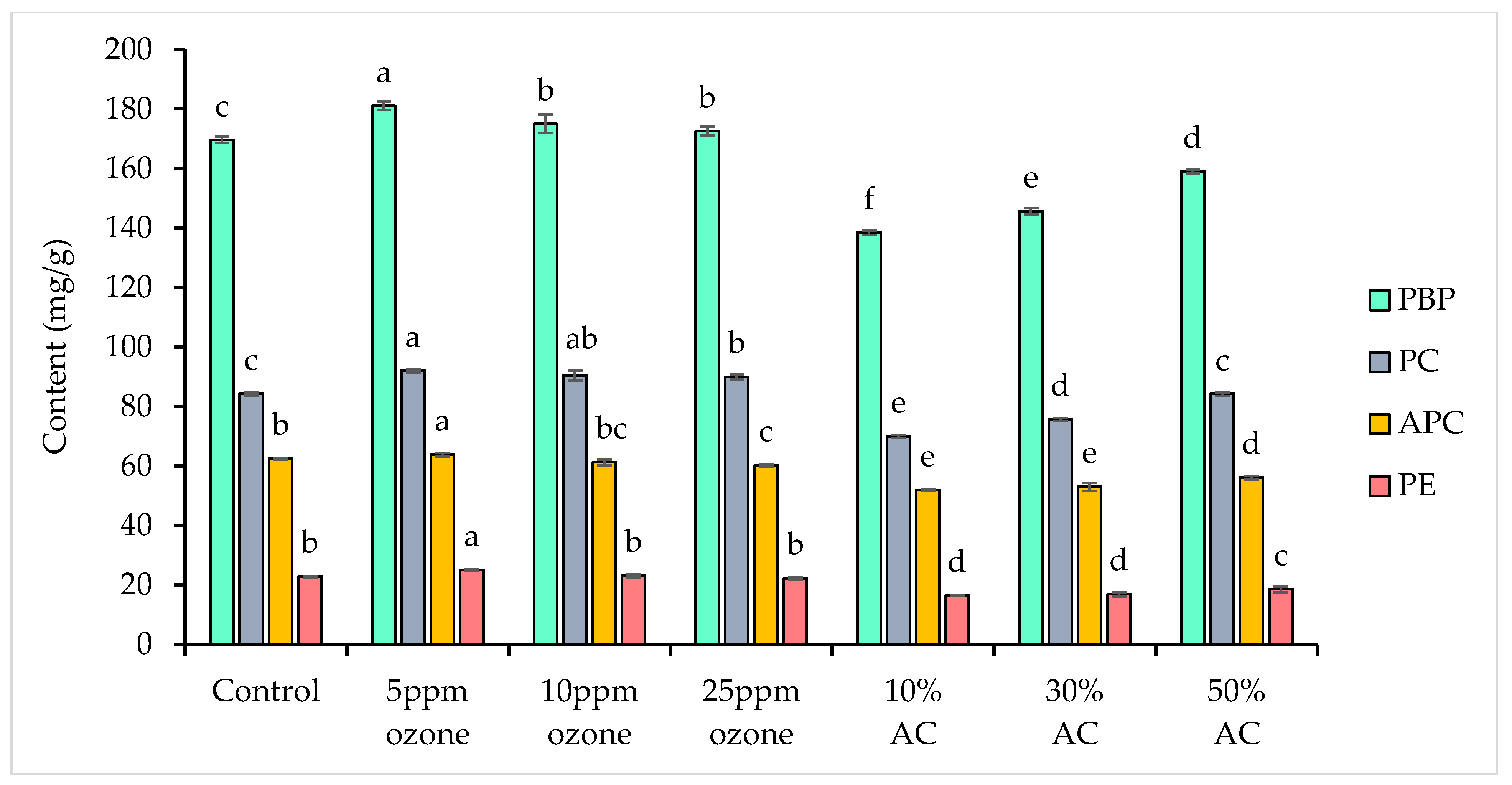
3.2.1. Phycobiliprotein Content
3.2.2. Total Chlorophyll and Total Carotenoid Contents
3.2.3. Antioxidant Activities
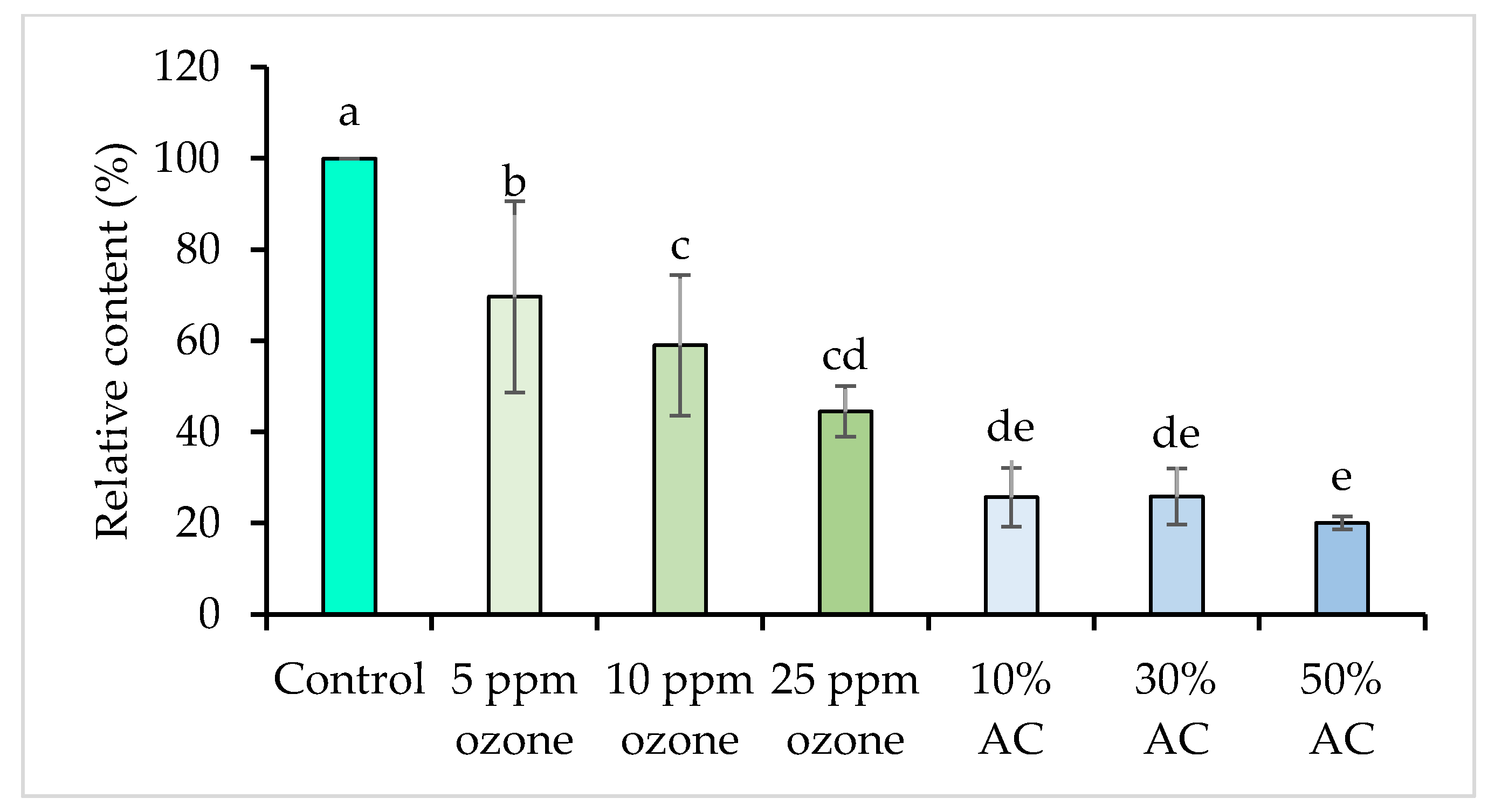
3.3. Volatile Organic Compounds (VOCs)
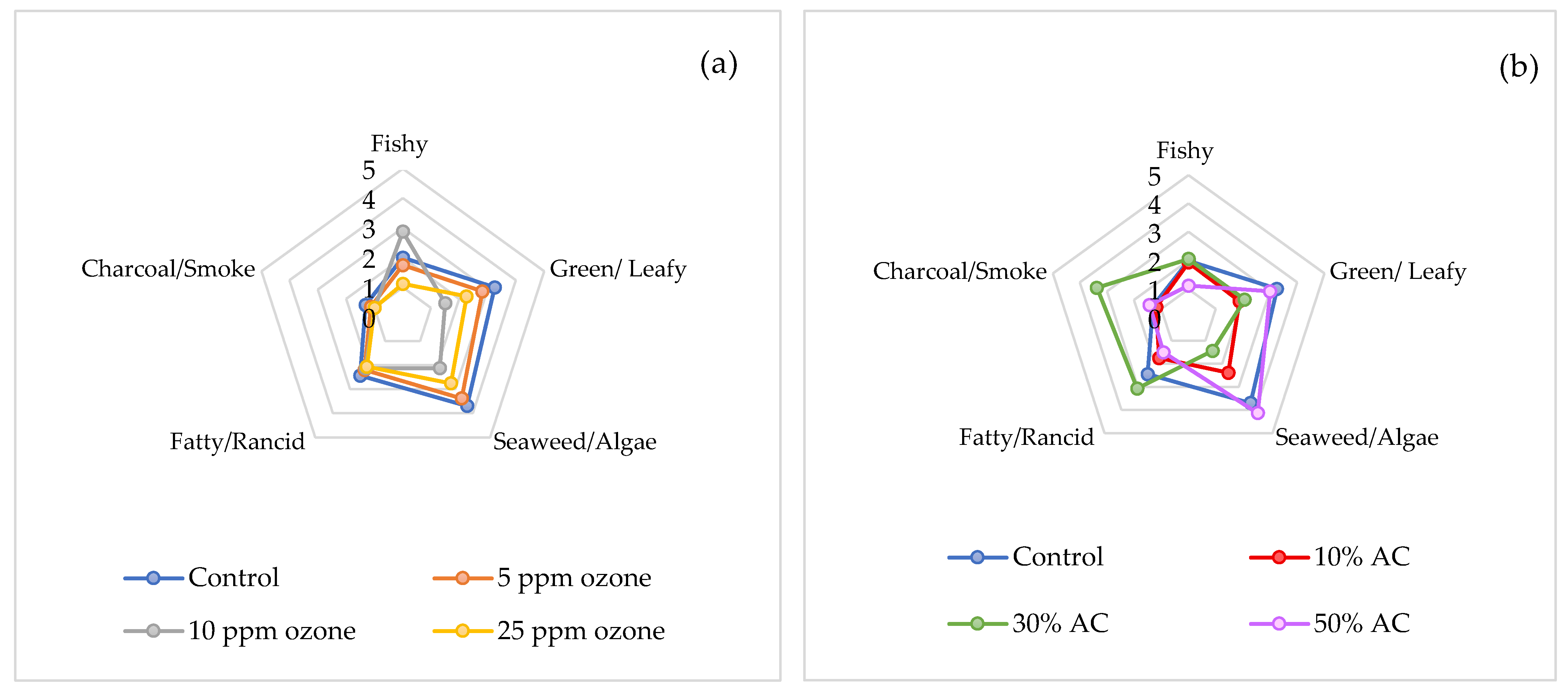
3.4. Sensory Evaluation
4. Conclusions
Supplementary Materials
Author Contributions
Funding
Institutional Review Board Statement
Informed Consent Statement
Data Availability Statement
Acknowledgments
Conflicts of Interest
Abbreviations
| AC | Activated Carbon |
| AOAC | Association of Official Analytical Chemists |
| APC | Allophycocyanin |
| NIST | National Institute of Standards |
| PBP | Phycobiliprotein |
| PC | Phycocyanin |
| PE | Phycoerythrin |
| VOCs | Volatile organic compounds |
| PCA | Principal Component Analysis |
| PLS | Partial Least Squares |
| EFSA | European Food Safety Authority |
| OSHA | Occupational Safety and Health Administration |
References
- Muys, M.; Sui, Y.; Schwaiger, B.; Lesueur, C.; Vandenheuvel, D.; Vermeir, P.; Vlaeminck, S.E. High variability in nutritional value and safety of commercially available Chlorella and Spirulina biomass indicates the need for smart production strategies. Bioresour. Technol. 2019, 275, 247–257. [Google Scholar] [CrossRef]
- AlFadhly, N.K.; Alhelfi, N.; Altemimi, A.B.; Verma, D.K.; Cacciola, F.; Narayanankutty, A. Trends and technological advancements in the possible food applications of Spirulina and their health benefits: A Review. Molecules 2022, 27, 5584. [Google Scholar] [CrossRef] [PubMed]
- Nikolova, K.; Petkova, N.; Mihaylova, D.; Gentscheva, G.; Gavrailov, G.; Pehlivanov, I.; Andonova, V. Extraction of phycocyanin and chlorophyll from Spirulina by “Green methods”. Separations 2024, 11, 57. [Google Scholar] [CrossRef]
- Ratnasari, N.R.P. The Stability of Phycocyanin, Phycoerythrin, and Astaxanthin from Algae Towards Temperature, pH, Light, and Oxygen as a Commercial Natural Food Colorant. Indones. J. Life Sci. Vol 2021, 3, 28–42. [Google Scholar]
- Agustini, T.W.; Maâ, W.F.; Widayat, W.; Suzery, M.; Hadiyanto, H.; Benjakul, S. Application of Spirulina platensis on ice cream and soft cheese with respect to their nutritional and sensory perspectives. J. Teknol. 2016, 78, 245–251. [Google Scholar] [CrossRef]
- El Nakib, D.; Ibrahim, M.; Mahmoud, N.; Abd El Rahman, E.; Ghaly, A. Incorporation of Spirulina (Athrospira platensis) in traditional Egyptian cookies as a source of natural bioactive molecules and functional ingredients: Preparation and sensory evaluation of nutrition snack for school children. Eur. J. Nutr. Food Saf. 2019, 9, 372–397. [Google Scholar] [CrossRef]
- Grahl, S.; Strack, M.; Mensching, A.; Mörlein, D. Alternative protein sources in Western diets: Food product development and consumer acceptance of spirulina-filled pasta. Food Qual. Prefer. 2020, 84, 103933. [Google Scholar] [CrossRef]
- Khalid, S.; Chaudhary, K.; Aziz, H.; Amin, S.; Sipra, H.M.; Ansar, S.; Rasheed, H.; Naeem, M.; Onyeaka, H. Trends in extracting protein from microalgae Spirulina platensis, using innovative extraction techniques: Mechanisms, potentials, and limitations. Crit. Rev. Food Sci. Nutr. 2024, 65, 4293–4309. [Google Scholar] [CrossRef]
- Khandual, S.; Sanchez, E.O.L.; Andrews, H.E.; de la Rosa, J.D.P. Phycocyanin content and nutritional profile of Arthrospira platensis from Mexico: Efficient extraction process and stability evaluation of phycocyanin. BMC Chem. 2021, 15, 1–13. [Google Scholar] [CrossRef]
- Plaza, M.; Herrero, M.; Cifuentes, A.; Ibanez, E. Innovative natural functional ingredients from microalgae. J. Agric. Food Chem. 2009, 57, 7159–7170. [Google Scholar] [CrossRef]
- Riyad, Y.M.; Naeem, M.M.; Slama, S. Evaluation of gluten-free noodles fortified by Spirulina algae. Egypt. J. Nutr. 2020, 35, 133–160. [Google Scholar] [CrossRef]
- Singh, P.; Singh, R.; Jha, A.; Rasane, P.; Gautam, A.K. Optimization of a process for high fibre and high protein biscuit. J. Food Sci. Technol. 2015, 52, 1394–1403. [Google Scholar] [CrossRef] [PubMed]
- Cuellar-Bermúdez, S.P.; Barba-Davila, B.; Serna-Saldivar, S.O.; Parra-Saldivar, R.; Rodriguez-Rodriguez, J.; Morales-Davila, S.; Goiris, K.; Muylaert, K.; Chuck-Hernández, C. Deodorization of Arthrospira platensis biomass for further scale-up food applications. J. Sci. Food Agric. 2017, 97, 5123–5130. [Google Scholar] [CrossRef] [PubMed]
- Jia, X.; Cui, H.; Qin, S.; Ren, J.; Zhang, Z.; An, Q.; Zhang, N.; Yang, J.; Yang, Y.; Fan, G. Characterizing and decoding the key odor compounds of Spirulina platensis at different processing stages by sensomics. Food Chem. 2024, 461, 140944. [Google Scholar] [CrossRef] [PubMed]
- Paraskevopoulou, A.; Kaloudis, T.; Hiskia, A.; Steinhaus, M.; Dimotikali, D.; Triantis, T.M. Volatile Profiling of Spirulina Food Supplements. Foods 2024, 13, 1257. [Google Scholar] [CrossRef]
- Shahid, A.; Fan, Z.; Su, K.; Zhao, A.; Mehmood, M.A.; Chang, J.-S.; Solovchenko, A.; Alam, M.A.; Xu, J. Sensory chemistry of Spirulina: Unveiling trends and innovations in aromatic volatile organic compound biosynthesis in off-flavors and odor mitigation strategies. Trends Food Sci. Technol. 2025, 156, 104886. [Google Scholar] [CrossRef]
- Agustini, T.; Dewi, E.; Amalia, U.; Kurniasih, R. Application of basil leaf extracts to decrease Spirulina platensis off-odour in increasing food consumption. Int. Food Res. J. 2019, 26, 1789–1794. [Google Scholar]
- Bao, J.; Zhang, X.; Zheng, J.-H.; Ren, D.-F.; Lu, J. Mixed fermentation of Spirulina platensis with Lactobacillus plantarum and Bacillus subtilis by random-centroid optimization. Food Chem. 2018, 264, 64–72. [Google Scholar] [CrossRef]
- Colonia, B.S.O.; de Melo Pereira, G.V.; de Carvalho, J.C.; Karp, S.G.; Rodrigues, C.; Soccol, V.T.; Fanka, L.S.; Soccol, C.R. Deodorization of algae biomass to overcome off-flavors and odor issues for developing new food products: Innovations, trends, and applications. Food Chem. Adv. 2023, 2, 100270. [Google Scholar] [CrossRef]
- Wang, X.; Le, B.; Zhang, N.; Bak, K.H.; Zhang, Y.; Fu, Y. Off-flavour compounds in collagen peptides from fish: Formation, detection and removal. Int. J. Food Sci. Technol. 2022, 58, 1543–1563. [Google Scholar] [CrossRef]
- Brodowska, A.J.; Nowak, A.; Śmigielski, K. Ozone in the food industry: Principles of ozone treatment, mechanisms of action, and applications: An overview. Crit. Rev. Food Sci. Nutr. 2018, 58, 2176–2201. [Google Scholar] [CrossRef]
- Liu, C.; Li, W.; Lin, B.; Yi, S.; Ye, B.; Mi, H.; Li, J.; Wang, J.; Li, X. Effects of ozone water rinsing on protein oxidation, color, and aroma characteristics of grass carp (Ctenopharyngodon idellus) surimi. J. Food Process. Preserv. 2021, 45, e15811. [Google Scholar] [CrossRef]
- Phermthong, P.; Worawattanamateekul, W.; Hinsui, J. Effect of ozone treatments on nile Tilapia mince (Oreochromis niloticus) off-odor. Rajamangala Univ. Technol. Srivijaya Res. J. 2021, 13, 85–94. [Google Scholar]
- Balcerek, M.; Pielech-Przybylska, K.; Patelski, P.; Dziekońska-Kubczak, U.; Jusel, T. Treatment with activated carbon and other adsorbents as an effective method for the removal of volatile compounds in agricultural distillates. Food Addit. Contam. Part A 2017, 34, 714–727. [Google Scholar] [CrossRef] [PubMed]
- Bansal, R.C.; Goyal, M. Activated Carbon Adsorption; CRC Press: Boca Raton, FL, USA, 2005. [Google Scholar]
- Khalafu, S.H.S.; Aida, W.M.W.; Lim, S.J.; Maskat, M.Y. Effects of deodorisation methods on volatile compounds, chemical properties and antioxidant activities of fucoidan isolated from brown seaweed (Sargassum sp.). Algal Res. 2017, 25, 507–515. [Google Scholar] [CrossRef]
- Zhang, T.; Xue, Y.; Li, Z.; Wang, Y.; Yang, W.; Xue, C. Effects of ozone on the removal of geosmin and the physicochemical properties of fish meat from bighead carp (Hypophthalmichthys nobilis). Innov. Food Sci. Emerg. Technol. 2016, 34, 16–23. [Google Scholar] [CrossRef]
- Kaur, K.; Pandiselvam, R.; Kothakota, A.; Ishwarya, S.P.; Zalpouri, R.; Mahanti, N.K. Impact of ozone treatment on food polyphenols–A comprehensive review. Food Control 2022, 142, 109207. [Google Scholar] [CrossRef]
- Bicsak, R.C.; Boles, R.; Cathey, R.; Collins, V.; Hannasious, K.; Haselhorst, J.; Henderson, L.; Jann, L.; Meschi, L.; Molloy, R.; et al. Comparison of Kjeldahl method for determination of crude protein in cereal grains and oilseeds with generic combustion method: Collaborative study. J. AOAC Int. 1993, 76, 780–786. [Google Scholar] [CrossRef]
- Pan-utai, W.; Iamtham, S. Extraction, purification and antioxidant activity of phycobiliprotein from Arthrospira platensis. Process Biochem. 2019, 82, 189–198. [Google Scholar] [CrossRef]
- Lichtenthaler, H.K.; Buschmann, C. Chlorophylls and carotenoids: Measurement and characterization by UV-VIS spectroscopy. Curr. Protoc. Food Anal. Chem. 2001, 1, F4. 3.1–F4. 3.8. [Google Scholar] [CrossRef]
- Brand-Williams, W.; Cuvelier, M.-E.; Berset, C. Use of a free radical method to evaluate antioxidant activity. LWT-Food Sci. Technol. 1995, 28, 25–30. [Google Scholar] [CrossRef]
- Chen, Q.; Li, S.; Xiong, H.; Zhao, Q. Effect of different extraction methods on physicochemical characteristics and antioxidant activity of C-phycocyanin from dry biomass of arthrospira platensis. Foods 2022, 11, 1296. [Google Scholar] [CrossRef] [PubMed]
- Meilgaard, M.C.; Carr, B.T.; Civille, G.V. Sensory Evaluation Techniques; CRC Press: Boca Raton, FL, USA, 1999. [Google Scholar]
- Bahlol, H. Utilization of Sprulina Algae to improve the nutritional value of kiwifruits and cantaloupe nectar blends. Ann. Agric. Sci. Moshtohor 2018, 56, 315–324. [Google Scholar] [CrossRef]
- Saharan, V. Value Addition of Food Products Using Spirulina Platensis: Acceptability and Nutrient Composition. Ph.D. Thesis, Chaudhary Charan Singh Haryana Agricultural University, Hisar, India, 2017. [Google Scholar]
- Naseri, A.; Jacobsen, C.; Sejberg, J.J.; Pedersen, T.E.; Larsen, J.; Hansen, K.M.; Holdt, S.L. Multi-extraction and quality of protein and carrageenan from commercial spinosum (Eucheuma denticulatum). Foods 2020, 9, 1072. [Google Scholar] [CrossRef] [PubMed]
- Carullo, D.; Donsì, F.; Ferrari, G.; Pataro, G. Extraction improvement of water-soluble compounds from Arthrospira platensis through the combination of high-shear homogenization and pulsed electric fields. Algal Res. 2021, 57, 102341. [Google Scholar] [CrossRef]
- Chen, W.; Xu, J.; Yu, Q.; Yuan, Z.; Kong, X.; Sun, Y.; Wang, Z.; Zhuang, X.; Zhang, Y.; Guo, Y. Structural insights reveal the effective Spirulina platensis cell wall dissociation methods for multi-output recovery. Bioresour. Technol. 2020, 300, 122628. [Google Scholar] [CrossRef]
- Kadir, W.N.; Lam, M.K.; Uemura, Y.; Lim, J.W.; Kiew, P.L.; Lim, S.; Rosli, S.S.; Wong, C.Y.; Show, P.L.; Lee, K.T. Simultaneous harvesting and cell disruption of microalgae using ozone bubbles: Optimization and characterization study for biodiesel production. Front. Chem. Sci. Eng. 2021, 15, 1257–1268. [Google Scholar] [CrossRef]
- Widyaningrum, D.; Tedjakusuma, F. Modification of phycocyanin extraction from dry biomass of Spirulina by using ozone water. E3S Web Conf. 2023, 425, 01003. [Google Scholar] [CrossRef]
- Rame, R.; Silvy, D.; Novarina, I.H.; Agus, P.; Ganang, R.D.H. Cell-wall disruption and characterization of phycocyanin from microalgae: Spirulina platensis using Catalytic ozonation. E3S Web Conf. 2018, 73, 08010. [Google Scholar] [CrossRef]
- Payne, E. Purification of C-Phycocyanin from Spirulina-Adsorption Pretreatment Options. Master’s Thesis, University of Cape Town, Rondebosch, South Africa, 2023. [Google Scholar]
- Chen, H.; Qi, H.; Xiong, P. Phycobiliproteins—A family of algae-derived biliproteins: Productions, characterization and pharmaceutical potentials. Mar. Drugs 2022, 20, 450. [Google Scholar] [CrossRef]
- Lisanti, M.T.; Gambuti, A.; Genovese, A.; Piombino, P.; Moio, L. Treatment by fining agents of red wine affected by phenolic off-odour. Eur. Food Res. Technol. 2017, 243, 501–510. [Google Scholar] [CrossRef]
- Oh, W.Y.; Kim, M.-J.; Lee, J. Approaches of lipid oxidation mechanisms in oil matrices using association colloids and analysis methods for the lipid oxidation. Food Sci. Biotechnol. 2023, 32, 1805–1819. [Google Scholar] [CrossRef] [PubMed]
- Abd El-Moniem, E.A.; Yousef, A.R.; Abdel-Razek, A.G.; Badr, A.N.; Mahmoud, T.S.M. Effects of Postharvest Gaseous Ozone Treatment on Quality Attributes and Extending Storage Life of Fresh Cut ‘Hass’ Avocado Fruits. Egypt. J. Chem. 2022, 65, 27–37. [Google Scholar] [CrossRef]
- Pui, W.K.; Yusoff, R.; Aroua, M.K. A review on activated carbon adsorption for volatile organic compounds (VOCs). Rev. Chem. Eng. 2019, 35, 649–668. [Google Scholar] [CrossRef]
- Liang, D.; Ji, B.-y.; Wang, Y.; Li, X.; Gao, W.-Y. Effect of activated carbon microstructure and adsorption mechanism on the efficient removal of chlorophyll a and chlorophyll b from Andrographis paniculata extract. Sci. Rep. 2023, 13, 21930. [Google Scholar] [CrossRef]
- Careli-Gondim, Í.; Mesquita, T.C.; Vilas Boas, E.V.d.B.; Caliari, M.; Soares Júnior, M.S. The effect of active coating and refrigerated storage on the quality of avocado cultivar, Quintal. J. Food Sci. Technol. 2020, 57, 143–151. [Google Scholar] [CrossRef]
- Rame, R.; Nilawati, N.; Djayanti, S.; Handayani, N.I.; Purwanto, A.; Ruliaty, L.; Harjanto, G.D. Efficient Cell-Wall Disruption of Microalgae Chlorella Vulgaris in water by catalytic ozonation over Microporous Carbon-Supported Titanium Oxide. J. Ris. Teknol. Pencegah. Pencemaran Ind. 2018, 9, 30–36. [Google Scholar] [CrossRef]
- Han, Y.; Beck, W.; Mewis, I.; Förster, N.; Ulrichs, C. Effect of Ozone Stresses on Growth and Secondary Plant Metabolism of Brassica campestris L. ssp. chinensis. Horticulturae 2023, 9, 966. [Google Scholar] [CrossRef]
- Genç, Y.; Bardakci, H.; Yücel, Ç.; Karatoprak, G.Ş.; Küpeli Akkol, E.; Hakan Barak, T.; Sobarzo-Sánchez, E. Oxidative stress and marine carotenoids: Application by using nanoformulations. Mar. Drugs 2020, 18, 423. [Google Scholar] [CrossRef]
- Apak, R.a.; Ozyurek, M.; Guclu, K.; Çapanoğlu, E. Antioxidant activity/capacity measurement. 1. Classification, physicochemical principles, mechanisms, and electron transfer (ET)-based assays. J. Agric. Food Chem. 2016, 64, 997–1027. [Google Scholar] [CrossRef]
- Pratita, A.; Djahrah, S.; Fathurohman, M. Isolation and antiradical activity of phycobiliproteins compounds from Chlorella pyrinoidosa. Food Res. 2024, 8, 85–95. [Google Scholar] [CrossRef] [PubMed]
- Re, R.; Pellegrini, N.; Proteggente, A.; Pannala, A.; Yang, M.; Rice-Evans, C. Antioxidant activity applying an improved ABTS radical cation decolorization assay. Free Radic. Biol. Med. 1999, 26, 1231–1237. [Google Scholar] [CrossRef] [PubMed]
- Peña-Medina, R.L.; Fimbres-Olivarría, D.; Enríquez-Ocaña, L.F.; Martínez-Córdova, L.R.; Del-Toro-Sánchez, C.L.; López-Elías, J.A.; González-Vega, R.I. Erythroprotective potential of phycobiliproteins extracted from Porphyridium cruentum. Metabolites 2023, 13, 366. [Google Scholar] [CrossRef] [PubMed]
- Shang, M.-h.; Sun, J.-f.; Bi, Y.; Xu, X.-t.; Zang, X.-n. Fluorescence and antioxidant activity of heterologous expression of phycocyanin and allophycocyanin from Arthrospira platensis. Front. Nutr. 2023, 10, 1127422. [Google Scholar] [CrossRef]
- Matłok, N.; Piechowiak, T.; Zardzewiały, M.; Balawejder, M. Effect of Ozone Treatment on the Contents of Selected Bioactive Phytochemicals in Leaves of Alligator Plant Kalanchoe daigremontiana. Appl. Sci. 2022, 12, 8934. [Google Scholar] [CrossRef]
- Shah, N.; Sulaiman, A.; Sidek, N.; Supian, N. Quality assessment of ozone-treated citrus fruit juices. Int. Food Res. J. 2019, 26, 1405–1415. [Google Scholar]
- Zhang, L.; Zhang, M.; Mujumdar, A.S.; Liu, Y. Ozone Combined with Ultrasound Processing of High-Sugar Concentrated Orange Juice: Effects on the Antimicrobial Capacity, Antioxidant Activity, and In Vitro Bioaccessibility of Carotenoids. Food Bioprocess Technol. 2024, 17, 3046–3059. [Google Scholar] [CrossRef]
- Chermahini, S.H.; Majid, F.A.A.; Sarmidi, M.R. Antioxidant properties of cashew leaves’ extracts before and after treatment with activated carbon used in cosmetics. J. Med. Plants Res. 2011, 5, 4162–4170. [Google Scholar]
- Xiao, C.; Zheng, L.; Su, G.; Zhao, M. Effect of solution pH and activated carbon dosage on the decolourization ability, nitrogen components and antioxidant activity of peanut meal hydrolysate. Int. J. Food Sci. Technol. 2014, 49, 2571–2577. [Google Scholar] [CrossRef]
- Seriš, D.; Balík, J.; Híc, P.; Horák, M.; Omastová, P.; Dočekalová, H. Effect of fining agents on the chemical composition and sensory properties of apple cider. Eur. Food Res. Technol. 2024, 250, 521–531. [Google Scholar] [CrossRef]
- Bortolini, D.G.; Maciel, G.M.; Fernandes, I.d.A.A.; Pedro, A.C.; Rubio, F.T.V.; Branco, I.G.; Haminiuk, C.W.I. Functional properties of bioactive compounds from Spirulina spp.: Current status and future trends. Food Chem. Mol. Sci. 2022, 5, 100134. [Google Scholar] [CrossRef]
- Li, X.; Yin, X.; Chen, X.; Zhang, Y.; Zhong, Y.; Li, Y. Development of a Portable Ozone Generation System for Calibration of Online Ozone Water Analyzers. Ozone Sci. Eng. 2025, 47, 179–189. [Google Scholar] [CrossRef]
- Sithu, L.; Surawang, S.; Siriwoharn, T. A Comparative Study of Physical Extraction Methods on Spirulina’s Bioactive and Volatile Organic Composition. In Proceedings of the International Symposium for Agricultural Biomedical, Research Network, ISABRN 2025, Chiang Mai, Thailand, 9–10 January 2025; pp. 11–16. [Google Scholar]
- Coleman, B.; Van Poucke, C.; Dewitte, B.; Ruttens, A.; Moerdijk-Poortvliet, T.; Latsos, C.; De Reu, K.; Blommaert, L.; Duquenne, B.; Timmermans, K.; et al. The potential of microalgae as flavoring agent for plant-based seafood alternatives. Future Foods 2022, 5, 100139. [Google Scholar] [CrossRef]
- Grebenteuch, S.; Kroh, L.W.; Drusch, S.; Rohn, S. Formation of secondary and tertiary volatile compounds resulting from the lipid oxidation of rapeseed oil. Foods 2021, 10, 2417. [Google Scholar] [CrossRef] [PubMed]
- Chen, D.; Chen, X.; Chen, H.; Cai, B.; Wan, P.; Zhu, X.; Sun, H.; Sun, H.; Pan, J. Identification of odor volatile compounds and deodorization of Paphia undulata enzymatic hydrolysate. J. Ocean Univ. China 2016, 15, 1101–1110. [Google Scholar] [CrossRef]
- Chambers IV, E.; Koppel, K. Associations of volatile compounds with sensory aroma and flavor: The complex nature of flavor. Molecules 2013, 18, 4887–4905. [Google Scholar] [CrossRef]
- Pandiselvam, R.; Subhashini, S.; Banuu Priya, E.; Kothakota, A.; Ramesh, S.; Shahir, S. Ozone based food preservation: A promising green technology for enhanced food safety. Ozone Sci. Eng. 2019, 41, 17–34. [Google Scholar] [CrossRef]
- EFSA (European Food Safety Authority). Outcome of the consultation with Member States and EFSA on the basic substance application for approval of ozone to be used in plant protection as a bactericide, fungicide, insecticide, nematicide and viricide. EFSA Support. Publ. 2021, 18, EN-6659. [Google Scholar] [CrossRef]
- Patil, S.; Bourke, P.; Frias, J.M.; Tiwari, B.; Cullen, P. Inactivation of Escherichia coli in orange juice using ozone. Innov. Food Sci. Emerg. Technol. 2009, 10, 551–557. [Google Scholar] [CrossRef]



| Sample | Total Chlorophyll (mg/g) | Total Carotenoid (mg/g) | DPPH Activity (mg TE/g) | ABTS Activity (mg TE/g) |
|---|---|---|---|---|
| Control | 0.36 a ± 0.01 | 0.35 a ±0.02 | 3.37 a ± 0.08 | 14.41 d ± 0.23 |
| 5 ppm ozone | 0.26 e ± 0.01 | 0.24 c ± 0.01 | 3.44 a ± 0.23 | 19.01 a ± 0.55 |
| 10 ppm ozone | 0.27 d ± 0.01 | 0.31 b ± 0.01 | 3.39 a ± 0.19 | 14.47 d ± 0.55 |
| 25 ppm ozone | 0.25 e ± 0.00 | 0.36 a ± 0.02 | 3.28 a ± 0.12 | 14.81 cd ± 0.35 |
| 10% AC | 0.36 a ± 0.01 | 0.18 d ± 0.02 | 3.45 a ± 0.24 | 14.86 cd ± 0.12 |
| 30% AC | 0.31 b ± 0.00 | 0.26 c ± 0.00 | 2.63 b ± 0.21 | 17.20 b ± 0.12 |
| 50% AC | 0.29 c ± 0.00 | 0.29 b ± 0.00 | 2.51 b ± 0.21 | 15.40 c ± 0.78 |
| No. | Retention Time (min) | Compounds | Odor Description * | Similarity Index (%) |
|---|---|---|---|---|
| 1 | 1.35 | 2,3-butanedione | Buttery | 96.7 |
| 2 | 1.71 | 3-methyl-butanal | Fishy, malty, fermented | 95.7 |
| 3 | 2.01 | 4-octenoic acid, ethyl ester (Z) | n/a | 88.3 |
| 4 | 2.15 | 3-hydroxy-2-butanone | Buttery | 92.8 |
| 5 | 2.56 | Isoamyl alcohol | Acetone-like, fruity, banana-like | 83.9 |
| 6 | 3.49 | Hexanal | Fatty green, grassy | 88.9 |
| 7 | 4.55 | 1,2,4,4-tetramethylcyclopentene | n/a | 66.8 |
| 8 | 4.72 | 1-hexanol | Grassy | 82.3 |
| 9 | 5.35 | Heptanal | Citrus-fruit | 91.0 |
| 10 | 6.48 | Benzaldehyde | Bitter nutty | 85.0 |
| 11 | 6.95 | 1-octen-3-ol | Mushroom-like, earthy, soapy | 91.7 |
| 12 | 7.03 | 6-methyl-5-hepten-2-one | Mushroom-like, pepper | 95.8 |
| 13 | 7.14 | 2-pentyl-furan | Fruity, beany, green, metallic, vegetable, earthy | 93.0 |
| 14 | 7.56 | Trimethyl pyrazine | Earthy, nutty | 96.6 |
| 15 | 8.39 | 2,2,6-trimethyl-cyclohexanone | Camphor-like, fruity, floral | 95.9 |
| 16 | 9.21 | Isophorone | Woody | 82.1 |
| 17 | 9.96 | Tetramethyl pyrazine | Roasted, nutty, fermented | 98.5 |
| 18 | 10.34 | 2-ethylidene-6-methyl-3,5-heptadienal | Fruity, green, fatty | 81.1 |
| 19 | 11.41 | 4-ethyl-2,5,6 trimethyl pyrimidine | n/a | 80.0 |
| 20 | 12.09 | Dodecane | n/a | 79.5 |
| 21 | 12.36 | β-cyclocitral | Sweet-tobacco, fruity | 88.0 |
| 22 | 13.41 | Dodecamethyl-cyclohexasiloxane | n/a | 92.9 |
| 23 | 14.88 | Tricyclo[4.2.2.0(2,5)]deca-7,9-diene-7,8-dicarboxylic acid, 3-cyano-, dimethyl ester | n/a | 84.6 |
| 24 | 15.34 | Pentadecane | Waxy, oily, petroleum-like | 89.0 |
| 25 | 15.54 | Hexathiane (Sulfur S6) | Sulfur-like, pungent | 80.0 |
| 26 | 16.18 | Hexadecane | Mild, waxy | 91.4 |
| 27 | 16.96 | Nonadecane | Petroleum-like | 92.6 |
| Treatment | 3-methyl-butanal | hexanal | 1-octen-3-ol | 6-methyl-5-hepten-2-one | 2-pentyl-furan |
|---|---|---|---|---|---|
| Control | 29.57 a ± 6.69 | 8.22 b ± 1.29 | 2.52 a ± 1.48 | 1.55 a ± 1.32 | 1.72 a ± 1.15 |
| 5 ppm ozone | 25.51 a ± 3.55 | 4.12 d ± 0.76 | 1.48 ab ± 0.30 | 0.73 ab ± 0.15 | 0.42 b ± 0.16 |
| 10 ppm ozone | 29.05 a ± 1.71 | 3.89 d ± 0.36 | 1.49 ab ± 0.12 | 0.70 ab ± 0.25 | 0.24 b ± 0.25 |
| 25 ppm ozone | 28.21 a ± 1.73 | 2.44 e ± 0.68 | 1.42 ab ± 0.06 | 0.75 ab ± 0.30 | 0.23 b ± 0.21 |
| 10% AC | 11.93 b ± 0.53 | 6.68 c ± 0.20 | 0.71 b± 0.19 | 0.41 b ± 0.06 | 1.37 a ± 0.15 |
| 30% AC | 9.81 b ± 1.14 | 10.58 a ± 0.35 | 1.57 ab ± 0.92 | 0.72 ab ± 0.31 | 1.48 a ± 0.33 |
| 50% AC | 7.65 b ± 5.06 | 9.74 a ± 0.31 | 0.89 b ± 0.22 | 0.62 ab ± 0.13 | 1.66 a ± 0.21 |
| Treatments | Fishy | Green/Leafy | Seaweed/Algae | Fatty/Rancid | Charcoal/Smoke |
|---|---|---|---|---|---|
| Control | 2.00 b ± 0.53 | 3.25 a ± 0.46 | 3.69 ab ± 0.46 | 2.44 ab ± 0.50 | 1.31 b ± 0.88 |
| 5 ppm ozone | 1.75 bc ± 0.27 | 2.81 ab ± 0.59 | 3.38 bc ± 0.44 | 2.19 bc ± 0.53 | 1.13 b ± 0.58 |
| 10 ppm ozone | 2.88 a ± 0.74 | 1.50 d ± 0.53 | 2.13 d ± 0.74 | 2.13 bc ± 0.95 | 1.00 b ± 0.76 |
| 25 ppm ozone | 1.13 c ± 0.23 | 2.25 bc ± 0.53 | 2.75 cd ± 0.85 | 2.06 bc ± 0.73 | 1.00 b ± 0.80 |
| 10% AC | 1.94 b ± 0.82 | 1.88 cd ± 0.44 | 2.38 d ± 0.52 | 1.75 bc ± 0.80 | 1.19 b ± 0.70 |
| 30% AC | 2.06 b ± 0.50 | 2.06 cd ± 0.78 | 1.44 e ± 0.78 | 3.06 a ± 0.32 | 3.38 a ± 0.52 |
| 50% AC | 1.13 c ± 0.79 | 3.00 a ± 0.93 | 4.13 a ± 0.52 | 1.50 c ± 0.65 | 1.44 b ± 0.56 |
Disclaimer/Publisher’s Note: The statements, opinions and data contained in all publications are solely those of the individual author(s) and contributor(s) and not of MDPI and/or the editor(s). MDPI and/or the editor(s) disclaim responsibility for any injury to people or property resulting from any ideas, methods, instructions or products referred to in the content. |
© 2025 by the authors. Licensee MDPI, Basel, Switzerland. This article is an open access article distributed under the terms and conditions of the Creative Commons Attribution (CC BY) license (https://creativecommons.org/licenses/by/4.0/).
Share and Cite
Lwin, S.; Surawang, S.; Siriwoharn, T. Deodorization of Spirulina Extracts by Ozone and Activated Carbon: Effects on Volatile Organic Compounds, Bioactive Pigments, Antioxidant Activity, and Sensory Profile. Foods 2025, 14, 3820. https://doi.org/10.3390/foods14223820
Lwin S, Surawang S, Siriwoharn T. Deodorization of Spirulina Extracts by Ozone and Activated Carbon: Effects on Volatile Organic Compounds, Bioactive Pigments, Antioxidant Activity, and Sensory Profile. Foods. 2025; 14(22):3820. https://doi.org/10.3390/foods14223820
Chicago/Turabian StyleLwin, Sithu, Suthat Surawang, and Thanyaporn Siriwoharn. 2025. "Deodorization of Spirulina Extracts by Ozone and Activated Carbon: Effects on Volatile Organic Compounds, Bioactive Pigments, Antioxidant Activity, and Sensory Profile" Foods 14, no. 22: 3820. https://doi.org/10.3390/foods14223820
APA StyleLwin, S., Surawang, S., & Siriwoharn, T. (2025). Deodorization of Spirulina Extracts by Ozone and Activated Carbon: Effects on Volatile Organic Compounds, Bioactive Pigments, Antioxidant Activity, and Sensory Profile. Foods, 14(22), 3820. https://doi.org/10.3390/foods14223820