

Unraveling Jawbone Susceptibility: Distinctive Features Underlying Medication-Related Osteonecrosis


Abstract
1. Introduction
2. Embryological, Anatomical, and Physiological Features of the Jawbones
2.1. Embryological Differences
2.2. Particular Anatomical Features of the Bones
2.3. Bone Modeling and Remodeling: Cellular and Intercellular Characteristics
3. Variances in the Skeletal Manifestation of Medical Conditions
3.1. Effects of Nutrition
3.2. Osteoporosis
3.3. Fracture and Bone Healing
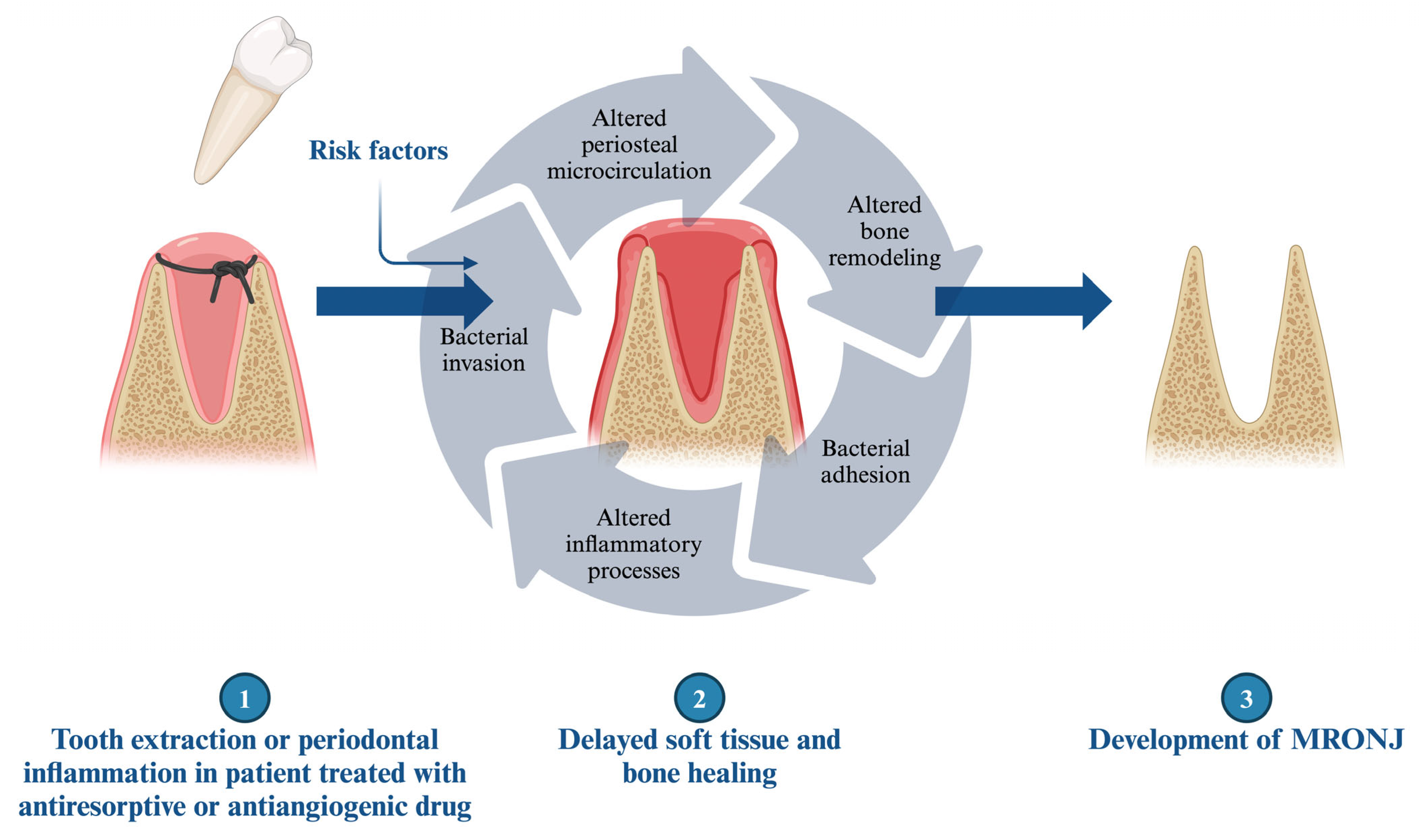
3.4. Medication-Related Osteonecrosis of the Jaws: Characteristics of the Bone and Medication Interaction
3.5. Future Directions and Conclusions
Author Contributions
Funding
Data Availability Statement
Conflicts of Interest
References
- Marx, R.E. Pamidronate (Aredia) and zoledronate (Zometa) induced avascular necrosis of the jaws: A growing epidemic. J. Oral Maxillofac. Surg. 2003, 61, 1115–1117. [Google Scholar] [CrossRef]
- Ruggiero, S.L.; Dodson, T.B.; Aghaloo, T.; Carlson, E.R.; Ward, B.B.; Kademani, D. American Association of Oral and Maxillofacial Surgeons’ Position Paper on Medication-Related Osteonecrosis of the Jaws-2022 Update. J. Oral Maxillofac. Surg. 2022, 80, 920–943. [Google Scholar] [CrossRef] [PubMed]
- Senel, F.C.; Kadioglu Duman, M.; Muci, E.; Cankaya, M.; Pampu, A.A.; Ersoz, S.; Gunhan, O. Jaw bone changes in rats after treatment with zoledronate and pamidronate. Oral Surg. Oral Med. Oral Pathol. Oral Radiol. Endod. 2010, 109, 385–391. [Google Scholar] [CrossRef] [PubMed]
- Mawardi, H.; Giro, G.; Kajiya, M.; Ohta, K.; Almazrooa, S.; Alshwaimi, E.; Woo, S.B.; Nishimura, I.; Kawai, T. A role of oral bacteria in bisphosphonate-induced osteonecrosis of the jaw. J. Dent. Res. 2011, 90, 1339–1345. [Google Scholar] [CrossRef]
- Wei, X.; Pushalkar, S.; Estilo, C.; Wong, C.; Farooki, A.; Fornier, M.; Bohle, G.; Huryn, J.; Li, Y.; Doty, S.; et al. Molecular profiling of oral microbiota in jawbone samples of bisphosphonate-related osteonecrosis of the jaw. Oral Dis. 2012, 18, 602–612. [Google Scholar] [CrossRef]
- Cankaya, M.; Cizmeci Senel, F.; Kadioglu Duman, M.; Muci, E.; Dayisoylu, E.H.; Balaban, F. The effects of chronic zoledronate usage on the jaw and long bones evaluated using RANKL and osteoprotegerin levels in an animal model. Int. J. Oral Maxillofac. Surg. 2013, 42, 1134–1139. [Google Scholar] [CrossRef]
- Janovszky, A.; Szabo, A.; Varga, R.; Garab, D.; Boros, M.; Mester, C.; Beretka, N.; Zombori, T.; Wiesmann, H.P.; Bernhardt, R.; et al. Periosteal microcirculatory reactions in a zoledronate-induced osteonecrosis model of the jaw in rats. Clin. Oral Investig. 2015, 19, 1279–1288. [Google Scholar] [CrossRef]
- Tröltzsch, M. Editorial: Immunological processes in maxillofacial bone pathology. Front. Immunol. 2024, 15, 1394835. [Google Scholar] [CrossRef]
- Berendsen, A.D.; Olsen, B.R. Bone development. Bone 2015, 80, 14–18. [Google Scholar] [CrossRef] [PubMed]
- Schaffler, M.B.; Kennedy, O.D. Osteocyte signaling in bone. Curr. Osteoporos. Rep. 2012, 10, 118–125. [Google Scholar] [CrossRef]
- Dallas, S.L.; Prideaux, M.; Bonewald, L.F. The osteocyte: An endocrine cell… and more. Endocr. Rev. 2013, 34, 658–690. [Google Scholar] [CrossRef] [PubMed]
- De Spiegelaere, W.; Cornillie, P.; Casteleyn, C.; Burvenich, C.; Van den Broeck, W. Detection of hypoxia inducible factors and angiogenic growth factors during foetal endochondral and intramembranous ossification. Anat. Histol. Embryol. 2010, 39, 376–384. [Google Scholar] [CrossRef]
- Li, C.; Fennessy, P. The periosteum: A simple tissue with many faces, with special reference to the antler-lineage periostea. Biol. Direct 2021, 16, 17. [Google Scholar] [CrossRef] [PubMed]
- Galea, G.L.; Zein, M.R.; Allen, S.; Francis-West, P. Making and shaping endochondral and intramembranous bones. Dev. Dyn. 2021, 250, 414–449. [Google Scholar] [CrossRef]
- Sheng, L.; Mao, X.; Yu, Q.; Yu, D. Effect of the PI3K/AKT signaling pathway on hypoxia-induced proliferation and differentiation of bone marrow-derived mesenchymal stem cells. Exp. Ther. Med. 2017, 13, 55–62. [Google Scholar] [CrossRef] [PubMed]
- Bahney, C.S.; Hu, D.P.; Miclau, T., 3rd; Marcucio, R.S. The multifaceted role of the vasculature in endochondral fracture repair. Front. Endocrinol. 2015, 6, 4. [Google Scholar] [CrossRef]
- Ortega, N.; Behonick, D.J.; Werb, Z. Matrix remodeling during endochondral ossification. Trends Cell Biol. 2004, 14, 86–93. [Google Scholar] [CrossRef]
- Fabian, P.; Crump, J.G. Reassessing the embryonic origin and potential of craniofacial ectomesenchyme. Semin. Cell Dev. Biol. 2023, 138, 45–53. [Google Scholar] [CrossRef]
- Le Douarin, N.M.; Creuzet, S.; Couly, G.; Dupin, E. Neural crest cell plasticity and its limits. Development 2004, 131, 4637–4650. [Google Scholar] [CrossRef]
- Li, S.; Quarto, N.; Longaker, M.T. Activation of FGF signaling mediates proliferative and osteogenic differences between neural crest derived frontal and mesoderm parietal derived bone. PLoS ONE 2010, 5, e14033. [Google Scholar] [CrossRef]
- Buckwalter, J.A.; Cooper, R.R. Bone structure and function. Instr. Course Lect. 1987, 36, 27–48. [Google Scholar]
- Dwek, J.R. The periosteum: What is it, where is it, and what mimics it in its absence? Skelet. Radiol. 2010, 39, 319–323. [Google Scholar] [CrossRef]
- Allen, M.R.; Hock, J.M.; Burr, D.B. Periosteum: Biology, regulation, and response to osteoporosis therapies. Bone 2004, 35, 1003–1012. [Google Scholar] [CrossRef]
- Hooper, G. Bone as a tissue. In Orthopedics: The Principles and Practice of Musculoskeletal Surgery; Hughes, S.P.F., Benson, M.A., Colton, C.L., Eds.; Churchill Livingstone: London, UK, 1987. [Google Scholar]
- Johnson, E.O.; Soultanis, K.; Soucacos, P.N. Vascular anatomy and microcirculation of skeletal zones vulnerable to osteonecrosis: Vascularization of the femoral head. Orthop. Clin. N. Am. 2004, 35, 285–291, viii. [Google Scholar] [CrossRef]
- Findlay, D.M. Vascular pathology and osteoarthritis. Rheumatology 2007, 46, 1763–1768. [Google Scholar] [CrossRef] [PubMed]
- Huelke, D.F.; Castelli, W.A. The blood supply of the rat mandible. Anat. Rec. 1965, 153, 335–341. [Google Scholar] [CrossRef]
- Shannon, J.; Shannon, J.; Modelevsky, S.; Grippo, A.A. Bisphosphonates and osteonecrosis of the jaw. J. Am. Geriatr. Soc. 2011, 59, 2350–2355. [Google Scholar] [CrossRef]
- Soares, A.P.; Fischer, H.; Aydin, S.; Steffen, C.; Schmidt-Bleek, K.; Rendenbach, C. Uncovering the unique characteristics of the mandible to improve clinical approaches to mandibular regeneration. Front. Physiol. 2023, 14, 1152301. [Google Scholar] [CrossRef] [PubMed]
- Rodella, L.F.; Buffoli, B.; Labanca, M.; Rezzani, R. A review of the mandibular and maxillary nerve supplies and their clinical relevance. Arch. Oral Biol. 2012, 57, 323–334. [Google Scholar] [CrossRef] [PubMed]
- Hill, E.L.; Elde, R. Distribution of CGRP-, VIP-, D beta H-, SP-, and NPY-immunoreactive nerves in the periosteum of the rat. Cell Tissue Res. 1991, 264, 469–480. [Google Scholar] [CrossRef]
- Maeda, Y.; Miwa, Y.; Sato, I. Expression of CGRP, vasculogenesis and osteogenesis associated mRNAs in the developing mouse mandible and tibia. Eur. J. Histochem. 2017, 61, 2750. [Google Scholar] [CrossRef]
- Kudo, K.; Tanaka, K.; Ambe, K.; Kawaai, H.; Yamazaki, S. Immunohistochemical Analysis of Nerve Distribution in Mandible of Rats. Anesth. Prog. 2019, 66, 87–93. [Google Scholar] [CrossRef] [PubMed]
- Xu, Y.; Zhuo, J.; Wang, Q.; Xu, X.; He, M.; Zhang, L.; Liu, Y.; Wu, X.; Luo, K.; Chen, Y. Site-specific periosteal cells with distinct osteogenic and angiogenic characteristics. Clin. Oral Investig. 2023, 27, 7437–7450. [Google Scholar] [CrossRef] [PubMed]
- Uddstromer, L. The osteogenic capacity of tubular and membranous bone periosteum. A qualitative and quantitative experimental study in growing rabbits. Scand. J. Plast. Reconstr. Surg. 1978, 12, 195–205. [Google Scholar] [CrossRef]
- Bilkay, U.; Tokat, C.; Helvaci, E.; Ozek, C.; Zekioglu, O.; Onat, T.; Songur, E. Osteogenic capacities of tibial and cranial periosteum: A biochemical and histologic study. J. Craniofac. Surg. 2008, 19, 453–458. [Google Scholar] [CrossRef]
- Zhang, S.; Zhu, J.; Jin, S.; Sun, W.; Ji, W.; Chen, Z. Jawbone periosteum-derived cells with high osteogenic potential controlled by R-spondin 3. Faseb J. 2024, 38, e70079. [Google Scholar] [CrossRef] [PubMed]
- Imamura, E.; Mayahara, M.; Inoue, S.; Miyamoto, M.; Funae, T.; Watanabe, Y.; Matsuki-Fukushima, M.; Nakamura, M. Trabecular structure and composition analysis of human autogenous bone donor sites using micro-computed tomography. J. Oral Biosci. 2021, 63, 74–79. [Google Scholar] [CrossRef]
- Kamigaki, Y.; Sato, I.; Yosue, T. Histological and radiographic study of human edentulous and dentulous maxilla. Anat. Sci. Int. 2017, 92, 470–482. [Google Scholar] [CrossRef]
- Tozoglu, U.; Cakur, B. Evaluation of the morphological changes in the mandible for dentate and totally edentate elderly population using cone-beam computed tomography. Surg. Radiol. Anat. 2014, 36, 643–649. [Google Scholar] [CrossRef]
- Di Stefano, D.A.; Arosio, P.; Pagnutti, S.; Vinci, R.; Gherlone, E.F. Distribution of Trabecular Bone Density in the Maxilla and Mandible. Implant. Dent. 2019, 28, 340–348. [Google Scholar] [CrossRef]
- Funae, T.; Imamura, E.; Mayahara, M.; Inoue, S.; Nakamura, M. Comparison of mandibular trabecular bone structure and composition between dentulous and edentulous human mandibles. J. Dent. Maxillofac. Res. 2020, 3, 16–20. [Google Scholar] [CrossRef]
- Chanavaz, M. Anatomy and histophysiology of the periosteum: Quantification of the periosteal blood supply to the adjacent bone with 85Sr and gamma spectrometry. J. Oral Implantol. 1995, 21, 214–219. [Google Scholar]
- Chung, U.I.; Kawaguchi, H.; Takato, T.; Nakamura, K. Distinct osteogenic mechanisms of bones of distinct origins. J. Orthop. Sci. 2004, 9, 410–414. [Google Scholar] [CrossRef] [PubMed]
- Aghaloo, T.L.; Chaichanasakul, T.; Bezouglaia, O.; Kang, B.; Franco, R.; Dry, S.M.; Atti, E.; Tetradis, S. Osteogenic potential of mandibular vs. long-bone marrow stromal cells. J. Dent. Res. 2010, 89, 1293–1298. [Google Scholar] [CrossRef] [PubMed]
- Yang, X.; Jiang, J.; Zhou, L.; Wang, S.; He, M.; Luo, K.; Chen, Y.; Xu, X. Osteogenic and angiogenic characterization of mandible and femur osteoblasts. J. Mol. Histol. 2019, 50, 105–117. [Google Scholar] [CrossRef] [PubMed]
- Reichert, J.C.; Gohlke, J.; Friis, T.E.; Quent, V.M.; Hutmacher, D.W. Mesodermal and neural crest derived ovine tibial and mandibular osteoblasts display distinct molecular differences. Gene 2013, 525, 99–106. [Google Scholar] [CrossRef]
- Marini, M.; Bertolai, R.; Ambrosini, S.; Sarchielli, E.; Vannelli, G.B.; Sgambati, E. Differential expression of vascular endothelial growth factor in human fetal skeletal site-specific tissues: Mandible versus femur. Acta. Histochem. 2015, 117, 228–234. [Google Scholar] [CrossRef]
- Solheim, E.; Pinholt, E.M.; Talsnes, O.; Larsen, T.B.; Kirkeby, O.J. Bone formation in cranial, mandibular, tibial and iliac bone grafts in rats. J. Craniofac. Surg. 1995, 6, 139–142. [Google Scholar] [CrossRef]
- Schmidt, B.L.; Kung, L.; Jones, C.; Casap, N. Induced osteogenesis by periosteal distraction. J. Oral Maxillofac. Surg. 2002, 60, 1170–1175. [Google Scholar] [CrossRef]
- Ueno, T.; Kagawa, T.; Fukunaga, J.; Mizukawa, N.; Sugahara, T.; Yamamoto, T. Evaluation of osteogenic/chondrogenic cellular proliferation and differentiation in the xenogeneic periosteal graft. Ann. Plast. Surg. 2002, 48, 539–545. [Google Scholar] [CrossRef]
- Watahiki, J.; Yamaguchi, T.; Enomoto, A.; Irie, T.; Yoshie, K.; Tachikawa, T.; Maki, K. Identification of differentially expressed genes in mandibular condylar and tibial growth cartilages using laser microdissection and fluorescent differential display: Chondromodulin-I (ChM-1) and tenomodulin (TeM) are differentially expressed in mandibular condylar and other growth cartilages. Bone 2008, 42, 1053–1060. [Google Scholar] [CrossRef] [PubMed]
- Nandiraju, D.; Ahmed, I. Human skeletal physiology and factors affecting its modeling and remodeling. Fertil. Steril. 2019, 112, 775–781. [Google Scholar] [CrossRef] [PubMed]
- Sims, N.A.; Martin, T.J. Coupling Signals between the Osteoclast and Osteoblast: How are Messages Transmitted between These Temporary Visitors to the Bone Surface? Front. Endocrinol. 2015, 6, 41. [Google Scholar] [CrossRef]
- Chen, X.; Wang, Z.; Duan, N.; Zhu, G.; Schwarz, E.M.; Xie, C. Osteoblast-osteoclast interactions. Connect. Tissue Res. 2018, 59, 99–107. [Google Scholar] [CrossRef]
- Daponte, V.; Henke, K.; Drissi, H. Current perspectives on the multiple roles of osteoclasts: Mechanisms of osteoclast-osteoblast communication and potential clinical implications. Elife 2024, 13, e95083. [Google Scholar] [CrossRef] [PubMed]
- Takegahara, N.; Kim, H.; Choi, Y. RANKL biology. Bone 2022, 159, 116353. [Google Scholar] [CrossRef]
- Yasuda, H.; Shima, N.; Nakagawa, N.; Mochizuki, S.I.; Yano, K.; Fujise, N.; Sato, Y.; Goto, M.; Yamaguchi, K.; Kuriyama, M.; et al. Identity of osteoclastogenesis inhibitory factor (OCIF) and osteoprotegerin (OPG): A mechanism by which OPG/OCIF inhibits osteoclastogenesis in vitro. Endocrinology 1998, 139, 1329–1337. [Google Scholar] [CrossRef]
- Faqeer, A.; Wang, M.; Alam, G.; Padhiar, A.A.; Zheng, D.; Luo, Z.; Zhao, I.S.; Zhou, G.; van den Beucken, J.; Wang, H.; et al. Cleaved SPP1-rich extracellular vesicles from osteoclasts promote bone regeneration via TGFbeta1/SMAD3 signaling. Biomaterials 2023, 303, 122367. [Google Scholar] [CrossRef]
- de Souza Faloni, A.P.; Schoenmaker, T.; Azari, A.; Katchburian, E.; Cerri, P.S.; de Vries, T.J.; Everts, V. Jaw and long bone marrows have a different osteoclastogenic potential. Calcif. Tissue Int. 2011, 88, 63–74. [Google Scholar] [CrossRef]
- Chaichanasakul, T.; Kang, B.; Bezouglaia, O.; Aghaloo, T.L.; Tetradis, S. Diverse osteoclastogenesis of bone marrow from mandible versus long bone. J. Periodontol. 2014, 85, 829–836. [Google Scholar] [CrossRef]
- Clark, R.; Park, S.Y.; Bradley, E.W.; Mansky, K.; Tasca, A. Mouse mandibular-derived osteoclast progenitors have differences in intrinsic properties compared with femoral-derived progenitors. JBMR Plus 2024, 8, ziae029. [Google Scholar] [CrossRef]
- Collinge, C.; Protzman, R. Outcomes of minimally invasive plate osteosynthesis for metaphyseal distal tibia fractures. J. Orthop. Trauma 2010, 24, 24–29. [Google Scholar] [CrossRef]
- Hermund, N.U.; Hillerup, S.; Kofod, T.; Schwartz, O.; Andreasen, J.O. Effect of early or delayed treatment upon healing of mandibular fractures: A systematic literature review. Dent. Traumatol. 2008, 24, 22–26. [Google Scholar] [CrossRef]
- Chenu, C. Glutamatergic innervation in bone. Microsc. Res. Tech. 2002, 58, 70–76. [Google Scholar] [CrossRef]
- Chenu, C. Role of innervation in the control of bone remodeling. J. Musculoskelet. Neuronal. Interact. 2004, 4, 132–134. [Google Scholar] [PubMed]
- Xu, J.; Zhang, Z.; Zhao, J.; Meyers, C.A.; Lee, S.; Qin, Q.; James, A.W. Interaction between the nervous and skeletal systems. Front. Cell Dev. Biol. 2022, 10, 976736. [Google Scholar] [CrossRef] [PubMed]
- Konttinen, Y.; Imai, S.; Suda, A. Neuropeptides and the puzzle of bone remodeling: State of the art. Acta Orthop. Scand. 1996, 67, 632–639. [Google Scholar] [CrossRef]
- Hohmann, E.L.; Elde, R.P.; Rysavy, J.A.; Einzig, S.; Gebhard, R.L. Innervation of periosteum and bone by sympathetic vasoactive intestinal peptide-containing nerve fibers. Science 1986, 232, 868–871. [Google Scholar] [CrossRef] [PubMed]
- Qin, Q.; Lee, S.; Patel, N.; Walden, K.; Gomez-Salazar, M.; Levi, B.; James, A.W. Neurovascular coupling in bone regeneration. Exp. Mol. Med. 2022, 54, 1844–1849. [Google Scholar] [CrossRef]
- Xie, D.; Xu, Y.; Yang, Y.; Hua, Z.; Li, J.; Fu, G.; Wu, Q. Sensory denervation increases potential of bisphosphonates to induce osteonecrosis via disproportionate expression of calcitonin gene-related peptide and substance P. Ann. N. Y. Acad. Sci. 2021, 1487, 56–73. [Google Scholar] [CrossRef]
- Cherruau, M.; Morvan, F.O.; Schirar, A.; Saffar, J.L. Chemical sympathectomy-induced changes in TH-, VIP-, and CGRP-immunoreactive fibers in the rat mandible periosteum: Influence on bone resorption. J. Cell. Physiol. 2003, 194, 341–348. [Google Scholar] [CrossRef]
- Bataille, C.; Mauprivez, C.; Hay, E.; Baroukh, B.; Brun, A.; Chaussain, C.; Marie, P.J.; Saffar, J.L.; Cherruau, M. Different sympathetic pathways control the metabolism of distinct bone envelopes. Bone 2012, 50, 1162–1172. [Google Scholar] [CrossRef]
- Mauprivez, C.; Bataille, C.; Baroukh, B.; Llorens, A.; Lesieur, J.; Marie, P.J.; Saffar, J.L.; Biosse Duplan, M.; Cherruau, M. Periosteum Metabolism and Nerve Fiber Positioning Depend on Interactions between Osteoblasts and Peripheral Innervation in Rat Mandible. PLoS ONE 2015, 10, e0140848. [Google Scholar] [CrossRef]
- Yu, Y.Y.; Lieu, S.; Hu, D.; Miclau, T.; Colnot, C. Site specific effects of zoledronic acid during tibial and mandibular fracture repair. PLoS ONE 2012, 7, e31771. [Google Scholar] [CrossRef] [PubMed]
- Mavropoulos, A.; Rizzoli, R.; Ammann, P. Different responsiveness of alveolar and tibial bone to bone loss stimuli. J. Bone Miner. Res. 2007, 22, 403–410. [Google Scholar] [CrossRef] [PubMed]
- Liu, X.L.; Li, C.L.; Lu, W.W.; Cai, W.X.; Zheng, L.W. Skeletal site-specific response to ovariectomy in a rat model: Change in bone density and microarchitecture. Clin. Oral Implant. Res. 2015, 26, 392–398. [Google Scholar] [CrossRef]
- Yamashiro, T.; Takano-Yamamoto, T. Differential responses of mandibular condyle and femur to oestrogen deficiency in young rats. Arch. Oral Biol. 1998, 43, 191–195. [Google Scholar] [CrossRef]
- Damek-Poprawa, M.; Both, S.; Wright, A.C.; Maity, A.; Akintoye, S.O. Onset of mandible and tibia osteoradionecrosis: A comparative pilot study in the rat. Oral Surg. Oral Med. Oral Pathol. Oral Radiol. 2013, 115, 201–211. [Google Scholar] [CrossRef]
- Mavropoulos, A.; Ammann, P.; Bresin, A.; Kiliaridis, S. Masticatory demands induce region-specific changes in mandibular bone density in growing rats. Angle Orthod. 2005, 75, 625–630. [Google Scholar] [CrossRef] [PubMed]
- Mavropoulos, A.; Kiliaridis, S.; Rizzoli, R.; Ammann, P. Normal masticatory function partially protects the rat mandibular bone from estrogen-deficiency induced osteoporosis. J. Biomech. 2014, 47, 2666–2671. [Google Scholar] [CrossRef]
- Szabo, A.; Janovszky, A.; Pocs, L.; Boros, M. The periosteal microcirculation in health and disease: An update on clinical significance. Microvasc. Res. 2017, 110, 5–13. [Google Scholar] [CrossRef]
- Saunders, J.; Smith, T. Malnutrition: Causes and consequences. Clin. Med. 2010, 10, 624–627. [Google Scholar] [CrossRef] [PubMed]
- Morimoto, Y.; Tanaka, T.; Kito, S.; Morimoto, A.; Haneji, T.; Kimura, M.; Ohba, T. Quantitative radiographic changes in the mandible and the tibia in systemically loaded rats fed a low-calcium diet. Oral Dis. 2000, 6, 310–317. [Google Scholar] [CrossRef]
- Watanabe, K.; Imamura, H.; Uchikanbori, S.; Fujita, Y.; Maki, K. Effects of restricted calcium intake on bone and maxillofacial growth. Angle Orthod. 2008, 78, 445–452. [Google Scholar] [CrossRef]
- Globus, R.K.; Bikle, D.D.; Morey-Holton, E. Effects of simulated weightlessness on bone mineral metabolism. Endocrinology 1984, 114, 2264–2270. [Google Scholar] [CrossRef]
- Shirai, H.; Sato, T.; Oka, M.; Hara, T.; Mori, S. Effect of calcium supplementation on bone dynamics of the maxilla, mandible and proximal tibia in experimental osteoporosis. J. Oral Rehabil. 2002, 29, 287–294. [Google Scholar] [CrossRef]
- Liu, H.; Guo, J.; Wang, L.; Chen, N.; Karaplis, A.; Goltzman, D.; Miao, D. Distinctive anabolic roles of 1,25-dihydroxyvitamin D(3) and parathyroid hormone in teeth and mandible versus long bones. J. Endocrinol. 2009, 203, 203–213. [Google Scholar] [CrossRef] [PubMed]
- Hua, Y.; Bi, R.; Zhang, Y.; Xu, L.; Guo, J.; Li, Y. Different bone sites-specific response to diabetes rat models: Bone density, histology and microarchitecture. PLoS ONE 2018, 13, e0205503. [Google Scholar] [CrossRef] [PubMed]
- Kelsey, J.L. Risk factors for osteoporosis and associated fractures. Public Health Rep. 1989, 104, 14–20. [Google Scholar]
- Lane, J.M.; Russell, L.; Khan, S.N. Osteoporosis. Clin. Orthop. Relat. Res. 2000, 372, 139–150. [Google Scholar] [CrossRef]
- Yang, J.; Pham, S.M.; Crabbe, D.L. Effects of oestrogen deficiency on rat mandibular and tibial microarchitecture. Dentomaxillofac. Radiol. 2003, 32, 247–251. [Google Scholar] [CrossRef]
- Moriya, Y.; Ito, K.; Murai, S. Effects of experimental osteoporosis on alveolar bone loss in rats. J. Oral Sci. 1998, 40, 171–175. [Google Scholar] [CrossRef]
- Esteves, C.M.; Moraes, R.M.; Gomes, F.C.; Marcondes, M.S.; Lima, G.M.; Anbinder, A.L. Ovariectomy-associated changes in interradicular septum and in tibia metaphysis in different observation periods in rats. Pathol. Res. Pract. 2015, 211, 125–129. [Google Scholar] [CrossRef]
- Lee, C.; Lee, J.H.; Han, S.S.; Kim, Y.H.; Choi, Y.J.; Jeon, K.J.; Jung, H.I. Site-specific and time-course changes of postmenopausal osteoporosis in rat mandible: Comparative study with femur. Sci. Rep. 2019, 9, 14155. [Google Scholar] [CrossRef]
- Kozai, Y.; Kawamata, R.; Sakurai, T.; Kanno, M.; Kashima, I. Influence of prednisolone-induced osteoporosis on bone mass and bone quality of the mandible in rats. Dentomaxillofac. Radiol. 2009, 38, 34–41. [Google Scholar] [CrossRef]
- Kosugi, K.; Yonezu, H.; Kawashima, S.; Honda, K.; Arai, Y.; Shibahara, T. A longitudinal study of the effect of experimental osteoporosis on bone trabecular structure in the rat mandibular condyle. Cranio 2013, 31, 140–150. [Google Scholar] [CrossRef]
- Hara, T.; Sato, T.; Oka, M.; Mori, S.; Shirai, H. Effects of ovariectomy and/or dietary calcium deficiency on bone dynamics in the rat hard palate, mandible and proximal tibia. Arch. Oral Biol. 2001, 46, 443–451. [Google Scholar] [CrossRef]
- Coutel, X.; Delattre, J.; Marchandise, P.; Falgayrac, G.; Behal, H.; Kerckhofs, G.; Penel, G.; Olejnik, C. Mandibular bone is protected against microarchitectural alterations and bone marrow adipose conversion in ovariectomized rats. Bone 2019, 127, 343–352. [Google Scholar] [CrossRef] [PubMed]
- Elsubeihi, E.S.; Heersche, J.N. Comparison of the effect of ovariectomy on bone mass in dentate and edentulous mandibles of adult rats. Eur. J. Prosthodont. Restor. Dent. 2009, 17, 9–21. [Google Scholar] [PubMed]
- Beattie, A.; Cournane, S.; Finucane, C.; Walsh, J.B.; Stassen, L.F.A. Quantitative Ultrasound of the Mandible as a Novel Screening Approach for Osteoporosis. J. Clin. Densitom. 2018, 21, 110–118. [Google Scholar] [CrossRef] [PubMed]
- Klemetti, E.; Vainio, P.; Lassila, V.; Alhava, E. Cortical bone mineral density in the mandible and osteoporosis status in postmenopausal women. Scand. J. Dent. Res. 1993, 101, 219–223. [Google Scholar] [CrossRef] [PubMed]
- Slaidina, A.; Soboleva, U.; Daukste, I.; Zvaigzne, A.; Lejnieks, A. Postmenopausal osteoporosis and tooth loss. Stomatologija 2011, 13, 92–95. [Google Scholar]
- Cheung, W.H.; Miclau, T.; Chow, S.K.; Yang, F.F.; Alt, V. Fracture healing in osteoporotic bone. Injury 2016, 47, S21–S26. [Google Scholar] [CrossRef]
- Fujimoto, T.; Niimi, A.; Sawai, T.; Ueda, M. Effects of steroid-induced osteoporosis on osseointegration of titanium implants. Int. J. Oral Maxillofac. Implant. 1998, 13, 183–189. [Google Scholar]
- Zhang, H.; Shi, X.; Wang, L.; Li, X.; Zheng, C.; Gao, B.; Xu, X.; Lin, X.; Wang, J.; Lin, Y.; et al. Intramembranous ossification and endochondral ossification are impaired differently between glucocorticoid-induced osteoporosis and estrogen deficiency-induced osteoporosis. Sci. Rep. 2018, 8, 3867. [Google Scholar] [CrossRef]
- Liu, L.N.; Zhang, X.H.; Liu, H.H.; Li, K.H.; Wu, Q.H.; Liu, Y.; Luo, E. Osteogenesis Differences Around Titanium Implant and in Bone Defect Between Jaw Bones and Long Bones. J. Craniofac. Surg. 2020, 31, 2193–2198. [Google Scholar] [CrossRef]
- Amorim, M.A.; Takayama, L.; Jorgetti, V.; Pereira, R.M. Comparative study of axial and femoral bone mineral density and parameters of mandibular bone quality in patients receiving dental implants. Osteoporos. Int. 2006, 17, 1494–1500. [Google Scholar] [CrossRef] [PubMed]
- Lemos, C.A.A.; de Oliveira, A.S.; Fae, D.S.; Oliveira, H.; Del Rei Daltro Rosa, C.D.; Bento, V.A.A.; Verri, F.R.; Pellizzer, E.P. Do dental implants placed in patients with osteoporosis have higher risks of failure and marginal bone loss compared to those in healthy patients? A systematic review with meta-analysis. Clin. Oral Investig. 2023, 27, 2483–2493. [Google Scholar] [CrossRef]
- Hu, K.; Olsen, B.R. The roles of vascular endothelial growth factor in bone repair and regeneration. Bone 2016, 91, 30–38. [Google Scholar] [CrossRef]
- Runyan, C.M.; Gabrick, K.S. Biology of Bone Formation, Fracture Healing, and Distraction Osteogenesis. J. Craniofac. Surg. 2017, 28, 1380–1389. [Google Scholar] [CrossRef] [PubMed]
- Neagu, T.P.; Tiglis, M.; Cocolos, I.; Jecan, C.R. The relationship between periosteum and fracture healing. Rom. J. Morphol. Embryol. 2016, 57, 1215–1220. [Google Scholar]
- Macnab, I.; De Haas, W.G. The role of periosteal blood supply in the healing of fractures of the tibia. Clin. Orthop Relat. Res. 1974, 27–33. [Google Scholar] [CrossRef]
- Utvag, S.E.; Grundnes, O.; Reikeras, O. Effects of lesion between bone, periosteum and muscle on fracture healing in rats. Acta Orthop. Scand. 1998, 69, 177–180. [Google Scholar] [CrossRef] [PubMed]
- Gustilo, R.B.; Merkow, R.L.; Templeman, D. The management of open fractures. J. Bone Joint Surg. Am. 1990, 72, 299–304. [Google Scholar] [CrossRef] [PubMed]
- Esterhai, J.L., Jr.; Queenan, J. Management of soft tissue wounds associated with type III open fractures. Orthop. Clin. N. Am. 1991, 22, 427–432. [Google Scholar] [CrossRef]
- Wehrhan, F.; Stockmann, P.; Nkenke, E.; Schlegel, K.A.; Guentsch, A.; Wehrhan, T.; Neukam, F.W.; Amann, K. Differential impairment of vascularization and angiogenesis in bisphosphonate-associated osteonecrosis of the jaw-related mucoperiosteal tissue. Oral Surg. Oral Med. Oral Pathol. Oral Radiol. Endod. 2011, 112, 216–221. [Google Scholar] [CrossRef]
- McGregor, A.D.; MacDonald, D.G. Post-irradiation changes in the blood vessels of the adult human mandible. Br. J. Oral Maxillofac. Surg. 1995, 33, 15–18. [Google Scholar] [CrossRef] [PubMed]
- Dietrich, E.M.; Antoniades, K. Bone-vasculature interactions in the mandible: Is bone an angiogenic tissue? Med. Hypotheses 2012, 79, 582–584. [Google Scholar] [CrossRef]
- Ai-Aql, Z.S.; Alagl, A.S.; Graves, D.T.; Gerstenfeld, L.C.; Einhorn, T.A. Molecular mechanisms controlling bone formation during fracture healing and distraction osteogenesis. J. Dent. Res. 2008, 87, 107–118. [Google Scholar] [CrossRef]
- Marsell, R.; Einhorn, T.A. The biology of fracture healing. Injury 2011, 42, 551–555. [Google Scholar] [CrossRef]
- Park, J.-B.; Bae, S.-S.; Lee, P.-W.; Lee, W.; Park, Y.-H.; Kim, H.; Lee, K.; Kim, I. Comparison of Stem Cells Derived from Periosteum and Bone Marrow of Jaw Bone and Long Bone in Rabbit Models. Tissue Eng. Regen. Med. 2012, 9, 224–230. [Google Scholar] [CrossRef]
- Zhu, J.; Zhang, S.; Jin, S.; Huang, C.; Shi, B.; Chen, Z.; Ji, W. Endochondral Repair of Jawbone Defects Using Periosteal Cell Spheroids. J. Dent. Res. 2024, 103, 31–41. [Google Scholar] [CrossRef]
- Stadelmann, V.A.; Gauthier, O.; Terrier, A.; Bouler, J.M.; Pioletti, D.P. Implants delivering bisphosphonate locally increase periprosthetic bone density in an osteoporotic sheep model. A pilot study. Eur. Cells Mater. 2008, 16, 10–16. [Google Scholar] [CrossRef] [PubMed]
- Blazsek, J.; Dobo Nagy, C.; Blazsek, I.; Varga, R.; Vecsei, B.; Fejerdy, P.; Varga, G. Aminobisphosphonate stimulates bone regeneration and enforces consolidation of titanium implant into a new rat caudal vertebrae model. Pathol. Oncol. Res. 2009, 15, 567–577. [Google Scholar] [CrossRef] [PubMed]
- Guo, Z.; Cui, W.; Que, L.; Li, C.; Tang, X.; Liu, J. Pharmacogenetics of medication-related osteonecrosis of the jaw: A systematic review and meta-analysis. Int. J. Oral Maxillofac. Surg. 2020, 49, 298–309. [Google Scholar] [CrossRef] [PubMed]
- Sandro Pereira da Silva, J.; Pullano, E.; Raje, N.S.; Troulis, M.J.; August, M. Genetic predisposition for medication-related osteonecrosis of the jaws: A systematic review. Int. J. Oral Maxillofac. Surg. 2019, 48, 1289–1299. [Google Scholar] [CrossRef]
- Sarasquete, M.E.; Gonzalez, M.; San Miguel, J.F.; Garcia-Sanz, R. Bisphosphonate-related osteonecrosis: Genetic and acquired risk factors. Oral Dis. 2009, 15, 382–387. [Google Scholar] [CrossRef]
- Drozdzowska, B. Osteonecrosis of the jaw. Endokrynol. Pol. 2011, 62, 4–9. [Google Scholar]
- Brozoski, M.A.; Traina, A.A.; Deboni, M.C.; Marques, M.M.; Naclerio-Homem Mda, G. Bisphosphonate-related osteonecrosis of the jaw. Rev. Bras. Reumatol. 2012, 52, 265–270. [Google Scholar] [CrossRef]
- Kang, B.; Cheong, S.; Chaichanasakul, T.; Bezouglaia, O.; Atti, E.; Dry, S.M.; Pirih, F.Q.; Aghaloo, T.L.; Tetradis, S. Periapical disease and bisphosphonates induce osteonecrosis of the jaws in mice. J. Bone Miner. Res. 2013, 28, 1631–1640. [Google Scholar] [CrossRef]
- Otto, S.; Schreyer, C.; Hafner, S.; Mast, G.; Ehrenfeld, M.; Sturzenbaum, S.; Pautke, C. Bisphosphonate-related osteonecrosis of the jaws—Characteristics, risk factors, clinical features, localization and impact on oncological treatment. J. Craniomaxillofac. Surg. 2012, 40, 303–309. [Google Scholar] [CrossRef]
- Shin, J.W.; Kim, J.E.; Huh, K.H.; Yi, W.J.; Heo, M.S.; Lee, S.S.; Choi, S.C. Radiological manifestations and clinical findings of patients with oncologic and osteoporotic medication-related osteonecrosis of the jaw. Sci. Rep. 2024, 14, 8744. [Google Scholar] [CrossRef] [PubMed]
- Soares, M.Q.S.; Van Dessel, J.; Jacobs, R.; Ferreira, G.Z.; da Silva Santos, P.S.; Nicolielo, L.F.P.; Duarte, M.A.H.; Rubira-Bullen, I.R.F. High doses of zoledronic acid induce differential effects on femur and jawbone microstructure. Clin. Exp. Dent. Res. 2022, 8, 1487–1495. [Google Scholar] [CrossRef] [PubMed]
- Sheng, Z.F.; Xu, K.; Ma, Y.L.; Liu, J.H.; Dai, R.C.; Zhang, Y.H.; Jiang, Y.B.; Liao, E.Y. Zoledronate reverses mandibular bone loss in osteoprotegerin-deficient mice. Osteoporos. Int. 2009, 20, 151–159. [Google Scholar] [CrossRef] [PubMed]
- Rabelo, G.D.; Travencolo, B.A.; Oliveira, M.A.; Beletti, M.E.; Gallottini, M.; Silveira, F.R. Changes in cortical bone channels network and osteocyte organization after the use of zoledronic acid. Arch. Endocrinol. Metab. 2015, 59, 507–514. [Google Scholar] [CrossRef][Green Version]
- Yoshioka, Y.; Yamachika, E.; Nakanishi, M.; Ninomiya, T.; Nakatsuji, K.; Matsubara, M.; Moritani, N.; Kobayashi, Y.; Fujii, T.; Iida, S. Molecular alterations of newly formed mandibular bone caused by zoledronate. Int. J. Oral Maxillofac. Surg. 2018, 47, 1206–1213. [Google Scholar] [CrossRef]
- Oyhanart, S.R.; Escudero, N.D.; Mandalunis, P.M. Effect of alendronate on the mandible and long bones: An experimental study in vivo. Pediatr. Res. 2015, 78, 618–625. [Google Scholar] [CrossRef]
- Vieira, J.S.; Cunha, E.J.; de Souza, J.F.; Sant’Ana, R.D.; Zielak, J.C.; Costa-Casagrande, T.A.; Giovanini, A.F. Alendronate induces postnatal maxillary bone growth by stimulating intramembranous ossification and preventing premature cartilage mineralization in the midpalatal suture of newborn rats. Int. J. Oral Maxillofac. Surg. 2019, 48, 1494–1503. [Google Scholar] [CrossRef]
- Wen, D.; Qing, L.; Harrison, G.; Golub, E.; Akintoye, S.O. Anatomic site variability in rat skeletal uptake and desorption of fluorescently labeled bisphosphonate. Oral Dis. 2011, 17, 427–432. [Google Scholar] [CrossRef]
- Lee, E.S.; Tsai, M.C.; Lee, J.X.; Wong, C.; Cheng, Y.N.; Liu, A.C.; Liang, Y.F.; Fang, C.Y.; Wu, C.Y.; Lee, I.T. Bisphosphonates and Their Connection to Dental Procedures: Exploring Bisphosphonate-Related Osteonecrosis of the Jaws. Cancers 2023, 15, 5366. [Google Scholar] [CrossRef]
- Rodan, G.A.; Fleisch, H.A. Bisphosphonates: Mechanisms of action. J. Clin. Investig. 1996, 97, 2692–2696. [Google Scholar] [CrossRef]
- Maruotti, N.; Corrado, A.; Neve, A.; Cantatore, F.P. Bisphosphonates: Effects on osteoblast. Eur. J. Clin. Pharmacol. 2012, 68, 1013–1018. [Google Scholar] [CrossRef]
- Kobayashi, Y.; Hiraga, T.; Ueda, A.; Wang, L.; Matsumoto-Nakano, M.; Hata, K.; Yatani, H.; Yoneda, T. Zoledronic acid delays wound healing of the tooth extraction socket, inhibits oral epithelial cell migration, and promotes proliferation and adhesion to hydroxyapatite of oral bacteria, without causing osteonecrosis of the jaw, in mice. J. Bone Miner. Metab. 2010, 28, 165–175. [Google Scholar] [CrossRef]
- Yamashita, J.; Koi, K.; Yang, D.Y.; McCauley, L.K. Effect of zoledronate on oral wound healing in rats. Clin. Cancer Res. 2011, 17, 1405–1414. [Google Scholar] [CrossRef]
- Aguirre, J.I.; Akhter, M.P.; Kimmel, D.B.; Pingel, J.E.; Williams, A.; Jorgensen, M.; Kesavalu, L.; Wronski, T.J. Oncologic doses of zoledronic acid induce osteonecrosis of the jaw-like lesions in rice rats (Oryzomys palustris) with periodontitis. J. Bone Miner. Res. 2012, 27, 2130–2143. [Google Scholar] [CrossRef]
- Zandi, M.; Dehghan, A.; Amini, P.; Rezaeian, L.; Doulati, S. Evaluation of mandibular fracture healing in rats under zoledronate therapy: A histologic study. Injury 2017, 48, 2683–2687. [Google Scholar] [CrossRef] [PubMed]
- Wood, J.; Bonjean, K.; Ruetz, S.; Bellahcene, A.; Devy, L.; Foidart, J.M.; Castronovo, V.; Green, J.R. Novel antiangiogenic effects of the bisphosphonate compound zoledronic acid. J. Pharmacol. Exp. Ther. 2002, 302, 1055–1061. [Google Scholar] [CrossRef]
- Pabst, A.M.; Ziebart, T.; Ackermann, M.; Konerding, M.A.; Walter, C. Bisphosphonates’ antiangiogenic potency in the development of bisphosphonate-associated osteonecrosis of the jaws: Influence on microvessel sprouting in an in vivo 3D Matrigel assay. Clin. Oral Investig. 2014, 18, 1015–1022. [Google Scholar] [CrossRef] [PubMed]
- Guevarra, C.S.; Borke, J.L.; Stevens, M.R.; Bisch, F.C.; Zakhary, I.; Messer, R.; Gerlach, R.C.; Elsalanty, M.E. Vascular alterations in the sprague-dawley rat mandible during intravenous bisphosphonate therapy. J. Oral Implant. 2015, 41, e24–e29. [Google Scholar] [CrossRef] [PubMed]
- Cornish, J.; Bava, U.; Callon, K.E.; Bai, J.; Naot, D.; Reid, I.R. Bone-bound bisphosphonate inhibits growth of adjacent non-bone cells. Bone 2011, 49, 710–716. [Google Scholar] [CrossRef]
- Brighton, C.T.; Lorich, D.G.; Kupcha, R.; Reilly, T.M.; Jones, A.R.; Woodbury, R.A., 2nd. The pericyte as a possible osteoblast progenitor cell. Clin. Orthop. Relat. Res. 1992, 287–299. [Google Scholar] [CrossRef]
- Xie, C.; Ming, X.; Wang, Q.; Schwarz, E.M.; Guldberg, R.E.; O’Keefe, R.J.; Zhang, X. COX-2 from the injury milieu is critical for the initiation of periosteal progenitor cell mediated bone healing. Bone 2008, 43, 1075–1083. [Google Scholar] [CrossRef][Green Version]
- Chappuis, V.; Gamer, L.; Cox, K.; Lowery, J.W.; Bosshardt, D.D.; Rosen, V. Periosteal BMP2 activity drives bone graft healing. Bone 2012, 51, 800–809. [Google Scholar] [CrossRef]
- Reid, I.R.; Bolland, M.J.; Grey, A.B. Is bisphosphonate-associated osteonecrosis of the jaw caused by soft tissue toxicity? Bone 2007, 41, 318–320. [Google Scholar] [CrossRef]
- Naidu, A.; Dechow, P.C.; Spears, R.; Wright, J.M.; Kessler, H.P.; Opperman, L.A. The effects of bisphosphonates on osteoblasts in vitro. Oral Surg. Oral Med. Oral Pathol. Oral Radiol. Endod. 2008, 106, 5–13. [Google Scholar] [CrossRef] [PubMed]
- Scheper, M.A.; Badros, A.; Chaisuparat, R.; Cullen, K.J.; Meiller, T.F. Effect of zoledronic acid on oral fibroblasts and epithelial cells: A potential mechanism of bisphosphonate-associated osteonecrosis. Br. J. Haematol. 2009, 144, 667–676. [Google Scholar] [CrossRef] [PubMed]
- Agis, H.; Blei, J.; Watzek, G.; Gruber, R. Is zoledronate toxic to human periodontal fibroblasts? J. Dent. Res. 2010, 89, 40–45. [Google Scholar] [CrossRef] [PubMed]
- Acil, Y.; Moller, B.; Niehoff, P.; Rachko, K.; Gassling, V.; Wiltfang, J.; Simon, M.J. The cytotoxic effects of three different bisphosphonates in-vitro on human gingival fibroblasts, osteoblasts and osteogenic sarcoma cells. J. Craniomaxillofac. Surg. 2012, 40, e229–e235. [Google Scholar] [CrossRef]
- Koch, F.P.; Wunsch, A.; Merkel, C.; Ziebart, T.; Pabst, A.; Yekta, S.S.; Blessmann, M.; Smeets, R. The influence of bisphosphonates on human osteoblast migration and integrin aVb3/tenascin C gene expression in vitro. Head Face Med. 2011, 7, 4. [Google Scholar] [CrossRef]
- Marolt, D.; Cozin, M.; Vunjak-Novakovic, G.; Cremers, S.; Landesberg, R. Effects of pamidronate on human alveolar osteoblasts in vitro. J. Oral Maxillofac. Surg. 2012, 70, 1081–1092. [Google Scholar] [CrossRef]
- Kimmel, D.B. Mechanism of action, pharmacokinetic and pharmacodynamic profile, and clinical applications of nitrogen-containing bisphosphonates. J. Dent. Res. 2007, 86, 1022–1033. [Google Scholar] [CrossRef]
- Ristow, O.; Gerngross, C.; Schwaiger, M.; Hohlweg-Majert, B.; Ristow, M.; Koerdt, S.; Schuster, R.; Otto, S.; Pautke, C. Does regular zoledronic acid change the bone turnover of the jaw in men with metastatic prostate cancer: A possible clue to the pathogenesis of bisphosphonate related osteonecrosis of the jaw? J. Cancer Res. Clin. Oncol. 2014, 140, 487–493. [Google Scholar] [CrossRef]
- Kubek, D.J.; Burr, D.B.; Allen, M.R. Ovariectomy stimulates and bisphosphonates inhibit intracortical remodeling in the mouse mandible. Orthod. Craniofac. Res. 2010, 13, 214–222. [Google Scholar] [CrossRef]
- Huja, S.S.; Mason, A.; Fenell, C.E.; Mo, X.; Hueni, S.; D’Atri, A.M.; Fernandez, S.A. Effects of short-term zoledronic acid treatment on bone remodeling and healing at surgical sites in the maxilla and mandible of aged dogs. J. Oral Maxillofac. Surg. 2011, 69, 418–427. [Google Scholar] [CrossRef]
- Park, J.B.; Cho, S.H.; Kim, I.; Lee, W.; Kang, S.H.; Kim, H. Evaluation of the bisphosphonate effect on stem cells derived from jaw bone and long bone rabbit models: A pilot study. Arch. Oral Biol. 2018, 85, 178–182. [Google Scholar] [CrossRef] [PubMed]
- Soundia, A.; Elzakra, N.; Hadaya, D.; Gkouveris, I.; Bezouglaia, O.; Dry, S.; Aghaloo, T.; Tetradis, S. Macrophage Polarization during MRONJ Development in Mice. J. Dent. Res. 2024, 103, 899–907. [Google Scholar] [CrossRef] [PubMed]
- Kundert, D.N.; Tavassol, F.; Kampmann, A.; Gellrich, N.C.; Lindhorst, D.; Precht, M.M.; Schumann, P. Alendronate reduces periosteal microperfusion in vivo. Heliyon 2023, 9, e19468. [Google Scholar] [CrossRef]
- Eppihimer, M.J.; Granger, D.N. Ischemia/reperfusion-induced leukocyte-endothelial interactions in postcapillary venules. Shock 1997, 8, 16–25. [Google Scholar] [CrossRef]
- Sener, I.; Bereket, C.; Kosker, H.; Turer, A.; Tek, M.; Kaplan, S. The effects of zoledronic acid on mandibular fracture healing in an osteoporotic model: A stereological study. J. Craniofac. Surg. 2013, 24, 1221–1224. [Google Scholar] [CrossRef] [PubMed]
- Kuroshima, S.; Entezami, P.; McCauley, L.K.; Yamashita, J. Early effects of parathyroid hormone on bisphosphonate/steroid-associated compromised osseous wound healing. Osteoporos. Int. 2014, 25, 1141–1150. [Google Scholar] [CrossRef]
- Cardemil, C.; Omar, O.M.; Norlindh, B.; Wexell, C.L.; Thomsen, P. The effects of a systemic single dose of zoledronic acid on post-implantation bone remodelling and inflammation in an ovariectomised rat model. Biomaterials 2013, 34, 1546–1561. [Google Scholar] [CrossRef]
- Cohen, D.J.; Lohmann, C.H.; Scott, K.M.; Olson, L.C.; Boyan, B.D.; Schwartz, Z. Osseointegration and Remodeling of Mineralized Bone Graft Are Negatively Impacted by Prior Treatment with Bisphosphonates. J. Bone Joint Surg. Am. 2022, 104, 1750–1759. [Google Scholar] [CrossRef]
- Yang, K.H.; Won, J.H.; Yoon, H.K.; Ryu, J.H.; Choo, K.S.; Kim, J.S. High concentrations of pamidronate in bone weaken the mechanical properties of intact femora in a rat model. Yonsei Med. J. 2007, 48, 653–658. [Google Scholar] [CrossRef] [PubMed]
- Menzdorf, L.; Weuster, M.; Kluter, T.; Bruggemann, S.; Behrendt, P.; Fitchen-Oestern, S.; Varoga, D.; Seekamp, A.; Purcz, N.; Glueer, C.C.; et al. Local pamidronate influences fracture healing in a rodent femur fracture model: An experimental study. BMC Musculoskelet. Disord. 2016, 17, 255. [Google Scholar] [CrossRef]
- Bal, R.; Ambade, R.; Singh, N.; Upadhyay, P. Bisphosphonates and Atypical Femur Fractures: Is the Relationship Causal or Casual? Cureus 2023, 15, e48141. [Google Scholar] [CrossRef]
- Ying, G.; Bo, L.; Yanjun, J.; Lina, W.; Binquan, W. Effect of a local, one time, low-dose injection of zoledronic acid on titanium implant osseointegration in ovariectomized rats. Arch. Med. Sci. 2016, 12, 941–949. [Google Scholar] [CrossRef]
- Lee, K.; Kim, K.; Kim, J.Y.; Kim, J.W.; Kang, Y.H.; Kim, Y.H.; Kim, S.J. Mechanisms Underlying Medication-Related Osteonecrosis of the Jaw. Oral Dis. 2025, 31, 1073–1083. [Google Scholar] [CrossRef]
- Kos, M.; Junka, A.; Smutnicka, D.; Bartoszewicz, M.; Kurzynowski, T.; Gluza, K. Pamidronate enhances bacterial adhesion to bone hydroxyapatite. Another puzzle in the pathology of bisphosphonate-related osteonecrosis of the jaw? J. Oral Maxillofac. Surg. 2013, 71, 1010–1016. [Google Scholar] [CrossRef]
- Pushalkar, S.; Li, X.; Kurago, Z.; Ramanathapuram, L.V.; Matsumura, S.; Fleisher, K.E.; Glickman, R.; Yan, W.; Li, Y.; Saxena, D. Oral microbiota and host innate immune response in bisphosphonate-related osteonecrosis of the jaw. Int. J. Oral Sci. 2014, 6, 219–226. [Google Scholar] [CrossRef] [PubMed]
- Kos, M.; Junka, A.; Smutnicka, D.; Szymczyk, P.; Gluza, K.; Bartoszewicz, M. Bisphosphonates enhance bacterial adhesion and biofilm formation on bone hydroxyapatite. J. Craniomaxillofac. Surg. 2015, 43, 863–869. [Google Scholar] [CrossRef] [PubMed]
- Hallmer, F.; Bjørnland, T.; Andersson, G.; Becktor, J.P.; Kristoffersen, A.K.; Enersen, M. Bacterial diversity in medication-related osteonecrosis of the jaw. Oral Surg. Oral Med. Oral Pathol. Oral Radiol. 2017, 123, 436–444. [Google Scholar] [CrossRef]
- Ibrahim, N.; Apandi, N.I.M.; Shuhardi, S.A.; Ramli, R. Actinomyces sp. Presence in the Bone Specimens of Patients with Osteonecrosis of the Jaw: The Histopathological Analysis and Clinical Implication. Antibiotics 2022, 11, 1067. [Google Scholar] [CrossRef]
- Li, Y.; Li, X.; Guo, D.; Meng, L.; Feng, X.; Zhang, Y.; Pan, S. Immune dysregulation and macrophage polarization in peri-implantitis. Front. Bioeng. Biotechnol. 2024, 12, 1291880. [Google Scholar] [CrossRef]
- Zheng, Y.; Wang, X.; He, Y.; Chen, S.; He, L.; Zhang, Y. Exosomes from Adipose-Derived Mesenchymal Stromal Cells Prevent Medication-Related Osteonecrosis of the Jaw by Inhibiting Macrophage M1 Polarization and Pyroptosis. Int. J. Nanomed. 2024, 19, 12675–12693. [Google Scholar] [CrossRef]
- Paschalidi, P.; Gkouveris, I.; Soundia, A.; Kalfarentzos, E.; Vardas, E.; Georgaki, M.; Kostakis, G.; Erovic, B.M.; Tetradis, S.; Perisanidis, C.; et al. The role of M1 and M2 macrophage polarization in progression of medication-related osteonecrosis of the jaw. Clin. Oral Investig. 2021, 25, 2845–2857. [Google Scholar] [CrossRef] [PubMed]
- Ba, H.; Guo, Q.; Shang, Y.; Hu, P.; Ma, C.; Li, J.; Coates, D.E.; Li, C. Insights into the molecular characteristics of embryonic cranial neural crest cells and their derived mesenchymal cell pools. Commun. Biol. 2024, 7, 1347. [Google Scholar] [CrossRef]
- Sun, L.; Niu, H.; Wu, Y.; Dong, S.; Li, X.; Kim, B.Y.S.; Liu, C.; Ma, Y.; Jiang, W.; Yuan, Y. Bio-integrated scaffold facilitates large bone regeneration dominated by endochondral ossification. Bioact. Mater. 2024, 35, 208–227. [Google Scholar] [CrossRef]
- Bovari-Biri, J.; Miskei, J.A.; Kover, Z.; Steinerbrunner-Nagy, A.; Kardos, K.; Maroti, P.; Pongracz, J.E. Advancements in Bone Replacement Techniques-Potential Uses After Maxillary and Mandibular Resections Due to Medication-Related Osteonecrosis of the Jaw (MRONJ). Cells 2025, 14, 145. [Google Scholar] [CrossRef] [PubMed]
- Mazreku, M.; Danišovič, L.; Klein, M.; Kleinová, M. Recent Stem-Cell-Based and Stem-Cell-Free Possibilities for the Therapeutic Management of the Osteonecrosis of the Jaw. Biomolecules 2025, 15, 595. [Google Scholar] [CrossRef] [PubMed]


| Aspects/Aspect | Jawbones (Maxilla or Mandible) | Long Bones (e.g., Tibia, Femur) | Suggested Relevance or Implication for MRONJ |
|---|---|---|---|
| Embryonic origin and ossification | Predominantly neural crest–derived, mainly intramembranous ossification. | Mesoderm-derived, predominantly endochondral ossification. | Neural crest lineage and intramembranous ossification are associated with distinct progenitor profiles and signaling, possibly altering drug responses and regenerative capacity under antiresorptive/antiangiogenic therapy. |
| Periosteal structure and microcirculation | Thin mucoperiosteum with highly vascular cambium layer; rich anastomoses; blood supply largely from mucoperiosteal vessels. | Thicker soft-tissue envelope; nutrient artery system dominates; periosteum more fibrous. | Medication-induced antiangiogenic and microcirculatory changes may have a greater impact in jaws, where periosteal blood flow is critical and coverage is thin, predisposing to osteonecrosis after dentoalveolar surgery. |
| Trabecular architecture and turnover | Higher turnover, plate-like trabeculae in dentate regions; marked site-specific variability with tooth loss; high remodeling around alveolar bone. | More rod-like or mixed plate–rod patterns; turnover generally lower and less directly exposed to functional loading-induced microtrauma. | Higher baseline turnover and microdamage from mastication, combined with potent remodeling suppression, may lead to accumulation of microcracks and impaired repair in jaws. |
| Periosteal and marrow progenitor phenotype | Mandibular periosteal cells show superior osteogenic and angiogenic potential, distinct gene expression, and enhanced FGF signaling; jawbone-derived cells maintain high osteogenic/chondrogenic capacity. | Tibial periosteum and marrow cells relatively more chondrogenic; periosteum of the calvaria often less osteogenic than jaw periosteum. | Under high local drug concentrations, jaw-specific high-activity progenitor niches may become disproportionately vulnerable, with impaired osteogenesis and angiogenesis worsening healing after extractions or implant surgery. |
| Innervation and neuropeptides | Dense sensory and autonomic innervation; mandibular periosteum with rich networks of CGRP- and VIP-positive fibers; close association with periosteal vessels and periodontal ligament. | Periosteal innervation is more longitudinal and less dense; different distribution of CGRP-positive fibers. | Neurovascular–immune interactions in the jaw periosteum may modulate inflammation and bone turnover in a site-specific manner, amplifying drug-induced immune dysregulation and delayed healing. |
| Systemic disease impact (osteoporosis, diabetes, irradiation) | Often shows earlier or more pronounced changes in some conditions (e.g., osteoradionecrosis, region-specific responses to osteoporosis or diabetes), but with partial protection from masticatory loading in others. | Osteoporosis and metabolic disease classically quantified in long bones; some models show greater structural deterioration in tibia compared with mandible. | Disease–medication interactions may be regionally different; jawbones may reach a “threshold” of compromised vascularity and remodeling under combined systemic and local insults more quickly than long bones. |
| Drug distribution and pharmacodynamics | Higher regional bisphosphonate uptake in mandible; site-specific changes in RANKL/OPG expression and gene regulation; pronounced antiangiogenic and cytotoxic effects in mandibular periosteum and extraction sockets. | Lower local bisphosphonate load: in some models, bisphosphonates increase callus volume and support implant osseointegration in long bones. | Preferential jaw accumulation and distinct gene responses contribute to stronger suppression of remodeling, angiogenesis, and soft-tissue repair in jaws, creating a microenvironment prone to necrosis after dentoalveolar procedures. |
| Microbiological/microbiome environment | Constant exposure to oral microbiota; thin mucosa; frequent microtrauma; MRONJ sequestrate often harbors dense Actinomyces and complex biofilms. | Deeply covered by skin and muscle; sterile environment in health; medication-related osteonecrosis outside jaws remains rare and typically not exposed to oral biofilms. | Drug-compromised bone and mucosa in jaws are directly exposed to oral biofilms; enhanced bacterial adhesion to bisphosphonate-coated bone and chronic infection may maintain inflammation and drive MRONJ progression. |
| Immune response and macrophage polarization | Evidence of early, pronounced M1 macrophage polarization, MMP-13 overexpression, collagen breakdown, and impaired resolution of inflammation in MRONJ lesions. | Comparable mechanisms less frequently lead to clinically exposed osteonecrosis in long bones under similar therapies. | Jaw-specific immune and vascular context may favor chronic M1-dominant inflammation around exposed bone, perpetuating necrosis and inhibiting repair; M2 modulation reduces MRONJ in experimental models. |
| Trabecular and cortical microarchitecture under chronic bisphosphonates | Quantity-related indices (bone volume, trabecular thickness) more affected in mandible; over-mineralization, deterioration in collagen and proteoglycan content, and reduced bone quality observed without clear loss of mandibular growth. | Structure-related parameters (trabecular pattern factor, trabecular number) more affected in femoral regions; cortical channel network of tibia can show significant remodeling under bisphosphonates while mandible remains structurally less altered. | Jawbone microarchitecture becomes denser but more brittle, with impaired capacity to repair microdamage, favoring necrosis when overloaded or surgically traumatized. |
| Gene expression response to single or chronic bisphosphonate exposure | In mandible, reduced expression of osteogenic, angiogenic, remodeling, inflammatory, and apoptosis-related genes after treatment; decreased RANKL levels reported. | In tibia, bisphosphonate may increase proinflammatory, osteogenic, and angiogenic gene activity; RANKL levels can increase rather than decrease. | Opposite gene regulation patterns suggest that the same systemic therapy promotes bone formation and callus in long bones but suppresses healing programs in jaws. |
| Periosteal microcirculation and leukocyte–endothelial interactions | Bisphosphonate-associated inflammatory changes and enhanced leukocyte–endothelial interactions documented in mandibular periosteum; endothelial alterations suspected as drivers of localized microcirculatory dysfunction. | Similar periosteal microcirculatory changes have not been consistently observed in long bones under comparable dosing. | Selective periosteal microvascular injury in jaws may critically impair post-extraction and post-implant healing, contributing to localized osteonecrosis. |
| Effects on extraction socket and fracture healing | Delayed socket healing, reduced bone formation and vascularity in mandibular extraction sites; early fracture healing in mandible is dose-dependently delayed (callus formation, cartilage development, remodeling). | Local or short-term systemic bisphosphonate can increase callus volume and enhance femoral fracture healing; in osteoporotic rat models, a single dose can improve implant osseointegration in long bones. | Procedures that are beneficial or neutral in long bones can be detrimental in jaws, explaining why routine dentoalveolar surgery may trigger MRONJ while long-bone fracture care often benefits from antiresorptive treatment. |
| Effects on periosteal and stem/progenitor cells | Bisphosphonates show cytotoxicity toward mandibular periosteal stem/progenitor cells, osteoblasts, endothelial cells, fibroblasts, and oral epithelial cells; some studies report no effect on viability but altered function. | In long bones, progenitor cell viability and osteogenic support for implants and fractures are often preserved or even improved with carefully dosed bisphosphonates. | Functional impairment of periosteal and mucosal progenitors in jaws hampers soft-tissue closure and bone regeneration at exposed sites, perpetuating necrosis. |
| Antiangiogenic therapies and non-jaw osteonecrosis | MRONJ is the predominant clinical manifestation in the maxillofacial region under antiangiogenic/antiresorptive therapy. | Rare cases of osteonecrosis of femoral head and other long bones reported with anti-VEGF or other antiangiogenic agents, but with much lower incidence compared with MRONJ. | Confirms that systemic agents can induce osteonecrosis at multiple sites, but local anatomy, microcirculation, loading, and microbiome exposure make the jaws the most vulnerable target. |
| Implants and osseointegration under antiresorptive treatment | In mandible/maxilla, chronic high-dose regimens are associated with increased MRONJ risk around implants; impaired osseointegration and healing in extraction/augmentation areas reported in susceptible patients. | In long bones, single- or low-dose bisphosphonate regimens may enhance titanium implant osseointegration and improve fixation in osteoporotic bone. | Demonstrates a region-dependent “therapeutic window”: doses and durations that are beneficial for long-bone implants may simultaneously increase MRONJ risk around dental implants. |
Disclaimer/Publisher’s Note: The statements, opinions and data contained in all publications are solely those of the individual author(s) and contributor(s) and not of MDPI and/or the editor(s). MDPI and/or the editor(s) disclaim responsibility for any injury to people or property resulting from any ideas, methods, instructions or products referred to in the content. |
© 2026 by the authors. Licensee MDPI, Basel, Switzerland. This article is an open access article distributed under the terms and conditions of the Creative Commons Attribution (CC BY) license.
Share and Cite
Paczona, B.; Piffkó, J.; Janovszky, Á. Unraveling Jawbone Susceptibility: Distinctive Features Underlying Medication-Related Osteonecrosis. Dent. J. 2026, 14, 18. https://doi.org/10.3390/dj14010018
Paczona B, Piffkó J, Janovszky Á. Unraveling Jawbone Susceptibility: Distinctive Features Underlying Medication-Related Osteonecrosis. Dentistry Journal. 2026; 14(1):18. https://doi.org/10.3390/dj14010018
Chicago/Turabian StylePaczona, Balázs, József Piffkó, and Ágnes Janovszky. 2026. "Unraveling Jawbone Susceptibility: Distinctive Features Underlying Medication-Related Osteonecrosis" Dentistry Journal 14, no. 1: 18. https://doi.org/10.3390/dj14010018
APA StylePaczona, B., Piffkó, J., & Janovszky, Á. (2026). Unraveling Jawbone Susceptibility: Distinctive Features Underlying Medication-Related Osteonecrosis. Dentistry Journal, 14(1), 18. https://doi.org/10.3390/dj14010018