Article

Effects of Different Drying Methods and Temperature on the Drying Behavior and Quality Attributes of Cherry Laurel Fruit

Department of Food Engineering, Faculty of Chemical and Metallurgical Engineering, Yildiz Technical University, Istanbul 34210, Turkey
*
Author to whom correspondence should be addressed.
Processes 2020, 8(7), 761; https://doi.org/10.3390/pr8070761
Submission received: 7 June 2020 / Revised: 20 June 2020 / Accepted: 24 June 2020 / Published: 29 June 2020
(This article belongs to the Special Issue Drying Kinetics and Quality Control in Food Processing)

Abstract

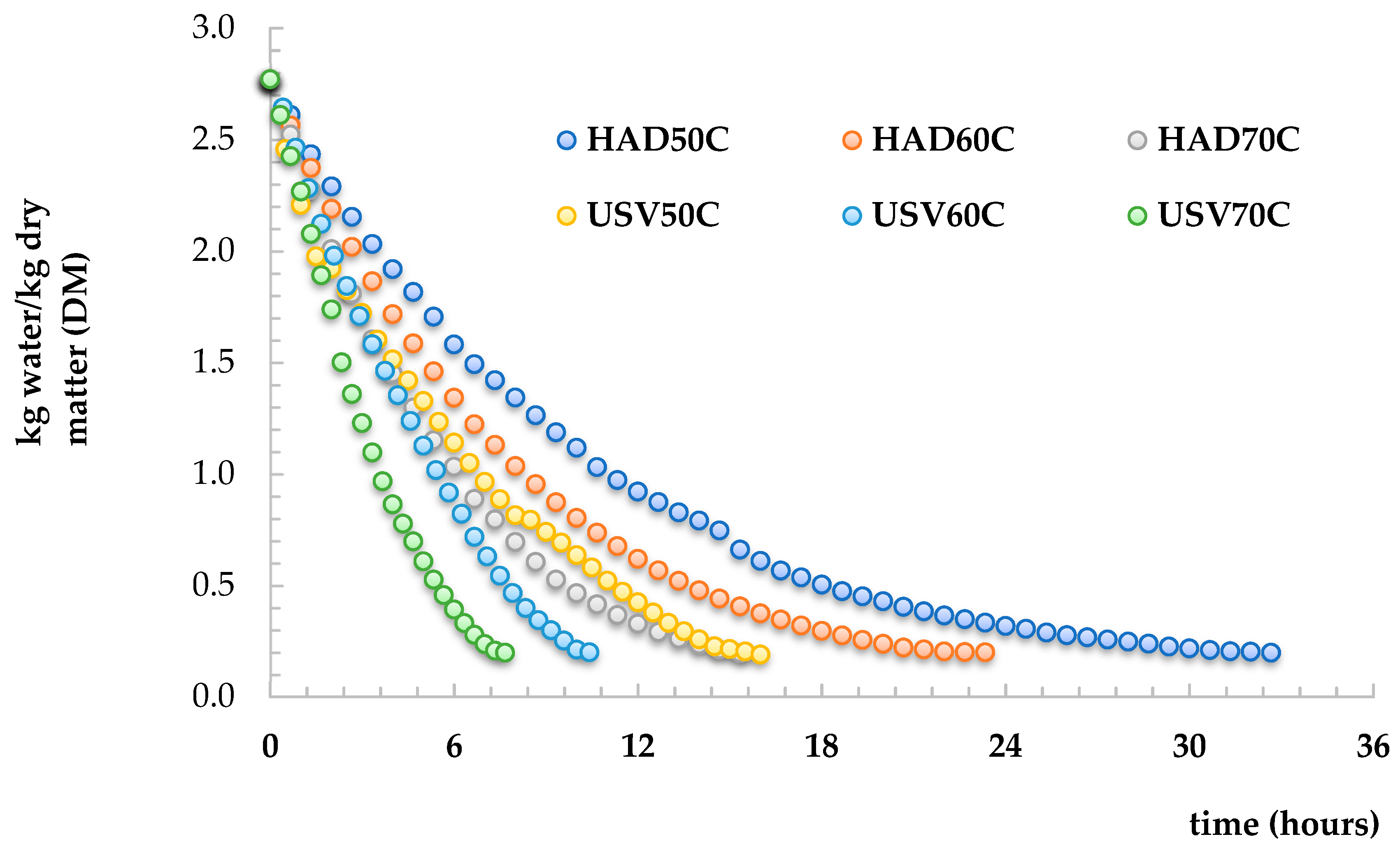
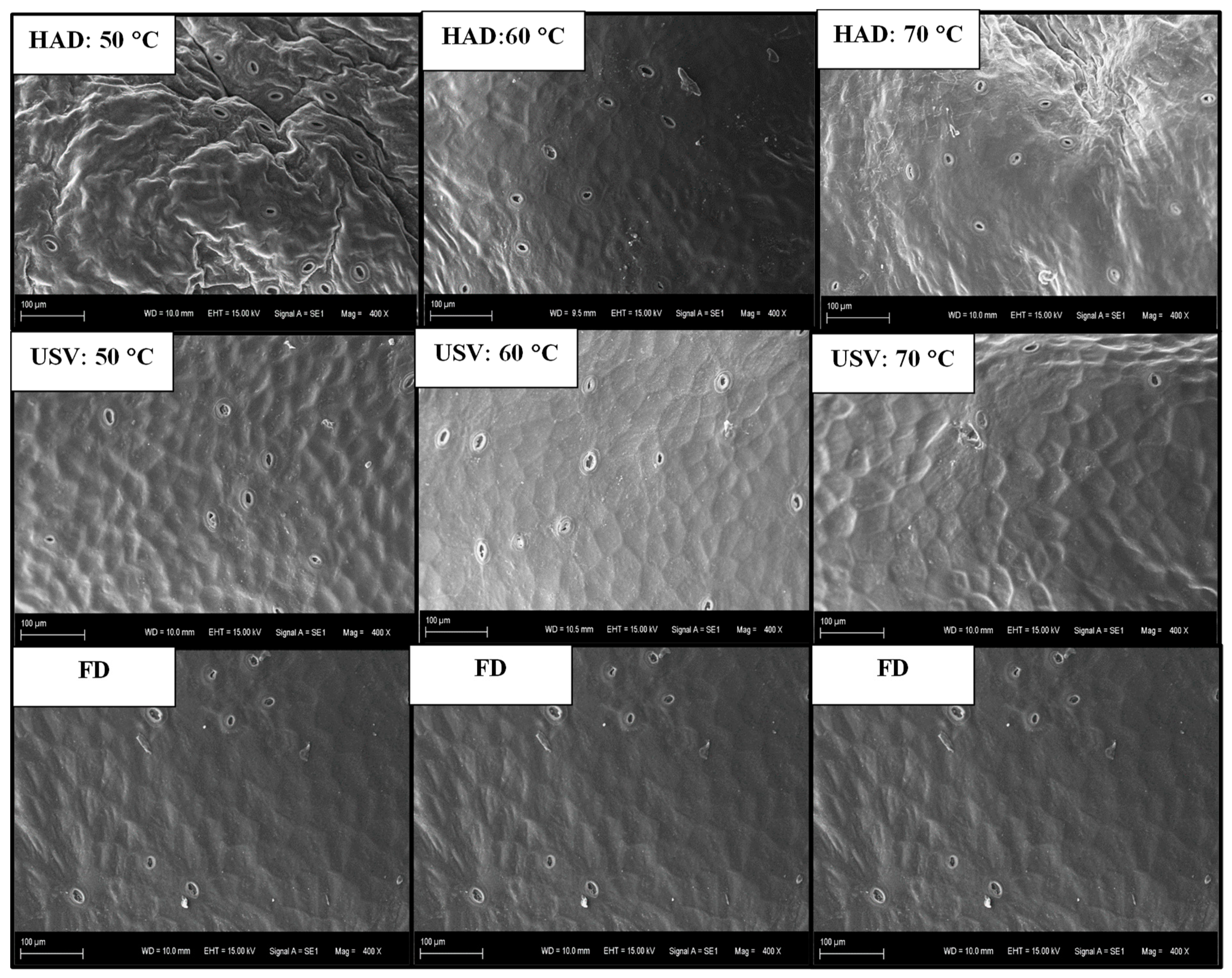
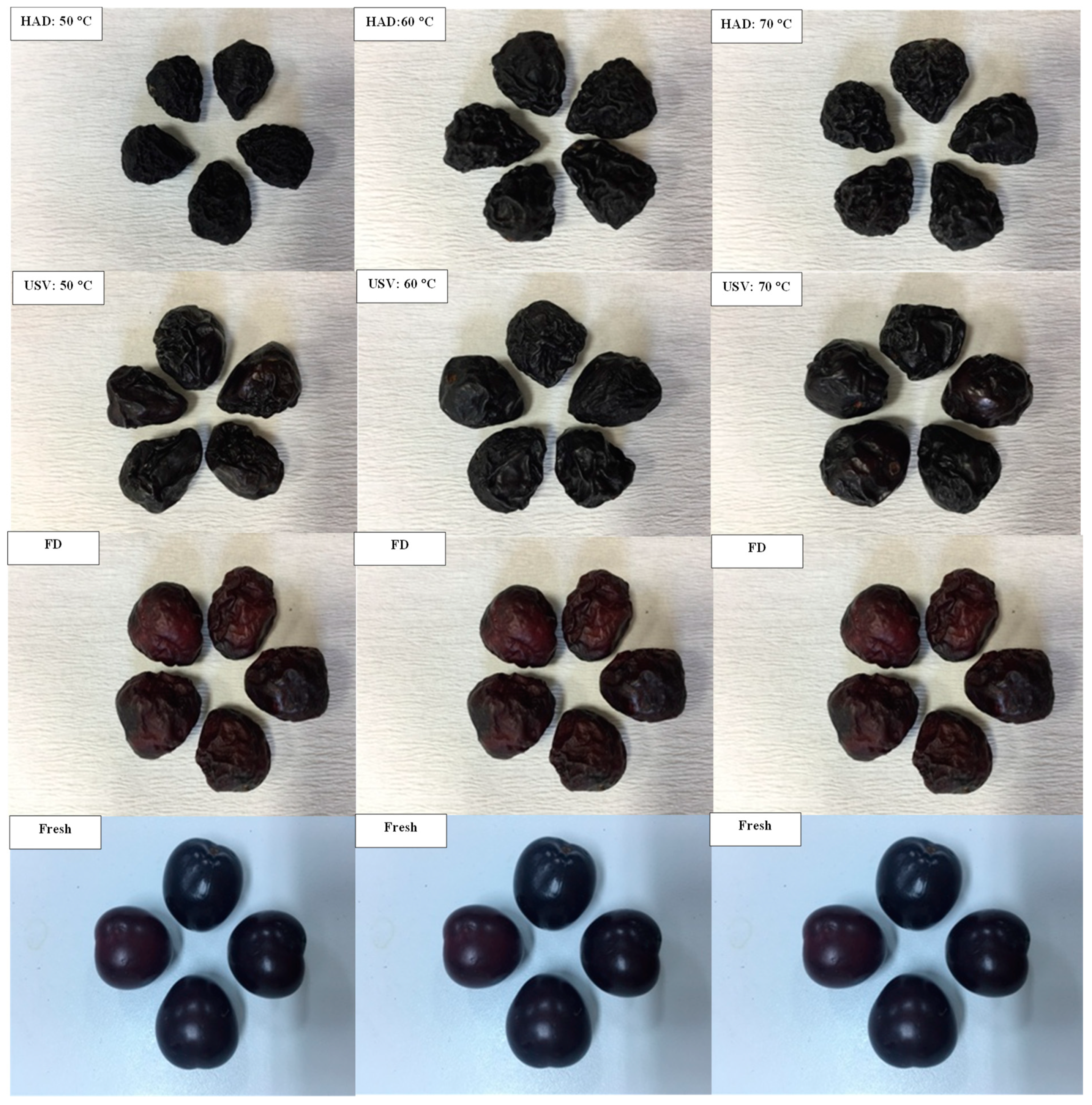
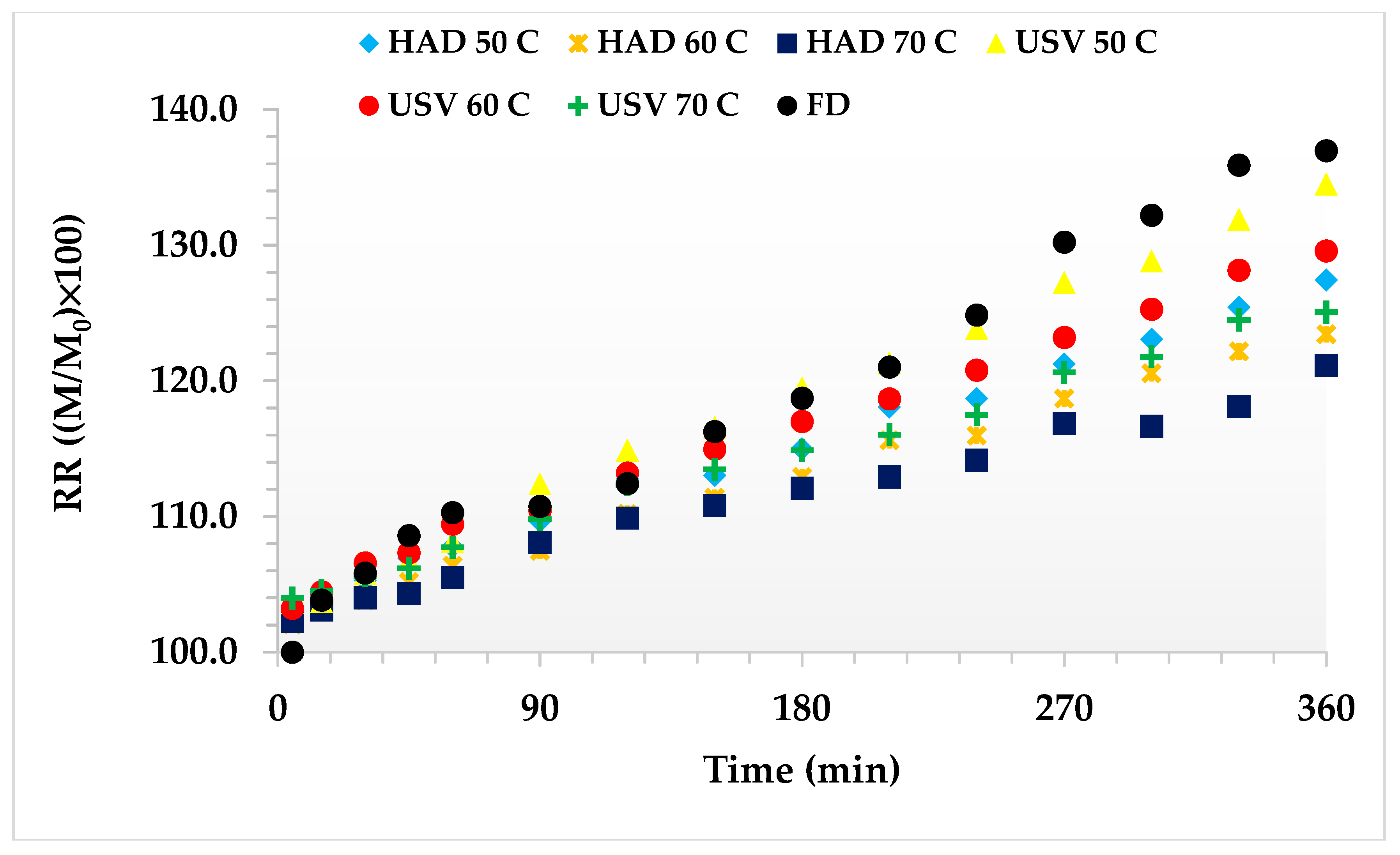
This study aimed to investigate the effect of different drying methods and drying temperature on the drying kinetics, total bioactive compounds, phenolic profile, microstructural properties, rehydration kinetics, and color change of cherry laurel fruit. For this aim, hot air drying (HAD), ultrasound-assisted vacuum drying (USV), and freeze-drying (FD) were conducted on drying of cherry laurel. HAD and USV were conducted at 50, 60, and 70 °C. Drying times of the samples were 1980, 1220, and 770 min for HAD at 50, 60 and 70 °C, and 950, 615, and 445 min at 50, 60, and 70 °C, respectively, for USV. The total bioactive compound was significantly affected by both drying methods and temperature (p < 0.05). FD exhibited the highest total phenolic (TPC), total flavonoid (TFC), total anthocyanin (TAC), and antioxidant capacity value USV showed a higher amount of bioactive compounds than those of HAD at the same drying temperature. The content of total bioactive compounds significantly increased as the temperature increased for both HAD and USV (p < 0.05). The chlorogenic acid was identified as a major phenolic, and its amount significantly depended on drying methods (p < 0.05). SEM images described the surface characteristic of dried samples. HAD dried products showed higher shrinkage compared to FD and USV. All drying methods significantly affected the total color difference (ΔE) values (p < 0.05). This study proposed that USV could be as an alternative method to HAD due to higher bioactive compounds retention and rehydration ratio, shorter drying time, less color change, and shrinkage formation.
Keywords: ultrasound-assisted vacuum drying; microstructure; rehydration; SEM ultrasound-assisted vacuum drying; microstructure; rehydration; SEM