Study on the Physicochemical Properties of Biomass-Assisted Enhanced Coal Extraction Process


Abstract
1. Introduction
2. Materials and Methods
2.1. Materials
2.2. HPC Preparation and Evaluation
2.3. Characterization of the Extracts
2.4. Parameter Fitting Method
3. Results and Discussion
3.1. Sample Characterization
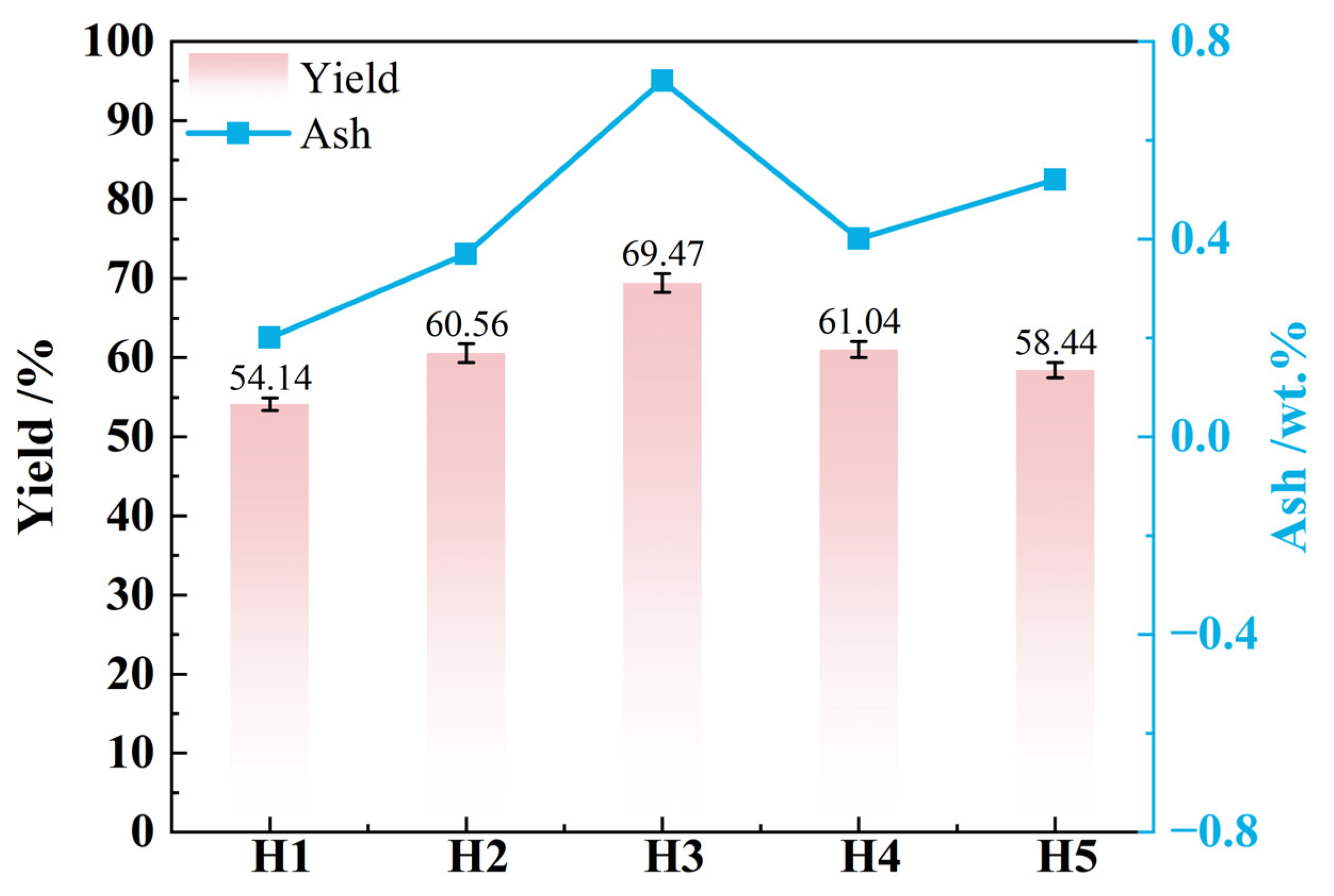
3.1.1. Extraction Yield Analysis
3.1.2. Proximate and Ultimate Analysis
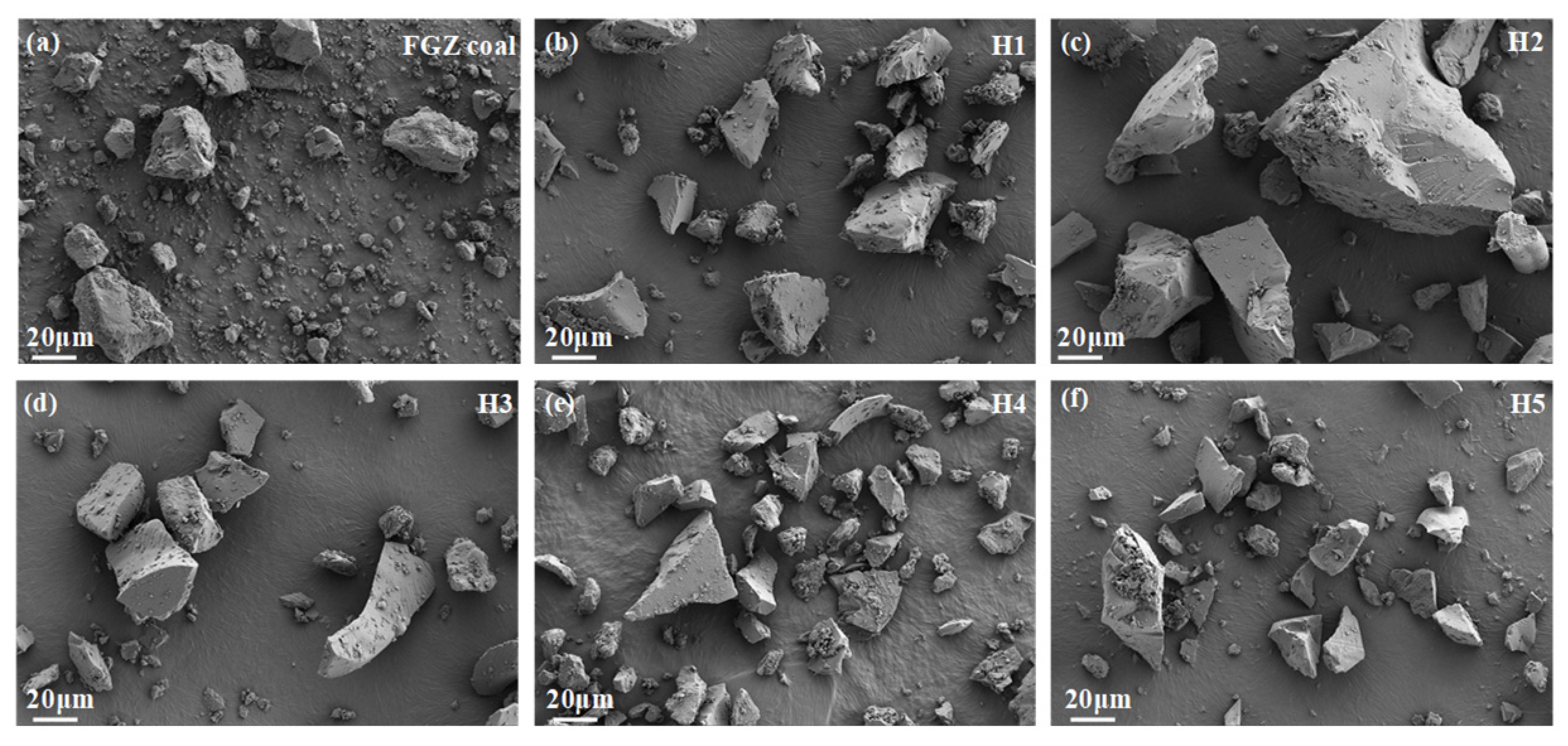
3.1.3. SEM Analysis
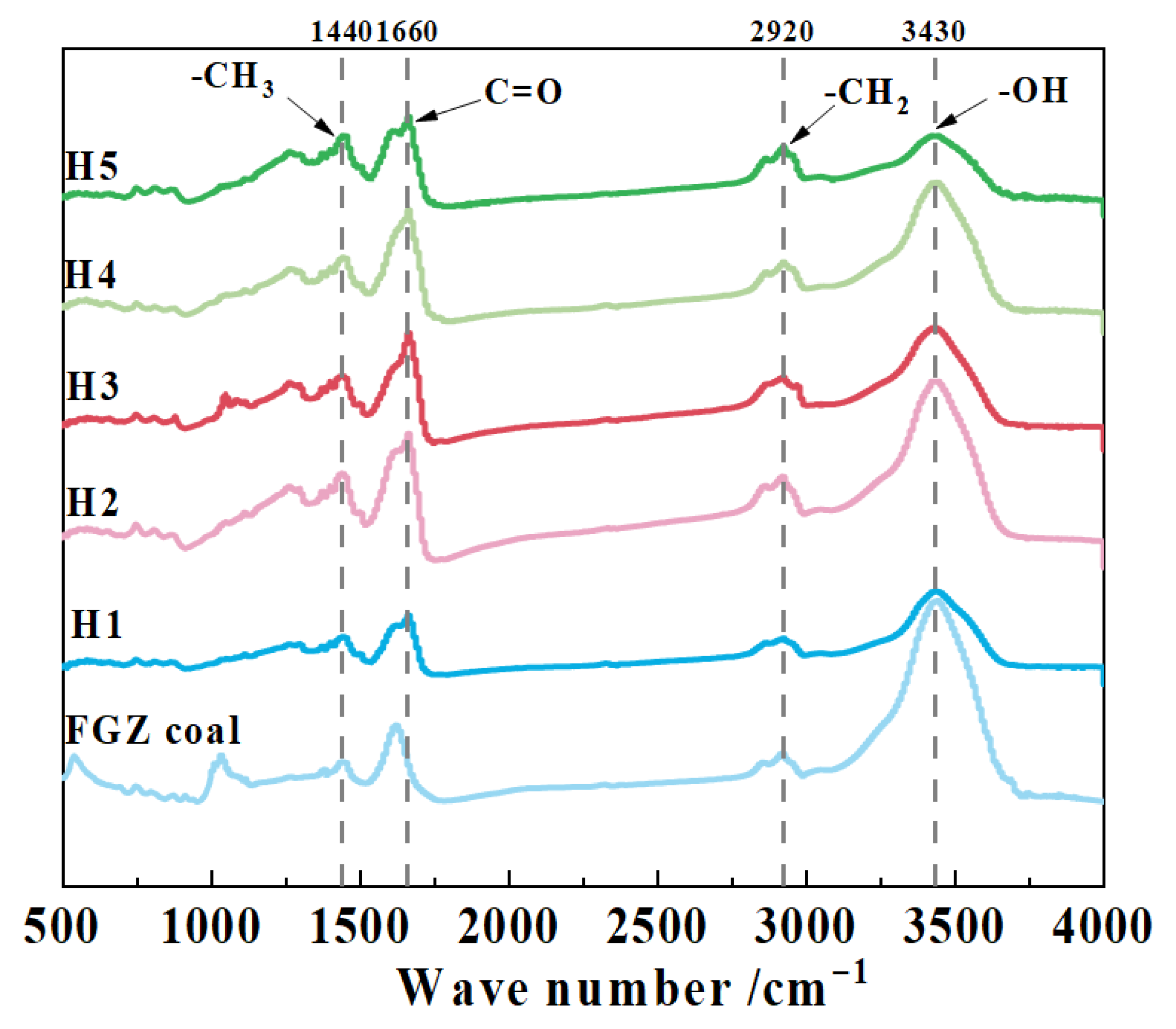
3.1.4. FTIR Analysis
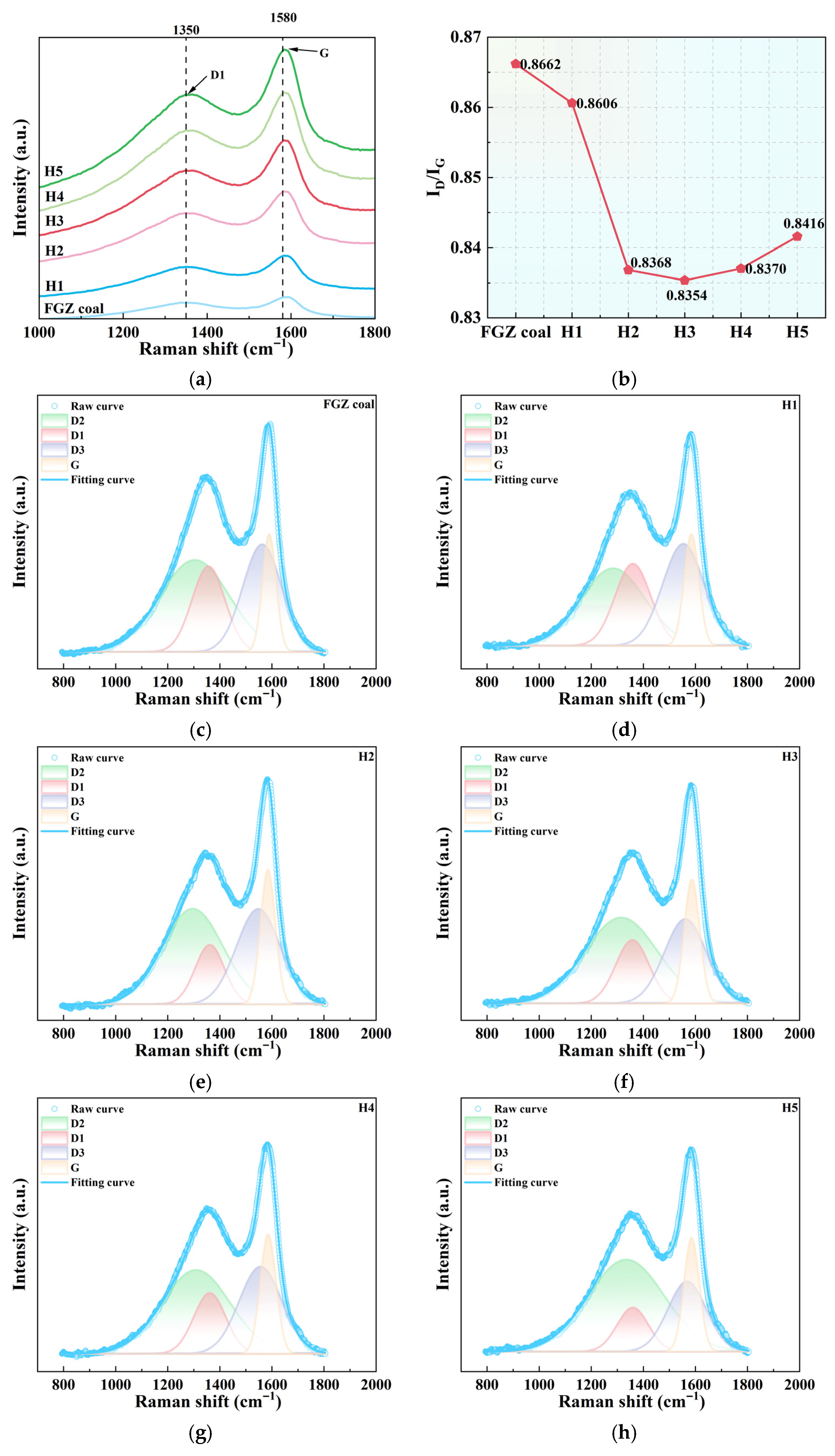
3.1.5. Raman Analysis
3.1.6. XRD Analysis
3.1.7. XPS Analysis
3.2. Extraction Mechanism
3.3. Application Industries
4. Conclusions
- The addition of biomass significantly enhanced the extraction yield of FGZ coal, with an optimum yield of 69.47% achieved at 35% biomass addition—an increase of approximately 28.32% compared to coal-only extraction.
- Biomass co-extraction effectively reduced the ash content of the resulting HPC to below 1%, demonstrating efficient mineral separation during the solvent extraction process.
- SEM analysis indicated that the dense, lumpy structure with rough surface and adhered mineral impurities in raw FGZ coal was effectively modified after treatment. The resulting HPC exhibited a smoother surface, and a more uniform particle size.
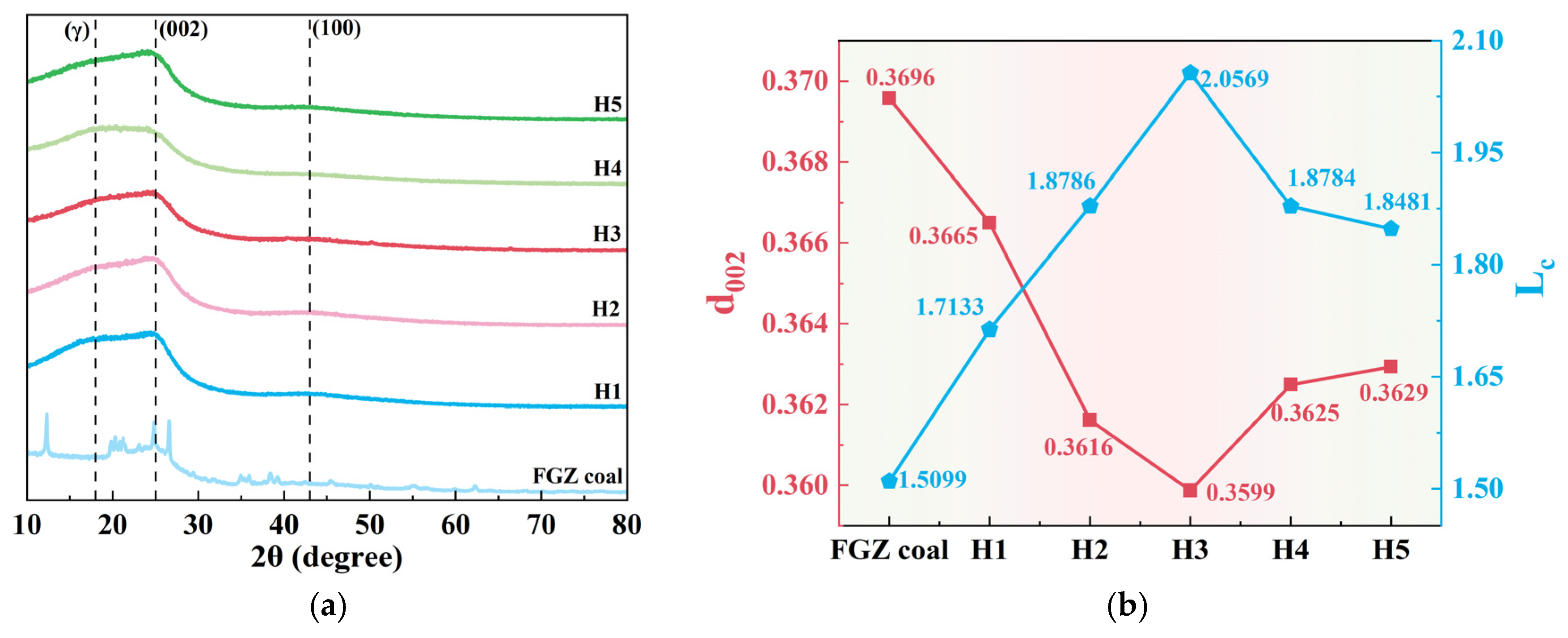
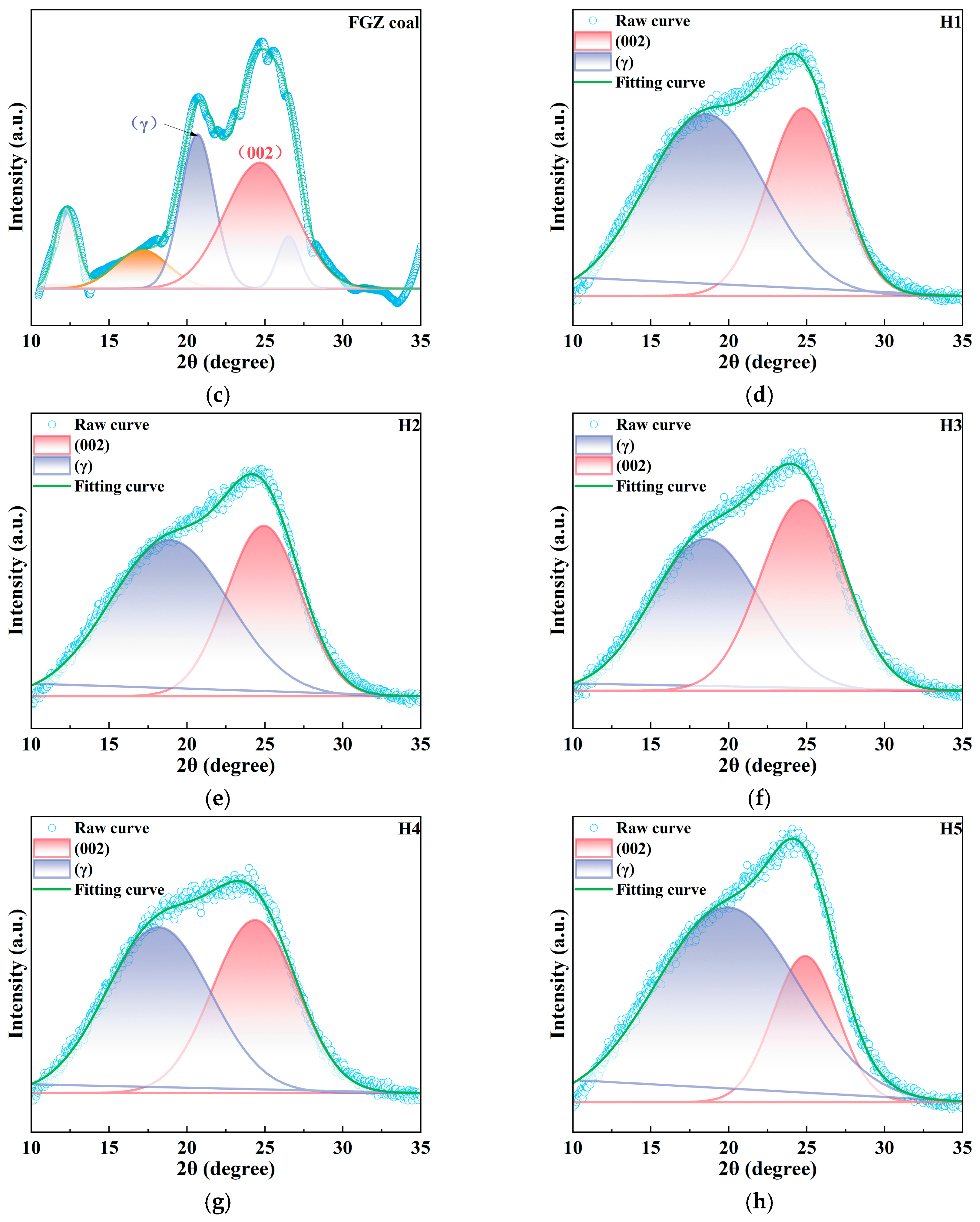
- Raman and XRD analyses revealed that biomass addition promoted structural ordering in the extracted products, with the lowest ID/IG ratio (0.8345) and the highest microcrystalline stacking height (Lc = 2.0569 nm) observed at 35% biomass addition.
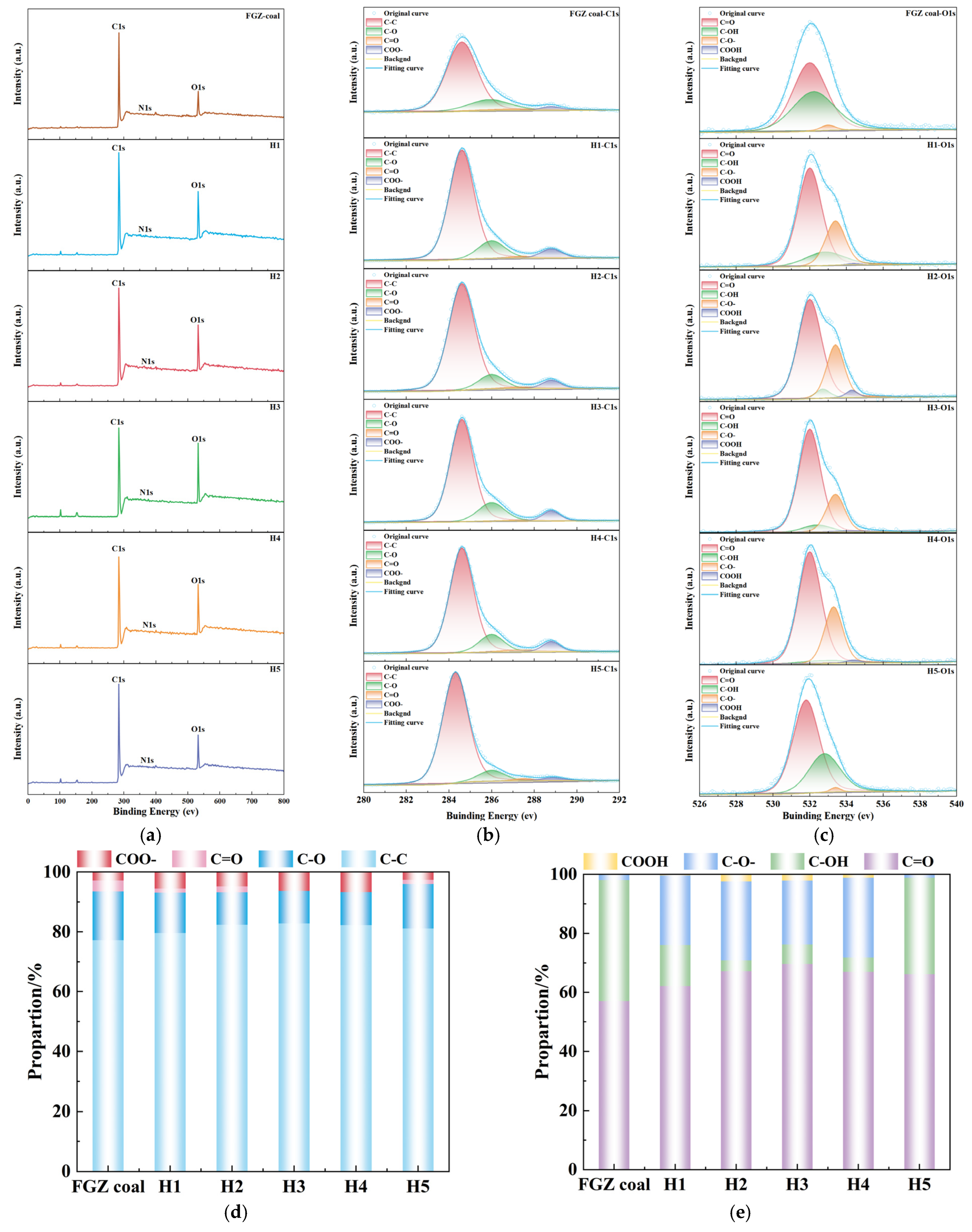
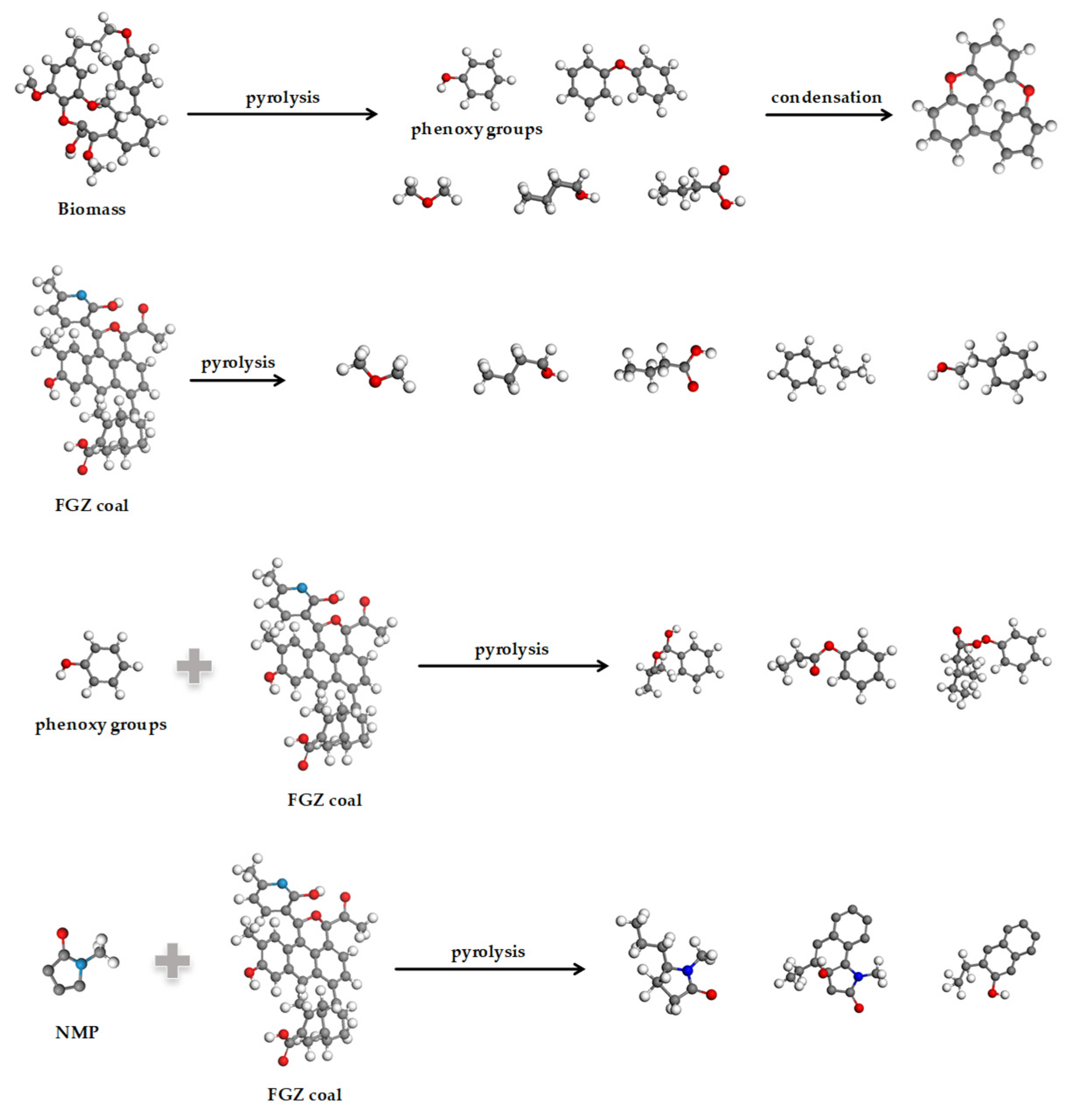
- FTIR and XPS analyses confirmed the retention of aliphatic and oxygen-containing functional groups in the extracts, supporting the proposed synergistic mechanism involving hydrogen-bond interactions and solvent penetration enhancement.
- The findings suggest that biomass-assisted solvothermal extraction is a promising pathway for producing high-quality, low-ash HPC with potential applications in carbon materials, metallurgy, and clean energy systems.
Author Contributions
Funding
Data Availability Statement
Conflicts of Interest
Abbreviations
| FGZ | Fangezhuang Coal |
| FTIR | Fourier transform infrared spectroscopy |
| Raman | Raman spectroscopy |
| XRD | X-ray diffraction |
| XPS | X-ray photoelectron spectroscopy |
References
- Chen, J.; Yang, S.; Qian, Y. A novel path for carbon-rich resource utilization with lower emission and higher efficiency: An integrated process of coal gasification and coking to methanol production. Energy 2019, 177, 304–318. [Google Scholar] [CrossRef] [Scilit]
- Li, Z.; Zhu, S.; Ouyang, Z.; Zhu, Z.; Lyu, Q. Progress in Caking Mechanism and Regulation Technologies of Weakly Caking Coal. Energies 2025, 18, 4178. [Google Scholar] [CrossRef] [Scilit]
- Rahman, M.; Samanta, A.; Gupta, R. Production and characterization of ash-free coal from low-rank Canadian coal by solvent extraction. Fuel Process. Technol. 2013, 115, 88–98. [Google Scholar] [CrossRef] [Scilit]
- Chandaliya, V.; Biswas, P.; Dash, P.; Sharma, D. Producing low-ash coal by microwave and ultrasonication pretreatment followed by solvent extraction of coal. Fuel 2018, 212, 422–430. [Google Scholar] [CrossRef] [Scilit]
- Liu, M.; Tao, Y.; Yang, Y.; Lei, Z. Structural Characterization of HyperCoal Extracts from the Depolymerization of Shengli Lignite Using NaOH/Methanol. Processes 2025, 13, 1821. [Google Scholar] [CrossRef] [Scilit]
- Sönmez, Ö.; Yıldız, Ö.; Çakır, M.Ö.; Gözmen, B.; Giray, E.S. Influence of the addition of various ionic liquids on coal extraction with NMP. Fuel 2018, 212, 12–18. [Google Scholar] [CrossRef] [Scilit]
- White, C.; Rohar, P.; Veloski, G.; Anderson, R. Practical notes on the use of N-Methyl-2-pyrrolidinone as a solvent for extraction of coal and coal-related materials. Energy Fuels 1997, 11, 1105–1106. [Google Scholar] [CrossRef] [Scilit]
- Wang, J.; Li, C.; Sakanishi, K.; Nakazato, T.; Tao, H.; Takanohashi, T.; Takarada, T.; Saito, I. Investigation of the remaining major and trace elements in clean coal generated by organic solvent extraction. Fuel 2005, 84, 1487–1493. [Google Scholar] [CrossRef] [Scilit]
- Okuyama, N.; Komatsu, N.; Shigehisa, T.; Kaneko, T.; Tsuruya, S. Hyper-coal process to produce the ash-free coal. Fuel Process. Technol. 2004, 85, 947–967. [Google Scholar] [CrossRef] [Scilit]
- Yang, J.; Nakabayashi, K.; Miyawaki, J.; Yoon, S.-H. Preparation of isotropic pitch-based carbon fiber using hyper coal through co-carbonation with ethylene bottom oil. J. Ind. Eng. Chem. 2016, 34, 397–404. [Google Scholar] [CrossRef] [Scilit]
- Okuma, S.; Moriyasu, Y.; Inoue, T.; Shishido, T.; Hamaguchi, M.; Toyoda, M. Discussion of the factors affecting the Electric double-layer capacitors characteristics of Hyper coal-derived carbon powder. Carbon Rep. 2025, 050103. [Google Scholar] [CrossRef] [Scilit]
- Zhao, J.; Mangi, H.N.; Zhang, Z.; Chi, R.a.; Zhang, H.; Xian, M.; Liu, H.; Zuo, H.; Wang, G.; Xu, Z. The structural characteristics and gasification performance of cokes of modified coal extracted from the mixture of low-rank coal and biomass. Energy 2022, 258, 124864. [Google Scholar] [CrossRef] [Scilit]
- Li, X.; Zhu, X.-q.; Okuda, K.; Zhang, Z.; Ashida, R.; Yao, H.; Miura, K. Preparation of carbon fibers from low-molecular-weight compounds obtained from low-rank coal and biomass by solvent extraction. New Carbon Mater. 2017, 32, 41–47. [Google Scholar] [CrossRef] [Scilit]
- Shui, H.; Shan, C.; Cai, Z.; Wang, Z.; Lei, Z.; Ren, S.; Pan, C.; Li, H. Co-liquefaction behavior of a sub-bituminous coal and sawdust. Energy 2011, 36, 6645–6650. [Google Scholar] [CrossRef] [Scilit]
- Zhao, J.; Zuo, H.-b.; Wang, J.-s.; Xue, Q.-g. The mechanism and products for co-thermal extraction of biomass and low-rank coal with NMP. Int. J. Miner. Metall. Mater. 2019, 26, 1512–1522. [Google Scholar] [CrossRef] [Scilit]
- Kang, H.; Wang, J.; Chen, F.; Rong, T.; Yu, Y.; Ding, W.; Zuo, H. Investigation on the mechanism of solvothermal extraction of coals by macromolecular models. Fuel 2024, 355, 129547. [Google Scholar] [CrossRef] [Scilit]
- Han, C.; Wei, G.; Zhu, R.; Li, C.; Wang, R. Biochar-based direct reduced iron production for short-process steelmaking: Current research status and future prospects. Int. J. Hydrogen Energy 2025, 157, 150524. [Google Scholar] [CrossRef] [Scilit]
- Liu, Y.; Zhi, J.; Lyu, Z.; Gu, C.; Diao, W.; Qu, Z.; Bao, Y. Structure and transport behavior of the CaO-SiO2-Al2O3-La2O3 system: Insights from molecular dynamics simulations. Ceram. Int. 2025, 51, 38855–38863. [Google Scholar] [CrossRef] [Scilit]
- Fahmy, T.Y.; Fahmy, Y.; Mobarak, F.; El-Sakhawy, M.; Abou-Zeid, R.E. Biomass pyrolysis: Past, present, and future. Environ. Dev. Sustain. 2020, 22, 17–32. [Google Scholar] [CrossRef] [Scilit]
- Fabozzi, A.; Cerciello, F.; Senneca, O. Direct reduction of iron ore using biomass biochar: Reduction rate, microstructural and morphological analysis. Fuel 2025, 383, 133976. [Google Scholar] [CrossRef] [Scilit]
- Coppola, A.; Scala, F. Chemical looping for combustion of solid biomass: A review. Energy Fuels 2021, 35, 19248–19265. [Google Scholar] [CrossRef] [Scilit]
- Periyasamy, M.; Radhakrishnan, L.; Sengupta, U.; Sain, S.; Pichandi, C.; Mukhopadhyay, S.; Kar, A. Phase transformation assisted reduction roasting of low-grade iron ore via industrial biomass as a reductant. Biomass Convers. Biorefinery 2025, 15, 14603–14617. [Google Scholar] [CrossRef] [Scilit]
- Top, S.; Altiner, M.; Kursunoglu, S. Separation of Mn and Fe from a Manganiferous Iron Ore Using Horse Dung as Reductant: A Zero Waste Approach. JOM 2022, 74, 474–483. [Google Scholar] [CrossRef] [Scilit]
- Top, S.; Altiner, M.; Vapur, H.; Kursunoglu, S.; Stopic, S. A Novel Biomass-Derived Reductant for Nitric Acid Dissolution of Manganiferous Iron Ore: Comparative Assessment of Organic Reductants. Minerals 2026, 16, 47. [Google Scholar] [CrossRef] [Scilit]
- ASTM D3172–13; Standard Practice for Proximate Analysis of Coal and Coke. ASTM International: West Conshohocken, PA, USA, 2021.
- ASTM D3176–15; Standard Practice for Ultimate Analysis of Coal and Coke. ASTM International: West Conshohocken, PA, USA, 2016.
- Zhang, J.; Fu, H.; Liu, Y.; Dang, H.; Ye, L.; Conejo, A.N.; Xu, R. Review on biomass metallurgy: Pretreatment technology, metallurgical mechanism and process design. Int. J. Miner. Metall. Mater. 2022, 29, 1133–1149. [Google Scholar] [CrossRef] [Scilit]
- Zhang, J.; Zhang, K.; Huang, J.; Feng, Y.; Yellezuome, D.; Zhao, R.; Chen, T.; Wu, J. Synergistic effect and volatile emission characteristics during co-combustion of biomass and low-rank coal. Energy 2024, 289, 130015. [Google Scholar] [CrossRef] [Scilit]
- Dang, H.; Xu, R.; Zhang, J.; Wang, M.; Ye, L.; Jia, G. Removal of oxygen-containing functional groups during hydrothermal carbonization of biomass: Experimental and DFT study. Energy 2023, 276, 127436. [Google Scholar] [CrossRef] [Scilit]
- Tang, J.; Wang, Z.; Xue, Q.; Wang, G.; Wang, G.; Wang, J. From Sweet Potato Byproducts to Energy Storage: Unveiling the Potential of Foaming Syrup as a High-Performance Hard Carbon Anode for Sodium-Ion Batteries. ACS Omega 2025, 10, 34266–34275. [Google Scholar] [CrossRef] [Scilit]
- Lin, S.; Liu, Z.; Zhao, E.; Qian, J.; Li, X.; Zhang, Q.; Ali, M. A study on the FTIR spectra of pre-and post-explosion coal dust to evaluate the effect of functional groups on dust explosion. Process Saf. Environ. Prot. 2019, 130, 48–56. [Google Scholar] [CrossRef] [Scilit]
- Chen, Z.; Gu, Y.; Hu, L.; Xiao, W.; Mao, X.; Zhu, H.; Wang, D. Synthesis of nanostructured graphite via molten salt reduction of CO2 and SO2 at a relatively low temperature. J. Mater. Chem. A 2017, 5, 20603–20607. [Google Scholar] [CrossRef] [Scilit]
- Yu, J.; Guo, Q.; Ding, L.; Gong, Y.; Yu, G. Studying effects of solid structure evolution on gasification reactivity of coal chars by in-situ Raman spectroscopy. Fuel 2020, 270, 117603. [Google Scholar] [CrossRef] [Scilit]
- Moura, T.A.; Neves, W.Q.; Alencar, R.S.; Kim, Y.A.; Endo, M.; Vasconcelos, T.L.; Costa, D.G.; Candiotto, G.; Capaz, R.B.; Araujo, P.T. Resonance Raman spectroscopy characterization of linear carbon chains encapsulated by multi-walled carbon nanotubes. Carbon 2023, 212, 118123. [Google Scholar] [CrossRef] [Scilit]
- Finnie, P.; Ouyang, J.; Fagan, J.A. Broadband full-spectrum Raman excitation mapping reveals intricate optoelectronic–vibrational resonance structure of chirality-pure single-walled carbon nanotubes. ACS Nano 2023, 17, 7285–7295. [Google Scholar] [CrossRef] [Scilit]
- Jiang, J.; Zhang, S.; Longhurst, P.; Yang, W.; Zheng, S. Molecular structure characterization of bituminous coal in Northern China via XRD, Raman and FTIR spectroscopy. Spectrochim. Acta Part A Mol. Biomol. Spectrosc. 2021, 255, 119724. [Google Scholar] [CrossRef] [Scilit] [PubMed]
- Zhang, X.; Zhang, S.; Li, P.; Ding, Z.; Hao, Z. Investigation on solubility of multicomponents from semi-anthracite coal and its effect on coal structure by Fourier transform infrared spectroscopy and X-ray diffraction. Fuel Process. Technol. 2018, 174, 123–131. [Google Scholar] [CrossRef] [Scilit]
- Vanitha, M.; Camellia, P.; Balasubramanian, N. Augmentation of graphite purity from mineral resources and enhancing% graphitization using microwave irradiation: XRD and Raman studies. Diam. Relat. Mater. 2018, 88, 129–136. [Google Scholar] [CrossRef] [Scilit]
- Yang, J.; Nakabayashi, K.; Miyawaki, J.; Yoon, S.-H. Preparation of pitch based carbon fibers using Hyper-coal as a raw material. Carbon 2016, 106, 28–36. [Google Scholar] [CrossRef] [Scilit]
- Liu, Y.; Cao, W.-D.; Fan, X.; Hou, R.-R.; Bai, X.; Zhang, X.-Y.; Li, Y.; Zhao, G.-M.; Liang, P. Porous carbon prepared by thermal dissolution of coal and biomass for high-performance supercapacitors. Fuel 2024, 369, 131677. [Google Scholar] [CrossRef] [Scilit]
- Zhao, J.; Zuo, H.; Wang, G.; Wang, J.; Xue, Q. Improving the coke property through adding HPC extracted from the mixture of low-rank coal and biomass. Energy Fuels 2019, 34, 1802–1810. [Google Scholar] [CrossRef] [Scilit]
- Wang, Y.; Zuo, H.; Bai, K.; Zhao, J.; Chen, J. Characterization of the Hot-Pressed Coal Briquettes Prepared with the HyperCoal. In Energy Technology 2020: Recycling, Carbon Dioxide Management, and Other Technologies; Springer: Berlin/Heidelberg, Germany, 2020; pp. 57–67. [Google Scholar] [CrossRef] [Scilit]
- Yu, Y.; Zuo, H.; Wang, Y.; Kang, H.; Guo, H.; Rong, T.; Wang, J. Thermal extraction of coal and derivatives to prepare hot-pressed coal briquette for COREX application. Fuel 2024, 357, 129773. [Google Scholar] [CrossRef] [Scilit]
- Dudek, M.; Tomczyk, P.; Socha, R.; Hamaguchi, M. Use of ash-free “Hyper-coal” as a fuel for a direct carbon fuel cell with solid oxide electrolyte. Int. J. Hydrogen Energy 2014, 39, 12386–12394. [Google Scholar] [CrossRef] [Scilit]



| Sample | Proximate Analysis (db, wt.%) | Ultimate Analysis (daf, wt.%) | H/C | |||||||
|---|---|---|---|---|---|---|---|---|---|---|
| A | V | FC | C | H | O | N | S | |||
| 1 | FGZ | 9.99 | 27.6 | 61.54 | 74.86 | 4.32 | 7.79 | 1.16 | 0.53 | 0.69 |
| 2 | Biomass | 16.28 | 30.11 | 50.11 | 58.85 | 2.88 | 20.06 | 1.11 | 0.00 | 0.59 |
| Sample | Solid/g | Liquid/mL | Temperature/°C | |
|---|---|---|---|---|
| FGZ | Biomass | NMP | ||
| H1 (FGZ/biomass = 100/0) | 30 | 0 | 1500 | 350 |
| H2 (FGZ/biomass = 85/15) | 25.5 | 4.5 | ||
| H3 (FGZ/biomass = 75/25) | 22.5 | 7.5 | ||
| H4 (FGZ/biomass = 65/35) | 19.5 | 10.5 | ||
| H5 (FGZ/biomass = 55/45) | 16.5 | 13.5 | ||
| Sample | Proximate Analysis (db, wt.%) | Ultimate Analysis (daf, wt.%) | H/C | ||||||
|---|---|---|---|---|---|---|---|---|---|
| A | V | FC | C | H | O | N | S | ||
| H1 | 0.20 | 43.68 | 54.53 | 81.62 | 5.52 | 7.89 | 3.11 | 0.52 | 0.81 |
| H2 | 0.37 | 40.90 | 57.71 | 80.67 | 5.28 | 8.09 | 3.15 | 0.48 | 0.79 |
| H3 | 0.72 | 44.52 | 52.75 | 78.63 | 5.47 | 9.07 | 3.94 | 0.57 | 0.84 |
| H4 | 0.40 | 49.53 | 47.33 | 77.22 | 5.57 | 10.21 | 4.34 | 0.31 | 0.87 |
| H5 | 0.52 | 42.52 | 56.17 | 81.03 | 5.37 | 8.17 | 2.85 | 0.64 | 0.80 |
| Sample | 2θ(002)/° | FWHM/° | Half-Angle/° | d002/nm | Lc/nm |
|---|---|---|---|---|---|
| FGZ coal | 24.0642 | 5.32 | 12.0321 | 0.3696 | 1.5099 |
| H1 | 24.2658 | 4.69 | 12.1329 | 0.3665 | 1.7133 |
| H2 | 24.5982 | 4.28 | 12.2991 | 0.3616 | 1.8786 |
| H3 | 24.7191 | 3.91 | 12.3596 | 0.3599 | 2.0569 |
| H4 | 24.5378 | 4.23 | 12.2689 | 0.3625 | 1.9006 |
| H5 | 24.5076 | 4.35 | 12.2538 | 0.3629 | 1.8481 |
Disclaimer/Publisher’s Note: The statements, opinions and data contained in all publications are solely those of the individual author(s) and contributor(s) and not of MDPI and/or the editor(s). MDPI and/or the editor(s) disclaim responsibility for any injury to people or property resulting from any ideas, methods, instructions or products referred to in the content. |
© 2026 by the authors. Licensee MDPI, Basel, Switzerland. This article is an open access article distributed under the terms and conditions of the Creative Commons Attribution (CC BY) license.
Share and Cite
Kang, Y.; Zhao, H.; Yu, Y.; Zuo, H. Study on the Physicochemical Properties of Biomass-Assisted Enhanced Coal Extraction Process. Processes 2026, 14, 404. https://doi.org/10.3390/pr14030404
Kang Y, Zhao H, Yu Y, Zuo H. Study on the Physicochemical Properties of Biomass-Assisted Enhanced Coal Extraction Process. Processes. 2026; 14(3):404. https://doi.org/10.3390/pr14030404
Chicago/Turabian StyleKang, Yue, Hailan Zhao, Yuanhao Yu, and Haibin Zuo. 2026. "Study on the Physicochemical Properties of Biomass-Assisted Enhanced Coal Extraction Process" Processes 14, no. 3: 404. https://doi.org/10.3390/pr14030404
APA StyleKang, Y., Zhao, H., Yu, Y., & Zuo, H. (2026). Study on the Physicochemical Properties of Biomass-Assisted Enhanced Coal Extraction Process. Processes, 14(3), 404. https://doi.org/10.3390/pr14030404