Article

Hydraulic Performance of Sodium Carboxymethyl Cellulose-Amended Bentonite in Vertical Cutoff Walls for Containing Acid Mine Drainage


1
CCTEG Xi’an Research Institute (Group) Co., Ltd., Xi’an 710077, China
2
State Key Laboratory of Coal Mine Disaster Prevention and Control, Xi’an 710077, China
3
Shaanxi Key Laboratory of Prevention and Control Technology for Coal Mine Water Hazard, Xi’an 710077, China
4
Department of Environmental and Municipal Engineering, Xi’an University of Architecture and Technology, Xi’an 710055, China
*
Author to whom correspondence should be addressed.
Processes 2025, 13(12), 3866; https://doi.org/10.3390/pr13123866 (registering DOI)
Submission received: 5 November 2025 / Revised: 25 November 2025 / Accepted: 28 November 2025 / Published: 30 November 2025
(This article belongs to the Special Issue Hydraulic Barriers in Environmental Containment Systems)

Abstract

Sodium carboxymethyl cellulose (Na-CMC) was used to improve the chemical compatibility of natural sodium bentonite (NaB) used in vertical cutoff walls for containing acid mine drainage (AMD). Ab Na-CMC content from 2% to 15% was examined to determine the minimum Na-CMC content of sodium carboxymethyl cellulose-amended bentonite (CMCAB) needed to yield a low hydraulic conductivity (<10−9 m/s). Hydraulic conductivity (k), swell index, viscosity, XRD spectra, FT-IR spectra, and microstructures were measured for CMCAB to assess the hydraulic performance of CMCAB for containing AMD and to elucidate the mechanism of reduced k due to the addition of Na-CMC. The results show that the k of CMCAB decreased with the increase in Na-CMC content and stress. A 10% or higher content of Na-CMC is required to reduce the k of NaB down to 10−9 m/s. Na-CMC did not impact the interlayer structure of NaB but increased the viscosity of CMCAB. CMCAB with increased viscosity retained the Na-CMC within the pore spaces, narrowing the flow paths for AMD and yielding low k.

1. Introduction

Mining and processing of non-ferrous metals generate substantial amounts of mine wastes, such as waste rocks and tailing sands. Most of the mining wastes have been disposed of in waste disposal facilities, whereas some of the historical disposal facilities were not well-lined. Mine wastes from the non-ferrous metal industry generally contain sulfides (e.g., pyrite), which react with oxygen and water and produce acid mine drainage (AMD) in the disposal facilities [1]. AMD poses risks to the local environment due to its low pH, high ionic concentrations, and high contaminant (e.g., Cu2+, Pb2+, Fe2+, and SO42−) concentrations [2,3]. Remediations are required for the disposal facilities that are releasing AMD into the environment.
Vertical cutoff walls have been widely applied for the remediation of waste disposal facilities, such as municipal solid waste landfills, hazardous waste landfills, and industrial solid waste landfills [4,5,6,7]. Sodium bentonite (NaB) is a common material used in vertical cutoff walls to build hydraulic barriers around the facilities and to restrain the leakage of contaminants to the surrounding environment. The primary reason for employing NaB in vertical cutoff walls is its high swelling potential when hydrated with water, thereby forming a barrier with extremely low k. However, the swelling potential of NaB can be reduced by the contaminants in the leachates to be contained, resulting in the increase in k by up to five orders of magnitude [8,9,10,11,12,13,14,15]. Thus, NaB is not likely to be able to contain AMD [16].
Synthetic polymers have been proposed to improve the chemical compatibility of NaB with leachates having high ionic concentrations [17,18,19]. However, many of the used polymers are proprietary to the geosynthetic clay liner manufacturers and cannot be applied to vertical cutoff walls. Thus, examining the application of commercially available polymers in vertical cutoff walls will aid in overcoming the challenge of elevated k of vertical cutoff walls in containing AMD.
Sodium carboxymethyl cellulose (Na-CMC) has been reported to reduce the k of NaB by up to 10 times when permeated with 0.5 mol/L CaCl2 solutions [20], 10–15 mM CuSO4 solutions [21], and 1–500 mM lead-zinc mixed solutions [22]. However, it remains unclear whether the Na-CMC-amended NaB (CMCAB) can maintain low k in AMD and what percentage of Na-CMC is needed. In addition, elucidating the mechanism by which the k of NaB is reduced due to polymer addition helps advance the application of polymer-modified bentonite in vertical cutoff walls.
In this study, Na-CMC was used to improve the chemical compatibility of NaB for the applications of vertical cutoff walls in containing AMD. The k of CMCAB with 5–15% Na-CMC was measured in AMD using a modified fluid loss test (MFL) test. XRD and FT-IR analyses were conducted on the amended NaB before and after AMD permeation to examine the interactions between Na-CMC and bentonite granules. The swell index and viscosity of the CMCABs in AMD were measured to examine whether elevated swelling or viscosity is the primary property of CMCAB for yielding low k.

2. Materials and Methods

2.1. NaB and Na-CMC

The NaB utilized in this study was obtained from a commercial geosynthetic clay liner roll and has been described previously [14]. Its primary characteristics are presented in Table 1. Sodium carboxymethyl cellulose, or Na-CMC, utilized in this study was provided by Shanghai Aladdin Biochemical Technology Co., Ltd. Its properties reported by manufacturer are summarized in Table 2. Na-CMC is an anionic, water-soluble polymer obtained from cellulose, in which some hydroxyl groups are replaced by carboxymethyl groups. It is readily available commercially and is widely used as a thickener and stabilizer in construction materials, textiles, cosmetics, and oil drilling [23,24].

2.2. Synthesis of Na-CMC Amended Bentonite

Na-CMC-amended bentonite was synthesized following a wet mixing method used by Norris et al. [25]. A predetermined percentage (by mass of bentonite) of Na-CMC was first added to 500 mL of distilled water in a beaker placed in a thermostatic water bath maintained at 70 °C. The Na-CMC was then vigorously stirred for 30 min with an overhead stirrer to achieve a homogeneous solution. After that, 20 g of NaB powder was slowly dispersed into the Na-CMC solution and stirred for 2 h at 70 °C, yielding a polymer-bentonite slurry. The resulting slurry was transferred to a ceramic tray and oven-dried at 105 °C for 24 h to eliminate excess water. Once dried, the amended bentonite was crushed using a soil crusher and then ground with a mortar and pestle until all particles passed through a 1.0 mm mesh. In this study, a series of amended bentonites with target Na-CMC mass loadings of 2%, 5%, 10%, and 15% were manufactured. For clarity, CMCABs used in this study are designated as CMCAB2, CMCAB5, CMCAB10, and CMCAB15, respectively, where the number in each designation represents the polymer mass loading (by mass) in CMCABs. X-ray diffraction (XRD) analysis was used to investigate the interlayer spacing of montmorillonite before and after modification with Na-CMC. Fourier-transform infrared spectroscopy (FT-IR) analysis was employed to identify the surface functional groups of the Na-CMC-amended bentonite.

2.3. Acid Mine Drainage

Ionic strength (I) and the relative abundance of monovalent and polyvalent cations (RMD) in the aggressive solutions are the primary factors influencing the swelling and k of bentonite. I is defined as follows:
I = 1 2 i = 1 n c i z i ,
where ci = the molar concentration of the ith ion in the solution; zi = the valence of the ith ion. RMD is defined as follows:
R M D = M M M D ,
where MM = the total molarity of monovalent cations; MD = the total molarity of polyvalent cations. Osmotic swelling of bentonite is inhibited when exposed to solutions of higher I or lower RMD, which generally leads to a higher k of NaB [12].
An artificial AMD with a chemical composition similar to that of a real AMD reported by Shackelford et al. [26] was used in this study. It was prepared by dissolving sulfate salts of the constituent metal in distilled water, and the pH was adjusted with H2SO4 solution. The properties of the artificial AMD are given in Table 3. The I and RMD of the artificial AMD and those of other AMD solutions reported in previous studies are presented in Figure 1 for comparison. Based on the data presented in Table 3 and the comparison results in Figure 1, it is evident that the artificial AMD can be characterized as a complex and highly chemically aggressive solution.

2.4. MFL Test

The k of CMCABs to AMD was tested using an MFL test, which was conducted following ASTM D5891 and the procedure described by Du et al. [28]. Compared to the conventional method using a flexible-wall permeameter, the MFL test is a relatively simple and time-saving alternative for testing the k of soil materials, particularly those with very low permeability. Several previous studies have measured the k values of bentonite specimens using the MFL test [28,29,30,31,32]. Although the k values obtained from the MFL test are not directly comparable to those measured using flexible-wall permeameters, the primary objective of this study is to investigate the effect of Na-CMC modification on the hydraulic performance of NaB, rather than to determine the absolute k values of specific bentonite specimens; therefore, the k values obtained using the MFL test are acceptable.
During the MFL test, 376 mL of AMD and 24 g of amended bentonite were added to a 500 mL beaker and agitated for 60 min using an overhead stirrer. Then, the AMD-bentonite slurry was aged for 24 h. After that, the AMD-bentonite slurry was stirred for a further 5 min and transferred to the chamber of the API fluid loss device. The chamber was sealed, and an applied stress of 50 kPa was imposed on the AMD-bentonite slurry. During the test, the filtrate was collected at predetermined times. To investigate the effect of stress on the k of bentonite filter cakes, applied stresses of 50, 100, 200, 400, and 690 kPa were used in this study. A control test using NaB was also performed in this study.
The k values of the NaB and CMCAB filter cakes were determined through the following equation:
k = β γ w V 2 2 P 0 A 2 t = β γ w 2 A 2 φ ,
where the k = the hydraulic conductivity of bentonite filter cake (m/s); γw = the unit weight of AMD (kN/m3); V = the filtrate volume (m3); P0 = the applied stress (kPa); A the = cross-sectional area of bentonite filter cake (m2); t = the filtration time (s). φ = the slope of the fitted P0Vt/t-Vt relation curves. β is determined using the following equation:
β = L A V = C m ρ w ( 1 + e ) ( 1 C m ) ρ s e C m ρ w ,
where Cm = the bentonite content of the AMD-bentonite slurry (%); ρw = the density of AMD (g/mL); e = the void ratio of filter cake and can be determined from the specific gravity (ds) and the water content (w), assuming that the degree of saturation (Sr) is 100%; ρs = the density of bentonite specimen (g/cm3).
Following completion of the MFL tests, the bentonite filter cakes were extruded from the chambers. Filter papers were used to remove the thin layer of gelatinous solution from the surface of the bentonite filter cakes. The thicknesses of the bentonite filter cakes were determined with a Vernier caliper. Each filter cake was then sliced into two sections: one section was used to measure the water content using oven-drying, while the other was freeze-dried for microanalysis via scanning electron microscopy (SEM).

2.5. Swell Index Test

The swell index test was carried out in accordance with ASTM D5890. Both the NaB and the CMCABs were crushed using a mortar and pestle until all particles passed through a standard No. 200 woven wire sieve. A volume of 90 mL of AMD was transferred to a 100 mL graduated cylinder. For each bentonite sample, 2.0 g of dry and finely crushed bentonites was gently dusted on the surface of AMD in the graduated cylinder. Afterwards, additional AMD was added to wash down any particles clinging to the graduated cylinder walls, and the total volume was finally adjusted to the 100 mL mark. After 18 h of hydration, the volume of the expanded bentonite was measured and reported as the swell index.

2.6. Viscosity Test

The viscosity of AMD-NaB and AMD-CMCAB slurries was determined with a Brookfield Digital Viscometer (DV-II+ Pro), following the procedure used in Geng et al. [33]. First, a volume of 376 mL of AMD and 24 g of either NaB or CMCAB were added to a 500 mL beaker and stirred using an overhead stirrer until a uniform slurry was formed. Then, the slurry was hydrated for 24 h to ensure that the chemical reactions between AMD and the bentonite reached equilibrium. Subsequently, the slurry was vigorously agitated for 5 min, and the spindle of the viscometer was then immersed vertically into it. Viscosity measurement was then commenced at a predetermined shear rate.

3. Results

3.1. Characterization of Bentonites

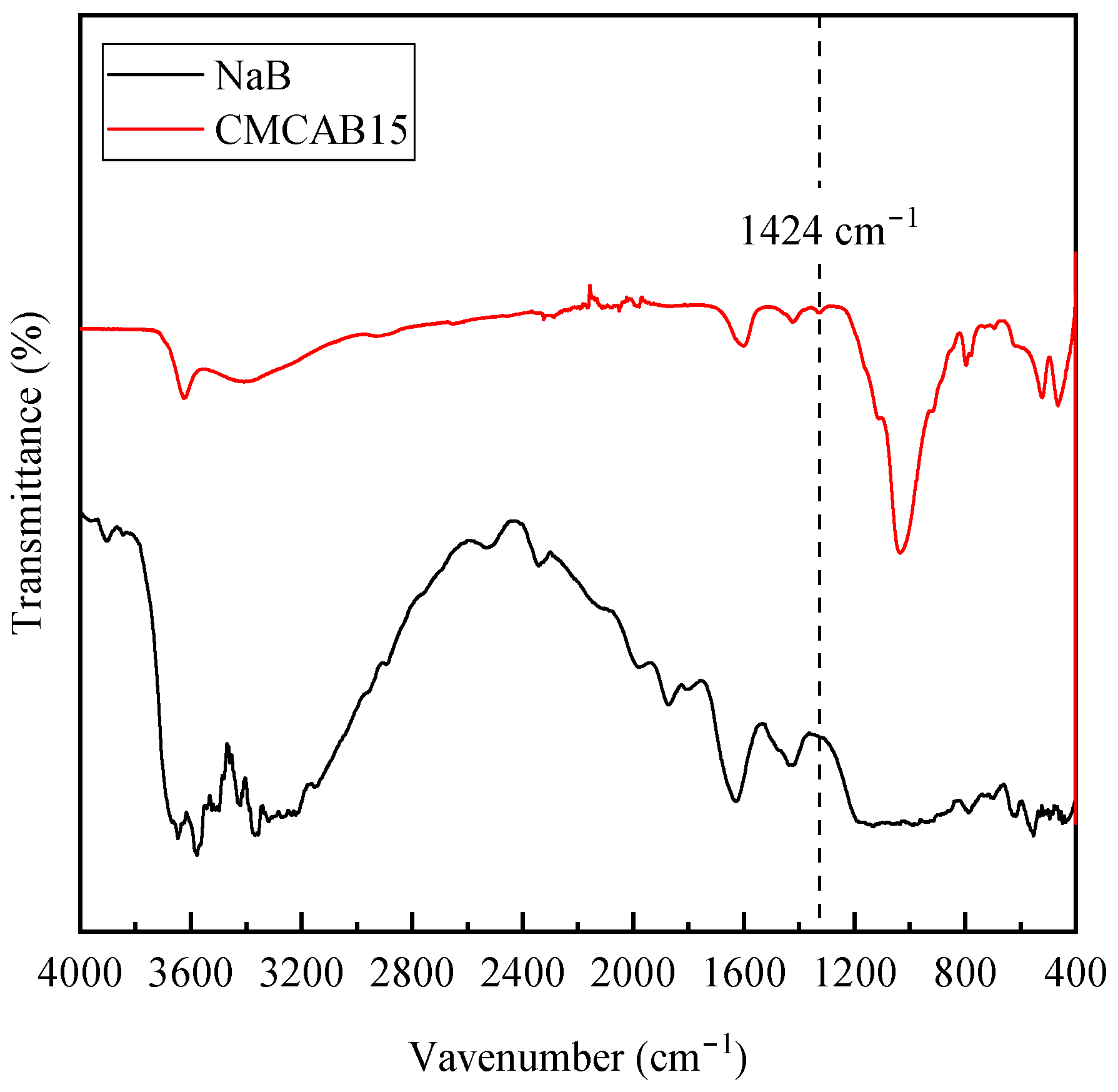
The FT-IR results for the NaB and the CMCABs are presented in Figure 2. Since similar FT-IR results were obtained for all the CMCABs, only the representative spectrum of CMCAB15 is presented. In the case of NaB spectrum, the peak at 3629 cm−1 was ascribed to the stretching vibration of –OH from both Al-OH and Si-OH, while the band that appeared at 1034 cm−1 represented the Si-O bending vibration [34]. The absorption bands near 3400 cm−1 and 1640 cm−1 were ascribed to the stretching vibrations of O-H groups from the interlayer water and the H–O–H bending vibration of adsorbed water, respectively [35,36]. The weaker bands in the range of 400–800 cm−1 were ascribed to the Si–O–Si and Si–O–Al bending vibrations. In the spectrum of CMCAB15, the band around 1030 cm−1 became stronger and sharper compared to that of NaB. This suggests that the amended bentonite has a more ordered surface structure, which resulted from the Na-CMC covering. In addition, a new band appeared at 1424 cm−1 in the FT-IR spectrum of amended bentonite, which was attributed to the asymmetric stretching vibration of –COO, a characteristic functional group of the Na-CMC molecule [36]. All the above analyses indicate that Na-CMC was successfully attached to the bentonite surface.
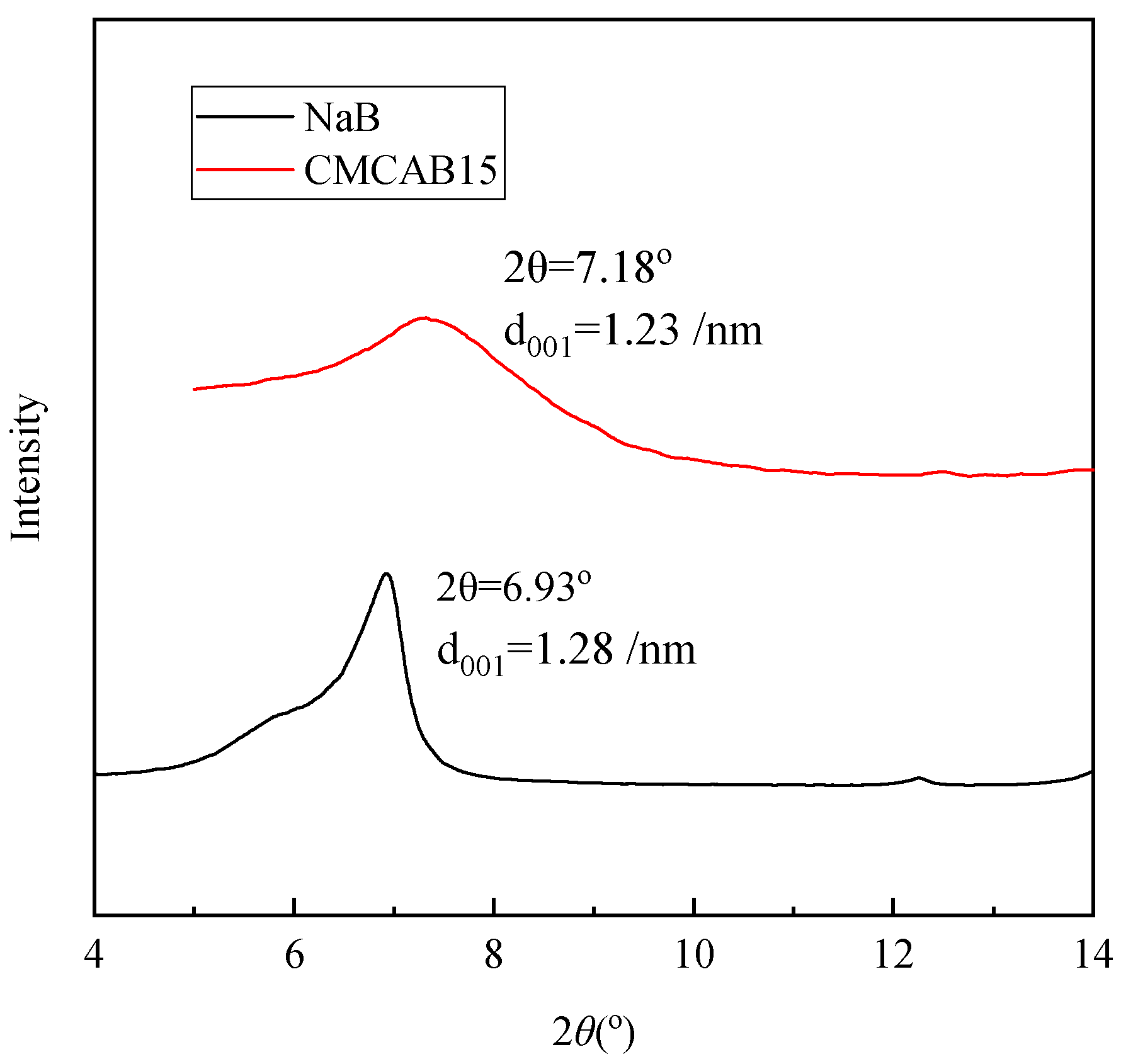
Figure 3 shows the XRD results for the NaB and the CMCAB15 (which is the representative of all CMCABs). The d001 of montmorillonite interlayer shifted from 2θ = 6.93° to 2θ = 7.18° after modification with Na-CMC. According to Bragg’s law, this shift corresponds to a decrease in interlayer spacing from 1.28 nm to 1.23 nm. This result is in line with the findings reported by Norris et al. [25], indicating that the Na-CMC molecules cannot intercalate into the interlayer of natural bentonite. This is primarily because the dimensions of Na-CMC in solution (i.e., several tens of nanometers) are significantly larger than the interlayer spacing of montmorillonite (typical was 1–2 nm) [37,38,39]. Considering the collective results of FT-IR and XRD analyses, it can be concluded that Na-CMC resides only on the surface of the bentonite particles, rather than intercalating into the montmorillonite layers.

3.2. K Tests

3.2.1. Effect of Na-CMC Mass Loading on k

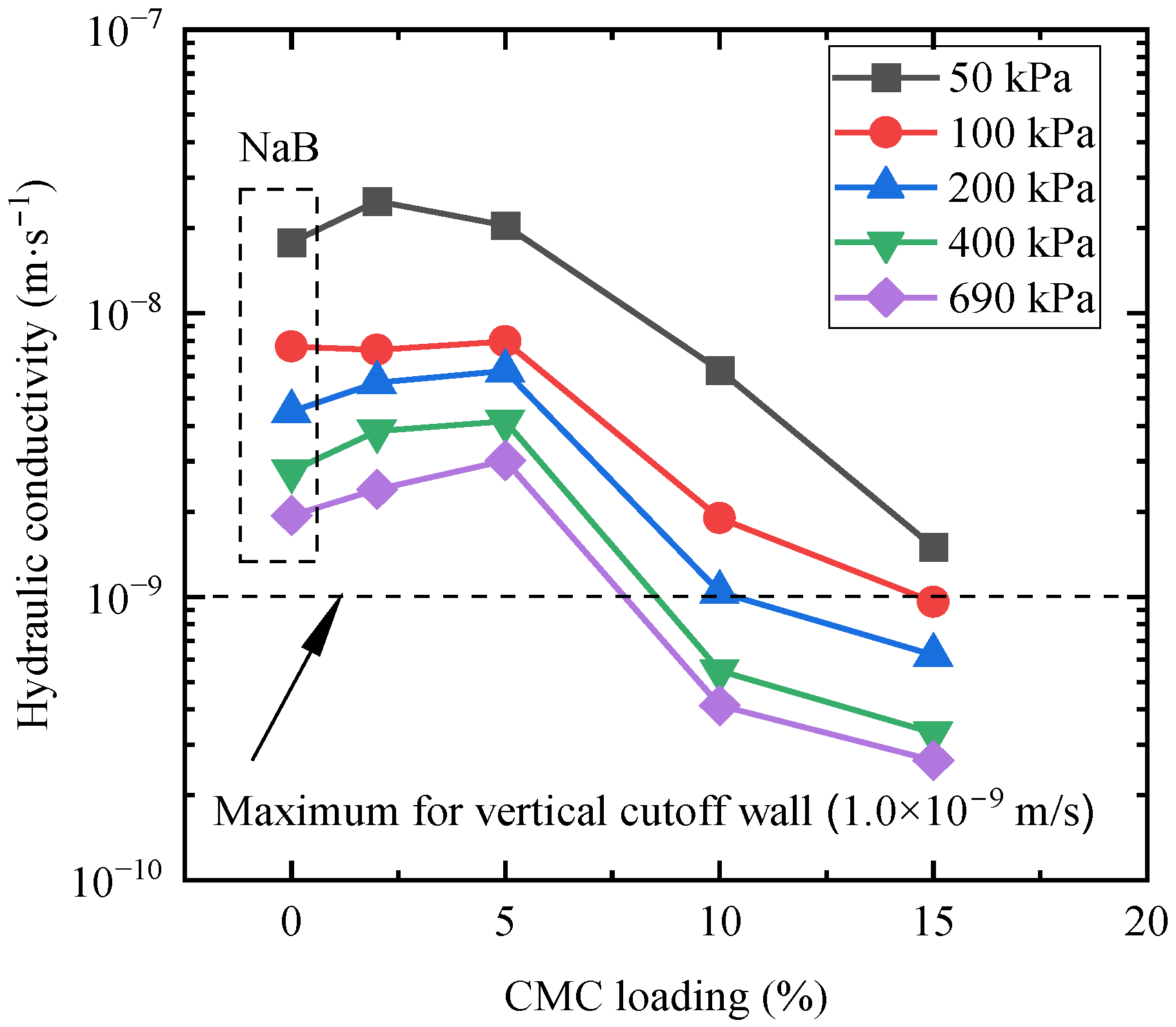
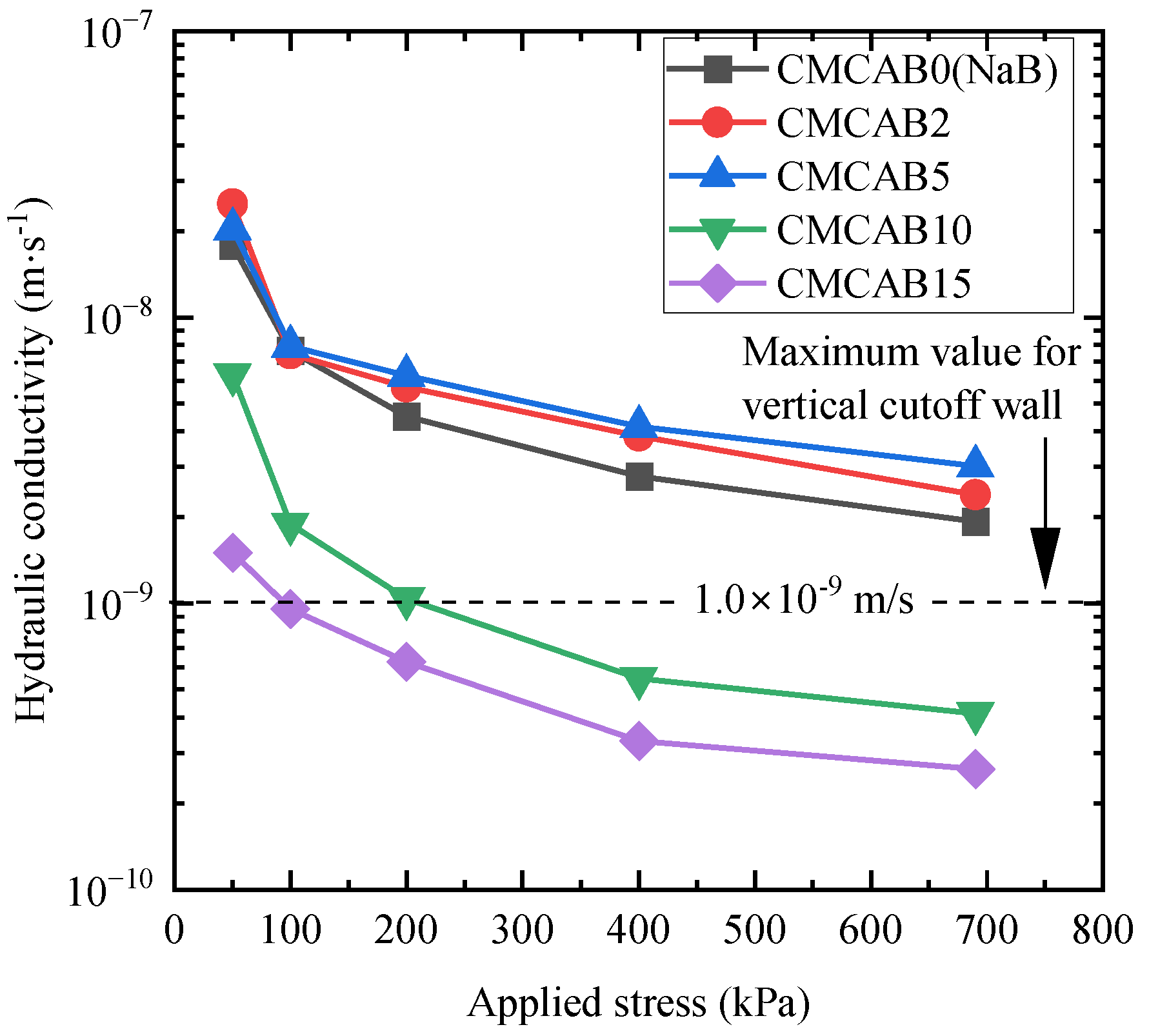
The k values for CMCABs and the NaB (Na-CMC polymer loading is 0%) filter cakes are presented in Table 4 and plotted in Figure 4 for comparison. The k values for the CMCAB filter cakes comprising 2% and 5% of Na-CMC were higher than that of the NaB filter cake (i.e., 1.04 ≤ kCMCAB/kNaB ≤ 1.57) over the entire range of applied stresses. This means that modification with Na-CMC resulted in a detrimental effect on the hydraulic performance of NaB. The reason for this is that when the Na-CMC mass loading was low (i.e., 2% or 5%), the Na-CMC molecules did not have enough opportunities to contact each other in the polymer-bentonite slurry during the synthesis process. As a result, the formed hydrogels were generally small in volume and unstable in structure. They were vulnerable to AMD attack and underwent significant elution during the MFL test, which increased the pore volumes within amended bentonite filter cakes beyond those within the NaB filter cake, finally resulting in higher k values. In addition, the small and unstable hydrogels could not effectively coat the bentonite particles and consequently failed to prevent chemical reactions between bentonite particles and AMD. The ongoing chemical reactions significantly decreased the bentonite’s swelling capacity, creating larger pore space and more straightforward flow paths within the bentonite filter cakes, which ultimately resulted in higher k values for the amended bentonite filter cakes compared to the NaB.
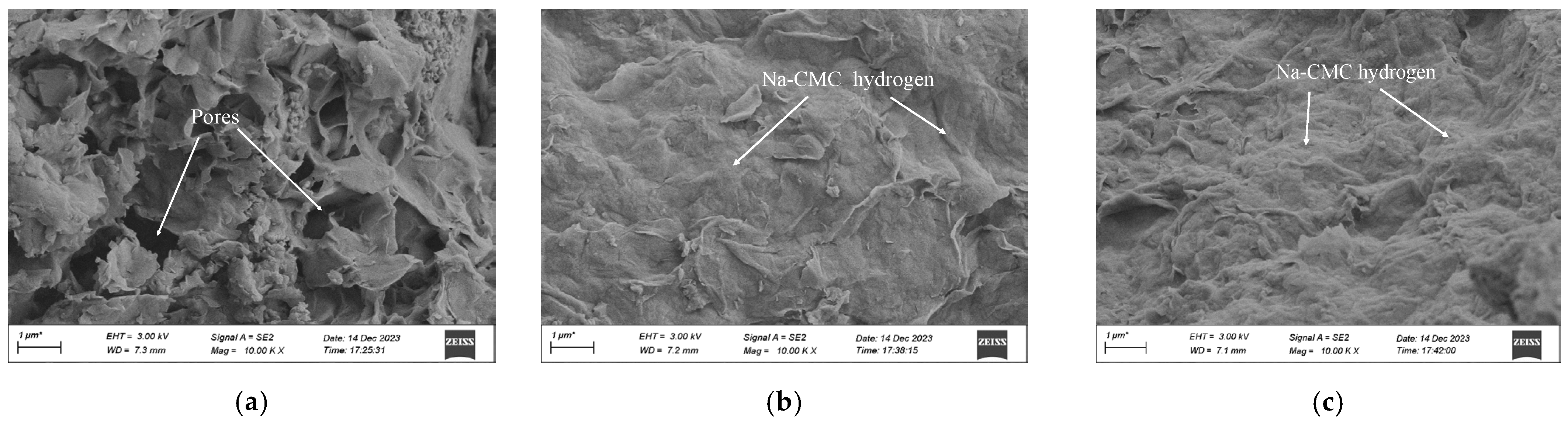
As the Na-CMC mass loading increased to 10% and 15%, the k values for the CMCAB filter cakes ranged from 6.30 × 10⁻⁹ m/s to 2.64 × 10⁻¹⁰ m/s under varying applied stresses. These values were approximately 3 to 10 times lower than those of NaB filter cake (kCMCAB/kNaB = 0.08–0.35). This is because, when the Na-CMC mass loading reached 10% and 15%, the polymer molecules could achieve sufficient proximity or collide within the synthesis slurry, forming a continuous and stable hydrogel on the surface of NaB particles. These hydrogels clogged the intergranular void space, leading to smaller pore volume and more tortuous pathways within the bentonite filter cakes, which ultimately resulted in low k values. The SEM images of the bentonite filter cakes after the MFL test are presented in Figure 5. It is evident from Figure 5a that substantial pores existed between the bentonite granules within the NaB filter cake. In contrast, the bentonite granules within the CMCAB10 and CMCAB15 filter cakes were completely coated by a continuous polymer film, and no discernible pores were observed (Figure 5b,c).
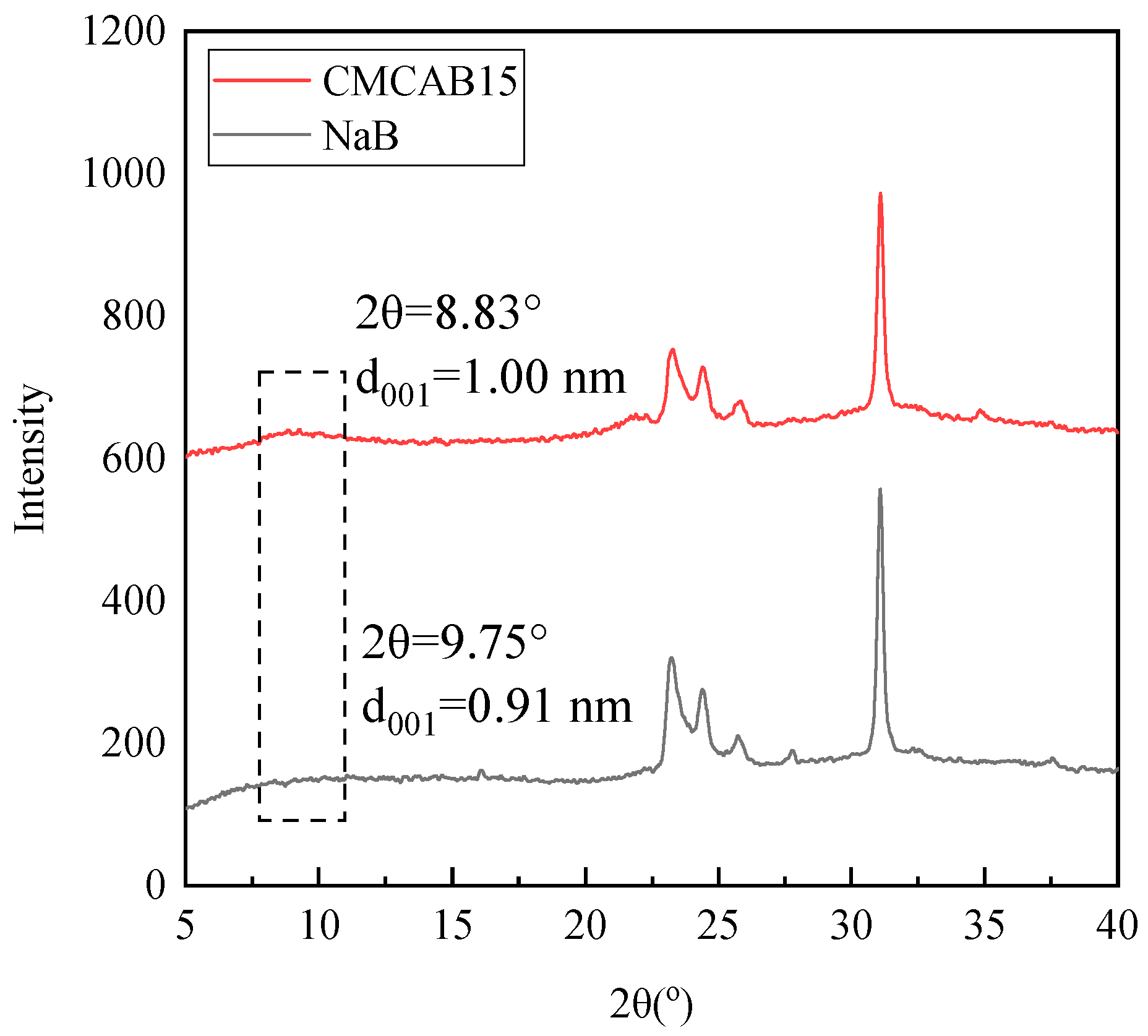
In addition, the continuous and stable hydrogels can form a protective barrier around the NaB particles, precluding the interaction between the NaB and AMD, thereby ensuring that the NaB particles can undergo osmotic swelling [40,41]. This is also one of reasons for the lower k values of the CMCAB filter cakes with high Na-CMC mass loadings (i.e., 10% and 15%). The shielding effect of the Na-CMC hydrogels on the swelling capacity of NaB particles is evidenced by the XRD analysis results of the filter cakes after the MFL test, with CMCAB15 compared to the NaB (Figure 6). It is observed that the typical d001 peak of montmorillonite disappeared in the XRD spectrum of the NaB filter cake, but it is still visible in the XRD spectrum of CMCAB15. The disappearance of the d001 peak provides strong evidence that the basal structure of montmorillonite in the NaB filter cake was completely destroyed, resulting in the total loss of swelling capacity. In addition, amorphization induced by the AMD and surface masking by the Na-CMC polymer may also have contributed to the disappearance of the d001 peak in NaB.
As a result of the aforementioned consideration, it can be concluded that modification with Na-CMC does not necessarily improve the hydraulic performance of NaB against AMD. Specifically, only if the Na-CMC mass loading exceeds a threshold value does the modification yield a measurable improvement in the hydraulic performance of NaB. In this study, the threshold polymer mass loading was found to be 10%. Noteworthily, this threshold polymer mass loading was only applicable to the AMD and applied stresses used in this study. When the AMD chemistry or the magnitude of the applied stresses changed, the threshold would vary accordingly. Tian et al. [42] reported similar behavior of amended bentonite permeated with low-level radioactive waste (LLW) leachates. The reported results demonstrated that amended bentonite specimens containing less than 3.5% polymer mass loading exhibited higher k values than the raw bentonite specimen. However, when the polymer mass loading exceeded 5%, the modified bentonite specimens had a lower k values than the unamended bentonite specimen.

3.2.2. Effect of Applied Stress on the Hydraulic Conductivity

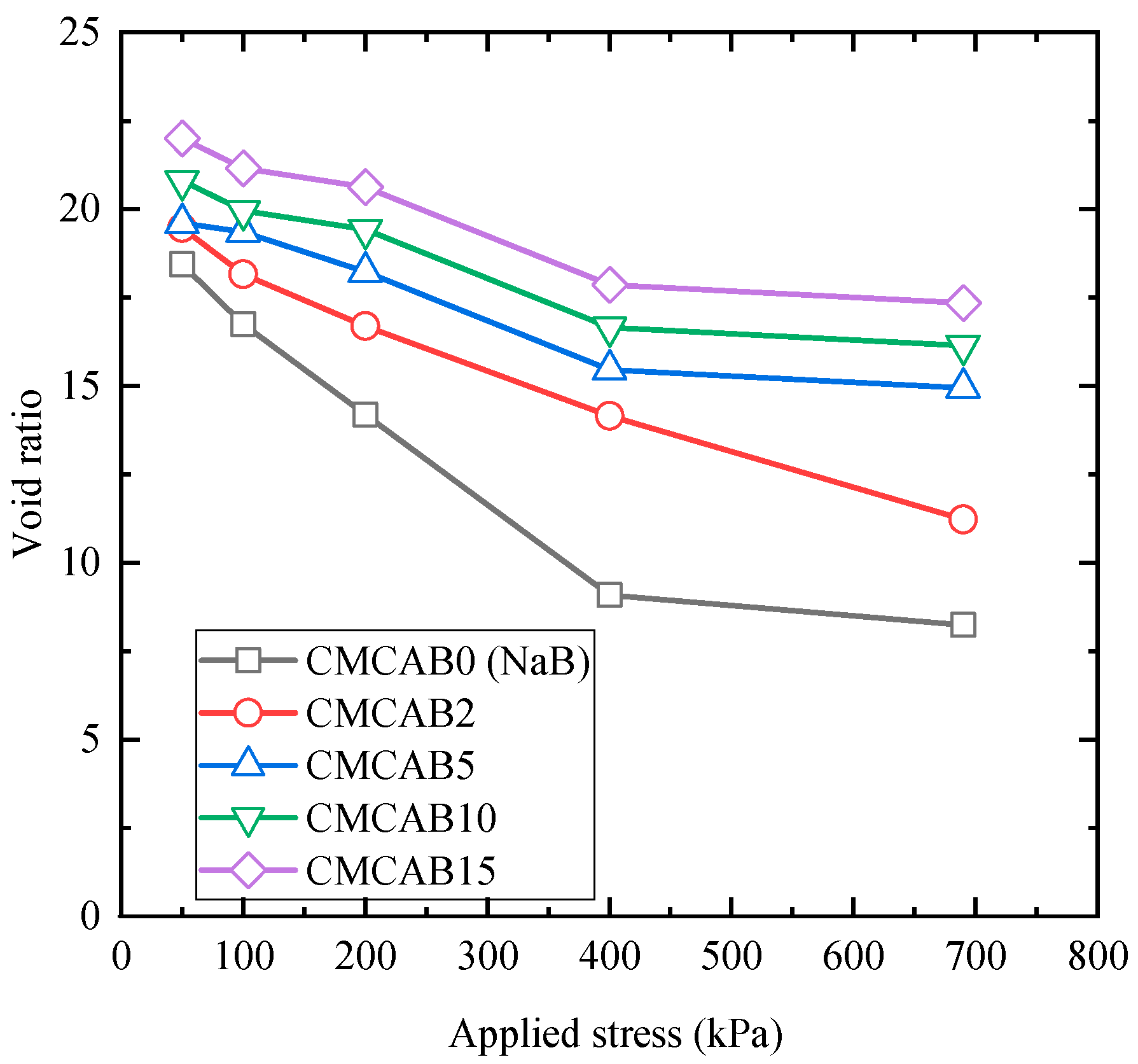
In a vertical cutoff wall, the overburden pressure on CMCAB increases with depth. Therefore, the impact of stress on the permeability of the CMCAB must be evaluated. It is evident from Figure 7 that the k values of all the CMCAB filter cakes decreased by about 10 times as the applied stress increased from 50 to 690 kPa. Notably, while increasing the applied stress caused a reduction in k values for all CMCAB filter cakes, only those with high polymer mass loadings (i.e., 10% and 15%) had k values lower than that of the NaB filter cake, meeting the requirement specified by environmental protection agencies (i.e., <1.0 × 10⁻⁹ m/s). By contrast, the filter cakes with low polymer mass loadings (i.e., 2% and 5%) had k values greater than that of the NaB filter cake and failed to meet the criterion even when the applied stress was increased to 690 kPa. The decrease in k values can be ascribed to the consolidation of the bentonite filter cakes, which resulted in smaller and more tortuous pores and consequently lower k values. Figure 8 shows the void ratio of the bentonite filter cakes versus the applied stress. As shown, the void ratio gradually decreased with increasing applied stress. A similar trend was also reported by Chen et al. [21], where bentonite filter cakes permeated with CuSO4 exhibited smaller void ratios as the applied stress increased. It is well known that, for a given bentonite filter cake, a smaller void ratio corresponds to a lower k value [43,44].

3.3. Swell Indexes of Bentonites

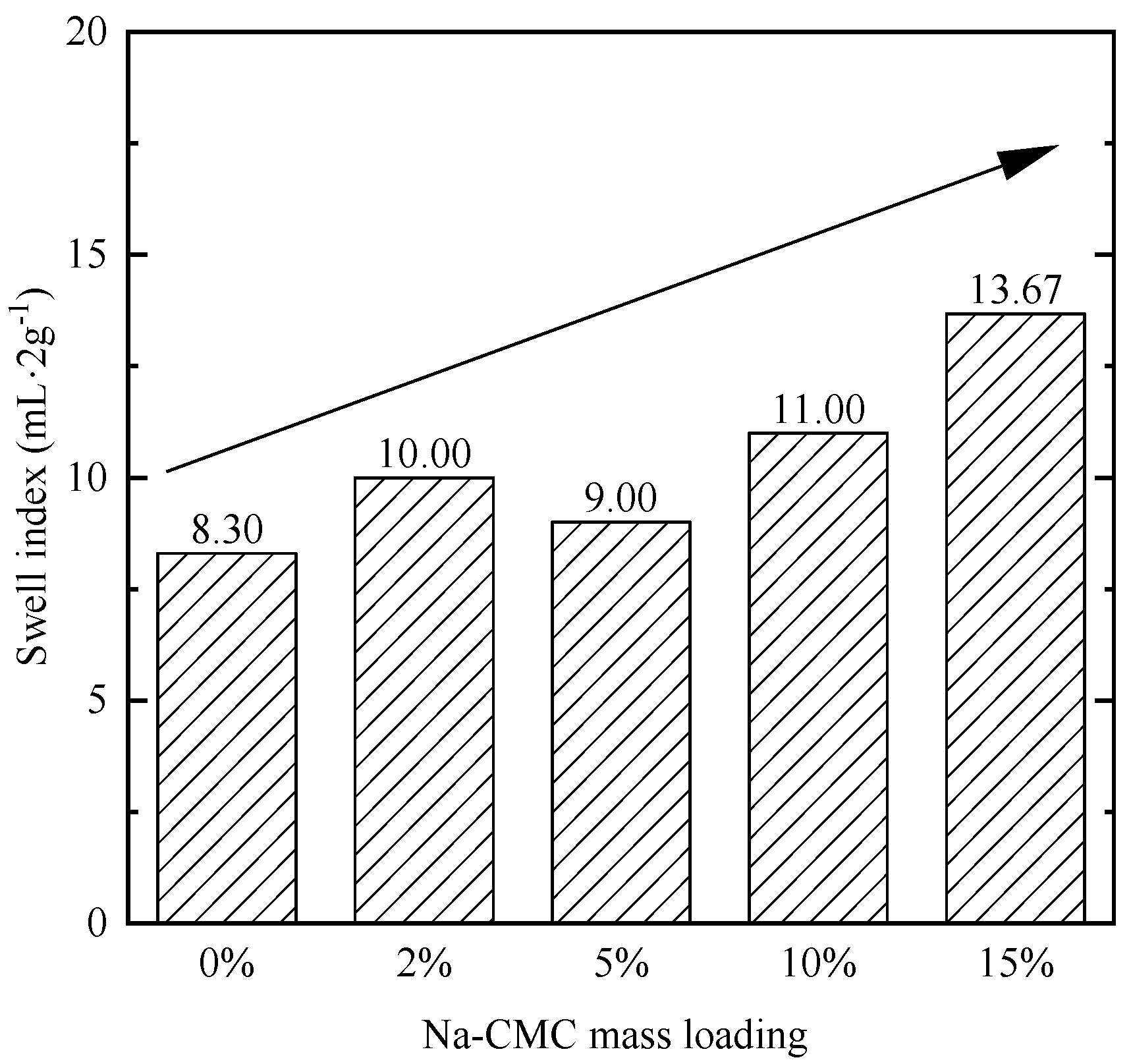
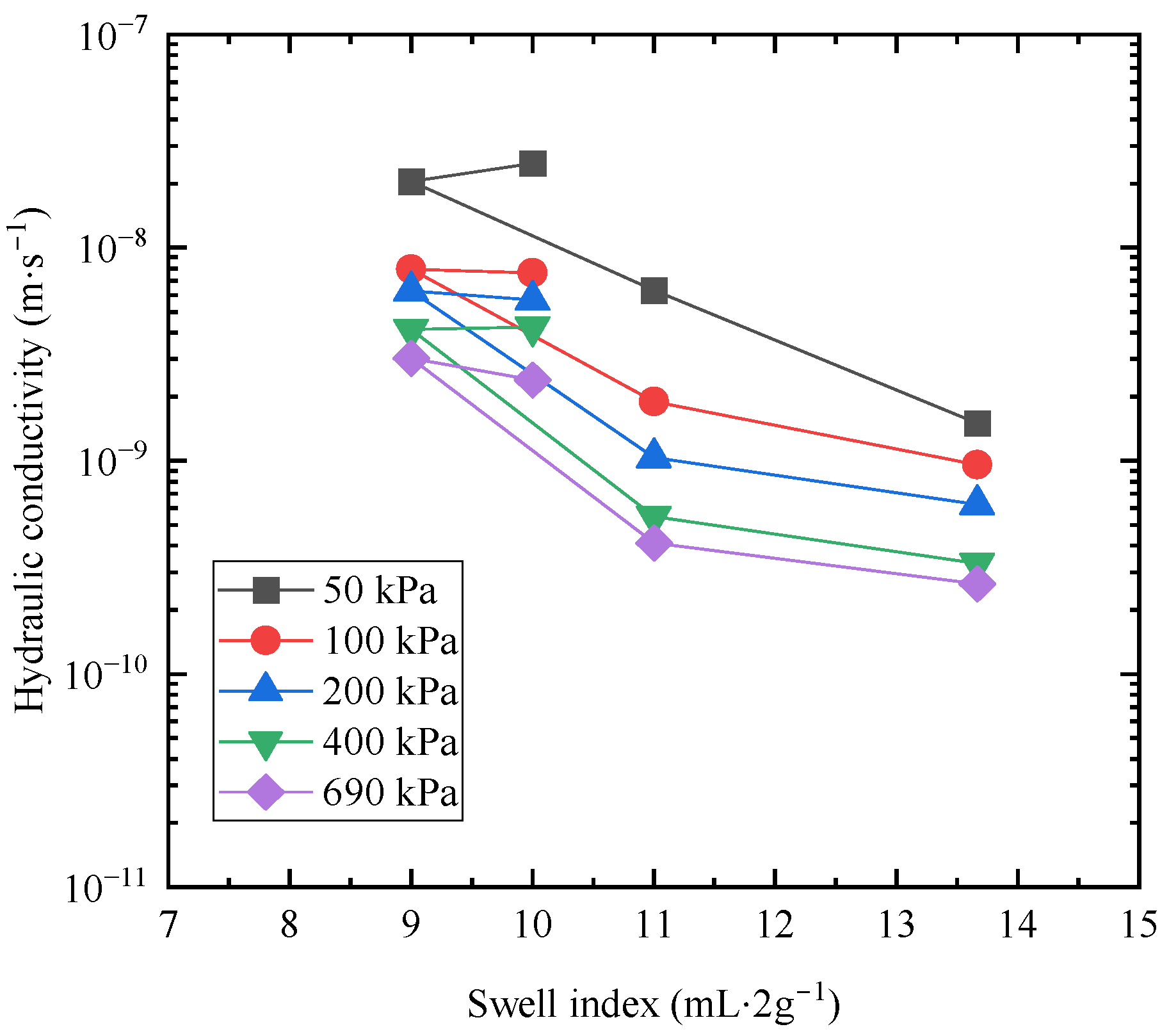
The swell indexes of the CMCABs versus the Na-CMC mass loading are illustrated in Figure 9. For comparison, the swell index of NaB (i.e., Na-CMC polymer loading = 0%) is also given in Figure 9. The swell index of the NaB (i.e., Na-CMC mass loading = 0%) was 8.3 mL/2 g, which falls within the typical range for bentonite not undergoing osmotic swelling (<10 mL/2 g) [45]. Due to having high ionic strength and low RMD (Figure 1), the AMD used in this study can significantly suppress the osmotic swelling of NaB. As shown in Figure 9, the swell indexes for the CMCABs increased with the increase in Na-CMC mass loading, except for the swell index of CMCAB5, and were approximately 1.1 to 1.65 times greater than that of the NaB. The mechanisms by which Na-CMC enhances the swell potential of the NaB are outlined as follows: (1) The Na-CMC hydrogel coated on the bentonite granules can adsorb substantial amounts of water molecules and form an expanded polymer conformation, thereby causing the amended bentonites to exhibit a large volume at the macro level. (2) The Na-CMC hydrogel outside the bentonite granules can function as a protective film and significantly restrict the exchange reaction between the inherent Na+ in bentonite and the cations in the AMD, thereby allowing the bentonite to undergo osmotic swelling, which in turn increases the swell indexes. Wireko and Abichou [46] and Prongmanee et al. [47] also hypothesized that preventing ion exchange is an important mechanism by which a polymer enhances the swell index of amended bentonites in aggressive solutions.

3.4. Viscosity of AMD-Bentonites Slurry

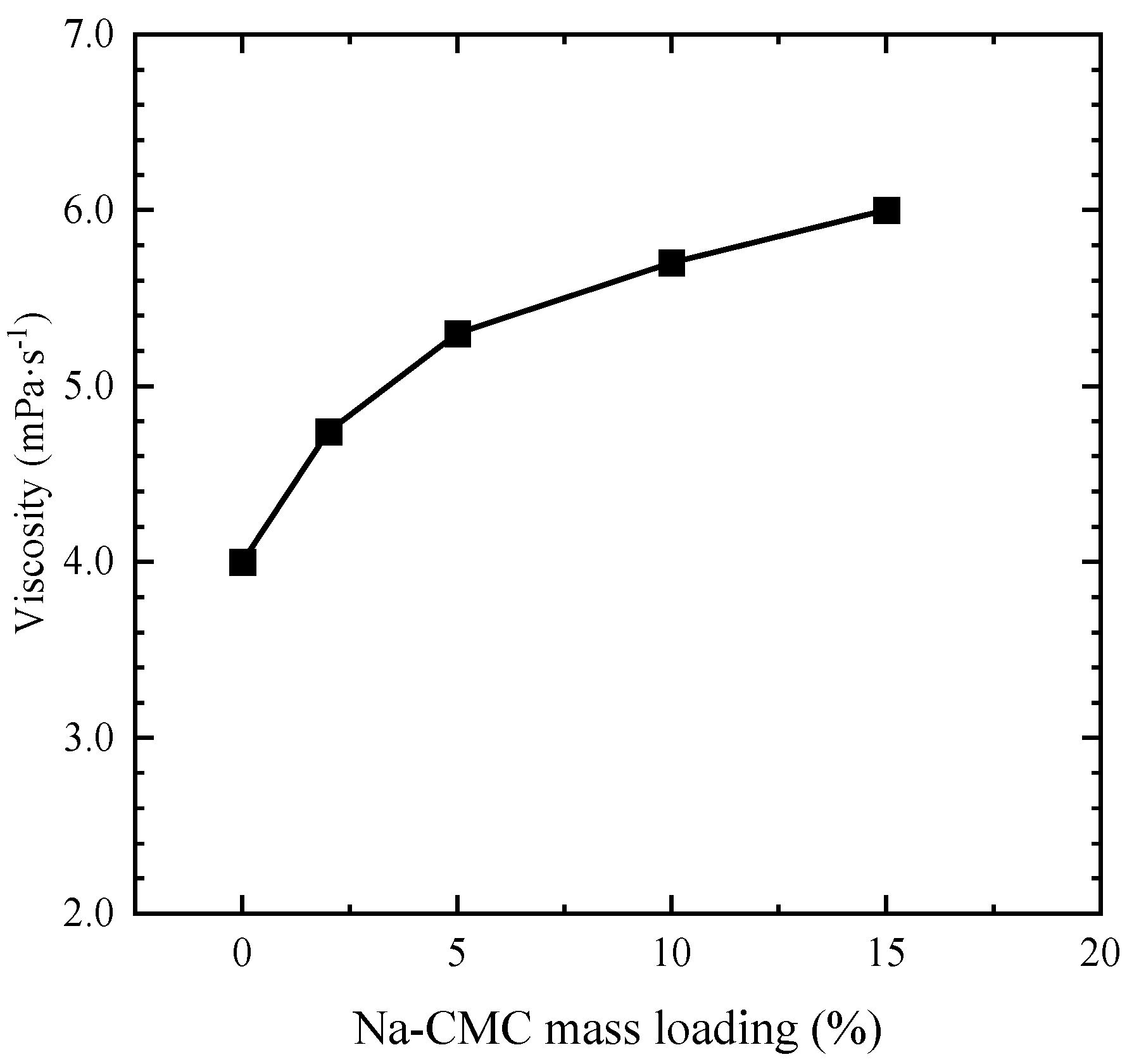
The viscosity of the AMD-CMCABs slurry is illustrated in Figure 10 as a function of Na-CMC mass loading. The viscosity of the AMD-NaB slurry (i.e., polymer mass loading = 0%) is also illustrated for comparison. The results show that the viscosity of AMD-CMCABs slurry increased as the polymer mass loading increased. These results are aligned with the trends documented by Geng et al. [33], where the viscosity of polymer amended bentonite slurry in various salt solutions (e.g., NaCl, CaCl2, and MgSO4) systematically increased with the increase in polymer mass loading. In this study, the observed increase in viscosity is attributed to the enhanced overlap and entanglement of polymer chains at higher Na-CMC mass loading. Furthermore, with the increase in Na-CMC mass loading, more water molecules were absorbed and immobilized, leaving less water accessible for free movement, which made the slurry more viscous.

3.5. Prediction of the Hydraulic Conductivity of Amended Bentonites

Compared to the method employing a flexible wall permeameter, the MFL test is indeed a simpler and more time-efficient alternative for measuring k values. However, considerable laboratory experiments are still required to conduct the MFL test. To quickly obtain the hydraulic performance of bentonite based materials, researchers are developing empirical equations between k values and index parameters (i.e., swell index and liquid limit) and using these equations to estimate k values [48]. In this study, the relationships between the k values of the amended bentonite filter cakes and the swell indexes of the corresponding bentonites under various applied stresses are illustrated in Figure 11. It is observed that no significant correlation existed between the two parameters (Figure 11). These findings are consistent with the results obtained by other investigators [17,42,45] and suggest that the swell index of the CMCAB is not a reliable indicator for its hydraulic performance. The lack of correlation between the k values and swell index can be attributed to the special mechanism controlling the hydraulic conductivity of the amended bentonite filter cake: pore clogging by the polymer gel rather than the montmorillonite swelling for NaB.
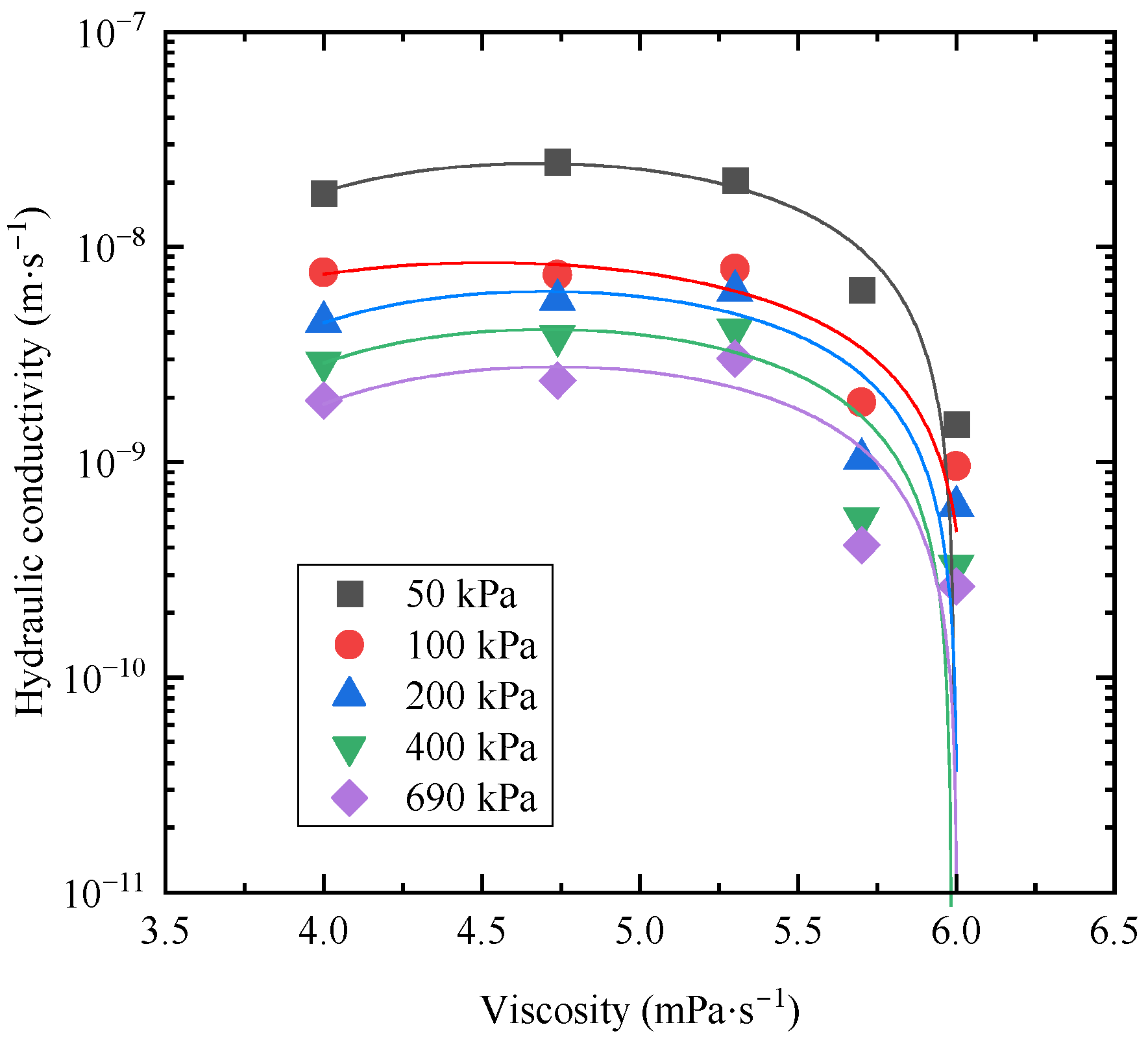
The k values of CMCAB filter cakes are illustrated in Figure 12 as a function of AMD-CMCAB slurry viscosity under various applied stresses. The relationship between the viscosity and k values is well described by quadratic polynomial functions across all applied stress levels (R2 ≥ 0.76) (Equation (5)). Thus, the slurry viscosity of amended bentonites can be used to predict the k values of the corresponding bentonite filter cakes. The mechanism underlying this finding can be explained by the role of polymer gel in the bentonite slurry and filter cakes. The polymer gel is the dominant factor controlling the bentonite slurry’s viscosity; the more polymer gel is loaded, the higher the viscosity. Simultaneously, the polymer gel is the key material responsible for clogging the pores between bentonite particles in the filter cakes. Increasing polymer loading leads to smaller pore volumes and, consequently, a lower k of the bentonite filter cakes.
k = { ( 13.15 μ 1.41 μ 2 28.30 ) × 1 0 8 ( p = 50   k P a ) ,   R 2 = 0.96 ( 3.29 μ 0.36 μ 2 6.59 ) × 1 0 8 ( p = 100   k P a ) ,   R 2 = 0.87 ( 3.42 μ 0.36 μ 2 7.42 ) × 1 0 8 ( p = 200   k P a ) ,   R 2 = 0.83 ( 2.38 μ 0.25 μ 2 5.18 ) × 1 0 8 ( p = 400   k P a ) ,   R 2 = 0.83 ( 1.62 μ 0.17 μ 2 3.56 ) × 1 0 8 ( p = 690   k P a ) ,     R 2 = 0.76
where k = the hydraulic conductivity of bentonite filter cakes (m/s); μ = the viscosity of AMD-bentonite slurry (mPa·s−1); P = the applied stress (kPa).
Importantly, the coefficient of determination (R2) for the quadratic polynomial functions gradually decreased from 0.96 at 50 kPa to 0.76 at 690 kPa. This trend suggests that the applied stresses significantly influence the correlation between the k values and viscosity, and that the accuracy of the fit is limited under high applied stresses. Thus, when using viscosity to predict k values, the applied stress value must be specified. Likewise, Katsumi et al. [48] and Lee et al. [49] noted that the correlation between the k values of GCLs and the index properties of the corresponding bentonite varied with the stress applied during testing.

4. Conclusions

The hydraulic performance of sodium carboxymethyl cellulose (Na-CMC)-amended bentonites (CMCABs) against acid mine drainage (AMD) was investigated using modified fluid loss (MFL) tests. The CMCABs were synthesized using a wet mixing method and with polymer mass loading ranging from 2% to 15% (by dry mass of NaB). A range of applied stresses ranging from 50 kPa to 690 kPa were used in the MFL tests. Furthermore, the swell index and viscosity of the CMCABs were also measured in this study.
Based on the study results, the following conclusions can be drawn:
(1) The Na-CMC was able to bind to the surface of bentonite granules; however, it could not intercalate between the montmorillonite interlayer.
(2) Modification with Na-CMC does not necessarily improve the hydraulic performance of NaB against AMD. The CMCAB filter cakes had a lower k for the AMD than the NaB alone when the Na-CMC mass loading was greater than 10%.
(3) The k values of the CMCAB filter cakes decreased gradually with increasing applied stresses.
(4) The viscosity of AMD-CMCAB slurry increased as the polymer mass loadings increased, and was consistently higher compared to that of the AMD-NaB slurry.
(5) The relationship between the k values of the CMCAB filter cakes and the viscosity of the AMD-CMCAB slurry can be described by quadratic functions; the applied stresses must be considered when using the quadratic functions to predict k values.

Author Contributions

Conceptualization—Writing, original draft, funding acquisition, X.D. Writing—formal analysis, B.W.; Data curation, Y.H. All authors have read and agreed to the published version of the manuscript.

Funding

This work was financially supported by the Natural Science Basic Research Plan in Shaanxi Province of China (Grant No. 2024JC-YBMS-230) and the Key Science Foundation of Education Department of Shaanxi Provincial Government (23JT021).

Data Availability Statement

The original contributions presented in this study are included in the article. Further inquiries can be directed to the corresponding authors.

Acknowledgments

The authors are thankful to the reviewers and scientific editor, whose constructive criticism and recommendations helped us to significantly rework and improve the manuscript.

Conflicts of Interest

Xingling Dong was employed by CCTEG Xi’an Research Institute (Group) Co., Ltd. The authors declare that they have no known competing financial interests or personal relationships that could have appeared to influence the work reported in the presented paper.

References

  1. Mafra, C.; Bouzahzah, H.; Stamenov, L.; Gaydardzhiev, S. An integrated management strategy for acid mine drainage control of sulfidic tailings. Miner. Eng. 2022, 185, 107709. [Google Scholar] [CrossRef]
  2. Gomes, P.; Valente, T. Seasonal impact of acid mine drainage on water quality and potential ecological risk in an old sulfide exploitation. Environ. Sci. Pollut. Res. 2024, 31, 21124–21135. [Google Scholar] [CrossRef]
  3. Ruiz-Sánchez, A.; Tapia, J.C.J.; Lapidus, G.T. Evaluation of acid mine drainage (AMD) from tailings and their valorization by copper recovery. Miner. Eng. 2023, 191, 107979. [Google Scholar] [CrossRef]
  4. Yang, Y.L.; Reddy, K.R.; Du, Y.J.; Fan, R.D. Short-term hydraulic conductivity and consolidation properties of soil-bentonite backfills exposed to CCR-Impacted groundwater. J. Geotech. Geoenviron. Eng. 2018, 144, 04018025. [Google Scholar] [CrossRef]
  5. Fan, R.; Du, Y.; Liu, S.; Chen, Z. Engineering behavior and sedimentation behavior of lead contaminated soil-bentonite vertical cutoff wall backfills. J. Cent. South Univ. 2013, 20, 2255–2262. [Google Scholar] [CrossRef]
  6. Malusis, M.A.; Barlow, L.C. Comparison of laboratory and field measurements of backfill hydraulic conductivity for a large-scale soil-bentonite cutoff wall. J. Geotech. Geoenviron. Eng. 2020, 146, 04020070. [Google Scholar] [CrossRef]
  7. Jiang, Z.; Fu, X.; Shi, J.; Che, C.; Du, Y. Engineering properties of novel vertical cutoff wall backfills composed of alkali-activated slag, polymer-amended bentonite and sand. Polymers 2023, 15, 3059. [Google Scholar] [CrossRef] [PubMed]
  8. Zhou, G.; Tan, Y.; Peng, Y.; Zhang, H.; Zhang, P.; Chen, J.; Liu, P. Hydraulic conductivity of air-dried bentonite–sand blocks permeated with synthetic groundwater from radioactive waste repository. Can. Geotech. J. 2024, 62, 1–16. [Google Scholar] [CrossRef]
  9. Tan, Y.; Zhou, G.; Zhang, H.; Li, X.; Liu, P. Effect of drying cracks on swelling and self-healing of bentonite-sand blocks used as engineered barriers for radioactive waste disposal. J. Rock Mech. Geotech. Eng. 2024, 16, 1776–1787. [Google Scholar] [CrossRef]
  10. Tan, Y.; Zhang, P.; Chen, J.; Shamet, R.; Hyun Nam, B.; Pu, H. Predicting the hydraulic conductivity of compacted soil barriers in landfills using machine learning techniques. Waste Manag. 2023, 157, 357–366. [Google Scholar] [CrossRef]
  11. Zhang, H.; Tan, Y.; Zhu, F.; He, D.; Zhu, J. Shrinkage property of bentonite-sand mixtures as influenced by sand content and water salinity. Constr. Build. Mater. 2019, 224, 78–88. [Google Scholar] [CrossRef]
  12. Jo, H.Y.; Katsumi, T.; Benson, C.H.; Edil, T.B. Hydraulic conductivity and swelling of nonprehydrated GCLs permeated with single-species salt solutions. J. Geotech. Geoenviron. Eng. 2001, 127, 557–567. [Google Scholar] [CrossRef]
  13. Wang, B.; Xu, J.; Chen, B.; Dong, X.; Dou, T. Hydraulic conductivity of geosynthetic clay liners to inorganic waste leachate. Appl. Clay Sci. 2019, 168, 244–248. [Google Scholar] [CrossRef]
  14. Wang, B.; Dong, X.; Chen, B.; Dou, T. Hydraulic conductivity of geosynthetic clay liners permeated with acid mine drainage. Mine Water Environ. 2019, 38, 658–666. [Google Scholar] [CrossRef]
  15. Tan, Y.; Chen, J.; Benson, C.H. Predicting hydraulic conductivity of geosynthetic clay liners using a neural network algorithm. In Proceedings of the Geo-Congress 2022, Charlotte, NC, USA, 20–23 March 2022. [Google Scholar]
  16. Benson, C.H.; Tan, Y.; Youngblood, J.; Bradshaw, S.L. Bentonite-polymer composite geosynthetic clay liners for heap leach liners. In Proceedings of the Heap Leach Mining Solutions 2022, Sparks, NV, USA, 16–18 October 2022. [Google Scholar]
  17. Tian, K.; Likos, W.J.; Benson, C.H. Polymer elution and hydraulic conductivity of bentonite-polymer composite geosynthetic clay liners. J. Geotech. Geoenviron. Eng. 2019, 145, 04019071. [Google Scholar] [CrossRef]
  18. Chen, X.; Tan, Y.; Chen, J.; Peng, D.; Huang, T.; Meng, C. Hydraulic conductivity and multi-scale pore structure of polymer-enhanced geosynthetic clay liners permeated with bauxite liquors. Geotext. Geomembr. 2024, 52, 46–58. [Google Scholar] [CrossRef]
  19. Chen, X.; Tan, Y.; Copeland, T.; Chen, J.; Peng, D.; Huang, T. Polymer elution and hydraulic conductivity of polymer-bentonite geosynthetic clay liners to bauxite liquors. Appl. Clay Sci. 2023, 242, 107039. [Google Scholar] [CrossRef]
  20. Janssen, J.; Di Emidio, G.; Flores, R.D.V.; Bezuijen, A. Hydraulic conductivity and swelling pressure of GCLs using polymer treated clays to high concentration CaCl2 solutions. In Geotechnical Engineering for Infrastructure and Development, 1st ed.; Winter, M.G., Smith, D.M., Eldred, P.J.L., Toll, D.G., Eds.; ICE Publishing: London, OH, USA, 2015; Volume 1, pp. 2687–2692. [Google Scholar]
  21. Chen, J.; Xia, L.; Yang, Y.; Dina, M.; Zhang, S.; Zhan, L.; Chen, Y.; Bate, B. Polymer-modified bentonites with low hydraulic conductivity and improved chemical compatibility as barriers for Cu2+ containment. Acta Geotech. 2023, 18, 1629–1649. [Google Scholar]
  22. Fan, R.; Reddy, K.R.; Yang, Y.; Du, Y. Index properties, hydraulic conductivity and contaminant-compatibility of CMC-treated sodium activated calcium bentonite. Int. J. Environ. Res. Public Health 2020, 17, 1863. [Google Scholar] [CrossRef] [PubMed]
  23. Di Emidio, G.; Mazzieri, F.; Verastegui-Flores, R.D.; Van Impe, W.; Bezuijen, A. Polymer-treated bentonite clay for chemical-resistant geosynthetic clay liners. Geosynth. Int. 2015, 22, 125–137. [Google Scholar] [CrossRef]
  24. Zeren, D.; Senturk, U.; Guden, M. The expansion behavior of slurries containing recycled glass powder carboxymethyl cellulose, lime and aluminum powder. Constr. Build. Mater. 2020, 240, 117898. [Google Scholar] [CrossRef]
  25. Norris, A.; Scalia, J.; Shackelford, C.D. Mechanisms controlling the hydraulic conductivity of anionic polymer-enhanced GCLs. Geosynth. Int. 2022, 30, 628–650. [Google Scholar] [CrossRef]
  26. Shackelford, C.D.; Sevick, G.W.; Eykholt, G.R. Hydraulic conductivity of geosynthetic clay liners to tailings impoundment solutions. Geotext. Geomembr. 2010, 28, 149–162. [Google Scholar] [CrossRef]
  27. Ghazizadeh, S.; Bareither, C.A.; Scalia, J.; Shackelford, C.D. Synthetic mining solutions for laboratory testing of geosynthetic clay liners. J. Geotech. Geoenviron. Eng. 2018, 144, 9. [Google Scholar] [CrossRef]
  28. Du, Y.; Shen, S.; Tian, K.; Yang, Y. Effect of polymer amendment on hydraulic conductivity of bentonite in calcium chloride solutions. J. Mater. Civ. Eng. 2021, 33, 04020452. [Google Scholar] [CrossRef]
  29. Liu, Y.; Gates, W.P.; Bouazza, A.; Rowe, R.K. Fluid loss as a quick method to evaluate hydraulic conductivity of geosynthetic clay liners under acidic conditions. Can. Geotech. J. 2014, 51, 158–163. [Google Scholar] [CrossRef]
  30. Chung, J.; Daniel, D.E. Modified fluid loss test as an improved measure of hydraulic conductivity for bentonite. Geotech. Test. J. 2008, 31, 243–251. [Google Scholar] [CrossRef]
  31. Yang, Y.; You, X.; Chen, J.; Fu, X.; Du, Y. Hydraulic conductivity of novel geosynthetic clay liner to bauxite liquor from China: Modified fluid loss test evaluation. J. Environ. Manag. 2022, 316, 115208. [Google Scholar] [CrossRef] [PubMed]
  32. Shi, F.; Feng, S.; Zheng, Q.; Peng, C. Hydraulic conductivity and compressibility of polyanionic cellulose-modified sand-calcium bentonite slurry trench cutoff wall materials. Acta Geotech. 2024, 19, 5503–5515. [Google Scholar] [CrossRef]
  33. Geng, W.; Salihoglu, H.; Likos, W.J.; Benson, C.H. Alternative index tests for geosynthetic clay liners containing bentonite-polymer composites. Environ. Geotech.-J. 2022, 11, 112–123. [Google Scholar] [CrossRef]
  34. Jia, Y.; Man, R.; Shang, L.; Chen, J. Efficient removal of cadmium from aqueous solution by chitosan grafted pillared bentonite. Colloid Surf. A.-Physicochem. Eng. Asp. 2024, 696, 134373. [Google Scholar] [CrossRef]
  35. Guo, D.; Wan, Y.; Li, J.; Liu, R.; Liu, L.; Xue, Q. Comparative assessment of modified bentonites as retardation barrier: Adsorption performance and characterization. Environ. Earth Sci. 2023, 82, 58. [Google Scholar] [CrossRef]
  36. Ni, H.; Fu, X.; Reddy, K.R.; Wang, M.; Du, Y. Interlayer and surface characteristics of carboxymethyl cellulose and tetramethylammonium modified bentonite. Constr. Build. Mater. 2024, 428, 136303. [Google Scholar] [CrossRef]
  37. Keerthana, S.; Arnepalli, D.N. Hydraulic performance of polymer-modified bentonites for development of modern geosynthetic clay liners: A review. Int. J. Geosynth. Ground Eng. 2022, 8, 24. [Google Scholar] [CrossRef]
  38. Ma, Z.; Pathegama Gamage, R.; Rathnaweera, T.; Kong, L. Review of application of molecular dynamic simulations in geological high-level radioactive waste disposal. Appl. Clay Sci. 2019, 168, 436–449. [Google Scholar] [CrossRef]
  39. Singh, G.; Singh, G.; Kang, T.S. Colloidal systems of surface active ionic liquids and sodium carboxymethyl cellulose: Physicochemical investigations and preparation of magnetic nano-composites. Phys. Chem. Chem. Phys. 2018, 20, 18528–18538. [Google Scholar] [CrossRef] [PubMed]
  40. Fu, X.; Zhuang, H.; Reddy, K.R.; Jiang, N.; Du, Y. Novel composite polymer-amended bentonite for environmental containment: Hydraulic conductivity, chemical compatibility, enhanced rheology and polymer stability. Constr. Build. Mater. 2023, 378, 131200. [Google Scholar] [CrossRef]
  41. Wireko, C.; Abichou, T.; Tian, K.; Zainab, B.; Zhang, Z. Effect of incineration ash leachates on the hydraulic conductivity of bentonite-polymer composite geosynthetic clay liners. Waste Manag. 2022, 139, 25–38. [Google Scholar] [CrossRef] [PubMed]
  42. Tian, K.; Benson, C.H.; Likos, W.J. Hydraulic conductivity of geosynthetic clay liners to low-level radioactive waste leachate. J. Geotech. Geoenviron. Eng. 2016, 142, 040160378. [Google Scholar] [CrossRef]
  43. Kang, J.B.; Shackelford, C.D. Consolidation of a geosynthetic clay liner under isotropic states of stress. J. Geotech. Geoenviron. Eng. 2009, 136, 253–259. [Google Scholar] [CrossRef]
  44. Petrov, R.J.; Rowe, R.K. Geosynthetic clay liner (GCL)-chemical compatibility by hydraulic conductivity testing and factors impacting its performance. Can. Geotech. J. 1997, 34, 863–885. [Google Scholar] [CrossRef]
  45. Scalia, J.; Benson, C.H.; Bohnhoff, G.L.; Edil, T.B.; Shackelford, C.D. Long-term hydraulic conductivity of a bentonite-polymer composite permeated with aggressive inorganic solutions. J. Geotech. Geoenviron. Eng. 2014, 140, 04013025. [Google Scholar] [CrossRef]
  46. Wireko, C.; Abichou, T. Investigating factors influencing polymer elution and the mechanism controlling the chemical compatibility of GCLs containing linear polymers. Geotext. Geomembr. 2021, 49, 1004–1018. [Google Scholar] [CrossRef]
  47. Prongmanee, N.; Chai, J.; Shen, S. Hydraulic properties of polymerized bentonites. J. Mater. Civ. Eng. 2018, 30, 0401824710. [Google Scholar] [CrossRef]
  48. Katsumi, T.; Ishimori, H.; Onikata, M.; Fukagawa, R. Long-term barrier performance of modified bentonite materials against sodium and calcium permeant solutions. Geotext. Geomembr. 2008, 26, 14–30. [Google Scholar] [CrossRef]
  49. Lee, J.; Shackelford, C.D.; Benson, C.H.; Jo, H.; Edil, T.B. Correlating index properties and hydraulic conductivity of geosynthetic clay liners. J. Geotech. Geoenviron. Eng. 2005, 131, 1319–1329. [Google Scholar] [CrossRef]
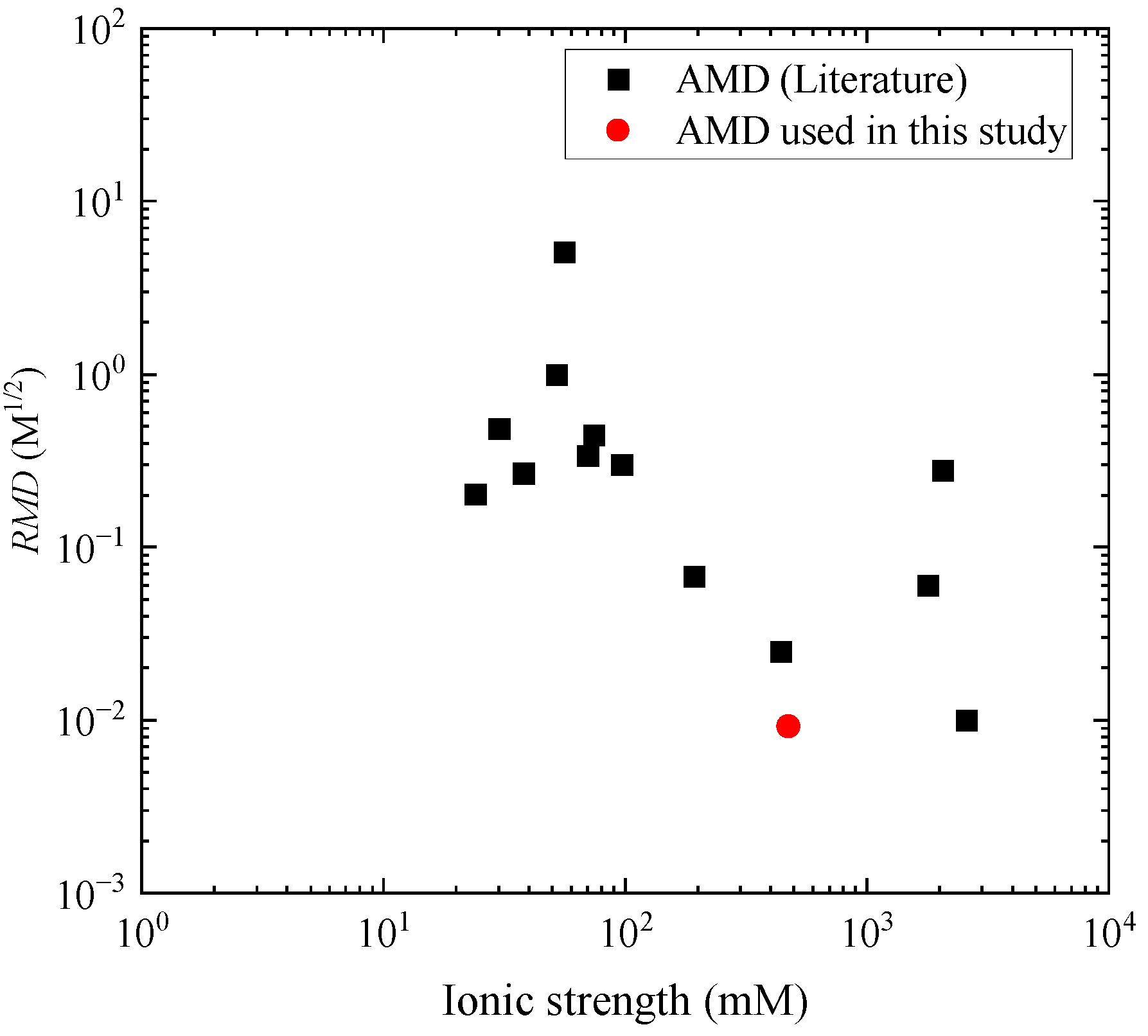
Figure 1. Relationships between RMD and ionic strength of acid mine drainage (AMD). (Note: literature data were obtained from [27]).
Processes 13 03866 g001
Figure 2. FT-IR spectra of NaB and CMCAB15.
Processes 13 03866 g002
Figure 3. XRD patterns of NaB and CMCAB15.
Processes 13 03866 g003
Figure 4. Effect of Na-CMC mass loading on the hydraulic conductivity of bentonite filter cakes.
Processes 13 03866 g004
Figure 5. SEM images of the (a) NaB, (b) CMCAB10, and (c) CMCAB15.
Processes 13 03866 g005
Figure 6. X-ray patterns of CMCAB15 and NaB after modified fluid losses tests (MFL).
Processes 13 03866 g006
Figure 7. Effect of applied stresses on the hydraulic conductivities of NaB and CMCAB filter cakes.
Processes 13 03866 g007
Figure 8. Effect of applied stress on the void ratio of NaB and CMCAB filter cakes.
Processes 13 03866 g008
Figure 9. Free swell indexes of NaB and CMCAB in the acid mine drainage (AMD).
Processes 13 03866 g009
Figure 10. Effect of Na-CMC mass loading on the viscosity of AMD-bentonites slurry.
Processes 13 03866 g010
Figure 11. Relationships between hydraulic conductivity and swell indexes of bentonites under different pressure.
Processes 13 03866 g011
Figure 12. Relationships between hydraulic conductivity and viscosity of bentonites under different pressure.
Processes 13 03866 g012
Table 1. Properties of natural sodium bentonite (NaB).
Liquid Limit
(%)
Plastic Limit
(%)
Swell Index
(mL·2 g−1)
Mineral Composition
(%)
Cation Exchange Capacity
(meq·100 g−1)
MontmorilloniteQuartzFeldsparKaolinitePotassium Feldspar
314403970.5618.305.802.942.4091
Table 2. Properties of sodium-carboxymethyl cellulose (Na-CMC).
PropertiesUnitValue
Molecular weight/250,000
Degree of substitution/0.9
ViscositymPa·s1500–3100
pH 6.5–8.5
Melting point°C260
Densityg/cm31.6
Table 3. Chemical composition of artificial acid mine drainage (AMD).
ParameterSource CompoundValueUnit
pHH2SO42.5
Cd2+Cd(NO3)2·4H2O5mg/L
Pb2+PbCl21.2mg/L
Cu2+CuSO4·5H2O65mg/L
Zn2+ZnSO4·7H2O2400mg/L
Ni2+NiCl2·6H2O2mg/L
Mn2+MnCl2·4H2O180mg/L
FeFeSO4·7H2O450mg/L
Ca2+CaSO4·2H2O300mg/L
Mg2+MgSO4·7H2O1500mg/L
Table 4. Hydraulic conductivity of NaB and CMCAB filter cakes (CMCAB: Na-CMC-amended bentonite; the number in the designation represents the polymer mass loading, %; NaB: natural sodium bentonite) to acid mine drainage under different applied stresses.
Bentonite Filter Cakes50 kPa100 kPa200 kPa400 kPa690 kPa
k
(m/s)
kCMCAB
/kNaB
k
(m/s)
kCMCAB
/kNaB
k
(m/s)
kCMCAB
/kNaB
k
(m/s)
kCMCAB
/kNaB
k
(m/s)
kCMCAB
/kNaB
CMCAB0
(NaB)
1.78 × 10−81.007.63 × 10−91.004.51 × 10−91.002.78 × 10−91.001.93 × 10−91.00
CMCAB2 2.48 × 10−81.407.44 × 10−90.975.70 × 10−91.263.84 × 10−91.382.40 × 10−91.24
CMCAB5 2.04 × 10−81.157.94 × 10−91.046.26 × 10−91.394.15 × 10−91.493.03 × 10−91.57
CMCAB10 6.30 × 10−90.351.89 × 10−90.251.04 × 10−90.235.47 × 10−100.204.13 × 10−100.21
CMCAB15 1.50 × 10−90.089.58 × 10−100.136.24 × 10−100.143.31 × 10−100.122.64 × 10−100.14
Disclaimer/Publisher’s Note: The statements, opinions and data contained in all publications are solely those of the individual author(s) and contributor(s) and not of MDPI and/or the editor(s). MDPI and/or the editor(s) disclaim responsibility for any injury to people or property resulting from any ideas, methods, instructions or products referred to in the content.