Efficacy of Health Literacy Interventions for Caregivers of Individuals with Neurodevelopmental and Chronic Conditions: A Rapid Review
 , ,
, ,
Abstract
1. Introduction
2. Materials and Methods
2.1. Protocol and Registration
2.2. Search Strategy
2.3. Eligibility Criteria
- The sample included caregivers of individuals with neurodevelopmental or chronic conditions.
- The study reported the efficacy of any intervention aimed at improving the HL of these caregivers. HL included accessing, understanding, appraising, and applying health information [11]. Interventions could be delivered in any setting, including clinical, community, educational, or home-based settings or online.
- There was any or no comparison.
- The primary outcome was HL. Secondary outcomes included individuals’ health indicators, healthcare service use, economic costs of healthcare, and health-related adverse events.
- Study designs included systematic reviews, randomized or non-randomized controlled trials, or any other intervention study design. Data could be quantitative, qualitative, or mixed.
- Studies were published in English since 2000, and the full text was available. Grey literature was excluded, including books, dissertations, reports, conference papers, media (e.g., newspaper), letters to editors, editorials, blogs, podcasts, and newsletters.
2.4. Study Selection
2.5. Data Extraction
2.6. Risk of Bias (Quality) Assessment
2.7. Data Synthesis
3. Results
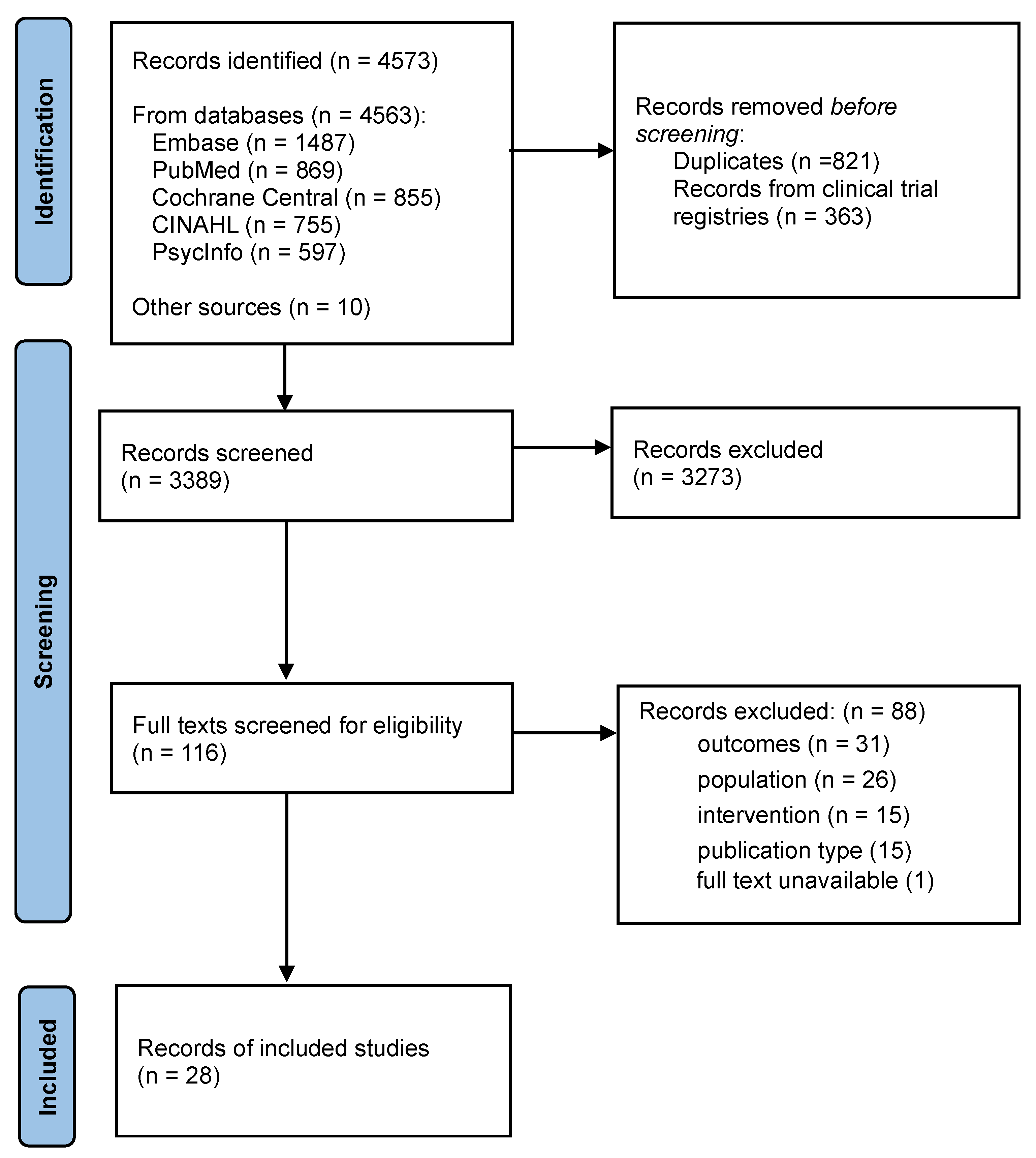
3.1. Study Selection
3.2. Study Characteristics

| Study, Country | Level of Evidence, Research Design | Participant and Child Characteristics and n Who Completed | Medium of Intervention | Intervention | Comparison |
|---|---|---|---|---|---|
| Randomized controlled trials (Levels I-II) | |||||
| Horner 2004, 2006 [31,32] USA | II Cluster RCT 3 | 60 commenced; 44 completed. Parent–child (7–11 y) dyads with asthma. | Booklet + in-person home visits | 9 classes for chn over 1 m + booklet for parents on asthma mgt, pathophysiology, meds, qs for physician, and asthma mgt plan + home visits. | No intervention |
| Macy et al., 2011 [43] USA | II RCT | 126 commenced; 86 completed (I gp: n = 42; C gp: n = 44). Parents of chn (4–12 y) presenting to ED with prior asthma Dx or Hx of wheeze. Educ level: <2° school to college. | Video | 20 min video shown to parents in ED, incl asthma facts, meds, and pt skills. | Written educ materials with same content as video |
| Kintner et al., 2015a 2015b [33,34] USA | I RCT | 205 caregiver–child (9–12 y) dyads (I gp: n = 117; C gp: n = 88) with asthma commenced; 136 completed all Ax at 24 m f-u. | In-person gp presentation or booklet | 10 × 50 min asthma educ lessons for chn on asthma + for caregivers either 1 × 90 min info-sharing session or booklet. | 6 × 50 min lessons for chn + bullet-pointed handouts for caregivers |
| Yin et al., 2017 [40] USA | I RCT | 217 parents of chn (2-12 y) with asthma (I gp: n = 109, C gp: n = 108). Educ level: < high school grad (24%) to ≥college (59%). | Action plan | Low-literacy, plain language, pictogram-, and photograph-based asthma action plan. | Standard action plan |
| Jimenez et al., 2017 [42] USA | II RCT | 64 parent–child (>3 y) dyads, (I gp: n = 31; C gp: n = 33) referred to EI for dev concerns. Max parent educ level: high school (85%). | Video + SMS | 3 min video on child dev and EI pgm + 1 SMS sent 7–14 days later. | Standard care + publicly available handout on EI |
| Singer et al., 2018 [44] USA | II RCT | 41 commenced; 30 completed. Parents of chn (0–3 y) with eczema (I gp: n = 14, C gp: n = 16). | SMS | Text messages with info on eczema sent daily for 42 d or until f-u appointment. | Usual care |
| Geense et al., 2018 [36] Netherlands | I RCT | 146 commenced; 51 completed. Parents of chn with chronic kidney disease (I gp: n = 68; C gp: n = 65); 50% with high educ level. | Online | 6 m access to 1) website with info/videos about kidney diseases, treatment, diet, and finance + chat room to message other parents and health care professionals; 2) web-based training platform (4 modules). | Usual care |
| Heckel et al., 2018 [37] Australia | I RCT | 216 cancer pt–caregiver dyads commenced (n=108 per gp); 158 completed (I gp: n = 81; C gp: n = 77). Pts’ mean age 59 y; 88% solid cancers; receiving chemo (38%), radiotherapy (33%), or combination (29%); caregivers mean age 56 y; usually spouse (79%); educ level: 1° school to uni. | Phone | 3 phone calls over 4 months from specialist oncology nurses, to discuss: psychological distress, health literacy, physical health, family support, financial burden, and practical difficulties. | 3 phone calls from research personnel, supplying info line number to self-initiate contact. |
| Zhou et al., 2020 [41] China | I RCT | 306 parent–child (2–6 y) dyads (I gp, n = 156, C gp, n = 150) with mod–severe disability (ASD, dev delay, CP). Educ levels: <9 y (14%) to ≥14 y (57%). N = 253 completed, but ITT analysis on n = 306. | Educ materials | Structured package of oral health educ materials on brushing, tooth-friendly eating, and dental visits for parents + social stories for chn. | Standard leaflets issued by the Health Department. |
| Tutar Güven et al., 2020 [41] Türkiye | II RCT | 70 child–parent dyads commenced; 69 completed (I gp: n = 35; C gp: n = 34). Chn (9–18 y) with epilepsy and no disability or other chronic disease. | Online | 12 w access to web-based epilepsy educ pgm with info about epilepsy, Tx, and 1st aid. | Usual care |
| Cheng et al., 2021 [35] China | I RCT | 136 parent–child dyads (n = 68 per gp). Chn (3–12 y) with mod or severe eczema. 133 completed. ITT analysis. Educ level: 56% post-secondary. | 1-to-1 in-person educ session + online group | Parental eczema educ incl 30 min nurse-delivered sessions + 3 m online group sharing + standard eczema treatments. | Standard eczema treatments |
| Noroozi et al., 2022 [38] Iran | I Cluster RCT | 200 pts (M = 61 y; 77% F; 77% homemakers) with hypertension + mother (food preparers) of family (100 per gp). Pt educ level: 95% 1° school. (N of mothers not specified; unclear how many pts were also mothers.) | In-person gp | 2 d info workshop on hypertension and diet + ongoing routine educ from healthcare wkrs. | 2 d info workshop on parenting styles + ongoing routine educ from healthcare wkrs. |
| Te’o et al., 2022 [39] Aotearoa New Zealand | I RCT | Parent–child (4–16 y) dyads with overweight/obese chn. 161 commenced; 145 at 12 m; 120 at 24 m; 80 at 60 m. | In-person family gp sessions | 12-month multidisciplinary pgm of weekly physical activity or nutrition sessions + 6-monthly home-based Ax and advice. | 6-monthly home-based Ax and advice. |
| Non-randomized controlled trials (Level III) | |||||
| Sapru et al., 2016 [48] Canada | III Non-RCT | 19 commenced; 16 completed. Caregivers of chn (6–12 y, M = 8 y) referred with mood and anxiety disorders (in-person: n = 10; online gp: n = 6). | In-person gp sessions | 3 × PPT presentations with same content as in-person sessions, emailed to family over 3 w | 3 × 1 h in-person gp sessions over 3w about Tx options, interpersonal and communication skills, and problem-solving and reflect + gp social interactions |
| Dingemann et al., 2017 [46,47] Germany | III Non-RCT | 29 adolescent pts (14–21 y) with oesophageal atresia (I gp: n = 10; C gp: n = 19) + 25 parents (I gp: n = 7; C gp: n = 18). F-u data for 22–23 adolescents and 9–23 parents (n varying across subscales). | In-person group workshops + online support. | 2 d pgm incl 12 × 45 min modules with info on changes on turning 18; changing doctor; healthcare system; career; social networks; medical issues; coping + parent-specific component: social legislation + medical and psychological issues. | Usual care |
| One-group and case series designs (Level IV) | |||||
| LeBovidge et al., 2008 [58] USA | IV One-group pretest–post-test | 59 parents of 61 chn (5–7 y) with food allergies commenced. Educ level: 87% college or graduate degree. 48 completed f-u. | In-person group | 3.5 h workshop to promote parents’ coping and reduce stress and burdens in food allergy mgt. | None |
| Arikian et al., 2010 [59] USA | IV Case series | Families of 3 non-ambulatory obese boys with Duchenne muscular dystrophy, aged 8, 13, 13 y. | 1-to-1 in-person meetings | 20 × sessions and written materials on childhood obesity, weight loss, and prevention, over 6 months. | None |
| Ossebaard et al., 2010 [57] Netherlands | IV One-group pretest–post-test | 12 parents of chn (M = 8 y) with ADHD (0.2% of 7500 who visited site and completed q’aires before and after using site). Educ level: most > average. | Online | Web-based decision aid on ADHD | None |
| Ryan et al., 2015 [56] UK | IV One-group pretest–post-test | 91 caregivers of chn (4–18 y, M = 10 y) with ADHD or suspected ADHD (172 commenced and 158 completed, but only 91 accessed website). Caregiver educ levels: <2° school to postgraduate. | Online | Info-based website on ADHD mgt | None |
| Contreras-Porta et al., 2016 [55] Spain | IV One-group pretest–post-test | 184 commenced; 174 completed. Parents of chn (M = 4.9 y) with food allergy. | In-person group workshops | 2 × 2 h workshops on food allergies delivered by physicians and expert parents, incl 7 educ videos. (In-person version of intervention reported below [52].) | None |
| Armstrong-Heimsoth et al., 2017 [54] USA | IV One-group pretest–post-test | 30 mothers and staff-parent advocates of individuals with nonspecific medical conditions or disabilities. Complete data from 24–28 (n varying across subscales). Educ level: some college. | In-person group workshop | 1 × 60 min session about how and where to look for reliable health information online, how to form a searchable question, how to share their findings with their healthcare providers, and how to use information delivery shortcuts such as email alerts. | None |
| Holtz et al., 2018 [53] USA | IV One-group pretest–post-test | 50 commenced; 46 completed. Parents of chn (5–18 y) with T1D. | Online | 8 w access to website with info on navigating life events, dev milestones with T1D, links to websites/resources + closed Facebook parent gp. | None |
| Ruiz-Baqués et al., 2018 [52] Spain | IV One-group pretest–post-test | 207 commenced; 130 completed. Caregivers of chn (M = 5 y) with food allergies. | Online | 2 w access to a 5 h online educ pgm on food allergy mgt. (Online version of intervention reported above [55].) | None |
| Guida et al., 2019 [51] Italy | IV One-group pretest–post-test | 47 caregivers (sons, spouses, siblings, parents, 83% F, aged 30 to 80) of adults with complex care needs. | 1-to-1 in-person + phone + booklet | 2 motivational sessions in 1 m + handbook incl managing info and communication, navigating healthcare settings and personal wellbeing. | None |
| Buchhorn-White et al., 2020 [50] Australia | IV One-group post-test only | 30 commenced, 18 completed. Parents of chn needing nutritional support (most [78%] enteral nutrition or NG tube) during hospital stay (excl ICU). Educ level: Y10 to university degree. | Decision aid booklet | During their children’s hospital stay, parents read decision aid booklet on the risks and benefits of oral nutrition support, nasogastric and gastrostomy tube feeding and total parenteral nutrition. | None |
| Merz et al., 2022 [49] USA | IV One-group pretest–post-test for caregivers; (II RCT for pts) | 10 caregivers + 50 pts commenced; 8 caregivers + 45 pts completed. Pts (50–64 y) with solid cancers, stages 3 and 4. Pts randomized to I and C gps, but all caregivers in I gp. (Only caregivers are considered in this review.) | Mobile app | 12 w access to app with supportive care services and resource info | None for caregivers |
3.3. Risk of Bias Within Studies
3.4. Results of Individual Studies
3.5. Grading of Evidence and Recommendations
4. Discussion
4.1. Interpretation of Findings
4.2. Strengths and Limitations
4.3. Implications for Policy, Practice, and Research
5. Conclusions
Supplementary Materials
Author Contributions
Funding
Data Availability Statement
Conflicts of Interest
References
- Mullin, A.P.; Gokhale, A.; Moreno-De-Luca, A.; Sanyal, S.; Waddington, J.L.; Faundez, V. Neurodevelopmental disorders: Mechanisms and boundary definitions from genomes, interactomes and proteomes. Transl. Psychiatry 2013, 3, e329. [Google Scholar] [CrossRef] [Scilit]
- American Psychiatric Association. Diagnostic and Statistical Manual of Mental Disorders: DSM-5™, 5th ed.; American Psychiatric Publishing: Washington, DC, USA, 2013. [Google Scholar]
- Gordon, J.; Miller, G.C.; Britt, H. What are chronic conditions that contribute to multimorbidity? Aust. J. Gen. Pract. 2018, 47, 20–23. [Google Scholar] [CrossRef] [Scilit]
- Bell, M.F.; Bayliss, D.M.; Glauert, R.; Harrison, A.; Ohan, J.L. Chronic Illness and Developmental Vulnerability at School Entry. Pediatrics 2016, 137, e20152475. [Google Scholar] [CrossRef] [Scilit] [PubMed]
- Simon, T.D.; Berry, J.; Feudtner, C.; Stone, B.L.; Sheng, X.; Bratton, S.L.; Dean, J.M.; Srivastava, R. Children with complex chronic conditions in inpatient hospital settings in the United States. Pediatrics 2010, 126, 647–655. [Google Scholar] [CrossRef] [Scilit] [PubMed]
- Horridge, K.A.; Bretnall, G.; Fraser, L.K. Hospital admissions of school-age children with an intellectual disability: A population-based survey. Dev. Med. Child. Neurol. 2023, 65, 1511–1519. [Google Scholar] [CrossRef] [Scilit]
- Schieve, L.A.; Gonzalez, V.; Boulet, S.L.; Visser, S.N.; Rice, C.E.; Van Naarden Braun, K.; Boyle, C.A. Concurrent medical conditions and health care use and needs among children with learning and behavioral developmental disabilities, National Health Interview Survey, 2006–2010. Res. Dev. Disabil. 2012, 33, 467–476. [Google Scholar] [CrossRef] [Scilit] [PubMed]
- Lawrence, P.R.; Feinberg, I.; Spratling, R. The Relationship of Parental Health Literacy to Health Outcomes of Children with Medical Complexity. J. Pediatr. Nurs. 2021, 60, 65–70. [Google Scholar] [CrossRef] [Scilit]
- Maine, A.; Brown, M.; Dickson, A.; Truesdale, M. The experience of type 2 diabetes self-management in adults with intellectual disabilities and their caregivers: A review of the literature using meta-aggregative synthesis and an appraisal of rigor. J. Intellect. Disabil. 2020, 24, 253–267. [Google Scholar] [CrossRef] [Scilit] [PubMed]
- Yuen, E.Y.; Dodson, S.; Batterham, R.W.; Knight, T.; Chirgwin, J.; Livingston, P.M. Development of a conceptual model of cancer caregiver health literacy. Eur. J. Cancer Care 2016, 25, 294–306. [Google Scholar] [CrossRef] [Scilit] [PubMed]
- Sørensen, K.; Van den Broucke, S.; Fullam, J.; Doyle, G.; Pelikan, J.; Slonska, Z.; Brand, H. Health literacy and public health: A systematic review and integration of definitions and models. BMC Public Health 2012, 12, 80. [Google Scholar] [CrossRef] [Scilit] [PubMed]
- Edwards, M.; Wood, F.; Davies, M.; Edwards, A. Distributed health literacy’: Longitudinal qualitative analysis of the roles of health literacy mediators and social networks of people living with a long-term health condition. Health Expect. 2015, 18, 1180–1193. [Google Scholar] [CrossRef] [Scilit] [PubMed]
- Roth, D.L.; Fredman, L.; Haley, W.E. Informal caregiving and its impact on health: A reappraisal from population-based studies. Gerontologist 2015, 55, 309–319. [Google Scholar] [CrossRef] [Scilit] [PubMed]
- Keim-Malpass, J.; Letzkus, L.C.; Kennedy, C. Parent/caregiver health literacy among children with special health care needs: A systematic review of the literature. BMC Pediatr. 2015, 15, 92. [Google Scholar] [CrossRef] [Scilit] [PubMed]
- Yuen, E.Y.N.; Knight, T.; Ricciardelli, L.A.; Burney, S. Health literacy of caregivers of adult care recipients: A systematic scoping review. Health Soc. Care Community 2018, 26, e191–e206. [Google Scholar] [CrossRef] [Scilit]
- DeWalt, D.A.; Hink, A. Health literacy and child health outcomes: A systematic review of the literature. Pediatrics 2009, 124 (Suppl. 3), S265–S274. [Google Scholar] [CrossRef] [Scilit]
- Lindly, O.; Crossman, M.; Eaves, M.; Philpotts, L.; Kuhlthau, K. Health Literacy and Health Outcomes Among Children With Developmental Disabilities: A Systematic Review. Am. J. Intellect. Dev. Disabil. 2020, 125, 389–407. [Google Scholar] [CrossRef] [Scilit] [PubMed]
- Fields, B.; Rodakowski, J.; James, A.E.; Beach, S. Caregiver health literacy predicting healthcare communication and system navigation difficulty. Fam. Syst. Health 2018, 36, 482–492. [Google Scholar] [CrossRef] [Scilit] [PubMed]
- Walters, R.; Leslie, S.J.; Polson, R.; Cusack, T.; Gorely, T. Establishing the efficacy of interventions to improve health literacy and health behaviours: A systematic review. BMC Public Health 2020, 20, 1040. [Google Scholar] [CrossRef] [Scilit]
- Yuen, E.; Wilson, C.; Adams, J.; Kangutkar, T.; Livingston, P.M.; White, V.M.; Ockerby, C.; Hutchinson, A. Health literacy interventions for informal caregivers: Systematic review. BMJ Support. Palliat. Care 2024. [Google Scholar] [CrossRef] [Scilit] [PubMed]
- Garritty, C.; Gartlehner, G.; Nussbaumer-Streit, B.; King, V.J.; Hamel, C.; Kamel, C.; Affengruber, L.; Stevens, A. Cochrane Rapid Reviews Methods Group offers evidence-informed guidance to conduct rapid reviews. J. Clin. Epidemiol. 2021, 130, 13–22. [Google Scholar] [CrossRef] [Scilit] [PubMed]
- Moher, D.; Liberati, A.; Tetzlaff, J.; Altman, D.G. Preferred reporting items for systematic reviews and meta-analyses: The PRISMA statement. Int. J. Surg. 2010, 8, 336–341. [Google Scholar] [CrossRef] [Scilit] [PubMed]
- Turnbull, H.; Dark, L.; Carnemolla, P.; Skinner, I.; Hemsley, B. A systematic review of the health literacy of adults with lifelong communication disability: Looking beyond accessing and understanding information. Patient Educ. Couns. 2023, 106, 151–162. [Google Scholar] [CrossRef] [Scilit] [PubMed]
- Bröder, J.; Okan, O.; Bauer, U.; Bruland, D.; Schlupp, S.; Bollweg, T.M.; Saboga-Nunes, L.; Bond, E.; Sørensen, K.; Bitzer, E.M.; et al. Health literacy in childhood and youth: A systematic review of definitions and models. BMC Public Health 2017, 17, 361. [Google Scholar] [CrossRef] [Scilit]
- Mörelius, E.; Robinson, S.; Arabiat, D.; Whitehead, L. Digital Interventions to Improve Health Literacy Among Parents of Children Aged 0 to 12 Years With a Health Condition: Systematic Review. J. Med. Internet Res. 2021, 23, e31665. [Google Scholar] [CrossRef] [Scilit]
- Ouzzani, M.; Hammady, H.; Fedorowicz, Z.; Elmagarmid, A. Rayyan—A web and mobile app for systematic reviews. Syst. Rev. 2016, 5, 210. [Google Scholar] [CrossRef] [Scilit] [PubMed]
- Darrah, J.; Hickman, R.; O’Donnell, M.; Vogtle, L.; Wiart, L. AACPDM Methodology to Develop Systematic Reviews of Treatment Interventions (Revision 1.2); American Academy of Cerebral Palsy and Developmental Medicine: Rosemont, IL, USA, 2008. [Google Scholar]
- Hong, Q.N.; Pluye, P.; Fàbregues, S.; Bartlett, G.; Boardman, F.; Cargo, M.; Dagenais, P.; Gagnon, M.-P.; Griffiths, F.; Nicolau, B.; et al. Mixed Methods Appraisal Tool (MMAT) Version 2018: User Guide; Report No. 1356–1294; McGill University: Montreal, QC, Canada, 2018. [Google Scholar]
- Atkins, D.; Best, D.; Briss, P.A.; Eccles, M.; Falck-Ytter, Y.; Flottorp, S.; Guyatt, G.H.; Harbour, R.T.; Haugh, M.C.; Henry, D.; et al. Grading quality of evidence and strength of recommendations. BMJ 2004, 328, 1490. [Google Scholar] [CrossRef] [Scilit]
- Novak, I.; McIntyre, S.; Morgan, C.; Campbell, L.; Dark, L.; Morton, N.; Stumbles, E.; Wilson, S.A.; Goldsmith, S. A systematic review of interventions for children with cerebral palsy: State of the evidence. Dev. Med. Child. Neurol. 2013, 55, 885–910. [Google Scholar] [CrossRef] [Scilit] [PubMed]
- Horner, S.D. Effect of education on school-age children’s and parents’ asthma management. J. Spec. Pediatr. Nurs. 2004, 9, 95–102. [Google Scholar] [CrossRef] [Scilit] [PubMed]
- Horner, S.D. Home visiting for intervention delivery to improve rural family asthma management. J. Community Health Nurs. 2006, 23, 213–223. [Google Scholar] [CrossRef] [Scilit] [PubMed]
- Kintner, E.K.; Cook, G.; Marti, C.N.; Allen, A.; Stoddard, D.; Harmon, P.; Gomes, M.; Meeder, L.; Van Egeren, L.A. Effectiveness of a school- and community-based academic asthma health education program on use of effective asthma self-care behaviors in older school-age students. J. Spec. Pediatr. Nurs. 2015, 20, 62–75. [Google Scholar] [CrossRef] [Scilit] [PubMed]
- Kintner, E.K.; Cook, G.; Marti, C.N.; Gomes, M.; Meeder, L.; Van Egeren, L.A. Effectiveness of a school-based academic asthma health education and counseling program on fostering acceptance of asthma in older school-age students with asthma. J. Spec. Pediatr. Nurs. 2015, 20, 49–61. [Google Scholar] [CrossRef] [Scilit] [PubMed]
- Cheng, N.S.; Chau, J.P.C.; Lo, S.H.S.; Choi, K.C.; Hon, K.L.E.; Lam, P.H.; Leung, T.F. Effects of a self-efficacy theory-based parental education program on eczema control and parental outcomes. Pediatr. Allergy Immunol. 2021, 32, 535–543. [Google Scholar] [CrossRef] [Scilit]
- Geense, W.W.; van Gaal, B.G.; Knoll, J.L.; Maas, N.M.; Kok, G.; Cornelissen, E.A.; der Sanden, M.W.N.-V. Effect and Process Evaluation of e-Powered Parents, a Web-Based Support Program for Parents of Children With a Chronic Kidney Disease: Feasibility Randomized Controlled Trial. J. Med. Internet Res. 2018, 20, e245. [Google Scholar] [CrossRef] [Scilit]
- Heckel, L.; Fennell, K.M.; Reynolds, J.; Boltong, A.; Botti, M.; Osborne, R.H.; Mihalopoulos, C.; Chirgwin, J.; Williams, M.; Gaskin, C.J.; et al. Efficacy of a telephone outcall program to reduce caregiver burden among caregivers of cancer patients [PROTECT]: A randomised controlled trial. BMC Cancer 2018, 18, 59. [Google Scholar] [CrossRef] [Scilit] [PubMed]
- Noroozi, F.; Fararouei, M.; Kojuri, J.; Ghahremani, L.; Ghodrati, K. Salt Consumption and Blood Pressure in Rural Hypertensive Participants: A Community Filed Trial. Sci. World J. 2022, 2022, 2908811. [Google Scholar] [CrossRef] [Scilit]
- Te’o, D.T.; Wild, C.E.K.; Willing, E.J.; Wynter, L.E.; O’Sullivan, N.A.; Hofman, P.L.; Maessen, S.E.; Derraik, J.G.B.; Anderson, Y.C. The Impact of a Family-Based Assessment and Intervention Healthy Lifestyle Programme on Health Knowledge and Beliefs of Children with Obesity and Their Families. Nutrients 2022, 14, 4363. [Google Scholar] [CrossRef] [Scilit] [PubMed]
- Yin, H.S.; Gupta, R.S.; Mendelsohn, A.L.; Dreyer, B.; van Schaick, L.; Brown, C.R.; Encalada, K.; Sanchez, D.C.; Warren, C.M.; Tomopoulos, S. Use of a low-literacy written action plan to improve parent understanding of pediatric asthma management: A randomized controlled study. J. Asthma 2017, 54, 919–929. [Google Scholar] [CrossRef] [Scilit] [PubMed]
- Zhou, N.; Wong, H.M.; McGrath, C. Social story-based oral health promotion for preschool children with special healthcare needs: A 24-month randomized controlled trial. Community Dent. Oral. Epidemiol. 2020, 48, 415–422. [Google Scholar] [CrossRef] [Scilit] [PubMed]
- Jimenez, M.E.; DuRivage, N.E.; Bezpalko, O.; Suh, A.; Wade, R.; Blum, N.J.; Fiks, A.G. A Pilot Randomized Trial of a Video Patient Decision Aid to Facilitate Early Intervention Referrals From Primary Care. Clin. Pediatr. 2017, 56, 268–277. [Google Scholar] [CrossRef] [Scilit]
- Macy, M.L.; Davis, M.M.; Clark, S.J.; Stanley, R.M. Parental health literacy and asthma education delivery during a visit to a community-based pediatric emergency department: A pilot study. Pediatr. Emerg. Care 2011, 27, 469–474. [Google Scholar] [CrossRef] [Scilit]
- Singer, H.M.; Levin, L.E.; Morel, K.D.; Garzon, M.C.; Stockwell, M.S.; Lauren, C.T. Texting atopic dermatitis patients to optimize learning and eczema area and severity index scores: A pilot randomized control trial. Pediatr. Dermatol. 2018, 35, 453–457. [Google Scholar] [CrossRef] [Scilit]
- Tutar Güven, Ş.; İşler Dalgiç, A.; Duman, Ö. Evaluation of the efficiency of the web-based epilepsy education program (WEEP) for youth with epilepsy and parents: A randomized controlled trial. Epilepsy Behav. 2020, 111, 107142. [Google Scholar] [CrossRef] [Scilit]
- Dingemann, J.; Szczepanski, R.; Ernst, G.; Thyen, U.; Ure, B.; Goll, M.; Menrath, I. Transition of Patients with Esophageal Atresia to Adult Care: Results of a Transition-Specific Education Program. Eur. J. Pediatr. Surg. 2017, 27, 61–67, Erratum in Eur. J. Pediatr. Surg. 2017, 27, e1–e2. [Google Scholar] [CrossRef] [Scilit]
- Sapru, I.; Khalid-Khan, S.; Choi, E.; Alavi, N.; Patel, A.; Sutton, C.; Odejayi, G.; Calancie, O.G. Effectiveness of online versus live multi-family psychoeducation group therapy for children and adolescents with mood or anxiety disorders: A pilot study. Int. J. Adolesc. Med. Health 2016, 30, 20160069. [Google Scholar] [CrossRef] [Scilit]
- Merz, A.; Mohamed, A.; Corbett, C.; Herring, K.; Hildenbrand, J.; Locke, S.C.; Patierno, S.; Troy, J.; Wolf, S.; Zafar, S.Y.; et al. A single-site pilot feasibility randomized trial of a supportive care mobile application intervention for patients with advanced cancer and caregivers. Support. Care Cancer 2022, 30, 7853–7861. [Google Scholar] [CrossRef] [Scilit] [PubMed]
- Buchhorn-White, J.; Robertson, E.G.; Wakefield, C.E.; Cohen, J. A Decision Aid for Nutrition Support is Acceptable in the Pediatric Hospital Setting. J. Pediatr. Nurs. 2020, 55, 165–173. [Google Scholar] [CrossRef] [Scilit]
- Guida, E.; Barello, S.; Corsaro, A.; Galizi, M.C.; Giuffrida, F.; Graffigna, G.; Damiani, G. An Italian pilot study of a psycho-social intervention to support family caregivers’ engagement in taking care of patients with complex care needs: The Engage-in-Caring project. BMC Health Serv. Res. 2019, 19, 541. [Google Scholar] [CrossRef] [Scilit] [PubMed]
- Ruiz-Baqués, A.; Contreras-Porta, J.; Marques-Mejías, M.; Cárdenas Rebollo, J.M.; Capel Torres, F.; Ariño Pla, M.N.; Zorrozua Santisteban, A.; Chivato, T. Evaluation of an Online Educational Program for Parents and Caregivers of Children With Food Allergies. J. Investig. Allergol. Clin. Immunol. 2018, 28, 37–41. [Google Scholar] [CrossRef] [Scilit]
- Holtz, B.; Murray, K.; Hershey, D.; Nuttall, A.K.; Cotten, S.; Park, T.; Dunneback, J.K.; Wood, M.A. The Development and Testing of MyT1DHope—A Website for Parents of Children with Type 1 Diabetes. Diabetes 2018, 67 (Suppl. 1), 2237-PUB. [Google Scholar] [CrossRef] [Scilit]
- Armstrong-Heimsoth, A.; Johnson, M.L.; McCulley, A.; Basinger, M.; Maki, K.; Davison, D. Good Googling: A Consumer Health Literacy Program Empowering Parents to Find Quality Health Information Online. J. Consum. Health Internet 2017, 21, 111–124. [Google Scholar] [CrossRef] [Scilit]
- Contreras-Porta, J.; Ruiz-Baqués, A.; Gabarron Hortal, E.; Capel Torres, F.; Ariño Pla, M.N.; Zorrozua Santisteban, A.; Sáinz de la Maza, E. Evaluation of an educational programme with workshops for families of children with food allergies. Allergol. Immunopathol. 2016, 44, 113–119. [Google Scholar] [CrossRef] [Scilit]
- Ryan, G.S.; Haroon, M.; Melvin, G. Evaluation of an educational website for parents of children with ADHD. Int. J. Med. Inform. 2015, 84, 974–981. [Google Scholar] [CrossRef] [Scilit] [PubMed]
- Ossebaard, H.C.; van Gemert-Pijnen, J.E.; Sorbi, M.J.; Seydel, E.R. A study of a Dutch online decision aid for parents of children with ADHD. J. Telemed. Telecare 2010, 16, 15–19. [Google Scholar] [CrossRef] [Scilit] [PubMed]
- LeBovidge, J.S.; Timmons, K.; Rich, C.; Rosenstock, A.; Fowler, K.; Strauch, H.; Kalish, L.A.; Schneider, L.C. Evaluation of a group intervention for children with food allergy and their parents. Ann. Allergy Asthma Immunol. 2008, 101, 160–165. [Google Scholar] [CrossRef] [Scilit] [PubMed]
- Arikian, A.; Boutelle, K.; Peterson, C.B.; Dalton, J.; Day, J.W.; Crow, S.J. Targeting parents for the treatment of pediatric obesity in boys with Duchenne muscular dystrophy: A case series. Eat. Weight Disord. 2010, 15, e161–e165. [Google Scholar] [CrossRef] [Scilit]
- Beauchamp, A.; Batterham, R.W.; Dodson, S.; Astbury, B.; Elsworth, G.R.; McPhee, C.; Jacobson, J.; Buchbinder, R.; Osborne, R.H. Systematic development and implementation of interventions to OPtimise Health Literacy and Access (Ophelia). BMC Public Health 2017, 17, 230. [Google Scholar] [CrossRef] [Scilit] [PubMed]
- Zaidman, E.A.; Scott, K.M.; Hahn, D.; Bennett, P.; Caldwell, P.H. Impact of parental health literacy on the health outcomes of children with chronic disease globally: A systematic review. J. Paediatr. Child. Health 2023, 59, 12–31. [Google Scholar] [CrossRef] [Scilit]

| Screening | Methodological Quality Criteria | Score/5 (%) | |||||||
|---|---|---|---|---|---|---|---|---|---|
| Study | Study Design | S1 | S2 | 2.1 | 2.2 | 2.3 | 2.4 | 2.5 | |
| Randomized controlled trials (Levels I–II) | |||||||||
| Horner 2004 2006 [31,32] | II Cluster RCT | Y | N | N | Y | N | ? | ? | 1 (20%) |
| Macy et al., 2011 [43] | II RCT | Y | Y | ? | ? | N | Y | Y | 2 (40%) |
| Kintner et al., 2015a 2015b [33,34] | I RCT | Y | Y | ? | Y | N | Y | N | 2 (40%) |
| Yin et al., 2017 [40] | I RCT | Y | Y | Y | Y | Y | Y | Y | 5 (100%) |
| Jimenez et al., 2017 [42] | II RCT | Y | Y | Y | Y | Y | ? | Y | 4 (80%) |
| Singer et al., 2018 [44] | II RCT | Y | Y | Y | Y | N | Y | Y | 4 (80%) |
| Geense et al., 2018 [36] | I RCT | Y | Y | Y | Y | N | ? | Y | 3 (60%) |
| Heckel et al., 2018 [37] | I RCT | Y | Y | ? | Y | N | ? | Y | 2 (40%) |
| Zhou et al., 2020 [41] | I RCT | Y | Y | Y | Y | Y | Y | Y | 5 (100%) |
| Tutar Güven et al., 2020 [45] | II RCT | Y | Y | ? | Y | Y | ? | Y | 3 (60%) |
| Cheng et al., 2021 [35] | I RCT | Y | Y | Y | Y | Y | Y | Y | 5 (100%) |
| Noroozi et al., 2022 [38] | I Cluster RCT | Y | Y | ? | Y | Y | ? | Y | 3 (60%) |
| Te’o et al., 2022 [39] | I RCT | Y | Y | ? | Y | Y | N | ? | 2 (40%) |
| Study | Study design | S1 | S2 | 3.1 | 3.2 | 3.3 | 3.4 | 3.5 | |
| Non-randomized controlled trials (Level III) | |||||||||
| Sapru et al., 2016 [48] | III Non-RCT | Y | Y | ? | Y | Y | Y | Y | 4 (80%) |
| Dingemann et al., 2017 [46,47] | III Non-RCT | Y | Y | ? | Y/N | N | N | Y | 2 (40%) |
| One-group and case series designs (Level IV) | |||||||||
| LeBovidge et al., 2008 [58] | IV One-group pretest–post-test | Y | Y | N | N | Y | N | Y | 2 (40%) |
| Arikian et al., 2010 [59] | IV Case series | Y | Y | ? | Y | Y | N | Y | 3 (60%) |
| Ossebaard et al., 2010 [57] | IV One-group pretest–post-test | N | N | N | N | N | N | ? | 0 (0%) |
| Ryan et al., 2015 [56] | IV One-group pretest–post-test | Y | Y | ? | Y | Y | N | N | 2 (40%) |
| Contreras-Porta et al., 2016 [55] | IV One-group pretest–post-test | Y | Y | ? | N | Y | N | Y | 2 (40%) |
| Armstrong-Heimsoth et al., 2017 [54] | IV One-group pretest–post-test | Y | Y | N | N | Y | N | Y | 2 (40%) |
| Holtz et al., 2018 [53] | IV One-group pretest–post-test | Y | Y | N | N | Y | N | Y | 2 (40%) |
| Ruiz-Baqués et al., 2018 [52] | IV One-group pretest–post-test | Y | Y | ? | N | N | N | Y | 1 (20%) |
| Guida et al., 2019 [51] | IV One-group pretest–post-test | Y | Y | ? | Y | Y | N | Y | 3 (60%) |
| Buchhorn-White et al., 2020 [50] | IV One-group post-test only | Y | Y | N | N | N | N | Y | 1 (20%) |
| Merz et al., 2022 [49] | IV One-group pretest–post-test for caregivers (II RCT for pts) | Y | Y | ? | Y/N | Y | N | ? | 2 (40%) |
| Study | Outcomes | Measures | Ax times | Aspects of HL Assessed | Results |
|---|---|---|---|---|---|
| Randomized controlled trials (Levels I–II) | |||||
| Horner 2004 2006 [31,32] | Parent and child asthma self-mgt | (1) Management Behaviour Survey (MBS) (2) Asthma Inventory for Children (AI-C). | Baseline, 6 and 12 m f-u | Understand, apply | NS diffs (p > 0.05) btn gps on either measure. |
| Macy et al., 2011 [43] | (1) Parental asthma knowledge (2) Parental sense of control in managing chn asthma (3) Morbidity | (1) Purpose-designed q’aire (2) Perceived Control of Asthma Q’aire (3) The Measures of Morbidity Q’aire | Baseline, 4–6 w f-u | Understand, apply | Btn-gp diffs not reported. (1) Ptcpts with low HL improved (p < 0.001) regardless of intervention; ptcpts with high HL improved (sig not stated) with video only. (2) No change (sig not stated) from pre–post for either gp. (3) Not reported. |
| Kintner et al., 2015a 2015b [33,34] | Asthma mgt behaviours | Asthma Health Behaviours Survey, a purpose-designed 34-item, 5-point scale q’aire incl episode mgt, risk prevention/reduction behaviours, and health promotion behaviours | Baseline, 1, 12, and 24 m f-u | Understand, apply | I gp had sig higher use of appropriate symptom mgt techniques (p = 0.039) and use of pillow protector (p < 0.001) than C gp. NS gp diffs (p > 0.05) for all other items. |
| Yin et al., 2017 [40] | Knowledge of which meds to use, spacer use, and appropriate emergency response | Interview qs requiring correct interpretation of action plan to obtain correct answers. | Once, after receiving action plan | Understand, apply | I gp made sig fewer errors than C gp in meds (p = 0.03), use of spacer (p < 0.001), but not seeking emergency help (p = 1.0). |
| Jimenez et al., 2017 [42] | (1) Knowledge and attitudes re dev delay and EI (2) EI intake and evaln | (1) Purposed-designed q’aire (14 qs on 6-point scale) (2) Parent report and chart review | (1) Pre- and post-test (2) 6 m f/u | Understand, apply | (1) I gp sig higher than C gp on 1/6 dev delay items (p = 0.02) and 1/8 EI items (p = 0.03); NS diff (p > 0.05) for all other items (2) NS gp diff on EI intake (p = 0.80) or evaln (p = 0.68) |
| Singer et al., 2018 [44] | (1) Knowledge about eczema (2) Eczema severity | (1) Purpose-designed 16-question multiple choice quiz (2) Eczema area severity index (EASI) score (dermatologist Ax) | 8 w f/u | Understand, apply | (1) I gp sig higher than C gp (p = 0.04) (2) NS gp diff (p > 0.05) |
| Geense et al., 2018 [36] | (1) Self-efficacy in communicating with healthcare professionals (2) Family mgt of chronic conditions (3) Child’s QoL | (1) Perceived efficacy in patient–physician interactions (PEPPI-5) (2) Family management measure (FaMM) (3) Child vulnerability scale (CVS) | Baseline, 6 m f-u | Understand, apply | NS gp diffs (p > 0.05) in any outcomes |
| Heckel et al., 2018 [37] | (1) Caregiver health literacy (2) Caregiver empowerment | (1) Health literacy q’aire (HLQ) (2) Health educ impact q’aire (heiQ) | Baseline, 1 and 6 m f-u | Access, understand | NS gp diffs (p > 0.05) in HLQ and heiQ |
| Zhou et al., 2020 [41] | (1) Prevalence of caries (2) Oral hygiene and gingival status (3) Oral health behaviours | (1) dmft (decayed, missing, and filled primary teeth) index (2) Modified gingival index (MGI) and simplified debris index (DI-S) (3) Tooth brushing performance | Baseline, 24 m f-u | Apply | (1) NS gp diff (p > 0.05) (2) I gp had lower MGI and DI-S than C gp (p < 0.001). (3) I gp used tooth brushing steps and took longer (p < 0.01) than C gp. |
| Tutar Güven et al., 2020 [45] | (1) Parent and child knowledge of epilepsy (2) Parent and child e-health literacy (3) Parent epilepsy self-mgt skills (4) Child’s seizure self-efficacy | (1) Epilepsy knowledge test (EKT) (2) E-health literacy scale (eHEALS) (3) Pediatric epilepsy medication self-management q’aire (PEMSQ) (4) Seizure self-efficacy scale for children (SSES-C) | Baseline, 12 w f-u | Access, understand | I gp improved more (p < 0.001) than C gp on all outcomes. |
| Cheng et al., 2021 [35] | (1) Parents’ self-efficacy in implementing eczema Tx (2) Tx adherence (3) Eczema symptoms (4) Family QoL | (1) Parental self-efficacy with eczema care index (C-PASECI) (2) Problematic experiences of therapy scale (C-PETS). (3) Scoring atopic dermatitis (SCORAD), skin hydration (SH) transepidermal water loss (TEWL) (4) Family dermatology life quality index (C-FDLQI) | Baseline, 3 m f-u | Apply | (1) I gp improved > C gp (p < 0.001). (2) I gp improved > C gp (p < 0.001). (3) I gp improved > C gp on SCORAD, SH (p < 0.001) and TEWL (p = 0.045) (4) I gp improved > C gp (p < 0.001). |
| Noroozi et al., 2022 [38] | (1) Perceived susceptibility, severity, benefits, barriers, and self-efficacy (2) Salt consumption (3) Blood pressure | (1) Purpose-designed q’aire based on health belief model (2) Urine sodium level, creatinine, salt consumption (3) Systolic and diastolic BP | Baseline, 8 w f-u | Understand, apply | (1) I gp sig > C gp at f-u on perceived susceptibility, severity, benefits, and self-efficacy (all p = 0.001) and perceived barriers (p = 0.007). (2) I gp (but not Cp gp) improved sig (p < 0.05). (3) I gp (but not Cp gp) improved sig (p < 0.05). |
| Te’o et al., 2022 [39] | (1) Food knowledge (2) Physical activity knowledge | (1 and 2) Purpose-designed q’aire (based on National Survey of Chn and Young People’s Physical Activity and Dietary Behaviours in NZ) (%correct/incorrect). | Baseline, 12, 24, and 60 m f-u | Understand | (1) NS gp diffs (p > 0.05) (2) NS diffs at 12 or 24 mo. I gp sig > C gp at 60 m f-u (p < 0.05) |
| Non-randomized controlled trials (Level III) | |||||
| Sapru et al., 2016 [48] | Knowledge of mood and anxiety disorders | Understanding mood and disorders q’aire (UMDQ) and understanding of anxiety disorders q’aire (UMAQ) | Baseline, after intrvntn | Understand | NS gp diffs |
| Dingemann et al., 2017 [46,47] | (1) Transition specific knowledge (2) Patient activation = commitment to healthcare (3) HRQoL | (1) Purpose-designed multi-choice q’aire (2) Patient activation measure-13D (3) DISABKIDS chronic generic measure-37 | Baseline, 4 w f-u | Understand, apply | (1) NS gp diff (p = 0.34). (2) NS gp diff (p = 0.27). (3) NS gp diff (p = 0.19–0.97). |
| One-group and case series designs (Level IV) | |||||
| LeBovidge et al., 2008 [58] | Parent-perceived competence in managing food allergies. | (1) Purpose-designed family coping with food allergy q’aire (FCFAQ) | Baseline, immediate post-test, 4-8 w f-u | Understand, apply | Sig imprvmt from baseline to post-test (p < 0.001) and from baseline to f-u (p < 0.001). |
| Arikian et al., 2010 [59] | (1) Family food environment (2) Children’s quality of life (3) Child and parent weight | (1) Food shelf inventory (FSI) (2) Pediatric quality of life inventory (PedsQL) (3) Digital weighing scales | Baseline, after 6 m Tx | Apply | Improved low fat foods on FSI (n = 3), child weight (n = 1), parent weight (n = 3), QOL (n = 3). |
| Ossebaard et al., 2010 [57] | (1) Decision-making skills (2) Knowledge of ADHD and treatment options | (1) Purpose-designed q’aire with 5-point scale (2) Purpose-designed q’aire using a 10-point scale | Before and after using decision aid on website | Understand, apply | NS changes in any outcome |
| Ryan et al., 2015 [56] | ADHD knowledge | 30-item true/false q’aire, adapted from ADHD knowledge and opinion scale (AKOS-R) | Baseline, 1 m f-u | Access, understand | Sig increase in knowledge (p < 0.001) |
| Contreras-Porta et al., 2016 [55] | Food allergy knowledge | Purpose-designed q’aire | Understand, apply | Sig increase in 73% items in knowledge q’aire | |
| Armstrong-Heimsoth et al., 2017 [54] | Self-rated confidence in getting, understanding, judging, and sharing health information | Purpose-designed q’aire incl 5 self-report items on 4-point scale + open-ended questions | Before and after training session | Access, understand, appraise | Sig imprvmts in self-ratings of finding info quality, judging info trustworthiness, retrieving info using alerts (all p < 0.001), and understanding info (p = 0.006), but not sharing info (p = 1.0) |
| Holtz et al., 2018 [53] | (1) Diabetes knowledge (2) Diabetes self-efficacy | Purpose-designed q’aire incl Likert-scale and true/false items | Baseline, 8 w f-u | Access, understand | (1) Sig imprvmt in knowledge (p = 0.006,) but not self-efficacy (p = 0.06) |
| Ruiz-Baqués et al., 2018 [52] | Knowledge about food allergies (e.g., symptoms, Dx, and Tx) | 40-item purpose-designed q’aire using 5-point scale | Before and after pgm | Understand | Sig imprvmt in 15/30 items (p < 0.05) (total not reported) |
| Guida et al., 2019 [51] | (1) Health literacy (2) Caregiver self-efficacy (3) Caregiver engagement in healthcare mgt (4) Communication with healthcare professionals | (1) Health literacy 3-item q’aire (HLQ). (2) Revised scale for caregiver self-efficacy (S-Effic). (3) Caregiving health engagement scale (CHE-S) (4) Healthcare communication q’aire (HCCQ). | Baseline, 1 m f-u | Access, understand, appraise, apply | NS imprvmt in any outcomes (p > 0.05) |
| Buchhorn-White et al., 2020 [50] | Self-perceived imprvmt in understanding of nutrition | Purpose-designed q’aire items (4-point scale: not at all, a little, somewhat, or quite a bit) | After reading decision aid | Understand, apply | Most reported their understanding of nutrition (13/18), risks of malnutrition (14/18), benefits of nutrition support (17/18), and potential complications from nutrition support (13/18) improved “somewhat” or “quite a bit”. |
| Merz et al., 2022 [49] | Support care awareness and utilization. | (1) Purpose-designed supportive care awareness and utilization q’aire (2) Caregiver oncology quality of life (CarGOQoL) q’aire | Baseline, 12 w f-u | Access | NS change in caregiver awareness (p = 0.27) and utilization (p = 0.70) |
| Study | Level of Evidence | MMAT Score | Result |
|---|---|---|---|
| Yin et al., 2017 [40] | I | 100% | A pictorial action plan in simple English for caregivers of children with asthma improved caregiver knowledge more than a standard action plan. |
| Singer et al., 2018 [44] | II | 80% | Daily text messages for 6 weeks to caregivers of children with eczema improved caregiver knowledge more than usual care. |
| Zhou et al., 2020 [37] | I | 100% | Educational materials about oral health given to caregivers of children with moderate to severe disability improved dental management and child dental health indicators |
| Tutar Güven et al., 2020 [45] | II | 60% | Twelve weeks’ access to an epilepsy website for caregivers of children with epilepsy improved caregiver knowledge, HL, and management of the condition more than usual care. |
| Cheng et al., 2021 [35] | I | 100% | Eczema one-to-one education sessions plus 3-month online group sharing plus standard eczema treatments for caregivers of children with eczema improved child symptoms, caregiver self-efficacy, and management of the condition. |
| Noroozi et al., 2022 [38] | I | 60% | A 2-day workshop on hypertension and diet plus ongoing routine education by healthcare workers to caregivers of adults with hypertension improved caregiver knowledge, attitudes, and management of the condition more than a 2-day workshop on parenting styles plus ongoing routine education by healthcare workers. |
| Te’o et al., 2022 [39] | I | 40% | A 12-month multidisciplinary programme of weekly physical activity or nutrition sessions plus 6-monthly home-based assessment and advice to caregivers of obese children improved caregiver and child knowledge more than 6-monthly home-based assessment and advice. |
Disclaimer/Publisher’s Note: The statements, opinions and data contained in all publications are solely those of the individual author(s) and contributor(s) and not of MDPI and/or the editor(s). MDPI and/or the editor(s) disclaim responsibility for any injury to people or property resulting from any ideas, methods, instructions or products referred to in the content. |
© 2024 by the authors. Licensee MDPI, Basel, Switzerland. This article is an open access article distributed under the terms and conditions of the Creative Commons Attribution (CC BY) license (https://creativecommons.org/licenses/by/4.0/).
Share and Cite
Nevill, T.; Keeley, J.; Hunt, S.; Skoss, R.; Lindly, O.; Downs, J.; Blackmore, A.M. Efficacy of Health Literacy Interventions for Caregivers of Individuals with Neurodevelopmental and Chronic Conditions: A Rapid Review. Children 2025, 12, 9. https://doi.org/10.3390/children12010009
Nevill T, Keeley J, Hunt S, Skoss R, Lindly O, Downs J, Blackmore AM. Efficacy of Health Literacy Interventions for Caregivers of Individuals with Neurodevelopmental and Chronic Conditions: A Rapid Review. Children. 2025; 12(1):9. https://doi.org/10.3390/children12010009
Chicago/Turabian StyleNevill, Thom, Jessica Keeley, Susan Hunt, Rachel Skoss, Olivia Lindly, Jenny Downs, and Amanda Marie Blackmore. 2025. "Efficacy of Health Literacy Interventions for Caregivers of Individuals with Neurodevelopmental and Chronic Conditions: A Rapid Review" Children 12, no. 1: 9. https://doi.org/10.3390/children12010009
APA StyleNevill, T., Keeley, J., Hunt, S., Skoss, R., Lindly, O., Downs, J., & Blackmore, A. M. (2025). Efficacy of Health Literacy Interventions for Caregivers of Individuals with Neurodevelopmental and Chronic Conditions: A Rapid Review. Children, 12(1), 9. https://doi.org/10.3390/children12010009