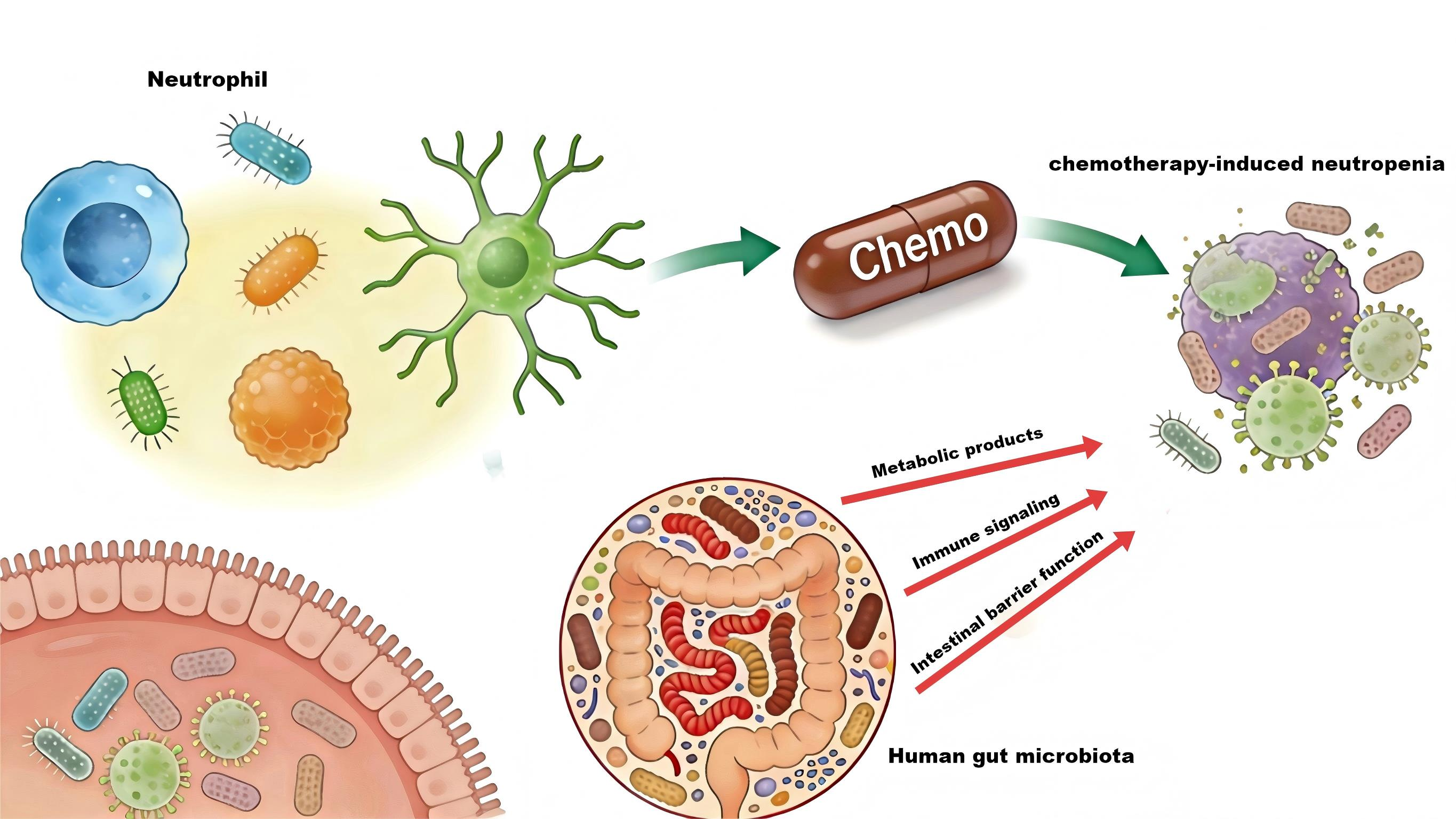
Advances in Understanding the Impact of Human Gut Microbiota on Chemotherapy-Induced Neutropenia

Abstract
1. Introduction
2. Chemotherapy and Chemotherapy-Induced Neutropenia

| Study | Study Design | Country | Patients | Outcomes |
|---|---|---|---|---|
| Gomez et al. [23] | Single-center, prospective observational study | Spain | 157 patients with hematologic cancers or solid tumors | In total, 45.0% developed severe neutropenia. A total of 1.7% met sepsis criteria, with all cases progressing to septic shock. |
| Frairia, et al. [24] | Retrospective cohort study | Italy | 334 adult AML patients receiving intensive induction chemotherapy | Overall, 19% had bloodstream infections, 10% had pneumonia, 3% had neutropenic enterocolitis, and 1.4% had central venous catheter infections. In total, 5% developed SIRS, with 24% progressing to sepsis and 51% progressing to septic shock. |
| Fedhila et al. [25] | Prospective, longitudinal descriptive study | France | 32 pediatric patients with hematological or solid tumors presenting with neutropenic fever | Overall, 18% had microbiologically documented fever; 2% died from septic shock. |
| de Jonge et al. [26] | Non-inferiority, open-label, multicenter, randomized trial | Netherlands | 281 adults receiving intensive chemotherapy or HSCT for hematological malignancies with fever of unknown origin during high-risk CIN | 17% treatment failure was observed (which was defined as the occurrence of recurrent fever or carbapenem-sensitive infection on days 4–9, as well as the development of septic shock, respiratory failure, or death prior to neutrophil recovery) |
| de la Court et al. [27] | Retrospective cohort study | Netherlands | 372 adults receiving chemotherapy for hematological malignancies with protracted CIN | Bloodstream infections occurred in 20.1% of patients. |
| Charakopoulos et al. [28] | Case report | Greece | 46-year-old male with ALL (t(12;17) (p13;q21)/TAF15-ZNF384) | Febrile neutropenia on day 22 of chemotherapy, followed by fulminant Aeromonas hydrophila soft-tissue infection, was reported. |
3. Chemotherapeutic Agents and Microbiome Signatures
4. Gut Microbiota Dysbiosis and Chemotherapy-Induced Neutropenia
4.1. Immune-Regulatory Pathways
4.2. Metabolic Pathways
4.3. Barrier Protection Function
5. Therapeutics and Limitations
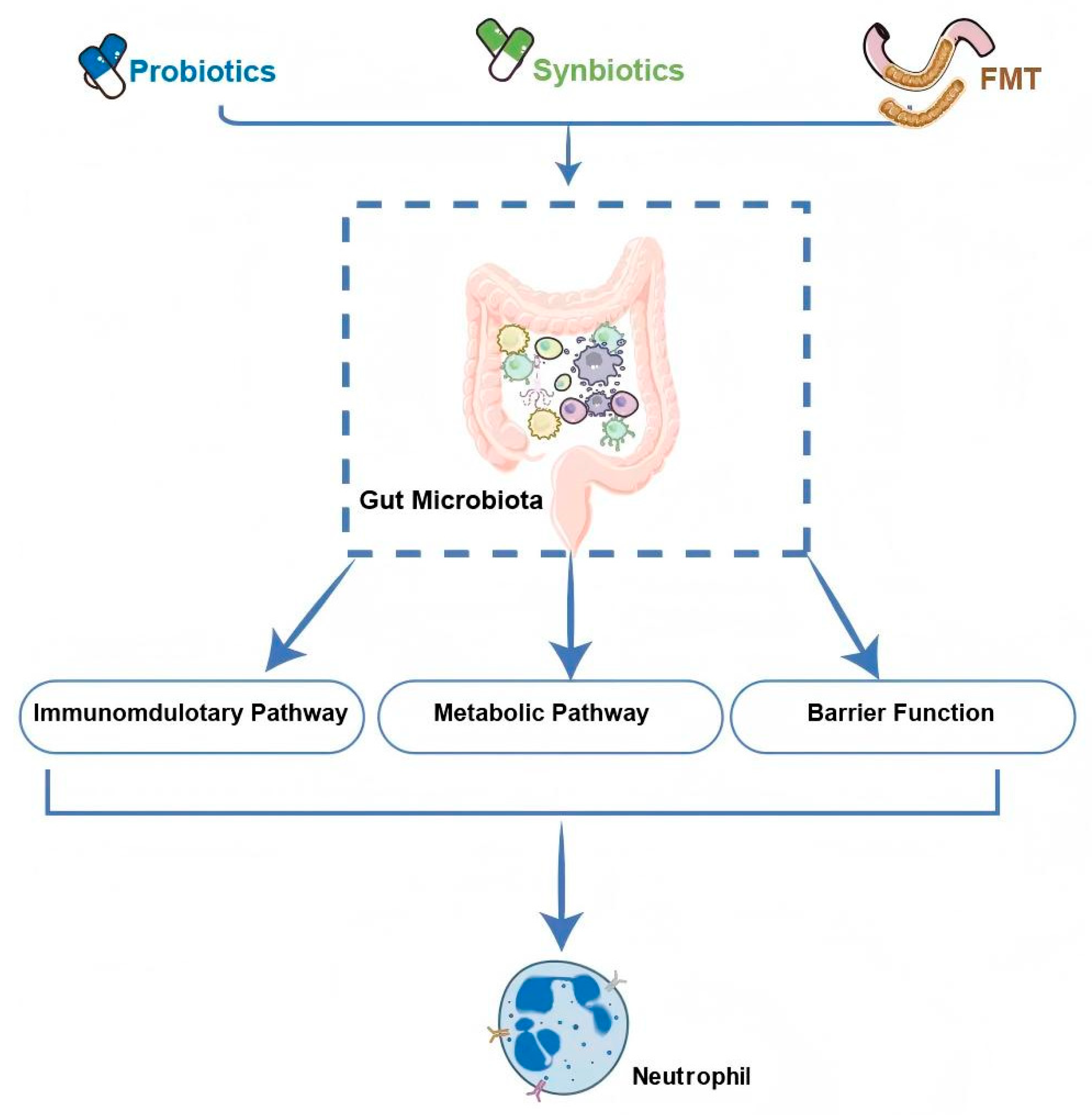
5.1. Probiotics, Postbiotics, and Synbiotics
| Study | Study Design | Intervention | Cancer Type | Subjects | Outcomes |
|---|---|---|---|---|---|
| Fukaya et al. [100] | RCT (n = 42) | Synbiotics | Esophageal Cancer | Human | Reduced incidence of grade 3 gastrointestinal toxicity and bacteremia during chemotherapy. |
| Motoori et al. [78] | RCT (n = 81) | Synbiotics combined with enteral nutrition | Esophageal Cancer | Human | Significantly reduced incidence of grade 4 neutropenia. Increased alpha diversity and acetic acid concentration compared to antibiotic group. |
| Motoori et al. [103] | RCT (n = 61) | Synbiotics | Esophageal Cancer | Human | Lower incidence of febrile neutropenia (synbiotics 10/30 vs. control 19/31, p = 0.029). |
| Stene et al. [104] | Controlled trial (n = 30) | Synbiotics | Colorectal Cancer | Human | Greater preservation of bacterial species (25.1% reduction vs. 55.4% in prebiotic group). |
| Eghbali et al. [105] | RCT (n = 113) | 5 × 10⁹ CFU LactoCare synbiotic | ALL | Human | Lower incidence of chemotherapy-induced diarrhea relative to the placebo group (3.7%–0% vs. <10%–13.5%, days 1–7). |
| Yazdandoust et al. [101] | RCT (n = 40) | Synbiotic mixture (7 bacterial strains plus fructo-oligosaccharides) | allo-HSCT | Human | Lower incidence of severe aGVHD (0% vs. 25% control). Improved 12-month overall survival (90% vs. 75%). |
| Mizutani et al. [106] | RCT (n = 12) | Synbiotic (Bifidobacterium longum BB536 and guar gum) | allo-HSCT | Human | Reduced duration of grade ≥ 3 diarrhea (2.5 vs. 6.5 days) and hospital stay (31.5 vs. 43 days). No synbiotic-related infections observed. |
| Batista et al. [97] | NP | Probiotics (heat-killed L.delbrueckii CIDCA 133) | 5-Fluorouracil drug-induced Mucositis | Mice | Reduced infiltration of neutrophils into intestinal mucosa. Ameliorated intestinal epithelial damage caused by 5-FU. |
| Nobre et al. [107] | NP | Probiotics (paraprobiotic E. faecalis formulation) | Irinotecan-induced intestinal mucositis | Mice | Inhibited irinotecan-induced translocation of bacteria into blood. |
| Ali et al. [96] | NP | Probiotics and postbiotics (Limosilactobacillus reuteri PSC102) | Cyclophosphamide- treated rats | Mice | Improved absolute neutrophil counts, enhanced neutrophil migration/phagocytosis, and modulated microbiota (increased abundance of Bacteroidetes/Firmicutes and decreased abundance of Proteobacteria). |
| Tang, et al. [108] | NP | Probiotics (Lactobacillus reuteri and Clostridium butyricum Miyairi 588) | 5FU-induced colitis diarrhea | Rats | Reduced neutrophil infiltration and inflammation; preserved mucosal barrier integrity through antioxidant and anti-apoptotic effects; and modulated cytokine and aquaporin expression. |
| Gorshein et al. [98] | RCT (n = 31) | Probiotics (Lactobacillus rhamnosus GG) | allo-HSCT | Human | No significant alteration in gut microbiome or protection against GVHD after allo-HSCT. |
| Mehta et al. [99] | Case report | Probiotics (Lactobacillus acidophilus) | Autologous HSCT | Human | Developed Lactobacillus acidophilus-induced sepsis. |
| Fukushima et al. [109] | Retrospective study (n = 40) | Clostridium butyricum MIYAIRI 588 | allo-HSCT | Human | Contributed to maintenance of gut microbiota diversity early after HSCT. |
5.2. FMT
| Study | Subject | Disease | Intervention | Result (+/−) |
|---|---|---|---|---|
| Fujimoto et al. [122] | Gnotobiotic C57BL/6 mice mono-colonized with E. faecalis | Allo-HSCT | Purified endolysin against E. faecalis | Researchers noted potential clinical utility for reducing aGVHD risk. |
| Rashidi et al. [133] | 100 patients | AML induction chemotherapy and allo-HSCT | FMT capsule (≥1 × 10¹¹ bacteria, ≥40% viability) | FMT was associated with a higher risk for aGVHD in allo-HSCT recipients. |
| Mullish et al. [137] | 50 adult patients | Allo-HSCT | Capsulized IMT performed shortly before HSCT conditioning | Results were incomplete. |
| Rashidi et al. [123] | 74 patients | Allo-HSCT and AML | Third-party FMT (five oral capsules administered simultaneously) | FMT was safe and improved intestinal dysbiosis, but it did not reduce infection rates. |
| van Lier et al. [124] | 15 patients | Allo-HSCT (AML, myelodysplastic syndrome, lymphoma, myeloproliferative disorder) | FMT from healthy volunteers with Western diets | Unrelated-donor FMT improved microbiome diversity, promoted activity of butyrate-producing bacteria, and achieved remission in steroid-resistant/dependent GvHD. |
| Reddi et al. [125] | 20 patients | Allo-HSCT | FMT performed at a median of 25 days post-HSCT | FMT was safe, restored microbiota diversity, and increased quantities of beneficial commensal species. |
| Goeser, et al. [138] | 11 Patients | Steroid-refractory GVHD | FMT via capsules | Treatment significantly reduced severity and staging of steroid-refractory GVHD. |
| Zhao et al. [127] | 55 patients | Steroid-refractory acute gut GVHD | FMT after diagnosis of steroid-refractory GVHD | FMT significantly improved clinical remission and 90-day overall survival rates compared to controls. |
| Innes et al. [128] | 19 patients | MDRO colonized HSCT | FMT administered 2–6 weeks before HSCT conditioning | Non-FMT patients had significantly lower survival rates and higher non-relapse mortality. |
| Sofi et al. [129] | C57BL/6 (B6; H-2b, CD45.2), B6.Ly5.1 (CD45.1), BD2F1 (H-2b/d), and BALB/c (H-2d) mice | Murine GVHD model | Dirty bedding/feces transferred pre- and post-BMT | Single-strain Bacteroides fragilis protected gut integrity and reduced GVHD. |
| Ladas et al. [135] | 161 patients | Allo- HSCT | Administration of L. plantarum 299v from conditioning start to day 56 post-HSCT | Probiotics were ineffective in preventing gastrointestinal aGVHD. |
| Youngster et al. [130] | 21 patients | Steroid-resistant/dependent gastrointestinal aGvHD | FMT via capsules | First FMT resulted in a 52.4% clinical response at 28 days, with increased abundance of beneficial Clostridiales and reduced abundance of pathogenic Enterobacteriales. |
| Yang et al. [139] | 12 patients | Refractory chronic GVHD | FMT | The researchers observed increased gut microbial diversity, abundance of SCFA-producing bacteria, fecal SCFA levels, and levels of peripheral CD4(+)CD127(−) Treg cells; reduced pathogenic bacteria abundance and inflammatory cell infiltration; and enhanced colonic Treg infiltration. |
| Merli et al. [140] | 5 pediatric patients | Allo-HSCT | FMT using samples from the same donor | Treatment led to 80% (4/5) MDR decolonization within one week post-FMT. |
| Rashidi et al. [131] | 74 patients | T-cell replete allo-HSCT or AML chemotherapy | FMT capsule (≥1 × 10¹¹ bacteria, ≥40% viability) | FMT potentially protects against aGVHD, especially in patients with severe microbiota disruptions. |
6. Conclusions
Author Contributions
Funding
Institutional Review Board Statement
Informed Consent Statement
Data Availability Statement
Conflicts of Interest
References
- GBD 2023 Cancer Collaborators. The global, regional, and national burden of cancer, 1990–2023, with forecasts to 2050: A systematic analysis for the Global Burden of Disease Study 2023. Lancet 2025, 406, 1565–1586. [Google Scholar] [CrossRef]
- Han, H.H.; Wang, H.M.; Jangili, P.; Li, M.; Wu, L.; Zang, Y.; Sedgwick, A.C.; Li, J.; He, X.P.; James, T.D.; et al. The design of small-molecule prodrugs and activatable phototherapeutics for cancer therapy. Chem. Soc. Rev. 2023, 52, 879–920. [Google Scholar] [CrossRef]
- Wang, Z.K.; Zhang, Z.W.; Lyu, Z.S.; Xing, T.; Liang, M.; Shen, M.Z.; Li, C.Y.; Zhang, X.Y.; Chen, D.D.; Wang, Y.Z.; et al. Inhibition of TGF-β signaling in bone marrow endothelial cells promotes hematopoietic recovery in acute myeloid leukemia patients. Cancer Lett. 2024, 605, 217290. [Google Scholar] [CrossRef] [PubMed]
- Maschmeyer, G.; Bullinger, L.; Garcia-Vidal, C.; Herbrecht, R.; Maertens, J.; Menna, P.; Pagano, L.; Thiebaut-Bertrand, A.; Calandra, T. Infectious complications of targeted drugs and biotherapies in acute leukemia. Clinical practice guidelines by the European Conference on Infections in Leukemia (ECIL), a joint venture of the European Group for Blood and Marrow Transplantation (EBMT), the European Organization for Research and Treatment of Cancer (EORTC), the International Immunocompromised Host Society (ICHS) and the European Leukemia Net (ELN). Leukemia 2022, 36, 1215–1226, Erratum in Leukemia 2022, 36, 1450. [Google Scholar] [CrossRef]
- Getz, K.D.; Szymczak, J.E.; Li, Y.; Madding, R.; Huang, Y.S.V.; Aftandilian, C.; Arnold, S.D.; Bona, K.O.; Caywood, E.; Collier, A.B.; et al. Medical Outcomes, Quality of Life, and Family Perceptions for Outpatient vs Inpatient Neutropenia Management After Chemotherapy for Pediatric Acute Myeloid Leukemia. JAMA Netw. Open 2021, 4, e2128385. [Google Scholar] [CrossRef]
- Böhm, D.; Russ, E.; Guchelaar, H.J.; Ziemons, J.; Penders, J.; Smidt, M.L.; van Best, N.; Deenen, M.J. The role of the gut microbiota in chemotherapy response, efficacy and toxicity: A systematic review. NPJ Precis. Oncol. 2025, 9, 265. [Google Scholar] [CrossRef]
- Li, S.; Zhu, S.; Yu, J. The role of gut microbiota and metabolites in cancer chemotherapy. J. Adv. Res. 2024, 64, 223–235. [Google Scholar] [CrossRef]
- Yang, Q.; Wang, B.; Zheng, Q.; Li, H.; Meng, X.; Zhou, F.; Zhang, L. A Review of Gut Microbiota-Derived Metabolites in Tumor Progression and Cancer Therapy. Adv. Sci. 2023, 10, e2207366. [Google Scholar] [CrossRef] [PubMed]
- Nakagaki, M.; Hajkowicz, K.; Roberts, J.A.; Henden, A.S. Cause and effect? A review of the impact of antibiotics on the gut microbiome in patients undergoing hematopoietic stem cell transplantation. Expert Rev. Anti Infect. Ther. 2025, 23, 863–876. [Google Scholar] [CrossRef] [PubMed]
- Dumitru, I.G.; Todor, S.B.; Ichim, C.; Helgiu, C.; Helgiu, A. A Literature Review on the Impact of the Gut Microbiome on Cancer Treatment Efficacy, Disease Evolution and Toxicity: The Implications for Hematological Malignancies. J. Clin. Med. 2025, 14, 2982. [Google Scholar] [CrossRef]
- Sadeghloo, Z.; Sadeghi, A. Gut microbiota as a hidden modulator of chemotherapy: Implications for colorectal cancer treatment. Discov. Oncol. 2025, 16, 1717. [Google Scholar] [CrossRef]
- Siwicki, M.; Kubes, P. Neutrophils in host defense, healing, and hypersensitivity: Dynamic cells within a dynamic host. J. Allergy Clin. Immunol. 2023, 151, 634–655. [Google Scholar] [CrossRef]
- Burn, G.L.; Foti, A.; Marsman, G.; Patel, D.F.; Zychlinsky, A. The Neutrophil. Immunity 2021, 54, 1377–1391. [Google Scholar] [CrossRef]
- Rashidi, A.; Ebadi, M.; Rehman, T.U.; Elhusseini, H.; Halaweish, H.F.; Kaiser, T.; Holtan, S.G.; Khoruts, A.; Weisdorf, D.J.; Staley, C. Lasting shift in the gut microbiota in patients with acute myeloid leukemia. Blood Adv. 2022, 6, 3451–3457. [Google Scholar] [CrossRef] [PubMed]
- Messina, J.A.; Tan, C.Y.; Ren, Y.; Hill, L.; Bush, A.; Lew, M.; Andermann, T.; Peled, J.U.; Gomes, A.; van den Brink, M.R.; et al. Enterococcus Intestinal Domination is Associated with Increased Mortality in the Acute Leukemia Chemotherapy Population. Clin. Infect. Dis. 2021, 78, 414–422. [Google Scholar] [CrossRef] [PubMed]
- Sardzikova, S.; Andrijkova, K.; Svec, P.; Beke, G.; Klucar, L.; Minarik, G.; Bielik, V.; Kolenova, A.; Soltys, K. Gut diversity and the resistome as biomarkers of febrile neutropenia outcome in paediatric oncology patients undergoing hematopoietic stem cell transplantation. Sci. Rep. 2024, 14, 5504. [Google Scholar] [CrossRef]
- Sørum, M.E.; Boulund, U.; De Pietri, S.; Weischendorff, S.; Enevold, C.; Rathe, M.; Als-Nielsen, B.; Hasle, H.; Pamp, S.; Stokholm, J.; et al. Changes in gut microbiota predict neutropenia after induction treatment in childhood acute lymphoblastic leukemia. Blood Adv. 2025, 9, 1508–1521. [Google Scholar] [CrossRef]
- Galloway-Peña, J.R.; Shi, Y.; Peterson, C.B.; Sahasrabhojane, P.; Gopalakrishnan, V.; Brumlow, C.E.; Daver, N.G.; Alfayez, M.; Boddu, P.C.; Khan, M.A.W.; et al. Gut Microbiome Signatures Are Predictive of Infectious Risk Following Induction Therapy for Acute Myeloid Leukemia. Clin. Infect. Dis. 2020, 71, 63–71. [Google Scholar] [CrossRef]
- Gagelmann, N.; Wulf, G.G.; Duell, J.; Glass, B.; van Heteren, P.; von Tresckow, B.; Fischer, M.; Penack, O.; Ayuk, F.; Einsele, H.; et al. Hematopoietic stem cell boost for persistent neutropenia after CAR T-cell therapy: A GLA/DRST study. Blood Adv. 2023, 7, 555–559. [Google Scholar] [CrossRef]
- Koizumi, Y.; Okuno, T.; Minamiguchi, H.; Hodohara, K.; Mikamo, H.; Andoh, A. Survival of a case of Bacillus cereus meningitis with brain abscess presenting as immune reconstitution syndrome after febrile neutropenia—A case report and literature review. BMC Infect. Dis. 2020, 20, 15. [Google Scholar] [CrossRef] [PubMed]
- Zhang, D.; Chen, Z.; Wu, J.; Ning, N.; Chen, L.; Tian, X. Chemotherapy-induced febrile neutropenia followed by acute hepatitis E virus infection in rectal cancer patient with synchronous liver and lung metastasis: A case report. BMC Infect. Dis. 2025, 25, 693. [Google Scholar] [CrossRef]
- Pérez, C.G.; Martín-Falquina, I.C.; Ledesma, I.R.; Zarzuela, A.C.; Alsar, J.S.; CaamañO, D.J.; Rodríguez, R.J.; Girón, C.G.; César, G.P.; Irene, C.M.F.; et al. Sepsis due to phlegmonous gastritis in a cancer patient. Rev. Esp. Enferm. Dig. 2023, 115, 143–144. [Google Scholar]
- Gomez, B.; Almarza, F.; López-Almaraz, R.; Quintana, O.; Mintegi, S. Characteristics of oncology patients with fever and invasive bacterial infections diagnosed. Acta Paediatr. 2024, 113, 2550–2555. [Google Scholar] [CrossRef] [PubMed]
- Frairia, C.; Nicolino, B.; Secreto, C.; Messa, E.; Arrigo, G.; Busca, A.; Cerrano, M.; D’Ardìa, S.; Dellacasa, C.; Evangelista, A.; et al. Validation of National Early Warning Score and Quick Sequential (sepsis-related) Organ Failure Assessment in acute myeloid leukaemia patients treated with intensive chemotherapy. Eur. J. Haematol. 2023, 110, 696–705. [Google Scholar] [CrossRef]
- Fedhila, F.; Ahmed, S.B.; Jbebli, E.; Mezghani, F.; Haddad, S.; Rhayem, S.; Khemiri, M. Chemotherapy-induced febrile neutropenia in a Tunisian Department of Pediatric Oncology. Pan Afr. Med. J. 2022, 42, 34. [Google Scholar] [PubMed]
- De Jonge, N.A.; Sikkens, J.J.; Zweegman, S.; Beeker, A.; Ypma, P.; Herbers, A.H.; Vasmel, W.; de Kreuk, A.; Coenen, J.L.; Lissenberg-Witte, B.; et al. Short versus extended treatment with a carbapenem in patients with high-risk fever of unknown origin during neutropenia: A non-inferiority, open-label, multicentre, randomised trial. Clin. Infect. Dis. 2013, 56, 1284–1292, Erratum in Lancet Haematol. 2022, 9, e563–e572. [Google Scholar] [CrossRef]
- De la Court, J.R.; Heijmans, J.; Huynh, J.; Sieswerda, E.; de Jonge, N.A.; van Dijk, K.; Sigaloff, K.C.; Schade, R.P. Guidance of empirical antimicrobial therapy by surveillance cultures in high-risk neutropenic patients: A retrospective cohort study. Antimicrob. Resist. Infect. Control 2022, 11, 160. [Google Scholar] [CrossRef]
- Charakopoulos, E.; Diamantopoulos, P.T.; Zervakis, K.; Giannakopoulou, N.; Psichogiou, M.; Viniou, N.A. A case report of a fulminant Aeromonas hydrophila soft tissue infection in a patient with acute lymphoblastic leukemia harboring a rare translocation. Curr. Med. Res. Opin. 2022, 38, 1125–1132. [Google Scholar] [CrossRef]
- Lackraj, T.; Ben Barouch, S.; Medeiros, J.J.; Pedersen, S.; Danesh, A.; Bakhtiari, M.; Hong, M.; Tong, K.; Joynt, J.; Arruda, A.; et al. Clinical significance of clonal hematopoiesis in the setting of autologous stem cell transplantation for lymphoma. Am. J. Hematol. 2022, 97, 1538–1547. [Google Scholar] [CrossRef] [PubMed]
- Rejeski, K.; Perez, A.; Iacoboni, G.; Blumenberg, V.; Bücklein, V.L.; Völkl, S.; Penack, O.; Albanyan, O.; Stock, S.; Müller, F.; et al. Severe hematotoxicity after CD19 CAR-T therapy is associated with suppressive immune dysregulation and limited CAR-T expansion. Sci. Adv. 2023, 9, eadg3919. [Google Scholar] [CrossRef]
- Casanovas-Blanco, M.; Serrahima-Mackay, A. Febrile neutropenia management in cancer patients receiving anti-cancer agents’ treatment: Deepening the search to offer the best care. A critical review follow-up. Crit. Rev. Oncol. Hematol. 2020, 153, 103042. [Google Scholar] [CrossRef] [PubMed]
- Zeng, Z.; Huang, Z.; Yue, W.; Nawaz, S.; Chen, X.; Liu, J. Lactobacillus plantarum modulate gut microbiota and intestinal immunity in cyclophosphamide-treated mice model. Biomed. Pharmacother. 2023, 169, 115812. [Google Scholar] [CrossRef] [PubMed]
- Huang, R.; Xie, J.; Liu, X.; Shen, M. Sulfated modification enhances the modulatory effect of yam polysaccharide on gut microbiota in cyclophosphamide-treated mice. Food Res. Int. 2021, 145, 110393. [Google Scholar] [CrossRef]
- Chen, T.; Shen, M.; Yu, Q.; Chen, Y.; Wen, H.; Lu, H.; Chen, S.; Xie, J. Purple red rice anthocyanins alleviate intestinal damage in cyclophosphamide-induced mice associated with modulation of intestinal barrier function and gut microbiota. Food Chem. 2022, 397, 133768. [Google Scholar] [CrossRef]
- Xu, X.; Zhang, X. Effects of cyclophosphamide on immune system and gut microbiota in mice. Microbiol. Res. 2015, 171, 97–106. [Google Scholar] [CrossRef]
- Dong, Y.; Zhang, L.; Qiu, D.; Yao, R.; Jia, H.; Wang, H.; Zhou, L.; Zhang, J.; Zhang, N. Lactobacillus murinus ZNL-13 Modulates Intestinal Barrier Damage and Gut Microbiota in Cyclophosphamide-Induced Immunosuppressed Mice. Foods 2025, 14, 1416. [Google Scholar] [CrossRef] [PubMed]
- Trepka, K.R.; Kidder, W.A.; Kyaw, T.S.; Halsey, T.; Olson, C.A.; Ortega, E.F.; Noecker, C.; Upadhyay, V.; Stanfield, D.; Steiding, P.; et al. Expansion of a bacterial operon during cancer treatment ameliorates fluoropyrimidine toxicity. Sci. Transl. Med. 2025, 17, eadq8870. [Google Scholar] [CrossRef]
- Menezes-Garcia, Z.; Do Nascimento Arifa, R.D.; Acúrcio, L.; Brito, C.B.; Gouvea, J.O.; Lima, R.L.; Bastos, R.W.; Fialho Dias, A.C.; Antunes Dourado, L.P.; Bastos, L.F.; et al. Colonization by Enterobacteriaceae is crucial for acute inflammatory responses in murine small intestine via regulation of corticosterone production. Gut Microbes 2020, 11, 1531–1546. [Google Scholar] [CrossRef]
- Yang, Q.; Zhang, X.; Luo, Y.; Jiang, Y.; You, J.; Li, C.; Ye, F.; Chen, T.; Chen, Q. Ameliorative effect of “intestinal-vaginal” probiotics on 5-fluorouracil-induced microbial dysbiosis in colorectal cancer. Food Funct. 2025, 16, 4001–4022. [Google Scholar] [CrossRef]
- Nguyen, T.T.M.; Mai, V.H.; Kim, H.S.; Kim, D.; Seo, M.; An, Y.J.; Park, S. Real-Time Monitoring of Host-Gut Microbial Interspecies Interaction in Anticancer Drug Metabolism. J. Am. Chem. Soc. 2022, 144, 8529–8535. [Google Scholar] [CrossRef]
- Zhang, S.; Yang, Y.; Weng, W.; Guo, B.; Cai, G.; Ma, Y.; Cai, S. Fusobacterium nucleatum promotes chemoresistance to 5-fluorouracil by upregulation of BIRC3 expression in colorectal cancer. J. Exp. Clin. Cancer Res. 2019, 38, 14. [Google Scholar] [CrossRef]
- Nayak, R.R.; Alexander, M.; Deshpande, I.; Stapleton-Gray, K.; Rimal, B.; Patterson, A.D.; Ubeda, C.; Scher, J.U.; Turnbaugh, P.J. Methotrexate impacts conserved pathways in diverse human gut bacteria leading to decreased host immune activation. Cell Host Microbe 2021, 29, 362–377.e11. [Google Scholar] [CrossRef]
- Artacho, A.; Isaac, S.; Nayak, R.; Flor-Duro, A.; Alexander, M.; Koo, I.; Manasson, J.; Smith, P.B.; Rosenthal, P.; Homsi, Y.; et al. The Pretreatment Gut Microbiome Is Associated With Lack of Response to Methotrexate in New-Onset Rheumatoid Arthritis. Arthritis Rheumatol. 2021, 73, 931–942. [Google Scholar] [CrossRef]
- Zhou, B.; Xia, X.; Wang, P.; Chen, S.; Yu, C.; Huang, R.; Zhang, R.; Wang, Y.; Lu, L.; Yuan, F.; et al. Induction and Amelioration of Methotrexate-Induced Gastrointestinal Toxicity are Related to Immune Response and Gut Microbiota. EBioMedicine 2018, 33, 122–133. [Google Scholar] [CrossRef]
- Aarnoutse, R.; Ziemons, J.; Hillege, L.E.; de Vos-Geelen, J.; de Boer, M.; Bisschop, S.M.; Vriens, B.E.; Vincent, J.; van de Wouw, A.J.; Le, G.N.; et al. Changes in intestinal microbiota in postmenopausal oestrogen receptor-positive breast cancer patients treated with (neo)adjuvant chemotherapy. NPJ Breast Cancer 2022, 8, 89. [Google Scholar] [CrossRef]
- Kong, C.; Gao, R.; Yan, X.; Huang, L.; He, J.; Li, H.; You, J.; Qin, H. Alterations in intestinal microbiota of colorectal cancer patients receiving radical surgery combined with adjuvant CapeOx therapy. Sci. China Life Sci. 2019, 62, 1178–1193. [Google Scholar] [CrossRef]
- Chen, W.J.; Chen, Y.T.; Ko, J.L.; Chen, J.Y.; Zheng, J.Y.; Liao, J.W.; Ou, C.C. Butyrate modulates gut microbiota and anti-inflammatory response in attenuating cisplatin-induced kidney injury. Biomed. Pharmacother. 2024, 181, 117689. [Google Scholar] [CrossRef]
- Gong, S.; Feng, Y.; Zeng, Y.; Zhang, H.; Pan, M.; He, F.; Wu, R.; Chen, J.; Lu, J.; Zhang, S.; et al. Gut microbiota accelerates cisplatin-induced acute liver injury associated with robust inflammation and oxidative stress in mice. J. Transl. Med. 2021, 19, 147. [Google Scholar] [CrossRef]
- Chambers, L.M.; Esakov Rhoades, E.L.; Bharti, R.; Braley, C.; Tewari, S.; Trestan, L.; Alali, Z.; Bayik, D.; Lathia, J.D.; Sangwan, N.; et al. Disruption of the Gut Microbiota Confers Cisplatin Resistance in Epithelial Ovarian Cancer. Cancer Res. 2022, 82, 4654–4669. [Google Scholar] [CrossRef]
- Liu, Q.; Lu, Y.; Xiao, Y.; Yuan, L.; Hu, D.; Hao, Y.; Han, R.; Peng, J.; Qian, Z. Effects of Docetaxel Injection and Docetaxel Micelles on the Intestinal Barrier and Intestinal Microbiota. Adv. Sci. 2021, 8, e2102952. [Google Scholar] [CrossRef]
- Panebianco, C.; Pisati, F.; Villani, A.; Andolfo, A.; Ulaszewska, M.; Bellini, E.; Ferro, C.; Lombardi, R.; Orsenigo, F.; Latiano, T.P.; et al. Counteracting gemcitabine+nab-paclitaxel induced dysbiosis in KRAS wild type and KRAS(G12D) mutated pancreatic cancer in vivo model. Cell Death Discov. 2023, 9, 116. [Google Scholar] [CrossRef]
- Wardill, H.R.; van der Aa, S.; da Silva Ferreira, A.R.; Havinga, R.; Tissing, W.; Harmsen, H. Antibiotic-induced disruption of the microbiome exacerbates chemotherapy-induced diarrhoea and can be mitigated with autologous faecal microbiota transplantation. Eur. J. Cancer 2021, 153, 27–39. [Google Scholar] [CrossRef]
- Zhang, M.; Guo, H. Conversation between host and gut microbiota unveils a “silver bullet” therapeutic option for chemotherapy. Cell Host Microbe 2024, 32, 1455–1457. [Google Scholar] [CrossRef]
- Otto-Dobos, L.D.; Strehle, L.D.; Loman, B.R.; Seng, M.M.; Sardesai, S.D.; Williams, N.O.; Gatti-Mays, M.E.; Stover, D.G.; Sudheendra, P.K.; Wesolowski, R.; et al. Baseline gut microbiome alpha diversity predicts chemotherapy-induced gastrointestinal symptoms in patients with breast cancer. NPJ Breast Cancer 2024, 10, 99. [Google Scholar] [CrossRef]
- Fernandez Sanchez, J.; Maknojia, A.A.; King, K.Y. Blood and guts: How the intestinal microbiome shapes hematopoiesis and treatment of hematologic disease. Blood 2024, 143, 1689–1701. [Google Scholar] [CrossRef]
- Hakim, H.; Dallas, R.; Wolf, J.; Tang, L.; Schultz-Cherry, S.; Darling, V.; Johnson, C.; Karlsson, E.A.; Chang, T.C.; Jeha, S.; et al. Gut Microbiome Composition Predicts Infection Risk During Chemotherapy in Children With Acute Lymphoblastic Leukemia. Clin. Infect. Dis. 2018, 67, 541–548. [Google Scholar] [CrossRef]
- Schwabkey, Z.I.; Wiesnoski, D.H.; Chang, C.C.; Tsai, W.B.; Pham, D.; Ahmed, S.S.; Hayase, T.; Ortega Turrubiates, M.R.; El-Himri, R.K.; Sanchez, C.A.; et al. Diet-derived metabolites and mucus link the gut microbiome to fever after cytotoxic cancer treatment. Sci. Transl. Med. 2022, 14, eabo3445. [Google Scholar] [CrossRef]
- Rashidi, A.; Peled, J.U.; Ebadi, M.; Rehman, T.U.; Elhusseini, H.; Marcello, L.T.; Halaweish, H.; Kaiser, T.; Holtan, S.G.; Khoruts, A.; et al. Protective Effect of Intestinal Blautia Against Neutropenic Fever in Allogeneic Transplant Recipients. Clin. Infect. Dis. 2022, 75, 1912–1920. [Google Scholar] [CrossRef]
- Yoon, S.E.; Kang, W.; Choi, S.; Park, Y.; Chalita, M.; Kim, H.; Lee, J.H.; Hyun, D.W.; Ryu, K.J.; Sung, H.; et al. The influence of microbial dysbiosis on immunochemotherapy-related efficacy and safety in diffuse large B-cell lymphoma. Blood 2023, 141, 2224–2238. [Google Scholar] [CrossRef]
- Nguyen, S.M.; Tran, H.T.; Long, J.; Shrubsole, M.J.; Cai, H.; Yang, Y.; Cai, Q.; Tran, T.V.; Zheng, W.; Shu, X.O. Gut microbiome in association with chemotherapy-induced toxicities among patients with breast cancer. Cancer 2024, 130, 2014–2030. [Google Scholar] [CrossRef]
- Viaud, S.; Saccheri, F.; Mignot, G.; Yamazaki, T.; Daillère, R.; Hannani, D.; Enot, D.P.; Pfirschke, C.; Engblom, C.; Pittet, M.J.; et al. The intestinal microbiota modulates the anticancer immune effects of cyclophosphamide. Science 2013, 342, 971–976. [Google Scholar] [CrossRef]
- Xu, Y.; Du, H.; Chen, Y.; Ma, C.; Zhang, Q.; Li, H.; Xie, Z.; Hong, Y. Targeting the gut microbiota to alleviate chemotherapy-induced toxicity in cancer. Crit. Rev. Microbiol. 2024, 50, 564–580. [Google Scholar] [CrossRef]
- Pötgens, S.A.; Lecop, S.; Havelange, V.; Li, F.; Neyrinck, A.M.; Neveux, N.; Maertens, J.; Walter, J.; Schoemans, H.; Delzenne, N.M.; et al. Gut microbiota alterations induced by intensive chemotherapy in acute myeloid leukaemia patients are associated with gut barrier dysfunction and body weight loss. Clin. Nutr. 2023, 42, 2214–2228. [Google Scholar] [CrossRef]
- Wang, R.; Yang, X.; Liu, J.; Zhong, F.; Zhang, C.; Chen, Y.; Sun, T.; Ji, C.; Ma, D. Gut microbiota regulates acute myeloid leukaemia via alteration of intestinal barrier function mediated by butyrate. Nat. Commun. 2022, 13, 2522. [Google Scholar] [CrossRef]
- Zhong, F.L.; He, J.J.; Bai, K.H.; Shao, R.N.; Wu, G.Y.; Tian, X.P.; Wang, D.W.; Dai, Y.J.; Chen, S.L. Tigecycline-induced coagulation gene prognostic prediction model and intestinal flora signature in AML. Front Immunol. 2024, 15, 1486592. [Google Scholar] [CrossRef]
- Rashidi, A.; Ebadi, M.; Rehman, T.U.; Elhusseini, H.; Halaweish, H.; Holtan, S.G.; Ramamoorthy, S.; Weisdorf, D.J.; Khoruts, A.; Staley, C. Loss of microbiota-derived protective metabolites after neutropenic fever. Sci. Rep. 2022, 12, 6244. [Google Scholar] [CrossRef]
- Zhang, D.; Chen, G.; Manwani, D.; Mortha, A.; Xu, C.; Faith, J.J.; Burk, R.D.; Kunisaki, Y.; Jang, J.E.; Scheiermann, C.; et al. Neutrophil ageing is regulated by the microbiome. Nature 2015, 525, 528–532. [Google Scholar] [CrossRef]
- Chen, X.; Hashimoto, D.; Ebata, K.; Takahashi, S.; Shimizu, Y.; Shinozaki, R.; Hasegawa, Y.; Kikuchi, R.; Senjo, H.; Yoneda, K.; et al. Reactive granulopoiesis depends on T-cell production of IL-17A and neutropenia-associated alteration of gut microbiota. Proc. Natl. Acad. Sci. USA 2022, 119, e2211230119. [Google Scholar] [CrossRef]
- Danne, C.; Skerniskyte, J.; Marteyn, B.; Sokol, H. Neutrophils: From IBD to the gut microbiota. Nat. Rev. Gastroenterol. Hepatol. 2024, 21, 184–197. [Google Scholar] [CrossRef]
- Zhang, D.; Frenette, P.S. Cross talk between neutrophils and the microbiota. Blood 2019, 133, 2168–2177. [Google Scholar] [CrossRef]
- Zitvogel, L.; Daillère, R.; Roberti, M.P.; Routy, B.; Kroemer, G. Anticancer effects of the microbiome and its products. Nat. Rev. Microbiol. 2017, 15, 465–478. [Google Scholar] [CrossRef]
- Hueso, T.; Ekpe, K.; Mayeur, C.; Gatse, A.; Joncquel-Chevallier Curt, M.; Gricourt, G.; Rodriguez, C.; Burdet, C.; Ulmann, G.; Neut, C.; et al. Impact and consequences of intensive chemotherapy on intestinal barrier and microbiota in acute myeloid leukemia: The role of mucosal strengthening. Gut Microbes 2020, 12, 1800897. [Google Scholar] [CrossRef]
- Zidi, O.; Souai, N.; Raies, H.; Ben Ayed, F.; Mezlini, A.; Mezrioui, S.; Tranchida, F.; Sabatier, J.M.; Mosbah, A.; Cherif, A.; et al. Fecal Metabolic Profiling of Breast Cancer Patients during Neoadjuvant Chemotherapy Reveals Potential Biomarkers. Molecules 2021, 26, 2266. [Google Scholar] [CrossRef]
- Tan, J.; Taitz, J.; Nanan, R.; Grau, G.; Macia, L. Dysbiotic Gut Microbiota-Derived Metabolites and Their Role in Non-Communicable Diseases. Int. J. Mol. Sci. 2023, 24, 15256. [Google Scholar] [CrossRef]
- Li, G.; Lin, J.; Zhang, C.; Gao, H.; Lu, H.; Gao, X.; Zhu, R.; Li, Z.; Li, M.; Liu, Z. Microbiota metabolite butyrate constrains neutrophil functions and ameliorates mucosal inflammation in inflammatory bowel disease. Gut Microbes 2021, 13, 1968257. [Google Scholar] [CrossRef] [PubMed]
- Zucoloto, A.Z.; Schlechte, J.; Ignacio, A.; Thomson, C.A.; Pyke, S.; Yu, I.L.; Geuking, M.B.; McCoy, K.D.; Yipp, B.G.; Gillrie, M.R.; et al. Vascular traffic control of neutrophil recruitment to the liver by microbiota-endothelium crosstalk. Cell Rep. 2023, 42, 112507. [Google Scholar] [CrossRef]
- Xuan, W.; Wu, X.; Zheng, L.; Jia, H.; Zhang, X.; Zhang, X.; Cao, B. Gut microbiota-derived acetic acids promoted sepsis-induced acute respiratory distress syndrome by delaying neutrophil apoptosis through FABP4. Cell Mol. Life Sci. 2024, 81, 438. [Google Scholar] [CrossRef]
- Motoori, M.; Sugimura, K.; Tanaka, K.; Shiraishi, O.; Kimura, Y.; Miyata, H.; Yamasaki, M.; Makino, T.; Miyazaki, Y.; Iwama, M.; et al. Comparison of synbiotics combined with enteral nutrition and prophylactic antibiotics as supportive care in patients with esophageal cancer undergoing neoadjuvant chemotherapy: A multicenter randomized study. Clin. Nutr. 2022, 41, 1112–1121. [Google Scholar] [CrossRef] [PubMed]
- Orberg, E.T.; Meedt, E.; Hiergeist, A.; Xue, J.; Heinrich, P.; Ru, J.; Ghimire, S.; Miltiadous, O.; Lindner, S.; Tiefgraber, M.; et al. Bacteria and bacteriophage consortia are associated with protective intestinal metabolites in patients receiving stem cell transplantation. Nat. Cancer 2024, 5, 187–208. [Google Scholar] [CrossRef]
- Fernandez-Sanchez, J.; Rodgers, R.; Maknojia, A.A.; Shaikh, N.; Yan, H.; Mejia, M.E.; Hendricks, H.; Jenq, R.R.; Reddy, P.; Banerjee, R.; et al. Antibiotic-associated neutropenia is marked by the depletion of intestinal Lachnospiraceae and associated metabolites in pediatric patients. Hemasphere 2024, 8, e70038. [Google Scholar] [CrossRef]
- Wong, D.V.T.; Holanda, R.B.F.; Cajado, A.G.; Bandeira, A.M.; Pereira, J.F.B.; Amorim, J.O.; Torres, C.S.; Ferreira, L.M.M.; Lopes, M.H.S.; Oliveira, R.T.G.; et al. TLR4 deficiency upregulates TLR9 expression and enhances irinotecan-related intestinal mucositis and late-onset diarrhoea. Br. J. Pharmacol. 2021, 178, 4193–4209. [Google Scholar] [CrossRef]
- Gül, E.; Enz, U.; Maurer, L.; Abi Younes, A.; Fattinger, S.A.; Nguyen, B.D.; Hausmann, A.; Furter, M.; Barthel, M.; Sellin, M.E.; et al. Intraluminal neutrophils limit epithelium damage by reducing pathogen assault on intestinal epithelial cells during Salmonella gut infection. PLoS Pathog. 2023, 19, e1011235. [Google Scholar] [CrossRef]
- Schlechte, J.; Zucoloto, A.Z.; Yu, I.L.; Doig, C.J.; Dunbar, M.J.; McCoy, K.D.; McDonald, B. Dysbiosis of a microbiota-immune metasystem in critical illness is associated with nosocomial infections. Nat. Med. 2023, 29, 1017–1027. [Google Scholar] [CrossRef]
- Han, M.; Wang, X.; Su, L.; Pan, S.; Liu, N.; Li, D.; Liu, L.; Cui, J.; Zhao, H.; Yang, F. Intestinal microbiome dysbiosis increases Mycobacteria pulmonary colonization in mice by regulating the Nos2-associated pathways. Elife 2024, 13, RP99282. [Google Scholar] [CrossRef]
- Yue, B.; Gao, R.; Zhao, L.; Liu, D.; Lv, C.; Wang, Z.; Ai, F.; Zhang, B.; Yu, Z.; Geng, X.; et al. β-Glucuronidase-Expressing Lactobacillus reuteri Triggers Irinotecan Enterotoxicity Through Depleting the Regenerative Epithelial Stem/Progenitor Pool. Adv. Sci. 2025, 12, e2411052. [Google Scholar] [CrossRef]
- Qiu, Y.S.; Ye, C.; Li, Q.; Jiang, L.C.; Zhou, C.C.; Fu, H.; Li, D.J.; Chen, D.; Shen, F.M. Improved gut microbiota by selenium-enriched Bifidobacterium longum DD98 alleviates chemotherapy-induced intestinal mucositis via inhibiting the STING pathway. NPJ Sci. Food 2025, 9, 107. [Google Scholar] [CrossRef]
- Yan, X.; Lin, X.; Wu, J.; Zheng, L.; Liu, Y.; Wu, F.; Lin, Y.; Lu, Y.; Huang, C.; Shen, B.; et al. Mitigation of chemotherapy-induced gut dysbiosis and diarrhea by supplementation with heat-killed Bacteroides fragilis. BMC Med. 2025, 23, 408. [Google Scholar] [CrossRef]
- Liu, T.; Wu, Y.; Wang, L.; Pang, X.; Zhao, L.; Yuan, H.; Zhang, C. A More Robust Gut Microbiota in Calorie-Restricted Mice Is Associated with Attenuated Intestinal Injury Caused by the Chemotherapy Drug Cyclophosphamide. mBio 2019, 10, e02903-18. [Google Scholar] [CrossRef]
- Ciernikova, S.; Kasperova, B.; Drgona, L.; Smolkova, B.; Stevurkova, V.; Mego, M. Targeting the gut microbiome: An emerging trend in hematopoietic stem cell transplantation. Blood Rev. 2021, 48, 100790. [Google Scholar] [CrossRef]
- He, Z.; Xie, H.; Xu, H.; Wu, J.; Zeng, W.; He, Q.; Jobin, C.; Jin, S.; Lan, P. Chemotherapy-induced microbiota exacerbates the toxicity of chemotherapy through the suppression of interleukin-10 from macrophages. Gut Microbes 2024, 16, 2319511. [Google Scholar] [CrossRef]
- Jia, R.; Wan, L.; Jin, L.; Tian, Q.; Chen, Y.; Zhu, X.; Zhang, M.; Zhang, Y.; Zong, L.; Wu, X.; et al. Fucoidan reduces NET accumulation and alleviates chemotherapy-induced peripheral neuropathy via the gut-blood-DRG axis. J. Neuroinflamm. 2025, 22, 100. [Google Scholar] [CrossRef]
- Li, Z.; Xing, J.; Ma, X.; Zhang, W.; Wang, C.; Wang, Y.; Qi, X.; Liu, Y.; Jian, D.; Cheng, X.; et al. An orally administered bacterial membrane protein nanodrug ameliorates doxorubicin cardiotoxicity through alleviating impaired intestinal barrier. Bioact Mater. 2024, 37, 517–532. [Google Scholar] [CrossRef]
- Hill, C.; Guarner, F.; Reid, G.; Gibson, G.R.; Merenstein, D.J.; Pot, B.; Morelli, L.; Canani, R.B.; Flint, H.J.; Salminen, S.; et al. Expert consensus document. The International Scientific Association for Probiotics and Prebiotics consensus statement on the scope and appropriate use of the term probiotic. Nat. Rev. Gastroenterol. Hepatol. 2014, 11, 506–514. [Google Scholar] [CrossRef]
- Salminen, S.; Collado, M.C.; Endo, A.; Hill, C.; Lebeer, S.; Quigley, E.M.; Sanders, M.E.; Shamir, R.; Swann, J.R.; Szajewska, H.; et al. The International Scientific Association of Probiotics and Prebiotics (ISAPP) consensus statement on the definition and scope of postbiotics. Nat. Rev. Gastroenterol. Hepatol. 2021, 18, 649–667, Erratum in Nat. Rev. Gastroenterol. Hepatol. 2022, 19, 511. [Google Scholar] [CrossRef]
- Swanson, K.S.; Gibson, G.R.; Hutkins, R.; Reimer, R.A.; Reid, G.; Verbeke, K.; Scott, K.P.; Holscher, H.D.; Azad, M.B.; Delzenne, N.M.; et al. The International Scientific Association for Probiotics and Prebiotics (ISAPP) consensus statement on the definition and scope of synbiotics. Nat. Rev. Gastroenterol. Hepatol. 2020, 17, 687–701. [Google Scholar] [CrossRef]
- Ali, M.S.; Lee, E.B.; Quah, Y.; Sayem, S.A.J.; Abbas, M.A.; Suk, K.; Lee, S.J.; Park, S.C. Modulating effects of heat-killed and live Limosilactobacillus reuteri PSC102 on the immune response and gut microbiota of cyclophosphamide-treated rats. Vet. Q. 2024, 44, 1–18. [Google Scholar] [CrossRef]
- Batista, V.L.; De Jesus, L.C.L.; Tavares, L.M.; Barroso, F.L.A.; Fernandes, L.J.D.S.; Freitas, A.D.S.; Americo, M.F.; Drumond, M.M.; Mancha-Agresti, P.; Ferreira, E.; et al. Paraprobiotics and Postbiotics of Lactobacillus delbrueckii CIDCA 133 Mitigate 5-FU-Induced Intestinal Inflammation. Microorganisms 2022, 10, 1418. [Google Scholar] [CrossRef]
- Gorshein, E.; Wei, C.; Ambrosy, S.; Budney, S.; Vivas, J.; Shenkerman, A.; Manago, J.; McGrath, M.K.; Tyno, A.; Lin, Y.; et al. Lactobacillus rhamnosus GG probiotic enteric regimen does not appreciably alter the gut microbiome or provide protection against GVHD after allogeneic hematopoietic stem cell transplantation. Clin. Transplant. 2017, 31, e12947. [Google Scholar] [CrossRef]
- Mehta, A.; Rangarajan, S.; Borate, U. A cautionary tale for probiotic use in hematopoietic SCT patients-Lactobacillus acidophilus sepsis in a patient with mantle cell lymphoma undergoing hematopoietic SCT. Bone Marrow Transpl. 2013, 48, 461–462. [Google Scholar] [CrossRef]
- Fukaya, M.; Yokoyama, Y.; Usui, H.; Fujieda, H.; Sakatoku, Y.; Takahashi, T.; Miyata, K.; Niikura, M.; Sugimoto, T.; Asahara, T.; et al. Impact of synbiotics treatment on bacteremia induced during neoadjuvant chemotherapy for esophageal cancer: A randomised controlled trial. Clin. Nutr. 2021, 40, 5781–5791. [Google Scholar] [CrossRef]
- Yazdandoust, E.; Hajifathali, A.; Roshandel, E.; Zarif, M.N.; Pourfathollah, A.A.; Parkhideh, S.; Mehdizadeh, M.; Amini-Kafiabad, S. Gut microbiota intervention by pre and probiotics can induce regulatory T cells and reduce the risk of severe acute GVHD following allogeneic hematopoietic stem cell transplantation. Transpl. Immunol. 2023, 78, 101836. [Google Scholar] [CrossRef]
- Sugimoto, T.; Atobe, S.; Kado, Y.; Takahashi, A.; Motoori, M.; Sugimura, K.; Miyata, H.; Yano, M.; Tanaka, K.; Doki, Y.; et al. Gut microbiota associated with the mitigation effect of synbiotics on adverse events of neoadjuvant chemotherapy in patients with esophageal cancer: A retrospective exploratory study. J. Med. Microbiol. 2023, 72, 001723. [Google Scholar] [CrossRef]
- Motoori, M.; Yano, M.; Miyata, H.; Sugimura, K.; Saito, T.; Omori, T.; Fujiwara, Y.; Miyoshi, N.; Akita, H.; Gotoh, K.; et al. Randomized study of the effect of synbiotics during neoadjuvant chemotherapy on adverse events in esophageal cancer patients. Clin. Nutr. 2017, 36, 93–99. [Google Scholar] [CrossRef]
- Stene, C.; Xu, J.; de Andrade, S.F.; Palmquist, I.; Molin, G.; Ahrné, S.; Thorlacius, H.; Johnson, L.B.; Jeppsson, B. Synbiotics protected radiation-induced tissue damage in rectal cancer patients: A controlled trial. Clin. Nutr. 2025, 49, 33–41. [Google Scholar] [CrossRef]
- Eghbali, A.; Ghaffari, K.; Khalilpour, A.; Afzal, R.R.; Eghbali, A.; Ghasemi, A. The effects of LactoCare synbiotic administration on chemotherapy-induced nausea, vomiting, diarrhea, and constipation in children with ALL: A double-blind randomized clinical trial. Pediatr. Blood Cancer 2023, 70, e30328. [Google Scholar] [CrossRef]
- Mizutani, Y.; Kawamoto, S.; Takahashi, M.; Doi, H.; Wakida, K.; Tabuchi, S.; Tanda, M.; Soga, A.; Chijiki, R.; Takakura, H.; et al. Efficacy and Safety of Synbiotics in Patients Undergoing Autologous Hematopoietic Stem Cell Transplantation: A Randomized, Double-blinded, Placebo-controlled Pilot Study. Intern. Med. 2023, 62, 2949–2958. [Google Scholar] [CrossRef]
- Nobre, L.M.S.; da Silva Lopes, M.H.; Geraix, J.; Cajado, A.G.; Silva, J.M.R.; Ribeiro, L.R.; Freire, R.S.; Cavalcante, D.I.M.; Wong, D.V.T.; Alves, A.P.N.N.; et al. Paraprobiotic Enterococcus faecalis EC-12 prevents the development of irinotecan-induced intestinal mucositis in mice. Life Sci. 2022, 296, 120445. [Google Scholar] [CrossRef]
- Tang, S.C.; Chuang, W.C.; Liao, J.M.; Tsai, Y.H.; Chen, L.C.; Liao, J.W.; Ko, J.L.; Ou, C.C. The Protective Effects of Lactobacillus reuteri Combined With Clostridium butyricum Miyairi 588 on Intestinal Barrier Function, Water Transport, and Oxidative Stress in a Rat Model of 5FU-Induced Diarrhea. Food Sci. Nutr. 2025, 13, e70318. [Google Scholar] [CrossRef]
- Fukushima, K.; Kudo, H.; Oka, K.; Hayashi, A.; Onizuka, M.; Kusakabe, S.; Hino, A.; Takahashi, M.; Takeda, K.; Mori, M.; et al. Clostridium butyricum MIYAIRI 588 contributes to the maintenance of intestinal microbiota diversity early after haematopoietic cell transplantation. Bone Marrow Transpl. 2024, 59, 795–802. [Google Scholar] [CrossRef] [PubMed]
- Han, L.; Zhang, H.; Ma, P.; Peng, J.; Li, Y.; Wu, J.; Li, Y.; Yu, J.; Li, W.; Zhang, M.; et al. Intestinal microbiota score could predict survival following allogeneic hematopoietic stem cell transplantation. Ann. Hematol. 2022, 101, 1283–1294. [Google Scholar] [CrossRef]
- Sidaway, P. Intestinal microbiota predict HSCT outcome. Nat. Rev. Clin. Oncol. 2020, 17, 275. [Google Scholar] [CrossRef]
- Shtossel, O.; Eshel, A.; Fried, S.; Geva, M.; Danylesko, I.; Yerushalmi, R.; Shem-Tov, N.; Fein, J.A.; Fabbrini, M.; Shimoni, A.; et al. Microbiome-based prediction of allogeneic hematopoietic stem cell transplantation outcome. Genome Med. 2025, 17, 80. [Google Scholar] [CrossRef]
- Khan, N.; Lindner, S.; Gomes, A.L.; Devlin, S.M.; Shah, G.L.; Sung, A.D.; Sauter, C.S.; Landau, H.J.; Dahi, P.B.; Perales, M.A.; et al. Fecal microbiota diversity disruption and clinical outcomes after auto-HCT: A multicenter observational study. Blood 2021, 137, 1527–1537. [Google Scholar] [CrossRef]
- Miltiadous, O.; Waters, N.R.; Andrlová, H.; Dai, A.; Nguyen, C.L.; Burgos da Silva, M.; Lindner, S.; Slingerland, J.; Giardina, P.; Clurman, A.; et al. Early intestinal microbial features are associated with CD4 T-cell recovery after allogeneic hematopoietic transplant. Blood 2022, 139, 2758–2769. [Google Scholar] [CrossRef]
- Rolling, T.; Zhai, B.; Gjonbalaj, M.; Tosini, N.; Yasuma-Mitobe, K.; Fontana, E.; Amoretti, L.A.; Wright, R.J.; Ponce, D.M.; Perales, M.A.; et al. Haematopoietic cell transplantation outcomes are linked to intestinal mycobiota dynamics and an expansion of Candida parapsilosis complex species. Nat. Microbiol. 2021, 6, 1505–1515. [Google Scholar] [CrossRef] [PubMed]
- Han, L.; Zhao, K.; Li, Y.; Han, H.; Zhou, L.; Ma, P.; Fan, Z.; Sun, H.; Jin, H.; Jiang, Z.; et al. A gut microbiota score predicting acute graft-versus-host disease following myeloablative allogeneic hematopoietic stem cell transplantation. Am. J. Transpl. 2020, 20, 1014–1027. [Google Scholar] [CrossRef] [PubMed]
- Kusakabe, S.; Fukushima, K.; Maeda, T.; Motooka, D.; Nakamura, S.; Fujita, J.; Yokota, T.; Shibayama, H.; Oritani, K.; Kanakura, Y. Pre- and post-serial metagenomic analysis of gut microbiota as a prognostic factor in patients undergoing haematopoietic stem cell transplantation. Br. J. Haematol. 2020, 188, 438–449. [Google Scholar] [CrossRef] [PubMed]
- Payen, M.; Nicolis, I.; Robin, M.; Michonneau, D.; Delannoye, J.; Mayeur, C.; Kapel, N.; Berçot, B.; Butel, M.J.; Le Goff, J.; et al. Functional and phylogenetic alterations in gut microbiome are linked to graft-versus-host disease severity. Blood Adv. 2020, 4, 1824–1832. [Google Scholar] [CrossRef]
- Peled, J.U.; Gomes, A.L.; Devlin, S.M.; Littmann, E.R.; Taur, Y.; Sung, A.D.; Weber, D.; Hashimoto, D.; Slingerland, A.E.; Slingerland, J.B.; et al. Microbiota as Predictor of Mortality in Allogeneic Hematopoietic-Cell Transplantation. N. Engl. J. Med. 2020, 382, 822–834. [Google Scholar] [CrossRef]
- Ghani, R.; Chrysostomou, D.; Roberts, L.A.; Pandiaraja, M.; Marchesi, J.R.; Mullish, B.H. Faecal (or intestinal) microbiota transplant: A tool for repairing the gut microbiome. Gut Microbes 2024, 16, 2423026. [Google Scholar] [CrossRef]
- Hoffmann, D.E.; Javitt, G.H.; Kelly, C.R.; Keller, J.J.; Baunwall, S.; Hvas, C.L. Fecal microbiota transplantation: A tale of two regulatory pathways. Gut Microbes 2025, 17, 2493901. [Google Scholar] [CrossRef]
- Fujimoto, K.; Hayashi, T.; Yamamoto, M.; Sato, N.; Shimohigoshi, M.; Miyaoka, D.; Yokota, C.; Watanabe, M.; Hisaki, Y.; Kamei, Y.; et al. An enterococcal phage-derived enzyme suppresses graft-versus-host disease. Nature 2024, 632, 174–181. [Google Scholar] [CrossRef]
- Rashidi, A.; Ebadi, M.; Rehman, T.U.; Elhusseini, H.; Kazadi, D.; Halaweish, H.; Khan, M.H.; Hoeschen, A.; Cao, Q.; Luo, X.; et al. Randomized Double-Blind Phase II Trial of Fecal Microbiota Transplantation Versus Placebo in Allogeneic Hematopoietic Cell Transplantation and AML. J. Clin. Oncol. 2023, 41, 5306–5319. [Google Scholar] [CrossRef] [PubMed]
- Van Lier, Y.F.; Davids, M.; Haverkate, N.J.; de Groot, P.F.; Donker, M.L.; Meijer, E.; Heubel-Moenen, F.C.; Nur, E.; Zeerleder, S.S.; Nieuwdorp, M.; et al. Donor fecal microbiota transplantation ameliorates intestinal graft-versus-host disease in allogeneic hematopoietic cell transplant recipients. Sci. Transl. Med. 2020, 12, eaaz8926. [Google Scholar] [CrossRef] [PubMed]
- Reddi, S.; Senyshyn, L.; Ebadi, M.; Podlesny, D.; Minot, S.S.; Gooley, T.; Kabage, A.J.; Hill, G.R.; Lee, S.J.; Khoruts, A.; et al. Fecal microbiota transplantation to prevent acute graft-versus-host disease: Pre-planned interim analysis of donor effect. Nat. Commun. 2025, 16, 1034. [Google Scholar] [CrossRef]
- Dougé, A.; Ravinet, A.; Corriger, A.; Cabrespine, A.; Wasiak, M.; Pereira, B.; Sokol, H.; Nguyen, S.; Bay, J.O. Faecal microbiota transplantation to prevent complications after allogeneic stem cell transplantation for haematological malignancies: A study protocol for a randomised controlled phase-II trial (the FMT-allo study). BMJ Open 2023, 13, e068480. [Google Scholar] [CrossRef]
- Zhao, Y.; Li, X.; Zhou, Y.; Gao, J.; Jiao, Y.; Zhu, B.; Wu, D.; Qi, X. Safety and Efficacy of Fecal Microbiota Transplantation for Grade IV Steroid Refractory GI-GvHD Patients: Interim Results From FMT2017002 Trial. Front. Immunol. 2021, 12, 678476. [Google Scholar] [CrossRef] [PubMed]
- Innes, A.J.; Mullish, B.H.; Ghani, R.; Szydlo, R.M.; Apperley, J.F.; Olavarria, E.; Palanicawandar, R.; Kanfer, E.J.; Milojkovic, D.; McDonald, J.A.; et al. Fecal Microbiota Transplant Mitigates Adverse Outcomes Seen in Patients Colonized With Multidrug-Resistant Organisms Undergoing Allogeneic Hematopoietic Cell Transplantation. Front. Cell. Infect. Microbiol. 2021, 11, 684659. [Google Scholar] [CrossRef]
- Sofi, M.H.; Wu, Y.; Ticer, T.; Schutt, S.; Bastian, D.; Choi, H.J.; Tian, L.; Mealer, C.; Liu, C.; Westwater, C.; et al. A single strain of Bacteroides fragilis protects gut integrity and reduces GVHD. JCI Insight 2021, 6, e136841. [Google Scholar] [CrossRef]
- Youngster, I.; Eshel, A.; Geva, M.; Danylesko, I.; Henig, I.; Zuckerman, T.; Fried, S.; Yerushalmi, R.; Shem-Tov, N.; Fein, J.A.; et al. Fecal microbiota transplantation in capsules for the treatment of steroid refractory and steroid dependent acute graft vs. host disease: A pilot study. Bone Marrow Transpl. 2024, 59, 409–416. [Google Scholar] [CrossRef]
- Rashidi, A.; Ebadi, M.; Rehman, T.U.; Elhusseini, H.; Kazadi, D.; Halaweish, H.; Khan, M.H.; Hoeschen, A.; Cao, Q.; Luo, X.; et al. Potential of Fecal Microbiota Transplantation to Prevent Acute GVHD: Analysis from a Phase II Trial. Clin. Cancer Res. 2023, 29, 4920–4929. [Google Scholar] [CrossRef] [PubMed]
- Malard, F.; Vekhoff, A.; Lapusan, S.; Isnard, F.; D’incan-Corda, E.; Rey, J.; Saillard, C.; Thomas, X.; Ducastelle-Lepretre, S.; Paubelle, E.; et al. Gut microbiota diversity after autologous fecal microbiota transfer in acute myeloid leukemia patients. Nat. Commun. 2021, 12, 3084. [Google Scholar] [CrossRef] [PubMed]
- Rashidi, A.; Ebadi, M.; Rehman, T.U.; Elhusseini, H.; Kazadi, D.; Halaweish, H.; Khan, M.H.; Hoeschen, A.; Cao, Q.; Luo, X.; et al. Multi-omics Analysis of a Fecal Microbiota Transplantation Trial Identifies Novel Aspects of Acute GVHD Pathogenesis. Cancer Res. Commun. 2024, 4, 1454–1466. [Google Scholar] [CrossRef]
- Lo Porto, D.; Mularoni, A.; Castagnola, E.; Saffioti, C. Clostridioides difficile infection in the allogeneic hematopoietic cell transplant recipient. Transpl. Infect. Dis. 2023, 25, e14159. [Google Scholar] [CrossRef]
- Ladas, E.J.; Collier, W.; Park, H.; Auletta, J.J.; Dvorak, C.C.; August, A.; Esbenshade, A.J.; Bhatia, M.; Fisher, B.T.; Levine, J.E.; et al. A Randomized Clinical Trial Evaluating Lactiplantibacillus Plantarum for the Prevention of GI aGvHD: A Report From the Children’s Oncology Group (ACCL1633). Transpl. Cell Ther. 2025, 31, 452.e1–452.e12. [Google Scholar]
- DeFilipp, Z.; Bloom, P.P.; Torres Soto, M.; Mansour, M.K.; Sater, M.R.; Huntley, M.H.; Turbett, S.; Chung, R.T.; Chen, Y.B.; Hohmann, E.L. Drug-Resistant E. coli Bacteremia Transmitted by Fecal Microbiota Transplant. N. Engl. J. Med. 2019, 381, 2043–2050. [Google Scholar]
- Mullish, B.H.; Innes, A.J.; Roberts, L.A.; Anim-Burton, S.; Webber, L.; Johnson, N.A.; Ghani, R.; Farshi, P.; Khan, A.B.; Kinsella, F.; et al. Intestinal Microbiota Transplant Prior to Allogeneic Stem Cell Transplant (MAST) trial: Study protocol for a multicentre, double-blinded, placebo-controlled, phase IIa trial. BMJ Open 2024, 14, e093120. [Google Scholar]
- Goeser, F.; Sifft, B.; Stein-Thoeringer, C.; Farowski, F.; Strassburg, C.P.; Brossart, P.; Higgins, P.G.; Scheid, C.; Wolf, D.; Holderried, T.A.; et al. Fecal microbiota transfer for refractory intestinal graft-versus-host disease—Experience from two German tertiary centers. Eur. J. Haematol. 2021, 107, 229–245. [Google Scholar]
- Yang, K.; Du, J.; Huang, F.; Si, Y.; Gu, Y.; Xu, N.; Fan, Z.; Xue, R.; Wang, P.; Yao, X.; et al. Fecal microbiota transplantation for refractory chronic graft-versus-host disease after allogeneic hematopoietic cell transplantation: A pilot open-label, non-placebo-controlled study. BMC Med. 2025, 23, 498. [Google Scholar]
- Merli, P.; Putignani, L.; Ruggeri, A.; Del Chierico, F.; Gargiullo, L.; Galaverna, F.; Gaspari, S.; Pagliara, D.; Russo, A.; Pane, S.; et al. Decolonization of multi-drug resistant bacteria by fecal microbiota transplantation in five pediatric patients before allogeneic hematopoietic stem cell transplantation: Gut microbiota profiling, infectious and clinical outcomes. Haematologica 2020, 105, 2686–2690. [Google Scholar] [CrossRef] [PubMed]

Disclaimer/Publisher’s Note: The statements, opinions and data contained in all publications are solely those of the individual author(s) and contributor(s) and not of MDPI and/or the editor(s). MDPI and/or the editor(s) disclaim responsibility for any injury to people or property resulting from any ideas, methods, instructions or products referred to in the content. |
© 2025 by the authors. Licensee MDPI, Basel, Switzerland. This article is an open access article distributed under the terms and conditions of the Creative Commons Attribution (CC BY) license.
Share and Cite
He, M.; Lin, L.; Ouyang, C.; Liu, S.; Chen, C. Advances in Understanding the Impact of Human Gut Microbiota on Chemotherapy-Induced Neutropenia. Biomedicines 2026, 14, 55. https://doi.org/10.3390/biomedicines14010055
He M, Lin L, Ouyang C, Liu S, Chen C. Advances in Understanding the Impact of Human Gut Microbiota on Chemotherapy-Induced Neutropenia. Biomedicines. 2026; 14(1):55. https://doi.org/10.3390/biomedicines14010055
Chicago/Turabian StyleHe, Mengyuan, Liangkang Lin, Cheng Ouyang, Su Liu, and Chun Chen. 2026. "Advances in Understanding the Impact of Human Gut Microbiota on Chemotherapy-Induced Neutropenia" Biomedicines 14, no. 1: 55. https://doi.org/10.3390/biomedicines14010055
APA StyleHe, M., Lin, L., Ouyang, C., Liu, S., & Chen, C. (2026). Advances in Understanding the Impact of Human Gut Microbiota on Chemotherapy-Induced Neutropenia. Biomedicines, 14(1), 55. https://doi.org/10.3390/biomedicines14010055