Efficacy of Early Mobilization in Stroke Patients in Relation to Quality of Life and Level of Dependency: A Systematic Review


Abstract
1. Introduction
2. Materials and Methods
2.1. Eligibility Criteria
2.2. Population
2.3. Intervention and Comparison
2.4. Variables
2.5. Methodology Overview
2.6. Study Types
2.7. Information Sources and Search Strategy
2.8. Data Extraction
2.9. Methodological Quality and Risk of Bias
3. Results
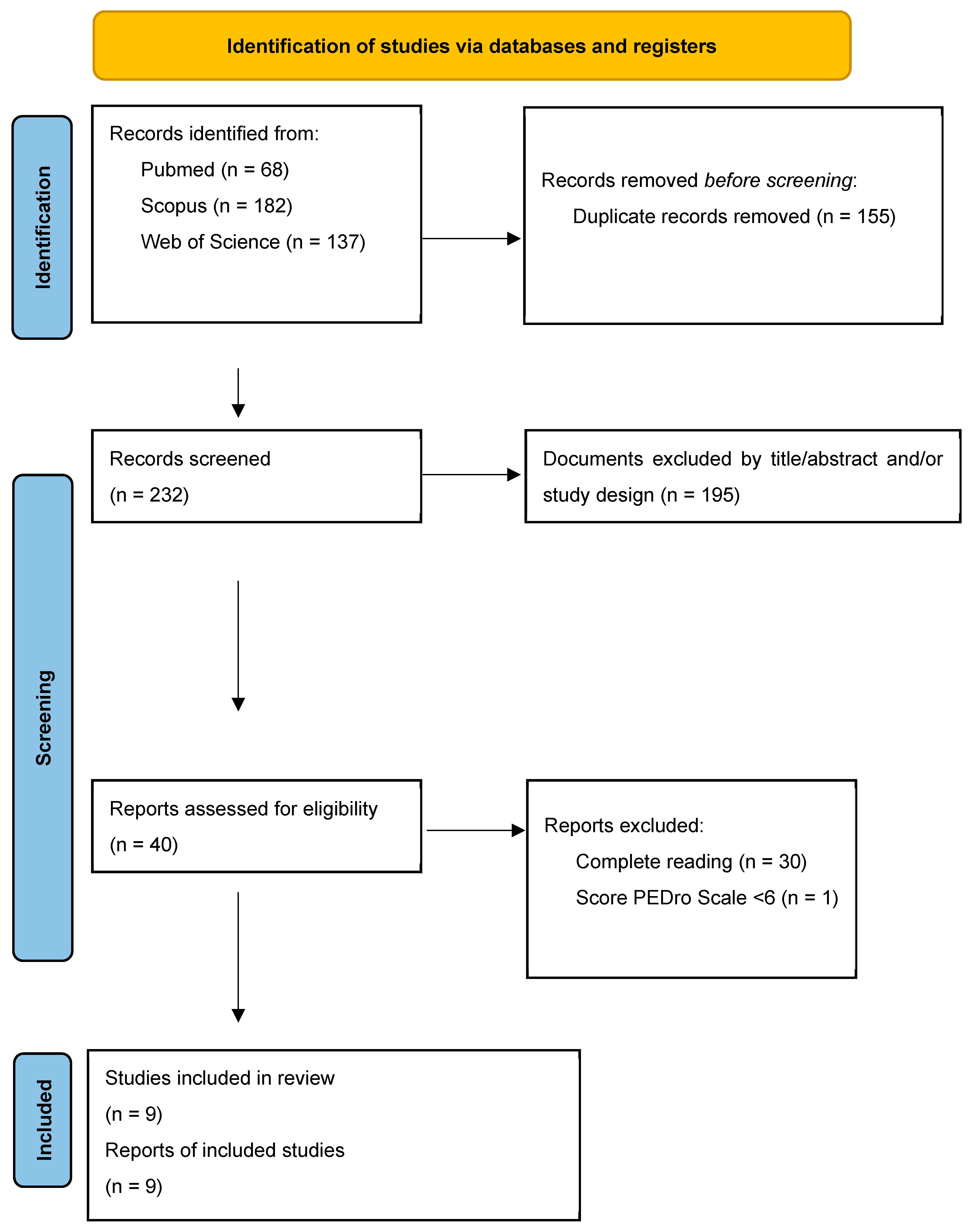
3.1. Study Selection
3.2. Characteristics of Study Populations
3.3. Study Characteristics
3.4. Assessment of Methodological Quality
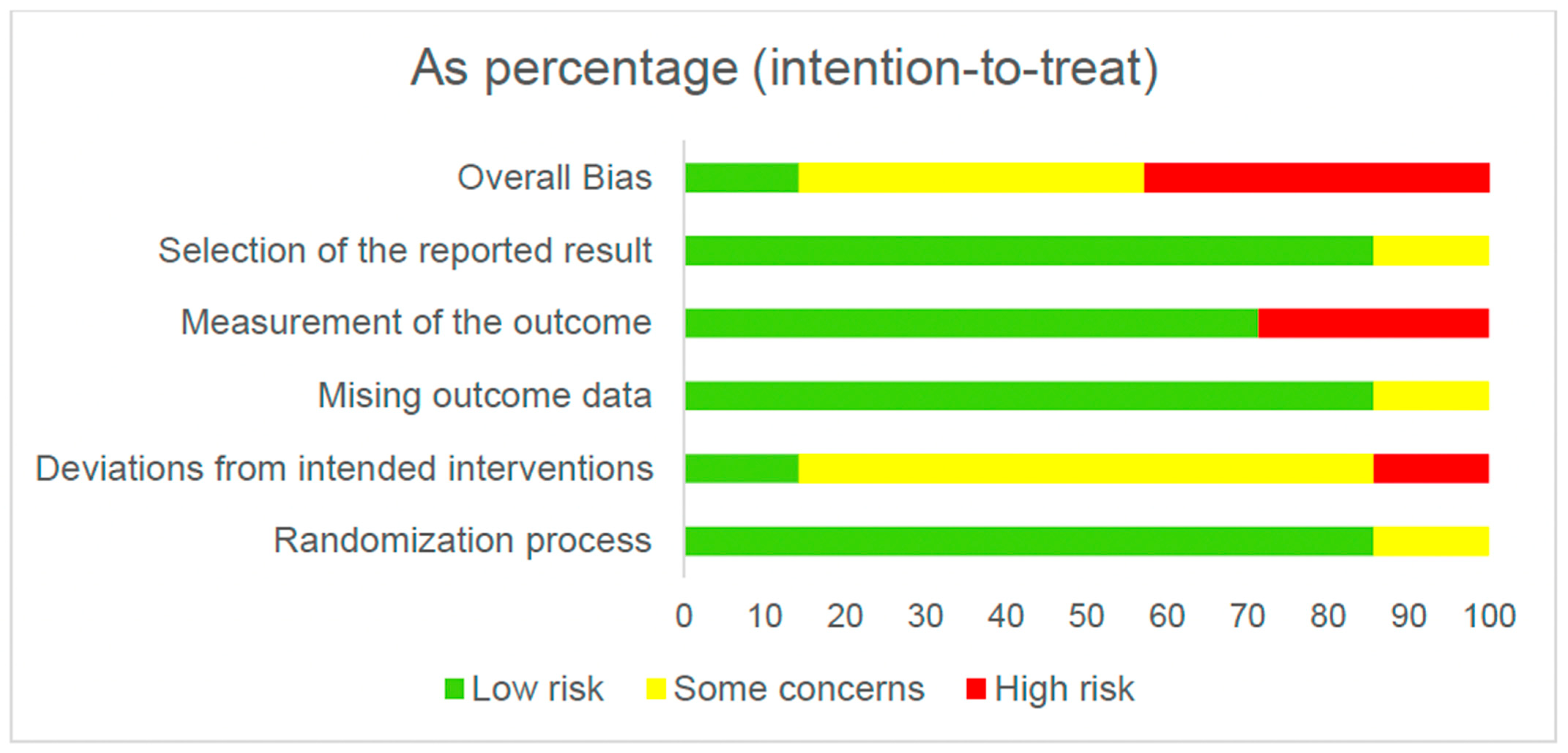
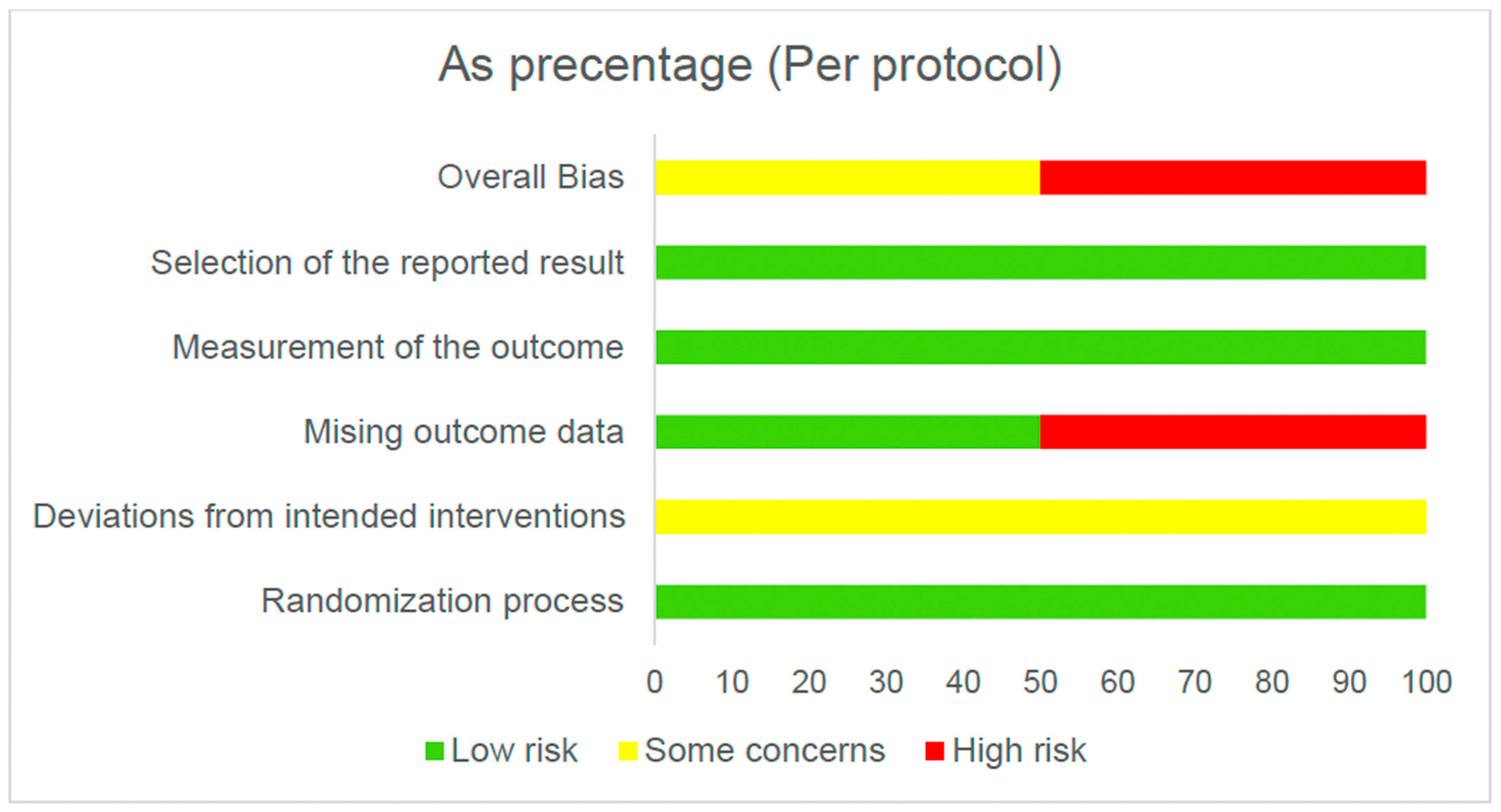
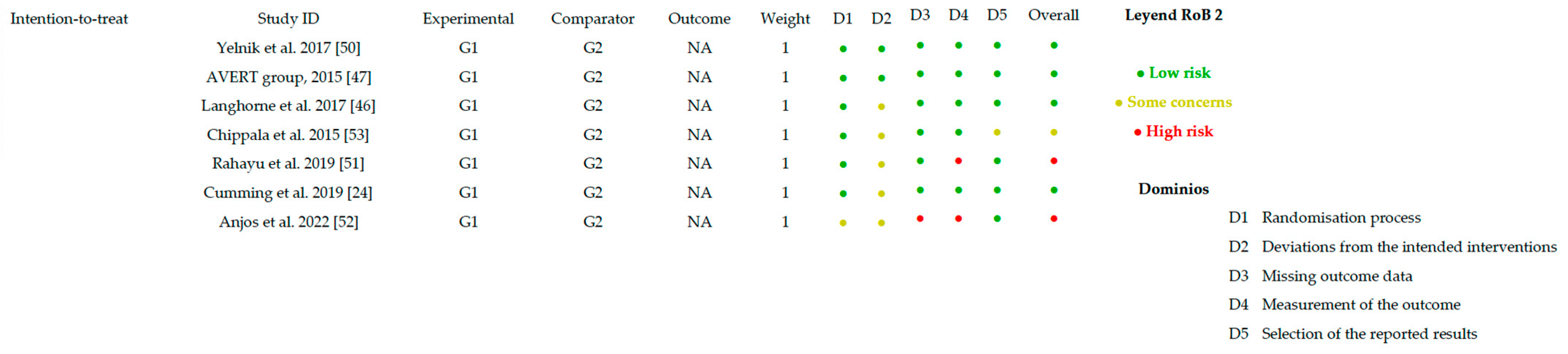
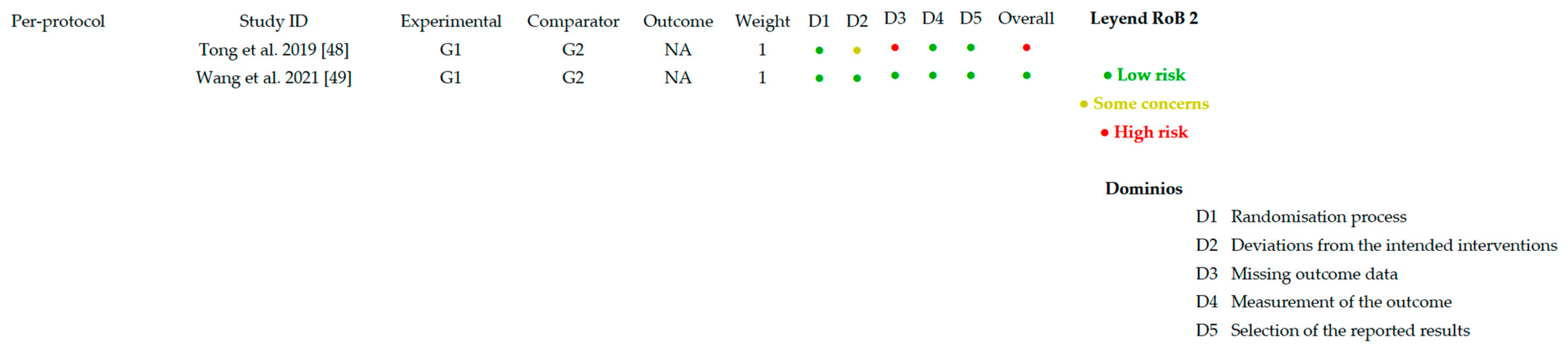
3.5. Risk of Bias Assessment
3.5.1. Random Sequence Generation and Allocation Concealment
3.5.2. Blinding of Participants and Personnel
3.5.3. Blinding of Outcome Assessors
3.5.4. Incomplete Outcome Data
3.5.5. Outcome Measurement
3.6. Other Sources of Bias
3.7. Synthesis of Results by Variables
3.7.1. Quality of Life
3.7.2. Level of Dependence
3.7.3. Levels of Anxiety and Depression
3.7.4. Adverse Effects of Early Mobilization
3.7.5. Length of Hospital Stay
4. Discussion
5. Conclusions
Author Contributions
Funding
Institutional Review Board Statement
Informed Consent Statement
Data Availability Statement
Conflicts of Interest
References
- Spanish Society of Primary Care Physicians; Spanish Society of Internal Medicine; Spanish Stroke Federation; Spanish Federation of Anticoagulated Patients; Freno al Ictus Foundation. Stroke Atlas; CRC Press: Madrid, Spain, 2019. [Google Scholar]
- Murie-Fernández, M.; Irimia, P.; Martínez-Vila, E.; Meyer, M.J.; Teasell, R. Neurorehabilitation after stroke. Neurologia 2010, 25, 189–196. [Google Scholar] [CrossRef] [PubMed]
- Ministry of Health and Autonomous Communities. Update of the Stroke Strategy Approved. Available online: https://www.sanidad.gob.es/gabinete/notasPrensa.do?id=6395 (accessed on 15 July 2025).
- National Statistics Institute (INE). Press Release: Statistics on Deaths by Cause of Death. First semester 2024. Provisional Data. Available online: https://www.ine.es/dyngs/Prensa/es/EDCM2023.htm (accessed on 16 July 2025).
- Zhao, Y.; Zhang, X.; Chen, X.; Wei, Y. Neuronal injuries in cerebral infarction and ischemic stroke: From mechanisms to treatment. Int. J. Mol. Med. 2022, 49, 15. [Google Scholar] [CrossRef] [PubMed]
- García, P.S.; Pastor, A.G.; Arratibel, A.G.; Peracho, G.V.; Rodriguez Cruz, P.M.; Pérez Sánchez, J.R.; Díaz Otero, F.; Vázquez Alén, P.; Villanueva Osorio, J.A.; Gil Núñez, A. Aetiological classification of ischaemic strokes: Comparison of the new A-S-C-O classification and the classification by the Spanish Society of Neurology’s Cerebrovascular Disease Study Group. Neurologia 2013, 28, 417–424. [Google Scholar] [CrossRef]
- Helboe, K.S.; Eddelien, H.S.; Kruuse, C. Visual symptoms in acute stroke: A systematic review of observational studies. Clin. Neurol. Neurosurg. 2023, 229, 107749. [Google Scholar] [CrossRef]
- Rigual, R.; Fuentes, B.; Díez-Tejedor, E. Management of acute ischemic stroke. Med. Clin. 2023, 161, 485–492. [Google Scholar] [CrossRef]
- Masood, A.; Ashraf, A.; Sheraz, H.; Sattar, A.; Zubair, H.; Hashim, A. Prevalence of depression, anxiety, and quality of life in thalassemia patients with and without physical therapy. Rawal Med. J. 2024, 49, 379–382. Available online: https://www.rmj.org.pk/?mno=151388 (accessed on 20 July 2025).
- Quezada García, M.Y. The Reality of Brain Injury: Situation and Needs of People with Brain Injury in Spain; FEDACE: Madrid, Spain, 2020; Available online: https://fedace.org/files/MSCFEDACE/2021-2/4-10-25-55.admin.Estudio_La_realidad_del_Da_ntildeo_Cerebral.pdf (accessed on 25 July 2025).
- Alonso de Leciñana, M.; Egido, J.A.; Casado, I.; Ribó, M.; Dávalos, A.; Masjuan, J.; Caniego, J.L.; Vila, E.M.; Tejedor, E.D.; por el Comité ad hoc del Grupo de Estudio de Enfermedades Cerebrovasculares de la SEN; et al. Guidelines for the treatment of acute cerebral infarction. Neurologia 2014, 29, 102–122. [Google Scholar] [CrossRef]
- Barthels, D.; Das, H. Current advances in ischemic stroke research and therapies. Biochim. Biophys. Acta Mol. Basis Dis. 2020, 1866, 165260. [Google Scholar] [CrossRef] [PubMed]
- Sabalete-Moya, T.C.; Carlos Gil, A.M.; Gómez, R.I.; Rodríguez Romer, R. Assessment of Neuroimaging Techniques (MRI/CT) in Acute Stroke.; Executive Summary. In Health Technology Assessment Reports (AETSA); Andalusian Agency for Health Technology Assessment: Seville, Spain, 2015; Available online: https://www.aetsa.org/download/publicaciones/05-Neuroimagen-TRINI_CNP.pdf (accessed on 25 July 2025).
- Nukovic, J.J.; Opancina, V.; Ciceri, E.; Muto, M.; Zdravkovic, N.; Altin, A.; Altaysoy, P.; Kastelic, R.; Velazquez Mendivil, D.M.; Nukovic, J.A.; et al. Neuroimaging modalities used for ischemic stroke diagnosis and monitoring. Medicina 2023, 59, 1908. [Google Scholar] [CrossRef]
- Powers, W.J.; Rabinstein, A.A.; Ackerson, T.; Adeoye, O.M.; Bambakidis, N.C.; Becker, K.; Biller, J.; Brown, M.; Demaerschalk, B.M.; Hoh, B.; et al. 2018 Guidelines for the early management of patients with acute ischemic stroke: A guideline for healthcare professionals from the American Heart Association/American Stroke Association. Stroke 2018, 49, e46–e99. [Google Scholar] [CrossRef]
- Unnithan, A.K.A.; Das, J.M.; Mehta, P. Hemorrhagic stroke. In StatPearls [Internet]; StatPearls Publishing: Treasure Island, FL, USA, 2025. [Google Scholar] [PubMed]
- Kundi, M.K.; Spence, N.J. Efficacy of mirror therapy on lower limb motor recovery, balance and gait in subacute and chronic stroke: A systematic review. Physiother. Res. Int. 2023, 28, e1997. [Google Scholar] [CrossRef]
- Weerakkody, A.; White, J.; Hill, C.; Godecke, E.; Singer, B. Delivering constraint-induced movement therapy in stroke rehabilitation requires informed stakeholders, sufficient resources, and organisational buy-in: A mixed-methods systematic review. J. Physiother. 2023, 69, 249–259. [Google Scholar] [CrossRef]
- Chen, J.; Or, C.K.; Chen, T. Effectiveness of virtual reality–supported exercise therapy for upper extremity motor rehabilitation in patients with stroke: Systematic review and meta-analysis of randomized controlled trials. J. Med. Int. Res. 2022, 24, e24111. [Google Scholar] [CrossRef]
- Pathak, A.; Gyanpuri, V.; Dev, P.; Dhiman, N.R. The Bobath concept (NDT) as rehabilitation in stroke patients: A systematic review. J. Fam. Med. Prim. Care 2021, 10, 3983–3990. [Google Scholar] [CrossRef] [PubMed]
- Johnston, T.E.; Keller, S.; Denzer-Weiler, C.; Brown, L. A clinical practice guideline for the use of ankle–foot orthoses and functional electrical stimulation post-stroke. J. Neurol. Phys. Ther. 2021, 45, 112–196. [Google Scholar] [CrossRef] [PubMed]
- Karic, T.; Røe, C.; Nordenmark, T.H.; Becker, F.; Sorteberg, W.; Sorteberg, A. Effect of early mobilization and rehabilitation on complications in aneurysmal subarachnoid hemorrhage. J. Neurosurg. 2017, 126, 518–526. [Google Scholar] [CrossRef]
- Bernhardt, J.; Dewey, H.; Collier, J.; Thrift, A.; Lindley, R.; Moodie, M.; Donnan, G. A Very Early Rehabilitation Trial (AVERT). Int. J. Stroke 2006, 1, 169–171. [Google Scholar] [CrossRef]
- Cumming, T.B.; Churilov, L.; Collier, J.; Donnan, G.; Ellery, F.; Dewey, H.; Langhorne, P.; Lindley, R.I.; Moodie, M.; Thrift, A.G.; et al. Early mobilization and quality of life after stroke: Findings from AVERT. Neurology 2019, 93, e717–e728. [Google Scholar] [CrossRef] [PubMed]
- Saleh, S.K.N.; Seleznyova, S.V.; Kozynskyi, O.V.; Sevinj, A.K.M.; Harpreet, S.H. Efficiency of early rehabilitation of patients after ischemic stroke. Clin. Prev. Med. 2023, 58–66. [Google Scholar] [CrossRef]
- Hernández-Méndez, B.; Martín-Silva, I.; Tapias-Vilanova, M.; Moreno-Gallo, Y.; Sanjuan-Menendez, E.; Lorenzo-Tamayo, E.; Ramos-González, M.; Montufo-Rosal, M.; Zuriguel-Pérez, E. Very early mobilization in the stroke unit: Functionality, quality of life and disability at 90 days and 1 year post-stroke. NeuroRehabilitation 2021, 49, 403–414. [Google Scholar] [CrossRef]
- Wei, X.; Sun, S.; Zhang, M.; Zhao, Z. A systematic review and meta-analysis of the clinical efficacy of early and late rehabilitation interventions for ischemic stroke. Res. Sq. 2023, 24, 91. [Google Scholar] [CrossRef]
- Titsworth, W.L.; Hester, J.; Correia, T.; Reed, R.; Guin, P.; Archibald, L.; Layon, A.J.; Mocco, J. The effect of increased mobility on morbidity in the neurointensive care unit. J. Neurosurg. 2012, 116, 1379–1388. [Google Scholar] [CrossRef]
- Alvarez-Badillo, A. Neurorehabilitation. Specific methods of assessment and treatment. Rev. Neurol. 2012, 55, 256. (In Spanish) [Google Scholar] [PubMed]
- Feigin, V.L.; Brainin, M.; Norrving, B.; Martins, S.O.; Pandian, J.; Lindsay, P.; Grupper, F.M.; Rautalin, I. World Stroke Organization: Global Stroke Fact Sheet 2025. Int. J. Stroke 2025, 20, 132–144. [Google Scholar] [CrossRef]
- Gao, L.; Sheppard, L.; Wu, O.; Churilov, L.; Mohebbi, M.; Collier, J.; Bernhardt, J.; Ellery, F.; Dewey, H.; Moodie, M. Economic evaluation of a phase III international randomized controlled trial of very early mobilisation after stroke (AVERT). BMJ Open 2019, 9, e026230. [Google Scholar] [CrossRef] [PubMed]
- Oyanagi, K.; Kitai, T.; Yoshimura, Y.; Yokoi, Y.; Ohara, N.; Kohara, N.; Sakai, N.; Honda, A.; Onishi, H.; Iwata, K. Effect of early intensive rehabilitation on clinical outcomes of patients with acute stroke. Geriatr. Gerontol. Int. 2021, 21, 623–628. [Google Scholar] [CrossRef]
- Svendsen, M.L.; Ehlers, L.H.; Hundborg, H.H.; Ingeman, A.; Johnsen, S.P. Processes of early stroke care and hospital costs. Int. J. Stroke 2014, 9, 777–782. [Google Scholar] [CrossRef] [PubMed]
- Moher, D.; Liberati, A.; Tetzlaff, J.; Altman, D.G.; PRISMA Group. Preferred reporting items for systematic reviews and meta-analyses: The PRISMA statement. PLoS Med. 2009, 6, e1000097. [Google Scholar] [CrossRef] [PubMed]
- Kasner, S.E. Clinical interpretation and use of stroke scales. Lancet Neurol. 2006, 5, 603–612. [Google Scholar] [CrossRef]
- Chen, Y.; Tu, H.; Lee, C.; Huang, W.; Yang, J.; Li, C.; Chen, C.; Lin, K. Comprehensive exercise capacity and quality of life assessments predict mortality in patients with pulmonary arterial hypertension. Acta Cardiol. Sin. 2019, 35, 55–64. [Google Scholar] [CrossRef]
- Hawthorne, G.; Richardson, J.; Osborne, R. The Assessment of Quality of Life (AQoL) instrument: A psychometric measure of health-related quality of life. Qual. Life Res. 1999, 8, 209–224. [Google Scholar] [CrossRef] [PubMed]
- Hawthorne, G.; Richardson, J.; Day, N.A. A comparison of the Assessment of Quality of Life (AQoL) with four other generic utility instruments. Ann. Med. 2001, 33, 358–370. [Google Scholar] [CrossRef]
- Modified Rankin Scale. Available online: https://www.hipocampo.org/Rankin.asp (accessed on 30 August 2025).
- Validation of the Simplified Telephone Version of the Modified Rankin Scale (smRSq) in Spanish. Available online: http://www.elsevier.es/es-revista-neurologia-295-avance-resumen-validacion-del-cuestionario-simplificado-escala-S0213485319300477 (accessed on 31 August 2025).
- Díaz-Tapia, V.; Gana, J.; Sobarzo, M.; Jaramillo-Muñoz, A.; Illanes-Díez, S. Study on the quality of life in patients with ischaemic stroke. Rev. Neurol. 2008, 46, 652–655. [Google Scholar] [PubMed]
- Cid-Ruzafa, J.; Damián-Moreno, J. Assessment of physical disability: The Barthel Index. Rev. Esp. Salud Publica 1997, 71, 127–137. Available online: http://scielo.isciii.es/scielo.php?script=sci_arttext&pid=S1135-57271997000200004&lng=es (accessed on 31 August 2025). [CrossRef]
- Kwon, J.; Smith, S.; Raghunandan, R.; Howell, M.; Huynh, E.; Kim, S.; Bentley, T.; Roberts, N.; Lancsar, E.; Howard, K.; et al. Systematic Review of the Psychometric Performance of Generic Childhood Multi-attribute Utility Instruments. Appl. Health Econ. Health Policy 2023, 21, 559–584. [Google Scholar] [CrossRef]
- PEDro—Detailed Search Results. Available online: http://search.pedro.org.au/search-results/record-detail/47407 (accessed on 1 September 2025).
- RoB 2: A Revised Cochrane Risk-of-Bias Tool for Randomized Trials. Available online: https://methods.cochrane.org/bias/resources/rob-2-revised-cochrane-risk-bias-tool-randomized-trials (accessed on 1 September 2025).
- Langhorne, P.; Wu, O.; Rodgers, H.; Ashburn, A.; Bernhardt, J. A Very Early Rehabilitation Trial after stroke (AVERT): A Phase III, multicentre, randomised controlled trial. Health Technol. Assess. 2017, 21, 1–120. [Google Scholar] [CrossRef]
- AVERT Trial Collaboration Group. Efficacy and safety of very early mobilisation within 24 h of stroke onset (AVERT): A randomised controlled trial. Lancet 2015, 386, 46–55. [Google Scholar] [CrossRef]
- Tong, Y.; Cheng, Z.; Rajah, G.B.; Duan, H.; Cai, L.; Zhang, N.; Du, H.; Geng, X.; Ding, Y. High-intensity physical rehabilitation later than 24 h post-stroke is beneficial in patients: A pilot randomized controlled trial in mild to moderate ischemic stroke. Front. Neurol. 2019, 10, 13. [Google Scholar] [CrossRef]
- Wang, F.; Zhang, S.; Zhou, F.; Zhao, M.; Zhao, H. Early physical rehabilitation therapy between 24 and 48 h following acute ischemic stroke onset: A randomized controlled trial. Disabil. Rehabil. 2022, 44, 3967–3972. [Google Scholar] [CrossRef] [PubMed]
- Yelnik, A.P.; Quintaine, V.; Andriantsifanetra, C.; Wannepain, M.; Reiner, P.; Marnef, H.; Evrard, M.; Meseguer, E.; Devailly, J.P.; Lozano, M.; et al. AMOBES (Active Mobility Very Early after Stroke): A randomized controlled trial. Stroke 2017, 48, 400–405. [Google Scholar] [CrossRef] [PubMed]
- Rahayu, U.B.; Wibowo, S.; Setyopranoto, I. Effectiveness of early mobilization timing on balance and functional ability after ischemic stroke. Open Access Maced. J. Med. Sci. 2019, 7, 1088–1092. [Google Scholar] [CrossRef]
- Anjos, J.M.; Neto, M.G.; de Araújo Tapparelli, Y.; Tse, G.; Biondi-Zoccai, G.; de Souza Lima Bitar, Y.; Roever, L.; Duraes, A.R. Efficacy and safety of very early mobilization after thrombolysis in acute ischemic stroke: A randomized clinical trial. J. Neurol. 2023, 270, 843–850. [Google Scholar] [CrossRef]
- Chippala, P.; Sharma, R. Effect of very early mobilisation on functional status in patients with acute stroke: A single-blind, randomized controlled trial. Clin. Rehabil. 2016, 30, 669–675. [Google Scholar] [CrossRef] [PubMed]
- Herisson, F.; Godard, S.; Volteau, C.; Le Blanc, E.; Guillon, B.; Gaudron, M.; SEVEL Study Group. Early sitting in ischemic stroke patients (SEVEL): A randomized controlled trial. PLoS ONE 2016, 11, e0149466. [Google Scholar] [CrossRef] [PubMed]
- Mihindu, E.; Mohammed, A.; Smith, T.; Brinster, C.; Sternbergh, W.C.; Bazan, H.A. Patients with moderate to severe strokes (NIHSS score > 10) undergoing urgent carotid interventions within 48 hours have worse functional outcomes. J. Vasc. Surg. 2019, 69, 1471–1481. [Google Scholar] [CrossRef]
- Pin-Barre, C.; Constans, A.; Brisswalter, J.; Pellegrino, C.; Laurin, J. Effects of high vs moderate-intensity training on neuroplasticity and functional recovery after focal ischemia. Stroke 2017, 48, 2855–2864. [Google Scholar] [CrossRef]
- Montero-Almagro, G.; Bernal-Utrera, C.; Geribaldi-Doldán, N.; Nunez-Abades, P.; Castro, C.; Rodriguez-Blanco, C. Influence of high-intensity interval training on neuroplasticity markers in post-stroke patients: Systematic review. J. Clin. Med. 2024, 13, 1985. [Google Scholar] [CrossRef]
- Zhang, P.; Zhang, Y.; Zhang, J.; Wu, Y.; Jia, J.; Wu, J.; Hu, Y. Early exercise protects against cerebral ischemic injury through inhibiting neuron apoptosis in cortex in rats. Int. J. Mol. Sci. 2013, 14, 6074–6089. [Google Scholar] [CrossRef]
- Zhu, Y.; Sun, Y.; Hu, J.; Pan, Z. Insight into the mechanism of exercise preconditioning in ischemic stroke. Front. Pharmacol. 2022, 13, 866360. [Google Scholar] [CrossRef]
- Todhunter-Brown, A.; Sellers, C.E.; Baer, G.D.; Choo, P.L.; Cowie, J.; Cheyne, J.D.; Langhorne, P.; Brown, J.; Morris, J.; Campbell, P. Physical rehabilitation approaches for the recovery of function and mobility following stroke. Cochrane Database Syst. Rev. 2014, 2014, CD001920. [Google Scholar] [CrossRef]
- Mah, S.M.; Goodwill, A.M.; Seow, H.C.; Teo, W.P. Evidence of high-intensity exercise on lower limb functional outcomes and safety in acute and subacute stroke population: A systematic Systematic Review. Int. J. Environ. Res. Public Health 2022, 20, 153. [Google Scholar] [CrossRef] [PubMed]
- Arzayus-Patiño, L.; Estela-Zape, J.L.; Sanclemente-Cardoza, V. Safety of early mobilization in adult neurocritical patients: An exploratory review. Crit. Care Res. Pract. 2025, 2025, 4660819. [Google Scholar] [CrossRef]
- Bernhardt, J.; Dewey, H.; Thrift, A.; Collier, J.; Donnan, G. A very early rehabilitation trial for stroke (AVERT): Phase II safety and feasibility. Stroke 2008, 39, 390–396. [Google Scholar] [CrossRef] [PubMed]
- Ministerio de Sanidad. Stroke Strategy of the Spanish National Health System; 2024 Update; Ministerio de Sanidad, Centro de Publicaciones: Madrid, Spain, 2024; Available online: https://www.sanidad.gob.es/areas/calidadAsistencial/estrategias/ictus/docs/Estrategia_en_Ictus_del_SNS._Actualizacion_2024_accesible.pdf (accessed on 25 September 2025).
- Ribera, A.; Vela, E.; García-Altés, A.; Clèries, M.; Abilleira, S. Trends in healthcare resource use and expenditure before and after ischaemic stroke. A population-based study. Neurologia 2022, 37, 21–30. [Google Scholar] [CrossRef] [PubMed]



| PICOS Item | Keyword |
|---|---|
| Patient Population Interventions Outcomes Study design | Stroke/cerebrovascular accident/brain infarction Early Mobilization Randomized Controlled trial |
| Database | Exact Search Equation | Results |
|---|---|---|
| PubMed | (“stroke” [MeSH Terms] OR “stroke” [All Fields] OR “strokes” [All Fields] OR “cerebrovascular accident” [All Fields] OR “brain infarction” [All Fields] OR “ischemic stroke” [All Fields] OR “hemorrhagic stroke” [All Fields] OR “brain attack” [All Fields]) AND (“early mobilization” [All Fields] OR “early mobilization” [All Fields] OR “early movement” [All Fields] OR “early rehabilitation” [All Fields]) AND (“clinical trial” [Publication Type] OR “randomized controlled trial” [Publication Type] OR “randomized controlled trial” [All Fields] OR “RCT” [All Fields]) AND “humans” [MeSH Terms] | 68 |
| Scopus | TITLE-ABS-KEY ((stroke OR “cerebrovascular accident” OR “brain infarction” OR “ischemic stroke” OR “hemorrhagic stroke” OR “brain attack”) AND (“early mobilization” OR “early mobilization” OR “early movement” OR “early rehabilitation”) AND (“clinical trial” OR “ECA” OR “randomized controlled trial” OR “randomized controlled trial” OR RCT)) | 182 |
| Web of Science | TS = ((stroke OR “cerebrovascular accident” OR “brain infarction” OR “ischemic stroke” OR “hemorrhagic stroke” OR “brain attack”) AND (“early mobilization” OR “early mobilization” OR “early movement” OR “early rehabilitation”) AND (“clinical trial” OR “ECA” OR “randomized controlled trial” OR “randomized controlled trial” OR RCT)) |
| Author & Year | Sample Characteristics (Age, Sex, Stroke Type, Severity-NIHSS) | Population (n) | Experimental Group (Intervention) | Control Group (Comparison) | Outcomes & Assessments | Main Results |
|---|---|---|---|---|---|---|
| AVERT Group (2015) [47] | Mean Age: 72 yrs Sex: M 61%, F 39% Type: Ischemic 87.5%, Hemorrhagic 12.5% | n = 2104 | Very Early Mobilization (VEM) • Started at ~18.5 h post-stroke. • Out-of-bed activities (sitting, standing, walking) + Standard Care (SC). | Standard Care (SC) • Started at ~23 h post-stroke. • Less frequent mobilization. | • Dependency (mRS) • Time to walk 50 m unassisted • Walking unassisted at 3 months • Adverse Events (AEs) & Mortality • ADL Independence (Barthel) • Assessments: Baseline (V0), 3 months (V1) | • mRS: Significant change favoring the Control Group at 3 months. • Walking ability: No significant differences between groups. • AEs & Mortality: No significant differences. • Barthel: Significant improvement in both groups, significantly greater in the Experimental Group (p < 0.001). |
| Cumming et al. (2019) [24] | Mean Age: 70 yrs Sex: M 58%, F 39% Type: Ischemic 87%, Hemorrhagic 13% Severity: Mild 55.5%, Moderate 30.5%, Severe 14% | n = 2104 EG: 1054 CG: 1050 (3-mo follow-up: n = 2031) | Very Early Mobilization (VEM) • Started at ~18 h post-stroke. • Duration: 31 min/day, 3 sessions/day. • Period: 14 days or until discharge. | Standard Care (SC) • Started at ~22 h post-stroke. • Duration: 10 min/day, 1 session/day. • Period: 14 days or until discharge. | • Quality of Life (AQoL-4D) • ADL Independence (Barthel) • Cognition (MoCA) • Depression/Anxiety (IDA) • Assessments: Baseline (V0), 3 months (V1), 12 months (V2) | • AQoL-4D (V0–V2): No significant differences between groups. • Correlation: Higher AQoL-4D was correlated with lower depression/anxiety, shorter length of stay, and higher MoCA and Barthel scores (p < 0.001). |
| Langhorne et al. (2017) [46] | Mean Age: 74 yrs Sex: M 58%, F 42% Type: Ischemic 87%, Hemorrhagic 13% Severity: Mild 53%, Moderate 28.5%, Severe 18.5% | n = 2104 EG: 1054 CG: 1052 (12-mo follow-up: n = 1797) | Very Early Mobilization (VEM) • Started at ~18 h post-stroke. • Duration: 31 min/day. • Period: 14 days or until discharge. | Standard Care (SC) • Started at ~23 h post-stroke. • Duration: 10 min/day. • Period: 14 days or until discharge. | • Dependency (mRS) • Days to walk 50 m unassisted • Adverse Events (AEs) • Cognition & Mood (IDA) • Quality of Life (AQoL) • Assessments: Discharge (V0), 3 months (V1), 12 months (V2) | • Dose–Response Analysis: Reported in the main AVERT trial. Outcomes consistent with AVERT 2015. |
| Yelnik et al. (2017) [50] | Mean Age: 66 yrs Sex: M 62%, F 38% Type: Ischemic 77.7%, Hemorrhagic 22.3% Severity: Mild 9.2%, Moderate 20.4%, Severe 20% % does not total 100 | n = 103 EG: 52 CG: 51 | High-Intensity Exercises (resistive movements, repetitions to fatigue, 45 min) + Low-Intensity Exercises (LIE) (15–20 min). • Started at ~55 h post-stroke. • Period: 10 sessions. | Low-Intensity Exercises (LIE) (passive movements, sitting, walking) 15–20 min. • Started at ~53 h post-stroke. • Period: 10 sessions. | • Motor Recovery (FMA) • Days to walk 10 m unassisted • Balance (PASS) • Dependency (mRS) • Function (FIM) • Quality of Life (SIS) • Adverse Events (AEs) • Assessments: V0 (Baseline), V2, V4 | • FMA & PASS (V0–V4): Significant improvement in both groups (p < 0.001), no significant differences between groups. • Other Outcomes (V0–V4): No significant between-group differences for gait initiation, mRS, FIM, or SIS. • AEs: Frequent, but no significant differences between groups (EG: more falls; CG: more epilepsy). |
| Anjos et al. (2022) [52] | Mean Age: 60 yrs Sex: Not Specified Type: Post-thrombolysis Severity: Not Specified | n = 104 EG: 51 CG: 53 | Very Early Mobilization (VEM) • Started <12 h post-thrombolysis. • Included glute bridge, sitting on edge of bed, standing, gait, and functional activities for upper limbs. | Standard Care (SC) • Started <24 h post-thrombolysis. • Included active bed exercises, postural correction, sitting balance, and gait training. | • Dependency (mRS) • Functional Mobility (TUG) • Balance (Berg) • Adverse Events (AEs) • Length of Stay, Mortality • Assessments: V0 (Baseline), V1, V2 | • All Outcomes (V0–V2): No significant differences between groups for mRS, TUG, BERG, complications, length of stay, or mortality. |
| Rahayu et al. (2019) [51] | Mean Age: 57 yrs Sex: M 67.5%, F 32.5% Type & Severity: Not Specified | n = 40 EG: 20 CG: 20 | Early Mobilization • Started at 24 h post-stroke. • Progressive protocol over 7 days (sensory stimulation, passive/active-assisted movements, postural control, sitting, standing, balance, functional tasks). | Later Mobilization • Started at 48 h post-stroke. • Slower progression of the same protocol. | • Balance (Berg Balance Scale) • ADL Independence (Barthel Index) • Assessments: V0 (Day 1), V1 (Day 5), V2 (Day 7) | • Berg (V0–V2): Significant difference favoring the Experimental Group (p = 0.038). • Barthel (V0–V2): Significant difference favoring the Experimental Group (p = 0.002 at V1, p = 0.021 at V2). |
| Tong et al. (2019) [48] | Mean Age: 61 yrs Sex: Not Specified Type: Ischemic 100% Severity: Mild 68.8%, Moderate 31.2% All patients post-thrombolysis | n = 248 G1: 80 G2: 82 G3: 86 | G2: Thrombolysis + Early Mobilization (24–48 h). • Duration: <1.5 h/day. • Period: 10–14 days. | G1: Thrombolysis + Later Mobilization (>48 h). G3: Thrombolysis + Very Early Mobilization (<24 h). • Duration: ≥3 h/day. • Period: 10–14 days. | • Dependency (mRS) • Mean Training Time (min/day) • Time to start treatment (hours) • Assessments: Discharge (V0), 3 months (V1) | • mRS (V0–V1): Significant differences favoring G2 over G1 and G3 (p = 0.041). • Training Time: Significantly longer in G3 (184.6 min) and G2 (184.1 min) vs. G1 (53.4 min) (p < 0.001). • Time to Start: Significantly shorter in G3 (16.8 h) vs. G1 (41.0 h) and G2 (38.0 h) (p < 0.001). |
| Wang et al. (2022) [49] | Mean Age: 61 yrs Sex: M 59%, F 41% Type: Ischemic 100% Severity: Mild 33.6%, Moderate 66.4% | n = 110 EG: 56 CG: 54 | Early Mobilization + Medication • Started at 24–48 h post-stroke. • Included turning, sitting, stretching, standing, sit-to-stand, balance, coordination, motor skills. • Duration: 20 min/session, 2 for/day. | Standard Care + Medication • Started at 72–96 h post-stroke. • Duration: 20 min/session, 2 for/day. | • Dependency (mRS) • Motor Function (FMA-UL, FMA-LL) • Length of Hospitalization • Assessments: V0 (Baseline), V1 (7 days), V2 (30 days), V3 (90 days) | • mRS (V2): Statistically significant change favoring the Experimental Group (p = 0.005). • FMA-UL: No significant between-group differences. • FMA-LL (V0–V1): Difference favored EG but was not significant (p = 0.07). No differences at V2–V3. • Both groups improved continuously over 3 months (p < 0.0001). |
| Author/Item | C1 | C2 | C3 | C4 | C5 | C6 | C7 | C8 | C9 | C10 | C11 | Total |
|---|---|---|---|---|---|---|---|---|---|---|---|---|
| Yelnik et al. 2017 [50] | X | X | X | X | X | X | 7/10 | |||||
| Cumming et al. 2019 [24] | X | X | X | X | X | X | X | X | 8/10 | |||
| Langhorne et al. 2017 [46] | X | X | X | X | X | X | X | X | 8/10 | |||
| Anjos et al. 2022 [52] | X | X | X | X | X | X | 6/10 | |||||
| Rahayu et al. 2019 [51] | X | X | X | X | X | X | X | 6/10 | ||||
| Tong et al. 2019 [48] | X | X | X | X | X | X | X | X | 6/10 | |||
| Wang et al. 2022 [49] | X | X | X | X | X | X | X | 7/10 | ||||
| AVERT group, 2015 [47] | X | X | X | X | X | X | X | X | X | X | X | 10/10 |
| Chippala et al. 2016 [53] | X | X | X | X | X | X | X | 7/10 |
Disclaimer/Publisher’s Note: The statements, opinions and data contained in all publications are solely those of the individual author(s) and contributor(s) and not of MDPI and/or the editor(s). MDPI and/or the editor(s) disclaim responsibility for any injury to people or property resulting from any ideas, methods, instructions or products referred to in the content. |
© 2025 by the authors. Licensee MDPI, Basel, Switzerland. This article is an open access article distributed under the terms and conditions of the Creative Commons Attribution (CC BY) license.
Share and Cite
Maffassanti-Reyes, M.; González-Sierra, M.; Javier-Ormazábal, A. Efficacy of Early Mobilization in Stroke Patients in Relation to Quality of Life and Level of Dependency: A Systematic Review. Healthcare 2026, 14, 78. https://doi.org/10.3390/healthcare14010078
Maffassanti-Reyes M, González-Sierra M, Javier-Ormazábal A. Efficacy of Early Mobilization in Stroke Patients in Relation to Quality of Life and Level of Dependency: A Systematic Review. Healthcare. 2026; 14(1):78. https://doi.org/10.3390/healthcare14010078
Chicago/Turabian StyleMaffassanti-Reyes, Malena, Marta González-Sierra, and Alberto Javier-Ormazábal. 2026. "Efficacy of Early Mobilization in Stroke Patients in Relation to Quality of Life and Level of Dependency: A Systematic Review" Healthcare 14, no. 1: 78. https://doi.org/10.3390/healthcare14010078
APA StyleMaffassanti-Reyes, M., González-Sierra, M., & Javier-Ormazábal, A. (2026). Efficacy of Early Mobilization in Stroke Patients in Relation to Quality of Life and Level of Dependency: A Systematic Review. Healthcare, 14(1), 78. https://doi.org/10.3390/healthcare14010078