


Highlights
What are the main findings?
- The review shows that harmonious passion in youth football players is positively linked to motivation, satisfaction of basic psychological needs, positive emotions, and overall life satisfaction. In contrast, obsessive passion is associated with negative outcomes, such as burnout and psychological distress. These results highlight the relevance of the Dualistic Model of Passion and Self-Determination Theory in understanding motivation and well-being among young athletes.
What are the implications of the main findings?
- Practically, the findings suggest that promoting harmonious passion and supporting athletes’ psychological needs can improve both performance and mental health in youth football. Future research should employ longitudinal designs and larger samples to further validate these relationships and help define effective strategies for coaches, parents, and sport organizations.
Abstract
Background: Psychological well-being is crucial for the development and performance of young athletes. This systematic review aims to synthesize the available scientific evidence on the relationship between passion (harmonious and obsessive), basic psychological needs (BPNs), motivation, affect (positive and negative), and life satisfaction in young football (soccer) players. Methods: A systematic literature review was performed, following the PRISMA 2020 (Preferred Reporting Items for Systematic Reviews and Meta-Analyses) guidelines. The search was conducted in the Web of Science, Scopus, ERIC, and SportDiscus databases, using a comprehensive strategy that combined keywords related to football, youth, passion, motivation, and well-being. Two independent reviewers performed article screening, eligibility assessment, and data extraction. The methodological quality of the included studies was determined using two different tools. Results: Nine studies met the inclusion criteria and were analyzed in detail. The results consistently indicate that harmonious passion is associated with greater fulfillment of BPNs, positive affect, and overall life satisfaction. In contrast, obsessive passion was linked to negative outcomes such as burnout and emotional dysregulation. The available evidence suggests a positive association of harmonious passion with motivation and well-being, and an association of obsessive passion with psychological distress. Conclusions: Within the delimited scope, the evidence suggests that harmonious passion is an important construct positively associated with the well-being and motivation of young footballers, while obsessive passion is associated with adverse outcomes. Research in this area is scarce, showing methodological diversity and heterogeneous samples, which limits the generalizability of the findings. Future research should prioritize longitudinal designs and interventions to promote harmonious passion and the satisfaction of BPNs.
1. Introduction
Football, the world’s most popular sport, extends beyond mere entertainment and competition. It enhances self-esteem, fosters social connections, and reduces stress and anxiety [1]. The sport can significantly impact players’ lives by promoting growth, motivation, and social interaction, affecting their psychological needs [2]. Soccer provides an ideal setting to explore how passion is experienced, as its complexity encourages personal growth and mastery [3] because its practical complexity evokes passion and cultivates an environment focused on personal growth and mastery [4]. Therefore, Passion for sports plays a fundamental role in the experience of young athletes, influencing not only their performance but also their well-being and life satisfaction [5,6]. The Dualistic Model of Passion (DMP) posits that passion can be classified into two distinct types: harmonious passion and obsessive passion [7]. Harmonious passion occurs when sports participation is autonomously and adaptively internalized, allowing the individual to engage in the activity without compromising other life domains [5]. Conversely, obsessive passion results from a controlled internalization process, leading to a rigid compulsion to engage in the activity, often causing conflicts between sports participation and other life spheres [5,8].
Empirical studies show that harmonious passion is positively associated with well-being indicators such as positive affect, intrinsic motivation, and life satisfaction, whereas obsessive passion is linked to negative emotions, stress, and burnout [9,10,11,12]. Furthermore, obsessive passion has been found to contribute to maladaptive outcomes such as emotional exhaustion and decreased motivation over time [13]. Research also indicates that obsessive passion may lead to increased susceptibility to injury due to overtraining and an inability to disengage from sport despite physical limitations [14].
The Self-Determination Theory [15,16,17] offers a framework for understanding motivation and its impact on athletes’ well-being. It posits a continuum of motivation, from amotivation (lack of intention) to extrinsic motivation (various forms of external regulation) and ultimately to intrinsic motivation (enjoyment of the activity), the latter being linked to greater engagement and satisfaction [15,16,17,18]. Within SDT, the Organismic Integration Theory (OIT) within SDT explains how external regulations can be internalized, shaping athletes’ behaviors and experiences [15]. Research shows that when young footballers autonomously internalize motivation, they demonstrate greater persistence, improved performance [19], and higher satisfaction with their sports participation [20]. In contrast, externally regulated motivation—due to pressure from parents or coaches—can lead to stress, anxiety, and dropout [21,22,23,24].
The Basic Psychological Needs Theory (BPNT), a sub-theory of SDT, posits that satisfying three key psychological needs, autonomy, competence, and relatedness, is vital for well-being and optimal performance in sports [15,16]. In youth football, autonomy involves athletes’ control over their sports choices, competence relates to their ability to perform tasks effectively, and relatedness reflects the quality of interactions with coaches, teammates, and family [25]. Empirical evidence supports that satisfying these needs enhances intrinsic motivation, fosters greater enjoyment, and contributes to better performance and psychological well-being [19,22,26,27]. When these needs are thwarted, athletes experience heightened stress, increased risk of burnout, and lower engagement levels [28,29].
The interplay between passion and SDT constructs has been widely examined in sports psychology literature (e.g., Ref. [12]). Studies show that harmonious passion is closely linked to self-determined motivation and the fulfillment of psychological needs, promoting well-being and positive affect [7,11,21,30]. Athletes with harmonious passion report higher levels of flow states, lower anxiety, and greater resilience in the face of challenges [31,32]. In contrast, obsessive passion relates to controlled motivation, which can lead to emotional distress, performance anxiety, and increased dropout rates [33]. The negative impact of obsessive passion on basic psychological needs has been noted in various sports, highlighting the risks of a compulsive training approach [34]. Well-being in sports can be assessed through three primary dimensions: affect, life satisfaction, and psychological functioning [35]. Affect involves the experience of emotions, while life satisfaction reflects an athlete’s overall well-being evaluation [36]. Research indicates that harmonious passion and self-determined motivation are positively associated with positive affect, higher life satisfaction, and adaptive coping strategies [15,37]. On the other hand, obsessive passion and controlled motivation are linked to negative affect, maladaptive perfectionism, and increased susceptibility to burnout [9].
Moreover, research underscores the importance of the sports environment in shaping young footballers’ experiences. Supportive coaching that promotes autonomy and competence enhances intrinsic motivation, while controlling styles lead to anxiety and distress [6,38]. Longitudinal studies show that an autonomy-supportive climate in youth football fosters sustained engagement and personal development [28,39]. Additionally, parental support and peer relationships are vital for young footballers’ sense of relatedness and psychological well-being [40].
The study is based on the Dualistic Model of Passion and Self-Determination Theory, which explores the relationships among passion (harmonious vs. obsessive), motivation, psychological need satisfaction, burnout, and performance in youth football. The Dualistic Model outlines the consequences of different types of passion, while Self-Determination Theory addresses how autonomy, competence, and relatedness impact athletes’ psychological well-being. Research indicates that harmonious passion enhances well-being, whereas obsessive passion often results in negative outcomes, particularly under external pressures. Understanding this interplay is crucial during the developmental stages of young athletes facing increasing competition.
By examining the relationship between passion, need satisfaction, motivation, well-being, and performance, this study shifts the focus from training quantity to motivation quality in sustaining sports participation. It also identifies a potential risk period of diminishing autonomous motivation among older academy athletes, offering both theoretical insights and practical recommendations for coaching environments that promote long-term development, mental health, and optimal performance in young football players. To address this gap, the present study is guided by the following research questions: What is the relationship between harmonious and obsessive passion, motivation, psychological need satisfaction, and well-being in youth football players? What is the relationship between these constructs and burnout, as well as performance outcomes? What are the implications of these relationships for fostering long-term engagement, mental health, and optimal development in high-performance youth football? By explicitly framing the study around these questions, the research provides a clear and systematic basis for investigating the interplay between passion, motivation, and psychological needs. This ensures transparency and rigor in examining youth athletes’ experiences.
2. Materials and Methods
The current systematic review followed the Preferred Reporting Items for Systematic Reviews and Meta-Analyses guidelines [41]. The study protocol was registered with Open Science Framework (OSF) at the following link: https://doi.org/10.17605/OSF.IO/EGKWM (accessed on 3 December 2024).
2.1. Eligibility Criteria
This review adhered to the population, interventions, comparisons, outcomes, and study design (PICOS) framework [42] to identify the essential concepts of the studies related to the research question in advance and to streamline the search process. The following inclusion criteria were applied: (i) empirical articles written in English; (ii) studies conducted with young male football players aged between 13 and 18 years (adolescents only) or 13 y ≥ Mage ≤ 18 y, when the age range was not clear. Studies including participants outside this age range were excluded unless the overall sample met the specified mean age criterion; (iii) articles that contain relevant information about the variables being analyzed; (d) published after 1985. The following exclusion criteria were employed: (i) studies that included participants from sports other than football; (ii) studies that involved female athletes; (iii) Studies that lacked relevant data on the psychological aspects under investigation; (iv) abstracts, conference proceedings, book chapters, systematic reviews, and meta-analyses were also excluded, as they did not align with the focus of this sample.
2.2. Sources of Information, Research
For this systematic review, the search was carried out on 4 November 2024, on the following electronic databases: Web of Science (all databases), Scopus, ERIC, and SportDiscus. The search strategy applied was: ‘(Football* OR Soccer) AND (you* OR talent* OR adolescent* OR child*) AND (passion OR “autonomous motivation” OR motiv* OR “self-determin*” OR “life satisfaction” OR “assessment of satisfaction” OR “satisfaction with life” OR “positive affect” OR “negative affect” OR enjoy* OR “basic psychological needs” OR “behavior regulation”).
Table 1 outlines the search strategy used for each database. Additionally, the reference lists of the selected studies were examined to identify any relevant articles that may not have been captured in the initial search. When full-text articles were not accessible in the databases, the authors were contacted directly to request the complete versions. Alongside the database searches, a manual prospective citation search was also conducted. The articles were imported into EndNote X9.3.3 software (Clarivate Analytics, Philadelphia, PA, USA), where gray literature was excluded, and duplicates were automatically and manually removed.
Table 1.
Sources of Information, Research.
2.3. Data Extraction
Data extraction was carried out by two authors (DB and CM) using a standardized approach (see Table 5) about the studies’ characteristics (authors’ names and year of study publication, study aim, participants, the instruments used, the statistical analyses performed, the results obtained, and the main conclusions drawn). A third author (HS) was responsible for resolving potential discrepancies.
2.4. Data Items, Synthesis, and Charting
Once the final selection of articles was made, data from eligible articles were extracted and organized in a Microsoft Excel file. The data categories included: author(s), year of publication, article title, type of study (e.g., cross-sectional, cohort, longitudinal), Study Goals, sample (size and average age), Instruments, Statistical Analysis, results, and main conclusions. In this process, the articles were grouped according to the Type of Study.
2.5. Risk of Bias and Study Quality Assessment
The methodological quality of longitudinal and cohort studies was evaluated using the Newcastle–Ottawa Quality Assessment Form (NOS) [43,44,45], which uses a star-based scoring system across three domains: Selection, Comparability, and Outcome. The Selection domain assesses participant recruitment and sample representation, Comparability evaluates control of confounders, and Outcome measures the consistency of outcomes and adequacy of follow-up. Studies received quality ratings of “good,” “fair,” or “poor” based on their star scores in these domains. Cross-sectional studies were assessed using the Joanna Briggs Institute (JBI) Critical Appraisal Tools [46,47,48], which include an eight-item checklist aligned with the GRADE framework. Each item is scored as “Yes” (1), “No” (0), “Unclear” (0), or “Not applicable” (not scored). Studies scoring below 50% (4 points) were excluded. For Vallerand’s [49] narrative study, the SANRA scale [50] will be used, which consists of six items rated from 0 (low quality) to 2 (high quality), with a maximum score of 12. This scale evaluates the review’s significance, objectives, literature search description, reference accuracy, scientific reasoning, and presentation of relevant data.
3. Results
3.1. Study Selection/Description of Studies
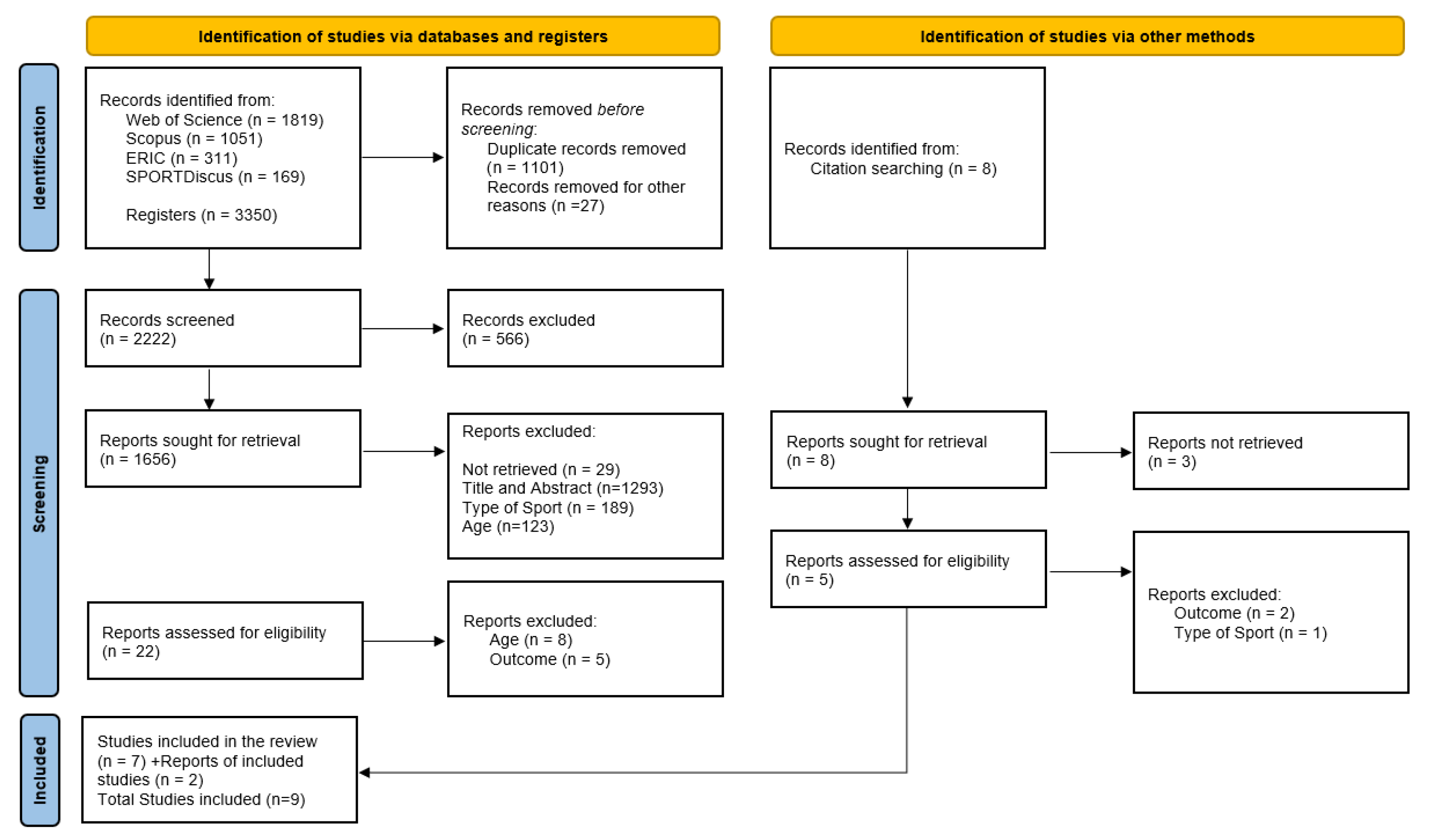
The literature search was conducted across the Web of Science, Scopus, ERIC and SPORTDiscus databases, producing 3350 articles. Following the PRISMA guidelines, the search and selection process was conducted independently by D.B. and C.M. The initial database search using the keywords passion, motivation, affect, and satisfaction identified 3350 results. Duplicate articles were removed using EndNote X9.3.3 software (Clarivate Analytics, Philadelphia, PA, USA). After analyzing the titles, 1656 potentially relevant studies were identified (Figure 1). Following a review of the abstracts, 22 articles were selected based on pre-defined inclusion and exclusion criteria. Upon reading the full texts, 7 studies were deemed suitable for inclusion in the final sample. Additionally, through citation searching, 2 more articles were identified. In total, 9 articles were included, of which 7 (77.8%) were cross-sectional and 2 (22.2%) were longitudinal. An analysis of the quality of the studies (Table 2 and Table 3) revealed that six studies were of good quality [51,52,53,54,55,56], one study was of reasonable quality [57], and both longitudinal studies [34,49] were included. All the selected studies (Table 1) articles were published between 2011 and 2022. Out of a total of nine articles, two are from the UK [55,56], three from Spain [52,53,54], one from the United States [34], one from Scotland [57], one from Norway [51], and one from Canada [49] (Table 4).
Figure 1.
PRISMA diagram for the identification, screening, eligibility, and inclusion of studies.
Table 2.
Quality analysis of cross-sectional studies.
Table 3.
Quality analysis of longitudinal and cohort studies.
Table 4.
Quality analysis of narrative review studies-SANRA scale.
Among the nine studies analyzed, only one did not examine the variable of passion [57]. Five studies focused on the satisfaction of basic needs [34,52,53,54,55]. Collectively, the articles involved a total of 2062 individuals aged between 11 and 18 years. The studies primarily explored the relationships between passion (both harmonious and obsessive), motivation, and athlete burnout. Some research investigated the mediating role of psychological need satisfaction in these relationships, while others examined how passion impacts performance and well-being. However, few studies addressed all constructs simultaneously.
3.2. Main Findings
This study examined the relationships among passion, motivation, psychological need satisfaction, burnout, affect, and performance in young football athletes. Harmonious passion (HP) has been shown to have a consistently protective and performance-enhancing effect, while obsessive passion (OP) has demonstrated a weaker or maladaptive association. Path analyses revealed a substantial impact of HP on self-determined motivation, with a significant coefficient of γ = 0.43, p < 0.01 [56]. In comparison, the coefficient of OP was negligible (γ = 0.04, p > 0.05) [56]. Self-determined motivation significantly predicted lower burnout (β = 0.64, p < 0.01), supporting an indirect pathway through which HP reduces burnout [56]. Bivariate correlations confirmed that HP was negatively related to all burnout dimensions, while OP was unrelated to exhaustion, and HP positively predicted psychological need satisfaction, which in turn negatively predicted burnout [55].
Autonomous motivation and the self-determination index (SDI) demonstrated the highest levels across the sample, although U17 athletes exhibited lower autonomous motivation compared to U15 and U13 athletes. Additionally, years in the academy for U17 athletes were associated with decreased self-determined motivation and increased controlled motivation [57]. The hours of football practice were largely unrelated to motivation. Mediation analyses demonstrated that satisfaction of autonomy, competence, and relatedness predicted both HP and OP via autonomous motivation, with relatedness satisfaction specifically reducing OP through controlled motivation [52]. Research indicates a strong correlation between fulfilling basic psychological needs and reducing burnout (r = −0.57 to −0.21). Additionally, the satisfaction of these needs indirectly impacts reflection and concentration via HP and OP, with direct effects of autonomy and competence on performance outcomes [53] (Table 5).
Table 5.
Results.
Athletes who maintain balanced engagement across life domains have been shown to have higher HP, autonomous motivation, and satisfaction of autonomy and relatedness, alongside lower amotivation. This suggests that maintaining a balanced lifestyle enhances motivation and well-being [54]. HP also predicted positive effects on mood and athlete satisfaction, while OP was linked to negative effects. Satisfaction with autonomy, competence, and relatedness had a further influence on affective states and perceived preparation quality [34,52]. HP uniquely predicted preparation quality and sport engagement, with high-commitment athletes scoring higher in passion than low-commitment athletes, and no differences in grit or mindset [34,51]. Extant literature consistently associates HP with well-being, vitality, and adaptive performance, and OP with anxiety, depression, and maladaptive outcomes. This underscores the importance of motivation quality for positive psychological and performance results [49]. Collectively, the findings suggest a pathway from HP to psychological need satisfaction, to autonomous motivation, ultimately reducing burnout, enhancing affective well-being, and improving performance. In contrast, OP has weaker or negative effects. Factors such as age and context, including reduced autonomous motivation in older athletes and the benefits of a balanced lifestyle, further moderate these relationships.
4. Discussion
This study aimed to provide a comprehensive understanding of the relationship between passion, motivation, well-being, and performance among young athletes. Building on the Dualistic Model of Passion and Self-Determination Theory, the findings from the current literature converge toward a consistent conclusion: harmonious passion (HP) and self-determined motivation operate as powerful protective and performance-enhancing factors, whereas obsessive passion (OP) and controlled motivation appear linked to maladaptive outcomes.
Empirical evidence demonstrates that HP fosters greater psychological well-being [12,58,59], satisfaction of basic psychological needs (BPN) [58,59,60], and more adaptive emotional experiences, allowing athletes to maintain high levels of engagement without compromising mental health [58,60,61]. Athletes driven by HP experience higher resilience, lower risk of burnout, and greater flexibility in their investment in sport, as passion stems from intrinsic enjoyment and volitional engagement rather than internal or external pressure [62,63,64]. Conversely, OP has been systematically associated with negative emotions, need frustration, diminished well-being, and increased burnout risk, particularly when participation becomes compulsive or tied to external validation [62,65].
The protective function of HP becomes evident at high pressure. HP enables athletes to adopt a “challenge mindset,” viewing high-pressure situations as opportunities for growth rather than threats, which helps buffer against negative emotions and supports adaptive functioning during competitions [62]. In football, higher HP is associated with better performance, greater well-being, and more deliberate practice, all of which contribute to success in high-pressure situations [51]. These protective effects are consistently linked to lower levels of athlete burnout and exhaustion [66,67], supporting adaptive coping [56,68] and resource recovery [69]. These mechanisms highlight that HP is not only linked to emotional well-being but also to sustainable motivation, enabling individuals to remain committed and persistent without sacrificing mental health.
In performance terms, HP and self-determined motivation predict higher achievement, vigor, confidence, and sustained effort [70,71,72]. Research shows that the highest levels of sport engagement and performance are found among athletes with high HP, rather than those simply high in overall passion [73]. HP promotes flow experiences, enjoyment, strong athletic identity, and consistent training habits, creating a virtuous cycle that strengthens both performance and well-being [74,75,76]. Importantly, dedication and commitment have been identified as mediators in this process, strengthening the association between HP and athlete identity [77,78].
This pattern aligns with Self-Determination Theory, whereby satisfaction of autonomy, competence, and relatedness nurtures self-determined motivation and HP, facilitating increased resilience, vitality, and well-being [79,80]. Correspondingly, controlled motivation and amotivation, often accompanying O, predict exhaustion, negative affect, and withdrawal from sport, reinforcing the importance of psychological need satisfaction in preventing burnout [81,82,83]. The motivational environment emerges as a crucial determinant of these outcomes. Task-involving (mastery) climates and autonomy-supportive coaching styles foster need satisfaction, HP, and motivation sustainability, whereas ego-involving climates and controlling leadership predict burnout and motivational decline [79,84,85,86]. Such findings are particularly relevant for older youth athletes, among whom declines in intrinsic motivation are not a fixed developmental pattern, but rather a consequence of competitive pressure, inequalities in progression, and lack of psychological support [87,88,89].
Beyond passion and motivation alone, regulatory focus also plays a crucial role in enhancing athlete safety and performance. A prevention focus (PH) supports injury-preventive behaviors and risk-management practices [90,91,92]. Meanwhile, the effects of promotion focus (PO) depend heavily on regulatory fit: promotion-focused strategies enhance motivation only when intervention and athlete orientation are aligned; otherwise, they may impair performance or safety [93,94]. These results underscore the importance of individualized motivational approaches over universal prescriptions. Recent studies further emphasize that motivational profiles, rather than absolute practice volume, predict mental health, anxiety, self-esteem, persistence, and dropout risk [77,87,95]. Tailored interventions based on motivational profiles are associated with improved performance, engagement, and psychological outcomes [96].
4.1. Practical Implications
The findings emphasize key considerations for designing youth sports environments. Firstly, interventions should avoid attempts to reduce commitment or passion, as these factors do not predict burnout. Coaches, clubs, and parents ought to create autonomy-supportive environments that encourage voluntary participation and recognize personal development goals. Involving young athletes in decision-making regarding training, roles, or recovery can enhance their intrinsic motivation.
Secondly, programs that provide constructive feedback and cultivate mastery-oriented climates can improve both performance and overall satisfaction of needs, particularly for athletes under 17, who often experience a decline in motivation. Coaching should prioritize learning and personal growth instead of solely focusing on performance rewards, which can lead to a shift toward controlled motivation. Finally, promoting a balanced lifestyle, encompassing school, friendships, and leisure activities, offers psychological protection and results in higher performance and well-being. Clubs and federations should establish guidelines for adequate rest, academic support, and extracurricular opportunities to foster this balance.
4.2. Study Limitations
Methodological limitations must be acknowledged. The limited number of studies (n = 9) restricts the generalizability of the findings, as the comprehensive inclusion and exclusion criteria narrowed the eligible studies. This rigorous selection did allow for a focused analysis of a specific population of youth football players. However, the predominance of cross-sectional designs limits broad conclusions. The lack of longitudinal studies hinders the ability to examine developmental trajectories and long-term effects of passion, motivation, and psychological need satisfaction. Additionally, the diversity in research designs prevented quantitative meta-analysis, limiting statistical synthesis of effect sizes. Most subjects were male, restricting conclusions about gender differences in passion and burnout. Contextual factors like socioeconomic status and parental involvement were often unmeasured, despite their potential influence on motivation and athlete development. Furthermore, the focus on individual cultural contexts limits generalizability globally due to variability in youth sport participation across countries. These methodological concerns highlight the value of adopting a broader approach in future reviews, including more diverse inclusion criteria, a higher prevalence of longitudinal studies, and a heterogeneous sample. This could enhance the generalizability and reliability of findings related to passion, motivation, and well-being in youth football.
4.3. Future Research
Future research should focus on longitudinal designs to track changes in passion and need satisfaction during key developmental phases. It is essential to investigate causal mechanisms through randomized autonomy-support interventions and specialized coach training. With a concerning decline in autonomous motivation in academia, we must determine if this arises from environmental pressures, trait changes, or identity conflicts. Additionally, gender-comparative studies are important since girls face unique motivational and s challenges in competitive sports. Cross-cultural research should explore whether the benefits of high passion and need satisfaction are consistent across different football systems. Finally, examining cognitive and neurobiological factors—like stress reactivity and sleep patterns—is crucial for understanding the link between high-stakes sports and mental well-being.
5. Conclusions
This synthesis highlights that the sustainability of youth football participation relies more on motivational factors than on training intensity or commitment. Harmonious passion, autonomous motivation, and basic need satisfaction enhance well-being, positive emotions, and athletic satisfaction while protecting against burnout. In contrast, obsessive passion lacks psychological resilience and can lead to negative emotions and lower satisfaction. These findings stress the importance of creating autonomy-supportive and psychologically safe environments, allowing young players to remain passionate while maintaining a healthy identity balance. By prioritizing motivational quality over mere intensity, coaches and organizations can promote both high performance and long-term mental well-being in youth football.
Author Contributions
D.B. and D.M. made substantial contributions to the conception and design of the manuscript. D.B., C.M., H.S. and D.M. as well as to the analysis and interpretation of the results and data. All authors participated in drafting the manuscript and revised it critically. All authors have read and agreed to the published version of the manuscript.
Funding
This work was funded by National Funds by FCT—Foundation for Science and Technology under the following project UID/04045: Research Center in Sports Sciences, Health Sciences, and Human Development.
Institutional Review Board Statement
Not applicable.
Informed Consent Statement
Not applicable.
Data Availability Statement
Data are contained within the article.
Conflicts of Interest
The authors declare no conflicts of interest.
References
- Murthy, V.H. Physical Activity: An Untapped Resource to Address Our Nation’s Mental Health Crisis Among Children and Adolescents. Public Health Rep. 2023, 138, 397–400. [Google Scholar] [CrossRef] [Scilit]
- Verner-Filion, J.; Gaudreau, P. Need satisfaction and sport motivation predict selection in a competitive youth soccer team over and above the relative age effect. Int. J. Sport Psychol. 2023, 54, 193–208. [Google Scholar]
- Vancakova, J.; Chamarro, A.; Martínez-Martí, M.L. Does Passion mediate the Effect of Character Strengths on the Resilience of Athletes? Cuad. Psicol. Deporte 2021, 21, 32–46. [Google Scholar] [CrossRef] [Scilit]
- Rodrigues, F.; Monteiro, D.; Matos, R.; Jacinto, M.; Antunes, R.; Amaro, N. Exploring the Dynamics of Athletes’ Enjoyment and Self-Determined Motivation, and of the Motivational Climate in Youth Football: A Longitudinal Perspective. Percept. Mot. Ski. 2023, 131, 551–567. [Google Scholar] [CrossRef] [Scilit] [PubMed]
- Vallerand, R.J.; Blanchard, C.; Mageau, G.A.; Koestner, R.; Ratelle, C.; Leonard, M.; Gagne, M.; Marsolais, J. Les passions de l’ame: On obsessive and harmonious passion. J. Pers. Soc. Psychol. 2003, 85, 756–767. [Google Scholar] [CrossRef] [Scilit] [PubMed]
- Curran, T.; Hill, A.P.; Hall, H.K.; Jowett, G.E. Relationships Between the Coach-Created Motivational Climate and Athlete Engagement in Youth Sport. J. Sport Exerc. Psychol. 2015, 37, 193–198. [Google Scholar] [CrossRef] [Scilit]
- Vallerand, R.J. On the Psychology of Passion: In Search of What Makes People’s Lives Most Worth Living. Can. Psychol. 2008, 49, 1–13. [Google Scholar] [CrossRef] [Scilit]
- Stenseng, F.; Dalskau, L.H. Passion, Self-Esteem, and the Role of Comparative Performance Evaluation. J. Sport Exerc. Psychol. 2010, 32, 881–894. [Google Scholar] [CrossRef] [Scilit]
- Curran, T.; Hill, A.P.; Appleton, P.R.; Vallerand, R.J.; Standage, M. The psychology of passion: A meta-analytical review of a decade of research on intrapersonal outcomes. Motiv. Emot. 2015, 39, 631–655. [Google Scholar] [CrossRef] [Scilit]
- Gustafsson, H.; Hill, A.P.; Stenling, A.; Wagnsson, S. Profiles of perfectionism, parental climate, and burnout among competitive junior athletes. Scand. J. Med. Sci. Sports 2016, 26, 1256–1264. [Google Scholar] [CrossRef] [Scilit]
- Rodrigues, F.; Mageau, G.A.; Lemelin, E.; Teixeira, D.; Vitorino, A.; Cid, L.; Monteiro, D. Life satisfaction of Paralympians: The role of needs satisfaction and passion. Int. J. Sports Sci. Coach. 2022, 17, 510–518. [Google Scholar] [CrossRef] [Scilit]
- Bento, T.; Vitorino, A.; Cid, L.; Monteiro, D.; Couto, N. Analysing the Relation between Passion, Motivation, and Subjective Well-Being in Sport: A Systematic Review. Sports 2024, 12, 279. [Google Scholar] [CrossRef] [Scilit]
- Lafrenière, M.-A.; St-Louis, A.; Vallerand, R.; Donahue, E. On the Relation between Performance and Life Satisfaction: The Moderating Role of Passion. Self Identity 2012, 11, 516–530. [Google Scholar] [CrossRef] [Scilit]
- St-Louis, A.C.; Carbonneau, N.; Vallerand, R.J. Passion for a Cause: How It Affects Health and Subjective Well-Being. J. Personal. 2016, 84, 263–276. [Google Scholar] [CrossRef] [Scilit]
- Ryan, R.M.; Deci, E.L. Self-Determination Theory: Basic Psychological Needs in Motivation, Development, and Wellness; The Guilford Press: New York, NY, USA, 2017; 756p. [Google Scholar]
- Deci, E.L.; Ryan, R.M. The “What” and “Why” of Goal Pursuits: Human Needs and the Self-Determination of Behavior. Psychol. Inq. 2000, 11, 227–268. [Google Scholar] [CrossRef] [Scilit]
- Edward, L.; Deci, R.M.R. Intrinsic Motivation and Self-Determination in Human Behavior, 1st ed.; Springer: New York, NY, USA, 1985; 372p. [Google Scholar]
- Pelletier, L.G.; Fortier, M.S.; Vallerand, R.J.; Brière, N.M. Associations Among Perceived Autonomy Support, Forms of Self-Regulation, and Persistence: A Prospective Study. Motiv. Emot. 2001, 25, 279–306. [Google Scholar] [CrossRef] [Scilit]
- Monteiro, D.; Teixeira, D.S.; Travassos, B.; Duarte-Mendes, P.; Moutão, J.; Machado, S.; Cid, L. Perceived Effort in Football Athletes: The Role of Achievement Goal Theory and Self-Determination Theory. Front. Psychol. 2018, 9, 1575. [Google Scholar] [CrossRef] [Scilit] [PubMed]
- Hodge, K.; Lonsdale, C.; Jackson, S.A. Athlete Engagement in Elite Sport: An Exploratory Investigation of Antecedents and Consequences. Sport Psychol. 2009, 23, 186–202. [Google Scholar] [CrossRef] [Scilit]
- Teixeira, D.S.; Rodrigues, F.; Vitorino, A.; Cid, L.; Bento, T.; Evmenenko, A.; Macedo, R.; Morales-Sánchez, V.; Monteiro, D. The dualistic model of passion in adapted sport: A double-serial mediation analysis on satisfaction with life. Curr. Psychol. 2023, 42, 8919–8930. [Google Scholar] [CrossRef] [Scilit]
- Monteiro, D.; Pelletier, L.; Moutão, J.M.; Teixeira, D.; Cid, L. Examining the motivational determinants of enjoyment and the intention to continue of persistent competitive swimmers. In Proceedings of the Self-Determination Theory 2019, Amsterdam, The Netherlands, 21–24 May 2019. [Google Scholar]
- Amorose, A.J.; Anderson-Butcher, D. Autonomy-supportive coaching and self-determined motivation in high school and college athletes: A test of self-determination theory. Psychol. Sport Exerc. 2007, 8, 654–670. [Google Scholar] [CrossRef] [Scilit]
- Sarrazin, P.; Vallerand, R.; Guillet, E.; Pelletier, L.; Cury, F. Motivation and dropout in female handballers: A 21-month prospective study. Eur. J. Soc. Psychol. 2002, 32, 395–418. [Google Scholar] [CrossRef] [Scilit]
- Ntoumanis, N.; Standage, M. Motivation in physical education classes:A self-determination theory perspective. Theory Res. Educ. 2009, 7, 194–202. [Google Scholar] [CrossRef] [Scilit]
- Quested, E.; Duda, J. Perceived Autonomy Support, Motivation Regulations and the Self-Evaluative Tendencies of Student Dancers. J. Danc. Med. Sci. Off. Public Int. Assoc. Danc. Med. Sci. 2011, 15, 3–14. [Google Scholar] [CrossRef] [Scilit]
- Álvarez, M.S.; Balaguer, I.; Castillo, I.; Duda, J.L. Coach Autonomy Support and Quality of Sport Engagement in Young Soccer Players. Span. J. Psychol. 2009, 12, 138–148. [Google Scholar] [CrossRef] [Scilit] [PubMed]
- Balaguer, I.; González, L.; Fabra, P.; Castillo, I.; Mercé, J.; Duda, J.L. Coaches’ interpersonal style, basic psychological needs and the well- and ill-being of young soccer players: A longitudinal analysis. J. Sports Sci. 2012, 30, 1619–1629. [Google Scholar] [CrossRef] [Scilit]
- Bartholomew, K.J.; Ntoumanis, N.; Ryan, R.M.; Bosch, J.A.; Thøgersen-Ntoumani, C. Self-Determination Theory and Diminished Functioning:The Role of Interpersonal Control and Psychological Need Thwarting. Personal. Soc. Psychol. Bull. 2011, 37, 1459–1473. [Google Scholar] [CrossRef] [Scilit]
- Rousseau, F.L.; Vallerand, R.J. An Examination of the Relationship between Passion and Subjective Well-Being in Older Adults. Int. J. Aging Hum. Dev. 2008, 66, 195–211. [Google Scholar] [CrossRef] [Scilit]
- Clancy, R.B.; Herring, M.P.; MacIntyre, T.E.; Campbell, M.J. A review of competitive sport motivation research. Psychol. Sport Exerc. 2016, 27, 232–242. [Google Scholar] [CrossRef] [Scilit]
- Mack, D.E.; Wilson, P.M.; Gunnell, K.E.; Gilchrist, J.D.; Kowalski, K.C.; Crocker, P.R.E. Health-Enhancing Physical Activity: Associations with Markers of Well-Being. Appl. Psychol. Health Well-Being 2012, 4, 127–150. [Google Scholar] [CrossRef] [Scilit]
- Lemyre, P.-N.; Roberts, G.C.; Stray-Gundersen, J. Motivation, overtraining, and burnout: Can self-determined motivation predict overtraining and burnout in elite athletes? Eur. J. Sport Sci. 2007, 7, 115–126. [Google Scholar] [CrossRef] [Scilit]
- Verner-Filion, J.; Vallerand, R.J. A longitudinal examination of elite youth soccer players: The role of passion and basic need satisfaction in athletes’ optimal functioning. Psychol. Sport Exerc. 2018, 39, 20–28. [Google Scholar] [CrossRef] [Scilit]
- Diener, E. Subjective Well-Being: The Science of Happiness and a Proposal for a National Index. Am. Psychol. 2000, 55, 34–43. [Google Scholar] [CrossRef]
- Diener, E.; Suh, E.; Lucas, R.; Smith, H. Subjective Well-Being: Three Decades of Progress. Psychol. Bull. 1999, 125, 276–302. [Google Scholar] [CrossRef]
- Sheldon, K.; Elliot, A.; Kim, Y.; Kasser, T. What Is Satisfying About Satisfying Events? Testing 10 Candidate Psychological Needs. J. Personal. Soc. Psychol. 2001, 80, 325–339. [Google Scholar] [CrossRef]
- Mageau, G.A.; Vallerand, R.J. The coach–athlete relationship: A motivational model. J. Sports Sci. 2003, 21, 883–904. [Google Scholar] [CrossRef] [Scilit]
- Hodge, K.; Henry, G.; Smith, W. A Case Study of Excellence in Elite Sport: Motivational Climate in a World Champion Team. Sport Psychol. 2014, 28, 60–74. [Google Scholar] [CrossRef] [Scilit]
- Jõesaar, H.; Hein, V.; Hagger, M.S. Youth athletes’ perception of autonomy support from the coach, peer motivational climate and intrinsic motivation in sport setting: One-year effects. Psychol. Sport Exerc. 2012, 13, 257–262. [Google Scholar] [CrossRef] [Scilit]
- Page, M.J.; McKenzie, J.E.; Bossuyt, P.M.; Boutron, I.; Hoffmann, T.C.; Mulrow, C.D.; Shamseer, L.; Tetzlaff, J.M.; Akl, E.A.; Brennan, S.E.; et al. The PRISMA 2020 statement: An updated guideline for reporting systematic reviews. BMJ 2021, 372, n71. [Google Scholar] [CrossRef] [Scilit]
- Schardt, C.; Adams, M.B.; Owens, T.; Keitz, S.; Fontelo, P. Utilization of the PICO framework to improve searching PubMed for clinical questions. BMC Med. Inform. Decis. Mak. 2007, 7, 16. [Google Scholar] [CrossRef] [Scilit]
- Wells, G.A.; Shea, B.; O’Connell, D.; Peterson, J.; Welch, V.; Losos, M.; Tugwell, P. The Newcastle-Ottawa Scale (NOS) for Assessing the Quality of Nonrandomised Studies in Meta-Analyses. Available online: https://www.ohri.ca/programs/clinical_epidemiology/oxford.asp (accessed on 10 November 2025).
- Ma, L.L.; Wang, Y.Y.; Yang, Z.H.; Huang, D.; Weng, H.; Zeng, X.T. Methodological quality (risk of bias) assessment tools for primary and secondary medical studies: What are they and which is better? Mil. Med. Res. 2020, 7, 7. [Google Scholar] [CrossRef] [Scilit] [PubMed]
- Stang, A. Critical evaluation of the Newcastle-Ottawa scale for the assessment of the quality of nonrandomized studies in meta-analyses. Eur. J. Epidemiol. 2010, 25, 603–605. [Google Scholar] [CrossRef] [Scilit]
- Aromataris, E.; Lockwood, C.; Porritt, K.; Pilla, B.; Jordan, Z. JBI Manual for Evidence Synthesis. Available online: https://synthesismanual.jbi.global (accessed on 10 November 2025).
- Loh, Z.C.; Hussain, R.; Balan, S.; Saini, B.; Muneswarao, J.; Ong, S.C.; Babar, Z.U. Perceptions, attitudes, and behaviors of asthma patients towards the use of short-acting β2-agonists: A systematic review. PLoS ONE 2023, 18, e0283876. [Google Scholar] [CrossRef] [Scilit] [PubMed]
- Niño de Guzmán, E.; Martínez García, L.; González, A.I.; Heijmans, M.; Huaringa, J.; Immonen, K.; Ninov, L.; Orrego-Villagrán, C.; Pérez-Bracchiglione, J.; Salas-Gama, K.; et al. The perspectives of patients and their caregivers on self-management interventions for chronic conditions: A protocol for a mixed-methods overview. F1000Research 2021, 9, 120. [Google Scholar] [CrossRef] [Scilit] [PubMed]
- Vallerand, R. From Motivation to Passion: In Search of the Motivational Processes Involved in a Meaningful Life. Can. Psychol.-Psychol. Can. 2012, 53, 42–52. [Google Scholar] [CrossRef] [Scilit]
- Baethge, C.; Goldbeck-Wood, S.; Mertens, S. SANRA—A scale for the quality assessment of narrative review articles. Res. Integr. Peer Rev. 2019, 4, 5. [Google Scholar] [CrossRef] [Scilit]
- Sigmundsson, H.; Dybendal, B.H.; Loftesnes, J.M.; Olafsson, B.; Grassini, S. Passion a key for success: Exploring motivational factors in football players. New Ideas Psychol. 2022, 65, 100932. [Google Scholar] [CrossRef] [Scilit]
- Chamorro, J.L.; Alcaraz, S.; Sanchez-Oliva, D.; Garcia-Calvo, T.; Torregrossa, M. Fuelling the passion: Psychological needs and behavioural regulations as antecedents of passion for football. J. Sports Sci. 2021, 39, 653–662. [Google Scholar] [CrossRef] [Scilit]
- Chamorro, J.L.; Moreno, R.; García-Calvo, T.; Torregrossa, M. The Influence of Basic Psychological Needs and Passion in Promoting Elite Young Football Players’ Development. Front. Psychol. 2020, 11, 570584. [Google Scholar] [CrossRef] [Scilit]
- Chamorro, J.L.; Torregrosa, M.; Sánchez Oliva, D.; Garciá Calvo, T.; León, B. Future Achievements, Passion and Motivation in the Transition from Junior-to-Senior Sport in Spanish Young Elite Soccer Players. Span. J. Psychol. 2016, 19, E69. [Google Scholar] [CrossRef] [Scilit]
- Curran, T.; Appleton, P.R.; Hill, A.P.; Hall, H.K. The mediating role of psychological need satisfaction in relationships between types of passion for sport and athlete burnout. J. Sports Sci. 2013, 31, 597–606. [Google Scholar] [CrossRef] [Scilit]
- Curran, T.; Appleton, P.R.; Hill, A.P.; Hall, H.K. Passion and burnout in elite junior soccer players: The mediating role of self-determined motivation. Psychol. Sport Exerc. 2011, 12, 655–661. [Google Scholar] [CrossRef] [Scilit]
- Hendry, D.T.; Crocker, P.R.E.; Hodges, N.J. Practice and play as determinants of self-determined motivation in youth soccer players. J. Sports Sci. 2014, 32, 1091–1099. [Google Scholar] [CrossRef] [Scilit]
- Robazza, C.; Vitali, F.; Bortoli, L.; Ruiz, M.C. Basic psychological needs satisfaction, coping functions, and emotional experiences in competitive athletes: A multi-states theory perspective. Sci. Rep. 2025, 15, 1854. [Google Scholar] [CrossRef] [Scilit]
- Doron, J.; Hayotte, M.; d’Arripe-Longueville, F.; Leprince, C. Coping profiles of adolescent football players and association with interpersonal coping: Do emotional competence and psychological need satisfaction matter? Scand. J. Med. Sci. Sports 2023, 34, e14550. [Google Scholar] [CrossRef] [Scilit] [PubMed]
- Yildirim, S.; Yildiz, A.; TÜRkerİ Bozkurt, H.; Bilgin, E.; Yüksel, Y.; Koruç, Z. The associations of transformational leadership and team cohesion on the psychological health of young football players through basic psychological needs. Sci. Med. Footb. 2023, 8, 222–231. [Google Scholar] [CrossRef] [Scilit] [PubMed]
- Karayel, E.; Adilogullari, I.; Senel, E. The role of transformational leadership in the associations between coach-athlete relationship and team resilience: A study on elite football players. BMC Psychol. 2024, 12, 514. [Google Scholar] [CrossRef] [Scilit]
- Vallerand, R.J.; Paquette, V. The role of passion in the resilience process. Self Identity 2024, 23, 288–305. [Google Scholar] [CrossRef] [Scilit]
- Rahimi, S.; Paquette, V.; Vallerand, R.J. The role of students’ passion and affect in resilience following failure. Learn. Individ. Differ. 2023, 107, 102360. [Google Scholar] [CrossRef] [Scilit]
- Paquette, V.; Vallerand, R.J.; Houlfort, N.; Fredrickson, B.L. Thriving through adversity: The role of passion and emotions in the resilience process. J. Personal. 2022, 91, 789–805. [Google Scholar] [CrossRef] [Scilit] [PubMed]
- St-Cyr, J.; Gavrila, A.; Tanguay-Sela, M.; Vallerand, R.J. Perfectionism, disordered eating and well-being in aesthetic sports: The mediating role of passion. Psychol. Sport Exerc. 2024, 73, 102648. [Google Scholar] [CrossRef] [Scilit]
- Woods, S.; Dunne, S.; Gallagher, P.; McNicholl, A. A systematic review of the factors associated with athlete burnout in team sports. Int. Rev. Sport Exerc. Psychol. 2022, 18, 70–110. [Google Scholar] [CrossRef] [Scilit]
- Lopes, M.; Vallerand, R.J. The role of passion, need satisfaction, and conflict in athletes’ perceptions of burnout. Psychol. Sport Exerc. 2020, 48, 101674. [Google Scholar] [CrossRef] [Scilit]
- Nuetzel, B. Coping strategies for handling stress and providing mental health in elite athletes: A systematic review. Front. Sports Act. Living 2023, 5, 1265783. [Google Scholar] [CrossRef] [Scilit] [PubMed]
- de Jonge, J.; Balk, Y.A.; Taris, T.W. Mental Recovery and Running-Related Injuries in Recreational Runners: The Moderating Role of Passion for Running. Int. J. Environ. Res. Public Health 2020, 17, 1044. [Google Scholar] [CrossRef] [Scilit]
- Gu, S.; Bi, S.; Guan, Z.; Fang, X.; Jiang, X. Relationships among Sports Group Cohesion, Passion, and Mental Toughness in Chinese Team Sports Athletes. Int. J. Environ. Res. Public Health 2022, 19, 15209. [Google Scholar] [CrossRef] [Scilit]
- Yukhymenko-Lescroart, M.A. The role of passion for sport in college student-athletes’ motivation and effort in academics and athletics. Int. J. Educ. Res. Open 2021, 2, 100055. [Google Scholar] [CrossRef] [Scilit]
- Verner-Filion, J.; Vallerand, R.J.; Amiot, C.E.; Mocanu, I. The two roads from passion to sport performance and psychological well-being: The mediating role of need satisfaction, deliberate practice, and achievement goals. Psychol. Sport Exerc. 2017, 30, 19–29. [Google Scholar] [CrossRef] [Scilit]
- Schellenberg, B.J.I.; Lötscher, J. Passion and engagement in sport: A look at athletes and coaches using a quadripartite approach. Psychol. Sport Exerc. 2024, 75, 102703. [Google Scholar] [CrossRef] [Scilit]
- Li, J.; Jiang, X.; Zhou, Y. Culture, emotion, and cognition: Understanding the psychological dynamics of Chinese sports with emotional regulation skills and cognitive reappraisal. Heliyon 2024, 10, e34306. [Google Scholar] [CrossRef] [Scilit]
- Bill, T.; Dessart, G.; Antonini Philippe, R. Does Ultra-Endurance Passion Make Athletes Happy? Sports 2024, 12, 149. [Google Scholar] [CrossRef] [Scilit]
- Gu, S.; Peng, W.; Du, F.; Fang, X.; Guan, Z.; He, X.; Jiang, X. Association between coach-athlete relationship and athlete engagement in Chinese team sports: The mediating effect of thriving. PLoS ONE 2023, 18, e0289979. [Google Scholar] [CrossRef] [Scilit]
- Huang, H.; Sha, X.; Zhong, C.; Ma, N.; Shui, Y. Association of football athlete engagement profiles with adolescent mental health —A latent profile analysis. BMC Public Health 2025, 25, 2045. [Google Scholar] [CrossRef] [Scilit]
- Uğraş, S.; Mergan, B.; Çelik, T.; Hidayat, Y.; Özman, C.; Üstün, Ü.D. The relationship between passion and athlete identity in sport: The mediating and moderating role of dedication. BMC Psychol. 2024, 12, 76. [Google Scholar] [CrossRef] [Scilit]
- Domingues, A.; Santos, J.; Batista, M.; Serrano, J.; Honório, S.; Petrica, J. Mediation effects of basic psychological needs and motivation among coach leadership style on the subjective well-being of adapted sports athletes’ members of the special olympics. PLoS ONE 2024, 19, e0298297. [Google Scholar] [CrossRef] [Scilit]
- Huang, H.; Wang, H.H.X.; Donaghy, E.; Henderson, D.; Mercer, S.W. Using self-determination theory in research and evaluation in primary care. Health Expect. 2022, 25, 2700–2708. [Google Scholar] [CrossRef] [Scilit] [PubMed]
- Wu, X.; Cai, Y.; Abidin, N.E.Z.; Jaladin, R.A.M. Associations between motivational factors and burnout syndrome among elite skiers. BMC Psychol. 2024, 12, 490. [Google Scholar] [CrossRef] [Scilit]
- Chuented, P.; Puranitee, P.; Pakakasama, S.; Meepanya, S. Factors affecting residents’ internal motivation, grit, and well-being. BMC Med. Educ. 2023, 23, 779. [Google Scholar] [CrossRef] [Scilit] [PubMed]
- Hong, H.J.; Wilkinson, G.; Rocha, C.M. The Relationship Between Basic Needs Satisfaction, Self-determined Motivation, and Burnout in Korean Esports Players. J. Gambl. Stud. 2022, 39, 323–338. [Google Scholar] [CrossRef] [Scilit]
- Wu, C.-H.; Zhao, Y.-D.; Yin, F.-Q.; Yi, Y.; Geng, L.; Xu, X. Mental Fatigue and Sports Performance of Athletes: Theoretical Explanation, Influencing Factors, and Intervention Methods. Behav. Sci. 2024, 14, 1125. [Google Scholar] [CrossRef] [Scilit] [PubMed]
- González-Hernández, J.; Gómez-López, M.; Manzano-Sánchez, D.; Valero-Valenzuela, A. Motivated and without Fear of Failure: The Strength of Basic Psychological Needs in Youth Spanish Athletes in Team Sports. J. Hum. Kinet. 2023, 87, 235–245. [Google Scholar] [CrossRef] [Scilit]
- Mossman, L.H.; Slemp, G.R.; Lewis, K.J.; Colla, R.H.; O’Halloran, P. Autonomy support in sport and exercise settings: A systematic review and meta-analysis. Int. Rev. Sport Exerc. Psychol. 2022, 17, 540–563. [Google Scholar] [CrossRef] [Scilit]
- Brat, V.; Bota, A.; Mitrache, G.; Teodorescu, S. The Motivational Level of Performance Swimmers and Its Impact on the Risk of Sports Dropout. Sports 2025, 13, 125. [Google Scholar] [CrossRef] [Scilit]
- Selejó Joó, B.T.; Czipa, H.; Bódi, R.; Lupócz, Z.; Paronai, R.; Tóth, B.T.; Tóth, H.L.; Kocsner, O.C.; Lovas, B.; Lukácsi, C.; et al. Qualitative Analysis of Micro-System-Level Factors Determining Sport Persistence. J. Funct. Morphol. Kinesiol. 2024, 9, 196. [Google Scholar] [PubMed]
- Nielsen, G.; Wikman, J.M.; Appleton, P.R.; Bentsen, P.; Elsborg, P. Predicting adolescents’ continuation in club sports: A prospective cohort study of the importance of personal and contextual motivational factors in five sports in Denmark. Scand. J. Med. Sci. Sports 2024, 34, e14616. [Google Scholar] [CrossRef] [Scilit] [PubMed]
- Bonell Monsonís, O.; Verhagen, E.; Spörri, J.; Gouttebarge, V.; Bolling, C. ‘Every turn can be the last one I do’—Perceptions of injury risk in high-performance snow sports and its implication for injury prevention. Inj. Prev. 2024, 30, 341. [Google Scholar] [CrossRef] [Scilit] [PubMed]
- Eliason, P.H.; Galarneau, J.-M.; Kolstad, A.T.; Pankow, M.P.; West, S.W.; Bailey, S.; Miutz, L.; Black, A.M.; Broglio, S.P.; Davis, G.A.; et al. Prevention strategies and modifiable risk factors for sport-related concussions and head impacts: A systematic review and meta-analysis. Br. J. Sports Med. 2023, 57, 749. [Google Scholar] [CrossRef] [Scilit]
- Cardoso-Marinho, B.; Barbosa, A.; Bolling, C.; Marques, J.P.; Figueiredo, P.; Brito, J. The perception of injury risk and prevention among football players: A systematic review. Front. Sports Act. Living 2022, 4, 1018752. [Google Scholar] [CrossRef] [Scilit]
- Mühlberger, C.; Böhm, A.M.; Hansen, J.; Behrendt, P.; Wastian, M.; Jonas, E. Coaching as a growth- or security-oriented process–How regulatory fit increases coaching success. PLoS ONE 2023, 18, e0286059. [Google Scholar] [CrossRef] [Scilit]
- Debanne, T.; Volossovitch, A. Team Regulatory Strategies and Performance in Elite Handball. Res. Q. Exerc. Sport 2022, 94, 151–162. [Google Scholar] [CrossRef] [Scilit]
- Zhao, Y.; Wu, Q.; Zheng, W. Motivation and physical activity across Chinese adolescents: Based on latent profile analysis. PLoS ONE 2025, 20, e0328383. [Google Scholar] [CrossRef] [Scilit]
- Železnik Mežan, L.; Škof, B.; Leskošek, B.; Cecić Erpič, S. Effects of cooperative learning in youth athletics’ motivational climate, peer relationships and self-concept. Phys. Educ. Sport Pedagog. 2023, 30, 444–461. [Google Scholar] [CrossRef] [Scilit]

Disclaimer/Publisher’s Note: The statements, opinions and data contained in all publications are solely those of the individual author(s) and contributor(s) and not of MDPI and/or the editor(s). MDPI and/or the editor(s) disclaim responsibility for any injury to people or property resulting from any ideas, methods, instructions or products referred to in the content. |
© 2025 by the authors. Licensee MDPI, Basel, Switzerland. This article is an open access article distributed under the terms and conditions of the Creative Commons Attribution (CC BY) license (https://creativecommons.org/licenses/by/4.0/).