Abstract
In this paper, a nonlinear differential braking control method is developed to avoid collision during lane change under driver torque. The lateral dynamics consist of lateral offset error and yaw error dynamics and can be interpreted as a semi-strict feedback form. In the differential braking control problem under the driver torque, a matching condition does not satisfy, and the system is not in the form of, the strict feedback form. Thus, a general backstepping control method cannot be applied. To overcome this problem, the proposed method is designed via the combination of the sliding mode control and backstepping. Two sliding surfaces are designed for differential braking control. One of the surfaces is designed considering the lateral offset error, and the other sliding surface is designed using the combination of the yaw and yaw rate errors as the virtual input of the lateral offset error dynamics. A brake steer force input is developed to regulate the two sliding surfaces using a backstepping procedure under the driver torque. Integral action and a super twisting algorithm are used in the lateral controller to ensure the robustness of the system. The proposed method, which is designed via the combination of the sliding mode control and backstepping, can improve the lateral control performance using differential braking. The proposed method is validated through simulations.
1. Introduction
More than 90% of accidents on highways are caused by human error [1,2]. Particularly, in the case of fatal vehicular accidents, the collision between vehicles occurs during lane change [3]. Various systems that provide a prior warning to the driver attempting to change a lane under the risk of collision have been developed to avoid such accidents. Additionally, several methods for risk assessment have been investigated [4,5,6,7,8]. Jula et al. [4] studied the kinematics of vehicles involved in a lane changing/merging maneuver and provided conditions under which lane changing/merging crashes can be avoided. Collision risks are estimated as stochastic variables and are predicted for a short period ahead by using hidden Markov models and Gaussian processes [5]. A method that propagates the known error covariance matrix of the current pose of the ego vehicle by considering local approximations of the predicted trajectory was proposed in [6]. In [7], a collision risk assessment algorithm was developed via lane-based probabilistic motion prediction of surrounding vehicles. A situational assessment based on Stochastic model and Gaussian distributions was designed for intelligent vehicles [8]. These systems cannot actively help a driver to avoid a collision. Therefore, systems that utilize steering torque and provide active assistance to avoid collisions have been developed [9,10,11] for power steering systems. Integrated steering and differential braking methods were developed for emergency collision avoidance [12,13,14]. However, the steering interaction between the driver and the controller was not considered in these methods. The torque imposed by the controller in the power steering systems can lead to discomfort while driving and result in negative effects such as overlapped steering torque imposed by the driver and the controller [15].
Alternatively, lateral position control methods were proposed. These use differential brake forces for steering intervention [15,16,17,18,19]. In [16], the usefulness of a brake steer system that uses differential brake forces for steering intervention was studied. A surface sliding controller with a weighted combination of yaw rate, nominal yaw rate error, and lateral offset error (or sideslip angle) was proposed [17,18]. A blind spot intervention (BSI) system was developed by Infinity [19]. The BSI system uses selective brake application to steer the car back to the center of the lane and avoids collision if a vehicle is present in the blind spot or vice versa. A hierarchical lane-keeping assistance control algorithm for a vehicle was proposed in [15]. The lateral dynamics where the brake steer force is the system input are not in the form of the strict feedback system. Therefore, the backstepping control scheme cannot be applied to lateral dynamics with the brake steer force input [20,21,22]. Hence, the weighted combination of the lateral offset error (or sideslip angle) and the yaw rate error is widely used as the sliding surface for the sliding mode control [17,18]. However, the simultaneous regulation of the yaw rate error and lateral offset error cannot be guaranteed by using the sliding surface used in the previous studies. Furthermore, in the differential braking control problem under the driver torque, matching condition does not satisfy and the system is not in the form of the strict feedback system. Thus, general backstepping control method cannot be applied. Therefore, it is crucial to design a control method for the regulation of both the yaw rate error and the lateral offset error.
In this study, a nonlinear differential braking control method is developed to avoid collision during lane change under driver torque. The lateral dynamics consist of lateral offset error and yaw error dynamics and can be interpreted as a semi-strict feedback form. Two sliding surfaces are designed for differential braking control. One of the sliding surface surfaces is designed in terms of the lateral offset error, and the other sliding surface is designed using the combination of the yaw and yaw rate errors as the virtual input of the lateral offset error dynamics. The brake steer force input is developed to regulate two sliding surfaces using the backstepping procedure under the driver torque. The proposed method designed via the combination of the sliding mode control and the backstepping can improve the lateral control performance using differential braking. Integral action and super twisting algorithm are used in the lateral controller to ensure robustness of the system. The performance of the proposed method is validated through simulations.
2. Vehicle Lateral Dynamics Modeling
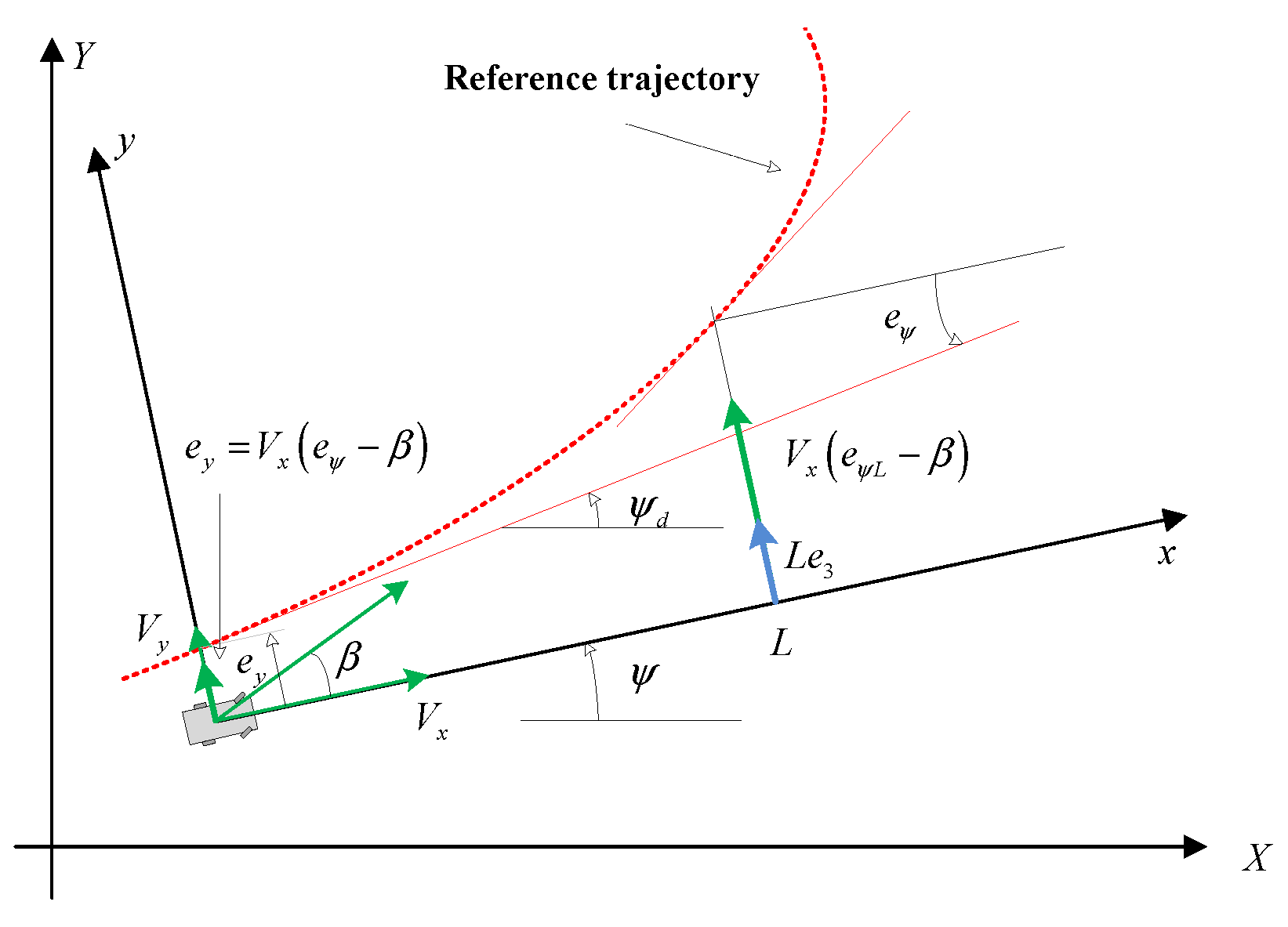
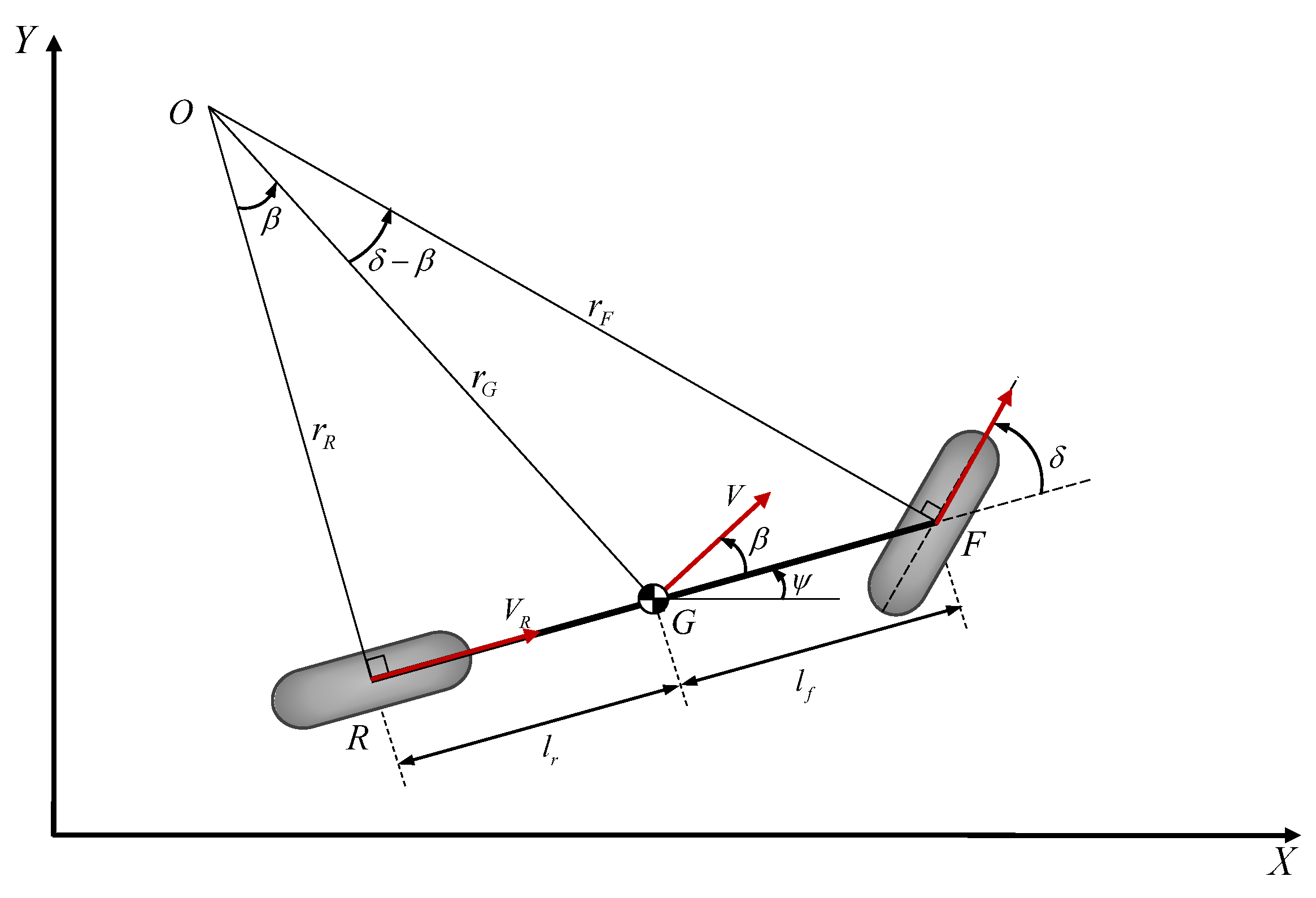
The detailed dynamics of a vehicle including longitudinal and lateral dynamics can be described using mechanical model that naturally has a minimum of six degrees of freedom (DOF) [23,24,25]. The bicycle model as shown in Figure 1 is used for lateral vehicle dynamics. The lateral position error, lateral position error at the lookahead distance point, heading angle, and reference trajectory are described in Figure 2. In Figure 1 and Figure 2, is a inertial coordinate frame, is a local coordinate frame, x is a longitudinal position of the origin of the coordinate to the front fixed point, y is a lateral position of the origin of the coordinate to the rotation center ‘O’ along the lateral axis, V is a velocity at c.g. of vehicle, is a longitudinal velocity at c.g. of vehicle, is a lateral velocity at c.g. of vehicle, is a yaw moment of inertia of vehicle, and are longitudinal distances from c.g. to front and rear tires, respectively, is a yaw, heading, angle of vehicle in global axis, is a vehicle slip angle at c.g. of vehicle, and are slip angles at front and rear wheel tires, respectively, is a steering angle, and are lateral tire forces on front and rear tires, respectively, R is a turning radius of vehicle or radius of road, L is a look-ahead distance from c.g. to look-ahead point, is a lateral offset error with respect to reference, and is a yaw angle error with respect to road.
Figure 1.
Bicycle model diagram of lateral vehicle dynamics.
Figure 2.
Lateral position and velocity errors at the look-ahead distance point.
We define the error states e for the lateral control as
where is the lateral offset error, is the yaw error, y is the lateral offset, is the desired lateral offset, is the yaw, and is the desired yaw. The basic lateral model is described in terms of the lateral offset at the vehicle’s center of gravity and convert it in terms of the lateral offset at the look-ahead distance. The error dynamics in terms of the state vector are then obtained as
where and are longitudinal tire forces at front left and right tire, respectively, is a brake steer force and a control input, m is a total mass of vehicle, is a width of the vehicle, and are cornering stiffness of front and rear tires, respectively,
The detailed mathematical modeling for (2) is discussed in [24,25]. We rewrite the error dynamics (2) as
If both and are zero without the input , the equilibrium point is where a is a constant. If and/or are not zero, of the equilibrium point cannot be zero for the compensation of and/or in . On a straight road, the desired yaw rate is zero. When the drive tries to change the lane, the steering wheel angle becomes nonzero so that cannot be zero although is kept to be zero by the control input . The aim of the controller design is to determine the brake steer force such that
when the driver changes a lane under the collision risk. The steering angle that is activated as the disturbance in the differential braking system is in both and dynamics. Furthermore, the error dynamics (3) is not in the form of the strict feedback system. Thus, general nonlinear control methods such as the sliding model control, the backstepping control cannot be used for the error dynamics (3). To overcome this problem, the proposed method is designed via the combination of the sliding mode control and the backstepping.
3. Control Strategy for Collision Avoidance
3.1. Structure of the Collision Avoidance System
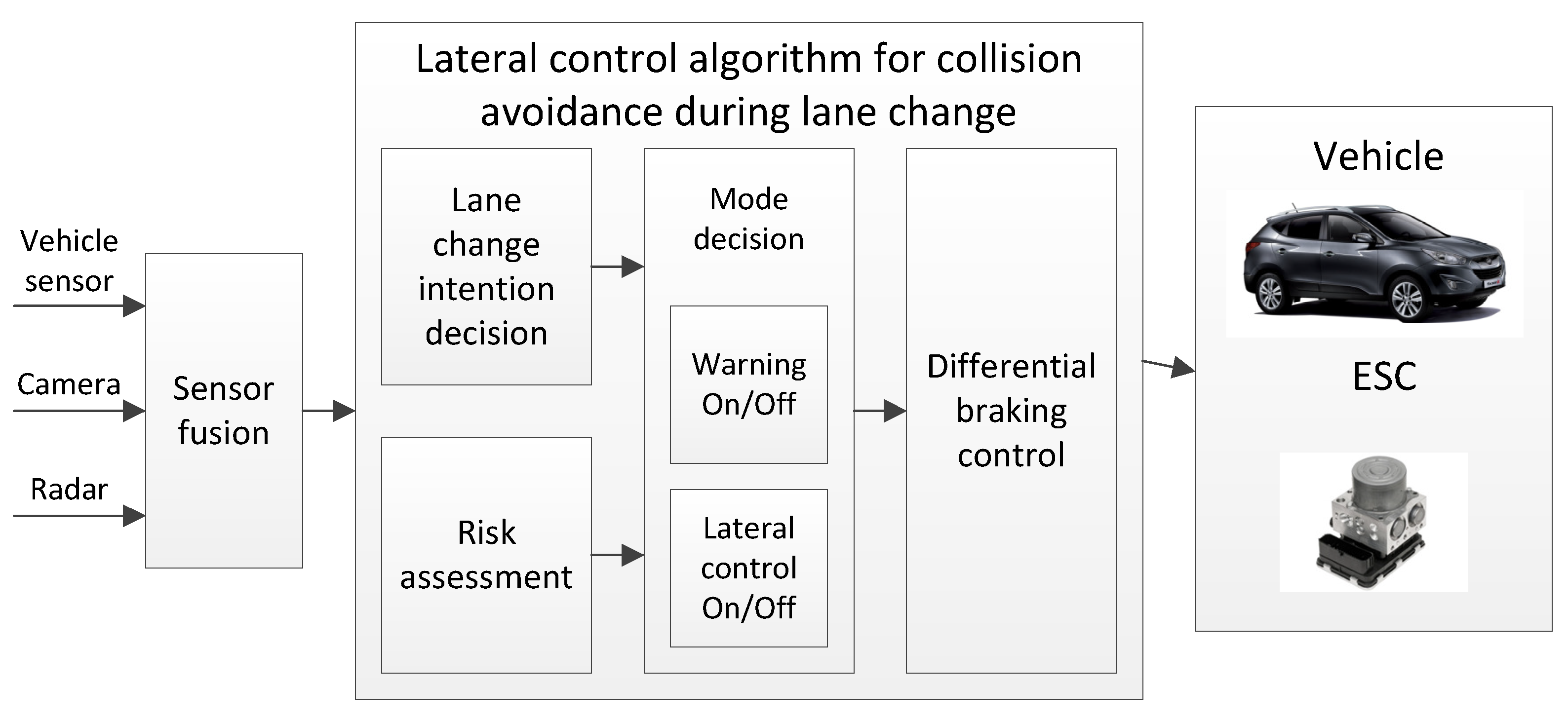
The overall architecture of the side crash avoidance system is depicted in Figure 3. The algorithm consists of the following three parts. (1) The driver’s lane change intention and the vehicle status are checked via sensor fusion [26,27], and the collision risk is determined and the presence of a vehicle in the blind spot is checked [6,28]. (2) If the driver’s lane change intention is detected under the collision risk with a vehicle in the target lane or with a vehicle in the blind spot, the system warns the driver about the collision risk and the lateral control system is turned on. (3) The differential braking input calculated to ensure regulation of the lateral offset error, lateral offset error rate, yaw, and yaw rate by the differential braking control method maintains the vehicle on the original lane. In this paper, we focus on the design of the differential braking control method to maintain the vehicle on the original lane.
Figure 3.
Architecture of the collision avoidance system.
3.2. Strategy of Lateral Control for Collision Avoidance
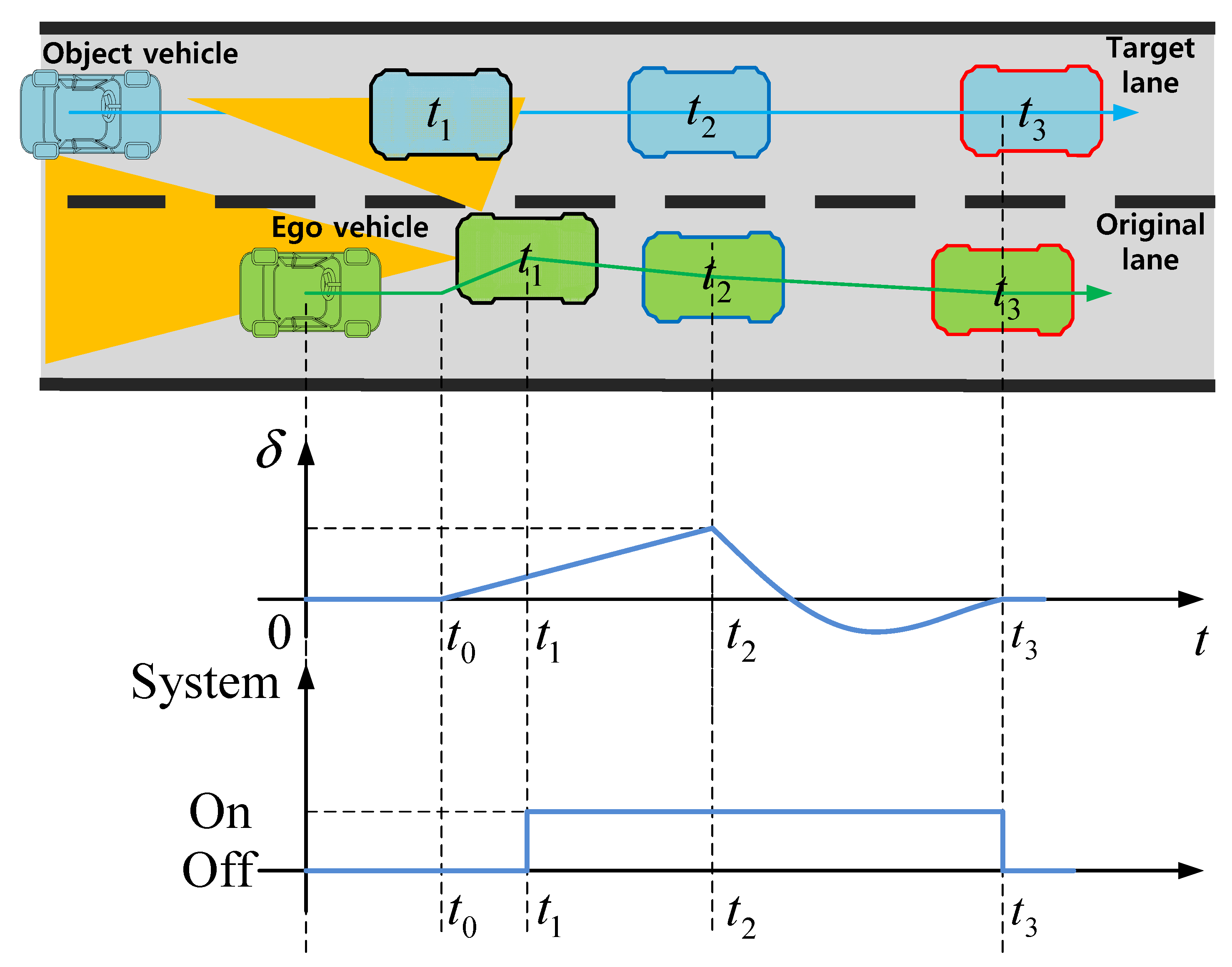
A strategy of the lateral control to avoid collision with a vehicle in the target lane is shown in Figure 4. The driver starts to change the lane at . At , the risk assessment predicts a collision, and the system warns the driver about the collision risk. Additionally, the brake steer force is generated by the control algorithm to prevent lane change. The driver tries to return to the original lane at . If the lateral offset error , yaw error , and steering wheel angle are considerably small, the differential braking control is released.
Figure 4.
Strategy of the lateral control for the avoidance of the side crash.
4. Differential Braking Control Algorithm Design for Lateral Control
To eliminate steady-state error, integrator error is defined as
Thus, the error dynamics (3) can be written as
The error dynamics (6) consist of lateral offset error dynamics and yaw error dynamics and it can be interpreted as a semi-strict feedback form as follows:
where , , , , , , . In (6), the lateral offset error dynamics are
Considering lateral offset error dynamics (8), the term can be regarded as the virtual input. Two sliding surfaces and are designed for the controller design. The sliding surface is designed in terms of the lateral offset error as
where the coefficients and are chosen such that the polynomial is Hurwitz. For the virtual input of the lateral offset error dynamics (8), the sliding surface is defined as
Then, the lateral offset error dynamics (8) become
From (8) and (9), we obtain as
For the convergence of the sliding surface to the zero, the reference of is designed as
Equation (12) thus becomes
where is the tracking error for as . The derivative of with respect to time is
The input is designed as
where , , and are positive constant.
Theorem 1.
Suppose the error dynamics (3) with the control law (13) and (16). The lateral offset error converges to zero and the yaw error is bounded. With , the yaw error converges to zero.
Proof.
Step 1: From (14),
The energy function is defined as
Then, is obtained as
In (17), and are regarded as the input and the output, respectively. Then, (19) can be rewritten as
From (20), the relationship between and is strictly output passive [29] and is zero-state observable. Therefore, system is input-to-state stable. With control law (16), the dynamics of and are
With the definition of the vector , dynamics are
where and . With and , is Hurwitz. The Lyapunov candidate function is defined as
where is positive definite. The derivative of with respect to time is given by
where is positive definite such that . Thus, the origin is finite time stable. Consequently converges to zero in finite time.
Step 2: With , in (17) is obtained as
Then, with the definition of (9), (11) can be rewritten as
Equation (26) can then be rewritten as
where , , . Because is Hurwitz, is bounded-input bounded output (BIBO) stable. With the convergence of to zero, and converge to zeros. Furthermore, also converges to zero.
Step 3: With ,
From (3), (10), and (28), we obtain
where . As , , and converge to zeros, is bounded in the transient response. and are also bounded. Thus a positive constant exists such that . Equation (29) is thus simplified as
From (30), we have
, , converge to zeros. For a straight load, is zero. With , converges to zero, then, converges to zero. Consequently, also converges to zero. □
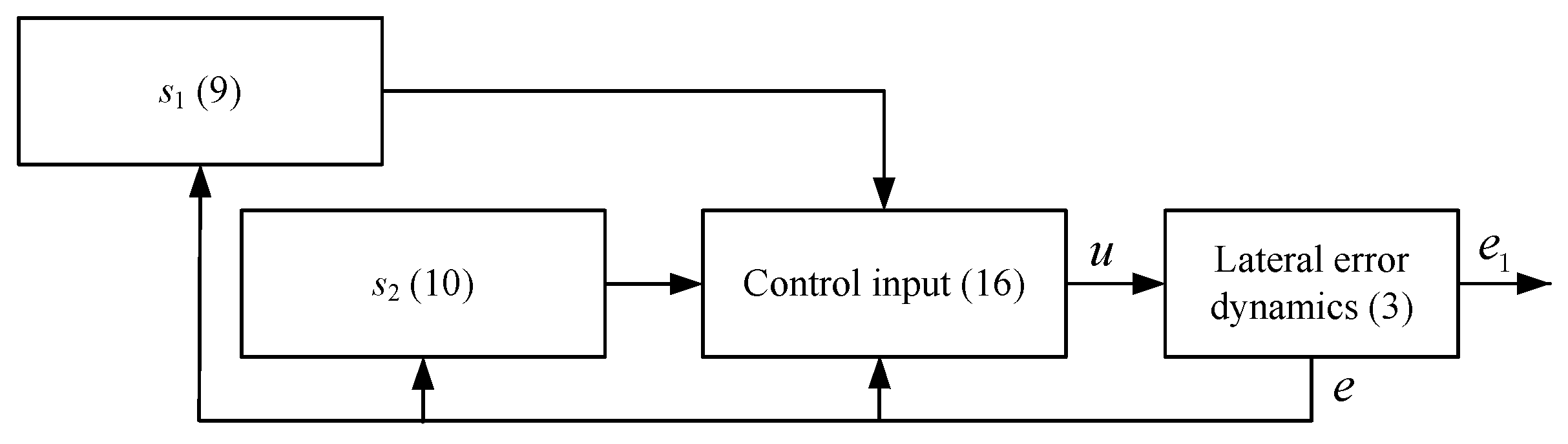
The block diagram of the proposed method is shown in Figure 5. The sliding surfaces (9) and (10) are calculated by using the error feedback. Then the control input (16) is obtained, then is applied to the lateral error dynamics (3).
Figure 5.
Block diagram of the proposed method.
5. Simulation Results
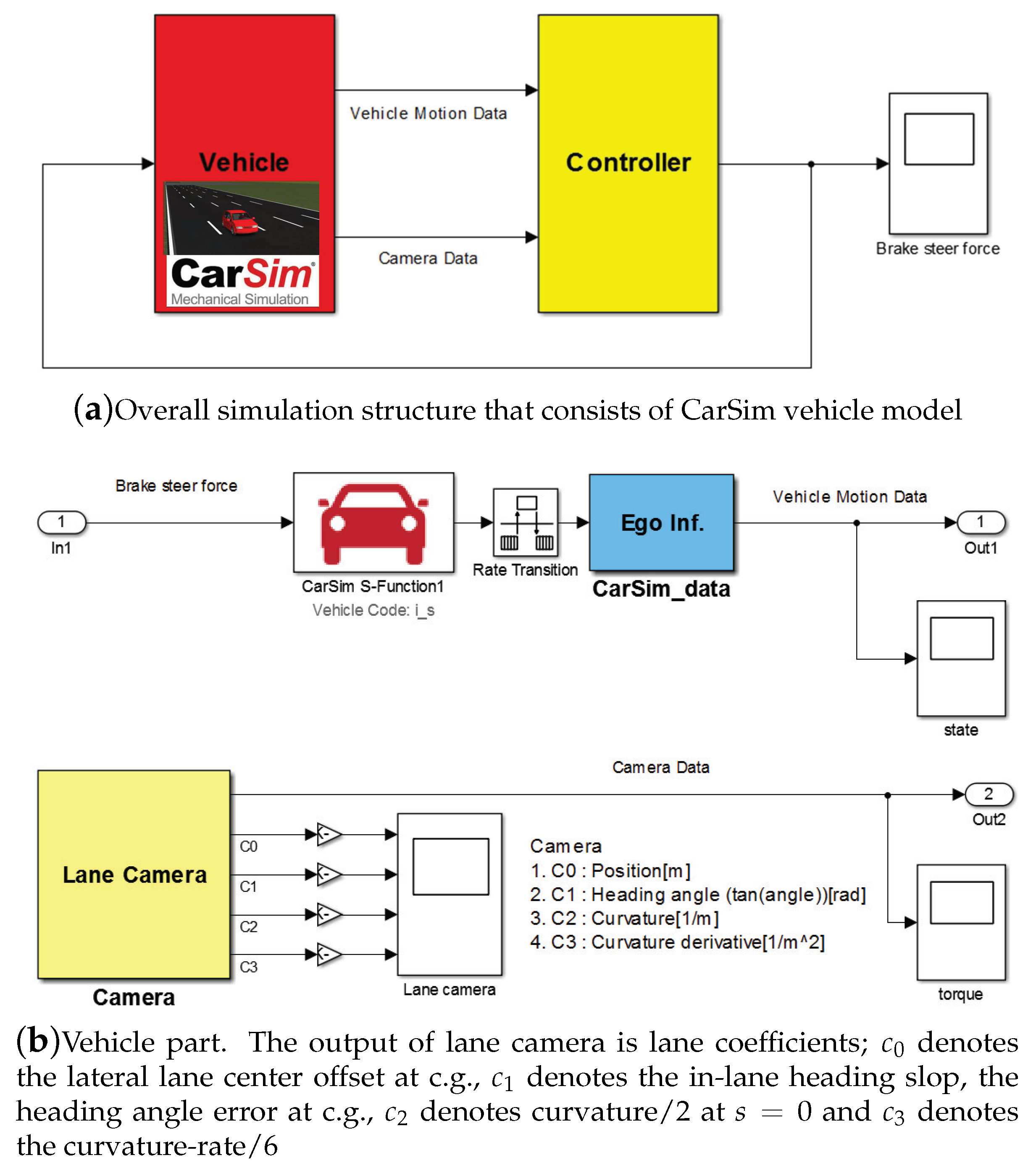
The proposed method was tested via a simulation. Simulations were performed using the vehicle dynamic software CarSim and Matlab/Simulink as shown in Figure 6. The S-function coded in C language was used for implementing the proposed control method. The vehicle dynamics were performed using CarSim, which allows high-order vehicle dynamics including yaw, roll, and pitch motions. The camera data were obtained using CarSim data and the lane polynomial defined as a third order polynomial function of the longitudinal distance, x [30]
where is the lateral offset, is the head angle, is the curvature, and is the curvature rate. From and , the lateral offset and yaw errors are obtained. The parameters used in the simulation were the nominal values of a test vehicle. The control parameters for (9), (10), and (16) are listed in Table 1.
Figure 6.
Vehicle and camera models used in the simulations.
Table 1.
Control Parameters used in (9), (10), and (16).
5.1. Straight Road
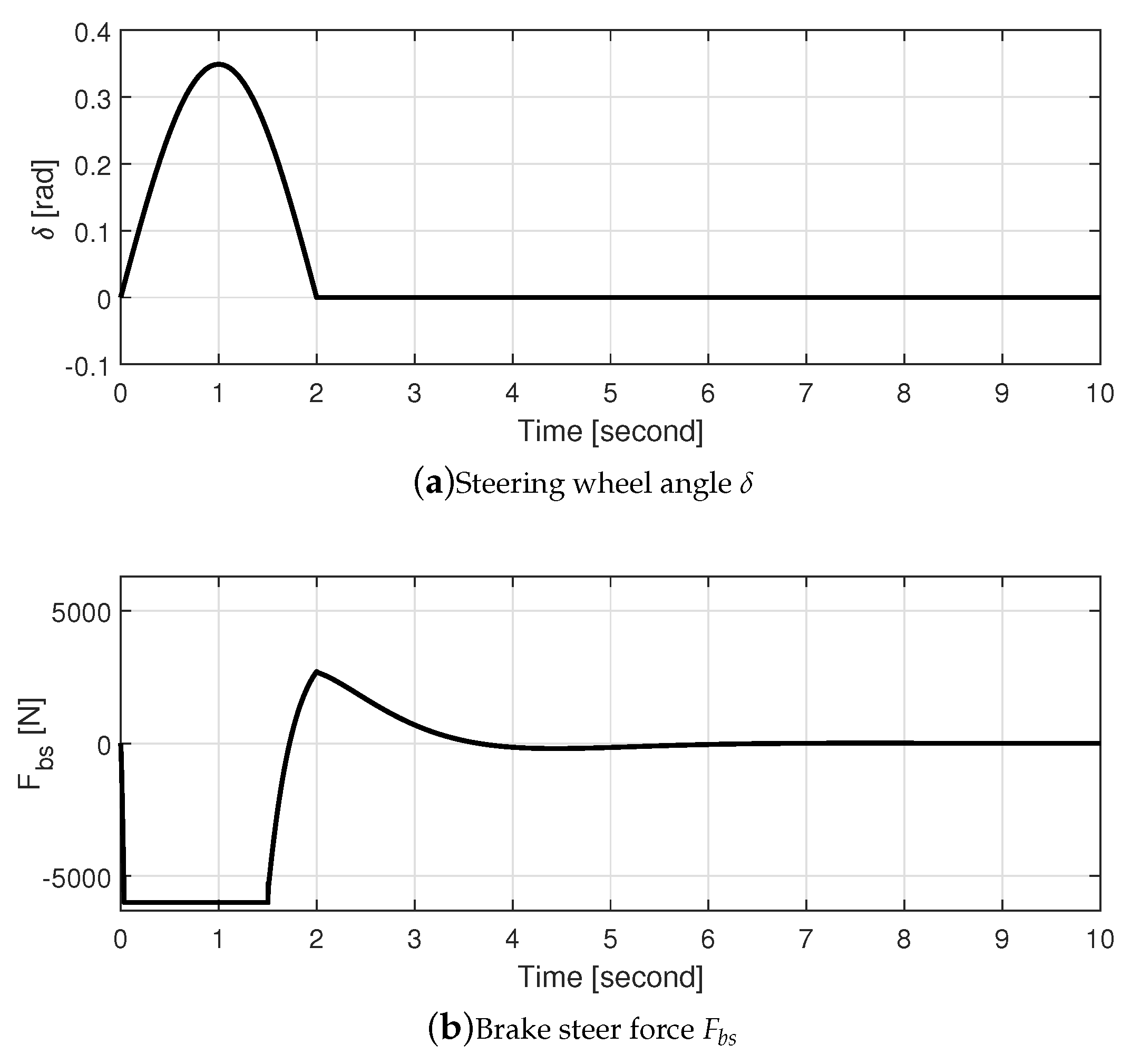
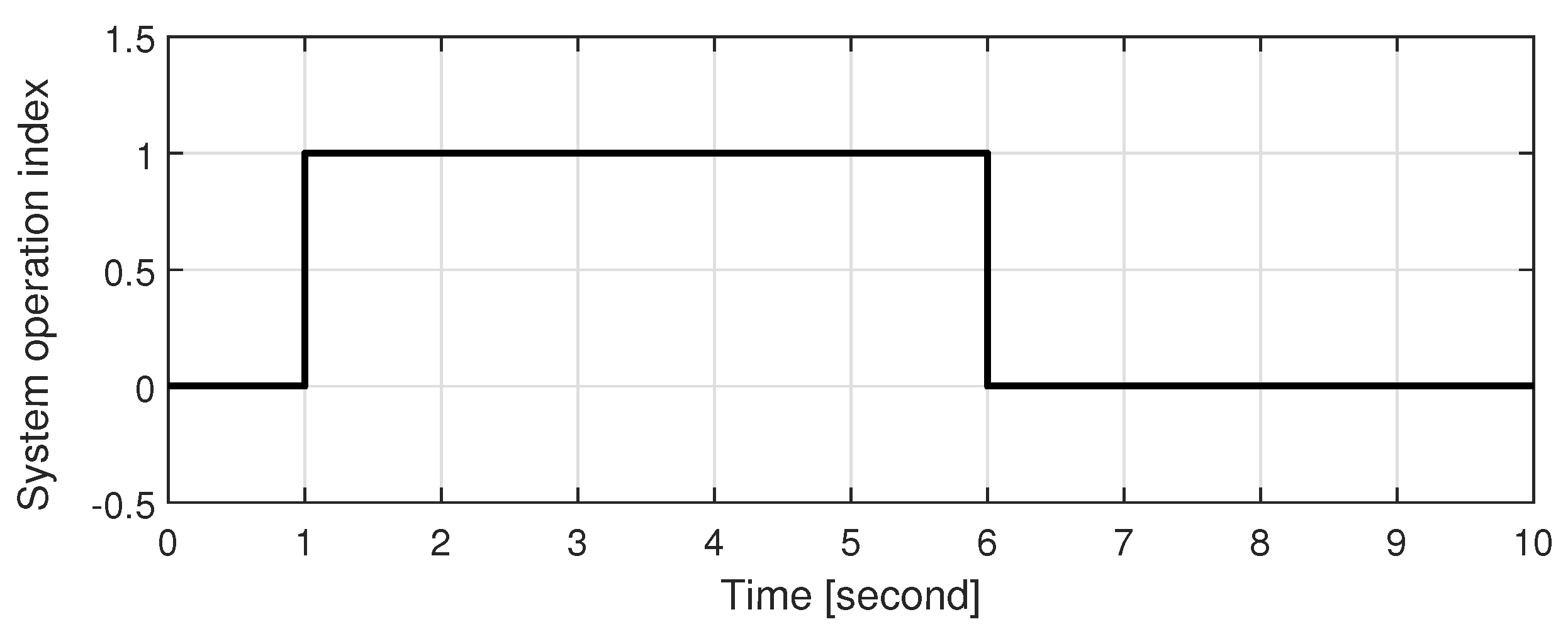
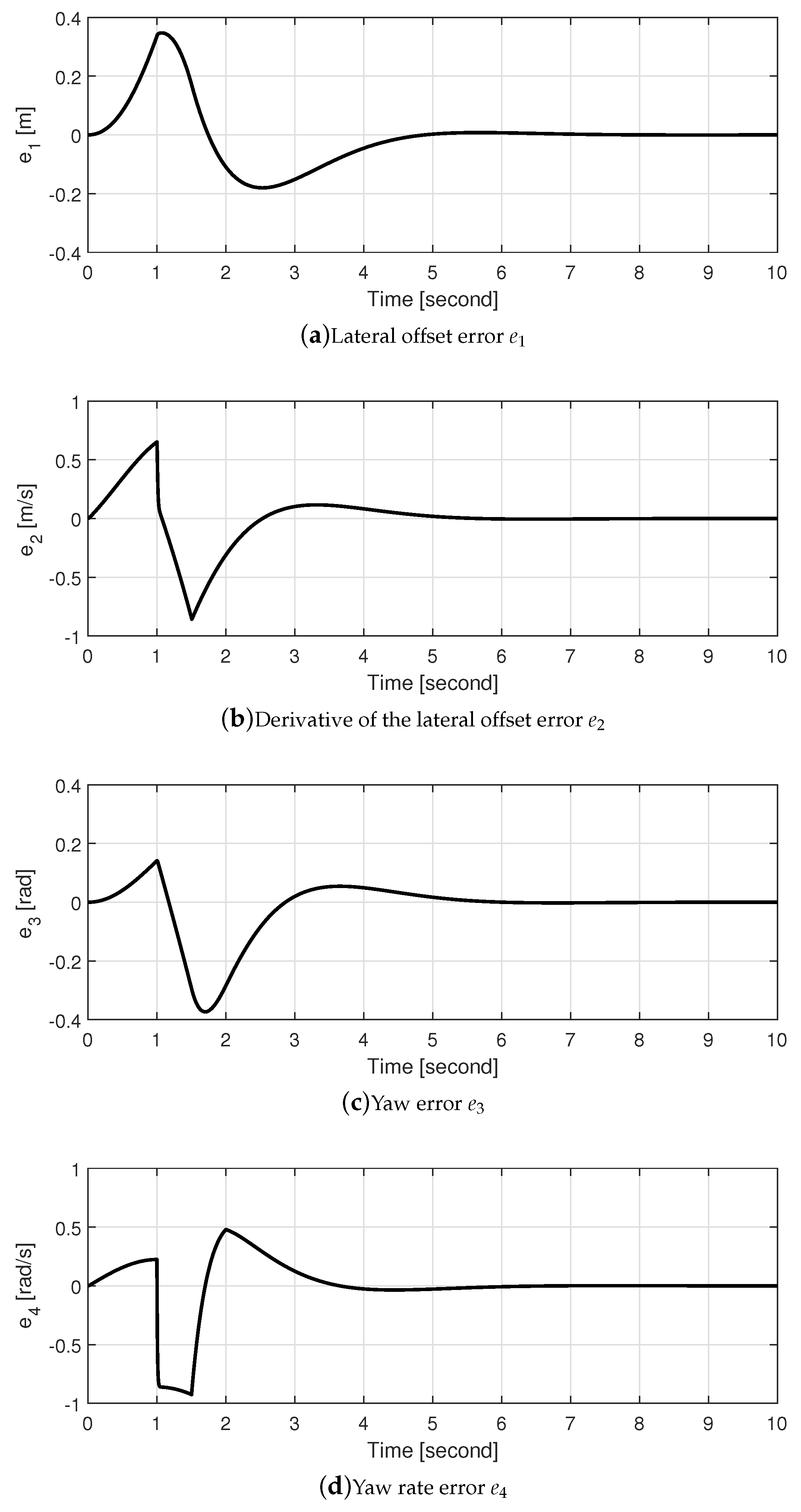
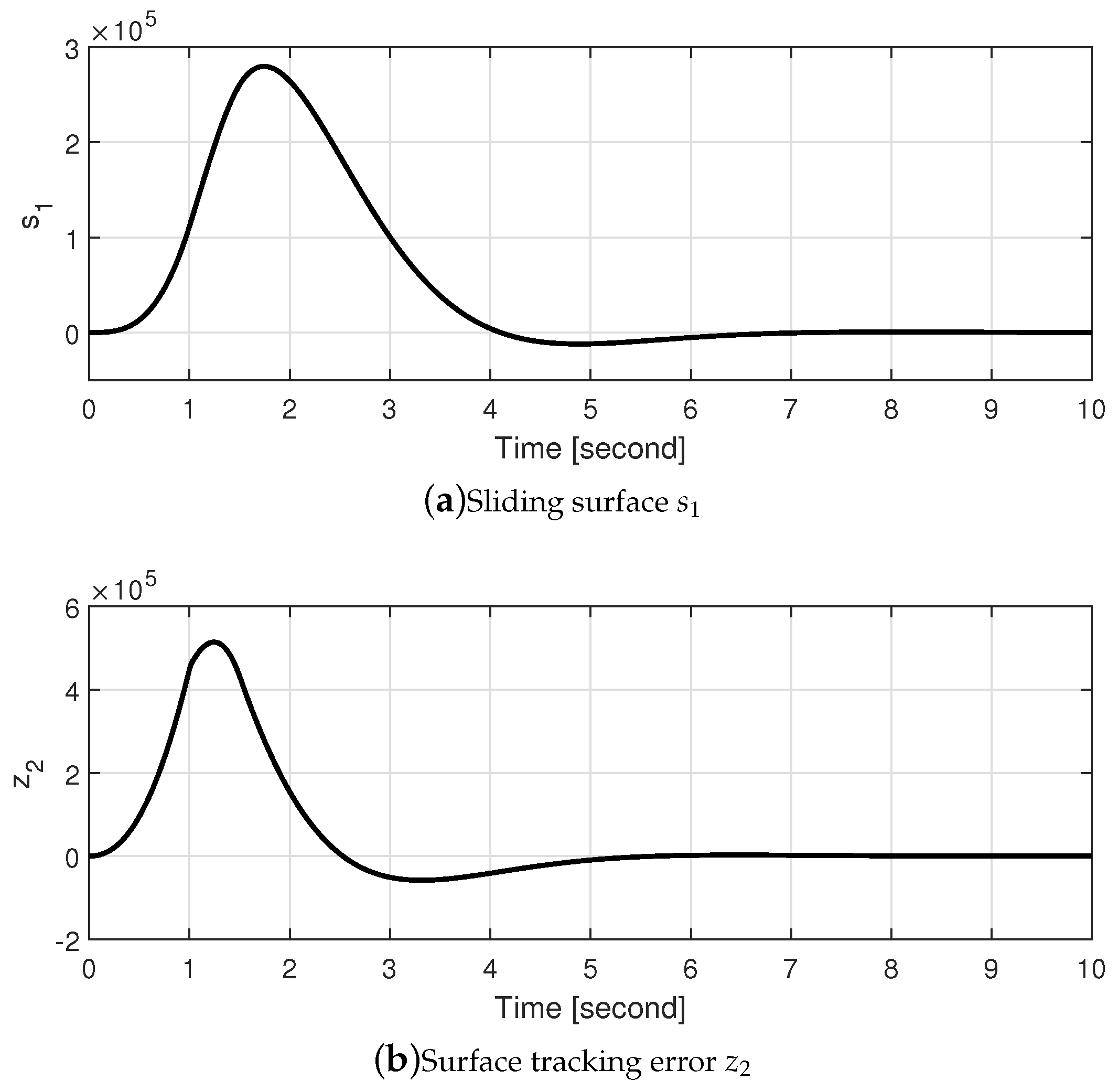
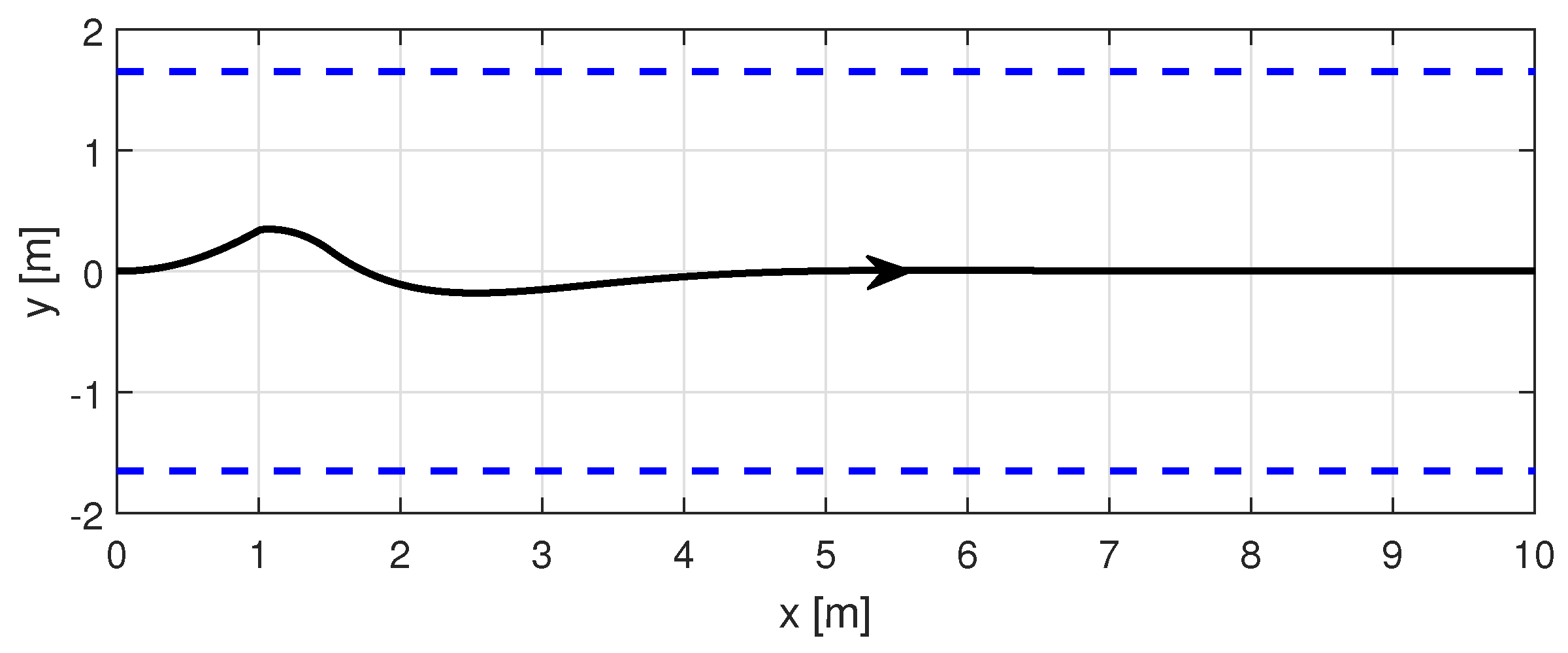
In these simulations, the straight road was used. For the straight road, the test scenario demonstrated in Figure 4 was used. The test scenario is as follows: (1) at 0 s, the driver attempts lane change; (2) at 1 s, there is a collision risk with the object vehicle in the target lane; (3) the differential braking control system is activated to avoid the collision risk at 1 s; and (4) the differential braking control system operates to move the vehicle to the center of the original lane. The speed of the vehicle was 80 km/h on a straight road. The simulation results are shown in Figure 7, Figure 8, Figure 9 and Figure 10. The steering wheel angle increased which signifies that the driver attempted lane change. Thus, the errors increased for the lane change. At 1 s, the system warned the driver about the collision risk and the lateral control system was turned on. Since the driver detected collision risk at 1 s, the steering wheel angle decreased after 1 s. The differential braking control system was activated to avoid the collision risk at 1 s. The differential braking control input was applied to the system for regulating the lateral offset error with the steering angle compensation. Thus, after 1 s of it starting, the errors were reduced by the differential braking input, although was positive. At 6 s, since the steering angle and lateral offset error are considerably small, the differential braking control system was turned off. The sliding surface and the surface tracking error are shown in Figure 10. It was observed that both and converged to zero. Figure 11 shows the vehicle trajectory of the proposed method. The dash-line represented the lane of the ego vehicle. We see that the proposed method maintained the vehicle on the original lane under the steering angle for the lane change.
Figure 7.
Steering angle and Brake steer force.
Figure 8.
System operation index.
Figure 9.
Lateral offset and yaw errors.
Figure 10.
Sliding surface and surface tracking error .
Figure 11.
Vehicle trajectory of the proposed method.
5.2. Curved Road
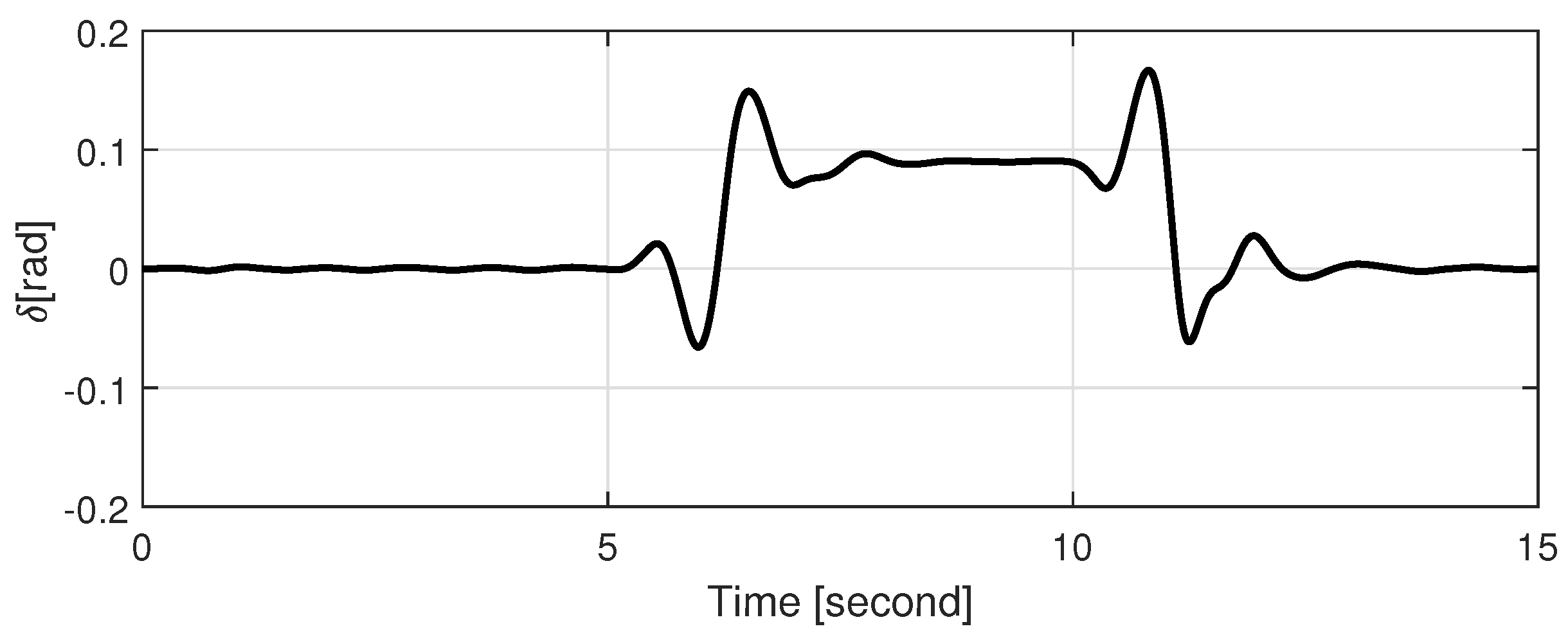
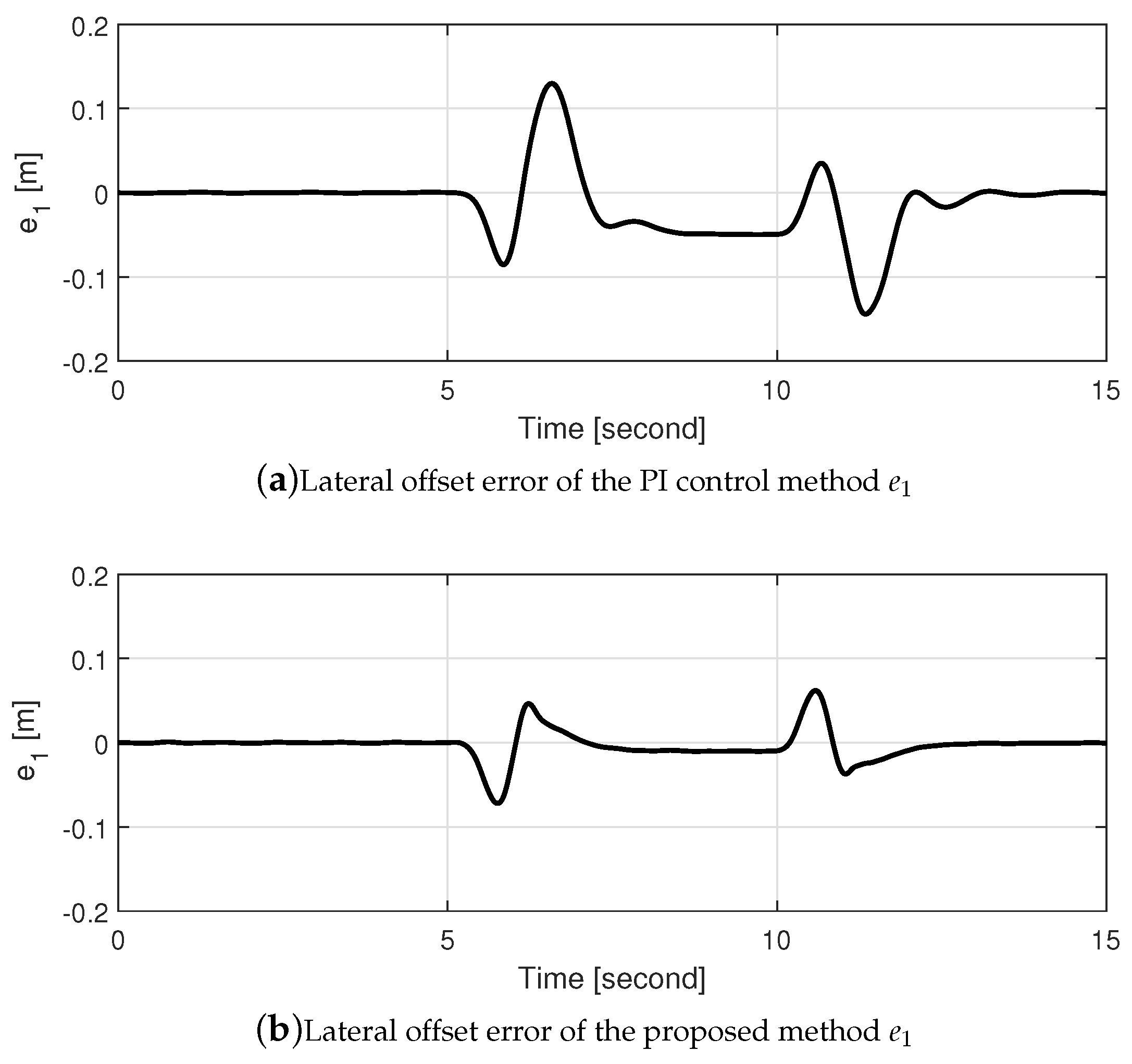
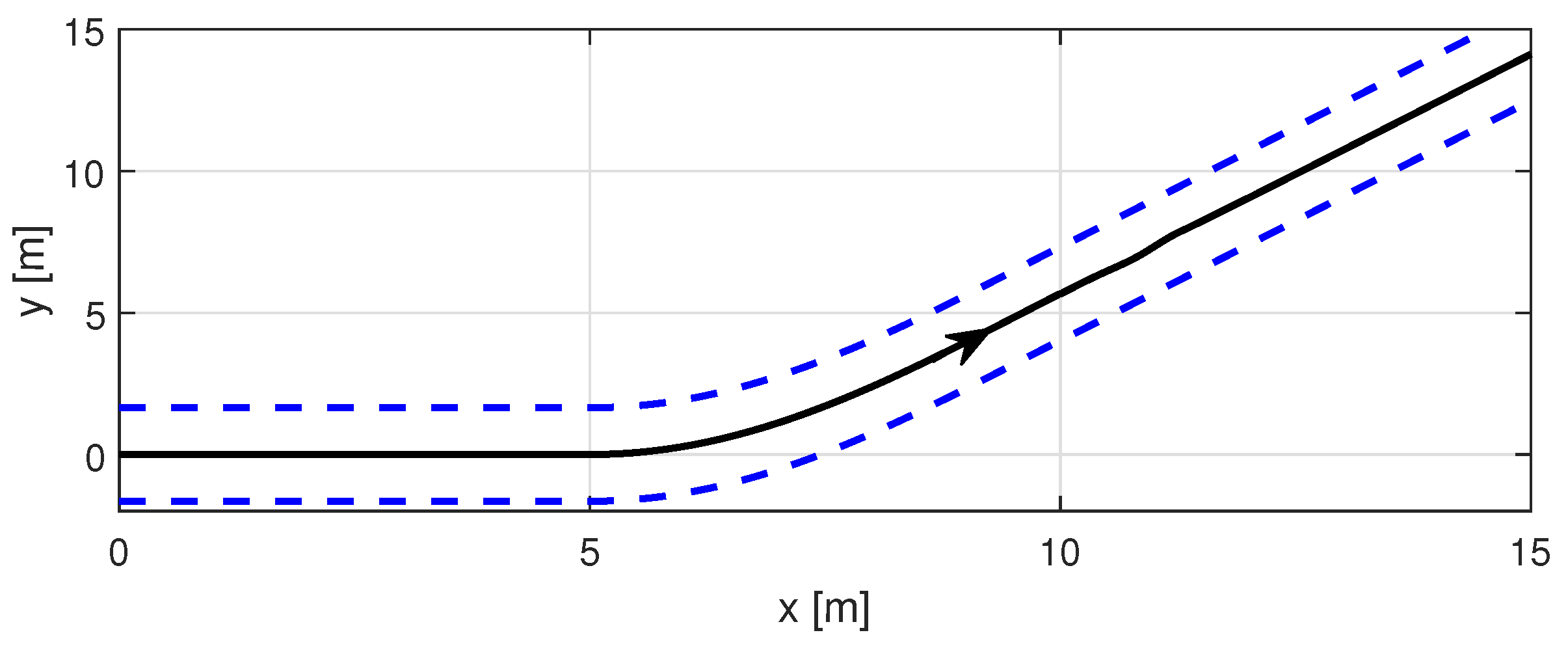
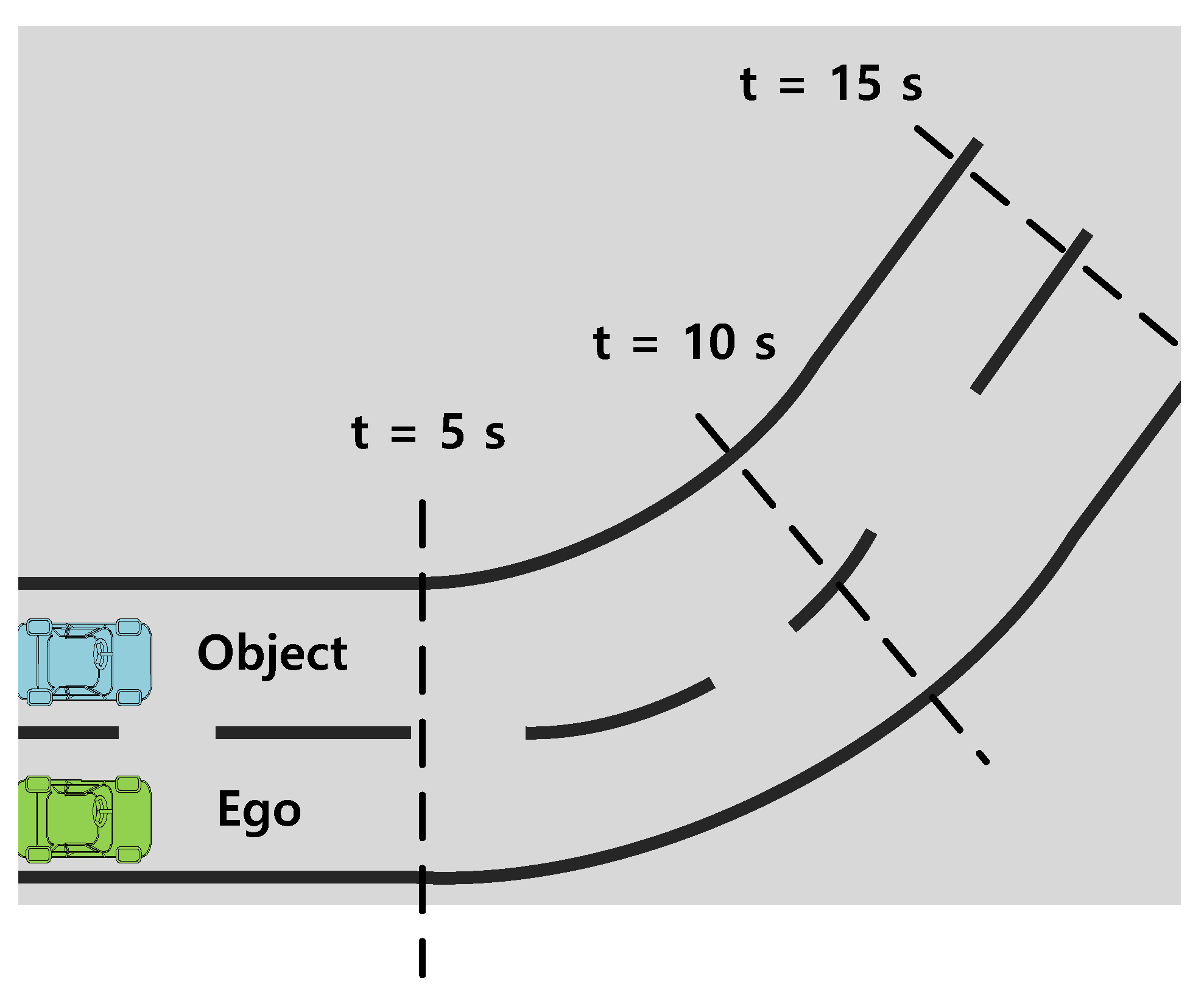
To validate the performance of the proposed method, the comparison between the proposed method and the proportional-integral (PI) control method was tested for the curved road. The curved road as shown in Figure 12 was used for the simulation. Two vehicles drove on the curved road side by side. It was impossible that the ego vehicle changes the lane change. Despite collision risk, the driver tried the lane change on the curved road at 6 s and 11 s as shown in Figure 13, twice times, thus, the differential braking control system operated for the collision avoidance from 6 s and 13 s. Figure 14 shows the lateral offset errors for the PI control and the proposed methods. The lateral offset errors of both methods increased due to the steering angle for the lane change at 6 s and 11 s, but they decreased by the differential braking inputs. Although the lateral offset error of the PI control decreased, but it was relatively larger than that of the proposed method because the steering angle cannot be rejected by the PI control method. On the other hand the lateral offset error of the proposed method was small because the steering angle was able to be rejected by the proposed method. Furthermore, the lateral offset error of the proposed method converged to zero rapidly. Figure 15 shows the vehicle trajectory of the proposed method. The dash-line represented the lane of the ego vehicle. The proposed method maintained the vehicle on the original lane under the steering angle for the lane change on the curved road.
Figure 12.
Curved Road.
Figure 13.
Steering angle.
Figure 14.
Lateral offset errors for the PI control and the proposed methods.
Figure 15.
Vehicle trajectory of the proposed method.
6. Conclusions
A nonlinear differential braking control method to avoid collision of vehicles during lane change was proposed. The differential braking controller was designed based on sliding mode control and backstepping control schemes. Thus, the convergence of the lateral offset to zero under the steering angle can be guaranteed. The stability proof was mathematically proven using Lyapunov theory. The differential braking control system was designed to operate until the steering angle and lateral offset error were considerably small. The simulation results verified that regulation of the yaw rate and lateral position was improved by the proposed method for both straight and curved road. It was observed that the lateral control performance using differential braking under the driver torque was improved by the proposed method. In future work, we will aim to experimentally validate the performance of the proposed method using a test vehicle.
Author Contributions
Y.S.S. and W.K. designed the algorithm and developed the simulation; Y.S.S. and W.K. provided guidance in designing the algorithm; Y.S.S. and W.K. verified the simulation model and results. Both authors have read and agreed to the published version of the manuscript.
Funding
This research was supported by Basic Science Research Program through the National Research Foundation of Korea (NRF) funded by the Ministry of Education (2021R1A6A1A03043144).
Institutional Review Board Statement
Not applicable.
Informed Consent Statement
Not applicable.
Conflicts of Interest
The authors declare that they have no conflict of interest.
References
- Zhang, Y.; Jing, L.; Sun, C.; Fang, J.; Feng, Y. Human factors related to major road traffic accidents in China. Traffic Inj. Prev. 2019, 20, 796–800. [Google Scholar] [CrossRef]
- Shaon, M.R.R.; Qin, X.; Chen, Z.; Zhang, J. Exploration of contributing factors related to driver errors on highway segments. Transp. Res. Rec. 2018, 2672, 22–34. [Google Scholar] [CrossRef]
- National Highway Traffic Safety Administration. Traffic Safety Facts 2005; Department of Transportation: Washington, DC, USA, 2006. [Google Scholar]
- Jula, H.; Kosmatopoulos, E.B.; Ioannou, P.A. Collision avoidance analysis for lane changing and merging. IEEE Trans. Veh. Technol. 2000, 46, 2295–2308. [Google Scholar] [CrossRef] [Green Version]
- Laugier, C.; Paromtchik, I.E.; Perrollaz, M.; Yong, M.; Yoder, J.-D.; Tay, C.; Mekhnacha, K.; Ne‘gre, A. Probabilistic analysis of dynamics scenes and collision risks assessment to improve driving safety. IEEE Trans. Intell. Trans. Syst. Mag. 2011, 3, 4–19. [Google Scholar] [CrossRef] [Green Version]
- Houe‘nou, A.; Bonnifait, P.; Cherfaoui, V. Risk assessment for collision avoidance systems. In Proceedings of the 17th International IEEE Conference on Intelligent Transportation Systems (ITSC), Qingdao, China, 8–11 October 2014; pp. 386–391. [Google Scholar]
- Kim, J.; Kum, D. Collision risk assessment algorithm via lane-based probabilistic motion prediction of surrounding vehicles. IEEE Trans. Intell. Transp. Syst. 2017, 19, 2965–2976. [Google Scholar] [CrossRef]
- Gao, H.; Zhu, J.; Zhang, T.; Xie, G.; Kan, Z.; Hao, Z.; Liu, K. Situational assessment for intelligent vehicles based on Stochastic model and Gaussian distributions in typical traffic scenarios. IEEE Trans. Syst. Man Cybern. Syst. 2021, 1–11. [Google Scholar] [CrossRef]
- Huang, M.; Gao, W.; Wang, Y.; Jiang, Z.P. Data-driven shared steering control of semi-autonomous vehicles. IEEE Trans. Hum. Mach. Syst. 2019, 49, 350–361. [Google Scholar] [CrossRef]
- Marcano, M.; Di´az, S.; Pérez, J.; Irigoyen, E. A review of shared control for automated vehicles: Theory and applications. IEEE Trans. Hum. Mach. Syst. 2020, 50, 475–491. [Google Scholar] [CrossRef]
- Chen, Y.; Zhang, X.; Wang, J. Robust vehicle driver assistance control for handover scenarios considering driving performances. IEEE Trans. Syst. Man Cybern. Syst. 2021, 51, 4160–4170. [Google Scholar] [CrossRef]
- Termous, H.; Shraim, H.; Talj, R.; Francis, C.; Charara, A. Coordinated control strategies for active steering, differential braking and active suspension for vehicle stability, handling and safety improvement. Veh. Syst. Dyn. 2019, 57, 1494–1529. [Google Scholar] [CrossRef]
- Hajiloo, R.; Abroshan, M.; Khajepour, A.; Kasaiezadeh, A.; Chen, S.K. Integrated steering and differential braking for emergency collision avoidance in autonomous vehicles. IEEE Trans. Intell. Transp. Syst. 2021, 22, 3167–3178. [Google Scholar] [CrossRef]
- Lin, Y.M.; Chen, B.C. Handling Enhancement of Autonomous Emergency Steering for Reduced Road Friction Using Steering and Differential Braking. Appl. Sci. 2021, 11, 4891. [Google Scholar] [CrossRef]
- Lee, J.; Choi, J.; Yi, K.; Shin, M.; Kob, B. Lane-keeping assistance control algorithm using differential braking to prevent unintended lane departures. Control Eng. Pr. 2014, 23, 1–13. [Google Scholar] [CrossRef]
- Pilutti, T.; Ulsoy, G.; Hrovat, D. Vehicle steering intervention through differential braking. J. Dyn. Sys. Meas. Control 1998, 120, 314–321. [Google Scholar] [CrossRef]
- Uematsu, K.; Gerdes, J.C. A comparison of several sliding surfaces for stability control. In Proceedings of the International Symposium on Advanced Vehicle Control, Hiroshima, Japan, 9–13 September 2002; pp. 601–608. [Google Scholar]
- Li, X.; Xu, N.; Guo, K.; Huang, Y. An adaptive SMC controller for EVs with four IWMs handling and stability enhancement based on a stability index. Veh. Syst. Dyn. 2021, 1–24. [Google Scholar] [CrossRef]
- Infinity, “Blind Spot Intervention” [Online]. Available online: Http://www.infinitiusa.com/now/technology/blind-spot-intervention-system.html (accessed on 15 May 2021).
- Kim, W.; Chen, X.; Lee, Y.; Chung, C.C.; Tomizuka, M. Discrete-time nonlinear damping backstepping control with observers for rejection of low and high frequency disturbances. Mech. Syst. Signal Process. 2018, 104, 436–448. [Google Scholar] [CrossRef]
- Park, J.-H.; Park, T.-S.; Kim, S.-H. Approximation-free output-feedback non-backstepping controller for uncertain SISO nonautonomous nonlinear pure-feedback systems. Mathematics 2019, 7, 456. [Google Scholar] [CrossRef] [Green Version]
- Kang, C.M.; Kim, W.; Baek, H. Cascade backstepping control with augmented observer for lateral control of vehicle. IEEE Access 2021, 9, 45367–45376. [Google Scholar] [CrossRef]
- Rajamani, R.; Tan, H.-S.; Law, B.K.; Zhang, W.-B. Demonstration of integrated longitudinal and lateral control for the operation of automated vehicles in platoons. IEEE Trans. Control Syst. Technol. 2000, 8, 695–708. [Google Scholar] [CrossRef]
- Rajamani, R. Vehicle Dynamics and Control, 2nd ed.; Springer: Berlin/Heidelberg, Germany, 2012. [Google Scholar]
- Ackermann, J. Robust car steering by yaw rate control. In Proceedings of the 29th IEEE Conference on Decision and Control, Honolulu, HI, USA, 5–7 December 1990; pp. 2033–2034. [Google Scholar]
- Son, Y.S.; Kim, W.; Lee, S.-H.; Chung, C.C. Asynchronous sensor fusion using multi-rate kalman filter. Trans Korean Inst. Elec. Eng. 2014, 63, 1551–1558. [Google Scholar] [CrossRef] [Green Version]
- Fayyad, J.; Jaradat, M.A.; Gruyer, D.; Najjaran, H. Deep learning sensor fusion for autonomous vehicle perception and localization: A review. Sensors 2020, 20, 4220. [Google Scholar] [CrossRef] [PubMed]
- Lin, B.-F.; Chan, Y.-M.; Fu, L.-C.; Hsiao, P.-Y.; Chuang, L.-A.; Huang, S.-S.; Lo, M.-F. Integrating appearance and edge features for sedan vehicle detection in the blind-spot area. IEEE Trans. Intell. Trans. Syst. 2012, 13, 737–747. [Google Scholar]
- Khalil, H. Nonlinear Systems, 3rd ed.; Prentice-Hall: Upper Saddle River, NJ, USA, 2002. [Google Scholar]
- Cheng, H.-Y.; Jeng, B.-S.; Tseng, P.-T.; Fan, K.-C. Lane detection with moving vehicles in the traffic scenes. IEEE Trans. Intell. Transp. Syst. 2006, 7, 571–582. [Google Scholar]
Publisher’s Note: MDPI stays neutral with regard to jurisdictional claims in published maps and institutional affiliations. |
© 2021 by the authors. Licensee MDPI, Basel, Switzerland. This article is an open access article distributed under the terms and conditions of the Creative Commons Attribution (CC BY) license (https://creativecommons.org/licenses/by/4.0/).