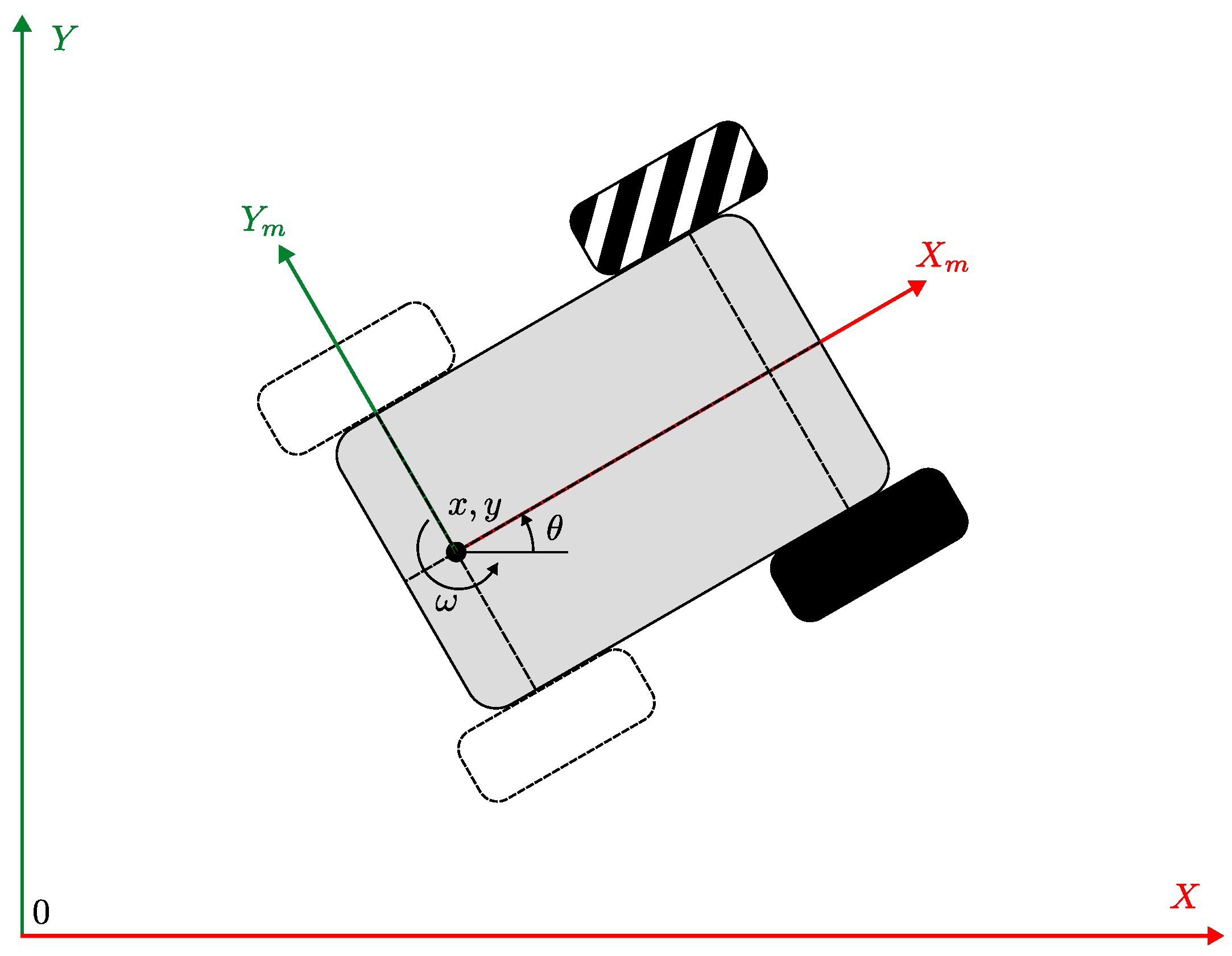
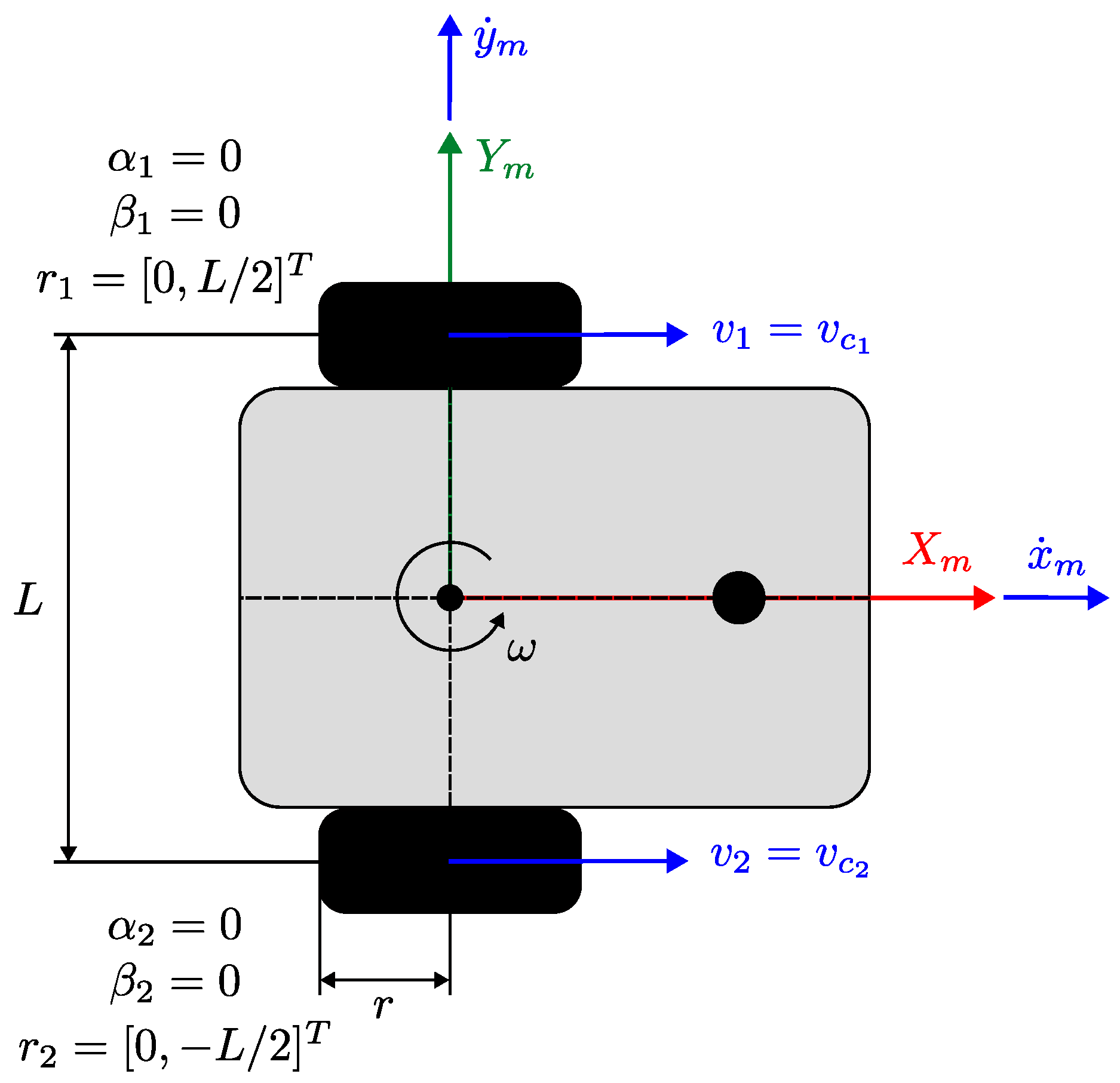
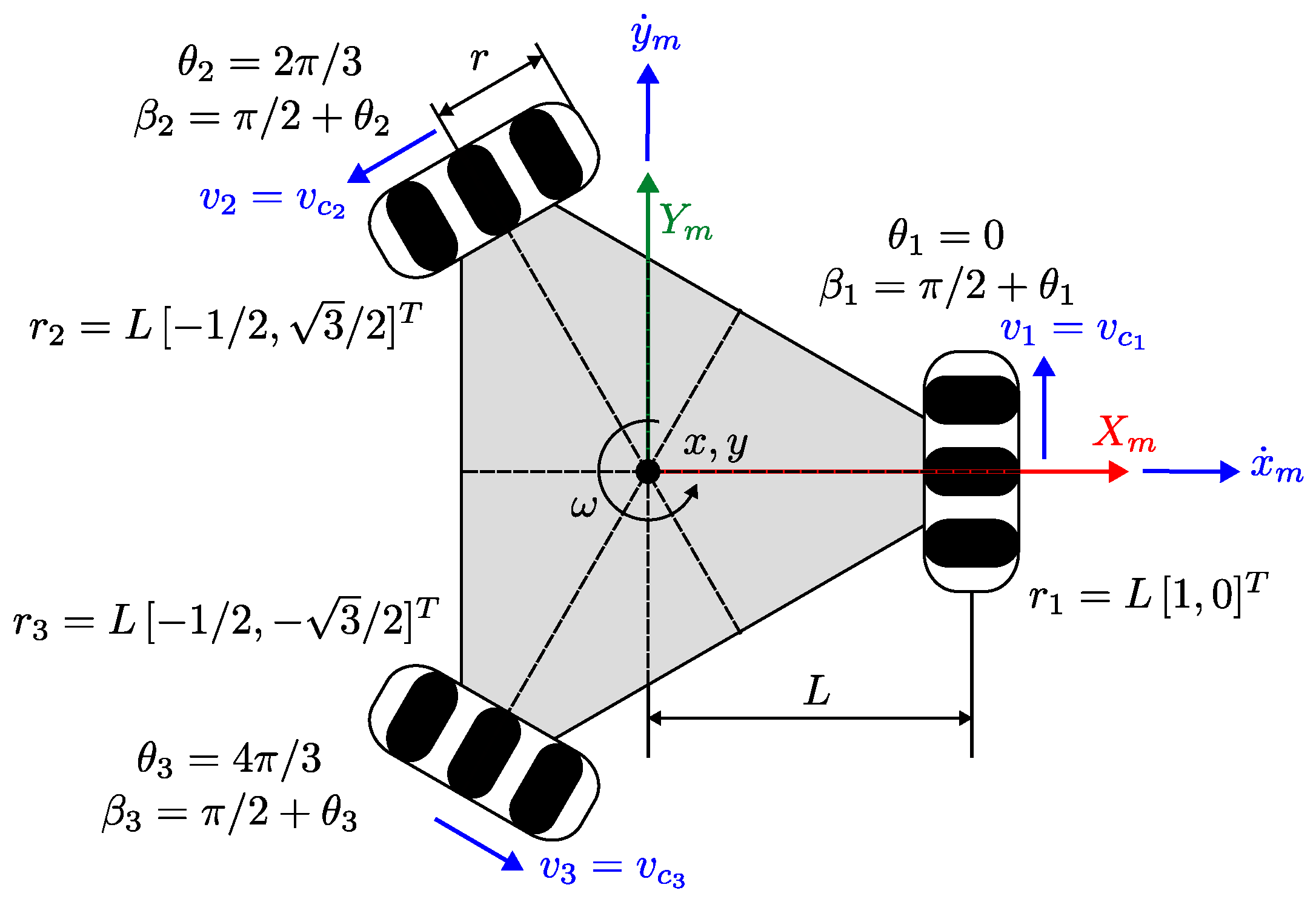
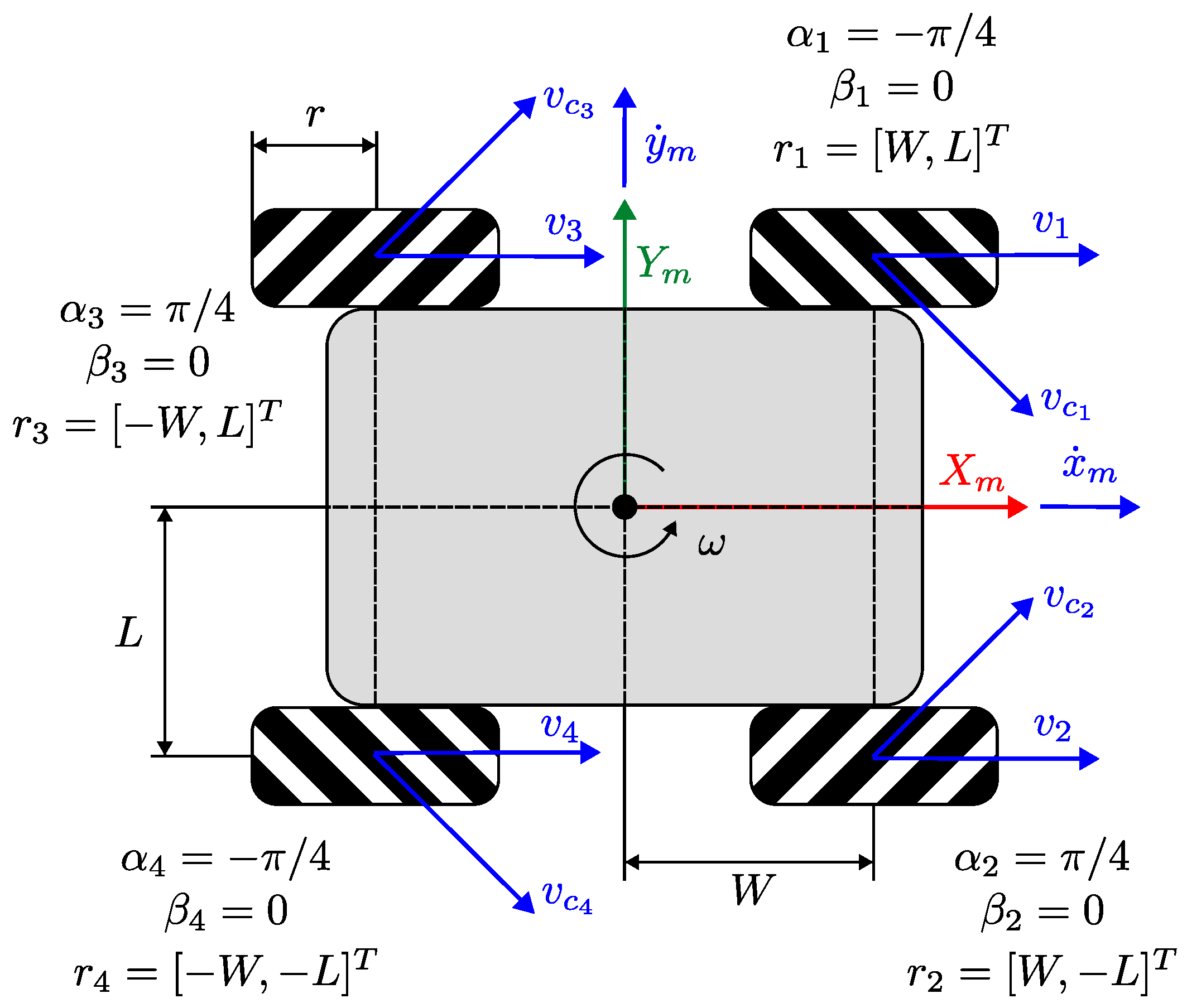
This section presents a comprehensive simulation-based evaluation of the proposed unified kinematic framework across multiple wheeled mobile robot architectures. The analysis progresses from qualitative validation of canonical motion primitives to the execution of complex trajectories under realistic physics-based conditions, and finally to the assessment of geometric imperfections such as wheel mounting misalignments. Together, these studies aim to verify the consistency, flexibility, and practical modeling capabilities of the formulation under increasingly realistic assumptions.
5.1. Qualitative Kinematic Consistency Analysis
In this section, the kinematic models of the four mobile architectures, previously obtained from the generalized framework, are validated through simulation. Forward kinematics in each robot’s global reference frame is used for this purpose.
In every case, the robot state is chosen as:
i.e., the minimum set of variables required to describe the mobile behavior that includes the position and orientation of the system in the global frame.
Then, the kinematic state-space model common to all mobile robots is:
where
is the input vector given by the tangential velocities of the actuated wheels corresponding to each architecture,
is the output indicating that all mobile states are measurable or observable, and the function
defines robot kinematics. No feedback control law is considered; instead, the inputs
are constant open-loop commands, representing a perfect velocity controller, in order to analyze the kinematic behavior of each robot architecture.
An initial condition
is imposed on (
95) for each mobile robot, and the Initial Value Problem (IVP) obtained is solved by the Euler numerical integration method (ode1) with an integration step of
. Each simulation runs for
, and different fixed inputs
are applied to each platform to cover and observe a wide range of kinematic behaviors.
5.1.1. Simulation of the Differential Drive with Two Standard Wheels
The simulation employs the global forward kinematic model of the differential-drive previously derived in (
42), which maps the left and right velocities
to the linear and angular velocities in the global frame
.
Consequently, the global velocities
at each integration step
are obtained by evaluating the closed-form expressions of (
42). By solving the associated IVP, one can find the states of the mobile
at every instant.
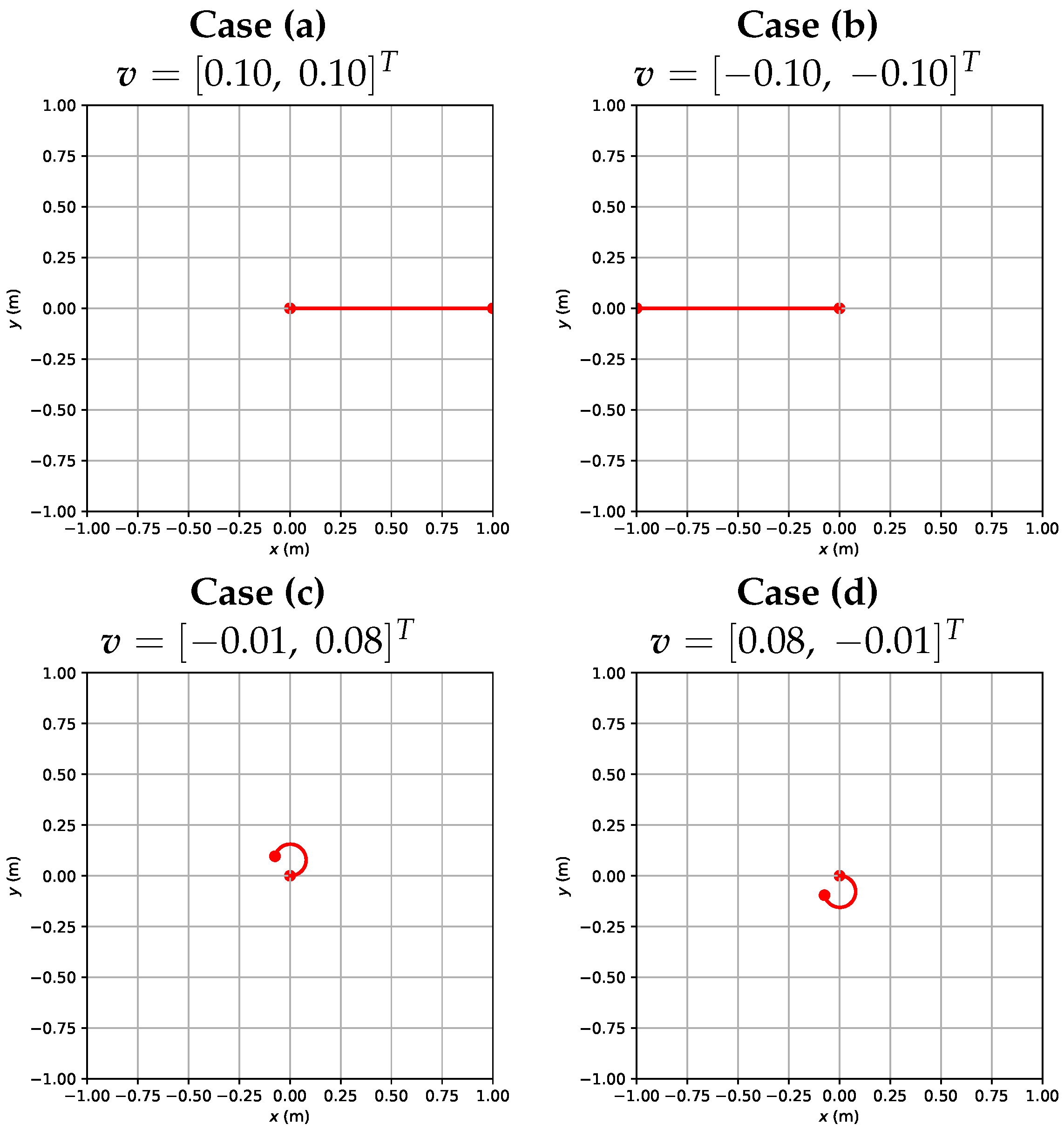
To validate the kinematic relations derived for the differential-drive architecture, a set of canonical motion primitives is simulated. Each primitive corresponds to a specific combination of the left and right wheel velocities, capturing the characteristic motions of this non-holonomic platform. In this sense, four representative pairs of wheel velocities were selected. The sets of velocity commands are listed in
Table 1. It is important to note that similar motion-primitive validations are commonly observed in odometry and calibration studies [
12,
21].
The resulting trajectories are shown in
Figure 8, following the notation (a) to (d). Comparable simulations and experimental analyses of differential drive kinematics can be found in [
4,
8,
13,
24,
34,
35,
36,
37,
38,
38]. These trajectories reproduce the expected behaviors of forward/backward translation and in-place rotation, consistent with the kinematic characteristics of non-holonomic differential-drive robots [
4,
35,
37].
5.1.2. Simulation of the Ackermann Steering or Car-like Vehicle with Four Standard Wheels
The simulation of the Ackermann-steered platform is based on the bicycle-model global forward kinematics previously derived in (
60) involving the steering angle
. These relationships establish the mapping between the left and right velocities
of the wheels at the rear axle and the angle
to the linear and angular velocities
.
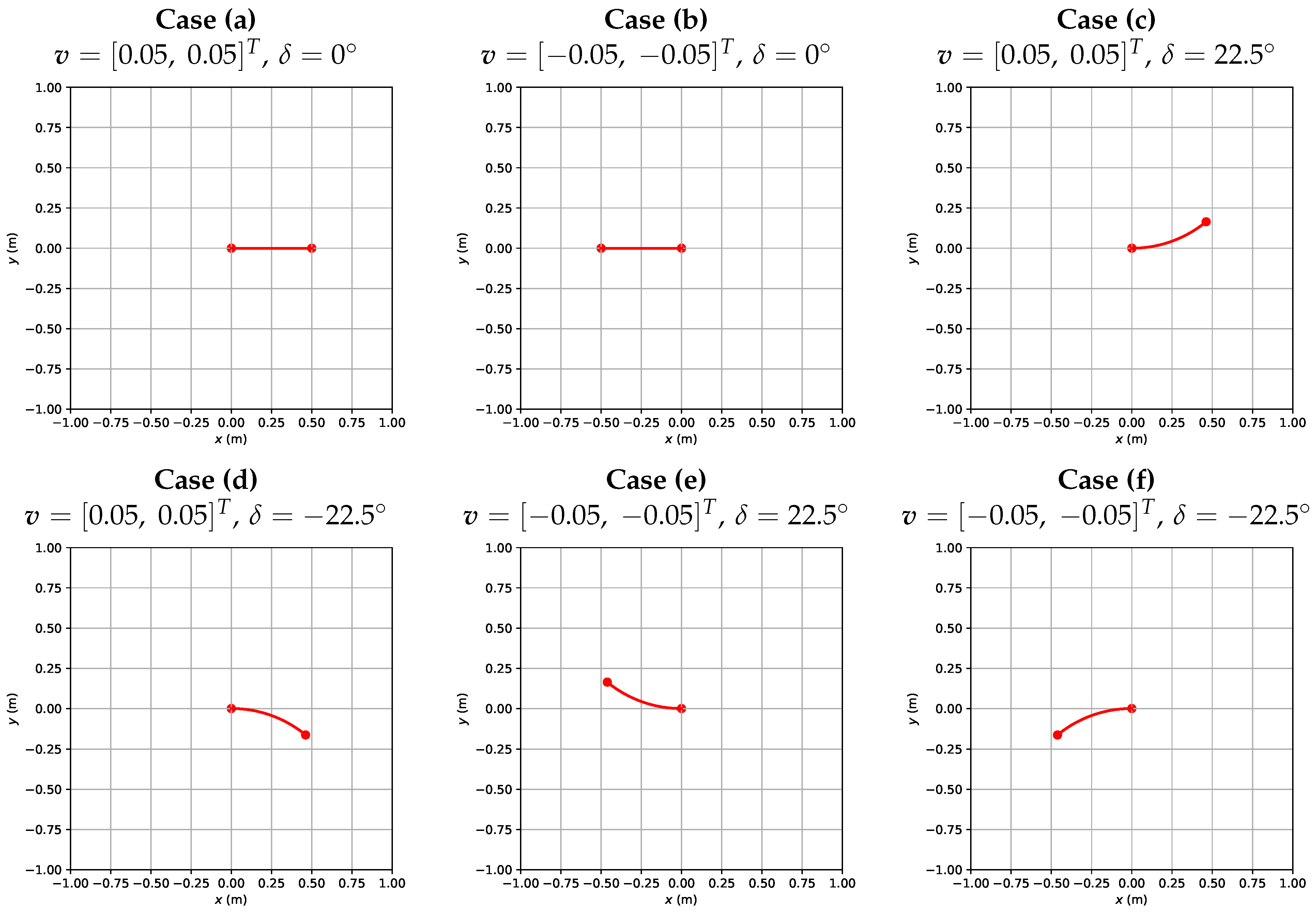
As in the case of the differential platform, the Ackermann model is subjected to different canonical driving conditions. For this, six representative motion primitives are simulated. These primitives consist of combinations of longitudinal velocity (given by equal wheel speeds at the rear axle) and steering angle that excite the platform’s characteristic steering behavior. The selected motion primitives used for simulation are summarized in
Table 2. These are consistent with previous validation practices in steering and odometry studies [
12,
34,
39].
The resulting trajectories can be observed in
Figure 9 following the notation (a) to (f). The resulting paths include straight segments and circular arcs of different curvature radii that match the analytical predictions.
5.1.3. Simulation of the Three-Wheel Omnidirectional Platform (3, 0)
This simulation employs the global forward kinematic mapping derived in (
78), which relates the wheel angular velocities
to
.
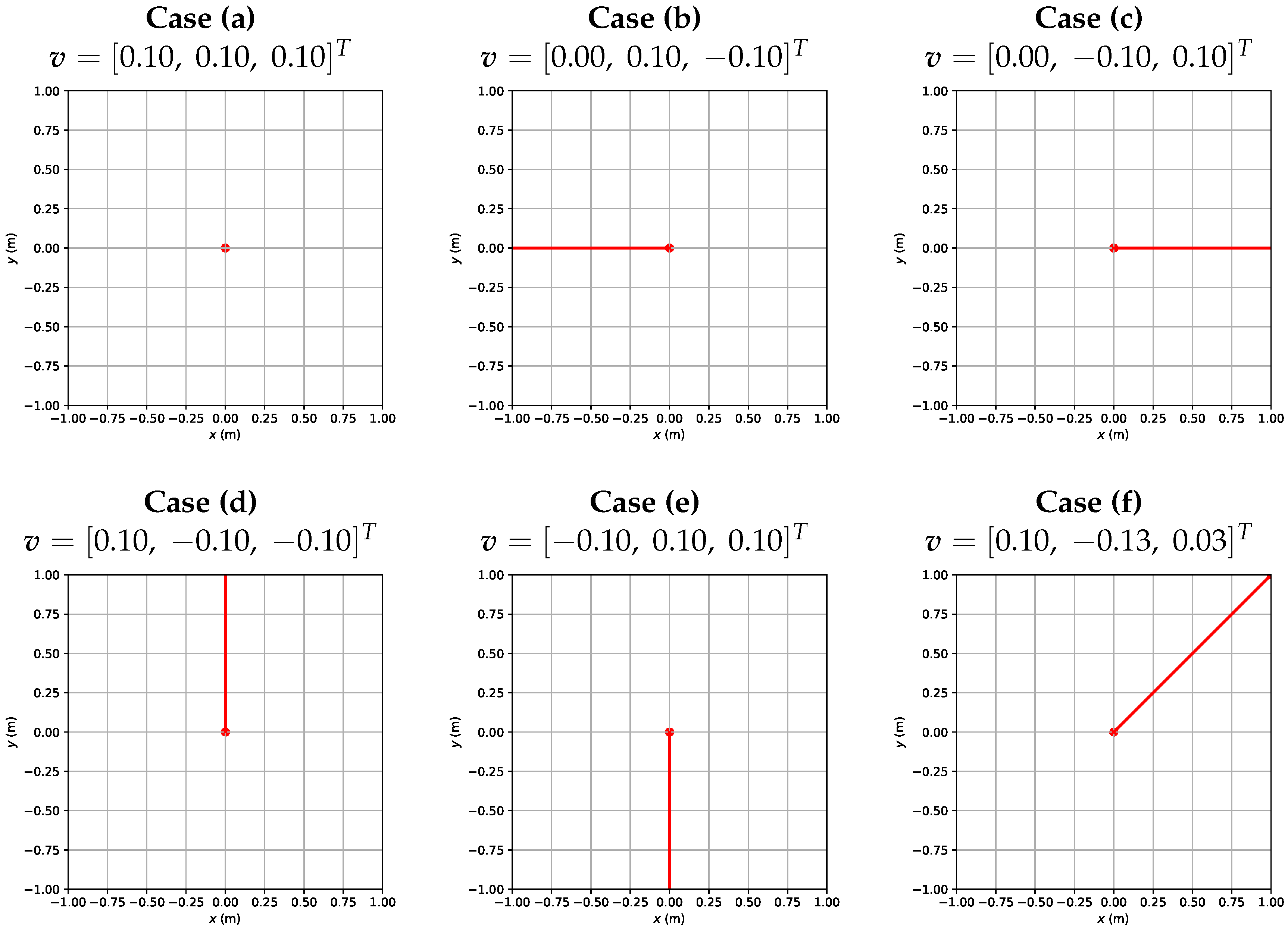
To validate the holonomic behavior predicted by the global forward kinematics formulation, a set of six canonical motion primitives is simulated. These primitives reproduce the characteristic motions achievable with an omnidirectional three-wheel platform with wheels arranged at
. Each primitive is a representative wheel-velocity triplet, elected to span the motions of its configuration. The corresponding inputs are summarized in
Table 3.
On the other hand, the resulting trajectories are in
Figure 10, labeled as (a) to (f). As shown, the simulated trajectories are fully consistent with the kinematic characteristics of a holonomic
platform. The results include pure rotation (case a), pure lateral translations along
X-axis (cases b and c), pure longitudinal translations along
Y-axis (cases d and e), and diagonal motion without drift (case f). All motion primitives were obtained by analytically enforcing the corresponding velocity constraints on the inverse kinematic model, ensuring straight-line behavior without curvature drift.
5.1.4. Simulation of the Four-Wheel-Drive (4WD) Mecanum Platform
Finally, the simulation of the mecanum platform utilizes the global forward kinematics obtained in (
93), which links the wheel angular velocities
with
.
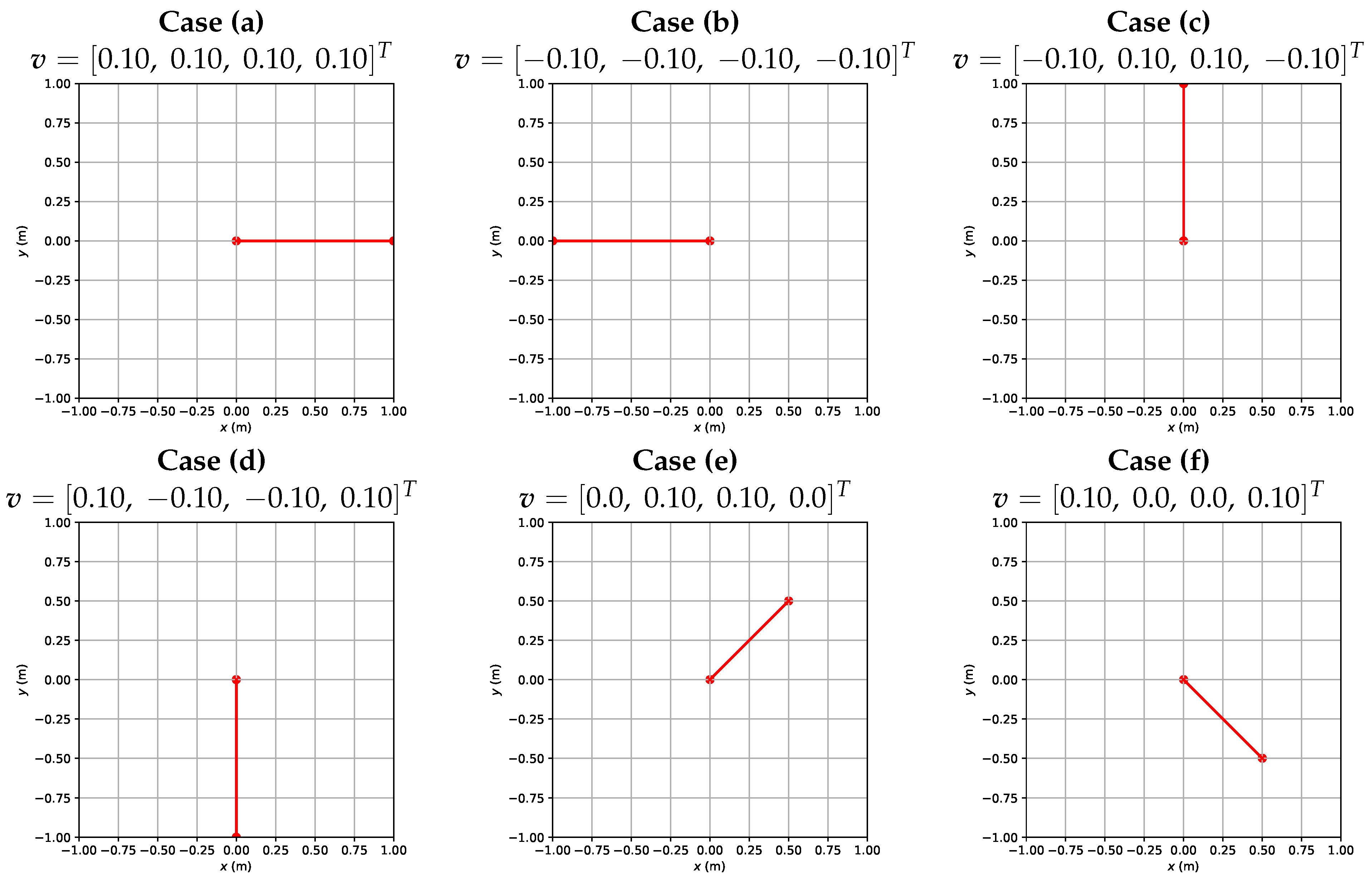
The forward kinematics of this mobile are also validated through a set of 10 canonical motion primitives in simulation. Each primitive corresponds to a specific combination of wheel angular velocities, together capturing the characteristic motions achievable with a 4WD mecanum platform. These primitives enable the mobile to perform representative movements with the robot, including longitudinal, lateral, diagonal, and rotational motions. The complete set of command inputs used in simulation is provided in
Table 4.
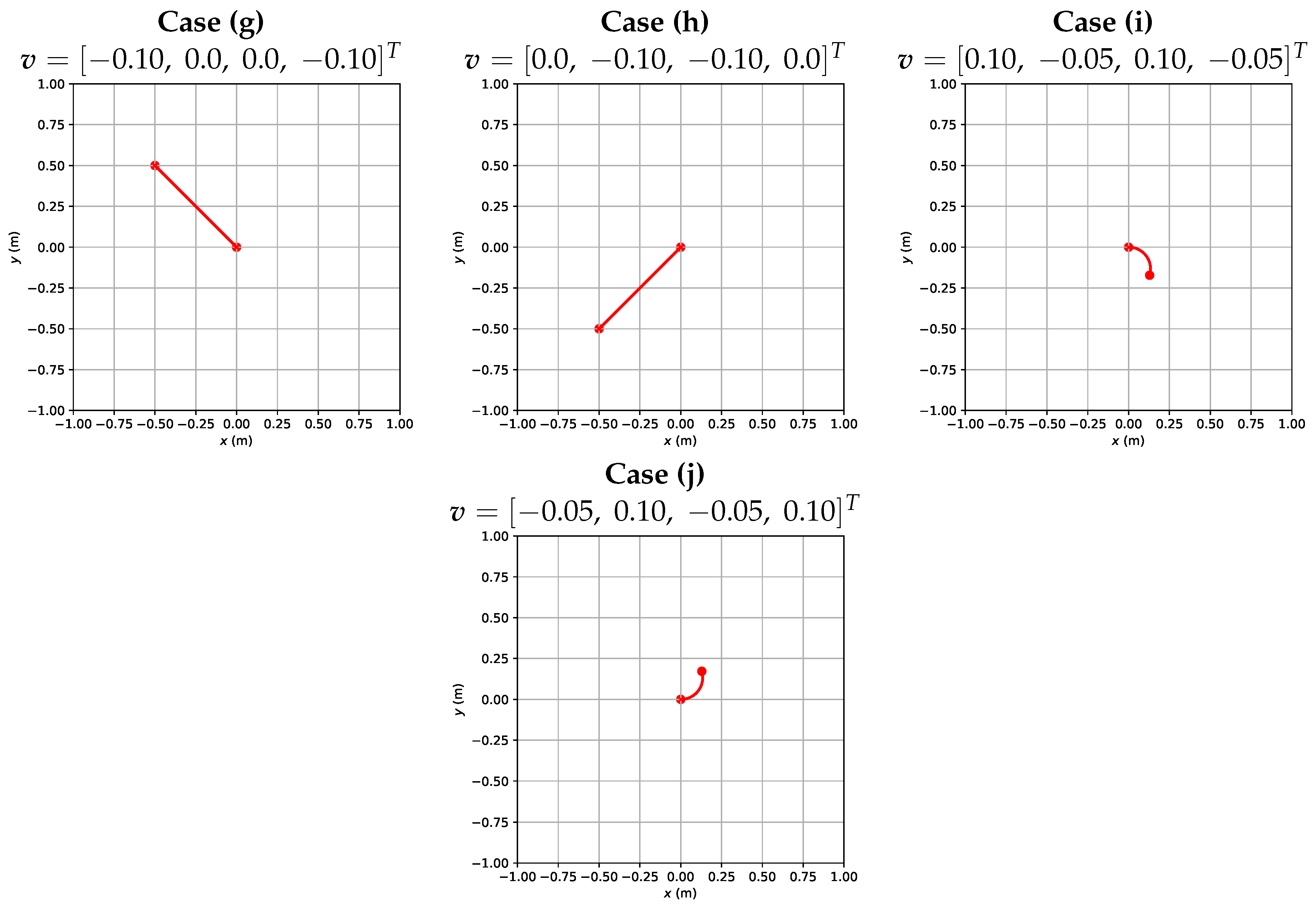
The resulting trajectories are depicted in
Figure 11 and faithfully reproduce the expected motion patterns, including longitudinal translations (cases a and b), pure lateral motions (cases c and d), diagonal displacements (cases e and h), and pure rotations (cases i and j). This agreement confirms the internal consistency of the kinematic model and its ability to predict the platform’s omnidirectional behavior.
5.2. Open-Loop Execution of Complex Trajectories in Realistic Simulation
Based on the qualitative consistency analysis of the reference motion primitives presented in
Section 5.1, this subsection extends the evaluation to more complex trajectories involving continuous curvature variations and sustained coordination among multiple actuated wheels into the obtained kinematic model and the model provided by the Gazebo physics engine where physical effects such as wheel–ground interaction, friction, contact dynamics, and slip naturally arise. These scenarios provide a more demanding test for the proposed unified kinematic framework beyond elementary motions.
All experiments are conducted under an open-loop execution strategy, where the angular velocities of the actuated wheels are computed exclusively from the inverse kinematic model derived in
Section 4. No feedback control, trajectory tracking algorithm, or error compensation mechanism is employed. This intentional choice allows the analysis to focus on the intrinsic behavior induced by the kinematic formulation itself, without introducing additional layers related to control design or state estimation.
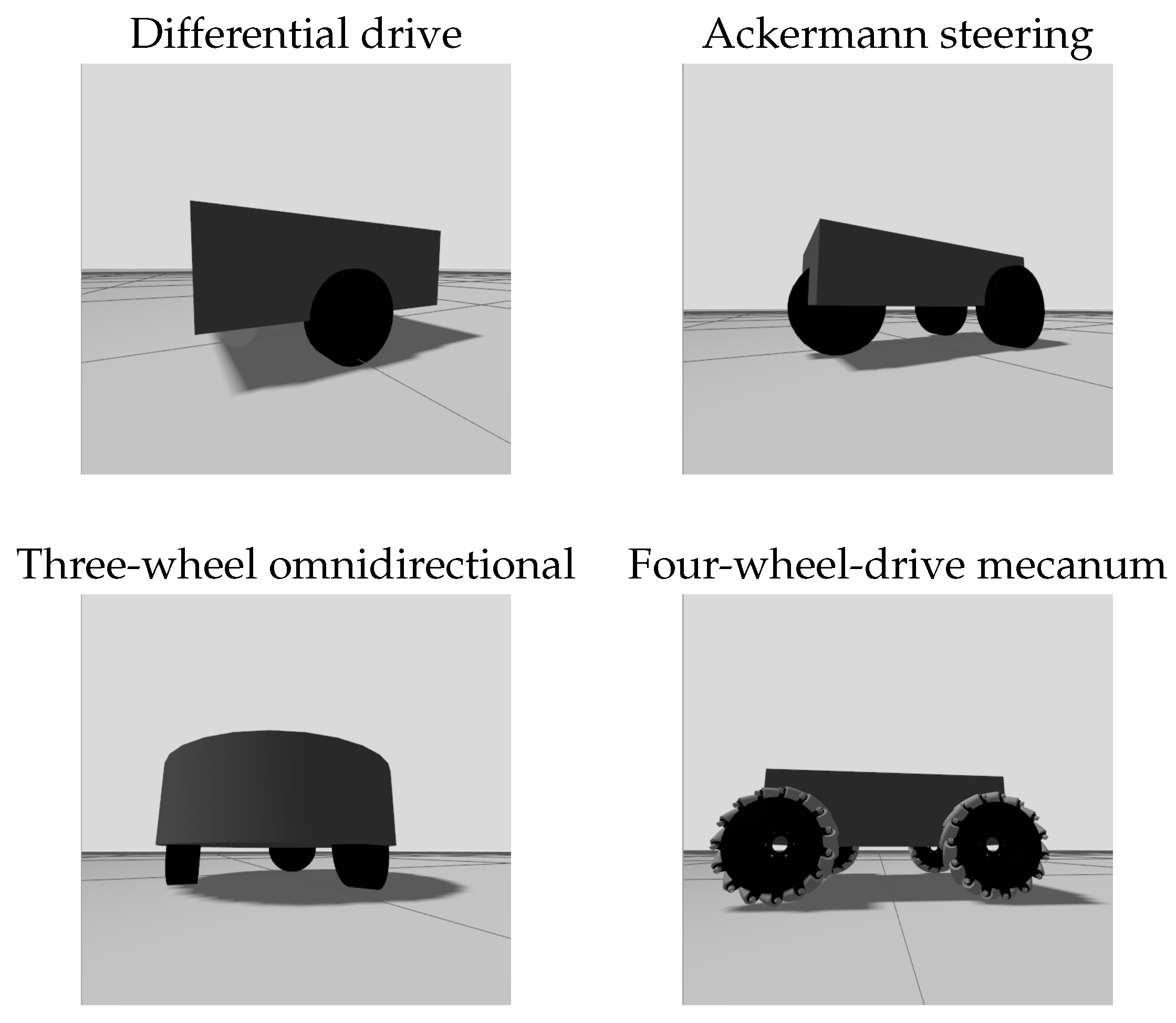
For each trajectory, three different motion representations are considered: (i) the ideal reference path defined in task space, (ii) a purely kinematic simulation obtained by numerically integrating the forward kinematic model, and (iii) a realistic simulation implemented in ROS 2 Jazzy Jalisco and Gazebo, where the wheel joint velocities are then integrated into the Gazebo physics engine to generate the resulting robot motion governed by the multibody dynamics and the wheel–ground interaction. In all cases, the reported robot pose is assumed to be ideal. For the kinematic simulations, the pose is obtained by direct integration of the kinematic model, whereas in the ROS + Gazebo simulations, it corresponds to the ground-truth pose provided by the physics engine. Sensor noise, bias, and estimation errors are not considered. In ROS + Gazebo simulations, wheel–ground interaction, including friction and contact dynamics, is considered. The robots used for the realistic simulation are shown in
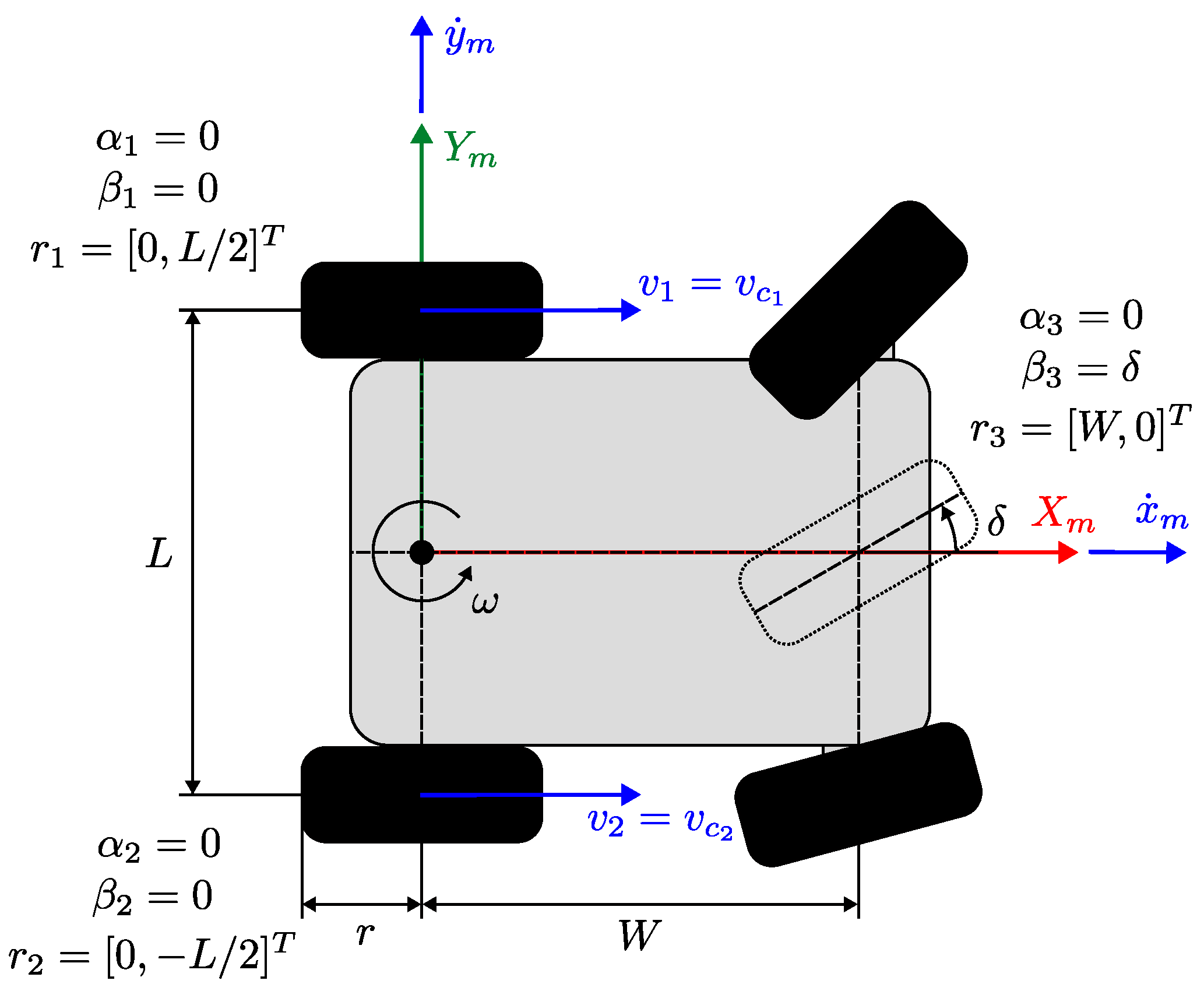
Figure 12, and the utilized parameters are summarized in
Appendix A.
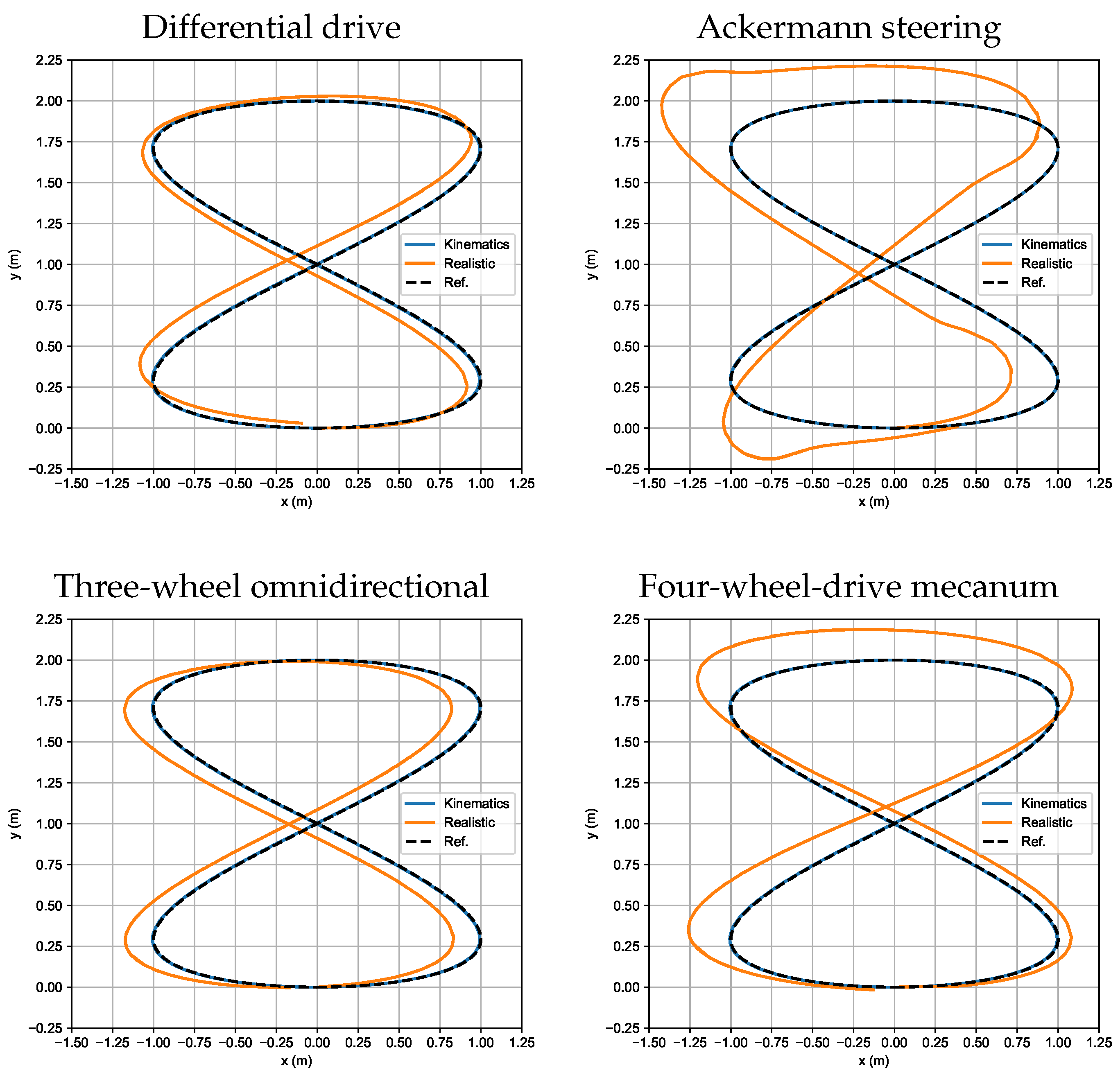
Two representative smooth planar trajectories are also considered: a circular path and a Gerono lemniscate. Both trajectories are continuously differentiable, bounded, and periodic, which facilitates open-loop wheel command generation via inverse kinematics while introducing nontrivial curvature profiles. Each trajectory is executed by the four mobile robot architectures using identical open-loop wheel velocity commands generated using the same kinematic formulation, with only the wheel configuration parameters adapted to each platform.
The circular trajectory, with radius
R and center at
, is defined as:
where
,
m, and
s. This parametrization starts at the Cartesian origin and completes exactly one full revolution over the interval
.
The Gerono lemniscate introduces a more demanding and time-varying curvature profile, which is defined as:
with
,
,
m,
m, and
s. The phase shift
is introduced to ensure a well-defined initial motion direction and to avoid an initial stationary configuration when generating open-loop wheel commands.
While the circular path provides a constant-curvature reference, commonly used as a baseline for wheeled mobile robots, the lemniscate requires continuous changes in wheel velocities and coordinated motion throughout execution. Together, these trajectories enable a qualitative assessment of whether the same open-loop inverse-kinematics formulation can generate coherent motions across heterogeneous wheel configurations under both purely kinematic and realistic physics-based simulations.
The objective of this analysis is not to achieve precise trajectory tracking, but rather to observe how different mobile platforms respond to complex motion commands under realistic physical conditions. In particular, the focus is on assessing whether the resulting motions remain qualitatively consistent with the intended trajectory shapes and expected kinematic behavior of each robot, despite the presence of unmodeled dynamics and contact-related effects.
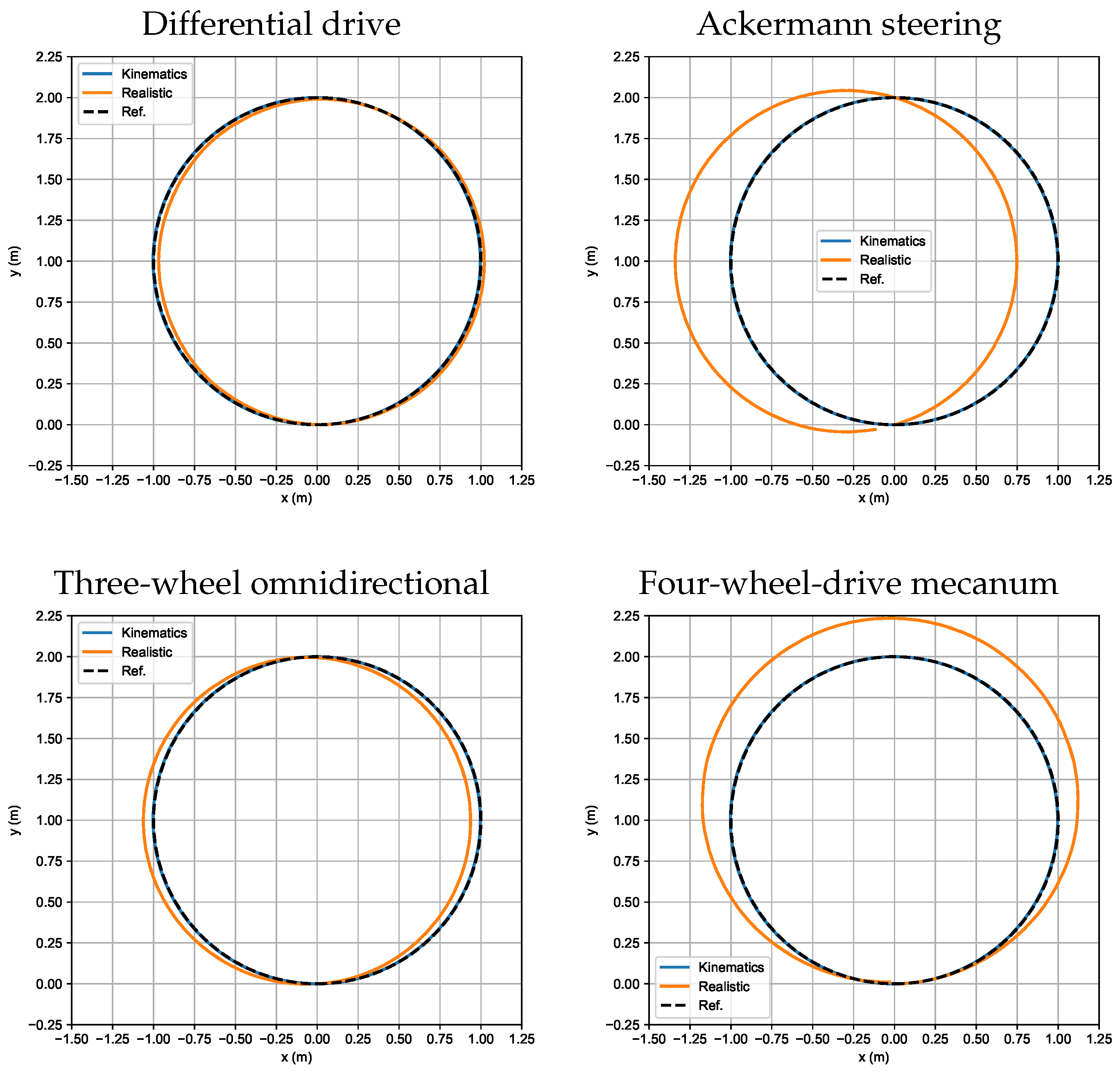
The results obtained for the circular trajectory are shown in
Figure 13, where the ideal reference path is compared against both the purely kinematic simulation and the realistic ROS 2 simulation for all four mobile platforms. In the kinematic case, the trajectories closely follow the ideal reference, as expected from direct numerical integration of the forward kinematic model. When realistic physical effects are introduced, deviations from the ideal path are noticeable due to slip, friction, and contact dynamics. Nevertheless, the overall circular shape and curvature are preserved across all platforms, indicating that the open-loop inverse kinematic formulation generates coherent motion commands even under non-ideal conditions.
Figure 14 presents the results for the Gerono lemniscate trajectory, which imposes a more demanding motion profile due to its time-varying curvature and self-intersection. Compared to the circular case, larger deviations between the ideal, kinematic, and realistic trajectories are observed, particularly in the realistic simulations. These deviations are consistent with the increased sensitivity of open-loop execution to unmodeled dynamics and wheel slip when fast curvature changes are required. In the Ackermann platform, the more pronounced trajectory deformation can be attributed to geometric steering constraints and the reliance on front-wheel steering angles, which amplify the effects of small deviations in wheel orientation and lateral slip under open-loop operation. Despite this, all platforms reproduce the characteristic shape of the lemniscate, demonstrating qualitatively consistent behavior across heterogeneous wheel configurations.
A quantitative summary of the planar position errors is reported in
Table 5, where the root-mean-square error (RMSE) is computed with respect to the ideal reference trajectory. These results reveal a clear separation between numerical and physical sources of deviation. The errors between the ideal and kinematic trajectories remain small and are primarily attributed to numerical integration effects, whereas significantly larger deviations are observed in the ROS + Gazebo simulations due to dynamic effects such as wheel–ground interaction and slip. For circular motion, the kinematic simulations exhibit very small errors across all platforms, reflecting the consistency of the forward and inverse kinematic formulations. In contrast, the realistic simulations show increased RMSE values, with magnitude variations across platforms that can be attributed to differences in wheel configuration and sensitivity to slip and frictional effects. For the lemniscate trajectory, the RMSE values increase substantially in both kinematic and realistic simulations, primarily due to sharper curvature changes and self-intersection of the path. Notably, the difference between the realistic and kinematic RMSE remains bounded in all cases, indicating that physical effects introduce deviations without compromising the structural consistency of the resulting motion. These results reinforce the observation that, while open-loop execution under realistic conditions does not yield exact trajectory tracking, the unified kinematic formulation produces consistent and physically meaningful motion patterns across all evaluated mobile robot architectures.
Overall, the results presented in this subsection indicate that the proposed unified kinematic formulation extends naturally from elementary motion primitives to more complex trajectories under both purely kinematic and realistic simulation conditions. While open-loop execution in a physics-based environment inevitably leads to deviations from the ideal reference, the observed motion patterns remain qualitatively consistent across all evaluated platforms. This behavior highlights the robustness of the unified formulation at the kinematic level and motivates its use as a common foundation for more advanced control or estimation strategies.
5.3. Effect of Wheel Misalignment Modeling in Open-Loop Trajectory Execution
Following the analysis of complex trajectories under ideal wheel mounting conditions presented in
Section 5.2, this subsection investigates the effect of wheel mounting misalignments on open-loop trajectory execution. The objective is to illustrate how the proposed unified kinematic framework naturally accommodates such geometric deviations when they are known or can be measured, and to assess their impact on both kinematic and realistic simulations.
The analysis is limited to the differential-drive mobile robot and the circular trajectory, using the same simulation settings and open-loop execution strategy described in
Section 5.2. Artificial misalignments are introduced in the wheel mounting angles, with a deviation of
applied to the left wheel and
applied to the right wheel. These values are intentionally exaggerated to clearly expose the effect of misalignment on the resulting motion.
In this sense, two different modeling cases are considered. In the first case, the wheel misalignments are explicitly incorporated into the inverse kinematic model when computing the wheel velocity commands. In the second case, the same physical misalignments are present in the robot model, but they are neglected in the inverse kinematic formulation used to generate the control inputs. In both cases, the resulting commands are applied to the purely kinematic simulation and to the realistic ROS 2 and Gazebo simulation.
Using the unified framework, the inverse kinematics of the differential-drive robot in the local frame when
and
are considered is:
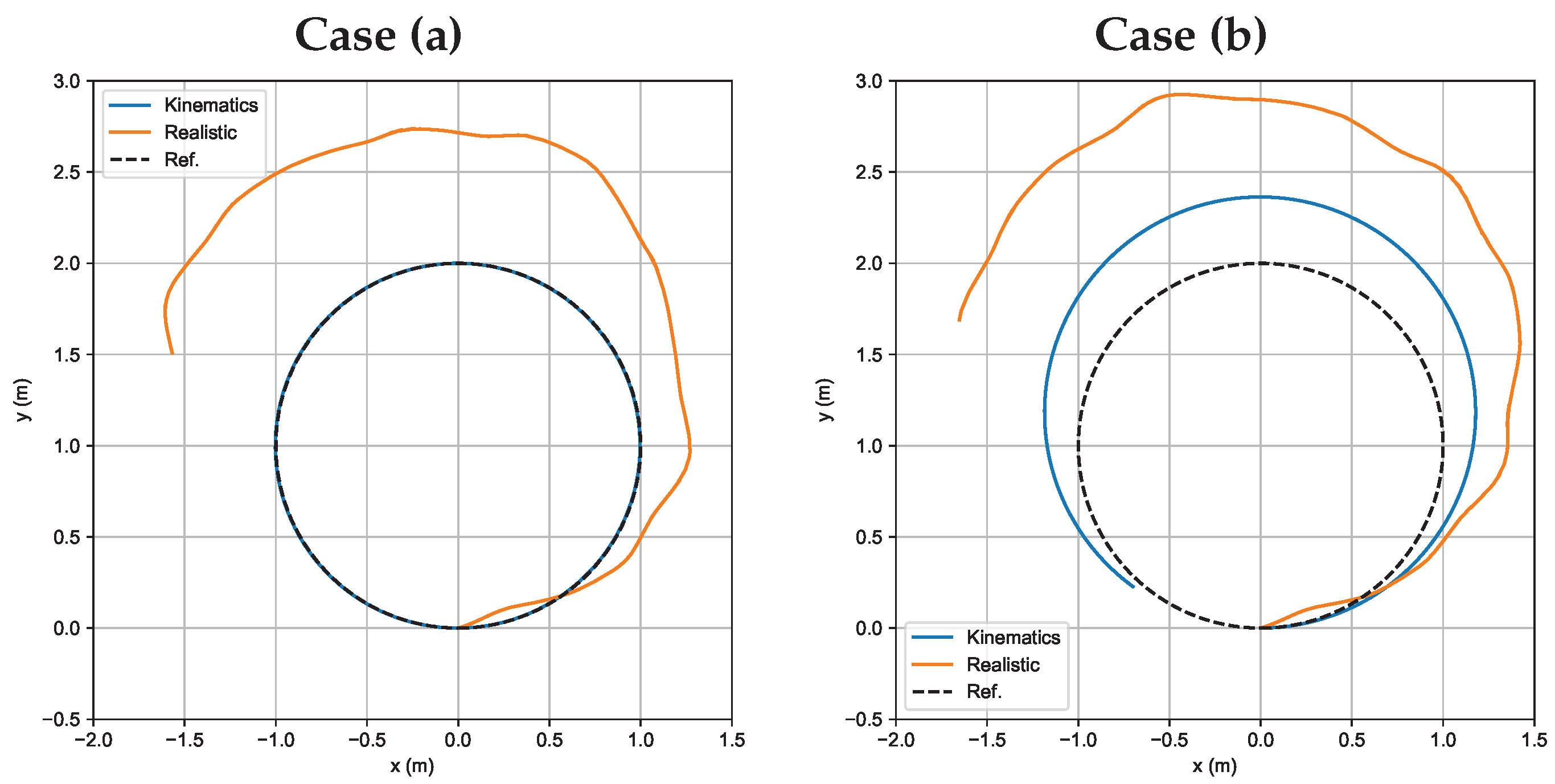
The resulting trajectories for both cases are shown in
Figure 15. When wheel misalignments are accounted for in the inverse kinematic model, the kinematic simulation closely follows the ideal circular reference, and the realistic simulation preserves the intended trajectory shape despite physical effects. In contrast, when misalignments are ignored during the inverse kinematic computation, significant deviations from the reference trajectory are observed at the purely kinematic level, which are further amplified in the realistic simulation.
This behavior is quantitatively observed in the RMSE values reported in
Table 6. When misalignments are properly modeled, the kinematic simulation exhibits a very small error relative to the ideal reference due to integration time, which is comparable to the ideal mounting case. Conversely, neglecting misalignments in the inverse kinematic formulation leads to a substantial increase in error, even before considering realistic physical effects. Although the realistic simulations present larger absolute errors in both cases due to open-loop control execution and contact dynamics, the results clearly indicate that explicitly modeling wheel misalignments significantly improves consistency at the kinematic level.
These results highlight one of the practical advantages of the proposed unified framework: geometric imperfections such as wheel mounting misalignments can be incorporated directly into the kinematic model without altering the overall formulation. When such parameters are available, their inclusion leads to more coherent motion generation and mitigates systematic trajectory distortions in open-loop control execution.
5.4. Brief Summary
The results presented in
Section 5.1,
Section 5.2 and
Section 5.3 validate the proposed unified kinematic formulation across a range of motion scenarios and modeling assumptions. The simulated behaviors confirm that the global forward kinematics accurately captures the mobility characteristics and structural constraints inherent to each wheeled mobile robot architecture.
The differential-drive and Ackermann platforms exhibit non-holonomic behavior due to constraints on lateral motion, both under ideal kinematic assumptions and in physics-based simulations. In contrast, the omnidirectional platform allows full planar mobility by enabling independent control of translational velocities. The four-wheel mecanum system, while kinematically holonomic, may exhibit effective motion constraints in realistic simulations due to wheel–ground interaction effects in the absence of explicit slip compensation mechanisms.
Beyond reproducing canonical motion primitives, the framework demonstrates coherent behavior under complex trajectories, realistic physical interactions, and geometric imperfections such as wheel mounting misalignments. The ability to explicitly incorporate such geometric parameters into the kinematic model, when available, highlights a key practical advantage of the proposed formulation.
Overall, these results show that the unified kinematic framework provides a consistent and flexible mathematical structure for modeling, simulation, and analysis of heterogeneous wheeled mobile robots, supporting both analytical reasoning and numerical experimentation within a single formulation.



 ,
,