


Abstract
Understanding the factors contributing to the persistence and retention of students in science, technology, engineering, and mathematics (STEM) is among the main issues of concern within STEM post-secondary education. The literature suggests that teacher self-disclosure and emotional and behavioral engagement play a significant positive role in the learning process across disciplines. Such factors may lead to improved academic achievements and retention in STEM disciplines. A variety of studies examined the relationship between teacher self-disclosure and emotional and behavioral engagement within the field of humanities, but less within the fields of STEM. This study used structural equation modeling (SEM) to examine the relationship between teacher self-disclosure and emotional and behavioral engagement of 208 undergraduate students enrolled in a two-year Freshman Research Immersion program. The results showed significant relationships between different aspects of teacher self-disclosure and classroom engagement. Additionally, STEM students view that high amounts of teacher self-disclosure can be related to negative aspects of classroom engagement such as emotional engagement anxiety. The study’s significance lies in practical recommendations associated with the strategic use of instances of teacher self-disclosure while teaching STEM classes and ways to support STEM undergraduate students’ levels of classroom engagement.
1. Introduction
Prior studies have documented a lack of persistence as post-secondary students change majors from science, technology, engineering, and mathematics (STEM) to non-STEM majors [1,2,3]. This has negative outcomes such as workforce shortages [4,5,6], limited diversity and representation in STEM [7], and reduced innovation and technical development [8]. Among the key reasons for the lack of persistence in STEM majors is how STEM students identify themselves as STEM learners (or not) in a STEM field [9,10,11]. Additionally, classroom engagement is another factor to issues of persistence and retention of students within STEM spaces [12,13,14], specifically within STEM research programs in higher education [15,16,17,18]. Furthermore, Daempfle [19] argued that lack of classroom communication between faculty and students is among one of the contributing factors that lead to attrition within STEM fields. The researcher asserted this by stating that “students were generally interested in the sciences but were ‘turned off’ by the structure and climate of the classroom” (p. 41). Such statements suggest that less engaging classrooms taught by unapproachable faculty lead to the attrition of students from STEM fields [20,21,22].
In addition to the classroom environment, teacher self-disclosure also plays a significant role in the learning process across STEM disciplines [23,24]. A combination of a suitable classroom environment and instances of teacher self-disclosure aid students in understanding the course material [25,26,27], develop students’ participation within learning situations [28,29], and enhance their overall learning experience [26]. This, in return, has the potential to lead to retention and persistence within STEM fields [23,24]. While working with teachers across the field of communication studies, Cayanus and Martin [1] classified teacher self-disclosure in three dimensions: amount, relevance, and negativity.
This article investigates the research question: What is the direct relationship between teacher self-disclosure and the behavioral and emotional classroom engagement of undergraduate students enrolled in a STEM research program? It can be argued that instances of teacher self-disclosure have the potential to enhance or hinder levels of student engagement in the classroom. More specifically, teacher self-disclosure instances, including amount, relevance, and negativity, can significantly influence the behavioral and emotional classroom engagement of undergraduate students in a STEM research program. By carefully considering these factors, teachers can effectively utilize self-disclosure as a tool to enhance student engagement, which, in turn, can positively contribute to their persistence within STEM.
Based on the results, we illustrate the significance of specific dimensions of teacher self-disclosure in promoting or hindering levels of classroom engagement for undergraduate students enrolled in a STEM research program. The findings have the potential to generate recommendations that can contribute to the advancement of teaching and learning in STEM research programs and higher education classes. By implementing these recommendations, there is potential to enhance student engagement, improve learning outcomes, and elevate the overall quality of STEM education at the higher education level, which, in turn, can have a positive impact on student persistence and retention within STEM.
1.1. Literature Review
To ground the study, we explain the concepts of teacher self-disclosure and emotional and behavioral engagement. In addition, we also describe the relation between teacher self-disclosure and students’ levels of emotional and behavioral engagement.
1.1.1. Teacher Self-Disclosure
Wheeless and Grotz [30] defined self-disclosure as “any message about the self that a person communicates to another” (p. 338). Jourard [31] explained that deciding to self-disclose is based on positive feelings, such as an attitude of trust and love. For defining themselves within academic context, teachers can choose to voluntarily disclose their personal information, thoughts, and feelings to students [29]. Cayanus and Martin [1] suggested three dimensions of teacher self-disclosure—amount, relevance, and negativity. The amount of self-disclosure has to do with how much and how often teachers self-disclose their personal information. For example, a math teacher might occasionally mention their passion for hiking when discussing real-life applications of geometry. Relevance refers to the relevancy of the self-disclosure instance to the topics being discussed in the classroom and related to the course content. For instance, a science teacher might share a personal experience of conducting an experiment that aligns with the current lesson, making the self-disclosure relevant and enhancing students’ understanding of the topic. Negativity deals with revealing negative experiences and feelings within the classroom context, for instance, expressing negative feelings towards a colleague, disagreements with the department, or general feelings or comments of sexism or racism towards an individual.
When it comes to STEM spaces, it is important to examine teacher self-disclosure, as this construct is connected with classroom engagement [29,32] and contributes to persistence in STEM spaces [33]. Rassmussen and Mishna [34], who wrote a book chapter reviewing various studies on teacher self-disclosure on different educational levels, concluded that teacher self-disclosure, especially related to math concepts, were positively received by undergraduate students as it helped them in understanding better the course content and retention of points covered in the classroom. Additionally, studies conducted at the college level within various disciplines showed that instances of teacher self-disclosure that are occasional, not negative, and are relevant to the course content supported students in the recall and retention of the lecture material [35,36,37,38].
1.1.2. Emotional and Behavioral Engagement
Emotional engagement focuses on concerns associated with aspects of students’ feelings of belongingness and feelings about the classroom environment [39]. Examples of such feelings include interest, boredom, happiness, sadness, and anxiety within learning situations. This also captures students’ relationships with their classmates and instructors [32,40,41,42,43,44]. We followed the classification of emotional engagement, as given by Renninger and Bachrach [41], which has four distinct dimensions: interest, achievement orientation, anxiety, and frustration.
Behavioral engagement is defined as students’ self-reported participation and effort during class [40], and encompasses aspects such as attentiveness, diligence, and time spent on in-class tasks [45,46,47]. It is linked to students’ adherence to classroom norms and expectations [35], which is indicated by their active listening, as well as interactions and contributions to the learning process [48]. Behavioral engagement is directly associated with how students participate in the class, take interest in academic tasks, and respect the existing classroom rules [32,35,49,50].
There are several aspects informing the significance of studying emotional and behavioral engagement in higher education and, more specifically, within STEM. First, students’ emotional and behavioral engagement is associated with the development of critical thinking [51,52,53] and integration of the learned information into the learning process [54]. Additionally, emotional and behavioral engagement informs the level of persistence, which is one of the main issues among undergraduate students within STEM programs [55]. Studies with undergraduate students within STEM and non-STEM disciplines showed that a sense of belonging, especially classroom belongingness, is strongly related to behavioral and emotional engagement [53,56]. Such studies argued that students who opt for STEM as their desired field of study demonstrated not only higher levels of emotional and behavioral engagement with STEM classes, but also persistence in STEM fields.
1.1.3. Relation between Teacher Self-Disclosure and Emotional and Behavioral Engagement
For emotional engagement and teacher self-disclosure, the existing literature suggested that teacher self-disclosure characterized as being positive, relevant, and moderately recurrent triggers the emotional engagement of students within the classroom setting [1,35,57]. This can be supported by the fact that such instances of teacher self-disclosure are perceived by the students as being transparent and credible, which further helps them in developing a connection with the teacher. On the contrary, studies conducted by Cayanus and Martin [1], Rosborough and colleagues [58], Frisby and Sidelinger [59], and Goodboy and colleagues [60] explained that the negative domain of teacher self-disclosure could affect the emotional aspect of students’ classroom engagement negatively. For example, sharing negative opinions about the institution or negative opinions about the subject being taught might create feelings of negativity and violate students’ expectations of a positive learning environment, which makes students emotionally disengaged in such learning contexts.
Skinner and Pitzer [61] and Wang and Eccles [62] also argued that positive self-disclosure and positive interactions in STEM and non-STEM disciplines, respectively, could be considered among the factors that encourage secondary and post-secondary students to maintain good attendance, which is perceived as an indicator of classroom behavioral engagement. Furthermore, studies by Kelly and Turner [63] and Kromka and Goodboy [35] suggested that undergraduate students become more behaviorally engaged in instances when they feel their teachers care about them, through positive and moderate amounts of self-disclosure.
The abovementioned studies suggest that instances of teacher self-disclosure that are positive, relevant, and moderately frequent can positively affect students’ levels of emotional and behavioral engagement [64]. However, this area is still unexplored when it comes to examining the direct relationship between teacher self-disclosure and levels of emotional and behavioral engagement. Also, the literature has not examined the relationship between emotional and behavioral engagement and specific dimensions of teacher self-disclosure within the context of STEM education. Hence, we designed this study to examine the potential direct relationship between specific factors of teacher self-disclosure and students’ levels of emotional and behavioral engagement within a STEM research program.
2. Materials and Methods
2.1. Context of the Study
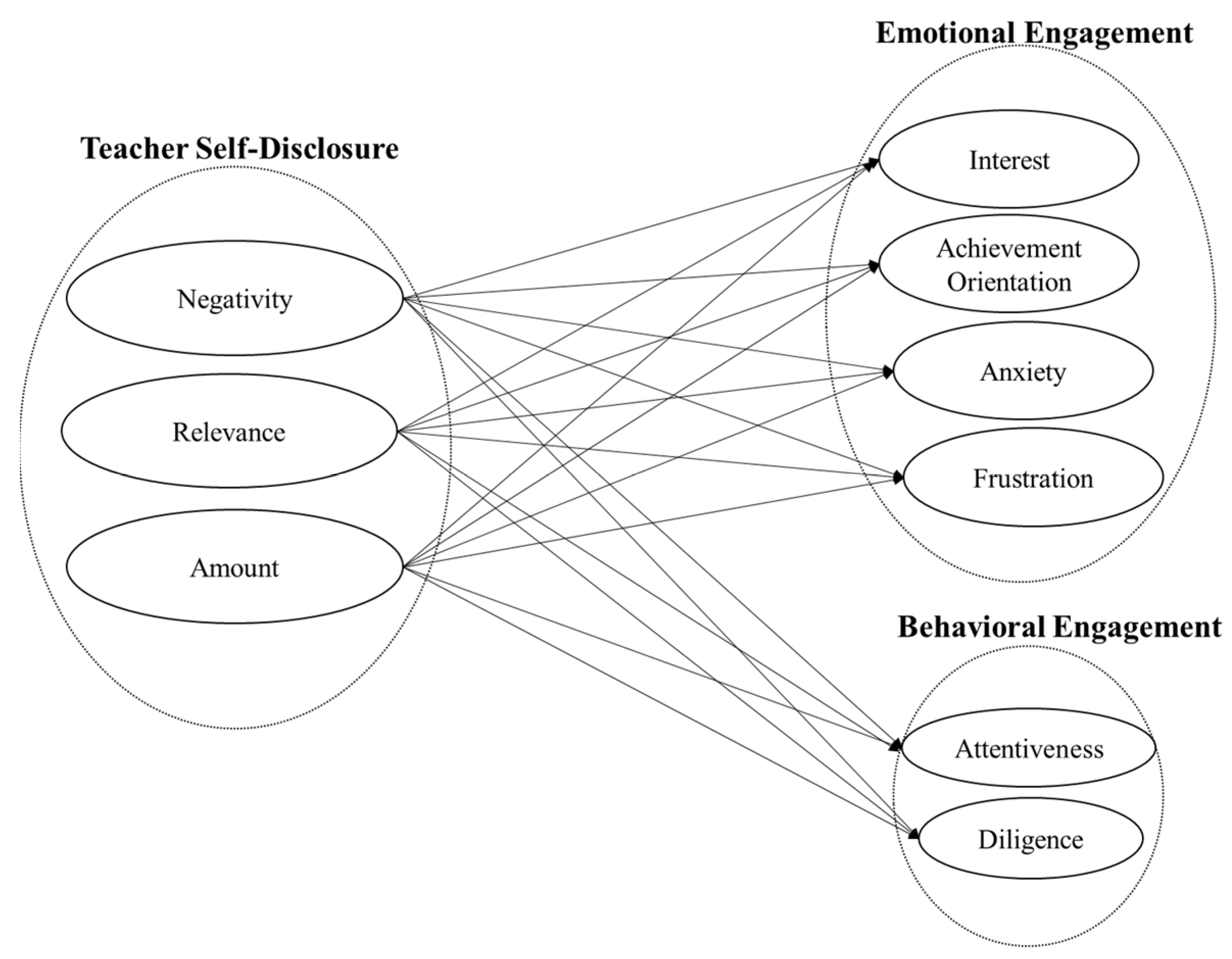
This study was designed for undergraduate students enrolled in a STEM research program at a research-intensive institute in the northeast region of the United States. This university provides some first-year students with the opportunity to take part in an authentic research experience in STEM disciplines called Freshman Research Immersion (FRI). This three-semester program provided first-year students with the opportunity to take part in authentic research experiences in STEM disciplines under the guidance of a research mentor. This program was based on a variety of STEM subject areas: biogeochemistry, biomedical chemistry, clean energy, community and global public health, ecological genetics, environmental visualization with drones, image and acoustic signal analysis, microbial biofilms in human health, molecular and biomedical anthropology, and neuroscience. Opting for a STEM research program allowed for examining the variables in a context that is STEM-focused and the students enrolled in this research program are likely interested in pursuing a degree and career in one of the STEM fields. We used information from these undergraduates enrolled in STEM research programs as we examined the relationship between teacher self-disclosure (i.e., amount, relevance, and negativity) and the emotional and behavioral engagement of STEM undergraduate research scholars using structural equation modeling (see Figure 1).
Figure 1.
Hypothesized model to examine relation between teacher self-disclosure and emotional and behavioral engagement.
2.2. Participants
IRB approval was obtained prior to the study and the students voluntarily participated. We used convenience sampling and the participation in the study was voluntary. Invitation emails were sent from the director of the program to the 560 students enrolled in the program. The final sample included data from 208 participants. About half of the participants self-identified as white (56%). There were more females (62.5%) than males (36%). The participants were almost equally distributed across different FRI streams, with a majority from Community and Global Public Health (14%) and Biomedical Chemistry (13%) (see Table 1).

Table 1.
Demographic characteristics (N = 208).
2.3. Data Source
The participants completed an online questionnaire in Qualtrics after the end of the Fall 2020 semester with items on their perception of teacher self-disclosure and emotional and behavioral engagement specific to their experiences in the STEM research programs. One reminder was sent to the participants after a two-week period. Table 2 demonstrates example items used to measure each of these constructs.
Table 2.
Example items used to measure each sub-construct and coefficient alpha associated with each construct.
2.3.1. Teacher Self-Disclosure
We used the Teacher Self-Disclosure Scale by Cayanus and Martin [65] to measure three aspects of self-disclosure—amount, relevance, and negativity—using 14 Likert-type items. The items captured responses on a seven-point scale (1 = completely disagree, 7 = completely agree). The first aspect, amount, describes how often instances of self-disclosure are used by a teacher in the classroom. Relevance refers to the instance of teacher self-disclosure relating to the topic of classroom discussion and course content (e.g., telling a story about how a math concept was learned as a student when introducing a new math concept). Finally, negativity refers to disclosing ‘‘bad’’ things in the classroom and messages that are of a negative nature (e.g., expressing bad feelings towards the department or some general rules).
Some items were reworded to fit the nature of the program. For example, “My instructor reveals undesirable things about him/herself” was changed to “My research mentor reveals undesirable things about themselves.” The Cronbach alpha for the three sub-constructs ranged between 0.78 and 0.92, showing an acceptable to good reliability index (see Table 2). The descriptive statistics for each item used to measure teacher self-disclosure are given in Table 3. An acceptable level of the skewness and kurtosis of the items indicated that the data were considered normally distributed.
Table 3.
Descriptive statistics for teacher self-disclosure (N = 208).
2.3.2. Engagement Instrument
We used a version of the Student Engagement in the Mathematics Classroom Scale (SEMCS) developed by Kong et al. [66] to examine the levels of emotional and behavioral engagement. The data were gathered on a five-point Likert scale (1 = strongly disagree, 5 = strongly agree). There were four aspects of emotional engagement—interest, achievement orientation, anxiety, and frustration. Interest referred to the student’s attraction to the applicability of the learning task [66]. Achievement orientation referred to the students’ capability of optimizing learning aspects (e.g., time and effort) with the goal of meeting some level of achievement (e.g., high marks). Anxiety referred to students’ perceived feelings of nervousness and unease that they might experience in some situations (e.g., taking tests) and the way they perceive this to affect their learning. Finally, frustration refers to students’ feelings of being tired of some learning tasks, which might lead to losing interest in the learning activity. Some items were reworded to fit the nature of the courses taken by the participants. For instance, “I find the math knowledge interesting and math learning enjoyable” was changed to “In my research classes, I find the knowledge interesting and research learning enjoyable.” The Cronbach alpha for the four aspects of emotional engagement ranged between 0.78 and 0.94, showing an acceptable to good reliability index (see Table 2). The descriptive statistics are given in Table 4.
Table 4.
Descriptive statistics for emotional engagement.
For behavioral engagement, we used 12 items with two sub-constructs as attentiveness and diligence, with six items in each. Attentiveness includes instances when students are paying attention and are focused on the learning activities and related learning tasks [67]. Diligence refers to the students working persistently and in a careful manner to achieve a given learning task. Some items were reworded to fit the nature of the courses taken by participants. For instance, “I really make an effort in the math classes” was changed to “I really make an effort in the research classes.” The Cronbach alpha for attentiveness and diligence was 0.93 and 0.81, showing a good reliability index (see Table 2). The descriptive statistics are given in Table 5. An acceptable level of the skewness and kurtosis of the items indicated that the data were considered normally distributed.
Table 5.
Descriptive statistics of behavioral engagement.
2.4. Data Analysis
We first used Confirmatory Factor Analysis (CFA) to assess the structure of the constructs and then used structural equation modeling to examine the relationships between the proposed constructs using the lavaan package version 3.5.1 in R. We used the maximum likelihood estimation as it assumes that the observed variables follow a continuous and multivariate normal distribution [68]. This study used the criterion given by Hu and Bentler [69] as non-significant Chi-square tests of model fit in addition to other model fit indices, like the root mean square error of approximation (RMSEA) ≤ 0.06, comparative fit index (CFI) ≥ 0.96, and Tucker–Lewis index (TLI) ≥ 0.95. Any possible chances of the model misspecification were examined by the modification index based on theoretical considerations.
3. Results
Before running the SEM analysis, we tested the factor structure of each of the proposed constructs in this study. While calculating the CFA structure for the teacher self-disclosure survey, we assessed the fit of the competing models. Based on the fit indices, as stated by Hu and Bentler [69], we decided to follow the three-factor correlated model as it was more suitable in this study since it resulted in better fit indices (χ2 (74) = 98.79, p = 0.029; CFI = 0.981, TLI = 0.977, RMSEA = 0.040 (p = 0.780) with 90% confidence interval of [0.014, 0.060], SRMR = 0.052).
For emotional engagement, we took guidance from Kong et al. [66] and found that a first-order four-factor correlated model had an acceptable fit (χ2 (202) = 399.807, p < 0.001; CFI = 0.924, TLI = 0.913, RMSEA = 0.069 (p = 0.001) with 90% confidence interval of [0.059, 0.078], SRMR = 0.066), after correlating the error terms of two items “Learning about research is tough, but I am happy as long as I can get good results” and “Learning research is tough, but I am satisfied when I get good results after making an effort” for the achievement sub-construct.
For behavioral engagement, a two-factor correlated model with the factors of diligence and attentiveness showed an acceptable model fit (χ2 (53) = 137.260, p < 0.001; CFI = 0.942, TLI = 0.927, RMSEA = 0.087 (p = 0.001) with 90% confidence interval of [0.070, 0.106], SRMR = 0.059). A lower correlation between attentiveness and diligence (r = 0.28, p < 0.05) suggested that these constructs can be treated as separate first-order constructs.
Relation between Teacher Self-Disclosure and Emotional and Behavioral Engagement
To understand the direct relationship between teacher self-disclosure and behavioral and emotional classroom engagement, we examined the structural parameters of the structural model, as given in Figure 2.
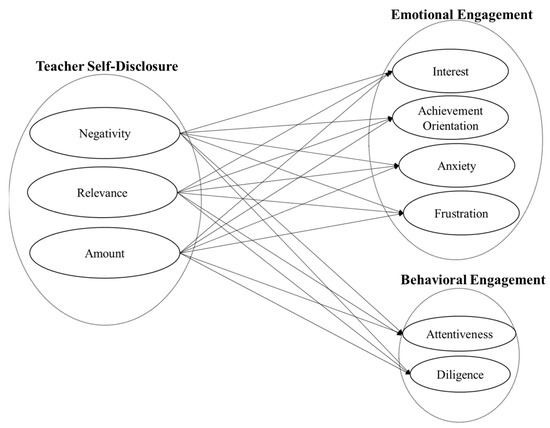
Figure 2.
Relation between teacher self-disclosure and emotional and behavioral engagement.
The initial fit of the model was not in the acceptable range, as proposed by Hu and Bentler (χ2 (1042) = 1609.201, p < 0.001; CFI = 0.900, TLI = 0.894, RMSEA = 0.051 (p = 0.345) with 90% confidence interval of [0.046, 0.056], SRMR = 0.061). Based on the modification indices, as well as being guided by the item wording, we correlated the error terms for two of the items for the diligence sub-construct “If I work on problems persistently, I am sure that I will get the right answer” and “If I cannot solve a problem right away, I will persist in trying different methods until I get the solution” as well as for the two items in the achievement orientation sub-construct “Though learning about research is tough, I feel happy when I can finish the tasks” and “Though learning about research is boring, I am happy when I get good results”. These modifications improved the model fit substantially, as χ2 (1040) = 1548.510, p < 0.001; CFI = 0.913, TLI = 0.905, RMSEA = 0.048 (p = 0.687) with 90% confidence interval of [0.043, 0.053], SRMR = 0.061. The parameter estimates of this structural model are given in Table 6.
Table 6.
Standardized parameters for teacher self-disclosure and behavioral engagement.
The findings suggest that the sub-construct for teacher self-disclosure, amount, had a positive significant relation with the sub-construct anxiety (Γ = 0.284, p < 0.001). This suggests that for each unit increase in amount, there is a 0.284 unit increase in emotional engagement anxiety.
For relevance, we found a significant positive relation with one of the sub constructs of emotional engagement—interest (Γ = 0.302, p < 0.001)—indicating that for each unit increase in relevance, there is a 0.302 increase in emotional engagement interest. In addition, relevance had a negative relationship with other sub-constructs of emotional engagement, i.e., anxiety (Γ = −0.483, p < 0.001) and frustration (Γ = −0.269, p < 0.001), indicating that for each unit increase in relevance, there is a 0.483 decrease in emotional engagement anxiety and a 0.269 decrease in emotional engagement frustration. For the behavioral engagement sub-constructs, relevance had a positive relationship with attentiveness (Γ = 0.236, p = 0.002) and diligence (Γ = 0.377, p < 0.05), indicating that for each unit increase in relevance, a 0.236 unit increase in behavioral engagement attentiveness and 0.377 unit increase in behavioral engagement diligence are expected. For the last sub-construct of teacher self-disclosure, negativity, none of the sub-constructs of emotional and behavioral engagement had a significant relation.
4. Discussion
The main research question guiding our research was: What is the relationship between teacher self-disclosure and emotional and behavioral engagement? The focus of this article is based on the idea that instances of teacher self-disclosure, including amount, relevance, and negativity, can either enhance or hinder levels of student engagement in the classroom. Hence, teachers can implement teacher self-disclosure instances to promote student engagement, which can, in return, have positive outcomes such as increasing students’ persistence within STEM.
Firstly, the results show that there is a positive relationship between one of the dimensions of teacher self-disclosure, amount, and one of the sub-constructs of emotional engagement, anxiety. This suggests that when the teacher uses multiple instances of self-disclosure, it may lead to feelings of anxiety in STEM undergraduates, which might affect their learning process. Prior research supports the view that instances of teacher self-disclosure can have negative effects when they are used more than needed and out of context [1,60,65].
Secondly, the obtained results also showed a positive relationship between another dimension of teacher self-disclosure, relevance, and one of the sub-constructs of emotional engagement—interest. This relation demonstrates that instances of teacher self-disclosure that are relevant in nature to the course content increase students’ levels of interest in the course and the learning experience. Based on that, by incorporating relevant self-disclosure instances, educators can effectively cultivate students’ interest that can directly contribute to their long-term commitment and persistence within STEM disciplines. The findings resonate with the inferences deduced by Cayanus et al. [65], who showed that relevance correlates with students’ interest in the course within general contexts. The researchers highlighted that relevant examples provided by the teacher increase levels of interest, which can result in positive outcomes such as encouraging students to provide similar or counter examples, which result in more student–teacher interaction during sessions [1,70]. Finally, in addition to the studies that were conducted in the field of communication and humanities [1,60], the results showed that the relation between teacher self-disclosure, relevance, and emotional engagement, interest, is also applicable within the specific context of this study: STEM research programs.
Additionally, the results showed a negative relationship between relevance and two sub-constructs of emotional engagement: anxiety and frustration. This idea is supported by Myers et al. [71], who argued that relevant instances of teacher self-disclosure are associated with more positive feelings of emotional engagement and less negative feelings of emotional engagement such as anxiety within the classroom context. The results support the idea that STEM students feel that less-relevant instances of teacher self-disclosure to the course content can cause more negative feelings of emotional engagement, ultimately impacting on their persistence within STEM disciplines.
The results also showed that one of the sub-dimensions of teacher self-disclosure, relevance, had a positive significant relation with two of the sub-constructs of behavioral engagement, which are diligence and attentiveness. When teachers share information that is applicable to the subject matter, students exhibit greater diligence, which is related to steady and energetic effort when working on classroom tasks. This increased diligence enhances their focus and task performance, and may contribute to their persistence within STEM programs. By incorporating relevant self-disclosure instances, teachers can foster an environment that cultivates student diligence, encourages active participation, and ultimately supports their long-term engagement and persistence in STEM education. The available literature supported claims about positive instances of teacher-self disclosure and behavioral engagement. For example, Imlawi and Gregg [72] and Klem and Connell [73,74] argued that teacher self-disclosure instances that are positive and relevant in nature develop students’ classroom behavioral engagement that is linked to diligence and active participation during class. Furthermore, Kelly and Turner [63], Marks [75], Martin and Dowson [76], and Ryan and Patrick [77] suggested that students become behaviorally engaged, and more specifically attentive, when they receive instances of teacher self-disclosure that are relevant to the STEM content.
The study did not reveal any significant relationship between the dimensions of teacher self-disclosure amount and negativity, and the sub-construct of behavioral engagement diligence. Similarly, no significant relationship was observed between any of the dimensions of teacher self-disclosure and the sub-construct of behavioral engagement attentiveness. The available literature from the field of humanities and communications contradicts these findings, as Frisby et al. [59] suggested that negative teacher self-disclosure instances can negatively affect students’ levels of behavioral engagement. Similarly, Myers and colleagues [71] suggested that positive instances of teacher self-disclosure can positively affect students’ levels of behavioral engagement. There is a possibility that the specific study context, STEM research programs, might lead to these non-significant relations.
Implications
The findings of this study could serve as a basis for instructional design and curriculum development, especially within STEM higher education research programs. The findings might encourage higher education instructors or research mentors within STEM research programs and classes to include instructional methods focused on increasing classroom engagement through making strategic use of teacher self-disclosure. In addition, recommendations based on the results of this study can be used in different STEM research programs and classes as a guide to plan interventions and suitable trainings, professional development workshops, and ongoing seminars for professors, research mentors, and graduate assistants with the intention of supporting students’ levels of positive emotional and behavioral engagement.
Further, findings from this study provide guidance on considering the kind of teacher self-disclosure to implement within STEM research program classes, how often it should be used, and what instances of teacher self-disclosure are considered inappropriate and should be used less often. More specifically, considering the findings, several recommendations can be made. First, it appeared that relevant instances of teacher self-disclosure can positively contribute to maintaining students’ levels of classroom engagement—more specifically, emotional engagement interest and behavioral engagement diligence. Additionally, the obtained results also showed a negative relationship between relevance and emotional engagement, anxiety, and frustration. Hence, it can be recommended that STEM research mentors, STEM educators, doctoral assistants, and professional development programs make more useful and strategic use of instances of teacher self-disclosure that are relevant to the course content. As an outcome, this might support STEM students’ development of positive feelings during sessions such as increased interest, fewer feelings of anxiety and frustration, and being more diligent during classes.
5. Conclusions
This research study examined the relationship between teacher self-disclosure and emotional and behavioral engagement among students in a STEM research program. The results of the study showed a significant positive relation between teacher self-disclosure relevance and positive aspects of classroom engagement such as emotional engagement (interest) and behavioral engagement (diligence and attentiveness). The results also showed that there is a negative relation between teacher self-disclosure relevance and the emotional engagement factors of anxiety and frustration. Additionally, STEM students view that high amounts of teacher self-disclosure can be related to negative aspects of classroom engagement such as anxiety. The overall results showed that STEM students favor instances of teacher self-disclosure that are relevant and not too frequent, as such disclosure contributes positively to the development of students’ interest in the course content as well as supporting them to be more diligent and attentive during sessions.
The study was conducted with the intention of adding to the literature on an issue that tends to have limited studies that consider students in STEM in higher education, and, more specifically, in a STEM research program. The obtained results showed the type of teacher-self disclosure that can be used to increase students’ levels of classroom engagement. Moreover, the obtained results provided substantial evidence for the importance of strategically implementing relevant instances of teacher self-disclosure to promote classroom engagement within STEM classes.
Finally, this study’s results add to the available literature on teacher self-disclosure and classroom engagement, as most of the available studies focused on the context of humanities and not STEM education [1,78,79]. Hence, this study’s focus in the field of STEM and the obtained results add significantly to the available literature, and motivate more research to be conducted on teacher self-disclosure and classroom engagement within the context of STEM education.
Author Contributions
Methodology, Y.B. and P.K.B.; Software, P.K.B.; Validation, Y.B., P.K.B. and A.S.; Formal analysis, Y.B.; Investigation, Y.B.; Data curation, Y.B.; Writing—original draft, Y.B.; Writing—review & editing, Y.B. and A.S.; Visualization, P.K.B. and A.S.; Supervision, Amber Simpson; Project administration, A.S. All authors have read and agreed to the published version of the manuscript.
Funding
This research received no external funding.
Institutional Review Board Statement
The study was conducted in accordance with the Declaration of Helsinki, and approved by the Institutional Review Board office of Binghamton (protocol code CR00000875 and date of approval: 12 February 2020).
Informed Consent Statement
Informed consent was obtained from all subjects involved in the study.
Data Availability Statement
Not applicable.
Conflicts of Interest
The authors declare no conflict of interest.
References
- Cayanus, J.; Martin, M. 10 Teacher Self-Disclosure. In Communication and Learning; De Gruyter Mouton: Berlin, Germany, 2016; pp. 241–258. [Google Scholar]
- Henry, A.; Thorsen, C. Weaving Webs of Connection: Empathy, Perspective Taking, and Students’ Motivation. Stud. Second. Lang. Learn. Teach. 2019, 9, 31–53. [Google Scholar] [CrossRef]
- Simon, R.A.; Aulls, M.W.; Dedic, H.; Hubbard, K.; Hall, N.C. Exploring Student Persistence in STEM Programs: A Motivational Model. Can. J. Educ. 2015, 38, n1. [Google Scholar]
- Iammartino, R.; Bischoff, J.; Willy, C.; Shapiro, P. Emergence in the US Science, Technology, Engineering, and Mathematics (STEM) Workforce: An Agent-Based Model of Worker Attrition and Group Size in High-Density STEM Organizations. Complex Intell. Syst. 2016, 2, 23–34. [Google Scholar] [CrossRef]
- Jelks, S.M.; Crain, A.M. Sticking with STEM: Understanding STEM Career Persistence among STEM Bachelor’s Degree Holders. J. High. Educ. 2020, 91, 805–831. [Google Scholar] [CrossRef]
- Sithole, A.; Chiyaka, E.T.; McCarthy, P.; Mupinga, D.M.; Bucklein, B.K.; Kibirige, J. Student Attraction, Persistence and Retention in STEM Programs: Successes and Continuing Challenges. High. Educ. Stud. 2017, 7, 46–59. [Google Scholar] [CrossRef]
- Asher, M.W.; Harackiewicz, J.M.; Beymer, P.N.; Hecht, C.A.; Lamont, L.B.; Else-Quest, N.M.; Priniski, S.J.; Thoman, D.B.; Hyde, J.S.; Smith, J.L. Utility-Value Intervention Promotes Persistence and Diversity in STEM. Proc. Natl. Acad. Sci. USA 2023, 120, e2300463120. [Google Scholar] [CrossRef] [PubMed]
- Martin, A.E.; Fisher-Ari, T.R. “If We Don’t Have Diversity, There’s No Future to See”: High-School Students’ Perceptions of Race and Gender Representation in STEM. Sci. Educ. 2021, 105, 1076–1099. [Google Scholar] [CrossRef]
- Carlone, H.B.; Johnson, A. Understanding the Science Experiences of Successful Women of Color: Science Identity as an Analytic Lens. J. Res. Sci. Teach. Off. J. Natl. Assoc. Res. Sci. Teach. 2007, 44, 1187–1218. [Google Scholar] [CrossRef]
- Hazari, Z.; Sadler, P.M.; Sonnert, G. The Science Identity of College Students: Exploring the Intersection of Gender, Race, and Ethnicity. J. Coll. Sci. Teach. 2013, 42, 82–91. [Google Scholar]
- Perez, T.; Cromley, J.G.; Kaplan, A. The Role of Identity Development, Values, and Costs in College STEM Retention. J. Educ. Psychol. 2014, 106, 315. [Google Scholar] [CrossRef]
- Hilts, A.; Part, R.; Bernacki, M.L. The Roles of Social Influences on Student Competence, Relatedness, Achievement, and Retention in STEM. Sci. Educ. 2018, 102, 744–770. [Google Scholar] [CrossRef]
- McDonald, C.V. STEM Education: A Review of the Contribution of the Disciplines of Science, Technology, Engineering and Mathematics. Sci. Educ. Int. 2016, 27, 530–569. [Google Scholar]
- Xu, Y.J. The Experience and Persistence of College Students in STEM Majors. J. Coll. Stud. Retent. Res. Theory Pract. 2018, 19, 413–432. [Google Scholar] [CrossRef]
- Amarnani, R.K.; Garcia, P.R.J.M.; Restubog, S.L.D.; Bordia, P.; Bordia, S. Do You Think I’m Worth It? The Self-Verifying Role of Parental Engagement in Career Adaptability and Career Persistence among STEM Students. J. Career Assess. 2018, 26, 77–94. [Google Scholar] [CrossRef]
- Casad, B.J.; Petzel, Z.W.; Ingalls, E.A. A Model of Threatening Academic Environments Predicts Women STEM Majors’ Self-Esteem and Engagement in STEM. Sex Roles 2019, 80, 469–488. [Google Scholar] [CrossRef]
- Gordon, N.A. Issues in Retention and Attainment in Computer Science; Higher Education Academy: York, UK, 2016. [Google Scholar]
- Pascarella, E.T.; Terenzini, P.T. How College Affects Students: A Third Decade of Research. Volume 2; ERIC: Washington, DC, USA, 2005. [Google Scholar]
- Daempfle, P.A. An Analysis of the High Attrition Rates among First Year College Science, Math, and Engineering Majors. J. Coll. Stud. Retent. Res. Theory Pract. 2003, 5, 37–52. [Google Scholar] [CrossRef]
- Doolen, T.; Long, M. Identification of Retention Levers Using a Survey of Engineering Freshman Attitudes at Oregon State University. Eur. J. Eng. Educ. 2007, 32, 721–734. [Google Scholar] [CrossRef]
- Hosaka, T.; Sugimoto, K.; Numata, S. Childhood Experience of Nature Influences the Willingness to Coexist with Biodiversity in Cities. Palgrave Commun. 2017, 3, 1–8. [Google Scholar] [CrossRef]
- Kendall, K.D.; Schussler, E.E. Does Instructor Type Matter? Undergraduate Student Perception of Graduate Teaching Assistants and Professors. CBE—Life Sci. Educ. 2012, 11, 187–199. [Google Scholar] [CrossRef]
- Wigfield, A.; Eccles, J.S. The Development of Competence Beliefs, Expectancies for Success, and Achievement Values from Childhood through Adolescence. In Development of Achievement Motivation; Academic Press: Cambridge, MA, USA, 2002; pp. 91–120. [Google Scholar] [CrossRef]
- Wigfield, A.; Wagner, A.L. Competence, Motivation, and Identity Development during Adolescence. In Handbook of Competence and Motivation; Guilford Publications: New York, NY, USA, 2005; pp. 222–239. [Google Scholar]
- Downs, V.C.; Javidi, M.M.; Nussbaum, J.F. An Analysis of Teachers’ Verbal Communication within the College Classroom: Use of Humor, Self-Disclosure, and Narratives. Commun. Educ. 1988, 37, 127–141. [Google Scholar] [CrossRef]
- Lee, J.; Choi, H. What Affects Learner’s Higher-Order Thinking in Technology-Enhanced Learning Environments? The Effects of Learner Factors. Comput. Educ. 2017, 115, 143–152. [Google Scholar] [CrossRef]
- Wambach, C.; Brothen, T. Teacher Self-Disclosure and Student Classroom Participation Revisited. Teach. Psychol. 1997, 24, 262–263. [Google Scholar] [CrossRef]
- Goldstein, G.S.; Benassi, V.A. The Relation between Teacher Self-Disclosure and Student Classroom Participation. Teach. Psychol. 1994, 21, 212–217. [Google Scholar] [CrossRef]
- Song, H.; Kim, J.; Park, N. I Know My Professor: Teacher Self-Disclosure in Online Education and a Mediating Role of Social Presence. Int. J. Hum.–Comput. Interact. 2019, 35, 448–455. [Google Scholar] [CrossRef]
- Wheeless, L.R.; Grotz, J. Conceptualization and Measurement of Reported Self-Disclosure. Hum. Commun. Res. 1976, 2, 338–346. [Google Scholar] [CrossRef]
- Jourard, S.M. Self-Disclosure: An Experimental Analysis of the Transparent Self; Wiley-Interscience: New York, NY, USA, 1971. [Google Scholar]
- Shernoff, D.J.; Shernoff, D.J. Measuring Student Engagement in High School Classrooms and What We Have Learned. In Optimal Learning Environments to Promote Student Engagement; Springer: New York, NY, USA, 2013; pp. 77–96. [Google Scholar] [CrossRef]
- Flynn, D.T. STEM Field Persistence: The Impact of Engagement on Postsecondary STEM Persistence for Underrepresented Minority Students. J. Educ. Issues 2016, 2, 185–214. [Google Scholar] [CrossRef]
- Rasmussen, B.M.; Mishna, F. A Fine Balance: Instructor Self-Disclosure in the Classroom. J. Teach. Soc. Work. 2008, 28, 191–207. [Google Scholar] [CrossRef]
- Kromka, S.M.; Goodboy, A.K. The Effects of Relevant Instructor Self-Disclosure on Student Affect and Cognitive Learning: A Live Lecture Experiment. Commun. Educ. 2021, 70, 266–287. [Google Scholar] [CrossRef]
- Menekse, M.; Stump, G.S.; Krause, S.; Chi, M.T. Differentiated Overt Learning Activities for Effective Instruction in Engineering Classrooms. J. Eng. Educ. 2013, 102, 346–374. [Google Scholar] [CrossRef]
- Montgomery, C.; Fernández-Cárdenas, J.M. Teaching STEM Education through Dialogue and Transformative Learning: Global Significance and Local Interactions in Mexico and the UK. J. Educ. Teach. 2018, 44, 2–13. [Google Scholar] [CrossRef]
- Tucker, B. The Flipped Classroom. Educ. Next 2012, 12, 82–83. [Google Scholar]
- Maguire, R.; Egan, A.; Hyland, P.; Maguire, P. Engaging Students Emotionally: The Role of Emotional Intelligence in Predicting Cognitive and Affective Engagement in Higher Education. High. Educ. Res. Dev. 2017, 36, 343–357. [Google Scholar] [CrossRef]
- Fredricks, J.A.; Blumenfeld, P.C.; Paris, A.H. School Engagement: Potential of the Concept, State of the Evidence. Rev. Educ. Res. 2004, 74, 59–109. [Google Scholar] [CrossRef]
- Renninger, K.A.; Bachrach, J.E. Studying Triggers for Interest and Engagement Using Observational Methods. Educ. Psychol. 2015, 50, 58–69. [Google Scholar] [CrossRef]
- Stipek, D. Good Instruction Is Motivating. In Development of Achievement Motivation; Elsevier: Amsterdam, The Netherlands, 2002; pp. 309–332. [Google Scholar]
- Walker, C.O.; Greene, B.A. The Relations between Student Motivational Beliefs and Cognitive Engagement in High School. J. Educ. Res. 2009, 102, 463–472. [Google Scholar] [CrossRef]
- Yazzie-Mintz, E.; McCormick, K. Finding the Humanity in the Data: Understanding, Measuring, and Strengthening Student Engagement. In Handbook of Research on Student Engagement; Springer: Boston, MA, USA, 2012; pp. 743–761. [Google Scholar] [CrossRef]
- Bear, G.G.; Yang, C.; Pell, M.; Gaskins, C. Validation of a Brief Measure of Teachers’ Perceptions of School Climate: Relations to Student Achievement and Suspensions. Learn. Environ. Res. 2014, 17, 339–354. [Google Scholar] [CrossRef]
- Smith*, P.J. Learning Preferences and Readiness for Online Learning. Educ. Psychol. 2005, 25, 3–12. [Google Scholar] [CrossRef]
- Tinto, V. Enhancing Student Success: Taking the Classroom Success Seriously. Stud. Success 2012, 3, 1. [Google Scholar] [CrossRef]
- Wang, M.-T.; Holcombe, R. Adolescents’ Perceptions of School Environment, Engagement, and Academic Achievement in Middle School. Am. Educ. Res. J. 2010, 47, 633–662. [Google Scholar] [CrossRef]
- Cooper, K.S. Eliciting Engagement in the High School Classroom: A Mixed-Methods Examination of Teaching Practices. Am. Educ. Res. J. 2014, 51, 363–402. [Google Scholar] [CrossRef]
- Mikami, A.Y.; Ruzek, E.A.; Hafen, C.A.; Gregory, A.; Allen, J.P. Perceptions of Relatedness with Classroom Peers Promote Adolescents’ Behavioral Engagement and Achievement in Secondary School. J. Youth Adolesc. 2017, 46, 2341–2354. [Google Scholar] [CrossRef]
- Carini, R.M.; Kuh, G.D.; Klein, S.P. Student Engagement and Student Learning: Testing the Linkages. Res. High. Educ. 2006, 47, 1–32. [Google Scholar] [CrossRef]
- Gellin, A. The Effect of Undergraduate Student Involvement on Critical Thinking: A Meta-Analysis of the Literature 1991–2000. J. Coll. Stud. Dev. 2003, 44, 746–762. [Google Scholar] [CrossRef]
- Olivier, E.; Archambault, I.; De Clercq, M.; Galand, B. Student Self-Efficacy, Classroom Engagement, and Academic Achievement: Comparing Three Theoretical Frameworks. J. Youth Adolesc. 2019, 48, 326–340. [Google Scholar] [CrossRef]
- Pike, G.R.; Killian, T.S. Reported Gains in Student Learning: Do Academic Disciplines Make a Difference? Res. High. Educ. 2001, 42, 429–454. [Google Scholar] [CrossRef]
- Laird, T.F.N.; Sullivan, D.F.; Zimmerman, C.; McCormick, A.C. STEM/Non-STEM Differences in Engagement at US Institutions. Peer Rev. 2011, 13, 23–27. [Google Scholar]
- Wang, F.H. An Exploration of Online Behaviour Engagement and Achievement in Flipped Classroom Supported by Learning Management System. Comput. Educ. 2017, 114, 79–91. [Google Scholar] [CrossRef]
- Knight, C. Students’ Attitudes towards and Engagement in Self-Disclosure: Implications for Supervision. Clin. Superv. 2014, 33, 163–181. [Google Scholar] [CrossRef]
- Rosborough, A.; Zhang, S.; McCafferty, S.G. Teacher Self-Disclosure in Adult ESL Curriculum. TESOL J. 2021, 12, e588. [Google Scholar] [CrossRef]
- Frisby, B.N.; Berger, E.; Burchett, M.; Herovic, E.; Strawser, M.G. Participation Apprehensive Students: The Influence of Face Support and Instructor–Student Rapport on Classroom Participation. Commun. Educ. 2014, 63, 105–123. [Google Scholar] [CrossRef]
- Goodboy, A.K.; Carton, S.T.; Goldman, Z.W.; Gozanski, T.A.; Tyler, W.J.; Johnson, N.R. Discouraging Instructional Dissent and Facilitating Students’ Learning Experiences through Instructor Self-Disclosure. South. Commun. J. 2014, 79, 114–129. [Google Scholar] [CrossRef]
- Skinner, E.A.; Pitzer, J.R. Developmental Dynamics of Student Engagement, Coping, and Everyday Resilience. In Handbook of Research on Student Engagement; Springer: Boston, MA, USA, 2012; pp. 21–44. [Google Scholar] [CrossRef]
- Wang, M.-T.; Eccles, J.S. Adolescent Behavioral, Emotional, and Cognitive Engagement Trajectories in School and Their Differential Relations to Educational Success. J. Res. Adolesc. 2012, 22, 31–39. [Google Scholar] [CrossRef]
- Kelly, S.; Turner, J. Rethinking the Effects of Classroom Activity Structure on the Engagement of Low-Achieving Students. Teach. Coll. Rec. 2009, 111, 1665–1692. [Google Scholar] [CrossRef]
- Kuperminc, G.P.; Seitz, S.; Joseph, H.; Khatib, N.; Wilson, C.; Collins, K.; Guessous, O. Enhancing Program Quality in a National Sample of After-School Settings: The Role of Youth–Staff Interactions and Staff/Organizational Functioning. Am. J. Community Psychol. 2019, 63, 391–404. [Google Scholar] [CrossRef]
- Cayanus, J.L.; Martin, M.M. Teacher Self-Disclosure: Amount, Relevance, and Negativity. Commun. Q. 2008, 56, 325–341. [Google Scholar] [CrossRef]
- Kong, Q.-P.; Wong, N.-Y.; Lam, C.-C. Student Engagement in Mathematics: Development of Instrument and Validation of Construct. Math. Educ. Res. J. 2003, 15, 4–21. [Google Scholar] [CrossRef]
- Schlechty, P.C. Engaging Students: The next Level of Working on the Work; John Wiley & Sons: Hoboken, NJ, USA, 2011. [Google Scholar]
- Li, C.-H. Confirmatory Factor Analysis with Ordinal Data: Comparing Robust Maximum Likelihood and Diagonally Weighted Least Squares. Behav. Res. Methods 2016, 48, 936–949. [Google Scholar] [CrossRef] [PubMed]
- Hu, L.; Bentler, P.M. Cutoff Criteria for Fit Indexes in Covariance Structure Analysis: Conventional Criteria versus New Alternatives. Struct. Equ. Model. Multidiscip. J. 1999, 6, 1–55. [Google Scholar] [CrossRef]
- Stoltz, M.; Young, R.; Bryant, K. Can Teacher Self-Disclosure Increase Student Cognitive Learning? Coll. Stud. J. 2014, 48, 166–172. [Google Scholar]
- Myers, S.S.; Morris, A.S. Examining Associations between Effortful Control and Teacher–Child Relationships in Relation to Head Start Children’s Socioemotional Adjustment. Early Educ. Dev. 2009, 20, 756–774. [Google Scholar] [CrossRef]
- Imlawi, J.; Gregg, D. Engagement in Online Social Networks: The Impact of Self-Disclosure and Humor. Int. J. Hum.-Comput. Interact. 2014, 30, 106–125. [Google Scholar] [CrossRef]
- Finn, J.D.; Fulton, D.; Zaharias, J.; Nye, B.A. Carry-over Effects of Small Classes. Peabody J. Educ. 1989, 67, 75–84. [Google Scholar] [CrossRef]
- Klem, A.M.; Connell, J.P. Relationships Matter: Linking Teacher Support to Student Engagement and Achievement. J. Sch. Health 2004, 74, 262–273. [Google Scholar] [CrossRef] [PubMed]
- Marks, H.M. Student Engagement in Instructional Activity: Patterns in the Elementary, Middle, and High School Years. Am. Educ. Res. J. 2000, 37, 153–184. [Google Scholar] [CrossRef]
- Martin, A.J.; Dowson, M. Interpersonal Relationships, Motivation, Engagement, and Achievement: Yields for Theory, Current Issues, and Educational Practice. Rev. Educ. Res. 2009, 79, 327–365. [Google Scholar] [CrossRef]
- Ryan, A.M.; Patrick, H. The Classroom Social Environment and Changes in Adolescents’ Motivation and Engagement during Middle School. Am. Educ. Res. J. 2001, 38, 437–460. [Google Scholar] [CrossRef]
- Froiland, J.M.; Worrell, F.C. Intrinsic Motivation, Learning Goals, Engagement, and Achievement in a Diverse High School. Psychol. Sch. 2016, 53, 321–336. [Google Scholar] [CrossRef]
- Rahimi, A.; Askari Bigdeli, R. Iranian EFL Teachers’ Perceptions of Teacher Self-Disclosure. Iran. J. Lang. Teach. Res. 2016, 4, 83–96. [Google Scholar]
Disclaimer/Publisher’s Note: The statements, opinions and data contained in all publications are solely those of the individual author(s) and contributor(s) and not of MDPI and/or the editor(s). MDPI and/or the editor(s) disclaim responsibility for any injury to people or property resulting from any ideas, methods, instructions or products referred to in the content. |
© 2023 by the authors. Licensee MDPI, Basel, Switzerland. This article is an open access article distributed under the terms and conditions of the Creative Commons Attribution (CC BY) license (https://creativecommons.org/licenses/by/4.0/).