Systemic Acquired Critique of Credit Card Deception Exposure through Machine Learning

 , , and
Abstract
1. Introduction
2. Literature Review
3. Research Gaps
4. Research Motivations
Research Objectives
- RQ1.
- What were the major algorithms that captured the attention of previous researchers?
- RQ2.
- What were the research objectives in the area of cybercrime in credit cards?
- RQ3.
- What were the performance metrics used in most research papers?
- RQ4.
- What were the data collection techniques used by the researchers?
- RQ5.
- What are the keywords of the articles, either related to our research or not?
- RQ6.
- What research gaps can lead to new research in the future?
5. Methodology
5.1. Data Collection
5.2. Descriptive Analysis
5.3. Category Identification
5.4. Material Evaluation
5.4.1. Selection of Articles
5.4.2. Inclusion Strategy
5.4.3. Elimination Strategy
6. Results
6.1. Analysis Based on Frequency of Publication
6.2. Analysis Based on Techniques
6.3. Analysis Based on Purpose and Datasets
6.4. Analysis Based on Performance Measures and Future Directions
6.5. Analysis Based on Journals and Conferences
7. Conclusions
Author Contributions
Funding
Institutional Review Board Statement
Informed Consent Statement
Data Availability Statement
Acknowledgments
Conflicts of Interest
References
- Khan, S.; Zeeshan, A.; Gul, A.; Haider, S.A. Islamic banking system of Pakistan: Comparison between perception and experience. Acad. Strateg. Manag. J. 2021, 20, 1–6. [Google Scholar]
- Hyde, A.M. E-BANKING: Review of literature. Prestige e-J. Manag. Res. 2015, 2, 2. [Google Scholar]
- Kandasamy, K.; Srinivas, S.; Achuthan, K.; Rangan, V.P. IoT cyber risk: A holistic analysis of cyber risk assessment frameworks, risk vectors, and risk ranking process. Eurasip. J. Inf. Secur. 2020, 8, 8. [Google Scholar] [CrossRef] [Scilit]
- Cremer, F.; Sheehan, B.; Fortmann, M.; Kia, A.N.; Mullins, M.; Murphy, F.; Materne, S. Cyber risk and cybersecurity: A systematic review of data availability. Geneva Pap Risk Insur. Issues Pract. 2022, 47, 698–736. [Google Scholar] [CrossRef] [Scilit] [PubMed]
- Khattri, V.; Singh, D.K. Parameters of automated fraud detection techniques during online transactions. J. Financ. Crime 2018, 25, 702–720. [Google Scholar] [CrossRef] [Scilit]
- Krambia-Kapardis, M.; Christodoulou, C.; Agathocleous, M. Neural networks: The panacea in fraud detection. Manag. Auditing J. 2010, 25, 659–678. [Google Scholar] [CrossRef] [Scilit]
- Jie, W.; Poulova, P.; Haider, S.A.; Sham, R.B. Impact of internet usage on consumer impulsive buying behavior of agriculture products: Moderating role of personality traits and emotional intelligence. Front. Psychol. 2022, 13, 951103. [Google Scholar] [CrossRef] [Scilit]
- Prabowo, H.Y. Building our defence against credit card fraud: A strategic view. J. Money Laund. Control. 2011, 14, 371–386. [Google Scholar] [CrossRef] [Scilit]
- Zheng, L.; Liu, G.; Yan, C.; Jiang, C. Transaction Fraud Detection Based on Total Order Relation and Behavior Diversity. IEEE Trans. Comput. Soc. 2018, 5, 796–806. [Google Scholar] [CrossRef] [Scilit]
- Alloghani, M.; Al-Jumeily, D.; Mustafina, J.; Hussain, A.; Aljaaf, A.J. A Systematic Review on Supervised and Unsupervised Machine Learning Algorithms for Data Science. In Supervised and Unsupervised Learning for Data Science. Unsupervised and Semi-Supervised Learning; Berry, M., Mohamed, A., Yap, B., Eds.; Springer: Cham, Switzerland, 2020. [Google Scholar] [CrossRef] [Scilit]
- Randhawa, K.; Loo, C.K.; Seera, M.; Lim, C.P.; Nandi, A.K. Credit Card Fraud Detection Using AdaBoost and Majority Voting. IEEE Access 2018, 6, 14277–14284. [Google Scholar] [CrossRef] [Scilit]
- Dal Pozzolo, A.; Boracchi, G.; Caelen, O.; Alippi, C.; Bontempi, G. Credit Card Fraud Detection: A Realistic Modeling and a Novel Learning Strategy. IEEE Trans. Neural Networks Learn. Syst. 2018, 29, 8. [Google Scholar]
- European Central Bank, Euro System, Executive Summary. Available online: https://www.ecb.europa.eu/pub/cardfraud/html/ecb.cardfraudreport202110~cac4c418e8.en.html (accessed on 11 December 2020).
- Awoyemi, J.O.; Oluwadare, S.A. Credit card fraud detection using Machine Learning Techniques: A Comparative Analysis. In Proceedings of the 2017 International Conference on Computing Networking and Informatics (ICCNI), Lagos, Nigeria, 29–31 October 2017. [Google Scholar]
- Ali, A.; Iqbal, S.; Haider, S.A.; Tehseen, S.; Anwar, B.; Sohail, M.; Rehman, K. Does governance in information technology matter when it comes to organizational performance in Pakistani public sector organizations? Mediating effect of innovation. SAGE Open. 2021, 11, 21582440211016557. [Google Scholar] [CrossRef] [Scilit]
- Vipul, P.; Umesh, K.L. A Survey on Different Data Mining & Machine Learning Methods for Credit Card Fraud Detection. Int. J. Sci. Res. Comput. Sci. Eng. Inf. Technol. 2018, 3, 320–325. [Google Scholar]
- Chauhan, T.; Rawat, S.; Malik, S.; Singh, P. Supervised and Unsupervised Machine Learning based Review on Diabetes Care. In Proceedings of the 2021 7th International Conference on Advanced Computing and Communication Systems (ICACCS), Coimbatore, India, 19–20 March 2021; pp. 581–585. [Google Scholar] [CrossRef] [Scilit]
- Kilincer, I.F.; Ertam, F.; Abdulkadir, S. Machine learning methods for cyber security intrusion detection: Datasets and comparative study. Comput. Netw. 2021, 188, 107840. [Google Scholar] [CrossRef] [Scilit]
- Khraisat, A.; Gondal, I.; Vamplew, P.; Kamruzzaman, J. Survey of intrusion detection systems: Techniques, datasets and challenges. Cybersecurity 2019, 2, 20. [Google Scholar] [CrossRef] [Scilit]
- Alsaedi, A.; Moustafa, N.; Tari, Z.; Mahmood, A.; Anwar, A. TON_IoT telemetry dataset: A new generation dataset of IoT and IIoT for data-driven intrusion detection systems. IEEE Access 2020, 8, 165130–165150. [Google Scholar] [CrossRef] [Scilit]
- Vaccari, I.; Chiola, G.; Aiello, M.; Mongelli, M.; Cambiaso, E. MQTT set, a new dataset for machine learning techniques on MQTT. Sensors 2020, 20, 17. [Google Scholar] [CrossRef] [Scilit]
- Mahfouz, A.; Abuhussein, A.; Venugopal, D.; Shiva, S. Ensemble classifers for network intrusion detection using a novel network attack dataset. Future Internet 2020, 12, 180. [Google Scholar] [CrossRef] [Scilit]
- Iwasokun, G.B.; Akinyede, R.O.; Fadamiro, C.F.; Bello, O.A. Factor analysis of financial crime-related issues. J. Financ. Crime 2019, 26, 113–130. [Google Scholar] [CrossRef] [Scilit]
- Bai, F.; Chen, X. Analysis on the new types and countermeasures of credit card fraud in mainland China. J. Financ. Crime 2013, 20, 267–271. [Google Scholar] [CrossRef] [Scilit]
- Seuring, S.; Gold, S. Conducting content-analysis based literature reviews in supply chain management. Supply Chain Manag. Int. J. 2012, 17, 544–555. [Google Scholar] [CrossRef] [Scilit]
- Whitty, M.T. Predicting susceptibility to cyber-fraud victimhood. J. Financ. Crime 2019, 26, 277–292. [Google Scholar] [CrossRef] [Scilit]
- Omar, N.; Johari, Z.A.; Smith, M. Predicting fraudulent financial reporting using artificial neural network. J. Financ. Crime 2017, 24, 362–387. [Google Scholar] [CrossRef] [Scilit]
- Adewumi, O.A.; Akinyelu, A.A. A hybrid firefly and support vector machine classifier for phishing email detection. Kybernetes 2016, 45, 977–994. [Google Scholar] [CrossRef] [Scilit]
- Lin, W.-C.; Ke, S.-W.; Tsai, C.-F. Top 10 data mining techniques in business applications: A brief survey. Kybernetes 2017, 46, 1158–1170. [Google Scholar] [CrossRef] [Scilit]
- Sun, Y.; Davidson, I. Influential factors of online fraud occurrence in retailing banking sectors from a global prospective: An empirical study of individual customers in the UK and China. Inf. Comput. Secur. 2015, 23, 3–19. [Google Scholar] [CrossRef] [Scilit]
- Phua, C.; Smith-Miles, K.; Lee, V.; Gayler, R. Resilient Identity Crime Detection. IEEE Trans. Knowl. Data Eng. 2012, 24, 533–546. [Google Scholar] [CrossRef] [Scilit]
- Lee, Y.J.; Yeh, Y.R.; Wang, Y.C.F. Anomaly Detection via Online Oversampling Principal Component Analysis. IEEE Trans. Knowl. Data Eng. 2013, 25, 7. [Google Scholar] [CrossRef] [Scilit]
- Gadi, M.F.A.; Wang, X.; do Lago, A.P. Comparison with Parametric Optimizationin Credit Card Fraud Detection. In Proceedings of the Seventh International Conference on Machine Learning and Applications, San Diego, CA, USA, 11–13 December 2008. [Google Scholar]
- Huang, D.; Mu, D.; Yang, L.; Cai, X. CoDetect: Financial Fraud Detection With Anomaly Feature Detection. IEEE Access 2018, 6, 19161–19174. [Google Scholar] [CrossRef] [Scilit]
- Qiu, S.; He, H.-Q. Machine Learning- and Evidence Theory-Based Fraud Risk Assessment of China’s Box Office. IEEE Access 2018, 6, 75619–75628. [Google Scholar] [CrossRef] [Scilit]
- Charleonnan, A. Credit Card Fraud Detection Using RUS and MRN Algorithms. In Proceedings of the 2016 Management and Innovation Technology International Conference (MITiCON-2016), Bang-San, Thailand, 12–14 October 2016. [Google Scholar]
- Melo-Acosta, G.E.; Duitama-Muñoz, F.; Arias-Londoño, J.D. Fraud Detection in Big Data using Supervised and Semi-supervised Learning Techniques. In Proceedings of the IEEE Colombian Conference on Communications and Computing (COLCOM), Cartagena, Colombia, 16–18 August 2017. [Google Scholar]
- Adewumi, A.O.; Akinyelu, A.A. A Survey of Machine-Learning and Nature-Inspired Based Credit Card Fraud Detection Techniques. Int. J. Syst. Assur. Eng. Manag. 2017, 8, 937–953. [Google Scholar] [CrossRef] [Scilit]
- Bekirev, A.S.; Klimov, V.V.; Kuzin, M.V.; Shchukin, B.A. Payment Card Fraud Detection Using Neural Network Committee and Clustering. Opt. Mem. Neural Netw. 2015, 24, 193–200. [Google Scholar] [CrossRef] [Scilit]
- Jain, A.K.; Gupta, B.B. A machine learning based approach for phishing detection using hyperlinks information. J. Ambient Intell. Humaniz. Comput. 2018, 10, 2015–2028. [Google Scholar] [CrossRef] [Scilit]
- Somasundaram, A.; Reddy, S. Parallel and incremental credit card fraud detection model to handle concept drift and data imbalance. Neural Comput. Appl. 2018, 31, 3–14. [Google Scholar] [CrossRef] [Scilit]
- Wei, W.; Li, J.; Cao, L.; Ou, Y.; Chen, J. Effective detection of sophisticated online banking fraud on extremely imbalanced data. World Wide Web 2013, 16, 449–475. [Google Scholar] [CrossRef] [Scilit]
- Zhou, H.; Chai, H.F.; Qiu, M.L. Fraud detection within bankcard enrollment on mobile device based payment using machine learning. Front. Inf. Technol. Electron. Eng. 2018, 19, 1537–1545. [Google Scholar] [CrossRef] [Scilit]
- Dheepa, V.; Dhanapal, R. Hybrid Approach for Improvising Credit Card Fraud Detection Based on Collective Animal Behaviour and SVM. In International Symposium on Security in Computing and Communication; Springer: New York, NY, USA, 2013. [Google Scholar]
- Ade, P.K. Logistic Regression Learning Model for Handling Concept Drift with Unbalanced Data in Credit Card Fraud Detection System. In Proceedings of the Second International Conference on Computer and Communication Technologies, Hyderabad, India, 24–26 July 2015. [Google Scholar]
- Mohammed, R.; Wong, K.-W.; Shiratuddin, M.F.; Wang, X. Scalable Machine Learning Techniques for Highly Imbalanced Credit Card Fraud Detection: A Comparative Study. In PRICAI 2018: Trends in Artificial Intelligence; Springer: New York, NY, USA, 2018. [Google Scholar]
- Krause, N.F.-T. Neural Network Rule Extraction to Detect Credit Card Fraud. International Conference on Engineering Applications of Neural Networks; Springer: Berlin/Heidelberg, Germany, 2011. [Google Scholar]
- Gómez, J.A.; Arévalo, J.; Paredes, R.; Nin, J. End-to-end neural network architecture for fraud scoring in card payments. Pattern Recognit. Lett. 2018, 105, 175–181. [Google Scholar] [CrossRef] [Scilit]
- Chandra, S.; Throckmorton, W.J. Financial fraud detection using vocal, linguistic and financial cues. Decis. Support Syst. 2015, 74, 78–87. [Google Scholar]
- Carneiro, N.; Figueira, G.; Costa, M. A data mining-based system for credit-card fraud detection in e-tail. Decis. Support Syst. 2017, 95, 91–101. [Google Scholar] [CrossRef] [Scilit]
- Lin, C.C.; Chiu, A.A.; Huang, S.Y.; Yen, D.C. Detecting the Financial statement fraud: The anaylsis of the differences between the data mining and expert’s judgments. Knowl.-Based Syst. 2015, 89, 459–470. [Google Scholar] [CrossRef] [Scilit]
- de Sá, A.G.; Pereira, A.C.; Pappa, G.L. A customized classification algorithm for credit card fraud detection. Eng. Appl. Artif. Intell. 2018, 72, 21–29. [Google Scholar] [CrossRef] [Scilit]
- Bahnsen, A.C.; Aouada, D.; Stojanovic, A.; Ottersten, B. Feature Engineering Strategies for Credit Card Fraud Detection. Expert Syst. Appl. 2016, 51, 134–142. [Google Scholar] [CrossRef] [Scilit]
- Jurgovsky, J.; Granitzer, M.; Ziegler, K.; Calabretto, S.; Portier, P.E.; He-Guelton, L.; Caelen, O. Sequence classification for credit card fraud detection. Expert Syst. Appl. 2018, 100, 234–245. [Google Scholar] [CrossRef] [Scilit]
- Zareapoor, M.; Shamsolmoali, P. Application of Credit Card Fraud Detection: Based on Bagging Ensemble Classifier. Procedia Comput. Sci. 2015, 48, 679–685. [Google Scholar] [CrossRef] [Scilit]
- West, J.; Bhattacharya, M. Some Experimental Issues in Financial Fraud Mining. The International Conference on Computational Science. Procedia Comput. Sci. 2016, 80, 1734–1744. [Google Scholar] [CrossRef] [Scilit]
- Chouiekh, A.; Haj, E.H.I.E. ConvNets for Fraud Detection analysis. The First International Conference On Intelligent Computing in Data Sciences. Procedia Comput. Sci. 2018, 127, 133–138. [Google Scholar] [CrossRef] [Scilit]
- Bandaragoda, T.R.; Ting, K.M.; Albrecht, D.; Liu, F.T.; Zhu, Y.; Wells, J.R. Isolation-basedanomaly detectionusing nearest-neighbor ensembles. Comput. Intell. 2017, 34, 968–998. [Google Scholar] [CrossRef] [Scilit]
- Kültür, Y.; Çağlayan, M.U. Hybrid approaches for detecting credit card fraud. Expert Syst. 2016, 34, e12191. [Google Scholar] [CrossRef] [Scilit]
- Ahmadian Ramaki, A.; Rasoolzadegan, A.; Javan Jafari, A. A systematic review on intrusion detection based on the Hidden Markov Model. Stat. Anal. Data Min. ASA Data Sci. J. 2018, 11, 111–134. [Google Scholar] [CrossRef] [Scilit]
- Song, X.P.; Hu, Z.H.; Du, J.G.; Sheng, Z.H. Application of Machine Learning Methods to Risk Assessment of Financial Statement Fraud: Evidence from China. J. For. 2014, 33, 611–626. [Google Scholar] [CrossRef] [Scilit]
- Vasarhelyi, T.S. Predicting credit card delinquencies: An application of deep neural networks Intelligent system in Accounting. Financ. Manag. 2018, 25, 174–189. [Google Scholar]
- Whiting, D.G.; Hansen, J.V.; McDonald, J.B.; Albrecht, C.; Albrecht, W.S. Machine learning methods for detecting patterns of management fraud. Comput. Intell. 2012, 28, 505–527. [Google Scholar] [CrossRef] [Scilit]
- Wong, N.; Ray, P.; Stephens, G.; Lewis, L. Artificial immune systems for the detection of credit card fraud: An architecture, prototype and preliminary results. Inf. Syst. J. 2012, 22, 53–76. [Google Scholar] [CrossRef] [Scilit]
- Stahl, F.; Jordanov, I. An overview of the use of neural networks for data mining tasks. Wiley Interdiscip. Rev. Data Mining Knowl. Discov. 2012, 2, 193–208. [Google Scholar] [CrossRef] [Scilit]
- Wang, G.P.; Yang, J.X.; Li, R. Imbalanced SVM-Based Anomaly Detection Algorithm for Imbalanced Training Datasets. ETRI J. 2017, 39, 621–631. [Google Scholar] [CrossRef] [Scilit]
- Twitchell, D.P.; Fuller, C.M. Advancing the assessment of automated deception detection system: Incorporating the base rate and cost into system evaluation. Inf. Syst. J. 2018, 29, 738–761. [Google Scholar] [CrossRef] [Scilit]


| Database | Keywords |
|---|---|
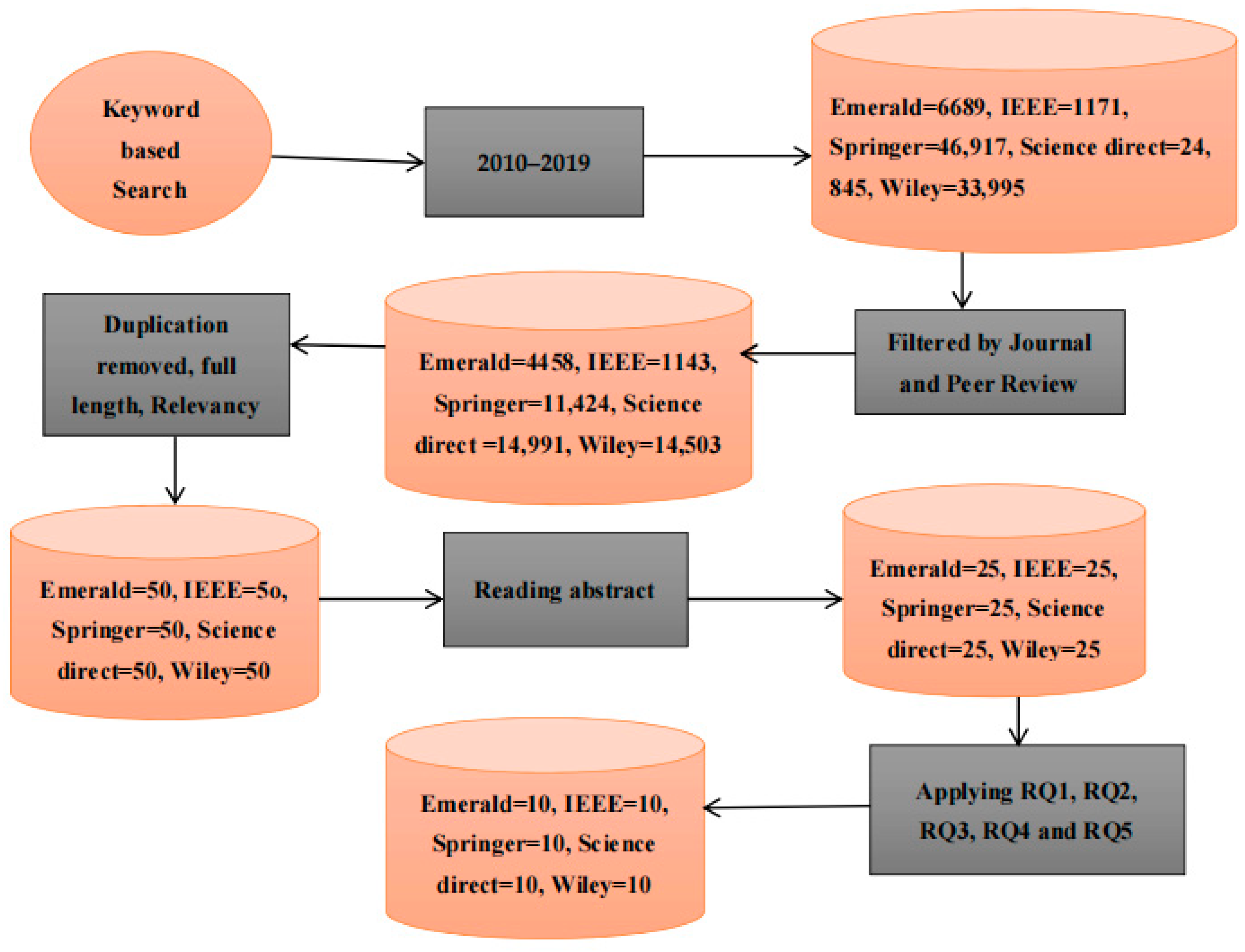
| Emerald | Financial fraud (only this is performed with Springer), cybercrime, cybercrime in finance, online credit card fraud, artificial intelligence in financial fraud, uncovering fraud by machine learning, plastic card fraud detection, fraud investigation in credit cards by machine learning. |
| IEEE | Financial fraud, cybercrime, cybercrime in finance, online credit card fraud, artificial intelligence in financial fraud, uncovering fraud by machine learning, plastic card fraud detection, fraud investigation in credit cards by machine learning. |
| Springer | Financial fraud, cybercrime, cybercrime in finance, online credit card fraud, artificial intelligence in financial fraud, uncovering fraud by machine learning, plastic card fraud detection, fraud investigation in credit cards by machine learning. |
| Science Direct | Financial fraud, cybercrime, cybercrime in finance, online credit card fraud, artificial intelligence in financial fraud, uncovering fraud by machine learning, plastic card fraud detection, fraud investigation in credit cards by machine learning. |
| Wiley | Financial fraud, cybercrime, cybercrime in finance, online credit card fraud, artificial intelligence in financial fraud, uncovering fraud by machine learning, plastic card fraud detection, fraud investigation in credit cards by machine learning. |
| Title and Year | Author | Techniques |
|---|---|---|
| Neural networks: the panacea in fraud detection [6] | Maria Krambia-Kapardis | Neural networks |
| Building our defence against credit card Fraud: a Strategic view [8] | Hendi Yogi Prabowo | Crime triangle, historical and bench marking analyses |
| Parameters of automated fraud Detection techniques during online transactions [5] | Vipin Khattri, Deepak Kumar Singh | Literature review |
| “Predicting susceptibility to cyber-fraud victimhood” [26] | M.T. Whitty | Exploratory Factor Analysis, bi-variate associations |
| “Predicting fraudulent financial reporting using artificial neural network” [27] | N.Omar, Zulaikha ‘A.Johari, M.Smith | AAN, fraud triangle theory |
| Factor analysis of financial crime-related issues [23] | G. Babatunde et al. | PCA |
| A hybrid firefly and support vector machine classifier for phishing email detection [28] | O.A. Adewumi et al. | FFA with SVM |
| Top 10 data mining techniques in business applications: a brief survey [29] | W.C. Lin et al. | Regression, DT, NN, K-NN, MLPNN, NB, SVM, K-MEANS, C4.5 |
| Influential factors of online fraud occurrence in retailing banking sectors from a global perspective An empirical study of individual customers in the UK and China February [30] | Y.Sun, I. Davidson | Correlation, demographic data analysis |
| Analysis on the new types and countermeasures of credit card fraud in mainland China [24] | F. Bai, X.Chen | Literature survey |
| Resilient Identity Crime Detection [31] | C.Phua et al. | CD and SD |
| Anomaly Detection via Online Oversampling Principal Component Analysis [32] | Y.J. Lee, et al. | OsPCA |
| Credit Card Fraud Detection: A Realistic Modeling and a Novel Learning Strategy [12] | A.D. Pozzolo et al. | Random forest |
| Credit Card Fraud Detection Using Ada Boost and Majority Voting [11] | K.Randhawa et al. | AdaBoost and majority voting |
| Comparison with Parametric Optimization in Credit Card Fraud Detection [33] | M.F. A.Gadi, et al. | NN, BN, NB, AIS and DT |
| CoDetect: Financial Fraud Detection With Anomaly Feature Detection [34] | D. HUANG et al. | Graph mining techniques. |
| Transaction Fraud Detection Based on Total Order Relation and Behavior Diversity [9] | L. Zheng, et al. | Logical graph |
| Machine Learning- and Evidence Theory-Based Fraud Risk Assessment of China’s Box Office [35] | S.QIU 1,2 AND H.Q. HE1 | Regression models. |
| Credit Card Fraud Detection Using RUS and MRN Algorithms [36] | A.Charleonnan | AdaBoost.M1, RUS, MLP, NB, MRN |
| Fraud Detection in Big Data using Supervised and Semi-supervised Learning Techniques [37] | G.E. M.Acosta et al. | Balanced random forest |
| A survey of machine-learning and nature-inspired based credit card fraud detection techniques [38] | Akinyelu A.O. | Hidden Markov model, NN, meta-learning, SVM, frequent item set mining, ANN, Bayesian network and neural network, decision tree and logistic regression, R-frequency and time-dependent score, bagging and ensemble, transaction aggregation logistic regression, genetic algorithm, artificial immune system |
| Payment Card Fraud Detection Using Neural Network Committee and Clustering [39] | A. S. Bekireva et al | Single neural network, neural network committee |
| A machine learning based approach for phishing detection using hyperlinks information [40] | A.K Jain B. B.Gupta1 | LR, NB, RF, SVM, NN, C4.5, SMO |
| Parallel and incremental credit card fraud detection model to handle concept drift and data imbalance [41] | A.Somasundaram | SMOTE, bagging |
| Effective detection of sophisticated online banking fraud on extremely imbalanced data [42] | W.Wei et al. | Neural network, decision forest |
| Fraud detection within bankcard enrollment on mobile device based payment using machine learning [43] | H.ZHO et al. | LR, RF, GBDT |
| Hybrid Approach for Improvising Credit Card Fraud Detection Based on Collective Animal behavior and SVM [44] | V. Dheepa and R.Dhanapal | SVM, collective animal behavior approach |
| Logistic Regression Learning Model for Handling Concept Drift with Unbalanced Data in Credit Card Fraud Detection System [45] | P. Kulkarni and R. Ade | MLPNN, back propagation algorithm, LR |
| Scalable Machine Learning Techniques for Highly Imbalanced Credit Card Fraud Detection: A Comparative Study [46] | R.A. Mohammed et al. | RF, BE, GNB |
| Neural Network Rule Extraction to Detect Credit Card Fraud [47] | N.F. Ryman-Tubb and P.Krause | Neural network, S Oracle-based adaptive algorithm |
| End-to-end neural network architecture for fraud scoring in card payments [48] | J.A. Gómez a et al. | Artificial neural networks |
| Financial fraud detection using vocal, linguistic and financial cues [49] | C.S. Throckmorton et al. | LR, NB, KNN, GLRT |
| A data mining based system for credit-card fraud detection in e-tail [50] | N.Carneiroa et al. | Random forests, support vector machines, logistic regression |
| Detecting the financial statement fraud: The analysis of the differences between data mining techniques and experts’ judgments [51] | C.C. Lin et al. | LR, DT, ANN |
| A customized classification algorithm for credit card fraud detection [52] | A.C. de Sá et al. | BNC |
| Feature engineering strategies for credit card fraud detection [53] | A.C. Bahnsen et al. | LR, DT, RF, Bayes |
| Sequence classification for credit-card fraud detection [54] | J.Jurgovsky et al. | RF and the LSTM7 |
| Application of credit card fraud detection: Based on Bagging ensemble classifier [55] | M.Zareapoor, P.Shamsolmoali | Decision tree algorithms |
| Some Experimental Issues in Financial Fraud Mining [56] | J.West1 and M.Bhattacharya2 | GP1-2, GA1-2, FL, ACO, NN1-2, SVM, DT1, DT2, Fn, LAZY, RULE |
| ConvNets for Fraud Detection analysis [57] | A.houiekha *, H.Ibn EL Hajb | SVM, Conventional Neural Network, random forest, gradient boosting |
| Isolation-based anomaly detection using nearest-neighbor ensembles [58] | T. R. Bandaragoda1 et al. | INNE (Isolated Neig. Neigh) Science Direct |
| Hybrid approaches for detecting credit card fraud [59] | Y. Kültür. M. U.Çağlayan | DT, RF, BN, NB, SVM, K-models |
| A systematic review on intrusion detection based on the Hidden Markov Model [60] | A.A.R.Abbaset al. | Hidden Markov models (HMM) |
| Application of Machine Learning Methods to Risk Assessment of Financial Statement Fraud: Evidence from China [61] | X.P.SONG et al. | BPNN, LR, SVM, C5.0,DT |
| Predicting credit card delinquencies: An application of deep neural networks [62] | T.Sun1 M. A. Vasarhelyi2 | LR, NB, ANN, DT, NN |
| Machine learning methods for detecting patterns of management fraud Number [63] | D.g.whiting et al. | RF, GB, RE |
| Artificial immune systems for the detection of credit card fraud: an architecture, prototype and preliminary results [64] | N. Wong et al. | AIS |
| An overview of the use of neural networks for data mining tasks [65] | F. Stahl∗ and I. Jordanov | Neural networks |
| Imbalanced SVM-Based Anomaly Detection Algorithm for Imbalanced Training Datasets [66] | G. Wang et al. | SVM |
| Advancing the assessment of automated deception detection systems: Incorporating base rate and cost into system evaluation [67] | D.P. Twitchell, C.M. Fuller | Bayes’ theorem |
| Purpose | Datasets |
|---|---|
| The aim of [6] is to find out the role of ANN to distinguish credit card deceptions. | Primary data |
| The main purpose in [8] is to examine developments in the prevention of credit card crimes in the USA, UK, Australia and Indonesia over the time domain of 2003–2007 and practical implementation of systems to prevent fraud. | Primary and secondary data |
| The objective of [5] is to facilitate researchers with a clear vision towards the designing of online fraud detection systems. | Secondary data |
| The main focus of [26] is to provide a theoretical framework to forecast the vulnerabilities of online fraud victimhood. | Primary data |
| The efficiency of artificial neural networks to forecast deceitful activities in financial writing was inspected [27] in small size firms in Malaysia. | Secondary data |
| Factor analysis was performed [23] to list the issues related to financial crimes in Nigeria. Data were collected through questionnaire from six geopolitical zones of Nigeria. | Primary data |
| Nature inspired base machine learning techniques were explored and reported [28] to detect phishing emails. | Primary data |
| The main objective of [29] was to find out the most widely used data mining methodologies in business applications. | Secondary data |
| Online fraud was focused [30] in the retailing banking sectors of two countries, the United Kingdom and the People’s Republic of China. | Primary data |
| An investigation was conducted in [24] to explore new countermeasures and to adapt comprehensive methodology against credit card fraud in China. | Secondary data |
| Two new layers were introduced in [31], where fraud detection system one is communal detection and system two is spike detection. The first one detects the social relationship while the other detects duplicates to increase the suspicion score. | Real time primary data |
| An oversampling technique was proposed in [32] to detect outliers by using principal component analysis. In new techniques there is no need to store entire datasets and the new proposed technique is better with large scale problems. | Primary data |
| Most suitable performance measures were illustrated [12] for fraud detection. The two most common problems of inequality between two classes and concept drift were discussed in [12]. The effect of these issues was measured on data by real transactions. | Real world data |
| Two famous methods used in combination are AdaBoost and majority voting for credit card fraud detection processes [11] A publicly available dataset was used for evaluation of single and hybrid models. | Primary data |
| Apart from Naïve Bayes, other classification techniques perform better with cost sensitivity. Decision table and artificial immune system are the best methods according to [33]. | Real world data |
| Network and feature information were used to propose a novel fraud detection framework [34]. The proposed framework can simultaneously recognise suspicious activities and use pattern recognition for the features associated with fraud activities. | Artificial and real data |
| To represent a logical relationship between features of transactions, a logical graph was proposed. Entropy diversity coefficient was calculated to measure the variation in transactions and path-based transition probability was implemented. | Primary data |
| A framework was developed for fraud risk assessment based on evidence theory. Logistic regression was utilized to measure the probability for evidence theory. Fraud risk factor was put forward by [35]. | Real world data |
| Information related to customer behavior during credit card transactions was collected in Taiwan to analyze the prediction for the efficient detection of risk in credit card payment [36] techniques | Primary data |
| To deal with three main problems in credit card fraud detection, namely class imbalance, labeled and unlabeled samples and capability to process large datasets. A framework was proposed [37] which can handle all these issues. | Primary data |
| Some restrictions and achievements of credit card fraud detection methods were in analyzed in [38]. It provides essential knowledge for researchers in the domain of credit card deception. | Secondary data |
| Fraud detection can be performed by examining current and previous attributes of the same card [39]. | Secondary data |
| A new methodology was proposed [40] that can detect attacks by analyzing hyperlinks of websites. This approach was compared with classification algorithms. | Primary data |
| The problem of financial crimes was fixed [41] by suggesting incremental learning and transaction window bagging. | Real world data |
| Various advance data mining techniques were incorporated and relevant information synthesized by the framework proposed [42] for effective fraud detection in the banking sector. | Primary data |
| Improved gradient boosting decision tree was used with real data to improve the detection of fraud [43]. | Real world data |
| A hybrid approach was proposed in [44] for uncovering credit card deception with the combination of clustering and classification techniques. | Real data |
| A universal framework using logistic regression was projected in [45] that can tackle issues related to learning for the evaluation of credit cards. | Secondary data |
| The usability of various machine learning techniques was evaluated [46] as scaleable algorithms to handle the problem of class imbalance data. | Primary data |
| In mission critical areas of business, it was demonstrated with experiments [47] that neural networks can perform better and be a good tool for transparent fraud detection. | Real world data |
| The main focus of [48] was on artificial neural network to solve the problem of online crime detection. | Primary data |
| An important information for financial fraud detection can be provided by numerical data of finance, linguistic data and non-verbal data [49]. | Real time data |
| Integrating the manual and programmed classification provides more knowledge about design and compares various techniques that are based on machine learning. A complete system was designed and implanted for risk scoring by [50]. | |
| All features of the fraud triangle theory, including incentives, opportunity and rationalization, were analyzed by using data mining techniques. The second goal was to reveal whether experts agree (or not) with results by novel techniques. Authors in [51] used questionnaires and data mining techniques. | Real time data |
| Results of the study [52] were compared with another seven algorithms and the techniques were examined for classification problems. The firm’s economy was improved up to 72.64%. | |
| With the use of Von Mises Distribution a new group of characteristics were suggested [53]*, 2016) by improved transaction strategy and with the analysis of periodic behaviour. | Primary data |
| Long short-term network was implemented [54] to collect transaction behaviours for the improvement in accuracy to catch online financial crimes. | Real world data |
| Three main methods were used to assess the methodology suggested in [55] for credit card fraud discovery. | Primary data |
| Some issues related to experiments, such as a focus on detection technique, attribute assortment and performance metrics, and skillful simulations in credit card fraud detection, were examined in [56]. | Primary data |
| Various experimental techniques were used to assess the performance of the model proposed in [57] for the detection of genuine and fraudulent activities in mobile communication. | Primary data |
| Four vulnerabilities were identified in [58], as incapability to find anomalies, anomalies with irrelevant features, masked anomalies and multi model anomalies. An alternative mechanism was proposed by using the nearest-neighbor ensemble. | Primary data |
| By using ensemble techniques and three new methodologies, OPT, PES and WGT, a model was suggested [59] to overcome the issue of credit card fraud. | Real world data |
| Evaluation of merits and boundaries of architectural models and application were discussed in [60]. Six models from literature were used to choose the exact type for a specific application. | Secondary data |
| Outcomes in [61] elaborated risk factors and a rule-based system to help overcome error rates. | Real world data |
| Two main contributions of networks [62], first to develop an efficient system for credit card fraud prediction and second to evaluate neural network in credit card fraud detection. | Primary data |
| New developed statistical techniques were explored in [63] to handle complex problem domains and for efficient detection of fraud in the credit card domain | Secondary data |
| For effective security management, the main focus of [64] was artificial immune system. The solution was evaluated by a case study of fraud in credit card transactions. | Real world data |
| The main considerations of [65] were both supervised and unsupervised techniques for the implementation of neural networks in credit card deceptions. | Secondary data |
| To assign different weight to positive support vector, new imbalanced support vector machine based suspicious activity detection was proposed in [66]. | Primary data |
| To illustrate the importance of contextual information, both theoretical and experimental evidence was provided by [67]. | Real world data |
| Performance Measure | Future Work |
|---|---|
| Precision (%) [6] | ANN had achieved high accuracy in fraud predictions. If the same parameters were used as [6] then accuracy can be 95%. ANN can save audit costs. |
| New developments in credit card fraud prevention [8] | Four pillared house of fraud prevention was not able to provide complete standards for real time fraud prevention systems. Further research can be conducted to find more extensions of the house to overcome the likelihood of fraud [8]. |
| Regularity of constraints used in fraud detection [5] | More research can be performed for trade-off time consumption to detect fraud. By using parameters [5], classier implementation of a system to capture fraud can be a future piece of work. |
| B, SE, b, t, p [26] | More studies can be performed to evaluate routine tasks in details and how distinguishing can be achieved between fraudulent and non-fraudulent content [26]. |
| Standard error of approximation, R, R2, Adjusted R2 [27] | The prediction model used in [27] can be compared with other fraud detection techniques as future research. More research is needed to discover better indicators for risk and the need for a new, trustworthy model. |
| N mean SD, component Total % of cumulative variance [23] | Further research can be conducted on control measures suggested by [23] which are necessary to control financial crimes. |
| Accuracy, false positive rate, false negative rate [28] | New features can be introduced and more techniques can be investigated in future research which can provide good results [28]. |
| Accuracy, techniques used in the eight application areas [29] | There is room for research based on new parameters and techniques for example pattern identification in textual data and context analysis [29]. |
| Correlation significance value hypo [30] | According to [30] more research can be carried out with merchants and businesses which use online transactions and are suffering from fraud on a daily basis. |
| Analysis of new trends (theoretical) [24] | Analysis of new methodologies and techniques in credit card delinquencies is needed, so that an improvement can be seen to handle this issue timely and smoothly, which can protect clients from being victimized by fraudsters [24]. |
| F-Score, ROC and value of threshold [31] | The main boundaries were pointed out in [31] were imbalanced class and time limitations. |
| ROC curve (AUC), time, TP, FP in [32] | Principal component analysis might not very good for the estimation of principal directions in [32] with the high dimensional data. Thus, further other techniques can be analyzed with high dimensions. |
| Alerts raised by the FDS (Pk, CPk, AUC), sum of classifiers’ ranks [12] | The employment of knowledge on ranked approach can be considered as future work [12] that can be exactly intended to replace linear accumulation of forecasting. |
| Accuracy, sensitivity, MCC [11] | Techniques that were discussed in [11] can be extended to online learning models and more models can be explored on the base of learning. Fast fraud detection can be made possible by using online learning models which will help the financial sector to reduce fraudulent transactions. |
| Cost function [33] | By focusing on cost sensitivity and skewness of the data further in depth, optimization of attributes can be performed as a future work of [33]. SVM and other techniques can be considered in the pool of comparison. |
| Detection accuracy, time with different rank size [34] | Tasks related to finance can be represented as similarity and feature tensors [34]. Future studies can focus on how to combine tensors into a co detect framework for better fraud detection. |
| TPR and FPR, precision, recall, F-Measure, AUC, time of transaction, accuracy [9] | To describe users’ spending behavior more accurately in models [9], machine learning algorithms can be focused. Models can also be extended on users’ feedback. |
| p-value [35] | The approach designed in [35] can be applied in fraud detection. |
| Accuracy, sensitivity, specificity [36] | Other performance measures can be explored [36]. |
| TP, FN, TN, FP, Acc, G-mean, wtdAcc, area under the ROC curve AUC [37] | Proposed strategy [37] based on a meta-classification approach can be applied to datasets of different sizes to observe the results. |
| Accuracy, AUC, FP rates, false negative rates, classification speed [38] | Class imbalance problems with many fraud detection algorithms can be explored [38]. |
| ROC, TPR, TNR, TPR + TNR [39] | Further legitimate models could be evaluated to analyze usage of credit cards [39]. |
| True positive, true negative, precision, F1 measure, accuracy [40] | Non-HTML websites can also be considered for detection with high accuracy in future work [40]. |
| Area under curve (AUC), FPR, TPR, TNR, FNR [41] | To improve efficiency and effectiveness of feature engineering, strategies can be proposed as a future work [41]. |
| Alert volume, detection rate [42] | The framework proposed in [42] can be explored by integrating with existing fraud detection systems. |
| Accuracy, recall, precision, F1 score [43] | Historical credit card transactions to evaluate transactions in training data and other clustering techniques may be considered in the future [43]. |
| Sensitivity, specificity, TP, FP, TN and FN, ROC Plot, F-Measure [44] | The process [44] can help to predict suspicious activities in future by detecting patterns in crimes. |
| Accuracy, kappa and mean of relative error and absolute error [45] | To overcome the drawback of current research, future work by [45] can be carried out on smart techniques, those that can deal with a large volume of real-world applications on non-stationary situations, such as Gaussian distribution. |
| Sensitivity, specificity, precision, F-score, AUC, ROC [46] | Future research can focus on imbalance class handling in big data environments [46]. |
| Accuracy, precision [47] | The SOAR extraction methodology [47] can be used in other areas where transparency is more vital in fraud detection. |
| VDR and TFPR, ROC [48] | Further research can be conducted on long short-term memory and NN [48]. |
| ROC, precision and accuracy [49] | There is a need to evaluate other validation methods in the future [49]. |
| ROC curves, precision, recall [50] | To carry out future research, cost based performances in [50] can be used to train an algorithm for a learning process which can provide better results for business applications. |
| Fraud triangle, mean, S.E, p [51] | The models offered by [51] can be compared with other supervised and unsupervised techniques as a future study. |
| F1, precision and recall [52] | To achieve accuracy and efficiency at the same time, a multi objective optimization framework can be implemented [52]. |
| Cost saving [53] | Calculation time for various attributes and response time can be explored by using the framework proposed in [53]. |
| AUCPR, AUCPR [54] | The two directions [54] for future research are, for one, fraud detection, and other is more general and can be evaluated in other fields. |
| MCC, fraud catching rate, false alarm rate, BCR [55] | The strategy proposed by [55] can be used with real time systems as future research. |
| FPR, accuracy, TP, FP [56] | Using real-world data, comparison can be performed with different metrics and techniques on the basis of feature selections [56]. |
| Accuracy [57] | The work in [57] can be useful for fraud problems, especially online credit card fraud. |
| AUC, S.D, execution time [58] | Further research [58] can be performed on why neural networks are always good with small datasets. |
| TPR, TNR, NPV, alarm rate [59] | More studies can be performed on focusing the associative memory to OPWEM and can analyze the outcome to overcome fraudulent transactions. OPWEM can be modified to overcome fraudulent transactions online [59]. |
| TP, FP, TN, FN, accuracy, space complexity, scalability, time complexity, training time, detection robustness, F-Measure [60] | Challenges of HMM identified by [60] can be used to conduct further research. |
| Mean SD, F p, accuracy (%) error rate (%), ROC, AUC [61] | Others studies can be conducted with different countries and machine learning techniques can be explored for detection of violators [61]. |
| Overall accuracy, recall, precision, specificity, F 1, FNR, FPR, AUC, model building time [62] | Integration of various machine learning techniques and data can be used from long time frames as future research [62]. |
| AUC, average, positive, negative [63] | An interesting new work [63] can be conducted to explore high-risk firms, even if they are not currently suffering from fraud. |
| FPR, FP ratio detection rate [64] | By using the knowledge of extraction rules using historical transaction data, the transaction processing can be made more efficient [64]. |
| Accuracy [65] | Other data mining fields can be explored with NN [65]. |
| Sensitivity, specificity, precision, F1 measure [66] | In future [66], comparison of LMSVM in a multi class situation can be compared with other detection techniques. |
| TP, FP, TN, FN, F-Score, AUC, ROC, mean median SD [67] | Base rate estimations, classifier performance, cost, and usefulness of classifier can be major issues to be addressed in further research [67]. |
| Journal/Conf. | Number of Papers |
|---|---|
| Managerial Auditing J. | 01 |
| Journal of Money Laundering Control | 01 |
| Journal of Financial Crime | 05 |
| Kybernetes | 02 |
| Information & Computer Sec. | 01 |
| Inst. Of elec. and electronic Trans. on Know. & dataEng | 02 |
| Inst. Of elec. and electronic Trans. on NN &LearningSys. | 01 |
| Inst. Of elec. and electronic ACCESS | 03 |
| 2008 7th Int. Conf. on Machine Learning and Applications | 01 |
| Inst. Of elec. and electronic Trans on computational social sys. | 01 |
| 2016 Mang. and Innovation Tech. Int. Conf. (MITiCON-2016) | 01 |
| 2017 Inst. Of elec. and electronic Colombian Conference on Communications and Computing (COLCOM) | 01 |
| Intr. Jor. Sys. Assur Eng. Mang. | 01 |
| Opt. Mem. & NN (Information Optics) | 01 |
| Journal of Ambient Intelli. & Humanized Comp. | 01 |
| Springer Science+Business Media | 01 |
| Front Inform Technol Electron Eng | 01 |
| Int. Symp. on Sec in Computing and Comm. | 01 |
| Proceedings of 2nd Int. Conf. on Computer and Com Tech. | 01 |
| Pattern Recognition Letters | 01 |
| Decision Support Systems | 02 |
| Knowledge-Based Systems | 01 |
| Eng. App. of A.I | 01 |
| Exp. Sys. With Applications | 02 |
| Procedia Computer Science(International conference on intelligent computing) | 01 |
| The Int. Conf on ComputationalSci. | 01 |
| First Int. Conf. on Intel. Computing in Data Sci. | 01 |
| Computational Intelligence | 02 |
| Expert Systems | 01 |
| Stat Anl. Data Min. | 01 |
| Journal of Forecasting, J. Forecast | 01 |
| Intell Sys Acc Fin Mgmt | 01 |
| Information Systems Journal | 01 |
| WIREs Data Mining and Knowledge Discovery | 01 |
| ETRI Journal, | 01 |
| Info Systems J. | 01 |
Publisher’s Note: MDPI stays neutral with regard to jurisdictional claims in published maps and institutional affiliations. |
© 2022 by the authors. Licensee MDPI, Basel, Switzerland. This article is an open access article distributed under the terms and conditions of the Creative Commons Attribution (CC BY) license (https://creativecommons.org/licenses/by/4.0/).
Share and Cite
Dantas, R.M.; Firdaus, R.; Jaleel, F.; Neves Mata, P.; Mata, M.N.; Li, G. Systemic Acquired Critique of Credit Card Deception Exposure through Machine Learning. J. Open Innov. Technol. Mark. Complex. 2022, 8, 192. https://doi.org/10.3390/joitmc8040192
Dantas RM, Firdaus R, Jaleel F, Neves Mata P, Mata MN, Li G. Systemic Acquired Critique of Credit Card Deception Exposure through Machine Learning. Journal of Open Innovation: Technology, Market, and Complexity. 2022; 8(4):192. https://doi.org/10.3390/joitmc8040192
Chicago/Turabian StyleDantas, Rui Miguel, Raheela Firdaus, Farrokh Jaleel, Pedro Neves Mata, Mário Nuno Mata, and Gang Li. 2022. "Systemic Acquired Critique of Credit Card Deception Exposure through Machine Learning" Journal of Open Innovation: Technology, Market, and Complexity 8, no. 4: 192. https://doi.org/10.3390/joitmc8040192
APA StyleDantas, R. M., Firdaus, R., Jaleel, F., Neves Mata, P., Mata, M. N., & Li, G. (2022). Systemic Acquired Critique of Credit Card Deception Exposure through Machine Learning. Journal of Open Innovation: Technology, Market, and Complexity, 8(4), 192. https://doi.org/10.3390/joitmc8040192