


Abstract
Online learning environments have been widely adopted, particularly during the COVID-19 pandemic. Today, their usage is envisioned for multiple teaching scenarios, including international courses involving students from different locations. However, as e-learning frameworks lack many advantages of physical interaction, diverse technologies to enhance the learning experience in this regard, including the use of metaverses, are currently in demand. In this study, we implemented an educational metaverse platform for engineering courses at four different European Universities from Poland, Portugal, Germany, and Spain, then had it quantitatively evaluated by students from these higher education institutions. The obtained results illustrate positive student perceptions of its ease of use, satisfaction and fun, and immersion, although their opinions with respect to learning experience and usefulness are less clear. The students seem to agree that interactivity remains insufficient in comparison with face-to-face teaching. For this reason, we provide an examination other related works and finalize this article by suggesting future research directions in the field.
1. Introduction
During the last decade, and particularly during the recent COVID-19 pandemic, the emergence of e-learning and online teaching frameworks has been deliberately fostered, leading to the production of new educational models and environments. Accordingly, teachers and students now face new challenges around novel evaluation methods and maintaining student engagement in lectures [1]. One particular technique that focuses on the latter consists of increasing student social interaction through the use of what are known as virtual worlds or metaverses [2].
The definition of a metaverse varies markedly in the literature. The term is a fusion of the words meta and universe, and it generally involves the existence of an alternative world in which users, usually represented by avatars, interact with other participants and/or elements of that universe. Authors alternatively refer to the term MultiUser Virtual Environment (MUVE) [3], which at the same time could derive from the concept of Massively Multiplayer Online Role-Playing Game (MMORPG) [4]. Finally, the implementation of a metaverse could involve the employment of Augmented Reality (AR)/Virtual Reality (VR)/Mixed (or Hybrid) Reality (MR)/EXtended Reality (XR) technologies, although it need not include these.
The usage trend of metaverses is increasing in the field of education, particularly in online learning environments. However, we should carefully assess the extent to which metaverses facilitate learning and have an impact of students engagement. Therefore, the main contributions of this paper are:
- To review the current literature related to educational metaverses;
- To create and implement a metaverse for online teaching with WBS LearnSpace 3D;
- To evaluate this metaverse platfom as an educational metaverse.
Accordingly, the rest of this paper is structured as follows: Section 2 presents related works and provides a brief overview of educational metaverses; in Section 3, we present the context and motivation of our study together with the employed methodology; afterwards, Section 4 presents our results and briefly discusses them, while considering similar works in the field; finally, Section 5 concludes the article and provides ideas for future work.
2. Related Works
In this section, we provide a brief overview of related works involving the term metaverse in the field of education. Our literature analysis demonstrates a substantial boost in the topic after the beginning of the COVID-19 pandemic. More specifically, our search (considering only works in English) yielded only ten works before the COVID-19 pandemic from 2006 to 2019 (that is, one per year) and two more published in 2020; afterwards, four were published in 2021, 22 in 2022, and 18 in 2023 to date. Recent bibliometric analyses such as Fernandes et al. [5] and Tas et al. [6] exhibit similar results, including additional related topics and a more extended search. This trend illustrates exponential growth in the field, which can be explained as due to face-to-face education being limited to either online or hybrid mode in many countries, mainly in 2020 and 2021, producing results published in the following years. Furthermore, the announcement of Facebook being rebranded as Meta [7] has fostered hype around the term. In the following subsections, we classify these works and briefly summarize them to provide the context and motivation of our work.
2.1. Surveys, Future Research Challenges, and Use Cases
Recent surveys exist covering the topic in detail [8,9,10,11,12]. The first, by Dwivedi et al. [8], even incorporates terms such as avatars and Non-Fungible Tokens (NFTs) and how these can complement the creation of metaverses in education.
Many other works found in the literature address opportunities and challenges, providing future research lines in the field [13,14,15,16,17,18,19,20,21,22,23,24,25,26,27,28,29,30,31,32,33]. For instance, Ertuk et al. [13] claim that additional efforts are required for teacher training in order to implement truly pedagogical metaverses. Kye et al. [14] present four types of metaverses: AR, lifelogging, mirror world, and VR. They mention how metaverses can enhance communication, freedom, and immersion among students, and include reference platforms such as Gather [34]. Rospigliosi [15] includes Second Life [35], Minecraft [36], and Roblox [37] as videogames that could be leveraged for metaverse building. Minecraft and Roblox are mentioned by Hirsh et al. as well [16]. Sa et al. [17] provide further insights, including a discussion of the four types of metaverses defined above. Zhong et al. [18] provide a definition of the term edu-metaverse. Mitra [19] emphasizes the potential of metaverses for training in both industry and academia, including technologies such as digital twins. Bilotti et al. [20] envision the application of Machine Learning (ML) in these metaverses. Li [21] compares the vision of Meta (previously know as Facebook) and the use of metaverses in education. Ahuja et al. [22] refer to the effect entitled VR hangover for metaverses implemented using VR technologies. Kaddoura et al. [23] provide a comprehensive overview of the topic, highlighting the importance of ethical aspects in the implementation of these frameworks. Said [38] enumerates a list of insightful challenges for metaverse-based learning (including immersion, security, and health aspects) based on nineteen comprehensive interviews. Finally, Soriani et al. [24] consider the possibility that the use of metaverses in education is not a novel topic, and that it might instead have been recently fostered by hype.
Additional studies suggest the use of metaverses for effective communication and empathy among teachers/instructors and students/learners, including Jeon [39,40], Na et al. [41], and Kim et al. [42]. These works provide examples and use cases for the specific context of education in South Korea, particularly as a solution for online teaching during the COVID-19 pandemic, illustrating a research trend in that specific country.
2.2. Designed and Implemented Metaverses in Education
Delving into specific designs and implementations of metaverses in education, Kemp et al. [43] present one of the first publications about metaverses in education. The authors propose a metaverse skin based on Second Life [35,44] for the open-source Learning Management System (LMS) called Moodle [45]. Their conclusions indicate that metaverses can improve synchronous chat while keeping live presentations stay similar (i.e., without the skin), while data storage and asynchronous chat are worse. However, the authors believe that additional effort should be made to achieve full-fledged integration, which could generally enrich interaction among students and teachers. In the context of leveraging Second Life, other authors have evaluated how Problem-Based Learning (PBL) can be improved using metaverse platforms [46,47,48]. The same authors present a virtual STEM class for nuclear safety education using a Second Life metaverse for an elementary school [49], which the students found to be a very instructive and enjoyable session.
Alternatively, using OpenSimulator/OpenSim [50], Vernaza et al. [51] developed a metaverse based on Second Life and Moodle for a providing a course about circuit analysis in higher education. They detailed the technical steps required to reproduce their environments, and concluded that the studied approach can facilitate the attendance of online students for practical labs, although additional developments are required. Diaz et al. [52] leveraged OpenSimulator for their idea of metaverses for education. However, they indicated that integration with newer versions of Moodle (via Sloodle) was not available. They highlighted the appearance of new teaching models as one of the main benefits of using a metaverse, considering it particularly viable in combination with flipped classrooms or collaborative learning approaches.
MacCallum et al. [53] implemented an initial prototype metaverse using AR. Although the implemented application was positively assessed, the evaluation did not convey specific educational scenarios as a long-term result. Their evaluation demonstrates that age is not a predominant factor in the use of these technologies, as both younger and older teachers showed interest in the field independently of their age.
In the case of elementary schools, we only found one work, from Shu et al. [54], who implemented a use case leveraging VR in South Korea. However, more implementations exist in the case of higher education; these involve several different countries, including South Korea [55,56,57], the USA [58], Indonesia [59], Pakistan [60], China [61], and Malaysia [62]. The studied course topics are diverse, and include health [58], engineering [55], physical education [57], humanities and languages [56,61], and even transversal topics such as flood preparedness [62]. We would highlight here how several of these studies embrace the classification of four types of metaverses [57], and that others mention the concept of VR sickness [58], which was mentioned in the surveys referenced above.
Additionally, we found a work implementing a metaverse for training in an industrial context [63], which the authors implemented for software engineering training at a company in Turkey.
Finally, Dahan et al. [64] and Joshi et al. [65] provide two different metaverse framework analyses and designs without specific implementations, which might be useful for researchers interested in the field.
2.3. Best Practices
Lopez-Belmonte et al. [66] analysed and designed an evaluation instrument for the implementation of educational metaverses. While their specific design involves Spanish students in secondary education, it could be extended to other countries and similar levels of education. Furthermore, in a different work from Lopez-Belmonte et al. [67], they analysed whether metaverses are more effective when applied to flipped learning or e-learning environments. Their evaluation conducted with Spanish students from a secondary education institution illustrates that both approaches are good candidates for the application of educational metaverses. Finally, Wang et al. [68] designed a Technology Acceptance Model (TAM) questionnaire to measure the usage intention of an educational metaverse.
3. Methodology
Our research methodology is founded on three cornerstones, which are detailed in the following sections:
- The metaverse platform WBS LearnSpace 3D and the e-CLOSE project, consisting of four higher education institutions from Europe that have used the platform in their engineering courses.
- The instruments leveraged for data acquisition and subsequent study and analysis.
- The participants and data collection obtained from diverse courses of the consortium partner institutions.
3.1. Context and Motivation
The e-CLOSE project [69], co-funded by the Erasmus+ Programme, envisions a model for interactive (a)synchronous learning in online Science, Technology, Engineering and Mathematics (STEM) education. This project, begun after the COVID-19 pandemic, aims to tackle the challenge of enhancing collaboration and student engagement towards a more efficient and effective communication and learning experience. The project consortium is composed of four European universities from Poland, Portugal, Germany, and Spain: Lodz University of Technology (Politechnika Łódzka), the University of Aveiro (Universidade de Aveiro), the University of Applied Sciences in Saarbrücken (Hochschule für Technik und Wirtschaft des Saarlandes), and the University of Alcala (Universidad de Alcalá).
One of project objectives was to analyse the impact on online teaching of the WBS LearnSpace 3D [70] platform (or simply LearnSpace), a metaverse framework similar to Second Life that is focused on gamification-based educational environments [1]. More specifically, we designed a virtual campus for the whole project consortium, based on a building located in the countryside with diverse conference rooms, offices, leisure areas, and a hall, which is depicted in Figure 1.
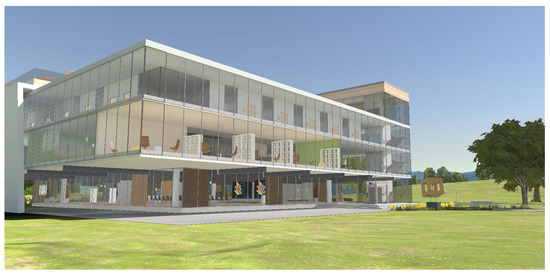
Figure 1.
Virtual campus of the e-CLOSE project created in WBS LearnSpace 3D.
Among the available functionalities, in the educational context we would highlight the possibility of projecting documents (slides, images, command lines, etc.) and even 3D objects, the use of furniture (seats, sofas, etc.) and assets (laser pointers or telephones), and the movement of avatars, including gestures such as waving, thumbs-up, or facial expressions. Moreover, voice volume was configured to be dimmed as the distance between participants increases, as is the case in real life. Other features such as polling, raising hands, and more are worthy of mention, though not particularly novel in comparison with other traditional videoconference platforms for online teaching.
Diverse professors from the four universities of the project consortium were trained in the use of the platform and asked about potential missing functionalities. For instance, there was a request to implement laptop screen mirroring when projecting materials; hence, this feature was included in the virtual campus by the WBS LearnSpace 3D team.
To accomplish the project motivation and objectives, the following research questions, classified into six core topics, guided our study:
- Usefulness: Is the system useful for students? To what extent does it increase student productivity? Would it be useful in their future career environments?
- Ease of use: To what extent is it easy to use? Is there a steep learning curve?
- Satisfaction: Are students satisfied with the system? Is it fun to use?
- Interactivity: Do these type of environments facilitate interaction among participating teachers and students?
- Virtual environment: As a virtual environment, does the metaverse provides an immersive reality? Is it close to reality and comfortable to use?
- Learning experience: As a learning experience, does the metaverse facilitate skill development and learning?
3.2. Instrument
In order to investigate the different questions contemplated in our study, we elaborated a survey, which was distributed among the students of the four universities after they had attended one or more course sessions using the LearnSpace platform. To validate the answers of each of the six topics and to obtain diverse perspectives, several questions per topic were generated based on different related works. Table 1 lists the whole survey and sources.

Table 1.
Survey implemented in this study.
To obtain quantitative results, this anonymous questionnaire was implemented using a 5-point bipolar Likert scale [80], with responses ranging from 1 (completely disagree) to 5 (completely agree), following the methodology from De la Roca et al. [81].
3.3. Participants and Data Collection
This study was implemented during the second semester of the academic year 2021/2022, from January 2022 to July 2022. The survey was distributed among more than 100 students from the four participant universities, although only 52 responses were gathered. These students were all enrolled in engineering degrees. According to the general data obtained from the questionnaire, most of them were male (58%), and the responses were fairly evenly distributed among each of the four participating universities, with the highest percentage being 31% at the Universidad de Alcalá and the lowest being 19% at Lodz University of Technology. Additionally, 57.69% of participants stated they had used a metaverse or online gaming world platform before.
4. Results and Discussion
To provide a quick overview of the collected responses, the summarized results of the survey are depicted in Figure 2, which contains the relative percentages for each topic ordered according to the questions presented in Table 1. Additionally, in the following sections we examine each of the six topics in detail, discussing the results obtained from the survey with similar works where applicable (e.g., when related with technology used for education or online teaching).
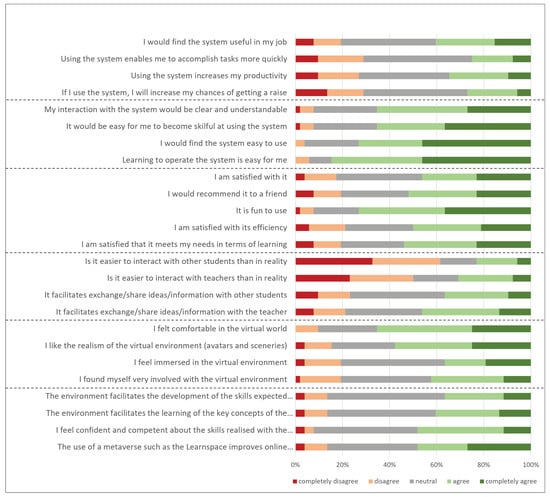
Figure 2.
Summarized overview of the survey results.
4.1. Perceived Usefulness
The first topic evaluates the platform’s usefulness as perceived by students. This parameter is common in models such as the TAM [82], which is widely adopted to understand acceptance and adoption of Information and Communications Technology (ICT) tools and frameworks [83]; in addition, we leveraged the questions implemented in the study of Briz-Ponce et al. [71], as it covered a framework similar to our study.
According to the results illustrated in Figure 3 and Table 2, all items seem to provide a similar perception of the usefulness of the platform, which is rather neutral (intermediate rating), with around a 40% of respondents selecting that answer. In particular, the second item (PU2) obtains the highest neutral percentage, with a 46.15% of replies selecting it. Furthermore, the results yield a similar percentage of positive and negative answers, which further emphasizes the neutral response.
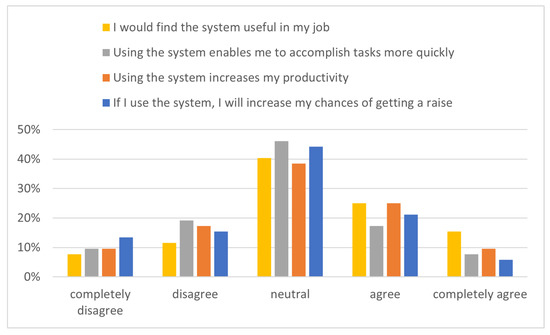
Figure 3.
Survey results for ‘Perceived Usefulness’.
Table 2.
Numerical results for ‘Perceived Usefulness’.
When compared to the results obtained by Briz-Ponce et al. [71], which analysed the use of mobile devices for learning, the results are quite similar, exhibiting almost 40% neutral responses on average. Nevertheless, the ratings from Briz-Ponce et al. [71] exhibited a more positive trend than our study at 39%, while the negative responses slightly surpassed the 20% level.
Figure 4 shows an example of the projection feature in use. In the figure, students are presenting a set of slides using the projector and a laser pointer. They are all dressed according to the topic under discussion, in this case ICT-based management of retail shops. Their names are removed to ensure personal data privacy. Common online teaching platforms already provide similar features, which could explain why students presented neutral opinions regarding the usefulness of the metaverse platform.
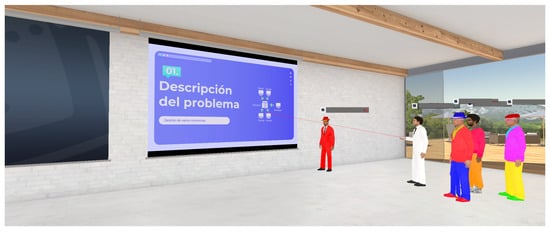
Figure 4.
Students using a projector and laser pointer for a presentation in LearnSpace.
4.2. Perceived Ease of Use
Regarding ease of use, we measured the respondents’ perception of this topic following the items presented in Briz-Ponce et al. [71], as in the previous topic. The results shown in Figure 5 and Table 3 exhibit a clear majority of positive responses for all items. This aspect is truly remarkable for the last item (PEOU4), as the 84.62% of students felt that learning to operate the system was easy. Additionally, this aspect was qualitatively assessed by the teachers using the platform, and they agreed that the learning curve had been steeper for them as teachers than for their students, as stated in the e-CLOSE project intellectual outputs [84].
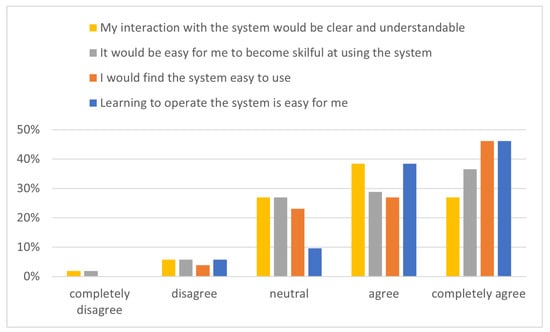
Figure 5.
Survey results for ‘Perceived Ease of Use’.
Table 3.
Numerical results for ‘Perceived Ease of Use’.
In the results obtained by Briz-Ponce et al. [71], the authors obtained 94% positive responses on this item, which is higher than the values in our survey. This could be explained by Briz-Ponce et al. [71] evaluating the use of mobile devices, which is a technology that most participants know in advance, while metaverses are not as commonly leveraged for daily activities.
Figure 6 displays the audience in the e-CLOSE building auditorium, with students practising different features of the metaverse platform including waving, applauding, and using the laser pointer.
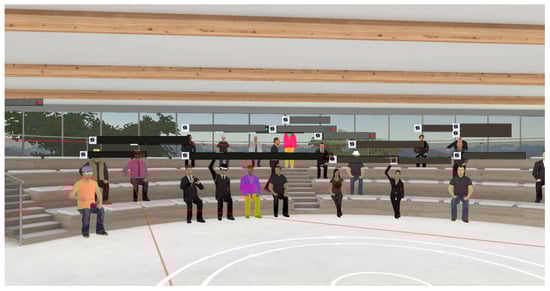
Figure 6.
Students sitting in the auditorium; students are engaged in activities in LearnSpace such as waving, applauding, and using the laser pointer.
4.3. Perceived Satisfaction
To measure student satisfaction, we evaluated a set of four items inspired by the works of Chiu et al. [72], Wu et al. [73], and Chu et al. [74]. The results depicted in Figure 7 and Table 4 generally display a positive response, although not as positive as for the previous topic. Here, we would highlight the values of the third item (PS3), which uses the adjective fun instead of satisfied, as they are specifically more positive than the rest, with a total of 73.08% students reflecting positive thoughts for this item. Our interpretation is that fun could be considered a particular aspect of the use of the metaverse, while satisfaction involves all (or most) characteristics of the platform. Therefore, our conclusion is that students find the platform fun, though they are not completely satisfied with all provided features.
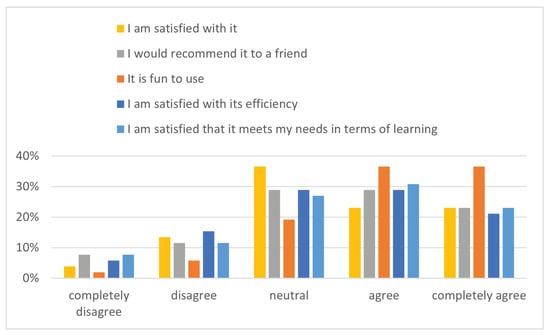
Figure 7.
Survey results for ‘Perceived Satisfaction’.
Table 4.
Numerical results for ‘Perceived Satisfaction’.
The closest work to ours on this topic, by Chiu et al. [72], measured satisfaction in the general context of e-learning, and provided mean values ranging from 5.33 to 5.51 on a 7-point bipolar Likert scale. These results are positive and similar overall to our study case.
Figure 8 presents a specific moment between classes during a break during which students were free to walk around the building and explore. It can be observed how students decided to wear flashy clothes and speak closely to the teacher (the screenshot is taken from the teacher’s perspective), which could highlight that they considered it a fun activity.
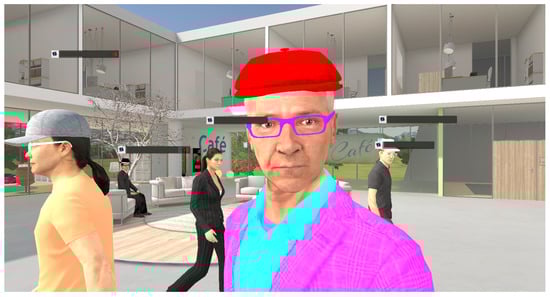
Figure 8.
Students moving around the e-CLOSE building in LearnSpace.
4.4. Interactivity
As a tool aimed at online or hybrid teaching environments, it was important to measure how students perceived the interactive possibilities of the metaverse platform. The four items, based on the works from Walker et al. [75], Ferrer-Cascales et al. [76], Fernandez-Pascual et al. [77], and Estriegana et al. [78], are shown in Figure 9 and Table 5. While the third and fourth items (INT3 and INT4) generally asked about possibilities for interaction, the first and second (INT1 and INT2) compared it with reality or face-to-face teaching in this context. The results for INT3 and INT4 could be considered neutral or slightly positive, while the ones for INT1 and INT2 were predominantly negative, as expected. In this sense, we believe two additional items comparing the metaverse with other types of online teaching could have served to assess the interactivity enhancement provided by this educational metaverse, as this could be deemed an intermediate solution between both approaches (online vs. face-to-face). Nevertheless, the current results demonstrate that the interactivity is simply fair, and is not as good as in the real world.
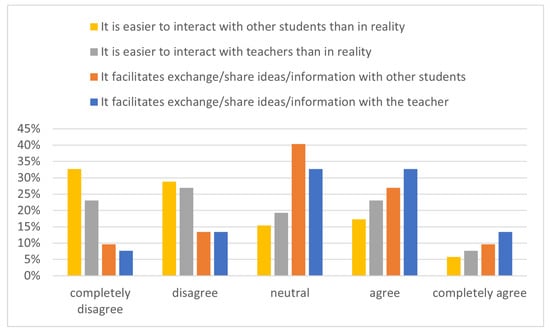
Figure 9.
Survey results for ‘Interactivity’.
Table 5.
Numerical results for ‘Interactivity’.
The work of Ferrer-Cascales et al. [76] evaluated hybrid and distance education environments in the particular context of Spain (which is one of the countries with a participating institution involved in this analysis) and reached a similar conclusion, in that they clearly discovered the most significant gap when comparing both approaches (hybrid and distance learning) in terms of interactivity.
Figure 10 captures a moment in which the teacher is giving a thumbs-up gesture to four students presenting a final course project (the screenshot is taken from the teacher’s perspective). This action demonstrates how the metaverse environment resembles reality, although this is not a novel feature in comparison with standard online teaching platforms.
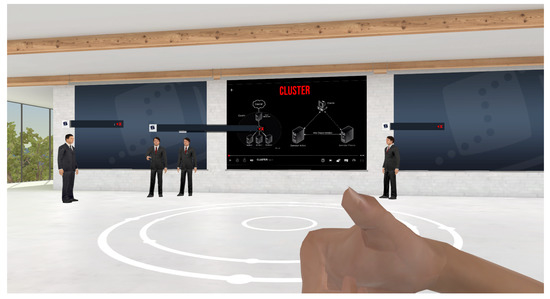
Figure 10.
Thumbs-up to students from the teacher’s perspective in LearnSpace.
4.5. Virtual Environment
Another aspect we wished to measure was the immersiveness of the virtual environment, for which we used four items based on the work of Barrett et al. [79]; the results are illustrated in Figure 11 and Table 6. Here, we would state that students felt comfortable and the realism was acceptable, as both items are generally positive, while immersion and involvement tended to yield more neutral responses. Another remarkable aspect is how the lowest score in all cases remains below the 4% mark, which is similar to the topic of perceived ease of use.
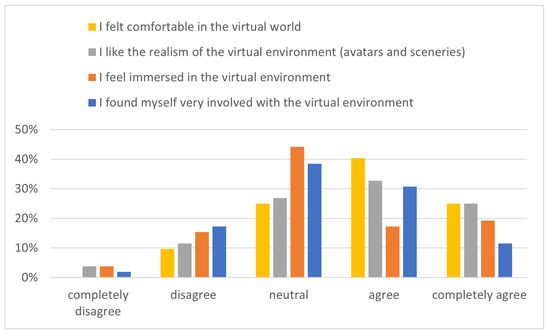
Figure 11.
Survey results for ‘Virtual Environment’.
Table 6.
Numerical results for ‘Virtual Environment’.
Figure 12 shows a different part of the metaverse outside the building in a terrace. A whiteboard is available, allowing more informal classes or meetings to be held. Additionally, the surroundings imply a sound change, including chirping birds. Therefore, the metaverse could easily create different atmospheres to facilitate immersion.
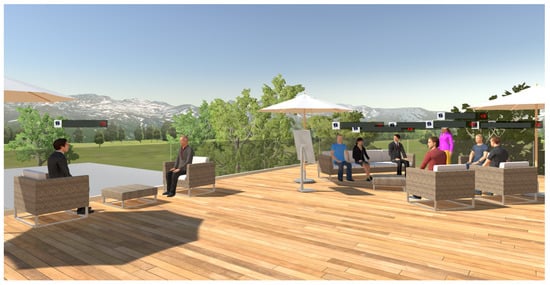
Figure 12.
Leisure time in the terrace outside the e-CLOSE building in LearnSpace.
4.6. Learning Experience
Finally, to evaluate the learning experience, four items inspired by Barrett et al. [79] were measured. The results summarized in Figure 13 and Table 7 indicate a majority of neutral responses complemented by a relatively positive number of responses. It is important to highlight that the negative replies do not surpass 14% on any item, making this the second least-negative topic (after perceived ease of use) of those we surveyed. Our overall conclusion is that while the learning experience using the metaverse could be enhanced in certain situations, this would not provide a clear benefit in all learning scenarios. Therefore, considering that the metaverse platform entails a maintenance and management cost, teachers should evaluate the trade-offs between learning experience enhancement and cost.
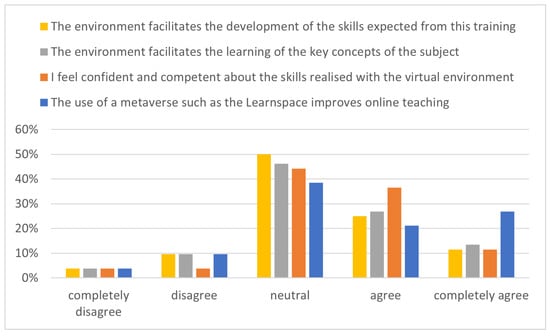
Figure 13.
Survey results for ‘Learning Experience’.
Table 7.
Numerical results for ‘Learning Experience’.
Figure 14 shows the final part of a lesson, with students waving and the course materials (figures and whiteboards) in the background. Such a metaverse facilitates the use of multiple projectors at one time, allowing different types of resources to be combined, which is not always possible in face-to-face teaching due to cost and space limitations.
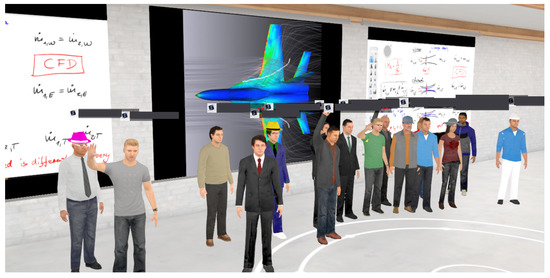
Figure 14.
End of a class in LearnSpace, with images and whiteboards behind the students.
5. Conclusions and Future Work
In this quantitative study, we have evaluated the WBS LearnSpace 3D platform as an educational metaverse in four European universities through a survey of engineering students in courses using the platform. The quantitative results, obtained from an anonymous survey that assessed six topics of interest, indicate that students find it remarkably easy to use these types of metaverse platforms, which is in contrast with the qualitative responses obtained from teachers in the same regard [84]. Satisfaction with the platform was positively evaluated by students, who overall found it to be fun. Immersion and realism were valued as fair and sufficient. In the case of the learning experience, it was assessed neutrally with positive feedback, while usefulness was clearly neutral, with additional responses being both positive and negative with no clear trend. Finally, interactivity obtained an overwhelmingly negative response, as the survey compared the metaverse with reality. This result proves that face-to-face teaching remains the preferred alternative for communication among teachers and students [84]. However, we note that if the interactivity of LearnSpace had been compared to other options or online learning environments, the responses to this question might have been more positive. In particular, as communication and community belonging are pivotal for students [85], we believe that metaverses have the potential to provide interactivity features that are lacking in other virtual learning scenarios.
Our outcomes show that metaverses have the potential to develop higher education by offering new ways of learning, collaborating, and engaging with motivating course material. However, there are several challenges that must be overcome in order to fully realize their potential, among which the most significant challenges include:
- Resources and infrastructure: One of the primary challenges when using a metaverse in higher education is ensuring that students and professors have access to the necessary infrastructure, including high-speed internet connections, capable devices, and virtual reality headsets. This can be a significant barrier for students who do not have access to these resources, particularly those from disadvantaged backgrounds.
- Pedagogical design: While the metaverse presents new opportunities for pedagogical design, it requires educators to rethink traditional teaching methods and adapt to new forms of interaction and communication. Teachers must develop new approaches to course design and delivery that take advantage of the unique features of the metaverse while ensuring that learning outcomes continue to be met. Specifically, we believe that there is a niche for substantial improvement in terms of student–teacher interactivity in comparison with traditional online learning, in which students may potentially feel more isolated.
- Content creation: Creating content for the metaverse requires a significant investment of time and resources, as it often involves designing 3D models and other interactive elements. This can be a barrier for educators, as they may not have the skills or resources to create this type of content.
- Accessibility: Ensuring that the metaverse is accessible to all students, including those with disabilities, requires careful consideration of issues such as assistive technology, design standards, and user interfaces. Educational institutions need to work closely with accessibility experts to ensure that the metaverse is fully accessible to all students.
- Staff training: While the metaverse offers unique opportunities for interactive and immersive learning experiences, it requires new pedagogical approaches as well. Institutions need to invest in staff development to ensure that educators are trained in the use of the metaverse and can design effective learning experiences that take advantage of its capabilities. Additionally, teachers need to learn about effective communication and social interaction as they pertain to the specific environment.
Overall, while metaverses offer exciting opportunities for higher education, they present significant challenges as well. Educational institutions need to invest in resources, staff development, and policy development to ensure that they can effectively integrate metaverses into their teaching and learning practices.
In future work, we envision the implementation of a VR-based metaverse for enhanced immersion, which one of the partner universities in this study is currently working on. Another possible future research avenue is a more in-depth survey including a larger sample size of both students and teachers, which could validate the different results obtained to date.
Author Contributions
Conceptualization, R.E. and X.H.; methodology, R.E. and S.G.-E.; validation, E.R. and X.H.; formal analysis, E.R. and R.E.; investigation, R.E. and S.G.-E.; resources, E.R. and F.R.; data curation, X.H.; writing—original draft preparation, E.R. and X.H.; writing—review and editing, F.R., R.E. and S.G.-E.; visualization, X.H. and R.E.; supervision, F.R. and S.G.-E.; project administration, E.R. and F.R.; funding acquisition, E.R. All authors have read and agreed to the published version of the manuscript.
Funding
This work was funded by the Erasmus+ programme of the European Commission through the e-CLOSE project, grant number 2020-1-PL01-KA226-HE-096239.
Institutional Review Board Statement
Not applicable.
Data Availability Statement
The survey data can be provided upon request to the corresponding author of this manuscript.
Acknowledgments
The presented work is part of an Erasmus+ KA2 project called e-Close. We want to thank the European Union Erasmus+ Call 2020 Round 1 KA2—Cooperation for innovation and the exchange of good practices for their financial support for this work. Together with the partner universities Łódź University of Technology in Poland, University of Alcalá in Spain, University of Aveiro in Portugal, and University of Applied Sciences in Saarbrücken in Germany, innovative and comprehensive teaching and learning solutions where developed, implemented and disseminated. In addition, we want to thank the company WBS Training AG (the developers of LearnSpace) for their open ear to our wishes and for their friendly support during our starting phase. Finally, we would like to thank all participant students, as they were incredibly cooperative in testing features and providing constructive feedback.
Conflicts of Interest
The authors declare no conflict of interest. The funders had no role in the design of the study; in the collection, analyses, or interpretation of data; in the writing of the manuscript, or in the decision to publish the results.
Abbreviations
The following abbreviations are used in this manuscript:
| AR | Augmented Reality |
| ICT | Information and Communications Technology |
| LMS | Learning Management System |
| ML | Machine Learning |
| MMORPG | Massively Multiplayer Online Role-Playing Game |
| MR | Mixed (or Hybrid) Reality |
| MUVE | Multi-User Virtual Environment |
| NFT | Non-Fungible Token |
| PBL | Problem-Based Learning |
| STEM | Science, Technology, Engineering, and Mathematics |
| TAM | Technology Acceptance Model |
| VR | Virtual Reality |
| XR | EXtended Reality |
References
- Rückert, F.U.; Hülsmann, X.; Junker, A. Multiple Intelligence Theory for Gamification of Online STEM Modules. In Proceedings of the 2021 1st Conference on Online Teaching for Mobile Education (OT4ME), Alcalá de Henares, Spain, 22–25 November 2021; pp. 78–81. [Google Scholar] [CrossRef]
- Mystakidis, S. Metaverse. Encyclopedia 2022, 2, 486–497. [Google Scholar] [CrossRef]
- Sardone, N.B.; Devlin-Scherer, R. Teacher candidates’ views of a multi-user virtual environment (MUVE). Technol. Pedagog. Educ. 2008, 17, 41–51. [Google Scholar] [CrossRef]
- Rezaei, S.; Ghodsi, S.S. Does value matters in playing online game? An empirical study among massively multiplayer online role-playing games (MMORPGs). Comput. Hum. Behav. 2014, 35, 252–266. [Google Scholar] [CrossRef]
- Fernandes, F.; Werner, C. A Systematic Literature Review of the Metaverse for Software Engineering Education: Overview, Challenges and Opportunities; PRESENCE: Washington, WA, USA, 2022. [Google Scholar]
- Tas, N.; Bolat, Y.İ. Bibliometric Mapping of Metaverse in Education. Int. J. Technol. Educ. 2022, 5, 440–458. [Google Scholar] [CrossRef]
- Introducing Meta: A Social Technology Company. Available online: https://about.fb.com/news/2021/10/facebook-company-is-now-meta/ (accessed on 31 March 2023).
- Dwivedi, Y.K.; Hughes, L.; Baabdullah, A.M.; Ribeiro-Navarrete, S.; Giannakis, M.; Al-Debei, M.M.; Dennehy, D.; Metri, B.; Buhalis, D.; Cheung, C.M.; et al. Metaverse beyond the hype: Multidisciplinary perspectives on emerging challenges, opportunities, and agenda for research, practice and policy. Int. J. Inf. Manag. 2022, 66, 102542. [Google Scholar] [CrossRef]
- Inceoglu, M.M.; Ciloglugil, B. Use of Metaverse in Education. In Proceedings of the Computational Science and Its Applications—ICCSA 2022 Workshops, Malaga, Spain, 4–7 July 2022; Gervasi, O., Murgante, B., Misra, S., Rocha, A.M.A.C., Garau, C., Eds.; Springer International Publishing: Cham, Switzerland, 2022; pp. 171–184. [Google Scholar]
- Onggirawan, C.A.; Kho, J.M.; Kartiwa, A.P.; Anderies; Gunawan, A.A.S. Systematic literature review: The adaptation of distance learning process during the COVID-19 pandemic using virtual educational spaces in metaverse. Proc. Comput. Sci. 2023, 216, 274–283. [Google Scholar] [CrossRef] [PubMed]
- Beck, D.; Morgado, L.; O’Shea, P. Educational Practices and Strategies with Immersive Learning Environments: Mapping of Reviews for using the Metaverse. IEEE Trans. Learn. Technol. 2023, 1–23. [Google Scholar] [CrossRef]
- López-Belmonte, J.; Pozo-Sánchez, S.; Moreno-Guerrero, A.J.; Lampropoulos, G. Metaverse in Education: A systematic review. RED Rev. Educ. Distancia 2023, 23, 73. [Google Scholar] [CrossRef]
- Erturk, E.; Reynolds, G.B. The expanding role of immersive media in education. In Proceedings of the International Conference on E-learning, Yamanashi, Japan, 6–7 December 2020; pp. 191–194. [Google Scholar]
- Kye, B.; Han, N.; Kim, E.; Park, Y.; Jo, S. Educational applications of metaverse: Possibilities and limitations. J. Educ. Eval. Health Prof. 2021, 18, 32. [Google Scholar] [CrossRef]
- ‘asher’ Rospigliosi, P. Metaverse or Simulacra? Roblox, Minecraft, Meta and the turn to virtual reality for education, socialisation and work. Interact. Learn. Environ. 2022, 30, 1–3. [Google Scholar] [CrossRef]
- Hirsh-Pasek, K.; Zosh, J.; Hadani, H.S.; Golinkoff, R.M.; Clark, K.; Donohue, C.; Wartella, E. A Whole New World: Education Meets the Metaverse; Policy Brief; Brookings Institution: Washington, DC, USA, 2022. [Google Scholar]
- Sá, M.J.; Serpa, S. Metaverse as a Learning Environment: Some Considerations. Sustainability 2023, 15, 2186. [Google Scholar] [CrossRef]
- Zhong, J.; Zheng, Y. Empowering Future Education: Learning in the Edu-Metaverse. In Proceedings of the 2022 International Symposium on Educational Technology (ISET), Hong Kong, 19–22 July 2022; pp. 292–295. [Google Scholar] [CrossRef]
- Mitra, S. Metaverse: A Potential Virtual-Physical Ecosystem for Innovative Blended Education and Training. J. Metaverse 2023, 3, 66–72. [Google Scholar] [CrossRef]
- Bilotti, U.; Di Dario, D.; Palomba, F.; Gravino, C.; Sibilio, M. Machine Learning for Educational Metaverse: How Far Are We? In Proceedings of the 2023 IEEE International Conference on Consumer Electronics (ICCE), Las Vegas, NV, USA, 6–8 January 2023; pp. 1–2. [Google Scholar] [CrossRef]
- Li, M. A Second Life for Educators: A Hybrid Extended Reality Education Between Zuckerberg’s Vision and Educational Researchers’ Imaginary. J. Metaverse 2023, 3, 73–78. [Google Scholar] [CrossRef]
- Ahuja, A.S.; Polascik, B.W.; Doddapaneni, D.; Byrnes, E.S.; Sridhar, J. The Digital Metaverse: Applications in Artificial Intelligence, Medical Education, and Integrative Health. Integr. Med. Res. 2023, 12, 100917. [Google Scholar] [CrossRef]
- Kaddoura, S.; Al Husseiny, F. The rising trend of Metaverse in education: Challenges, opportunities, and ethical considerations. PeerJ Comput. Sci. 2023, 9, e1252. [Google Scholar] [CrossRef]
- Soriani, A.; Bonafede, P. Metaverse and education: Which pedagogical perspectives for the school of tomorrow? J. Incl. Methodol. Technol. Learn. Teach. 2023, 3, 1–9. [Google Scholar]
- Tlili, A.; Huang, R.; Shehata, B.; Liu, D.; Zhao, J.; Metwally, A.H.S.; Wang, H.; Denden, M.; Bozkurt, A.; Lee, L.H.; et al. Is Metaverse in education a blessing or a curse: A combined content and bibliometric analysis. Smart Learn. Environ. 2022, 9, 24. [Google Scholar] [CrossRef]
- Contreras, G.S.; González, A.H.; Fernández, M.I.S.; Martínez, C.B. The Importance of the Application of the Metaverse in Education. Mod. Appl. Sci. 2022, 16, 34. [Google Scholar] [CrossRef]
- Cukurbasi Calisir, E.; Sabuncu, F.H.; Altun, E. Reflections of Metaverse-Based Education on E-Learning; Online Submission; ERIC: Washington, DC, USA, 2022. [Google Scholar]
- Cui, L.; Zhu, C.; Hare, R.; Ying, T. MetaEdu: A New Framework for Future Education. Discov. Artif. Intell. 2023, 3, 10. [Google Scholar] [CrossRef]
- Mohamed, E.S.; Naqishbandi, T.A.; Veronese, G. Metaverse! Possible Potential Opportunities and Trends in E-Healthcare and Education. Int. J. E-Adopt. IJEA 2023, 15, 1–21. [Google Scholar]
- Wang, Q.; Tang, L.; Wang, Y. Potential Applications of the Metaverse in Higher English Education. Open J. Soc. Sci. 2023, 11, 450–459. [Google Scholar] [CrossRef]
- Watanabe, T. Space from Line: What can Metaverse Support in Education/Learning Activity? In Proceedings of the 2023 17th International Conference on Ubiquitous Information Management and Communication (IMCOM), Seoul, Republic of Korea, 3–5 January 2023; pp. 1–8. [Google Scholar] [CrossRef]
- Masnadi, N.N. The Development of a Metaverse App for a Blended Learning in Higher Education Institutions. In Metaverse Applications for New Business Models and Disruptive Innovation; IGI Global: Hershey, PA, USA, 2023; pp. 82–101. [Google Scholar]
- Azoury, N.; Hajj, C. Perspective Chapter: The Metaverse for Education. In Higher Education—Reflections From the Field; Waller, D.L., Waller, D.S., Eds.; IntechOpen: Rijeka, Croatia, 2023; Chapter 27. [Google Scholar] [CrossRef]
- Gather—Building Better Teams, Bit by Bit. Available online: https://www.gather.town/ (accessed on 31 March 2023).
- Second Life—Official Site. Available online: https://secondlife.com/ (accessed on 31 March 2023).
- Minecraft—Official Site. Available online: https://www.minecraft.net/ (accessed on 31 March 2023).
- Roblox. Available online: https://www.roblox.com/ (accessed on 31 March 2023).
- Said, G.R.E. Metaverse-Based Learning Opportunities and Challenges: A Phenomenological Metaverse Human–Computer Interaction Study. Electronics 2023, 12, 1379. [Google Scholar] [CrossRef]
- Jeon, J.H. A study on education utilizing metaverse for effective communication in a convergence subject. Int. J. Internet Broadcast. Commun. 2021, 13, 129–134. [Google Scholar]
- Jeon, J.; Jung, S.K. Exploring the Educational Applicability of Metaverse-Based Platforms; Korea Association of Information Education: Seoul, Republic of Korea, 2021; pp. 361–368. [Google Scholar]
- Na, H.C.; Lee, Y.J.; Kim, S.Y.; Kim, Y.S. A Study on Metaverse Education Platform: Cases analysis and suggestion. J. Digit. Contents Soc. 2022, 23, 827–836. [Google Scholar] [CrossRef]
- Kim, J.H.; Lee, B.S.; Choi, S.J. A study on metaverse construction and use cases for non-face-to-face education. J. Converg. Cult. Technol. 2022, 8, 483–497. [Google Scholar]
- Kemp, J.; Livingstone, D. Putting a Second Life “Metaverse” Skin on Learning Management Systems. In Proceedings of the Second Life Education Workshop at the Second Life Community Convention, San Francisco, CA, USA, 18–20 August 2006; The University of Paisley: Glasgow, UK, 2006. [Google Scholar]
- Varvello, M.; Picconi, F.; Diot, C.; Biersack, E. Is There Life in Second Life? In Proceedings of the 2008 ACM CoNEXT Conference (CoNEXT ’08), Madrid, Spain, 9–12 December 2008; Association for Computing Machinery: New York, NY, USA, 2008. [Google Scholar] [CrossRef]
- Moodle—Open-Source Learning Platform. Available online: https://moodle.org/ (accessed on 31 March 2023).
- Kanematsu, H.; Fukumura, Y.; Ogawa, N.; Okuda, A.; Taguchi, R.; Nagai, H.; Barry, D.M. Problem based learning in Metaverse as a digitized synchronous type learning. In Proceedings of the ICEE and ICEER (International Conference on Engineering Education and Research), Malacca, Malaysia, 7–8 December 2009; pp. 329–334. [Google Scholar]
- Kanematsu, H.; Fukumura, Y.; Ogawa, N.; Okuda, A.; Taguchi, R.; Nagai, H. Practice and Evaluation of Problem Based Learning in Metaverse. In Proceedings of the EdMedia + Innovate Learning 2009; Siemens, G., Fulford, C., Eds.; Association for the Advancement of Computing in Education (AACE): Honolulu, HI, USA, 2009; pp. 2862–2870. [Google Scholar]
- Barry, D.M.; Kanematsu, H.; Fukumura, Y. Problem Based Learning in Metaverse; Online Submission; ERIC: Washington, DC, USA, 2010. [Google Scholar]
- Kanematsu, H.; Kobayashi, T.; Barry, D.M.; Fukumura, Y.; Dharmawansa, A.; Ogawa, N. Virtual STEM Class for Nuclear Safety Education in Metaverse. Procedia Comput. Sci. 2014, 35, 1255–1261. [Google Scholar] [CrossRef]
- OpenSimulator. Available online: http://opensimulator.org/ (accessed on 31 March 2023).
- Vernaza, A.; Armuelles, V.I.; Ruiz, I. Towards to an open and interoperable virtual learning enviroment using Metaverse at University of Panama. In Proceedings of the 2012 Technologies Applied to Electronics Teaching (TAEE), Vigo, Spain, 13–15 June 2012; pp. 320–325. [Google Scholar] [CrossRef]
- Díaz, J.; Saldaña, C.; Ávila, C. Virtual World as a Resource for Hybrid Education. Int. J. Emerg. Technol. Learn. iJET 2020, 15, 94–109. [Google Scholar] [CrossRef]
- MacCallum, K.; Parsons, D. Teacher Perspectives on Mobile Augmented Reality: The Potential of Metaverse for Learning. In Proceedings of the World Conference on Mobile and Contextual Learning, Delft, The Netherlands, 9–11 October 2019; pp. 21–28. [Google Scholar]
- Suh, W.; Ahn, S. Utilizing the Metaverse for Learner-Centered Constructivist Education in the Post-Pandemic Era: An Analysis of Elementary School Students. J. Intell. 2022, 10, 17. [Google Scholar] [CrossRef]
- Lee, H.; Woo, D.; Yu, S. Virtual Reality Metaverse System Supplementing Remote Education Methods: Based on Aircraft Maintenance Simulation. Appl. Sci. 2022, 12, 2667. [Google Scholar] [CrossRef]
- Lee, H.; Hwang, Y. Technology-Enhanced Education through VR-Making and Metaverse-Linking to Foster Teacher Readiness and Sustainable Learning. Sustainability 2022, 14, 4786. [Google Scholar] [CrossRef]
- Yu, J.E. Exploration of Educational Possibilities by Four Metaverse Types in Physical Education. Technologies 2022, 10, 104. [Google Scholar] [CrossRef]
- Iwanaga, J.; Muo, E.C.; Tabira, Y.; Watanabe, K.; Tubbs, S.J.; D’Antoni, A.V.; Rajaram-Gilkes, M.; Loukas, M.; Khalil, M.K.; Tubbs, R.S. Who really needs a Metaverse in anatomy education? A review with preliminary survey results. Clin. Anat. 2023, 38, 77–82. [Google Scholar] [CrossRef] [PubMed]
- Praherdhiono, H.; Adi, E.P.; Prihatmoko, Y.; Abidin, Z.; Nindigraha, N.; Hidayati, A.; Muttaqin, A. Synchronization of Virtual and Real Learning Patterns in E-Learning Systems with Metaverse Concept. In Proceedings of the 2022 8th International Conference on Education and Technology (ICET), Malang, Indonesia, 15–16 October 2022; pp. 185–189. [Google Scholar] [CrossRef]
- Khalil, A.; Haqdad, A.; Younas, S. Educational Metaverse For Teaching And Learning In Higher Education Of Pakistan. J. Posit. Sch. Psychol. 2023, 7, 1183–1198. [Google Scholar]
- Shu, X.; Gu, X. An Empirical Study of A Smart Education Model Enabled by the Edu-Metaverse to Enhance Better Learning Outcomes for Students. Systems 2023, 11, 75. [Google Scholar] [CrossRef]
- Sa don, N.F.; Sa don, H.S.; Alias, R.A.; Nakanishi, H. Flood preparedness module for Malaysian Higher Education students via Metaverse Environment. IOP Conf. Ser. Earth Environ. Sci. 2023, 1144, 012011. [Google Scholar] [CrossRef]
- Yilmaz, M.; O’Farrell, E.; Clarke, P. Examining the training and education potential of the metaverse: Results from an empirical study of next generation SAFe training. J. Softw. Evol. Process 2023, e2531. [Google Scholar] [CrossRef]
- Dahan, N.A.; Al-Razgan, M.; Al-Laith, A.; Alsoufi, M.A.; Al-Asaly, M.S.; Alfakih, T. Metaverse Framework: A Case Study on E-Learning Environment (ELEM). Electronics 2022, 11, 1616. [Google Scholar] [CrossRef]
- Joshi, S.; Pramod, P. A Collaborative Metaverse based A-La-Carte Framework for Tertiary Education (CO-MATE). Heliyon 2023, 9, 2. [Google Scholar] [CrossRef]
- López-Belmonte, J.; Pozo-Sánchez, S.; Lampropoulos, G.; Moreno-Guerrero, A.J. Design and validation of a questionnaire for the evaluation of educational experiences in the metaverse in Spanish students (METAEDU). Heliyon 2022, 8, e11364. [Google Scholar] [CrossRef]
- López-Belmonte, J.; Pozo-Sánchez, S.; Carmona-Serrano, N.; Moreno-Guerrero, A.J. Flipped Learning and E-Learning as Training Models Focused on the Metaverse. Emerg. Sci. J. 2022, 6, 188–198. [Google Scholar] [CrossRef]
- Wang, G.; Shin, C. Influencing Factors of Usage Intention of Metaverse Education Application Platform: Empirical Evidence Based on PPM and TAM Models. Sustainability 2022, 14, 17037. [Google Scholar] [CrossRef]
- e-CLOSE—A Model for Interactive (A)Synchronous Learning in Online STEM Education. Available online: https://eclose.eu/ (accessed on 31 March 2023).
- Angerhöfer, S. WBS LearnSpace 3D: Learning & Working in Virtuality (HR Innovation Award 2018, E-learning Journal Award 2018). Our experience and learning with 7000 participants daily in 3D. In Proceedings of the 12th Annual International Conference of Education, Research and Innovation (ICERI2019), Seville, Spain, 11–13 November 2019; pp. 9496–9499. [Google Scholar] [CrossRef]
- Briz-Ponce, L.; Pereira, A.; Carvalho, L.; Juanes-Méndez, J.A.; García-Peñalvo, F.J. Learning with mobile technologies—Students’ behavior. Comput. Hum. Behav. 2017, 72, 612–620. [Google Scholar] [CrossRef]
- Chiu, C.M.; Hsu, M.H.; Sun, S.Y.; Lin, T.C.; Sun, P.C. Usability, quality, value and e-learning continuance decisions. Comput. Educ. 2005, 45, 399–416. [Google Scholar] [CrossRef]
- Wu, J.H.; Tennyson, R.D.; Hsia, T.L. A study of student satisfaction in a blended e-learning system environment. Comput. Educ. 2010, 55, 155–164. [Google Scholar] [CrossRef]
- Chu, E.T.H.; Fang, C.W. CALEE: A computer-assisted learning system for embedded OS laboratory exercises. Comput. Educ. 2015, 84, 36–48. [Google Scholar] [CrossRef]
- Walker, S.L.; Fraser, B.J. Development and validation of an instrument for assessing distance education learning environments in higher education: The Distance Education Learning Environments Survey (DELES). Learn. Environ. Res. 2005, 8, 289–308. [Google Scholar] [CrossRef]
- Ferrer-Cascales, R.; Walker, S.L.; Reig-Ferrer, A.; Fernández-Pascual, M.D.; Albaladejo-Blázquez, N. Evaluation of hybrid and distance education learning environments in Spain. Australas. J. Educ. Technol. 2011, 27, 906. [Google Scholar] [CrossRef]
- Fernández-Pascual, M.D.; Ferrer-Cascales, R.; Reig-Ferrer, A.; Albaladejo-Blázquez, N.; Walker, S.L. Validation of a spanish version of the distance education learning environments survey (DELES) in Spain. Learn. Environ. Res. 2015, 18, 179–196. [Google Scholar] [CrossRef]
- Estriegana, R.; Medina-Merodio, J.A.; Barchino, R. Analysis of competence acquisition in a flipped classroom approach. Comput. Appl. Eng. Educ. 2019, 27, 49–64. [Google Scholar] [CrossRef]
- Barrett, A.J.; Pack, A.; Quaid, E.D. Understanding learners’ acceptance of high-immersion virtual reality systems: Insights from confirmatory and exploratory PLS-SEM analyses. Comput. Educ. 2021, 169, 104214. [Google Scholar] [CrossRef]
- Likert, R. A technique for the measurement of attitudes. Arch. Psychol. 1932, 22, 95–104. [Google Scholar]
- De La Roca, M.; Morales, M.; García-Cabot, A. The impact of online proctoring on students’ perception and level of satisfaction in a MOOC. In Proceedings of the 2022 IEEE Learning with MOOCS (LWMOOCS), Antigua Guatemala, Guatemala, 29–30 September 2022; pp. 23–27. [Google Scholar] [CrossRef]
- Davis, F.D. A Technology Acceptance Model for Empirically Testing New End-User Information Systems: Theory and Results. Ph.D. Thesis, Massachusetts Institute of Technology, Cambridge, MA, USA, 1985. [Google Scholar]
- Estriegana, R.; Medina-Merodio, J.A.; Barchino, R. Student acceptance of virtual laboratory and practical work: An extension of the technology acceptance model. Comput. Educ. 2019, 135, 1–14. [Google Scholar] [CrossRef]
- e-CLOSE—Intellectual Outputs (IO1, IO2, IO3, IO4, IO5, IO6). Available online: https://eclose.p.lodz.pl/#outputs (accessed on 31 March 2023).
- Hara, N.; Bonk, C.J.; Angeli, C. Content analysis of online discussion in an applied educational psychology course. Instr. Sci. 2000, 28, 115–152. [Google Scholar] [CrossRef]
Disclaimer/Publisher’s Note: The statements, opinions and data contained in all publications are solely those of the individual author(s) and contributor(s) and not of MDPI and/or the editor(s). MDPI and/or the editor(s) disclaim responsibility for any injury to people or property resulting from any ideas, methods, instructions or products referred to in the content. |
© 2023 by the authors. Licensee MDPI, Basel, Switzerland. This article is an open access article distributed under the terms and conditions of the Creative Commons Attribution (CC BY) license (https://creativecommons.org/licenses/by/4.0/).