You are currently viewing a new version of our website. To view the old version click .
Electronics
  • Article
  • Open Access

1 December 2022

SARIMA: A Seasonal Autoregressive Integrated Moving Average Model for Crime Analysis in Saudi Arabia


,
,
,
,

and
1
College of Computer Science and Engineering, Taibah University, Yanbu 46411, Saudi Arabia
2
Computer Science, Faculty of Science, Tanta University, Tanta 31527, Egypt
*
Author to whom correspondence should be addressed.
These authors contributed equally to this work.
This article belongs to the Special Issue Deep and Machine Learning for Image Processing: Medical and Non-medical Applications

Abstract

Crimes have clearly had a detrimental impact on a nation’s development, prosperity, reputation, and economy. The issue of crime has become one of the most pressing concerns in societies, thus reducing the crime rate has become an increasingly critical task. Recently, several studies have been proposed to identify the causes and occurrences of crime in order to identify ways to reduce crime rates. However, few studies have been conducted in Saudi Arabia technological solutions based on crime analysis. The analysis of crime can help governments identify hotspots of crime and monitor crime distribution. This study aims to investigate which Saudi Arabian areas will experience increased crime rates in the coming years. This research helps law enforcement agencies to effectively utilize available resources in order to reduce crime rates. This paper proposes SARIMA model which focuses on identifying factors that affect crimes in Saudi Arabia, estimating a reasonable crime rate, and identifying the likelihood of crime distribution based on various locations. The dataset used in this study is obtained from Saudi Arabian official government channels. There is detailed information related to time and place along with crime statistics pertaining to different types of crimes. Furthermore, the new proposed method performs better than other traditional classifiers such as Linear Regression, XGB, and Random Forest. Finally, SARIMA model has an MAE score of 0.066559, which is higher than the other models.

1. Introduction

The crime problem is one of our society’s biggest and most dominating issues. A crime is defined as an illegal act that is harmful to a community, as well as a violation of society’s rules [1]. Different countries have different levels of criminality, and they vary according to their level of openness as well as their compliance with religious and cultural traditions. According to previous research in crime prediction, the crime rate is affected by factors such as education, poverty and employment [2]. There are many violent crimes committed each day in large numbers. It is obvious that crimes affect the quality of life, the development of society, economic progress, and the reputation of a nation. Therefore, it is crucial to predict crime patterns to determine whether it has increased or decreased from prior years.
In reality, crime happens everywhere, from small villages to large cities and nations Literature has categorized crimes into a number of categories. As an example, the Saudi Arabian Ministry of Interior’s Statistical Yearbook of Crimes classified crimes into several major categories: murder, robbery, violent crime, cybercrime, sexual offense, money crime and kidnapping [3,4]. Due to the increasing crime rate, there is a significant need to solve cases more quickly. Crime analysis and criminal prediction are critical tasks, and the identification of crime can help governments to identify crime patterns and prevent future crimes.
Deep learning and machine learning models have demonstrated outstanding performance in crime analysis prediction [5,6,7]. Those proposed models can able to analyze crime, identify crime patterns and predict it. In [5], crime styles were categorized according to profiles using measures of distance, which involved clustering. Another study [6] applied K-means clustering and identified crime trends that would help prevent crime in the future. Using visualization techniques and a series of algorithms, Arvindan Mahendiran et al. [4] were able to uncover hidden perceptions of crime, which may help governments avoid crimes in the future. Bakakura et al. [7] developed an improved classification algorithm and conducted a comparison study of Naive Bayesian algorithms for predicting crime. They compared these algorithms based on parameters such as accuracy and precision. Furthermore, Khadim B. Swadi Al- Janabi [8] developed a model of criminal data analysis using K-means clustering and decision tree algorithms.
Despite several techniques proposed to identify crime patterns and trends using ML and DL models, the number of crimes continues to rise. Governments and law enforcement agencies still need a better way to minimize and handle crime.In additions, the previous research was focused on predicting crimes [9] with an accurate and time-efficient method. The primary disadvantages of previous research are that they used a prediction model that may produce less accurate results in some cases. To improve the accuracy of such crime predication models, the inclusion of crime’s spatial and time series data could yield a better crime prediction accuracy.
To fill up this gap, we introduce SARIMA model, A Seasonal Auto Regressive Integrated Moving Average for Crime analysis in Saudi Arabia [10,11]. To the best of our knowledge, this is the first study to address crime prediction in Saudi Arabia. The dataset in this study extracted from the Saudi Arabia official websites. This dataset contains information about the type of crime, the location of crime and the date. This study is meant to help the Saudi government understand the distribution of crimes in different cities, predict future crimes and take actions to prevent them as Linear Regression, XGB and Random Forest.
The main contributions this study include:
  • SARIMA model is introduced to analyze and predict crime patterns.
  • SARIMA model is designed to predict crime rates more accurately than the state-of-the-art models.
  • The plot of forecasts on the dataset is used to visualize the effectiveness of the SARIMA model in predicting crime.
Section 2 in this study presents the related works. Section 3 introduces the methodology of the proposed approaches. Section 4 presents the experimental results and discussion. Last section introduces the conclusions and possible future work Section 5.

3. Methodology

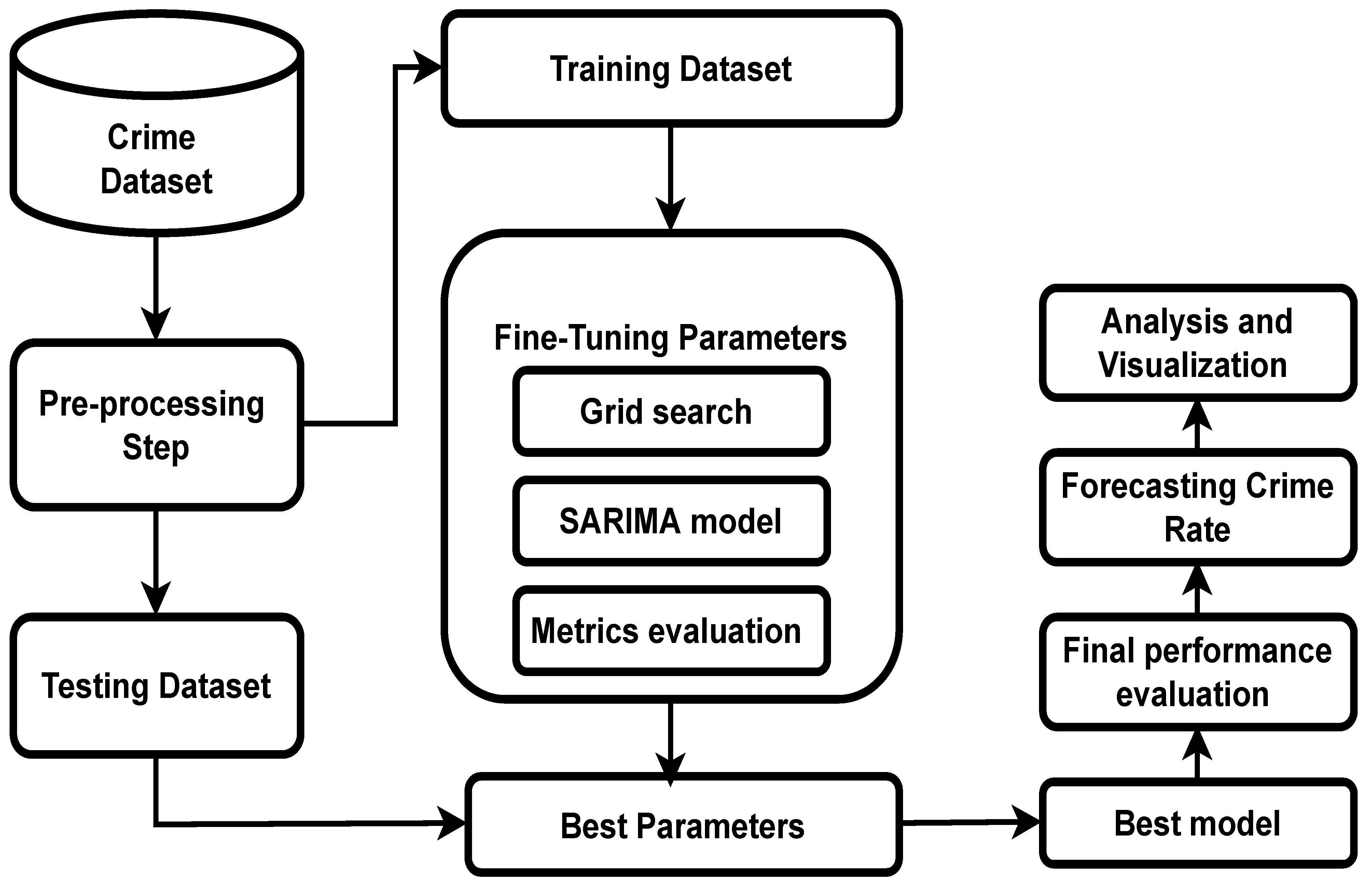
The purpose of this research is to investigate and analyse crime patterns in order to assist governments in making informed decisions concerning crime. In this paper, we propose an autoregressive integrated moving average (ARIMA) to analyse crimes over different locations and time periods. ARIMA is a statistical model used to analyse time series data and predict the future patterns of the data. The crime used in this study was classified into different categories: robbery, murder, kidnap, and web crime. Figure 1 illustrates the main flow diagram of the proposed model. In the following sections, we describe the model in detail.
Figure 1. The main steps of the proposed framework.

3.1. Dataset Description

To evaluate our model, a crime dataset was collected from the official website of Saudi Arabia’s government https://data.gov.sa/Data/en/dataset (accessed on 22 October 2022). The dataset contained statistics on crime types, locations, and times of crimes committed. In this study, four types of crimes were examined: robbery, murder, kidnapping, and web crime. In our work, we considered crime datasets for each month as input of our ARIMA model. Table 1 shows a sample of total crimes for each month in Saudi Arabia.
Table 1. Total number sample of crimes for each month in KSA.
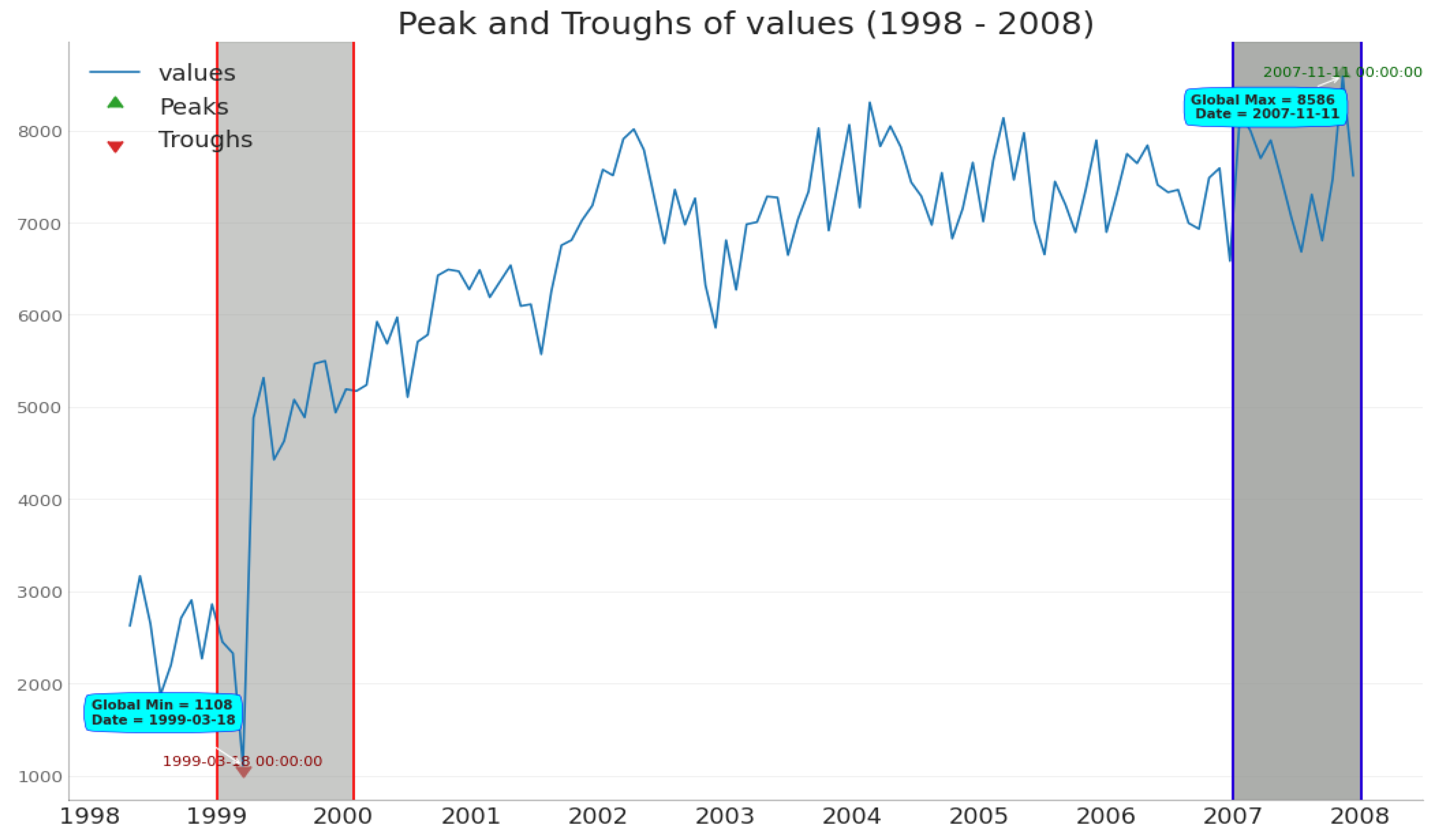
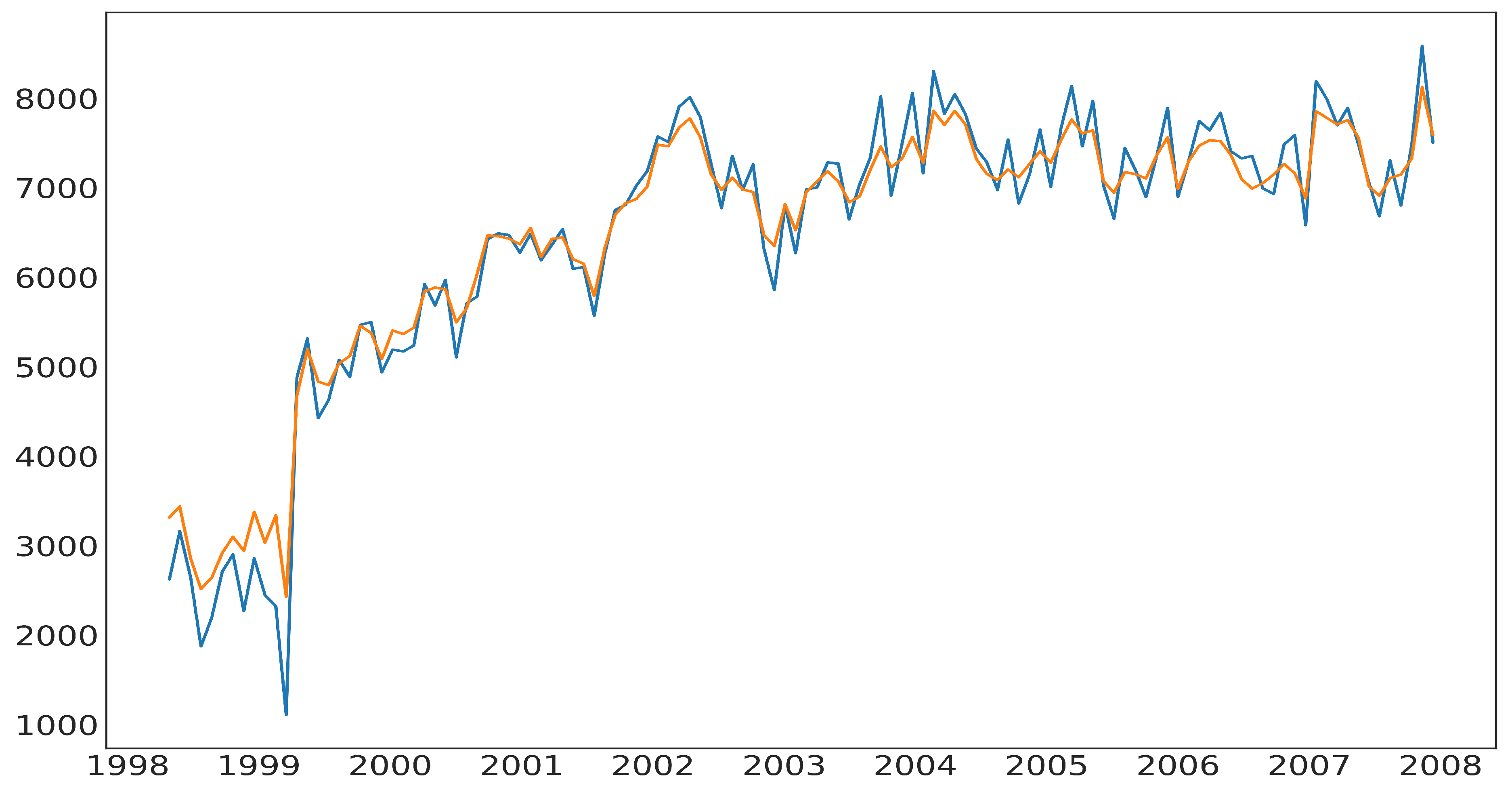
Figure 2 illustrates a time series plot of monthly KSA from 1998 to 2008. For this study, the real monthly crime data from 1998 to 2004 were used to train the proposed model, and data from 2005 to 2008 were used to evaluate it. Regardless of the fact that this figure depicts the increase and decrease of crime over time, there is no discernible pattern, and the mean of the time series remains constant throughout time, giving the impression that the series has become stationary. The highest crime rate (8586) was reported in the year 2007, while the lowest (1108) was recorded in the year 1999.
Figure 2. The time series plot of monthly crimes committed in KSA for the years 1990 to 2008.

3.2. Preprocessing

Preprocessing data ensures that the data are prepared in the most meaningful way for a detailed analysis. During the preprocessing step, we cleaned the texts in order to improve the quality of our model. This step involved combining all text values in the comma-separated values (CSV) file and cleaning it by removing duplicate rows. Additionally, the texts were cleaned by removing associated and redundant symbols. Finally, we fed the dataset into our crime analysis model.

3.3. The Autoregressive Integrated Moving Average (ARIMA) Models

ARIMA models offer an additional methodology for the time series forecasting process [24,25]. The two methods that are utilized the most frequently in time series forecasting are exponential smoothing and ARIMA models [26]. These methods offer contrasting approaches to the issue at hand. ARIMA models seek to capture the data’s autocorrelations, as contrasted with exponential smoothing models, which are based on a description of the trend and seasonality in the data. This paper used ARIMA to predict the future crime rate at different times and regions, based on historical data. Hence, the objective of the model was to predict future crimes based on the differences in values in a series instead of using the actual values themselves.
The properties of a time series are said to be stationary if they do not change depending on when the series is observed. Time series that are affected by trends or seasonality are not considered stationary since the trend or seasonality will have an effect on the values of the time series at various points in time. On the other hand, a sequence of white noise is said to be stationary. This means that it does not matter when you watch it; the series should appear to be relatively consistent regardless of the moment in time at which it is viewed. The autoregression AR(p) model is a well-known time series approach for predicting the future value of a series. To do this, data from the p time steps before the current one are utilized as inputs to a regression equation, and those observations are then multiplied by the relevant AR coefficients ϕ . In addition, the total is increased by the addition of the mean of the series, denoted by μ , as well as white noise, denoted by ω , which is a random error. The equation below represents the AR(p) model: (1).
AR ( p ) : y t = μ + i = 1 p ( ϕ i y t i ) + ω t
Instead of utilizing the previous values of the variable being forecasted in a regression, a moving average model employs past prediction errors to create a model that is similar to a regression. In other words, the moving average MA(q) method is not applicable to any variable in a time series. It is made up of three distinct components, which are as follows: the first variable represents the series’ mean, denoted by μ ; a finite number of MA coefficients are added up to give the second variable, denoted by θ , and the model residuals, denoted by ω ; and white noise is represented by ω t . The equation that represents the MA(q) model is denoted by Equation (2).
MA ( q ) : y t = μ + i = 1 q ( θ i ω t i ) + ω t
The ARMA ( p , q ) model consists of two basic polynomials, denoted by AR(p) and MA(q) [27]. It is described mathematically by Equation (3).
y t = μ + i = 1 p ( ϕ i y t i ) + j = 1 q ( θ j ω t j ) + ω t
Typically, ARIMA ( p , d , q ) models are used to analyse and forecast stationary time series [28]. According to Ryabko [29], the fundamental concept behind the ARIMA model is predicated on the assumption that the value that is forecasted for the variable y t is derived from a linear equation that is constructed of a number of earlier observations that contain random errors. The ARIMA condition ( p , d , q ) is met by a process X t when it fulfils Equation (4).
d X t = ( 1 B ) d X t

3.4. Seasonal ARIMA Model

The seasonal ARIMA ( p , d , q ) × ( P , D , Q ) s model is created by incorporating additional seasonal terms into the ARIMA ( p , d , q ) models we have seen so far. It is written as shown in Equation (5).
ϕ p ( B ) Φ P ( B s ) W t = θ q ( B ) Θ Q ( B s ) ω t
The following is a description of the notation for Equation (5). The previous equation represents p , d , and q as follows (3): P represents the order of the seasonal AR model, D represents the number of seasonal variations, Q is the order of the seasonal MA, and s is length of the season (periodicity). In addition, the ω t and B represent the white noise value at period t and the backward shift operator, respectively. Taking into account the relationship between the data, the SARIMA ( p , d , q ) t i m e s ( P , D , Q ) s model is effectively applied to various time series due to its comparatively small order. Based on the dataset, the period value of the time series s (seasonality) is determined. For example, s = 7 , 30 , 365 for weekly, monthly, and annual data, respectively. d and D specify the order of the nonseasonal and seasonal differencing, and their values cannot exceed 1 and 2, respectively, of the total seasonal difference (i.e., 0 d , D 1 ).
Three stages are involved in building an ARIMA model: identification, parameter estimation, and diagnostic testing [30]. The identification of the model involves selecting the appropriate differencing to use to create stationary time series, the desired order of the model, and the autocorrelation (ACF) and partial autocorrelation (PACF) functions that are used to detect the temporal correlation structure of the converted data. When analysing time series data, the ACF may be used to determine if prior values have a specific association with the current values or not. The PACF provides the value of the correlation coefficient between the variable and its time lag for all low-order lags [31].
Both the Akaike’s information criterion and the Bayesian information criterion of Schwarz (BIC) [32] are commonly used methods for selecting optimal models, and they are described in Equations (6) and (7) for AIC and BIC, respectively.
AIC = 2 log ( L ) + 2 k = 2 log ( L ) + 2 ( p + q + P + Q )
BIC = 2 log ( L ) + k ln ( n ) = 2 log ( L ) + ( p + q + P + Q ) ln ( n )
In this case, n represents a series of observations and k represents a set of ARIMA parameters. We empirically demonstrated that our model became more efficient as the AIC value decreased. It was determined that the model with the lowest AIC score was the best-fitting forecasting model [25].

4. Experimental Evaluation

The results of the experiments are presented in this section, along with the proposed SARIMA model [33,34,35,36,37] and the grid search strategy for selecting the best parameters of the model. A number of experiments were carried out using the data that were gathered from the KSA in order to provide comparative findings utilizing the suggested methodology. In addition, Google Colab was used to conduct the experiments. The findings of the experiments are provided both graphically and in tabular format, and a comparison study with state-of-the art methods is also presented and analysed. The experimental results that were conducted using the proposed approach are reported in the following subsections.

4.1. Experimental Results

Standard libraries such as SciKit Learn and Stat were utilized to perform the experiments. Experiments were carried out using the Google Colab environment, which provided all of the necessary packages. Data were obtained from many official websites. We used KSA data, which were acquired from official data repository websites, to train and verify the proposed SARIMA model. These datasets were from the Kingdom of Saudi Arabia. A grid search was used to fine-tune the many parameters of the proposed model so that it could produce the most accurate forecast. The values of the parameters were determined depending on the data gathered.
The min-max scalar function was utilized in order to perform data normalization. In order to keep the value of variance stable, scaling the data was an essential step. In general, data normalization improves performance and reduces the amount of computing complexity involved. Before beginning to train the model, Equation (8) was used to normalize all of the datasets in this study. In this equation, X i represents the scaled datasets, x i refers to the real data, and the terms m i n ( x i ) and m a x ( x i ) correspond to the minimum and maximum values of the real dataset.
X i = x i m i n ( x i ) m a x ( x i ) m i n ( x i )
Accordion to our experiments, we selected the right forecasting ARIMA approach based on the actual values of the BIC, AIC, RMSE, MAE, and MAPE criteria. Choosing the perfect parameters for ARIMA models using a graphical technique is not a simple or quick process, and it takes a significant amount of time. The grid search (also known as hyperparameter optimization) approach was used to choose the ideal parameter values in a systematic manner. The grid search was used to repeatedly examine alternative combinations of the parameters in different ways. The seasonal ARIMA model was fitted with the SARIMAX() function from the statsmodels module for each combination of parameters, and the evaluation step was done to evaluate the overall quality of the model fit. Once the whole range of parameters had been investigated, then the optimal set of parameters was identified, which was the set of parameters that provided the best performance for the criteria that we were interested in.
A grid search is a hyperparameter optimization approach for determining the best combination of parameter values across several models. The first step in the process of developing any model is to identify a set of parameters and assign a starting value to each one of them. Because we collected data on a monthly basis for a period of 12 months, the value of s was set to 12. After that, a grid search was carried out in order to locate the best possible model with the lowest possible AIC values. The following step was to choose the optimal combination of parameters that would result in the smallest amount of error (AIC) and would then be allocated to the optimal model. The AIC values of several forecasting models are shown in Table 2. Moreover, in Table 2, the lowest AIC value was for the SARIMA ( 1 , 0 , 8 ) × ( 1 , 0 , 0 , 12 ) model. As a result, the best forecasting model parameter was determined by the combination of parameters ( 1 , 0 , 8 ) × ( 1 , 0 , 0 , 12 ) . In general, the AIC and RMSE values are used to compare SARIMA models. As seen in the comparison table, the SARIMA ( 1 , 0 , 8 ) × ( 1 , 0 , 0 , 12 ) model’s prediction ability over the forecast period was quite robust when compared with other models. The grid search method solved the problem of determining the optimal parameter values for the proposed SARIMA model.
Table 2. Experimental results for SARIMA models Using Saudi Arabia dataset.
In a similar manner, Table 3 lists the experimental results for SARIMA models in our dataset with p-values of ≤0.05, which indicated the minimum AIC of each model. Table 3 shows that the SARIMA ( 0 , 0 , 0 ) × ( 2 , 0 , 2 , 12 ) model had the lowest AIC values. In this study, the best combination of parameters was ( 0 , 0 , 0 ) × ( 2 , 0 , 2 , 12 )
Table 3. Experimental results of SARIMA models with p-values less than 0.05.
The real monthly crime data from 1998 to 2008 were split between training and testing datasets in this study. Training data from 1998 to 2004 were used as a training set, and the rest of the data from 2005 to 2008 were used to evaluate the proposed model. Based on the proposed model, high and low confidence limits for actual values for the period 06-08-2005 to 11-12-2007 are shown in Table 4. Based on the previously observed data (Table 4), the proposed model predicted the number of confirmed crimes over the next few days or months with lower and upper confidence limits. Despite the increase in trend, the suggested model performed better on the testing set. The performance of the prediction model was generally satisfactory if the MSE and RMSE values were 0.853327 and 0.088572 for the testing set from 11-01-2008 to 11-03-2009 as shown in Table 5.
Table 4. Experimental results for the proposed SARIMA ( 1 , 0 , 2 ) × ( 1 , 0 , 0 , 3 ) model (from 6 August 2005 until 11 December 2007) with 95% CI.
Table 5. Forecasted values of daily confirmed cases for 30 months using a SARIMA ( 1 , 0 , 2 ) × ( 1 , 0 , 0 , 3 ) model with 95% CI.
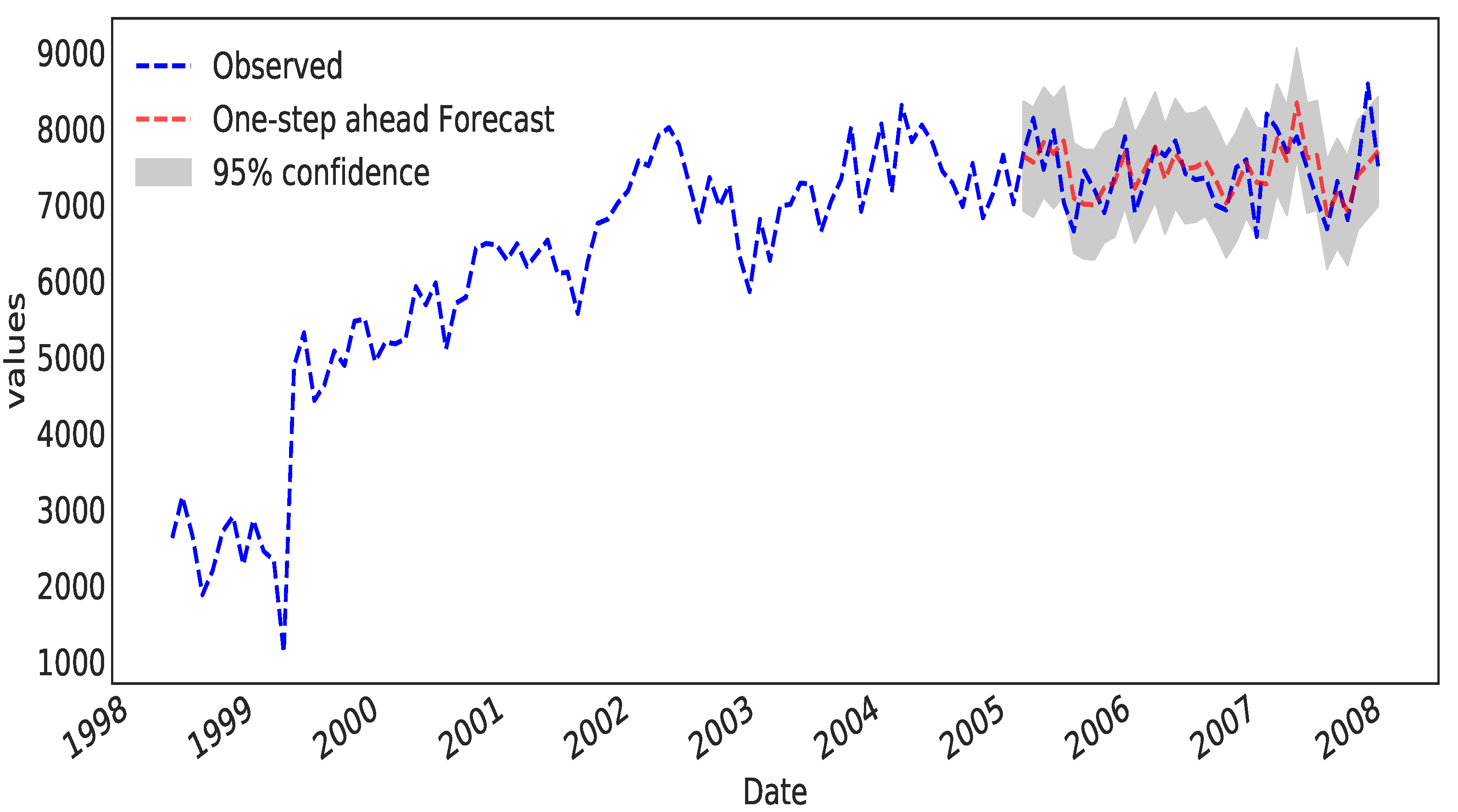
Figure 3 presents the training set typically expressed in blue from 1998 to 2004, as well as a comparison of the training set and testing set, also represented in blue from 2005 to 2008, and values for the one-step-ahead forecast in red. Additionally, the lower and upper confidence limits for the confidence intervals are denoted by grey shading in the figure.
Figure 3. Comparison between the observed and predicted values (one-step-ahead result) for the SARIMA model on a crime dataset.

4.2. Comparison with Other Models

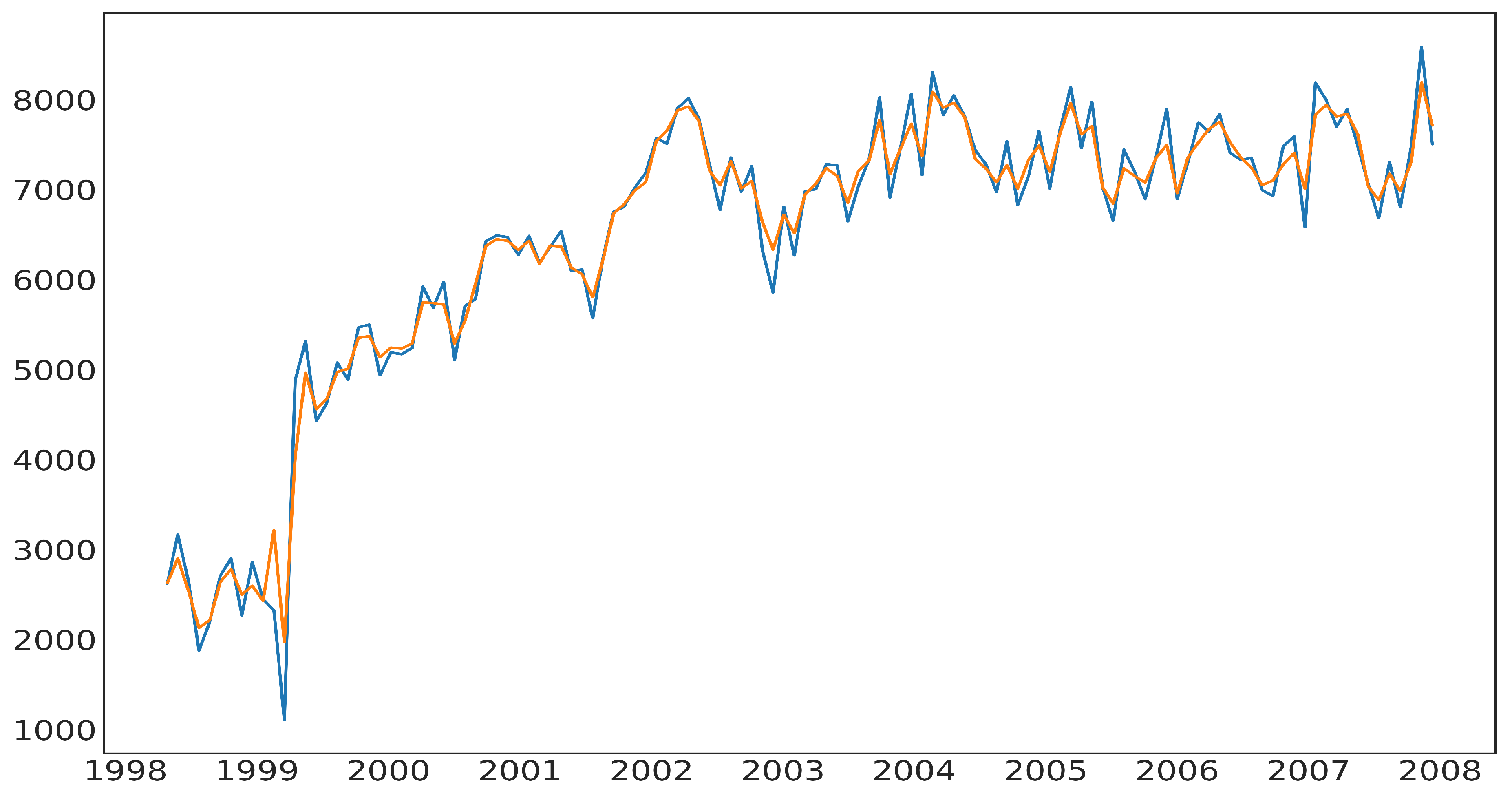
Figure 4 shows the training set, typically represented by a blue line, from 1998 to 2004, as well as a comparison between the testing set, which is also represented by a blue line from 2005 to 2008, and the one-step-ahead forecast, presented by a red line.
Figure 4. Forecasted values for crime by a random forest model.
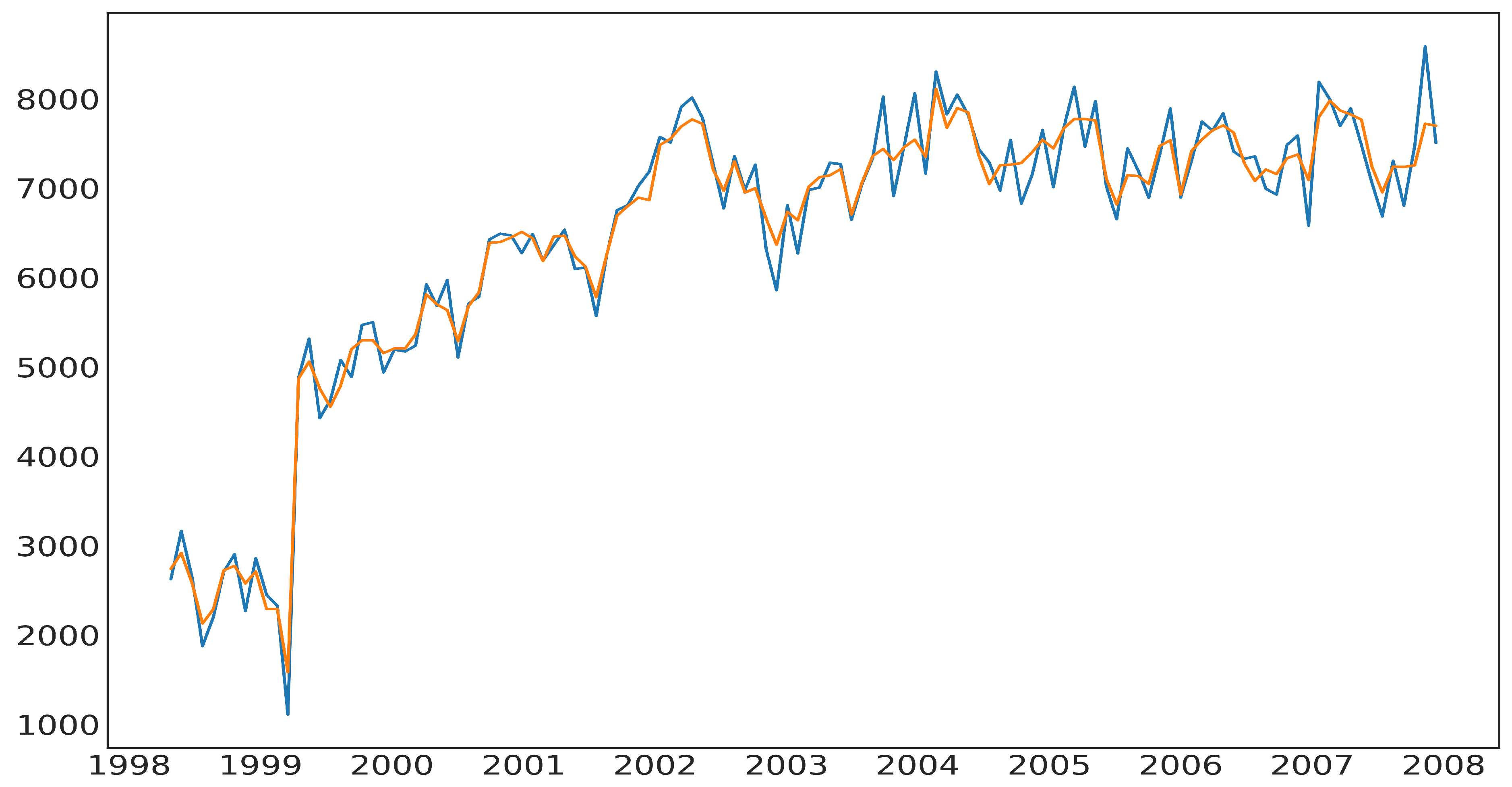
Figure 5 demonstrates the training set typically expressed by a blue line from 1998 to 2004, as well as a the forecasted values for crime by a tuned random forest model, and values for one-step-ahead forecast presented by a red line.
Figure 5. The forecasted values for crime by a tuned random forest model.
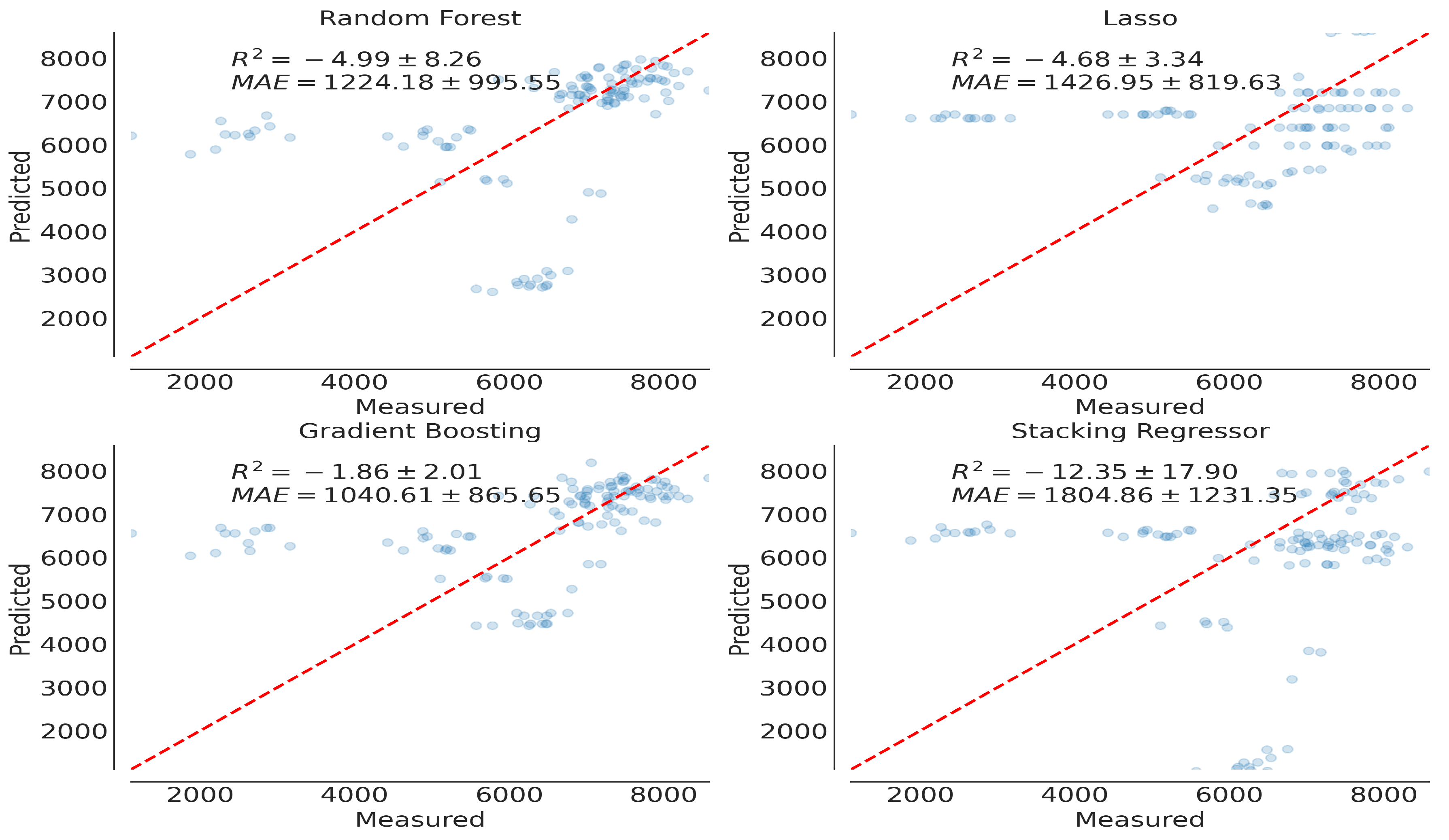
Figure 6 shows the forecasted values for crime by an XGB model while Figure 7 shows the plot of the predicted vs. true targets for the crime values by a stacked model as well as a single predictor versus stacked predictors.
Figure 6. Forecasted values for crime by XGB model.
Figure 7. The plot of the predicted vs. true targets for crime values by stacked model.
Table 6 shows the comparison between the current state-of-the-art approaches and the suggested SARIMA model. In Table 6, the random forest model for the KSA data performed much better than the other models in terms of R2 score, while the LR model had an R2 score of 0.60197, indicating that it was statistically less accurate. Additionally, the SARIMA model had an MAE score of 0.066559, which was higher than the other models.
Table 6. A comparison with the state-of-the-art models.

5. Conclusions

Previous research was focused on predicting crimes with an accurate and time-efficient method. Previous research are used a prediction model that may produce less accurate results in some cases. In addition, there are a few promising factors that could allow us to predict crime rates with better accuracy. To fill up the gap, we introduced SARIMA model to analysis crime patterns and predict crime in several cities in Saudi Arabia. The dataset in this study was obtained from the Saudi Arabia official websites. It contains information about the crime’s location, type, and date. This study is meant to help the Saudi government understand the distribution of crimes in different cities, predict future crimes and take actions to prevent them. In future research, we will apply the model to many types of crimes, such as robbery, intrusion, and premeditated murder, to improve the model’s performance.

Author Contributions

Conceptualization, T.H.N. and A.M.A.; methodology, I.G.; software, M.A. (Majed Alwateer); formal analysis, M.A. (Malik Almaliki); investigation, M.A. (Malik Almaliki); data curation, T.H.N.; writing—original draft preparation, E.-S.A.; writing—review and editing, T.H.N. and A.M.A.; visualization, I.G.; supervision, M.A. (Malik Almaliki). All authors have read and agreed to the published version of the manuscript.

Funding

This research received no external funding.

Conflicts of Interest

The authors declare no conflict of interest.

References

  1. Bahi, A.; Shahidra, K.; Mohd, R.; Zulkifli, Y. Quranic approach in portraying crime stories. Middle East J. Sci. Res. 2012, 12, 124–130. [Google Scholar]
  2. Adel, H.; Salheen, M.; Mahmoud, R.A. Crime in relation to urban design. Case study: The Greater Cairo Region. Ain Shams Eng. J. 2016, 7, 925–938. [Google Scholar] [CrossRef]
  3. Ministry of the Interior in Saudi. Statistical Yearbook. 2022. Available online: https://www.moh.gov.sa/en/Ministry/Statistics/book/Pages/default.aspx (accessed on 22 October 2022).
  4. Kaplan, J. Uniform Crime Reporting (UCR) Program Data: A Practitioner’s Guide. CrimRxiv 2021. [Google Scholar] [CrossRef]
  5. Bruin, J.D.; Cocx, T.; Kosters, W.; Laros, J.J.; Kok, J. Data Mining Approaches to Criminal Career Analysis. In Proceedings of the Sixth International Conference on Data Mining (ICDM’06), Hong Kong, China, 18–22 December 2006; pp. 171–177. [Google Scholar] [CrossRef]
  6. Agarwal, J.; Nagpal, R.; Sehgal, R. Crime Analysis using K-Means Clustering. Int. J. Comput. Appl. 2013, 83, 1–4. [Google Scholar] [CrossRef]
  7. Babakura, A.; Sulaiman, M.N.; Yusuf, M.A. Improved method of classification algorithms for crime prediction. In Proceedings of the 2014 International Symposium on Biometrics and Security Technologies (ISBAST), Kuala Lumpur, Malaysia, 26–27 August 2014; pp. 250–255. [Google Scholar] [CrossRef]
  8. Yu, C.H.; Ward, M.W.; Morabito, M.; Ding, W. Crime Forecasting Using Data Mining Techniques. In Proceedings of the 2011 IEEE 11th International Conference on Data Mining Workshops, Beijing, China, 8–11 November 2011. [Google Scholar] [CrossRef]
  9. Almanie, T.; Mirza, R.; Lor, E. Crime Prediction Based on Crime Types and Using Spatial and Temporal Criminal Hotspots. Int. J. Data Min. Knowl. Manag. Process. 2015, 5, 1–19. [Google Scholar] [CrossRef]
  10. Chen, P.; Yuan, H.; Shu, X. Forecasting Crime Using the ARIMA Model. In Proceedings of the 2008 Fifth International Conference on Fuzzy Systems and Knowledge Discovery, Jinan, China, 18–20 October 2008. [Google Scholar] [CrossRef]
  11. Sivaranjani, S.; Sivakumari, S.; Aasha, M. Crime prediction and forecasting in Tamilnadu using clustering approaches. In Proceedings of the 2016 International Conference on Emerging Technological Trends (ICETT), Kollam, India, 21–22 October 2016; Volume 50. [Google Scholar] [CrossRef]
  12. Kim, S.; Joshi, P.; Kalsi, P.S.; Taheri, P. Crime Analysis Through Machine Learning. In Proceedings of the 2018 IEEE 9th Annual Information Technology, Electronics and Mobile Communication Conference (IEMCON), Vancouver, BC, Canada, 1–3 November 2018. [Google Scholar] [CrossRef]
  13. Borowik, G.; Wawrzyniak, Z.M.; Cichosz, P. Time series analysis for crime forecasting. In Proceedings of the 2018 26th International Conference on Systems Engineering (ICSEng), Sydney, NSW, Australia, 18–20 December 2018. [Google Scholar] [CrossRef]
  14. Saravanan, M.; Thayyil, R.; Narayanan, S. Enabling Real Time Crime Intelligence Using Mobile GIS and Prediction Methods. In Proceedings of the 2013 European Intelligence and Security Informatics Conference, Washington, DC, USA, 12–14 August 2013; pp. 125–128. [Google Scholar] [CrossRef]
  15. Pande, V.; Samant, V.; Nair, S. Crime Detection using Data Mining. Int. J. Eng. Res. Technol. 2016, V5, 891–896. [Google Scholar] [CrossRef]
  16. Butt, U.M.; Letchmunan, S.; Hassan, F.H.; Ali, M.; Baqir, A.; Sherazi, H.H.R. Spatio-Temporal Crime HotSpot Detection and Prediction: A Systematic Literature Review. IEEE Access 2020, 8, 166553–166574. [Google Scholar] [CrossRef]
  17. Chainey, S.; Ratcliffe, J. Identifying Crime Hotspots. In GIS and Crime Mapping; John Wiley & Sons, Inc.: New York, NY, USA, 2013; pp. 145–182. [Google Scholar] [CrossRef]
  18. Umair, A.; Sarfraz, M.S.; Ahmad, M.; Habib, U.; Ullah, M.H.; Mazzara, M. Spatiotemporal Analysis of Web News Archives for Crime Prediction. Appl. Sci. 2020, 10, 8220. [Google Scholar] [CrossRef]
  19. Chackravarthy, S.; Schmitt, S.; Yang, L. Intelligent Crime Anomaly Detection in Smart Cities Using Deep Learning. In Proceedings of the 2018 IEEE 4th International Conference on Collaboration and Internet Computing (CIC), Philadelphia, PA, USA, 18–20 October 2018. [Google Scholar] [CrossRef]
  20. Azeez, J.; Aravindhar, D.J. Hybrid approach to crime prediction using deep learning. In Proceedings of the 2015 International Conference on Advances in Computing, Communications and Informatics (ICACCI), Kochi, India, 10–13 August 2015; pp. 1701–1710. [Google Scholar] [CrossRef]
  21. Zhang, Y.; Cheng, T. Graph deep learning model for network-based predictive hotspot mapping of sparse spatio-temporal events. Comput. Environ. Urban Syst. 2020, 79, 101403. [Google Scholar] [CrossRef]
  22. Wang, B.; Yin, P.; Bertozzi, A.L.; Brantingham, P.J.; Osher, S.J.; Xin, J. Deep Learning for Real-Time Crime Forecasting and Its Ternarization. Chin. Ann. Math. Ser. B 2019, 40, 949–966. [Google Scholar] [CrossRef]
  23. Shamsuddin, N.H.M.; Ali, N.A.; Alwee, R. An overview on crime prediction methods. In Proceedings of the 2017 6th ICT International Student Project Conference (ICT-ISPC), Johor, Malaysia, 23–24 May 2017; pp. 1–5. [Google Scholar] [CrossRef]
  24. Paolella, M.S. ARMA Model Identification. In Linear Models and Time-Series Analysis; John Wiley & Sons, Inc.: New York, NY, USA, 2018; pp. 405–442. [Google Scholar] [CrossRef]
  25. Box, G.E.; Jenkins, G.M.; Reinsel, G.C.; Ljung, G.M. Time Series Analysis: Forecasting and Control; John Wiley & Sons: New York, NY, USA, 2015. [Google Scholar]
  26. Brockwell, P.J.; Davis, R.A. Introduction to Time Series and Forecasting. Biometrics 1998, 54, 1204. [Google Scholar] [CrossRef]
  27. Al-Douri, Y.; Hamodi, H.; Lundberg, J. Time Series Forecasting Using a Two-Level Multi-Objective Genetic Algorithm: A Case Study of Maintenance Cost Data for Tunnel Fans. Algorithms 2018, 11, 123. [Google Scholar] [CrossRef]
  28. Chintalapudi, N.; Battineni, G.; Amenta, F. COVID-19 virus outbreak forecasting of registered and recovered cases after sixty day lockdown in Italy: A data driven model approach. J. Microbiol. Immunol. Infect. 2020, 53, 396–403. [Google Scholar] [CrossRef] [PubMed]
  29. Ryabko, D. Asymptotic Nonparametric Statistical Analysis of Stationary Time Series; Springer International Publishing: Cham, Switzerland, 2019. [Google Scholar] [CrossRef]
  30. Eze, N.; Asogwa, O.; Obetta, A.; Ojide, K.; Okonkwo, C. A Time Series Analysis of Federal Budgetary Allocations to Education Sector in Nigeria (1970-2018). Am. J. Appl. Math. Stat. 2020, 8, 1–8. [Google Scholar]
  31. Rebala, G.; Ravi, A.; Churiwala, S. An Introduction to Machine Learning; Springer International Publishing: Cham, Switzerland, 2019. [Google Scholar] [CrossRef]
  32. Chen, P.; Niu, A.; Liu, D.; Jiang, W.; Ma, B. Time Series Forecasting of Temperatures using SARIMA: An Example from Nanjing. IOP Conf. Ser. Mater. Sci. Eng. 2018, 394, 052024. [Google Scholar] [CrossRef]
  33. Malki, A.; Atlam, E.S.; Gad, I. Machine learning approach of detecting anomalies and forecasting time-series of IoT devices. Alex. Eng. J. 2022, 61, 8973–8986. [Google Scholar] [CrossRef]
  34. Malki, Z.; Atlam, E.S.; Ewis, A.; Dagnew, G.; Ghoneim, O.A.; Mohamed, A.A.; Abdel-Daim, M.M.; Gad, I. The COVID-19 pandemic: Prediction study based on machine learning models. Environ. Sci. Pollut. Res. 2021, 28, 40496–40506. [Google Scholar] [CrossRef] [PubMed]
  35. Farsi, M.; Hosahalli, D.; Manjunatha, B.; Gad, I.; Atlam, E.S.; Ahmed, A.; Elmarhomy, G.; Elmarhoumy, M.; Ghoneim, O.A. Parallel genetic algorithms for optimizing the SARIMA model for better forecasting of the NCDC weather data. Alex. Eng. J. 2021, 60, 1299–1316. [Google Scholar] [CrossRef]
  36. Hashim, H.; Atlam, E.S.; Malik Almalki, M.M.E.S.; El-Agamy, R.; Dagnew, G.; Ghoneim, O.; Gad, I. Integrating Data Warehouse and Machine Learning to Predict on COVID-19 Pandemic Empirical Data. J. Theor. Appl. Inf. Technol. 2021, 1, 63–72. [Google Scholar]
  37. Malki, Z.; Atlam, E.S.; Ewis, A.; Dagnew, G.; Alzighaibi, A.R.; ELmarhomy, G.; Elhosseini, M.A.; Hassanien, A.E.; Gad, I. ARIMA models for predicting the end of COVID-19 pandemic and the risk of second rebound. Neural Comput. Appl. 2020, 33, 2929–2948. [Google Scholar] [CrossRef] [PubMed]
Publisher’s Note: MDPI stays neutral with regard to jurisdictional claims in published maps and institutional affiliations.

Article Metrics

Citations

Article Access Statistics

Multiple requests from the same IP address are counted as one view.