1. Introduction
Recommendation systems play a vital role in making suggestions for items. They are used to filter information from different networks and predict the output based on the user’s preferences. These systems have become extremely popular, and a relevant application of recommender systems is the travel industry. A large number of travel industries are benefiting from the recommendation systems in improving customer satisfaction and experience. In this way, they are making massive chunks of revenue, which is why most of them are turning to recommendation systems. In this paper, one of the main goals of our proposed approach is to provide a platform considering the analysis of the reviews of the customers and the surrounding facilities of the nearby areas of the hotels. Extraction of features from reviews is necessary for providing better recommendations.
Hotel reputation these days is strongly affected by the ratings provided by the guest [
1]. Actually, guests are highly appreciated to rate hotels and comment on different aspects of the hotels. Online reviews provided by the customers have a significant impact on hotel revenues [
2]. Customers’ trust has become a crucial factor when making decisions for online hotel booking. There has been an increasing effort in the current state-of-the-art literature [
1,
2,
3,
4,
5,
6,
7] to analyze hotel reviews and ratings in the last decade. In this paper, we build a framework to generate scores from hotel reviews and ratings. We also consider the impact of nearby amenities of the hotels. Hotel selection heavily depends on the different types of P.O.I. (Points of interest), such as public transport, food, and shops.
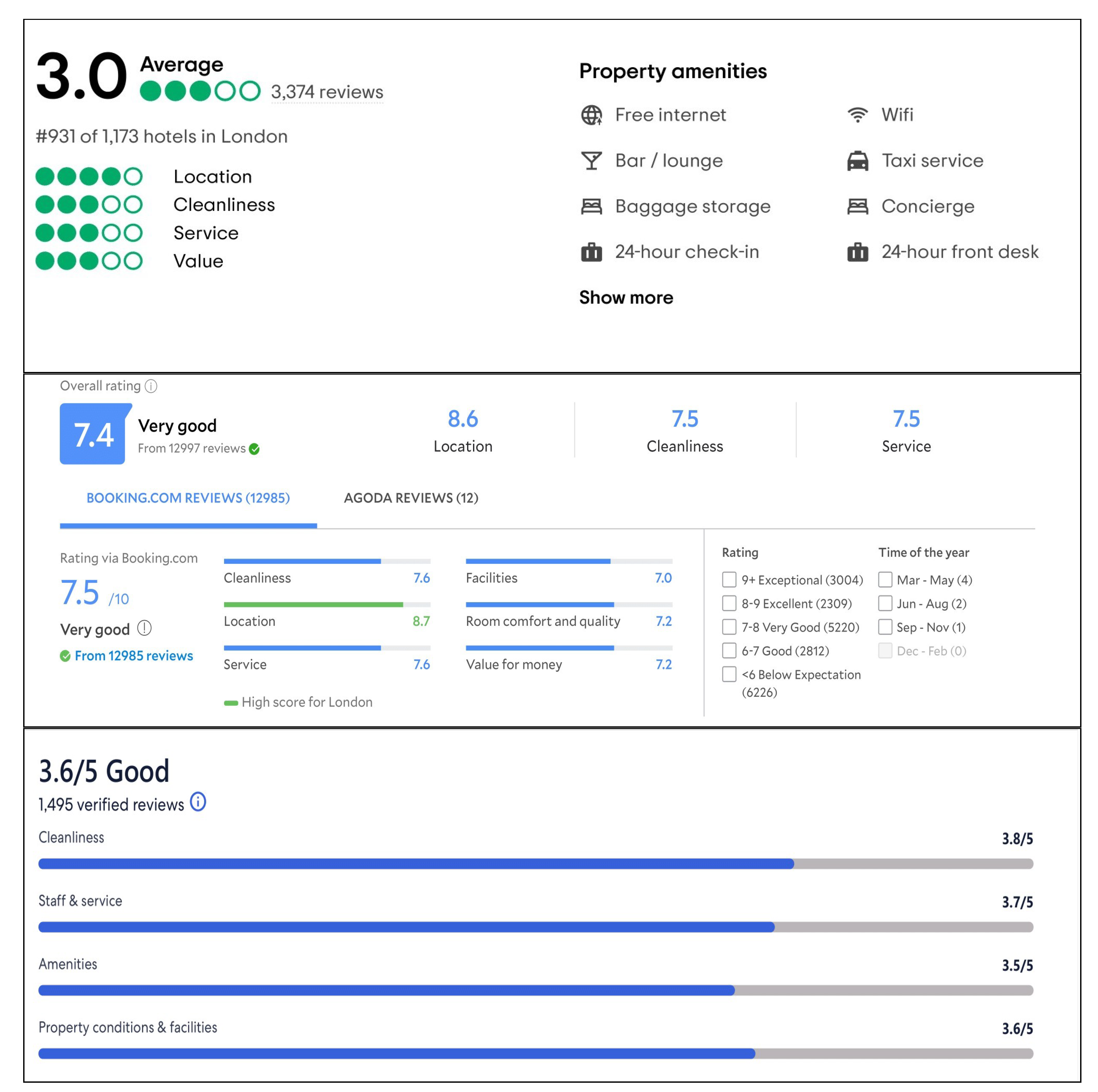
Figure 1 shows a comparative analysis of the overall ratings of a specific hotel for three different hotel booking websites. Ratings vary from website to website. One hotel which is considered average in terms of ratings in one of the hotel booking websites can be found better in other hotel booking websites.
To relate the opinions of the guests with the hotel ratings and correlating with P.O.I. descriptions is difficult due to some reasons mentioned below:
Reviews provided by the guests frequently miss an explicit description of the related context;
Geo-location information is often missing in the hotel review dataset;
Preparation and processing time of P.O.I. is time consuming as P.O.I. descriptions are often unstructured.
For this reason, understanding which point of interests are influencing the hotel reviews is difficult from the descriptions of the text. So, the recommendation generations by analyzing texts are not sufficient enough. In our proposed system, we considered the nearby P.O.I.s of the hotels by using Google Place API. Our system can rank hotels in four different ways considering (1) reviews and comments, (2) surrounding environments of the hotels, (3) numerical ratings, and (4) our proposed aggregated scores. Heterogeneous data are an unstructured data type which means a massive amount of data in diverse formats or nature. These unstructured data include text, numbers, images, demographic data, etc. Hotel booking websites contain this type of data. The analysis of the scores generated from the hotel reviews and surrounding P.O.I.s is necessary. We consider data from two famous hotel booking websites. The experimental outcomes give valuable insights into the viewpoints of the guests of the hotels.
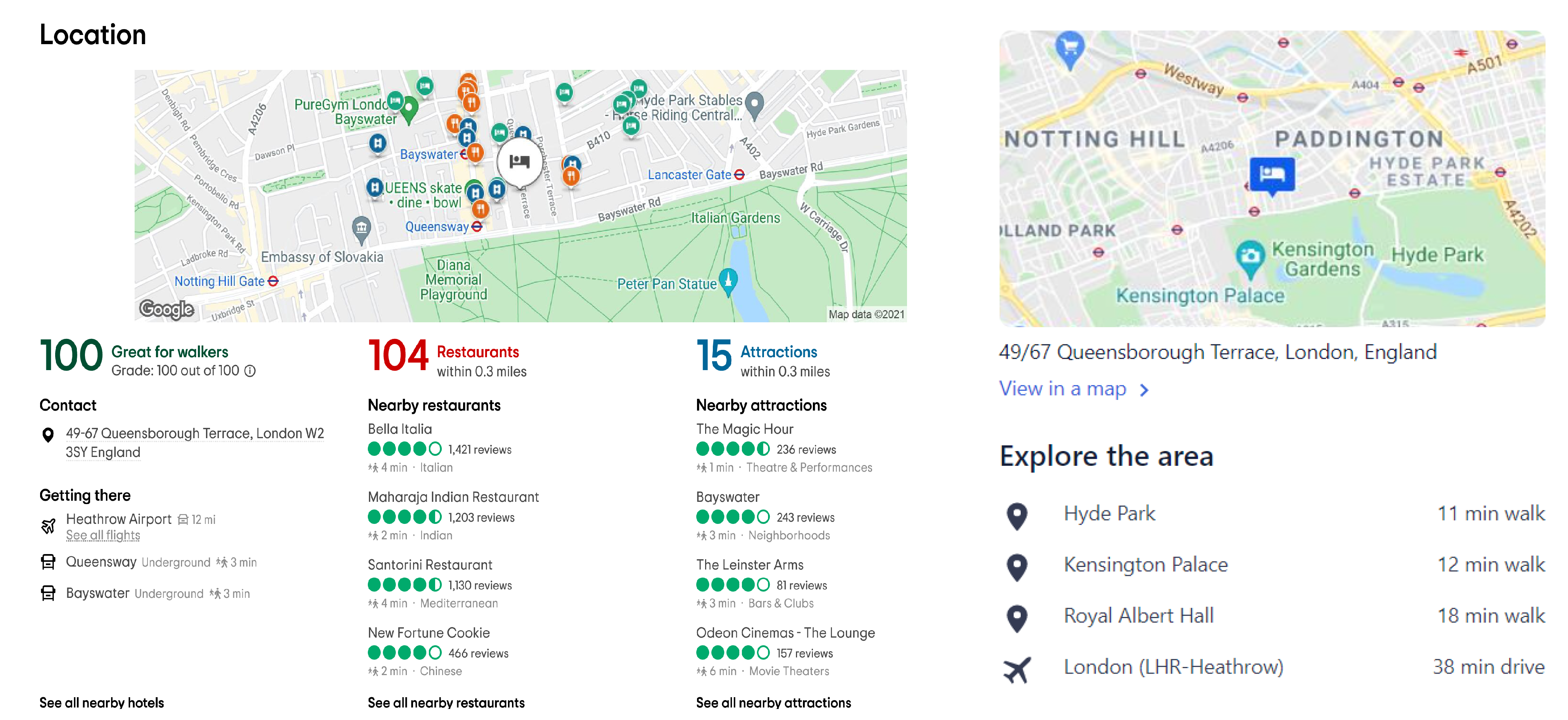
Figure 2 shows the surrounding facilities for a specific hotel for two widely used hotel booking platforms.
A comparative analysis of some reviewers’ comments for two different hotel booking websites, i.e., TripAdvisor and Booking are shown in
Table 1. The textual reviews can provide opinions, contextual information for recommender systems. For example, based on the reviews of the customers who stayed at the hotels, a recommender system can recommend a hotel which the previous customers liked.
The key contributions of this paper are as follows:
We propose a hotel recommendation framework which is implemented by analyzing the
- (1)
reviews generated by the customers of the hotels, and
- (2)
nearby amenities of the hotels;
The proposed framework computes scores from the customers’ reviews and the nearby amenities of the hotels;
The proposed method can be helpful for decision-makers, managers of the hotel industry to consider P.O.I.s, review scores for ameliorating the hotel recommendation except for the specific rating score;
We consider data from multiple sources such as Tripadvisor and Booking.
The paper is organized as follows.
Section 2 overviews the related literature review. In
Section 3, we present the architecture of the proposed hotel recommendation system. The experimental outcomes are presented and discussed in
Section 4. Finally,
Section 5 concludes our work and discusses the future research directions.
2. Related Work
Data over the internet is growing so fast as the people’s option to express their views about products or services is increasing rapidly. Due to the growing diversity of data generated from hotels worldwide, a turn of attention has been observed in recent studies in adopting numerous ways of managing these valuable data. In [
3], they used a big data solution involving Hadoop to deal with the variety of numeric data as well as textual data in the heterogeneous form. Sharma et al. [
12] used NLP (Natural Language Processing) in their work to determine the rating of the hotel used by the previous customers. The authors of [
13] proposed the use of a unified deep NLP model, which analyzes sentences in reviews. They make use of BERT embedding to transform the raw text data into a unified review-POI latent space. It is necessary to extrapolate useful and essential information due to the potential effect that customer’s opinions can have on businesses. Most of these data are textual data accompanied by a specific numerical rating. To increase customer satisfaction, researchers are building systems that can extract and leverage the knowledge from such reviews to offer guidance on the selection of hotels. The reviews typically contain the customers’ opinions on the hotels and ratings, which indicate the sentiment towards the accommodation and fully characterizes the experience itself.
In [
14], an approach to recommend hotels to the users by considering nearby facilities of the hotel was presented. The approach utilized the P.O.I. (Points of Interest) database to obtain the nearby amenities of the hotels. It measured the accommodation preferences of the users by using the reviews provided by the users and calculated the similarity score between the hotels and user preferences by using a similarity measure technique. The top-k hotels are suggested and recommended to the user. The experiments used a dataset collected from TripAdvisor. In [
13], the authors proposed the use of a unified deep natural language processing (NLP) model which analyzes sentences in reviews and uses public TripAdvisor hotel-review datasets to validate the approach experimentally. They addressed the challenge of investigating the similarities and dissimilarities between cities by considering the textual reviews and numerical ratings of the hotels and their correlation with the nearby P.O.I.s. They performed their experiment on public TripAdvisor hotel-review datasets and the results provided valuable insights into the viewpoints of hotel guests and suggested further investigation in this direction. Yang et al. [
15] presented their effort at constructing a location-aware recommendation system that can model user preferences mainly based on the reviews of the users. They used datasets provided by Yelp. However, they have only included the textual reviews to grasp the nature of people’s preference. Yang et al. [
16] classified three different categories by considering all location-related factors. The three categories are accessibility to P.O.I., transport convenience, and the surrounding environment. The results confirmed that the presence of airports, public transport, attractions, universities, etc., are significant determinants. Chen et al. [
17] combined the conventional recommendation technology with location-based services to provide recommendations. They considered price, service, the location of the tourist, etc., to provide recommendations. The results provided by their system can be nearest to the tourists’ needs. The use of location-based social services has enabled opportunities for providing better services through P.O.I. P.O.I. recommendation is personalized, location-aware, and context-depended, unlike traditional recommendation tasks. Recently, many attempts have been dedicated to capturing user preference data from textual reviews for rating prediction purposes [
18]. The critical challenge is to understand the key factors that contribute to customer dissatisfaction or satisfaction employing data-driven approaches [
19]. Brett et al. [
2] showed that the positive rating on customer actions is more influential than advertising strategies. So, review analysis and extraction of the hidden knowledge from reviews is particularly appealing.
Ramzan et al. [
3] proposed a recommendation system that helps users find hotels by considering heterogeneous data. The experiments used two different hotel booking datasets that contain reviews, ratings, and ranks to represent data heterogeneity. Their proposed system generates polarity scores from the reviews by using NLP techniques and calculates the aggregated polarity score for each feature based on the reviews from selected websites. By aggregating numerical scores provided by ratings and polarity scores, it generates recommendations to the users. Final recommendations are generated by applying the fuzzy logic approach. Both qualitative and quantitative features of likeness can be achieved by using not only ratings but also reviews of the texts.
In [
20], a text to score generation algorithm is proposed, which considers some keywords and their corresponding scores to generate scores from the reviews. They only used unigram keywords, and thus, pairwise combinations of words are neglected. Compared with their work, we consider the combination of unigram and bigram keywords. In our system, both single words and a pairwise combination of words are considered. Sharma et al. [
12] examined a recommendation system by using a multi-criteria review-based approach. The approach is based on the user’s reviews and preferences. They use various NLP approaches to find out the rating of a hotel from previous users. Instead of simple star ratings, their system also deals with the process to suggest hotels based on multi-criteria ratings. These ratings are derived from textual reviews. They only consider the TripAdvisor dataset for their experimental purpose.
In [
21], a new feature and opinion extraction method based on the characteristics of online reviews was proposed to extract the user opinions from the user reviews effectively. They crawled a real online restaurant review dataset and collected 54,208 reviews. They selected 4000 reviews randomly and features and opinions extraction from these reviews are done manually. However, these systems process only homogeneous data, whereas most of the data on the web are heterogeneous. Chuhan et al. [
6] have tried to express user preferences comprehensively by jointly analyzing hotel ratings and customer reviews. Zhang and Mao [
22] suggested that appropriate recommender systems should be developed to achieve true and relevant recommendations according to the choice and preferences of the customers. The deviation of various approaches, objective and advantages of the various recommendation systems are shown in
Table 2 and
Table 3, respectively.
3. Proposed System Architecture of Hotel Recommendation System
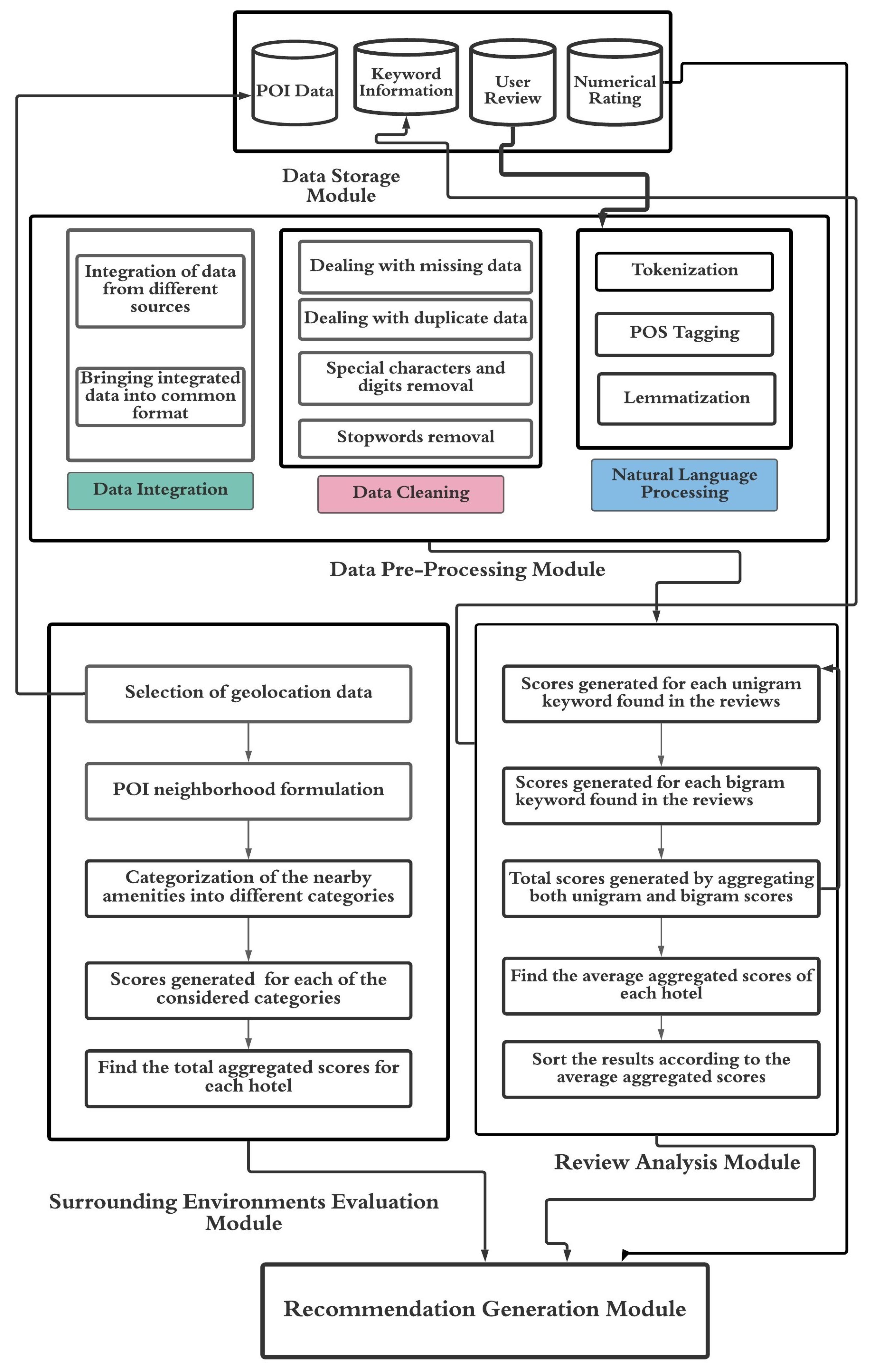
In this section, we will elaborate on the architecture of our hotel recommendation system. Our system contains the following modules: data pre-processing, storage, surrounding environment’s evaluation, review analysis, and recommendation generation.
Figure 3 shows our system architecture. In the review analysis module, scores are generated from pre-processed textual reviews. Score generation procedures from the nearby amenities of the hotels are performed in the surrounding environment’s valuation module.
3.1. Dataset Description
We used two different hotel booking datasets for our experimental purposes. The datasets we used in our work are publicly available. We used the framework where the pre-processing stage is performed to the raw sentences, making it more understandable. The first dataset we used in our experiment was collected from Kaggle. This dataset contains about 515 K customer reviews and scoring of 1493 luxury hotels across Europe. For further analysis, geographical locations of hotels are also included here [
23].
Table 4 shows the description of the dataset attributes. The file contained 17 attributes.
Another dataset is used for the reviews of hotels collected from TripAdvisor (259,000 reviews). This dataset was initially used for opinion-based entity ranking. We collected this dataset from [
24]. We considered 875 hotels of London from these large datasets. We created a CSV file where we manually assigned a unique hotel ID for each hotel for our experimental purpose. The CSV file contains five fields which are shown in
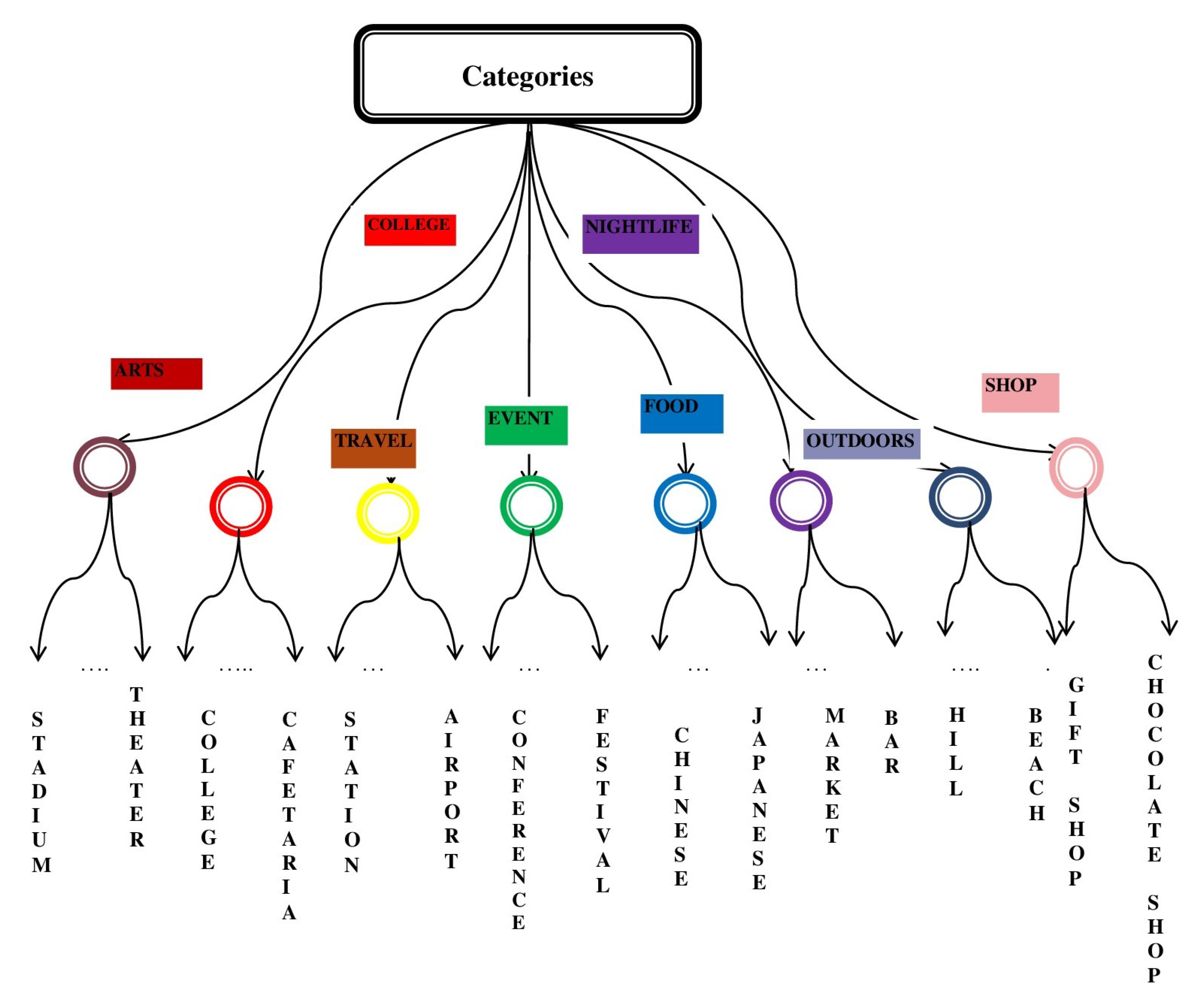
Table 5. By using Google API, we collected all considered facilities in the nearby area of the hotels. Our system categorizes the nearby amenities of each hotel by using different categories of the category tree shown in
Figure 4.
3.2. Storage Module
The storage module preserves the necessary information’s for the purpose of generating recommendations. The four storages we used in our system and their functions are given below:
User review database is used to store the textual reviews of the customers;
Keyword database is used to store the extracted keywords for the purpose of score generation;
P.O.I. database is used to store geolocation data about the nearby amenities of the hotels;
A numerical rating database is used to contain the numerical ratings from hotel booking websites.
While some information may be put to use immediately, much of it will serve a purpose later on. When data are properly stored, the data can be quickly and easily accessed in the time of need. We use SQL (Structured Query Language) to store the data.
3.3. Data Pre-Processing
Data pre-processing is the process of removing incomplete and noisy data to clean data and put them in a formatted way while doing any operation with them. The kind of data we used in our work contains symbols and unusual text that need to be cleaned. Datasets may be of different formats for different purposes. We usually put the data into a CSV file.
Algorithm 1 shows our data pre-processing algorithm. Our algorithm is implemented in Python which is a high-level programming language and has a great number of data-oriented feature packages. These packages can speed up and simplify data processing, thus making it time-saving. In addition, it also has many excellent libraries for data analysis. Python can handle large datasets; it can more easily implement automated analysis. The pre-processing includes the steps of data integration, removal of missing values, removal of stop words, conversion to Lowercase, Tokenization, removal of special characters and digits, parts of speech tagging, lemmatization, etc.
| Algorithm 1: Data Pre-Processing Algorithm. |
![Electronics 10 01920 i001]() |
3.4. Review Analysis Module
The textual data need to be processed in order to retrieve more specific opinions. The keywords we consider in our system are categorized into ten different categories. The scores are calculated from the reviews of the customers.
Table 6 lists some examples of keywords of different categories. The review-to-score generation procedure is shown in Algorithm 2.
The scores are calculated for a single review of a hotel by using the following Equations (
1) and (
2):
For each unigram/bigram keyword found in the review, multiply the keywords score (
) with the number of occurrences of the keyword present in the review. Then, total scores are generated by aggregating the scores considering the effect of
n number of unigram/bigram keywords present in the review. The review score is computed by the following Equation (
3):
The total score generated by considering all of the
k reviews of a particular hotel is computed by using Equation (
4) given below:
The total review score is computed by aggregating all k review scores.
The average review score generated for a single hotel is computed by using Equation (
5) given below:
An average score is calculated for a single hotel by dividing the total review scores generated from all
k reviews to the value of
k.
| Algorithm 2: RSG (Review to Score Generation) Algorithm. |
![Electronics 10 01920 i002]() |
3.5. Evaluation of Surrounding Environments
The P.O.I.s (Points of Interest) database is used in our system to evaluate the surrounding environments of the hotels. Using Google Place API, our system collected all considered facilities within five hundred meters of each hotel. We choose five hundred meters for our experimental purpose. By using a Category Tree (CT) shown in
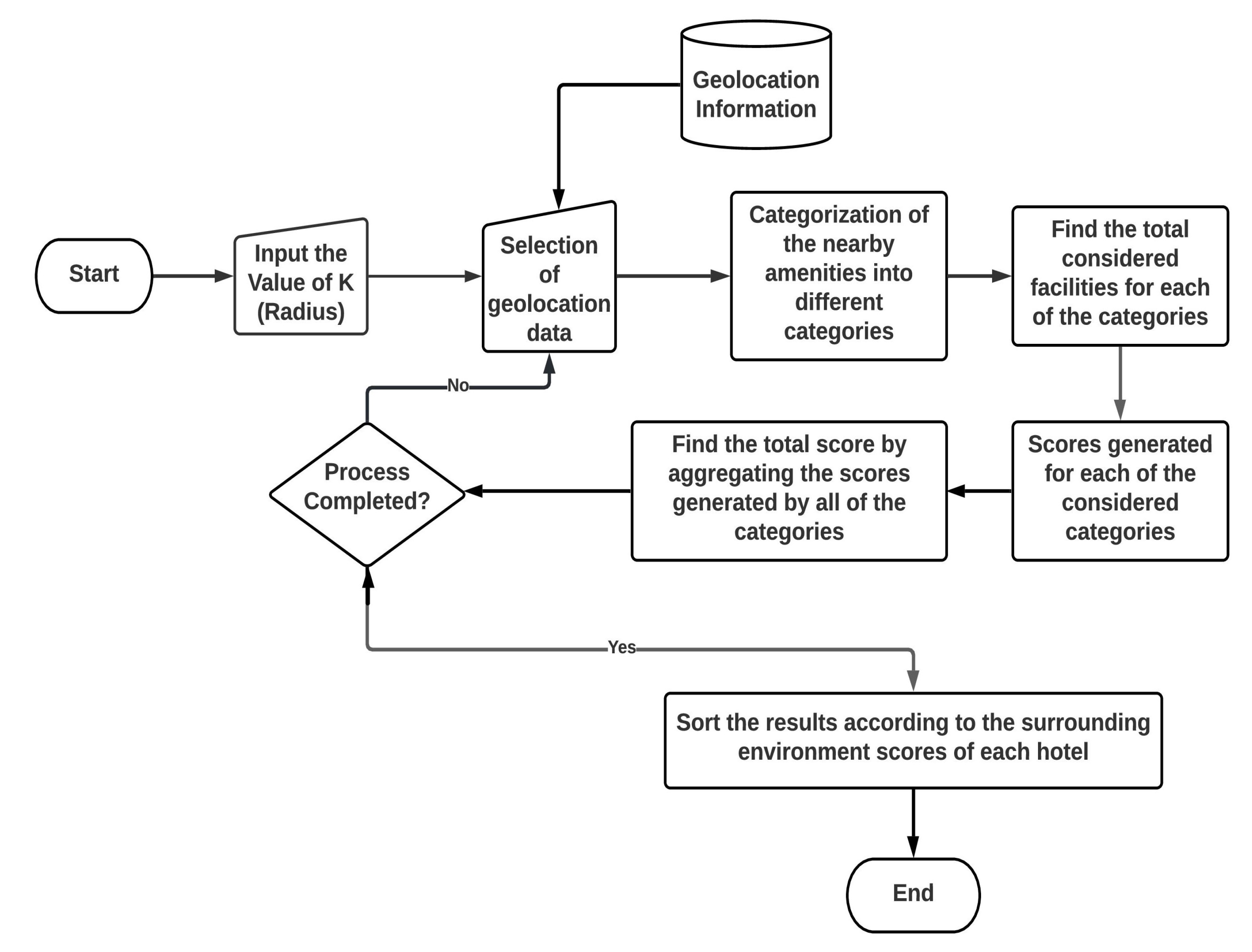
Figure 4, we classified different facilities into eight different categories. The internal nodes represent the types of facilities. The leaf nodes denote the objects of the facilities. Our system generates scores from the surrounding contexts of the hotels based on the information of the CT. The procedure of the surrounding environment’s evaluation is shown in
Figure 5. Our considered eight categories are shown in
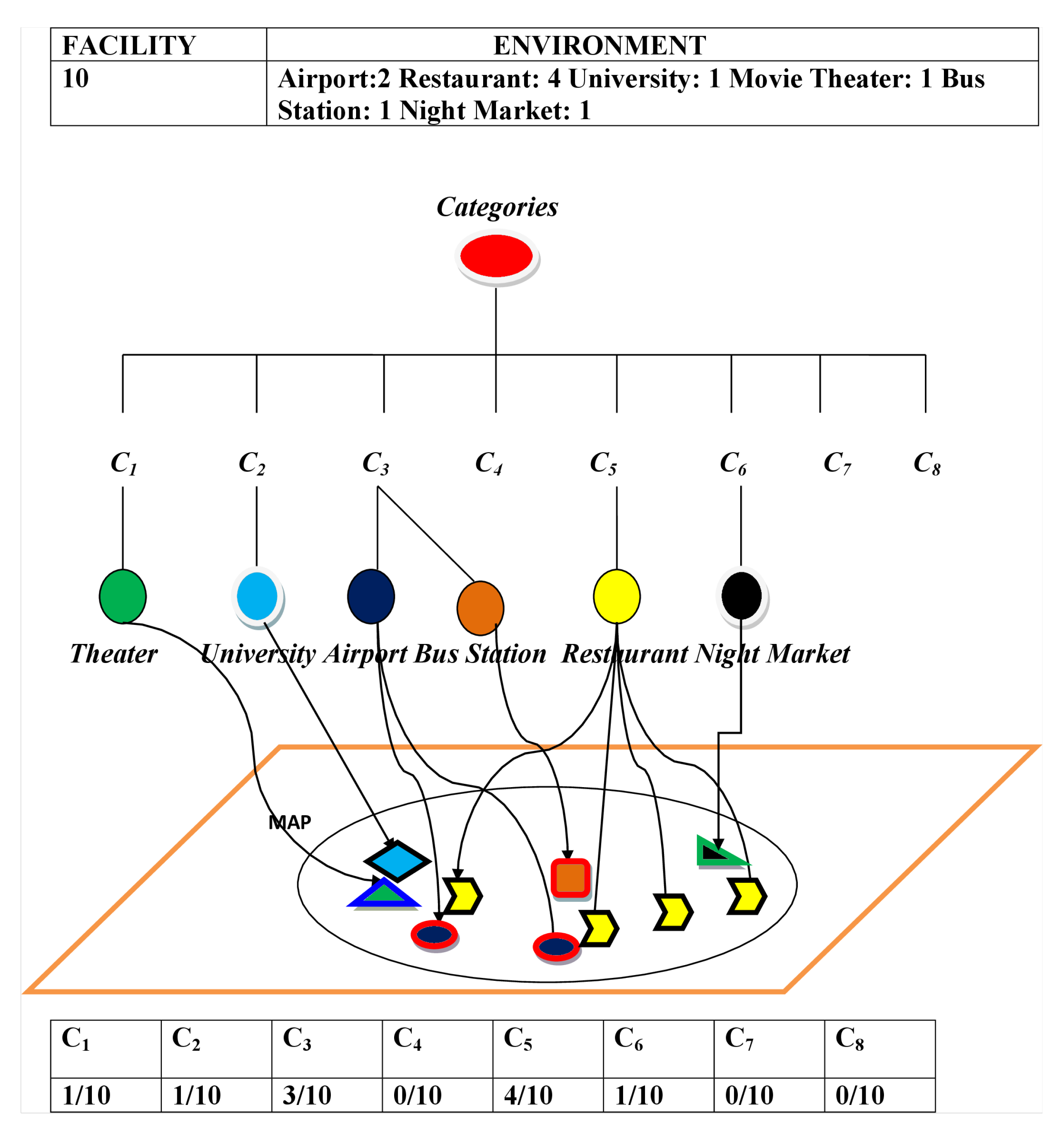
Table 7. Total scores are generated by aggregating the scores generated by all of the categories. Now, assume that there are two airports, four restaurants, one university, one movie theater, one bus station, and one night market within five hundred meters from a specific hotel. Looking at the CT of
Figure 4, we can see that two airports and one bus station are within the category “Travel and Transport”, four restaurants are inside the category “Food”, one university inside the category “College and University”, one movie theater within the category “Arts and Entertainment” and one night market within the category “Nightlife Spot”. In
Figure 6, for different categories of surrounding facilities, the number of facilities is shown for a specific hotel H
. Here, the number of facilities of H
for C
is 1, C
is 1, C
is 3, C
is 0, C
is 4, C
is 1, C
is 0, and C
is 0.
The scores are calculated for a single category are measured by using Equation (
6):
Here, n denotes the total number of sub-categories for a specific category. represents the total number of facilities of type k for sub-category j. In our proposed method, we consider two types of weights, so the value of l is 2.
represents the weight of the facility type;
represents the ith category;
and S.E.S. represents the surrounding environments score.
The scores are calculated for all of the categories are measured by using Equation (
7):
We give +1 score for the most important facilities and 0.5 for the other facilities. After determining the surrounding facilities of a hotel, the scores are generated by using Equations (
6) and (
7). Each of the considered categories are divided into some or many sub-categories. The overall surrounding environment score of a hotel is determined by aggregating the scores generated from all of the categories for that hotel. The scores are generated for each of the considered sub-category. Let us assume that there is a hotel which has 10 facilities in its surrounding areas within a specific range. Among them five facilities are under the category “Arts and Entertainment” and another five are in the category “Food”. Then, the scores are calculated by adding the results obtained from the surrounding environment scores of all considered categories. There can be two or more sub-categories for each of the categories. For each sub-category, there are two types of weights we consider for the facility. The most important facilities are considered as type-1 facility and other facilities are considered as type-2 facility. For a specific category, scores are generated by adding the surrounding environment scores of all of the sub-categories of the considered category. The surrounding environment score of a specific hotel is calculated by using Equation (
7).
3.6. Recommendation Generation Module
The recommendation generation module generates recommendation by aggregating the scores generated from reviews and nearby amenities of the hotels. The aggregated score is the summation of S.G.R. (Score Generated from Review) and S.E.S. (Surrounding Environments Score). The scores are calculated by our system for a specific hotel that contains
n number of reviews is computed by using Equation (
8) given below:
4. Experimental Results and Analysis
The top-10 recommendations based on different settings and using average numerical ratings of hotel bookings are discussed here. The dataset we considered here is collected from [
23]. This dataset contains information on 1493 hotels. From
Table 8, we can see that “Ritz Paris” is the topmost hotel by using average numerical ratings of Booking. The numerical rating score obtained for this hotel is 9.8. We can also see the top-10 recommended hotels by analyzing the reviews of the reviewers in
Table 9.
By considering nearby amenities of the hotels, the top-10 recommended hotels for the 1493 hotels of booking are shown in
Table 10. Finally, the top 10 recommendation generation based on our system is shown in
Table 11. By using our developed RSG algorithm, our system generates scores from the reviews. The highest score obtained from the average review scores of each hotel is 6.91. The name of the hotel is “South Place Hotel”. Next, our system analyzed the nearby amenities of the hotels. From
Table 10, we can see that “Hotel Kaiserin Elisabeth” is the highest-ranked hotel. Finally, our system computes the aggregated scores of each considered hotel.
From
Table 11, we can see that “Hotel Kaiserin Elisabeth” has the highest ranked hotel and the score generated for this hotel is 28.11. The ”Hotel Casa Camper” is ranked as fourth by ratings of Booking but it is ranked as ninth by analyzing reviews. From
Table 12,
Table 13 and
Table 14, the top-10 recommendation generation based on the different settings are shown. Top-10 recommendation generation uses the following parameters: review scores generated by using our developed RSG algorithm, scores generated from nearby amenities of the hotels and scores generated by our system. The TripAdvisor dataset we considered here is collected from [
24].
When selecting a hotel for staying purposes, hotel attractions are very important as most customers of the hotels are tourists. Hotel review analysis is also very essential for the customers as well as the surrounding environments of the hotel. If two hotels have the same ratings, then from review scores, surrounding environments scores, a better decision can be taken by the customers. The rankings of the hotels by the surrounding environments can be important for someone who is only interested in the surrounding facilities of the hotels. Someone who is influenced by only the reviews of the previous customers, then, the review scores can be important to him/her. Scores generated from reviews reflect the opinions of the customers of the hotels and the scores generated from surrounding environments reflect the surrounding facilities of the nearby areas of the hotels. The integrated scores generated by our system are a different way of providing recommendations to the customers. The integrated score is the reflection of both review and surrounding environment scores.
The rankings are different because it may be possible that a hotel that has a higher rank by considering ratings has reviews that are not overall good compared to a hotel that ranked as average by considering ratings. This is also possible if a hotel with high surrounding facilities has low ratings. So for these reasons, hotel rankings are varied. From
Table 8, we can see that “Hotel Casa Camper” is ranked as 4th by average numerical ratings of Booking. It is ranked 9th by considering review scores. As the choice or taste of the customers can vary, so the different ways of providing hotel rankings can also be important.
From
Table 12, we can also see that “No Ten Manchester Street” is the highest-ranked hotel among 875 considered hotels of London by analyzing the reviews of the hotels. “Hilton London Tower Bridge” is the highest-ranked hotel by both surrounding environments and scores generated by our system. In
Table 14, the top-10 recommended hotels by using our system are shown.
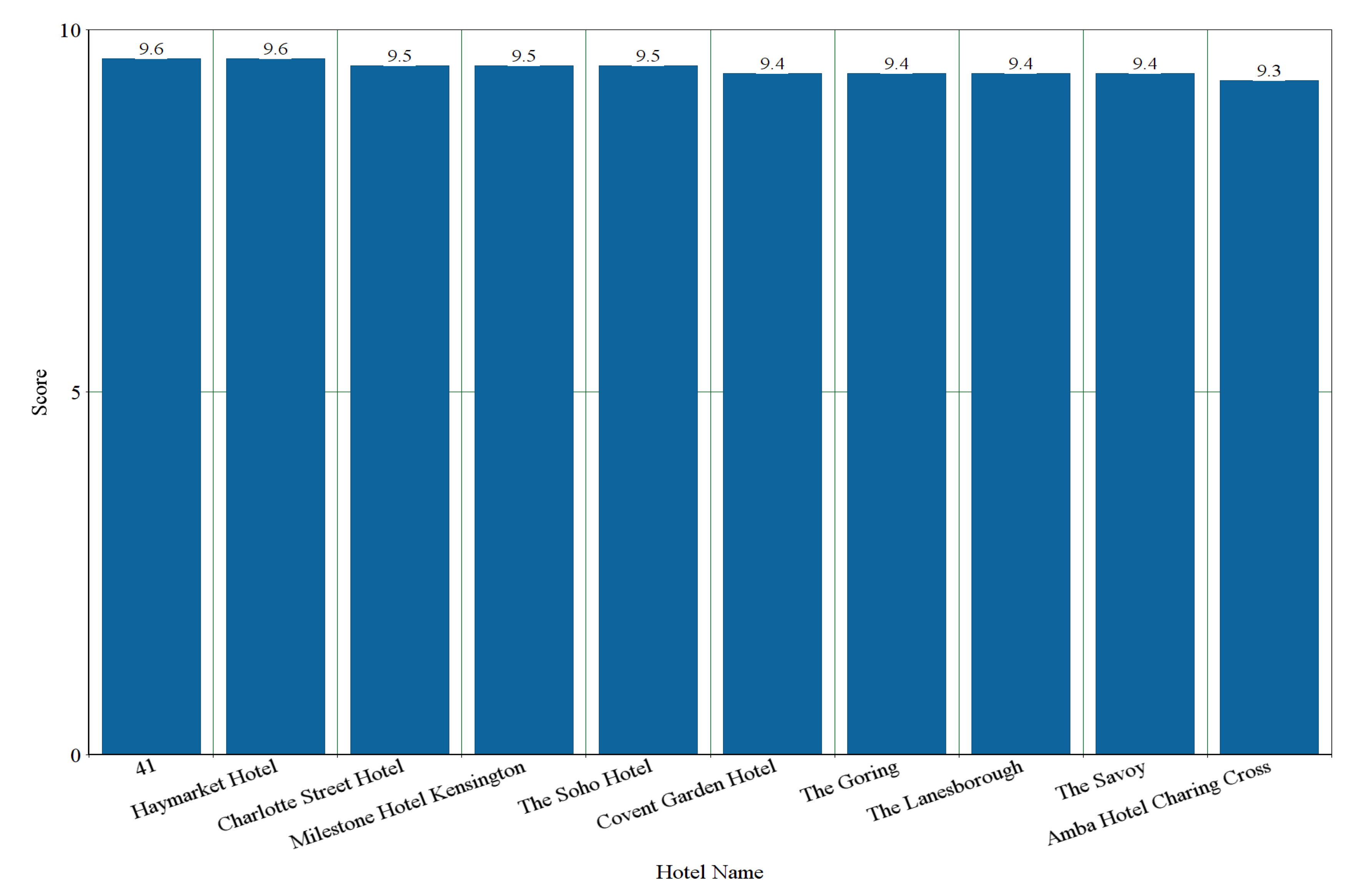
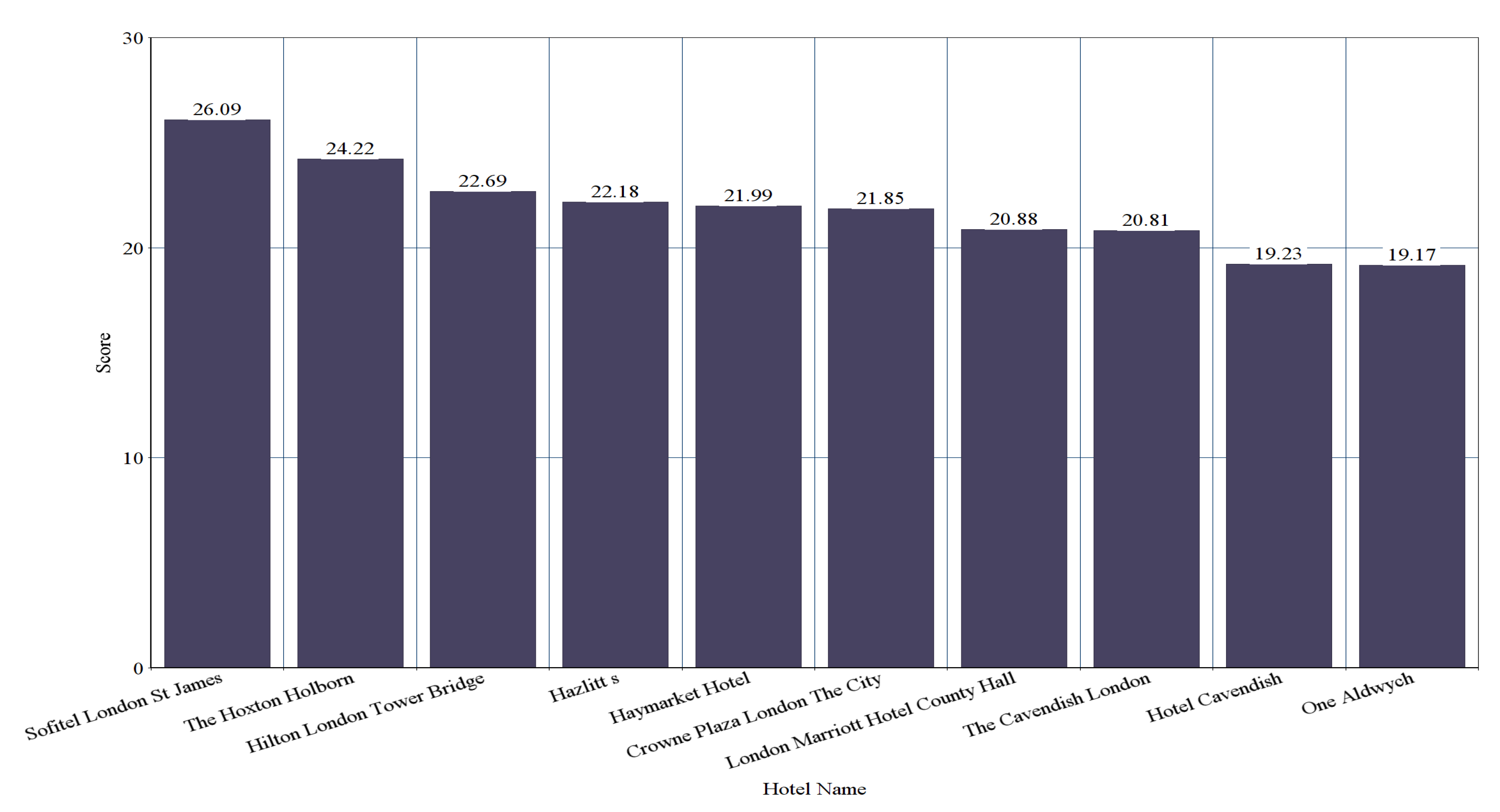
There are 214 hotels that are common in the dataset of both of the hotel booking websites. Top-10 recommendation generation based on average numerical ratings of Booking is shown in
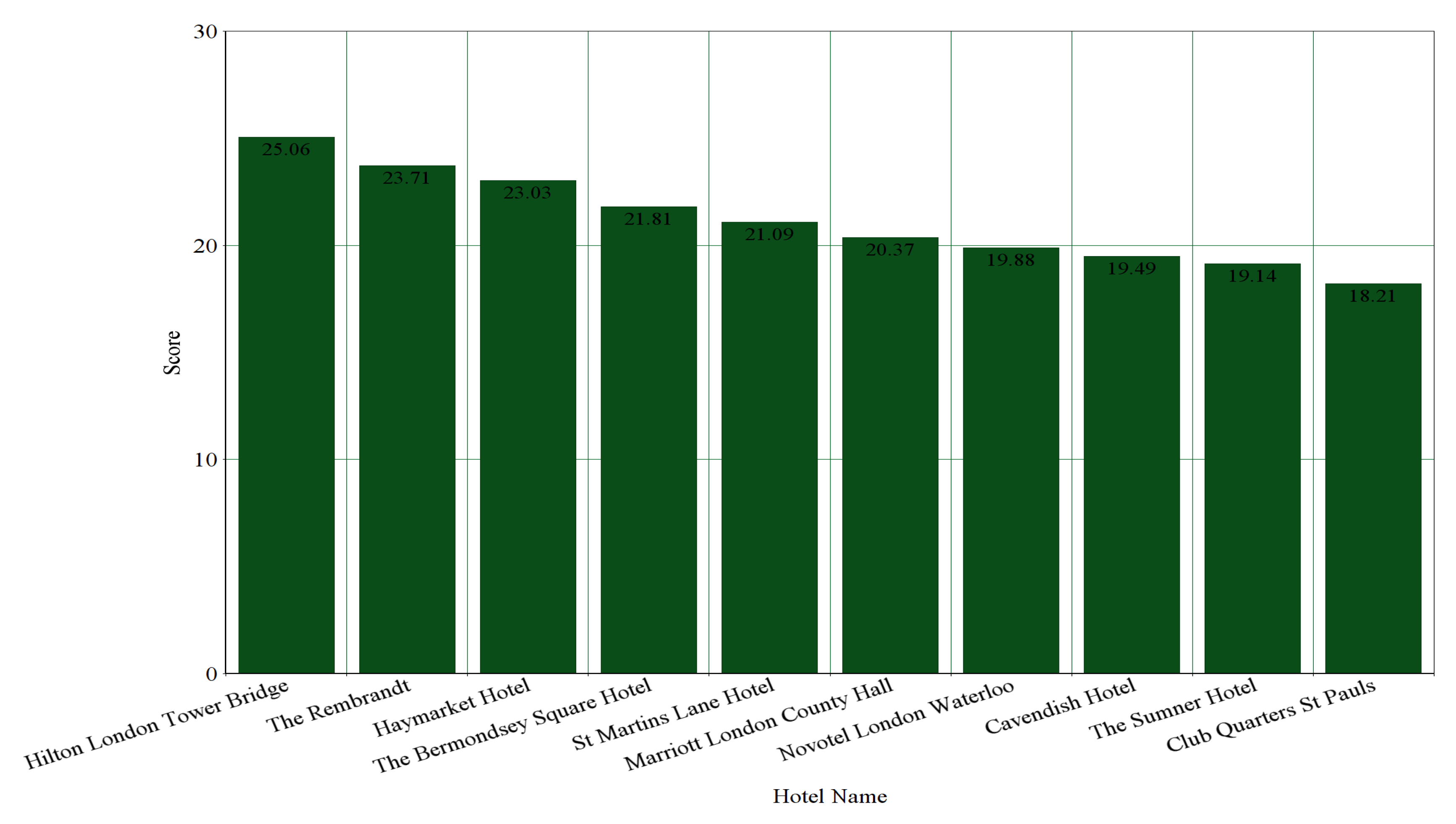
Figure 7. Considering the two datasets of the common hotels, the top-10 hotels recommended by our system are shown in
Figure 8 and
Figure 9, respectively. From
Figure 7, we can see that “Haymarket Hotel” is ranked as 2nd by average numerical ratings of Booking. It is ranked as 3rd by considering the dataset of TripAdvisor and it is ranked as 5th by considering the dataset of Booking. From
Figure 8 and
Figure 9, we can also see that “Hilton London Tower Bridge”, “London Marriott Hotel County Hall”, and ”Cavendish Hotel” are also included in the top-10 recommended hotels by considering the dataset of both hotel booking websites.
There are 214 hotels which are common in both of the hotel booking datasets. The recommendation time of both of the hotel booking datasets for the selected 214 common hotels is given below:
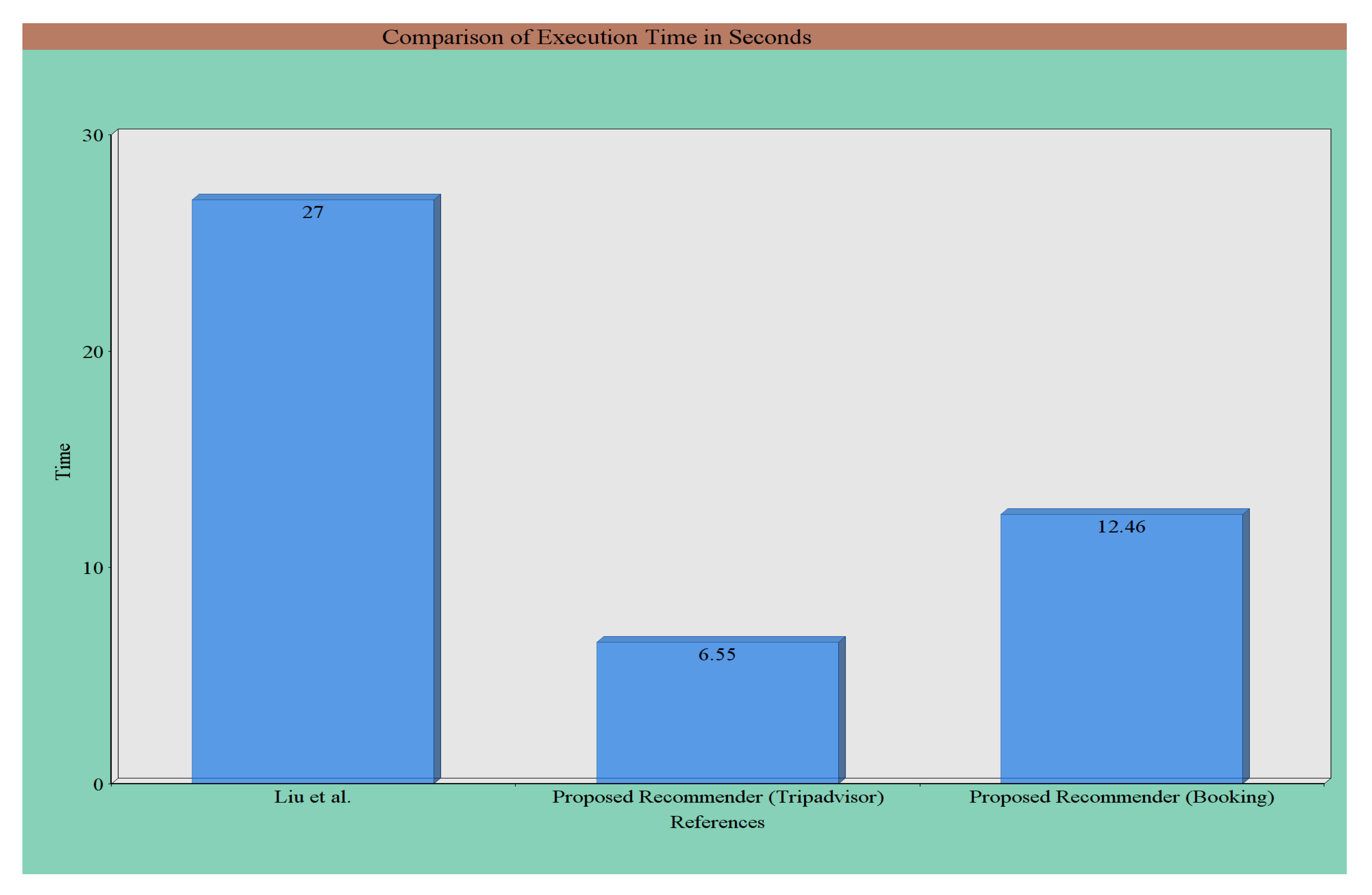
We have compared the execution time of our proposed method with that of Liu et al. [
21]. The execution time of our proposed method for the 214 common hotels by considering the data of both hotel booking websites is shown in
Table 15. The runtime comparison of our proposed method with [
21] is shown in
Figure 10. The total execution time found in the method of [
21] was about 27 s, whereas that of our method was about 6.55 s and 12.46 s for the considered two datasets, respectively. The reason for this difference is that they proposed a method for opinion-feature extraction from online reviews. They randomly selected 4000 reviews and manually extracted features and opinions from these reviews. The execution time of our method is less than that reported in [
21]. The reason is that our system generates scores by considering the impacts of different important keywords present in the review and uses the RSG algorithm. As opinions may vary a lot in the reviews from different domains, the extraction is challenging and time-consuming. Experimental results show the effectiveness of the proposed recommendation method.
5. Discussions
In this paper, we proposed a hotel recommendation system that considers the reviews of the reviewers collected from two famous hotel booking websites. Our proposed framework consists of a data storage module, review analysis module, surrounding environments evaluation module, data processing module, and recommendation generation module. To generate scores from the reviews of the hotels, we developed an RSG algorithm, which takes input as review text and generates scores by considering the impact of both single keywords and a pairwise combination of keywords as outputs. Then a method is used to generate scores by considering the nearby amenities of the hotels. By using Google Place API, the nearby amenities of the hotels are collected. The nearby amenities of hotels are categorized into eight different categories. The scores generated for each of the categories of hotels are aggregated. Then, by using our developed RSG algorithm, scores are generated from the reviews. Some hotel booking systems are available in the state-of-the-art for providing recommendations to the users. Our proposed framework considers the hotels’ nearby amenities and analyzes reviews to generate better user recommendations. The data we used in our work were collected from two famous hotel booking websites, i.e., TripAdvisor and Booking, respectively.
6. Conclusions and Future Research Directions
With the increase of applications using the Internet, the sources of data are getting richer in heterogeneity. Therefore, the various factors in the new data bring new challenges. However, it is also a chance to create novel methods to achieve better recommendation results. So, for this reason, in this paper, we consider heterogeneous data to generate hotel recommendations for the users.
We proposed a hotel recommendation framework to predict top-rated hotels based on the scores generated from reviews and nearby amenities of the hotels through experimental analysis. We have used two reliable data repositories, TripAdvisor and Booking, containing a significant number of numerical ratings, textual reviews, geolocation information, to represent the heterogeneity of data. After data pre-processing, our system generates scores from the reviews of the selected hotel booking datasets. Review scores are aggregated with the surrounding environment scores of the hotels. These heterogeneous data sources, such as ratings, textual reviews, and P.O.I.s are used in our proposed approach, and final aggregated scores are obtained as shown in the experimental results section. The rank of the topmost hotels by using the final aggregated scores are shown for different datasets in the experimental results section. We compared the results of our proposed system with the top-10 results produced by the baseline hotel booking website. In most of the existing recommendation systems, hotel ratings and rankings are typically calculated based on the reviews of previous users only, without considering the hotels surrounding environments.
When selecting a hotel for staying purpose, hotel attractions, such as tourist areas, shopping services, nightlife spots, restaurants, transportation, etc., are very important. More specifically, as most customers of the hotels are tourists, there is a need to consider the location of the hotels. Hotel review analysis is also very essential for the customers as well as the nearby amenities of the hotel. Hotel reviews shed light on the behaviors that had been perceived as pleasing or unpleasing by hotel customers. The proposed system can be helpful to the decision-makers, managers, etc., of the hotel industry to analyze online reviews on a regular basis for ensuring users’ satisfaction. The proposed recommender system suggests the decision-makers of the hotels to consider the reviews, P.O.I.s, ratings, and the integration of P.O.I.s, review scores to improve the hotel recommendation systems. Our system can also help customers select the best-matched hotels when there are several hotels of the same category based on some features such as rank.
In the future, we will study methods and techniques which will improve our recommendation systems, and we will try to design the recommender system in a way that will consider dynamically updated data containing the reviews to provide better recommendations to the users. So, for example, the hotels which have improved their facilities after receiving low reviews will be considered. Another direction for future research might be using more data from different sources with different formats. Although a large-scale dataset was used in this paper for generating recommendations, more data with different parameters from other sources can be definitely helpful.
Author Contributions
Conceptualization, M.S.A.F. and M.S.A.; investigation, M.S.A.F., M.S.A., A.S.M.K., K.A., M.J.M.C. and I.K.; methodology, M.S.A.F., M.S.A. and A.S.M.K.; supervised the research; experiment, implementation and evaluation, M.S.A.F., M.S.A. and A.S.M.K.; writing—original draft preparation, M.S.A.F.; writing—review and editing, M.S.A., A.S.M.K., K.A., M.J.M.C. and I.K. All authors have read and agreed to the published version of the manuscript.
Funding
This research received no external funding.
Conflicts of Interest
The authors declare no conflict of interest.
References
- Gellerstedt, M.; Arvemo, T. The impact of word of mouth when booking a hotel: Could a good friend’s opinion outweigh the online majority? Inf. Technol. Tour. 2019, 21, 289–311. [Google Scholar] [CrossRef] [Green Version]
- Hollenbeck, B.; Moorthy, S.; Proserpio, D. Advertising strategy in the presence of reviews: An empirical analysis. Mark. Sci. 2019, 38, 793–811. [Google Scholar] [CrossRef] [Green Version]
- Ramzan, B.; Bajwa, I.S.; Jamil, N.; Amin, R.U.; Ramzan, S.; Mirza, F.; Sarwar, N. An intelligent data analysis for recommendation systems using machine learning. Sci. Program. 2019. [Google Scholar] [CrossRef]
- Koren, Y.; Bell, R.; Volinsky, C. Matrix factorization techniques for recommender systems. Computer 2009, 42, 30–37. [Google Scholar] [CrossRef]
- Hsieh, M.Y.; Chou, W.K.; Li, K.C. Building a mobile movie recommendation service by user rating and APP usage with linked data on Hadoop. Multimed. Tools Appl. 2017, 76, 3383–3401. [Google Scholar] [CrossRef]
- Wu, C.; Wu, F.; Liu, J.; Huang, Y.; Xie, X. Arp: Aspect-aware neural review rating prediction. In Proceedings of the 28th ACM International Conference on Information and Knowledge Management, Beijing, China, 3–7 November 2019; ACM: New York, NY, USA, 2019; pp. 2169–2172. [Google Scholar]
- Xiang, Z.; Schwartz, Z.; Gerdes, J.H., Jr.; Uysal, M. What can big data and text analytics tell us about hotel guest experience and satisfaction? Int. J. Hosp. Manag. 2015, 44, 120–130. [Google Scholar] [CrossRef]
- Tripadvisor.com. Available online: https://www.tripadvisor.com/ (accessed on 29 June 2021).
- Agoda.com. Available online: https://www.agoda.com/ (accessed on 29 June 2021).
- Expedia.com. Available online: https://www.expedia.com/ (accessed on 29 June 2021).
- Booking.com. Available online: https://www.booking.com/ (accessed on 29 June 2021).
- Sharma, Y.; Bhatt, J.; Magon, R. A multi-criteria review-based hotel recommendation system. In Proceedings of the 2015 IEEE International Conference on Computer and Information Technology, Ubiquitous Computing and Communications, Dependable, Autonomic and Secure Computing, Pervasive Intelligence and Computing, Liverpool, UK, 26–28 October 2015; pp. 687–691. [Google Scholar]
- Cagliero, L.; La Quatra, M.; Apiletti, D. From Hotel Reviews to City Similarities: A Unified Latent-Space Model. Electronics 2020, 9, 197. [Google Scholar] [CrossRef] [Green Version]
- Arefin, M.S.; Chang, Z.; Morimoto, Y. Recommending Hotels by Social Conditions of Locations. In Tourism Informatics; Springer: Berlin/Heidelberg, Germany, 2015; pp. 91–106. [Google Scholar]
- Yang, X.; Zimba, B.; Qiao, T.; Gao, K.; Chen, X. Exploring IoT location information to perform point of interest recommendation engine: Traveling to a new geographical region. Sensors 2019, 19, 992. [Google Scholar] [CrossRef] [PubMed] [Green Version]
- Yang, Y.; Mao, Z.; Tang, J. Understanding guest satisfaction with urban hotel location. J. Travel Res. 2018, 57, 243–259. [Google Scholar] [CrossRef]
- Chen, C.L.; Wang, C.S.; Chiang, D.J. Location-Based Hotel Recommendation System. In International Wireless Internet Conference; Springer: Cham, Switzerland, 2018; pp. 225–234. [Google Scholar]
- Chen, L.; Chen, G.; Wang, F. Recommender systems based on user reviews: The state of the art. User Model. User-Adapt. Interact. 2015, 25, 99–154. [Google Scholar] [CrossRef]
- Nicholas, C.K.W.; Lee, A.S.H. Voice of customers: Text analysis of hotel customer reviews (cleanliness, overall environment & value for money). In Proceedings of the 2017 International Conference on Big Data Research, Osaka, Japan, 22–24 October 2017; ACM: New York, NY, USA, 2017; pp. 104–111. [Google Scholar]
- Mukta, R.B.M.; Arefin, M.S. An Agent Based Parallel and Secure Framework to Collect Feedbacks. JCP 2019, 14, 404–425. [Google Scholar] [CrossRef]
- Liu, H.; He, J.; Wang, T.; Song, W.; Du, X. Combining user preferences and user opinions for accurate recommendation. Electron. Commer. Res. Appl. 2013, 12, 14–23. [Google Scholar] [CrossRef]
- Zhang, J.J.; Mao, Z. Image of all hotel scales on travel blogs: Its impact on customer loyalty. J. Hosp. Mark. Manag. 2012, 21, 113–131. [Google Scholar] [CrossRef]
- Kaggle.com. Available online: https://www.kaggle.com/jiashenliu/515k-hotel-reviews-data-in-europe (accessed on 29 June 2021).
- Ganesan, K.; Zhai, C. Opinion-based entity ranking. Inf. Retr. 2012, 15, 116–150. [Google Scholar] [CrossRef] [Green Version]
- Foursquare.com. Available online: https://www.foursquare.com/ (accessed on 29 June 2021).
| Publisher’s Note: MDPI stays neutral with regard to jurisdictional claims in published maps and institutional affiliations. |
© 2021 by the authors. Licensee MDPI, Basel, Switzerland. This article is an open access article distributed under the terms and conditions of the Creative Commons Attribution (CC BY) license (https://creativecommons.org/licenses/by/4.0/).




 ,
,