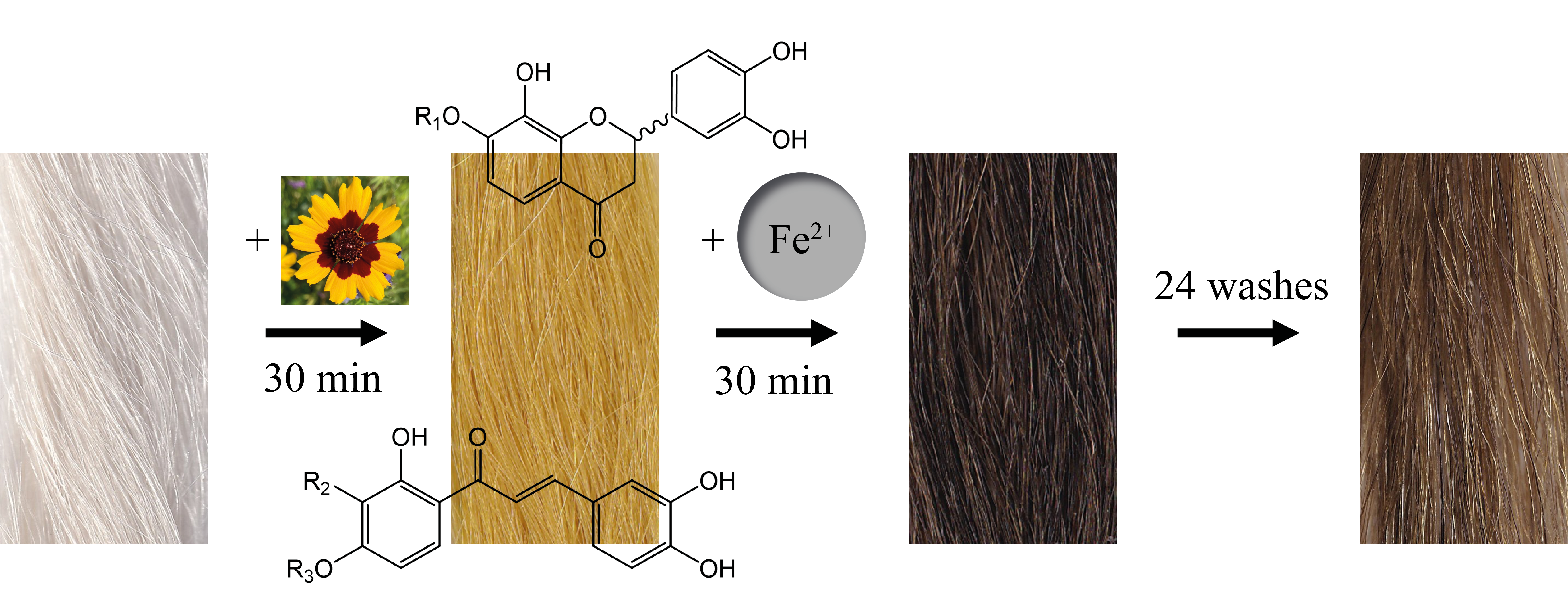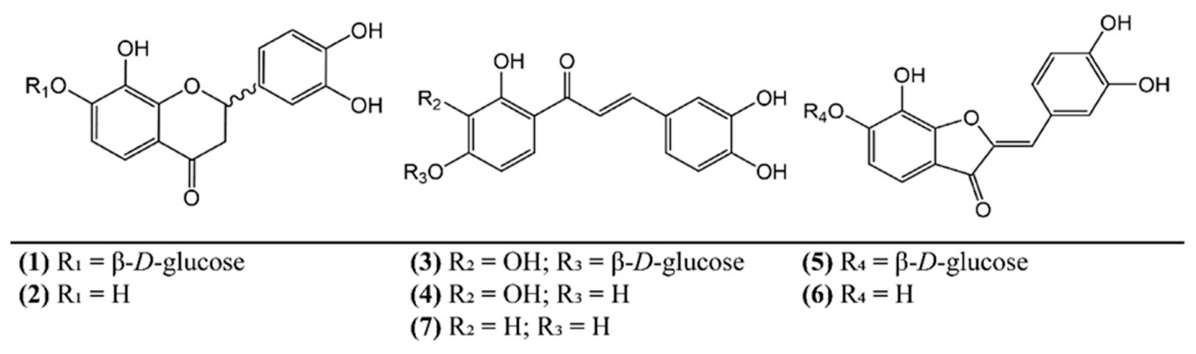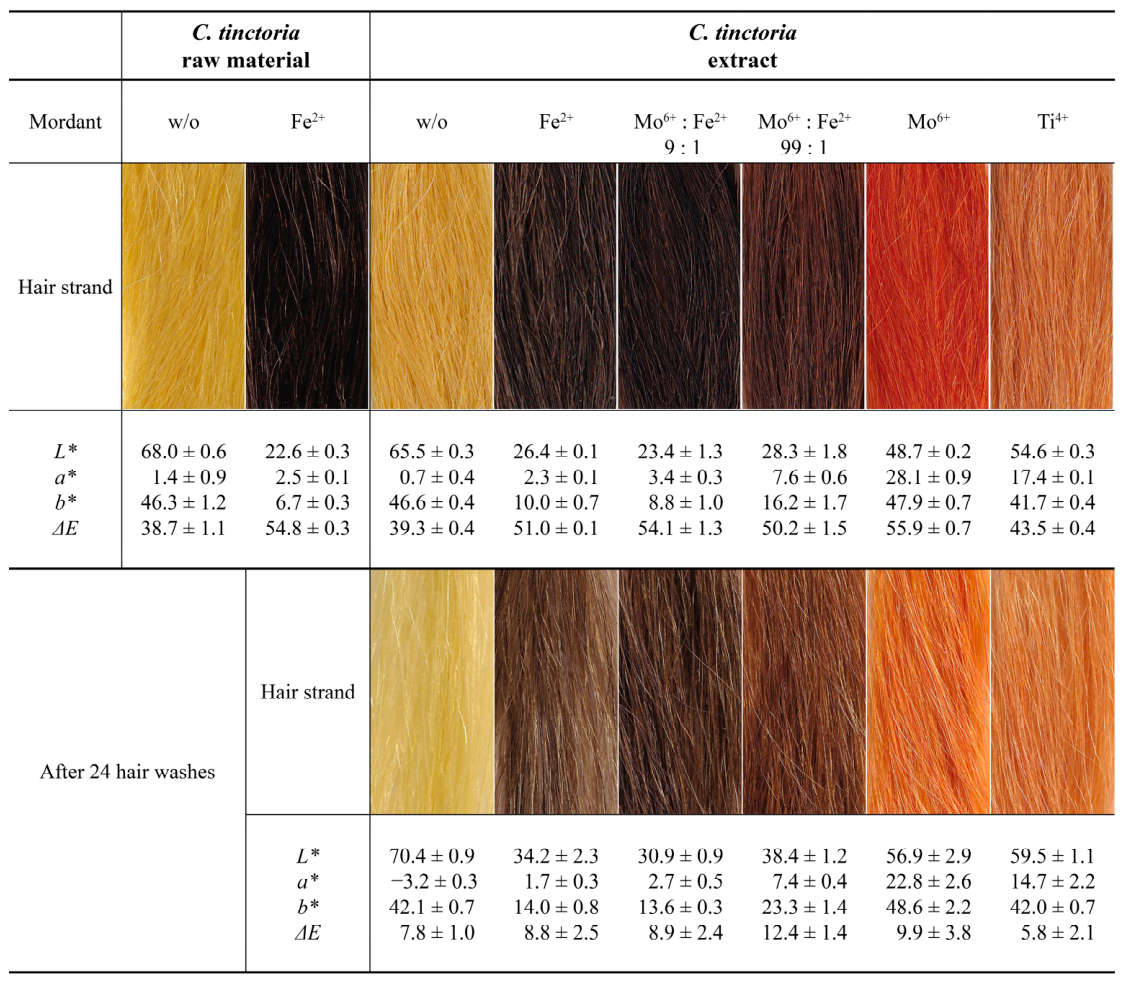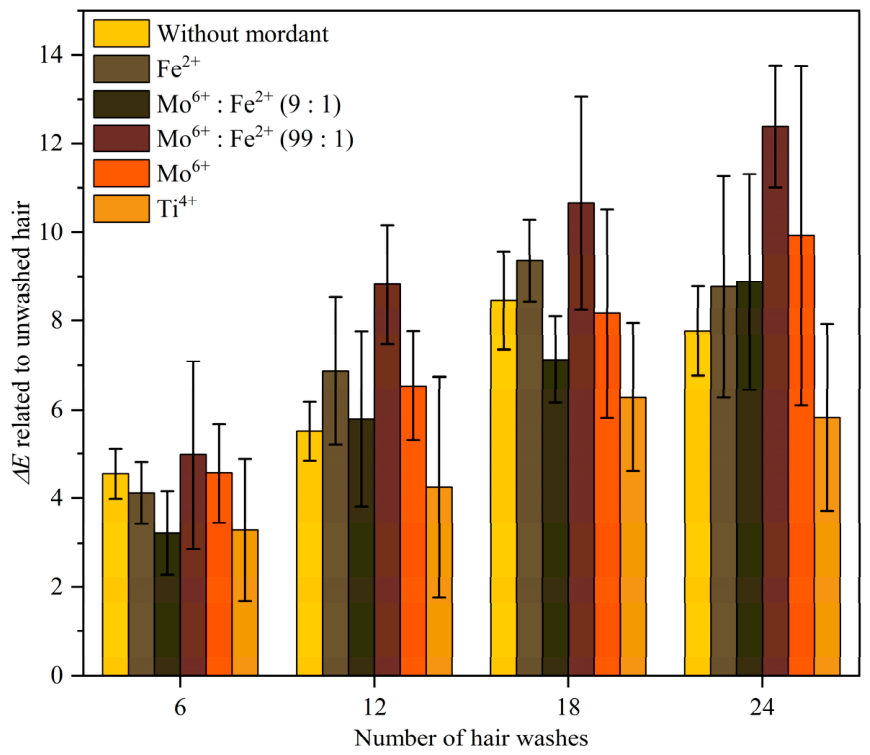

Coreopsis tinctoria Nutt. As a New Raw Material for Natural Hair Coloration: Discovering the Dyeing Potential of Chalcones



Abstract
1. Introduction
2. Materials and Methods
2.1. Materials
2.2. Extraction of C. tinctoria Raw Material
2.3. HPLC Method Setup, Procedure, and External Calibration
2.4. Determination of Total Polyphenolic Content (TPC)
2.5. Hair-Dyeing Procedure
2.5.1. Pre-Cleansing the Hair Tresses
2.5.2. General Hair-Dyeing Procedure
2.5.3. Hair Coloration Using Individual Compounds and Enzymatic Hydrolysis
2.6. L*, a* and b* Measurement
2.7. Wash Fastness
3. Results and Discussion
3.1. Dyeing Outcomes Using C. tinctoria and Mordants
3.2. Influence of Dyeing Time and Dye Concentration
3.3. Identification of Polyphenols Responsible for Dyeing Outcome
4. Conclusions
Supplementary Materials
Author Contributions
Funding
Institutional Review Board Statement
Informed Consent Statement
Data Availability Statement
Acknowledgments
Conflicts of Interest
Abbreviations
| a | y-intercept of linear regression |
| a* | Green–red coordinate in CIE-Lab color space |
| b | Slope of linear regression |
| b* | Blue–yellow coordinate in CIE-Lab color space |
| C. tinctoria | Coreopsis tinctoria Nutt. |
| CAS-RN | Chemical Abstracts Service Registry Number |
| CIE | Commission Internationale de l’Èclairge |
| CT | Charge transfer |
| DAD | Diode array detector |
| ΔE | Distance between two colors in CIE-Lab color space |
| f | Degrees of freedom |
| HPLC | High performance liquid chromatography |
| HSAB | Hard and Soft Acids and Bases |
| ISO | International Organization for Standardization |
| L* | Lightness, black–white coordinate in CIE-Lab color space |
| λC | Wavelength used for calibration |
| LOD | Limit of detection |
| LOI | Limit of inclusion |
| LOQ | Limit of quantification |
| mA | Amount of aglycon |
| MA | Molar mass of aglycon |
| mE | Amount of extract |
| mG | Amount of glycoside |
| MG | Molar mass of glycoside |
| mSL | Amount of compound in stock solution |
| MS | Mass spectrometry |
| n | Number of samples |
| NC | Number of calibration points |
| PPD | p-phenylenediamine |
| PVDF | Polyvinylidene fluoride |
| R2 | Coefficient of determination |
| SD | Standard deviation |
| SLES | Sodium laureth sulfate |
| TFC | Total flavonoid content |
| TPC | Total polyphenolic content |
| tR | Retention time |
| UV–Vis | Ultraviolet–visible |
| x | Concentration |
| xF1 | Concentration of flavonoid in μg mL−1 |
| xF2 | Concentration of flavonoid in mg per g extract |
| xi | Concentration of flavonoid in µg mL−1 used for linear calibration |
| xTFC | Total flavonoid content in mg per g extract |
| xTPC | Total polyphenolic content in mg per g extract |
| y | Area below peak |
References
- Morel, O.J.X.; Christie, R.M. Current Trends in the Chemistry of Permanent Hair Dyeing. Chem. Rev. 2011, 111, 2537–2561. [Google Scholar] [CrossRef]
- Stevens, C.; Bechthold, T.; Manian, A.; Pham, T. (Eds.) Handbook of Natural Colorants; John Wiley & Sons: Chichester, UK, 2023. [Google Scholar]
- European Commission; Directorate General for Health and Food Safety. Opinion on Resorcinol: SCCS/1619/20; European Comission: Brussels, Belgium, 2021. [Google Scholar]
- Mishra, V.; Sharma, U.; Rawat, D.; Benson, D.; Singh, M.; Sharma, R.S. Fast-Changing Life-Styles and Ecotoxicity of Hair Dyes Drive the Emergence of Hidden Toxicants Threatening Environmental Sustainability in Asia. Environ. Res. 2020, 184, 109253. [Google Scholar] [CrossRef]
- Shim, J.; Woo, J.; Yeo, H.; Kang, S.; Kwon, B.; Jung Lee, E.; Oh, J.; Jeong, E.; Lim, J.; Gyoo Park, S. The Clean Beauty Trend Among Millennial and Generation Z Consumers: Assessing the Safety, Ethicality, and Sustainability Attributes of Cosmetic Products. Sage Open 2024, 14, 2. [Google Scholar] [CrossRef]
- Cui, H.; Xie, W.; Hua, Z.; Cao, L.; Xiong, Z.; Tang, Y.; Yuan, Z. Recent Advancements in Natural Plant Colorants Used for Hair Dye Applications: A Review. Molecules 2022, 27, 8062. [Google Scholar] [CrossRef] [PubMed]
- Dallmann, N.; Vill, V.; Straske, F. A Novel and Reliable Analysis Method Utilizing Hennosides to Improve the Quality Assessment of Lawsonia inermis L. Material Used in Cosmetic Formulations. Cosmetics 2025, 12, 99. [Google Scholar] [CrossRef]
- Dallmann, N.; Vill, V.; Straske, F. Reinventing Henna: Enzyme-catalysed Colour Release from Stabilized Lawsonia inermis L. Extracts. Int. J. Cosmet. Sci. 2025, 48, 310–326. [Google Scholar] [CrossRef]
- Lueadnakrob, K.; Juntrapirom, S.; Rongthong, T.; Kanjanakawinkul, W.; Chaiyana, W. Functional Performance and Safety Evaluation of Optimized Plant-Based Dye Mixtures for Intense Hair Coloration. Cosmetics 2025, 12, 78. [Google Scholar] [CrossRef]
- Zhang, X.; Boytner, R.; Cabrera, J.L.; Laursen, R. Identification of Yellow Dye Types in Pre-Columbian Andean Textiles. Anal. Chem. 2007, 79, 1575–1582. [Google Scholar] [CrossRef]
- Mostacero León, J.; López Medina, S.E.; Yabar, H.; De La Cruz Castillo, J. Preserving Traditional Botanical Knowledge: The Importance of Phytogeographic and Ethnobotanical Inventory of Peruvian Dye Plants. Plants 2017, 6, 63. [Google Scholar] [CrossRef] [PubMed]
- Begmatov, N.; Li, J.; Bobakulov, K.; Numonov, S.; Aisa, H.A. The Chemical Components of Coreopsis tinctoria Nutt. and Their Antioxidant, Antidiabetic and Antibacterial Activities. Nat. Prod. Res. 2020, 34, 1772–1776. [Google Scholar] [CrossRef]
- Zălaru, C.; Crişan, C.; Călinescu, I.; Moldovan, Z.; Ţârcomnicu, I.; Litescu, S.; Tatia, R.; Moldovan, L.; Boda, D.; Iovu, M. Polyphenols in Coreopsis tinctoria Nutt. Fruits and the Plant Extracts Antioxidant Capacity Evaluation. Cent. Eur. J. Chem. 2014, 12, 858–867. [Google Scholar] [CrossRef]
- Yu, Q.; Chen, W.; Zhang, J.; Huang, D.; Shi, W.; Chen, H.; Yan, C. Purification, Structural Characterization, and Bioactivities of a Polysaccharide from Coreopsis tinctoria. Food Front. 2022, 3, 736–748. [Google Scholar] [CrossRef]
- Shen, J.; Hu, M.; Tan, W.; Ding, J.; Jiang, B.; Xu, L.; Hamulati, H.; He, C.; Sun, Y.; Xiao, P. Traditional Uses, Phytochemistry, Pharmacology, and Toxicology of Coreopsis tinctoria Nutt.: A Review. J. Ethnopharmacol. 2021, 269, 113690. [Google Scholar] [CrossRef]
- Zhi, Q.; Li, Y.; Li, F.; Tian, Y.; Li, F.; Tang, Y.; Yang, Y.; Yin, R.; Ming, J. Polyphenols Extracted from Coreopsis tinctoria Buds Exhibited a Protective Effect against Acute Liver Damage. J. Funct. Foods 2018, 44, 201–208. [Google Scholar] [CrossRef]
- Ma, Z.; Zheng, S.; Han, H.; Meng, J.; Yang, X.; Zeng, S.; Zhou, H.; Jiang, H. The Bioactive Components of Coreopsis tinctoria (Asteraceae) Capitula: Antioxidant Activity in Vitro and Profile in Rat Plasma. J. Funct. Foods 2016, 20, 575–586. [Google Scholar] [CrossRef]
- Li, N.; Meng, D.; Pan, Y.; Cui, Q.; Li, G.; Ni, H.; Sun, Y.; Qing, D.; Jia, X.; Pan, Y.; et al. Anti-Neuroinflammatory and NQO1 Inducing Activity of Natural Phytochemicals from Coreopsis tinctoria. J. Funct. Foods 2015, 17, 837–846. [Google Scholar] [CrossRef]
- Li, Y.; Huang, C.; Fu, W.; Zhang, H.; Lao, Y.; Zhou, H.; Tan, H.; Xu, H. Screening of the Active Fractions from the Coreopsis tinctoria Nutt. Flower on Diabetic Endothelial Protection and Determination of the Underlying Mechanism. J. Ethnopharmacol. 2020, 253, 112645. [Google Scholar] [CrossRef] [PubMed]
- Lam, S.; Liu, X.; Chen, X.; Hu, D.; Zhao, J.; Long, Z.; Fan, B.; Li, S. Chemical Characteristics of Different Parts of Coreopsis Tinctoria in China Using Microwave-assisted Extraction and High-performance Liquid Chromatography Followed by Chemometric Analysis. J. Sep. Sci. 2016, 39, 2919–2927. [Google Scholar] [CrossRef]
- Shimokoriyama, M. Anthochlor Pigments of Coreopsis tinctoria. J. Am. Chem. Soc. 1957, 79, 214–220. [Google Scholar] [CrossRef]
- Yang, Y.; Sun, X.; Liu, J.; Kang, L.; Chen, S.; Ma, B.; Guo, B. Quantitative and Qualitative Analysis of Flavonoids and Phenolic Acids in Snow Chrysanthemum (Coreopsis tinctoria Nutt.) by HPLC-DAD and UPLC-ESI-QTOF-MS. Molecules 2016, 21, 1307. [Google Scholar] [CrossRef]
- Crawford, D.J.; Smith, E.B. Leaf Flavonoid Chemistry and Taxonomy of Coreopsis Sect. Coreopsis. Biochem. Syst. Ecol. 1985, 13, 115–118. [Google Scholar] [CrossRef]
- Geissman, T.A.; Harborne, J.B.; Seikel, M.K. Anthochlor Pigments. XI. The Constituents of Coreopsis Maritima. Reinvestigation of Coreopsis Gigantea. J. Am. Chem. Soc. 1956, 78, 825–829. [Google Scholar] [CrossRef]
- Nakayama, T. Biochemistry and Regulation of Aurone Biosynthesis. Biosci. Biotechnol. Biochem. 2022, 86, 557–573. [Google Scholar] [CrossRef] [PubMed]
- Velmurugan, P.; Shim, J.; Seo, S.-K.; Oh, B.-T. Extraction of Natural Dye from Coreopsis tinctoria Flower Petals for Leather Dyeing—An Eco-Friendly Approach. Fibers Polym. 2016, 17, 1875–1883. [Google Scholar] [CrossRef]
- Su, X.; Liu, G.; Zheng, M.; Li, X.; Song, K.; Shi, D. Integrating the Dual Functionality of Plant Tannins for Natural Hair Dyeing: A Critical Review on Mechanisms, Sustainability and Formulation Innovation. Color. Technol. 2026, 142, 177–195. [Google Scholar] [CrossRef]
- Cui, H.; Cai, R.; Hua, Z.; Tang, Y. Plant Colorants for Natural Hair Coloration: Dyeing Optimization and Photostability Assessment. Sustain. Chem. Pharm. 2023, 36, 101285. [Google Scholar] [CrossRef]
- Fang, C.; Ma, L.; Chen, T.; Chen, Y.; Li, Z.; Yan, X.; Wang, J. Multifunctional Amino Acid-Assisted Hair Dyeing with Metal-Polyphenol Networks. Fibers Polym. 2025, 26, 4933–4942. [Google Scholar] [CrossRef]
- Jia, D.; Shen, Y.; Zhang, X.; Wang, Y.; Su, R.; Qi, W. Colorful Pigments Based on Multicomponent Metal-Phenol Network Nanoparticles for Hair Dyeing. ChemistrySelect 2022, 7, e202203886. [Google Scholar] [CrossRef]
- Geng, H.; Zhuang, L.; Li, M.; Liu, H.; Caruso, F.; Hao, J.; Cui, J. Interfacial Assembly of Metal–Phenolic Networks for Hair Dyeing. ACS Appl. Mater. Interfaces 2020, 12, 29826–29834. [Google Scholar] [CrossRef]
- Sargsyan, L.; Hippe, T.; Manneck, H.; Vill, V. Tannin-Mordant Coloration with Matcha (Camelia Sinensis) and Iron(II)-Lactate on Human Hair Tresses. Molecules 2021, 26, 829. [Google Scholar] [CrossRef] [PubMed]
- Sargsyan, L.; Vill, V.; Hippe, T. Investigations of Vegetable Tannins as Hair Dyes and Their Interactions with Pre-bleached Hair Fibres. Int. J. Cosmet. Sci. 2020, 42, 320–327. [Google Scholar] [CrossRef]
- Han, S.Y.; Kang, E.K.; Choi, I.S. Iron Gall Ink Revisited: A Surfactant-Free Emulsion Technology for Black Hair-Dyeing Formulation. Cosmetics 2021, 8, 9. [Google Scholar] [CrossRef]
- Han, S.; Hong, S.-P.; Kang, E.; Kim, B.; Lee, H.; Kim, W.; Choi, I. Iron Gall Ink Revisited: Natural Formulation for Black Hair-Dyeing. Cosmetics 2019, 6, 23. [Google Scholar] [CrossRef]
- Prasetyo, S.; Bertha, S.; Sugih, A.K.; Tan, D.; Kristianto, H. Valorization of Mangosteen (Garcinia mangostana L.) Waste as Green Hair Dyeing Pigment: Effect of Mordant and Formula Optimization. Sustain. Chem. One World 2026, 9, 100176. [Google Scholar] [CrossRef]
- European Union. Regulation (EC) No 1223/2009 of the European Parliament and of the Council on Cosmetic Products. Off. J. Eur. Union 2009, L 342, 59–209. [Google Scholar]
- European Union. Regulation (EC) No 1333/2008 of the European Parliament and of the Council on Food Additives. Off. J. Eur. Union 2008, L 354, 16–33. [Google Scholar]
- Müllner, A.R.M.; Pahl, R.; Brandhuber, D.; Peterlik, H. Porosity at Different Structural Levels in Human and Yak Belly Hair and Its Effect on Hair Dyeing. Molecules 2020, 25, 2143. [Google Scholar] [CrossRef] [PubMed]
- Chen, L.X.; Hu, D.J.; Lam, S.C.; Ge, L.; Wu, D.; Zhao, J.; Long, Z.R.; Yang, W.J.; Fan, B.; Li, S.P. Comparison of Antioxidant Activities of Different Parts from Snow Chrysanthemum (Coreopsis tinctoria Nutt.) and Identification of Their Natural Antioxidants Using High Performance Liquid Chromatography Coupled with Diode Array Detection and Mass Spectrometry and 2,2′-Azinobis(3-Ethylbenzthiazoline-Sulfonic Acid)Diammonium Salt-Based Assay. J. Chromatogr. A 2016, 1428, 134–142. [Google Scholar] [CrossRef]
- Funk, W.; Dammann, V.; Donnevert, G. Qualitätssicherung in Der Analytischen Chemie, 2nd ed.; Wiley-VHC: Weinheim, Germany, 2005. [Google Scholar]
- Kromidas, S.; Kuss, H.-J. (Eds.) Chromatogramme Richtig Integrieren Und Bewerten: Ein Praxishandbuch Für Die HPLC Und GC; Wiley-VHC: Weinheim, Germany, 2008. [Google Scholar]
- ISO 14502-1:2005; Determination of Substances Characteristic of Green and Black Tea Part 1: Content of Total Polyphenols in Tea—Colorimetric Method Using Folin-Ciocalteu Reagent. ISO: Geneva, Switzerland, 2005.
- Yao, X.; Zhang, T.; Wang, B.; Chin, W. Determination Method of Total Flavonoids in Coreopsis tinctoria Nutt. from Xinjiang. J. Shihezi Univ. Nat. Sci. 2015, 33, 183–187. [Google Scholar]
- ISO/CIE 11664-4:2019; Colorimetry-Part 4: CIE 1976 L*a*b* Colour Space. ISO: Geneva, Switzerland, 2019.
- Machado, A.V.; Menezes, L.R.O.; Santana, A.A.M.; Marques, M.N.; De Lima, A.K.; Cano, A.; Severino, P.; Souto, E.B.; Cardoso, J.C. Genipa americana L.: A New Phytochemical for White Hair Coloring. Chem. Biodivers. 2023, 20, e202300083. [Google Scholar] [CrossRef]
- Karma, I.G.M. Determination and Measurement of Color Dissimilarity. IJEET 2020, 5, 67–71. [Google Scholar] [CrossRef]
- Simon, K. Farbe Im Digitalen Publizieren: Konzepte Der Digitalen Farbwiedergabe Für Office, Design Und Software, 6th ed.; Springer: Berlin/Heidelberg, Germany; Thalwil, Switzerland, 2008. [Google Scholar]
- Hachmann, J.K.; Sauler, J.M.; Ruhmlieb, C.; Vill, V.; Straske, F. Red Era: Dyeing Yak Hair Fibres Red with In Situ Generated Silver Nanoparticles Using Silver Nitrate and a Flavonoid-containing Plant Extract. Color. Technol. 2026, 142, 439–455. [Google Scholar] [CrossRef]
- Lefebvre, T.; Destandau, E.; Lesellier, E. Selective Extraction of Bioactive Compounds from Plants Using Recent Extraction Techniques: A Review. J. Chromatogr. A 2021, 1635, 461770. [Google Scholar] [CrossRef] [PubMed]
- Malesev, D.; Kuntic, V. Investigation of Metal-Flavonoid Chelates and the Determination of Flavonoids via Metal-Flavonoid Complexing Reactions. J. Serbian Chem. Soc. 2007, 72, 921–939. [Google Scholar] [CrossRef]
- Ho, T.-L. Hard Soft Acids Bases (HSAB) Principle and Organic Chemistry. Chem. Rev. 1975, 75, 1–20. [Google Scholar] [CrossRef]
- Bate, L.C. Adsorption and Elution of Trace Elements on Human Hair. Appl. Radiat. Isot. 1966, 17, 417–423. [Google Scholar] [CrossRef]
- Hetherington, K.; Tidder, A.; Tack, B.J.; Benohoud, M.; Nowlan, D.; Zahar, A.; Prater, D.; Zguris, J.C.; Rayner, C.M.; Blackburn, R.S. Analysis and Quantification of the Propensity of Hair Dyes to Desorb from Human Hair Fibre Using an Accelerated 48-Wash Method. Microchem. J. 2026, 220, 116613. [Google Scholar] [CrossRef]
- Zhou, Y.; Foltis, L.; Moore, D.J.; Rigoletto, R. Protection of Oxidative Hair Color Fading from Shampoo Washing by Hydrophobically Modified Cationic Polymers. J. Cosmet. Sci. 2009, 60, 217–238. [Google Scholar] [CrossRef]
- Mallya, R.; Ravikumar, P. Formulation and Evaluation of Natural Hair Colorants. Int. J. Pharm. Pharm. Sci. 2015, 7, 347–349. [Google Scholar]
- Boga, C.; Delpivo, C.; Ballarin, B.; Morigi, M.; Galli, S.; Micheletti, G.; Tozzi, S. Investigation on the Dyeing Power of Some Organic Natural Compounds for a Green Approach to Hair Dyeing. Dye. Pigment. 2013, 97, 9–18. [Google Scholar] [CrossRef]
- Guo, L.; Zhang, W.; Li, S.; Ho, C.-T. Chemical and Nutraceutical Properties of Coreopsis tinctoria. J. Funct. Foods 2015, 13, 11–20. [Google Scholar] [CrossRef]
- Klaas, S.; Vill, V.; Straske, F. Indirubin as a Red Hair Colourant from Indigofera tinctoria L. Int. J. Cosmet. Sci. 2025, 47, 877–886. [Google Scholar] [CrossRef]
- Blackburn, R.S.; Bechtold, T.; John, P. The Development of Indigo Reduction Methods and Pre-reduced Indigo Products. Color. Technol. 2009, 125, 193–207. [Google Scholar] [CrossRef]
- Minami, Y.; Nishimura, O.; Hara-Nishimura, I.; Nishimura, M.; Matsubara, H. Tissue and Intracellular Localization of Indican and the Purification and Characterization of Indican Synthase from Indigo Plants. Plant Cell Physiol. 2000, 41, 218–225. [Google Scholar] [CrossRef]




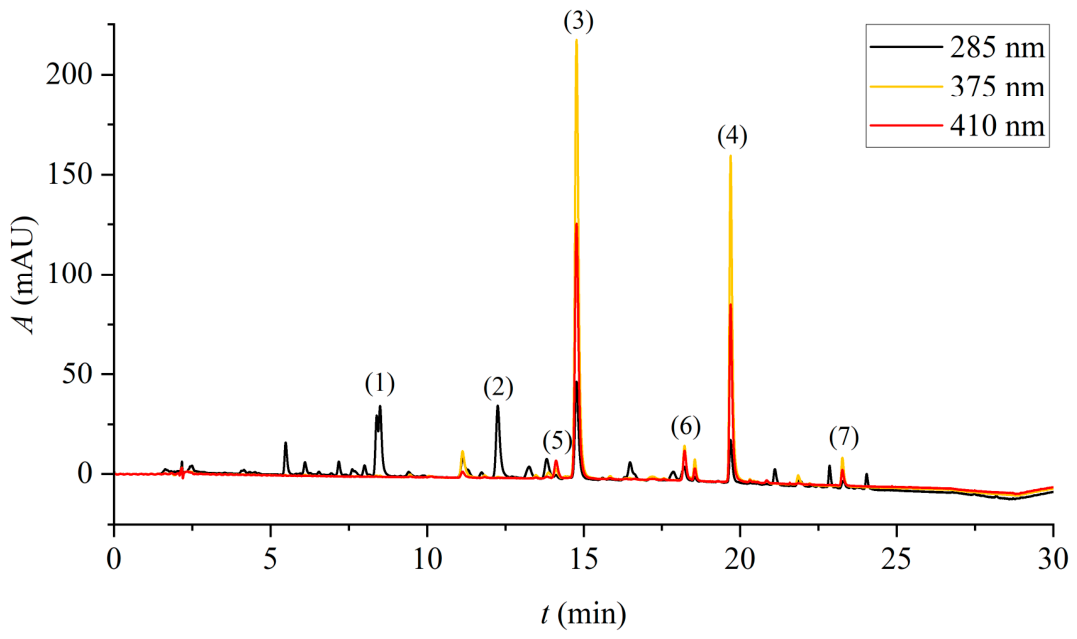
| Compound | tR (min) | λC (nm) | R2 | Linear Regression Equation | Concentration Range (µg mL−1) | Nc | LOD (µg mL−1) | LOI (µg mL−1) | LOQ (µg mL−1) | mSL (mg) |
|---|---|---|---|---|---|---|---|---|---|---|
| Marein | 14.7 | 375 | 0.999 | 11 | 0.477 | 0.954 | 1.430 | 4.86 | ||
| Okanin | 19.7 | 375 | 0.999 | 11 | 0.088 | 0.177 | 0.263 | 4.28 | ||
| Flavanomarein | 8.5 | 285 | 0.998 | 8 | 0.403 | 0.819 | 1.209 | 5.02 | ||
| Isookanin | 12.2 | 285 | 0.999 | 11 | 0.089 | 0.180 | 0.268 | 4.94 | ||
| Maritimein | 14.2 | 410 | 0.999 | 9 | 0.212 | 0.430 | 0.636 | 3.63 | ||
| Maritimetin | 18.2 | 410 | 0.998 | 6 | 0.120 | 0.248 | 0.361 | 4.84 | ||
| Butein | 23.3 | 375 | 0.991 | 6 | 0.309 | 0.618 | 0.927 | 5.02 |
| Compound | R2 | Linear Regression Equation | Concentration Range (µg mL−1) | Nc | mSL (mg) |
|---|---|---|---|---|---|
| Gallic Acid | 0.9990 | 1.000–10.00 | 5 | 10.00 | |
| Quercetin | 0.9942 | 1.000–10.00 | 5 | 10.00 |
| Target Compound | Starting Compound | |
|---|---|---|
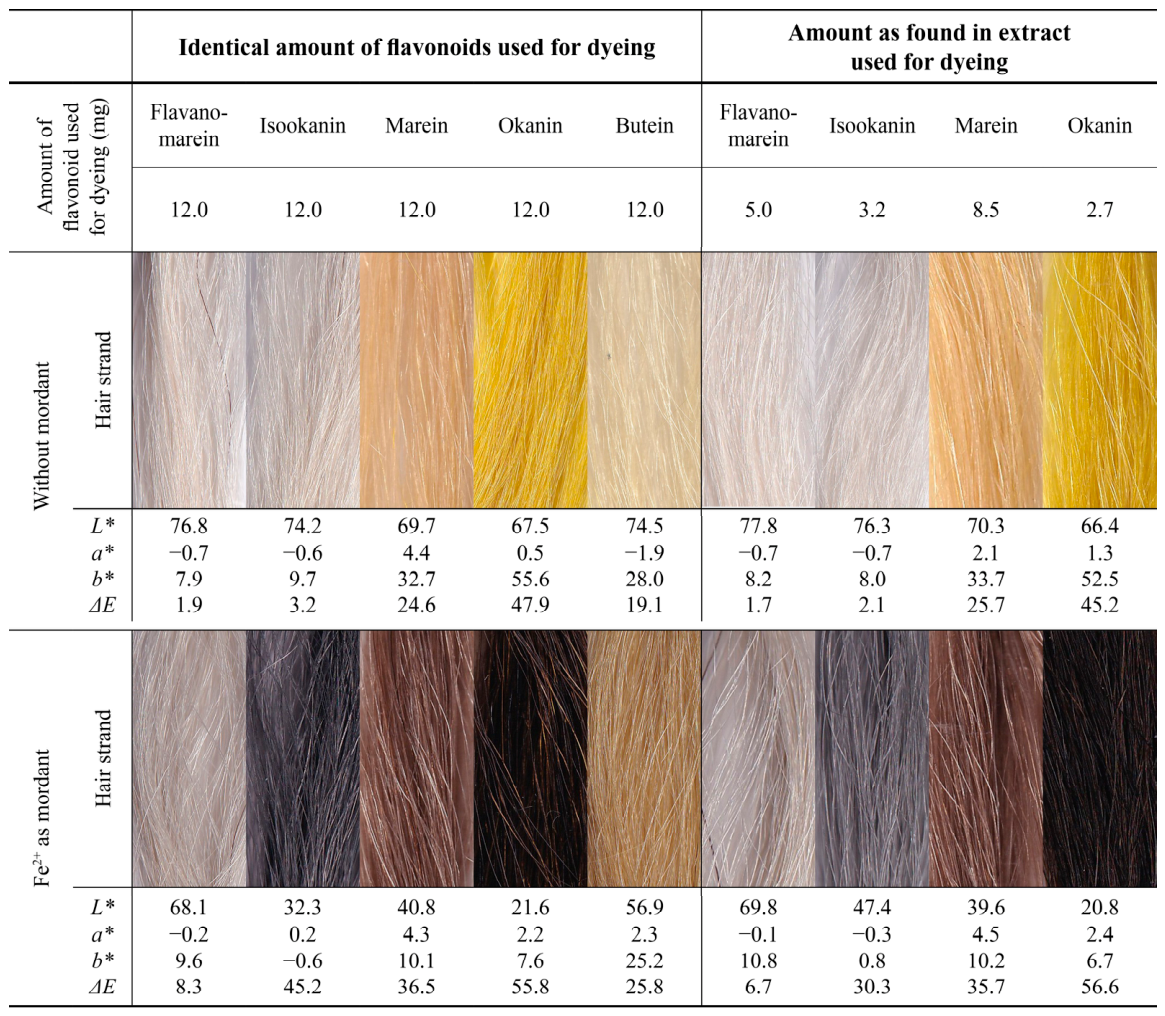
| Amount that can be found in 1% (w/v) C. tinctoria extract | 8.51 mg marein | - |
| 2.70 mg okanin | 4.20 mg marein 1 | |
| 5.00 mg flavanomarein | - | |
| 3.30 mg isookanin | 5.00 mg flavanomarein 1 | |
| Identical amount of flavonoids | 12.0 mg marein | - |
| 12.0 mg okanin | 18.8 mg marein 1 | |
| 12.0 mg flavanomarein | - | |
| 12.0 mg isookanin | 18.8 mg marein 1 | |
| 12.0 mg butein | - |
| Variation in C. tinctoria Treatment Time | Variation in Ferrous Lactate Treatment Time | |||||
|---|---|---|---|---|---|---|
| Time (min) | 5 | 10 | 15 | 5 | 10 | 15 |
| L* | 28.2 ± 0.5 | 25.3 ± 2.0 | 22.2 ± 0.4 | 28.4 ± 0.7 | 26.1 ± 2.4 | 24.1 ± 0.7 |
| a* | 3.0 ± 0.1 | 2.6 ± 0.2 | 2.3 ± 0.0 | 2.2 ± 0.2 | 2.3 ± 0.0 | 2.2 ± 0.0 |
| b* | 7.6 ± 0.4 | 7.5 ± 0.6 | 6.3 ± 0.3 | 13.0 ± 0.5 | 10.5 ± 1.7 | 9.3 ± 0.6 |
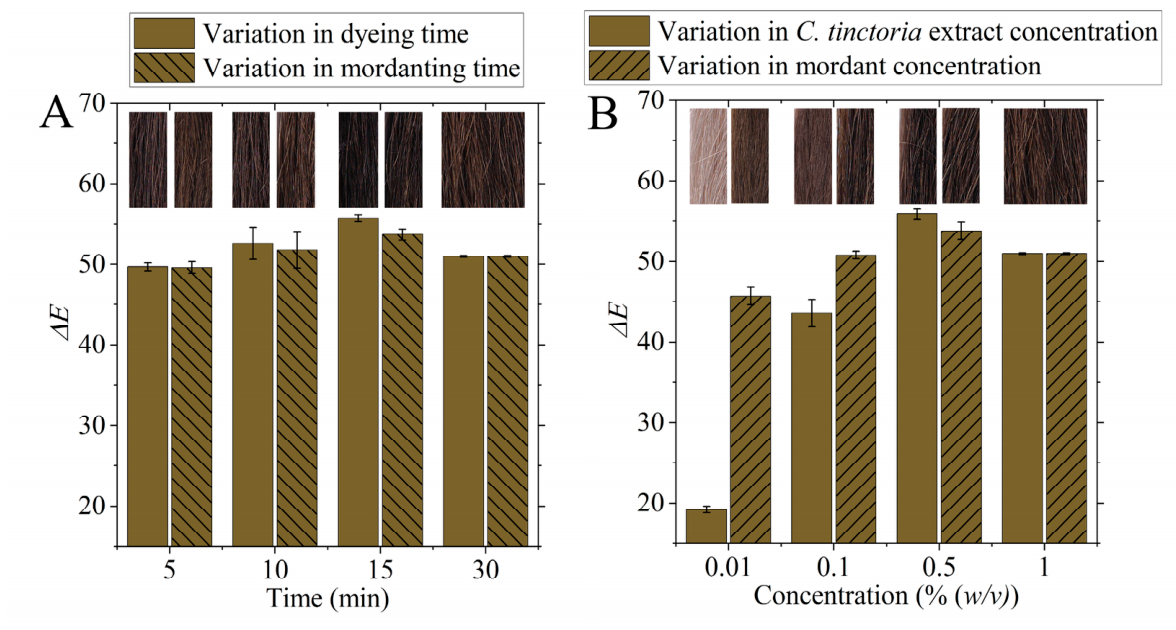
| ΔE | 49.7 ± 0.5 | 52.6 ± 2.0 | 55.7 ± 0.4 | 49.6 ± 0.7 | 51.8 ± 2.3 | 53.7 ± 0.7 |
| Variation in C. tinctoria Concentration | Variation in Ferrous Lactate Concentration | |||||
|---|---|---|---|---|---|---|
| Concentration (% (w/v)) | 0.01 | 0.1 | 0.5 | 0.01 | 0.1 | 0.5 |
| L* | 58.6 ± 0.3 | 34.0 ± 1.7 | 21.7 ± 0.6 | 32.2 ± 1.2 | 26.8 ± 0.6 | 23.8 ± 1.1 |
| a* | 2.8 ± 0.1 | 3.4 ± 0.2 | 2.2 ± 0.1 | 1.8 ± 0.1 | 2.0 ± 0.2 | 2.1 ± 0.3 |
| b* | 11.6 ± 0.4 | 10.0 ± 0.2 | 6.6 ± 0.5 | 15.5 ± 0.9 | 11.3 ± 0.9 | 8.8 ± 1.3 |
| ΔE | 19.2 ± 0.4 | 43.6 ± 1.7 | 55.9 ± 0.7 | 45.7 ± 1.1 | 50.8 ± 0.5 | 53.8 ± 1.1 |
| xF2 (mg per g Extract) | Extract Yield (%) | xTPC (mg per g Extract) | xTFC (mg per g Extract) | ||||||
|---|---|---|---|---|---|---|---|---|---|
| (1) Flavano-marein | (2) Isookanin | (3) Marein | (4) Okanin | (5) Mariti-mein | (6) Mariti-metin | (7) Butein | |||
| 19.93 ± 1.28 | 12.76 ± 0.98 | 34.03 ± 4.20 | 10.61 ± 1.42 | 2.89 ± 0.93 1 | 1.88 ± 0.13 1 | 0.93 ± 0.13 | 41.3 ± 9.7 | 130.45 ± 3.40 | 110.03 ± 2.86 |
Disclaimer/Publisher’s Note: The statements, opinions and data contained in all publications are solely those of the individual author(s) and contributor(s) and not of MDPI and/or the editor(s). MDPI and/or the editor(s) disclaim responsibility for any injury to people or property resulting from any ideas, methods, instructions or products referred to in the content. |
© 2026 by the authors. Licensee MDPI, Basel, Switzerland. This article is an open access article distributed under the terms and conditions of the Creative Commons Attribution (CC BY) license.
Share and Cite
Sauler, J.M.; Vill, V.; Straske, F. Coreopsis tinctoria Nutt. As a New Raw Material for Natural Hair Coloration: Discovering the Dyeing Potential of Chalcones. Cosmetics 2026, 13, 127. https://doi.org/10.3390/cosmetics13030127
Sauler JM, Vill V, Straske F. Coreopsis tinctoria Nutt. As a New Raw Material for Natural Hair Coloration: Discovering the Dyeing Potential of Chalcones. Cosmetics. 2026; 13(3):127. https://doi.org/10.3390/cosmetics13030127
Chicago/Turabian StyleSauler, Jule Marie, Volkmar Vill, and Fabian Straske. 2026. "Coreopsis tinctoria Nutt. As a New Raw Material for Natural Hair Coloration: Discovering the Dyeing Potential of Chalcones" Cosmetics 13, no. 3: 127. https://doi.org/10.3390/cosmetics13030127
APA StyleSauler, J. M., Vill, V., & Straske, F. (2026). Coreopsis tinctoria Nutt. As a New Raw Material for Natural Hair Coloration: Discovering the Dyeing Potential of Chalcones. Cosmetics, 13(3), 127. https://doi.org/10.3390/cosmetics13030127