1. Introduction
Traditionally considered a passive physical barrier, the skin is now recognized as a complex neuroimmunoendocrine organ capable of sensing, integrating, and responding to environmental and psychological stimuli [
1,
2,
3]. This paradigm shift has been driven by advances in dermatology, psychoneuroimmunology, and neuroscience, which have progressively challenged the strict separation between peripheral organs and the central nervous system (CNS). Within this evolving framework, the concept of the skin–brain axis has emerged to describe a bidirectional communication network through which the skin and brain influence each other via neural, immune, and endocrine pathways [
4,
5].
In parallel with these biological insights, cosmetic science has undergone a substantial conceptual evolution. Conventional skincare approaches, historically focused on barrier repair and aesthetic outcomes, are increasingly complemented by formulations designed to interact with cutaneous sensory, immune, and neuroendocrine mechanisms [
6].
This transition has led to the emergence of neurocosmetics, a transdisciplinary field at the intersection of dermatology, neuroscience, and psychodermatology, which aims to modulate cutaneous neurobiological processes with potential effects on emotional states, stress perception, and psychological well-being [
6,
7].
For the purposes of this review, neurocosmetics are defined as cosmetic products or formulation strategies designed to interact with peripheral cutaneous neurosensory, neuroimmune, or neuroendocrine pathways that are biologically relevant to the skin–brain axis. This definition should be distinguished from broader commercial claims suggesting generic psychological or emotional benefits, which may instead reflect expectancy, sensorial pleasure, or contextual meaning rather than direct modulation of the skin’s nervous system.
The skin–brain axis refers to an integrated, bidirectional system linking the cutaneous nervous, immune, and endocrine compartments with central neural circuits involved in emotion regulation, stress responsiveness, cognition, and social behavior [
4,
8]. This axis is supported by shared embryological origins of the skin and nervous system, extensive sensory and autonomic innervation, and overlapping molecular mediators, including neuropeptides, neurotrophins, cytokines, and stress hormones [
1,
4]. Importantly, the skin is not merely a passive recipient of central signals but an active generator of neuroactive mediators that can exert local, systemic, and central effects [
2,
3].
From a psychobiological perspective, skin represents a privileged interface between the external environment and internal emotional states. Psychological stress has been shown to exacerbate inflammatory and functional skin disorders through activation of neuroendocrine and immune pathways, while chronic cutaneous inflammation and barrier dysfunction can, in turn, contribute to mood disturbances, anxiety, and alterations in self-perception [
5,
8,
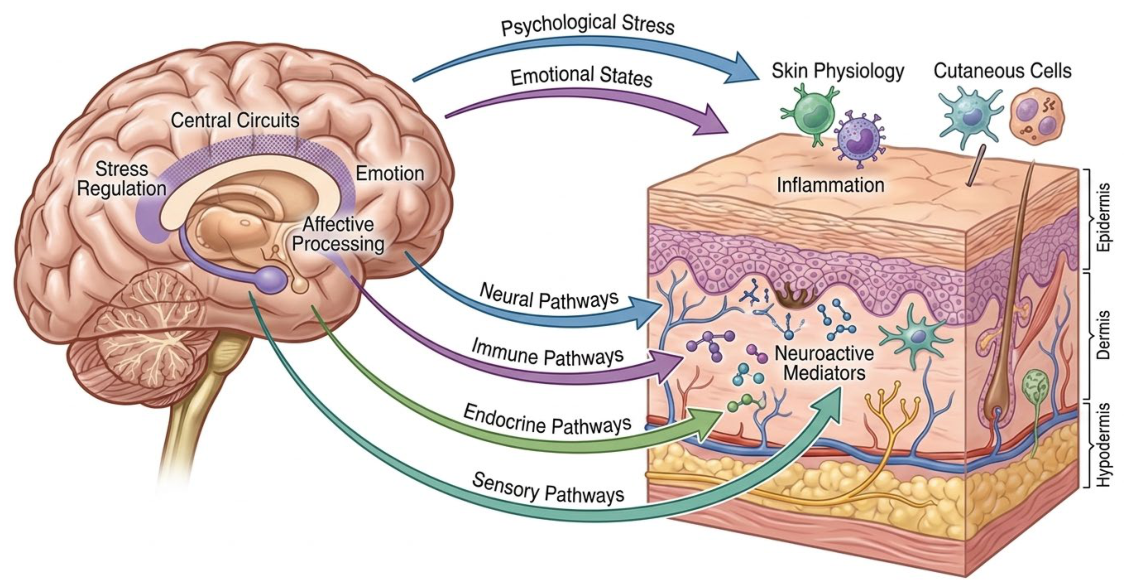
9]. These reciprocal interactions constitute the biological substrate of psychodermatology and underscore the relevance of the skin–brain axis as a target for both therapeutic and preventive strategies. A visual overview of the skin–brain axis and its bidirectional pathways is provided in
Figure 1.
Despite increasing interest in neurocosmetics, the biological mechanisms underpinning skin–brain communication and their relevance for cosmetic interventions remain fragmented across disciplines [
4,
5,
6]. Dermatological, neuroscientific, and psychological literature often evolve in parallel, with limited conceptual integration and heterogeneity in experimental models and outcome measures [
6,
8]. The aim of this narrative review is to synthesize current evidence on the biological foundations of the skin–brain axis and to critically examine how these pathways may be targeted by neurocosmetic interventions from a psychological and psychiatric perspective.
Specifically, this review focuses on neuroendocrine, neuroimmune, and neurosensory mechanisms enabling bidirectional skin–brain communication, with particular emphasis on pathways relevant to stress regulation, mood modulation, and emotional well-being [
4,
5,
9]. By bridging fundamental biological mechanisms with applied cosmetic science, we propose a framework for understanding how topical interventions may exert psychophysiological effects through peripheral pathways.
The integration of skin–brain biology into cosmetic science has implications extending beyond aesthetics. From a psychological and psychiatric standpoint, skin disorders frequently intersect with emotional distress, body image disturbances, and impaired social functioning [
9,
10]. Neurocosmetic approaches, by targeting peripheral pathways involved in stress and affective regulation, may represent a complementary strategy to enhance well-being and quality of life, particularly in individuals with stress-sensitive or psychosomatic skin conditions.
2. Materials and Methods
2.1. Literature Search Strategy
A targeted literature search was conducted to identify relevant publications addressing the skin–brain axis and its implications for cosmetic science from psychological and psychiatric perspectives. Searches were performed across major electronic databases, including PubMed/MEDLINE, Scopus, and PsycINFO. Peer-reviewed articles published in English were considered, without a priori restrictions on publication year, in order to capture both foundational biological research and more recent developments in psychodermatology and sensorial cosmetic science.
Search terms combined controlled vocabulary and free-text keywords related to skin–brain communication, psychodermatology, cutaneous neuroendocrine signaling, sensory perception, stress regulation, emotional well-being, and mental health. Reference lists of relevant articles and authoritative reviews were manually screened to identify additional pertinent sources and seminal contributions. Because this is a narrative review, the objective was not to provide a formal systematic synthesis of all available studies, but rather to integrate biologically and clinically relevant evidence into a conceptually coherent framework.
2.2. Eligibility and Scope of the Review
Given the narrative nature of this review, inclusion criteria were intentionally broad. Eligible sources included experimental studies, clinical research, translational models, and narrative or systematic reviews relevant to biological mechanisms of skin–brain communication, sensorial modulation, and psychological outcomes. Both dermatological and neuroscience-oriented studies were considered when they provided conceptual or mechanistic insights applicable to cosmetic contexts.
Studies exclusively focused on pharmacological or invasive therapeutic interventions were excluded unless they contributed to the understanding of peripheral pathways relevant to cosmetic applications. The aim was not to exhaustively catalog all available evidence, but to integrate heterogeneous findings across disciplines.
2.3. Narrative and Thematic Synthesis
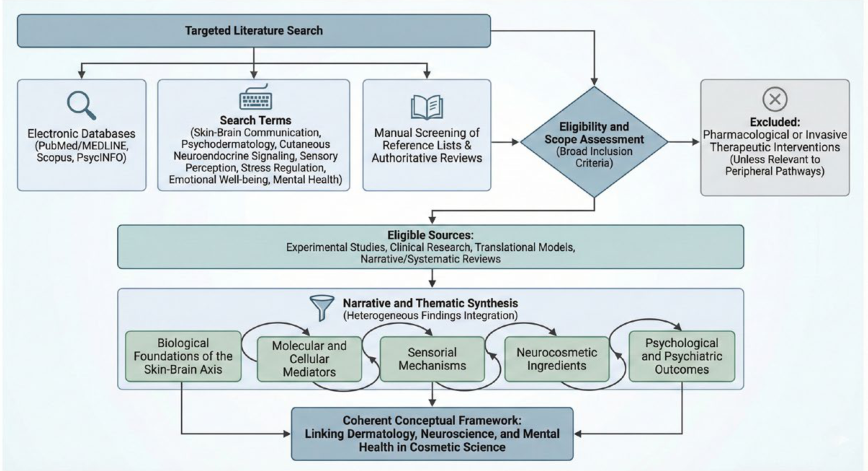
Due to heterogeneity in study designs, populations, outcome measures, and experimental models, a quantitative synthesis was not appropriate. Therefore, findings were synthesized using a narrative and thematic approach. The literature was organized into key domains, including biological foundations of the skin–brain axis, molecular and cellular mediators, sensorial mechanisms, neurocosmetic ingredients, and psychological and psychiatric outcomes.
This integrative synthesis aimed to identify converging biological and psychological pathways, highlight methodological limitations and evidence gaps, and support the development of a translational framework linking dermatology, neuroscience, and mental health within cosmetic science. An overview of the literature identification and narrative integration process is provided in
Figure 2.
3. Biological Foundations of the Skin–Brain Axis
The biological foundations of the skin–brain axis comprise a set of structurally and functionally interconnected systems that allow continuous bidirectional communication between the skin and the central nervous system. This communication is supported by shared embryological origins, extensive sensory and autonomic innervation, and the capacity of cutaneous cells to participate in immune and neuroendocrine signaling. Together, these features position the skin as an active neurobiological interface rather than a passive peripheral organ [
11,
12,
13,
14].
At the molecular and cellular level, skin–brain interactions are mediated by overlapping signaling pathways that regulate stress responsiveness, inflammatory tone, sensory perception, and homeostasis. Neural afferents, immune cells, and epidermal structures communicate through a common repertoire of mediators, including neuropeptides, cytokines, hormones, and lipid signaling molecules. These pathways are dynamically modulated by environmental and psychosocial stressors and can influence both local skin function and central processes involved in emotional regulation and affective appraisal [
12,
13,
14,
15].
Importantly, the biological mechanisms underlying skin–brain communication do not operate in isolation but converge within integrated neuroimmune and neuroendocrine networks. Such integration provides a mechanistic framework for understanding how peripheral cutaneous modulation, without direct central nervous system penetration, may nonetheless influence perceived stress, comfort, and well-being. In this context, neurocosmetic approaches primarily target peripheral nodes of these networks, aiming to modulate sensory signaling, inflammatory thresholds, and local stress responses [
13,
16,
17].
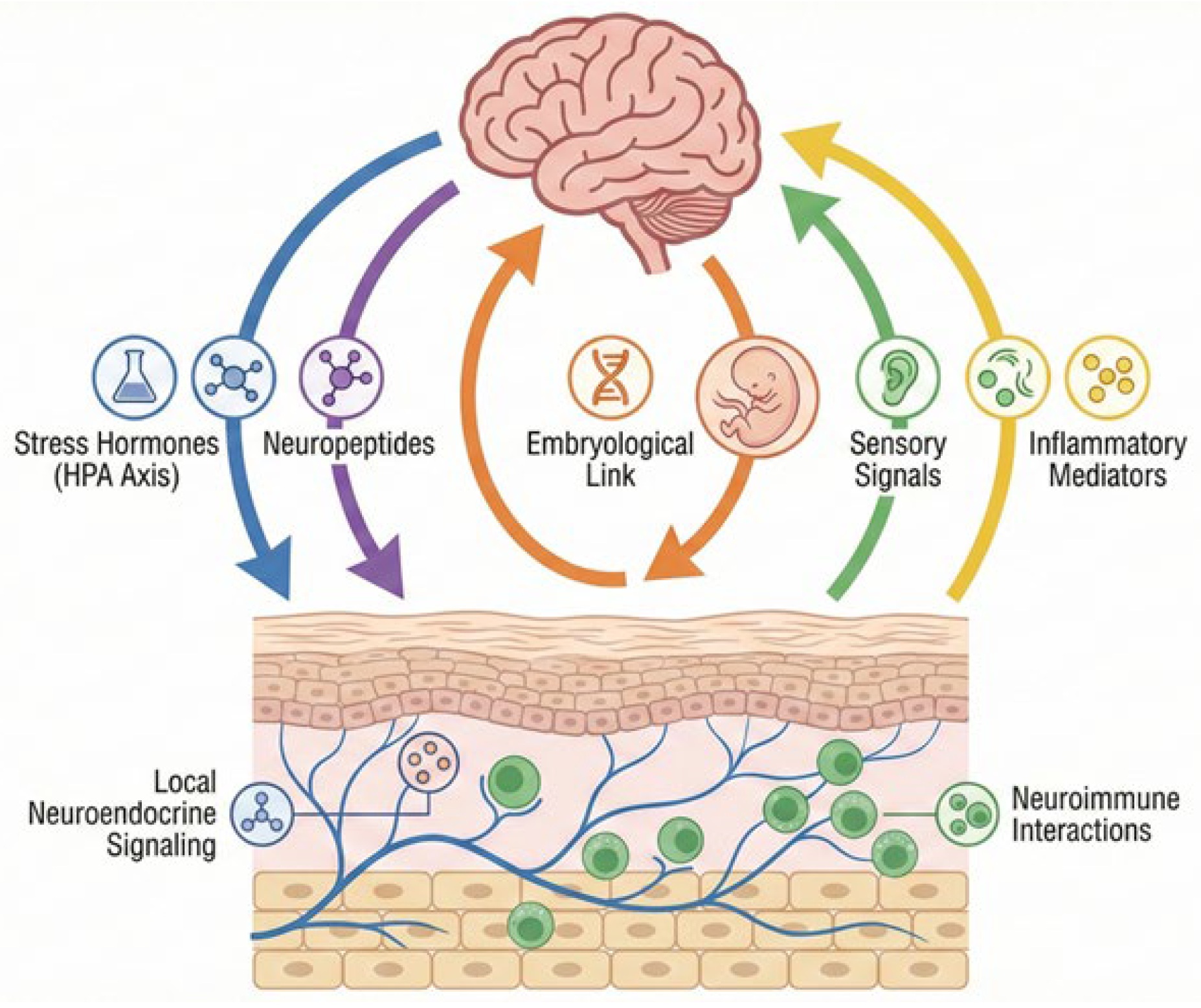
An integrative overview of the major biological systems contributing to skin–brain communication is presented in
Figure 3.
In parallel,
Table 1 summarizes the principal biological pathways that are most frequently discussed in relation to neurocosmetic applications, outlining their key cutaneous components and their functional relevance for stress-related and sensorial outcomes. Together, the figure and the table provide a conceptual and structural framework for the detailed mechanisms discussed in the following sections.
3.1. Embryological and Neuroanatomical Links Between Skin and Brain
The intimate relationship between the skin and the nervous system is rooted in their common embryological origin from the ectoderm. During early development, both the epidermis and the CNS arise from this germ layer, providing a biological basis for their shared molecular and functional characteristics [
1,
4]. This common origin is reflected in the expression of neurotransmitters, neuropeptides, and their receptors in cutaneous cells, including keratinocytes, melanocytes, and fibroblasts [
2,
3].
Neuroanatomically, the skin is one of the most densely innervated organs in the human body. It is supplied by a complex network of sensory afferent fibers, autonomic nerves, and neurovascular units that enable rapid communication between the periphery and the CNS [
4]. These neural connections allow the skin to convey mechanical, thermal, and chemical information to the brain while simultaneously responding to central signals that regulate vascular tone, immune activity, and barrier function.
3.2. Cutaneous Nervous System and Sensory Afferents
The cutaneous nervous system comprises sensory afferent fibers, including Aβ, Aδ, and C fibers, as well as sympathetic and parasympathetic efferents [
4]. Sensory neurons in the skin express a wide range of receptors, such as transient receptor potential (TRP) channels, which transduce physical and chemical stimuli into neural signals [
18]. Activation of these pathways not only mediates perception of touch, temperature, and pain but also influences local immune responses and neurogenic inflammation through the release of neuropeptides such as substance P and calcitonin gene-related peptide (CGRP) [
19].
These neurocutaneous interactions are bidirectional. Cutaneous immune cells and keratinocytes can modulate neuronal activity through the release of cytokines, growth factors, and neuromodulators, thereby shaping sensory processing and stress-related response [
3,
8]. This dynamic interplay supports the role of the skin as an active neurosensory organ rather than a passive recipient of neural input.
3.3. Neuroimmune and Neuroendocrine Crosstalk
The skin hosts an intricate neuroimmune network in which immune cells, nerve endings, and epidermal cells communicate through shared mediators. Pro-inflammatory cytokines such as interleukin (IL)-1β, IL-6, and tumor necrosis factor-α (TNF-α), which are central to cutaneous inflammatory responses, are also implicated in the pathophysiology of mood and anxiety disorders [
9,
10]. This overlap provides a mechanistic basis for the frequent comorbidity between chronic inflammatory skin diseases and psychiatric symptoms.
In addition to immune signaling, the skin functions as a peripheral neuroendocrine organ. Cutaneous cells are capable of synthesizing and responding to hormones and neurotransmitters, including serotonin, dopamine, acetylcholine, and γ-aminobutyric acid (GABA), which exert autocrine, paracrine, and potentially systemic effects [
2,
3,
20]. Through these mechanisms, cutaneous stress responses can propagate beyond the skin and influence central neuroendocrine regulation.
3.4. The Cutaneous Hypothalamic–Pituitary–Adrenal (HPA) Axis
One of the most compelling examples of skin–brain communication is the presence of a functional equivalent of the hypothalamic–pituitary–adrenal (HPA) axis within the skin. Keratinocytes, melanocytes, and dermal fibroblasts express corticotropin-releasing hormone (CRH), proopiomelanocortin (POMC), adrenocorticotropic hormone (ACTH), and their corresponding receptors, enabling local cortisol synthesis in response to stressors such as ultraviolet radiation and inflammation [
1,
2].
Activation of the cutaneous HPA axis not only regulates local homeostasis but may also contribute to systemic neuroendocrine signaling. Chronic activation of this pathway has been associated with sustained cortisol elevation, impaired neurotrophic support, and alterations in mood and cognitive function [
21]. These findings position the cutaneous HPA axis as a critical mediator linking environmental stressors, skin physiology, and central stress-related outcomes.
4. Molecular and Cellular Mediators of Skin–Brain Communication
Skin–brain communication is mediated by a complex network of molecular and cellular signaling pathways that operate across neural, immune, and endocrine systems. These mediators enable the skin to detect environmental and psychosocial stressors, translate them into biochemical signals, and modulate both local tissue responses and central neurophysiological processes [
12,
22,
23]. Rather than relying on a single pathway, the skin–brain axis functions through the integration of multiple overlapping signaling systems that regulate inflammation, sensory perception, stress adaptation, and homeostasis.
At the cutaneous level, keratinocytes, melanocytes, fibroblasts, immune cells, and sensory nerve endings produce and respond to a wide range of neuroactive mediators, including neuropeptides, neurotrophins, cytokines, hormones, and lipid-derived signaling molecules [
12,
24]. These mediators operate through autocrine, paracrine, and neurocrine mechanisms, forming a dynamic communication network that links peripheral skin activity with central stress and affective circuits.
Several of these signaling pathways overlap with systemic neuroendocrine and inflammatory processes. Chronic peripheral inflammation has been shown to influence central nervous system function, blood–brain barrier integrity, and neurocognitive outcomes, supporting the biological plausibility of peripheral–central interactions [
25,
26]. Similarly, neuroinflammatory processes have been implicated in mood disorders, further highlighting the shared molecular substrates between cutaneous inflammation and affective regulation [
27].
In addition, sensory transduction mechanisms contribute to the molecular interface between skin and brain. Ion channels and neuroactive mediators translate environmental stimuli into neural and inflammatory responses, linking sensory experience with neuroimmune signaling [
22,
28]. This integration of sensory, immune, and endocrine pathways is particularly relevant for neurocosmetic approaches, which primarily target peripheral signaling nodes rather than central nervous system structures.
These molecular systems form an interconnected regulatory network that underlies bidirectional communication between the skin and the brain. The following sections examine the principal mediator classes involved in this process, including the cutaneous HPA axis, neuropeptides, neurotrophins, TRP channels, and the endocannabinoid system.
4.1. Cutaneous HPA Axis and Local Stress Hormone Signaling
The skin expresses functional elements of the HPA axis, including CRH/urocortins, POMC-derived peptides, steroidogenic enzymes, and glucocorticoid receptors, enabling local stress hormone production and paracrine/autocrine regulation of epidermal and dermal functions [
2,
3,
21,
29]. This peripheral ‘cutaneous HPA axis’ contributes to barrier homeostasis, pigmentation, immune tone, adnexal biology, and inflammatory thresholds, and it can be activated by environmental and psychosocial stressors [
3,
4,
29].
At the systems level, cutaneous neuroendocrine mediators can shape afferent sensory inputs and immune-derived cytokine signaling, which interface with central stress circuits. These bidirectional links provide a mechanistic substrate for clinical observations in which psychological stress exacerbates inflammatory dermatoses and pruritic syndromes, while chronic cutaneous inflammation contributes to distress and altered self-perception [
4,
9,
10,
29].
4.2. Neuropeptides and Neurogenic Inflammation
Neuropeptides released from cutaneous sensory afferents (e.g., substance P, CGRP) and produced by resident skin cells participate in neurogenic inflammation by regulating vasodilation, mast-cell activation, leukocyte trafficking, and keratinocyte/fibroblast responses [
20,
30,
31]. Reviews of skin neurogenic inflammation highlight an ‘immune–nerve–epithelial’ triad in which sensory endings and epidermal cells reciprocally modulate itch, pain, and inflammatory cascades via neuropeptide signaling and protease-activated pathways [
30,
31].
At the cellular level, neuropeptide signaling intersects with TRP channel activity and cytokine networks, amplifying pruritus and inflammatory loops in conditions such as atopic dermatitis, psoriasis, and rosacea [
30,
31]. These mechanisms are relevant to neurocosmetic claims because topical sensorial inputs (temperature, irritation thresholds, ‘cooling’/‘warming’ sensations) can engage the same peripheral nodes that shape comfort, itch, and stress perception [
18,
31].
4.3. Neurotrophins and Cutaneous Plasticity-Related Signaling
Neurotrophins (e.g., NGF, BDNF) and their receptors (Trk receptors, p75NTR) are expressed in the skin and influence epidermal differentiation, melanocyte biology, hair follicle cycling, and inflammatory reactivity; conversely, inflammatory cytokines and stress mediators can regulate neurotrophin expression, supporting a feed-forward coupling between stress, inflammation, and cutaneous remodeling [
32].
Although neurotrophins are classically framed within CNS plasticity, they also constitute a peripheral ‘plasticity’ language in the skin. In psychiatry-relevant models altered BDNF/TrkB signaling has been linked to depression and antidepressant-associated plasticity changes, which provides a conceptual bridge for interpreting peripheral neurotrophin modulation as a plausible contributor to affective states, while recognizing that direct causal evidence for topical-to-central BDNF effects remains limited [
33].
4.4. TRP Channels as Sensory Transducers and Immunomodulatory Nodes
TRP channels act as polymodal sensors in cutaneous neurons and non-neuronal cells, transducing thermal, mechanical, and chemical stimuli into excitability and downstream inflammatory signals [
18,
34,
35]. Beyond nociception, TRP channels expressed in keratinocytes, endothelium, and immune cells modulate barrier function and mediator release, linking ‘sensorial’ properties of topical formulations to measurable neuroimmune outputs [
34,
35].
In particular, TRPV1/TRPA1 signaling has been implicated in neurogenic inflammation and itch; their activation can promote neuropeptide release and cytokine amplification, while antagonism or desensitization may reduce hyperalgesia and pruritic drive [
35]. These features make TRP channels a biologically plausible interface through which sensorial cosmetics could influence comfort, perceived irritation, and stress-related somatic appraisal via peripheral mechanisms [
18,
31,
35].
4.5. Endocannabinoid Signaling in Skin and Stress-Responsive Circuits
The endocannabinoid system (ECS), including CB1/CB2 receptors, endogenous ligands (e.g., anandamide, 2-AG), and metabolic enzymes, is expressed in skin cells and contributes to homeostasis, inflammation control, barrier dynamics, hair growth, and itch processing. Cutaneous ECS signaling also interfaces with TRP channels and neuropeptide pathways, reinforcing its role as an integrative ‘tone-setting’ system at the neuroimmune boundary [
36,
37]. At the central level, ECS activity constrains HPA-axis activation and participates in stress adaptation; dysregulation has been linked to stress-related affective phenotypes in translational models. These data support an integrated view in which peripheral (cutaneous) ECS modulation could contribute to perceived stress and comfort through local anti-inflammatory and neurosensory mechanisms, while robust demonstrations of downstream central mood effects from topical interventions still require stronger clinical evidence [
36,
37,
38,
39].
5. Neurocosmetic Ingredients and Sensorial Strategies Targeting the Skin–Brain Axis
Neurocosmetic approaches are based on the premise that topical formulations can interact with peripheral biological pathways involved in skin–brain communication. Rather than acting directly on central nervous system targets, most cosmetic interventions are thought to modulate cutaneous neuroimmune, neuroendocrine, and sensory mechanisms that influence comfort, stress perception, and emotional appraisal [
40,
41,
42]. These peripheral processes include inflammatory signaling, neuropeptide activity, endocannabinoid tone, and sensory receptor activation, all of which contribute to the subjective experience of the skin.
Recent advances in cosmetic science have expanded the focus from purely structural or aesthetic outcomes toward formulations designed to influence sensory experience and emotional responses. This shift reflects growing recognition of the skin as a neuroimmunoendocrine organ capable of producing and responding to neuromodulatory mediators, and of cosmetic routines as multisensory experiences with potential psychological correlates [
12,
17,
43]. Accordingly, neurocosmetics aim to modulate peripheral signaling pathways that are biologically linked to stress adaptation, inflammation, and affective processing.
A wide range of cosmetic ingredients have been proposed to interact with these pathways. These include peptides with neuromodulatory or anti-inflammatory properties, cannabinoids and cannabinoid-like compounds that influence endocannabinoid signaling, and botanical extracts rich in bioactive molecules such as polyphenols and flavonoids [
44,
45,
46]. Many of these substances have demonstrated antioxidant, anti-inflammatory, or neuroprotective effects in preclinical or translational models, providing a biological rationale for their use in skin–brain-oriented cosmetic strategies.
In parallel, the sensorial characteristics of cosmetic formulations, such as texture, temperature, and fragrance, represent critical components of their psychophysiological impact. Sensory inputs from the skin and olfactory system can influence affective appraisal, emotional memory, and stress perception through peripheral and central pathways, even in the absence of pharmacological activity [
47,
48,
49]. This multisensory dimension distinguishes neurocosmetic approaches from traditional barrier-focused skincare and highlights the importance of formulation design in shaping user experience.
Taken together, neurocosmetic strategies operate at the intersection of cutaneous biology, sensory neuroscience, and psychological appraisal. The following sections examine the principal categories of neuroactive ingredients and sensorial mechanisms that have been explored in relation to the skin–brain axis, as well as the current evidence and limitations associated with their proposed psychological effects.
5.1. Neuroactive Compounds and Cutaneous Neuromodulation
Neurocosmetics aims to leverage peripheral biological pathways at the skin–brain interface to improve comfort, perceived stress, and well-being without making medicinal claims. In practice, most proposed effects are mediated through cutaneous neuroimmune and neuroendocrine mechanisms, such as neuropeptide signaling, TRP-channel activity, and endocannabinoid tone, rather than through direct central nervous system penetration [
21,
29,
30,
31,
32,
33,
34,
35].
Cosmetic peptides are frequently positioned as “neuroactive” ingredients based on their capacity to modulate inflammatory mediators, barrier-related signaling, and sensory irritation thresholds. While robust evidence for direct mood effects from topical peptide application remains limited, decreasing neurogenic inflammation and pruritus-related discomfort may indirectly reduce stress-related appraisal and improve quality of life in stress-sensitive dermatoses [
29,
31].
Cannabinoid-based or cannabinoid-mimetic approaches represent a particularly plausible neurocosmetic route, given the broad expression of the ECS in skin and its documented roles in inflammation control, itch modulation, and sensory nerve activity [
30,
31,
34,
35]. Cannabinoids also interact with multiple molecular targets relevant to affective regulation (e.g., monoaminergic and stress-related pathways), providing translational plausibility for stress- and mood-related claims, although topical-to-central causal evidence remains insufficient [
50].
5.2. Sensorial Formulation Design: Texture, Temperature, and Olfactory Cues
Beyond actives, the sensorial profile of a formulation can engage peripheral afferent pathways that shape immediate emotional appraisal. Thermal and chemesthetic sensations are transduced through TRP channels expressed in cutaneous neurons and skin cells; accordingly, “cooling” and “warming” sensory experiences can influence perceived comfort and irritation, potentially modulating stress perception via bottom-up interoceptive mechanisms [
32,
33].
Olfactory cues are a major driver of affective response to cosmetics. Odor-evoked memories and emotion-associated attentional shifts can influence momentary mood and stress appraisal, and these effects may be strengthened by the tactile ritual of application [
37,
38,
39,
48]. The clinical aromatherapy literature suggests that certain essential oils may reduce state anxiety and perceived stress in specific contexts, though results depend heavily on setting, expectancy, and outcome measures [
40,
50,
51].
5.3. Botanicals, “Adaptogenic” Claims, and Cellular Stress Models
Botanical extracts are widely used in neurocosmetic positioning, often with “adaptogenic” or “stress-protective” claims. Mechanistically, botanicals may act by attenuating oxidative stress, modulating inflammatory signaling, or altering sensory irritation thresholds, effects that can translate into improved subjective comfort and self-perception [
9,
29]. However, many supporting studies are preclinical, and clinical evidence for psychological endpoints remains heterogeneous.
Recent in vitro work has used keratinocyte stress models to test botanical mixtures under environmental challenges (e.g., electromagnetic exposure), reporting protective effects on cellular stress markers. Such data can inform biological plausibility but should be interpreted as preliminary and not as direct evidence of psychological benefit [
52].
An overview of the main categories of neuroactive ingredients and sensorial strategies is presented in
Table 2, together with their representative examples and proposed peripheral mechanisms.
5.4. Psychological Outcomes, Evidence Gaps, and Responsible Claims
From a psychodermatology perspective, the most defensible neurocosmetic outcomes concern perceived stress, sensory comfort (itch/irritation), and self-perception, which can secondarily influence mood and social functioning [
9,
10]. Given the methodological heterogeneity of the field, future studies should incorporate validated psychometric instruments, appropriate blinding and controls for expectancy, and parallel biological readouts (e.g., barrier measures, inflammatory biomarkers) to substantiate claims [
6,
40].
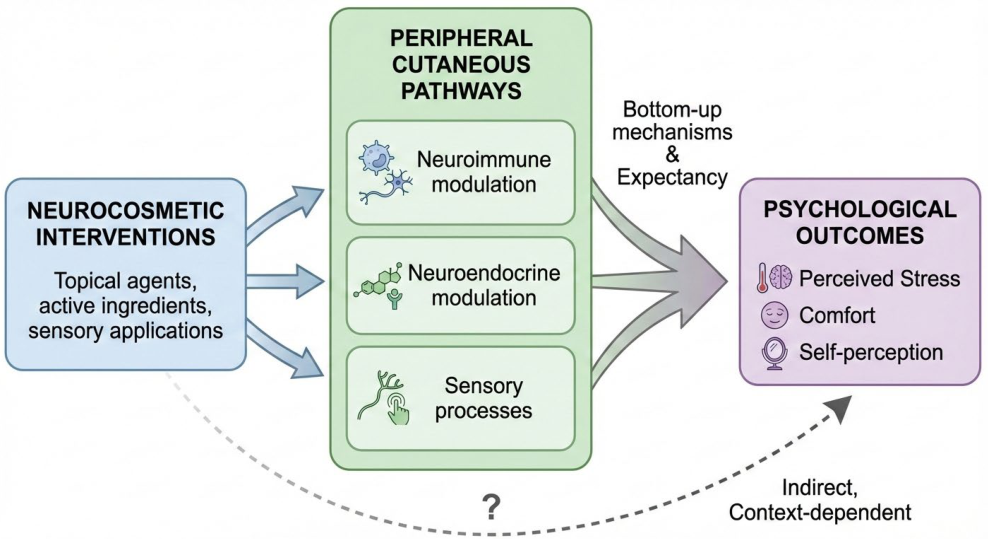
The proposed relationship between neurocosmetic interventions and psychological outcomes is schematically illustrated in
Figure 4.
6. Sensoriality, Expectancy, and Affective Modulation
Sensorial experience represents a central component of skin–brain communication and plays a critical role in shaping affective responses to cosmetic application. Cutaneous sensory inputs, including tactile, thermal, and chemical cues, are integrated at multiple levels of the nervous system, from peripheral afferents to subcortical and cortical networks involved in emotion, salience attribution, and interoception [
50,
51].
Neuroscientific models of multisensory integration highlight how peripheral sensory inputs can modulate emotional appraisal without requiring direct pharmacological effects on the central nervous system. In the context of cosmetic use, this framework supports the notion that sensorial qualities of formulations may influence perceived well-being through embodied and affective mechanisms rather than through classical psychotropic pathways.
6.1. Tactile and Thermal Cues: Affective Touch and Interoceptive Signaling
Tactile stimulation of the skin engages specialized mechanoreceptive pathways that extend beyond discriminative touch and are implicated in affective and social processing. Slow, gentle tactile inputs, such as those generated during cosmetic application, are known to activate low-threshold mechanosensory afferents associated with pleasant touch and emotional regulation [
51].
Thermal sensations further contribute to affective modulation. Cooling and warming cues activate distinct TRP channels, shaping sensory comfort, irritation thresholds, and neurogenic inflammatory responses. Importantly, thermal pleasantness is context-dependent and interacts with expectancy and prior experience, underscoring the relevance of formulation design in modulating subjective emotional responses [
52,
53].
6.2. Olfactory Cues, Hedonic Valence, and Emotional Memory
Olfactory stimulation constitutes a uniquely powerful sensory pathway linking peripheral exposure to emotional processing. Unlike other sensory modalities, olfactory signals project directly to limbic and paralimbic structures, including the amygdala and hippocampus, which are central to emotion and memory [
52].
Experimental and translational studies demonstrate that olfactory cues can modulate mood, attention, and stress-related responses by shaping hedonic valence and emotional memory retrieval. In cosmetic contexts, fragrance components may therefore contribute to affective modulation not as discrete anxiolytic or antidepressant agents, but as contextual stimuli that influence emotional state through associative and experiential mechanisms.
6.3. Expectancy, Meaning Response, and Perceived Well-Being
Beyond sensory inputs themselves, cognitive factors such as expectancy and meaning attribution play a substantial role in determining psychological outcomes associated with cosmetic use. Expectancy effects, sometimes framed within the broader concept of the meaning response, reflect the capacity of beliefs, prior experiences, and contextual cues to shape subjective perception and emotional appraisal [
54,
55].
In neurocosmetic research, expectancy should not be conflated with placebo effects in clinical medicine. Instead, it represents an interaction between sensorial experience and cognitive interpretation, whereby positive expectations may amplify perceived comfort, relaxation, or self-efficacy. This interaction highlights the importance of study designs that account for contextual and psychological variables when evaluating claims related to mood or stress modulation [
49,
54,
55].
Future neurocosmetic trials should attempt to disentangle expectancy-driven effects from ingredient-specific effects through more rigorous experimental designs. Potential strategies include the use of matched-control formulations with similar texture, scent, temperature, and packaging; standardized application rituals across study arms; assessment of baseline expectations before product use; and, when feasible, sham or minimally active comparator conditions designed to preserve sensorial credibility without engaging the hypothesized biological pathway. Although full blinding may be difficult for highly sensorial products, partial blinding, masked branding, and expectancy measurement may substantially improve interpretability.
6.4. Limits of Interpretation and Translational Relevance
Although sensorial and expectancy-driven mechanisms provide a plausible framework for understanding affective modulation associated with cosmetic use, several limitations warrant consideration. Much of the supporting evidence derives from experimental neuroscience, psychophysiology, or psychodermatology rather than from controlled cosmetic intervention trials. Moreover, outcome measures frequently rely on subjective self-reporting rather than validated psychological instruments [
56]. Accordingly, affective benefits attributed to neurocosmetic products should be interpreted as context-dependent and indirect, reflecting modulation of perception and experience rather than treatment of psychiatric conditions. Research integrating multisensory neuroscience, dermatology, and psychological assessment will be essential to delineate the boundaries between sensory pleasure, perceived well-being, and clinically meaningful mental health outcomes.
7. Psychological and Psychiatric Perspectives on Skin–Brain Interactions
Psychodermatology provides an integrative framework to conceptualize bidirectional relationships between psychological processes and skin disorders. Classic classifications distinguish primary psychiatric disorders presenting with dermatologic manifestations (e.g., delusional infestation, skin picking), secondary psychiatric sequelae emerging from chronic skin disease (e.g., depression, social anxiety), and psychophysiological dermatoses in which stress and emotional states modulate disease onset or exacerbations [
57,
58].
Recent population-level and clinical literature emphasizes that psychodermatologic morbidity is common, clinically relevant, and frequently under-recognized in routine care, supporting the need for integrated dermatology-mental health pathways [
59,
60,
61].
Chronic inflammatory dermatoses, including psoriasis, atopic dermatitis, and hidradenitis suppurativa, are consistently associated with increased psychological burden, most commonly anxiety and depressive disorders, sleep disturbances, and reduced health-related quality of life [
59,
60,
62,
63]. Epidemiological and clinical studies indicate that psychiatric comorbidities are not merely reactive consequences of visible skin lesions, but may reflect shared biological pathways involving systemic inflammation, neuroendocrine dysregulation, and stress-related immune activation [
23,
59,
64].
In patients with psoriasis, for example, elevated rates of major depressive disorder, anxiety disorders, and suicidal ideation have been consistently reported, with psychological distress often correlating more strongly with subjective symptom burden than with objective disease severity [
60,
62]. Similar patterns have been observed in atopic dermatitis and hidradenitis suppurativa, where chronic pruritus, pain, and social embarrassment contribute to emotional dysregulation, sleep impairment, and functional disability [
62,
63].
Beyond disease-specific associations, broader psychosomatic models further contextualize these findings. From a broader psychosomatic perspective, the skin can be conceptualized as a site where psychological conflicts, identity processes, and affective dysregulation may be expressed through bodily symptoms. Contemporary models emphasize the role of body image, self-identity, and emotional regulation in shaping both dermatological and psychiatric outcomes, particularly in conditions characterized by chronic visibility and social stigma [
65,
66]. These perspectives are in line with integrative approaches that conceptualize mind and body as interdependent dimensions of the same adaptive system, rather than as separate entities [
67]. Notably, subjective disease perception and symptom salience (e.g., itch, pain, embarrassment) may correlate more strongly with emotional distress than objective severity indices, highlighting the role of appraisal and coping in the lived experience of skin disease [
68].
Shared neurobiological substrates have also been proposed, including stress-related neuroimmune pathways and neuromodulatory systems such as the endocannabinoid network, which participates in both affective regulation and inflammatory control [
23,
69]. This convergence supports a dimensional model in which cutaneous inflammation and psychiatric symptoms may reciprocally reinforce each other over time. Psychological stress is among the most robust modulators of skin reactivity. Acute and chronic stress can exacerbate inflammatory activity through HPA axis perturbations, sympathetic activation, and downstream immune effects, while also amplifying symptom perception such as pruritus and pain [
64]. Stress-related attentional bias toward bodily sensations and emotional dysregulation may promote maladaptive behavioral cycles (e.g., scratching, avoidance, reassurance seeking), contributing to persistence of symptoms and impairment in functioning [
58,
60].
From a psychiatric standpoint, these mechanisms underscore the clinical relevance of assessing anxiety, depressive symptoms, sleep, and compulsive/impulsive behaviors in dermatologic populations and of considering stepped, interdisciplinary interventions. Neurocosmetic approaches should be framed as supportive measures targeting comfort and self-perception, rather than as substitutes for evidence-based psychiatric care when a disorder is present [
6,
40,
70].
From a clinical psychiatry and psychodermatology perspective, these findings also support the rationale for integrated care models in which dermatologists, psychologists, and psychiatrists collaborate in the management of patients with visible, chronic, or stress-sensitive skin conditions. Within such multidisciplinary settings, neurocosmetic strategies may be considered as adjunctive, experience-oriented interventions aimed at improving sensory comfort, self-perception, adherence to self-care, and quality of life, while primary psychiatric symptoms continue to be addressed through evidence-based mental health care.
8. Body Image, Self-Perception, and Emotional Well-Being
Visible skin conditions can profoundly shape body image and self-perception. Altered appearance, scarring, or chronic lesions, particularly in socially exposed areas, may trigger shame, self-consciousness, and social withdrawal. Perceived and enacted stigma often mediates psychological distress, with fear of negative evaluation contributing to hypervigilance, avoidance, and reduced participation in social and intimate contexts [
60].
Beyond dermatology-specific factors, broader psychological constructs, including self-esteem, emotion regulation strategies, and vulnerability to disordered eating or body dysmorphic concerns, can interact with skin-related appearance changes and influence mental health outcomes [
71].
Cosmetic practices intersect with body image and emotional well-being in highly individual ways. The emerging literature on aesthetic interventions beyond dermatology, including aesthetic gynecology, further highlights how body-focused aesthetic practices may influence self-perception, identity, and psychological well-being when framed within supportive and non-medicalized contexts [
72]. For some users, topical routines function as self-care rituals that enhance perceived control, reinforce identity, and support social confidence. Improvements in perceived appearance and sensorial comfort may reduce self-focused attention and facilitate adaptive coping, even without measurable changes in disease activity [
9,
10].
Within a neurocosmetic framework, benefits are most plausibly conceptualized as changes in sensory experience and self-perception, shaped by touch, temperature, fragrance, and expectancy, rather than direct modification of psychiatric pathology [
56].
Dermatology quality of life measures increasingly capture emotional and social domains alongside physical symptoms. Emotional well-being frequently mediates the relationship between skin status and overall health perception. Interventions that reduce discomfort, pruritus, or sensory irritation and that support positive self-perception may therefore produce meaningful gains in well-being, particularly when integrated with appropriate dermatologic and mental health care [
62,
64].
9. Ethical, Methodological, and Translational Considerations
Evaluating psychological outcomes in cosmetic research poses methodological challenges. Studies often rely on subjective self-report, may lack adequate control conditions, and can be strongly influenced by contextual effects and expectancy. Incorporating validated psychological instruments, preregistered hypotheses, and mixed endpoints (subjective plus physiological or behavioral measures) is critical for distinguishing sensorial modulation from nonspecific effects [
56]. Ethically, mood-enhancing or stress-reducing claims may blur boundaries between cosmetics and therapeutics. Overstatement risks medicalizing normal emotional experiences, fostering unrealistic expectations, and potentially delaying appropriate clinical care. Transparent communication should delineate supportive well-being claims from treatment claims and should reflect the strength of available evidence [
6,
40,
60]. Future work should prioritize interdisciplinary designs integrating dermatology, neuroscience, and mental health, with attention to individual differences in sensory processing and vulnerability to stress. Key priorities include standardized outcome sets incorporating validated measures of perceived stress, affect, and self-perception, mechanistic studies linking sensorial features to neuroimmune readouts, and ethically grounded translational pathways that balance innovation with scientific rigor [
56,
64]. In summary, a practical roadmap for future neurocosmetic research should include several methodological priorities: (1) randomized or well-controlled comparative designs whenever feasible; (2) matched-control formulations reproducing the sensorial features of the active product; (3) validated psychometric instruments, such as the Dermatology Life Quality Index (DLQI), the State-Trait Anxiety Inventory (STAI), perceived stress scales, or self-perception/body image measures; (4) parallel biological or physiological endpoints, including barrier function, inflammatory markers, salivary cortisol, heart rate variability, or skin conductance; (5) explicit assessment of expectancy and hedonic appraisal; and (6) careful distinction between supportive well-being outcomes and treatment claims related to psychiatric disorders.
To address the current methodological fragmentation of the field,
Table 3 summarizes proposed best practices for future neurocosmetic research, integrating study design, psychometric assessment, biological endpoints, and translational considerations.
These recommendations may help improve comparability across studies and support the development of more clinically meaningful and ethically grounded neurocosmetic research.
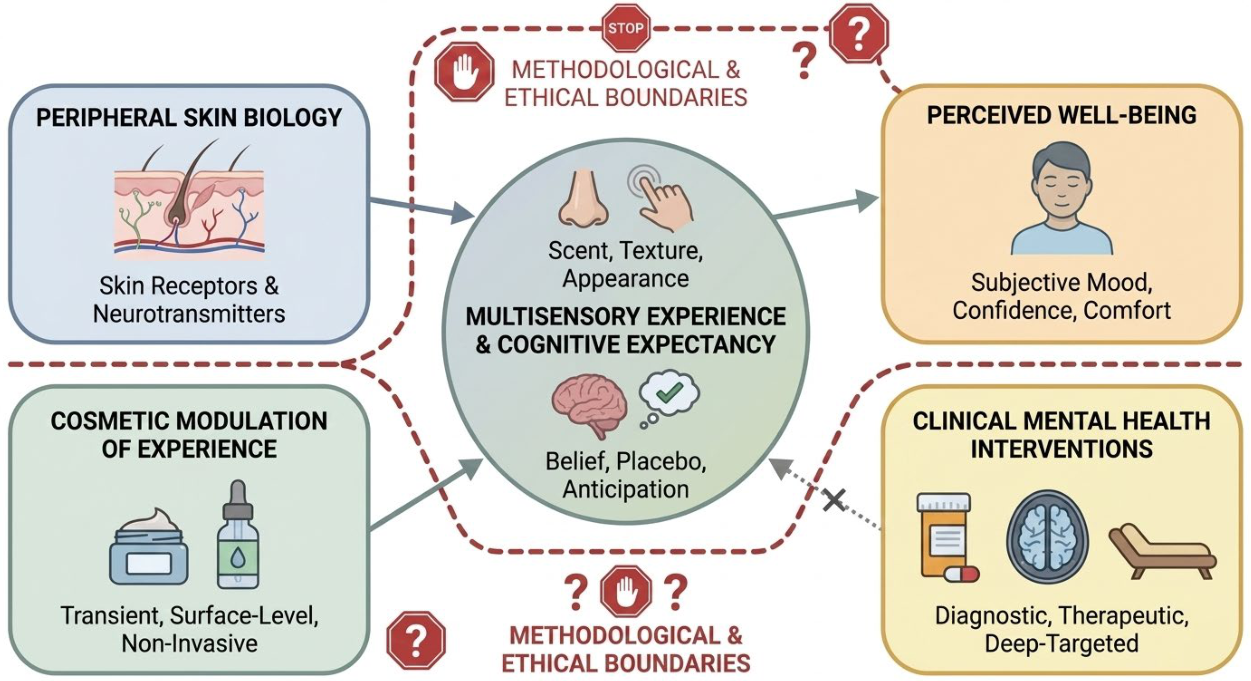
A translational framework integrating biological, sensorial, and psychological dimensions of neurocosmetics is proposed in
Figure 5.
10. Conclusions and Recommendations
The skin–brain axis represents a robust psychobiological framework through which cutaneous, sensory, immune, and neuroendocrine processes interact with central mechanisms involved in stress regulation, emotional appraisal, and self-perception. Accumulating evidence supports the view of the skin as an active neuroimmunoendocrine interface rather than a passive target of central signals, with bidirectional communication pathways that are highly relevant for both dermatological and psychological outcomes.
Within this context, neurocosmetics emerges as an applied extension of skin–brain biology, focusing on peripheral modulation of neuroimmune, neuroendocrine, and sensorial pathways rather than on direct central nervous system effects. The available literature suggests that neurocosmetic interventions may influence perceived stress, comfort, and emotional well-being primarily through bottom-up mechanisms, including sensory transduction, inflammatory tone modulation, and expectancy-driven processes. These effects are best conceptualized as indirect and context-dependent, contributing to subjective well-being and quality of life rather than constituting treatments for psychiatric disorders.
From a psychological and psychiatric perspective, the relevance of neurocosmetics is closely intertwined with body image, self-identity, and emotional regulation. Visible skin conditions, chronic discomfort, and sensorial distress can profoundly shape self-perception and social functioning, reinforcing emotional vulnerability in stress-sensitive individuals. In this regard, cosmetic practices may function as self-care rituals that support agency, identity coherence, and perceived control, particularly when integrated into broader dermatological and psychosocial care pathways. This perspective aligns with contemporary models emphasizing the inseparability of bodily experience and psychological meaning in the construction of well-being, as highlighted in psychosomatic and identity-focused frameworks [
72,
73].
Insights from adjacent fields, such as aesthetic medicine and gender-affirming care, underscore how interventions targeting bodily appearance can have meaningful psychological correlates when framed within ethical, patient-centered models. Evidence from aesthetic gynecology and related domains illustrates that improvements in body-related distress and self-perception are mediated by subjective meaning, relational context, and expectation management rather than by purely physical change [
72]. These considerations are directly transferable to neurocosmetic research, reinforcing the need for responsible claims and multidimensional outcome assessment.
Despite growing interest, the neurocosmetic field remains characterized by methodological heterogeneity, limited use of validated psychological measures, and an overreliance on preclinical or indirect evidence. Ongoing research should prioritize interdisciplinary study designs that integrate dermatological endpoints with validated psychometric instruments, biological markers of peripheral stress and inflammation, and careful control of expectancy effects. Longitudinal and real-world studies will be particularly important to clarify the durability and clinical relevance of perceived well-being outcomes. In parallel, translational efforts should explore how these findings may be implemented within integrated dermatology-mental health settings, where neurocosmetic approaches could serve as adjunctive tools to support comfort, self-perception, and patient-centered well-being.
In conclusion, neurocosmetics should be understood as a supportive, experience-oriented approach situated at the intersection of skin biology, sensory neuroscience, and psychological meaning-making. When grounded in scientific rigor and ethical transparency, neurocosmetic strategies may contribute to enhanced comfort, self-perception, and quality of life, complementing, but not replacing, evidence-based dermatological and mental health interventions. This integrative perspective provides a realistic and scientifically defensible foundation for the future development of skin–brain-oriented cosmetic science.
Author Contributions
Conceptualization, G.M. and M.M.; methodology, G.M. and M.M.; resources, O.D.G., M.L., C.S., A.S., G.T., O.M., C.d. and E.G.; data curation, O.D.G., M.L., C.S., A.S., G.T., O.M., C.d. and E.G.; writing—original draft preparation, G.M. and M.M.; writing—review and editing, G.M. and M.M.; supervision, G.M., E.G. and M.M. All authors have read and agreed to the published version of the manuscript.
Funding
This research received no external funding.
Institutional Review Board Statement
Not applicable.
Informed Consent Statement
Not applicable.
Data Availability Statement
No new data were created or analyzed in this study. Data sharing is not applicable to this article.
Acknowledgments
The authors gratefully acknowledge the use of Google Gemini 2.0 (accessed in February 2026) for generating illustrative figures, with all images created under the authors’ guidance and direction.
Conflicts of Interest
The authors declare no conflicts of interest.
References
- Slominski, A.; Wortsman, J.; Tobin, D.J. The cutaneous serotoninergic/melatoninergic system: Securing a place under the sun. FASEB J. 2005, 19, 176–194. [Google Scholar] [CrossRef] [Scilit]
- Slominski, A.T.; Zmijewski, M.A.; Skobowiat, C.; Zbytek, B.; Slominski, R.M.; Steketee, J.D. Sensing the Environment: Regulation of Local and Global Homeostasis by the Skin’s Neuroendocrine System; Advances in Anatomy, Embryology and Cell Biology; Springer Nature: Durham, NC, USA, 2012; Volume 212, pp. 1–115. [Google Scholar] [CrossRef] [Scilit]
- Slominski, A.; Wortsman, J.; Luger, T.; Paus, R.; Solomon, S. Corticotropin releasing hormone and proopiomelanocortin involvement in the cutaneous response to stress. Physiol. Rev. 2000, 80, 979–1020. [Google Scholar] [CrossRef] [Scilit] [PubMed]
- Arck, P.C.; Slominski, A.; Theoharides, T.C.; Peters, E.M.J.; Paus, R. Neuroimmunology of stress: Skin takes center stage. J. Investig. Dermatol. 2006, 126, 1697–1704. [Google Scholar] [CrossRef] [Scilit]
- Yoon, K.N.; Chung, J.H. Healthy skin, Healthy brain. J. Dermatol. Sci. 2025, 119, 47–52. [Google Scholar] [CrossRef] [Scilit] [PubMed]
- Haykal, D.; Berardesca, E.; Kabashima, K.; Dréno, B. Beyond beauty: Neurocosmetics, the skin-brain axis, and the future of emotionally intelligent skincare. Clin. Dermatol. 2025, 43, 523–527. [Google Scholar] [CrossRef] [Scilit]
- Berardesca, E.; Maibach, H. Ethnic skin: Overview of structure and function. J. Am. Acad. Dermatol. 2003, 48, S139–S142. [Google Scholar] [CrossRef] [Scilit]
- Peters, E.M.J.; Arck, P.C.; Paus, R. Hair growth inhibition by psychoemotional stress: A mouse model for neural mechanisms in hair growth control. Exp. Dermatol. 2006, 15, 1–13. [Google Scholar] [CrossRef] [Scilit]
- Mar, K.; Rivers, J.K. The Mind Body Connection in Dermatologic Conditions: A Literature Review. J. Cutan. Med. Surg. 2023, 27, 628–640. [Google Scholar] [CrossRef] [Scilit]
- Dalgard, F.J.; Gieler, U.; Tomas-Aragones, L.; Lien, L.; Poot, F.; Jemec, G.B.; Misery, L.; Szabo, C.; Linder, D.; Sampogna, F.; et al. The Psychological Burden of Skin Diseases: A Cross-Sectional Multicenter Study among Dermatological Out-Patients in 13 European Countries. J. Investig. Dermatol. 2015, 135, 984–991. [Google Scholar] [CrossRef] [Scilit]
- Chuong, C.M.; Nickoloff, B.J.; Elias, P.M.; Goldsmith, L.A.; Macher, E.; Maderson, P.A.; Sundberg, J.P.; Tagami, H.; Plonka, P.M.; Thestrup-Pederson, K.; et al. What is the “true” function of skin? Exp. Dermatol. 2002, 11, 159–187. [Google Scholar] [CrossRef] [Scilit] [PubMed]
- Zouboulis, C.C. The skin as an endocrine organ. Dermatoendocrinol 2009, 1, 250–252. [Google Scholar] [CrossRef] [Scilit]
- Vidal Yucha, S.E.; Tamamoto, K.A.; Kaplan, D.L. The importance of the neuro-immuno-cutaneous system on human skin equivalent design. Cell Prolif. 2019, 52, e12677. [Google Scholar] [CrossRef] [Scilit]
- Pondeljak, N.; Lugović-Mihić, L. Stress-induced Interaction of Skin Immune Cells, Hormones, and Neurotransmitters. Clin. Ther. 2020, 42, 757–770. [Google Scholar] [CrossRef] [Scilit] [PubMed]
- Roosterman, D.; Goerge, T.; Schneider, S.W.; Bunnett, N.W.; Steinhoff, M. Neuronal control of skin function: The skin as a neuroimmunoendocrine organ. Physiol. Rev. 2006, 86, 1309–1379. [Google Scholar] [CrossRef] [Scilit]
- Steinhoff, M.; Schauber, J.; Leyden, J.J. New insights into rosacea pathophysiology: A review of recent findings. J. Am. Acad. Dermatol. 2013, 69, S15–S26. [Google Scholar] [CrossRef] [Scilit] [PubMed]
- Rizzi, V.; Gubitosa, J.; Fini, P.; Cosma, P. Neurocosmetics in Skincare—The Fascinating World of Skin–Brain Connection: A Review to Explore Ingredients, Commercial Products for Skin Aging, and Cosmetic Regulation. Cosmetics 2021, 8, 66. [Google Scholar] [CrossRef] [Scilit]
- Caterina, M.J.; Julius, D. The vanilloid receptor: A molecular gateway to the pain pathway. Annu. Rev. Neurosci. 2001, 24, 487–517. [Google Scholar] [CrossRef] [Scilit]
- Wang, G.; Wang, K. The Ca2+-Permeable Cation Transient Receptor Potential TRPV3 Channel: An Emerging Pivotal Target for Itch and Skin Diseases. Mol. Pharmacol. 2017, 92, 193–200. [Google Scholar] [CrossRef] [Scilit]
- Cohen, J.A.; Wu, J.; Kaplan, D.H. Neuronal Regulation of Cutaneous Immunity. J. Immunol. 2020, 204, 264–270. [Google Scholar] [CrossRef] [Scilit] [PubMed]
- McEwen, B.S. Stress, adaptation, and disease: Allostasis and allostatic load. Ann. N. Y. Acad. Sci. 1998, 840, 33–44. [Google Scholar] [CrossRef] [Scilit]
- Chen, Y.; Lyga, J. Brain-skin connection: Stress, inflammation and skin aging. Inflamm. Allergy Drug Targets 2014, 13, 177–190. [Google Scholar] [CrossRef] [Scilit]
- Marek-Jozefowicz, L.; Czajkowski, R.; Borkowska, A.; Nedoszytko, B.; Żmijewski, M.A.; Cubała, W.J.; Slominski, A.T. The Brain-Skin Axis in Psoriasis-Psychological, Psychiatric, Hormonal, and Dermatological Aspects. Int. J. Mol. Sci. 2022, 23, 669. [Google Scholar] [CrossRef] [Scilit] [PubMed]
- Marconi, A.; Panza, M.C.; Bonnet-Duquennoy, M.; Lazou, K.; Kurfurst, R.; Truzzi, F.; Lotti, R.; De Santis, G.; Dumas, M.; Bonté, F.; et al. Expression and function of neurotrophins and their receptors in human melanocytes. Int. J. Cosmet. Sci. 2006, 28, 255–261. [Google Scholar] [CrossRef] [Scilit]
- Huang, X.; Hussain, B.; Chang, J. Peripheral inflammation and blood-brain barrier disruption: Effects and mechanisms. CNS Neurosci. Ther. 2021, 27, 36–47. [Google Scholar] [CrossRef] [Scilit]
- Jin, R.; Chan, A.K.Y.; Wu, J.; Lee, T.M.C. Relationships between Inflammation and Age-Related Neurocognitive Changes. Int. J. Mol. Sci. 2022, 23, 12573. [Google Scholar] [CrossRef] [Scilit]
- Sălcudean, A.; Bodo, C.-R.; Popovici, R.-A.; Cozma, M.-M.; Păcurar, M.; Crăciun, R.-E.; Crisan, A.-I.; Enatescu, V.-R.; Marinescu, I.; Cimpian, D.-M.; et al. Neuroinflammation—A Crucial Factor in the Pathophysiology of Depression—A Comprehensive Review. Biomolecules 2025, 15, 502. [Google Scholar] [CrossRef] [Scilit]
- Caterina, M.J.; Pang, Z. TRP Channels in Skin Biology and Pathophysiology. Pharmaceuticals 2016, 9, 77. [Google Scholar] [CrossRef] [Scilit]
- Slominski, A.T.; Slominski, R.M.; Raman, C.; Chen, J.Y.; Athar, M.; Elmets, C. Neuroendocrine signaling in the skin with a special focus on the epidermal neuropeptides. Am. J. Physiol. Cell Physiol. 2022, 323, C1757–C1776. [Google Scholar] [CrossRef] [Scilit] [PubMed]
- Bíró, T.; Tóth, B.I.; Haskó, G.; Paus, R.; Pacher, P. The endocannabinoid system of the skin in health and disease: Novel perspectives and therapeutic opportunities. Trends Pharmacol. Sci. 2009, 30, 411–420. [Google Scholar] [CrossRef] [Scilit] [PubMed]
- Marek-Jozefowicz, L.; Nedoszytko, B.; Grochocka, M.; Żmijewski, M.A.; Czajkowski, R.; Cubała, W.J.; Slominski, A.T. Molecular Mechanisms of Neurogenic Inflammation of the Skin. Int. J. Mol. Sci. 2023, 24, 5001. [Google Scholar] [CrossRef] [Scilit]
- Diver, M.M.; Cheng, Y.; Julius, D. Structural insights into TRPM8 inhibition and desensitization. Science 2019, 365, 1434–1440. [Google Scholar] [CrossRef] [Scilit]
- Julius, D. TRP channels and pain. Annu. Rev. Cell Dev. Biol. 2013, 29, 355–384. [Google Scholar] [CrossRef] [Scilit]
- Lu, H.C.; MacKie, K. An introduction to the endogenous cannabinoid system. Biol. Psychiatry 2016, 79, 516–525. [Google Scholar] [CrossRef] [Scilit] [PubMed]
- Hill, M.N.; Campolongo, P.; Yehuda, R.; Patel, S. Integrating Endocannabinoid Signaling and Cannabinoids into the Biology and Treatment of Posttraumatic Stress Disorder. Neuropsychopharmacology 2018, 43, 80–102. [Google Scholar] [CrossRef] [Scilit] [PubMed]
- Herz, R.S. The Role of Odor-Evoked Memory in Psychological and Physiological Health. Brain Sci. 2016, 6, 22. [Google Scholar] [CrossRef] [Scilit]
- Seo, H.S.; Roidl, E.; Müller, F.; Negoias, S. Odors enhance visual attention to congruent objects. Appetite 2010, 54, 544–549. [Google Scholar] [CrossRef] [Scilit]
- Herz, R.S.; Engen, T. Odor memory: Review and analysis. Psychon. Bull. Rev. 1996, 3, 300–313. [Google Scholar] [CrossRef] [Scilit]
- Hur, M.H.; Song, J.A.; Lee, J.; Lee, M.S. Aromatherapy for stress reduction in healthy adults: A systematic review and meta-analysis of randomized clinical trials. Maturitas 2014, 79, 362–369. [Google Scholar] [CrossRef] [Scilit]
- Misery, L.; Maibach, H.I.; Koo, J.; Jafferany, M. Neurocosmetics are cosmetics, which mean that they could have effects only on skin. Clin. Dermatol. 2025, 43, 702–703. [Google Scholar] [CrossRef] [Scilit]
- Sánchez-Peña, M.J.; Magallón-Chávez, O.; Rivas-Loaiza, J.A. Neurocosmetics and Aromatherapy Through Neurocutaneous Receptors and Their Functional Implications in Cosmetics. Cosmetics 2025, 12, 179. [Google Scholar] [CrossRef] [Scilit]
- Singh, A.; Chauhan, S.B.; Singh, I. Neurocosmetics: Exploring the Intersection of Neuroscience and Cosmetics. Curr. Cosmet. Sci. 2025, 4, 72–79. [Google Scholar] [CrossRef] [Scilit]
- Duarte, M.; Pedrosa, S.S.; Khusial, P.R.; Madureira, A.R. Exploring the interplay between stress mediators and skin microbiota in shaping age-related hallmarks: A review. Mech. Ageing Dev. 2024, 220, 111956. [Google Scholar] [CrossRef] [Scilit] [PubMed]
- Yoo, E.H.; Lee, J.H. Cannabinoids and Their Receptors in Skin Diseases. Int. J. Mol. Sci. 2023, 24, 16523. [Google Scholar] [CrossRef] [Scilit] [PubMed]
- Panche, A.N.; Diwan, A.D.; Chandra, S.R. Flavonoids: An overview. J. Nutr. Sci. 2016, 5, e47. [Google Scholar] [CrossRef] [Scilit]
- Atanasov, A.G.; Waltenberger, B.; Pferschy-Wenzig, E.-M.; Linder, T.; Wawrosch, C.; Uhrin, P.; Temml, V.; Wang, L.; Schwaiger, S.; Heiss, E.H.; et al. Discovery and resupply of pharmacologically active plant-derived natural products: A review. Biotechnol. Adv. 2015, 33, 1582–1614. [Google Scholar] [CrossRef] [Scilit]
- Guest, S.; McGlone, F.; Hopkinson, A.; Schendel, Z.A.; Blot, K.; Essick, G. Perceptual and Sensory-Functional Consequences of Skin Care Products. J. Cosmet. Dermatol. Sci. Appl. 2013, 3, 66–78. [Google Scholar] [CrossRef]
- Xie, J.; Elsadek, M.; Deshun, Z.; Zhou, Z.; Gao, J. Tactile and olfactory stimulation reduce anxiety and enhance autonomic balance: A multisensory approach for healthcare settings. BMC Psychol. 2025, 13, 806. [Google Scholar] [CrossRef] [Scilit]
- Diwoux, A.; Gabriel, D.; Bardel, M.H.; Ben Khalifa, Y.; Billot, P.É. Neurophysiological approaches to exploring emotional responses to cosmetics: A systematic review of the literature. Front. Hum. Neurosci. 2024, 18, 1443001. [Google Scholar] [CrossRef] [Scilit]
- Paudel, P.; Ross, S.; Li, X.-C. Molecular Targets of Cannabinoids Associated with Depression. Curr. Med. Chem. 2022, 29, 1827–1850. [Google Scholar] [CrossRef] [Scilit]
- Vora, L.K.; Gholap, A.D.; Hatvate, N.T.; Naren, P.; Khan, S.; Chavda, V.P.; Balar, P.C.; Gandhi, J.; Khatri, D.K. Essential oils for clinical aromatherapy: A comprehensive review. J. Ethnopharmacol. 2024, 330, 118180. [Google Scholar] [CrossRef] [Scilit]
- Havas, F.; Cohen, M.; Krispin, S.; Attia-Vigneau, J. Protective Properties of Botanical Extracts against 5G Radiation-induced Damage to Human Skin, as Demonstrated in Preliminary Data from a Keratinocyte Cell Culture Model. Front. Biosci. (Landmark Ed.) 2024, 29, 31. [Google Scholar] [CrossRef] [Scilit]
- Angioletti, L.; Balconi, M. Interoceptive empathy and emotion regulation: The contribution of neuroscience. Neuropsychol. Trends 2020, 27, 85–100. [Google Scholar] [CrossRef] [Scilit]
- Knezevic, N.N.; Sic, A.; Worobey, S.; Knezevic, E. Justice for Placebo: Placebo Effect in Clinical Trials and Everyday Practice. Medicines 2025, 12, 5. [Google Scholar] [CrossRef] [Scilit] [PubMed]
- Niazi, S.K. Placebo Effects: Neurological Mechanisms Inducing Physiological, Organic, and Belief Responses—A Prospective Analysis. Healthcare 2024, 12, 2314. [Google Scholar] [CrossRef] [Scilit] [PubMed]
- Barkat, S.; Thomas-Danguin, T.; Bensafi, M.; Rouby, C.; Sicard, G. Odor and color of cosmetic products: Correlations between subjective judgement and autonomous nervous system response. Int. J. Cosmet. Sci. 2003, 25, 273–283. [Google Scholar] [CrossRef] [Scilit] [PubMed]
- Jafferany, M.; Franca, K. Psychodermatology: Basics Concepts. Acta Derm. Venereol. 2016, 96, 35–37. [Google Scholar] [CrossRef] [Scilit]
- Millington, G.W.M.; Shobajo, M.T.; Wall, J.; Jafferany, M. Somatization in dermatology. Skin Health Dis. 2022, 2, e164. [Google Scholar] [CrossRef] [Scilit]
- Abdi, P.; Turk, T.; Haq, Z.; Diaz, M.J.; Dytoc, M. Epidemiology and Comorbidities of Psychodermatologic Conditions. J. Cutan. Med. Surg. 2025, 30, 33–40. [Google Scholar] [CrossRef] [Scilit]
- Krstanović, K.; Kroflin, K.; Kroflin, L.; Kušević, Z. Psoriasis and mental health: A psychodermatological approach with an emphasis on psychotherapy. Psychiatr. Danub. 2024, 36, 7–16. [Google Scholar] [CrossRef] [Scilit]
- Ajani, A.A.; Olanrewaju, F.O.; Oninla, O.A.; Ibigbami, O.; Mosaku, S.K.; Onayemi, O.E.; Olasode, O. Psychodermatological Disorders in Patients with Primary Psychiatric Conditions: Cross-Sectional Study. JMIR Dermatol. 2023, 6, e47769. [Google Scholar] [CrossRef] [Scilit]
- Iannone, M.; Janowska, A.; Panduri, S.; Morganti, R.; Davini, G.; Romanelli, M.; Dini, V. Impact of psychiatric comorbidities in psoriasis, hidradenitis suppurativa and atopic dermatitis: The importance of a psychodermatological approach. Exp. Dermatol. 2022, 31, 956–961. [Google Scholar] [CrossRef] [Scilit] [PubMed]
- Sun, C.; Ren, Y.; Zhang, W. Association between skin disease and anxiety: A logistic analysis and prediction. Ann. Transl. Med. 2023, 11, 115. [Google Scholar] [CrossRef] [Scilit]
- Zhang, H.; Wang, M.; Zhao, X.; Wang, Y.; Chen, X.; Su, J. Role of stress in skin diseases: A neuroendocrine-immune interaction view. Brain Behav. Immun. 2024, 116, 286–302. [Google Scholar] [CrossRef] [Scilit] [PubMed]
- Marano, G.; Napolitano, D.; Capristo, E.; Traversi, G.; Mazza, O.; Gaetani, E.; Mazza, M. The Body as a Battlefield: Identity Development and Psychosomatic Expression in Eating Disorders Across Childhood and Adolescence. Children 2025, 12, 1465. [Google Scholar] [CrossRef] [Scilit]
- Marano, G.; Anesini, M.B.; Sfratta, G.; Lisci, F.M.; Brisi, C.; Claro, A.E.; Mazza, M. Body Image and Self-Identity in Transgender Patients: A Comprehensive Review from a Psycho-Oncological Perspective. Heart Mind 2025, 9, 100–114. [Google Scholar] [CrossRef] [Scilit]
- Marano, G.; Gaetani, E.; Sani, G.; Mazza, M. Body and mind: Two maps but one territory. mental coaching in support of somatic correlates in times of COVID-19. Heart Mind 2021, 5, 161–162. [Google Scholar] [CrossRef] [Scilit]
- Mazza, M.; Guerriero, G.; Marano, G.; Janiri, L.; Bria, P.; Mazza, S. Treatment of prurigo nodularis with pregabalin. J. Clin. Pharm. Ther. 2013, 38, 16–18. [Google Scholar] [CrossRef] [Scilit]
- Marano, G.; Lisci, F.M.; Traversi, G.; Brisi, C.; De Berardis, D.; Gaetani, E.; Aceto, P.; Lai, C.; Martinotti, G.; Mazza, O.; et al. Endocannabinoid System and Neuromodulation in Neurodegenerative Diseases: A Focus on Neuropsychiatric Symptoms. J. Biol. Regul. Homeost. Agents 2024, 38, 2693–2712. [Google Scholar] [CrossRef] [Scilit]
- Shenoi, S.D.; Soman, S.; Munoli, R.; Prabhu, S. Update on Pharmacotherapy in Psychodermatological Disorders. Indian Dermatol. Online J. 2020, 11, 307–318. [Google Scholar] [CrossRef] [Scilit]
- Abdoli, M.; Schiechtl, E.; Rosato, M.S.; Mangweth-Matzek, B.; Cotrufo, P.; Hüfner, K. Body image, self-esteem, emotion regulation, and eating disorders in adults: A systematic review. Neuropsychiatrie 2025, 39, 118–132. [Google Scholar] [CrossRef] [Scilit]
- Marano, G.; Anesini, M.B.; Sfratta, G.; d’Abate, C.; Traversi, G.; Rossi, S.; Lisci, F.M.; Brisi, C.; Paris, I.; Pola, R.; et al. Aesthetic Gynecology and Mental Health: What Does It Really Mean for Women? Cosmetics 2025, 12, 28. [Google Scholar] [CrossRef] [Scilit]
- Marano, G.; Mazza, M. Eros and Thanatos between individual wounds and social lacerations: Caring the Traumatized Self. J. Loss Trauma 2024, 29, 474–477. [Google Scholar] [CrossRef] [Scilit]
Figure 1.
The skin–brain axis as a psychobiological interface. Note. The skin–brain axis represents a bidirectional psychobiological system connecting the skin and the central nervous system through neural, immune, endocrine, and sensory pathways. Cutaneous cells actively produce neuroactive mediators that interact with central circuits involved in stress regulation, emotion, and affective processing, while psychological stress and emotional states can reciprocally influence skin physiology and inflammation.
Figure 1.
The skin–brain axis as a psychobiological interface. Note. The skin–brain axis represents a bidirectional psychobiological system connecting the skin and the central nervous system through neural, immune, endocrine, and sensory pathways. Cutaneous cells actively produce neuroactive mediators that interact with central circuits involved in stress regulation, emotion, and affective processing, while psychological stress and emotional states can reciprocally influence skin physiology and inflammation.
Figure 2.
Conceptual flow of literature identification and narrative synthesis. Note. Overview of the process used to identify relevant literature, define the thematic scope, and integrate biological, sensorial, and psychological evidence into a coherent narrative framework addressing the skin–brain axis in cosmetic science.
Figure 2.
Conceptual flow of literature identification and narrative synthesis. Note. Overview of the process used to identify relevant literature, define the thematic scope, and integrate biological, sensorial, and psychological evidence into a coherent narrative framework addressing the skin–brain axis in cosmetic science.
Figure 3.
Biological pathways underlying skin–brain communication. Note. This figure outlines the principal biological components of skin–brain communication, including embryological links, cutaneous innervation, neuroimmune interactions, local neuroendocrine signaling, and stress-related hormonal pathways. These interconnected systems provide the structural and functional basis for bidirectional signaling between the skin and central neural circuits.
Figure 3.
Biological pathways underlying skin–brain communication. Note. This figure outlines the principal biological components of skin–brain communication, including embryological links, cutaneous innervation, neuroimmune interactions, local neuroendocrine signaling, and stress-related hormonal pathways. These interconnected systems provide the structural and functional basis for bidirectional signaling between the skin and central neural circuits.
Figure 4.
Pathways linking neurocosmetic interventions to psychological outcomes. Note. Neurocosmetic interventions primarily act on peripheral cutaneous pathways, modulating neuroimmune, neuroendocrine, and sensory processes. These peripheral effects may influence perceived stress, comfort, and self-perception through bottom-up mechanisms and expectancy, while psychological outcomes remain indirect and context-dependent.
Figure 4.
Pathways linking neurocosmetic interventions to psychological outcomes. Note. Neurocosmetic interventions primarily act on peripheral cutaneous pathways, modulating neuroimmune, neuroendocrine, and sensory processes. These peripheral effects may influence perceived stress, comfort, and self-perception through bottom-up mechanisms and expectancy, while psychological outcomes remain indirect and context-dependent.
Figure 5.
A translational framework for the skin–brain interface. Note. This framework illustrates how peripheral skin biology, multisensory experience, and cognitive expectancy interact to shape perceived well-being in skin–brain-oriented cosmetic approaches, while highlighting methodological and ethical boundaries between cosmetic modulation of experience and clinical mental health interventions.
Figure 5.
A translational framework for the skin–brain interface. Note. This framework illustrates how peripheral skin biology, multisensory experience, and cognitive expectancy interact to shape perceived well-being in skin–brain-oriented cosmetic approaches, while highlighting methodological and ethical boundaries between cosmetic modulation of experience and clinical mental health interventions.
Table 1.
Biological pathways involved in skin–brain communication relevant to neurocosmetics.
Table 1.
Biological pathways involved in skin–brain communication relevant to neurocosmetics.
| Pathway | Cutaneous Components | Functional Relevance |
|---|
| Cutaneous HPA axis | Keratinocytes, melanocytes, fibroblasts | Local stress-response and homeostasis |
| Neuropeptides | Substance P, CGRP, neurokinins | Neuroimmune modulation and neurogenic inflammation |
| TRP channels | TRPV1, TRPA1, TRPM8 | Sensorial transduction and irritation thresholds |
| Endocannabinoid system | CB1/CB2 receptors, AEA, 2-AG | Inflammation control and stress buffering |
Table 2.
Neuroactive ingredients and sensorial strategies explored in neurocosmetic research.
Table 2.
Neuroactive ingredients and sensorial strategies explored in neurocosmetic research.
| Category | Examples | Proposed Peripheral Effects |
|---|
| Peptides | Neuropeptide-like cosmetic peptides | Reduction in neurogenic inflammation |
| Cannabinoid-related actives | CBD, phytocannabinoids, ECS modulators | Anti-inflammatory and antipruritic effects |
| Botanicals | Polyphenol-rich and adaptogenic extracts | Cellular stress mitigation |
| Sensorial design | Texture, temperature, fragrance | Affective and expectancy-driven modulation |
Table 3.
Best practices for methodological and translational rigor in neurocosmetic research.
Table 3.
Best practices for methodological and translational rigor in neurocosmetic research.
| Domain | Recommended Best Practice |
|---|
| Study design | Randomized controlled designs whenever feasible; preregistration of hypotheses and endpoints |
| Control conditions | Use of matched vehicle/placebo formulations with similar sensorial properties; sham application procedures when appropriate |
| Psychological assessment | Include validated scales or body image/self-perception measures depending on the target outcome |
| Biological assessment | Combine psychometric data with skin barrier parameters, transepidermal water loss, inflammatory markers, salivary cortisol, heart rate variability, or skin conductance when appropriate |
| Expectancy assessment | Measure baseline expectations, product beliefs, prior cosmetic experiences, and hedonic appraisal |
| Sensory standardization | Standardize fragrance intensity, texture, temperature, packaging, and application ritual across groups |
| Population selection | Clearly distinguish healthy cosmetic users from patients with inflammatory or stress-sensitive dermatoses |
| Outcome interpretation | Avoid conflating improvements in comfort or perceived well-being with treatment effects on psychiatric disorders |
| Translational relevance | Encourage interdisciplinary collaboration among dermatologists, neuroscientists, psychologists, and psychiatrists |
| Disclaimer/Publisher’s Note: The statements, opinions and data contained in all publications are solely those of the individual author(s) and contributor(s) and not of MDPI and/or the editor(s). MDPI and/or the editor(s) disclaim responsibility for any injury to people or property resulting from any ideas, methods, instructions or products referred to in the content. |




 ,
,