Article

In Vitro Antioxidant Stability and Infrared Characterization of a Cosmetic Formulation with Peruvian Bioactive Compounds


by
Lourdes Victoria-Tinoco
1,*,
Luciana De La Fuente-Carmelino
2,
Patricia Lozada
3 and
Ana María Muñoz
2
1
Centre for Cosmetic Research, Technology and Innovation, Universidad San Ignacio de Loyola (CITIC-USIL), Av. La Fontana 550, Lima 15024, Peru
2
Institute of Food Science and Nutrition, San Ignacio de Loyola University (ICAN-USIL), Campus Pachacamac, Sección B, Parcela 1, Fundo La Carolina, Pachacámac, Lima 15823, Peru
3
Faculty of Pharmacy and Biochemistry, National University of San Marcos, Lima 15001, Peru
*
Author to whom correspondence should be addressed.
Cosmetics 2026, 13(2), 57; https://doi.org/10.3390/cosmetics13020057
Submission received: 3 February 2026 / Revised: 24 February 2026 / Accepted: 27 February 2026 / Published: 3 March 2026
(This article belongs to the Special Issue Feature Papers in Cosmetics in 2026)

Abstract

This study assessed the structural stability and in vitro antioxidant capacity of a cosmetic formulation incorporating sangre de grado extract (Croton lechleri Muell) and vegetable oils from aguaje (Mauritia flexuosa L.f.), aguaymanto (Physalis peruviana L.), super sacha inchi (Plukenetia huayllabambana sp. nov.), and sacha inchi (Plukenetia volubilis L.), sourced from Peruvian biodiversity. Structural characterization was conducted using Attenuated total reflectance Fourier transform infrared spectroscopy (FTIR-ATR) on the formulation at the initial time point (ASC T0) and after six months under accelerated stability conditions (ASC T6). Characteristic absorption bands corresponding to carbonyl, ether, and hydroxyl functional groups were observed, confirming the structural integrity of the lipid–polymeric components within the emulsifying system. Antioxidant activity was evaluated using DPPH and ABTS assays, with IC50 values comparable to those of a commercially available cream. In the DPPH assay, ASC T6 exhibited IC50 of 5744.8571 μg/mL, comparable to a commercial formulation (5641.1585 μg/mL). In the ABTS assay, ASC T0 demonstrated antioxidant activity statistically equivalent (p > 0.05) to that of the commercial cream, with IC50 values of 410.2358 and 420.2202 μg/mL, respectively. In conclusion, the preservation of antioxidant activity is attributed to the structural integrity of the formulated system, which stabilized and retained synergistic interactions of the antioxidants. Future studies should explore the incorporation of additional antioxidants and include in vivo instrumental assessments of stability and efficacy.

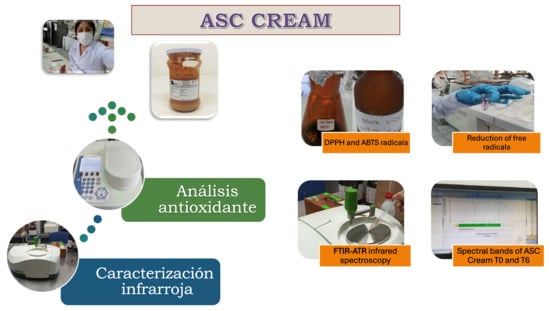
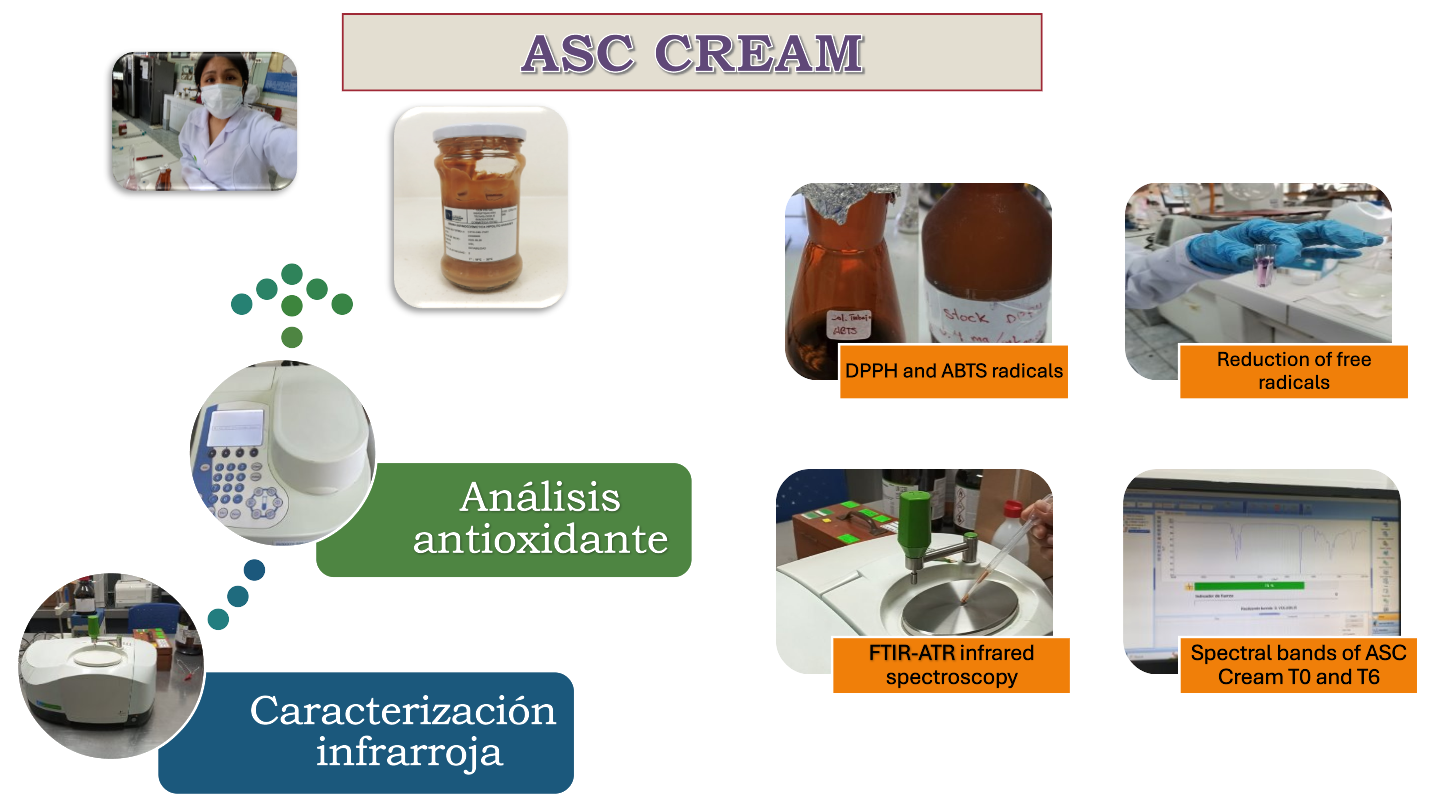
Graphical Abstract

1. Introduction

The matrix of vegetable oils and plant extracts contains bioactive compounds, including polyunsaturated (PUFAs) and monounsaturated fatty acids (MUFAs) and phenolic compounds. In particular, cis double bonds confer structural flexibility and greater reactivity to polyunsaturated fatty acids (PUFAs), whose molecular configuration contributes to cell membrane fluidity, although it also increases susceptibility to oxidative degradation [1,2]. This difference in lipid composition directly affects membrane fluidity, which is essential for maintaining normal cellular functions, including receptor mobility, intracellular signaling, and the efficient transport of nutrients and ions. A rigid membrane structure induced by the accumulation of saturated fats can hinder the proper functioning of some receptors and impair interaction with signaling proteins [3]. Lipid peroxidation is initiated when free radicals abstract hydrogen atoms from unsaturated fatty acids, generating reactive intermediates that propagate chain reactions. The accumulation of these oxidation products alters membrane integrity and promotes excessive reactive oxygen species (ROS) formation, contributing to skin aging and barrier dysfunction [4]. Therefore, although PUFAs provide functional and structural benefits, their incorporation into cosmetic formulations requires evaluation of oxidative stability and antioxidant protection.
Cosmetic creams are typically formulated as oil-in-water or water-in-oil emulsions. Although these systems enable the simultaneous incorporation of lipophilic and hydrophilic actives, they are thermodynamically unstable and prone to both physical destabilization (flocculation, coalescence, and phase separation) and lipid oxidation. Elevated temperature and storage stress may accelerate these phenomena, affecting droplet integrity, interfacial properties, and the preservation of antioxidant compounds. Therefore, evaluating structural and functional stability under accelerated conditions is essential to ensure the shelf life and efficacy of emulsion-based cosmetic formulations [5,6]. Likewise, stability studies have shown that omega-6 and omega-3 fatty acids undergo temperature-dependent degradation; nevertheless, the addition of antioxidants such as α-tocopherol can protect shelf life [7]. Similarly, phenolic compounds have been shown to stabilize PUFAs through their chelating capacity, minimizing the concentration of Fe2+ involved in hydroxyl radical generation and lipid peroxidation [8,9].
Chemical characterization of natural formulations using Fourier transform infrared (FTIR) spectroscopy is an essential tool for identifying functional groups and chemical bonds and for evaluating structural changes during stability studies. Several studies have demonstrated that this methodology is effective for assessing oxidative degradation, peroxide formation, and the preservation of bioactive compounds and excipients in cosmetic formulations [10]. The oxidative potential of vegetable oils is commonly evaluated by determining peroxide values and the levels of conjugated dienes and trienes; these procedures constitute the main early markers of lipid oxidation and are widely used as quality parameters for vegetable oils [11].
In this context, the cosmetic formulation Andean Skin Care (ASC Cream) incorporates extracts and vegetable oils, and given the oxidative sensitivity of unsaturated lipids, it is necessary to determine whether the formulation retains its radical scavenging capacity following accelerated stability conditions. Therefore, this study evaluated the antioxidant activity of ASC cosmetic cream using the DPPH and ABTS methods, comparing it with a commercial antioxidant cream of French origin, whose name is Avène, indicated for skin sagging, density reduction and skin discomfort. Additionally, FTIR spectroscopy was used to identify functional groups that remained unchanged or were modified in the formulation after the stability period.
Previous studies have demonstrated that this formulation preserves its organoleptic properties and physicochemical parameters while substantially enhancing skin hydration, firmness, and viscoelasticity [12,13]. Consequently, the application of antioxidant assays and infrared spectroscopy (FTIR-ATR) aimed to evaluate the in vitro stability of the formulation and did not seek to establish a mechanical or biological causality.

2. Materials and Methods

2.1. Materials

Reagents for the antioxidant capacity assays, 2,2′-azinobis (3-ethylbenzothiazoline-6-sulfonic acid) (ABTS) and 2,2-diphenyl-1-picrylhydrazyl (DPPH), were purchased from Sigma-Aldrich® (St. Louis, MO, USA). Regarding solvents, GC–MS-grade acetone was obtained from Scharlab (Barcelona, Spain); n-butanol from the Peruvian company Ingeniería Medic E.I.R.L. (Lima, Peru); sterile water from B. Braun (Lima, Peru); and gradient-grade methanol and ethanol for liquid chromatography were purchased from Merck (Darmstadt, Germany).

2.2. Cosmetic Formulation

This study used the ASC Cream in two versions: initial formulation, prior to accelerated stability testing (ASC T0), and the formulation after 6 months of stressed stability at 40 ± 2 °C (ASC T6), which complied with the testing conditions established in ISO/TR 18811 [14] and the real-time validity period indicated in NTS No. 182-MINSA/DIGEMID-2022 [15]. This formulation had previously been found to significantly increase skin hydration and firmness, as well as maintain its organoleptic and physicochemical characteristics [12].
According to technical information provided by the manufacturers of the vegetable oils incorporated into the formulation, the unsaturated fatty acid profile of each oil is detailed in Table 1.

2.3. In Vitro Antioxidant Evaluation

In vitro DPPH and ABTS methods were performed for antioxidant evaluations, allowing for the determination of the antioxidant potential of ASC Cream at time 0 (ASC T0), ASC Cream after 6 months (ASC T6), and the commercial cream Avène. All measurements were performed in triplicate to obtain the standard deviation.
To calculate the percentage of free radical inhibition, the methodology described by Sykula et al. was followed for each respective assay [16]:
%   F r e e   r a d i c a l   i n h i b i t i o n = 1 A b s   s a m p l e A b s   c o n t r o l × 100 ,
where Abs sample and Abs control correspond to the absorbance of each cream concentration and the absorbance of the control for each method, respectively.
ASC Cream samples were solubilized in a solvent mixture of acetone:n-butanol:absolute alcohol at a ratio of 2:2:1, whereas the Avène cream was solubilized in acetone:absolute alcohol at a 1:1 ratio. To ensure complete solubilization, creams were placed in an ultrasonic cleaner (Model: FSF-031S, FAITHFUL) for 30 min at a controlled temperature of 25 °C. Absorbance measurements were conducted using a UV-Vis spectrophotometer (GENESYS 10S UV-Vis, Thermo Scientific, Waltham, MA, USA) for the respective measurements. All procedures were carried out at the Research Institute Juan de Dios Guevara, Faculty of Pharmacy and Biochemistry, Major National University of San Marcos, Lima 15021, Peru.

2.3.1. DPPH Assay

DPPH• is a stable free radical characterized by an unpaired electron on the nitrogen atom, which is delocalized over the molecule and confers an intense violet color, with a strong absorption band at 517 nm. In the presence of antioxidants that donate hydrogen atoms or electrons, the radical is reduced to the corresponding hydrazine, characterized by a pale yellow color [17].
The reaction can be represented as: [DPPH*] + [AOH] → [DPPH–H] + [AO*] [18].
The initial procedure consisted of dissolving the DPPH• reagent in methanol to obtain a stock solution, which was kept in the dark [19]. Working solutions were prepared from this solution for each assay, with absorbance settings in the range 0.675–0.690. Stock solutions of ASC Cream and Avène creams were prepared at concentrations of 30 and 60 mg/mL, respectively, and subsequently diluted to identify the antioxidant activity ranges. For each reaction, test tubes were prepared by adding 400 μL of each dilution, followed by 800 μL of the DPPH• working solution. The mixtures were vortexed and incubated in the dark for 30 min at room temperature. The same reagent additions were applied to the control (solvent + DPPH•), the sample blank (dilutions + methanol), and the calibration blank (methanol + solvent).

2.3.2. ABTS Assay

ABTS•+ is a relatively stable radical cation and a blue–green chromophore with a maximum absorbance at 734 nm. Upon interaction with antioxidants, it is reduced to its neutral, colorless form, predominantly via an electron-transfer mechanism, although it may also accept hydrogen atoms.
The reaction can be represented as ABTS* + XHβ → ABTS + X* + H+ [20].
Because of its lower steric hindrance, ABTS•+ can react with both lipophilic and hydrophilic antioxidants, and the reaction generally proceeds faster than with DPPH [21,22]. For radical generation in the ABTS assay, the procedure recommended by Mfotie was followed at room temperature [23]. Initially, stock solutions of ABTS and potassium persulfate were prepared at concentrations of 9.8 and 1.6 mg/mL, respectively, in double-distilled water. The solution was oxidized by adding the persulfate solution, followed by the addition of 0.5 mL of double-distilled water. The mixture was vortexed, covered with aluminum foil, and allowed to stand for 16 h in the dark. The resulting solution had a final ABTS•+ concentration of 3.92 mg/mL (7.14 mM). From this solution, 350 μL were used to prepare a working solution in ethanol (0.0457 mg/mL) with an absorbance of 0.718, also protected from light. Stock solutions of ASC Cream and Avène were prepared at 140 mg/mL and diluted to obtain the antioxidant concentration ranges. For each reaction, 20 μL of each dilution was added to test tubes, followed by 980 μL of the ABTS•+ working solution. The mixtures were stirred and left in the dark for 7 min at room temperature. The same reagent additions were applied to the control (solvent + ABTS•+) and the calibration blank (ethanol + solvent).

2.4. FTIR-ATR Spectroscopy Analysis

The method is based on transmitting a beam of infrared radiation through a high-refractive-index crystal, in which a fraction of the radiation is absorbed by the sample in direct contact with the crystal. This interaction produces characteristic vibrations in the chemical bonds of the components, yielding an infrared spectrum that reflects their functional groups, bond types, and molecular structure [24].
ATR is useful for analyzing samples without prior treatment because it requires only a minimal amount of sample and is non-destructive. Accordingly, this approach was followed, and a small amount of ASC Cream was placed directly on the measuring crystal [25]. FTIR-ATR analysis was performed using a PerkinElmer Spectrum Two UATR system (model L1600301 LiTa FT-IR, Waltham, MA, USA), with a spectral resolution of 4 cm−1 and 32 scans per spectrum. The extract and the vegetable oils were also analyzed separately to enable corresponding spectral comparisons. This assay was conducted at the SMASAC Laboratory in Lima, Peru.

2.5. Statistical Analysis

IC50 values were presented as mean ± standard deviation. Data normality was assessed, and comparisons among the three formulations (ASC T0, ASC T6, and AVENE) were performed using ANOVA and post hoc tests, with differences considered statistically significant at p < 0.05. Statistical analyses were conducted using IBM SPSS Statistics version 30.0.0.0.

3. Results

3.1. Antioxidant Analysis

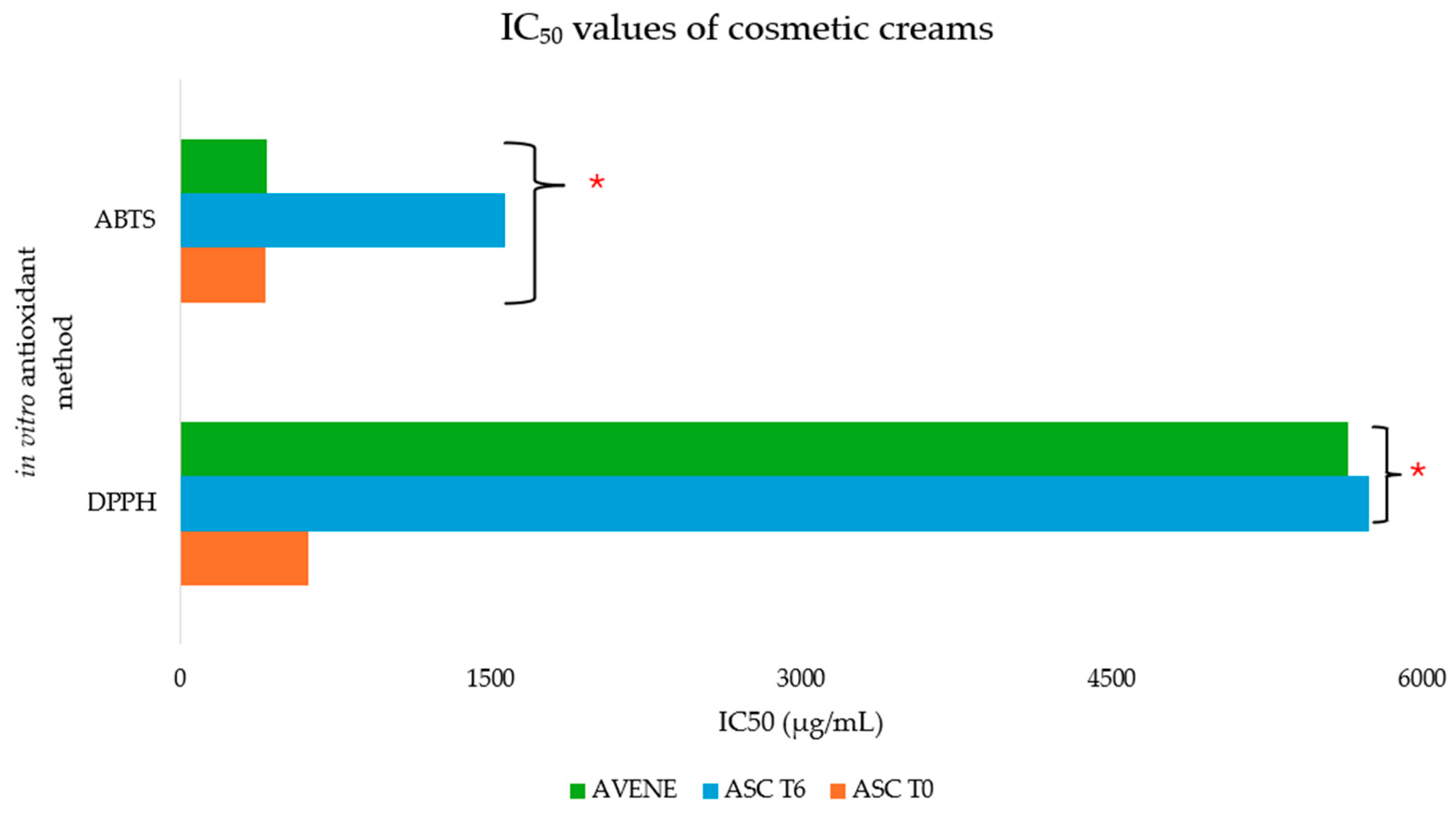
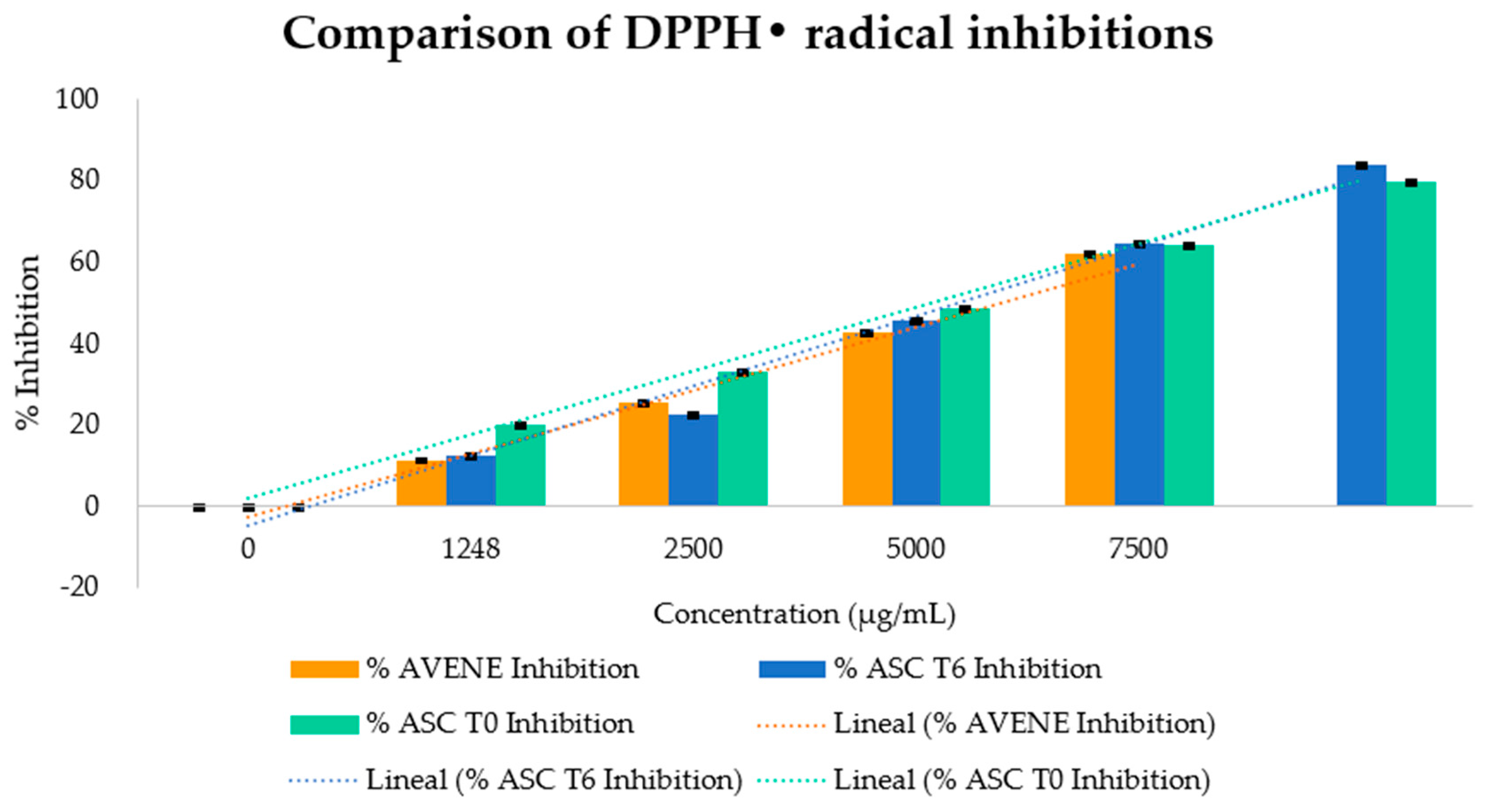
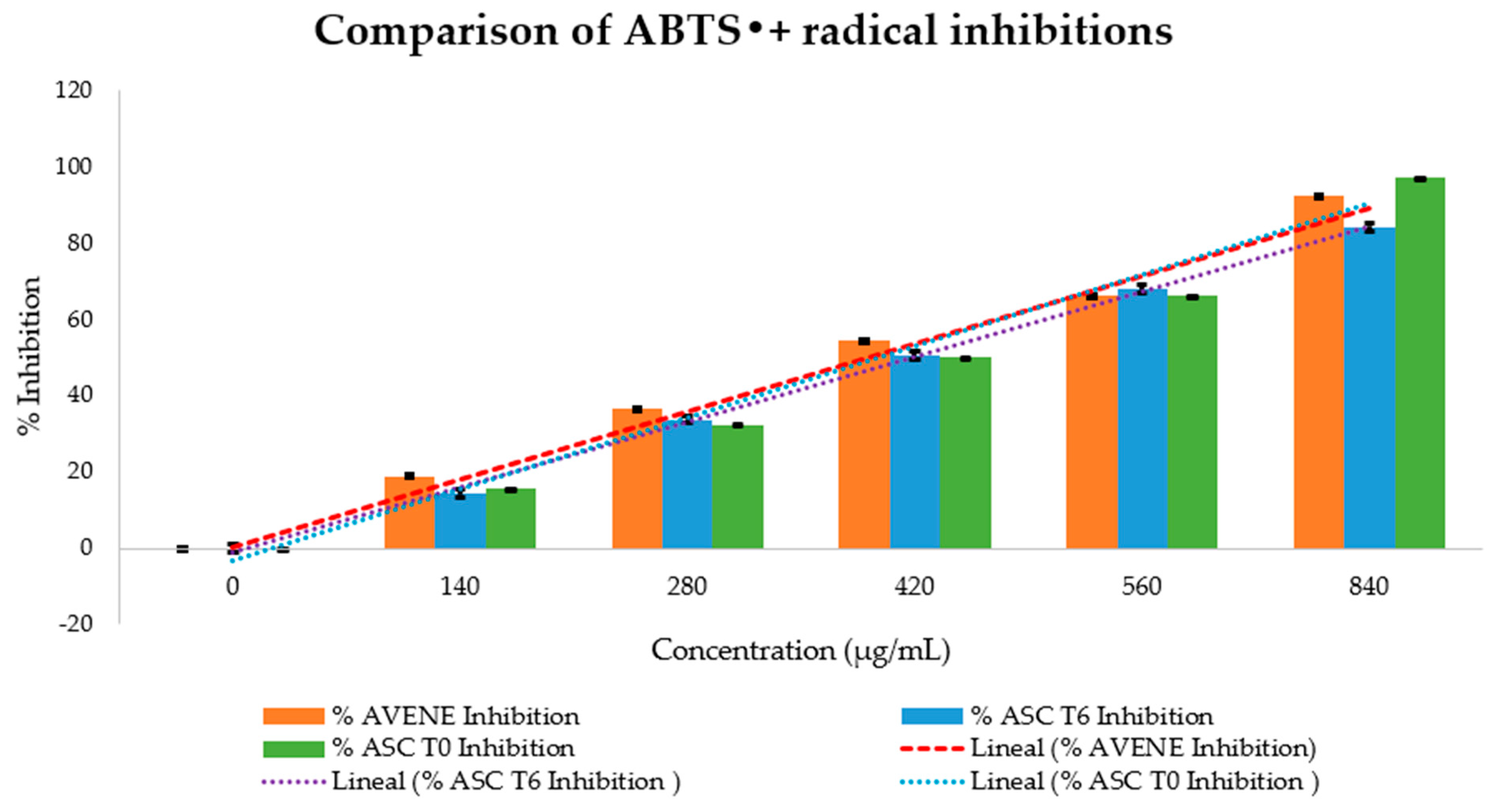
ASC T0 and ASC T6 creams successfully inhibited DPPH and ABTS free radicals in a manner comparable to the AVENE cream (Tables S1 and S2). Antioxidant activity was compared among the cosmetic products using IC50 values, defined as the minimum concentration required to inhibit 50% of the radical (Figure 1). Likewise, Figure 2 and Figure 3 show a linear relationship between the concentration of each cream and the percentage of radical inhibition, confirming a dose-dependent response.
ASC T0 cream exhibited the highest antioxidant capacity, which is consistent with the presence of freshly incorporated bioactive compounds in the emulsion, having IC50 of 622.4390 μg/mL.
After the accelerated stability period, during which temperature can degrade fatty acids [7], ASC T6 maintained its inhibitory capacity against the DPPH• radical, reaching values comparable to those of the reference commercial cream AVENE (5744.8571 and 5641.1585 μg/mL, respectively). Statistically, no significant differences were observed between the two formulations (p > 0.05), allowing the inference that ASC Cream preserves an antioxidant capacity equivalent to that of a premium cosmetic formulation even after thermal stress.
In the ABTS•+ method, ASC T0 exhibited IC50 value comparable to that of the commercial Avene cream. After six months of accelerated stability, ASC T6 showed IC50 value of 1569.7441 μg/mL against the ABTS•+ radical, indicating a reduction in antioxidant capacity compared with the initial ASC T0 value of 410.2358 μg/mL. However, this final value was approximately three times lower than that of the commercial Avene cream, formulated for skin hydration and firmness, which showed IC50 of 420.2202 μg/mL under the same analytical conditions. These results suggest that ASC T6 experienced partial degradation of its antioxidant activity; nevertheless, it retained inhibitory capacity against the ABTS•+ radical.

3.2. IR Analysis

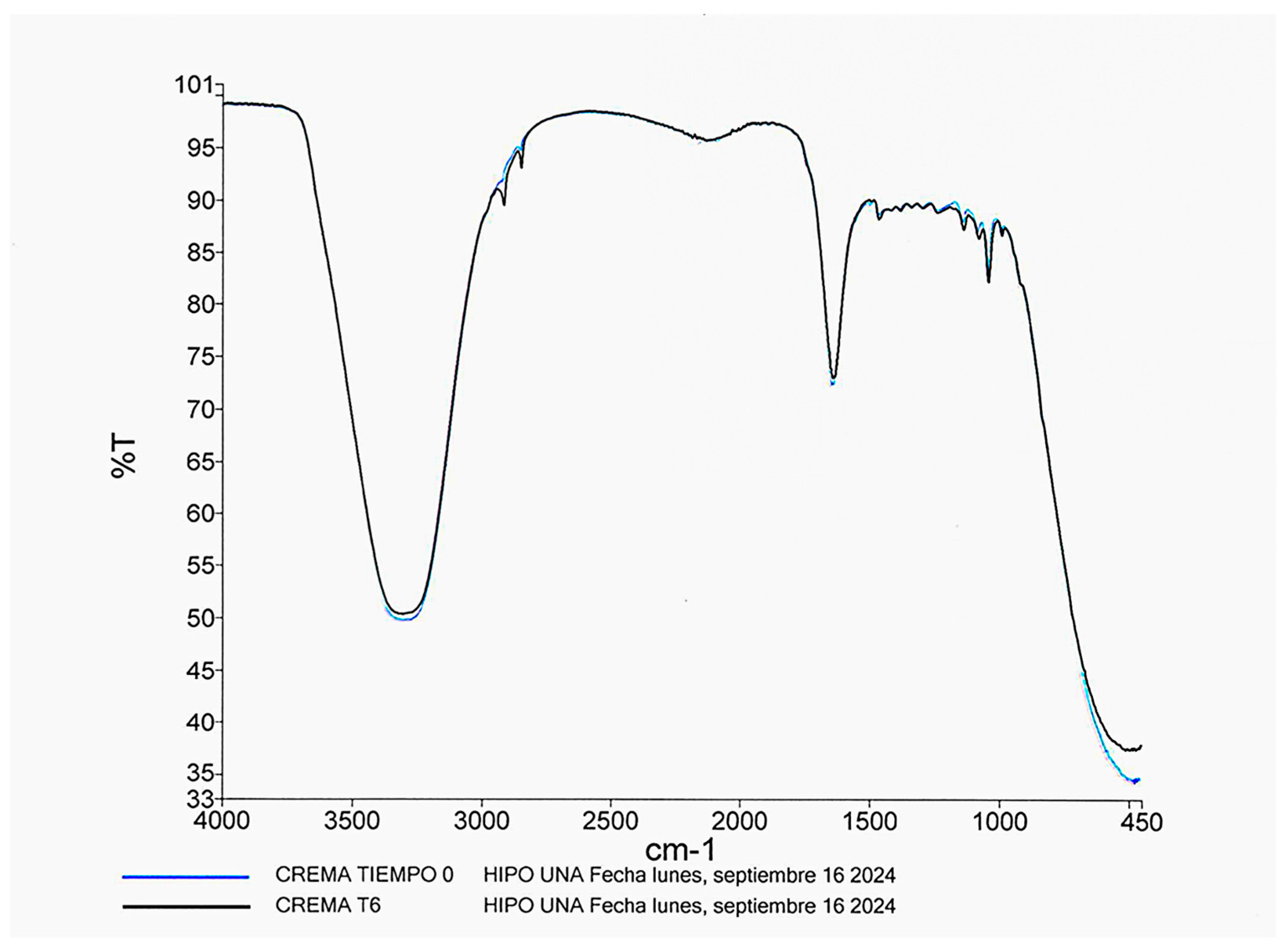
The IR spectra of ASC Cream at T0 and T6 were obtained over the range of 4000–450 cm−1. Figure 4, Figure 5, Figure 6 and Figure 7 show the IR spectra of Croton lechleri Muell. and the vegetable oils of Mauritia flexuosa Lf., Physalis peruviana L., Plukenetia huayllabambana sp. nov. and Plukenetia volubilis L. To allow for a direct comparison of the formulation before and after accelerated stability testing, the FTIR-ATR spectra of ASC Cream at T0 and T6 are overlaid in Figure 6.
The spectral curves of ASC Cream at T0 and T6 of accelerated stability appeared almost completely superimposed (Figure 6), and a high spectral correlation of 0.9825 was obtained. This suggests that no significant changes occurred in the overall chemical structure of the formulation, suggesting that the active components of ASC Cream remained stable.
Notably, this cosmetic formulation is currently the subject of a pending international patent application. An evaluation request has been submitted through the PCT platform under application number: PCT-PE2025-050020. At the national level, a patent application has also been filed with INDECOPI under file number 001300-2025/DIN. Both applications are currently under review and have not yet been granted.

4. Discussion

The antioxidant activity of cosmetic emulsions containing vegetable oils depends not only on the type of fatty acids present but also on the emulsifying system and its physicochemical stability. Previous studies have reported that oxidation of the oil phase during storage may reduce antioxidant activity as a result of the degradation of bioactive compounds [19]. This process may explain the partial reduction observed in ASC Cream; however, the measured values still indicate substantial antioxidant activity, suggesting that only a fraction of the vegetable oils underwent oxidation. Plant species contain varying proportions of PUFAs and MUFAs, and these differences influence their free radical inhibitory capacity. Species with higher PUFA content tend to show lower IC50 values against DPPH and ABTS radicals, whereas MUFAs—particularly oleic acid—contribute to greater stabilization of these synthetic radicals [26].
Regarding polyunsaturated fatty acids, different isomers of linoleic acid, such as cis-9 and trans-11, have demonstrated the ability to scavenge DPPH radicals in a concentration-dependent manner, achieving 72–86% inhibition and IC50 values of 11–13 mg/mL [27]. However, comparative studies of vegetable oils indicate that inhibition of synthetic radicals is not solely attributable to the levels of oleic, linoleic, or linolenic acids. In fact, phenolic compounds, tocotrienols, tocopherols, and terpenes are primarily responsible for antioxidant activity due to their chemical structures, which enable hydrogen atom donation or phenolic hydroxyl group transfer [28]. Phenolic compounds are also notable for their metal-chelating capacity, contributing to the neutralization of lipid peroxidation [8]. This supports the notion that the antioxidant activity observed in ASC T0 and ASC T6 may be influenced by natural antioxidants present in both the vegetable oils and the plant extract. In fact, oils rich in β-tocopherol and containing lower proportions of highly unsaturated fatty acids may inhibit DPPH and ABTS radicals more effectively while also providing greater oxidative stability [29]. This interpretation is consistent with the finding that ASC T6 did not exhibit a marked loss of antioxidant capacity after accelerated stability testing, which may be attributable to the presence of tocopherols.
In the 3200–3500 cm−1 region, water behaves differently within the emulsion as a result of its interaction with the polar components of the cosmetic matrix. These interactions modify the hydrogen-bond network, giving rise to symmetric, asymmetric, and weakly bonded configurations. The broad band centered at approximately 3306 cm−1 in both creams can be attributed to O–H stretching vibrations of water molecules and hydroxyl groups from the extracts and natural oils present. According to FTIR-ATR analyses of emulsified systems, this signal reflects the coexistence of strongly and weakly hydrogen-bonded water structures [30,31]. In this context, the band may be associated with interactions between vegetable oils, emulsifiers, and polar components such as propylene glycol, Croton lechleri resin extract, and water. Moreover, the high correlation coefficient (r = 0.9825) indicates that ASC Cream exhibits a stable, continuous phase with sustained molecular interactions.
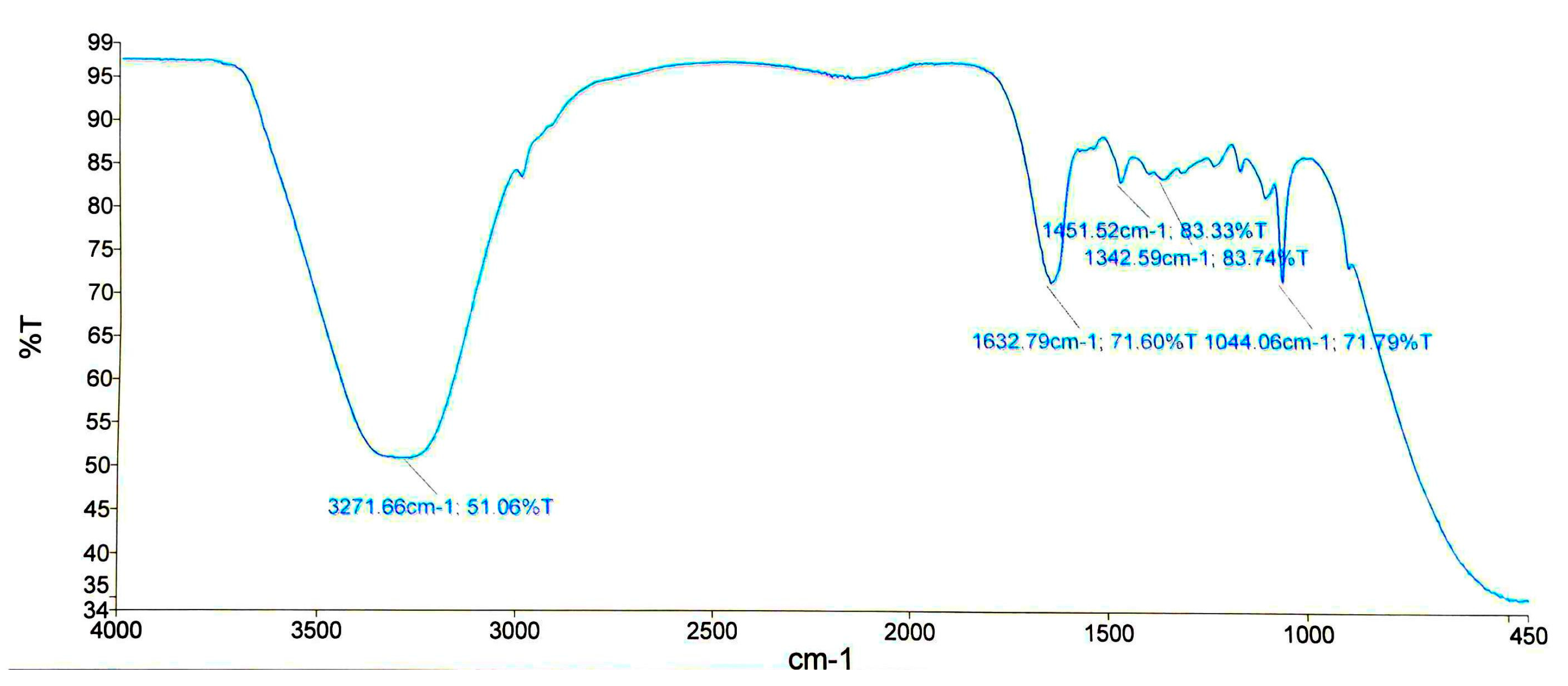
In Croton lechleri Muell. (Figure 4), bands at 1044.06 and 3271.66 cm−1 were observed and may be associated with O–H stretching vibrations, indicating the presence of phenolic groups. Bands at 1451.52 and 1632.79 cm−1 correspond to C=C stretching vibrations, suggesting the presence of aromatic compounds. A lower-intensity band at 1342.59 cm−1 may be attributed to rocking vibrations of aromatic C–H groups, further supporting the presence of phenolic or aromatic structures, as reported in previous infrared analyses of the latex [32].
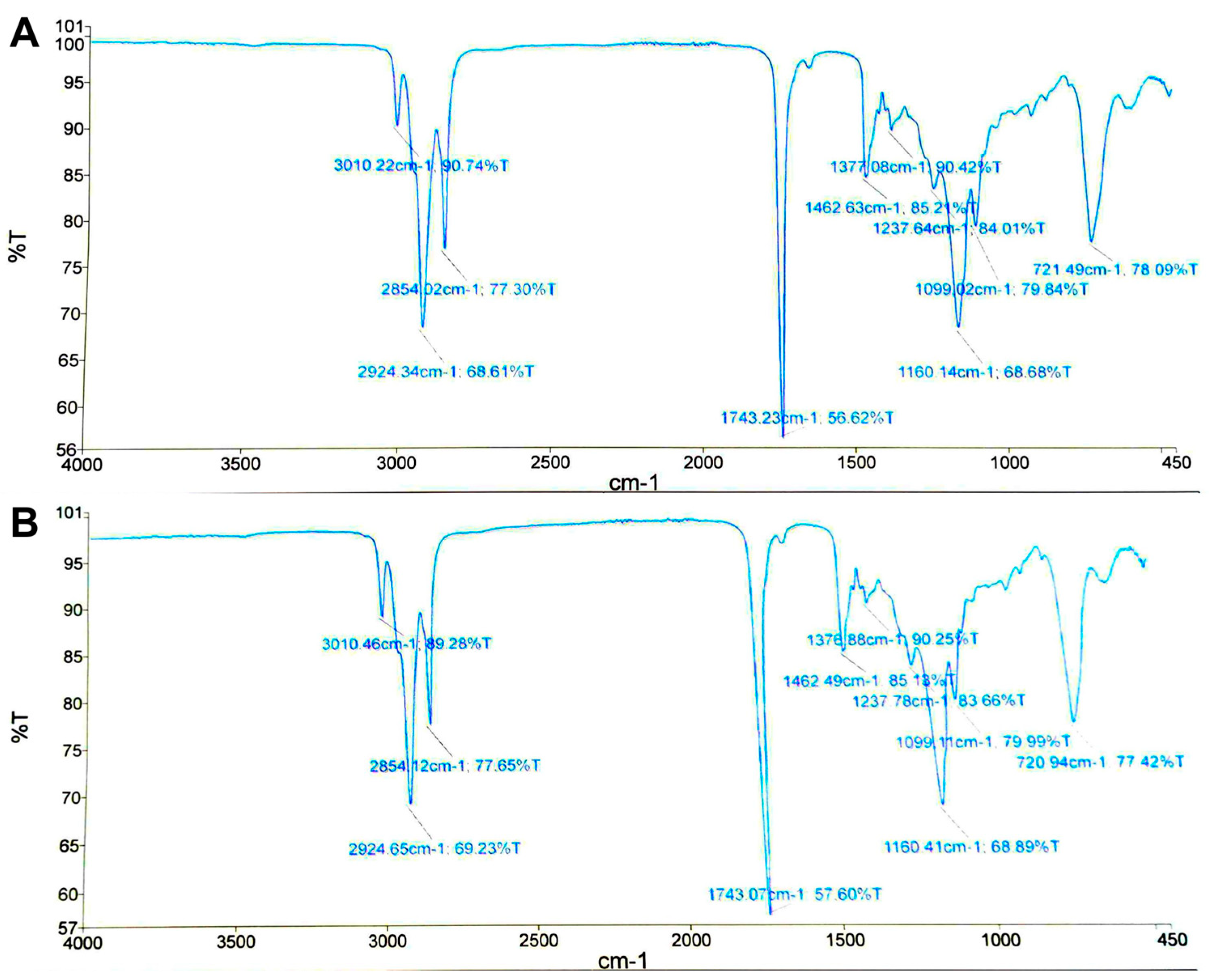
En Plukenetia volubilis L. (Figure 5), lower-intensity bands were detected at 3010.22 cm−1, 1462.63 cm−1, 1377.08 cm−1, and 1237.64 cm−1, whereas higher-intensity bands were observed at 2854.02 cm−1 and 2924.34 cm−1. According to previous studies reporting a similar signal at 3010.57 cm−1, this region is attributed to the stretching vibration of olefinic CH bonds in the cis configuration, which is supported by the presence of linoleic and linolenic acids. The band resulting from the bending vibrations of aliphatic CH2 and CH3 groups was noted at 1461.81 cm−1. The bands at 2927.14 and 2855.09 cm−1 correspond to asymmetric and symmetric stretching vibrations of methylene groups, respectively. The band at 1376.73 cm−1 arises from the symmetric bending vibrations of CH3 groups, whereas the bands at 1238.29 and 1163.45 cm−1 are both associated with the stretching vibration of ester C–O groups and bending vibration of CH2 groups [33]. It can be inferred that bands associated with stretching and bending vibrations of aliphatic CH2 and CH3 groups (2927–2855 and 1460–1377 cm−1, respectively) exhibited only minimal shifts without loss of intensity, suggesting that no relevant alterations occurred in the conformational order or packing of the hydrocarbon chains. Additionally, this correspondence indicates the presence of characteristic unsaturated acyl groups. The oil from P. huayllabambana sp. nov. (Figure 4) exhibited very similar bands with only minimal differences in cm−1, confirming that it presents equivalent functional structures, composed primarily of esterified long-chain PUFAs and MUFAs.
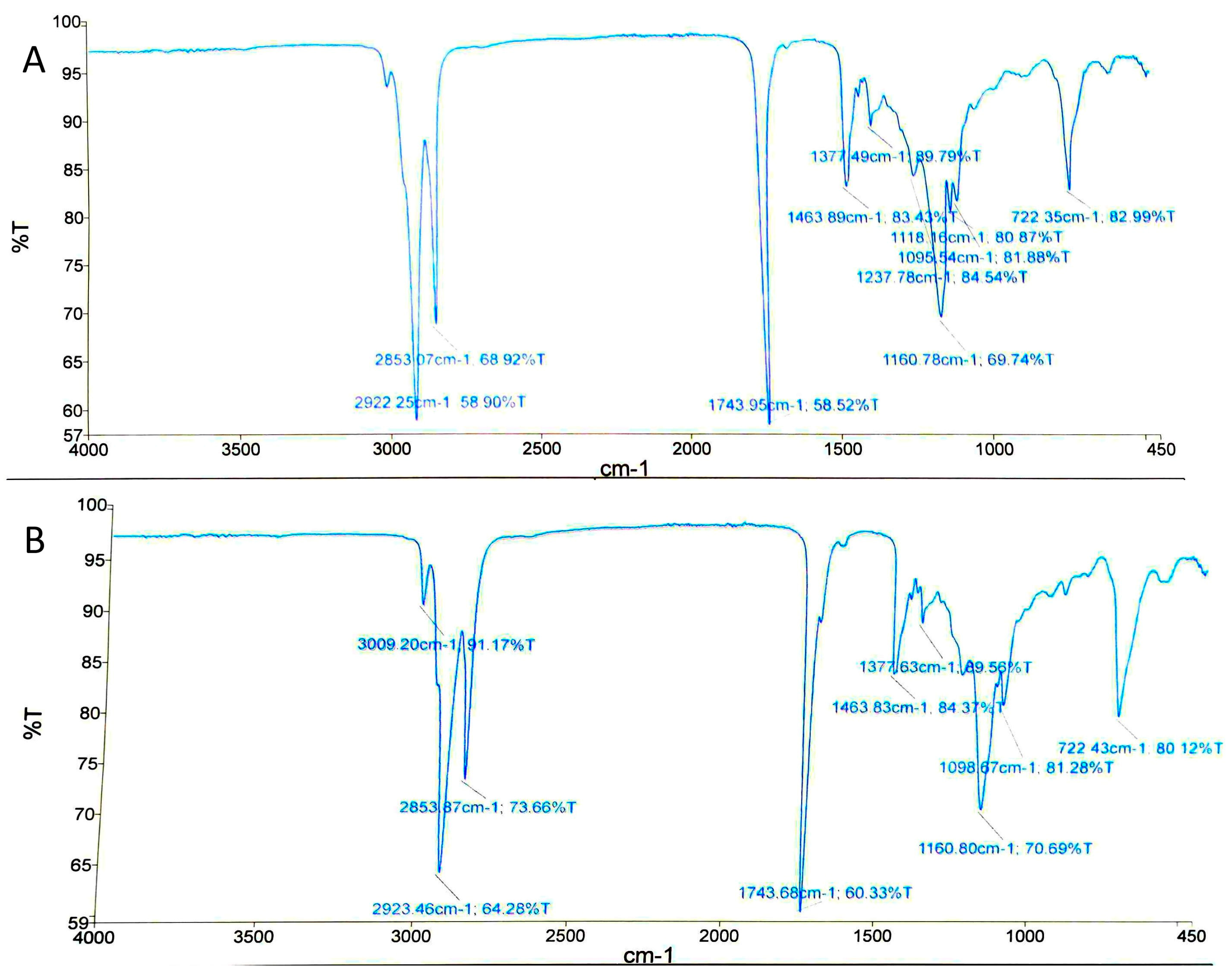
In Mauritia flexuosa L.f. (Figure 6), prominent bands at 2922.25 and 2853.07 cm−1 are attributable to asymmetric and symmetric CH2 stretching vibrations, respectively, which are characteristic of aliphatic fatty acid chains. The band at 1743.95 cm−1 corresponds to C=O stretching vibrations of carbonyl groups in the triglycerides of the oil. Signals of moderate intensity at 1463.89 cm−1 are assigned to CH2 scissoring deformation vibrations. In the 1237.78–1095.54 cm−1 region, a main band at 1160.78 cm−1 with adjacent peaks at 1237.78 and 1118.16 cm−1 was observed. This spectral profile has been reported for triolein, which is composed of three oleic acid molecules esterified to a glycerol backbone and involves complex C=C–C–O stretching vibrations [34]. This observation is consistent with the reported chemical composition of this oil (72–76% oleic acid). Also noteworthy is the well-defined band at 722.35 cm−1, attributed to CH2 vibrations characteristic of compounds with long hydrocarbon chains [35].
Specific bands related to the dominant functional groups in Physalis peruviana oil were also identified (Figure 6). The FTIR spectra revealed characteristic peaks attributable to vibrations of aliphatic C–H bonds (~2920 and 2850 cm−1) and the C=O stretching of triglyceride esters (~1740 cm−1) [36]. The band around 1160.80 cm−1 can be assigned to C–O stretching of the predominant ester groups in triglycerides, and the signal at 722.43 cm−1 may correspond to cis double bonds. Considering that linoleic acid predominates in these oils, these features support the triglyceride structure of the fatty acids present [37,38].
Comparison of the ASC T0 and ASC T6 spectra (Figure 7) shows three main bands at approximately 3306, 1640, and 1042 cm−1 in both spectra. These peaks were preserved with only minimal variations in intensity or position, indicating chemical stability and the absence of significant degradation of the main functional groups after 6 months of accelerated stability testing. The high correlation coefficient obtained (r = 0.9825) further supports this conclusion.
Notably, the band observed in the Croton lechleri extract (3271 cm−1; Figure 3) is very close to the band recorded in ASC Cream (3306 cm−1; Figure 7), indicating spectral correspondence between the extract and the final formulation. A similar behavior has been reported for a water-in-oil emulsion containing cranberry extract, in which the O–H stretching bands of the extract and the emulsion were comparable, indicating incorporation of hydroxyl groups from the extract into the hydrogen-bond network of the emulsifying system [39]. In ASC Cream, this spectral similarity may be associated with intermolecular interactions involving phenolic compounds from the Croton lechleri extract, supporting chemical compatibility and structural stability of the formulation after thermal stress.
Unlike the oil spectra shown in Figure 5 and Figure 6, the ASC Cream spectrum does not exhibit the characteristic band at 1740–1745 cm−1 attributed to C=O stretching vibrations of ester groups in vegetable oil triglycerides. This band is commonly observed in virgin oils obtained by mechanical pressing, where its intensity is associated with triglyceride structural integrity and the absence of oxidation [34,36]. In contrast, the band observed at approximately 1640 cm−1 does not appear in the spectra of the individual oils. In emulsions, this band is typically attributed to H–O–H bending vibrations of structured water, as well as to possible shifts in C=O vibrations resulting from intermolecular interactions within the emulsifying system [40]. Although this band can also be associated with amide I vibrations from proteins [41], the ASC Cream formulation does not contain protein components; therefore, it is more plausibly attributed to water–oil interactions maintained within the emulsion.
The band observed at 1042 cm−1 (Figure 7) is absent from the spectra of the individual vegetable oils. According to established correlations between IR absorption frequencies and functional groups, vibrations in the 1075–1000 cm−1 range are attributed to C–O stretching of alcohols, whereas those between 1140 and 1085 cm−1 correspond to C–O–C stretching vibrations of ethers [24]. This region has been reported as characteristic of nonionic surfactants such as alkyl polyglycosides, where ether bonds result from the reaction between glycosides and fatty alcohols, with a typical absorption peak around 1036 cm−1 [42]. Because ASC Cream contains the nonionic oil-in-water emulsifier Montanov™ 202 (arachidyl glucoside) [43], the observed signal may be attributed to C–O–C bonds within the emulsifying system. Similarly, polymerized nanoemulsions of Carapa guianensis oil have shown absorption bands in the 1030–1090 cm−1 region attributed to ether-group vibrations in the polymeric matrix and surfactant components [44]. ASC Cream also contains the acrylic copolymer Sepimax Zen™, which forms a three-dimensional network through ether linkages [45]. Collectively, these findings indicate that the 1042 cm−1 band reflects the structural integrity of the polymeric emulsifying system and its hydroxyl–ether interaction network, which plays a decisive role in the physicochemical stability of the ASC Cream emulsion. Accordingly, this band appears at the same spectral position in both the T0 and T6 spectra.
The inhibition of different types of synthetic free radicals in in vitro methodologies depends on the nature and affinity of the chemical components present in the analyzed sample. The characteristic aqueous–organic solubility of the ABTS radical confers it with the ability to measure the inhibitory effectiveness of radicals derived from both hydrophilic and lipophilic antioxidants. In contrast, the organic solubility of DPPH makes it susceptible to lipophilic antioxidants. Consequently, flavonoids and complex phenolic compounds react slowly-to-moderately with the DPPH radical [46]. In this study, ASC T0 demonstrated higher antioxidant capacity in the ABTS assay than in the DPPH assay, which can be attributed to the initial contribution of both hydrophilic and lipophilic phenolic compounds. Following accelerated stability testing (ASC T6), a reduction in antioxidant capacity was observed in both assays. However, the IC50 value obtained with DPPH at T6 was closer to that of commercial AVÈNE cream than the IC50 value measured with ABTS. This finding indicates higher retention of lipophilic antioxidant activity, including that associated with tocopheryl acetate, carotenoids, and hydrogen-donating compounds present in vegetable oils. In addition, polyphenols and various flavonoids characteristic of C. lechleri may have contributed to the scavenging of the ABTS radical.
DPPH is a stable free radical that neither dimerizes nor reacts with oxygen and undergoes a color change from violet to yellow upon reduction to the corresponding hydrazine. Its structure exhibits polar resonance, and reduction must occur within the same reaction medium [47]. In this mechanism, phenolic antioxidants act as hydrogen donors to neutralize peroxyl radicals (ROO•), forming phenoxy radicals and hydroperoxides. The resulting phenoxyl radicals subsequently react with additional peroxyl radicals to yield non-radical products, thereby terminating the lipid peroxidation chain [48]. Given that ASC Cream contains polyphenols from Croton lechleri resin extract, this fraction may have contributed to preserving the shelf stability of linoleic acid and to maintaining the antioxidant capacity of ASC T6 close to its initial value.
It has been reported that DPPH does not fully react with all classes of antioxidants within the incubation period due to steric hindrance, which limits accessibility to the radical’s reactive site. Polyphenols with simpler molecular structures generally exhibit easier access and more efficient scavenging [49,50]. Accordingly, it is possible that certain polyphenolic compounds present in the oils and extracts of the ASC Cream formulation did not fully react under the assay conditions, suggesting that the overall antioxidant potential of the formulation may be underestimated by in vitro measurements.
Model systems of lipid peroxidation using linoleic acid and Cu2+ ions have shown that flavonoids such as morin, quercetin, and catechin can inhibit auto-oxidation through metal-ion chelation. However, some flavonoids may also act as pro-oxidants at high concentrations, as they can strongly reduce Cu2+ to Cu+, which subsequently reacts with peroxides to generate hydroxyl radicals [51]. For this reason, the selection of DPPH and ABTS assays in the present study is considered appropriate, as these methods do not involve metal ions in their reaction mechanisms, unlike other assays such as Cupric Reducing Antioxidant Capacity (CUPRAC) and Ferric Reducing Antioxidant Power (FRAP).
Plant extracts with outstanding in vitro antioxidant capacity are among the most commonly incorporated ingredients in cosmetic formulations for functional evaluation. For example, a methanolic extract of Araucaria angustifolia peels was incorporated into a W/O emulsion due to its high phenolic compound content and antioxidant capacity superior to that of Trolox®. The resulting cosmetic product exhibited an antioxidant activity equivalent to 1.10 mg Trolox/g [52]. However, although the extract clearly conferred antioxidant activity, the study did not compare antioxidant capacity at baseline and after stability testing. In contrast, the present study provides added value by incorporating analytical methods that allow prediction of the functional shelf life of a natural cosmetic formulation. In addition, the results demonstrate inhibitory efficacy comparable to that of commercial cosmetic products.
Another study evaluated antioxidant activity using the DPPH method in an emulsion containing E. bulbosa extract at baseline and after 1 month of storage at 45 °C, reporting a 12% reduction in inhibition. These findings confirmed that elevated temperatures can damage certain bioactive compounds, as evidenced by reduced in vitro antioxidant activity [53]. In comparison, ASC Cream showed reductions of 3.8-fold and 9.22-fold in IC50 values as determined by the ABTS and DPPH assays, respectively. Although antioxidant capacity decreased, inhibitory potential against free radicals was retained (Tables S1 and S2).
The maintenance of antioxidant capacity suggests a synergistic effect between phenolic compounds and naturally occurring lipophilic antioxidants. This stability could potentially be enhanced by increasing the proportion of tocopherols in the formulation. Similarly, incorporating oil fractions enriched in these antioxidant compounds may further extend the shelf life of the emulsion.
It is important to mention a limitation of the study: the results do not establish a mechanical causality or quantify individual phytochemicals; they only provide in vitro evidence that the formulation matrix favours the functional preservation of antioxidants under stress conditions. Structural stability may favour the preservation of antioxidant activity, although this relationship cannot be interpreted as direct evidence of the mechanism involved. Therefore, it is important that future studies incorporate chromatographic techniques to quantify specific bioactive compounds and further correlate their retention with antioxidant activity.

5. Conclusions

This study demonstrates that the cosmetic formulation ASC Cream, composed of extracts and vegetable oils sourced from Peruvian biodiversity, preserves its structural integrity and chemical compatibility between the lipid and polymeric components of the emulsifying system after six months of accelerated stability, thereby maintaining its antioxidant potential. Notably, the post-stability formulation (ASC T6) retained its inhibitory activity against the DPPH• radical, exhibiting an IC50 value of 5744.86 µg/mL, which was statistically comparable to that of the reference commercial product (5641.16 µg/mL). These findings support the sustainable use of Peruvian plant species as effective sources of bioactive compounds for the development of natural cosmetic creams. Future research should emphasize formulation optimization through the incorporation of complementary antioxidants or adjustment of antioxidant concentrations, alongside systematic evaluation of stability and in vivo instrumental efficacy at each corresponding time point.

Supplementary Materials

The following supporting information can be downloaded at https://www.mdpi.com/article/10.3390/cosmetics13020057/s1: Table S1: Antioxidant activity of cosmetic creams evaluated by the DPPH method.; Table S2: Antioxidant activity of cosmetic creams evaluated by the ABTS method.

Author Contributions

Conceptualization, L.V.-T.; methodology, L.V.-T.; formal analysis, L.V.-T.; investigation, L.V.-T. and P.L.; writing and original draft preparation, L.V.-T., P.L. and L.D.L.F.-C.; writing, review, and editing, A.M.M.; visualization, L.V.-T. and P.L.; supervision, P.L. All authors have read and agreed to the published version of the manuscript.

Funding

This research received no external funding.

Institutional Review Board Statement

This study evaluated antioxidant activity using the in vitro DPPH and ABTS methods to determine antioxidant potential. As it did not involve human research, the Institutional Review Board is not applicable.

Informed Consent Statement

As this study did not involve human subjects, Informed Consent is not applicable.

Data Availability Statement

The original contributions presented in this study are included in the article and Supplementary Materials.

Acknowledgments

The authors would like to thank SMASAC Laboratories and the Research Institute for Pharmaceutical Sciences and Natural Resources, Faculty of Pharmacy and Biochemistry, Universidad Nacional Mayor de San Marcos, Lima, Peru, for their support with the FTIR-ATR spectroscopy and in vitro antioxidant assays.

Conflicts of Interest

The authors declare no conflicts of interest.

Abbreviations

The following abbreviations are used in this manuscript:
FTIR-ATR Fourier transform infrared spectroscopy with attenuated total reflectance
ASC CreamCosmetic Formulation with Active Ingredients Derived from Peruvian Biodiversity
ASC T0Time 0 cream, at the start of the study
ASC T6Cream after 6 months under accelerated stability conditions

References

  1. Mititelu, M.; Lupuliasa, D.; Neacșu, S.M.; Olteanu, G.; Busnatu, Ș.S.; Mihai, A.; Popovici, V.; Măru, N.; Boroghină, S.C.; Mihai, S.; et al. Polyunsaturated Fatty Acids and Human Health: A Key to Modern Nutritional Balance in Association with Polyphenolic Compounds from Food Sources. Foods 2025, 14, 46. [Google Scholar] [CrossRef]
  2. Bialek, A.; Bialek, M.; Jelinska, M.; Tokarz, A. Fatty acid profile of new promising unconventional plant oils for cosmetic use. Int. J. Cosmet. Sci. 2016, 38, 382–388. [Google Scholar] [CrossRef] [PubMed]
  3. Harayama, T.; Shimizu, T. Roles of polyunsaturated fatty acids, from mediators to membranes. J. Lipid Res. 2020, 61, 1150–1160. [Google Scholar] [CrossRef]
  4. Richter, K. Oxidative Stress in Aging Human Skin. Biomolecules 2015, 5, 545–589. [Google Scholar] [CrossRef] [PubMed]
  5. Zayed, A.; Yeoh, T.; Shah, J.C.; Walsh, T. Assessing and Predicting Physical Stability of Emulsion-Based Topical Semisolid Products: A Review. J. Pharm. Sci. 2023, 112, 3549. [Google Scholar] [CrossRef] [PubMed]
  6. Bom, S.; Fitas, M.; Martins, A.M.; Pinto, P.; Ribeiro, H.M.; Marto, J. Replacing Synthetic Ingredients by Sustainable Natural Alternatives: A Case Study Using Topical O / W Emulsions. Molecules 2020, 25, 4887. [Google Scholar] [CrossRef]
  7. Pratap Singh, A.; Fathordoobady, F.; Guo, Y.; Singh, A.; Kitts, D.D. Antioxidants help favorably regulate the kinetics of lipid peroxidation, polyunsaturated fatty acids degradation and acidic cannabinoids decarboxylation in hempseed oil. Sci. Rep. 2020, 10, 10567. [Google Scholar] [CrossRef]
  8. Shi, C.; Cui, J.; Yin, X.; Luo, Y.; Zhou, Z. Grape seed and clove bud extracts as natural antioxidants in silver carp (Hypophthalmichthys molitrix) fillets during chilled storage: Effect on lipid and protein oxidation. Food Control 2014, 40, 134–139. [Google Scholar] [CrossRef]
  9. Saini, R.K.; Prasad, P.; Sreedhar, R.V. Omega−3 Polyunsaturated Fatty Acids (PUFAs): Emerging Plant and Microbial Source, Oxidative Stability, Bioavailability, and Health Benefits—A Review. Antioxidants 2021, 10, 1627. [Google Scholar] [CrossRef]
  10. Sharma, A.; Chauhan, R.; Kumar, R.; Mankotia, P.; Verma, R.; Sharma, V. A rapid and non-destructive ATR-FTIR spectroscopy method supported by chemometrics for discriminating between facial creams and the classification into herbal and non-herbal brands. Spectrochim. Acta Part. A Mol. Biomol. Spectrosc. 2021, 258, 119803. [Google Scholar] [CrossRef]
  11. Cutimbo, M.C.; Marcos, J.; Aro, A.; Lisbeth, Z.; Vivanco, T. Estabilidad oxidativa del aceite de soya con adición de antioxidante de Isaño (Tropaeolum tuberosum Ruiz & Pavón) durante la fritura de papas. Rev. Investig. Altoandinas 2016, 18, 395–402. [Google Scholar]
  12. Huaman, J.; Victoria-Tinoco, L.; Rojas, J.; Muñoz, A.M.; Lozada, P. Design, Development, and In Vivo Testing of the Hydrating Effect and pH Maintenance a Cosmetic Formulation Incorporating Oils and an Extract from Peruvian Biodiversity. Cosmetics 2024, 11, 129. [Google Scholar] [CrossRef]
  13. Lozada, P.; Victoria-Tinoco, L.; Ricaldi, J.H. In Vivo Study of the Safety and Skin Viscoelasticity of a Cosmetic Formulation Containing an Extract and Oils from Peruvian Native Plants. Nat. Prod. Commun. 2025, 20. [Google Scholar] [CrossRef]
  14. ISO/TR 18811:2018; Cosmetics—Guidelines on the Stability Testing of Cosmetic Products. International Organization for Standardization (ISO): Geneva, Switzerland, 2018.
  15. MINSA/DIGEMID-2022; Norma Técnica de Salud que Regula Los Estudios de Las Especialidades Farmacéuticas. DIGEMID: Lima, Peru, 2022.
  16. Sykuła, A.; Janiak-Włodarczyk, I.; Kapusta, I.T. Formulation and Evaluation of the Antioxidant Activity of an Emulsion Containing a Commercial Green Tea Extract. Molecules 2025, 30, 197. [Google Scholar] [CrossRef] [PubMed]
  17. Kedare, S.B.; Singh, R.P. Genesis and development of DPPH method of antioxidant assay. J. Food Sci. Technol. 2011, 48, 412–422. [Google Scholar] [CrossRef]
  18. Guija-Poma, E.; Inocente-Camones, M.Á.; Ponce-Pardo, J.; Zarzosa-Norabuena, E. Evaluación de la técnica 2,2-Difenil-1-Picrilhidrazilo (DPPH) para determinar capacidad antioxidante. Horiz. Med. 2015, 15, 57–60. [Google Scholar] [CrossRef]
  19. Zheng, H.; Mao, L.; Yang, J.; Zhang, C.; Miao, S.; Gao, Y. Effect of Oil Content and Emulsifier Type on the Properties and Antioxidant Activity of Sea Buckthorn Oil-in-Water Emulsions. J. Food Qual. 2020, 2020, 1540925. [Google Scholar] [CrossRef]
  20. Henriquez, C.; Aliaga, C.; Lissi, E. Formation and Decay of the ABTS Derived Radical Cation: A Comparison of Different Preparation Procedures. Fac. Qu’ımica Y Biol. Univ. Santiago Chile 2002, 34, 659–665. [Google Scholar] [CrossRef]
  21. Tian, X.; Schaich, K.M. Effects of Molecular Structure on Kinetics and Dynamics of the Trolox Equivalent Antioxidant Capacity Assay with ABTS +•. J. Agric. Food Chem. 2013, 61, 5511–5519. [Google Scholar] [CrossRef]
  22. Vuolo, M.M.; Lima, V.S.; Maróstica Junior, M.R. Phenolic Compounds: Structure, Classification, and Antioxidant Power. In Bioactive Compounds; Elsevier: Amsterdam, The Netherlands, 2019; pp. 33–50. [Google Scholar]
  23. Njoya, M.E. Chapter 31—Medicinal plants, antioxidant potential, and cancer. In Cancer; Academic Press: Cambridge, MA, USA, 2021; pp. 349–357. [Google Scholar]
  24. Colthup, N.B.; Daly, L.H.; Wiberley, S.E. Introduction to Infrared and Raman Spectroscopy, 3rd ed.; Academic Press: Cambridge, MA, USA, 1990. [Google Scholar]
  25. Tsiapali, O.I.; Kontaxi, N.; Pavlidis, K.; Ofrydopoulou, A.; Prokopiou, V.; Letsiou, S.; Kosheleva, R.I.; Mitropoulos, A.; Tsoupras, A. Anti-Inflammatory and Antioxidant Properties of Anti-UV Creams Enriched with Natural Extracts from Avocado, Apple, and Kiwi By-Products, with and Without Nanobubbles. Cosmetics 2025, 12, 231. [Google Scholar] [CrossRef]
  26. Pekkoh, J.; Phinyo, K.; Thurakit, T.; Lomakool, S.; Duangjan, K.; Ruangrit, K.; Pumas, C.; Jiranusornkul, S.; Yooin, W.; Cheirsilp, B.; et al. Lipid Profile, Antioxidant and Antihypertensive Activity, and Computational Molecular Docking of Diatom Fatty Acids as ACE Inhibitors. Antioxidants 2022, 11, 186. [Google Scholar] [CrossRef]
  27. Ali, Y.M.; Kadir, A.A.; Ahmad, Z.; Yaakub, H.; Zakaria, Z.A.; Nazrul, M.; Abdullah, H. Free radical scavenging activity of conjugated linoleic acid as single or mixed isomers. Pharm. Biol. 2012, 50, 712–719. [Google Scholar] [CrossRef]
  28. Stryjecka, M.; Kiełtyka-dadasiewicz, A.; Michalak, M.; Racho, L.; Głowacka, A. Chemical Composition and Antioxidant Properties of Oils from the Seeds of Five Apricot (Prunus armeniaca L.) cultivars. J. Oleo Sci. 2019, 68, 729–738. [Google Scholar] [CrossRef]
  29. Uluata, S. Antioxidant Activities and Oxidative Stabilities of Some Unconventional Oilseeds. J. Am. Oil Chem. Soc. 2012, 89, 551–559. [Google Scholar] [CrossRef]
  30. Kiefer, J.; Frank, K.; Zehentbauer, F.M.; Schuchmann, H.P. Infrared Spectroscopy of Bilberry Extract Water-in-Oil Emulsions: Sensing the Water-Oil Interface. Biosensors 2016, 6, 13. [Google Scholar] [CrossRef]
  31. Dinache, A.; Pascu, M.; Smarandache, A. Spectral Properties of Foams and Emulsions. Molecules 2021, 26, 7704. [Google Scholar] [CrossRef] [PubMed]
  32. Oliveira, R.N.; Mancini, M.C.; de Oliveira, F.C.S.; Passos, T.M.; Quilty, B.; da Thiré, R.M.S.M.; McGuinness, G.B. Análise por FTIR e quantificação de fenóis e flavonóides de cinco produtos naturais disponíveis comercialmente utilizados no tratamento de feridas. Rev. Mater. 2016, 21, 767–779. [Google Scholar]
  33. Guillén, M.D.; Ruiz, A.; Cabo, N.; Chirinos, R.; Pascual, G. Characterization of sacha inchi (Plukenetia volubilis L.) Oil by FTIR spectroscopy and 1H NMR. Comparison with linseed oil. J. Am. Oil Chem. Soc. 2003, 80, 755–762. [Google Scholar] [CrossRef]
  34. Albuquerque, M.L.S.; Guedes, I.; Alcantara, P.; Moreira, S.G.C. Infrared absorption spectra of Buriti (Mauritia flexuosa L.) oil. Vib. Spectrosc. 2003, 33, 127–131. [Google Scholar] [CrossRef]
  35. da Silva, B.S.F.; Batista, B.W.M.; Costa, K.L.S.; Alves, C.N.; de Fátima Pinheiro Pereira, S.; Ferreira, N.R. Acidity index of different buriti oil samples subjected to spectroscopy in infrared region and principal component analysis. Pesqui. Agropecu. Bras. 2024, 59, e03452. [Google Scholar] [CrossRef]
  36. Embaby, H.E.; Miyakawa, T.; Hachimura, S.; Muramatsu, T.; Nara, M.; Tanokura, M. Crystallization and melting properties studied by DSC and FTIR spectroscopy of goldenberry (Physalis peruviana) oil. Food Chem. 2022, 366, 130645. [Google Scholar] [CrossRef]
  37. Nurrulhidayah, A.F.; Rohman, A.; Amin, I.; Shuhaimi, M.; Khatib, A. Analysis of chicken fat as adulterant in butter using fourier transform infrared spectroscopy and chemometrics. Grasas Y Aceites 2013, 64, 349–355. [Google Scholar] [CrossRef]
  38. Escamilla Rosales, M.F.; Ariza Ortega, J.A.; Ramos Cassellis, M.E.; Díaz Reyes, J.D.R. Resumen—El Identificación Por Espectroscopia De Ácidos Grasos En Chinicuil (Comadia redtembacheri Hamm) Y Gusano Blanco De Maguey (Aegiale hesperiaris Walk). Fritos. Acad. J. 2020, 12, 529–534. [Google Scholar]
  39. Kiefer, J.; Frank, K.; Schuchmann, H.P. Attenuated Total Reflection Infrared (ATR-IR) Spectroscopy of a Water-in-Oil Emulsion. Soc. Appl. Spectrosc. 2011, 65, 1024–1028. [Google Scholar] [CrossRef]
  40. Dinache, A.; Tozar, T.; Smarandache, A.; Andrei, I.R.; Nistorescu, S.; Nastasa, V.; Staicu, A.; Pascu, M.; Romanitan, M.O. Spectroscopic Characterization of Emulsions Generated with a New Laser-Assisted Device. Molecules 2020, 25, 1729. [Google Scholar] [CrossRef]
  41. Ramona, P.; Trandafirescu, C.; Musuc, A.M.; Ozon, E.A. Comparative Physicochemical and Pharmacotechnical Evaluation of Three Topical Gel-Cream Formulations. Gels 2025, 11, 532. [Google Scholar] [CrossRef] [PubMed]
  42. Donat, R.; Volkan, D. Synthesis of Some Alkyl Polyglycosides. Int. J. Second. Metab. 2022, 9, 52–65. [Google Scholar] [CrossRef]
  43. EPPIC MONTANOVTM 202. Available online: https://www.seppic.com/product/montanov-202 (accessed on 12 November 2025).
  44. Silva, L.G.F.; Martins, Q.S.; Ribas, A.; Oliveira, D.L.L.; Lima, R.C.S.; Santos, J.G. Raman and FTIR spectroscopy experimental and theoretical in magnetic nanoemulsion from Carapa guianensis Aublet. Rev. Mex. Física 2023, 69, 1–7. [Google Scholar] [CrossRef]
  45. SEPPIC SEPIMAX ZENTM. Available online: https://www.seppic.com/product/sepimax-zen (accessed on 12 November 2025).
  46. Sadowska-bartosz, I.; Bartosz, G. Evaluation of The Antioxidant Capacity of Food Products: Methods, Applications and Limitations. Process. 2022, 10, 2031. [Google Scholar] [CrossRef]
  47. Ionita, P. The chemistry of dpph∙ free radical and congeners. Int. J. Mol. Sci. 2021, 22, 1545. [Google Scholar] [CrossRef]
  48. Pratt, D.A.; Tallman, K.A.; Porter, N.A. Free radical oxidation of polyunsaturated lipids: New mechanistic insights and the development of peroxyl radical clocks. Acc. Chem. Res. 2011, 44, 458–467. [Google Scholar] [CrossRef]
  49. Prior, R.L.; Wu, X.; Schaich, K.; Rock, L.; Brunswick, N. Standardized Methods for the Determination of Antioxidant Capacity and Phenolics in Foods and Dietary Supplements. J. Agric. Food Chem. 2005, 53, 4290–4302. [Google Scholar] [CrossRef] [PubMed]
  50. Gulcin, I.; Alwasel, S.H. DPPH Radical Scavenging Assay. Processes 2023, 11, 2248. [Google Scholar] [CrossRef]
  51. Beker, B.Y.; Bakır, T.; Sönmezoglua, I.; Imera, F.; Apak, R. Antioxidant protective effect of flavonoids on linoleic acid peroxidation induced by copper(II)/ascorbic acid system. Chem. Phys. Lipids 2011, 164, 732–739. [Google Scholar] [CrossRef]
  52. Sprada, G.; Arantes, A.B.; Sacchetti, G.; Spagnoletti, A.; Ziosi, P.; Scalambra, E.; Vertuani, S.; Manfredini, S. Antioxidant Activity of Cosmetic Formulations Based on Novel Extracts from Seeds of Brazilian Araucaria angustifolia (Bertoll) Kuntze. J. Cosmet. Dermatol. Sci. Appl. 2014, 4, 190–202. [Google Scholar]
  53. Panyachariwat, N.; Jimtaisong, A.; Saewan, N. Antioxidative Potentials of Eleutherine bulbosa Bulb and Its Utilization in Topical Cosmetic Emulsion. Cosmetics 2024, 11, 111. [Google Scholar] [CrossRef]
Figure 1. Comparison of IC50 values * Statistically significant (p < 0.05).
Cosmetics 13 00057 g001
Figure 2. Method results DPPH.
Cosmetics 13 00057 g002
Figure 3. Method results ABTS.
Cosmetics 13 00057 g003
Figure 4. FTIR spectrum of Croton lechleri resin extract.
Cosmetics 13 00057 g004
Figure 5. (A) IR spectrum of Plukenetia volubilis and (B) Plukenetia huayllabambana seed oils.
Cosmetics 13 00057 g005
Figure 6. (A) IR spectrum of Mauritia flexuosa fruit oil and (B) Physalis peruviana seed oil.
Cosmetics 13 00057 g006
Figure 7. FTIR-ATR spectra of ASC Cream at T0 (blue line) and T6 (black line), corresponding to baseline and after 6 months under accelerated stability conditions, respectively.
Cosmetics 13 00057 g007
Table 1. Fatty acid profile of vegetable oils used in the formulation.
Fatty Acids
Vegetable OilOleic Acid (%)Linoleic Acid (%)Linolenic Acid (%)
Mauritia flexuosa L.f.72–761.5–3.5-
Physalis peruviana L.10.91–11.0375.97–76.01-
Plukenetia huayllabambana sp. nov.9.3826.6751.34
Plukenetia volubilis L.8.7–1034–3744–49
Disclaimer/Publisher’s Note: The statements, opinions and data contained in all publications are solely those of the individual author(s) and contributor(s) and not of MDPI and/or the editor(s). MDPI and/or the editor(s) disclaim responsibility for any injury to people or property resulting from any ideas, methods, instructions or products referred to in the content.