

A Passiflora edulis Fruit Extract with an Increase in Vitamin D3 Level in Skin Epidermis: In Silico and In Vitro Research

 , ,
, ,
Abstract
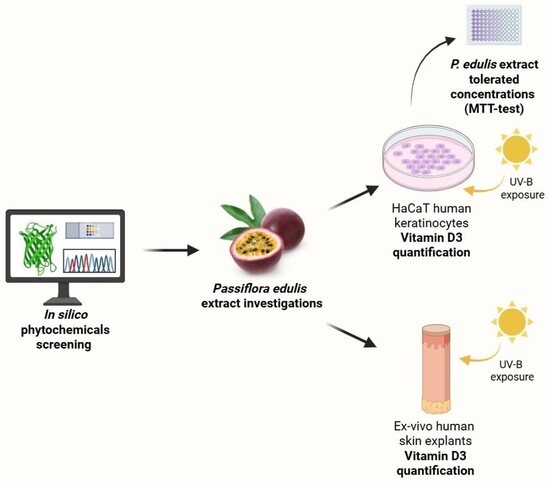
1. Introduction
2. Materials and Methods
2.1. In Silico Screening of Passiflora edulis Phytochemicals with Responsible Targets in Vitamin D3 Synthesis
2.2. Performing Molecular Dynamics and MM/PBSA Analysis
2.3. Substances and Materials
2.4. Evaluation of Cytotoxicity of Passiflora edulis Fruit Extract
2.5. In Vitro Evaluation of Vitamin D3 Synthesis in Human Keratinocyte Culture
2.6. Ex Vivo Evaluation of Vitamin D3 Synthesis in Human Skin Explants
2.7. Synergy Analysis Using the Bliss Independence Model
2.8. Statistical Analysis
3. Results and Discussion
3.1. Molecular Screening of Passiflora edulis Phytochemicals with Vitamin D3 Molecular Targets
3.2. Determination of Non-Cytotoxic Concentrations of Passiflora edulis Extract
3.3. Quantification of Vitamin D3 Amount in Human Keratinocytes In Vitro
3.4. Pre-Clinical Quantification of Vitamin D3 Amount in Human Skin Explants Ex Vivo
4. Conclusions
5. Patents
Author Contributions
Funding
Institutional Review Board Statement
Informed Consent Statement
Data Availability Statement
Acknowledgments
Conflicts of Interest
Abbreviations
| 7-DHC | 7-dehydrocholesterol |
| VDR | vitamin D receptor |
| SC5D | lathosterol 5-desaturase |
| 1,25(OH)2D3 | 1,25-dihydroxyvitamin D |
| MM | Molecular Mechanics |
| PBSA | Poisson–Boltzmann Surface Area |
| MD | Molecular Dynamics |
| RMSD | Root mean square deviation |
| PDB | Protein Data Bank |
| NVT | Constant Number of Particles, Volume, and Temperature |
| NPT | Constant Number of Particles, Pressure, and Temperature |
References
- Rebelos, E.; Tentolouris, N.; Jude, E. The Role of Vitamin D in Health and Disease: A Narrative Review on the Mechanisms Linking Vitamin D with Disease and the Effects of Supplementation. Drugs 2023, 83, 665–685. [Google Scholar] [CrossRef]
- Bishop, E.L.; Ismailova, A.; Dimeloe, S.; Hewison, M.; White, J.H. Vitamin D and Immune Regulation: Antibacterial, Antiviral, Anti-Inflammatory. JBMR Plus 2021, 5, e10405. [Google Scholar] [CrossRef]
- Dallavalasa, S.; Tulimilli, S.V.; Bettada, V.G.; Karnik, M.; Uthaiah, C.A.; Anantharaju, P.G.; Nataraj, S.M.; Ramashetty, R.; Sukocheva, O.A.; Tse, E.; et al. Vitamin D in Cancer Prevention and Treatment: A Review of Epidemiological, Preclinical, and Cellular Studies. Cancers 2024, 16, 3211. [Google Scholar] [CrossRef]
- Fekete, M.; Lehoczki, A.; Szappanos, Á.; Zábó, V.; Kaposvári, C.; Horváth, A.; Farkas, Á.; Fazekas-Pongor, V.; Major, D.; Lipécz, Á.; et al. Vitamin D and Colorectal Cancer Prevention: Immunological Mechanisms, Inflammatory Pathways, and Nutritional Implications. Nutrients 2025, 17, 1351. [Google Scholar] [CrossRef]
- Bikle, D.D. Vitamin D and the Skin: Physiology and Pathophysiology. Rev. Endocr. Metab. Disord. 2012, 13, 3–19. [Google Scholar] [CrossRef]
- Holick, M.F.; MacLaughlin, J.A.; Clark, M.B.; Holick, S.A.; Potts, J.T., Jr.; Anderson, R.R.; Blank, I.H.; Parrish, J.A.; Elias, P. Photosynthesis of Previtamin D3 in Human Skin and the Physiologic Consequences. Science 1980, 210, 203–205. [Google Scholar] [CrossRef] [PubMed]
- Mazziotti, G.; Maffezzoni, F.; Giustina, A. Vitamin D-Binding Protein: One More Piece in the Puzzle of Acromegalic Osteopathy? Endocrine 2016, 52, 183–186. [Google Scholar] [CrossRef] [PubMed]
- Christakos, S.; Dhawan, P.; Ajibade, D.; Benn, B.S.; Feng, J.; Joshi, S.S. Mechanisms Involved in Vitamin D Mediated Intestinal Calcium Absorption and in Non-Classical Actions of Vitamin D. J. Steroid Biochem. Mol. Biol. 2010, 121, 183–187. [Google Scholar] [CrossRef] [PubMed]
- Serdar, M.A.; Arslan, F.D.; Saral, N.Y.; Yücel, D. Correlation between Serum 1,25-Dihydroxyvitamin D and 25-Hydroxyvitamin D in Response to Analytical Procedures; a Systematic Review and Meta-Analysis. Turk. J. Biochem. 2024, 49, 306–324. [Google Scholar] [CrossRef]
- Wang, Y.; Zhu, J.; DeLuca, H.F. Where Is the Vitamin D Receptor? Arch. Biochem. Biophys. 2012, 523, 123–133. [Google Scholar] [CrossRef]
- Rochel, N. Vitamin D and Its Receptor from a Structural Perspective. Nutrients 2022, 14, 2847. [Google Scholar] [CrossRef] [PubMed]
- Mendes, M.M.; Hart, K.H.; Botelho, P.B.; Lanham-New, S.A. Vitamin D Status in the Tropics: Is Sunlight Exposure the Main Determinant? Nutr. Bull. 2018, 43, 428–434. [Google Scholar] [CrossRef]
- Wacker, M.; Holick, M.F. Sunlight and Vitamin D: A Global Perspective for Health: A Global Perspective for Health. Dermato-endocrinology 2013, 5, 51–108. [Google Scholar] [CrossRef]
- Kallioğlu, M.A.; Sharma, A.; Kallioğlu, A.; Kumar, S.; Khargotra, R.; Singh, T. UV Index-Based Model for Predicting Synthesis of (pre-)vitamin D3 in the Mediterranean Basin. Sci. Rep. 2024, 14, 3541. [Google Scholar] [CrossRef]
- Mostafa, W.Z.; Hegazy, R.A. Vitamin D and the Skin: Focus on a Complex Relationship: A Review. J. Adv. Res. 2015, 6, 793–804. [Google Scholar] [CrossRef]
- Puche, R.C. On the Synthesis of Vitamin D in the Darkness. Available online: https://www.osteologia.org.ar/files/pdf/rid60_puche.pdf (accessed on 18 September 2025).
- Cui, A.; Zhang, T.; Xiao, P.; Fan, Z.; Wang, H.; Zhuang, Y. Global and Regional Prevalence of Vitamin D Deficiency in Population-Based Studies from 2000 to 2022: A Pooled Analysis of 7.9 Million Participants. Front. Nutr. 2023, 10, 1070808. [Google Scholar] [CrossRef]
- de Mesquita, K.C.; de Igreja, A.C.S.M.; Costa, I.M.C. Atopic Dermatitis and Vitamin D: Facts and Controversies. An. Bras. Dermatol. 2013, 88, 945–953. [Google Scholar] [CrossRef]
- Dogru, M. Is Vitamin D Level Associated with the Natural Course of Atopic Dermatitis? Allergol. Immunopathol. 2018, 46, 546–551. [Google Scholar] [CrossRef]
- Regulation (EC) No 1223/2009 of the European Parliament and of the Council of 30 November 2009 on Cosmetic Products. Available online: https://health.ec.europa.eu/system/files/2016-11/cosmetic_1223_2009_regulation_en_0.pdf (accessed on 3 October 2025).
- Papadopoulou, S.N.A.; Anastasiou, E.A.; Adamantidi, T.; Ofrydopoulou, A.; Letsiou, S.; Tsoupras, A. A Comprehensive Review on the Beneficial Roles of Vitamin D in Skin Health as a Bio-Functional Ingredient in Nutricosmetic, Cosmeceutical, and Cosmetic Applications. Appl. Sci. 2025, 15, 796. [Google Scholar] [CrossRef]
- Cesari, M.; Incalzi, R.A.; Zamboni, V.; Pahor, M. Vitamin D Hormone: A Multitude of Actions Potentially Influencing the Physical Function Decline in Older Persons: Vitamin D and Physical Function in Older Persons. Geriatr. Gerontol. Int. 2011, 11, 133–142. [Google Scholar] [CrossRef] [PubMed]
- Taylor, P.N.; Davies, J.S. A Review of the Growing Risk of Vitamin D Toxicity from Inappropriate Practice. Br. J. Clin. Pharmacol. 2018, 84, 1121–1127. [Google Scholar] [CrossRef] [PubMed]
- CosIng-Cosmetics-GROWTH-European Commission. Available online: https://ec.europa.eu/growth/tools-databases/cosing/details/74131 (accessed on 15 January 2026).
- Borecka, O.; Dutton, J.J.; Tang, J.C.Y.; Fraser, W.D.; Webb, A.R.; Rhodes, L.E. Comparative Study of Healthy Older and Younger Adults Shows They Have the Same Skin Concentration of Vitamin D3 Precursor, 7-Dehydrocholesterol, and Similar Response to UVR. Nutrients 2024, 16, 1147. [Google Scholar] [CrossRef] [PubMed]
- Fatty Acid-Conjugated 7-Dehydrocholesterol Derivative. WO2016137196A1, 23 February 2026.
- Megha; Bakht, O.; London, E. Cholesterol Precursors Stabilize Ordinary and Ceramide-Rich Ordered Lipid Domains (lipid Rafts) to Different Degrees. Implications for the Bloch Hypothesis and Sterol Biosynthesis Disorders. J. Biol. Chem. 2006, 281, 21903–21913. [Google Scholar] [CrossRef]
- Gǎlbǎu, C.-Ş.; Irimie, M.; Neculau, A.E.; Dima, L.; Pogačnik da Silva, L.; Vârciu, M.; Badea, M. The Potential of Plant Extracts Used in Cosmetic Product Applications-Antioxidants Delivery and Mechanism of Actions. Antioxidants 2024, 13, 1425. [Google Scholar] [CrossRef]
- Guo, M.; Lv, H.; Chen, H.; Dong, S.; Zhang, J.; Liu, W.; He, L.; Ma, Y.; Yu, H.; Chen, S.; et al. Strategies on Biosynthesis and Production of Bioactive Compounds in Medicinal Plants. Chin. Herb. Med. 2024, 16, 13–26. [Google Scholar] [CrossRef]
- Liu, J.-K. Natural Products in Cosmetics. Nat. Prod. Bioprospect. 2022, 12, 40. [Google Scholar] [CrossRef]
- Parawangsa, A.; Sugito, S.K.; Ayu Ananda Latifa, A.; Dinda Safira, N.; Ayuthaya, S.; Rahmalia Az Zahra, R. Molecular Docking of Vitamin D3 Receptor (VDR) with Potential Herbal Substance as Ligand T Herbal Substance as Ligand to Prevent Excessive Hair Loss in E Hair Loss in Menopausal Women. Indones. J. Med. Chem. Bioinform. 2022, 1, 5. [Google Scholar]
- Santa, K.; Kumazawa, Y.; Watanabe, K.; Nagaoka, I. The Potential Use of Vitamin D3 and Phytochemicals for Their Anti-Ageing Effects. Int. J. Mol. Sci. 2024, 25, 2125. [Google Scholar] [CrossRef]
- Chae, Y.-J.; Cho, K.H.; Yoon, I.-S.; Noh, C.-K.; Lee, H.-J.; Park, Y.; Ji, E.; Seo, M.-D.; Maeng, H.-J. Vitamin D Receptor-Mediated Upregulation of CYP3A4 and MDR1 by Quercetin in Caco-2 Cells. Planta Med. 2016, 82, 121–130. [Google Scholar] [CrossRef] [PubMed]
- Lee, K.-Y.; Choi, H.-S.; Choi, H.-S.; Chung, K.Y.; Lee, B.-J.; Maeng, H.-J.; Seo, M.-D. Quercetin Directly Interacts with Vitamin D Receptor (VDR): Structural Implication of VDR Activation by Quercetin. Biomol. Ther. 2016, 24, 191–198. [Google Scholar] [CrossRef]
- Legs, B. The “Flavo Diet”: Flavonoids, Skin Anti-Ageing and Cellulite-Advanced Cellulite and Skin Tightening Treatments in London, by LipoTherapeia. Available online: https://www.lipotherapeia.com/the-peach-factor-blog/flavonoids-in-skin-care-for-anti-ageing-skin-tightening-and-cellulite-removal (accessed on 29 October 2025).
- Narad, P.; Gokhale, K.; Wairkar, S. Flavonoids-Based Delivery Systems to Treat Atopic Dermatitis. J. Drug Deliv. Sci. Technol. 2024, 98, 105909. [Google Scholar] [CrossRef]
- Păcularu-Burada, B.; Cîrîc, A.-I.; Begea, M. Anti-Aging Effects of Flavonoids from Plant Extracts. Foods 2024, 13, 2441. [Google Scholar] [CrossRef]
- Mu, J.; Ma, H.; Chen, H.; Zhang, X.; Ye, M. Luteolin Prevents UVB-Induced Skin Photoaging Damage by Modulating SIRT3/ROS/MAPK Signaling: An in Vitro and in Vivo Studies. Front. Pharmacol. 2021, 12, 728261. [Google Scholar] [CrossRef] [PubMed]
- Boland, R.; Skliar, M.; Curino, A.; Milanesi, L. Vitamin D Compounds in Plants. Plant Sci. 2003, 164, 357–369. [Google Scholar] [CrossRef]
- Sonawane, P.D.; Pollier, J.; Panda, S.; Szymanski, J.; Massalha, H.; Yona, M.; Unger, T.; Malitsky, S.; Arendt, P.; Pauwels, L.; et al. Corrigendum: Plant Cholesterol Biosynthetic Pathway Overlaps with Phytosterol Metabolism. Nat. Plants 2017, 3, 17101. [Google Scholar] [CrossRef]
- Weyya, G.; Belay, A.; Tadesse, E. Passion Fruit (Passiflora edulis Sims) by-Products as a Source of Bioactive Compounds for Non-Communicable Disease Prevention: Extraction Methods and Mechanisms of Action: A Systematic Review. Front. Nutr. 2024, 11, 1340511. [Google Scholar] [CrossRef]
- Pardo Solórzano, M.V.; Costa, G.M.; Castellanos, L. Passiflora by-Products: Chemical Profile and Potential Use as Cosmetic Ingredients. Sci. Pharm. 2024, 92, 57. [Google Scholar] [CrossRef]
- Nguyen, T.T.T.; Le, T.Q.; Nguyen, T.T.A.; Nguyen, L.T.M.; Nguyen, D.T.C.; Van Tran, T. Characterizations and Antibacterial Activities of Passion Fruit Peel Pectin/chitosan Composite Films Incorporated Piper betle L. Leaf Extract for Preservation of Purple Eggplants. Heliyon 2022, 8, e10096. [Google Scholar] [CrossRef]
- Wahdaningsih, S.; Rizkifani, S.; Utari, E.K. Anti-Aging Peel-off Mask of Dragon Fruit Peel Extract (Hylocereus polyrhizus). J. Farm. Sains Dan Prakt. 2023, 9, 3. [Google Scholar] [CrossRef]
- Jumper, J.; Evans, R.; Pritzel, A.; Green, T.; Figurnov, M.; Ronneberger, O.; Tunyasuvunakool, K.; Bates, R.; Žídek, A.; Potapenko, A.; et al. Highly Accurate Protein Structure Prediction with AlphaFold. Nature 2021, 596, 583–589. [Google Scholar] [CrossRef]
- Corso, G.; Stärk, H.; Jing, B.; Barzilay, R.; Jaakkola, T. DiffDock: Diffusion Steps, Twists, and Turns for Molecular Docking. arXiv 2022, arXiv:2210.01776. [Google Scholar]
- Rotta, E.M.; Rodrigues, C.A.; Jardim, I.C.S.F.; Maldaner, L.; Visentainer, J.V. Determination of Phenolic Compounds and Antioxidant Activity in Passion Fruit Pulp (Passiflora spp.) Using a Modified QuEChERS Method and UHPLC-MS/MS. Lebenson. Wiss. Technol. 2019, 100, 397–403. [Google Scholar] [CrossRef]
- Odion, E.; Nwigwe, G.; Ambe, D.; Nnamani, M.; Osigwe, C.; Odiete, E.; Iyanyi, L. Phytochemical Profiling of Passiflora edulis Vines. Sci. Phytochem. 2024, 3, 11–19. [Google Scholar] [CrossRef]
- da Rosa, R.L.; Nesello, L.Â.N.; Mariano, L.N.B.; Somensi, L.B.; Campos, A.; Pinheiro, A.M.; Costa, S.; Rial, M.; Tozzo, M.; Cechinel-Filho, V.; et al. Gastroprotective Activity of the Methanol Extract from Peels of Plinia edulis (Vell.) Sobral Fruits and Its Isolated Triterpenes: Maslinic and Ursolic Acids. Naunyn-Schmiedeberg’s Arch. Pharmacol. 2018, 391, 95–101. [Google Scholar] [CrossRef]
- Konta, E.M.; Almeida, M.R.; do Amaral, C.L.; Darin, J.D.C.; de Rosso, V.V.; Mercadante, A.Z.; Antunes, L.M.G.; Bianchi, M.L.P. Evaluation of the Antihypertensive Properties of Yellow Passion Fruit Pulp (Passiflora edulis Sims F. Flavicarpa Deg.) in Spontaneously Hypertensive Rats: Antihypertensive Effect of Passion Fruit Pulp. Phytother. Res. 2014, 28, 28–32. [Google Scholar] [CrossRef] [PubMed]
- Carmona-Hernandez, J.C.; Taborda-Ocampo, G.; González-Correa, C.H. Folin-Ciocalteu Reaction Alternatives for Higher Polyphenol Quantitation in Colombian Passion Fruits. Int. J. Food Sci. 2021, 2021, 8871301. [Google Scholar] [CrossRef] [PubMed]
- Sie, Y.Y.; Chen, L.C.; Li, C.W.; Wang, C.C.; Li, C.J.; Liu, D.Z.; Lee, M.H.; Chen, L.G.; Hou, W.C. Extracts and Scirpusin B from Recycled Seeds and Rinds of Passion Fruits (Passiflora edulis Var. Tainung No. 1) Exhibit Improved Functions in Scopolamine-Induced Impaired-Memory ICR Mice. Antioxidants 2023, 12, 2058. [Google Scholar] [CrossRef]
- Barbosa Santos, T.; de Araujo, F.P.; Neto, A.F.; de Freitas, S.T.; de Souza Araújo, J.; de Oliveira Vilar, S.B.; Brito Araújo, A.J.; Lima, M.S. Phytochemical Compounds and Antioxidant Activity of the Pulp of Two Brazilian Passion Fruit species: Passiflora cincinnata mast. And Passiflora edulis Sims. Int. J. Fruit Sci. 2021, 21, 255–269. [Google Scholar] [CrossRef]
- Tian, H.; Xiao, S.; Jiang, X.; Tao, P. PASSerRank: Prediction of Allosteric Sites with Learning to Rank. J. Comput. Chem. 2023, 44, 2223–2229. [Google Scholar] [CrossRef] [PubMed]
- McNutt, A.T.; Francoeur, P.; Aggarwal, R.; Masuda, T.; Meli, R.; Ragoza, M.; Sunseri, J.; Koes, D.R. GNINA 1.0: Molecular Docking with Deep Learning. J. Cheminform. 2021, 13, 43. [Google Scholar] [CrossRef] [PubMed]
- Landrum, G. RDKit. Available online: http://www.rdkit.org/ (accessed on 9 November 2025).
- Abraham, M.J.; Murtola, T.; Schulz, R.; Páll, S.; Smith, J.C.; Hess, B.; Lindahl, E. GROMACS: High Performance Molecular Simulations through Multi-Level Parallelism from Laptops to Supercomputers. SoftwareX 2015, 1–2, 19–25. [Google Scholar] [CrossRef]
- Huang, J.; MacKerell, A.D., Jr. CHARMM36 All-Atom Additive Protein Force Field: Validation Based on Comparison to NMR Data. J. Comput. Chem. 2013, 34, 2135–2145. [Google Scholar] [CrossRef]
- Vanommeslaeghe, K.; Hatcher, E.; Acharya, C.; Kundu, S.; Zhong, S.; Shim, J.; Darian, E.; Guvench, O.; Lopes, P.; Vorobyov, I.; et al. CHARMM General Force Field: A Force Field for Drug-like Molecules Compatible with the CHARMM All-Atom Additive Biological Force Fields. J. Comput. Chem. 2010, 31, 671–690. [Google Scholar] [CrossRef]
- Mark, P.; Nilsson, L. Structure and Dynamics of the TIP3P, SPC, and SPC/E Water Models at 298 K. J. Phys. Chem. A 2001, 105, 9954–9960. [Google Scholar] [CrossRef]
- Evans, D.J.; Holian, B.L. The Nose–Hoover Thermostat. J. Chem. Phys. 1985, 83, 4069–4074. [Google Scholar] [CrossRef]
- Ke, Q.; Gong, X.; Liao, S.; Duan, C.; Li, L. Effects of Thermostats/barostats on Physical Properties of Liquids by Molecular Dynamics Simulations. J. Mol. Liq. 2022, 365, 120116. [Google Scholar] [CrossRef]
- Genheden, S.; Ryde, U. The MM/PBSA and MM/GBSA Methods to Estimate Ligand-Binding Affinities. Expert Opin. Drug Discov. 2015, 10, 449–461. [Google Scholar] [CrossRef] [PubMed]
- Wang, E.; Sun, H.; Wang, J.; Wang, Z.; Liu, H.; Zhang, J.Z.H.; Hou, T. End-Point Binding Free Energy Calculation with MM/PBSA and MM/GBSA: Strategies and Applications in Drug Design. Chem. Rev. 2019, 119, 9478–9508. [Google Scholar] [CrossRef] [PubMed]
- Stein, C.J.; Herbert, J.M.; Head-Gordon, M. The Poisson-Boltzmann Model for Implicit Solvation of Electrolyte Solutions: Quantum Chemical Implementation and Assessment via Sechenov Coefficients. J. Chem. Phys. 2019, 151, 224111. [Google Scholar] [CrossRef]
- Ghasemi, M.; Turnbull, T.; Sebastian, S.; Kempson, I. The MTT Assay: Utility, Limitations, Pitfalls, and Interpretation in Bulk and Single-Cell Analysis. Int. J. Mol. Sci. 2021, 22, 12827. [Google Scholar] [CrossRef]
- Shimmura, S.; Tsubota, K. Ultraviolet B-Induced Mitochondrial Dysfunction Is Associated with Decreased Cell Detachment of Corneal Epithelial Cells in Vitro. Investig. Ophthalmol. Vis. Sci. 1997, 38, 620–626. [Google Scholar]
- OECD. Test No. 439: In Vitro Skin Irritation: Reconstructed Human Epidermis Test Method; OECD Publishing: Paris, France, 2025. [Google Scholar]
- Lapidoth, M.; Adatto, M.; David, M. Targeted UVB Phototherapy for Psoriasis: A Preliminary Study. Clin. Exp. Dermatol. 2007, 32, 642–645. [Google Scholar] [CrossRef]
- Zaborowski, M.K.; Długosz, A.; Błaszak, B.; Szulc, J.; Leis, K. The Role of Quercetin as a Plant-Derived Bioactive Agent in Preventive Medicine and Treatment in Skin Disorders. Molecules 2024, 29, 3206. [Google Scholar] [CrossRef]
- Hallan, S.S.; Sguizzato, M.; Drechsler, M.; Mariani, P.; Montesi, L.; Cortesi, R.; Björklund, S.; Ruzgas, T.; Esposito, E. The Potential of Caffeic Acid Lipid Nanoparticulate Systems for Skin Application: In Vitro Assays to Assess Delivery and Antioxidant Effect. Nanomaterials 2021, 11, 171. [Google Scholar] [CrossRef]
- Girsang, E.; Ginting, C.N.; Lister, I.N.E.; Gunawan, K.Y.; Widowati, W. Anti-Inflammatory and Antiaging Properties of Chlorogenic Acid on UV-Induced Fibroblast Cell. PeerJ 2021, 9, e11419. [Google Scholar] [CrossRef]
- Bijlsma, M.F.; Spek, C.A.; Zivkovic, D.; van de Water, S.; Rezaee, F.; Peppelenbosch, M.P. Repression of Smoothened by Patched-Dependent (pro-)vitamin D3 Secretion. PLoS Biol. 2006, 4, e232. [Google Scholar] [CrossRef]
- Deng, Y.; Roux, B. Computations of Standard Binding Free Energies with Molecular Dynamics Simulations. J. Phys. Chem. B 2009, 113, 2234–2246. [Google Scholar] [CrossRef] [PubMed]
- Sethi, A.; Joshi, K.; Sasikala, K.; Alvala, M. Molecular Docking in Modern Drug Discovery: Principles and Recent Applications. In Drug Discovery and Development-New Advances; IntechOpen: London, UK, 2020. [Google Scholar]
- Rochel, N.; Hourai, S.; Moras, D. Crystal Structure of Hereditary Vitamin D-Resistant Rickets--Associated Mutant H305Q of Vitamin D Nuclear Receptor Bound to Its Natural Ligand. J. Steroid Biochem. Mol. Biol. 2010, 121, 84–87. [Google Scholar] [CrossRef] [PubMed]
- Yamamoto, K.; Masuno, H.; Choi, M.; Nakashima, K.; Taga, T.; Ooizumi, H.; Umesono, K.; Sicinska, W.; VanHooke, J.; DeLuca, H.F.; et al. Three-Dimensional Modeling of and Ligand Docking to Vitamin D Receptor Ligand Binding Domain. Proc. Natl. Acad. Sci. USA 2000, 97, 1467–1472. [Google Scholar] [CrossRef]
- Swamy, N.; Xu, W.; Paz, N. The Unique Tryptophan Residue of the Vitamin D Receptor Is Critical for Ligand Binding and Transactivation. Biochemistry 2001, 40, 506–512. [Google Scholar]
- Swami, S.; Krishnan, A.V.; Feldman, D. Genistein and 1,25-Dihydroxyvitamin D3 Cooperate to Inhibit the Growth of LNCaP Prostate Cancer Cells. Mol. Cell. Endocrinol. 2005, 241, 49–61. [Google Scholar] [CrossRef]
- Norman, T.C.; Norman, A.W. Consideration of Chemical Mechanisms for the Nonphotochemical Production of Vitamin D3 in Biological Systems. Bioorg. Med. Chem. Lett. 1993, 3, 1785–1788. [Google Scholar] [CrossRef]
- Ning, Y.; Frankfater, C.; Hsu, F.-F.; Soares, R.P.; Cardoso, C.A.; Nogueira, P.M.; Lander, N.M.; Docampo, R.; Zhang, K. Lathosterol Oxidase (sterol C-5 Desaturase) Deletion Confers Resistance to Amphotericin B and Sensitivity to Acidic Stress in Leishmania major. mSphere 2020, 5, e00380-20. [Google Scholar] [CrossRef] [PubMed]
- Haussler, M.R.; Jurutka, P.W.; Mizwicki, M.; Norman, A.W. Vitamin D Receptor (VDR)-Mediated Actions of 1α,25(OH)2 vitamin D3: Genomic and Non-Genomic Mechanisms. Best Pract. Res. Clin. Endocrinol. Metab. 2011, 25, 543–559. [Google Scholar] [CrossRef] [PubMed]
- Yousef, H.; Alhajj, M.; Fakoya, A.O.; Sharma, S. Anatomy, Skin (integument), Epidermis. In StatPearls; StatPearls Publishing: Treasure Island, FL, USA, 2025. [Google Scholar]
- Ferreira, S.M.; Gomes, S.M.; Santos, L. A Novel Approach in Skin Care: By-Product Extracts as Natural UV Filters and an Alternative to Synthetic Ones. Molecules 2023, 28, 2037. [Google Scholar] [CrossRef]
- Gatta, E.; Cappelli, C. Sunscreen and 25-Hydroxyvitamin D Levels: Friends or Foes? A Systematic Review and Meta-Analysis. Endocr. Pract. 2025, 31, 839–848. [Google Scholar] [CrossRef] [PubMed]
- Mahtani, R.; Nair, P.M.K. Daily Oral Vitamin D3 without Concomitant Therapy in the Management of Psoriasis: A Case Series. Clin. Immunol. Commun. 2022, 2, 17–22. [Google Scholar] [CrossRef]
- Yang, G.; Seok, J.K.; Kang, H.C.; Cho, Y.-Y.; Lee, H.S.; Lee, J.Y. Skin Barrier Abnormalities and Immune Dysfunction in Atopic Dermatitis. Int. J. Mol. Sci. 2020, 21, 2867. [Google Scholar] [CrossRef]
- Mosca, S.; Ottaviani, M.; Briganti, S.; Di Nardo, A.; Flori, E. The Sebaceous Gland: A Key Player in the Balance between Homeostasis and Inflammatory Skin Diseases. Cells 2025, 14, 747. [Google Scholar] [CrossRef]
- Gollnick, H. Current Concepts of the Pathogenesis of Acne. Drugs 2003, 63, 1579–1596. [Google Scholar] [CrossRef]

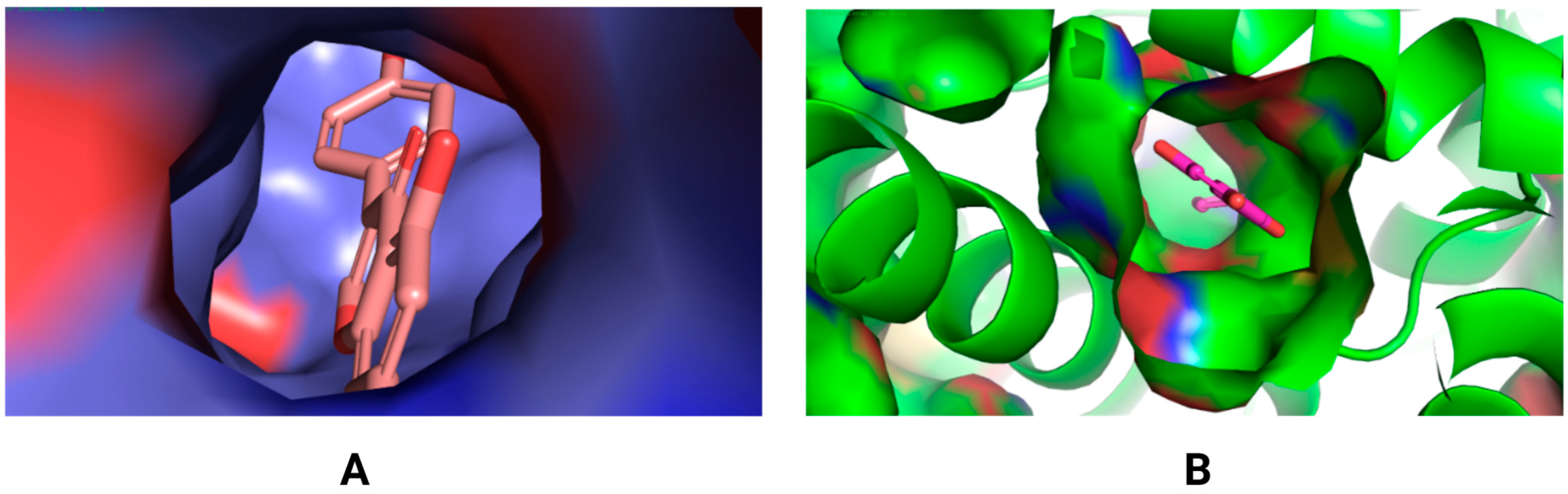

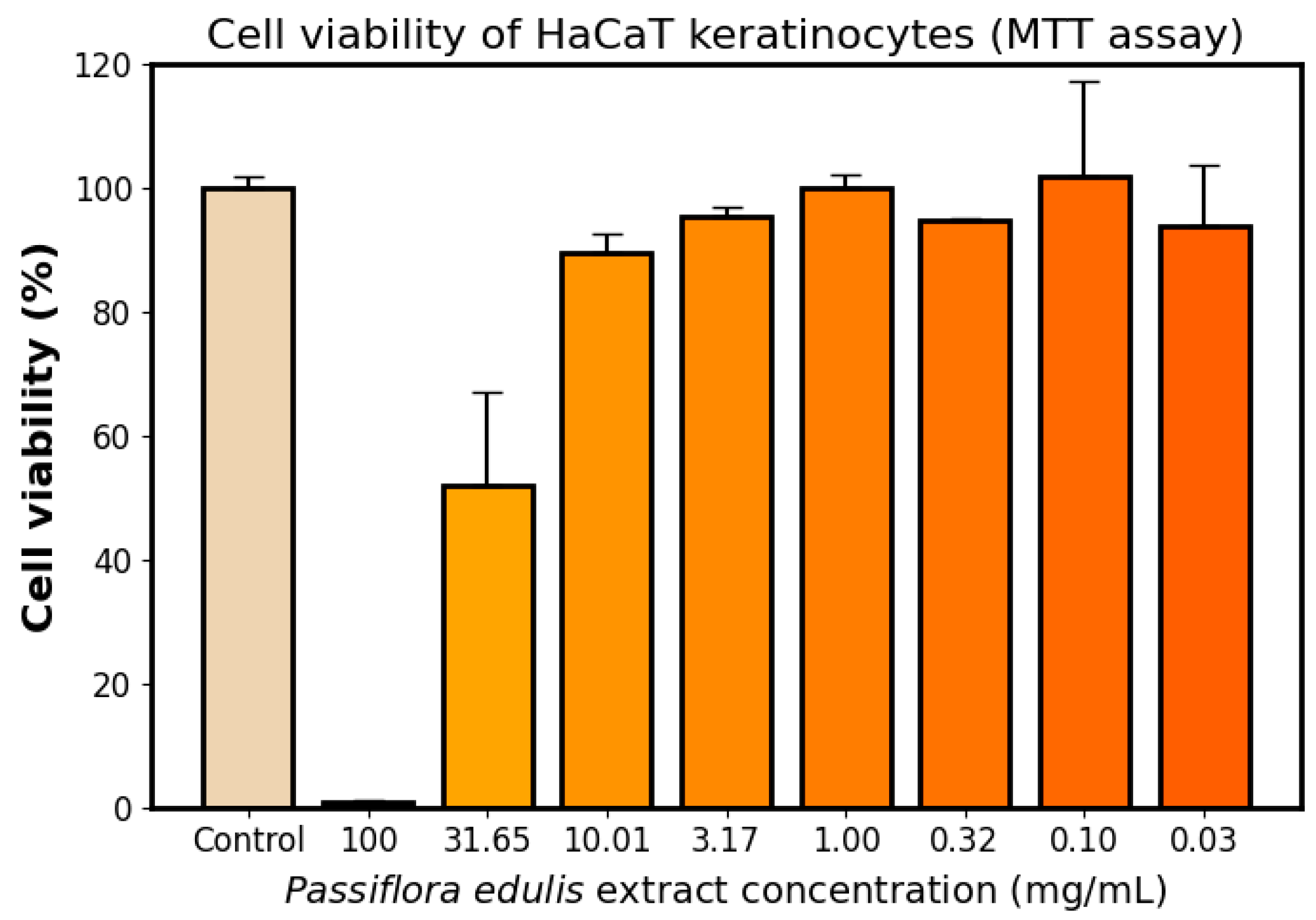
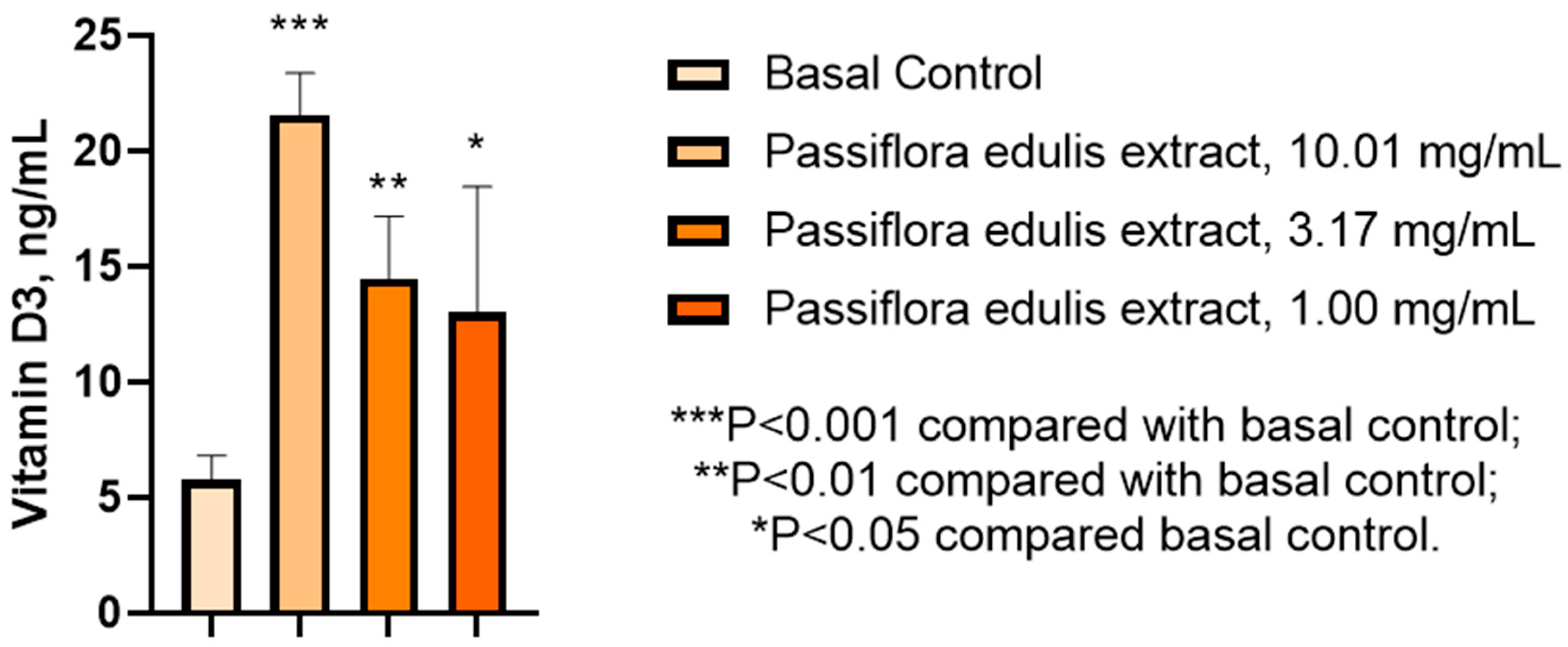



| Phytochemicals in Passiflora edulis Fruits | Reference | Affinity, kal/mol | Diffdock Score of Top-1 Position |
|---|---|---|---|
| Caffeic acid | [47] | −7.09 | −2.04 |
| Chlorogenic acid | [47] | −5.50 | 0.21 |
| Ellagic acid | [48] | −6.33 | −1.06 |
| Ursolic acid | [49] | 5.30 | −0.32 |
| Apigenin | [50] | −7.68 | −4.98 |
| Epigallocatechin-3-gallate | [51] | −8.58 | −6.56 |
| Ferulic acid | [47] | −7.19 | 0.14 |
| Gallic acid | [53] | −6.39 | −2.36 |
| Genistein | [52] | −9.73 | 0.42 |
| Kaempferol | [50] | −8.21 | 0.57 |
| Luteolin | [50] | −10.67 | −4.39 |
| Naringenin | [54] | −7.57 | −1.05 |
| Quercetin | [47] | −8.70 | 0.35 |
| Resveratrol | [54] | −9.17 | −0.82 |
| Rosmarinic acid | [51] | −11.28 | −0.35 |
| Phytochemicals in Passiflora edulis Fruits | Reference | Affinity, kal/mol | Diffdock Score of Top-1 Position |
|---|---|---|---|
| Caffeic acid | [47] | −3.76 | −1.03 |
| Chlorogenic acid | [47] | −5.46 | −0.77 |
| Ellagic acid | [48] | −6.80 | −2.01 |
| Ursolic acid | [49] | −4.63 | −1.32 |
| Apigenin | [50] | −6.80 | −5.61 |
| Epigallocatechin-3-gallate | [51] | −5.60 | −9.36 |
| Ferulic acid | [47] | −7.20 | 0.72 |
| Gallic acid | [53] | −5.70 | −3.53 |
| Genistein | [52] | −8.60 | 0.53 |
| Kaempferol | [50] | −7.20 | 0.01 |
| Luteolin | [50] | −10.10 | −7.01 |
| Naringenin | [54] | −6.98 | −0.23 |
| Quercetin | [47] | −7.98 | 0.31 |
| Resveratrol | [54] | −9.00 | −0.95 |
| Rosmarinic acid | [51] | −11.00 | −1.86 |
Disclaimer/Publisher’s Note: The statements, opinions and data contained in all publications are solely those of the individual author(s) and contributor(s) and not of MDPI and/or the editor(s). MDPI and/or the editor(s) disclaim responsibility for any injury to people or property resulting from any ideas, methods, instructions or products referred to in the content. |
© 2026 by the authors. Licensee MDPI, Basel, Switzerland. This article is an open access article distributed under the terms and conditions of the Creative Commons Attribution (CC BY) license.
Share and Cite
Patronova, E.; Ilin, E.; Filatov, V.; Carli, B.d.F.; Facchini, G.; Pinheiro, A.L.T.A.; Eberlin, S. A Passiflora edulis Fruit Extract with an Increase in Vitamin D3 Level in Skin Epidermis: In Silico and In Vitro Research. Cosmetics 2026, 13, 94. https://doi.org/10.3390/cosmetics13020094
Patronova E, Ilin E, Filatov V, Carli BdF, Facchini G, Pinheiro ALTA, Eberlin S. A Passiflora edulis Fruit Extract with an Increase in Vitamin D3 Level in Skin Epidermis: In Silico and In Vitro Research. Cosmetics. 2026; 13(2):94. https://doi.org/10.3390/cosmetics13020094
Chicago/Turabian StylePatronova, Elizaveta, Egor Ilin, Viktor Filatov, Bárbara de Freitas Carli, Gustavo Facchini, Ana Lucia Tabarini Alves Pinheiro, and Samara Eberlin. 2026. "A Passiflora edulis Fruit Extract with an Increase in Vitamin D3 Level in Skin Epidermis: In Silico and In Vitro Research" Cosmetics 13, no. 2: 94. https://doi.org/10.3390/cosmetics13020094
APA StylePatronova, E., Ilin, E., Filatov, V., Carli, B. d. F., Facchini, G., Pinheiro, A. L. T. A., & Eberlin, S. (2026). A Passiflora edulis Fruit Extract with an Increase in Vitamin D3 Level in Skin Epidermis: In Silico and In Vitro Research. Cosmetics, 13(2), 94. https://doi.org/10.3390/cosmetics13020094