Article

A Passiflora edulis Fruit Extract with an Increase in Vitamin D3 Level in Skin Epidermis: In Silico and In Vitro Research


by
Elizaveta Patronova
1,*,
Egor Ilin
1,
Viktor Filatov
1,
Bárbara de Freitas Carli
2,
Gustavo Facchini
2,
Ana Lucia Tabarini Alves Pinheiro
2 and
Samara Eberlin
2
1
Research Team, Science Center, SkyLab Aktiengesellschaft, Route de la Corniche 6, 1066 Epalinges, Switzerland
2
Research Team, Kosmoscience Group, Valinhos 13270-180, SP, Brazil
*
Author to whom correspondence should be addressed.
Cosmetics 2026, 13(2), 94; https://doi.org/10.3390/cosmetics13020094
Submission received: 26 February 2026 / Revised: 20 March 2026 / Accepted: 8 April 2026 / Published: 16 April 2026

Abstract

Vitamin D3 deficiency is a common concern in dermatology and aging, yet its topical supplementation is restricted in the EU, and direct precursors are unstable. Stimulating the skin’s endogenous vitamin D3 biosynthesis using phytochemicals represents a promising alternative. This research reveals the potential of a natural Passiflora edulis (passion fruit) extract to stimulate vitamin D3 synthesis in the skin epidermis. An in silico screening of phytochemicals using molecular docking and Molecular Mechanics/Poisson–Boltzmann Surface Area (MM/PBSA) analysis was performed to identify compounds with affinity for the vitamin D receptor (VDR) and lathosterol oxidase, a key enzyme in the vitamin D3 biosynthesis pathway. While several flavonoids showed high predicted vitamin D receptor affinity, genistein, which has been reported to occur in P. edulis fruit extracts, exhibited favorable docking scores and was predicted to interact with the active site of lathosterol oxidase. Subsequent in vitro experiments on HaCaT keratinocytes and an ex vivo human skin model demonstrated that the P. edulis extract significantly increased vitamin D3 amount, both under UVB irradiation and, notably, in its absence. The P. edulis extract significantly increased vitamin D3 level in HaCaT keratinocytes by up to 274.04% without UVB exposure and demonstrated a synergistic effect with UVB, enhancing production by a further 61.41% compared to UVB alone (p < 0.001). In the ex vivo model, the extract alone increased vitamin D3 levels by 153.31%, and its combination with UVB resulted in a 54.82% higher yield compared to the UVB control (p < 0.01). These findings highlight the promising potential of P. edulis fruit extract as a natural cosmeceutical ingredient for enhancing cutaneous vitamin D3 synthesis, offering a novel approach to supporting skin health through dermatocosmetics.

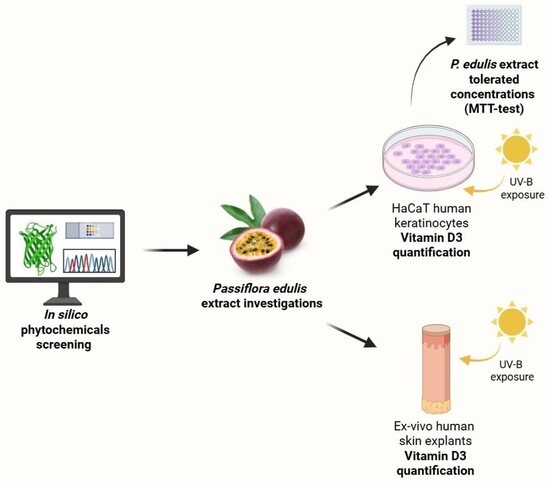
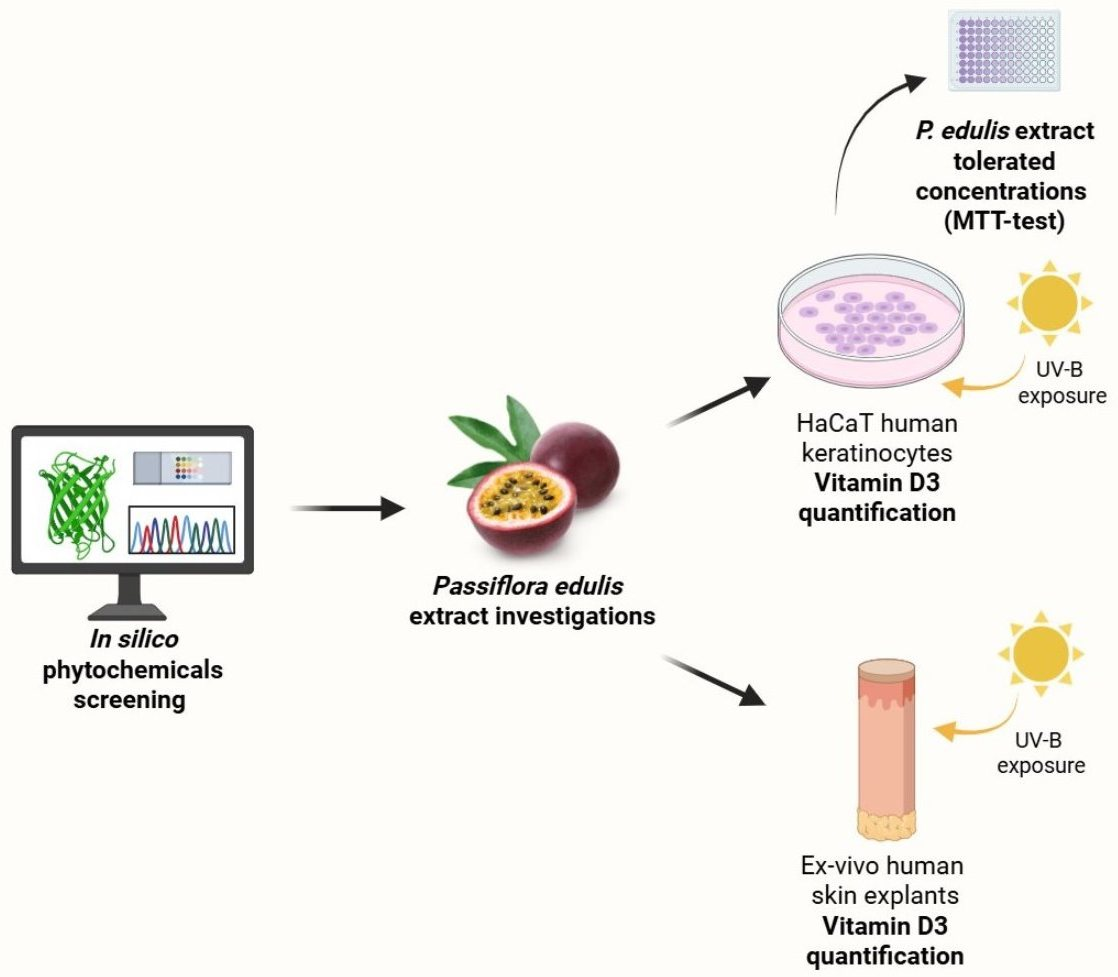
Graphical Abstract

1. Introduction

Vitamin D3 is a fat-soluble vitamin that is involved in many important biological processes in the body, including regulating calcium metabolism and bone mineralization [1]. In addition, vitamin D3 has anti-inflammatory and immunomodulatory properties [2] along with its role in cancer prevention [3,4]. 1,25-dihydroxyvitamin D, the active form of vitamin D, plays a key role in the skin, regulating keratinocyte growth and differentiation, contributing to epidermal barrier formation, controlling the hair follicle growth cycle, and suppressing oncogenic signaling pathways [5].
Vitamin D3 enters the body through food or is synthesized in the skin from 7-dehydrocholesterol (7-DHC) under the UVB rays of sunlight (290–315 nm) [6]. Ultraviolet irradiation of 7-DHC promotes photochemical cleavage of the steroid B-ring between C9 and C10 atoms, resulting in the formation of provitamin D3. It undergoes further molecular isomerization and chemical transformation into natural vitamin D3 (cholecalciferol), an inactive form that immediately enters the bloodstream for further modification by the liver and kidney systems [7]. In the liver, vitamin D3 undergoes hydroxylation at the C25 position under the action of D-25-hydroxylase, resulting in the formation of 25-hydroxyvitamin D3 (calcidol), which is a precursor to the active form [8]. The subsequent activation step occurs in the proximal tubular cells of the nephron, where 25-hydroxyvitamin D-1α-hydroxylase acts to form 1,25-dihydroxyvitamin D (1,25(OH)2D3, also known as calcitriol), the most active form of vitamin D3 [9]. This active form is responsible for most of the biological effects of vitamin D3 in the body, which are mediated by its binding to vitamin D receptors (VDR). These receptors belong to the family of nuclear receptors and are expressed in many cells, including osteoblasts, immune cells, dermal fibroblasts and keratinocytes of skin and other tissues [10,11].
Although vitamin D3 is found in a wide range of animal and plant products, the primary source of vitamin D3 in the body is its synthesis in the skin under the influence of UVB radiation [12]. The efficiency of vitamin D3 production in skin depends on many factors including season, time of day, age, skin tone related to the melanin level, area of open body surface, use of sunscreens, latitude (the higher is latitude, the longer is distance passed by ultraviolet rays to the Earth surface, the greater is absorption by ozone layer) [13,14]. It is known that some mammals and birds can synthesize vitamin D without sunlight, but humans absolutely need long-term UVB exposure to produce a sufficient amount of vitamin D3 for the whole body [15,16]. Because of this, vitamin D3 deficiency is observed in almost half of the world’s population, especially in Nordic regions that are far from the equator and have limited sunny days in the year [17]. Low vitamin D levels not only have a negative systemic effect on the body, but can influence dermatological diseases as an aggravating factor in atopic dermatitis and psoriasis, since its deficiency negatively affects the barrier function of the skin and weakens the local immune response to any pathogens [18,19].
This issue could be addressed using cosmetic products designed to supplement vitamin D3 or to stimulate its local production in the skin. Vitamin D3 itself cannot be used in EU cosmetic products because it is considered a medicinal product with clear pharmacological activity when taken in its active form (No. 335 in Annex II of Regulation (EC) No. 1223/2009) [20,21]. When cosmetic products are applied topically to the skin, it is impossible to control the vitamin D3 concentrations consumed, which poses a risk of uncontrolled absorption, overdose, and systemic effects, including hormonal effects on the body [22,23]. However, vitamin D3 precursors, such as 7-DHC, are approved for addition in beauty products according to the actual EU regulation [24]. 7-DHC is a direct precursor that is converted into provitamin D3 under UVB radiation (Figure 1) [25]. High susceptibility to light and oxygen degradation makes 7-DHC very unstable in cosmeceutical formulations. When exposed to light outside the skin, 7-DHC easily converts into inactive compounds such as pyrocalciferol and lumisterol, rather than its precursor vitamin D3 [26]. Lathosterol, the second immediate precursor of vitamin D, appears to be a more stable compound and may therefore be used in cosmetic formulations [27].
The use of natural vitamin precursors in cosmetics, which can be converted by the skin into their active vitamin forms to support natural biosynthesis processes, is a fairly popular approach [28]. Instead of adding chemically synthesized substances, preference is often given to their natural enhancers, mainly of plant origin [28,29,30]. Various phytochemicals have been shown to affect vitamin D3 receptors and metabolism [31,32,33,34]. Furthermore, many of these compounds, particularly flavonoids, are known for their anti-inflammatory, antioxidant, and immunomodulatory properties, which potentially allow them to synergistically enhance the vitamin D3-mediated beneficial effects [35,36,37,38]. Due to their complex composition, flavonoid-rich natural extracts may comprehensively support vitamin D3 activity in the skin, addressing its functions through multiple complementary pathways. Moreover, vitamin D3 and its hydroxylated derivatives, such as 1a,25(OH)2-vitamin D3, are found in plants of the Solanaceae, Cucurbitaceae, Fabaceae, and Poaceae families [39]. 7-DHC is also found in many Solanaceae and serves as a direct precursor for cholesterol biosynthesis [40].
The study was designed as a sequential investigation. First, an exploratory in silico screening was performed on a diverse set of fifteen phytochemicals commonly found in cosmetic botanicals and reported to possess bioactivity relevant to skin health or vitamin D biology. The objective of this initial step was to identify promising molecular candidates capable of interacting with key targets in the vitamin D3 biosynthesis pathway—VDR and the enzyme lathosterol-5-desaturase, which catalyzes a rate-limiting step in the 7-dehydrocholesterol biosynthesis pathway. Based on this screening, genistein emerged as a high-affinity hit for both targets, guiding our selection of P. edulis as a botanical source reported to contain this phytochemical.
Moreover, passion fruit (Passiflora edulis) is known to contain numerous bioactive compounds with antioxidant and anti-inflammatory properties [41]. Recent studies suggest the components of P. edulis may have significant potential for cosmetic applications [42]. For example, passion fruit seed extract is used in concealers as a sun-protecting agent [43]. It is also reported that the polyphenol and flavonoid compounds found in passion fruit peel, due to their antioxidant properties, can be used in anti-aging cosmetics [44].
However, the potential of P. edulis phytocomplex to modulate cutaneous vitamin D3 metabolism has not been systematically investigated. To experimentally validate these in silico findings and explore the underexamined potential of this botanical, the non-cytotoxic concentrations of a standardized P. edulis extract were determined, and its biological activity was validated using in vitro models (HaCaT keratinocytes) and an ex vivo human skin explant system to quantify its effect on vitamin D3 level, both independently and in combination with UVB irradiation.

2. Materials and Methods

2.1. In Silico Screening of Passiflora edulis Phytochemicals with Responsible Targets in Vitamin D3 Synthesis

The protein structure of VDR (PDB ID: 4ITF) was retrieved in PDB format from the Protein Data Bank (PDB), and the lathosterol-oxidase structure was obtained from AlphaFold v.2 [45]. The crystal structures of proteins were utilized to generate three-dimensional models for molecular docking studies. Prior to docking, each protein structure was preprocessed by removing crystallographic water molecules, eliminating redundant polypeptide chains, and adding polar hydrogens and partial atomic charges. The resulting models were saved in PDB format for subsequent in silico analyses.
Molecular docking simulations were performed using DiffDock v.1.1.3 [46], with ursolic acid, caffeic acid, chlorogenic acid, ellagic acid, apigenin, epigallocatechin-3-gallate, ferulic acid, gallic acid, genistein, kaempferol, luteolin, naringenin, quercetin, resveratrol and rosmarinic acid detected in Passiflora edulis fruits as ligands [47,48,49,50,51,52,53]. To validate the docking protocol, the native co-crystallized ligand of each protein was redocked, yielding a root mean square deviation (RMSD) of less than 2.0 Å, confirming the reliability of the methodology. During docking, the ligand was treated as fully flexible, while the protein receptor was held rigid.
For the prediction of active pocket in VDR and lathosterol-oxidase, PasserRank v.1was utilized [54]. Binding affinities were subsequently estimated using GNINA 1.0 v.1.3.2 [55]. All computational analyses were carried out on a workstation equipped with an Intel Core i7-12700U CPU (2.3 GHz), an NVIDIA RTX 4090 GPU, 64 GB of RAM, and a 64-bit Windows 11 operating system. Structural comparisons among the selected compounds were performed based on Tanimoto similarity coefficients calculated relative to the target molecules. Molecular fingerprints were generated using the RDKit cheminformatics toolkit [56], specifically employing Morgan (circular) fingerprints with a radius of 2 and 2048 bits. The Tanimoto coefficient, defined as the ratio of the number of bits set in both fingerprints to the number of bits set in either fingerprint, was used as a quantitative measure of structural similarity.

2.2. Performing Molecular Dynamics and MM/PBSA Analysis

The highest-scoring docking poses of genistein were further refined through molecular dynamics (MD) simulations using GROMACS v.2023.1 [57] with MPI support. Each protein–ligand complex was set up for MD simulation employing the CHARMM36 force field [58] for the protein and CGenFF parameters [59] for the ligand. The systems were embedded in a cubic solvent box filled with TIP3P water molecules [60], ensuring a minimum padding of 1.0 nm between the protein surface and the box edges. System neutrality was achieved by introducing counterions.
Initial geometry optimization was carried out via the steepest descent algorithm, followed by equilibration in the NVT ensemble (100 ps) and then in the NPT ensemble (100 ps). A production MD trajectory was generated for 20 ns under NPT conditions at 298.15 K and 1 bar, with temperature and pressure regulated by the Nosé–Hoover thermostat [61] and the Parrinello–Rahman barostat [62], respectively. Coordinates were recorded every 10 ps for downstream analyses.
Binding free energies were estimated using the MM/PBSA approach [63] as implemented in gmx_MMPBSA v.1.6.4 [64]. The calculation was based on the final 10 ns of each production trajectory, sampling frames at 100 ps intervals. The Poisson–Boltzmann (PB) implicit solvation model was used with a grid spacing of 0.5 Å and an ionic strength of 0.1 M [65].

2.3. Substances and Materials

Passiflora edulis (passion fruit) extract (INCI: Aqua, Glycerin, Passiflora edulis (passion fruit) extract, Citric acid, Potassium sorbate, Sodium benzoate) containing 40% of extractive phytochemicals was obtained from GRUMANT LLC (Veliky Novgorod, Russian Federation). This extract has a pH of 4.0–6.0, a refractive index of 1.3200–1.4400, a faint characteristic odor and a yellowish color.

2.4. Evaluation of Cytotoxicity of Passiflora edulis Fruit Extract

HaCaT keratinocyte cells were seeded in 75 cm2 flasks (Corning, Glendale, CA, USA), cultured in Dulbecco’s Modified Eagle Medium (DMEM) supplemented with 5% fetal bovine serum, and maintained at 37 °C in a humidified atmosphere containing 5% CO2. After reaching confluence, cells were harvested and seeded into 96-well plates (Corning, Glendale, CA, USA) at a density of 1 × 10⁴ cells/well for the cytotoxicity assay, and into 6-well plates at a density of 2 × 10⁵ cells/well for the bioactivity assay and subsequent quantification of vitamin D3.
Cell viability was determined by a colorimetric method using MTT dye [3-(4,5 dimethylthiazol-2-yl)-2,5-diphenyltetrazolium; Sigma, St. Lous, MO, USA] [66]. For the assay, the product was prepared in culture medium with 3% Tween 20 (Sigma, St. Lous, MO, USA) and added to the 96-well plate at a serial dilution in the range of 100.00 to 0.003 mg/mL using the dilution factor of 3.16. The human keratinocytes culture was incubated for a period of 48 h. MTT was then added to the culture at a concentration of 5 mg/mL (30 µL/well) and incubated for an additional 4 h. The contents of the well were removed, and 100 µL of isopropanol was added for the purpose of solubilizing the formazan crystals formed by viable cells. The absorbance of each well was determined at 570 nm in a Multiskan GO monochromator (Thermo Fisher Scientific, Vantaa, Finland). Cell viability was expressed as a percentage and calculated according to the equation:
Cell viability ,   %   = O D P A O D N C × 100 %
where ODPA—absorbance of cells incubated with the sample, ODNC—control absorbance.

2.5. In Vitro Evaluation of Vitamin D3 Synthesis in Human Keratinocyte Culture

HaCaT keratinocytes were incubated with standardized P. edulis fruit extract at three non-cytotoxic concentrations selected based on the cytotoxicity assay (Section 3.2) of 10.01, 3.17 and 1.00 mg/mL, representing the highest concentration maintaining cell viability and two subsequent serial dilutions (≈3.16-fold) to assess a potential dose–response relationship, at 37 °C for 72 h. Some keratinocyte cultures were also exposed to 50 mJ/cm2 of UVB radiation [67], using a Handisol UVB irradiation device (National Biological Corporation, Twinsburg, OH, USA), to compare irradiated and non-irradiated cultures treated with the extract. Cells were maintained in contact with the test sample for 72 h. Then, the supernatant was collected for quantification of the synthesized vitamin D3. Vitamin D3 levels were quantified using an enzyme-linked immunosorbent assay (ELISA) kit (Elabscience, Houston, TX, USA, Cat. No. E-EL-0014) according to the manufacturer’s instructions. Absorbance was measured at 450 nm using a Multiskan GO microplate reader (Thermo Fisher Scientific).

2.6. Ex Vivo Evaluation of Vitamin D3 Synthesis in Human Skin Explants

After the surgical procedure, skin anatomical pieces originating from one healthy subject, a 36-year-old female, phototype (Fitzpatrick) II, were collected in plastic vials containing 0.9% saline and kept in refrigeration for up to 24 h. Ethics committee approval for the research project with the use of ex vivo samples was granted by Universidade São Francisco-SP Ethics Committee (Opinion number: 5.503.565 of 1 July 2022).
Skin fragments of approximately 1.5 cm2 were carefully weighed and incubated in Dulbecco’s modified Eagle’s medium containing 4.5 g/L glucose (Thermo Fisher Scientific Inc., Waltham, MA, USA), supplemented with 10% fetal bovine serum (Thermo Fisher) and 1% penicillin/streptomycin/amphotericin (Lonza Walkerville Inc., Salisbury, MD, USA) to maintain viability. Each fragment was then treated with 1% of the liquid P. edulis extract, applied at a concentration of 20–30 mg/cm2 [68].
Immediately after P. edulis extract product application, the treated fragments were exposed to UVB radiation at a dose of 350 mJ/cm2 [69] using the Handisol device (National Biological Corporation, Twinsburg, OH, USA). Each UVB exposure lasted approximately 15 min to deliver the target dose of 350 mJ/cm2. This procedure was conducted to evaluate the effects of P. edulis extract by comparing irradiated and non-irradiated fragments subjected to the same treatment. The treatment and UVB exposure cycle were performed once daily for three consecutive days, resulting in a cumulative UVB dose of 1050 mJ/cm2 over the experimental period.
Concentrations of vitamin D3 were measured in the supernatant by ELISA, according to the protocol on the datasheet provided by the supplier, using a commercially available kit (Elabscience). The 450 nm absorbance was read in the Multiskan GO monochromator (Thermo Fisher Scientific).

2.7. Synergy Analysis Using the Bliss Independence Model

To evaluate whether the combination of UVB irradiation and the P. edulis extract acted synergistically, the interaction was quantified using the Bliss independence model, which is appropriate when the mechanisms of the combined agents are unknown or assumed to be independent.
The response of each treatment condition (R) was first normalized to the basal control:
E = R R b a s a l R b a s a l
For two treatments A (P. edulis) and B (UVB), the Bliss-expected combined effect was calculated as:
E A B B l i s s = E A + E B E A E B
Synergy was defined as the difference between the observed combination effect and the Bliss-expected value:
Synergy = E o b s e r v e d E A B B l i s s
Positive values indicate synergistic interaction.

2.8. Statistical Analysis

Statistical analyses were performed using GraphPad Prism software (version 8.4.3, GraphPad Software, San Diego, CA, USA). All experiments were conducted in at least three independent replicates, and data are presented as mean ± standard deviation (SD). Comparisons among multiple groups were performed using one-way analysis of variance (ANOVA) followed by Bonferroni’s post hoc test. For comparisons between irradiated and non-irradiated conditions, an unpaired Student’s t-test was applied when appropriate. Differences were considered statistically significant when p < 0.05.

3. Results and Discussion

3.1. Molecular Screening of Passiflora edulis Phytochemicals with Vitamin D3 Molecular Targets

Various phytochemicals are widely used in dermatocosmetics, and many of them show potential for modulating vitamin D3 metabolism, in particular through interaction with VDR [34,70,71,72]. To test this hypothesis, the affinity of fifteen plant-derived compounds, selected based on literature reports of their biological activity, relevance to skin physiology, and potential involvement in vitamin D-related pathways, was assessed toward VDR using molecular docking. The in silico analysis indicated that several of these compounds are predicted to interact with the receptor (Table 1).
A separate task was searching for phytochemicals capable of directly influencing vitamin D3 biosynthesis in the skin. The enzyme lathosterol oxidase (lathosterol-5-desaturase), which catalyzes one of the key stages in the biosynthetic pathway of lathosterol conversion to vitamin D3, was selected as the key target for further in vitro research [73]. Among all the ligands tested, only genistein showed significant binding to the active site of this enzyme (Table 2).
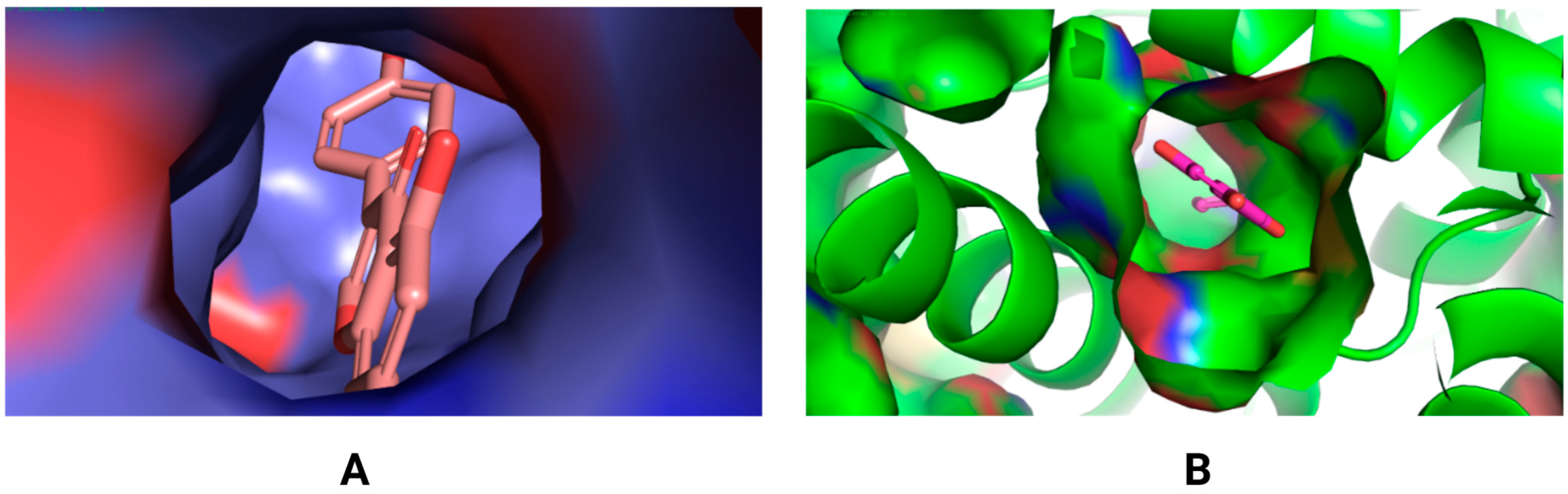
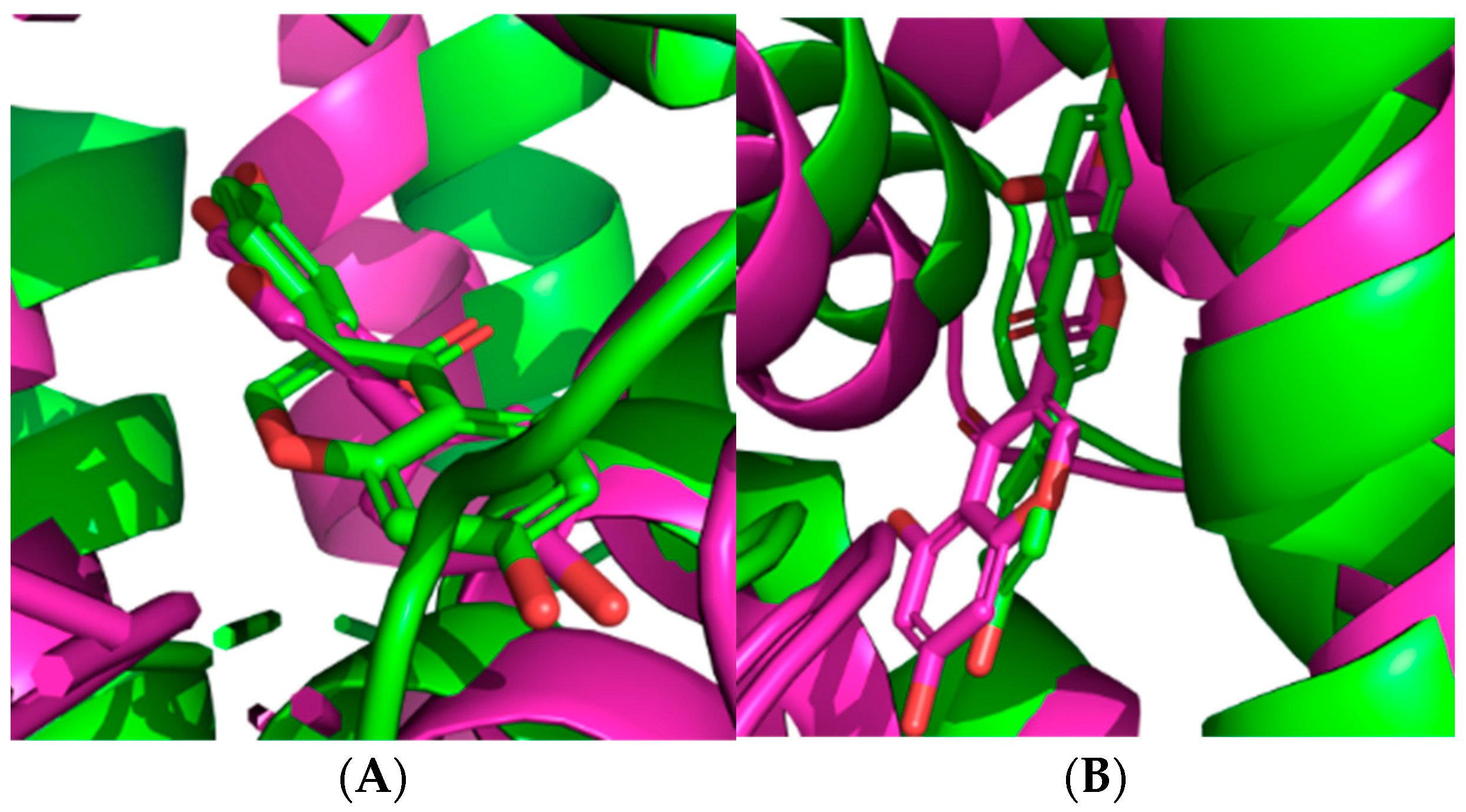
Molecular docking analysis suggested that genistein may bind favorably to both protein targets, as indicated by its binding affinity and DiffDock score [46,74]. In each case, the ligand is situated within the key interaction pocket, as predicted by the PasserRank algorithm [54] and visualized in the 3D structural models (Figure 2A,B). These findings support the potential inhibitory activity of genistein against the D3 receptor and lathosterol oxidase.
The molecular docking provides only an initial estimate of binding affinity and is inherently limited by the inaccuracies of scoring functions in reliably predicting true binding free energies [75]. For further validation, the docking position of genistein (Diffdock-confidence score equal 0.40 and 0.05), we used MM/PBSA analysis based on the Poisson–Boltzmann method, which yielded binding free energies of −6.03 ± 1.05 kcal/mol for VDR and −5.56 ± 0.81 kcal/mol. Analysis of the MD trajectories indicated that paeoniflorin remained stably positioned within the corresponding docking binding site throughout the simulation (Figure 3). This demonstrates the stability of genistein in interaction with both proteins.
Resulted position of genistein into the ligand-binding domain (LBD) of the Vitamin D Receptor (VDR) revealed 12 residue-level interactions, comprising hydrophobic contacts with LEU233 and TRP286, and van der Waals contacts with TYR143, ASP144, PHE150, TYR236, SER237, ARG274, SER278, TRP286, CYS288, and VAL300. The identified residues are well-established constituents of the VDR ligand-binding pocket (LBP): TYR143, SER237, ARG274, SER278, and TRP286 have been consistently described as key structural determinants of ligand recognition in the VDR LBD, forming the hydrophobic channel that accommodates the steroidal scaffold of the natural ligand 1,25-dihydroxyvitamin D3 (calcitriol). In particular, TRP286 is an absolutely critical residue for ligand binding and VDR transactivation, as demonstrated by site-directed mutagenesis studies. The van der Waals contact with ARG274 and SER237—residues classically involved in hydrogen bonding with the 1α- and 25-hydroxyl groups of calcitriol—without formation of direct hydrogen bonds, suggests that genistein partially mimics the binding geometry of the natural ligand while lacking full polar engagement. This interaction pattern is consistent with previously reported binding behavior of dietary flavonoids, including quercetin, which similarly engages ARG274, SER278, and TRP286 via hydrophobic and van der Waals contacts rather than canonical H-bonds. The hydrophobic contact with TRP286 may further stabilize the flavonoid A/C ring system within the nonpolar core of the LBP. These findings suggest that genistein acts as a partial VDR modulator, consistent with its reported ability to cooperate with 1,25(OH)2D3 in upregulating VDR protein stability and modulating vitamin D signaling in prostate cancer cells [34,76,77,78,79].
According to the literature, genistein is found in the peel and fruit of Passiflora edulis [41]. Therefore, P. edulis extract was selected as a promising plant-based substance for further in vitro and ex vivo studies to experimentally test its ability to enhance vitamin D3 synthesis in the skin epidermal cells.

3.2. Determination of Non-Cytotoxic Concentrations of Passiflora edulis Extract

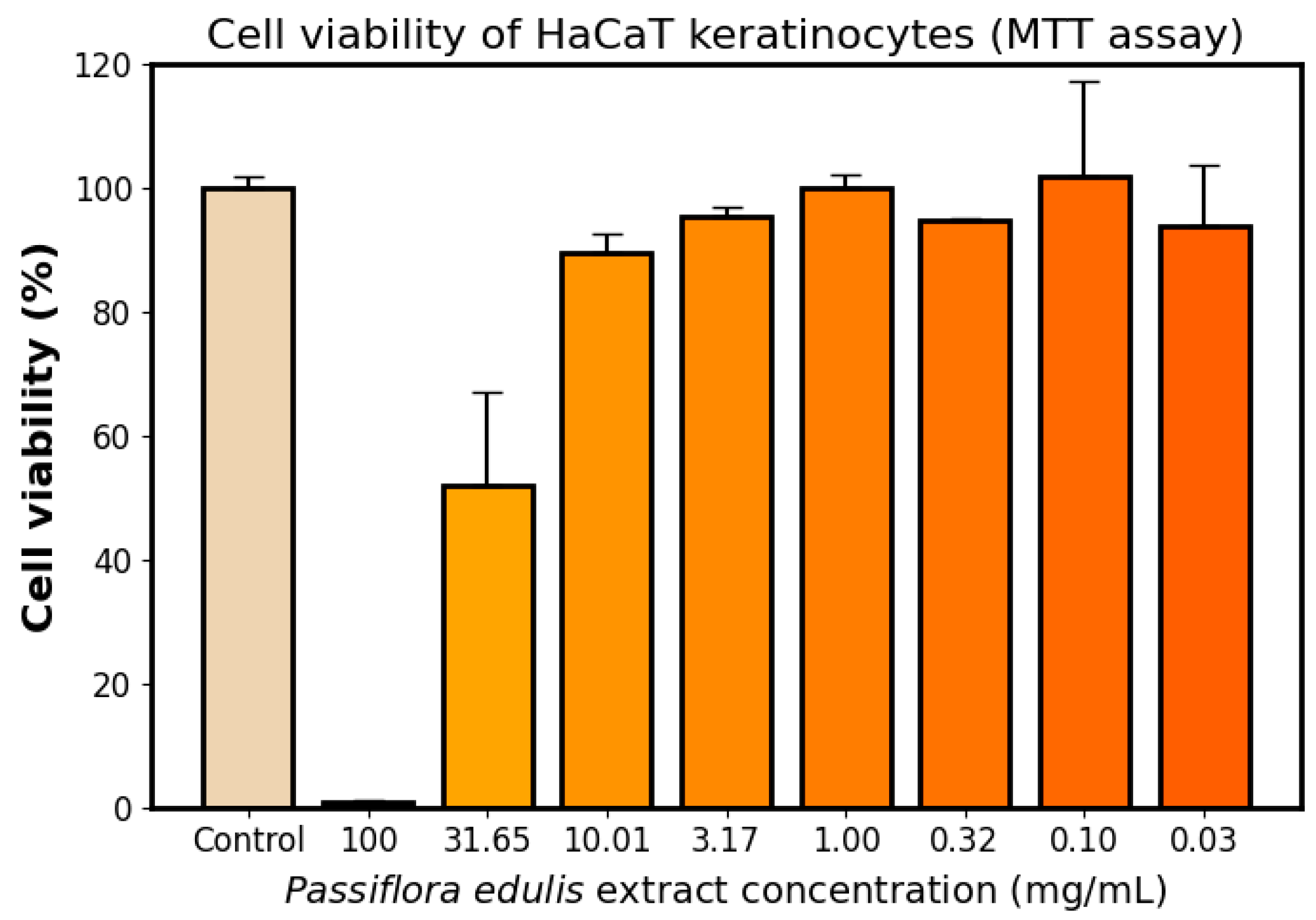
As illustrated in Figure 4, P. edulis fruit extract demonstrated a non-cytotoxic concentration range starting from 10.01 mg/mL. This concentration, along with the subsequent dilutions (3.17 mg/mL and 1.00 mg/mL), was selected to assess the impact of the extract on vitamin D3 levels in human keratinocytes. The evaluation of non-cytotoxic concentrations was further validated after 48 h of incubation using the MTT method, which confirmed that the extract did not adversely affect cell viability at the tested concentrations.
The results indicate that P. edulis extract at the specified concentrations was suitable for further investigation regarding its potential role in modulating vitamin D3 levels in human keratinocytes. The non-cytotoxic nature of the extract at these concentrations provided a safe range for exploring its biological effects, particularly in the context of vitamin D3 metabolism and its implications for skin health. The findings indicate that P. edulis extract is non-cytotoxic to human keratinocytes at concentrations up to 10.01 mg/mL and can therefore be safely used in further studies on vitamin D3 determination.

3.3. Quantification of Vitamin D3 Amount in Human Keratinocytes In Vitro

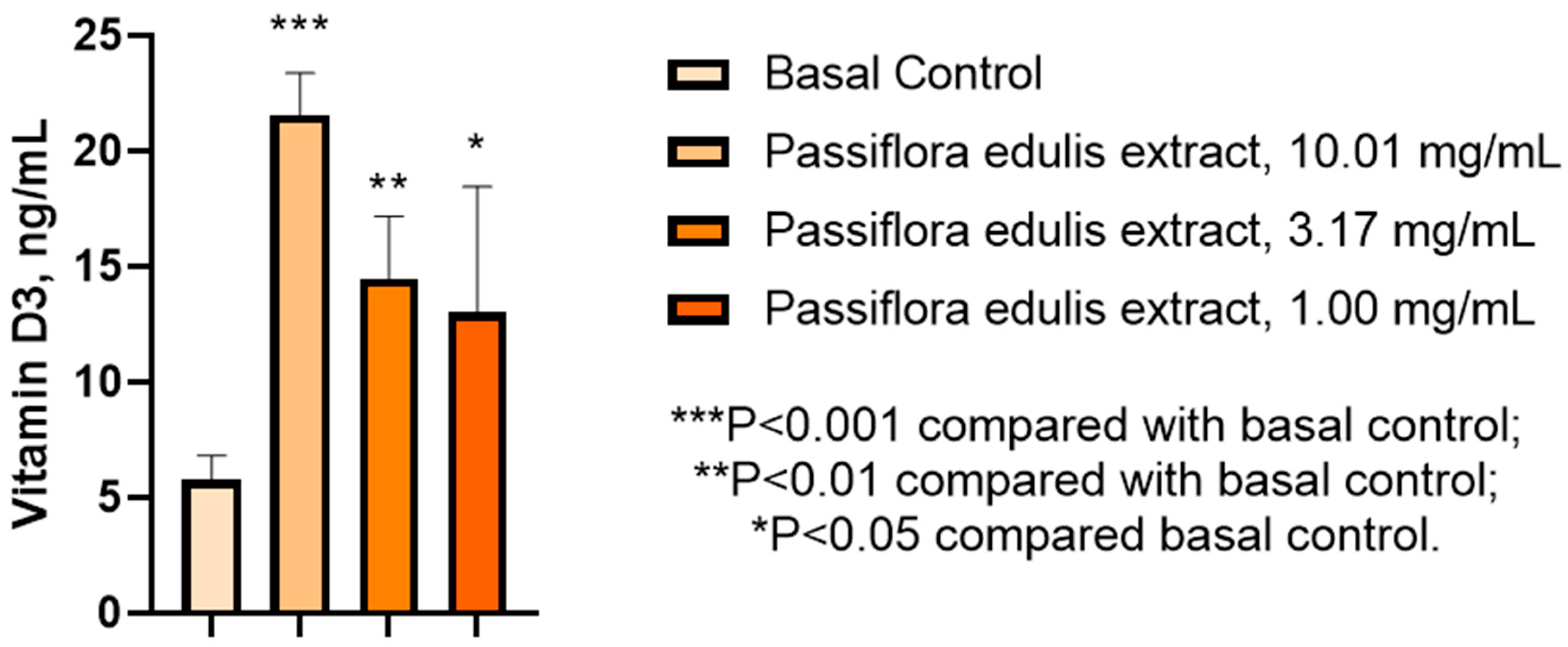
It was demonstrated that P. edulis extract significantly increases vitamin D3 levels detected by ELISA in human keratinocytes even without short-term and long-term UVB exposure, as shown in Figure 5. In HaCaT cells treated with P. edulis extract at concentrations of 10.01, 3.17, and 1.00 mg/mL, an increase in vitamin D3 of 274.04% (p < 0.001), 151.22% (p < 0.01), and 125.86% (p < 0.05), respectively, was observed compared to the baseline control without UVB exposure.
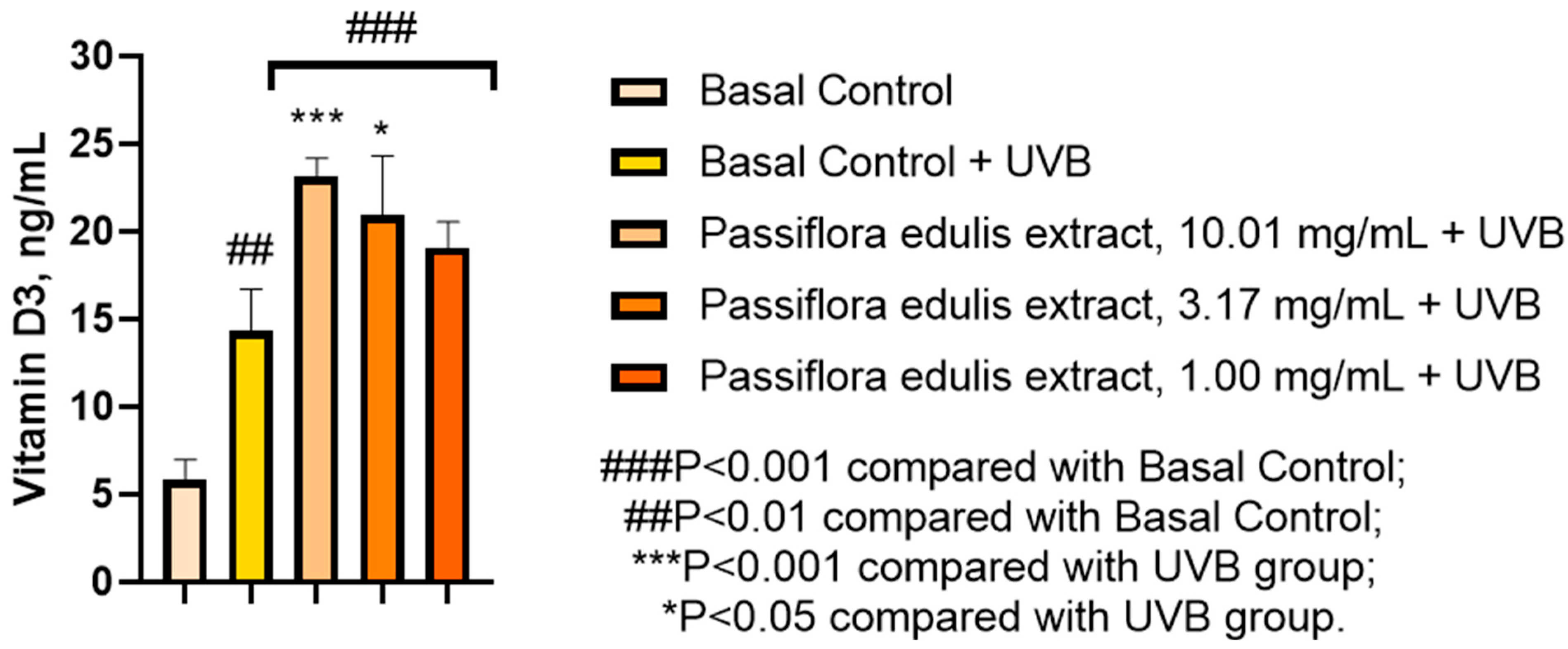
As expected, exposure to UVB radiation led to a significant increase in vitamin D3 to 146.00% compared to the basal control (p < 0.01) (Figure 6). At the same time, in HaCaT cells treated with P. edulis extract at concentrations of 10.01 and 3.17 mg/mL, vitamin D3 levels increased to 61.41% (p < 0.001) and 45.82% (p < 0.05), respectively, compared to the positive UVB control. Thus, P. edulis extract not only increases the level of vitamin D3 in skin cells but also has a synergistic effect in combination with the UVB radiation.
The observed results suggest a potential increase in detected vitamin D levels in skin keratinocytes treated with P. edulis extract even in the absence of UVB radiation, indicating the possibility of alternative or indirect mechanisms that require further investigation. To date, it is known that such processes are possible in subterranean mammals, fish, and some birds, but the exact mechanism remains unclear [16,80]. As a promising hypothesis, an alternative enzymatic pathway may be activated in human keratinocytes, leading to vitamin D synthesis even in the absence of UVB light, but further comprehensive research is needed to clarify this idea. Apparently, a lathosterol analog from P. edulis extract serves as an additional substrate for the enzyme lathosterol 5-desaturase (SC5D), leading to an increase in the pool of 7-DHC in skin keratinocytes [81]. This increased pool of 7-DHC is a ready precursor for further photolysis under the action of UVB and, possibly, for non-photochemical conversion in dark conditions.
The P. edulis extract increased the measured response in a dose-dependent manner. When UVB irradiation was combined with the extract, the fixed response substantially exceeded the Bliss-predicted additive effect at all tested concentrations. For the highest extract concentration (10 mg/mL), the observed fractional effect was 3.01, whereas the Bliss-expected value was 0.15, resulting in a synergy score of +2.86. Similarly strong synergy was observed at 3.17 mg/mL (+1.88) and 1.00 mg/mL (+1.43). These results demonstrate that UVB and the P. edulis extract interact positively in increasing the vitamin D3 level, with the combination producing synergetic effects for further therapy. However, ELISA reflects immunoreactivity rather than direct physicochemical quantification, and the potential interference from sample components, particularly plant-derived compounds, cannot be fully excluded.
Since molecular docking analysis predicted that phytochemicals from P. edulis fruits can interact with VDR, it was assumed that receptor-mediated regulation of gene expression might happen through potent VDR activation [82] This activation can lead to increased expression of genes critical for vitamin D3 synthesis, primarily the gene encoding the SC5D enzyme. Thus, P. edulis extract can have a complex effect on enhancing vitamin D3 production in skin keratinocytes, which opens new prospects for its use in cosmeceuticals and therapeutics after clinical research of safety and general therapeutic potential in comparison with supplement treatment.

3.4. Pre-Clinical Quantification of Vitamin D3 Amount in Human Skin Explants Ex Vivo

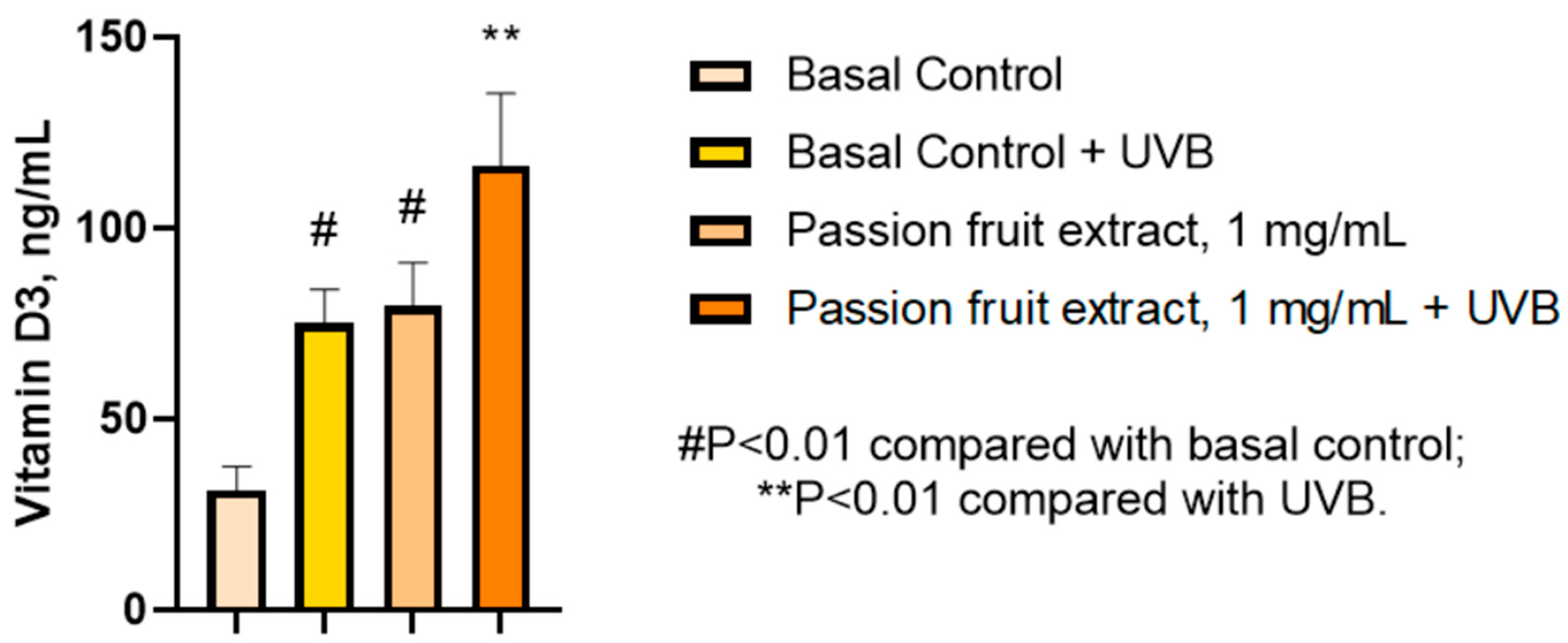
As presented in Figure 7, the quantification of vitamin D3 in human skin explants ex vivo with or without UVB radiation following treatment with P. edulis extract was accurately conducted. As anticipated, exposure to UVB radiation resulted in a significant increase in vitamin D3 amount by 139.09% compared to the basal control (p < 0.01). Compared to basal control, the treatment with the P. edulis extract without UVB radiation resulted in a significant increase in vitamin D3 amount by 153.31% (p < 0.01). The P. edulis extract combined with UVB radiation demonstrated synergistic impacts, showing an increase of 54.82% in vitamin D3 level compared to the UVB control (p < 0.01). If comparing both P. edulis extract treatments, the one associated with UVB radiation resulted in a vitamin D3 quantification of 46.13% higher than the one without UVB.
These findings supported the promising therapeutic potential of P. edulis extract to increase vitamin D3 levels, especially when combined with UVB radiation on skin explants. While the extract alone significantly increased D3 levels, its association with UVB further amplified this effect. An experiment conducted on ex vivo human skin fragments allows us to reproduce and evaluate the effectiveness of P. edulis extract in conditions that are as close to real skin physiology. In the skin, keratinocytes do not exist in isolation but interact closely with other cells and components of the extracellular matrix [83]. The ex vivo experiment shows that P. edulis extract increases vitamin D3 amount not only in single-cell models but also in whole tissue, considering the depth of penetration into the epidermis when applied topically. This consideration confirms the high potential of P. edulis extract as an active substance for increasing vitamin D3 levels in the skin when included in cosmeceutical products.
When taken orally, vitamin D is not always fully delivered to the skin. Topical vitamin D precursors provide a targeted effect on the skin and induce local synthesis directly in keratinocytes. This not only eliminates the risk of systemic side effects from vitamin D overdose, but also helps maintain its most important functions in the skin [5].
For people living in the Nordic regions with low insolation, working indoors or in polar night conditions, cosmetics with P. edulis extract can be a reliable tool for maintaining local skin homeostasis of vitamin D3 all year long. Perhaps, cosmeceuticals containing P. edulis fruit extract can also serve as a component of comprehensive sun protection. By increasing the pool of 7-DHC, they prepare the skin for the effective and safe synthesis of sufficient vitamin D even with short-term and moderate UVB exposure, while minimizing the risks of excessive and harmful sun exposure. In addition, P. edulis fruit extract has some sun protection activity (sun protection factor of 8.39 in vitro), due to the presence of UV-absorbing phenolic compounds such as quercetin and kaempferol [84]. Moreover, it has been shown that the use of sunscreen can reduce vitamin D3 production in the skin, which means the body needs an additional source of it. P. edulis fruit extract could be a solution to this problem, providing a comprehensive effect on both vitamin D3 production and UVB protection [85].
Due to the anti-inflammatory, immunomodulatory, and pro-differentiating properties of vitamin D3, topical products with P. edulis extract also have therapeutic potential for certain skin conditions. For example, psoriasis therapy includes the topical use of vitamin D analogs [86]. Since atopic dermatitis is associated with impaired skin barrier function and immune imbalance, stimulating local vitamin D3 production may help correct it by enhancing the skin’s protective properties and modulating the inflammatory response [87]. In acne and seborrhea, whose pathogenesis is largely due to impaired keratinocyte proliferation and differentiation, the use of passion fruit extract can help normalize cell renewal and reduce hyperkeratinization of the follicle ostia [88,89].
Despite promising results, further clinical research is required to fully establish the efficacy and safety of P. edulis extract in cosmetic and topical pharmaceutical applications, both in healthy individuals and in patients with skin disorders, in comparison with currently approved therapies and oral vitamin D3 supplementation. Additionally, fundamental research on molecular mechanisms involved in increasing vitamin D production and biological pathways is still needed to reveal the theoretical hypothesis about alternative biochemical pathways.

4. Conclusions

In this study, the ability of P. edulis fruit extract to effectively increase vitamin D3 levels in skin epidermal cells was demonstrated for the first time. In silico analysis has shown that genistein is a promising candidate with high affinity for lathosterol-5-oxidase and the VDR. P. edulis, which has been reported in the literature to contain this compound, was selected as a promising botanical candidate for further experimental evaluation. Experiments confirmed that P. edulis extract significantly increases vitamin D3 amount both in human keratinocyte cultures in vitro and in human skin models ex vivo. This effect is observed even in the absence of UVB irradiation. In addition, a synergistic effect of the extract in combination with UVB radiation has been identified, suggesting a complex effect on the vitamin D3 synthesis pathway in the skin.
The ability to increase vitamin D levels in the skin makes P. edulis fruit extract enriched by phytochemicals a promising approach for the next generation of cosmetics and pharmaceutics aimed not only at correcting but also preventing a wide range of dermatological conditions. Nevertheless, additional studies of stability in formulations, mechanism of action, dermatological tolerance in the products, and general clinical research of vitamin D3 level according to the worldwide regulation and authorized treatment lines are needed to fully confirm the beneficial effects of boosters in skin.

5. Patents

Results of this research have been part of the patent applications related to EP 25171835.

Author Contributions

E.P.: Conceptualization, Data curation, Formal Analysis, Methodology, Investigation, Project administration, Software, Validation, Visualization, Writing—original draft, Writing—review and editing. E.I.: Data curation, Formal Analysis, Investigation, Software, Validation, Visualization, Writing—original draft. V.F.: Conceptualization, Data curation, Formal Analysis, Investigation, Methodology, Project administration, Resources, Software, Supervision, Validation, Visualization, Writing—original draft, Writing—review and editing. B.d.F.C., G.F., A.L.T.A.P., S.E.: Methodology, Investigation, Supervision, Validation, Writing—review and editing. All authors have read and agreed to the published version of the manuscript.

Funding

This research received no external funding.

Institutional Review Board Statement

Ethics committee approval for the research project with the use of ex vivo samples was granted by Universidade São Francisco-SP Ethics Committee (Opinion number: 5.503.565 of 1 July 2022).

Informed Consent Statement

Informed consent was obtained from all subjects involved in the study.

Data Availability Statement

The raw data supporting the conclusions of this article will be made available by the authors on request.

Acknowledgments

The authors are grateful to the scientists of the Faculty of Medicine, Lomonosov Moscow State University, for their consultation and support of research methodology.

Conflicts of Interest

E.P., E.I., and V.F. were employed by the Science Center, SkyLab AG. B.d.F.C., G.F., A.L.T.A.P., and S.E. were employed by Kosmoscience Group. The funders had no role in the design of the study; in the collection, analyses, or interpretation of data; in the writing of the manuscript; or in the decision to publish the results. All authors declare that the research was conducted in the absence of any commercial or financial relationships that could be construed as a potential conflict of interest.

Abbreviations

The following abbreviations are used in this manuscript:
7-DHC7-dehydrocholesterol
VDRvitamin D receptor
SC5Dlathosterol 5-desaturase
1,25(OH)2D31,25-dihydroxyvitamin D
MMMolecular Mechanics
PBSAPoisson–Boltzmann Surface Area
MD Molecular Dynamics
RMSD Root mean square deviation
PDB Protein Data Bank
NVT Constant Number of Particles, Volume, and Temperature
NPTConstant Number of Particles, Pressure, and Temperature

References

  1. Rebelos, E.; Tentolouris, N.; Jude, E. The Role of Vitamin D in Health and Disease: A Narrative Review on the Mechanisms Linking Vitamin D with Disease and the Effects of Supplementation. Drugs 2023, 83, 665–685. [Google Scholar] [CrossRef]
  2. Bishop, E.L.; Ismailova, A.; Dimeloe, S.; Hewison, M.; White, J.H. Vitamin D and Immune Regulation: Antibacterial, Antiviral, Anti-Inflammatory. JBMR Plus 2021, 5, e10405. [Google Scholar] [CrossRef]
  3. Dallavalasa, S.; Tulimilli, S.V.; Bettada, V.G.; Karnik, M.; Uthaiah, C.A.; Anantharaju, P.G.; Nataraj, S.M.; Ramashetty, R.; Sukocheva, O.A.; Tse, E.; et al. Vitamin D in Cancer Prevention and Treatment: A Review of Epidemiological, Preclinical, and Cellular Studies. Cancers 2024, 16, 3211. [Google Scholar] [CrossRef]
  4. Fekete, M.; Lehoczki, A.; Szappanos, Á.; Zábó, V.; Kaposvári, C.; Horváth, A.; Farkas, Á.; Fazekas-Pongor, V.; Major, D.; Lipécz, Á.; et al. Vitamin D and Colorectal Cancer Prevention: Immunological Mechanisms, Inflammatory Pathways, and Nutritional Implications. Nutrients 2025, 17, 1351. [Google Scholar] [CrossRef]
  5. Bikle, D.D. Vitamin D and the Skin: Physiology and Pathophysiology. Rev. Endocr. Metab. Disord. 2012, 13, 3–19. [Google Scholar] [CrossRef]
  6. Holick, M.F.; MacLaughlin, J.A.; Clark, M.B.; Holick, S.A.; Potts, J.T., Jr.; Anderson, R.R.; Blank, I.H.; Parrish, J.A.; Elias, P. Photosynthesis of Previtamin D3 in Human Skin and the Physiologic Consequences. Science 1980, 210, 203–205. [Google Scholar] [CrossRef] [PubMed]
  7. Mazziotti, G.; Maffezzoni, F.; Giustina, A. Vitamin D-Binding Protein: One More Piece in the Puzzle of Acromegalic Osteopathy? Endocrine 2016, 52, 183–186. [Google Scholar] [CrossRef] [PubMed]
  8. Christakos, S.; Dhawan, P.; Ajibade, D.; Benn, B.S.; Feng, J.; Joshi, S.S. Mechanisms Involved in Vitamin D Mediated Intestinal Calcium Absorption and in Non-Classical Actions of Vitamin D. J. Steroid Biochem. Mol. Biol. 2010, 121, 183–187. [Google Scholar] [CrossRef] [PubMed]
  9. Serdar, M.A.; Arslan, F.D.; Saral, N.Y.; Yücel, D. Correlation between Serum 1,25-Dihydroxyvitamin D and 25-Hydroxyvitamin D in Response to Analytical Procedures; a Systematic Review and Meta-Analysis. Turk. J. Biochem. 2024, 49, 306–324. [Google Scholar] [CrossRef]
  10. Wang, Y.; Zhu, J.; DeLuca, H.F. Where Is the Vitamin D Receptor? Arch. Biochem. Biophys. 2012, 523, 123–133. [Google Scholar] [CrossRef]
  11. Rochel, N. Vitamin D and Its Receptor from a Structural Perspective. Nutrients 2022, 14, 2847. [Google Scholar] [CrossRef] [PubMed]
  12. Mendes, M.M.; Hart, K.H.; Botelho, P.B.; Lanham-New, S.A. Vitamin D Status in the Tropics: Is Sunlight Exposure the Main Determinant? Nutr. Bull. 2018, 43, 428–434. [Google Scholar] [CrossRef]
  13. Wacker, M.; Holick, M.F. Sunlight and Vitamin D: A Global Perspective for Health: A Global Perspective for Health. Dermato-endocrinology 2013, 5, 51–108. [Google Scholar] [CrossRef]
  14. Kallioğlu, M.A.; Sharma, A.; Kallioğlu, A.; Kumar, S.; Khargotra, R.; Singh, T. UV Index-Based Model for Predicting Synthesis of (pre-)vitamin D3 in the Mediterranean Basin. Sci. Rep. 2024, 14, 3541. [Google Scholar] [CrossRef]
  15. Mostafa, W.Z.; Hegazy, R.A. Vitamin D and the Skin: Focus on a Complex Relationship: A Review. J. Adv. Res. 2015, 6, 793–804. [Google Scholar] [CrossRef]
  16. Puche, R.C. On the Synthesis of Vitamin D in the Darkness. Available online: https://www.osteologia.org.ar/files/pdf/rid60_puche.pdf (accessed on 18 September 2025).
  17. Cui, A.; Zhang, T.; Xiao, P.; Fan, Z.; Wang, H.; Zhuang, Y. Global and Regional Prevalence of Vitamin D Deficiency in Population-Based Studies from 2000 to 2022: A Pooled Analysis of 7.9 Million Participants. Front. Nutr. 2023, 10, 1070808. [Google Scholar] [CrossRef]
  18. de Mesquita, K.C.; de Igreja, A.C.S.M.; Costa, I.M.C. Atopic Dermatitis and Vitamin D: Facts and Controversies. An. Bras. Dermatol. 2013, 88, 945–953. [Google Scholar] [CrossRef]
  19. Dogru, M. Is Vitamin D Level Associated with the Natural Course of Atopic Dermatitis? Allergol. Immunopathol. 2018, 46, 546–551. [Google Scholar] [CrossRef]
  20. Regulation (EC) No 1223/2009 of the European Parliament and of the Council of 30 November 2009 on Cosmetic Products. Available online: https://health.ec.europa.eu/system/files/2016-11/cosmetic_1223_2009_regulation_en_0.pdf (accessed on 3 October 2025).
  21. Papadopoulou, S.N.A.; Anastasiou, E.A.; Adamantidi, T.; Ofrydopoulou, A.; Letsiou, S.; Tsoupras, A. A Comprehensive Review on the Beneficial Roles of Vitamin D in Skin Health as a Bio-Functional Ingredient in Nutricosmetic, Cosmeceutical, and Cosmetic Applications. Appl. Sci. 2025, 15, 796. [Google Scholar] [CrossRef]
  22. Cesari, M.; Incalzi, R.A.; Zamboni, V.; Pahor, M. Vitamin D Hormone: A Multitude of Actions Potentially Influencing the Physical Function Decline in Older Persons: Vitamin D and Physical Function in Older Persons. Geriatr. Gerontol. Int. 2011, 11, 133–142. [Google Scholar] [CrossRef] [PubMed]
  23. Taylor, P.N.; Davies, J.S. A Review of the Growing Risk of Vitamin D Toxicity from Inappropriate Practice. Br. J. Clin. Pharmacol. 2018, 84, 1121–1127. [Google Scholar] [CrossRef] [PubMed]
  24. CosIng-Cosmetics-GROWTH-European Commission. Available online: https://ec.europa.eu/growth/tools-databases/cosing/details/74131 (accessed on 15 January 2026).
  25. Borecka, O.; Dutton, J.J.; Tang, J.C.Y.; Fraser, W.D.; Webb, A.R.; Rhodes, L.E. Comparative Study of Healthy Older and Younger Adults Shows They Have the Same Skin Concentration of Vitamin D3 Precursor, 7-Dehydrocholesterol, and Similar Response to UVR. Nutrients 2024, 16, 1147. [Google Scholar] [CrossRef] [PubMed]
  26. Fatty Acid-Conjugated 7-Dehydrocholesterol Derivative. WO2016137196A1, 23 February 2026.
  27. Megha; Bakht, O.; London, E. Cholesterol Precursors Stabilize Ordinary and Ceramide-Rich Ordered Lipid Domains (lipid Rafts) to Different Degrees. Implications for the Bloch Hypothesis and Sterol Biosynthesis Disorders. J. Biol. Chem. 2006, 281, 21903–21913. [Google Scholar] [CrossRef]
  28. Gǎlbǎu, C.-Ş.; Irimie, M.; Neculau, A.E.; Dima, L.; Pogačnik da Silva, L.; Vârciu, M.; Badea, M. The Potential of Plant Extracts Used in Cosmetic Product Applications-Antioxidants Delivery and Mechanism of Actions. Antioxidants 2024, 13, 1425. [Google Scholar] [CrossRef]
  29. Guo, M.; Lv, H.; Chen, H.; Dong, S.; Zhang, J.; Liu, W.; He, L.; Ma, Y.; Yu, H.; Chen, S.; et al. Strategies on Biosynthesis and Production of Bioactive Compounds in Medicinal Plants. Chin. Herb. Med. 2024, 16, 13–26. [Google Scholar] [CrossRef]
  30. Liu, J.-K. Natural Products in Cosmetics. Nat. Prod. Bioprospect. 2022, 12, 40. [Google Scholar] [CrossRef]
  31. Parawangsa, A.; Sugito, S.K.; Ayu Ananda Latifa, A.; Dinda Safira, N.; Ayuthaya, S.; Rahmalia Az Zahra, R. Molecular Docking of Vitamin D3 Receptor (VDR) with Potential Herbal Substance as Ligand T Herbal Substance as Ligand to Prevent Excessive Hair Loss in E Hair Loss in Menopausal Women. Indones. J. Med. Chem. Bioinform. 2022, 1, 5. [Google Scholar]
  32. Santa, K.; Kumazawa, Y.; Watanabe, K.; Nagaoka, I. The Potential Use of Vitamin D3 and Phytochemicals for Their Anti-Ageing Effects. Int. J. Mol. Sci. 2024, 25, 2125. [Google Scholar] [CrossRef]
  33. Chae, Y.-J.; Cho, K.H.; Yoon, I.-S.; Noh, C.-K.; Lee, H.-J.; Park, Y.; Ji, E.; Seo, M.-D.; Maeng, H.-J. Vitamin D Receptor-Mediated Upregulation of CYP3A4 and MDR1 by Quercetin in Caco-2 Cells. Planta Med. 2016, 82, 121–130. [Google Scholar] [CrossRef] [PubMed]
  34. Lee, K.-Y.; Choi, H.-S.; Choi, H.-S.; Chung, K.Y.; Lee, B.-J.; Maeng, H.-J.; Seo, M.-D. Quercetin Directly Interacts with Vitamin D Receptor (VDR): Structural Implication of VDR Activation by Quercetin. Biomol. Ther. 2016, 24, 191–198. [Google Scholar] [CrossRef]
  35. Legs, B. The “Flavo Diet”: Flavonoids, Skin Anti-Ageing and Cellulite-Advanced Cellulite and Skin Tightening Treatments in London, by LipoTherapeia. Available online: https://www.lipotherapeia.com/the-peach-factor-blog/flavonoids-in-skin-care-for-anti-ageing-skin-tightening-and-cellulite-removal (accessed on 29 October 2025).
  36. Narad, P.; Gokhale, K.; Wairkar, S. Flavonoids-Based Delivery Systems to Treat Atopic Dermatitis. J. Drug Deliv. Sci. Technol. 2024, 98, 105909. [Google Scholar] [CrossRef]
  37. Păcularu-Burada, B.; Cîrîc, A.-I.; Begea, M. Anti-Aging Effects of Flavonoids from Plant Extracts. Foods 2024, 13, 2441. [Google Scholar] [CrossRef]
  38. Mu, J.; Ma, H.; Chen, H.; Zhang, X.; Ye, M. Luteolin Prevents UVB-Induced Skin Photoaging Damage by Modulating SIRT3/ROS/MAPK Signaling: An in Vitro and in Vivo Studies. Front. Pharmacol. 2021, 12, 728261. [Google Scholar] [CrossRef] [PubMed]
  39. Boland, R.; Skliar, M.; Curino, A.; Milanesi, L. Vitamin D Compounds in Plants. Plant Sci. 2003, 164, 357–369. [Google Scholar] [CrossRef]
  40. Sonawane, P.D.; Pollier, J.; Panda, S.; Szymanski, J.; Massalha, H.; Yona, M.; Unger, T.; Malitsky, S.; Arendt, P.; Pauwels, L.; et al. Corrigendum: Plant Cholesterol Biosynthetic Pathway Overlaps with Phytosterol Metabolism. Nat. Plants 2017, 3, 17101. [Google Scholar] [CrossRef]
  41. Weyya, G.; Belay, A.; Tadesse, E. Passion Fruit (Passiflora edulis Sims) by-Products as a Source of Bioactive Compounds for Non-Communicable Disease Prevention: Extraction Methods and Mechanisms of Action: A Systematic Review. Front. Nutr. 2024, 11, 1340511. [Google Scholar] [CrossRef]
  42. Pardo Solórzano, M.V.; Costa, G.M.; Castellanos, L. Passiflora by-Products: Chemical Profile and Potential Use as Cosmetic Ingredients. Sci. Pharm. 2024, 92, 57. [Google Scholar] [CrossRef]
  43. Nguyen, T.T.T.; Le, T.Q.; Nguyen, T.T.A.; Nguyen, L.T.M.; Nguyen, D.T.C.; Van Tran, T. Characterizations and Antibacterial Activities of Passion Fruit Peel Pectin/chitosan Composite Films Incorporated Piper betle L. Leaf Extract for Preservation of Purple Eggplants. Heliyon 2022, 8, e10096. [Google Scholar] [CrossRef]
  44. Wahdaningsih, S.; Rizkifani, S.; Utari, E.K. Anti-Aging Peel-off Mask of Dragon Fruit Peel Extract (Hylocereus polyrhizus). J. Farm. Sains Dan Prakt. 2023, 9, 3. [Google Scholar] [CrossRef]
  45. Jumper, J.; Evans, R.; Pritzel, A.; Green, T.; Figurnov, M.; Ronneberger, O.; Tunyasuvunakool, K.; Bates, R.; Žídek, A.; Potapenko, A.; et al. Highly Accurate Protein Structure Prediction with AlphaFold. Nature 2021, 596, 583–589. [Google Scholar] [CrossRef]
  46. Corso, G.; Stärk, H.; Jing, B.; Barzilay, R.; Jaakkola, T. DiffDock: Diffusion Steps, Twists, and Turns for Molecular Docking. arXiv 2022, arXiv:2210.01776. [Google Scholar]
  47. Rotta, E.M.; Rodrigues, C.A.; Jardim, I.C.S.F.; Maldaner, L.; Visentainer, J.V. Determination of Phenolic Compounds and Antioxidant Activity in Passion Fruit Pulp (Passiflora spp.) Using a Modified QuEChERS Method and UHPLC-MS/MS. Lebenson. Wiss. Technol. 2019, 100, 397–403. [Google Scholar] [CrossRef]
  48. Odion, E.; Nwigwe, G.; Ambe, D.; Nnamani, M.; Osigwe, C.; Odiete, E.; Iyanyi, L. Phytochemical Profiling of Passiflora edulis Vines. Sci. Phytochem. 2024, 3, 11–19. [Google Scholar] [CrossRef]
  49. da Rosa, R.L.; Nesello, L.Â.N.; Mariano, L.N.B.; Somensi, L.B.; Campos, A.; Pinheiro, A.M.; Costa, S.; Rial, M.; Tozzo, M.; Cechinel-Filho, V.; et al. Gastroprotective Activity of the Methanol Extract from Peels of Plinia edulis (Vell.) Sobral Fruits and Its Isolated Triterpenes: Maslinic and Ursolic Acids. Naunyn-Schmiedeberg’s Arch. Pharmacol. 2018, 391, 95–101. [Google Scholar] [CrossRef]
  50. Konta, E.M.; Almeida, M.R.; do Amaral, C.L.; Darin, J.D.C.; de Rosso, V.V.; Mercadante, A.Z.; Antunes, L.M.G.; Bianchi, M.L.P. Evaluation of the Antihypertensive Properties of Yellow Passion Fruit Pulp (Passiflora edulis Sims F. Flavicarpa Deg.) in Spontaneously Hypertensive Rats: Antihypertensive Effect of Passion Fruit Pulp. Phytother. Res. 2014, 28, 28–32. [Google Scholar] [CrossRef] [PubMed]
  51. Carmona-Hernandez, J.C.; Taborda-Ocampo, G.; González-Correa, C.H. Folin-Ciocalteu Reaction Alternatives for Higher Polyphenol Quantitation in Colombian Passion Fruits. Int. J. Food Sci. 2021, 2021, 8871301. [Google Scholar] [CrossRef] [PubMed]
  52. Sie, Y.Y.; Chen, L.C.; Li, C.W.; Wang, C.C.; Li, C.J.; Liu, D.Z.; Lee, M.H.; Chen, L.G.; Hou, W.C. Extracts and Scirpusin B from Recycled Seeds and Rinds of Passion Fruits (Passiflora edulis Var. Tainung No. 1) Exhibit Improved Functions in Scopolamine-Induced Impaired-Memory ICR Mice. Antioxidants 2023, 12, 2058. [Google Scholar] [CrossRef]
  53. Barbosa Santos, T.; de Araujo, F.P.; Neto, A.F.; de Freitas, S.T.; de Souza Araújo, J.; de Oliveira Vilar, S.B.; Brito Araújo, A.J.; Lima, M.S. Phytochemical Compounds and Antioxidant Activity of the Pulp of Two Brazilian Passion Fruit species: Passiflora cincinnata mast. And Passiflora edulis Sims. Int. J. Fruit Sci. 2021, 21, 255–269. [Google Scholar] [CrossRef]
  54. Tian, H.; Xiao, S.; Jiang, X.; Tao, P. PASSerRank: Prediction of Allosteric Sites with Learning to Rank. J. Comput. Chem. 2023, 44, 2223–2229. [Google Scholar] [CrossRef] [PubMed]
  55. McNutt, A.T.; Francoeur, P.; Aggarwal, R.; Masuda, T.; Meli, R.; Ragoza, M.; Sunseri, J.; Koes, D.R. GNINA 1.0: Molecular Docking with Deep Learning. J. Cheminform. 2021, 13, 43. [Google Scholar] [CrossRef] [PubMed]
  56. Landrum, G. RDKit. Available online: http://www.rdkit.org/ (accessed on 9 November 2025).
  57. Abraham, M.J.; Murtola, T.; Schulz, R.; Páll, S.; Smith, J.C.; Hess, B.; Lindahl, E. GROMACS: High Performance Molecular Simulations through Multi-Level Parallelism from Laptops to Supercomputers. SoftwareX 2015, 1–2, 19–25. [Google Scholar] [CrossRef]
  58. Huang, J.; MacKerell, A.D., Jr. CHARMM36 All-Atom Additive Protein Force Field: Validation Based on Comparison to NMR Data. J. Comput. Chem. 2013, 34, 2135–2145. [Google Scholar] [CrossRef]
  59. Vanommeslaeghe, K.; Hatcher, E.; Acharya, C.; Kundu, S.; Zhong, S.; Shim, J.; Darian, E.; Guvench, O.; Lopes, P.; Vorobyov, I.; et al. CHARMM General Force Field: A Force Field for Drug-like Molecules Compatible with the CHARMM All-Atom Additive Biological Force Fields. J. Comput. Chem. 2010, 31, 671–690. [Google Scholar] [CrossRef]
  60. Mark, P.; Nilsson, L. Structure and Dynamics of the TIP3P, SPC, and SPC/E Water Models at 298 K. J. Phys. Chem. A 2001, 105, 9954–9960. [Google Scholar] [CrossRef]
  61. Evans, D.J.; Holian, B.L. The Nose–Hoover Thermostat. J. Chem. Phys. 1985, 83, 4069–4074. [Google Scholar] [CrossRef]
  62. Ke, Q.; Gong, X.; Liao, S.; Duan, C.; Li, L. Effects of Thermostats/barostats on Physical Properties of Liquids by Molecular Dynamics Simulations. J. Mol. Liq. 2022, 365, 120116. [Google Scholar] [CrossRef]
  63. Genheden, S.; Ryde, U. The MM/PBSA and MM/GBSA Methods to Estimate Ligand-Binding Affinities. Expert Opin. Drug Discov. 2015, 10, 449–461. [Google Scholar] [CrossRef] [PubMed]
  64. Wang, E.; Sun, H.; Wang, J.; Wang, Z.; Liu, H.; Zhang, J.Z.H.; Hou, T. End-Point Binding Free Energy Calculation with MM/PBSA and MM/GBSA: Strategies and Applications in Drug Design. Chem. Rev. 2019, 119, 9478–9508. [Google Scholar] [CrossRef] [PubMed]
  65. Stein, C.J.; Herbert, J.M.; Head-Gordon, M. The Poisson-Boltzmann Model for Implicit Solvation of Electrolyte Solutions: Quantum Chemical Implementation and Assessment via Sechenov Coefficients. J. Chem. Phys. 2019, 151, 224111. [Google Scholar] [CrossRef]
  66. Ghasemi, M.; Turnbull, T.; Sebastian, S.; Kempson, I. The MTT Assay: Utility, Limitations, Pitfalls, and Interpretation in Bulk and Single-Cell Analysis. Int. J. Mol. Sci. 2021, 22, 12827. [Google Scholar] [CrossRef]
  67. Shimmura, S.; Tsubota, K. Ultraviolet B-Induced Mitochondrial Dysfunction Is Associated with Decreased Cell Detachment of Corneal Epithelial Cells in Vitro. Investig. Ophthalmol. Vis. Sci. 1997, 38, 620–626. [Google Scholar]
  68. OECD. Test No. 439: In Vitro Skin Irritation: Reconstructed Human Epidermis Test Method; OECD Publishing: Paris, France, 2025. [Google Scholar]
  69. Lapidoth, M.; Adatto, M.; David, M. Targeted UVB Phototherapy for Psoriasis: A Preliminary Study. Clin. Exp. Dermatol. 2007, 32, 642–645. [Google Scholar] [CrossRef]
  70. Zaborowski, M.K.; Długosz, A.; Błaszak, B.; Szulc, J.; Leis, K. The Role of Quercetin as a Plant-Derived Bioactive Agent in Preventive Medicine and Treatment in Skin Disorders. Molecules 2024, 29, 3206. [Google Scholar] [CrossRef]
  71. Hallan, S.S.; Sguizzato, M.; Drechsler, M.; Mariani, P.; Montesi, L.; Cortesi, R.; Björklund, S.; Ruzgas, T.; Esposito, E. The Potential of Caffeic Acid Lipid Nanoparticulate Systems for Skin Application: In Vitro Assays to Assess Delivery and Antioxidant Effect. Nanomaterials 2021, 11, 171. [Google Scholar] [CrossRef]
  72. Girsang, E.; Ginting, C.N.; Lister, I.N.E.; Gunawan, K.Y.; Widowati, W. Anti-Inflammatory and Antiaging Properties of Chlorogenic Acid on UV-Induced Fibroblast Cell. PeerJ 2021, 9, e11419. [Google Scholar] [CrossRef]
  73. Bijlsma, M.F.; Spek, C.A.; Zivkovic, D.; van de Water, S.; Rezaee, F.; Peppelenbosch, M.P. Repression of Smoothened by Patched-Dependent (pro-)vitamin D3 Secretion. PLoS Biol. 2006, 4, e232. [Google Scholar] [CrossRef]
  74. Deng, Y.; Roux, B. Computations of Standard Binding Free Energies with Molecular Dynamics Simulations. J. Phys. Chem. B 2009, 113, 2234–2246. [Google Scholar] [CrossRef] [PubMed]
  75. Sethi, A.; Joshi, K.; Sasikala, K.; Alvala, M. Molecular Docking in Modern Drug Discovery: Principles and Recent Applications. In Drug Discovery and Development-New Advances; IntechOpen: London, UK, 2020. [Google Scholar]
  76. Rochel, N.; Hourai, S.; Moras, D. Crystal Structure of Hereditary Vitamin D-Resistant Rickets--Associated Mutant H305Q of Vitamin D Nuclear Receptor Bound to Its Natural Ligand. J. Steroid Biochem. Mol. Biol. 2010, 121, 84–87. [Google Scholar] [CrossRef] [PubMed]
  77. Yamamoto, K.; Masuno, H.; Choi, M.; Nakashima, K.; Taga, T.; Ooizumi, H.; Umesono, K.; Sicinska, W.; VanHooke, J.; DeLuca, H.F.; et al. Three-Dimensional Modeling of and Ligand Docking to Vitamin D Receptor Ligand Binding Domain. Proc. Natl. Acad. Sci. USA 2000, 97, 1467–1472. [Google Scholar] [CrossRef]
  78. Swamy, N.; Xu, W.; Paz, N. The Unique Tryptophan Residue of the Vitamin D Receptor Is Critical for Ligand Binding and Transactivation. Biochemistry 2001, 40, 506–512. [Google Scholar]
  79. Swami, S.; Krishnan, A.V.; Feldman, D. Genistein and 1,25-Dihydroxyvitamin D3 Cooperate to Inhibit the Growth of LNCaP Prostate Cancer Cells. Mol. Cell. Endocrinol. 2005, 241, 49–61. [Google Scholar] [CrossRef]
  80. Norman, T.C.; Norman, A.W. Consideration of Chemical Mechanisms for the Nonphotochemical Production of Vitamin D3 in Biological Systems. Bioorg. Med. Chem. Lett. 1993, 3, 1785–1788. [Google Scholar] [CrossRef]
  81. Ning, Y.; Frankfater, C.; Hsu, F.-F.; Soares, R.P.; Cardoso, C.A.; Nogueira, P.M.; Lander, N.M.; Docampo, R.; Zhang, K. Lathosterol Oxidase (sterol C-5 Desaturase) Deletion Confers Resistance to Amphotericin B and Sensitivity to Acidic Stress in Leishmania major. mSphere 2020, 5, e00380-20. [Google Scholar] [CrossRef] [PubMed]
  82. Haussler, M.R.; Jurutka, P.W.; Mizwicki, M.; Norman, A.W. Vitamin D Receptor (VDR)-Mediated Actions of 1α,25(OH)2 vitamin D3: Genomic and Non-Genomic Mechanisms. Best Pract. Res. Clin. Endocrinol. Metab. 2011, 25, 543–559. [Google Scholar] [CrossRef] [PubMed]
  83. Yousef, H.; Alhajj, M.; Fakoya, A.O.; Sharma, S. Anatomy, Skin (integument), Epidermis. In StatPearls; StatPearls Publishing: Treasure Island, FL, USA, 2025. [Google Scholar]
  84. Ferreira, S.M.; Gomes, S.M.; Santos, L. A Novel Approach in Skin Care: By-Product Extracts as Natural UV Filters and an Alternative to Synthetic Ones. Molecules 2023, 28, 2037. [Google Scholar] [CrossRef]
  85. Gatta, E.; Cappelli, C. Sunscreen and 25-Hydroxyvitamin D Levels: Friends or Foes? A Systematic Review and Meta-Analysis. Endocr. Pract. 2025, 31, 839–848. [Google Scholar] [CrossRef] [PubMed]
  86. Mahtani, R.; Nair, P.M.K. Daily Oral Vitamin D3 without Concomitant Therapy in the Management of Psoriasis: A Case Series. Clin. Immunol. Commun. 2022, 2, 17–22. [Google Scholar] [CrossRef]
  87. Yang, G.; Seok, J.K.; Kang, H.C.; Cho, Y.-Y.; Lee, H.S.; Lee, J.Y. Skin Barrier Abnormalities and Immune Dysfunction in Atopic Dermatitis. Int. J. Mol. Sci. 2020, 21, 2867. [Google Scholar] [CrossRef]
  88. Mosca, S.; Ottaviani, M.; Briganti, S.; Di Nardo, A.; Flori, E. The Sebaceous Gland: A Key Player in the Balance between Homeostasis and Inflammatory Skin Diseases. Cells 2025, 14, 747. [Google Scholar] [CrossRef]
  89. Gollnick, H. Current Concepts of the Pathogenesis of Acne. Drugs 2003, 63, 1579–1596. [Google Scholar] [CrossRef]
Figure 1. Vitamin D3 precursors and skin enzymes are responsible for their biochemical modifications.
Cosmetics 13 00094 g001
Figure 2. Best position of genistein: (A) in VDR interaction pocket (pink), active pocket colored red-blue color; (B) in lathosterol-oxidase interaction pocket (magenta), active pocket colored green-red color.
Cosmetics 13 00094 g002
Figure 3. Comparison of positions of genistein after MD: (A) in VDR interaction pocket; (B) in lathosterol-oxidase interaction pocket. Green color represents the docking position corresponding to target crystal structures, magenta represents the position of genistein and target stable positions after MD.
Cosmetics 13 00094 g003
Figure 4. Cell viability of HaCaT human keratinocytes after exposure to increasing concentrations of Passiflora edulis fruit extract, determined by the MTT assay. Results are expressed as a percentage of viable cells relative to untreated control and presented as mean ± SD (n = 3).
Cosmetics 13 00094 g004
Figure 5. Vitamin D3 levels in skin epidermal cells by treatment of P. edulis extract without UVB radiation.
Cosmetics 13 00094 g005
Figure 6. Vitamin D3 levels in skin epidermal cells by treatment of P. edulis extract under UVB radiation.
Cosmetics 13 00094 g006
Figure 7. Effects of the P. edulis extract on vitamin D3 in human ex vivo after UVB radiation exposure. Data represent the mean ± SD of 3 biological replicates (ANOVA, Bonferroni).
Cosmetics 13 00094 g007
Table 1. Predicted affinity of selected phytochemicals to the VDR.
Phytochemicals in Passiflora edulis FruitsReferenceAffinity, kal/molDiffdock Score of Top-1 Position
Caffeic acid[47]−7.09−2.04
Chlorogenic acid[47]−5.500.21
Ellagic acid[48]−6.33−1.06
Ursolic acid[49]5.30−0.32
Apigenin[50]−7.68−4.98
Epigallocatechin-3-gallate[51]−8.58−6.56
Ferulic acid[47]−7.190.14
Gallic acid[53]−6.39−2.36
Genistein[52]−9.730.42
Kaempferol[50]−8.210.57
Luteolin[50]−10.67−4.39
Naringenin[54]−7.57−1.05
Quercetin[47]−8.700.35
Resveratrol[54]−9.17−0.82
Rosmarinic acid[51]−11.28−0.35
Table 2. Affinity of selected phytochemicals to lathosterol-5-oxidase.
Phytochemicals in Passiflora edulis FruitsReferenceAffinity, kal/molDiffdock Score of Top-1 Position
Caffeic acid[47]−3.76−1.03
Chlorogenic acid[47]−5.46−0.77
Ellagic acid[48]−6.80−2.01
Ursolic acid[49]−4.63−1.32
Apigenin[50]−6.80−5.61
Epigallocatechin-3-gallate[51]−5.60−9.36
Ferulic acid[47]−7.200.72
Gallic acid[53]−5.70−3.53
Genistein[52]−8.600.53
Kaempferol[50]−7.200.01
Luteolin[50]−10.10−7.01
Naringenin[54]−6.98−0.23
Quercetin[47]−7.980.31
Resveratrol[54]−9.00−0.95
Rosmarinic acid[51]−11.00−1.86
Disclaimer/Publisher’s Note: The statements, opinions and data contained in all publications are solely those of the individual author(s) and contributor(s) and not of MDPI and/or the editor(s). MDPI and/or the editor(s) disclaim responsibility for any injury to people or property resulting from any ideas, methods, instructions or products referred to in the content.