Article

Dihydrokaempferol Supports Epidermal Barrier, Dermal Repair, and Enhances Post-Procedure Recovery


Debut Biotechnology, Inc., 11545 Sorrento Valley Road, Suite 310, San Diego, CA 92121, USA
*
Author to whom correspondence should be addressed.
Cosmetics 2026, 13(2), 93; https://doi.org/10.3390/cosmetics13020093
Submission received: 4 March 2026 / Revised: 7 April 2026 / Accepted: 8 April 2026 / Published: 13 April 2026
(This article belongs to the Section Cosmetic Dermatology)

Abstract

The epidermal barrier is essential for skin function, resilience, and tolerance to environmental and procedural stress. Disruption of this barrier is common after cosmetic treatments such as chemical peeling, underscoring the need for ingredients with proven biological and clinical support for barrier recovery. This study evaluated dihydrokaempferol (DHK) using molecular, preclinical, and clinical approaches. Gene expression profiling in keratinocytes and dermal fibroblasts revealed that DHK enhanced barrier-related genes, reduced inflammation-associated markers, and modulated genes involved in extracellular matrix remodeling. Functional assays confirmed antioxidant activity, suppression of stress-induced interleukin 6 (IL-6) release, increased elastin production, and improved fibroblast migration. Clinically, a randomized, placebo-controlled, split-face study following standardized chemical peeling demonstrated that DHK-treated skin showed significant improvements in dermatologist-assessed skin attributes versus placebo. Together, these findings indicate that DHK supports epidermal barrier integrity, modulates dermal repair mechanisms, and enhances recovery from controlled skin stress. The effects observed at the molecular and cellular levels translated into measurable improvements in visible skin quality, highlighting DHK’s potential as a bioactive ingredient.

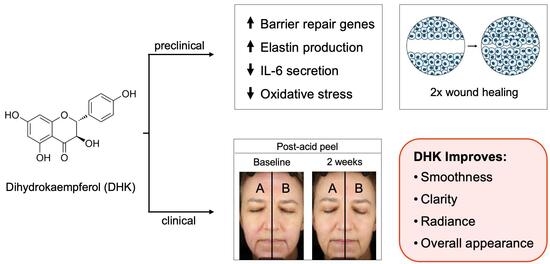
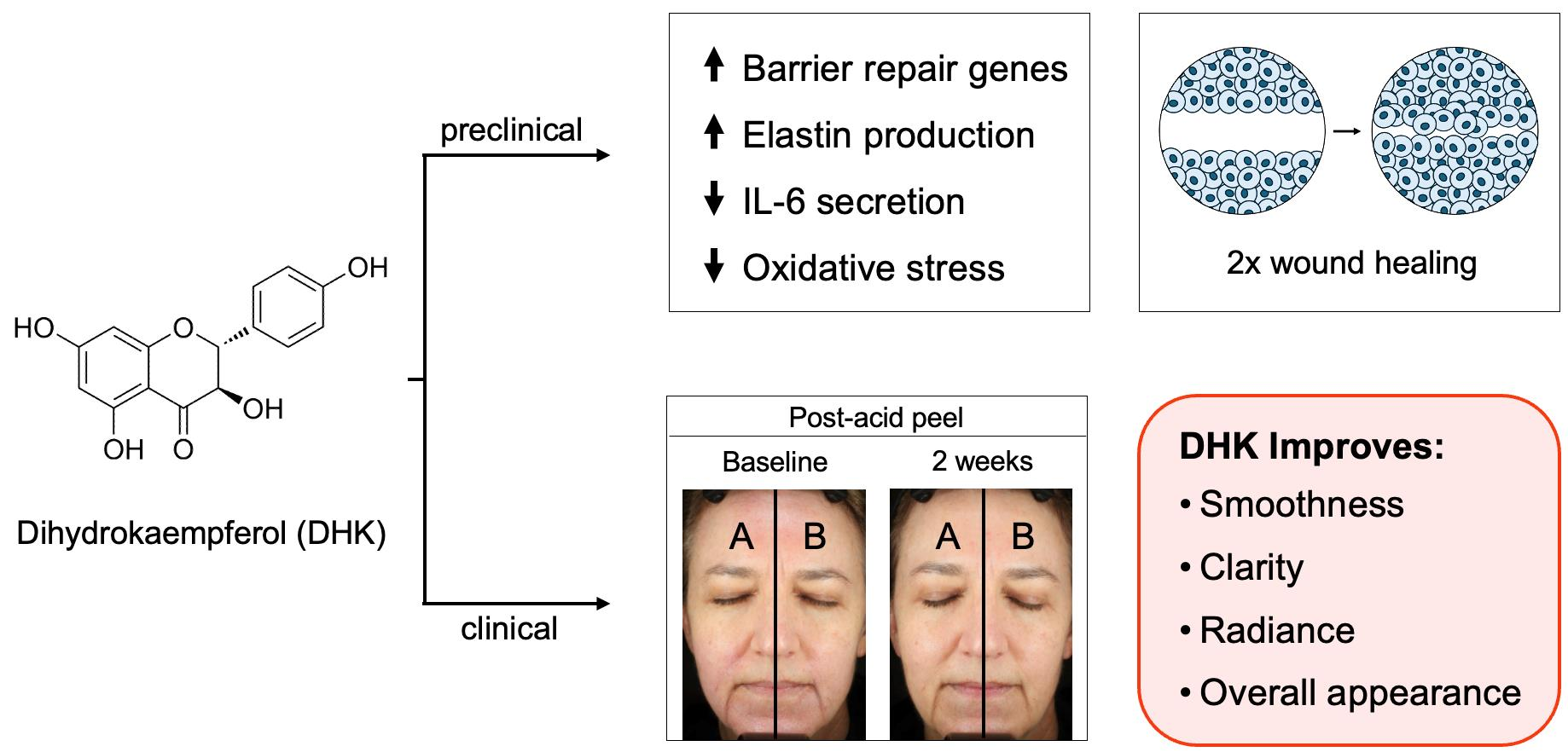
Graphical Abstract

1. Introduction

The skin barrier plays a fundamental role in maintaining skin health and homeostasis by protecting the body from environmental, chemical, and biological insults. This barrier function primarily resides in the stratum corneum, whose integrity depends on a highly organized lipid matrix and the coordinated cellular activity of epidermal keratinocytes and dermal fibroblasts [1]. Stratum corneum integrity decreases with age, contributing to challenges such as atopic dermatitis [2]. This decline is multifactorial, driven by intrinsic factors such as reduced lipid production, altered skin surface pH, and diminished keratinocyte turnover, as well as extrinsic factors such as UV exposure, environmental pollutants, and mechanical stress [3]. Disruption of this barrier can lead to increased permeability, chronic inflammation, reduced lipid synthesis, and delayed tissue repair, all of which contribute to clinically relevant impairments in skin health and are targets for personal care intervention [4,5,6].
At the molecular level, ceramides and lipid metabolism enzymes are critical determinants of stratum corneum structure and function, as reduced ceramide levels correlate with a compromised barrier, dryness, and impaired recovery [7]. Epidermal keratinocytes contribute to this landscape through terminal differentiation and lipid synthesis, and dysregulated inflammatory signaling in these cells can exacerbate barrier dysfunction [8]. Dermal fibroblasts influence the dermal-epidermal interface and support skin repair processes through cell proliferation, migration, and the production of extracellular matrix (ECM) proteins, including elastin and collagen [9,10]. In addition to lipid homeostasis and ECM remodeling, cellular inflammation and oxidative stress are directly impacted by barrier disruption. Reactive oxygen species generated by various stressors can amplify inflammation and delay recovery, and antioxidants have been shown to modulate inflammatory markers and support the integrity of structural proteins in the skin [11]. Effective barrier restoration, therefore, requires a modulation of epidermal inflammation and lipid metabolism, alongside dermal repair mechanisms, and the reduction in oxidative stress.
Among cosmetic procedures, chemical exfoliation, such as acid peeling, is widely used to improve skin appearance but can also transiently compromise barrier integrity [12]. This controlled insult can trigger inflammatory responses, oxidative damage, and delayed recovery of epidermal lipids, underscoring the need for functional skincare ingredients that support barrier restoration. Topical approaches designed to restore the barrier have traditionally focused on delivering physiological lipids such as ceramides, and ceramide-containing formulations have demonstrated improvements in barrier integrity [13]. However, beyond lipid supplementation, multifunctional cosmetic active ingredients that not only improve visible skin attributes but also act on the biological mechanisms underlying barrier repair represent a promising area of research.
DHK (also known as aromadendrin) is a naturally occurring flavonoid found in a range of medicinal, edible, and woody plants, with bioactivity potential for a range of human disorders [14]. Flavonoids are a diverse set of plant secondary metabolites known primarily for their antioxidant and anti-inflammatory properties [15,16]. The mechanism of action of flavonoids includes scavenging free radicals and modulating inflammatory pathways, both of which are relevant to skin health and aging [17,18]. Consistent with these properties, previous studies found that DHK can modulate oxidative stress [19,20] and has anti-inflammatory activity [21,22]. These studies highlight DHK as a potential bioactive molecule for dermatological applications focused on the skin barrier.
In this study, we investigated the biological and clinical effects of DHK, a functional skincare active ingredient designed to support skin barrier restoration. DHK activity was evaluated using a comprehensive approach that included gene expression profiling in human dermal fibroblasts and epidermal keratinocytes, alongside mechanistic in vitro assays assessing antioxidant capacity, inflammatory mediator release, and extracellular matrix production. Functional regeneration was further examined using a cellular migration assay, and clinical efficacy was assessed in a study conducted following a standardized acid peel insult. Collectively, this study evaluated whether DHK modulates key molecular and cellular pathways involved in skin barrier repair and whether these mechanistic effects translate into measurable improvements in skin quality under clinically relevant conditions.

2. Materials and Methods

2.1. Dihydrokaempferol

DHK (INCI: Aromadendrin, IUPAC: (2R, 3R)-3,5,7-trihydroxy-2-(4-hydroxyphenyl)-2,3-dihydrochromen-4-one) was sourced from Debut Biotechnology, Inc. (DermCeutical DHK, San Diego, CA, USA) as a white powder with a purity of 99.6% (w/w) by qNMR analysis. This ingredient was produced through proprietary fermentation, extraction, and purification processes using engineered E. coli strains.

2.2. Cell Culture and Cell-Based Assays

Normal Human Epidermal Keratinocyte (NHEK) cells (ATCC) were grown in EpiLife Medium (Thermo Fisher Scientific, Waltham, MA, USA) supplemented with human keratinocyte growth supplement (HKGS) and gentamicin (Bio Basic, Amherst, NY, USA). Human Dermal Fibroblasts (HDFa) (Thermo Fisher Scientific) were grown in Fibroblast Basal Medium 2 (PromoCell, Heidelberg, Germany). Cryopreserved cells were grown until 80% confluency, and passaged up to 3 times.

2.3. Cell Viability Assay

Cell viability was determined using an assay which assesses cellular metabolic activity. Metabolically active cells reduce the tetrazolium compound 3-(4,5-dimethylthiazol-2-yl)-2,5-diphenyltetrazolium bromide (MTT) to formazan, producing a measurable colorimetric signal. Assays were performed using a commercially available kit (Sigma-Aldrich, St. Louis, MI, USA) according to the manufacturer’s instructions.

2.4. Transcriptomic Analysis

NHEK and HDFa cells were grown as described above and treated with DHK (Dermceutical DHK, Debut Biotechnology, San Diego, CA, USA) or dimethyl sulfoxide (DMSO) (Sigma-Aldrich) control for 24 h (n = 3). Following treatment, cells were detached from cell culture plates with TrypLE (Gibco, Thermo Fisher Scientific), rapidly cryopreserved, and stored at −80 °C until further processing. Frozen cell pellets were transported on dry ice to an external service provider (Genewiz, South Plainfield, NJ, USA) for total RNA extraction, library construction, and next-generation sequencing. Messenger RNA was enriched via poly-A selection during library preparation, and unique molecular identifiers (UMI) were incorporated to enable removal of duplicate reads. Sequencing was performed using paired-end reads (150 bp) with an average depth of 30 million reads per sample. Processed reads were aligned to the human reference genome (GRCh38) and annotated transcriptome (Gencode v44) using STAR (version 2.7.11a). Gene count was determined using featureCount (version 2.0.6). DESeq2 (version 1.44.0) was used to identify statistically significant differentially expressed genes (adjusted p ≤ 0.05 & absolute log2 fold change > 0.5). Pathway-level changes were evaluated by enrichment analysis of Kyoto Encyclopedia of Genes and Genomes (KEGG) pathways using gene set enrichment analysis (GSEA) algorithm implemented in ClusterProfiler (version 4.12.0). Enrichment of Gene Ontology Biological Processes was performed using the Over-Representation Analysis algorithm implemented in ClusterProfiler. Visualization of selected KEGG pathways with integrated gene expression data were generated with Pathview (version 1.44.0).

2.5. Elastase Inhibition & Elastin Production

Stock solutions were prepared as follows: 0.1 M Tris–HC (pH 7.5) as assay buffer, human neutrophil elastase (HNE) (1 U/mL in assay buffer), MeO-Suc-Ala-Ala-Pro-Val-pNA (MAAPVN) at 1.0 mM in DMSO as the enzyme substrate, oleanolic acid (200 µg/mL) as a positive control. DMSO served as the solvent for test compound and as the negative control. For the enzymatic assay, working solutions of HNE and the test compounds were combined and preinubated at 25 °C for 10 min. MAAPVN was then added and the mixture was incubated at 37 °C for 1 h. The enzymatic activity was determined by measuring the release of p-nitroaniline at 405 nm using a microplate reader (Spectramax M2, Molecular Devices, San Jose, CA, USA).
Elastin production was quantified using an Elastin enzyme-linked immunosorbent assay (ELISA) kit according to the manufacturer’s instructions. Briefly, HDFa were cultured as described and treated with the test articles. Following 24 h treatment, culture supernatants were collected and diluted for use in the assay. Elastin standards and samples were added in triplicate to commercial ELISA plates (Abcam ab239433, Cambridge, UK). Data are presented as the mean ± standard deviation of independent experiments.

2.6. Radical Scavenging Assay

Antioxidant activity was assessed using a radical scavenging assay. This method quantifies the reduction of the stable radical 2,2-diphenyl-1-picrylhydrazyl (DPPH) by measuring a decrease in absorbance. Stock solutions were prepared on the day of analysis, and included 200 µM DPPH in ethanol (Cayman Chemical 14805, Ann Arbor, MI, USA), 400 µM Trolox (Cayman Chemical 10011659), for standard curve generation, and 0.01% (w/w) L-Ascorbic Acid as a positive control; ethanol served as the negative control. Reactions combined equal volumes of DPPH solution and the test sample, then incubated at 25 °C in the dark for 30 min. Absorbance was recorded at 517 nm using a plate reader (Spectramax M2, Molecular Devices).

2.7. Anti-Inflammatory Activity

NHEK cells were cultured as described above and seeded at a density of 7500–10,000/cm2. Cells were maintained at 37 °C for 48–72 h to allow attachment and stabilization. Culture medium was then replaced with fresh, pre-warmed medium and cells were treated with an inflammatory cocktail consisting of lipopolysaccharide (LPS, 2.0 µg/mL from Escherichia coli O26:B6), and polyinosinic–polycytidylic acid (poly(I:C), 12.5 µg/mL). After one hour of inflammatory stimulation, test compounds were added, and cells were incubated for an additional 24 h. Conditioned media was collected for quantification of IL-6 levels using a commercially available ELISA kit (ELH-IL6-1, RayBiotech, Peachtree Corners, GA, USA) according to the manufacturer’s instructions. Absorbance was measured using a plate reader (Spectramax M2, Molecular Devices).

2.8. Barrier-Based Migration Assay

Primary HDFa were cultured in a 24-well plate with an insert that creates a 0.9 mm cell-free (wound) zone visible under the microscope (Abcam Wound Healing Assay, ab242285). 24 h after cells adhered, the insert was removed, and T0 photographs were taken. The spent media was replaced with test article media for an additional 48 h, imaging every 24 h. Test articles were DHK (Dermceutical DHK, Debut), ascorbic acid (Research Products International, Mount Prospect, IL, USA), copper tripeptide (GHK-Cu, Active Peptide, Cambridge, MA, USA), ceramide NP (DS-ceramide-Y30-HP, Croda, Snaith, UK), DMSO, and media (Fibroblast Basal Medium 2 supplemented with SupplementMix, gentamicin, and amphotericin B, PromoCell). Cellular migration across the empty field was captured using an ECHO Revolve microscope with an Olympus UPlanFL N 4×/0.13 PhL objective (ECHO, San Diego, CA, USA). The images were analyzed using CellProfiler (version 4.2.8) [22] to measure the area occupied by cells within the wound region. Migration was expressed as the percentage reduction in wound area relative to the T0 time point (% closure). All experiments were performed in triplicate.

2.9. Clinical Trial

2.9.1. Ethical Conduct

This study was conducted in accordance with the intent and purpose of Good Clinical Practice regulations described in Title 21 of the U.S. Code of Federal Regulations (CFR), and the Declaration of Helsinki, and approved by the Allendale Institutional Review Board (AIRB, Old Lyme, CT, USA), Protocol DCS-61-24.

2.9.2. Subject Information and Consent

A signed informed consent form was obtained from each subject prior to performing any study procedures. No study-related procedures or activities were performed until each subject was fully informed and had signed and dated the consent form.

2.9.3. Design and Controls

Thirty subjects (100% female, Fitzpatrick types I-II) were enrolled in this single-site split-face study. 30 subjects were chosen to satisfy assumptions of the Central Limit Theorm. Subjects who signed consent and met all inclusion criteria and none of the exclusion criteria were enrolled at the baseline visit. Subjects were screened for suitability and prepared for a 25% trichloroacetic acid (TCA) face peel by the dermatologist investigator. This procedure creates an environment to rapidly measure improvements in skin healing. Following the procedure subjects had a post-procedural dressing applied which was removed the next morning. Subjects received the study cream (base formulation + 0.3% DHK) for application to one randomized side of the face and a neutral cream (base formulation only) for application to the other size of the face. Subjects were instructed to apply the study cream and bland moisturizer twice daily until study completion. An independent blinded dispenser who was not associated with other study activities randomized the study product application site and maintained a locked randomization log until data lock was completed. The objective of this study was to assess the efficacy of a cream on both immediate and sustained recovery on post-procedural facial appearance after 48 h and 2 weeks of twice-daily use. DHK inclusion level was determined based on optimal concentrations identified in vitro.

2.9.4. Inclusion Criteria

Eligible participants were healthy male and female subjects aged 35–65 years of all skin types who were in generally good physical and mental health, dependable, and willing to comply with study requirements and visit schedules. Subjects were required to sign an informed consent form in accordance with 21 CFR Part 50, agree to use only the study cream, and refrain from introducing new skincare products or colored cosmetics (including lipsticks, eye shadows, facial foundations, blushes, and powders) for the duration of the study.

2.9.5. Exclusion Criteria

Subjects were excluded if they had a history of facial skin cancer on test areas, were undergoing cancer treatment, were pregnant, nursing, or planning pregnancy, or were participating in another facial clinical study. Additional exclusions included the presence of sunburn, moderate to severe suntan, asymmetrical aging, uneven skin tone, tattoos, scars, dilated vessels, or other facial conditions that could interfere with assessments; uncontrolled systemic disease; current moderate to severe inflammatory acne; known allergies to topical products; or use of facial prescription topical medications. Subjects were also excluded for recent use of medications that could confound results (including high-dose anti-inflammatory or immunosuppressive drugs), recent use of exfoliating or retinoid products (AHAs/BHAs within 2 weeks; retinoids within 8 weeks; isotretinoin within 1 year), and recent esthetic procedures (ablative laser, microneedling, chemical peels, or dermabrasion within 6 months; non-ablative laser or IPL within 3 months).

2.9.6. Study Measures

Skin attributes were graded by an expert investigator for efficacy: post-procedure erythema, tactile smoothness, visual smoothness, pigmentation, clarity, radiance, firmness, and overall healthy skin appearance. All assessments were made on a 5-point ordinal scale (0 = none, 1 = minimal, 2 = mild, 3 = moderate, 4 = severe) at baseline, 48 h, and week 2. The standard 5-point ordinal scale represents a method for measuring improvements from baseline, with 4 indicating the strongest visibility of the parameter and 0 representing the absence of noticeable parameter. This scale was utilized for each individual parameter on either side of the face to score the placebo and active-treated sides separately. For parameters of erythema, tactile smoothness, visual smoothness, pigmentation, clarity, firmness, radiance, and overall skin appearance, a decrease in value represents an improvement from baseline. For tolerability endpoints, a standard 5-point ordinal scale is also used to assess redness, swelling, and dryness, with 0 indicating an absence of symptoms and 4 representing severe symptoms. Assessments were made separately for each side of the face.

2.9.7. Statistical Methods

Along with descriptive statistics (means, standard deviations, and percentages), investigator-assessed clinical grading scale outcomes were analyzed using nonparametric methods, including the Wilcoxon signed-rank test and sign test for paired comparisons across time points. Statistical significance was defined at an alpha level of 0.05.

3. Results

3.1. DHK Modulates Epidermal Barrier-Related Gene Expression

To determine whether DHK affected keratinocyte viability, cells were treated with DHK for 24 h and assessed by MTT assay. No significant reduction in metabolic activity was observed across the dose range tested, indicating that DHK is not cytotoxic from 0.001–0.01% (Figure S1a).
RNA-sequencing analysis revealed a pronounced anti-inflammatory transcriptional response to DHK. Gene set enrichment analysis demonstrated significant downregulation of inflammation-associated pathways, including tumor necrosis factor-α (TNF-α) and other cytokines (Figure 1a). Consistent with these results, several downstream targets of the nuclear factor kappa-B (NF-κB) signaling pathway were also downregulated (Figure 1a and Figure S2a).
DHK also significantly modulated genes associated with epidermal differentiation and barrier formation. Differentiation markers Desmocollin 1 (DSC1) and Claudin 1 (CLDN1) were downregulated, while transcriptional regulators from Notch receptor 1 (NOTCH1) and Grainyhead-like (GRHL) families were upregulated [23,24]. Notably, multiple tight junction-associated genes, claudin family members, and Occludin (OCLN) were upregulated in response to DHK, as highlighted in the volcano plot in Figure 1b and Figure S2b [25].
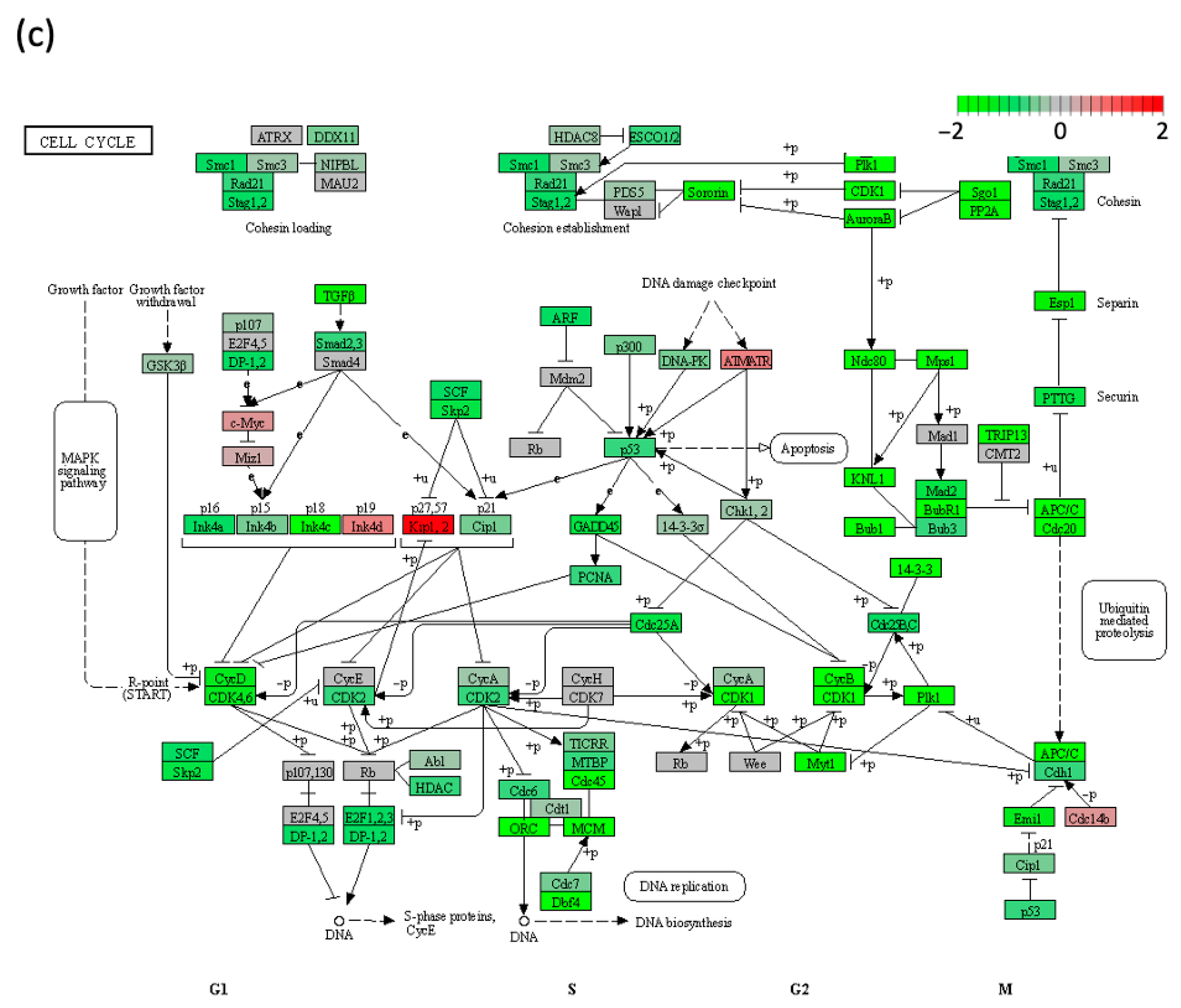
Genes involved in cell cycle progression and proliferation were broadly downregulated following DHK treatment. KEGG pathway mapping revealed suppression of multiple nodes within the cell cycle pathway (Figure 1c). Importantly, this reduction in proliferative gene expression occurred without cytotoxicity, suggesting a shift toward later stages of differentiation [26]. The transcriptomic profile induced by DHK is consistent with a keratinocyte state of reduced inflammation, regulated proliferation, and epidermal barrier formation [27,28].

3.2. DHK Primes Fibroblasts for Extracellular Matrix Remodeling

Similar to cell viability results in keratinocytes, DHK was not cytotoxic to fibroblasts at the tested concentration range (Figure S1b). RNA-seq analysis of fibroblasts revealed regulation of genes associated with ECM remodeling and tissue repair (Table 1).
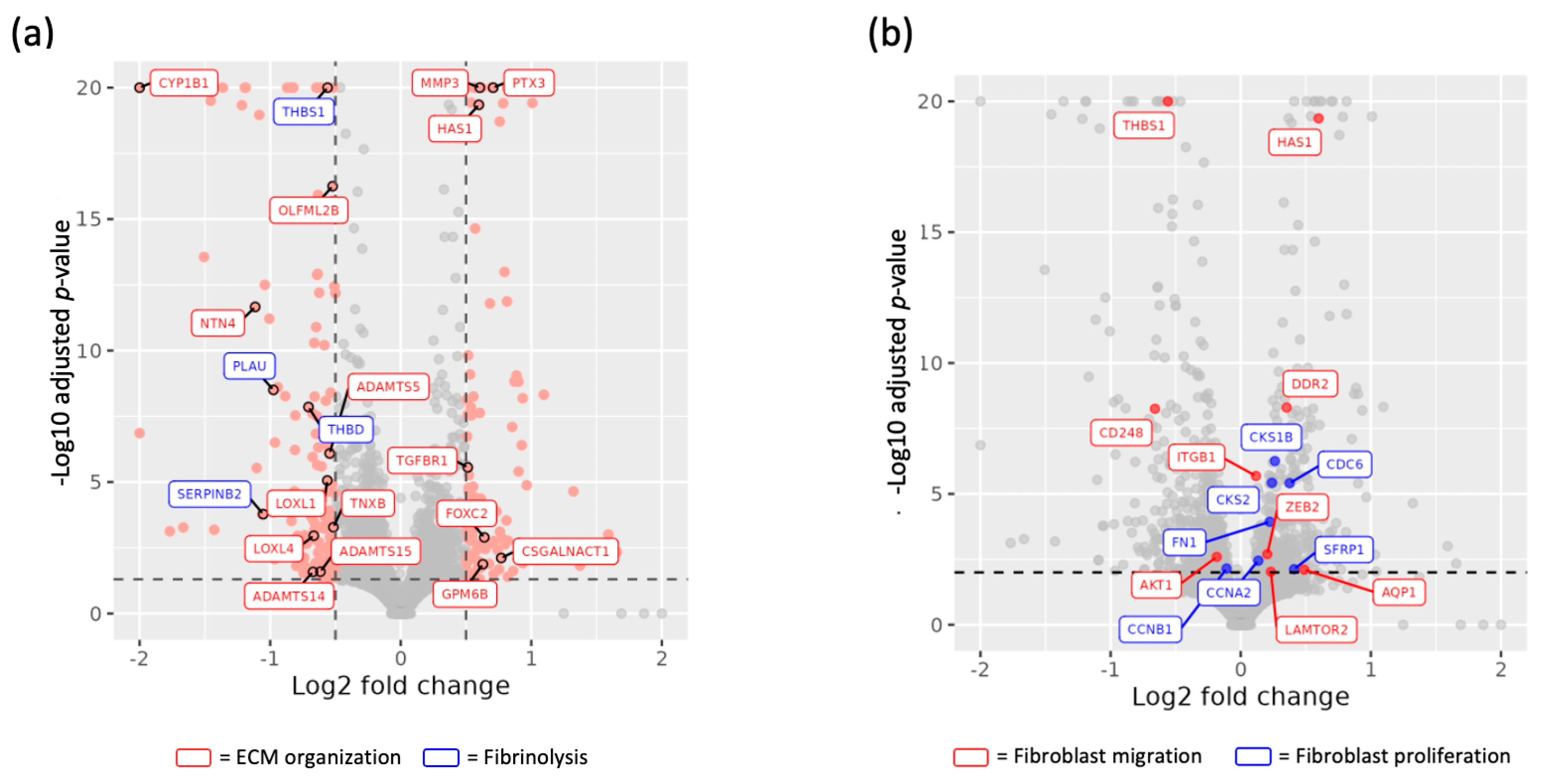
As seen in the volcano plot in Figure 2a, genes involved in matrix synthesis and remodeling readiness, such as Matrix Metallopeptidase 3 (MMP3) and Hyaluronan synthase 1 (HAS1), were upregulated following DHK treatment [29,30]. In contrast, genes associated with matrix crosslinking and structural stabilization (e.g., Lysyl Oxidase Like 1 (LOXL1), Lysyl Oxidase Like 4 (LOXL4), ADAM Metallopeptidase with Thrombospondin Type 1 Motif 5 (ADAMTS5)) were downregulated, suggesting a shift toward a more dynamic and permissive ECM state [31]. Several genes implicated in early wound response and tissue remodeling were also differentially regulated. DHK reduced the expression of genes associated with late-stage remodeling and inflammatory processes (e.g., Thrombospondin 1 (THBS1), Plasminogen Activator, Urokinase (PLAU), and Serpin Family B Member 2 (SERPINB2)) suggesting a transcriptional state favoring wound preparedness rather than fibrosis [32,33].
Figure 2a is focused on the observed regulation of genes associated with fibroblast proliferation and migration. DHK upregulated genes associated with cell motility, matrix interaction, and growth responsiveness (e.g., Aquaporin 1 (AQP1), Discoidin Domain Receptor Tyrosine Kinase 2 (DDR2), Integrin Subunit Beta 1 (ITGB1)), and cell cycle regulators (e.g., Cell Division Cycle 6 (CDC6), CDC28 Protein Kinase Regulatory Subunit 1B (CKS1B), Cyclin A (CCNA)) [34]. Conversely, expression of genes such as AKT Serine/Threonine Kinase 1 (AKT1), THBS1, and CD248 Molecule (CD248) was downregulated, indicating selective proliferative signaling rather than global activation [35]. Together, the DHK-induced gene expression profile is characterized by ECM remodeling, regulated protease activity, and modulation of migration and proliferation-associated pathways.

3.3. The Activities of DHK Are Confirmed in Preclinical Skin-Related Assays

3.3.1. Protection Against Matrix Degradation and Structural Stress

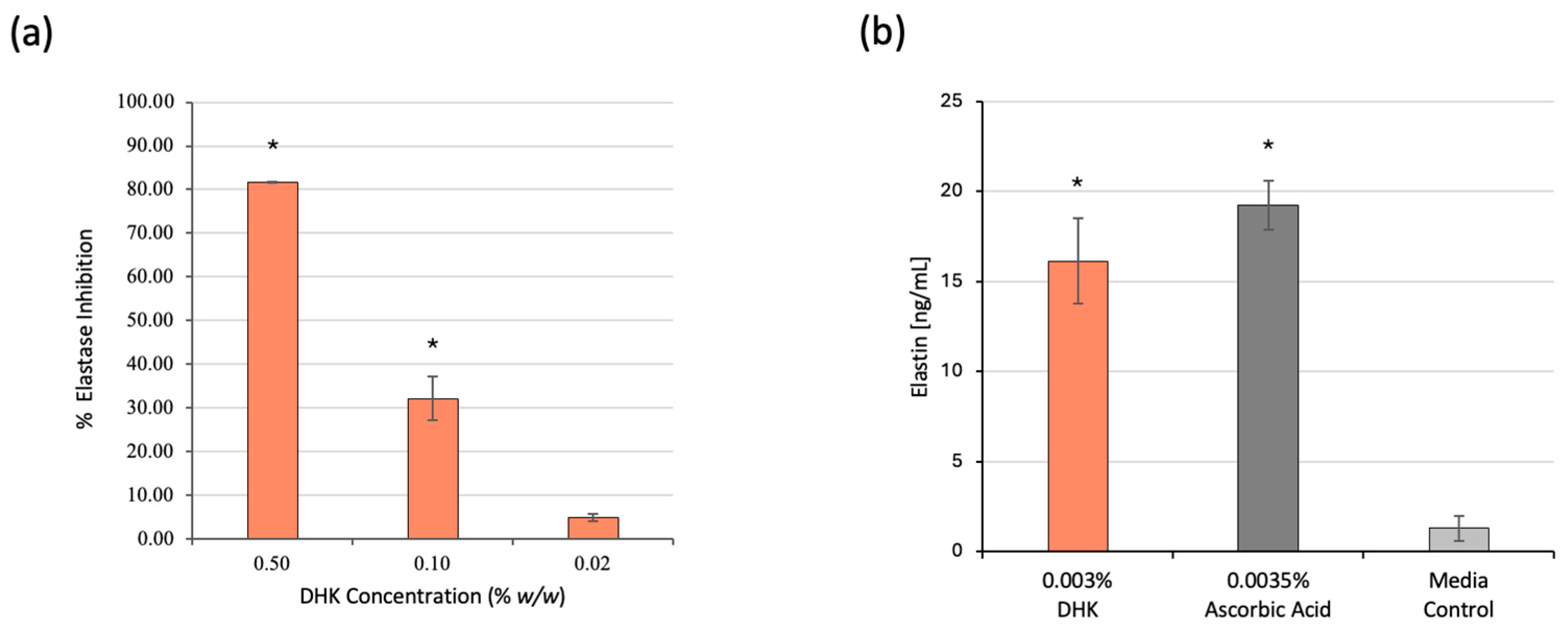
Healthy, flexible, intact skin depends on elastin production and barrier repair, along with suppression of internal degradative processes, such as elastase activation. Additionally, a compromised barrier provides less resistance to external stressors, further accelerating the breakdown of elastin fibers [36]. Figure 3 highlights two roles DHK plays in maintaining a resilient structural matrix. DHK inhibited elastase in a dose-dependent manner, with concentrations of 0.5% and 0.1% significantly inhibiting elastase activity compared with solvent controls (Figure 3a).
To complement the preservation of elastin fibers, DHK treatment in fibroblasts also stimulated elastin production to a level comparable to that of vitamin C and significantly higher than in untreated cells (Figure 3b). Elastin production and elastase inhibition act as both mechanical and inflammatory buffers in skin [37]. By preserving elastin fiber integrity and limiting matrix degradation, DHK’s activities help establish a dermal state conducive to remodeling.

3.3.2. Reduction in Molecular Damage and Inflammatory Signaling

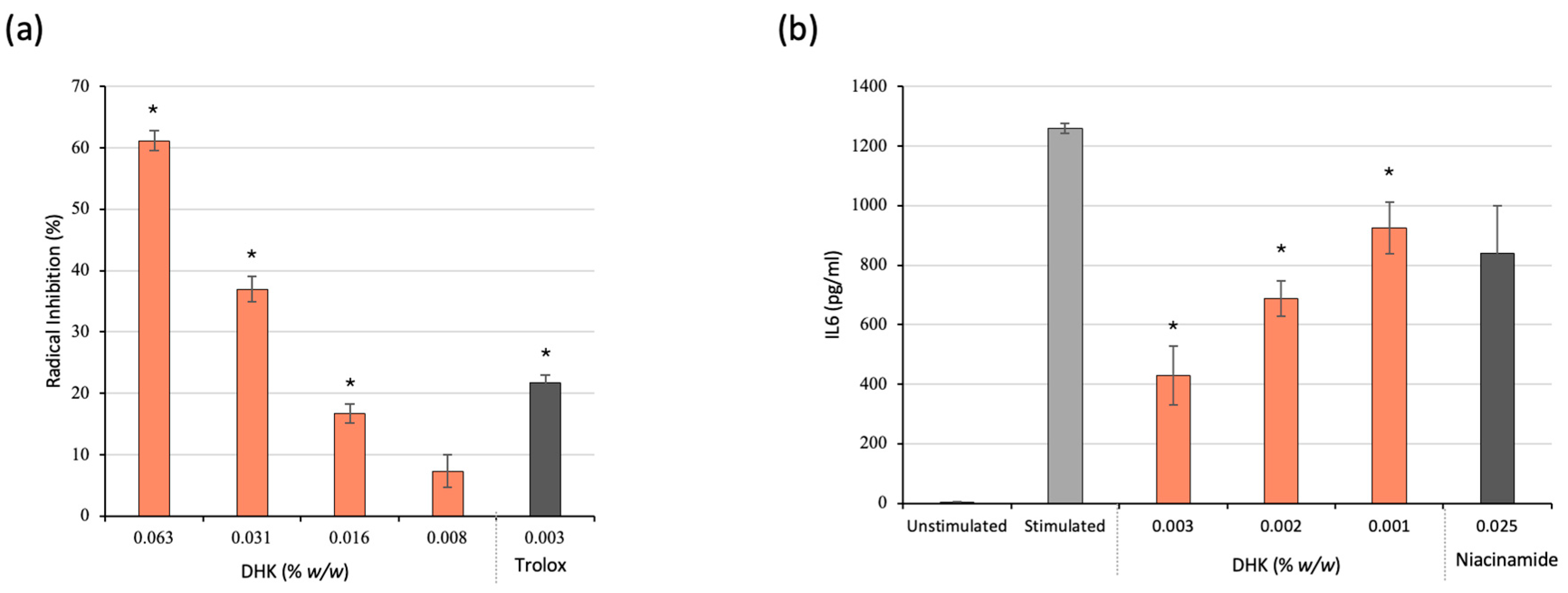
The antioxidant capacity of DHK was evaluated using a DPPH radical scavenging assay. DHK significantly reduced DPPH radical levels in a dose-dependent manner, with a significant reduction vs. solvent control observed across the concentration range of 0.016–0.063% (Figure 4a). These findings suggest that DHK limits the availability of free radicals, a key contributor to molecular damage in skin [38].
To assess the impact of DHK on inflammatory signaling, IL-6 secretion was measured by ELISA following pro-inflammatory stimulation. As seen in Figure 4b, DHK significantly reduced IL-6 production compared to stimulated controls in a dose-dependent manner. This inhibitory effect is consistent with the RNA-seq data and was observed to progressively reduce IL-6 at concentrations ranging from 0.001% to 0.003%, outperforming the industry benchmark niacinamide at a much higher concentration.

3.3.3. Enhanced Tissue Repair Dynamics

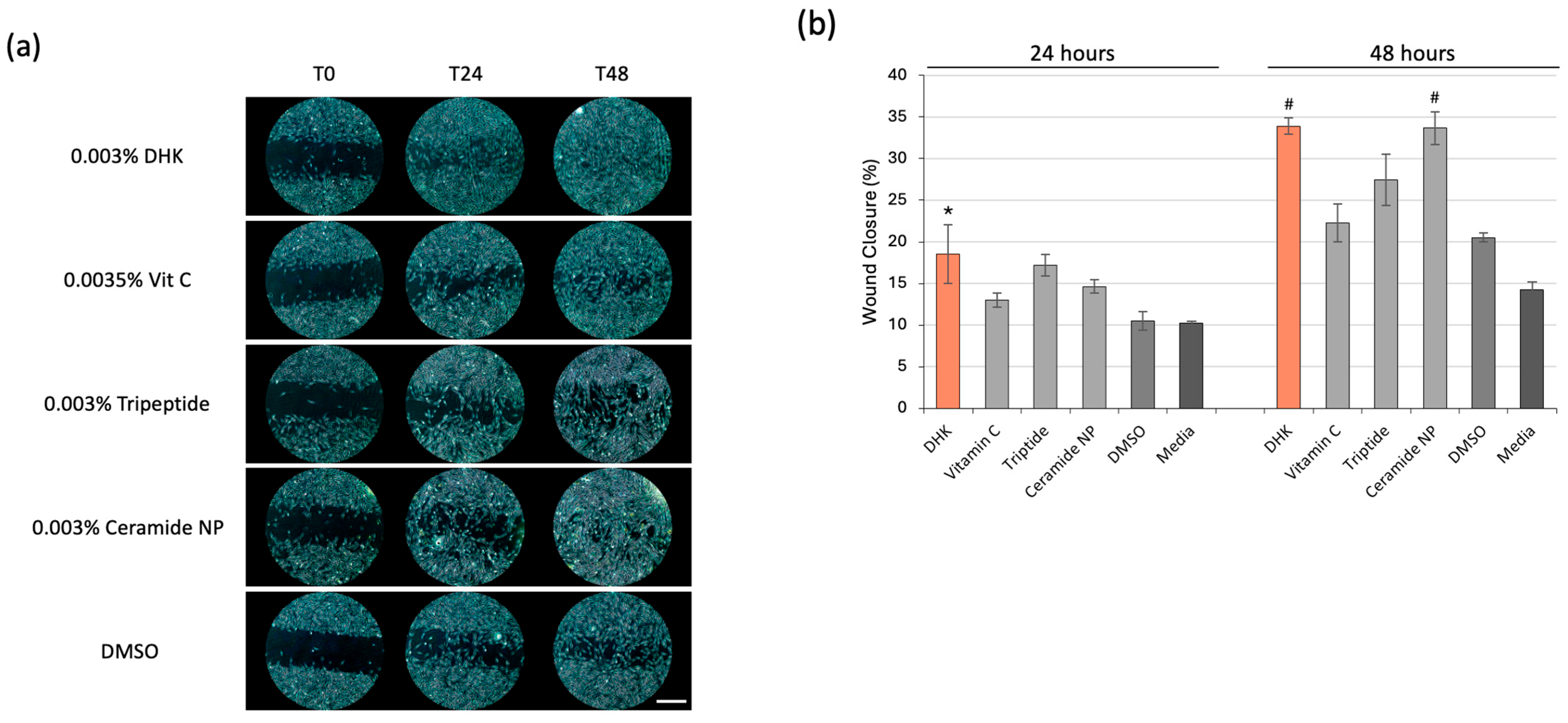
The effects of DHK on fibroblast migration and proliferation were evaluated using an in vitro wound healing assay, with cellular influx into a defined cell-free zone quantified as percent closure. At 24 h, DHK treatment at 0.003% resulted in a significant increase in wound closure compared with untreated control cells. However, other industry-standard ingredients (vitamin C, tripeptide, ceramide NP) and the vehicle control (DMSO) did not significantly improve closure at this time point (Figure 5).
At 48 h, DHK continued to demonstrate superior wound closure performance with the most complete and monodisperse distribution of cells at the site of the wound. Both DHK and ceramide NP achieved significantly greater percent closure compared to DMSO-treated controls, whereas vitamin C and tripeptide did not. These findings indicate that DHK supports the early and later phases of wound repair and are consistent with the data above, suggesting a concept of a dermal state primed for regeneration.

3.4. DHK Improves Clinical Skin Response Following Chemical Peeling

3.4.1. Tolerability and Safety

30 participants completed the study with 0 subject withdrawals. DHK was well tolerated throughout the 2-week study period. Investigator assessments indicated no evidence of treatment-related skin irritation at any time point. No adverse events were reported during the study, and both predefined tolerability and safety endpoints were met.

3.4.2. Efficacy Against a Controlled Dermatologic Stressor

The clinical performance of DHK was evaluated in a randomized, split-face design following a standardized dermatologist-administered acid peel. Investigator-graded assessments were conducted at 48 h and 2 weeks post-procedure to characterize acute recovery and sustained improvements in visible skin quality. Blinded clinical grading included erythema, tactile smoothness, visual smoothness, pigmentation, clarity, radiance, firmness, and overall healthy skin appearance. Changes from baseline for DHK-treated and control sides are summarized in Table 2. Positive values reflect greater improvement relative to baseline.
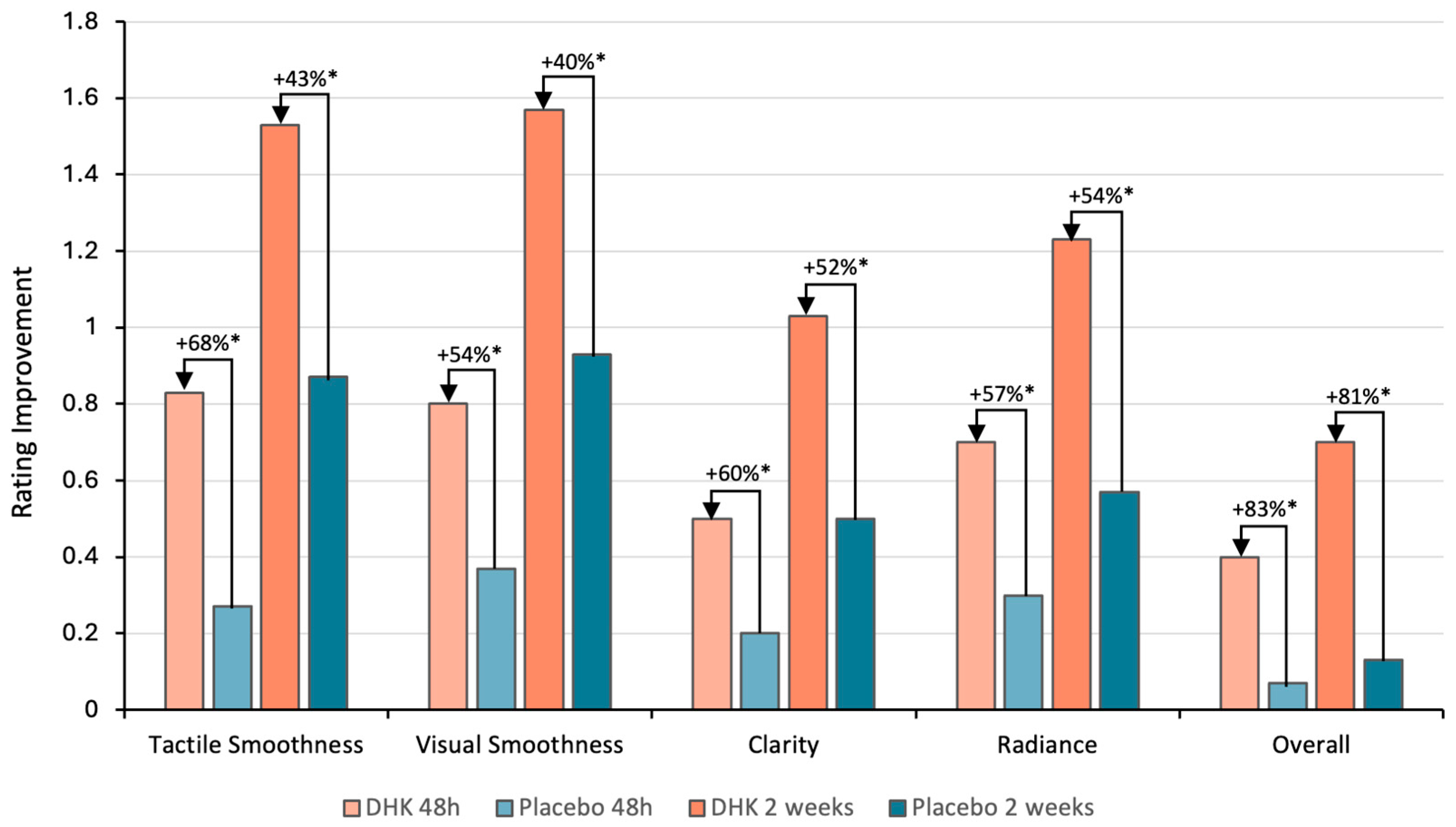
At 48 h post-procedure, the DHK-treated side demonstrated statistically significant improvements versus placebo across multiple parameters, including tactile smoothness, visual smoothness, clarity, radiance, and overall appearance (Table 2; Figure 6). These early differences are consistent with recovery during the acute post-procedural phase, a period characterized by barrier disruption, inflammation, and transepidermal water loss. The observed improvements in smoothness and clarity suggest accelerated restoration of epidermal structural integrity and surface cohesion.
At 2 weeks, DHK maintained statistically significant improvement over placebo across the same graded endpoints (Table 2; Figure 6). The persistence of improvements in radiance, clarity, and smoothness supports both barrier normalization and downstream dermal remodeling, both of which contribute to overall skin quality.
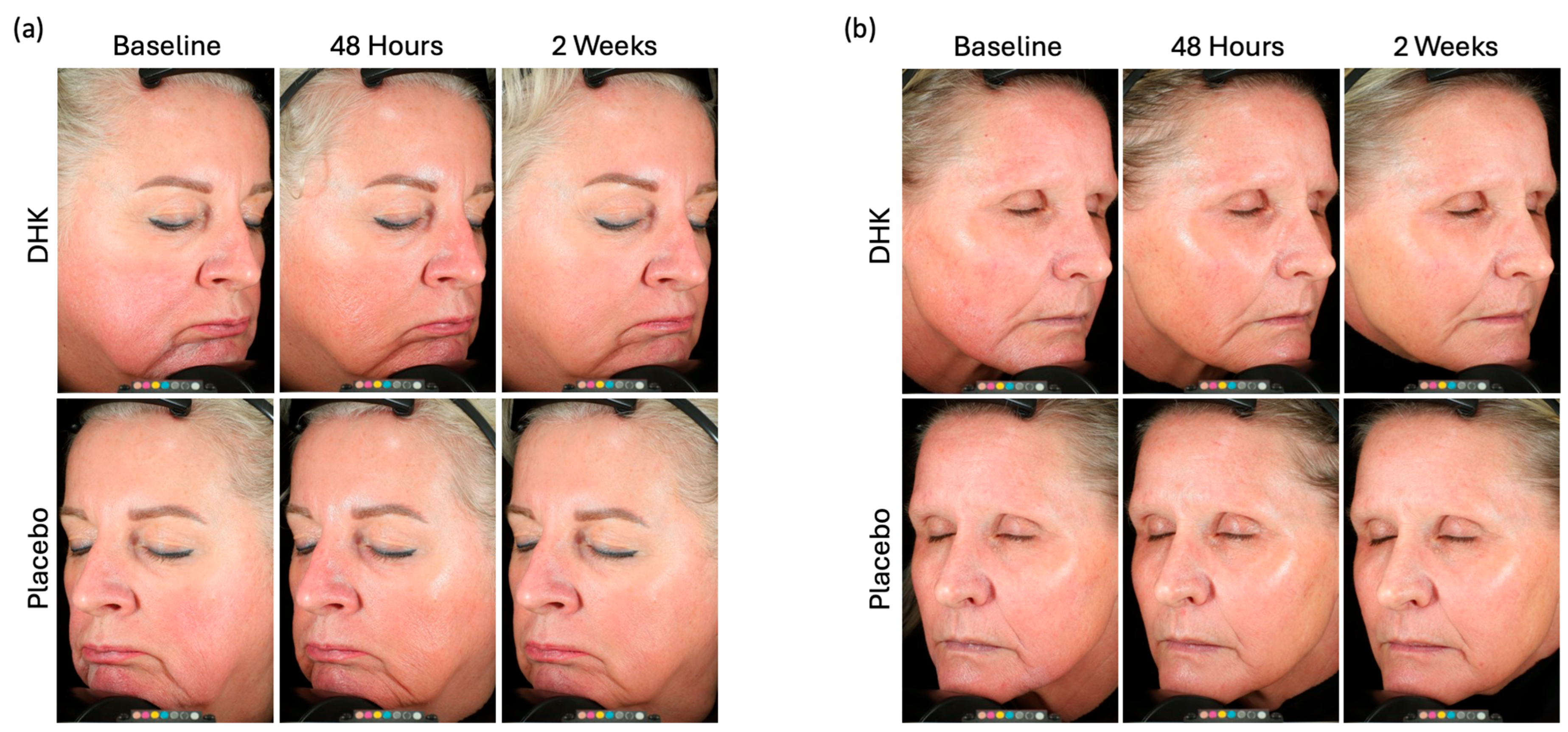
Representative subject images (Figure 7) visually corroborate the measured outcomes. The DHK-treated profiles show reduced surface irregularity and improved radiance relative to the placebo control, consistent with the dermatologist-graded improvements. These images confirm that DHK-mediated biological activity translates into meaningful esthetic improvement following chemical exfoliation.

4. Discussion

This study demonstrates that DHK supports skin resilience and recovery through coordinated modulation of oxidative stress, inflammatory signaling, epidermal differentiation, and dermal repair dynamics. Across transcriptomic, molecular, and clinical assessments, DHK was associated with an enhanced adaptive response to skin stress and improvements in visible skin quality.
Oxidative stress and inflammation are central drivers of skin aging and post-procedural dysregulation [39]. DHK demonstrated radical scavenging activity and significantly reduced stimulus-induced IL-6 secretion, supporting its capacity to limit molecular damage and downstream inflammatory signaling, consistent with previous studies [19]. These functional data align with our RNA-seq analysis in keratinocytes, which show downregulation of TNF, IL6, and NF-kB-associated pathways (Figure 1 and Figure S2). Together, these results suggest that DHK attenuates early stress signaling, which may help to prevent excessive inflammatory responses following environmental or procedural insults. Keratinocyte transcriptomics also revealed that DHK selectively modulates differentiation programs and barrier-associated genes. Downregulation of desmosomal components, coupled with upregulation of Notch signaling, spinous layer differentiation, and tight junction genes, suggests a shift toward epidermal renewal and barrier organization [23,24,25].
In fibroblasts, DHK induced a gene expression signature indicative of ECM remodeling and wound-preparatory signaling. The regulation of HAS1, TGFBR1, integrins, and ECM-interacting genes suggests a fibroblast state supportive of tissue repair and dermal–epidermal communication [30]. Maintenance of extracellular matrix integrity is important for preserving dermal mechanical function. The functional elastin homeostasis data for DHK combined with gene expression regulation of matrix remodeling genes suggest DHK supports matrix adaptability while limiting degradation. Such a remodeling profile may reduce the release of inflammatory mediators and help maintain dermal-epidermal signaling during the recovery process [40]. Functional validation using a wound healing assay confirmed that DHK significantly enhanced fibroblast migration and closure dynamics compared with untreated cells and benchmark ingredients, supporting a role for DHK in promoting tissue repair.
Post-procedural care is an important aspect of recovery after facial rejuvenation procedures, particularly chemical exfoliation treatments such as acid peels. These treatments are associated with epidermal injury and require appropriate skin care to support barrier repair and mitigate inflammation and erythema. Active ingredients with enhanced biological activity may help reduce discomfort, accelerate recovery, and improve clinical outcomes following standard procedures. The objective of this study was to investigate the efficacy of DHK on post-procedural facial appearance after 2 weeks of twice-daily use. DHK significantly improved investigator-graded measures of smoothness, clarity, radiance, and overall appearance at both 48 h and 2 weeks compared to placebo. These sustained benefits reflect activity beyond the immediate recovery period and into the remodeling phase of skin renewal, both of which are consistent with our mechanistic data for DHK. Reduction in oxidative stress, upregulation of barrier-associated genes, attenuation of cytokine-driven inflammation, and enhanced fibroblast migration and matrix remodeling provide a mechanistic basis for the accelerated recovery and improved visible skin quality observed following the peel.
The trajectory of future research could include expanding clinical evaluation to more thoroughly characterize DHK’s effects by analyzing lipid composition. In addition, extending the study duration could provide deeper insight into the long-term effects of DHK on both healthy and post-procedure skin.

5. Conclusions

In conclusion, data from this study suggest that DHK elicits molecular and cellular responses aligned with effective skin recovery, including attenuation of inflammatory pathways and support of accelerated epidermal and dermal repair. These responses were observed in parallel with improvements in post-procedure recovery and visible skin quality following a standardized dermatologic challenge. Taken together, these findings support further investigation of DHK as an active ingredient with potential relevance for skin resilience with implications for wound healing, harsh dermal rejuvenation procedures, and aging.

Supplementary Materials

The following supporting information can be downloaded at: https://www.mdpi.com/article/10.3390/cosmetics13020093/s1, Figure S1: cell viability as measured by MTT assay; Figure S2: Additional gene expression data mapped onto KEGG pathways relating to Figure 1.

Author Contributions

Conceptualization, T.O. and N.J.B.; methodology, T.O. and D.Z.; software, Z.S.; validation, T.O., D.Z. and Z.S.; formal analysis, Z.S. and N.J.B.; investigation, T.O., D.Z. and Z.S.; writing—original draft preparation, N.J.B.; writing—review and editing, N.J.B. and Z.S.; visualization, Z.S. and N.J.B.; supervision, T.O. and N.J.B.; project administration, T.O. All authors have read and agreed to the published version of the manuscript.

Funding

This research received no external funding.

Institutional Review Board Statement

The study was conducted in accordance with the Declaration of Helsinki, and approved by the Allendale Institutional Review Board (AIRB, 30 Neck Road, Old Lyme, CT 06371, USA) Protocol DCS-61-24, approved 15 September 2024.

Informed Consent Statement

Informed consent was obtained from all subjects involved in the study. Written informed consent has been obtained from all participants in this clinical study to publish this paper.

Data Availability Statement

The original contributions presented in this study are included in the article. Additional datasets referenced in this study are available upon request from the corresponding author due to their confidential and proprietary nature.

Acknowledgments

The authors would like to thank all participants, Zoe Draelos, and Dermatology Consulting Services, PLLC, for their assistance in this clinical study, and Mark Wall for critical reading of the manuscript.

Conflicts of Interest

T.O., Z.S., D.Z. and N.J.B. are employees of Debut Biotechnology, Inc. T.O. is a named inventor on a patent related to this work, which is solely owned by Debut Biotechnology, Inc. Debut Biotechnology, Inc. supplied the test ingredient and was involved in study design, data analysis, data interpretation, and manuscript preparation.

Abbreviations

The following abbreviations are used in this manuscript:
DHKDihydrokaempferol
IL-6Interleukin 6
TEWLTransepidermal water loss
ECMExtracellular matrix
DPPH2,2-diphenyl-1-picrylhydrazyl
HNEHuman neutrophil elastase
NHEKNormal human epidermal keratinocyte
HDFaHuman dermal fibroblasts
MTT3-(4,5-dimethylthiazol-2-yl)-2,5-diphenyltetrazolium bromide
DMSODimethyl sulfoxide
KEGGKyoto encyclopedia of genes and genomes
GSEAGene set enrichment analysis
ELISAEnzyme-linked immunosorbent assay
LPSLipopolysaccharide
CFRCode of federal regulations
TCATrichloroacetic acid
TNF- αTumor necrosis factor-α
NF-κBNuclear factor kappa-B
DSC1Desmocollin 1
CLDN1Claudin 1
NOTCH1Notch receptor 1
GRHLGrainyhead-like
OCLNOccludin
MMP3Matrix Metallopeptidase 3
HAS1Hyaluronan synthase 1
LOXL1Lysyl Oxidase Like 1
LOXL4Lysyl Oxidase Like 4
ADAMTS5ADAM Metallopeptidase with Thrombospondin Type 1 Motif 5
THBS1Thrombospondin 1
PLAUPlasminogen Activator, Urokinase
SERPINB2Serpin Family B Member 2
GOBPGene ontology biological process
AQP1Aquaporin 1
DDR2Discoidin Domain Receptor Tyrosine Kinase 2
ITGB1Integrin Subunit Beta 1
CDC6Cell Division Cycle 6
CKS1bCDC28 Protein Kinase Regulatory Subunit 1B
CCNACyclin A
AKT1AKT Serine/Threonine Kinase 1
CD248CD248 Molecule

References

  1. Berdyshev, E. Skin Lipid Barrier: Structure, Function and Metabolism. Allergy Asthma Immunol. Res. 2024, 16, 445. [Google Scholar] [CrossRef]
  2. Ghadially, R.; Brown, B.E.; Sequeira-Martin, S.M.; Feingold, K.R.; Elias, P.M. The aged epidermal permeability barrier. Structural, functional, and lipid biochemical abnormalities in humans and a senescent murine model. J. Clin. Investig. 1995, 95, 2281–2290. [Google Scholar] [CrossRef]
  3. Wang, Z.; Man, M.-Q.; Li, T.; Elias, P.M.; Mauro, T.M. Aging-associated alterations in epidermal function and their clinical significance. Aging 2020, 12, 5551–5565. [Google Scholar] [CrossRef]
  4. Rajkumar, J.; Chandan, N.; Lio, P.; Shi, V. The Skin Barrier and Moisturization: Function, Disruption, and Mechanisms of Repair. Ski. Pharmacol. Physiol. 2023, 36, 174–185. [Google Scholar] [CrossRef]
  5. Feingold, K.R. Thematic review series: Skin Lipids. The role of epidermal lipids in cutaneous permeability barrier homeostasis. J. Lipid Res. 2007, 48, 2531–2546. [Google Scholar] [CrossRef] [PubMed]
  6. Lee, H.-J.; Lee, S.-H. Epidermal Permeability Barrier Defects and Barrier Repair Therapy in Atopic Dermatitis. Allergy Asthma Immunol. Res. 2014, 6, 276. [Google Scholar] [CrossRef] [PubMed]
  7. Choi, M.J.; Maibach, H.I. Role of Ceramides in Barrier Function of Healthy and Diseased Skin. Am. J. Clin. Dermatol. 2005, 6, 215–223. [Google Scholar] [CrossRef] [PubMed]
  8. Chen, J.; Liu, C.; Yang, Y.; Gong, X.; Qian, H. The stratum corneum barrier: Impaired function in relation to associated lipids and proteins. Tissue Barriers 2025, 13, 2361197. [Google Scholar] [CrossRef]
  9. Zorina, A.; Zorin, V.; Isaev, A.; Kudlay, D.; Vasileva, M.; Kopnin, P. Dermal Fibroblasts as the Main Target for Skin Anti-Age Correction Using a Combination of Regenerative Medicine Methods. Curr. Issues Mol. Biol. 2023, 45, 3829–3847. [Google Scholar] [CrossRef]
  10. Rognoni, E.; Pisco, A.O.; Hiratsuka, T.; Sipilä, K.H.; Belmonte, J.M.; Mobasseri, S.A.; Philippeos, C.; Dilão, R.; Watt, F.M. Fibroblast state switching orchestrates dermal maturation and wound healing. Mol. Syst. Biol. 2018, 14, e8174. [Google Scholar] [CrossRef] [PubMed]
  11. Ukaegbu, K.; Allen, E.; Svoboda, K.K.H. Reactive Oxygen Species and Antioxidants in Wound Healing: Mechanisms and Therapeutic Potential. Int. Wound J. 2025, 22, e70330. [Google Scholar] [CrossRef] [PubMed]
  12. Song, J.Y.; Kang, H.A.; Kim, M.-Y.; Park, Y.M.; Kim, H.O. Damage and Recovery of Skin Barrier Function After Glycolic Acid Chemical Peeling and Crystal Microdermabrasion. Dermatol. Surg. 2004, 30, 390–394. [Google Scholar] [PubMed]
  13. Kono, T.; Miyachi, Y.; Kawashima, M. Clinical significance of the water retention and barrier function-improving capabilities of ceramide-containing formulations: A qualitative review. J. Dermatol. 2021, 48, 1807–1816. [Google Scholar] [CrossRef]
  14. Patel, K.; Patel, D.K. Biological potential of aromadendrin against human disorders: Recent development in pharmacological activities and analytical aspects. Pharmacol. Res.-Mod. Chin. Med. 2024, 11, 100424. [Google Scholar] [CrossRef]
  15. Al-Khayri, J.M.; Sahana, G.R.; Nagella, P.; Joseph, B.V.; Alessa, F.M.; Al-Mssallem, M.Q. Flavonoids as Potential Anti-Inflammatory Molecules: A Review. Molecules 2022, 27, 2901. [Google Scholar] [CrossRef]
  16. Shen, N.; Wang, T.; Gan, Q.; Liu, S.; Wang, L.; Jin, B. Plant flavonoids: Classification, distribution, biosynthesis, and antioxidant activity. Food Chem. 2022, 383, 132531. [Google Scholar] [CrossRef] [PubMed]
  17. Nijveldt, R.J.; van Nood, E.; van Hoorn, D.E.C.; Boelens, P.G.; van Norren, K.; van Leeuwen, P.A.M. Flavonoids: A review of probable mechanisms of action and potential applications. Am. J. Clin. Nutr. 2001, 74, 418–425. [Google Scholar] [CrossRef]
  18. Maleki, S.J.; Crespo, J.F.; Cabanillas, B. Anti-inflammatory effects of flavonoids. Food Chem. 2019, 299, 125124. [Google Scholar] [CrossRef]
  19. El-Shiekh, R.A.; Radi, M.H.; Abdel-Sattar, E. Unveiling the therapeutic potential of aromadendrin (AMD): A promising anti-inflammatory agent in the prevention of chronic diseases. Inflammopharmacology 2025, 33, 1209–1220. [Google Scholar] [CrossRef]
  20. Kim, H.-G.; Jang, D.; Jung, Y.S.; Oh, H.-J.; Oh, S.M.; Lee, Y.-G.; Kang, S.C.; Kim, D.-O.; Lee, D.Y.; Baek, N.-I. Anti-Inflammatory Effect of Flavonoids from Brugmansia arborea L. Flowers. J. Microbiol. Biotechnol. 2020, 30, 163–171. [Google Scholar] [CrossRef] [PubMed]
  21. Wang, Q.; Zhang, L.; Pang, P. Dihydrokaempferol attenuates LPS-induced inflammation and apoptosis in WI-38 cells. Allergol. Immunopathol. 2023, 51, 23–29. [Google Scholar] [CrossRef] [PubMed]
  22. Lee, J.-W.; Kim, N.H.; Kim, J.-Y.; Park, J.-H.; Shin, S.-Y.; Kwon, Y.-S.; Lee, H.J.; Kim, S.-S.; Chun, W. Aromadendrin Inhibits Lipopolysaccharide-Induced Nuclear Translocation of NF-κB and Phosphorylation of JNK in RAW 264.7 Macrophage Cells. Biomol. Ther. 2013, 21, 216–221. [Google Scholar] [CrossRef]
  23. Gratton, R.; Tricarico, P.M.; Moltrasio, C.; de Oliveira, A.S.L.E.; Marzano, A.V.; Zupin, L.; Crovella, S. Pleiotropic Role of Notch Signaling in Human Skin Diseases. Int. J. Mol. Sci. 2020, 21, 4214. [Google Scholar] [CrossRef]
  24. Deng, Z.; Cangkrama, M.; Butt, T.; Jane, S.M.; Carpinelli, M.R. Grainyhead-like transcription factors: Guardians of the skin barrier. Vet. Dermatol. 2021, 32, 553. [Google Scholar] [CrossRef] [PubMed]
  25. Kirschner, N.; Bohner, C.; Rachow, S.; Brandner, J.M. Tight junctions: Is there a role in dermatology? Arch. Dermatol. Res. 2010, 302, 483–493. [Google Scholar] [CrossRef]
  26. Ruijtenberg, S.; van den Heuvel, S. Coordinating cell proliferation and differentiation: Antagonism between cell cycle regulators and cell type-specific gene expression. Cell Cycle 2016, 15, 196–212. [Google Scholar] [CrossRef]
  27. Bachelor, M.; Binder, R.L.; Cambron, R.T.; Kaczvinsky, J.R.; Spruell, R.; Wehmeyer, K.R.; Reilman, R.; Adams, R.; Tiesman, J.P.; Wang, Y.; et al. Transcriptional profiling of epidermal barrier formation in vitro. J. Dermatol. Sci. 2014, 73, 187–197. [Google Scholar] [CrossRef]
  28. Peña, O.A.; Martin, P. Cellular and molecular mechanisms of skin wound healing. Nat. Rev. Mol. Cell Biol. 2024, 25, 599–616. [Google Scholar] [CrossRef]
  29. Jiang, J.; Wu, Q.; Rajasekaran, S.; Wu, R. MMP3 at the crossroads: Linking molecular pathways to disease diagnosis and therapy. Pharmacol. Res. 2025, 216, 107750. [Google Scholar] [CrossRef]
  30. Chylińska, N.; Maciejczyk, M. Hyaluronic Acid and Skin: Its Role in Aging and Wound-Healing Processes. Gels 2025, 11, 281. [Google Scholar] [CrossRef] [PubMed]
  31. Xiao, Q.; Ge, G. Lysyl Oxidase, Extracellular Matrix Remodeling and Cancer Metastasis. Cancer Microenviron. 2012, 5, 261–273. [Google Scholar] [CrossRef]
  32. Bian, X.; Piipponen, M.; Liu, Z.; Luo, L.; Geara, J.; Chen, Y.; Sangsuwan, T.; Maselli, M.; Diaz, C.; Bain, C.A.; et al. Epigenetic memory of radiotherapy in dermal fibroblasts impairs wound repair capacity in cancer survivors. Nat. Commun. 2024, 15, 9286. [Google Scholar] [CrossRef]
  33. Vorstandlechner, V.; Laggner, M.; Copic, D.; Klas, K.; Direder, M.; Chen, Y.; Golabi, B.; Haslik, W.; Radtke, C.; Tschachler, E.; et al. The serine proteases dipeptidyl-peptidase 4 and urokinase are key molecules in human and mouse scar formation. Nat. Commun. 2021, 12, 6242. [Google Scholar] [CrossRef]
  34. Smith, I.M.; Stroka, K.M. The multifaceted role of aquaporins in physiological cell migration. Am. J. Physiol. Cell Physiol. 2023, 325, C208–C223. [Google Scholar] [CrossRef] [PubMed]
  35. Bujor, A.M.; Pannu, J.; Bu, S.; Smith, E.A.; Muise-Helmericks, R.C.; Trojanowska, M. Akt Blockade Downregulates Collagen and Upregulates MMP1 in Human Dermal Fibroblasts. J. Investig. Dermatol. 2008, 128, 1906–1914. [Google Scholar] [CrossRef]
  36. Hussein, R.S.; Dayel, S.B.; Abahussein, O.; El-Sherbiny, A.A. Influences on Skin and Intrinsic Aging: Biological, Environmental, and Therapeutic Insights. J. Cosmet. Dermatol. 2025, 24, e16688. [Google Scholar] [CrossRef]
  37. Baumann, L.; Bernstein, E.F.; Weiss, A.S.; Bates, D.; Humphrey, S.; Silberberg, M.; Daniels, R. Clinical Relevance of Elastin in the Structure and Function of Skin. Aesthet. Surg. J. Open Forum 2021, 3, ojab019. [Google Scholar] [CrossRef]
  38. Poljšak, B.; Dahmane, R. Free Radicals and Extrinsic Skin Aging. Dermatol. Res. Pract. 2012, 2012, 135206. [Google Scholar] [CrossRef] [PubMed]
  39. Papaccio, F.; D’Arino, A.; Caputo, S.; Bellei, B. Focus on the Contribution of Oxidative Stress in Skin Aging. Antioxidants 2022, 11, 1121. [Google Scholar] [CrossRef] [PubMed]
  40. Diller, R.B.; Tabor, A.J. The Role of the Extracellular Matrix (ECM) in Wound Healing: A Review. Biomimetics 2022, 7, 87. [Google Scholar] [CrossRef]
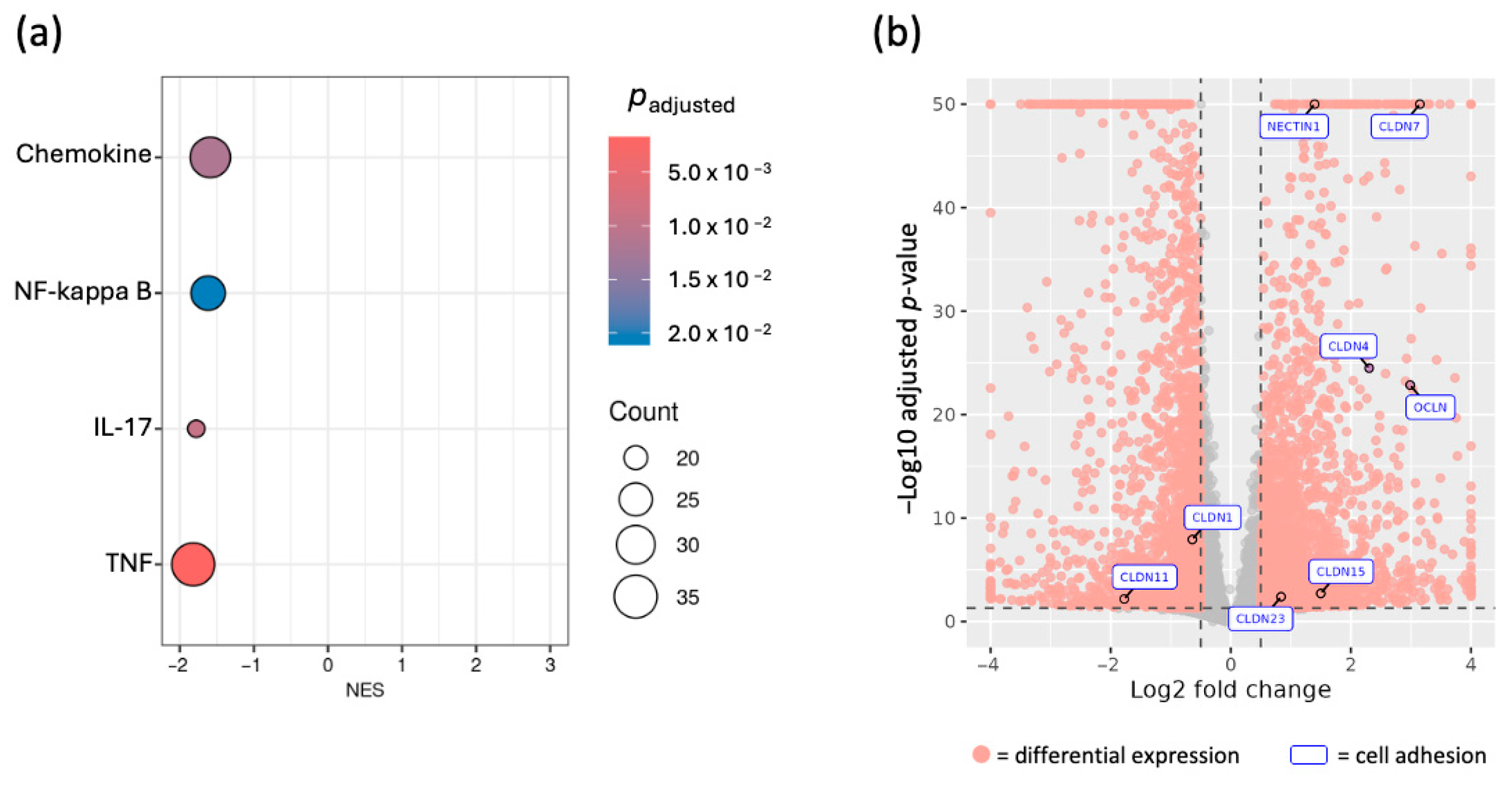
Figure 1. DHK exerts broad regulatory effects on biological pathways in keratinocytes, with notable involvement in inflammation, epidermal barrier function, and cell cycle control. (a) GSEA of RNA-sequencing data following DHK treatment shows downregulation of four inflammatory signaling pathways, including NF-kB and its downstream effectors. Adjusted p-value shown in color and number of associated genes shown by the size of the circle. (b) DHK modulates the expression of many genes in keratinocytes. Genes with significant differential expression following DHK treatment are shown in red, with selected epithelial cell adhesion genes highlighted in blue. The horizontal dashed line is the adjusted p-value cutoff of 0.05, and vertical dashed lines are log2 fold changes of 0.5 and −0.5. (c) KEGG pathway for cell cycle genes overlaid with DHK gene expression data, showing most genes in this pathway are downregulated (green color log2 fold change).
Cosmetics 13 00093 g001aCosmetics 13 00093 g001b
Figure 2. DHK regulates the expression of multiple biological pathways in fibroblasts, particularly those associated with structural remodeling and cellular dynamics. (a) DHK strongly modulates the expression of ECM-related genes. The horizontal dashed line is the adjusted p-value cutoff of 0.05, and vertical dashed lines are log2 fold changes of 0.5 and −0.5. Red-filled circles are differentially expressed genes, gray-filled circles are genes that did not pass the statistical and fold-change thresholds. Differentially expressed genes from two selected Gene Ontology Biological Processes (GOBP) are labeled in blue and red. (b) Fibroblast migration and proliferation pathways are regulated by DHK. The horizontal dashed line is the adjusted p-value cutoff of 0.01, with statistically significant genes labeled in blue and red for the two GOBP categories.
Cosmetics 13 00093 g002
Figure 3. Dual in vitro effects of DHK on elastin homeostasis. (a) Human neutrophil elastase inhibition assay. An asterisk (*) indicates the DHK concentrations (% w/w) that showed statistically significant differences compared to solvent controls. (b) Elastin production in fibroblasts. Both DHK and ascorbic acid significantly upregulate elastin production compared to media control. Data are plotted as mean ± SD, with a statistically significant threshold of p < 0.05.
Cosmetics 13 00093 g003
Figure 4. DHK reduces upstream mediators and downstream inflammatory signaling. (a) DHK has antioxidant activity shown by DPPH radical scavenging assay. An asterisk (*) indicates the test product concentrations (% w/w) that showed statistically significant differences compared to solvent controls. (b) DHK has anti-inflammatory activity, shown by a reduction in the inflammation marker IL-6. An asterisk (*) indicates the test product concentrations (% w/w) that showed statistically significant differences compared to stimulated controls. Unstimulated and stimulated controls are colored gray, DHK treatments orange, and niacinamide benchmark comparison charcoal. Data are plotted as mean ± SD, with a statistically significant threshold of p < 0.05.
Cosmetics 13 00093 g004
Figure 5. DHK promotes skin repair by enhancing fibroblast migration in an in vitro wound healing assay. (a) Example images of wound field at baseline (T0) and following treatment with test compounds for 24 and 48 h. The scale bar in the lower right of panel (a) represents 670 µm and applies to all cellular subpanels. (b) Cellular migration at 24 and 48 h, expressed as percent closure relative to baseline. Statistical comparisons between treatments and controls were performed using Welch’s two-tailed t-test. Data are presented as mean ± SD. A p-value ≤ 0.05 was considered statistically significant with * = p ≤ 0.05 vs. media, # = p ≤ 0.05 vs. DMSO.
Cosmetics 13 00093 g005
Figure 6. A summary of investigator-graded efficacy of DHK following a dermatologist-applied acid peel. DHK shows statistically significant improvements vs. placebo in skin smoothness, clarity, radiance, and overall appearance at both 48 h and 2-week time points. The data shown represent the mean change from baseline for each attribute in the DHK and placebo groups, with percentages highlighting the improvement in DHK vs. Placebo. Arrows represent difference of improvement between DHK and Placebo. * p-value < 0.05, threshold for statistical significance compared to placebo.
Cosmetics 13 00093 g006
Figure 7. Example clinical study participants (a,b) demonstrating improvement in skin attributes with DHK application vs. placebo following a standard acid peel procedure. Baseline (T0) photographs were taken immediately after the procedure and before moisturizer application. Participants returned at 48 h and 2 weeks for study compliance, clinical evaluation, and photographs.
Cosmetics 13 00093 g007
Table 1. Gene Ontology Biological Processes enriched in DHK-treated fibroblasts.
Gene Ontology IDDescriptionAdj. p-Value
GO:0030198Extracellular matrix organization2.07 × 10−3
GO:0043062Extracellular structure organization2.07 × 10−3
GO:0001659Temperature homeostasis2.07 × 10−3
GO:0045229External encapsulating structure organization2.07 × 10−3
GO:0002385Mucosal immune response1.17 × 10−2
GO:0045444Fat cell differentiation1.17 × 10−2
GO:0030199Collagen fibril organization1.67 × 10−2
GO:0010035Response to inorganic substance1.67 × 10−2
GO:0002251Organ or tissue specific immune response1.67 × 10−2
GO:0042730Fibrinolysis1.67 × 10−2
Table 2. Investigator-graded efficacy of DHK and placebo formulations.
48 h Post-Peel2 Weeks Post-Peel
MeasurementDHKPlacebop-ValueDHKPlacebop-Value
Erythema1.070.900.3191.871.770.79
Tactile Smoothness0.830.27<0.001 *1.530.87<0.001 *
Visual Smoothness0.800.370.002 *1.570.93<0.001 *
Pigmentation0.070.000.3540.230.231.00
Clarity0.500.200.017 *1.030.50<0.001 *
Radiance0.700.300.002 *1.230.57<0.001 *
Firmness0.070.000.2120.100.070.66
Overall0.400.070.003 *0.700.13<0.001 *
* = p value < 0.05, threshold for statistical significance of DHK vs. placebo.
Disclaimer/Publisher’s Note: The statements, opinions and data contained in all publications are solely those of the individual author(s) and contributor(s) and not of MDPI and/or the editor(s). MDPI and/or the editor(s) disclaim responsibility for any injury to people or property resulting from any ideas, methods, instructions or products referred to in the content.