Review

Bioactive Compounds for Topical and Minimally Invasive Cellulite Treatment and Skin Rejuvenation


by
Aura Rusu
1,
Raluca-Daniela Mazilu
1,
Blanka Székely-Szentmiklósi
1,
Octavia-Laura Oancea
2,*,
Corneliu Tanase
3,4,*,
Ioana-Andreea Lungu
5 and
Gabriel Hancu
1
1
Pharmaceutical and Therapeutic Chemistry Department, Faculty of Pharmacy, George Emil Palade University of Medicine, Pharmacy, Science, and Technology of Targu Mures, 38 Gheorghe Marinescu Street, 540142 Targu Mures, Romania
2
Organic Chemistry Department, Faculty of Pharmacy, George Emil Palade University of Medicine, Pharmacy, Science, and Technology of Targu Mures, 38 Gheorghe Marinescu Street, 540142 Targu Mures, Romania
3
Pharmaceutical Botany Department, Faculty of Pharmacy, George Emil Palade University of Medicine, Pharmacy, Science, and Technology of Targu Mures, 38 Gheorghe Marinescu Street, 540142 Targu Mures, Romania
4
Research Centre of Medicinal and Aromatic Plants, George Emil Palade University of Medicine, Pharmacy, Science, and Technology of Targu Mures, 38 Gheorghe Marinescu Street, 540142 Targu Mures, Romania
5
Pharmacology and Clinical Pharmacy Department, Faculty of Pharmacy, George Emil Palade University of Medicine, Pharmacy, Science, and Technology of Targu Mures, 38 Gheorghe Marinescu Street, 540142 Targu Mures, Romania
*
Authors to whom correspondence should be addressed.
Cosmetics 2026, 13(1), 35; https://doi.org/10.3390/cosmetics13010035
Submission received: 11 January 2026 / Revised: 30 January 2026 / Accepted: 3 February 2026 / Published: 6 February 2026

Abstract

Cellulite, a multifactorial condition affecting approximately 98% of women, is characterised by dermal and subcutaneous architectural changes that compromise skin texture and elasticity. Its progression is closely linked to hormonal, vascular, and inflammatory factors, as well as ageing-related extracellular matrix degradation. This review critically evaluates bioactive compounds incorporated into topical and minimally invasive formulations for the management of cellulite and skin rejuvenation. A comprehensive literature search was conducted across major scientific databases and cosmetic ingredient repositories, focusing on active ingredients with demonstrated efficacy in enhancing skin structure. Key compounds include capsaicin, forskolin, L-carnitine, caffeine, retinol, and extracts from plants such as Centella asiatica, which act via lipolysis, improved circulation, and antioxidant effects. Minimally invasive agents, such as deoxycholic acid and poly-L-lactic acid, complement these strategies by inducing adipocytolysis and neocollagenesis, thereby improving skin firmness and contour. Evidence indicates that multi-active formulations combining lipolytic agents with antioxidants and collagen-stimulating molecules yield synergistic benefits, reducing adipose protrusion and improving skin firmness. However, heterogeneity in study design and the lack of standardised evaluation methods limit firm conclusions. Further studies should validate efficacy and optimise delivery. Integrated topical and injectable therapies represent a promising, multifunctional approach to addressing cellulite and age-related skin changes.

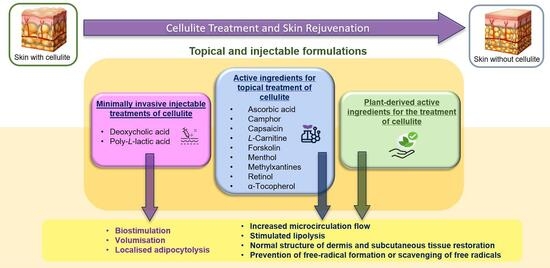
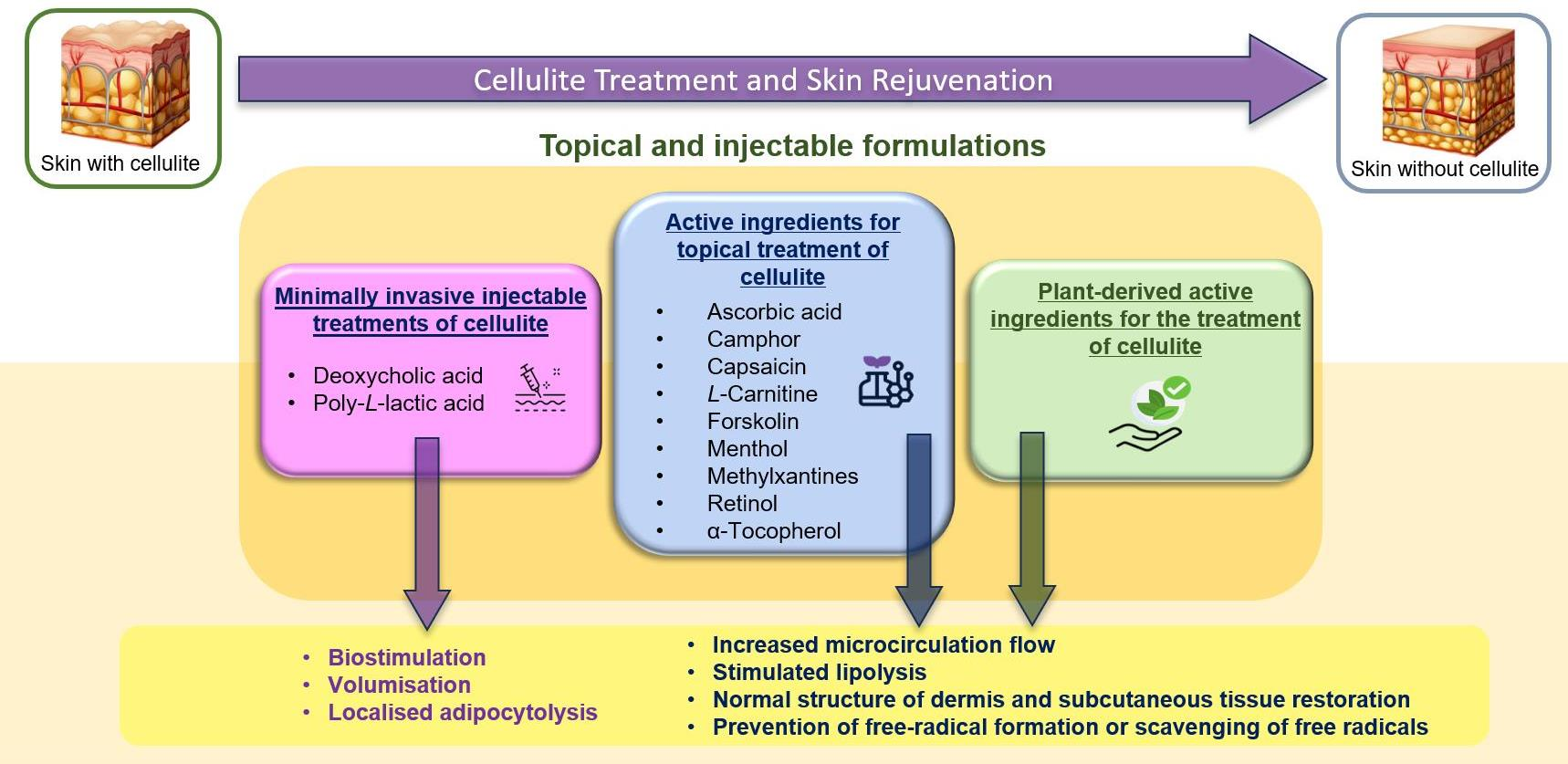
Graphical Abstract

1. Introduction

1.1. Overview of Cellulite

Cellulite is a common aesthetic condition (affecting ~80–98% of women) characterised by surface dimpling due to dermal–subcutaneous architectural changes; it is also termed edematous-fibro-sclerotic panniculopathy (EFSP)/gynoid lipodystrophy and occurs mainly on the buttocks, thighs, and hips. It can be identified by visual observation of the skin’s uneven surface, with dimpling and depressions. In non-medical terminology, it is also known as “orange peel”, “mattress-like”, or “cottage cheese” [1,2]. Cellulite predominantly affects women, typically developing around adolescence, but it may also manifest later in adulthood. Among men, this condition affects a much smaller percentage (approximately 2%) than among women. In contrast, more than 90% of women are affected, a condition that Goldman describes as a perfectly normal physiologic state in women’s lives [1,3].
Pathogenesis reflects structural tethering by fibrous septa and outward pressure from fat lobules, with sex-specific septa architecture predisposing women to dimpling [4].
Although painless, cellulite can negatively affect body image and quality of life [5].
Cellulite currently lacks a universally accepted classification system, and existing scales vary in their approaches and clinical utility. The most widely cited classification is the Nürnberger–Müller classification [6,7]. Based on the clinical changes in the skin at rest or in contraction, cellulite has four clinical stages (grades) numbered 0–3 in the Nürnberger–Müller classification [6]. In this context, a more detailed, clinically oriented tool is the Cellulite Severity Scale (CSS) (described in Section 3.1). Although they help assess severity, these scales do not guide clinicians toward specific treatment strategies, highlighting a gap in personalised care for patients with cellulite [7,8].
Currently, there is a growing demand among women for effective cellulite management, and numerous therapeutic options have been developed to address this condition. A broad spectrum of interventions is available, ranging from topical formulations containing bioactive anti-cellulite compounds to non-invasive techniques, such as manual massage and energy-based therapies, and minimally invasive procedures [9]. Many of these interventions not only reduce the appearance of cellulite but also stimulate collagen production and improve dermal elasticity, thereby contributing to overall skin rejuvenation and anti-ageing benefits.

1.2. Impact of Cellulite on Quality of Life

Although the majority of women have cellulite on various parts of the body, the study by Sarwer D.B. et al. (2003) highlights the psychological and socio-cultural aspects, as well as an individual’s relationship with physical appearance, which can negatively influence self-esteem [10]. In some cases, behavioural changes have been reported, such as avoiding tight or small clothing, including bikinis, and refraining from sports [5].
A pilot study explored the psychological and psychiatric aspects of women undergoing cellulite treatment; it was a clinical study (human, psychological and behavioural assessment) that used questionnaires and psychiatric screening. The study conducted in Brazil with 20 healthy female volunteers aged 18–55 assessed symptoms related to eating disorders, body image, anxiety, depression, and social functioning. While most participants reported some concern from their partners, some nevertheless experienced pressure to lose weight or undergo treatment. Body exposure heightened depressive and anxious feelings, leading to avoidance behaviours, although no major psychiatric disorders were diagnosed except in one case of bipolar disorder. The study revealed that cellulite can significantly affect women’s emotional well-being, contributing to feelings of anxiety, self-consciousness, and social discomfort. These psychological effects, though not meeting clinical thresholds for disorders in most cases, suggest a need for expanded research to improve the emotional and social dimensions experienced by those seeking cosmetic treatment [11]. Another similar study conducted at the Brazilian Centre for Studies in Dermatology involved 46 female volunteers who completed a self-administered questionnaire and were later assessed using the “Mini International Neuropsychiatric Interview” (MINI). The study was a clinical cross-sectional study (human) that used self-administered surveys and the MINI psychiatric interview. Most participants experienced cellulite onset during puberty and felt significant discomfort in social settings such as beaches and pools. A large proportion reported emotional distress, including embarrassment, pressure to seek treatment, and negative body image, often accompanied by eating disorders and generalised anxiety. Cellulite represents a psychological burden, and understanding patients’ emotional and behavioural profiles is essential for improving dermatological care and treatment outcomes [12].
Currently, the media contributes significantly to the promotion of the women’s body ideal, often characterised as a skinny body, commonly referred to as the “90-60-90 body”. In their desire to fit into these dimensions, young women in particular may resort to various methods of rapid weight loss, such as the use of drugs (e.g., laxatives and/or diuretics) rather than adopting a healthy lifestyle. The quick weight loss methods can have serious consequences for health; for example, laxatives can cause fluid and electrolyte imbalances, diarrhoea and more. Patients may also seek cosmetic procedures, looking for an easy way to lose weight, with unrealistic expectations about the possible results that can be achieved from the treatments. Careful assessment, as well as clear counselling and patient-specific information on potential results, contraindications, side effects, complications, and recovery time, if any, are recommended [5,12].

1.3. Cellulite and Skin Ageing

Cellulite, often perceived as a cosmetic concern, may accelerate skin ageing by altering the dermal structural and biomechanical properties. Skin ageing involves progressive molecular and structural changes in the dermis and subcutaneous tissue, leading to clinical and aesthetic alterations. Cellulite, resulting from connective tissue alterations and progressing with age, is linked to skin laxity and may share underlying mechanisms with early skin ageing [13].
The study by Ortonne J.P. et al. (2008) investigated the characteristics of cellulite across age groups and its potential impact on skin ageing in 94 healthy women. The study was a clinical in vivo human study based on ultrasound measurements, biomechanical properties, and dermal density. Participants were divided by age (21–30, 31–40, 51–60 years) and cellulite grade (Grade 2 vs. Grade 0 (control)). Using non-invasive ultrasound techniques, researchers assessed skin surface appearance, biomechanical properties, and structural features. Results showed that in Grade 2 cellulite, dimpled surfaces became smaller and more numerous after age 30, while total skin thickness increased by about 30% compared with controls, regardless of age. Skin elasticity and retractability declined earlier in women with cellulite (from age 30) than in controls (from age 50), and dermal echogenicity also decreased significantly after age 30. The results suggest that women with cellulite exhibit signs of premature skin ageing, with two distinct subgroups: those under 30 with normal dermal properties and those over 30 with altered biomechanical and density characteristics. Preventive measures should target this early stage of ageing [14].
Recent reviews confirm that cellulite and skin ageing share common pathophysiological pathways. Both conditions involve extracellular matrix (ECM) remodelling, collagen fibre disorganisation, and reduced dermal elasticity. Hormonal factors, particularly oestrogen decline, exacerbate these changes by reducing collagen synthesis and impairing microcirculation, thereby promoting fibrosis and fat protrusion through weakened septa [4,15]. Additionally, chronic low-grade inflammation and oxidative stress, hallmarks of ageing, are increasingly recognised as contributors to cellulite progression, reinforcing its classification as a condition with broader ageing-related implications [16]. Studies also highlight that skin laxity and cellulite severity are interrelated, meaning that interventions targeting collagen integrity and dermal density may benefit both conditions [17].
Understanding this interplay opens new perspectives for integrated treatment strategies. Approaches combining anti-ageing therapies (e.g., retinoids, antioxidants, energy-based devices) with cellulite-specific interventions (e.g., subcision or radiofrequency) may yield superior outcomes compared to isolated treatments. Future research should focus on identifying biomarkers of early dermal changes in cellulite-prone individuals to enable preventive care and personalised protocols [15,16].
These observations provide the biological rationale for targeting both cellulite and ageing-related changes through topical interventions.

1.4. Objectives of the Paper

The primary objective of this review is to critically evaluate bioactive compounds used in topical and injectable (minimally invasive) formulations for cellulite management and skin rejuvenation.
Specifically, the review aims to:
  • Summarise the pathophysiology of cellulite and its relationship with skin ageing, highlighting structural, hormonal, and metabolic factors;
  • Identify and classify active ingredients with demonstrated topical efficacy in improving cellulite appearance and enhancing skin firmness, elasticity, and texture;
  • Discuss the mechanisms of action of key compounds, including lipolytic, microcirculation-enhancing, antioxidant, and anti-inflammatory effects;
  • Review clinical and experimental evidence supporting the use of these ingredients in cosmetic formulations (topical and injectable);
  • Highlight the trends and future perspectives for integrated approaches combining anti-cellulite and anti-ageing strategies.

2. Materials and Methods

The review was conducted using references retrieved from multiple scientific databases, including PubMed, ScienceDirect, Web of Science (Clarivate Analytics), and Google Scholar, as well as authoritative cosmetic ingredient repositories such as CosIng and PubChem. All pertinent literature was considered, with no limits on publication date. The literature search employed key search terms such as “Cellulite”, “Edematous-Fibro-Sclerotic Panniculopathy”, “Topical treatment”, “Bioactive compounds”, “Skin ageing”/“Skin aging” and “Dermocosmetic formulations.” The main keywords were combined with other ingredient-specific keywords, including “Aminophylline”, “Ascorbic acid”, “Camphor”, “Caffeine”, “Capsaicin”, “Carnitine”, “Deoxycholic acid”, “Forskolin”, “Menthol”, “Retinol”, “α-Tocopherol”, and botanical names (e.g., “Centella asiatica”, “Gelidium corneum”, “Annona squamosa”, “Rosmarinus officinalis”, and others).
Additional terms related to mechanisms of action and cosmetic benefits were included, such as “Lipolysis”, “Microcirculation”, “Antioxidant”, “Anti-inflammatory”, “Collagen synthesis”, “Skin firming”, and “Extracellular matrix remodelling.” Studies were selected based on their relevance to the topical application of active ingredients for cellulite reduction and skin rejuvenation, including clinical trials, in vitro/ex vivo investigations, and systematic reviews. The studies were discussed in publication order.
Chemical structures of selected compounds were illustrated using Biovia Draw (https://discover.3ds.com/biovia-draw-academic-thank-you) (accessed on 28 February 2025) [18], and MarvinSketch (https://chemaxon.com/marvin (accessed on 8 January 2026). Official nomenclature and INCI names were retrieved from the CosIng database (https://ec.europa.eu/growth/tools-databases/cosing/) (accessed on 4 January 2026) [19] and PubChem (https://pubchem.ncbi.nlm.nih.gov/) (accessed on 5 November 2025) [20]. Where applicable, molecular properties such as lipophilicity, solubility, and stability were cross-checked against PubChem and peer-reviewed sources. Grammarly Premium, version 6.8.261, was used exclusively for language editing purposes (https://www.grammarly.com/) (accessed on 8 January 2026) [21].

3. Aetiology and Physiology of Cellulite

The body’s silhouette is shaped by the distribution of subcutaneous fat over the musculoskeletal structure, supported by rigid fasciae (particularly deep muscular fasciae) that run from the skull base to the feet and serve important vascular, neurological, and orthopaedic roles. Cellulite is a degenerative and progressive condition of the subcutaneous tissue, histomorphologically defined as EFSP, characterised by interstitial oedema, connective tissue fibrosis, and eventual sclerosis. However, EFSP does not encompass all clinical presentations of cellulite, as some cases also involve connective and interstitial tissue damage or syndromes, such as lipoedema, which is often accompanied by lymphoedema or lipodystrophy [5].
Cellulite primarily affects postpubertal women and is influenced by multiple risk factors, including gender, age, genetics, and race, with women of Caucasian origin being more susceptible. Lifestyle and physiological factors such as increased subcutaneous fat, high body mass index, poor diet, sedentary habits, and pregnancy significantly contribute to its development. Hormonal influences, particularly oestrogen and high-estrogen states such as pregnancy or hormone therapy, exacerbate the condition, while ageing further increases the risk by reducing dermal collagen and elastin and promoting fat lobule hypertrophy. Additional contributors include alcohol consumption, smoking, and unhealthy lifestyle choices, making cellulite a condition driven by structural, hormonal, and behavioural elements [4].

3.1. Anatomy of Cellulite

Anatomically, cellulite is an architectural disorder of the dermis and its associated subcutaneous tissue [4]. In regions where cellulite is most common, particularly the buttocks, the dermal–subcutaneous unit consists of superficial fat, superficial fascia, deep fat, and deep fascia. Two types of fibrous septa traverse these layers: short, thin septa connecting the dermis to the superficial fascia, and longer, thicker septa anchoring the deep fascia. Although fewer in number, the long septa provide greater mechanical stability. Fat lobules in both adipose layers are compartmentalised by these septa; the superficial layer contains a larger number of smaller lobules, while the deep layer contains fewer but larger lobules and is overall thicker [1,4,22].
Microscopically, cellulite features adipocyte hypertrophy and degeneration, septal fibrosis, endothelial thickening, and microvascular dysfunction, sometimes accompanied by inflammatory changes. As it progresses, dermal thinning, vascular damage, and adnexal disruption contribute to blurring of the dermal–subcutaneous boundary [1].
Cellulite is significantly more common in women than in men due to key anatomical differences. Biopsy studies have revealed that men have thicker skin, smaller fat lobules, and stronger, crisscrossing fibrous septa, which provide greater structural stability. In contrast, women have vertically oriented, wider fat lobules and weaker septa, making them more prone to fat protrusion and cellulite. These structural differences explain why even obese men are comparatively less susceptible to cellulite [6,9].
Based on the reported evidence cited by Bass L.S. and Kaminer M.S. (2020) in their review, cellulite appears to be a condition primarily influenced by sex-specific anatomical and structural differences in the skin and subcutaneous tissue. Thus, it is essential to consider the distinct anatomical and physiological characteristics of women to better understand and treat cellulite [9].

Classifications of Cellulite

Several classification systems for cellulite have been proposed (Table 1).
Nürnberger–Müller scale is a widely used clinical scale based on visual and physical examination:
  • Grade 0: No visible cellulite, even with the pinch test;
  • Grade 1: No visible cellulite at rest; dimpling appears only with pinch or muscle contraction;
  • Grade 2: Dimpling is visible when standing but not when lying down;
  • Grade 3: Dimpling visible when standing and lying down, with pronounced nodules and raised areas [6].
The most severe form is Grade 3 cellulitis, in which, in addition to the “orange peel” appearance of the skin surface, prominent bumps and raised nodular formations are evident. In Grade 2 cellulitis, bumpy skin is visible when standing, regardless of muscle contraction, whereas in Grade 1, cellulite is only visible when the muscles are contracted or the skin is compressed. In Grade 0 cellulitis, no change in the skin surface is observed [5,6,7].
The Hexsel Cellulite Severity Scale (CSS) is a validated, photonumeric, semiquantitative scale evaluating five morphological criteria (each scored 0–3):
  • Number of depressions;
  • Depth of depressions;
  • Skin surface alterations (“orange peel”, cottage cheese, mattress appearance);
  • Nodularity level;
  • Flaccidity.
The total score (0–15) defines severity: 1–5: Mild; 6–10: Moderate; 11–15: Severe. The suggested photonumeric scale offers a standardised, objective, and highly reliable approach for consistently and comprehensively assessing cellulite severity [23].
BODY-Q Cellulite Scale is a patient-reported outcome measure refined through Rasch analysis:
  • Contains 11 items evaluating cosmetic and psychological impacts;
  • Reliable and valid metric correlating with clinical observation and patient perception.
The BODY-Q Cellulite Scale is an effective tool for assessing the visual appearance of cellulite and provides a strong foundation for future research on its impact and treatment outcomes [24].
Modern cellulite grading systems have evolved to include stages beyond the traditional three-grade classification. Some clinicians recognise a Grade 0 stage, often referred to as the pre-cellulite stage, characterised by subtle water retention or mild skin laxity without visible dimpling. At the opposite end of the spectrum, Grade 4 describes severe, deep fibrotic cellulite with prominent indented nodules that may even be visible through clothing; these expanded classifications aim to capture the full continuum of morphological changes, providing a more nuanced framework for diagnosis and treatment planning [7].

3.2. Pathophysiology of Cellulite

Cellulite is a multifactorial condition primarily resulting from structural and biomechanical imbalances in the dermis and subcutaneous tissue. It involves an architectural disorder where fibrous septa tether the skin inward while enlarged fat lobules exert outward pressure, creating dimples and depressions. In females, vertically oriented septa and fewer, less stable connections amplify this imbalance when compared with males. Microvascular and lymphatic impairment promotes interstitial fluid accumulation, metabolic waste retention, and tissue oedema, thereby driving hypoxia, chronic low-grade inflammation, and progressive fibrosis with dermal atrophy. Ageing, obesity, and lifestyle factors further aggravate these processes, making cellulite a complex interplay of structural, hormonal, vascular, and inflammatory components [4,25].
Three principal theories explain the aetiology of cellulite:
  • Structural theory of Nürnberger and Müller: differences in subcutaneous architecture between sexes, with women having collagen fibres arranged in rectangular lobules that, under the influence of oestrogen, allow adipose protrusions visible as dimpling.
  • Vascular theory of Merlen and Curri: altered blood flow and lymphatic drainage in affected tissues lead to fibrosis.
  • Inflammatory theory of Gruber, Huber, and Draelos: chronic inflammation driven by oestrogen, with increased glycosaminoglycan deposition by fibroblasts, which contributes to tissue changes [26].
Cellulite and metabolic syndrome share overlapping pathophysiological mechanisms, including chronic low-grade inflammation, hormonal imbalances, adipose tissue dysfunction, and microcirculatory impairment. In metabolic syndrome, systemic inflammation and insulin resistance promote adipocyte hypertrophy and fibrosis, processes that also characterise cellulite. Both conditions involve vascular dysfunction, with endothelial impairment and reduced capillary flow contributing to tissue hypoxia, oedema, and fibrosis. Genetic predispositions affecting collagen metabolism, adipogenesis, and inflammatory pathways further link the two disorders. These shared mechanisms suggest that metabolic disturbances may worsen cellulite severity and highlight the need for integrated management strategies that target metabolic health and tissue remodelling [25].
Kruglikov I.L. and Scherer P.E. (2022) introduced a novel concept of selective endotoxemia, where low-level accumulation of lipopolysaccharides (LPS) (bacterial components that act as endotoxins) occurs specifically in gluteofemoral white adipose tissue (gfWAT), the fat depot located in the hips and thighs. The localised LPS presence activates toll-like receptor 4 (TLR4), initiating chronic, low-grade inflammation and tissue remodelling. LPS-driven signalling promotes overexpression of the metalloproteinase MMP-14 (which cleaves fibulin-3), weakening elastic fibres and enabling adipose tissue to protrude into the dermis. Simultaneously, LPS-induced barrier dysfunction in sweat glands leads to salt leakage, thereby stimulating adipogenesis and further fat cell hypertrophy. Elevated activity of stearoyl-CoA desaturase 1 (SCD1) enhances membrane fluidity and cellular invasiveness, while abundant multi-lineage differentiating stress-enduring (MUSE) cells (stress-tolerant pluripotent stromal cells) counteract LPS-induced cell cycle arrest and contribute to tissue repair. Together, these processes create a microenvironment of fibrosis, inflammation, and structural instability, positioning cellulite as a potential early stage of lipoedema and highlighting LPS accumulation as a critical therapeutic target [16].
Cellulite development is influenced by a combination of biological, hormonal, genetic, and lifestyle factors that predispose individuals to structural and metabolic changes in the subcutaneous tissue. Table 2 summarises the main predisposing factors for cellulite and their descriptions.

3.2.1. Adiponectin and Leptin

Adiponectin, an adipocyte-derived hormone with anti-inflammatory and vasodilatory properties, supports microcirculation and metabolic balance [29]. Leptin, an adipocyte-derived cytokine, plays a pivotal role in energy homeostasis, lipid metabolism, angiogenesis, and inflammatory regulation [32].
Adiponectin and leptin, two key adipocytokines secreted by adipose tissue, exert opposing effects on vascular and metabolic health. Adiponectin has vasoprotective, anti-inflammatory, and antiatherogenic properties, supporting endothelial function and glucose-lipid metabolism; low adiponectin levels are linked to obesity, insulin resistance, and impaired microcirculation, suggesting a role in cellulite development. Conversely, leptin levels rise with adipocyte size and metabolic dysfunction, correlating with obesity, insulin resistance, and cardiovascular risk. Hyperleptinemia contributes to cellulite by promoting inflammation, endothelial dysfunction, and impaired microcirculation through reduced nitric oxide availability and abnormal angiogenesis. The antagonistic interplay between adiponectin and leptin, and their combined impact on endothelial health and microvascular integrity, indicates that these adipocytokines may contribute to the pathophysiology of cellulite [1,32,33].
The pathogenesis of cellulite may involve reduced adiponectin expression in subcutaneous adipose tissue (SAT) [29,34]. In a clinical study by Emanuele E. et al. (2011) involving 30 lean women, adiponectin mRNA levels were significantly lower in SAT from cellulite-affected areas than in unaffected regions. In contrast, plasma adiponectin concentrations did not differ between groups. The study suggests that diminished local adiponectin expression may contribute to microvascular dysfunction in cellulite, offering new insights into its underlying mechanisms and potential therapeutic targets [29].
Another clinical cross-sectional study compared 40 women with cellulite to 40 controls and assessed plasma adiponectin levels by ELISA. Participants were aged 20–30 years, and cellulite was most commonly located on the femoral and gluteal regions (62.5%). Mean plasma adiponectin in the cellulite group was 8.07 ± 3.94 µg/mL, and statistical analysis revealed a significant association between lower adiponectin levels and cellulite (p = 0.025). The study’s authors concluded that reduced plasma adiponectin levels are associated with an increased risk of cellulite [34].
Clinical studies on leptin and cellulite are not yet available. Taken together, available data suggest that local adipokine dysregulation may be more relevant than systemic levels, though evidence remains inconsistent and limited by small sample sizes.

3.2.2. Chronic Inflammation and Vascular Insufficiency

Other potential contributors to cellulite are chronic inflammation and vascular insufficiency in the skin layers.
One theory holds that the onset of cellulite during puberty and menstruation is an inflammatory process that leads to the breakdown of dermal collagen, thinning the dermis and creating subcutaneous fat herniations visible on the skin surface. It appears that menstruation requires the secretion of MMPs, such as collagenase (e.g., collagenase-1 (MMP-1)), which are necessary for the breakdown of the endometrium, and gelatinase (e.g., gelatinase B (MMP-2)), which is secreted during the late proliferative endometrial phase and immediately after ovulation, also contributing to inflammation. Collagenases can break down not only the fibrillar collagen types present in the endometrium but also those in the dermis. With repeated cycles of production, progressive collagen loss occurs in this layer, leading to its destruction and worsening cellulite with age [5].
Vascular insufficiency results from the accumulation of fat cells in the subcutaneous layer, which restricts blood flow to the dermis and damages the capillary network. With vascular alteration, protein synthesis in the dermis decreases, and the capacity to repair tissue damage is also impaired [35].

3.2.3. Endothelial Dysfunction

Endothelial dysfunction, a recognised contributor to cardiovascular disease, cancer, and type 2 diabetes, may also play a role in the pathogenesis of cellulite. Damage to the vascular endothelium impairs nitric oxide availability, increases oxidative stress, and promotes pro-inflammatory cytokine production, mechanisms that are also observed in insulin resistance. In obesity, local inflammation driven by M1 macrophages, mast cells, and Th1 cells elevates cytokines such as TNF-α and IL-6, which are associated with endothelial dysfunction and insulin resistance. These interconnected processes (vascular impairment, chronic inflammation, and metabolic dysregulation) suggest that cellulite shares pathogenic pathways with systemic endothelial dysfunction [33].

3.2.4. Genetic Predisposition

Genetic predisposition is also considered among the theories of cellulite pathophysiology [33]. Many researchers consider the deposition of fat in specific areas of the body to be genetically determined; thus, women may tend to accumulate fat in the same regions as their mothers, regardless of diet, oestrogen stimulation, or adipose deposition that leads to cellulite [4].
For example, previously, data about HIF1A have been reported. The activation of HIF1A drives fibrogenic changes and collagen septa formation in cellulite. At the same time, carriers of the rs11549465 T allele show reduced fibroinflammatory response and lower cellulite risk, highlighting HIF1A’s central role in its pathophysiology [28,36].

3.2.5. Hormones

Since gender significantly influences the biomechanical forces at the subdermal junction, the female sex hormone oestrogen is a key factor in the development of cellulite [4]. Oestrogen promotes lipogenesis and adipocyte hypertrophy, leading to fat lobules pushing through the dermis. During periods of elevated estrogen, such as adolescence, pregnancy, or hormone therapy, vascular changes, including blood stasis, hypoxia, and oedema, can occur in the subcutaneous tissue, further contributing to the formation of cellulite [17].
Beyond fat accumulation, hormonal fluctuations also affect connective tissue integrity. Oestrogen and progesterone influence collagen metabolism by modulating fibroblast activity and collagen turnover, weakening the skin’s structural support. Thus, hormonal imbalance, especially during menopause or in conditions such as polycystic ovary syndrome, facilitates the redistribution of fat and the appearance of dimpling. Cellulite is rarely seen in men, except in cases of androgen deficiency, highlighting the hormonal basis of its pathophysiology [8]. When it does occur, it is typically associated with androgen deficiency resulting from conditions such as castration, hypogonadism, Klinefelter’s syndrome, or estrogen or anti-androgen therapies used in the treatment of prostate cancer [4].

3.2.6. Hypoxia-Inducible Factor 1

Cellulite is associated with elevated levels of HIF-1 protein [1]. HIF-1 is a key transcription factor that regulates cellular adaptation to low oxygen by activating genes involved in glucose transport, angiogenesis, and erythropoiesis. In adipose tissue, caloric excess and the resulting hypoxia stimulate HIF-1 expression, triggering fibrogenic and inflammatory responses that contribute to the development of cellulite. Chronic hypoxia in the subcutaneous tissue promotes microcirculatory dysfunction, endothelial impairment, and fibrosis, while HIF-1 activation exacerbates these changes. Genetic variations, such as the T-allele of the HIF1A polymorphism, reduce HIF-1 activity and are associated with lower cellulite severity, highlighting a link between hypoxia-driven pathways, local inflammation, and gynoid lipodystrophy [33,36].
Activation of the hypoxia-inducible factor 1 alpha (HIF1A) pathway plays a critical role in initiating local fibrogenic responses that lead to collagen septa formation, a hallmark of cellulite. Genetic evidence supports this mechanism, as individuals carrying the rare T allele of the HIF1A rs11549465 polymorphism exhibit reduced fibroinflammatory activity and are significantly less likely to develop cellulite. Thus, HIF1A-driven hypoxia signalling is central to the pathophysiology of cellulite, linking genetic predisposition to tissue remodelling and disease manifestation [28,36].

3.2.7. Obesity

Obesity can also aggravate the condition, precisely because of the abundance of fat lobules in the subcutaneous layer. Poor diet and lifestyle factors can also contribute to cellulite or increase its severity. High-carbohydrate diets and a sedentary lifestyle can lead to hyperinsulinemia and stimulate lipogenesis. A reduction in the wrinkled appearance of cellulite has been observed with weight loss and the removal of excess adiposity. Still, there is a risk that the substantial loss of adipose tissue may cause the skin to sag due to septa that, once elongated, lack the capacity to return to their original size, thus requiring specific approaches [5].
Cellulite is strongly associated with overweight and obesity, conditions often caused by poor diet, low physical activity, and hormonal imbalances such as hypothyroidism. In a clinical observational study of women with Hashimoto’s disease, the majority were obese, with 40% presenting class 3 obesity and nearly 69% exhibiting severe (grade 3) cellulite. Although most participants acknowledged the role of physical activity in body appearance, only a small fraction engaged in regular exercise. The results of the study highlighted that obesity (whether due to lifestyle factors or endocrine disorders) significantly increases the prevalence and severity of cellulite, emphasising the interplay between metabolic dysfunction and subcutaneous tissue changes [37].
Based on the discussion above, it can be concluded that cellulite pathophysiology involves a complex interplay of hormonal, vascular, inflammatory, and genetic components. Key adipocytokines, such as adiponectin and leptin, influence microcirculation and metabolic balance, with reduced adiponectin and elevated leptin associated with endothelial dysfunction and inflammation. Chronic inflammation, vascular insufficiency, and impaired nitric oxide signalling may further compromise dermal integrity. At the same time, hormonal fluctuations, particularly oestrogen, are thought to promote lipogenesis and collagen degradation, weakening connective tissue. Genetic predisposition, notably HIF1A polymorphisms, has been linked to hypoxia-driven fibrogenic responses to cellulite severity. Obesity and lifestyle factors can exacerbate these mechanisms by increasing adipose deposition and metabolic dysregulation. All these processes are proposed to contribute to connective tissue remodelling, microvascular impairment, and dermal thinning, which may help explain cellulite’s progression and its reported association with systemic metabolic and ageing pathways.

4. Skin Ageing Mechanisms in Cellulite

Skin and subcutaneous ageing lead to cumulative structural and molecular changes that disrupt connective tissue organisation and promote fibrotic processes, both of which play pivotal roles in cellulite pathogenesis (Figure 1). These changes are briefly discussed below.

4.1. Connective Tissue Disorganisation and Fibrosis

Ageing leads to cumulative structural and molecular alterations in the skin and subcutaneous compartments. Disorganisation of connective tissue architecture appears to contribute significantly to the development of cellulite. With ageing, skin laxity increases, and biomechanical cohesion between the dermis and subcutaneous fat diminishes, amplifying cellulite symptoms. Fibrosis of fibrous septae and abnormal collagen arrangements can alter mechanical tension across the hypodermis, influencing the dimpled appearance associated with cellulite [13].

4.2. Cellular Senescence and Inflammation

The buildup of senescent cells in the dermis and adipose tissue (particularly in the hypodermis) promotes a pro-inflammatory state via the senescence-associated secretory phenotype, intensifying oxidative stress, inflammation, ECM degradation, fibrosis, and glycation, all of which play key roles in the development of cellulite [38]. ECM refers to the complex network of proteins and polysaccharides (such as collagen, elastin, and glycosaminoglycans) that provides structural and biochemical support to surrounding cells in tissues like the dermis and hypodermis. Intrinsic ageing and photoaging progressively impair extracellular matrix integrity through loss of structural components, increased protease activity, and chronic inflammation, with photoaging-related proteomic changes emerging decades before visible clinical signs [39].

4.3. Oxidative Stress and Extracellular Matrix Degradation

Intrinsic ageing and photoaging generate reactive oxygen species (ROS), which activate MMPs and accelerate the degradation of collagen and elastin. Thus, the dermis shows reduced mechanical resistance and decreased cohesion with subcutaneous fat, creating conditions for adipose lobules to protrude and form the characteristic dimpling of cellulite. Additionally, oxidative stress impairs stem cell function in the skin and hypodermis, limiting tissue repair and exacerbating connective tissue disorganisation, thereby further amplifying cellulite severity [40,41].

4.4. Extracellular Matrix Remodelling

The aged dermis is characterised by reduced fibroblast numbers (and activity), lower collagen synthesis (especially types I and III), and enhanced MMP-driven collagen/elastin degradation. Thus, the ECM is weakened, leading to increased skin flaccidity and visible cellulite [42]. Photoaging and advanced glycation end-products induce abnormal elastin (solar elastosis) and further compromise ECM integrity [43]. ECM ageing contributes significantly to cellulite pathogenesis by weakening dermal integrity and altering the biomechanical interactions between the skin and subcutaneous fat. Photodamage and intrinsic ageing accelerate collagen and elastin fragmentation through protease activation and oxidative stress, while reduced autophagy and proteasomal activity impair cellular clearance. ROS-driven damage, protein glycation, and chronic inflammation further disrupt ECM architecture, promoting fibrosis and loss of elasticity. Hormonal changes during menopause, exacerbate collagen depletion and fibroblast dysfunction, amplifying skin laxity and the protrusion of adipose lobules through compromised septae. These interconnected processes create the structural conditions for the characteristic dimpling of cellulite, highlighting ECM preservation and remodelling as key therapeutic targets [44].

4.5. Hormonal, Genetic and Lifestyle Factors

Oestrogen fluctuations, genetic predisposition, and lifestyle factors (e.g., diet, smoking, pollution) influence adipose tissue distribution and connective tissue structure, further predisposing individuals to cellulite [16]. The unique collagen-rich architecture of fibrous septae in women (reinforced by sex hormones) may explain why cellulite is more prevalent and persistent in females [45].
Alterations in connective tissue architecture, adipose hypertrophy associated with hyaluronan, cellular senescence, oxidative ECM damage, and hormonal influences represent interconnected mechanisms that may underline the progression of skin ageing in cellulite.

5. Treatment of Cellulite

A comprehensive literature review by Menon A. et al. (2024) led to the development of an evidence-based treatment algorithm using the CSS classification. Mild cellulite responds best to lifestyle changes and adjunct topical treatments, though data on topicals are inconsistent. Moderate cellulite is effectively managed with noninvasive interventions like laser therapy, ultrasound, and especially radiofrequency, which shows the most substantial evidence of efficacy. Severe cases benefit most from minimally invasive procedures such as subcision and injectables. Given the complexity of cellulite, a multimodal approach is recommended to maximise the treatment, with future therapies likely to become more targeted as understanding of its pathophysiology improves [8]. No topical anti-cellulite product is currently approved as a medical treatment.

5.1. Active Ingredients for Topical Cellulite Treatment

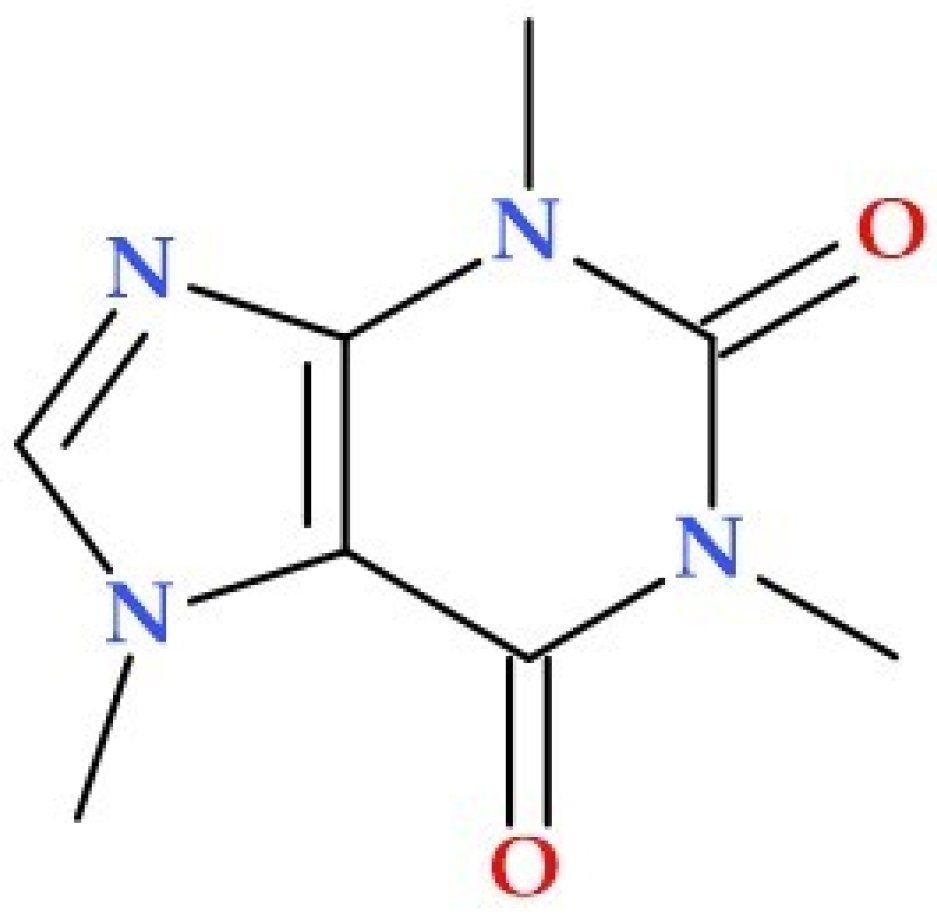
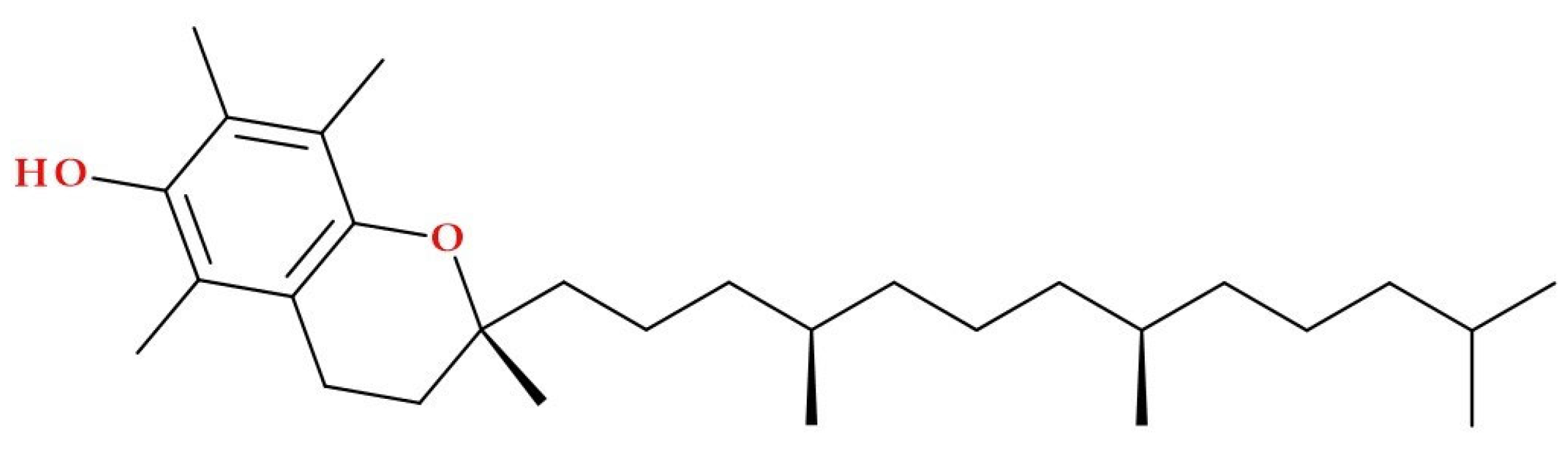
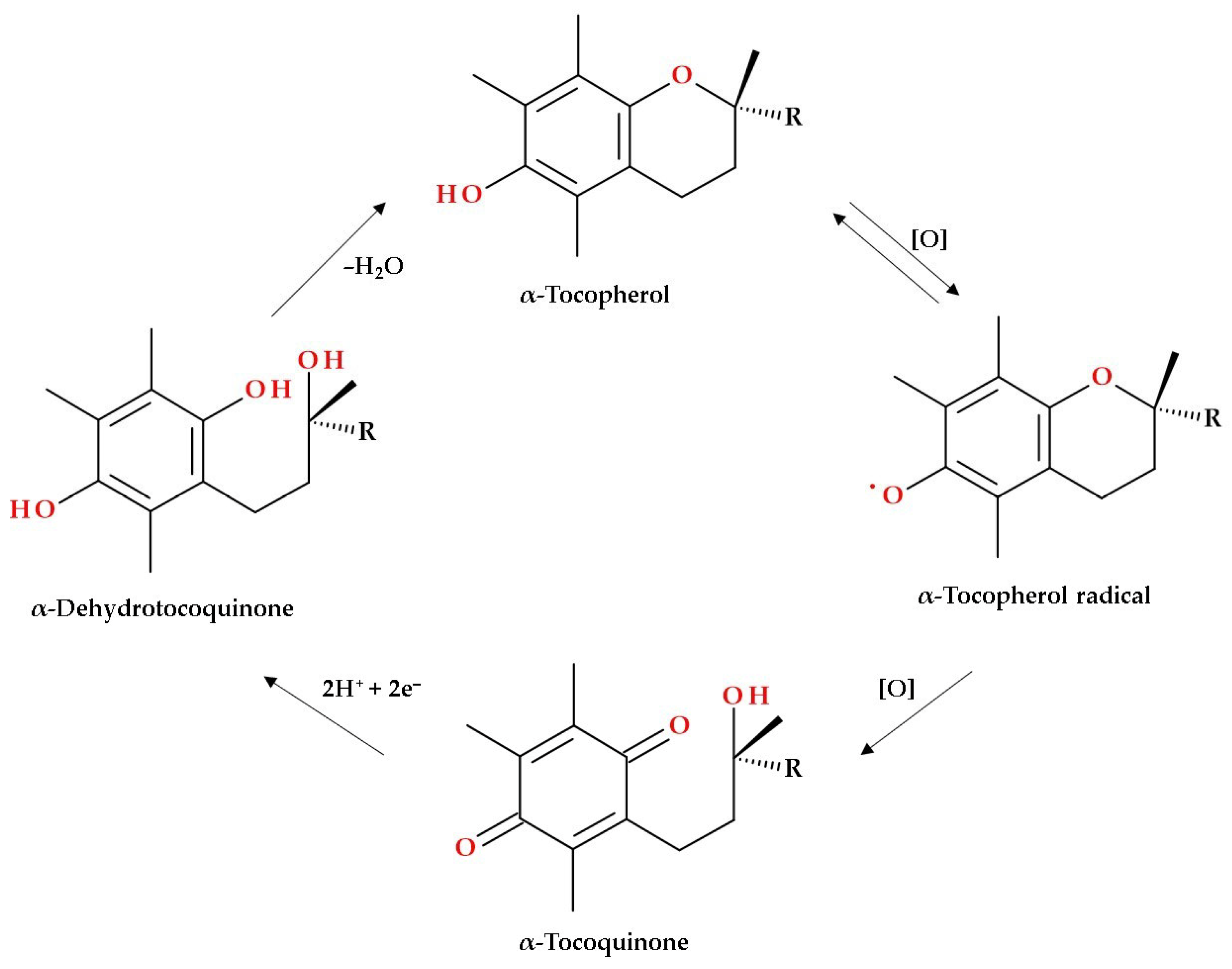
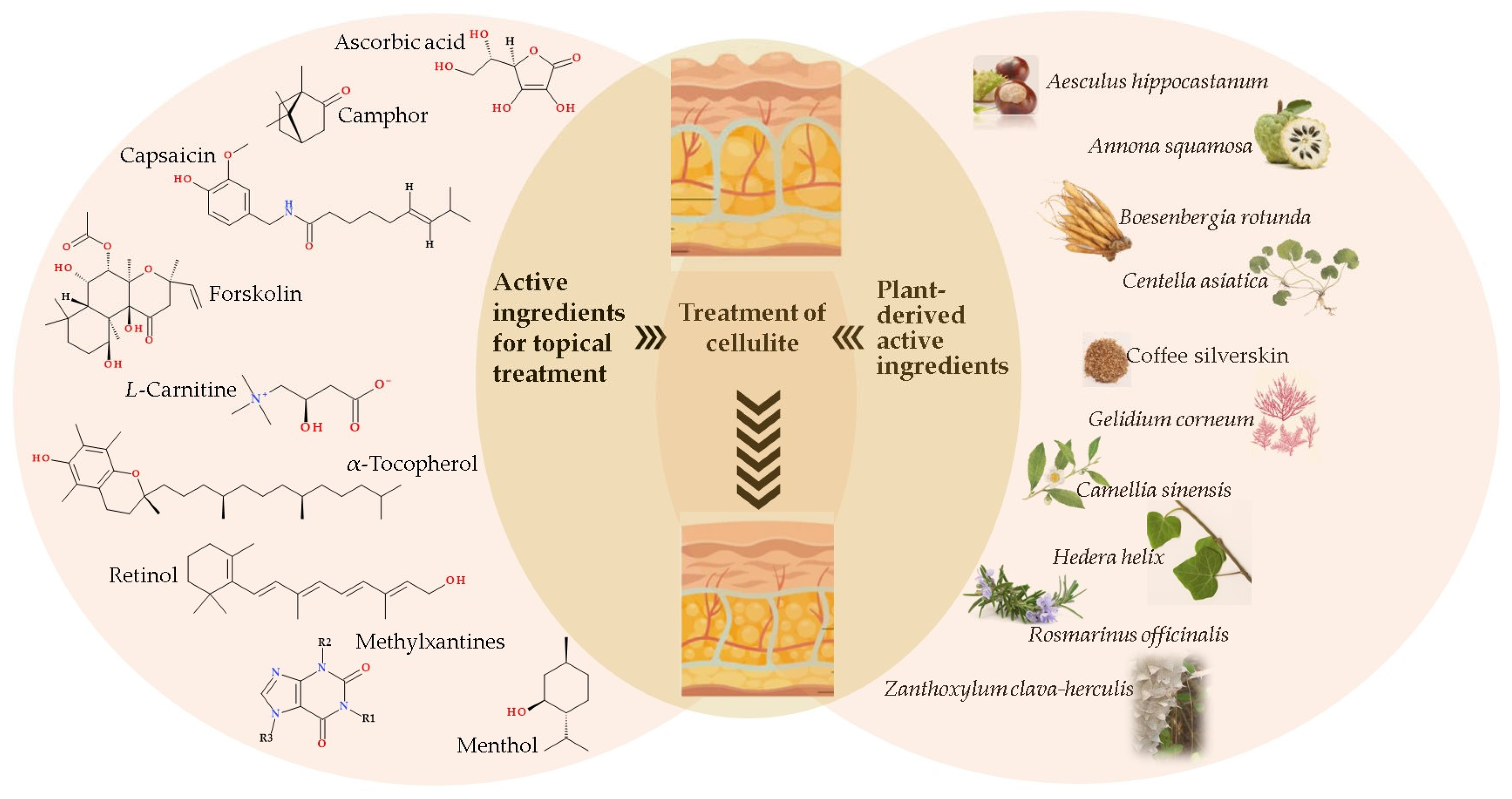
Topical agents are among the earliest treatments for cellulite, with many gels and creams available that typically contain active ingredients like methylxanthines (e.g., caffeine), retinol, and botanical extracts (Figure 2, Table 3).
The commercial formulations aim to stimulate microcirculation, promote collagen production, induce lipolysis, and reduce inflammation, oxidation, and oedema. Caffeine and retinol are the most extensively researched ingredients in cellulite treatments, with caffeine recognised for its lipolytic effects and antioxidant benefits. In contrast, retinol is known to improve skin structure by increasing dermal thickness and stimulating the production of connective tissue [4]. Turati F. et al. (2014) conducted a systematic review of human in vivo studies following PRISMA guidelines to evaluate the scientific evidence supporting the effectiveness of cosmetic products in reducing cellulite. The resulting analysis concluded that these products demonstrate moderate efficacy, particularly in lowering thigh circumference [47]. Due to limited robust data on long-term effectiveness, no topical cellulite treatments are currently approved by the FDA [4].
Bioactive compounds used in anti-cellulite treatments often provide additional benefits, such as improved skin texture, elasticity, and tone (skin-rejuvenating effects). Key ingredients include caffeine, which acts as a lipolytic agent and antioxidant; retinoids, which enhance dermal matrix integrity and promote skin renewal; Centella asiatica, known for stimulating collagen synthesis and improving microcirculation; and peptides, which support extracellular matrix remodelling for firmer, smoother skin [48].
Anti-cellulite ingredients often act by reducing adipogenesis and lipogenesis while enhancing lipolysis and microcirculation. Common bioactive compounds include caffeine, carnitine, and Coleus forskohlii extract, which promote fat breakdown; escin, Centella asiatica extract, and Hedera helix extract, which improve circulation and tissue tone; as well as glycyrrhizate (licorice extract), Nelumbo nucifera leaf extract, Ruscus aculeatus root extract, and Carica papaya extract, which support anti-inflammatory and metabolic processes. All the listed ingredients help to reduce the appearance of cellulite and improve skin firmness [48].
Topical cellulite treatments often combine active ingredients that also deliver anti-ageing benefits. Caffeine, aminophylline, and L-carnitine stimulate lipolysis and improve microcirculation, reducing fat deposits and oedema to enhance skin smoothness [49,50,51]. Retinol enhances collagen synthesis and epidermal renewal, improving firmness and elasticity, while phosphatidylcholine supports dermal-adipose remodelling [52,53,54]. Escin and genistein provide anti-inflammatory and antioxidant effects, protecting ECM integrity and vascular health [55,56,57]. Together, these active ingredients address cellulite and key ageing processes, such as collagen degradation, oxidative stress, and impaired circulation, making multi-ingredient formulations particularly effective for combined cellulite and anti-ageing therapy [58,59]. By targeting pathways involved in ECM degradation, oxidative stress, and vascular dysfunction, these formulations may not only improve the appearance of cellulite but also help mitigate structural and functional changes associated with chronological and photo-induced skin ageing.
The main active ingredients with potential in the treatment of cellulite will be discussed below (in alphabetical order).

5.1.1. Ascorbic Acid

Introduction and relevance to skin health
Ascorbic acid, listed under the International Nomenclature of Cosmetic Ingredients (INCI) [19], is commonly referred to by the synonyms Vitamin C, L-ascorbic acid, and L-ascorbate [20].
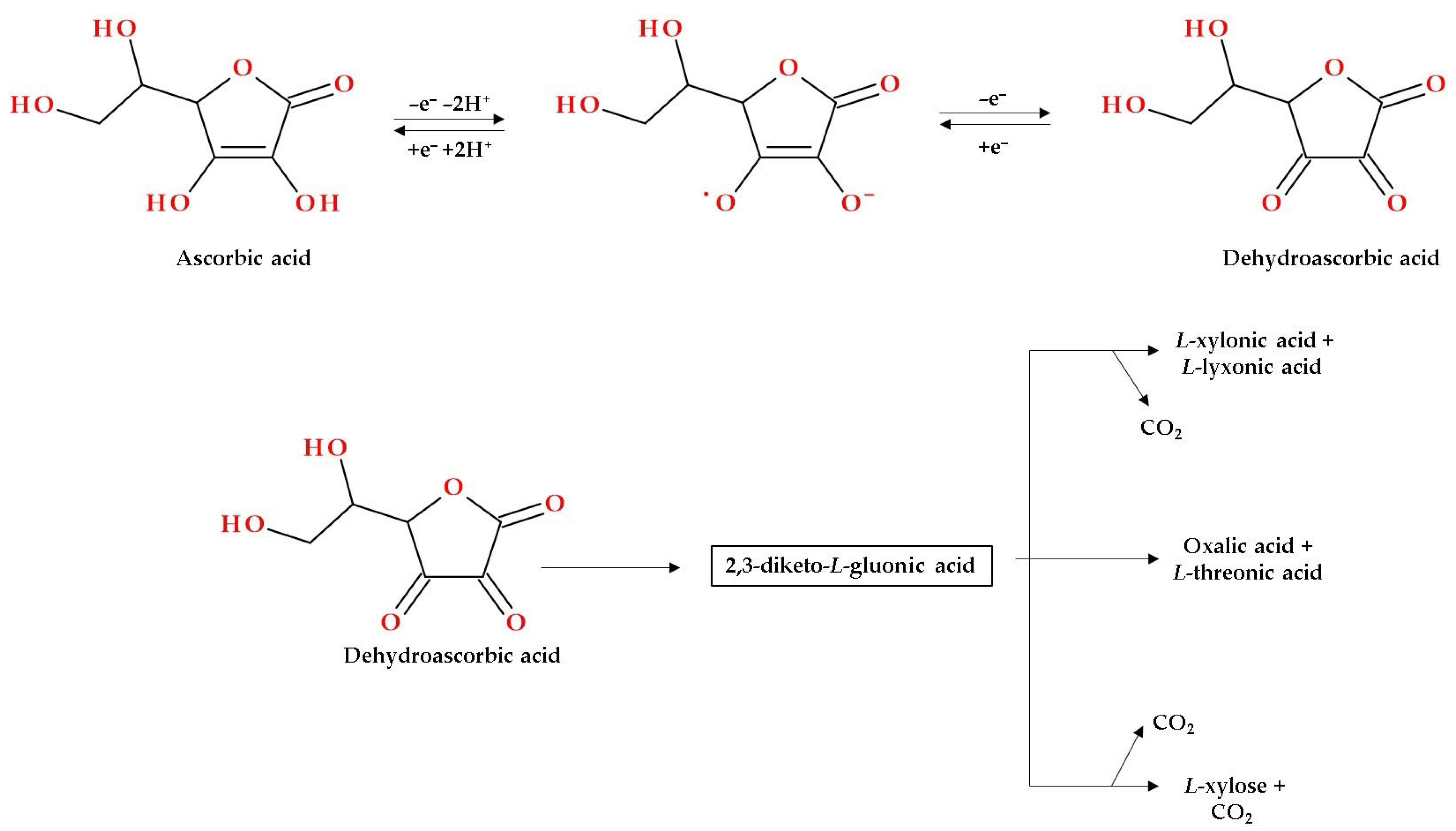
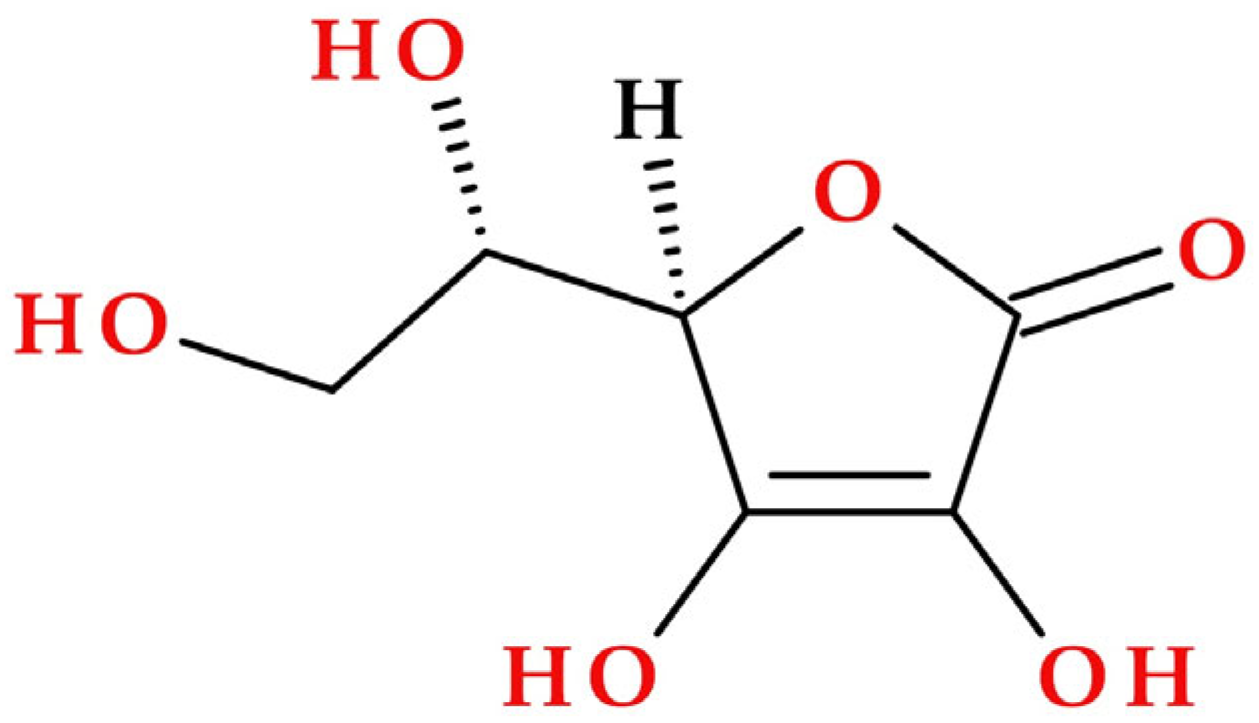
Ascorbic acid is a nearly planar five-membered ring with two chiral centres and four stereoisomers (Figure 3) [20,60]. Its most significant property is its ability to undergo reversible oxidation, forming semidehydroascorbic and dehydroascorbic acid, which can be reduced back to ascorbic acid, thereby preserving Vitamin C functionality [61].
Chemical and physicochemical properties
Ascorbic acid appears as colourless crystals or a white crystalline powder with an acidic taste. Upon exposure to air, it tends to absorb moisture and undergoes discolouration. It exhibits a melting point of approximately 190 °C and undergoes thermal decomposition. The compound is freely soluble in water, sparingly soluble in ethanol and methanol, and practically insoluble in nonpolar solvents such as benzene, chloroform, diethyl ether, petroleum ether, and fatty oils. Aqueous solutions are acidic and subject to photodegradation and oxidative decomposition when exposed to light and air [61].
Redox activity and mechanism of action
The redox behaviour (Figure 4) enables ascorbic acid to act as a potent antioxidant and free radical scavenger, stabilising reactive oxygen and nitrogen species and preventing oxidative damage to lipids, proteins, and DNA. The ascorbate radical formed during these reactions is resonance-stabilised, weakly reactive, and does not propagate damaging oxidation chains, making ascorbic acid a terminal antioxidant. In the presence of transition metals like iron or copper, it can exhibit pro-oxidant behaviour via Fenton reactions. Its acidity arises from the low pKa of the hydroxyl group at the C3 position, and it is relatively unstable in alkaline aqueous solutions but stable under acidic conditions or at low temperatures [60].
In the CosIng database, ascorbic acid is associated with the following functions: “antioxidant”, “buffering”, “fragrance”, and “skin conditioning”. The CosIng database (short for Cosmetic Ingredients) is an official online resource provided by the European Commission. It contains comprehensive information on substances and ingredients used in cosmetic products within the European Union [19].
Biological roles in skin
Normal skin contains high levels of vitamin C, reflecting its critical biological roles in skin health. Traditionally, research has emphasised its involvement in collagen synthesis and antioxidant defence, although additional functions are increasingly recognised. Vitamin C is widely incorporated into cosmeceutical formulations due to its ability to mitigate ultraviolet (UV)-induced damage, reduce hyperpigmentation, and stimulate collagen production. Its role in collagen biosynthesis is attributed to its function as a cofactor for prolyl and lysyl hydroxylases, which stabilise collagen’s triple-helical structure, and to its ability to upregulate collagen gene expression. Collagen formation primarily occurs in dermal fibroblasts [60,64].
Experimental and clinical evidences
The study by Fitzpatrick R.E. and Rostan E.F. (2002) evaluated the efficacy of topical vitamin C in the treatment of photodamaged skin (a half-face clinical human trial). Ten participants applied a gel containing 10% ascorbic acid and 7% tetrahexyldecyl ascorbate to one side of the face and a placebo gel to the contralateral side for 12 weeks. Clinical evaluation and histological analysis revealed statistically significant improvements on the vitamin C-treated side, including reduced wrinkling, improved photoaging scores, and increased collagen synthesis, confirmed by greater Grenz zone collagen and elevated type I collagen mRNA expression. No inflammation was observed, and hydration improved on both sides. The study demonstrated that topical vitamin C can visibly and histologically enhance skin repair following photodamage [65].
Gref R. et al. (2020) evaluated a novel lipophilic vitamin C derivative, formed by covalently conjugating vitamin C to squalene (Vit C–SQ), to enhance skin penetration and collagen synthesis. Using an ex vivo human skin model, the biological activity of Vit C–SQ was compared to that of free vitamin C and vitamin C–palmitate through histological, protein, and gene expression analyses. After 10 days of application, covalent conjugation of vitamin C to squalene significantly increased epidermal thickness, preferentially stimulated collagen type III production, and markedly enhanced glycosaminoglycan synthesis compared to other formulations. Microdissection revealed more substantial transcriptional effects in both the dermis and epidermis with Vit C–SQ, indicating superior efficacy in promoting the structural and functional components of the skin [66].
A randomised, double-blind, placebo-controlled clinical trial conducted by Dupont E. et al. (2014) evaluated the efficacy of a multi-active topical gel for cellulite reduction in 44 women over 12 weeks. The gel contained 25% active ingredients, including ascorbic acid (to stimulate collagen synthesis and improve extracellular matrix integrity), among 46 unique active ingredients. Clinical assessments revealed significant improvements in skin tonicity, reduction in the “orange peel” appearance, and stubborn cellulite compared to the placebo, along with measurable decreases in thigh and abdominal circumference. The formulation’s combination of anti-cellulite and anti-ageing actives, such as ascorbic acid, contributed to visible, statistically significant improvements in skin texture and silhouette without adverse effects [48].
Summary of ascorbic acid benefits
Ascorbic acid plays a critical role in neutralising reactive oxygen species and supporting collagen biosynthesis by serving as a cofactor for hydroxylases. Despite its instability in alkaline conditions and susceptibility to oxidation and photodegradation, it remains a cornerstone ingredient in cosmetic formulations due to its ability to reduce UV-induced damage, correct pigmentation disorders, and restore skin structure. Beyond these functions, clinical evidence suggests a significant role in skin rejuvenation, improving photodamaged skin by reducing wrinkles, stimulating collagen synthesis, and enhancing dermal architecture. Innovative derivatives, such as Vit C–SQ, demonstrate superior penetration and enhanced biological activity, offering promising strategies for skin repair and renewal. Additionally, multi-active formulations combining ascorbic acid with complementary actives may deliver significant benefits in skin tonicity and cellulite reduction, highlighting its multifunctional potential in cosmeceuticals and anti-ageing therapies.

5.1.2. Camphor

Introduction, chemical and physicochemical properties
Naturally occurring camphor is primarily extracted from the wood of camphor laurel (Cinnamomum camphora), native to Asia but now widespread globally, as well as from Dryobalanops aromatica in Sumatra and Ocotea usambarensis in Africa [67].
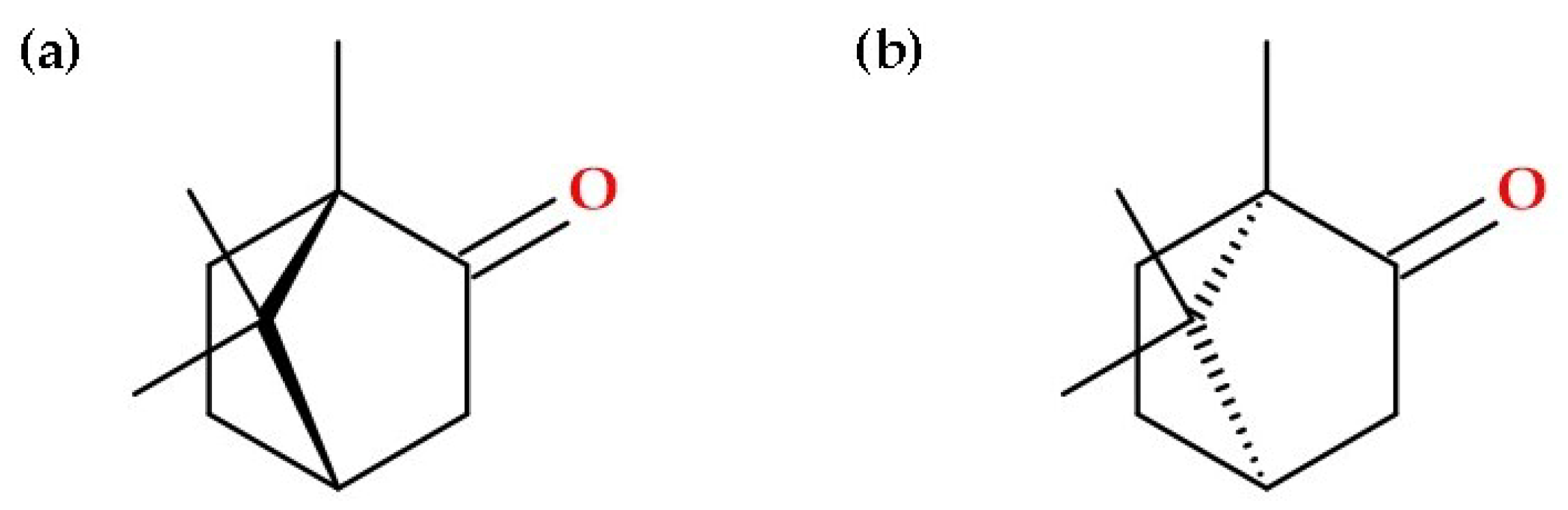
Camphor (the INCI name) is a white crystalline solid with a distinctive odour and a sharp taste, capable of subliming at ambient temperature. It is insoluble in water but readily dissolves in organic solvents such as diethyl ether, ethanol, and chloroform. Chemically identified as 1,7,7-trimethylbicyclo[2.2.1]heptan-2-one, camphor is a cyclic terpenoid ketone that exists in two enantiomeric forms: R-(+)-camphor and S-(−)-camphor (Figure 5). Industrial synthesis enables production of both the racemic mixture and the pure S-(−) isomer [20,67,68].
Biological functions in the skin
Camphor could support cellulite treatment by promoting microcirculation and vasodilation, enhancing active ingredient delivery, and exerting anti-inflammatory and rubefacient effects, among others [67,69]. The combined actions may improve skin texture, reduce fluid retention, and enhance tissue metabolism in areas affected by cellulite. Camphor is known to increase blood flow in the skin and underlying tissues. Studies indicate its warming and cooling effects significantly boost perfusion and microvascular activity, which can help counteract the microcirculatory deficits often associated with cellulite [70].
By activating cutaneous sensory receptors, such as transient receptor potential melastatin 8 (TRPM8), and other potential heat-sensitive transient receptor potential channels, camphor triggers local vasodilation. Camphor delivers a notable cooling sensation (via TRPM8 activation), which may indirectly stimulate sympathetic vasomotor responses, further modulating local circulation and enhancing the overall perfusion benefit [71]. This mechanism supports improved oxygen and nutrient delivery and efficient metabolic clearance in cellulite-affected areas.
Camphor acts as a cutaneous penetration enhancer, improving the absorption of other actives in topical cellulite formulations. It exerts anti-inflammatory effects and serves as a rubefacient, inducing slight redness and warmth by increasing blood flow, thereby aiding in mobilising fluids and reducing oedema within subcutaneous tissue [42,72].
The molecular actions of camphor on the skin include modulation of elastase activity, activation of key signalling pathways (phosphoinositide 3-kinase (PI3K) or serine/threonine kinase AKT, oestrogen receptor (ER)), and interaction with thermosensitive receptors (TRPV1, TRPM8, TRPV3, TRPA1), where TRPV refers to a transient receptor potential vanilloid, and TRPA is transient receptor potential ankyrin channels. These effects collectively support improved extracellular matrix integrity, inhibition of fibroblast apoptosis, and attenuation of skin ageing processes, highlighting its potential as a bioactive ingredient in cellulite treatment [67].
However, in the CosIng database, camphor is associated with the following functions: “denaturant”, “fragrance”, and “plasticiser” [19].
Evidence from clinical studies
Combinations containing camphor
Camphor, included in the herbal compress formulation, contributes to cellulite reduction by improving microcirculation, enhancing blood flow, and supporting metabolic processes in subcutaneous tissue. Its vasomodulatory and penetration-enhancing properties complement other actives, helping improve skin texture and reduce oedema [73].
A double-blind, placebo-controlled clinical trial demonstrated that a Thai herbal emgel containing volatile oils and extracts significantly reduced cellulite severity and improved thigh circumference, skin firmness, and cutaneous blood flow over 12 weeks without adverse effects. The study suggests that herbal-based topical formulations, including active constituents such as camphor, may offer safe and effective strategies for cellulite management [74]. The novel anti-cellulite emgel was successfully developed as a more convenient alternative to traditional herbal compresses. The formulation incorporated tea and coffee extracts as caffeine sources and essential oils rich in monoterpenes, including camphor, which was quantified and characterised alongside other bioactive markers. Stability studies confirmed acceptable caffeine retention and monoterpene integrity, supporting a calculated shelf-life of 31 months. The obtained results validate the formulation process and highlight camphor’s role as a key component in the product’s functional properties [75].
Final considerations on camphor
Camphor’s ability to enhance microcirculation, promote vasodilation, facilitate active ingredient penetration, and exert anti-inflammatory and rubefacient effects, along with its molecular actions on ECM integrity and anti-ageing pathways, suggests its potential role as a multifunctional bioactive agent in cellulite treatment.

5.1.3. Capsaicin

Chemical and physicochemical properties
Capsaicin (the INCI name) is also known as “isodecenoic acid vanillylamide” and “(E)-Capsaicin”. Capsaicin is a white crystalline powder, a fat-soluble, odourless compound with a pungent taste. It has a melting point of 62–65 °C and a molecular weight of 305.4 g/mol. Due to its poor water solubility, alcohols and other organic solvents are typically used to dissolve capsaicin for incorporation into topical formulations and sprays [19,20,76,77].
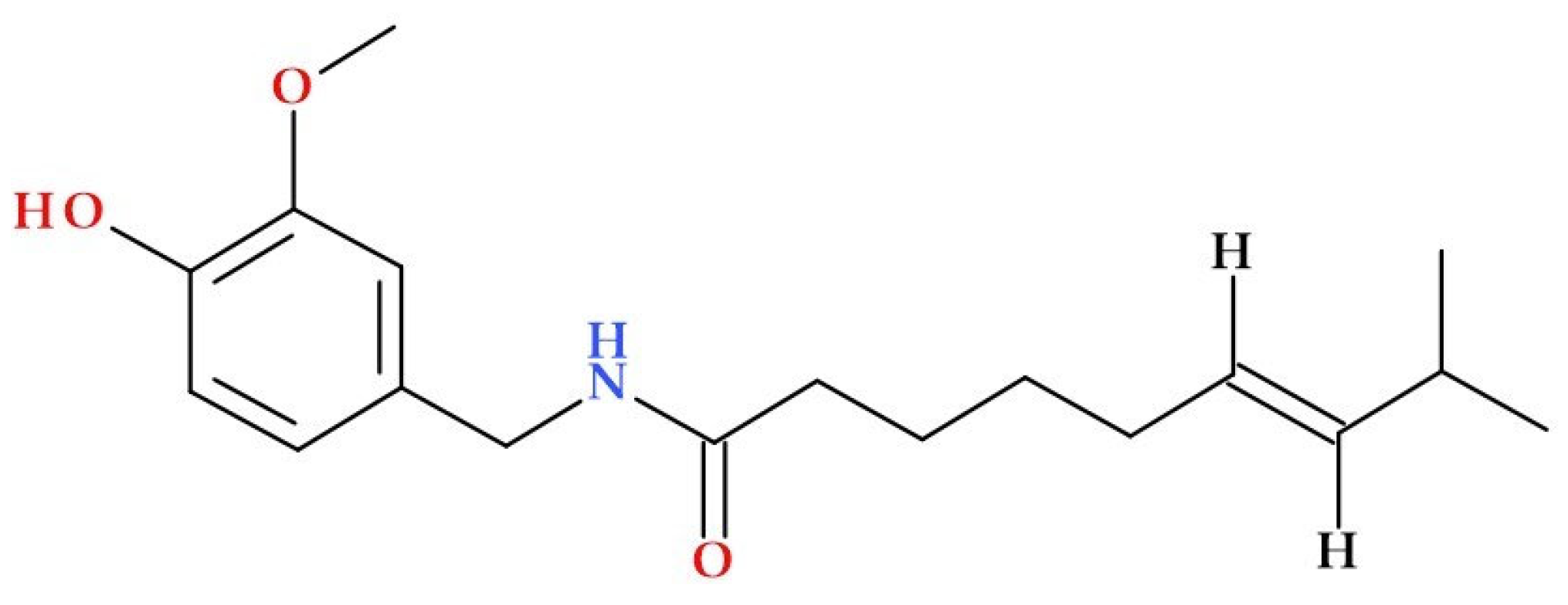
Structurally, capsaicin (trans-8-methyl-N-vanillyl-6-nonenamide) is a naturally occurring capsaicinoid derived from the fruits of plants in the Capsicum genus. It belongs to the vanilloid group of compounds, which also includes vanillin (found in vanilla), eugenol (derived from bay leaves and cloves), and zingerone (found in ginger). Vanilloids share a characteristic vanillyl moiety (4-hydroxy-3-methoxybenzyl group), which is responsible for their biological activity. Capsaicin resembles other vanilloids, featuring a benzene ring, a long hydrophobic carbon chain, and a polar amide group (Figure 6) [76].
Biological functions in the skin
Capsaicin is the compound responsible for the pungency in pepper species. It is applied topically as an analgesic, creating a warming sensation at the site of use. Additionally, it serves as a flavour enhancer, an adjuvant, and an insect repellent. When applied to the skin, capsaicin can cause redness and a burning sensation. If it comes into contact with the eyes, it may lead to severe tearing, pain, conjunctivitis, and involuntary eyelid spasms [76,78,79].
In the CosIng database, capsaicin is associated with the functions “fragrance” and “skin conditioning” [19].
Over time, the mechanism of action of capsaicin has been thoroughly investigated, revealing that it binds to the transient receptor potential vanilloid 1 (TRPV1), a non-selective cation channel primarily found in nociceptive sensory neurons but also widely distributed in various tissues. TRPV1, composed of six transmembrane domains, is activated by heat, endogenous ligands, and lipophilic agonists such as capsaicin, leading to increased intracellular calcium and the release of neuropeptides like substance P and calcitonin gene-related peptide (CGRP). The interaction produces pain, inflammation, and a burning sensation; however, prolonged exposure leads to desensitisation and analgesia, partly through depletion of substance P. This mechanism has led to the discovery of new synthetic ligands for TRPV1, highlighting capsaicin’s complex role in pain modulation and neuropeptide release [77]. Capsaicin is commonly used in topical formulations to alleviate various pain conditions, though it may cause skin irritation [1,77,80].
Capsaicin supplementation has been shown to result in modest but significant reductions in body mass index (BMI), body weight, and waist circumference in adults, according to a meta-analysis of randomised controlled trials [81]. Additionally, an intervention combining green tea, capsaicin, and ginger administered for 8 weeks significantly improved weight, BMI, insulin metabolism, and antioxidant status in overweight women [82].
Evidence from experimental and clinical studies
Studies on mice demonstrate that topically applied capsaicin reduces adipose tissue.
Lee G.R. et al. (2013) investigated whether topical capsaicin could reduce visceral fat in obese mice (in vivo animal study). Male mice fed a high-fat diet and treated with 0.075% capsaicin cream showed significantly less weight gain and smaller fat cells in mesenteric and epididymal tissues compared to controls. Capsaicin application also lowered fasting glucose, cholesterol, and triglyceride levels, while increasing the expression of adiponectin and beneficial adipokines (peroxisome proliferator-activated receptors PPARα and PPARγ, visfatin, and adipsin) and reducing pro-inflammatory markers (tumour necrosis factor α (TNF-α) and interleukin 6 (IL-6)). The obtained results suggest that topical capsaicin limits fat accumulation, improves metabolic profiles, and may enhance insulin sensitivity by reducing inflammation [83].
Medina-Contreras J.M.L. et al. (2017) evaluated the effects of topical capsaicin, exercise, and their combination in a hypoestrogenic obesity model using ovariectomized rats (in vivo animal study). After 28 weeks of sucrose-induced obesity, treatments were applied for six weeks. In obese, hypoestrogenic rats, a combination of capsaicin and exercise therapy resulted in the most significant reductions in caloric intake, body weight, abdominal fat, insulin resistance, oxidative stress, and pancreatic islet size. It was associated with increased levels of phosphorylated AMP-activated protein kinase (p-AMPK) in muscle. In hypoestrogenic non-obese rats, topical capsaicin alone most effectively improved glucose tolerance and oxidative status. Thus, capsaicin, alone or combined with moderate exercise, may help prevent obesity-related complications in hypoestrogenic females [84].
Combinations containing capsaicin
A combination of Capsicum annuum resin (capsaicin, the main pungent compound) and other ingredients was used in an anti-cellulite cream. A clinical study (human) conducted by Rao J. et al. (2005) reviewed cellulite’s pathophysiology and evaluated a novel topical treatment (Spa MD AntiCellulite Cream) in a randomised, double-blind trial involving 40 women with moderate cellulite. The anti-cellulite cream contained active ingredients including Piper nigrum, Citrus aurantium var. dulcis, Zingiber officinale, Camellia sinensis, Cinnamomum cassia, Capsicum annuum resin, and caffeine. Participants applied an anticellulite cream nightly for four weeks, with one leg receiving the active product and the other serving as a placebo, while wearing bioceramic-coated neoprene shorts to enhance absorption. Of the 34 subjects who completed the study, 62% reported improvement, and dermatologist evaluations confirmed greater improvement on thighs treated with the active cream in 68% of cases. Average thigh circumference decreased more with the active product (1.9 cm) than with the placebo (1.3 cm), and all participants tolerated the treatment well. The study results support the effectiveness and safety of the topical agent, validating its pathophysiologic basis for treating cellulite [85].
Also, the clinical trial (human) conducted by Sritananuwat P. et al. (2024) explored the antiadipogenic effects of Boesenbergia rotunda extract and its incorporation into a capsaicin-enriched body-firming formulation. In vitro, the extract inhibited adipogenesis at 1 µg/mL without cytotoxicity at concentrations below 20 µg/mL. When combined with capsaicin and applied twice daily for 21 days, the formulation significantly reduced thigh circumference and melanin index, with only mild, non-problematic erythema. Capsaicin, together with panduratin A from the extract, effectively penetrated the skin, demonstrating the potential of this capsaicin-based product as a safe and effective body-firming treatment [86].
In addition, capsaicin promotes anti-ageing effects by stimulating the vanilloid receptor-1 (VR-1) on sensory neurons, triggering the release of CGRP. CGRP increases insulin-like growth factor-1 (IGF-1) production, a key molecule involved in skin regeneration and elasticity. In an in vivo study on mice, topical application of 0.01% capsaicin significantly increased dermal IGF-I levels within 30–180 min. In human trials, seven days of facial application improved cheek skin elasticity. The obtained results suggest that capsaicin and related compounds may help counteract age-related skin changes by boosting IGF-I and improving skin firmness [87].
Summary of capsaicin
Direct clinical evidence for capsaicin as an anti-cellulite agent is limited, primarily because of the use of topical formulations combined with other active ingredients and the reliance on indirect or systemic studies on fat metabolism. Nevertheless, available trials generally report improvements in thigh circumference, skin firmness, and microcirculation, which may support its potential role.

5.1.4. L-Carnitine

Chemical and physicochemical properties
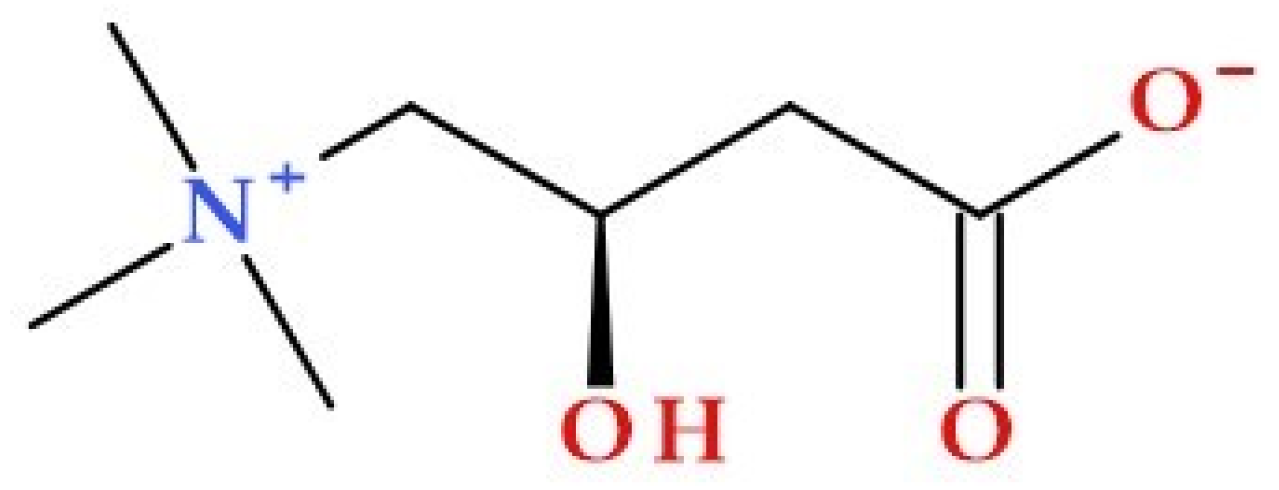
Carnitine, chemically known as 3-hydroxy-4-(trimethylazaniumyl)butanoate (Figure 7), is an amino acid derivative that exists in two stereoisomeric forms: L-carnitine and D-carnitine. L-Carnitine is the biologically active form naturally present in animals, whereas D-carnitine, which is biologically inactive, counteracts L-carnitine’s effects and is considered toxic. L-Carnitine is a water-soluble endogenous metabolite that is widely distributed in mammals and plays multiple physiological roles. Due to its critical role in human metabolism, carnitine is considered a conditionally essential nutrient [88].
The associated functions of carnitine from the CosIng database are: “antistatic”, “cleansing”, “surfactant-foam boosting”, “hair conditioning”, “skin conditioning”, “surfactant–cleansing”, and “viscosity controlling” [19].
Biological functions
Dietary supplementation with L-carnitine has been extensively investigated for its role in enhancing fatty acid metabolism and improving aerobic exercise performance. By facilitating β-oxidation, L-carnitine promotes the utilisation of fatty acids as an energy source, which contributes to reduced blood triglyceride levels, reduced body fat, and improved energy balance. In addition, L-carnitine acts synergistically with methylxanthines such as caffeine and aminophylline, augmenting their lipolytic effects by facilitating the transport of free fatty acids across cellular and mitochondrial membranes. Thus, L-carnitine prevents the accumulation of fatty acids that could otherwise inhibit lipolysis and supports adenosine triphosphate (ATP) production, thereby stimulating lipase activity [5,89].
L-Carnitine occurs naturally in the human body and functions primarily to produce energy by transporting fatty acids into mitochondria for β-oxidation. In anti-cellulite cosmetics, L-carnitine is included as an active ingredient because it supports fat-burning processes, thereby facilitating lipolysis and contributing to the reduction in adipose tissue [90].
Evidence from experimental and clinical studies
Although L-carnitine is well established for its systemic role in lipid metabolism and energy homeostasis, evidence regarding its topical application for cellulite remains scarce, leaving its cutaneous efficacy and underlying mechanisms insufficiently elucidated. A few studies that do not specifically target topical L-carnitine application but are relevant to possible mechanisms in cellulite are presented below.
In a study (in vitro) conducted by Lee M.-S. et al. (2006), L-carnitine significantly reduced lipid accumulation in 3T3-L1 adipocytes and enhanced lipolysis, as evidenced by increased glycerol and free fatty acid release. At 100 nM, it upregulated genes involved in lipid catabolism (hormone-sensitive lipase (HSL), carnitine palmitoyltransferase I alpha (CPT-Iα), acyl-CoA oxidase (ACO)) while downregulating adipogenic markers (PPAR-γ, fatty acid-binding protein (FABP)). Thus, L-carnitine promotes β-oxidation and inhibits adipogenesis, supporting its potential anti-obesity role [42].
The study by Ri P. et al. (2012) evaluated the effects of L-carnitine on sebum regulation and lipid metabolism in human sebaceous glands (ex vivo and clinical studies). In vitro experiments using SZ95 sebocytes showed that L-carnitine significantly increased β-oxidation and reduced intracellular lipid content in a dose-dependent manner. Penetration tests confirmed that topically applied L-carnitine reached the dermis, and a randomised, vehicle-controlled clinical trial demonstrated that a 2% L-carnitine formulation applied for three weeks significantly reduced sebum secretion. The obtained results indicate that L-carnitine, a naturally occurring compound, effectively modulates lipid metabolism and represents a promising topical treatment for oily skin [91].
Combinations containing L-carnitine
The study by Roure R. et al. (2011), including the L-carnitine agent in a formulation, was previously discussed (in vitro, ex vivo, and clinical evaluation). A comprehensive evaluation of the efficacy of a multi-active topical cosmetic slimming formulation (including L-carnitine) was performed through in vitro, ex vivo, and in vivo investigations. By the end of the study, eight of the 13 assessed parameters showed significant improvement in the active group compared with the placebo group [92].
As presented in the previous chapter, a clinical study conducted by Cunha A. et al. (2012) assessed the anti-cellulite effects of a topical formulation containing L-carnitine along with three other active ingredients (caffeine, forskolin, and ruscogenin). The study’s results validated the formulation’s effectiveness in reducing the visible appearance of cellulite while improving overall skin quality [59].
Final considerations on L-carnitine
Overall, L-carnitine represents a potentially promising active ingredient in anti-cellulite formulations due to its ability to enhance lipid metabolism and act synergistically with other lipolytic agents; however, despite encouraging preliminary results, its topical efficacy and long-term impact on dermal remodelling and skin ageing remain insufficiently elucidated, thereby warranting further controlled studies.

5.1.5. Forskolin

Chemical and physicochemical properties
Forskolin (synonym coleonol) is a naturally occurring plant-derived compound that acts by activating the adenylyl cyclase enzyme, which promotes the production of cyclic AMP (cAMP) [93]. The increase in intracellular cAMP serves as a key second messenger, modulating numerous enzymatic activities and regulating various cellular processes [94,95]. For example, it was demonstrated that forskolin, by modulating cAMP during cryopreservation, helps maintain oocyte integrity and reduce lipid-related damage, supporting mechanisms that may influence fat cell behaviour and cellulite-related processes [96].
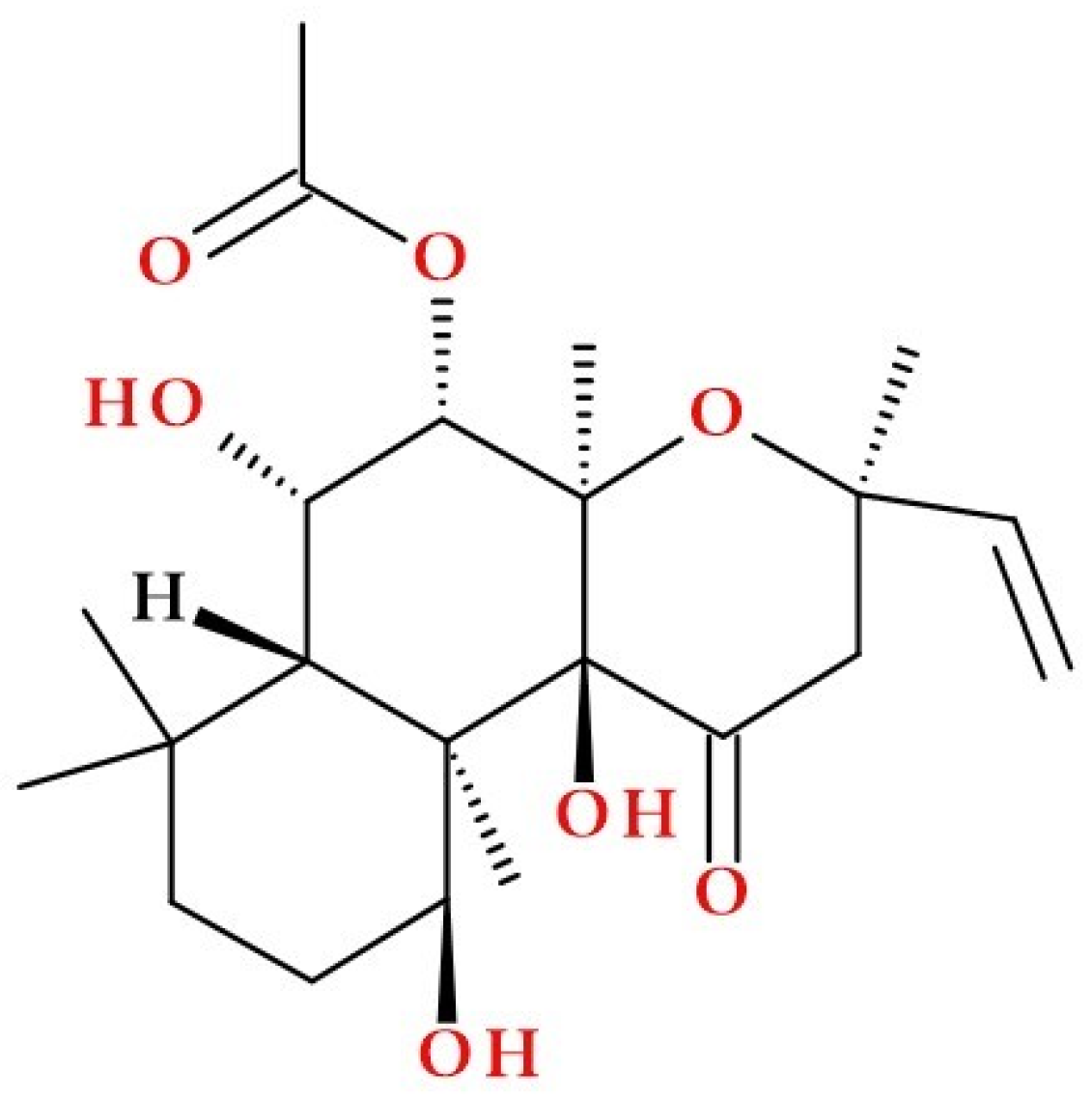
Forskolin, depicted in Figure 8, is structurally characterised as 7β-acetoxy-1α,6β,9α-trihydroxy-8,13-epoxylabd-14-en-11-one and classified within the labdane diterpenoid group. It is extracted from the roots of Coleus forskohlii [94,95,97]. Forskolin is not currently listed in the CosIng (Cosmetic Ingredients) database, indicating that it lacks official regulatory recognition or standardised safety and efficacy data for use in cosmetic formulations.
Biological functions in the skin
Forskolin is involved in numerous physiological processes, including lipolysis, adipocyte differentiation, and metabolic activity. Scientific evidence demonstrates that forskolin promotes fat breakdown, reduces adipocyte size, and may induce browning of white adipose tissue, mechanisms relevant to cellulite reduction [93,98,99,100].
Forskolin strongly activates adenylate cyclase and disrupts steroid hormone synthesis, increasing oestrogen and progestin levels while reducing androgens in both in vitro and in vivo models [93]. These hormonal shifts, along with cAMP activation, may influence fat storage and connective tissue structure, key factors in cellulite formation. Elevated estrogen may affect collagen structure and skin elasticity, while forskolin’s potential antioxidant and lipolytic actions could help counteract age-related changes in skin tone and firmness.
Additionally, forskolin improves glucose metabolism and insulin sensitivity, modulates cardiovascular and respiratory functions via smooth muscle relaxation, and exhibits neuroprotective and anti-inflammatory properties. Its ability to influence lipid metabolism and tissue remodelling positions forskolin as a potentially promising candidate for applications in obesity management, cellulite treatment, and metabolic health interventions [94,101,102,103,104,105,106].
Forskolin activates cAMP signalling, which not only protects neurons from glutamate-induced mitochondrial dysfunction but also plays a key role in lipolysis and cellular energy regulation [105]. By reducing oxidative stress and supporting mitochondrial health, forskolin may help counter processes associated with skin ageing, such as collagen degradation and loss of elasticity. Additionally, its cAMP-mediated lipolytic action and influence on adipose tissue metabolism suggest a potential role in improving cellulite appearance and overall skin firmness [106].
Evidence from experimental and clinical studies
In the study by Huang C. et al. (2024), forskolin significantly altered steroidogenesis in experimental in vitro and in vivo, upregulating genes involved in oestrogen and progestin synthesis while reducing androgen production. These endocrine-disruptive effects were confirmed by increased estrogenic biomarkers and gonadal damage in exposed organisms [98]. Cellulite is influenced by hormonal balance, particularly estrogen, which affects fat deposition and connective tissue structure. Forskolin’s ability to modulate steroid hormone signalling and enhance cAMP signalling suggests a potential indirect role in cellulite development or modulation, depending on dosage and context. Thus, forskolin may indirectly affect skin firmness and ageing processes, though its hormonal effects require careful consideration.
The in vivo animal study by Chen J.-Y. et al. (2021) explored the potential of forskolin to modulate factors associated with cellulite, including adipocyte size and lipid metabolism, in high-fat diet-induced obese mice. Forskolin (2 or 4 mg/kg) administered intraperitoneally every two days for 20 weeks did not affect overall body weight or serum lipids but significantly improved glucose regulation and insulin sensitivity. Importantly, forskolin reduced subcutaneous and gonadal adipocyte diameters and inhibited adipocyte differentiation in mesenchymal stem cells, accompanied by decreased intracellular triglycerides and increased glycerol release. The obtained results suggest that forskolin may help limit fat cell hypertrophy and improve metabolic activity, mechanisms that could contribute to reducing cellulite appearance [99].
The study conducted by Zhang et al. (2025) introduces a forskolin-loaded silica-lipid nanohybrid (FOSSIL) designed to locally target subcutaneous fat, a key contributor to cellulite, by converting white adipocytes into thermogenic brown-like cells (in vivo animal study and in vitro study). In vitro, FOSSIL significantly upregulated thermogenic biomarkers in mature human adipocytes, while in vivo, it achieved marked increases in UCP1 and Cox7A1 expression, enhanced glucose uptake, and stimulated lipolysis, effectively preventing weight gain in high-fat diet mice. Acting as a localised reservoir, FOSSIL promotes fat metabolism and tissue remodelling, suggesting a promising non-invasive alternative to liposuction for reducing fat deposits and improving the appearance of cellulite [100].
Ríos-Silva M. et al. (2014) studied the chronic forskolin administration for eight weeks in diabetic and healthy Wistar rats (in vivo animal study); forskolin significantly reduced fasting blood glucose but did not improve oral glucose tolerance. Oxidative stress, assessed by urinary 8-hydroxydeoxyguanosine (8-OHdG), showed a non-significant trend toward reduction. Forskolin’s metabolic benefits may extend beyond glucose regulation, as improved glucose handling and potential antioxidant effects could influence adipose tissue function [101]. Also, cellulite is associated with altered fat metabolism, microcirculation, and oxidative stress in subcutaneous tissue. Forskolin’s ability to modulate cAMP and lipolysis, combined with its observed impact on glucose and oxidative markers, indicates a possible role in improving cellulite appearance through enhanced fat breakdown and tissue health. Oxidative stress accelerates skin ageing by damaging collagen and elastin. Forskolin’s potential antioxidant effect, combined with its role in improving adipose tissue metabolism, suggests it may help maintain skin firmness and reduce age-related changes. More research is needed to confirm its anti-ageing benefits.
Baumann G. et al. (1990) demonstrated that forskolin exerts positive inotropic and vasodilatory effects in patients with idiopathic congestive cardiomyopathy, independent of β-adrenergic pathways (in vivo animal study) [107]. The vasodilatory properties are relevant to cellulite, which is associated with impaired microcirculation and tissue oxygenation; improved blood flow can enhance nutrient delivery and waste removal in subcutaneous tissue, potentially improving the appearance of cellulite. Additionally, improved circulation supports the prevention of skin ageing by promoting the delivery of oxygen and nutrients to the dermis, aiding collagen maintenance, and reducing oxidative stress.
Kapoor T. et al. (2022) described neuroprotective effects in a rat model of demyelination via activation of the cAMP/cAMP response element-binding protein (CREB) pathway (in vivo animal study) [106]. CREB activation supports mitochondrial health, reduces oxidative stress, and stimulates genes involved in tissue regeneration, all of which are critical for skin ageing, where oxidative damage and impaired cellular repair lead to collagen breakdown and loss of elasticity.
Another recent in vivo animal study of Abbasi M. et al. (2025) investigated forskolin’s ability to target subcutaneous white adipose tissue (WAT), a key contributor to cellulite, by promoting browning and reducing adipocyte size. In obese mice, local injections of forskolin into inguinal WAT significantly improved metabolic parameters, lowered blood glucose, and reduced inflammatory and lipogenic markers. The highest dose produced smaller fat cells and increased expression of browning markers (Ucp1, Tmem26), suggesting enhanced fat metabolism. Localised delivery of forskolin to subcutaneous fat may help reduce adipocyte hypertrophy and improve tissue characteristics associated with cellulite, offering a potential strategy for body contouring and cellulite management [102].
All studies discussed previously collectively support forskolin’s multifaceted biological activities, spanning metabolic regulation, neuroprotection, cardiovascular modulation, anti-inflammatory effects, and potential endocrine disruption, primarily through cAMP-mediated mechanisms.
To our knowledge, there are no clinical trials investigating forskolin alone for reducing cellulite. Evidence exists only for combination formulations including forskolin, demonstrating clinical benefits in reducing body circumference and cellulite appearance. The specific anticellulite efficacy of forskolin alone remains unproven in clinical settings.
Combinations containing forskolin
Some studies evaluated the mechanism and efficacy of a cosmetic slimming product containing tetrahydroxypropyl ethylenediamine, caffeine, carnitine, forskolin, and retinol (combination of clinical trials). Ex vivo tests showed caffeine and forskolin stimulated glycerol release, while retinol and carnitine synergistically promoted keratinocyte proliferation, increasing epidermal thickness. In a 12-week, double-blind, placebo-controlled trial with 78 women, twice-daily application significantly reduced body circumferences (abdomen, hips, waist) from week 4, improved skin tonicity by week 8, and decreased “orange peel” and stubborn cellulite from week 4. At study completion, eight of 13 evaluated parameters showed significant improvement compared with placebo, confirming the product’s effectiveness in enhancing skin appearance and reducing cellulite [92].
A clinical trial (human) conducted by Cunha A. et al. (2012) assessed the anti-cellulite effects of a topical formulation containing caffeine, forskolin, ruscogenin, and carnitine in 48 women with moderate thigh and buttock cellulite. Applied twice daily for 12 weeks, the product significantly improved key cellulite-related parameters (“orange peel” texture, stubborn cellulite, skin smoothness, and firmness) starting at 4 weeks and continuing through 12 weeks. Circumference reductions were observed at the waist, stomach, buttocks, and thighs. At the same time, thermal imaging showed increased skin temperature and greater homogeneity, suggesting improved microcirculation and more potent effects on fat distribution. Thus, the obtained results confirm the formulation’s efficacy in visibly reducing cellulite and enhancing skin quality [59].
Gavin P. et al. (2014) developed a novel topical delivery system, TPM, composed of tocopheryl phosphate (TP) and di-tocopheryl phosphate (T2P), designed to enhance dermal penetration of active compounds. The system was formulated with caffeine and forskolin to target subcutaneous adipose tissue and improve the visible appearance of cellulite. In a 56-day clinical trial involving 30 women, the product was applied twice daily to one thigh, with the other serving as a control. Instrumental assessments showed significant improvements: skin elasticity increased by 10.36%, hydration by 52.63%, and thigh circumference decreased by 0.92%. Photogrammetric analysis revealed a progressive reduction in cellulite appearance, averaging 57.40% (up to 72.12%). Subjective evaluations confirmed enhanced firmness, tightness, and overall effectiveness, positioning the formulation as a promising anticellulite treatment [108].
Summary of forskolin
Forskolin is a promising multifunctional agent in cellulite management through cAMP-mediated lipolysis and potential dermal remodelling. However, its clinical efficacy as a singular active ingredient remains unproven and warrants further controlled trials.

5.1.6. Menthol

Chemical and physicochemical properties
Menthol is a naturally occurring terpene (a cyclic monoterpene alcohol) (Figure 9). The naturally occurring enantiomer found in various mint species is (−)-menthol, whereas the other optical isomer, (+)-menthol, is primarily produced synthetically and typically results in a racemic (±)-mixture. Menthol is widely used as a penetration enhancer in topical and transdermal formulations [109,110].
In the CosIng database, menthol (INCI name) is associated with the following functions: “denaturant”, “fragrance”, “refreshing”, and “soothing” [19].
Menthol as a supportive ingredient in cellulite therapy
There is currently no direct evidence or dedicated clinical study linking menthol specifically to cellulite treatment. Joshi A. et al. (2017) conducted in vitro studies and in vivo experiments (animal model–rabbit). Its penetration-enhancing properties and vasodilatory effects suggest a theoretical role in improving the delivery of active ingredients used in anti-cellulite formulations. Its mechanism involves interaction with the transient receptor potential melastatin 8 (TRPM8) receptor, leading to increased intracellular calcium signalling and subsequent modulation of E-cadherin-mediated cell–cell adhesion, a key process in tissue organisation [109].
Based on evidence compiled in a review article, menthol has the potential to contribute to cellulite treatment through its vascular actions, which enhance skin perfusion in areas where it is topically applied. The effect is mediated by a complex interplay of mechanisms, including increased nitric oxide (NO) production, activation of endothelium-derived hyperpolarisation factors (EDHFs), and stimulation of sensory nerve responses. Improved local blood flow can support better tissue oxygenation and nutrient delivery, potentially aiding in reducing cellulite by promoting microcirculation and metabolic activity in affected areas. Additionally, menthol’s cooling sensation may complement formulations designed to improve skin tone and texture [110].
Summary of menthol
Menthol may enhance transdermal absorption of lipolytic or anti-inflammatory agents commonly used in cellulite creams. Also, menthol’s ability to stimulate microcirculation could further support lymphatic drainage and oedema reduction, both of which are relevant to cellulite pathophysiology.

5.1.7. Methylxantines

Methylxanthines are a group of natural alkaloids based on a xanthine core with tri- or dimethyl substitutions. Xanthine is a purine base present in most human tissues and fluids, as well as in other organisms. Methylxanthines are their methylated derivatives, consisting of heterocyclic organic structures formed by the fusion of pyrimidine-dione and imidazole rings [111,112]. The pharmaceutical methylxanthines are caffeine (1,3,7-trimethylxanthine), theobromine (3,7-dimethylxanthine), and theophylline (1,3-dimethylxanthine) (Figure 10); these three compounds share the same flat, planar purine-2,6-dione structure that facilitates interaction with phospholipid bilayers, explaining their rapid transepidermal absorption [113].
Theophylline is administered in the form of aminophylline, a salt formed with ethylenediamine in a 2:1 ratio, to enhance its aqueous solubility. Table 4 summarises the key physicochemical properties of selected methylxanthines relevant to dermal delivery and skin permeability.
Overall, based on combined physicochemical considerations and experimental evidence (presented below), the intrinsic skin permeability of these methylxanthines follows the order: caffeine > theophylline > theobromine ≫ aminophylline, supporting the preferential use of caffeine in topical and cosmetic formulations.
Aminophylline
Aminophylline, a theophylline–ethylenediamine complex (Figure 11), is a methylxanthine with very high water solubility and predominant ionisation at physiological pH, properties that enhance its suitability for topical formulations. However, these characteristics limit passive skin permeability, and aminophylline exhibits lower intrinsic skin penetration and weaker local lipolytic activity than less soluble methylxanthines, such as theobromine. The clinical relevance of aminophylline in localised fat reduction was critically assessed in a recent systematic review by Dezfouli A. et al. (2023). The authors concluded that topical aminophylline can induce modest but consistent decreases in localised adiposity, although results are heterogeneous and depend strongly on formulation, treatment duration, and study design. Notably, the review highlights that aminophylline’s clinical efficacy is less robust and less consistently demonstrated than that of caffeine [50].
Aminophylline exists predominantly in an ionised form at skin pH, which markedly resists passive diffusion across the stratum corneum. Recent data indicate that aminophylline exhibits very low intrinsic skin permeability and that advanced delivery strategies are required to achieve meaningful dermal deposition [114].
At the moment, in the CosIng database, aminophylline (the INCI name) is associated with the following functions: “skin conditioning” and “surfactant-cleansing” [19].
Caffeine
Introduction and chemical characteristics
Caffeine, a naturally occurring methylxanthine (Figure 12), has gained attention in cosmetic dermatology for its potential role in managing cellulite. Its ability to penetrate the skin barrier and exert local biological effects makes it a valuable active ingredient in topical formulations [115].
Mechanism of action in adipose tissue
Caffeine exerts its anti-cellulite effects primarily by stimulating lipolysis and improving microcirculation. The biological effects rely on two closely connected pathways. The dermal efficacy of topically applied caffeine in anti-cellulite formulations is mainly due to its ability to modulate intracellular cAMP-dependent signalling in the skin and subcutaneous adipose tissue. By inhibiting phosphodiesterase (PDE) activity, caffeine reduces cAMP degradation, thereby elevating intracellular cAMP levels. It activates protein kinase A and HSL, promoting triglyceride hydrolysis in adipocytes and stimulating lipolysis, a crucial process for reducing cellulite. In addition to this shared cAMP pathway, caffeine boosts lipolytic activity by stimulating the release of noradrenaline from sympathetic nerves, which then activates β-adrenergic receptors on fat cells and enhances lipolysis. The dual mechanism, direct cAMP elevation and indirect β-adrenergic stimulation, improves the breakdown of localised fat deposits characteristic of cellulite [115].
Effects on microcirculation and lymphatic drainage
Simultaneously, caffeine has positive effects on skin microcirculation and lymphatic drainage, helping reduce interstitial fluid buildup and tissue swelling. The effects of caffeine on blood vessels are significant in cellulite, where poor microcirculation and fluid retention worsen dermal matrix distortion and the characteristic “orange peel” appearance [115].
Challenges in skin penetration and delivery strategies
Caffeine faces challenges in skin permeation due to its hydrophilicity. Therefore, if it were encapsulated in solid lipid nanoparticles or loaded into a nanostructured lipid carrier, caffeine may overcome this limitation. The advantages of these formulations have been demonstrated in animal models of cellulite, as briefly discussed below.
Evidence from in vivo and clinical studies
In an in vivo animal study combined with an ex vivo study by Fouad S.A. et al. (2024), caffeine was encapsulated in solid lipid nanoparticles (SLNs) via high-shear homogenization and ultrasonication, yielding high entrapment efficiency, optimal particle size, and stability. The optimised formulation (Caffeine-SLN-Ngel) demonstrated superior drug release, effective skin penetration via appendageal routes, and a significant reduction in subcutaneous fat thickness in obese female Wistar rats compared to conventional gels. The obtained results highlight Caffeine-SLN-Ngel as a promising nanocosmeceutical approach for safe and effective cellulite treatment [49].
Experimental evidence from Kassem A.A. et al. (2023) (in vivo animal study combined with ex vivo study) demonstrates that a single topical application of a 5% caffeine-loaded nanostructured lipid carrier results in substantially higher skin caffeine levels than either a plain 5% caffeine gel or a commercially available formulation. The results of a study conducted in a high-fat diet-induced cellulite rat model indicate that the carrier system itself is a key determinant of cutaneous drug accumulation, rather than the labelled caffeine concentration. The enhanced delivery is attributed to the molecular dispersion of caffeine within the lipid matrix and the formation of an occlusive film that increases stratum corneum hydration, thereby facilitating penetration and retention within the skin [116]. As highlighted by Hameed H.I. and Al-Mayahy M.H. (2024), increasing local skin bioavailability through formulation strategies enhances local efficacy in cellulite without proportionally increasing systemic exposure [114].
From a skin permeability perspective, caffeine is the most thoroughly studied methylxanthine and serves as a reference compound in dermal absorption research. Despite its low lipophilicity, caffeine can penetrate the human skin barrier, showing measurable in vivo and in vitro permeation, with its primary localisation in the epidermis and upper dermis [115].
In a controlled clinical study (human), Lupi O. et al. (2007) demonstrated that topical caffeine application to the thighs and buttocks led to a significant reduction in oedema and a measurable improvement in cutaneous microcirculation, as assessed by orthogonal polarisation spectral imaging, supporting a vascular and drainage-mediated contribution to cellulite improvement [117]. Histological and morphological evidence was provided by Velasco M.V.R. et al. (2008), who evaluated topical caffeine and a caffeine derivative (siloxanetriol alginate caffeine) in an experimental animal model (in vivo). Their results showed a reduction in adipocyte diameter and number, indicating a direct effect on subcutaneous fat structure, consistent with caffeine-induced lipolysis and supporting its classification as an active anti-cellulite agent [118]. Additionally, Pires-de-Campos M.S.M. et al. (2008) showed that topical caffeine, particularly when combined with ultrasound, reduced subcutaneous adipose tissue thickness in vivo, further corroborating caffeine’s role in adipose modulation (clinical study-human) [119].
In addition, caffeine is a multifunctional cosmetic ingredient that combats both skin ageing and cellulite through complementary mechanisms. Its strong antioxidant activity neutralises free radicals generated by UV radiation, reducing oxidative stress, photoaging, and collagen degradation, while enhancing the protective effects of sunscreens. At the same time, caffeine improves microcirculation and lymphatic drainage, which helps maintain skin firmness and elasticity. In adipose tissue, caffeine stimulates lipolysis by inhibiting PDE, increasing intracellular cAMP, and activating HSL, leading to the breakdown of triglycerides and a reduction in adipocyte size, key factors in diminishing cellulite and the “orange peel” appearance. These combined effects, along with its ability to support cellular metabolism and prevent UV-induced damage, make caffeine a valuable active ingredient in anti-ageing and body-contouring formulations [115].
In the CosIng database, caffeine (the INCI name) is associated with the following functions: “fragrance”, “perfuming”, and “skin conditioning” [19].
Combinations containing caffeine
Various complex formulations combining methylxanthines with additional bioactives have also been clinically evaluated. A brief discussion of some relevant studies follows below.
A formulation containing retinol, caffeine, and ruscogenin was evaluated through a double-blind, randomised, placebo-controlled study conducted by Bertin C. et al. (2001). Multiple parameters associated with cellulite appearance (including skin macrorelief, dermal and hypodermal structure, mechanical properties of the skin, and cutaneous flowmetry) were assessed using a range of non-invasive techniques. The results of the study demonstrated significant improvements relative to baseline and established the product’s superiority over the placebo, particularly in diminishing the “orange peel” effect and enhancing cutaneous microcirculation [120].
A topical cosmetic slimming product containing caffeine, among other active ingredients (tetrahydroxypropyl ethylenediamine, carnitine, forskolin, and retinol), was evaluated in in vitro, ex vivo, and in vivo studies by Roure R. et al. (2011). A significant reduction in orange peel appearance and persistent cellulite was observed after 4 weeks of treatment, while improvements in skin tonicity were observed after 8 weeks, indicating that the product enhanced overall skin appearance [92].
Byun, S.-Y. et al. (2015) conducted a 6-week clinical trial (human) involving 15 subjects with cellulite. A slimming cream (containing 3.5% water-soluble caffeine and xanthines) was applied twice daily to the thighs and upper arms. Efficacy was evaluated through visual scoring, circumference measurements, and patient satisfaction, while safety was monitored via questionnaires. Results showed a significant improvement in visual scale scores (19.8%) and reductions in thigh and upper-arm circumferences (1.7% and 2.3%, respectively). Reported adverse effects were mild, including slight itching and transient flushing, with no serious events. Overall, the cream demonstrated promising efficacy and safety, though larger clinical trials are needed to confirm these results [121].
Escalante G. et al. (2019) reported that a topical lotion containing aminophylline and caffeine, along with yohimbe, L-carnitine, and Centella asiatica, resulted in significant reductions in thigh circumference and skinfold thickness, suggesting a synergistic effect on localised fat and cellulite appearance (double-blind, placebo-controlled clinical trial) [122].
In an ex vivo study by Hameed H.I. and Al-Mayahy M.H. (2024), various nanoemulsion formulations were developed via high-energy ultrasonication and optimised through characterisation tests of droplet size, homogeneity, and stability. The selected nanoemulsion, with a droplet size of 175.8 nm and a polydispersity index (PDI) of 0.19, was incorporated with hyaluronic acid to form a nanoemulgel containing caffeine, aminophylline, and tretinoin. The nanoemulgel demonstrated high drug content (>98%), rapid release (~100% within six hours), suitable pH, and minimal irritation. Ex vivo studies revealed significantly higher skin permeation and deposition of all actives from the nanoemulgel compared to a plain gel, further enhanced by microneedling pretreatment at depths of 0.5–2 mm. Thus, this combined strategy shows potential as an effective topical anticellulite therapy, improving drug delivery and skin appearance [114].
Theophylline and theobromine
Theophylline and theobromine have not been studied as extensively as caffeine; their dermal transport has been mainly characterised through comparative experimental studies. In Franz diffusion cell experiments (ex vivo skin permeation study), Heard C. et al. (2006) reported substantially lower cumulative permeation for both compounds compared to caffeine, with theophylline displaying limited but detectable flux, while theobromine, despite occasionally exhibiting a relatively higher permeability coefficient, showed low overall flux and cumulative delivery, indicating practical limitations in dermal transport [123]. The differences were attributed to physicochemical factors such as hydrogen-bonding capacity and solubility limitations. The obtained results align with those of Thakur R.A. et al. (2007) in the same type of study, who demonstrated that even under penetration-enhancing conditions, the intrinsic transdermal transport of theophylline and, especially, theobromine remains poor compared to that of caffeine, highlighting the barrier role of the stratum corneum for these molecules [124].
Although theophylline and theobromine are not discussed in detail as topical agents, their structural similarity to caffeine suggests similar pharmacological effects, including PDE inhibition and modulation of adrenergic signalling. As summarised in standard pharmacological references, these class effects are well established [125]; however, in topical anti-cellulite applications, caffeine remains the most relevant compound due to its superior dermal efficacy.
Safety of topical methylxantines
Caffeine is classified as “Generally Recognised As Safe” by the FDA for use in cola-type beverages at concentrations ≤ 0.02% (21 CFR 182.1180) [126], but this classification does not establish any cosmetic concentration limits, leaving topical use unrestricted. In cosmetics, caffeine is widely used (e.g., in skincare formulations), and the FDA requires only that products be safe for consumers when used as labelled or customary; no pre-approval or specified maximum concentration is mandated [127].
According to the Cosmetic Ingredient Review Expert Panel [128], the available toxicological data are sufficient to support the dermal safety of caffeine, theobromine, and theophylline as used in cosmetic products. These compounds are widely ingested through food and beverages, resulting in systemic exposures substantially higher than those expected from topical cosmetic use. On this basis, the Panel concluded that systemic toxicity arising from dermal application is unlikely. Evaluation of dermal exposure data demonstrated minimal to no irritation or sensitisation at concentrations relevant to cosmetic use, and no evidence of systemic adverse effects following topical application. Although isolated positive findings were reported, particularly in vitro genotoxicity assays, they were considered misleading because they were not confirmed in studies with metabolic activation or in in vivo mammalian models. The absence of carcinogenicity in long-term animal studies mitigated concerns about genotoxic potential [129].
The EU Cosmetics Regulation (EC) No. 1223/2009 does not list caffeine as a restricted ingredient under Annexe III (Restricted Substances), nor does it prohibit caffeine in Annexe II (Banned Substances) [68,130]. According to the EU’s official CosIng database, caffeine is included as a permitted cosmetic ingredient with no specified maximum concentration limit, aside from the general requirement that all cosmetic ingredients must be safe at the intended use level. All four compounds are listed in the CosIng database as skin-conditioning agents [19].
Summary of methylxanthines
Methylxanthines, particularly caffeine, theophylline, and aminophylline, exhibit distinct physicochemical properties that influence their dermal absorption and clinical applicability in topical applications. Among them, caffeine is the most effective and extensively studied compound, demonstrating relatively superior skin permeability and well-documented cosmetic benefits, including anti-cellulite effects mediated by enhanced lipolytic activity and improved microcirculation. By neutralising UV-induced free radicals, caffeine may help limit photoageing and collagen degradation, thereby improving skin elasticity and firmness. Aminophylline offers high aqueous solubility and potential for localised fat modulation; its low intrinsic permeability often necessitates the use of advanced delivery systems. Theophylline and theobromine, despite sharing similar pharmacological profiles, remain limited by poor transdermal transport. Accordingly, formulation strategies, such as nanoemulsions and lipid-based carriers, are considered essential for optimising methylxanthine efficacy, supporting caffeine’s preferential use as an active ingredient in cosmetic and dermatological products. Safety evaluations indicate that these compounds are generally well tolerated when used topically, supporting their continued incorporation in innovative skin-care formulations.

5.1.8. Retinol

Introduction and chemical characteristics
Vitamin A refers to a group of lipid-soluble compounds that include retinol, retinyl palmitate, retinyl acetate, retinyl linoleate, and retinal. As a fat-soluble micronutrient, vitamin A is essential for the physiological functions of most mammalian species. Vitamin A is incorporated into cosmetic formulations at concentrations up to 0.05% (expressed as retinol equivalents) in body lotions and up to 0.3% in hand and face creams, as well as in other leave-on or rinse-off products, primarily marketed as anti-wrinkle agents. Retinol and its esters (particularly retinyl palmitate and retinyl acetate) are widely used in products such as facial and eye creams, body and sun lotions, lip care items, and baby creams due to their pronounced anti-ageing properties. The mechanism of action is based on stimulating collagen biosynthesis in the skin and inhibiting UV-induced enzymes that degrade collagen. Consequently, cosmetic products containing vitamin A aim to reduce fine lines and wrinkles associated with chronological and photoinduced ageing [131].
Retinol is a natural form of vitamin A and belongs to the first generation of retinoids. The molecular structure of retinol consists of: a β-ionone ring (non-aromatic fragment), an unsaturated isoprenoid side chain (all-trans configuration), and a hydroxyl group (-OH) at the end of the chain (Figure 13) [132].
Retinol is a pale yellow, oily substance that may crystallise at low temperatures. It is highly lipophilic, practically insoluble in water, but readily soluble in organic solvents such as ethanol, acetone, and chloroform, as well as in fats and oils. Chemically, retinol is highly sensitive to oxygen, light, heat, and heavy metals, undergoing photoinduced isomerisation and oxidative degradation; therefore, it requires stabilisation with antioxidants and storage under an inert gas at ≤4 °C. Stability in cosmetic formulations can be maintained for at least six months when processed under inert conditions and stored at ≤20 °C [131]. In the CosIng database, retinol (the INCI name) is associated with the “skin conditioning-miscellaneous” function [19].
The physicochemical properties of retinol limit its stability in cosmetic formulations. Structurally, it exists mainly in the all-trans form but can convert to cis-isomers under certain conditions. Retinol can be transformed into various derivatives, such as retro-retinoids, saturated retinols, and phosphate conjugates. Additionally, it undergoes reversible esterification to form retinyl esters, which serve as the body’s primary storage form of vitamin A. Biologically, retinol undergoes a two-step oxidation process, first to retinaldehyde and then irreversibly to retinoic acid, its most active metabolite. It exerts its effects by binding to cytosolic retinol-binding proteins (CRBPs) and activating nuclear receptors, such as retinoic acid receptors (RARs) and retinoid X receptors (RXRs), which regulate gene expression and cellular functions [132,133,134].
Biological functions and mechanisms in skin
Retinol is classified within the retinoid family of compounds. It is ingested primarily as a precursor: animal-derived foods such as milk and eggs provide retinyl esters, whereas plant sources like carrots and spinach supply provitamin A carotenoids. Retinol and its derivatives are critical for numerous physiological processes, including retinal function, epithelial tissue growth and differentiation, skeletal development, reproduction, and immune regulation. Retinoids were among the first vitamin-derived compounds approved by the FDA for anti-wrinkle indications, which can improve the appearance of the skin surface and exert anti-ageing effects. Retinoids modulate key cellular mechanisms, including apoptosis, differentiation, and proliferation. Their anti-ageing benefits include stimulating keratinocyte proliferation, supporting the epidermal barrier, reducing transepidermal water loss, preserving collagen integrity, and inhibiting metalloproteinase activity [132].
Cellulite has few evidence-based treatments. Retinol is a promising candidate in cellulite management due to its ability to improve skin elasticity, modulate connective tissue structure, and enhance dermal remodelling [52,135].
Evidence from clinical and experimental studies
Kligman A. et al. (1999) reported a clinical trial (double-blind study) involving 20 women with moderate thigh cellulite: twice-daily application of 0.3% stabilised retinol cream for six months significantly improved skin parameters compared with vehicle treatment. Objective assessments revealed increased skin thickness (from 1.44 to 1.60 mm) and enhanced blood flow on retinol-treated sites, alongside a marked reduction in hypoechogenic areas (from 53% to 18% of black pixels). Both the subject’s and the dermatologist’s assessments showed greater improvement on the retinol-treated side, with 7 participants noticing visible results. The results support retinol’s role as a prodrug, metabolised to retinoic acid, which promotes glycosaminoglycan and collagen synthesis and contributes to structural skin remodelling [52].
The study conducted by Piérard-Franchimont C. et al. (2020) evaluated the effect of topical retinol versus placebo in a randomised left-right clinical trial involving 15 women aged 26–44 years with mild to moderate cellulite. After six months, retinol-treated sites showed a 10.7% increase in skin elasticity and a 15.8% reduction in viscosity, particularly improving areas with only the mattress phenomenon, while more pronounced lumpy skin showed minimal response. Histological analysis revealed a 2- to 5-fold increase in factor XIIIa+ dendrocytes in the dermis and hypodermal fibrous strands, suggesting phenotypic changes in connective tissue cells. The study highlighted that retinol may modulate skin tension and cellular activity, contributing to smoother skin appearance [53].
A study conducted by Kong R. et al. (2016) (clinical trial and in vitro study) compared the effects of retinol and retinoic acid on skin structure, gene expression, and clinical appearance. Both treatments, administered for 4 weeks, increased epidermal thickness and upregulated collagen-related genes (COL1A1, COL3A1), leading to corresponding increases in procollagen I and III proteins. Although retinol induced changes of slightly lower magnitude than retinoic acid, it demonstrated similar biological effects. A 12-week clinical evaluation confirmed significant wrinkle reduction following retinol application, supporting its efficacy in improving skin histology and function while delivering visible anti-ageing benefits [136].
Mellody K.T. et al. (2022) evaluated the effects of topical retinol at concentrations of 0.1%, 0.3%, and 1% on skin architecture and tolerance (clinical trial–human-study). In a 12-day patch test on photoaged forearm skin (n = 5), retinol induced a dose-dependent increase in epidermal thickness and expression of stratum corneum proteins, with 0.3% and 1% formulations comparably enhancing keratinocyte proliferation and fibrillin-rich microfibril deposition (p < 0.01). At the same time, other dermal components remained unchanged, and no local inflammation was observed. In a separate six-week escalation study (n = 218), 0.3% retinol demonstrated significantly better tolerability than 1%, with fewer and milder adverse events. Overall, both 0.3% and 1% retinol effectively remodelled photodamaged skin, but 0.3% offers superior long-term tolerability for daily use.
Topical retinol has been shown to improve skin architecture by thickening the epidermis, stimulating collagen synthesis, and restoring fibrillin-rich microfibrils at the dermoepidermal junction and within the dermis. The retinol effects translate into significant improvements in multiple signs of skin ageing, including fine lines, wrinkles, crepiness, laxity, and texture, while also contributing to dermal remodelling. Due to similar structural alterations underlying cellulite, retinol’s ability to reinforce dermal integrity may also help to reduce surface irregularities associated with this condition [53,136].
However, formulation concentration is critical for tolerability; although cosmetic products typically contain 0.05–1% retinol, higher levels can irritate the skin. Gradual introduction and use of optimised concentrations, such as 0.3%, have been shown to minimise irritation compared with 1%, supporting long-term application [137].
Combinations containing retinol
The integration of retinol with complementary bioactive compounds (e.g., caffeine, carnitine, forskolin, glaucine, ruscogenine, and peptides) represents a multifactorial approach to dermal remodelling, leveraging retinol’s capacity to stimulate collagen synthesis and epidermal turnover. At the same time, adjunct actives target extracellular matrix integrity and adipose tissue dynamics, thereby enhancing clinical outcomes in both photoaging and cellulite management.
A double-blind, randomised, placebo-controlled clinical trial involving 46 healthy women evaluated the efficacy of an anti-cellulite formulation containing retinol, caffeine, and ruscogenine. Multiple non-invasive techniques were employed to assess parameters related to cellulite, including skin macrorelief, dermal and hypodermal architecture, mechanical properties, and cutaneous microcirculation. The combined assessment methods demonstrated significant improvements compared to baseline and confirmed the product’s superiority over placebo, notably in reducing the “orange peel” appearance and enhancing microcirculatory flow. The multimodal evaluation provided detailed evidence of the formulation’s effectiveness in improving cellulite-related skin attributes [120].
Three clinical trials investigated a multi-active slimming formulation containing retinol alongside tetrahydroxypropyl ethylenediamine, caffeine, carnitine, and forskolin. Ex vivo analyses revealed that retinol, in synergy with L-carnitine, stimulated keratinocyte proliferation and increased epidermal thickness, supporting its role in skin remodelling. In a 12-week, double-blind, placebo-controlled trial with 78 women, twice-daily application significantly reduced abdominal, hip, and waist circumferences, improved skin firmness, and diminished the appearance of cellulite and “orange peel” texture. Eight of thirteen evaluated parameters showed significant improvement compared with placebo, confirming retinol’s contribution to enhanced skin structure and visible anti-cellulite effects [92].
A 17-week clinical trial conducted by Christensen M.S. (2014) involving 25 women assessed a topical formulation combining retinol with caffeine and vitamins C and E, delivered via an optimised system, for the reduction in cellulite. Daily application led to visible improvement in cellulite severity as confirmed by photographs, expert evaluation, and self-assessment, with noticeable changes by week 4 and continued progress throughout the study. The results of the study support retinol’s role in enhancing dermal structure and skin appearance when used synergistically with other actives in targeted formulations [138].
Another complex clinical study conducted by Sullivan K. et al. (2023) assessed the efficacy of a novel topical formulation combining retinol, a tripeptide, and glaucine for improving signs of neck ageing. Clinical trials included visual assessments, subject questionnaires, ultrasound imaging, and biomarker analysis via biopsy. After 12 to 16 weeks of use, participants and evaluators observed significant improvements in neck skin attributes, including fine lines, wrinkles, crepiness, laxity, and texture, confirmed by imaging and molecular markers. Retinol, a key active ingredient, likely contributed to these outcomes through its well-documented ability to stimulate collagen synthesis, enhance epidermal turnover, and improve dermal structure, thereby complementing other actives in restoring skin firmness and smoothness. The new formulation targeted neck ageing and provided measurable, statistically significant benefits when used as part of an integrated skincare regimen [139].
Summary of retinol
Current evidence positions retinol as an essential active ingredient in advanced dermocosmetic strategies, owing to its well-documented ability to modulate epidermal turnover, stimulate collagen and glycosaminoglycan synthesis, and restore fibrillin-rich microfibrillar networks. These biological effects lead to clinically significant improvements in photoageing and cellulite, particularly when retinol is incorporated into optimised formulations or combined with synergistic bioactive compounds. Concentration and delivery systems remain critical determinants of efficacy and tolerability.

5.1.9. α-Tocopherol

Introduction and chemical characteristics
Vitamin E refers to a group of eight compounds divided into tocopherols and tocotrienols (tocols), distinguished by the saturation of their side chains. Tocols are characterised by two key structural elements, the chromanol ring and an aliphatic side chain, and differ based on the methylation pattern of the chromanol ring (α, β, γ, and δ) as well as the degree of saturation in the side chain, which is fully saturated in tocopherols and contains three double bonds in tocotrienols [140]. Among these, α-tocopherol is the predominant form in human circulation due to its recognition by the hepatic α-tocopherol transfer protein. In contrast, other isoforms, though absorbed, are not efficiently retained. Structurally, tocopherols possess three chiral centres, with natural α-tocopherol most commonly occurring in the 2R,4′R,8′R configuration (Figure 14). Functionally, α-tocopherol is the most potent naturally occurring antioxidant, effectively scavenging reactive oxygen and nitrogen species, surpassed only by certain synthetic compounds [140,141,142].
Biological roles in skin health
α-Tocopherol is the orally bioavailable, naturally occurring α-form of the fat-soluble vitamin E, exhibiting potent antioxidant and cytoprotective activities and protecting cell membranes from oxidative damage (Figure 15) [142]. Vitamin E is the best-known non-enzymatic fat-soluble antioxidant, mainly for its ability to inhibit the activity of pro-oxidants generated by ROS. Vitamin E can scavenge free radicals induced by endogenous and/or exogenous agents, such as UV radiation, drugs, and pollutants, thereby preventing their harmful effects. The antioxidant activity of vitamin E is directly related to its ability to inhibit lipid peroxidation in unsaturated fatty acids by its incorporation into cell membranes, effectively suppressing lipid peroxidation [143].
Vitamin E is a well-established dermatological agent, commonly utilised either in its purified form (α-tocopherol) or through its derivatives. The biologically active, purified form is essential for optimal therapeutic outcomes in the skin. Topical formulations containing vitamin E are primarily used for the management of melasma, photoprotection against UV radiation, and the mitigation of age-related dermal changes. Evidence suggests that combining vitamin E with other antioxidants enhances its cutaneous benefits, demonstrating synergistic effects in photoprotection and potentially delaying melanoma progression. Clinical evaluations have further reported improvements in periorbital fine lines, skin roughness, radiance, tone, elasticity, density, collagen synthesis, and overall aesthetic appearance. In over-the-counter preparations, vitamin E (typically as α-tocopherol or tocopherol acetate) is formulated at concentrations ranging from 1.0% to 5.0%. Concentrations between 0.1% and 1.0% are generally regarded as both safe and efficacious for augmenting intradermal vitamin E levels. However, higher doses of α-tocopherol have been administered without notable adverse effects [144,145].
Tocopherol (the INCI name) is associated in the CosIng database with the following functions: “antioxidant”, “fragrance”, “skin conditioning-occlusive”, and “skin conditioning-miscellaneous” [19].
Evidence from clinical and experimental studies
The randomised, double-blind clinical study by Baumann L.S. and Spencer J. (1999) evaluated the effect of topical vitamin E on scar appearance following skin cancer excision. Fifteen patients applied two ointments to separate halves of their surgical scars: Aquaphor alone and Aquaphor combined with vitamin E, for 4 weeks. Cosmetic outcomes were assessed by patients, physicians, and an independent reviewer at weeks 1, 4, and 12. Results demonstrated no improvement in scar appearance with vitamin E; in fact, 90% of cases showed no benefit or worsening of cosmetic outcomes. Additionally, 33% of participants developed contact dermatitis. The study concluded that topical vitamin E does not enhance scar healing and may be harmful, leading the authors to discourage its use on surgical wounds [146].
An analysis conducted by Torres A. et al. (2023) of 120 cosmetic products, 21 topical medicines, and 46 medical devices commercialised in Portuguese pharmacies revealed that vitamin E and its derivatives are among the most frequently used skin repair ingredients in cosmetics, appearing in 54.2% of formulations. Ranked second after metal salts and oxides, vitamin E is widely incorporated for its antioxidant and skin-protective properties. The high prevalence of vitamin E highlights its perceived importance in epidermal barrier repair and wound healing, despite ongoing debate over its clinical efficacy [147].
Summary of α-tocopherol
Vitamin E, primarily in the form of α-tocopherol, is widely used in dermatology for its antioxidant and photoprotective properties, with evidence suggesting benefits for skin ageing and epidermal barrier repair; however, clinical data regarding s scar healing remain inconsistent, and its high prevalence in cosmetic formulations contrasts with ongoing debate over its actual efficacy.

5.2. Plant-Derived Active Ingredients for the Treatment of Cellulite

A series of active ingredients has been obtained from various plants, which are presented below (alphabetical order).

5.2.1. Aesculus hippocastanum L. (Horse Chestnut)

Aesculus hippocastanum (Horse chestnut) is a rich source of saponins, fatty oils, esculin, and flavonoids, which collectively contribute to its dermopharmacological benefits. Esculin enhances skin trophism by improving capillary density and stimulating microcirculation, thereby supporting nutrient delivery and tissue oxygenation. These mechanisms are particularly relevant in addressing cellulite, where impaired microvascular function and alterations in the extracellular matrix are key. Additionally, escin, the principal saponin component, exhibits firming and soothing effects through its venotonic and antiedematous properties, reducing fluid retention and improving skin elasticity [17]. A hypertonic topical formulation containing 13% sodium chloride, escin, caffeine, and β-sitosterol, designed to exert a draining effect, was evaluated in a 28-day, double-blind, placebo-controlled clinical trial. The treatment demonstrated significant reductions in thigh circumference and subcutaneous adipose tissue thickness, indicating its potential efficacy in body contouring and cellulite management [148].
Escin exhibits anti-inflammatory and antioxidant properties, reducing vascular inflammation and oxidative stress. It inhibits the kappa-light-chain enhancer of activated B cells (NF-κB) and mitogen-activated protein kinase (MAPK) pathways, decreases pro-inflammatory cytokines (IL-1β, TNF-α), and stabilises endothelial junctions, thereby protecting vascular integrity and microcirculation. Escin also neutralises free radicals and improves the tissue microenvironment of blood vessel walls, thereby contributing to endothelial repair and ECM stability [55,56,57]. Its ability to neutralise free radicals and improve the tissue microenvironment supports endothelial repair and extracellular matrix stability, counteracts fibrosis and dermal weakening associated with cellulite progression.
By promoting vascular health and connective tissue integrity, horse chestnut extract is an effective ingredient in formulations for reducing cellulite and promoting overall skin rejuvenation.

5.2.2. Annona squamosa L. (Custard Apple)

Annona squamosa, a widely distributed tropical species of the Annonaceae family, is notable for its rich phytochemical profile and diverse pharmacological properties. Its seeds primarily contain acetogenins, the major bioactive constituents, while the leaves yield a second key group, alongside alkaloids, diterpenes, and cyclopeptides. The identified compounds demonstrate a broad spectrum of activities, including anti-tumour, anti-inflammatory, antioxidant, antidiabetic, antimicrobial, antiviral, immunomodulatory, and wound-healing effects [149,150]. Due to its anti-inflammatory and antioxidant potential [149,151], Annona squamosa may also contribute to formulations aimed at targeting multiple pathways involved in cellulite development and progression.
Annona squamosa stands out for its pronounced anti-adipogenic effect, reducing lipid accumulation in 3T3 cells by 68.8% at 1 μg/mL. Complementary activities were observed for Zanthoxylum clava-herculis and Rosmarinus officinalis. Strategically combining these botanicals in optimised ratios may enable a multi-targeted formulation that addresses key pathways in cellulite initiation and progression [152].
Annona squamosa, due to its pronounced anti-adipogenic, anti-inflammatory, and antioxidant activities, is a promising candidate for multi-targeted formulations aimed at mitigating cellulite and decelerating skin ageing by addressing lipid accumulation, oxidative stress, and structural deterioration within the dermis and subcutaneous tissue.

5.2.3. Boesenbergia rotunda (L.) Mansf. (Fingerroot)

Boesenbergia rotunda is rich in flavonoids, chalcones, and diterpenoids, all of which are associated with multiple bioactivities. Phytochemical profiling revealed the presence of flavonoids, monoterpenes, alkaloids, and phenolic compounds, including pinostrobin, pinocembrin, panduratin A, caffeic acid, coumaric acid, kaempferol, naringin, and quercetin [153]. The phytochemical content has the potential to neutralise ROS and modulate enzymatic pathways involved in tissue degradation, thereby supporting dermal integrity and reducing oxidative stress, a key factor in cellulite development and skin ageing.
In addition to its antioxidant activity, Boesenbergia rotunda demonstrates potential lipolytic and microcirculation-enhancing effects, which may contribute to the reduction in subcutaneous fat deposits and improvement of skin texture [154]. By promoting collagen stability and protecting ECM components, the Boesenbergia rotunda extract offers promising applications in formulations targeting cellulite reduction and overall skin rejuvenation [155].
Sritananuwat P. et al. (2024) investigated Boesenbergia rotunda extract for its antiadipogenic effects and its role in a capsaicin-based body-firming cream (clinical trial-human). In vitro, the extract inhibited adipogenesis at 1 µg/mL without cytotoxicity below 20 µg/mL. Applied twice daily for 21 days in combination with capsaicin, the formulation significantly reduced thigh circumference and melanin index, with only mild erythema. Panduratin A from the extract permeated the skin, indicating the combined product’s potential as a safe, effective body-firming treatment [86].
Boesenbergia rotunda, through its antioxidant, anti-adipogenic, and microcirculation-enhancing properties, represents a promising natural active for the management of cellulite and skin ageing by reducing oxidative stress, supporting ECM integrity, and improving skin texture.

5.2.4. Camellia sinensis (L.) Kuntze (Green Tea)

Green tea leaf extract is widely recognised for its bioactive compounds, particularly its high levels of polyphenols and caffeine. Caffeine contributes to lipolytic activity by inhibiting PDE, which elevates intracellular cAMP levels and HSL, thereby promoting the breakdown of stored lipids. Recent advances in formulation technology have introduced nanocarrier systems based on chitosan, sodium tripolyphosphate, and lecithin, which significantly enhance transdermal permeation; these delivery systems have demonstrated measurable reductions in adipocyte size and subcutaneous tissue thickness, supporting their potential role in topical anti-cellulite treatments [17].
Beyond its lipolytic properties, green tea extract is among the most extensively studied botanical ingredients in dermatological science due to its potent antioxidant profile. Green tea leaves are rich in catechins, particularly epigallocatechin gallate, which exerts strong antioxidant effects by scavenging reactive oxygen and nitrogen species and chelating metal ions. Thus, green tea extract protects cellular components from oxidative stress and inhibits enzymatic pathways that generate free radicals. Consequently, green tea extract not only improves skin texture and reduces localised fat deposits but also contributes to overall skin health and rejuvenation through its antioxidative and anti-inflammatory actions [156].

5.2.5. Centella asiatica (L.) Urb. (Gotu Kola)

Centella asiatica (Gotu Kola) has been shown to stimulate fibroblast proliferation and enhance collagen and fibronectin synthesis, thereby improving dermal structure and elasticity. The properties of Centella asiatica support its efficacy in managing conditions such as photoaging, striae distensae (stretch marks), and cellulite, making it a valuable ingredient in dermatological and cosmetic formulations aimed at skin repair and rejuvenation [17]. In addition, cosmetic formulations incorporating Centella asiatica extract exhibit notable moisturising and anti-inflammatory properties. Beyond its recognised role in anti-ageing products, Centella asiatica effectively enhances skin hydration, making it suitable for inclusion in moisturising formulations and as an adjunct in the management of dry, sensitive skin [157].
The pharmacological properties of Centella asiatica are attributed mainly to its pentacyclic triterpenes, including asiaticoside, madecassoside, asiatic acid, and madecassic acid; these bioactive compounds contribute to the normalisation of metabolic processes in connective tissue cells, exert anti-inflammatory and draining effects, and help regulate microcirculation, thereby supporting skin repair and overall dermal health [158].
In a double-blind clinical study involving 35 participants, histopathological analysis was performed to assess adipocyte size in the gluteofemoral and deltoid regions. Twenty subjects received a daily oral dose of 60 mg of Centella asiatica dry extract for 90 days, while the remaining participants were given a placebo. The results revealed a significant reduction in adipocyte diameter among those treated with the extract, with more pronounced effects observed in the gluteofemoral region. In addition, the treatment group exhibited a decrease in interadipocyte fibrosis, indicating improved tissue architecture [159].
Centella asiatica demonstrates considerable potential for cellulite treatment by stimulating fibroblast proliferation, promoting collagen synthesis, and enhancing microcirculation. The resulting potential effects include the restoration of dermal architecture and reduction in adipocyte-associated fibrosis, providing benefits for skin rejuvenation and anti-ageing.

5.2.6. Coffee Silverskin

Coffee silverskin is a by-product generated during coffee roasting and currently has no commercial value, as it is typically discarded as waste [160]. Coffee silverskin product is rich in chlorogenic acids, caffeine, and melanoidins. It exhibits strong antioxidant activity and supports microcirculation and oxygen delivery, which may help reduce the appearance of cellulite [17].
Caffeine is a well-established stimulator of lipolysis, acting through the inhibition of phosphodiesterase and the consequent increase in cAMP levels within adipocytes [161] (See Section 5.1.7. Methylxantines). For example, Rodrigues et al. (2016) studied the potential of nanostructured lipid carriers loaded with caffeine extracted from coffee silverskin as a novel topical therapeutic approach for cellulitis (in vitro skin permeation study) [162].
Overall, coffee silverskin, rich in caffeine and antioxidants, shows potential as a topical adjunct for anti-cellulite formulations by enhancing microcirculation and supporting lipolysis.

5.2.7. Gelidium corneum (Hudson) J.V.Lamouroux (Red Algae)

Gelidium corneum, a canopy-forming red alga widely distributed from the Northeast Atlantic to the Mediterranean and Indo-Pacific, is primarily harvested along European and North African coasts, notably in Portugal, Spain, France, Italy, and Morocco [163,164].
According to the review by Castejón N. et al. (2023), Gelidium corneum contains several bioactive compounds with potential relevance for cellulite treatment. Polyphenols and flavonoids exhibit potent antioxidant and anti-inflammatory properties, helping to counter oxidative stress and inflammation associated with cellulite. Mycosporine-like amino acids (MAAs), such as shinorine, porphyra-334, palythine, and asterina-330, provide UV protection and antioxidant activity, supporting skin integrity. Phycobiliproteins (e.g., R-phycoerythrin and R-phycocyanin) act as natural pigments with antioxidant and anti-inflammatory effects, promoting fibroblast function and skin repair. Additionally, carotenoids contribute to antioxidant defence and improved skin tone, while low-molecular-weight carbohydrates such as floridoside offer anti-inflammatory and tissue-protective benefits. Finally, polyunsaturated fatty acids (PUFAs), including eicosapentaenoic acid (omega-3 EPA), support lipid metabolism and skin barrier health. Collectively, these compounds target key mechanisms underlying cellulite (oxidative stress, inflammation, impaired microcirculation, and reduced skin elasticity), making Gelidium corneum a promising source of multitarget ingredients for dermocosmetic formulations [163].
Gelidium corneum is recognised for its high antioxidant content and its bioactive potential for skin health applications [165]. Recent investigations suggest that its compounds can stimulate lipolysis and enhance fibroblast activity, mechanisms that contribute to improved skin tone and elasticity, key factors in addressing cellulite. In a preliminary clinical evaluation, a topical formulation containing 5% Gelidium corneum extract demonstrated a measurable reduction in adipose tissue in 10 out of 16 participants, without any reported adverse effects. Based on these results, Gelidium corneum could be a promising resource in dermocosmetic strategies aimed at cellulite management through combined antioxidant, lipolytic, and skin-restructuring actions [17].
The hydroalcoholic extracts of Gelidium corneum, fractionated into lipophilic and aqueous components, demonstrated antioxidant, photoprotective, and wound-healing properties in vitro, while maintaining low cytotoxicity and minimal pro-inflammatory effects. Formulations containing these extracts exhibited excellent stability and, in vivo, improved skin hydration and antioxidant capacity, key factors in addressing cellulite, which involves oxidative stress, inflammation, and compromised skin structure. Gelidium corneum offers multitarget benefits by enhancing skin resilience, hydration, and protection against UV-induced damage. Thus, it can support cellulite management by improving microcirculation, reducing oxidative damage, and improving skin texture [166].
Algae-derived compounds, including those from Gelidium corneum, play a key role in maintaining and repairing the skin barrier, which is essential for protecting against external aggressors and preserving hydration. A recent review by Mourelle M.L. et al. (2025) highlights that polysaccharides, phenolic compounds, carotenoids, and other bioactives from macroalgae can improve skin barrier function, enhance hydration, and provide emollient effects. These properties are highly relevant to cellulite treatment, as compromised skin structure and reduced elasticity are common features of cellulite. Gelidium corneum extracts can help restore skin firmness and resilience by strengthening the skin barrier, improving water retention, and delivering antioxidant and anti-inflammatory benefits. Consequently, the extracts reduce the visible signs of cellulite and support overall skin health [167].
Although clinical evidence remains limited, the multitarget bioactive profile of Gelidium corneum, combining antioxidant, anti-inflammatory, lipolytic, and skin-restructuring properties, positions this red alga as a promising candidate for future dermocosmetic strategies aimed at cellulite and skin ageing management.

5.2.8. Hedera helix L. (Ivy)

Hedera helix extract is widely used in anti-cellulite formulations due to its high saponin content, which provides vasoconstrictor and anti-edematous effects that prevent fluid retention, improve microcirculation, and promote lymphatic drainage of body liquids, reducing swelling and the “orange peel” appearance characteristic of cellulite. Ivy extract is often combined with other actives, such as caffeine and Centella asiatica, to enhance results, and its efficacy is further improved when paired with techniques such as massage or ultrasound, which facilitate deeper penetration and boost circulation. Overall, Hedera helix acts as a co-adjuvant in cellulite treatment, targeting vascular tone and directly influencing fat metabolism [168].

5.2.9. Rosmarinus officinalis L. (Rosemary)

Rosmarinus officinalis is an aromatic member of the Lamiaceae family characterised by needle-like leaves. Renowned for its therapeutic properties, rosemary has long been used in traditional medicine, pharmaceuticals, and cosmetics, primarily due to its potent antioxidant and anti-inflammatory effects, attributed to compounds such as carnosol and some acids (carnosic, rosmarinic, ursolic, oleanolic, and micromeric acids) [169,170]. Beyond its role in managing inflammatory disorders, research has explored its applications in wound healing, skin cancer, and fungal infections. Notably, its inclusion in cosmetic formulations shows strong potential to address aesthetic concerns such as cellulite, as well as conditions like alopecia, photoaging, and UV-induced skin damage [169].
Rosmarinus officinalis demonstrates exceptional antioxidant and anti-inflammatory potential, inhibiting platelet aggregation by 82%, nitric oxide production by 71.8%, and free radical generation by 91.8% at defined concentrations. These properties position it as a key component for mitigating oxidative stress and inflammatory cascades. When combined with complementary actions of Annona squamosa and Zanthoxylum clava-herculis, an optimised formulation could effectively target multiple pathways underlying cellulite development and progression [152].
With its potent antioxidant and anti-inflammatory profile, Rosmarinus officinalis represents a valuable phytotherapeutic agent for attenuating oxidative stress and inflammatory cascades implicated in the pathophysiology of cellulite and cutaneous ageing.

5.2.10. Zanthoxylum clava-herculis L. (Toothache Tree)

Zanthoxylum clava-herculis contains the alkaloid magnoflorine, which exerts dual pharmacological effects by inhibiting the NF-κB-mediated inflammatory signalling pathway and activating β2-adrenergic receptors, thereby promoting vasodilation and improving microcirculatory dynamics [17]. Therefore, these mechanisms have the potential to reduce oedema and improve tissue perfusion in the management of cellulite.
Yimam M. et al. (2017) proposed a combination treatment approach targeting multiple mechanisms involved in cellulite aetiology using extracts of Rosmarinus officinalis, Annona squamosa, and Zanthoxylum clava-herculis (in vivo rat model). In a croton oil-induced haemorrhoid model, Zanthoxylum clava-herculis decreased the recto-anal coefficient by 79.6% at 6 mg/kg, indicating improved microcirculation. Formulating these botanicals in optimised ratios may yield a synergistic blend capable of modulating multiple biological pathways involved in the onset and progression of cellulite [152]. Further, Yimam M. et al. (2018) tested the UP1307 cream (clinical human trial), which significantly enhanced skin hydration, firmness, and elasticity, resulting in a marked improvement in cellulite appearance. The cream was formulated with active concentrations of 0.05% Annona squamosa, 1% Zanthoxylum clava-herculis, and 0.1% Rosmarinus officinalis extracts by weight. The extracts were standardised to include key biomarkers: squamocin and kaurenoic acid for Annona squamosa, magnoflorine and laurifoline for Zanthoxylum clava-herculis, and carnosic acid for Rosmarinus officinalis [171].
In conclusion, Zanthoxylum clava-herculis may help alleviate oedema and improve tissue perfusion, supporting its potential role in the management of cellulite.
Overall, the previously discussed plants (Table 5) may exert complementary anti-cellulite and anti-ageing effects by reducing fat accumulation, enhancing microcirculation and lymphatic drainage, limiting inflammation, and supporting collagen integrity and epidermal renewal, thereby potentially improving skin firmness, texture, and a more youthful appearance.

5.2.11. Other Investigated Plants

A variety of plants have been investigated for their potential to improve cellulite through antioxidant, anti-inflammatory, and circulatory benefits. Ginkgo biloba, red grapes (Vitis vinifera), and Carica papaya are notable for their rich content of polyphenols, flavonoids, and enzymes that help combat oxidative stress, support collagen integrity, and enhance microcirculation, factors that may reduce the visible signs of cellulite [17,48]. Similarly, pineapple (Ananas sativus/comosus) provides bromelain, an enzyme that aids in protein breakdown and tissue drainage, while liquorice extract (glycyrrhizate) and Nelumbo nucifera contribute anti-inflammatory and detoxifying properties [48].
Additional plants such as bladderwrack (Fucus vesiculosus), butcher’s broom (Ruscus aculeatus), artichoke (Cynara scolymus), and sweet clover (Melilotus officinalis) are valued for their venotonic and lymphatic stimulating effects, which can improve fluid balance and reduce oedema associated with cellulite; these extracts may act synergistically by promoting better blood flow, reducing inflammation, and supporting connective tissue health. The combined mechanisms suggest promising complementary strategies for cellulite management when integrated with lifestyle and clinical approaches [48,172]. Nelumbo nucifera leaf extract contributes to anti-cellulite effects by inhibiting adipogenesis, reducing lipogenesis, and promoting lipolysis, thereby helping to diminish fat accumulation in adipocytes and improve metabolic turnover in subcutaneous tissue [48].
In addition, the plant-derived components in a tested anti-cellulite lotion play a central role in targeting adipose tissue metabolism, inflammation, and skin quality. Botanical extracts such as Bupleurum chinense, Globularia cordifolia, Zingiber zerumbet, algae, poppy, Chrysanthemum indicum, and Phaseolus lunatus synergistically reduce subcutaneous fat and improve skin structure. The plants stimulate lipid catabolism and lipolysis, promote triglyceride hydrolysis, and help empty adipocyte fat stores while preserving cell integrity. Several extracts also enhance microcirculation and lymphatic drainage, counteract inflammation induced by trans fatty acids, and prevent further fat accumulation by increasing fat oxidation. In addition, plant-based ingredients support epidermal renewal, inhibit dermal degradation, improve skin hydration, and facilitate the penetration of other active compounds, thereby contributing to reduced subcutaneous adipocytes and a visible improvement in cellulite [58].
The synergistic action of diverse plant-derived extracts, combining antioxidant, anti-inflammatory, lipolytic, and microcirculation-enhancing properties, offers a promising, multi-targeted strategy for reducing cellulite and improving skin structure when integrated into advanced topical formulations.

5.3. Minimally Invasive Injectable Treatments

Minimally invasive injectable treatments, such as deoxycholic acid and poly-L-lactic acid (PLLA), have emerged as essential interventions in cellulite management, targeting structural and metabolic components of the condition through mechanisms including collagen biostimulation, volumisation, and localised adipocytolysis.

5.3.1. Deoxycholic Acid

Deoxycholic acid is a secondary bile acid derived from cholesterol, characterised by a rigid steroid nucleus with a cis-fused A/B ring system and a short C24 aliphatic side chain, giving it a facially amphiphilic structure with a hydrophobic β-face and a hydrophilic α-face bearing hydroxyl groups (Figure 16). It is a crystalline steroidal compound with a melting point of about 174–176 °C and an estimated boiling point near 437 °C. The molecule is amphiphilic, practically insoluble in water (≈0.24 g·L−1 at 15 °C) but soluble in alcohol, acetone, and alkaline solutions; its pKa is around 6.6, and it exhibits strong lipophilicity with a log P of ~5.3. The compound is a hydrophobic bile acid with limited aqueous solubility yet significant micelle-forming capability [20,173,174].
Deoxycholic acid occurs as a dihydroxy compound (at C3 and C12) and is conjugated with glycine or taurine to enhance water solubility under physiological conditions. The amphiphilicity enables deoxycholic acid to aggregate in aqueous media, forming micelles that solubilise lipids and cholesterol, and under certain conditions, form gel-like structures through hydrophobic and hydrogen-bonding interactions. Its biosynthesis involves bacterial 7-dehydroxylation of cholic acid in the intestine, and it plays a critical role in fat digestion, cholesterol homeostasis, and enterohepatic circulation. Additionally, its unique structural features make it a versatile scaffold for supramolecular chemistry, drug delivery systems, and biomimetic materials [173].
In the CosIng database, deoxycholic acid (the INCI name) is associated with the functions “skin conditioning-emollient”, “humectant”, and “skin conditioning” [19].
Alterations in the submental area significantly influence facial ageing, with submental fat, commonly known as a “double chin,” resulting from fat accumulation beneath the chin. Before 2015, surgical interventions, such as submental liposuction, were the primary treatment despite their associated postoperative risks [175]. The pharmaceutical industry introduced deoxycholic acid as an aesthetic treatment for reducing submental fat, making it the first lipolytic agent approved by the FDA specifically for fat reduction in that region. The FDA’s 2015 approval of Kybella (an injectable formulation containing deoxycholic acid) for moderate to severe supraplatysmal submental fat offered a less-invasive alternative via subcutaneous injections and is rapidly gaining popularity for aesthetic enhancement [175,176].
However, deoxycholic acid injection therapy is recognised for inducing an inflammatory response that mobilises macrophages, promotes fibroblast proliferation, and stimulates collagen formation when injected into subcutaneous fat. Although its approval is limited to submental fat, there is potential for off-label use in other areas, with reports of remodelling of the posterior and anterior axillary lines or even treatment of macular fat [176,177]. Some of the side effects associated with deoxycholic acid injections include initial oedema resulting in dysphagia and numbness, pain, and bruising, which usually resolve naturally over time. One of the most worrisome side effects is the development of skin ulcers if the injection is not performed appropriately by a trained specialist [176,177,178,179].
The clinical retrospective study by Humphrey S. et al. (2019) analysed the real-world use of deoxycholic acid for nonsurgical reduction in submental fullness in 202 patients over 22 months, comparing outcomes with those from Phase III trial data. Most patients were women (86%) with mild to severe submental fullness, and treatment averaged 1.7 sessions at a median dose of 4.6 mL, with longer intervals between sessions than in clinical trials. Deoxycholic acid produced meaningful reductions in submental fullness and occasional skin tightening, even in patients with anatomical challenges, though results were less predictable in severe cases. Adverse events were minor and transient, with a 1.8% incidence of temporary asymmetrical smile. Off-label use in other body areas was reported, but these sites lack controlled evaluation. The study highlights differences between real-world practice and trial paradigms, notably fewer treatments and extended intervals. It highlights deoxycholic acid’s value as a minimally invasive option for facial contouring, while noting the need for further research on optimal dosing, treatment continuity, and combination therapies [180].
A prospective, open-label clinical study evaluated the combined use of cryolipolysis followed by deoxycholic acid injections (ATX-101) to reduce excessive submental fat in adults aged 22–65 years. Sixteen participants (62.5% female; mean age 43; mean BMI 31.8 kg/m2) with Grade 4 submental fat received sequential treatments, and outcomes were assessed 12 weeks after the final session. All participants achieved at least a one-grade improvement on the Clinician-Rated submental fat Rating Scale, and 71.4% achieved a two-grade improvement. Ultrasound showed a mean reduction in fat thickness of 0.2 mm, and 71.4% reported satisfaction scores of ≥4 on the Subject Self-Rating Scale. Adverse events were mild and transient, resolving without complications; no serious or unexpected effects occurred. The results of this study suggest that sequential cryolipolysis and deoxycholic acid injections are a safe and effective approach for improving extreme submental fat, offering a minimally invasive alternative to surgical interventions [181].
Currently, deoxycholic acid injections are widely used as a minimally invasive option for reducing localised fat, particularly in the submental region. A systematic review and meta-analysis of randomised clinical trials (conducted by Inocêncio, G.S.G. et al. (2023)) found that deoxycholic acid significantly improves fat reduction outcomes compared with placebo. However, it is associated with common adverse effects such as pain, swelling, erythema, and fibrosis. Despite these effects being generally well tolerated, the certainty of evidence remains low to moderate, and all included studies exhibited potential industry sponsorship bias. The review suggests that while deoxycholic acid is effective for submental fat reduction, interpretation of results should consider the influence of industry funding and the need for independent, high-quality research [182].
Building on the role of deoxycholic acid in adipocytolytic therapies, Aqualyx exemplifies another formulation that leverages similar principles for localised fat reduction. Aqualyx is a formulation marketed by Marllor International, Italy, composed of biocompatible detergents with a short half-life, combined with biodegradable components, such as the sodium salt of 3α,12α-dihydroxy-5β-chol-6-en-24-oic acid (0.7%), a deoxycholic acid derivative. It features a slow-release system embedded in a sugar-based polymer matrix (3:6-anhydro-L-galactose and D-galactose) and includes a buffering system for stability. Aqualyx is widely used in Europe and other regions. Administered via intralipotherapy, it disrupts adipocyte membranes through adipocytolysis, leading to the gradual breakdown of localised fat deposits (commonly in the thighs, abdomen, and buttocks) to improve cellulite and body contour. Intralipotherapy is a standardised injection technique using adipocytolytic agents that is a safe and effective method for reducing localised subcutaneous fat when performed correctly under established protocols [183].
Combinations containing deoxycholic acid
Combination strategies combining deoxycholic acid with other adipocytolytic compounds are gaining attention for their potential to optimise clinical efficacy.
Subcutaneous injections of phosphatidylcholine, sodium deoxycholate, or their combination have been shown to reduce cellulite by promoting fat lysis. However, sodium deoxycholate alone can cause local inflammation and necrosis, prompting the development of a lipid–liquid crystal (LLC) sustained-release formulation to control its release and minimise adverse effects. A validated spectrofluorimetric method, compliant with International Council for Harmonisation guidelines Q2 (ICH Q2), demonstrated high accuracy and precision for quantifying sodium deoxycholate in LLC formulations. In vivo studies revealed that LLC-sodium deoxycholate significantly reduced inflammation and tissue necrosis while enhancing fat breakdown within 30 days, without systemic toxicity to the kidney or heart tissues. The authors of the study suggest that LLC-based delivery of sodium deoxycholate offers a safer and more effective approach to cellulite treatment than conventional sodium deoxycholate injections [184].
Deoxycholate combined with phosphatidylcholine has emerged as a minimally invasive alternative to traditional fat-reduction procedures. In an experimental rat model conducted by Noh Y. and Heo C.-Y. (2012), bilateral inguinal fat pads were treated with a combination of phosphatidylcholine and deoxycholate, compared with a saline control, and histological analysis revealed significant differences in fat necrosis, inflammation, fibrosis, and residual fat tissue. Statistical evaluation confirmed the results (p < 0.01), demonstrating the compound’s strong lipolytic effect. The study also validated the inguinal fat pad rat model as a reliable platform for investigating adipose tissue and lipolysis mechanisms [185].
From a cellulite perspective, the distinction between mesotherapy and phosphatidylcholine-based injections is essential because their mechanisms and evidence differ. Traditional mesotherapy, despite claims of fat reduction, lacks strong peer-reviewed support for improving cellulite, as most studies focus on pain or vascular conditions rather than cosmetic outcomes. In contrast, injections combining phosphatidylcholine and deoxycholate have shown measurable effects on localised fat deposits, which can indirectly improve the appearance of cellulite by reducing underlying adipose volume. The detergent action of deoxycholate causes adipocyte lysis, leading to contour changes, but it does not address the structural factors of cellulite, such as fibrous septae or dermal thinning. Therefore, while phosphatidylcholine-based treatments may help smooth bulges associated with fat pockets, they are not a comprehensive solution for cellulite, and further clinical research is needed to confirm their safety and long-term efficacy for this indication [186].
Regulation concerning adipocytolytic applications of deoxycholic acid
Adipocytolytic applications of deoxycholic acid are subject to stringent authorisations and professional protocols, including mandated injection techniques, dosage limits, and restricted indications. Injection lipolysis is a nonsurgical technique that uses subcutaneous injections to break down fat cells, often with compounds such as phosphatidylcholine and deoxycholate. Many formulations are unapproved by the FDA and have been linked to severe adverse effects, including infections, scarring, and skin deformities, especially when administered by unlicensed personnel or self-injected. Currently, only Kybella (deoxycholic acid) is the FDA-approved fat-dissolving injectable, and its use is limited to reducing submental fat under professional supervision [187].
Deoxycholic acid has evolved from a physiological bile acid into a clinically established adipocytolytic agent, offering a minimally invasive alternative to surgical fat reduction. Its FDA-approved indication for the treatment of submental fat demonstrates its efficacy and acceptable safety profile when administered under strictly regulated protocols. Off-label applications and combination therapies are increasingly being explored, suggesting broader therapeutic potential. However, reported adverse effects, regulatory limitations, and the presence of industry-sponsored evidence highlight the need for standardised guidelines and high-quality, independent research to ensure the safe, evidence-based integration of deoxycholic acid into aesthetic practice.

5.3.2. Poly-L-Lactic Acid

Poly-L-lactic acid (PLLA) represents a biostimulatory injectable agent increasingly utilised in the management of cellulite. A dual mechanism mediates its therapeutic effect: immediate volumisation of dermal depressions and induction of neocollagenesis, thereby promoting dermal remodelling and improving cutaneous architecture. Clinical evidence supports its efficacy in enhancing skin texture and attenuating the characteristic dimpling associated with cellulite, with sustained outcomes observed over extended follow-up periods [188].
PLLA is a semi-crystalline, thermoplastic, aliphatic polyester composed exclusively of L-lactide repeating units linked by hydrolyzable ester bonds (Figure 17) [20,189].
Its glass-transition temperature (Tg) is 55–60 °C, with a melting point (Tm) of 175–180 °C, providing adequate mechanical strength for soft-tissue applications while still enabling smooth passage through small-bore needles [190].
Manufacturing of medical-grade PLLA begins with fermentation of renewable carbohydrate feedstocks (corn starch or sugar cane) to produce high-purity L-lactic acid. The acid is oligomerized and depolymerised to the cyclic L-lactide dimer, which undergoes tin(II)-2-ethylhexanoate-catalysed ring-opening polymerisation at 130–180 °C. The residual catalyst is kept below 50 ppm, and the residual monomer is below 0.5% to meet FDA requirements. The crude polymer is precipitated, pelletised, and subjected to multiple solvent/nonsolvent purification cycles, followed by vacuum-drying to <0.05% moisture before micronisation to 20–50 µm particles suitable for injectable fillers [191,192,193,194]. This identical protocol, temperature window, catalyst choice, purity specifications, and particle-size range is reproduced by commercial suppliers listed in the NIH/PubChem vendor file (CID 472418290, Alpha Chemistry), confirming that the route outlined by Khouri N.G. et al. (2024) and Sickles C.K. et al. (2025) represents the standard, rather than author-specific, industrial pathway for medical-grade PLLA [195].
In vivo, the ester backbone undergoes random bulk hydrolysis, reducing molecular weight until below 10 kDa. Ultimate metabolites are non-toxic lactic acid, CO2, and water, a pathway that underpins PLLA’s excellent biocompatibility [191]. Because lactic acid is a natural intermediary metabolite, PLLA is classified as “GRAS” (Generally Recognised As Safe) by the FDA and is listed in the CosIng database (EU) with no concentration restrictions for cosmetic use [19,194]. Thus, in the CosIng database, polylactic acid (the INCI name) is associated with the “abrasive” function [19].
PLLA acts as a biostimulatory agent, inducing neocollagenesis through a controlled inflammatory response. Upon injection, PLLA microparticles trigger macrophage activation, particularly M2 polarisation, thereby promoting fibroblast proliferation and collagen type I and III synthesis [196]; this leads to gradual dermal thickening and improvement in skin elasticity and texture, key factors in the pathophysiology of cellulite [197]. The resulting increase in dermal thickness and structural support reduces the mechanical tension exerted by fibrous septae on the overlying skin, thereby attenuating surface dimpling and improving the overall appearance of cellulite [188].
As a biostimulatory polymer, PLLA is widely used in aesthetic medicine for its ability to induce gradual and sustained collagen neosynthesis. The FDA approved Sculptra Aesthetic (a PLLA-based injectable) for the correction of fine lines and wrinkles in the cheek area in immunocompetent adults, reflecting its proven safety profile and long-term volumising effects [198].
Within the EU, PLLA recently reached an important regulatory milestone. Sculptra® has obtained certification under the EU Medical Device Regulation (MDR) for selected body indications, expanding its authorised use beyond facial applications. This MDR certification, granted in 2025, officially recognises the safety, performance, and clinical benefits of PLLA-based biostimulation in areas such as the gluteal region, posterior thighs, décolletage, and upper arms [199]. Before MDR certification, the use of PLLA in body treatments, including approaches targeting cellulite, was largely off-label, supported by growing clinical experience and emerging evidence [200]. The recent regulatory approval, therefore, represents a meaningful transition from empirically driven practice to formally recognised, indication-specific use within the EU, reinforcing the role of PLLA as a collagen-stimulating modality in body contouring and skin quality enhancement.
Clinical evidence supporting the use of injectable PLLA for cellulite treatment has progressively expanded from controlled trials to consensus-based recommendations and manufacturer-supported clinical data.
A retrospective clinical trial involving 60 female patients aged 23–54 years evaluated the efficacy of PLLA for buttock enhancement and cellulite improvement over a two-year follow-up. Participants underwent one to three treatment sessions spaced 4–6 weeks apart, receiving 2–12 vials per session according to individual budget. The results were assessed using blinded and double-blinded photographic evaluations and quantified via the Global Aesthetic Improvement Scale. It was demonstrated that PLLA produced visible volume augmentation, improved skin texture, and attenuation of cellulite dimpling when a cumulative dose of at least 20 vials was administered. The study concluded that PLLA is a safe and effective treatment that provides aesthetic improvement of the buttocks, with results independent of patient age or the number of sessions, provided adequate product quantity is utilised [201].
In a randomised, double-blind, placebo-controlled clinical trial, Swearingen A. et al. (2021) demonstrated that PLLA injections administered to the lower extremities produced clinically relevant improvements in cellulite severity compared to placebo, confirming that biologically driven dermal remodelling can result in visible improvements in moderate-to-severe cellulite [202]. The absence of serious adverse events in this study further supports the suitability of PLLA for staged body treatments.
The therapeutic effect of PLLA appears to be enhanced when used as part of a multimodal strategy. Mazzuco R. (2020) reported that combining Subcision™ with subsequent PLLA injections in the buttocks and thighs led to significant improvement in cellulite associated with skin flaccidity, emphasising the complementary roles of mechanical septal release and collagen stimulation (clinical observational study) [203]. The described approach supports the current understanding that cellulite is a combined structural and dermal condition that requires both physical and biological treatments.
Manufacturer-generated clinical data support these independent findings. According to Galderma, PLLA has shown consistent improvements in skin quality, firmness, and contour in certified body areas, including regions commonly affected by cellulite [204]. A prospective, multicenter clinical study by Nikolis A. et al. (2022) further showed significant aesthetic improvements in buttock contour deformities after PLLA treatment, with high patient satisfaction and a favourable safety profile [205]. Additionally, a pilot clinical study presented at the IMCAS World Congress 2024 (e-poster #134945) by Beleznay K., reported visible improvements in cellulite appearance following PLLA treatment, supporting its role in improving skin texture and surface irregularities [204,206].
Long-term safety remains a critical aspect of clinical adoption. A retrospective analysis by Bartus C. et al. (2013), encompassing more than a decade of PLLA use, confirmed that adverse events are predominantly mild and transient when appropriate injection techniques and post-treatment massage are applied [207]. These observations are echoed in the international expert consensus by Haddad A. et al. (2025), which emphasises dilution protocols, deep dermal or subcutaneous injection planes, staged treatments, and systematic massage as key factors for both efficacy and safety in body and cellulite applications [200].
Taken together, available preclinical, clinical, and regulatory evidence support injectable PLLA as a biologically rational and clinically validated option for the management of cellulite, particularly in patients with concomitant skin laxity. By inducing gradual neocollagenesis and improving dermal thickness and structural integrity, PLLA addresses key pathophysiological components of cellulite rather than providing purely transient volumisation. The consistency of results across randomised controlled trials, combination-therapy studies, long-term safety analyses, expert consensus recommendations, and manufacturer-supported clinical data, now reflected in EU MDR-certified body indications, underscores the role of PLLA as a structured, evidence-based modality in body aesthetic practice. While PLLA may not be suitable as a standalone, first-line treatment for all cellulite phenotypes, it is a valuable component of multimodal treatment strategies, particularly when combined with mechanical release techniques such as subcision, enabling tailored, durable, and natural-looking clinical outcomes.

6. Clinical Perspective: Cellulite and Skin Rejuvenation

Clinical evidence supporting the efficacy of topical products marketed for cellulite reduction and skin rejuvenation remains limited and heterogeneous. Most formulations combine multiple bioactive compounds (e.g., caffeine, retinol, L-carnitine, and botanical extracts) to target lipolysis, microcirculation, and extracellular matrix integrity. Among these, caffeine and retinol have the strongest evidence base, with several randomised controlled trials demonstrating modest improvements in skin elasticity, dermal thickness, and a reduction in the “orange peel” appearance. However, these effects are typically short-term and require continuous application. In parallel, minimally invasive injectable treatments, most notably deoxycholic acid and PLLA, can more directly target adipose and dermal components: deoxycholic acid induces local adipocytolysis in suitable fat compartments. At the same time, PLLA stimulates neocollagenesis and dermal thickening, thereby potentially improving contour and surface topography.
Several critical clinical considerations should be addressed with respect to:
  • Efficacy. Clinical results are typically modest, with the most consistent evidence supporting formulations containing caffeine and retinol. Preparations incorporating multiple active agents appear to confer synergistic effects, yielding superior improvements relative to single-ingredient products and improving both cellulite severity and skin texture. Injectable agents offer targeted benefits for cellulite management by addressing specific tissue components. Deoxycholic acid reduces localised fat, while PLLA may improve skin quality and dimpling. Combining these injectables with topical lipolytic and antioxidant actives and, when appropriate, energy-based devices, can form multimodal protocols that may deliver synergistic improvements in contour, firmness, and surface regularity.
  • Safety. The majority of topical formulations exhibit favourable tolerability profiles; however, retinol may cause irritant reactions at concentrations exceeding 0.3%. Additionally, capsaicin and camphor are associated with transient erythema and localised burning sensations, reflecting their vasomodulatory and sensory-stimulatory properties. Deoxycholic acid injections often cause temporary pain, swelling, and erythema, with rare but reported risks such as nerve injury or ulceration, highlighting the need for appropriate patient selection and skilled technique. PLLA is generally well tolerated when properly diluted and injected into deep planes, with massage recommended to reduce the risk of nodules; adverse effects are typically mild and self-limited.
  • Regulatory status. To date, no topical formulation for cellulite management has received FDA approval. The only FDA-authorised intervention targeting localised adiposity is deoxycholic acid, approved exclusively for subcutaneous injection to treat submental fat. PLLA (e.g., Sculptra®) is FDA-approved for facial aesthetic indications (cheek wrinkles) and has obtained EU MDR certification for selected body areas; however, cellulite-specific indications may still be jurisdiction-dependent, and off-label use should follow established consensus guidelines and local regulations.
  • Patient expectations. Clinicians should advise patients that topical interventions are adjunctive rather than definitive therapies. Optimal results are typically achieved through a multimodal approach that integrates topical formulations with lifestyle modifications, such as dietary regulation and physical activity, and, in advanced cases, energy-based technologies or minimally invasive procedures. Expectation management is essential: injectables improve defined targets (fat lobules for deoxycholic acid; dermal quality for PLLA) but do not replace treatments that mechanically release fibrous septae (e.g., subcision) in deep, tethered dimples; therefore, treatment plans should be phenotype-driven and staged.
  • Evidence gaps. Long-term efficacy remains insufficiently investigated, and the application of standardised cellulite severity assessment tools is uncommon across existing studies. Robust, large-scale randomised controlled trials are essential to substantiate current claims and establish evidence-based clinical guidelines. For injectables, high-quality, independent trials in body sites beyond the submental region (deoxycholic acid) and with cellulite-specific endpoints (PLLA) are needed, with harmonised outcome measures (e.g., CSS, BODY-Q as Patient-Reported Outcome Measure assessing appearance and quality-of-life impact in aesthetic treatments, and quantitative imaging), durability assessments of ≥12 months, and safety registries to refine dosing, dilution, and session spacing.
Topical formulations represent a non-invasive and readily accessible adjunct for individuals pursuing aesthetic enhancement, particularly when integrated with complementary therapeutic modalities. In appropriately selected patients, personalised algorithms informed by patient phenotype that combine targeted injectables (deoxycholic acid, PLLA) with topical regimens and energy-based devices may deliver more comprehensive, durable improvements by concurrently addressing adipose protrusion, dermal laxity, and ECM integrity. Clinicians are advised to prioritise products containing well-documented active constituents and to provide patients with evidence-based guidance on anticipated outcomes and the need for ongoing maintenance.

7. Limitations of the Paper

Although this review offers an extensive synthesis of bioactive compounds employed in topical strategies for cellulite reduction and skin rejuvenation, several methodological and evidentiary limitations warrant consideration. First, this review is based solely on published sources obtained from major scientific databases, a methodological constraint that may introduce publication bias and preclude consideration of unpublished or proprietary data. The heterogeneity of available studies, ranging from in vitro experiments to small-scale clinical trials, limits the ability to draw definitive conclusions. Variations in study design, sample size, treatment duration, and result measures hinder direct comparisons and reduce the generalisability of results across different populations and product formulations.
Another significant limitation is the lack of standardised protocols for assessing cellulite severity and treatment efficacy. Existing clinical scales and imaging techniques vary widely, and most studies report short-term results without evaluating long-term safety or sustained effectiveness. Additionally, the mechanisms of action of the molecular pathways targeted by the bioactive compounds are often extrapolated from general skin biology rather than confirmed in cellulite-specific models.
Similar limitations apply to minimally invasive agents such as deoxycholic acid and PLLA. Evidence for these injectables is derived mainly from facial or submental indications, with few high-quality trials addressing cellulite-specific endpoints. Off-label use in body areas lacks harmonised protocols, and long-term durability data remain limited. Safety profiles, while generally favourable, require further systematic evaluation in larger cohorts to confirm optimal dosing, injection techniques, and risk mitigation strategies.
The identified gaps highlight the need for well-designed, large-scale, and long-term clinical trials, as well as standardised evaluation methods, to validate the efficacy and safety of topical interventions for cellulite and skin ageing.

8. Future Directions

Several key areas warrant further investigation to advance the development of effective strategies for cellulite management and skin rejuvenation:
  • Need for stronger clinical evidence
The growing interest in non-invasive strategies for cellulite management and skin rejuvenation highlights the need for stronger scientific evidence and more innovative approaches. Future research should prioritise large-scale, randomised clinical trials with standardised outcome measures to validate the efficacy and safety of topical formulations.
  • Standardisation of assessment tools and methodology
Harmonisation of cellulite severity scales and imaging techniques will be essential to ensure comparability across studies. Additionally, exploring the long-term effects and sustainability of treatment outcomes remains a critical gap, as most current evidence focuses on short-term improvements.
  • Innovation in formulation technology and delivery systems
Advancements in molecular biology and formulation technology offer promising directions for next-generation products. Investigating multitargeted formulations that combine lipolytic agents, antioxidants, and ECM-stabilising compounds could yield synergistic benefits. The integration of nanocarrier systems, penetration enhancers, and innovative delivery platforms may improve bioavailability and targeted action of active ingredients.
  • Omics-based research and biomarker discovery
Omics-based approaches and biomarker identification could enable personalised treatment strategies, while combining topical therapies with lifestyle interventions and systemic nutraceuticals may provide comprehensive solutions for cellulite and skin ageing.
  • Multimodal and integrative treatment strategies
The integration of advanced topical formulations with biologically targeted injectables such as deoxycholic acid and PLLA may represent the next frontier in multimodal cellulite therapy, potentially enabling personalised, durable, and clinically relevant results. All these innovations, supported by rigorous clinical validation, will shape the future of dermocosmetic science.
  • Digital and AI-driven innovation
The integration of advanced technologies, particularly Artificial Intelligence (AI), represents a promising frontier in cellulite research and dermocosmetic innovation. AI-driven tools can accelerate data mining and systematic reviews, enabling rapid synthesis of large volumes of clinical and experimental evidence. Machine learning algorithms can identify patterns in treatment outcomes, predict efficacy based on ingredient profiles, and assist in developing personalised skincare strategies tailored to individual genetic, hormonal, and lifestyle factors.
  • AI-assisted diagnostics, formulation design, and evaluation
AI-powered image analysis offers the potential to objectively and automatically assess cellulite severity, overcoming the limitations of subjective clinical scales and enhancing reproducibility in research. Also, AI can support formulation optimisation through predictive modelling of ingredient interactions, stability, and skin penetration. When coupled with in silico simulations and virtual screening, these approaches may reduce reliance on lengthy experimental trials and accelerate the development of multi-targeted formulations.
  • Toward precision dermocosmetics and evidence-based practice
Future research should explore integrating AI with omics technologies and biomarker discovery to enable precision dermocosmetics. By leveraging AI for evidence synthesis, personalised treatments, and intelligent formulation design, the field can move toward more effective, reproducible, and scientifically validated solutions for cellulite and skin ageing.

9. Conclusions

Topical bioactive compounds represent a promising non-invasive approach for managing cellulite and supporting skin rejuvenation. Evidence highlights the roles of methylxanthines (especially caffeine), retinoids, L-carnitine, forskolin, and several plant-derived extracts in enhancing lipolysis, improving microcirculation, and supporting extracellular matrix integrity. Antioxidants such as ascorbic acid and α-tocopherol further contribute by counteracting oxidative stress and promoting dermal resilience. Natural ingredients from plants (e.g., Annona squamosa, Boesenbergia rotunda, and Gelidium corneum) show additional anti-adipogenic and skin-restructuring potential, especially when used in multi-active formulations. Minimally invasive treatments broaden therapeutic options: deoxycholic acid directly targets local fat deposits through adipocytolysis, while PLLA acts as a collagen biostimulant that improves dermal thickness and surface texture; these complementary mechanisms make both agents useful within multimodal treatment strategies for selected patients.
Current evidence remains limited by heterogeneous methodologies, small study populations, and short follow-up periods. Standardised assessment tools, robust clinical trials, and advanced delivery technologies are needed to optimise efficacy and clarify long-term safety. Future progress will rely on integrating molecular insights with targeted formulations and personalised treatment algorithms that combine topical, procedural, and lifestyle-based interventions for more durable and clinically meaningful outcomes.

Author Contributions

Conceptualization, A.R. and R.-D.M.; methodology, A.R.; writing—original draft preparation, A.R., R.-D.M., O.-L.O., B.S.-S. and I.-A.L.; writing—review and editing, A.R., B.S.-S., O.-L.O., C.T., I.-A.L. and G.H.; visualisation, O.-L.O. and C.T.; supervision, A.R., C.T. and G.H.; All authors have read and agreed to the published version of the manuscript.

Funding

This research received no external funding.

Data Availability Statement

No new data were created or analysed in this study. Data sharing is not applicable to this article.

Acknowledgments

While preparing this manuscript, the authors utilised Grammarly Premium (version 6.8.261) to assist with grammar, spelling, punctuation, and style corrections. All suggested edits were reviewed and refined by the authors, who assume full responsibility for the final content of this publication.

Conflicts of Interest

The authors declare no conflicts of interest.

Abbreviations

The following abbreviations are used in this manuscript:
ACEAngiotensin I-Converting Enzyme
AIArtificial Intelligence
ATPAdenosine Triphosphate
BMIBody Mass Index
cAMPCyclic Adenosine Monophosphate
CGRPCalcitonin Gene-Related Peptide
COL1A1, COL3A1Collagen-related genes
CosIngCosmetic Ingredients database
CPT-IαCarnitine Palmitoyltransferase I Alpha
CRBPCytosolic Retinol-Binding Proteins
CSSCellulite Severity Scale
ECMExtracellular Matrix
EDHFsEndothelium-Derived Hyperpolarisation Factors
EFSPEdematous-Fibro-Sclerotic Panniculopathy
FABPFatty Acid-Binding Protein
FDAFood and Drug Administration
gfWATgluteofemoral White Adipose Tissue
HIFHypoxia-inducible factor
HSLHormone-Sensitive Lipase
ICH Q2International Council for Harmonisation guidelines Q2
LLCLipid–Liquid Crystal
LPSLipopolysaccharides
MAAsMycosporine-like amino acids
MAPKMitogen-Activated Protein Kinase
MDRMedical Device Regulation
MINIMini Interventional Neuropsychiatric Intervention
MMPMetalloproteinase
MUSEMulti-Lineage Differentiating Stress-Enduring
NF-κBNuclear Factor kappa-light-chain-enhancer of activated B cells
omega-3 EPAEicosapentaenoic Acid
PDEPhosphodiesterase
PDIPolydispersity Index
PLLAPoly-L-Lactic Acid
PUFAsPolyunsaturated Fatty Acids
RARRetinoid Acid Receptor
ROSReactive Oxygen Species
RXRRetinoid X Receptor
SATSubcutaneous Adipose Tissue
SCD1Stearoyl-Coa Desaturase 1
TLR4toll-like receptor 4
TRPATransient Receptor Potential Ankyrin
TRPM8Transient Receptor Potential Melastatin 8
TRPVTransient Receptor Potential Vanilloid
UVUltraviolet

References

  1. Arora, G.; Patil, A.; Hooshanginezhad, Z.; Fritz, K.; Salavastru, C.; Kassir, M.; Goldman, M.P.; Gold, M.H.; Adatto, M.; Grabbe, S.; et al. Cellulite: Presentation and Management. J. Cosmet. Dermatol. 2022, 21, 1393–1401. [Google Scholar] [CrossRef] [PubMed]
  2. Di Guardo, A.; Trovato, F.; Cantisani, C.; Rallo, A.; Proietti, I.; Greco, M.E.; Pellacani, G.; Dattola, A.; Nisticò, S.P. Topical Management of Cellulite (Edematous-Fibro-Sclerotic Panniculopathy, EFSP): Current Insights and Emerging Approaches. J. Aesthetic Med. 2025, 1, 10. [Google Scholar] [CrossRef]
  3. Vicente-Ruiz, M. Cellulite: Etiology and Treatment. In Post-Maternity Body Changes: Obstetric Fundamentals and Surgical Reshaping; Gomes-Ferreira, M., Olivas-Menayo, J., Eds.; Springer International Publishing: Cham, Switzerland, 2023; pp. 733–749. [Google Scholar]
  4. Gabriel, A.; Chan, V.; Caldarella, M.; Wayne, T.; O’Rorke, E. Cellulite: Current Understanding and Treatment. Aesthet. Surg. J. Open Forum 2023, 5, ojad050. [Google Scholar] [CrossRef]
  5. Goldman, M.P.; Hexsel, D. (Eds.) Cellulite: Pathophysiology and Treatment, 2nd ed.; CRC Press: Boca Raton, FL, USA, 2010. [Google Scholar]
  6. Nürnberger, F.; Müller, G. So-Called Cellulite: An Invented Disease. J. Dermatol. Surg. Oncol. 1978, 4, 221–229. [Google Scholar] [CrossRef] [PubMed]
  7. Young, V.L.; DiBernardo, B.E. Comparison of Cellulite Severity Scales and Imaging Methods. Aesthet. Surg. J. 2020, 41, NP521–NP537. [Google Scholar] [CrossRef]
  8. Menon, A.; Shauly, O.; Marxen, T.; Losken, A.; Faulkner, H.R. A Clinical Guide to the Treatment of Cellulite and Comprehensive Review of the Etiology, Pathophysiology, and Utility of Intervention. Aesthet. Plast. Surg. 2024, 48, 1985–1992. [Google Scholar] [CrossRef]
  9. Bass, L.S.; Kaminer, M.S. Insights Into the Pathophysiology of Cellulite: A Review. Dermatol. Surg. 2020, 46, S77. [Google Scholar] [CrossRef]
  10. Sarwer, D.B.; Magee, L.; Clark, V. Physical Appearance and Cosmetic Medical Treatments: Physiological and Socio-Cultural Influences. J. Cosmet. Dermatol. 2003, 2, 29–39. [Google Scholar] [CrossRef] [PubMed]
  11. Hexsel, D.; Brum, C.; Mazzuco, R.; Rodrigues, T.C. Psychologic Aspects of Women Who Underwent Cellulite Treatments: Pilot Study. J. Am. Acad. Dermatol. 2009, 60, AB47. [Google Scholar] [CrossRef]
  12. Hexsel, D.; Siega, C.; Schilling-Souza, J.; Stapenhorst, A.; Rodrigues, T.C.; Brum, C. Assessment of Psychological, Psychiatric, and Behavioral Aspects of Patients with Cellulite: A Pilot Study. Surg. Cosmet. Dermatol. 2012, 4, 131–136. [Google Scholar]
  13. Lorencini, M.; Camozzato, F.; Hexsel, D. Skin Aging and Cellulite in Women. In Textbook of Aging Skin; Springer: Berlin/Heidelberg, Germany, 2017; pp. 1071–1079. [Google Scholar]
  14. Ortonne, J.P.; Zartarian, M.; Verschoore, M.; Queille-Roussel, C.; Duteil, L. Cellulite and Skin Ageing: Is There Any Interaction? J. Eur. Acad. Dermatol. Venereol. 2008, 22, 827–834. [Google Scholar] [CrossRef]
  15. Lorencini, M.; Camozzato, F.; Hexsel, D. Skin Aging and Cellulite in Women. In Textbook of Aging Skin; Springer: Berlin/Heidelberg, Germany, 2016; pp. 1–9. [Google Scholar]
  16. Kruglikov, I.L.; Scherer, P.E. Pathophysiology of Cellulite: Possible Involvement of Selective Endotoxemia. Obes. Rev. 2023, 24, e13517. [Google Scholar] [CrossRef] [PubMed]
  17. Castellanos-García, I.; Ramírez-Zuluaga, L.V.; Páez-Cárdenas, L.S.; Villalba-Moreno, D.L.; Caicedo-León, M.D.; Singer, E.; Pincelli, T.; Bruce, A.J.; Aristizabal, M.A. Cellulite & Skin Tightening: A Review of Pathophysiology and Topical Treatment. Dermatol. Rev. 2024, 5, e70011. [Google Scholar] [CrossRef]
  18. Systèmes, D. BIOVIA Draw for Academics Thank You. Available online: https://discover.3ds.com/biovia-draw-academic-thank-you (accessed on 21 July 2025).
  19. European Commission. CosIng—Cosmetics—GROWTH—European Commission. Available online: https://ec.europa.eu/growth/tools-databases/cosing/ (accessed on 10 November 2025).
  20. National Library of Medicine PubChem. Available online: https://pubchem.ncbi.nlm.nih.gov/ (accessed on 5 November 2025).
  21. Grammarly: Free AI Writing Assistance. Available online: https://www.grammarly.com/ (accessed on 8 January 2026).
  22. Davis, D.S.; Boen, M.; Fabi, S.G. Cellulite: Patient Selection and Combination Treatments for Optimal Results—A Review and Our Experience. Dermatol. Surg. 2019, 45, 1171. [Google Scholar] [CrossRef] [PubMed]
  23. Hexsel, D.M.; Dal’forno, T.; Hexsel, C.L. A Validated Photonumeric Cellulite Severity Scale. J. Eur. Acad. Dermatol. Venereol. 2009, 23, 523–528. [Google Scholar] [CrossRef]
  24. Klassen, A.F.; Kaur, M.N.; de Vries, C.E.E.; Poulsen, L.; Breitkopf, T.; Pusic, A. The BODY-Q Cellulite Scale: A Development and Validation Study. Aesthet. Surg. J. 2021, 41, 206–217. [Google Scholar] [CrossRef]
  25. Adamidis, N.; Papalexis, P.; Adamidis, S.; Adamidis, N.; Papalexis, P.; Adamidis, S. Exploring the Link Between Metabolic Syndrome and Cellulite. Cureus 2024, 16, e63464. [Google Scholar] [CrossRef]
  26. Conti, G.; Zingaretti, N.; Amuso, D.; Dai Prè, E.; Brandi, J.; Cecconi, D.; Manfredi, M.; Marengo, E.; Boschi, F.; Riccio, M.; et al. Proteomic and Ultrastructural Analysis of Cellulite—New Findings on an Old Topic. Int. J. Mol. Sci. 2020, 21, 2077. [Google Scholar] [CrossRef]
  27. Puddu, P.; Ventrice, C.; Pennasilico, G.; Guarnaccia, G.; Ruffelli, M.; Di Pietro, A.; De Pità, O. An Open Randomized Controlled Study on the Efficacy of Low-Sodium Water Intake Evaluated by Non-Invasive Methods in Patients with Cellulite. Eur. J. Inflamm. 2003, 1, 43–48. [Google Scholar] [CrossRef]
  28. Emanuele, E.; Bertona, M.; Geroldi, D. A Multilocus Candidate Approach Identifies ACE and HIF1A as Susceptibility Genes for Cellulite. J. Eur. Acad. Dermatol. Venereol. 2010, 24, 930–935. [Google Scholar] [CrossRef]
  29. Emanuele, E.; Minoretti, P.; Altabas, K.; Gaeta, E.; Altabas, V. Adiponectin Expression in Subcutaneous Adipose Tissue Is Reduced in Women with Cellulite. Int. J. Dermatol. 2011, 50, 412–416. [Google Scholar] [CrossRef] [PubMed]
  30. Piotrowska, A.; Czerwińska-Ledwig, O. Effect of Three-Week Vibrotherapy on Selected Skin Parameters of Thighs and Buttocks in Women with Cellulite. Cosmetics 2022, 9, 16. [Google Scholar] [CrossRef]
  31. Cellulite—Causes and Treatment. Available online: https://www.canadian.cz/en/articles-and-news/cellulite-causes-and-treatment/ (accessed on 17 November 2025).
  32. Su, X.; Cheng, Y.; Chang, D. The Important Role of Leptin in Modulating the Risk of Dermatological Diseases. Front. Immunol. 2021, 11, 593564. [Google Scholar] [CrossRef] [PubMed]
  33. Tokarska, K.; Tokarski, S.; Woźniacka, A.; Sysa-Jędrzejowska, A.; Bogaczewicz, J. Cellulite: A Cosmetic or Systemic Issue? Contemporary Views on the Etiopathogenesis of Cellulite. Postep. Dermatol. Alergol. 2018, 35, 442–446. [Google Scholar] [CrossRef]
  34. Indriayani, S.; Putra, I.B.; Jusuf, N.K. Relationship between Plasma Adiponectin Levels and Cellulite. Bali Med. J. 2022, 11, 434–437. [Google Scholar] [CrossRef]
  35. Terranova, F.; Berardesca, E.; Maibach, H. Cellulite: Nature and Aetiopathogenesis. Int. J. Cosmet. Sci. 2006, 28, 157–167. [Google Scholar] [CrossRef]
  36. Emanuele, E. Cellulite: Advances in Treatment: Facts and Controversies. Clin. Dermatol. 2013, 31, 725–730. [Google Scholar] [CrossRef]
  37. Szkutnicka, E.; Samardakiewicz, M.; Drop, B.; Barańska, A.; Sokołowska, A.; Szkutnicki, H.; Chmiel-Perzyńska, I. Cellulite, Overweight and Obesity in Female Patients with Hypothyroidism. J. Educ. Health Sport 2021, 8, 175–184. [Google Scholar]
  38. Franco, A.C.; Aveleira, C.; Cavadas, C. Skin Senescence: Mechanisms and Impact on Whole-Body Aging. Trends Mol. Med. 2022, 28, 97–109. [Google Scholar] [CrossRef]
  39. McCabe, M.C.; Hill, R.C.; Calderone, K.; Cui, Y.; Yan, Y.; Quan, T.; Fisher, G.J.; Hansen, K.C. Alterations in Extracellular Matrix Composition during Aging and Photoaging of the Skin. Matrix Biol. Plus 2020, 8, 100041. [Google Scholar] [CrossRef]
  40. Qian, H.; Shan, Y.; Gong, R.; Lin, D.; Zhang, M.; Wang, C.; Wang, L. Mechanism of Action and Therapeutic Effects of Oxidative Stress and Stem Cell-Based Materials in Skin Aging: Current Evidence and Future Perspectives. Front. Bioeng. Biotechnol. 2023, 10, 1082403. [Google Scholar] [CrossRef]
  41. Naharro-Rodriguez, J.; Bacci, S.; Hernandez-Bule, M.L.; Perez-Gonzalez, A.; Fernandez-Guarino, M. Decoding Skin Aging: A Review of Mechanisms, Markers, and Modern Therapies. Cosmetics 2025, 12, 144. [Google Scholar] [CrossRef]
  42. Lee, H.; Hong, Y.; Kim, M. Structural and Functional Changes and Possible Molecular Mechanisms in Aged Skin. Int. J. Mol. Sci. 2021, 22, 12489. [Google Scholar] [CrossRef]
  43. Yonei, Y.; Takabe, W.; Yagi, M. Photoaging and Glycation of Elastin: Effect on Skin What Is Elastin? Glycative Stress Res. 2015, 2, 182–190. [Google Scholar]
  44. Sparavigna, A. Role of the Extracellular Matrix in Skin Aging and Dedicated Treatment—State of the Art. Plast. Aesthetic Res. 2020, 7, 14. [Google Scholar] [CrossRef]
  45. Pugliese, P.T. Cellulite Revisited. Available online: https://www.skininc.com/science/physiology/article/21881080/cellulite-revisited (accessed on 20 November 2025).
  46. Hexsel, D.; Soirefmann, M. Cosmeceuticals for Cellulite. Semin. Cutan. Med. Surg. 2011, 30, 167–170. [Google Scholar] [CrossRef] [PubMed]
  47. Turati, F.; Pelucchi, C.; Marzatico, F.; Ferraroni, M.; Decarli, A.; Gallus, S.; La Vecchia, C.; Galeone, C. Efficacy of Cosmetic Products in Cellulite Reduction: Systematic Review and Meta-Analysis. J. Eur. Acad. Dermatol. Venereol. 2014, 28, 1–15. [Google Scholar] [CrossRef] [PubMed]
  48. Dupont, E.; Journet, M.; Oula, M.-L.; Gomez, J.; Léveillé, C.; Loing, E.; Bilodeau, D. An Integral Topical Gel for Cellulite Reduction: Results from a Double-Blind, Randomized, Placebo-Controlled Evaluation of Efficacy. Clin. Cosmet. Investig. Dermatol. 2014, 7, 73–88. [Google Scholar] [CrossRef]
  49. Fouad, S.A.; Badr, T.A.; Abdelbary, A.; Fadel, M.; Abdelmonem, R.; Jasti, B.R.; El-Nabarawi, M. New Insight for Enhanced Topical Targeting of Caffeine for Effective Cellulite Treatment: In Vitro Characterization, Permeation Studies, and Histological Evaluation in Rats. AAPS PharmSciTech 2024, 25, 237. [Google Scholar] [CrossRef]
  50. Abdi Dezfouli, R.; Hosseinpour, A.; Qorbani, M.; Daneshzad, E. The Efficacy of Topical Aminophylline in Local Fat Reduction: A Systematic Review. Front. Endocrinol. 2023, 14, 1087614. [Google Scholar] [CrossRef]
  51. Lee, M.-S.; Lee, H.-J.; Lee, H.-S.; Kim, Y. L-Carnitine Stimulates Lipolysis via Induction of the Lipolytic Gene Expression and Suppression of the Adipogenic Gene Expression in 3T3-L1 Adipocytes. J. Med. Food 2006, 9, 468–473. [Google Scholar] [CrossRef] [PubMed]
  52. Kligman, A.; Pagnoni, A.; Stoudemayer, T. Topical Retinol Improves Cellulite. J. Dermatol. Treat. 1999, 10, 119–125. [Google Scholar] [CrossRef]
  53. Piérard-Franchimont, C.; Piérard, G.E.; Henry, F.; Vroome, V.; Cauwenbergh, G. A Randomized, Placebo-Controlled Trial of Topical Retinol in the Treatment of Cellulite. Am. J. Clin. Dermatol. 2000, 1, 369–374. [Google Scholar] [CrossRef] [PubMed]
  54. Sasaki, G.H.; Oberg, K.; Tucker, B.; Gaston, M. The Effectiveness and Safety of Topical PhotoActif Phosphatidylcholine-based Anti-cellulite Gel and LED (Red and Near-infrared) Light on Grade II–III Thigh Cellulite: A Randomized, Double-blinded Study. J. Cosmet. Laser Ther. 2007, 9, 87–96. [Google Scholar] [CrossRef]
  55. Gallelli, L. Escin: A Review of Its Anti-Edematous, Anti-Inflammatory, and Venotonic Properties. Drug Des. Dev. Ther. 2019, 13, 3425–3437. [Google Scholar] [CrossRef]
  56. Kim, J.; Joo, J.H.; Rim, H.; Kim, S.H.; Shin, J.Y.; Jun, S.-H.; Kang, N.-G. Microcirculation-Promoting Effect of Escin on Cutaneous Tissue via Gsk3β Down-Regulation. Curr. Issues Mol. Biol. 2025, 47, 840. [Google Scholar] [CrossRef]
  57. Yan, L.; Zhang, Y.; Li, Y.; Dai, D.; Zhu, J.; Chen, Y.; Xiao, W. Efficacy and Mechanism of Escin in Improving the Tissue Microenvironment of Blood Vessel Walls via Anti-Inflammatory and Anticoagulant Effects: Implications for Clinical Practice. Open Life Sci. 2025, 20, 20251167. [Google Scholar] [CrossRef] [PubMed]
  58. Nasrollahi, S.A.; Variji, Z.; Ghasemi, Z.; Yadangi, S.; Samadi, A.; Firooz, A. Efficacy Evaluation of a Herbal Anti-Cellulite Lotion: A Phase 2, Randomized, Double-Blind, Right-Left Comparison Clinical Trial. Iran. J. Dermatol. 2023, 26, 116–122. [Google Scholar] [CrossRef]
  59. Da Cunha, A.; Nkengne, A.; Rossi, A.B.; Bertin, C.; Nollent, V. Thermal Imaging for the Clinical Documentation of the Benefits of an Anticellulite Product Containing Caffeine, Forskolin, Ruscogenin, and Carnitine. J. Am. Acad. Dermatol. 2012, 66, AB30. [Google Scholar] [CrossRef]
  60. Rucker, R.B.; Steinberg, F. Vitamin C. Encycl. Biol. Chem. 2004, 4, BCHM 00741. [Google Scholar]
  61. EDQM European Pharmacopoeia Online. Available online: https://pheur.edqm.eu/home (accessed on 5 November 2025).
  62. Takamizawa, S.; Maehata, Y.; Imai, K.; Senoo, H.; Sato, S.; Hata, R.-I. Effects of Ascorbic Acid and Ascorbic Acid 2-Phosphate, a Long-Acting Vitamin C Derivative, on the Proliferation and Differentiation of Human Osteoblast-like Cells. Cell Biol. Int. 2004, 28, 255–265. [Google Scholar] [CrossRef]
  63. Naidu, K.A. Vitamin C in Human Health and Disease Is Still a Mystery? An Overview. Nutr. J. 2003, 2, 7. [Google Scholar] [CrossRef]
  64. Pullar, J.M.; Carr, A.C.; Vissers, M.C.M. The Roles of Vitamin C in Skin Health. Nutrients 2017, 9, 866. [Google Scholar] [CrossRef]
  65. Fitzpatrick, R.E.; Rostan, E.F. Double-Blind, Half-Face Study Comparing Topical Vitamin C and Vehicle for Rejuvenation of Photodamage. Dermatol. Surg. 2002, 28, 231–236. [Google Scholar] [CrossRef]
  66. Gref, R.; Deloménie, C.; Maksimenko, A.; Gouadon, E.; Percoco, G.; Lati, E.; Desmaële, D.; Zouhiri, F.; Couvreur, P. Vitamin C–Squalene Bioconjugate Promotes Epidermal Thickening and Collagen Production in Human Skin. Sci. Rep. 2020, 10, 16883. [Google Scholar] [CrossRef]
  67. Duda-Madej, A.; Viscardi, S.; Grabarczyk, M.; Topola, E.; Kozłowska, J.; Mączka, W.; Wińska, K. Is Camphor the Future in Supporting Therapy for Skin Infections? Pharmaceuticals 2024, 17, 715. [Google Scholar] [CrossRef] [PubMed]
  68. GlobalCosIng EU-EU Cosmetic Ingredients (EU CosIng)|CosIng Overview|GlobalCosing. Available online: https://globalcosing.chemradar.com/pedia/ehk4ontddv5s (accessed on 4 January 2026).
  69. Hamidpour, R.; Hamidpour, S.; Hamidpour, M.; Shahlari, M. Camphor (Cinnamomum camphora), a Traditional Remedy with the History of Treating Several Diseases. Int. J. Case Rep. Images 2013, 4, 86–89. [Google Scholar] [CrossRef]
  70. Kotaka, T.; Kimura, S.; Kashiwayanagi, M.; Iwamoto, J. Camphor Induces Cold and Warm Sensations with Increases in Skin and Muscle Blood Flow in Human. Biol. Pharm. Bull. 2014, 37, 1913–1918. [Google Scholar] [CrossRef]
  71. Selescu, T.; Ciobanu, A.C.; Dobre, C.; Reid, G.; Babes, A. Camphor Activates and Sensitizes Transient Receptor Potential Melastatin 8 (TRPM8) to Cooling and Icilin. Chem. Senses 2013, 38, 563–575. [Google Scholar] [CrossRef] [PubMed]
  72. Rane, J.; Yadav, A.; Tiwari, R. Study Of Camphor with Chemical Constituents and It’s Pharmacological Action. Int. J. Pharm. Sci. 2025, 3, 2592–2596. [Google Scholar] [CrossRef]
  73. Ngamdokmai, N.; Waranuch, N.; Chootip, K.; Jampachaisri, K.; Scholfield, C.N.; Ingkaninan, K. Cellulite Reduction by Modified Thai Herbal Compresses; A Randomized Double-Blind Trial. J. Evid. Based Integr. Med. 2018, 23, 2515690X18794158. [Google Scholar] [CrossRef]
  74. Ngamdokmai, N.; Waranuch, N.; Chootip, K.; Jampachaisri, K.; Scholfield, C.N.; Ingkaninan, K. Efficacy of an Anti-Cellulite Herbal Emgel: A Randomized Clinical Trial. Pharmaceuticals 2021, 14, 683. [Google Scholar] [CrossRef]
  75. Ngamdokmai, N.; Ingkaninan, K.; Chaichamnong, N.; Chootip, K.; Neungchamnong, N.; Waranuch, N. Development, Characterization, and Stability Evaluation of the Anti-Cellulite Emgel Containing Herbal Extracts and Essential Oils. Pharmaceuticals 2021, 14, 842. [Google Scholar] [CrossRef]
  76. Hayman, M.; Kam, P.C.A. Capsaicin: A Review of Its Pharmacology and Clinical Applications. Curr. Anaesth. Crit. Care 2008, 19, 338–343. [Google Scholar] [CrossRef]
  77. Reyes-Escogido, M.D.L.; Gonzalez-Mondragon, E.G.; Vazquez-Tzompantzi, E. Chemical and Pharmacological Aspects of Capsaicin. Molecules 2011, 16, 1253–1270. [Google Scholar] [CrossRef]
  78. Boudreau, S.A.; Wang, K.; Svensson, P.; Sessle, B.J.; Arendt-Nielsen, L. Vascular and Psychophysical Effects of Topical Capsaicin Application to Orofacial Tissues. J. Orofac. Pain 2009, 23, 253–264. [Google Scholar] [PubMed]
  79. Rosales, A.M.; Moler, J.L.; Engellant, A.C.; Held, A.L.; Slivka, D.R. Impact of Topical Capsaicin Cream on Thermoregulation and Perception While Walking in the Cold. Wilderness Environ. Med. 2024, 35, 36–43. [Google Scholar] [CrossRef]
  80. Tshering, G.; Posadzki, P.; Kongkaew, C. Efficacy and Safety of Topical Capsaicin in the Treatment of Osteoarthritis Pain: A Systematic Review and Meta-Analysis. Phytother. Res. 2024, 38, 3695–3705. [Google Scholar] [CrossRef] [PubMed]
  81. Zhang, W.; Zhang, Q.; Wang, L.; Zhou, Q.; Wang, P.; Qing, Y.; Sun, C. The Effects of Capsaicin Intake on Weight Loss among Overweight and Obese Subjects: A Systematic Review and Meta-Analysis of Randomised Controlled Trials. Br. J. Nutr. 2023, 130, 1645–1656. [Google Scholar] [CrossRef] [PubMed]
  82. Taghizadeh, M.; Farzin, N.; Taheri, S.; Mahlouji, M.; Akbari, H.; Karamali, F.; Asemi, Z. The Effect of Dietary Supplements Containing Green Tea, Capsaicin and Ginger Extracts on Weight Loss and Metabolic Profiles in Overweight Women: A Randomized Double-Blind Placebo-Controlled Clinical Trial. Ann. Nutr. Metab. 2017, 70, 277–285. [Google Scholar] [CrossRef]
  83. Lee, G.-R.; Shin, M.K.; Yoon, D.-J.; Kim, A.-R.; Yu, R.; Park, N.-H.; Han, I.-S. Topical Application of Capsaicin Reduces Visceral Adipose Fat by Affecting Adipokine Levels in High-Fat Diet-Induced Obese Mice. Obesity 2013, 21, 115–122. [Google Scholar] [CrossRef]
  84. Medina-Contreras, J.M.L.; Colado-Velázquez, J.; Gómez-Viquez, N.L.; Mailloux-Salinas, P.; Pérez-Torres, I.; Aranda-Fraustro, A.; Carvajal, K.; Bravo, G. Effects of Topical Capsaicin Combined with Moderate Exercise on Insulin Resistance, Body Weight and Oxidative Stress in Hypoestrogenic Obese Rats. Int. J. Obes. 2017, 41, 750–758. [Google Scholar] [CrossRef]
  85. Rao, J.; Gold, M.H.; Goldman, M.P. A Two-Center, Double-Blinded, Randomized Trial Testing the Tolerability and Efficacy of a Novel Therapeutic Agent for Cellulite Reduction. J. Cosmet. Dermatol. 2005, 4, 93–102. [Google Scholar] [CrossRef]
  86. Sritananuwat, P.; Samseethong, T.; Jitsaeng, K.; Duangjit, S.; Opanasopit, P.; Rangsimawong, W. Effectiveness and Safety of Boesenbergia Rotunda Extract on 3T3-L1 Preadipocytes and Its Use in Capsaicin-Loaded Body-Firming Formulation: In Vitro Biological Study and In Vivo Human Study. Cosmetics 2024, 11, 24. [Google Scholar] [CrossRef]
  87. Harada, N.; Okajima, K. Effect of Topical Application of Capsaicin and Its Related Compounds on Dermal Insulin-like Growth Factor-I Levels in Mice and on Facial Skin Elasticity in Humans. Growth Horm. IGF Res. 2007, 17, 171–176. [Google Scholar] [CrossRef] [PubMed]
  88. Durazzo, A.; Lucarini, M.; Nazhand, A.; Souto, S.B.; Silva, A.M.; Severino, P.; Souto, E.B.; Santini, A. The Nutraceutical Value of Carnitine and Its Use in Dietary Supplements. Molecules 2020, 25, 2127. [Google Scholar] [CrossRef]
  89. Wutzke, K.D.; Lorenz, H. The Effect of L-Carnitine on Fat Oxidation, Protein Turnover, and Body Composition in Slightly Overweight Subjects. Metabolism 2004, 53, 1002–1006. [Google Scholar] [CrossRef] [PubMed]
  90. Tomczyk, J.; Malara, B. Modern Methods of Cellulite Diagnosis and Treatment. Aesthet. Cosmetol. Med. 2023, 12, 143–149. [Google Scholar] [CrossRef]
  91. Peirano, R.; Hamann, T.; Düsing, H.; Akhiani, M.; Koop, U.; Schmidt-Rose, T.; Wenck, H. Topically Applied L-Carnitine Effectively Reduces Sebum Secretion in Human Skin. J. Cosmet. Dermatol. 2012, 11, 30–36. [Google Scholar] [CrossRef] [PubMed]
  92. Roure, R.; Oddos, T.; Rossi, A.; Vial, F.; Bertin, C. Evaluation of the Efficacy of a Topical Cosmetic Slimming Product Combining Tetrahydroxypropyl Ethylenediamine, Caffeine, Carnitine, Forskolin and Retinol, In Vitro, Ex Vivo and in Vivo Studies. Int. J. Cosmet. Sci. 2011, 33, 519–526. [Google Scholar] [CrossRef]
  93. Litosch, I.; Hudson, T.H.; Mills, I.; Li, S.Y.; Fain, J.N. Forskolin as an Activator of Cyclic AMP Accumulation and Lipolysis in Rat Adipocytes. Mol. Pharmacol. 1982, 22, 109–115. [Google Scholar] [CrossRef]
  94. Salehi, B.; Staniak, M.; Czopek, K.; Stępień, A.; Dua, K.; Wadhwa, R.; Kumar Chellappan, D.; Sytar, O.; Brestic, M.; Ganesh Bhat, N.; et al. The Therapeutic Potential of the Labdane Diterpenoid Forskolin. Appl. Sci. 2019, 9, 4089. [Google Scholar] [CrossRef]
  95. Patel, M.; Dodiya, T.; Prajapati, D. A Review on Forskolin- A Labdane Diterpenoid. Adv. Pharmacol. Pharm. 2025, 13, 297–304. [Google Scholar] [CrossRef]
  96. Raza, S.H.A.; Abd El-Aziz, A.H.; Abdelnour, S.A.; Easa, A.A.; Alagawany, M.; Farag, M.R.; Al-Mutary, M.G.; Elfadadny, A.; Khan, R.; Quan, G.; et al. The Role of Forskolin as a Lipolytic Stimulator during in Vitro Oocyte Maturation and the in Vitro Embryo Production of Livestock. Reprod. Domest. Anim. 2021, 56, 1486–1496. [Google Scholar] [CrossRef] [PubMed]
  97. Alasbahi, R.H.; Melzig, M.F. Forskolin and Derivatives as Tools for Studying the Role of cAMP. Pharmazie 2012, 67, 5–13. [Google Scholar]
  98. Huang, C.; Zhao, Y.; Hu, J. Endocrine-Disruptive Effects of Adenylate Cyclase Activator Forskolin: In Vitro and In Vivo Evidence. Toxics 2024, 12, 701. [Google Scholar] [CrossRef]
  99. Chen, J.-Y.; Peng, S.-Y.; Cheng, Y.-H.; Lee, I.-T.; Yu, Y.-H. Effect of Forskolin on Body Weight, Glucose Metabolism and Adipocyte Size of Diet-Induced Obesity in Mice. Animals 2021, 11, 645. [Google Scholar] [CrossRef] [PubMed]
  100. Zhang, D.; Tang, L.; Hipple, T.; Mowry, C.D.; Brinker, C.J.; Brey, E.; Noureddine, A.; Porras, M.A.G. Local Administration of Lipid-Silica Nanohybrid-Carried Forskolin Modulates Thermogenesis in Human Adipocytes and Impedes Weight Gain in Mice. Adv. Funct. Mater. 2025, 35, 2404179. [Google Scholar] [CrossRef] [PubMed]
  101. Ríos-Silva, M.; Trujillo, X.; Trujillo-Hernández, B.; Sánchez-Pastor, E.; Urzúa, Z.; Mancilla, E.; Huerta, M. Effect of Chronic Administration of Forskolin on Glycemia and Oxidative Stress in Rats with and without Experimental Diabetes. Int. J. Med. Sci. 2014, 11, 448–452. [Google Scholar] [CrossRef]
  102. Abbasi, M.; Zhou, F.; Ly, N.K.; Taylor, A.; Hu, Q.; Chi, J.; Gu, H.; Wang, S. Anti-Obesity and Metabolic Effects of Forskolin in Obese C57BL/6J Mice. Int. J. Mol. Sci. 2025, 26, 6607. [Google Scholar] [CrossRef]
  103. Skelin Klemen, M.; Dolenšek, J.; Križančić Bombek, L.; Pohorec, V.; Gosak, M.; Slak Rupnik, M.; Stožer, A. The Effect of Forskolin and the Role of Epac2A during Activation, Activity, and Deactivation of Beta Cell Networks. Front. Endocrinol. 2023, 14, 1225486. [Google Scholar] [CrossRef] [PubMed]
  104. El-Naga, R.N. Forskolin Alleviates Cisplatin-Induced Acute Renal Toxicity in Rats. J. Pharm. Pharmacol. 2022, 74, 1051–1060. [Google Scholar] [CrossRef]
  105. Ivanova, M.A.; Sitnikova, L.S.; Karelina, T.V.; Sibarov, D.A.; Abushik, P.A.; Antonov, S.M. The Neuroprotective Effect of Forskolin and Its Influence of Mitochondrial Dysfunction in Neurons in Primary Rat Cerebellum Cultures. Neurosci. Behav. Physiol. 2019, 49, 1096–1099. [Google Scholar] [CrossRef]
  106. Kapoor, T.; Mehan, S.; Suri, M.; Sharma, N.; Kumar, N.; Narula, A.S.; Alshammari, A.; Alasmari, A.F.; Alharbi, M.; Assiri, M.A.; et al. Forskolin, an Adenylcyclase/cAMP/CREB Signaling Activator Restoring Myelin-Associated Oligodendrocyte Destruction in Experimental Ethidium Bromide Model of Multiple Sclerosis. Cells 2022, 11, 2771. [Google Scholar] [CrossRef]
  107. Baumann, G.; Felix, S.; Sattelberger, U.; Klein, G. Cardiovascular Effects of Forskolin (HL 362) in Patients with Idiopathic Congestive Cardiomyopathy--a Comparative Study with Dobutamine and Sodium Nitroprusside. J. Cardiovasc. Pharmacol. 1990, 16, 93–100. [Google Scholar] [CrossRef]
  108. Gavin, P.; Nikolovski, B.; Gaetano, G.; El-Tamimy, M.; Libinaki, R. Twice Daily Application of a Topical Formulation Containing Caffeine, Forskolin, and the TPM Delivery System Was Able to Significantly Reduce the Visible Appearance of Cellulite. J. Am. Acad. Dermatol. 2014, 70, AB21. [Google Scholar] [CrossRef]
  109. Joshi, A.; Joshi, A.; Patel, H.; Ponnoth, D.; Stagni, G. Cutaneous Penetration–Enhancing Effect of Menthol: Calcium Involvement. J. Pharm. Sci. 2017, 106, 1923–1932. [Google Scholar] [CrossRef] [PubMed]
  110. Silva, H. Current Knowledge on the Vascular Effects of Menthol. Front. Physiol. 2020, 11, 298. [Google Scholar] [CrossRef]
  111. Monteiro, J.P.; Alves, M.G.; Oliveira, P.F.; Silva, B.M. Structure-Bioactivity Relationships of Methylxanthines: Trying to Make Sense of All the Promises and the Drawbacks. Molecules 2016, 21, 974. [Google Scholar] [CrossRef]
  112. Monteiro, J.; Alves, M.G.; Oliveira, P.F.; Silva, B.M. Pharmacological Potential of Methylxanthines: Retrospective Analysis and Future Expectations. Crit. Rev. Food Sci. Nutr. 2019, 59, 2597–2625. [Google Scholar] [CrossRef] [PubMed]
  113. Fredholm, B.B. (Ed.) Methylxanthines; Handbook of Experimental Pharmacology; Springer: Berlin/Heidelberg, Germany, 2011. [Google Scholar]
  114. Hameed, H.I.; Al-Mayahy, M.H. Combined Approach of Nanoemulgel and Microneedle Pre-Treatment as a Topical Anticellulite Therapy: Original Scientific Article. ADMET DMPK 2024, 12, 903–923. [Google Scholar] [CrossRef] [PubMed]
  115. Herman, A.; Herman, A.P. Caffeine’s Mechanisms of Action and Its Cosmetic Use. Ski. Pharmacol. Physiol. 2012, 26, 8–14. [Google Scholar] [CrossRef] [PubMed]
  116. Kassem, A.A.; Asfour, M.H.; Abd El-Alim, S.H.; Khattab, M.A.; Salama, A. Topical Caffeine-Loaded Nanostructured Lipid Carriers for Enhanced Treatment of Cellulite: A 32 Full Factorial Design Optimization and in Vivo Evaluation in Rats. Int. J. Pharm. 2023, 643, 123271. [Google Scholar] [CrossRef] [PubMed]
  117. Lupi, O.; Semenovitch, I.J.; Treu, C.; Bottino, D.; Bouskela, E. Evaluation of the Effects of Caffeine in the Microcirculation and Edema on Thighs and Buttocks Using the Orthogonal Polarization Spectral Imaging and Clinical Parameters. J. Cosmet. Dermatol. 2007, 6, 102–107. [Google Scholar] [CrossRef]
  118. Velasco, M.V.R.; Tano, C.T.N.; Machado-Santelli, G.M.; Consiglieri, V.O.; Kaneko, T.M.; Baby, A.R. Effects of Caffeine and Siloxanetriol Alginate Caffeine, as Anticellulite Agents, on Fatty Tissue: Histological Evaluation. J. Cosmet. Dermatol. 2008, 7, 23–29. [Google Scholar] [CrossRef]
  119. Pires-de-Campos, M.S.M.; Leonardi, G.R.; Chorilli, M.; Spadari-Bratfisch, R.C.; Polacow, M.L.O.; Grassi-Kassisse, D.M. The Effect of Topical Caffeine on the Morphology of Swine Hypodermis as Measured by Ultrasound. J. Cosmet. Dermatol. 2008, 7, 232–237. [Google Scholar] [CrossRef]
  120. Bertin, C.; Zunino, H.; Pittet, J.C.; Beau, P.; Pineau, P.; Massonneau, M.; Robert, C.; Hopkins, J. A Double-Blind Evaluation of the Activity of an Anti-Cellulite Product Containing Retinol, Caffeine, and Ruscogenine by a Combination of Several Non-Invasive Methods. J. Cosmet. Sci. 2001, 52, 199–210. [Google Scholar]
  121. Byun, S.-Y.; Kwon, S.-H.; Heo, S.-H.; Shim, J.-S.; Du, M.-H.; Na, J.-I. Efficacy of Slimming Cream Containing 3.5% Water-Soluble Caffeine and Xanthenes for the Treatment of Cellulite: Clinical Study and Literature Review. Ann. Dermatol. 2015, 27, 243–249. [Google Scholar] [CrossRef]
  122. Escalante, G.; Bryan, P.; Rodriguez, J. Effects of a Topical Lotion Containing Aminophylline, Caffeine, Yohimbe, l-Carnitine, and Gotu Kola on Thigh Circumference, Skinfold Thickness, and Fat Mass in Sedentary Females. J. Cosmet. Dermatol. 2019, 18, 1037–1043. [Google Scholar] [CrossRef]
  123. Heard, C.M.; Johnson, S.; Moss, G.; Thomas, C.P. In Vitro Transdermal Delivery of Caffeine, Theobromine, Theophylline and Catechin from Extract of Guarana, Paullinia Cupana. Int. J. Pharm. 2006, 317, 26–31. [Google Scholar] [CrossRef]
  124. Thakur, R.A.; Michniak, B.B.; Meidan, V.M. Transdermal and Buccal Delivery of Methylxanthines Through Human Tissue In Vitro. Drug Dev. Ind. Pharm. 2007, 33, 513–521. [Google Scholar] [CrossRef]
  125. Zafar Gondal, A.; Zulfiqar, H. Aminophylline. Available online: http://www.ncbi.nlm.nih.gov/books/NBK545175/ (accessed on 4 January 2026).
  126. 21 CFR 182.1180—Caffeine. Available online: https://www.ecfr.gov/current/title-21/part-182/section-182.1180 (accessed on 4 January 2026).
  127. Office of the Commissioner Prohibited & Restricted Ingredients in Cosmetics. Available online: https://www.fda.gov/cosmetics/cosmetics-laws-regulations/prohibited-restricted-ingredients-cosmetics (accessed on 4 January 2026).
  128. Cosmetic Ingredient Review. Available online: https://www.cir-safety.org/ (accessed on 4 January 2026).
  129. Cherian, P.A.; Bergfeld, W.F.; Belsito, D.V.; Hill, R.A.; Klaassen, C.D.; Liebler, D.C.; Marks, J.G., Jr.; Shank, R.C.; Slaga, T.J.; Snyder, P.W.; et al. Safety Assessment of Methylxanthines as Used in Cosmetics. Int. J. Toxicol. 2024, 43, 42–77. [Google Scholar] [CrossRef] [PubMed]
  130. ECHA Cosmetic Products Regulation, Annex III Restrected Substances. Available online: https://echa.europa.eu/cosmetics-restricted-substances (accessed on 4 January 2026).
  131. European Commission Revision of the Scientific Opinion (SCCS/1576/16) on Vitamin A (Retinol, Retinyl Acetate, Retinyl Palmitate)—Public Health. Available online: https://health.ec.europa.eu/publications/revision-scientific-opinion-sccs157616-vitamin-retinol-retinyl-acetate-retinyl-palmitate_en (accessed on 17 December 2025).
  132. Zasada, M.; Budzisz, E. Retinoids: Active Molecules Influencing Skin Structure Formation in Cosmetic and Dermatological Treatments. Postep. Dermatol. Alergol. 2019, 36, 392–397. [Google Scholar] [CrossRef]
  133. Tsunoda, T.; Takabayashi, K. Stability of All-Trans-Retinol in Cream. J. Soc. Cosmet. Chem. 1995, 46, 191–198. [Google Scholar]
  134. Kiser, P.D.; Golczak, M.; Palczewski, K. Chemistry of the Retinoid (Visual) Cycle. Chem. Rev. 2014, 114, 194–232. [Google Scholar] [CrossRef]
  135. Zhao, B. Retinol (Vitamin A) and Its Derivatives: Synthesis and Applications. Highlights Sci. Eng. Technol. 2024, 116, 336–342. [Google Scholar] [CrossRef]
  136. Kong, R.; Cui, Y.; Fisher, G.J.; Wang, X.; Chen, Y.; Schneider, L.M.; Majmudar, G. A Comparative Study of the Effects of Retinol and Retinoic Acid on Histological, Molecular, and Clinical Properties of Human Skin. J. Cosmet. Dermatol. 2016, 15, 49–57. [Google Scholar] [CrossRef] [PubMed]
  137. Mellody, K.T.; Bradley, E.J.; Mambwe, B.; Cotterell, L.F.; Kiss, O.; Halai, P.; Loftus, Z.; Bell, M.; Griffiths, T.W.; Griffiths, C.E.M.; et al. Multifaceted Amelioration of Cutaneous Photoageing by (0.3%) Retinol. Int. J. Cosmet. Sci. 2022, 44, 625–635. [Google Scholar] [CrossRef]
  138. Christensen, M.S. Uma terapia tópica bem sucedida para a celulite. Surg. Cosmet. Dermatol. 2014, 6, 349–353. [Google Scholar]
  139. Sullivan, K.; Law, R.M.; Lain, E.; Jiang, L.I.; Acevedo, S.F.; Choudhary, H.; Lee, B.; Patel, K.; Lynch, S. Evaluation of a Retinol Containing Topical Treatment to Improve Signs of Neck Aging. J. Cosmet. Dermatol. 2023, 22, 2755–2764. [Google Scholar] [CrossRef]
  140. Wilson, C.O.; Delgado, J.N.; Remers, W.A. Wilson and Gisvold’s Textbook of Organic Medicinal and Pharmaceutical Chemistry, 12th ed.; Beale, J.M., Jr., Block, J.H., Eds.; Wolters Kluwer Health: Baltimore, MD, USA, 2010. [Google Scholar]
  141. Schneider, C. Chemistry and Biology of Vitamin E. Mol. Nutr. Food Res. 2005, 49, 7–30. [Google Scholar] [CrossRef]
  142. Tucker, J.M.; Townsend, D.M. Alpha-Tocopherol: Roles in Prevention and Therapy of Human Disease. Biomed. Pharmacother. 2005, 59, 380–387. [Google Scholar] [CrossRef]
  143. Thiele, J.J.; Ekanayake-Mudiyanselage, S. Vitamin E in Human Skin: Organ-Specific Physiology and Considerations for Its Use in Dermatology. Mol. Aspects Med. 2007, 28, 646–667. [Google Scholar] [CrossRef]
  144. Oliveira Pinto, C.A.S.d.O.; Martins, T.E.A.; Martinez, R.M.; Freire, T.B.; Velasco, M.V.R.; Baby, A.R. Vitamin E in Human Skin: Functionality and Topical Products. In Vitamin E in Health and Disease—Interactions, Diseases and Health Aspects; IntechOpen: Rijeka, Croatia, 2021. [Google Scholar]
  145. Keen, M.A.; Hassan, I. Vitamin E in Dermatology. Indian Dermatol. Online J. 2016, 7, 311–315. [Google Scholar] [CrossRef]
  146. Baumann, L.S.; Spencer, J. The Effects of Topical Vitamin E on the Cosmetic Appearance of Scars. Dermatol. Surg. 1999, 25, 311–315. [Google Scholar] [CrossRef] [PubMed]
  147. Torres, A.; Rego, L.; Martins, M.S.; Ferreira, M.S.; Cruz, M.T.; Sousa, E.; Almeida, I.F. How to Promote Skin Repair? In-Depth Look at Pharmaceutical and Cosmetic Strategies. Pharmaceuticals 2023, 16, 573. [Google Scholar] [CrossRef] [PubMed]
  148. Puviani, M.; Tovecci, F.; Milani, M. A Two-Center, Assessor-Blinded, Prospective Trial Evaluating the Efficacy of a Novel Hypertonic Draining Cream for Cellulite Reduction: A Clinical and Instrumental (Antera 3D CS) Assessment. J. Cosmet. Dermatol. 2018, 17, 448–453. [Google Scholar] [CrossRef] [PubMed]
  149. Shokr, S.Y.; Elsohafy, S.M.; Darwish, F.A.; Amer, M.E. Annona squamosa L.: A Promising Herbal Remedy—Insights into Its Biological Activities and Phytochemical Composition. J. Adv. Pharm. Sci. 2024, 1, 82–99. [Google Scholar] [CrossRef]
  150. Singh, R.P.; Pattnaik, A.K.; Rudrapal, M.; Bhattacharya, S. Annona Squamosa Linn.: A Review of Its Ethnobotany, Pharmacology, Phytochemistry, Toxicity, and Conservation Needs. Pharmacogn. Mag. 2025, 21, 403–412. [Google Scholar] [CrossRef]
  151. El-Chaghaby, G.A.; Ahmad, A.F.; Ramis, E.S. Evaluation of the Antioxidant and Antibacterial Properties of Various Solvents Extracts of Annona squamosa L. Leaves. Arab. J. Chem. 2014, 7, 227–233. [Google Scholar] [CrossRef]
  152. Yimam, M.; Lee, Y.-C.; Jiao, P.; Hong, M.; Brownell, L.; Jia, Q. A Standardized Composition Comprised of Extracts from Rosmarinus Officinalis, Annona Squamosa and Zanthoxylum Clava-Herculis for Cellulite. Pharmacogn. Res. 2017, 9, 319–324. [Google Scholar] [CrossRef]
  153. Primus, P.S.; Choo, Y.-M. Phytochemical Diversity and Therapeutic Potential of the Boesenbergia Genus: A Comprehensive Review. Phytochem. Rev. 2025, 24, 4159–4182. [Google Scholar] [CrossRef]
  154. Jitsaeng, K.; Duangjit, S.; Sritananuwat, P.; Tansathien, K.; Opanasopit, P.; Rangsimawong, W. Potential Lipolytic Effect of Panduratin A Loaded Microspicule Serum as a Transdermal Delivery Approach for Subcutaneous Fat Reduction. Biol. Pharm. Bull. 2023, 46, 1761–1768. [Google Scholar] [CrossRef] [PubMed]
  155. Jitvaropas, R.; Saenthaweesuk, S.; Somparn, N.; Thuppia, A.; Sireeratawong, S.; Phoolcharoen, W. Antioxidant, Antimicrobial and Wound Healing Activities of Boesenbergia Rotunda. Nat. Prod. Commun. 2012, 7, 909–912. [Google Scholar] [CrossRef]
  156. Sarswat, S.; Singh, H. Exploring the Efficacy of Medicinal Plants in Cosmeceuticals: A Review of Bioactive Compounds and Skin Health. J. Ethnopharmacol. Toxicol. 2025, 3, 1–15. [Google Scholar] [CrossRef]
  157. Ratz-Łyko, A.; Arct, J.; Pytkowska, K. Moisturizing and Antiinflammatory Properties of Cosmetic Formulations Containing Centella Asiatica Extract. Indian J. Pharm. Sci. 2016, 78, 27–33. [Google Scholar] [CrossRef]
  158. Bylka, W.; Znajdek-Awiżeń, P.; Studzińska-Sroka, E.; Brzezińska, M. Centella Asiatica in Cosmetology. Postep. Dermatol. Alergol. 2013, 30, 46–49. [Google Scholar] [CrossRef] [PubMed]
  159. Hachem, A.; Borgoin, J.Y. Etude Anatomo-Clinique Des Effects de l’extrait Titre de Centella Asiatica Dans La Lipodystrophie Localisee. La Med. Prat. 1979, 12, 17–21. [Google Scholar]
  160. Saenger, M.; Hartge, E.-U.; Werther, J.; Ogada, T.; Siagi, Z. Combustion of Coffee Husks. Renew. Energy 2001, 23, 103–121. [Google Scholar] [CrossRef]
  161. Rawlings, A.V. Cellulite and Its Treatment. Int. J. Cosmet. Sci. 2006, 28, 175–190. [Google Scholar] [CrossRef]
  162. Rodrigues, F.; Alves, A.C.; Nunes, C.; Sarmento, B.; Amaral, M.H.; Reis, S.; Oliveira, M.B.P.P. Permeation of Topically Applied Caffeine from a Food by—Product in Cosmetic Formulations: Is Nanoscale in Vitro Approach an Option? Int. J. Pharm. 2016, 513, 496–503. [Google Scholar] [CrossRef]
  163. Castejón, N.; Adrien, A.; Spitzer, L.; Fernandes, S.C.M. Unlocking the Full Potential of the Red Seaweed Gelidium corneum: Beyond Its Use as an Agar Source. J. Appl. Phycol. 2023, 36, 291–311. [Google Scholar] [CrossRef]
  164. Cavaco, M.; Duarte, A.; Freitas, M.V.; Afonso, C.; Bernardino, S.; Pereira, L.; Martins, M.; Mouga, T. Seasonal Nutritional Profile of Gelidium corneum (Rhodophyta, Gelidiaceae) from the Center of Portugal. Foods 2021, 10, 2394. [Google Scholar] [CrossRef] [PubMed]
  165. Taouam, I.; El Bouqdaoui, K.; Ridaoui, K.; Bourjilat, F.; Kabine, M.; Maata, N.; Cherki, M. Nutritional Profile, Phytochemical Composition, Antioxidant and Antibacterial Activities of Gelidium corneum from Dar Bouazza, Morocco. Egypt. J. Aquat. Res. 2024, 50, 516–527. [Google Scholar] [CrossRef]
  166. Matias, M.; Martins, A.; Alves, C.; Silva, J.; Pinteus, S.; Fitas, M.; Pinto, P.; Marto, J.; Ribeiro, H.; Murray, P.; et al. New Insights into the Dermocosmetic Potential of the Red Seaweed Gelidium corneum. Antioxidants 2023, 12, 1684. [Google Scholar] [CrossRef]
  167. Mourelle, M.L.; Gómez, C.; Legido Soto, J.L. Revealing the Potential Use of Macro and Microalgae Compounds in Skin Barrier Repair. Appl. Sci. 2025, 15, 11899. [Google Scholar] [CrossRef]
  168. Abreu, E.N.S.D.; Moraes, C. Comparative Analysis of Anti-Cellulite Market Products Containing Vegetal Cosmetic Assets. J. Dermatol. Cosmetol. 2019, 3, 26–30. [Google Scholar] [CrossRef]
  169. de Macedo, L.M.; dos Santos, É.M.; Militão, L.; Tundisi, L.L.; Ataide, J.A.; Souto, E.B.; Mazzola, P.G. Rosemary (Rosmarinus officinalis L., Syn salvia rosmarinus Spenn.) and Its Topical Applications: A Review. Plants 2020, 9, 651. [Google Scholar] [CrossRef]
  170. Li Pomi, F.; Papa, V.; Borgia, F.; Vaccaro, M.; Allegra, A.; Cicero, N.; Gangemi, S. Rosmarinus Officinalis and Skin: Antioxidant Activity and Possible Therapeutical Role in Cutaneous Diseases. Antioxidants 2023, 12, 680. [Google Scholar] [CrossRef]
  171. Yimam, M.; Lee, Y.-C.; Jiao, P.; Hong, M.; Brownell, L.; Jia, Q. A Randomized, Active Comparator-Controlled Clinical Trial of a Topical Botanical Cream for Skin Hydration, Elasticity, Firmness, and Cellulite. J. Clin. Aesthet. Dermatol. 2018, 11, 51–57. [Google Scholar]
  172. Hexsel, D.; Orlandi, C.; Zechmeister do Prado, D. Botanical Extracts Used in the Treatment of Cellulite. Dermatol. Surg. 2005, 31, 866–872; discussion 872. [Google Scholar] [CrossRef]
  173. Mukhopadhyay, S.; Maitra, U. Chemistry and Biology of Bile Acids. Curr. Sci. 2004, 87, 1666–1683. [Google Scholar]
  174. Hofmann, A.; Hagey, L. Bile Acid Chemistry, Biology, and Therapeutics During the Last 80 Years: Historical Aspects. J. Lipid Res. 2014, 55, 1553–1595. [Google Scholar] [CrossRef]
  175. Park, H.J.; Jang, J.S.; Kim, C.H.; Kim, K.; Nam, G. Topical Formulation of Sodium Deoxycholate for Submental Lipolysis. Ski. Res. Technol. 2023, 29, e13293. [Google Scholar] [CrossRef] [PubMed]
  176. Farina, G.A.; Cherubini, K.; de Figueiredo, M.A.Z.; Salum, F.G. Deoxycholic Acid in the Submental Fat Reduction: A Review of Properties, Adverse Effects, and Complications. J. Cosmet. Dermatol. 2020, 19, 2497–2504. [Google Scholar] [CrossRef]
  177. Park, S.Y.; Kim, S.-B.; Wan, J.; Felice, F.; Yi, K.-H. Lipolytic Agents for Submental Fat Reduction: Review. Ski. Res. Technol. 2024, 30, e13601. [Google Scholar] [CrossRef] [PubMed]
  178. Wollina, U.; Goldman, A. ATX-101 for Reduction of Submental Fat. Expert Opin. Pharmacother. 2015, 16, 755–762. [Google Scholar] [CrossRef]
  179. Humphrey, S.; Sykes, J.; Kantor, J.; Bertucci, V.; Walker, P.; Lee, D.R.; Lizzul, P.F.; Gross, T.M.; Beddingfield, F.C. ATX-101 for Reduction of Submental Fat: A Phase III Randomized Controlled Trial. J. Am. Acad. Dermatol. 2016, 75, 788–797.e7. [Google Scholar] [CrossRef]
  180. Humphrey, S.; Femmer, P.; Beleznay, K.; Carruthers, J.D.A. Deoxycholic Acid for Submental Fullness and More: Real-World Experience with 202 Patients. Dermatol. Surg. 2019, 45, 624–627. [Google Scholar] [CrossRef]
  181. Jalian, H.R.; Fitzgerald, R.; Bowen, B.; Gamio, S. Submental Fat Reduction Using Sequential Treatment Approach with Cryolipolysis and ATX-101. J. Cosmet. Dermatol. 2022, 21, 2437–2444. [Google Scholar] [CrossRef] [PubMed]
  182. Inocêncio, G.S.G.; Meneses-Santos, D.; Costa, M.D.M.d.A.; Vieira, W.A.; Almeida, V.L.d.; Rodrigues, R.P.C.B.; de Mello Rode, S.; Paranhos, L.R. Efficacy, Safety, and Potential Industry Bias in Using Deoxycholic Acid for Submental Fat Reduction—A Systematic Review and Meta-Analysis of Randomized Clinical Trials. Clinics 2023, 78, 100220. [Google Scholar] [CrossRef]
  183. Amore, R.; Pinto, H.; Gritzalas, K.; Hernández, C.; Skwara-Guzikowska, K.; Amuso, D.; Leonardi, V. Intralipotherapy, the State of the Art. Plast. Reconstr. Surg. Glob. Open 2016, 4, e1085. [Google Scholar] [CrossRef]
  184. Kouhjani, M.; Saberi, A.; Hadizadeh, F.; Khodaverdi, E.; Karimi, M.; Gholizadeh, E.; Kamali, H.; Nokhodchi, A. Development of Sustained Release Formulations Based on Lipid-Liquid Crystal to Control the Release of Deoxycholate: In Vitro and In Vivo Assessment. AAPS PharmSciTech 2023, 24, 224. [Google Scholar] [CrossRef]
  185. Noh, Y.; Heo, C.-Y. The Effect of Phosphatidylcholine and Deoxycholate Compound Injections to the Localized Adipose Tissue: An Experimental Study with a Murine Model. Arch. Plast. Surg. 2012, 39, 452–456. [Google Scholar] [CrossRef]
  186. Rotunda, A.M.; Kolodney, M.S. Mesotherapy and Phosphatidylcholine Injections: Historical Clarification and Review. Dermatol. Surg. 2006, 32, 465–480. [Google Scholar] [CrossRef] [PubMed]
  187. Center for Drug Evaluation and Research Using Fat-Dissolving Injections That Are Not FDA Approved Can Be Harmful. Available online: https://www.fda.gov/drugs/buying-using-medicine-safely/using-fat-dissolving-injections-are-not-fda-approved-can-be-harmful (accessed on 21 November 2025).
  188. Ferzli, G.; Sadick, N. A Review of Current Modalities to Treat Cellulite Effectively. Dermatol. Rev. 2020, 1, 123–127. [Google Scholar] [CrossRef]
  189. Song, R.; Murphy, M.; Li, C.; Ting, K. Current Development of Biodegradable Polymeric Materials for Biomedical Applications. Drug Des. Dev. Ther. 2018, 12, 3117–3145. [Google Scholar] [CrossRef] [PubMed]
  190. Ebrahimi, F.; Ramezani Dana, H. Poly Lactic Acid (PLA) Polymers: From Properties to Biomedical Applications. Int. J. Polym. Mater. Polym. Biomater. 2022, 71, 1117–1130. [Google Scholar] [CrossRef]
  191. Middleton, J.C.; Tipton, A.J. Synthetic Biodegradable Polymers as Orthopedic Devices. Biomaterials 2000, 21, 2335–2346. [Google Scholar] [CrossRef]
  192. Castro-Aguirre, E.; Iñiguez-Franco, F.; Samsudin, H.; Fang, X.; Auras, R. Poly(Lactic Acid)—Mass Production, Processing, Industrial Applications, and End of Life. Adv. Drug Deliv. Rev. 2016, 107, 333–366. [Google Scholar] [CrossRef] [PubMed]
  193. Khouri, N.G.; Bahú, J.O.; Blanco-Llamero, C.; Severino, P.; Concha, V.O.C.; Souto, E.B. Polylactic Acid (PLA): Properties, Synthesis, and Biomedical Applications—A Review of the Literature. J. Mol. Struct. 2024, 1309, 138243. [Google Scholar] [CrossRef]
  194. Sickles, C.K.; Nassereddin, A.; Patel, P.; Gross, G.P. Poly-L-Lactic Acid. In StatPearls; StatPearls Publishing: Treasure Island, FL, USA, 2025. [Google Scholar]
  195. Alfa Chemistry Synthesis of Polylactic Acid—Alfa Chemistry. Available online: https://www.alfa-chemistry.com/resources/synthesis-of-polylactic-acid.html (accessed on 6 January 2026).
  196. Oh, S.; Lee, J.H.; Kim, H.M.; Batsukh, S.; Sung, M.J.; Lim, T.H.; Lee, M.H.; Son, K.H.; Byun, K. Poly-L-Lactic Acid Fillers Improved Dermal Collagen Synthesis by Modulating M2 Macrophage Polarization in Aged Animal Skin. Cells 2023, 12, 1320. [Google Scholar] [CrossRef]
  197. Avelar, L.E.; Nabhani, S.; Wüst, S. Unveiling the Mechanism: Injectable Poly-L-Lactic Acid’s Evolving Role—Insights From Recent Studies. J. Cosmet. Dermatol. 2025, 24, e16635. [Google Scholar] [CrossRef]
  198. Center for Devices and Radiological Health Sculptra—P030050/S039. Available online: https://www.fda.gov/medical-devices/recently-approved-devices/sculptra-p030050s039 (accessed on 6 January 2026).
  199. Galderma Galderma Opens Up New Chapter for Sculptra® with MDR Certification and New Expanded Indication for Body. Available online: https://www.galderma.com/news/sculptra-mdr-certification-body (accessed on 6 January 2026).
  200. Haddad, A.; Avelar, L.; Fabi, S.G.; Sarubi, J.; Somenek, M.; Coimbra, D.D.; Palm, M.; Durairaj, K.K.; Somji, M.; Vasconcelos-Berg, R.; et al. Injectable Poly-l-Lactic Acid for Body Aesthetic Treatments: An International Consensus on Evidence Assessment and Practical Recommendations. Aesthet. Plast. Surg. 2025, 49, 1507–1517. [Google Scholar] [CrossRef] [PubMed]
  201. Durairaj, K.K.; Devgan, L.; Lee, A.; Khachatourian, N.; Nguyen, V.; Issa, T.; Baker, O. Poly-L-Lactic Acid for Gluteal Augmentation Found to Be Safe and Effective in Retrospective Clinical Review of 60 Patients. Dermatol. Surg. 2020, 46, S46–S53. [Google Scholar] [CrossRef]
  202. Swearingen, A.; Medrano, K.; Ferzli, G.; Sadick, N.; Arruda, S. Randomized, Double-Blind, Placebo-Controlled Study of Poly-L-Lactic Acid for Treatment of Cellulite in the Lower Extremities. J. Drugs Dermatol. 2021, 20, 529–533. [Google Scholar] [PubMed]
  203. Mazzuco, R. SubcisionTM plus Poly-l-Lactic Acid for the Treatment of Cellulite Associated to Flaccidity in the Buttocks and Thighs. J. Cosmet. Dermatol. 2020, 19, 1165–1171. [Google Scholar] [CrossRef] [PubMed]
  204. Galderma Safety and Effectiveness of Poly-l-Lactic Acid (PLLA) for the Improvement in Appearance of Cellulite. Available online: https://ctv.veeva.com/study/safety-and-effectiveness-of-poly-l-lactic-acid-plla-for-the-improvement-in-appearance-of-cellulite (accessed on 6 January 2026).
  205. Nikolis, A.; Enright, K.; Avelar, L.; Rice, S.; Sinno, H.; Rizis, D.; Cotofana, S. A Prospective, Multicenter Trial on the Efficacy and Safety of Poly-L-Lactic Acid for the Treatment of Contour Deformities of the Buttock Regions. J. Drugs Dermatol. 2022, 21, 295–304. [Google Scholar]
  206. Galderma AMWC 2024: Scientific Presentations Supported by Galderma. Available online: https://www.galderma.com/news/amwc-2024-scientific-presentations-supported-galderma (accessed on 6 January 2026).
  207. Bartus, C.; William Hanke, C.; Daro-Kaftan, E. A Decade of Experience with Injectable Poly-L-Lactic Acid: A Focus on Safety. Dermatol. Surg. 2013, 39, 698–705. [Google Scholar] [CrossRef]
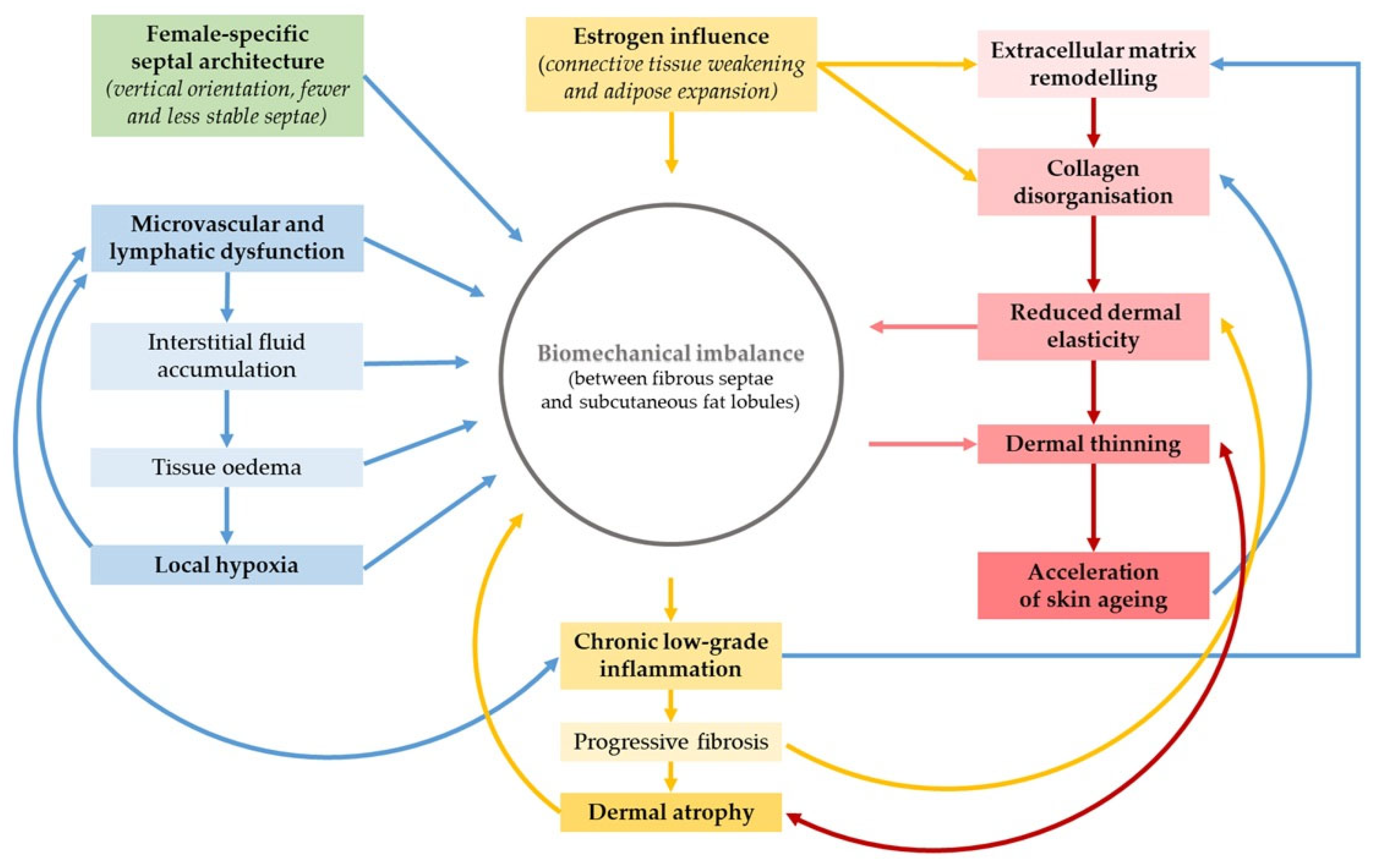
Figure 1. Schematic representation of the key biomechanical, hormonal, vascular, inflammatory, and extracellular matrix (ECM) mechanisms contributing to cellulite development and progression. Female-specific vertical septal architecture, oestrogen-mediated connective-tissue weakening, and adipose expansion create a structural imbalance between fibrous septae and subcutaneous fat lobules. Microvascular and lymphatic dysfunction promote interstitial fluid accumulation, oedema, and local hypoxia, leading to chronic low-grade inflammation. Progressive ECM remodelling, collagen disorganisation, reduced dermal elasticity, and dermal thinning collectively accelerate skin ageing and fibrosis, resulting in the characteristic surface irregularities observed in cellulite.
Cosmetics 13 00035 g001
Figure 2. Schematic representation of active ingredients for the treatment of cellulite.
Cosmetics 13 00035 g002
Figure 3. Molecular structure of Ascorbic acid (IUPAC name: (2R)-2-[(1S)-1,2-dihydroxyethyl]-3,4-dihydroxy-2H-furan-5-one) [20,60].
Cosmetics 13 00035 g003
Figure 4. Ascorbic acid (Vitamin C) can be reversibly oxidised and reduced. Under alkaline conditions, it breaks down into carbon dioxide (CO2) and smaller acids, such as oxalic acid, L-threonic acid, and five-carbon acids (such as L-xylonic and L-lyxonic). In the body, it undergoes limited metabolic conversion to L-xylose and CO2 through decarboxylation followed by reduction [60,62,63].
Cosmetics 13 00035 g004
Figure 5. Molecular structure of two optical isomers of Camphor: (a) (S)-(−)-camphor or (1S,4S)-1,7,7-trimethylnorbornan-2-one; (b) (R)-(+)-camphor or (1R,4R)-1,7,7-trimethylnorbornan-2-one [20,67].
Cosmetics 13 00035 g005
Figure 6. Molecular structure of Capsaicin (IUPAC name: (E)-N-[(4-hydroxy-3-methoxyphenyl)methyl]-8-methylnon-6-enamide) [76,77].
Cosmetics 13 00035 g006
Figure 7. Molecular structure of L-Carnitine (IUPAC name: (3R)-3-hydroxy-4-(trimethylazaniumyl)butanoate) [20].
Cosmetics 13 00035 g007
Figure 8. Molecular structure of Forskolin (IUPAC name: [(3R,4aR,5S,6S,6aS,10S,10aR,10bS)-3-ethenyl-6,10,10b-trihydroxy-3,4a,7,7,10a-pentamethyl-1-oxo-5,6,6a,8,9,10-hexahydro-2H-benzo[f]chromen-5-yl] acetate) [95].
Cosmetics 13 00035 g008
Figure 9. Molecular structure of two optical isomers of Menthol: (a) (+)-Menthol or (1S,2R,5S)-2-isopropyl-5-methyl-cyclohexanol; (b) (−)-Menthol or (1R,2S,5R)-2-isopropyl-5-methyl-cyclohexanol [20,110].
Cosmetics 13 00035 g009
Figure 10. General molecular structure of Xanthine (R1 = R2 = R3 = H) and methylxantine derivatives: Caffeine (R1 = R2 = R3 = CH3), Theobromine (R1 = H; R2 = R3 = CH3), and Theophylline (R1 = R2 = CH3; R3 = H) [112,113].
Cosmetics 13 00035 g010
Figure 11. Molecular structure of Aminophylline (IUPAC name: bis(1,3-dimethyl-7H-purine-2,6-dione);ethane-1,2-diamine). Aminophylline is a complex of theophylline and ethylenediamine in a molar ratio of 2:1 [20].
Cosmetics 13 00035 g011
Figure 12. Molecular structure of Caffeine (IUPAC name: 1,3,7-trimethylpurine-2,6-dione).
Cosmetics 13 00035 g012
Figure 13. Molecular structure of Retinol (IUPAC name: (2E,4E,6E,8E)-3,7-dimethyl-9-(2,6,6-trimethylcyclohexen-1-yl)nona-2,4,6,8-tetraen-1-ol) [20,132].
Cosmetics 13 00035 g013
Figure 14. Molecular structure of α-Tocopherol (IUPAC name: (2R)-2,5,7,8-tetramethyl-2-[(4R,8R)-4,8,12-trimethyltridecyl]-3,4-dihydrochromen-6-ol) [20].
Cosmetics 13 00035 g014
Figure 15. A simplified scheme of α-Tocopherol regeneration and antioxidant mechanism (R = [(4R,8R)-4,8,12-trimethyltridecyl]) [140,142,143,144].
Cosmetics 13 00035 g015
Figure 16. Molecular structure of Deoxycholic acid (IUPAC name: (4R)-4-[(3R,5R,8R,9S,10S,12S,13R,14S,17R)-3,12-dihydroxy-10,13-dimethyl-2,3,4,5,6,7,8,9,11,12,14,15,16,17-tetradecahydro-1H-cyclopenta[a]phenanthren-17-yl]pentanoic acid) [20,174].
Cosmetics 13 00035 g016
Figure 17. Molecular structure of Poly-L-lactic acid [189].
Cosmetics 13 00035 g017
Table 1. Clinical grading and patient-reported assessment tools for cellulite. The table summarises the principal classification systems used to evaluate cellulite severity in clinical and research settings. Each system differs in scoring method, assessment criteria, and diagnostic focus. (Ref. = references).
No.Classification SystemsGrades/ScaleKey FeaturesRef.
1Nürnberger–Müller (1978)Grades 0–3Based on visibility at rest and the pinch test[4,6]
2Hexsel Cellulite Severity Scale (CSS) (2009)Score 0–15 (Mild–Severe)Five criteria: number/depth of depressions, surface alterations, nodularity, flaccidity[4,23]
3BODY-Q Scale (2020)11-item patient-reportedMeasures appearance and quality-of-life impact[24]
4Modern ExpansionsGrades 0–4Introduces pre-cellulite and fibrotic Grade 4[7]
Table 2. An overview of the key factors that predispose individuals to cellulite, along with their explanations and supporting scientific evidence (Ref. = references).
No.FactorDescriptionRef.
1Age and skin elasticityAgeing decreases collagen and dermal thickness, reducing connective tissue support and increasing cellulite visibility.[4]
2Body weight and fat distributionSubcutaneous fat expansion stresses septae; cellulite can also occur in lean individuals.[7]
3Diet and hydrationHigh sodium/carbohydrate intake and low hydration promote fluid retention and microcirculatory impairment.[27]
4Ethnicity and biotypeThe lower prevalence in East Asian women suggests ethnic variation due to differences in skin-fat structure.[3]
5GeneticsPolymorphisms in the angiotensin I-converting enzyme (ACE) and hypoxia-inducible factor HIF1A genes, along with familial patterns, indicate a hereditary predisposition.[28,29]
6Hormonal factorsOestrogen influences fat deposition, connective tissue integrity, and microcirculation. Other hormones include insulin, catecholamines, cortisol, thyroid hormones, and prolactin.[3]
7Lifestyle and physical activitySedentary behaviour impairs microcirculation and lymphatic drainage, contributing to fat deposition and oedema.[30]
8Microcirculation and lymphatic factorsDysfunction of the cutaneous microvasculature and lymphatics leads to oedema, inflammation, and alterations in the extracellular matrix.[16]
9Sex (female)Cellulite affects 80–95% of post-pubertal women due to the orientation of fibrous septae and gynoid fat distribution.[6,7]
10Smoking and excess alcoholNicotine and alcohol impair circulation, degrade collagen/elastin, and promote inflammation.[4,31]
Table 3. Topical therapies for cellulite are categorised by their primary mechanisms of action: agents that enhance microcirculation, reduce lipogenesis and promote lipolysis, restore dermal and subcutaneous structure, and prevent or neutralise free-radical damage. The classification is based on pharmacological properties and documented roles in improving skin physiology and cellulite-related alterations [2,46].
No.Mechanism of ActionAgents (Used Individually or in Combinations)
1Increase the microcirculation flowGinkgo biloba; Pentoxifylline; Centella asiatica; Ruscus aculeatus (Butcher’s broom); Red grapes (Vitis vinifera); Cynara scolymus; Hedera helix (ivy); Melilotus officinalis.
2Stimulate lipolysis and modulate adipocyte metabolismMethylxanthines (e.g., Caffeine, Theophylline, Aminophylline); Carnitine (L-carnitine); Forskolin (Colforsin)
Combinations:
  • Caffeine + Retinol + Ruscogenin
  • Caffeine + Theophylline/Aminophylline + Carnitine + Forskolin
  • Colforsin (Forskolin) + Aminophylline + Yohimbine
  • Aminophylline (1%) + Caffeine (5%) + Yohimbe (2%) + L-Carnitine + Centella asiatica
  • Sulfo-carrabiose + Caffeine (3%)
3Restore the normal structure of dermis and subcutaneous tissueRetinoids (e.g., Retinol, Retinyl Palmitate); Multi-active peptide-based complexes (often combined with methylxanthines); Centella asiatica derivatives (e.g., Asiaticosides, Madecassosides); α-Tocopherol (Vitamin E); Hydrolysed Collagen; Elastin
Combinations:
  • Retinoids + Intense Pulsed Light (IPL)
  • Retinoids + Methylxanthines
  • Centella asiatica extract + α-Tocopherol + Hydrolysed Collagen + Elastin
4Prevent free-radical formation or scavenge free radicalsα-Tocopherol (Vitamin E); Ascorbic acid (Vitamin C); Ginkgo biloba (flavonoids); Vitis vinifera (grape seed procyanidins); Rosmarinus officinalis (rosemary); Escin (venotonic, anti-edematous); Nelumbo nucifera (flavonoid-rich); Cucurbita pepo (pumpkin extract); Cranberry extract; Centella asiatica (Asiaticosides, Madecassosides)
Combinations:
  • Spiruline + Rosmarinus officinalis
  • Caffeine (5%) + Nelumbo nucifera
  • Cucurbita pepo + Cranberry extract
  • Visnadine + Ginkgo biloba flavonoids + Escin
  • Centella asiatica + α-Tocopherol + Hydrolyzed Collagen + Elastin
  • Algae extracts (Fucus vesiculosus, Furcellaria lumbricalis) + Retinoid + CLA + Glaucine
  • Vitis vinifera procyanidins + Ginkgo biloba + Melilotus officinalis (+/− Fucus)
Table 4. Physicochemical properties of caffeine, theobromine, theophylline, and aminophylline [20].
PropertyCaffeineTheobromineTheophyllineAminophylline (Theophylline–Ethylenediamine Complex)Notes
Molecular weight (g/mol)194.19180.16180.16~420 1Salt form/complex
Log P (octanol/water)−0.07 to −0.1~ 0.1−0.1 to −0.2Not definedSalt form
HydrophilicityHighModerateHighVery high-
Water solubility (25 °C)~21.7 g/L~0.3 g/L~8 g/LVery high-
Ionisation at skin pHNeutralNeutralWeakly ionizablePredominantly ionised-
Hydrogen bondingModerateModerateHighVery high-
1 Aminophylline contains ~80% theophylline and ~20% ethylenediamine (w/w).
Table 5. Summary of plant-derived active ingredients with documented anti-cellulite potential, their key bioactive compounds, primary mechanisms of action, formulation considerations, and supporting references (Ref = references); ECM = Extracellular Matrix (network of collagen, elastin, and glycosaminoglycans that provides structural support to skin); MAAs = Mycosporine-like Amino Acids (UV-protective compounds found in algae); PUFAs = Polyunsaturated Fatty Acids (e.g., omega-3 EPA, beneficial for skin barrier and lipid metabolism); PDE = Phosphodiesterase (enzyme that breaks down cAMP; its inhibition promotes lipolysis); cAMP = Cyclic Adenosine Monophosphate (a second messenger that activates lipolytic pathways); NF-κB = Nuclear Factor kappa-light-chain-enhancer of activated B cells (a transcription factor regulating inflammation); β2-adrenergic activation = Stimulation of β2 receptors, leading to vasodilation and improved microcirculation; ROS = Reactive Oxygen Species (free radicals that cause oxidative stress and tissue damage).
Plant (Latin and Common Name)Main Bioactive ConstituentsPrimary Anti-Cellulite MechanismsNotes/Formulation RemarksRef.
Aesculus hippocastanum
(Horse chestnut)
Escin (saponin), esculin, flavonoids, fatty oilsVenotonic and anti-edematous; improves microcirculation; anti-inflammatory/antioxidant; endothelial junction stabilisation (vascular integrity).Frequently used to drain fluids and improve tissue firmness; benefits are tied to vascular tone and ECM support.[17,55,56,57,148]
Annona squamosa
(Custard apple)
Acetogenins (seeds), alkaloids (leaves), diterpenes, cyclopeptidesAnti-adipogenic, anti-inflammatory, antioxidant.Promising in multi-target blends addressing adipogenesis and oxidative stress[149,150,151,152]
Boesenbergia rotunda
(Fingerroot)
Panduratin A, pinostrobin, pinocembrin; flavonoids/phenolicsAnti-adipogenic, antioxidant; may enhance microcirculation and protect the ECM.Often combined with capsaicin; transdermal delivery of panduratin A is documented.[86,153,154,155]
Centella asiatica
(Gotu kola)
Pentacyclic triterpenes: asiaticoside, madecassoside, asiatic acid, madecassic acidStimulates fibroblasts; increases collagen/fibronectin (ECM support); regulates microcirculation; anti-inflammatory and draining.Staple in anti-cellulite/anti-ageing formulas; supports dermal architecture and tone.[17,157,158,159]
Coffee silverskin
(by-product)
Caffeine, chlorogenic acids, melanoidinsLipolysis via methylxanthines; antioxidant; supports microcirculation/oxygen delivery.Sustainable caffeine source; delivery system choice is critical for efficacy.[17,160,161,162]
Gelidium corneum
(red algae)
Polyphenols/flavonoids; MAAs (shinorine, porphyra-334, palythine, asterina-330);
phycobiliproteins; carotenoids; floridoside; PUFAs (e.g., EPA)
Antioxidant/anti-inflammatory; photoprotection; possible lipolysis stimulation; fibroblast activity (tone/elasticity).Multitarget seaweed extract; promising for barrier/hydration + anti-oxidative support.[17,163,164,165,166,167]
Camellia sinensis
(Green tea extract)
Catechins (e.g., EGCG), caffeineLipolysis (PDE inhibition leads to increased cAMP); potent antioxidant; anti-inflammatory.Often paired with caffeine; strong ROS-scavenging complements lipolysis.[17,156]
Hedera helix (ivy)Saponins (e.g., hederacoside, alpha-hederin)Anti-edematous; vasomodulatory (drainage and microcirculation); co-adjuvant.Co-ingredient to enhance lymphatic drainage and tissue tone.[168]
Rosmarinus officinalis
(rosemary)
Carnosol, carnosic acid, rosmarinic acid, ursolic and oleanolic acidsStrong antioxidant/anti-inflammatory; may aid microcirculation and ECM protection.Key botanical to attenuate oxidative cascades implicated in cellulite and photoageing.[152,169,170]
Zanthoxylum clava-herculis (toothache tree)Magnoflorine (±laurifoline)Inhibits NF-κB-mediated inflammation; β2-adrenergic activation leads to vasodilation and microcirculation.Often formulated with rosemary and custard apple for multi-mechanism action.[17,152,171]
Disclaimer/Publisher’s Note: The statements, opinions and data contained in all publications are solely those of the individual author(s) and contributor(s) and not of MDPI and/or the editor(s). MDPI and/or the editor(s) disclaim responsibility for any injury to people or property resulting from any ideas, methods, instructions or products referred to in the content.