


Abstract
Perifollicular elastolysis (PE), frequently referred to as papular acne scars, is an underrecognized folliculocentric disorder; its clinicopathologic spectrum and management have not been comprehensively synthesized. We performed a systematic review by searching Scopus, MEDLINE (via PubMed), and Cochrane CENTRAL from inception to 16 December 2025, for primary PE reports, synthesized findings narratively, and appraised bias risk using Joanna Briggs Institute checklists. After applying relevant inclusion and exclusion criteria, 16 studies, largely case reports/series, were included. PE typically presents as asymptomatic, noninflammatory, discrete follicular papules, most often skin-colored to whitish/yellowish, occurring mainly on the face and other acne-prone sites. Histopathological investigations reproducibly have shown selective perifollicular loss and/or fragmentation of elastic fibers on staining, with variable perifollicular fibrotic or scar-like changes. Therapeutic evidence was sparse and heterogeneous; the largest interventional study evaluated fractional CO2 laser delivered in an artificial grid pattern (three sessions; 2-month intervals) and reported short-term improvement with transient post-inflammatory hyperpigmentation in 15.6% of patients. Overall, PE shows a consistent clinicopathologic signature, but high-certainty therapeutic evidence remains limited; future studies should standardize terminology, diagnostic criteria, and core outcomes and use prospective comparative designs to establish effective and safe treatments.
1. Introduction
Scarring is a common side effect of acne vulgaris, affecting approximately 47% of people with the disease [1]. Acne scars are categorized as atrophic, hypertrophic, or dyschromic based on their morphological characteristics; of these categories, atrophic scars comprise approximately 75–90% of cases. Atrophic scars are approximately three times more prevalent than hypertrophic scars and are categorized epidemiologically according to the morphological classification of ice-pick scars (60–70%), boxcar scars (20–30%), and rolling scars (15–25%) [2]. Another phenotype, first described in 1970, is not as well recognized and is often referred to as “papular acne scars”. This phenotype has been associated with the occurrence of perifollicular elastolysis (PE) [3]. However, its prevalence, clinical features, histology, and treatment options remain relatively unelucidated [4]. Clinically, PE is characterized by the presence of both hypopigmented and skin-colored papules, which may occur in association with acne-hyperpigmented chests, backs, and shoulders. PE is infrequent; however, they are most often seen in younger patients with acne and keloid scarring [5,6,7]. Previous studies have reported a wide range of papular lesion prevalence from 2.7% to 34.6% [5,6,7]. According to Varadi and Saqueton, PE occurs primarily on the trunk (upper back and chest), neck, and proximal upper arm [4]. Huang et al. reported that scarring often occurs in a distribution surrounding the nose, chin, or lower jaw [6]. Histopathologically, papular lesions exhibit flattened or thin epidermal layers with increased basal layer pigmentation and only a slight increase in the number of perifollicular elastic fibers and perivascular infiltrates (lymphocytes and other inflammatory cells) at the base of the papules. Verhoeff–Van Gieson staining is used to visualize papular lesions. Characteristic findings include a significant loss and fragmentation of the elastic fibers, which form a perifollicular halo pattern extending approximately 50–100 µm into the perifollicular dermis; interfollicular elastic fibers and collagen architecture typically remain unchanged [6]. Considerable overlap exists between papular lesions and other scar types owing to the high incidence (approximately 90.6%) of papular lesions coinciding with other scar phenotypes [6]. Moreover, PE has a higher incidence in those with keloid scars (37.74%) than in those without keloid scars (7.16%); these two scar types frequently occur within the same anatomical areas (i.e., jaw, chest, and upper back) [7].
The evidence base remains heterogeneous and is dominated by observational reports, with limited interventional data and minimal mechanistic/experimental investigation. Early observational and experimental work explored a bacterial elastase hypothesis, but subsequent findings have not consistently supported elastolytic activity of implicated organisms [4,8]. Recent studies continue to support a typical clinicopathologic pattern in perifollicular elastolysis. Elastic-fiber special stains, like Verhoeff–Van Gieson or elastica van Gieson, show a selective reduction, fragmentation, or absence of elastic fibers around the folliculosebaceous unit. This change is sometimes accompanied by mild perifollicular fibrosis seen in routine histology [7,9,10]. This pattern has also been noted in unusual or intertriginous areas and in lesions related to repetitive mechanical trauma. These findings highlight the diagnostic importance of elastic stains when clinical features resemble other elastolytic or acne scar forms [11,12]. Therapeutic data is limited and mostly non-comparative. However, recent procedural studies suggest that energy-based or focal destructive methods may improve the appearance of PE. The fractional CO2 laser used in a grid pattern has been shown to lower acne scar severity scores, resulting in high patient satisfaction. Smaller studies also report improvements after electrocautery, ablative CO2 laser, and an Er:YAG technique, usually with transient and manageable side effects [6,13,14,15].
Although PE has been described for decades, the evidence remains fragmented across small observational and interventional reports; however, to our knowledge, no systematic reviews have effectively compiled the literature on the clinical characteristics, histopathology, and therapeutic outcomes. Therefore, research has consisted of fragmented resources from numerous small case reports and case series, which contribute to misconceptions regarding the standardization of terminology and diagnostic criteria, as well as the absence of clear connections to clinicopathological correlations. Thus, the primary goal of this systematic review was to compile the existing data on papular acne scars/papular acne scarring and PE (as variably termed in the literature), provide a synthesized estimate of their prevalence among various population categories, create a clear definition of the clinical and histopathological spectrum of PE, and conduct an in-depth analysis of the reported therapeutic outcomes. This study could assist in facilitating the establishment of a more consistent framework for future recognition and research.
2. Materials and Methods
This systematic review adhered to the Preferred Reporting Items for Systematic Reviews and Meta-Analyses (PRISMA) 2020 guidelines (Supplementary File S1: PRISMA checklist) [16]. The review protocol was prospectively registered on 14 December 2025, using the International Platform of Registered Systematic Review and Meta-Analysis Protocols (INPLASY registration number: INPLASY2025120048; DOI: 10.37766/inplasy2025.12.0048). This study was approved by the Walailak University Ethics Committee (WUEC-26-007-01; date 5 January 2026).
2.1. Information Sources and Search Strategy
A comprehensive literature search was conducted in Scopus, MEDLINE (via PubMed), and the Cochrane Central Register of Controlled Trials (CENTRAL) from database inception to 16 December 2025 [16,17]. The search was restricted to English publications. Review articles, meta-analyses, and systematic reviews were excluded during the database search where applicable; however, the reference lists of relevant reviews were screened to identify additional eligible primary studies. In addition, backward and forward citation tracking was performed for all included studies and key relevant reviews. Corresponding authors were contacted for missing or unclear data.
The full electronic search strategies (including filters/limits) were as follows:
Scopus
TITLE-ABS-KEY (“perifollicular elastolysis” OR (perifollicular W/3 (elastolysis OR anetoderma OR elastin OR “elastic fiber*” OR “elastic fibre*”)) OR (“papular acne scar*” OR (papular W/2 acne W/2 scar*)) OR ((postacne OR “post acne” OR “post-acne”) W/3 (anetoderma OR “anetoderma-like” OR elastolysis))) AND (LIMIT-TO (LANGUAGE, “English”)).
PubMed/MEDLINE
(“perifollicular elastolysis” [tiab] OR (perifollicular [tiab] AND (elastolysis [tiab] OR anetoderma [tiab] OR elastin [tiab] OR “elastic fiber” [tiab] OR “elastic fibres” [tiab])) OR (“papular acne scar” [tiab] OR “papular acne scars” [tiab] OR (papular [tiab] AND acne [tiab] AND scar* [tiab]))) AND English [lang] NOT (review [pt] OR meta-analysis [pt] OR systematic review [pt]).
Cochrane CENTRAL
((“perifollicular elastolysis” OR (perifollicular NEAR/3 elastolysis) OR (perifollicular NEAR/3 anetoderma)) OR (papular NEXT acne NEXT scar*) OR (“papular acne scars”)):ti,ab,kw.
2.2. Eligibility Criteria
Studies reporting primary patient data on PE were eligible. Inclusion criteria encompassed case reports, case series, observational studies (cross-sectional, cohort, and case–control), and interventional studies. Eligible articles were full-text and published in English. Eligible outcomes comprised at least one of the following with extractable data: (1) clinical morphology and/or anatomical distribution; (2) histopathology (H&E descriptors and elastic-fiber staining findings); (3) associated conditions/comorbidities; or (4) management strategies and outcomes (medical, procedural, or observation), including adverse events when reported. No minimum follow-up duration was required; follow-up time points and recurrence/durability were extracted when available. The review included individuals of any age, sex, or ethnicity with a diagnosis established by clinical assessment with supportive histopathology where available. Histopathologic support was defined as selective perifollicular reduction, fragmentation, or absence of elastic fibers demonstrated by an elastic-fiber special stain (e.g., Verhoeff–Van Gieson or elastica van Gieson). Exclusion criteria were (1) narrative reviews, systematic reviews, and meta-analyses; (2) editorials, expert opinions, and letters/abstracts or technical notes lacking sufficient diagnostic detail and extractable baseline characteristics (e.g., age/sex, acne history, lesion morphology/distribution, and histopathologic confirmation when applicable); (3) animal or in vitro studies; (4) duplicate publications; and (5) other elastolysis entities without extractable PE-specific data [16,18].
2.3. Selection Process
All retrieved records were imported to Rayyan (Rayyan Systems Inc., Cambridge, MA, USA) for systematic review, management, and removal of duplicates. Two reviewers independently screened the titles and abstracts and subsequently assessed the full-text reports for eligibility. Discrepancies were resolved through discussions until a consensus was reached. Rayyan was used to facilitate record organization and blinded/independent screening; however, inclusion/exclusion decisions were not made using automated tools (i.e., artificial intelligence) [19].
2.4. Data Extraction and Synthesis
A standardized data-extraction form was developed and piloted. Two reviewers independently extracted data from each included report, and discrepancies were resolved through discussion. No automated tools were used for the data extraction [20,21].
Data were extracted for (1) clinical characteristics of PE (morphology, color, symptoms, follicular pattern, anatomical distribution, age at onset, and/or duration); (2) histopathological findings, including the results of elastic tissue staining/ancillary tests; and (3) management and outcomes, including treatment type, reported response (complete/partial/no response), follow-up duration, recurrence, and adverse events. For each outcome domain, all compatible results reported in each study (across measures, time points, and analyses) were collected when available. Additional variables included study design, number of cases, demographics, comorbidities, associated conditions, diagnostic methods, and reported funding or conflicts of interest. Unreported items were recorded as “not reported,” without imputation.
Findings were primarily synthesized using structured narrative synthesis and tabulation. Categorical data were summarized as counts and proportions (with denominators), and continuous data as mean (standard deviation) or median (interquartile range [IQR]). Meta-analysis was not performed; if sufficiently homogeneous comparative data had existed for a specific outcome, pooled estimates (e.g., risk ratio [RR]/odds ratio [OR] or mean difference) using a random-effects model would have been considered, with heterogeneity assessed using I2 and Cochran’s Q [22]. Exploration of heterogeneity was descriptive and based on clinically relevant strata (e.g., diagnostic confirmation with elastic staining vs. not; truncal vs. non-truncal involvement). Sensitivity analyses (where feasible) repeated key summaries after excluding studies with a high risk of bias and/or those without histopathological confirmation [23].
2.5. Bias Assessment
The methodological quality (risk of bias) of included studies was assessed using Joanna Briggs Institute (JBI) critical appraisal tools, selecting the checklist appropriate to each study design. Specifically, we applied the JBI Critical Appraisal Checklist for Case Reports, the JBI Critical Appraisal Checklist for Case Series, the JBI Critical Appraisal Checklist for Analytical Cross-Sectional Studies, and the JBI Critical Appraisal Checklist for Quasi-Experimental Studies, as applicable [24]. Two reviewers independently appraised each included study, and disagreements were resolved by discussion until a consensus was reached. Automated tools were not used to assess the risk of bias. The results were presented in tabular form and considered when interpreting the certainty and consistency of the findings. In addition, to provide a concise quantitative overview of methodological rigor, we summarized the number (and proportion) of JBI items rated ‘Yes’ per study (Yes = 1; No/Unclear = 0; not applicable items excluded). This metric was used solely to facilitate interpretation and comparison across designs and was not intended as a validated overall quality score nor used as a basis for study exclusion [25].
Given the expected predominance of non-comparative reports and narrative synthesis, formal statistical approaches to detect reporting bias (e.g., funnel plots or Egger’s test) were not anticipated to be appropriate [26]. To mitigate bias due to missing results, we (1) extracted outcomes as comprehensively as reported in each study (including all relevant measures/time points when available), (2) compared reported outcomes against those anticipated from the methods sections when possible, and (3) qualitatively noted selective or incomplete outcome reporting (e.g., absence of follow-up duration, non-reporting of treatment responses, or adverse events). Where feasible, the study authors were contacted to clarify unreported but clinically important outcomes.
3. Results
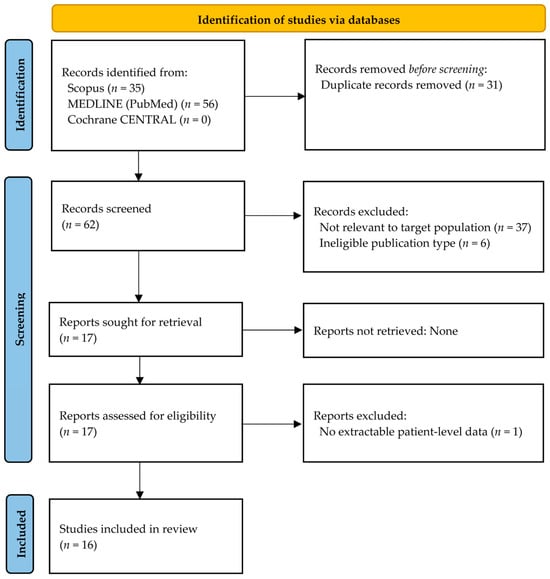
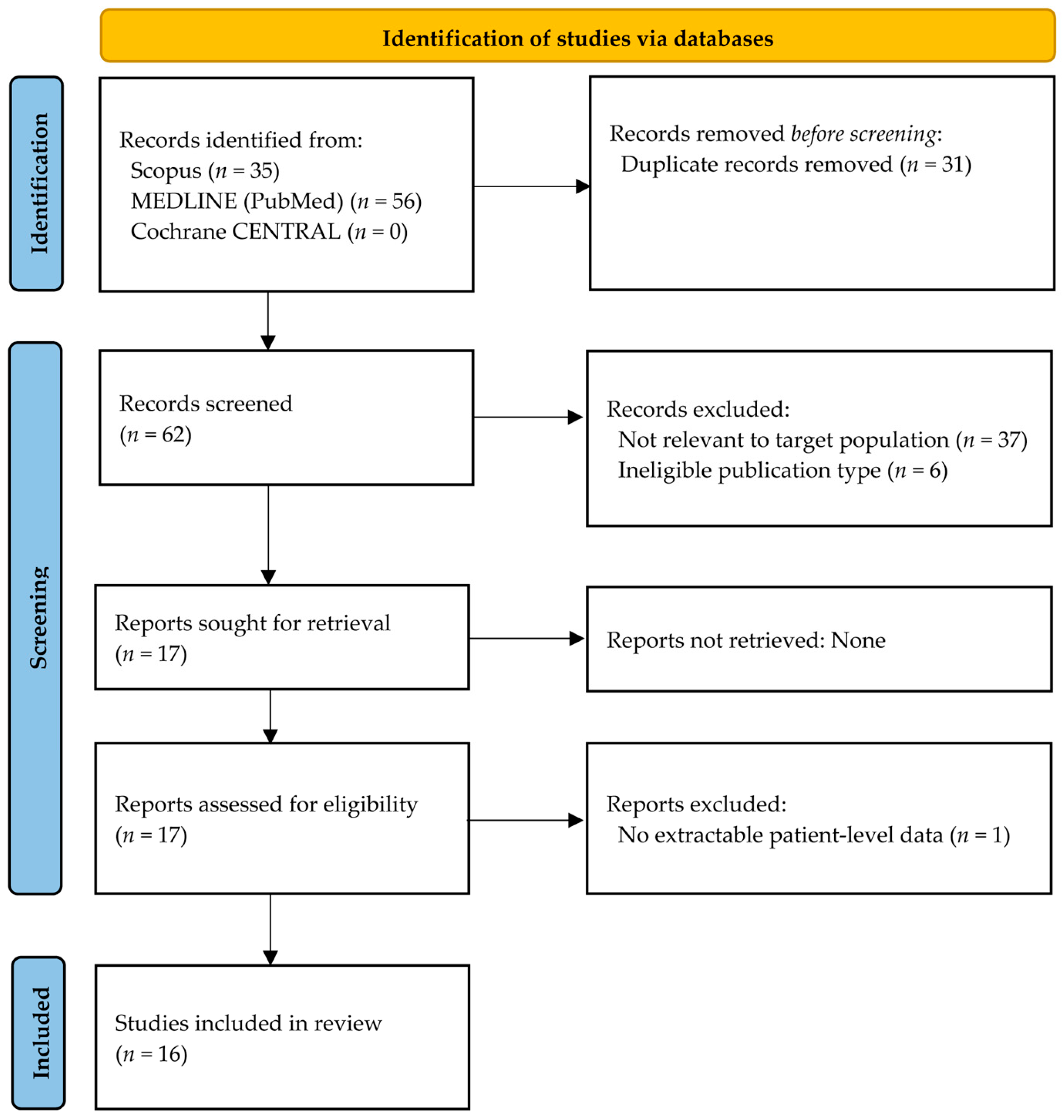
The study identification, screening, and eligibility processes are shown in Figure 1. Sixteen studies were included in the systematic review. One potentially relevant full-text report was excluded because PE-specific patient-level data could not be extracted [27]. The evidence included five case reports [9,12,28,29,30], seven case series [4,8,10,11,13,14,15], three clinic-based observational prevalence/cross-sectional studies [5,7,31], and one retrospective observational study with treatment evaluation [6]. Across the included studies, age was reported in 15/16 (93.8%) and sex in 14/16 (87.5%), whereas ethnicity and Fitzpatrick phototype were less consistently documented (6/16, 37.5% and 4/16, 25.0%, respectively). The broadest age distribution was reported in the largest cohort (median 24, range 1–93 years) [31]. Among studies providing extractable male/female counts (n = 330), 155/330 (47.0%) were male and 175/330 (53.0%) were female, indicating no consistent sex predilection overall [5,6,7,13,31]. When reported, skin phototypes ranged from Fitzpatrick III to V [6,7,13,14]. Key study- and patient-level characteristics, including baseline features, comorbidities, clinical morphology, dermoscopic findings, and anatomical distributions, are presented in Table 1. Given the breadth of extracted variables, Table 1, Table 2 and Table 3 provide standardized study-level summaries to facilitate cross-study comparison, while additional detailed descriptors are presented in Supplementary Tables S1 and S2. An acne history was reported in 10/16 (62.5%) studies [5,6,7,8,10,11,13,14,15,31]. In patient-level denominators where acne history was extractable (262/263 patients), acne history was present in 255/262 (97.3%) [5,6,7,8,10,11,13,14,15,31]. In the largest cohort, papular lesions were significantly associated with acne (57% in acne patients vs. 9% in non-acne patients), and 81% of those with papules reported truncal acne [31]. Co-occurrence with other acne scar phenotypes was common when assessed (e.g., 90.6% combined scarring; 9.4% exclusive papular scarring) [6]. Keloid association was specifically examined in one large acne scar cohort, where PE lesions were more frequent among patients with keloids than those without (37.74% vs. 7.16%) [7]. Beyond acne, isolated reports described PE in the context of atopic dermatitis [28], pseudofolliculitis in Behçet’s disease [29], and repetitive mechanical trauma (shaving) [12]. Active acne or inflammatory activity at presentation was variably reported and present in 4/16 studies; active inflammation was present in 25/34 (73.5%) [5,10,11,29].
Figure 1.
PRISMA flow diagram of the study selection process. CENTRAL, Cochrane Central Register of Controlled Trials; MEDLINE, Medical Literature Analysis and Retrieval System Online; PRISMA, Preferred Reporting Items for Systematic Reviews and Meta-Analyses.
Table 1.
Clinical characteristics, comorbidities, anatomical distribution, and dermoscopic findings in perifollicular elastolysis.
Table 2.
Histopathologic Findings of Perifollicular Elastolysis.
Table 3.
Management strategies and outcomes for perifollicular elastolysis.
The hallmark histopathologic finding across the studies was perifollicular loss or fragmentation of elastic fibers, typically confirmed with elastic fiber special staining, with variable perifollicular fibrotic or scar-like changes on routine histology [4,5,7,8,9,10,12,28,29,30,31]. Additional histopathological details and staining methods are listed in Table 2.
PE-specific clinical outcomes were reported in 7/16 studies (43.8%). Objective, quantitative pre-post improvement was available primarily from a fractional CO2 laser study, which demonstrated substantial reductions in validated scar scores with high patient satisfaction and transient adverse effects [6]. Additional procedural reports described clinically meaningful improvement after electrocautery, ablative CO2 laser, and an Er:YAG pinhole technique, although outcome assessment was largely descriptive and follow-up was limited [13,14,15]. Limited medical and conservative management suggested variable response: one report noted improvement with topical tretinoin after minimal response to benzoyl peroxide, whereas another series reported no response to prior topical anti-acne therapies [10,11]. Spontaneous partial resolution during observation was described in one case report [28]. The remaining studies did not provide PE-specific outcome data (Table 3).
The risk of bias was assessed using the JBI Critical Appraisal Checklist (Table 4, Table 5, Table 6 and Table 7). The case reports generally demonstrated a high methodological quality, whereas case series frequently lacked clear inclusion criteria or consecutive recruitment strategies. The cross-sectional studies were limited primarily by their failure to address confounding factors, and the single quasi-experimental study lacked a control group and appropriate statistical analysis. JBI item responses were summarized quantitatively (Yes = 1; No/Unclear = 0; NA excluded). Overall, case reports demonstrated uniformly high methodological quality (median score 100%), whereas case series and cross-sectional studies showed low-to-moderate methodological quality (median scores 44.4% and 37.5%, respectively). The quasi-experimental study scored 44.4%, with recurring limitations including unclear case inclusion/consecutive recruitment, absence of a control/comparator group, limited consideration of confounding, and non-standardized outcome assessment.
Table 4.
Quality Assessment of Case Reports (JBI Checklist).
Table 5.
Quality Assessment of Case Series (JBI Checklist).
Table 6.
Quality Assessment of Cross-Sectional Studies (JBI Checklist).
Table 7.
Quality Assessment of Quasi-Experimental Studies (JBI Checklist).
4. Discussion
Across the 16 included studies, PE was characterized clinically by asymptomatic folliculocentric papules, often described in the context of acne or PE phenotypes, and histopathologically by selective perifollicular loss or fragmentation of elastic fibers confirmed using special elastic fiber staining [4,5,7,8,31]. Although dermoscopic reporting was limited, the available descriptions supported a reproducible follicle-centered morphology [9]. Therapeutic evidence was limited and methodologically heterogeneous. However, in most studies, procedural interventions, particularly fractional CO2 laser, suggested potential short-term clinical benefits with predominantly transient adverse effects while remaining constrained by uncontrolled designs and imprecise outcome reporting [6,13,14,15]. Overall, the findings indicated that PE is under-recognized, variably labeled across studies, and supported by a characteristic histological signature. However, the current evidence base is insufficient to draw firm conclusions regarding optimal management or comparative treatment effectiveness.
4.1. Diagnostic Discrimination
The clinical identification of PE is largely based on the characteristic presentation of a discrete follicular pattern of involvement without scales or erythema. PE lesions are usually skin-colored to whitish/yellowish-white, although hypo- and hyperpigmented areas may be present, as well as occasional brown or gray-white lesions. Such morphology and particularly the lack of follicular plugging and inflammation help distinguish PE from other follicular conditions such as keratosis pilaris (KP), lichen spinulosus, phrynoderma, and mid-dermal elastolysis.
KP and PE have distinct characteristics. KP exhibits hyperkeratosis, whereas PE lesions are non-scaly. KP is described as spiny keratotic papules that are approximately 1 mm in size and mainly located on the proximal extremities [32]. These lesions have a follicular orifice filled with a keratin plug or coiled vellus hair, which are also associated with subtle erythema around the follicle [33]. Histologically, KP shows follicular plugging with excess keratin and mild perivascular lymphocytic/histiocytic infiltrates; these are not characteristic of the noninflammatory elastolytic processes of PE.
Similar to PE, lichen spinulosus has multiple minute and digitate hyperkeratoses centered on the follicle [34]. This digitate- or spinal-like appearance of hyperkeratosis distinguishes lichen spinulosus from the smooth papular texture that is characteristic of PE. Phrynoderma is characterized by a scaly violaceous rash with conical keratotic plugs located on the extensor surfaces [35]. This disease presents with scales, conical plugs, and violaceous coloration, in contrast to the whitish, scale-free papules of PE. In addition, histopathological evaluation differentiates phrynoderma from PE because phrynoderma displays epidermal and follicular hyperkeratosis and sebaceous gland atrophy [36].
Mid-dermal elastolysis type 2 (MDE Type 2) closely resembles PE, as both conditions present with asymptomatic flesh-colored papules [37]. Compared with the discrete, non-coalescing lesions of PE, MDE lesions are generally larger (up to 10 mm), typically located on the neck and trunk, and often coalesce to form a “peau d’orange” (orange peel) appearance. The most definitive difference between PE and MDE has been observed via histopathological analysis. PE involves elastolysis around the follicle; however, MDE is characterized by a banded loss of elastic fibers mainly in the mid-dermis, and elastic fibers are completely preserved around the hair follicles.
4.2. Clinicopathological Findings and Possible Pathogenesis
Our analyses revealed that PE clinically appears as an asymptomatic collection of small, round bumps that lack erythema and are typically skin colored or yellowish-white. PE lesions vary morphologically from hard, cobblestone-shaped fibrous papules that resemble acne scarring to soft, wrinkled, and anetodermic elevations. Histologically, when viewed with hematoxylin and eosin staining, the lesions show perifollicular fibrosis and dilated infundibula without marked inflammation. The hallmark of the diagnosis is demonstrated by histological investigation using special staining (such as Verhoeff–Van Gieson) that highlights the presence of elastic fibers. The perifollicular region shows a marked reduction (selective decrease or absence) in the number of elastic fibers, whereas the distribution of elastic fibers in the interfollicular area remains unchanged.
PE involves the selective and almost complete disappearance of elastic fibers and is most commonly confined to the perifollicular area [4]. Elastolysis is considered to be the primary process in PE. Verhoeff–Van Gieson staining has revealed a significant reduction, fragmentation, or absence of elastic fibers particularly in the perifollicular region [4,9,11]. Early lesions may not exhibit inflammatory or cellular reactions within the lesion area [4]. According to a number of cases involving the investigation of collagen, PE can cause a decrease in the size of collagen fibers in the affected areas compared with the adjacent normal skin [31]. To date, the underlying pathogenesis of PE has not been fully elucidated and appears to involve a combination of microbial, mechanical, and immunologic processes [9]. Importantly, direct mechanistic evidence remains limited and is largely inferential, derived from clinicopathologic correlations and small observational reports rather than experimental validation. PE has most commonly been described in an acne-associated context (historically termed papular acne scars), supporting an inflammation-related injury hypothesis in which leukocyte-mediated tissue damage during inflammatory acne contributes to downstream elastin loss and scar remodeling with limited elastin regeneration [8,10,11,31]. A second proposed mechanism is enzymatic extracellular-matrix degradation; in this context, dysregulation of the MMP–TIMP balance has been suggested to favor elastin breakdown under inflammatory and oxidative stress conditions [9,12]. A microbial elastase hypothesis—particularly implicating elastase-producing Staphylococcus epidermidis—was historically proposed; however, subsequent investigations have not consistently demonstrated elastolytic activity of S. epidermidis or Cutibacterium acnes, and this mechanism remains unconfirmed [4,8,11]. In addition, selected reports suggest that mechanical trauma (e.g., shaving) and non-acne inflammatory dermatoses or sterile inflammatory conditions (e.g., atopic dermatitis, steroid-associated folliculitis, and Behçet’s-associated pseudofolliculitis) may act as alternative triggers, supporting a broader immunologic contribution in some cases [11,12,28,29].
4.3. Treatment and Future Considerations
Available therapeutic options for PE lack robust evidence supporting their efficacy, as most previous studies are small and primarily describe PE characteristics without providing data on related outcomes [4,5,7,8,9,28,29,31]. Notable interventional evidence includes a retrospective study examining fractional CO2 lasers delivered in a grid pattern to treat PE [6]. The treatment consisted of three sessions, spaced 2 months apart and involved an average of 32 patients. The patients showed significant improvement in clinical appearance and validated scar scores after just one month of therapy and were highly satisfied with the results. The only adverse effects were temporary and included post-inflammatory hyperpigmentation in 15.6% of the patients necessitating 4–7 days of downtime from work; these effects resolved within 7 to 21 days [6]. Other small studies suggest that electrocautery performed in an office setting may yield substantial clinical improvement (n = 3), with near-complete resolution of lesions observed as early as 3 days after a single session [14], ablative CO2 laser treatments (n = 5; average of 50% clinical improvement after one treatment and up to an 80% reduction after repeated treatments; after healing, no dyspigmentation or infection were reported) [13], and erbium-doped yttrium aluminum garnet (Er:YAG) pinhole laser treatments (n = 2; moderate to substantial cosmetic improvements with mild transient erythema/pain; no patients reported a relapse up to one year following treatment) [15]. Non-interventional approaches to the management of PE have been poorly researched/documented. In one patient, topical benzoyl peroxide provided minimal benefit, whereas topical tretinoin was associated with clinical improvement in lesion appearance at 3 months. No current research has indicated that mechanical stimulation (i.e., shear wave stimulation, radiofrequency microneedling) should be avoided [11,12]. Due to the lack of controlled clinical trial designs or the presence of comparison groups, the ability to make causal inferences and to compare the effectiveness of various PE therapies is limited [4,6,8,10,11,13,14,15].
Previous studies using fractional ablative laser technology for acne-inducing atopic diseases have provided evidence supporting the existing and expected levels of tolerance between laser types. The most recent meta-analysis included eight studies (seven randomized controlled trials and one retrospective analysis; n = 418 patients) and indicated that fractional CO2 laser was clinically significantly better than fractional Er:YAG laser based on the OR (1.81 with a 95% confidence interval [1.08, 3.01] for effectiveness). However, fractional CO2 laser therapy resulted in greater pain (visual analog scale weighted mean difference [WMD] = 1.77) and prolonged erythema (WMD = 1.85). Fractional CO2 required a shorter recovery period post-treatment than fractional Er:YAG laser (WMD −2.11). Post-inflammatory hyperpigmentation was not significantly different between the two laser types (OR = 1.87; p = 0.057) [38]. Fractional photothermolysis produces small zones of controlled thermal destruction combined with unaffected skin, leading to rapid re-epithelialization and stimulation of fibroblast-mediated dermal remodeling as well as new collagen production [39,40,41]. Heat-induced stress responses, characterized by the accumulation of heat shock protein 47, have been shown to increase collagen production, repair the extracellular matrix, and peak approximately one-month post-laser treatment [41,42]. The use of fractional CO2 lasers is also associated with the reorganization of elastic fibers (when normal elastic fibers degenerate) and production of new elastic fibers. Histological studies have demonstrated that degenerated elastic fibers are replaced with more organized elastin networks in conjunction with improvements in collagen structure, thereby supporting the biological plausibility of lasers for treating conditions associated with focal loss of elastin [42,43,44].
PE exhibits elastic fiber loss characterized by the involvement of peripheral follicles. Future treatment modalities may be beneficial for resurfacing and promoting elastogenesis while preserving the extracellular matrix. Retinoid therapy, for example, promotes the formation of a number of fibrils and inhibits MMPs, both of which are involved in the breakdown of elastic fibers [45]. Other elastogenic methods proposed in skin aging research include oral bioactive collagen peptides and oral or topical synthetic elastin-derived peptides that promote tropoelastin production by stimulating elastin receptor–IGF-1R signaling pathways. Controlled clinical trials have shown that these therapies result in statistically significant increases in elastin levels within the dermis of the skin. Furthermore, S-equol has been suggested to enhance cutaneous parameters of the skin surface through estrogen receptor pathways [46,47,48,49]. Other potential methods for substituting perifollicular elastic fibers include regenerative therapy (e.g., using tropoelastin mRNA transfected into human cells) or platelet-rich plasma therapy (similar to methods supported by published research on acne scarring), which require further studies to determine their ability to specifically regenerate perifollicular elastic fibers [50,51]. Currently, no standard protocols or consensuses have been derived regarding the treatment of PE. The limited quantity and quality of data emphasize the need for more rigorous clinical studies to compare established and accepted procedural modalities. Randomized controlled trials (RCTs) evaluating candidate therapies aimed at promoting elastogenesis or preservation of the extracellular matrix are needed. Future clinical studies should include objective outcomes to compare and validate treatment efficacy and clarify specific mechanisms of action to improve treatment effects.
To improve comparability in future PE studies, we should adopt a core outcome set. At a minimum, this should include: (1) a standardized case definition with clear diagnostic criteria, including clinical morphology and, when possible, histopathologic confirmation using an elastic-fiber stain; (2) lesion burden measured by counting lesions and mapping their anatomical distribution; (3) standardized photography with fixed camera settings, lighting, distance, and patient positioning, ideally evaluated by a blinded assessor; (4) validated scar severity tools reported at set time points; (5) patient-reported outcomes that capture symptoms, cosmetic distress and satisfaction, and health-related quality of life; and (6) safety outcomes that include downtime, changes in pigmentation, scarring, infection, and recurrence, reported using clear definitions and follow-up intervals. Adopting these core elements would improve reproducibility, allow for meaningful synthesis, and support thorough comparisons of procedural and medical interventions.
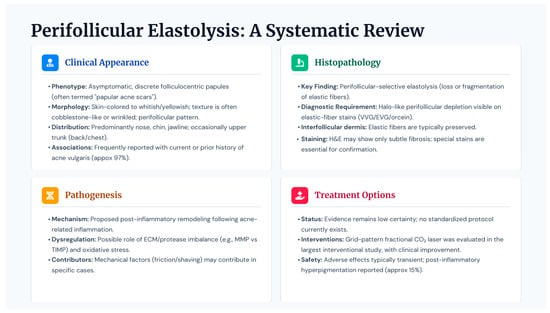
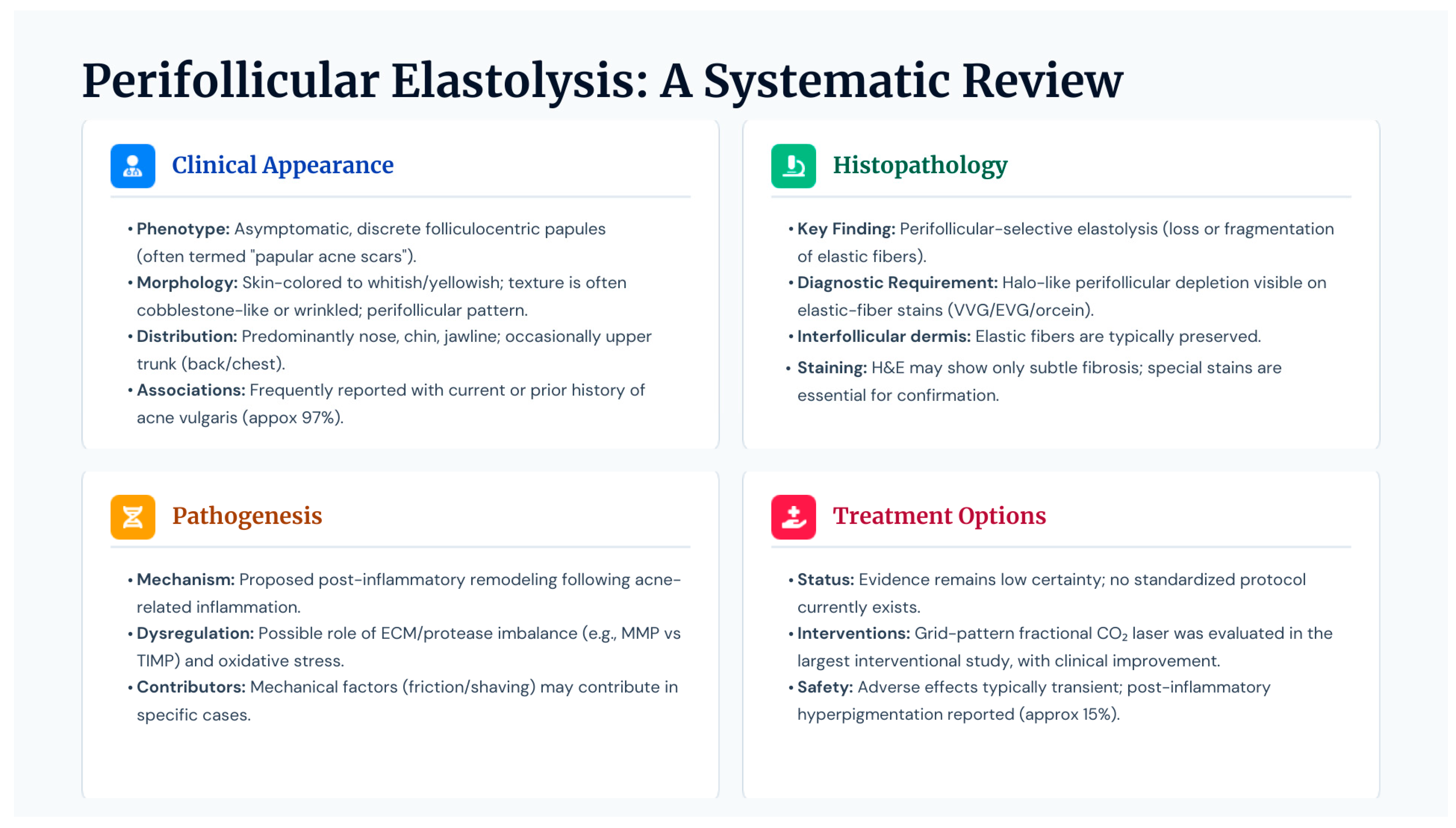
Figure 2 provides a schematic overview linking the typical clinical phenotype, diagnostic histopathology, proposed mechanisms, and currently reported management options.
Figure 2.
Graphical summary of perifollicular elastolysis: clinical phenotype, diagnostic histopathology, proposed pathogenesis, and treatment options. Note. CO2, carbon dioxide; ECM, extracellular matrix; EVG, elastica van Gieson; H&E, hematoxylin and eosin; MMP, matrix metalloproteinase; TIMP, tissue inhibitor of metalloproteinases; VVG, Verhoeff–Van Gieson.
4.4. Limitations
This study had some limitations which must be considered when interpreting the results. First, most of the currently available literature has a low level of evidence (low-quality studies, case reports, and small series). Minimal studies with controlled comparisons have been published, limiting the ability to establish causal relationships, thereby impacting the level of confidence associated with treatment effect estimates. Consequently, future research is needed including: (a) large cohort or cross-sectional studies that will provide a more comprehensive understanding of clinical features and histopathology and (b) well-designed RCTs to evaluate treatment efficacy and safety. Second, the wide variation in the terminology (for example, “papular acne scars” vs. “papular scars”), as well as the variable diagnostic criteria, impede the ability to compare results across studies. Therefore, the dermatologic field would benefit from further research to establish an international consensus on the terminology and diagnostic criteria. The establishment of recommended histopathological requirements, as well as elastic fiber staining, would provide further assistance in developing common standards. Third, the search was restricted to English-language publications, which may have introduced language bias and omitted relevant studies, particularly older or regionally published foundational reports from non-English-speaking settings. This restriction may reduce the completeness of the evidence base and limit the generalizability of the synthesized findings. Fourth, individual study methodologies vary widely, and the assessment of outcomes have relied on subjective measurements (non-validated grading), including patient self-reported satisfaction measures with few objective findings. Thus, a core outcome measurement set should incorporate standardized metrics for lesions using standardized photographic methods (evaluation by a blinded evaluator, where possible), as well as validated clinician-reported scales and patient-reported outcomes collected at specified times after treatment. Fifth, clarity regarding the durability, recurrence, and adverse events associated with variables in each study increases with adequate follow-up. Standardized baseline characteristics of patients should be included in all studies, along with prespecified follow-up times and explicit definitions of recurrence and adverse event assessment. Finally, biases and limited generalizability pose risks that undermine internal validity and restrict the ability to extend the findings beyond the original studies. The following factors are likely contributing to the present lack of evidence: selection/publication bias and the risk of misclassification due to different histopathological confirmation or staining methods; small sample sizes with insufficient representation by age group, skin phototype/ethnicity, and clinical setting; and non-standard data reporting across studies.
5. Conclusions
PE, commonly referred to as papular acne scarring, is a distinctive dermatological condition characterized by small, round, skin-colored or whitish/yellowish papules adjacent to hair follicles. The dermopathology demonstrates an abnormal loss of elastic fibers around the hair follicles. To date, the limited studies indicate that PE is under-recognized and has been inconsistently named and characterized, which creates inconsistent definitions. Treatment evidence for PE remains limited and inconsistent, lacks standardized outcome measures, and is mainly based on a few small, uncontrolled case reports or case series. Most studies have found that the best temporary improvement was achieved after treatment with a fractional CO2 laser using a grid pattern, with minimal adverse effects. To date, the certainty of the results from the studies is limited by design limitations and unknown detection bias. Future studies should aim to standardize the terminology, diagnostic criteria, and baseline reporting to facilitate data synthesis. Additionally, rigorous prospective cohort studies and RCTs are essential to fully elucidate the pathophysiology of PE and validate therapeutic interventions.
Supplementary Materials
The following supporting information can be downloaded at: https://www.mdpi.com/article/10.3390/cosmetics13010036/s1, File S1: PRISMA 2020 checklist; Table S1: Extended baseline and cohort characteristics for studies with complex denominators or detailed baseline narratives; Table S2: Management strategies reported across included studies, including studies without PE-specific outcome data.
Author Contributions
Conceptualization, W.T.; methodology, C.E. and W.T.; validation, C.E. and W.T.; formal analysis, C.E. and W.T.; investigation, C.E. and W.T.; data curation, W.T.; writing—original draft preparation, W.T.; writing—review and editing, C.E. and W.T.; visualization, W.T.; project administration, W.T. All authors have read and agreed to the published version of the manuscript.
Funding
This research received no external funding.
Institutional Review Board Statement
The study was conducted in accordance with the Declaration of Helsinki, and approved by the Walailak University Ethics Committee (WUEC-26-007-01, date of approval 5 January 2026).
Informed Consent Statement
Not applicable.
Data Availability Statement
All data supporting the findings of this study are included within the manuscript. Additional details or clarifications can be provided upon reasonable request to the corresponding author.
Conflicts of Interest
The authors declare no conflicts of interest.
Abbreviations
The following abbreviations are used in this manuscript:
| PE | Perifollicular elastolysis |
| PRISMA | Preferred Reporting Items for Systematic Reviews and Meta-Analyses |
| WUEC | Walailak University Ethics Committee |
| INPLASY | International Platform of Registered Systematic Review and Meta-Analysis Protocols |
| RR | Risk ratio |
| OR | Odds ratio |
| IQR | Interquartile range |
| JBI | Joanna Briggs Institute |
| KP | Keratosis pilaris |
| MDE | Mid-dermal elastolysis Type 2 |
| MMP | Matrix metalloproteinase |
| TIMP | Tissue inhibitor of metalloproteinases |
| Er:YAG | Erbium-doped yttrium aluminum garnet |
| WMD | Weighted mean difference |
References
- Liu, L.; Xue, Y.; Chen, Y.; Chen, T.; Zhong, J.; Shao, X.; Chen, J. Prevalence and risk factors of acne scars in patients with acne vulgaris. Skin Res. Technol. 2023, 29, e13386. [Google Scholar] [CrossRef] [Scilit]
- Zhang, M.; Liu, C.; Zhang, S.; Chu, R.; Ren, X. Advances in the treatment of acne scars. Front. Med. 2025, 12, 1643035. [Google Scholar] [CrossRef] [Scilit] [PubMed]
- Jennings, T.; Duffy, R.; McLarney, M.; Renzi, M.; Heymann, W.R.; Decker, A.; Lawrence, N. Acne scarring—Pathophysiology, diagnosis, prevention and education: Part I. J. Am. Acad. Dermatol. 2024, 90, 1123–1134. [Google Scholar] [CrossRef] [Scilit] [PubMed]
- Varadi, D.P.; Saqueton, A.C. Perifollicular elastolysis. Br. J. Dermatol. 1970, 83, 143–150. [Google Scholar] [CrossRef] [PubMed]
- Ali, F.R.; Kirk, M.; Madan, V. Papular acne scars of the nose and chin: An under-recognised variant of acne scarring. J. Cutan. Aesthet. Surg. 2016, 9, 241–243. [Google Scholar] [CrossRef] [Scilit]
- Huang, B.; Liu, N.; Li, Y.; Ying, A.; Bi, J.; Shi, T.; Wang, C. Efficacy and adverse reactions of fractional CO2 lasers for treating papular acne scars: A retrospective study of 35 patients. Lasers Med. Sci. 2024, 39, 246. [Google Scholar] [CrossRef] [Scilit]
- Lee, Y.-J.; Lee, C.-Y.; Shin, M.K. A neglected acne scar type: Papular acne scars and their correlations with keloid scars. Dermatol. Surg. 2021, 47, 1347–1351. [Google Scholar] [CrossRef] [Scilit]
- Dick, G.F.; Ashe, B.M.; Rodgers, E.G.; Diercks, R.C.; Göltz, R.W. Study of elastolytic activity of Propionibacterium acnes and Staphylococcus epidermis in acne vulgaris and in normal skin. Acta Derm.-Venereol. 1976, 56, 279–282. [Google Scholar] [CrossRef] [Scilit]
- Ma, J.Y.; Chen, X.; Wang, Y.X.; He, X.J.; Wei, A.H. Perifollicular elastolysis: A case report and literature review. Clin. Cosmet. Investig. Dermatol. 2025, 18, 2523–2529. [Google Scholar] [CrossRef] [Scilit]
- Verma, S.; Nandkumari, G. Rediscovering perifollicular elastolysis: A hitherto undocumented entity in India. Indian J. Dermatol. 2015, 60, 603–605. [Google Scholar] [CrossRef] [Scilit]
- Ramachandran, V.; Hinds, B.; Marsch, A.F. Intertriginous perifollicular elastolysis: A report of 2 cases. JAAD Case Rep. 2020, 6, 612–615. [Google Scholar] [CrossRef] [Scilit] [PubMed]
- Zheng, Y.; Su, X.; Chen, Z.; Han, L. Perifollicular elastolysis caused by repeatedly shaving armpit hairs. J. Cosmet. Dermatol. 2021, 20, 2673–2674. [Google Scholar] [CrossRef] [Scilit]
- Fonseka, S.; Wickramaarachchi, D.C.; Bandara, D.D.J. Ablative carbon dioxide laser treatment for papular scars of nose and chin due to acne: A case series. Int. J. Dermatol. Venerol. 2021, 4, 182–184. [Google Scholar] [CrossRef] [Scilit]
- Graber, E.; Borash, J. How I Do It: Treatment of papular acne scars of the nose. Dermatol. Surg. 2022, 48, 1366–1367. [Google Scholar] [CrossRef] [Scilit]
- Lee, S.J.; Kim, J.M.; Kim, Y.K.; Seo, S.J.; Park, K.Y. The pinhole method using an erbium: YAG laser for the treatment of papular acne scars. Dermatol. Ther. 2017, 30, e12512. [Google Scholar] [CrossRef] [Scilit] [PubMed]
- Page, M.J.; McKenzie, J.E.; Bossuyt, P.M.; Boutron, I.; Hoffmann, T.C.; Mulrow, C.D.; Shamseer, L.; Tetzlaff, J.M.; Akl, E.A.; Brennan, S.E. The PRISMA 2020 statement: An updated guideline for reporting systematic reviews. BMJ 2021, 372, 71. [Google Scholar] [CrossRef] [Scilit]
- Aromataris, E.; Riitano, D. Systematic reviews: Constructing a search strategy and searching for evidence. AJN Am. J. Nurs. 2014, 114, 49–56. [Google Scholar] [CrossRef] [Scilit]
- Egger, M.; Higgins, J.P.; Smith, G.D. Systematic Reviews in Health Research; Wiley Online Library: Hoboken, NJ, USA, 2022. [Google Scholar]
- Johnson, N.; Phillips, M. Rayyan for systematic reviews. J. Electron. Resour. Librariansh. 2018, 30, 46–48. [Google Scholar] [CrossRef] [Scilit]
- Taylor, K.S.; Mahtani, K.R.; Aronson, J.K. Summarising good practice guidelines for data extraction for systematic reviews and meta-analysis. BMJ Evid.-Based Med. 2021, 26, 88–90. [Google Scholar] [CrossRef] [Scilit]
- Mathes, T.; Klaßen, P.; Pieper, D. Frequency of data extraction errors and methods to increase data extraction quality: A methodological review. BMC Med. Res. Methodol. 2017, 17, 152. [Google Scholar] [CrossRef] [Scilit]
- Hansen, C.; Steinmetz, H.; Block, J. How to conduct a meta-analysis in eight steps: A practical guide. Manag. Rev. Q. 2022, 72, 1–19. [Google Scholar] [CrossRef] [Scilit]
- Mathur, M.B.; VanderWeele, T.J. Sensitivity analysis for publication bias in meta-analyses. J. R. Stat. Soc. Ser. C Appl. Stat. 2020, 69, 1091–1119. [Google Scholar] [CrossRef] [Scilit]
- Barker, T.H.; Stone, J.C.; Sears, K.; Klugar, M.; Leonardi-Bee, J.; Tufanaru, C.; Aromataris, E.; Munn, Z. Revising the JBI quantitative critical appraisal tools to improve their applicability: An overview of methods and the development process. JBI Evid. Synth. 2023, 21, 478–493. [Google Scholar] [CrossRef] [Scilit] [PubMed]
- Lockwood, C. Systematic reviews of qualitative evidence. In JBI Manual for Evidence Synthesis; Aromataris, E., Lockwood, C., Porritt, K., Pilla, B., Jordan, Z., Eds.; JBI: Adelaide, Australia, 2024. [Google Scholar]
- Debray, T.P.A.; Moons, K.G.M.; Riley, R.D. Detecting small-study effects and funnel plot asymmetry in meta-analysis of survival data: A comparison of new and existing tests. Res. Synth. Methods 2018, 9, 41–50. [Google Scholar] [CrossRef] [Scilit] [PubMed]
- Sanke, S.; Chander, R.; Mehra, S. Intralesional radiofrequency for papular acne scars. Indian Dermatol. Online J. 2019, 10, 486–487. [Google Scholar] [CrossRef] [Scilit]
- Amano, H.; Kishi, C.; Motegi, S.; Aoyama, K.; Shimizu, A.; Ishikawa, O. Perifollicular elastolysis with atopic dermatitis. J. Dermatol. 2014, 41, 231–232. [Google Scholar] [CrossRef] [Scilit] [PubMed]
- Honda, Y.; Otsuka, A.; Iga, N.; Kaku, Y.; Sakurai, T.; Miyachi, Y.; Kabashima, K. Perifollicular elastolysis associated with pseudofolliculitis of Behçet’s disease. J. Dermatol. 2015, 42, 1017–1018. [Google Scholar] [CrossRef] [Scilit]
- Noh, S.; Roh, H.J.; Jin, S.; Lee, N.; Park, C.O.; Lee, K.H. Atrophia maculosa varioliformis cutis with histological features of perifollicular elastolysis. Eur. J. Dermatol. 2012, 22, 703–704. [Google Scholar] [CrossRef] [Scilit]
- Wilson, B.B.; Dent, C.H.; Cooper, P.H. Papular acne scars: A common cutaneous finding. Arch. Dermatol. 1990, 126, 797–800. [Google Scholar] [CrossRef] [Scilit]
- Wang, J.F.; Orlow, S.J. Keratosis pilaris and its subtypes: Associations, new molecular and pharmacologic etiologies, and therapeutic options. Am. J. Clin. Dermatol. 2018, 19, 733–757. [Google Scholar] [CrossRef] [Scilit]
- Hwang, S.; Schwartz, R.A. Keratosis pilaris: A common follicular hyperkeratosis. Cutis 2008, 82, 177–180. [Google Scholar]
- Gallo, J.C.; de Wet, J.; Visser, W.I.; Jordaan, H.F.; Schneider, J.W. Generalized lichen spinulosus and secondary follicular mucinosis. JAAD Case Rep. 2023, 33, 101–104. [Google Scholar] [CrossRef] [Scilit]
- Verheyden, M.J.; Howard, V.; Gupta, M. Phrynoderma: An under-recognised condition reflecting nutritional deficiency. Med. J. Aust. 2024, 221, 86–87. [Google Scholar] [CrossRef] [Scilit] [PubMed]
- Shivanna, R.; Kumar, V.; Murugesh, S. A clinical study of 125 patients with phrynoderma. Indian J. Dermatol. 2011, 56, 389–392. [Google Scholar] [CrossRef] [Scilit] [PubMed]
- Volz, A.; Pfister-Wartha, A.; Bruckner-Tuderman, L.; Braun-Falco, M. Perifollicular protrusions—Mid-dermal elastolysis. J. Dtsch. Dermatol. Ges. 2009, 7, 68–69. [Google Scholar] [CrossRef] [Scilit]
- Liu, F.; Zhou, Q.; Tao, M.; Shu, L.; Cao, Y. Efficacy and safety of CO2 fractional laser versus Er:YAG fractional laser in the treatment of atrophic acne scar: A meta-analysis and systematic review. J. Cosmet. Dermatol. 2024, 23, 2768–2778. [Google Scholar] [CrossRef] [Scilit] [PubMed]
- Magnani, L.R.; Schweiger, E.S. Fractional CO2 lasers for the treatment of atrophic acne scars: A review of the literature. J. Cosmet. Laser Ther. 2014, 16, 48–56. [Google Scholar] [CrossRef] [Scilit]
- Mu, Y.Z.; Jiang, L.; Yang, H. The efficacy of fractional ablative carbon dioxide laser combined with other therapies in acne scars. Dermatol. Ther. 2019, 32, e13084. [Google Scholar] [CrossRef] [Scilit]
- Scarcella, G.; Pieri, L.; Fusco, I. Skin fractional scar treatment with a new carbon dioxide scanner: Histological and clinical evaluation. Photobiomodul. Photomed. Laser Surg. 2022, 40, 424–432. [Google Scholar] [CrossRef] [Scilit]
- Xu, X.G.; Luo, Y.J.; Wu, Y.; Chen, J.Z.; Xu, T.H.; Gao, X.H.; He, C.D.; Geng, L.; Xiao, T.; Zhang, Y.Q.; et al. Immunohistological evaluation of skin responses after treatment using a fractional ultrapulse carbon dioxide laser on back skin. Dermatol. Surg. 2011, 37, 1141–1149. [Google Scholar] [CrossRef] [Scilit]
- Cohen, B.E.; Geronemus, R.G.; McDaniel, D.H.; Brauer, J.A. The role of elastic fibers in scar formation and treatment. Dermatol. Surg. 2017, 43, S19–S24. [Google Scholar] [CrossRef] [Scilit]
- Esmat, S.; Shokeir, H.A.; Samy, N.A.; Mahmoud, S.B.; Sayed, S.S.E.L.D.; Shaker, E.; Hilal, R.F. Automated microneedling versus fractional CO2 laser in treatment of traumatic scars: A clinical and histochemical study. Dermatol. Surg. 2021, 47, 1480–1485. [Google Scholar] [CrossRef] [Scilit] [PubMed]
- Riahi, R.R.; Bush, A.E.; Cohen, P.R. Topical retinoids: Therapeutic mechanisms in the treatment of photodamaged skin. Am. J. Clin. Dermatol. 2016, 17, 265–276. [Google Scholar] [CrossRef] [Scilit] [PubMed]
- Lephart, E.D. Determination of S- and/or R-equol in plant-based food products and efficacy of topical or oral 4′,7-isoflavandiol (R/S equol) to improve skin health in adult men: A placebo-controlled pilot study. J. Funct. Foods 2021, 83, 104563. [Google Scholar] [CrossRef] [Scilit]
- Oyama, A.; Ueno, T.; Uchiyama, S.; Aihara, T.; Miyake, A.; Kondo, S.; Matsunaga, K. The effects of natural S-equol supplementation on skin aging in postmenopausal women: A pilot randomized placebo-controlled trial. Menopause 2012, 19, 202–210. [Google Scholar] [CrossRef] [Scilit]
- Proksch, E.; Schunck, M.; Zague, V.; Segger, D.; Degwert, J.; Oesser, S. Oral intake of specific bioactive collagen peptides reduces skin wrinkles and increases dermal matrix synthesis. Skin Pharmacol. Physiol. 2014, 27, 113–119. [Google Scholar] [CrossRef] [Scilit]
- Qa’aty, N.; Vincent, M.; Wang, Y.; Wang, A.; Mitts, T.F.; Hinek, A. Synthetic ligands of the elastin receptor induce elastogenesis in human dermal fibroblasts via activation of their IGF-1 receptors. J. Dermatol. Sci. 2015, 80, 175–185. [Google Scholar] [CrossRef] [Scilit]
- Lescan, M.; Perl, R.M.; Golombek, S.; Pilz, M.; Hann, L.; Yasmin, M.; Behring, A.; Keller, T.; Nolte, A.; Gruhn, F.; et al. De novo synthesis of elastin by exogenous delivery of synthetic modified mRNA into skin and elastin-deficient cells. Mol. Ther. Nucleic Acids 2018, 11, 475–484. [Google Scholar] [CrossRef] [Scilit]
- Long, T.; Gupta, A.; Ma, S.; Hsu, S. Platelet-rich plasma in noninvasive procedures for atrophic acne scars: A systematic review and meta-analysis. J. Cosmet. Dermatol. 2020, 19, 836–844. [Google Scholar] [CrossRef] [Scilit]

Disclaimer/Publisher’s Note: The statements, opinions and data contained in all publications are solely those of the individual author(s) and contributor(s) and not of MDPI and/or the editor(s). MDPI and/or the editor(s) disclaim responsibility for any injury to people or property resulting from any ideas, methods, instructions or products referred to in the content. |
© 2026 by the authors. Licensee MDPI, Basel, Switzerland. This article is an open access article distributed under the terms and conditions of the Creative Commons Attribution (CC BY) license.