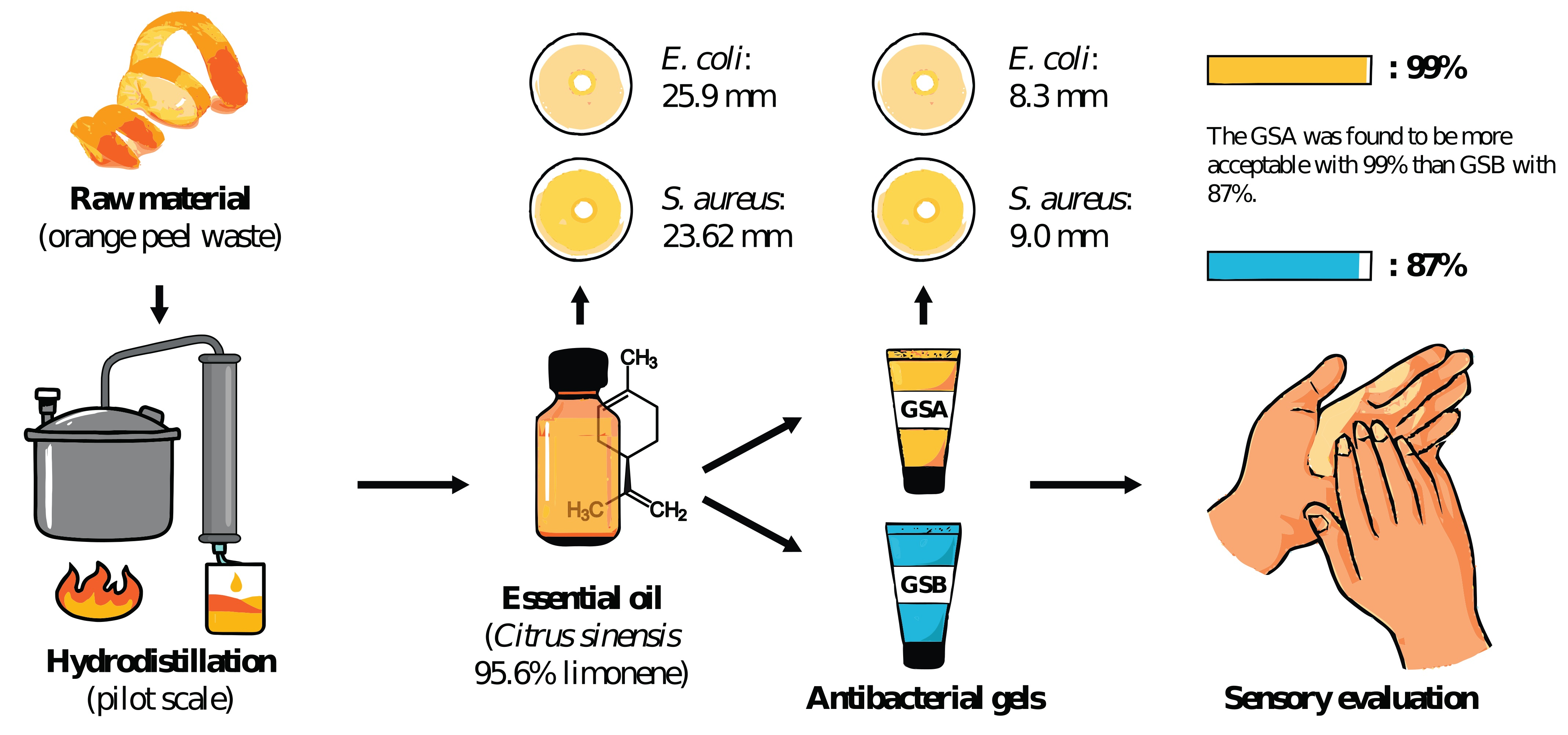


High-Limonene Orange Peel Essential Oil as a Natural Antibacterial Agent in Hand Sanitizer Gels
 , , , , , , and
Abstract
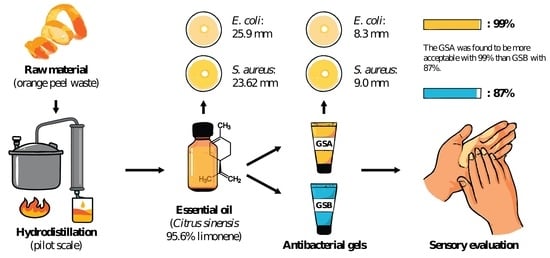
1. Introduction
2. Materials and Methods
2.1. Reagents
2.2. Sample Preparation, Essential Oil Extraction, and Gel Formulation
2.3. Gas Chromatography–Mass Spectroscopy
2.4. Antibacterial Gel Cost Calculation
2.5. Antibacterial Capacity of Orange Peel Essential Oil and Antibacterial Gels
2.6. Sensory Evaluation of Orange Peel Essential Oil Antibacterial Gels
2.7. Ethical Statement
3. Results and Discussion
3.1. Gas Chromatography–Mass Spectroscopy Results
3.2. Antibacterial Gel Cost Calculation and Viscosity Results
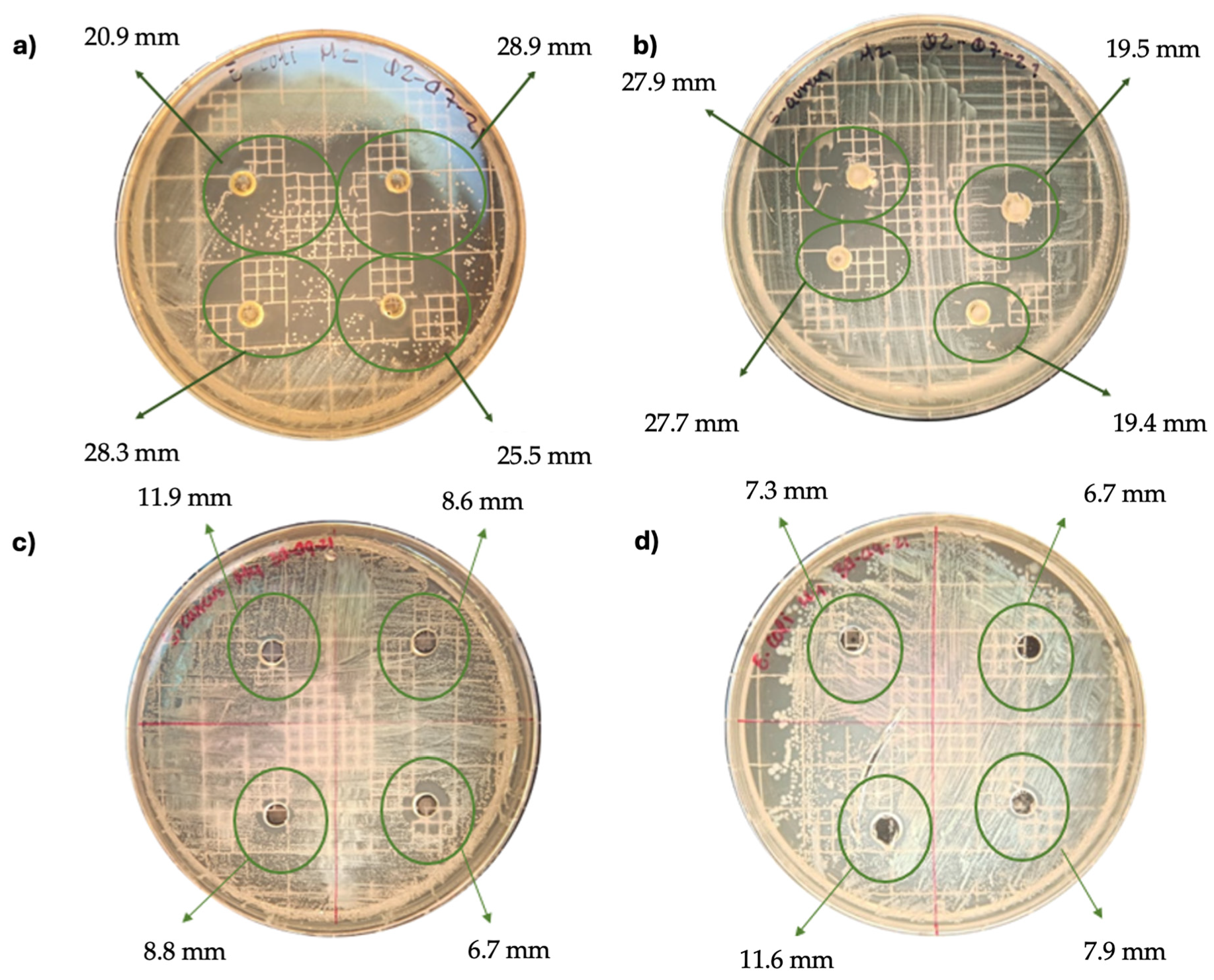
3.3. Antibacterial Findings
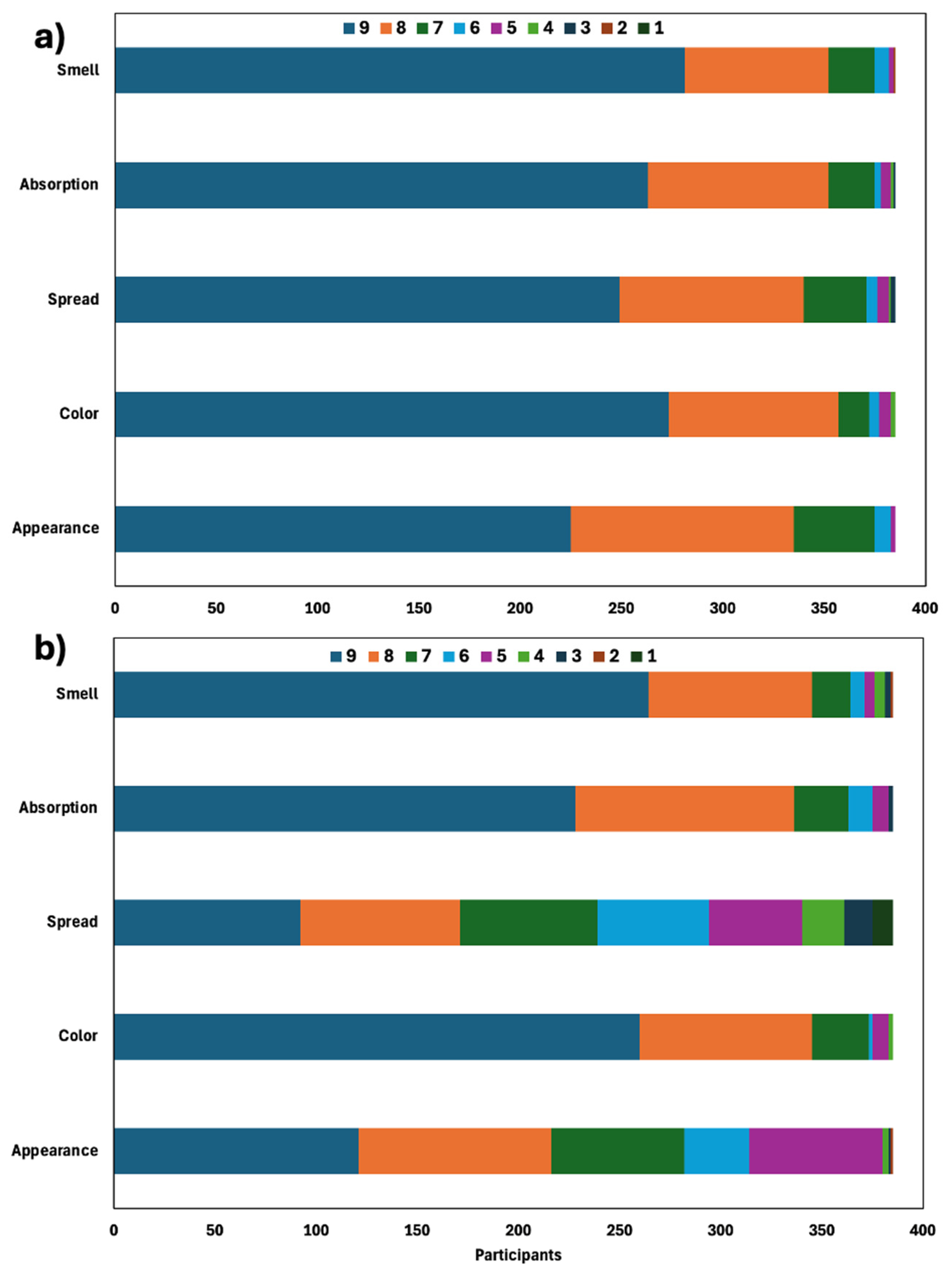
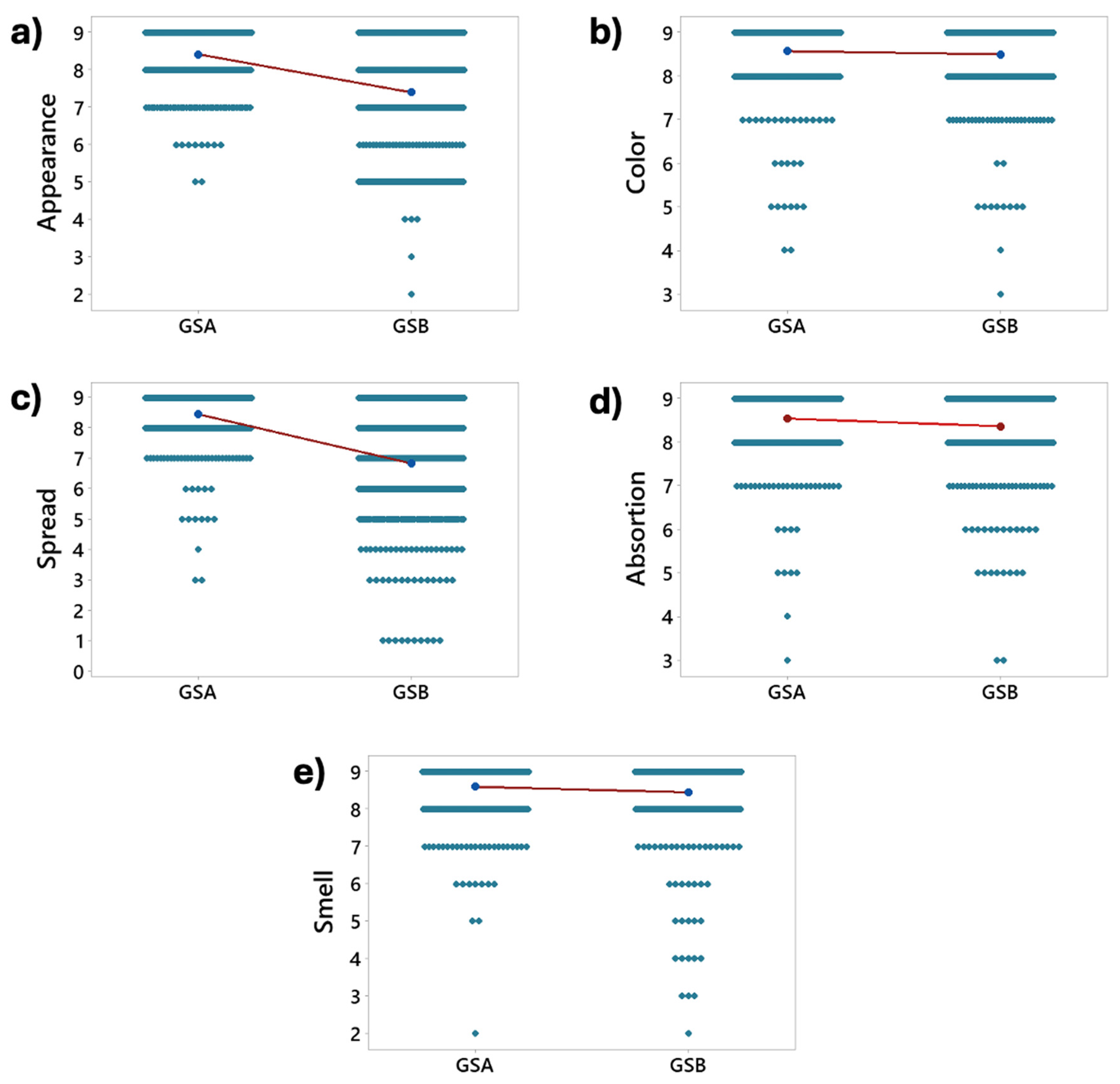
3.4. Sensory Evaluation of Antibacterial Gels
4. Conclusions
Author Contributions
Funding
Institutional Review Board Statement
Informed Consent Statement
Data Availability Statement
Acknowledgments
Conflicts of Interest
References
- Sagaste, C.A.; Coronado, M.A.; Ayala, J.R.; Rojano, B.A.; Montes, D.G.; García, C.; Valenzuela, E. Antimicrobial and Antioxidant Properties of Essential Oils from Orange Peels and Eucalyptus Leaves Wastes. BioResources 2024, 19, 8844–8859. [Google Scholar] [CrossRef]
- Bakkali, F.; Averbeck, S.; Averbeck, D.; Idaomar, M. Biological Effects of Essential Oils—A Review. Food Chem. Toxicol. 2007, 46, 446–475. [Google Scholar] [CrossRef]
- Burt, S. Essential Oils: Their Antibacterial Properties and Potential Applications in Foods—A Review. Int. J. Food Microbiol. 2004, 94, 223–253. [Google Scholar] [CrossRef] [PubMed]
- Chemat, F.; Sawamura, M. Techniques for Oil Extraction. In Citrus Essential Oils: Flavor and Fragrance; Sawamura, M., Ed.; Wiley Online Library: Hoboken, NJ, USA, 2010; pp. 9–36. [Google Scholar] [CrossRef]
- Aziz, Z.A.A.; Ahmad, A.; Setapar, S.H.M.; Karakucuk, A.; Azim, M.M.; Lokhat, D.; Rafatullah, M.; Ganash, M.; Kamal, M.A.; Ashraf, G.M. Essential Oils: Extraction Techniques, Pharmaceutical and Therapeutic Potential—A Review. Curr. Drug Metab. 2018, 19, 1100–1110. [Google Scholar] [CrossRef] [PubMed]
- Bailão, E.F.L.C.; Pereira, D.G.; Romano, C.A.; De Santana Paz, A.T.; Silva, T.M.E.; De Paula, J.R.; Gomes, C.M.; Borges, L.L. Larvicidal Effect of the Citrus limettioides Peel Essential Oil on Aedes aegypti. S. Afr. J. Bot. 2021, 144, 257–260. [Google Scholar] [CrossRef]
- Adams, R.P. Identification of Essential Oil Components by Gas Chromatography/Mass Spectroscopy, 4.1st ed.; Allured Publishing: Carol Stream, IL, USA, 2017; p. 804. [Google Scholar]
- Maes, C.; Bouquillon, S.; Fauconnier, M.L. Encapsulation of Essential Oils for the Development of Biosourced Pesticides with Controlled Release: A Review. Molecules 2019, 24, 2539. [Google Scholar] [CrossRef]
- Ambrosio, C.M.S.; De Alencar, S.M.; De Sousa, R.L.M.; Moreno, A.M.; Da Gloria, E.M. Antimicrobial Activity of Several Essential Oils on Pathogenic and Beneficial Bacteria. Ind. Crops Prod. 2016, 97, 128–136. [Google Scholar] [CrossRef]
- Mohammed, I.O.; Alrasheid, A.A.; Ayoub, S.M.H. GC-MS Analysis and Study of the Antimicrobial Activity of Citrus paradisi, Citrus aurantifolia, and Citrus sinensis Peel Essential Oils as Hand Sanitizer. Int. J. Microbiol. 2024, 2024, 4957712. [Google Scholar] [CrossRef]
- Indrianingsih, A.W.; Asari, S.M.; Pratiwi, S.I. In Vitro Study of Antioxidant, Antidiabetic, and Antibacterial Activity of Orange (Citrus sinensis) and Jade Lemon (Citrus limon) Peels Essentials Oils. IOP Conf. Ser. Earth Environ. Sci. 2024, 1419, 012005. [Google Scholar] [CrossRef]
- Kampf, G.; Kramer, A. Epidemiologic Background of Hand Hygiene and Evaluation of the Most Important Agents for Scrubs and Rubs. Clin. Microbiol. Rev. 2004, 17, 863–893. [Google Scholar] [CrossRef]
- Todd, E.C.D.; Michaels, B.S.; Holah, J.; Smith, D.; Greig, J.D.; Bartleson, C.A. Outbreaks Where Food Workers Have Been Implicated in the Spread of Foodborne Disease. Part 10. Alcohol-Based Antiseptics for Hand Disinfection and a Comparison of Their Effectiveness with Soaps. J. Food Prot. 2010, 73, 2128–2140. [Google Scholar] [CrossRef]
- US Centers for Disease Control and Prevention (CDC). Hand Sanitizer Guidelines and Recommendations. Available online: https://www.cdc.gov/clean-hands/about/hand-sanitizer.html (accessed on 28 April 2025).
- Kampf, G. Efficacy of Ethanol against Viruses in Hand Disinfection. J. Hosp. Infect. 2017, 98, 331–338. [Google Scholar] [CrossRef]
- World Health Organization. Recommendations to Member States to Improve Hand Hygiene Practices to Help Prevent the Transmission of the COVID-19 Virus: Interim Guidance, (No. WHO/2019-nCov/Hand_Hygiene_Stations/2020.1). Available online: https://www.who.int/publications/i/item/recommendations-to-member-states-to-improve-hand-hygiene-practices-to-help-prevent-the-transmission-of-the-covid-19-virus (accessed on 1 April 2025).
- U.S. Department of Agriculture (USDA). Citrus: World Markets and Trade. Available online: https://esmis.nal.usda.gov/sites/default/release-files/w66343603/cz30rd902/vh53zg80g/citrus.pdf (accessed on 23 February 2025).
- Secretaría de Agricultura y Desarrollo Rural de México (SADER). Detrás de la Naranja. Available online: https://www.gob.mx/agricultura/articulos/detras-de-la-naranja?idiom=es (accessed on 15 March 2024).
- Suri, S.; Singh, A.; Nema, P.K. Current Applications of Citrus Fruit Processing Waste: A Scientific Outlook. Appl. Food Res. 2022, 2, 100050. [Google Scholar] [CrossRef]
- De Castro, L.A.; Lizi, J.M.; Chagas, E.G.L.D.; De Carvalho, R.A.; Vanin, F.M. From Orange Juice By-Product in the Food Industry to a Functional Ingredient: Application in the Circular Economy. Foods 2020, 9, 593. [Google Scholar] [CrossRef]
- Sharma, K.; Mahato, N.; Lee, Y.R. Extraction, Characterization and Biological Activity of Citrus Flavonoids. Rev. Chem. Eng. 2018, 35, 265–284. [Google Scholar] [CrossRef]
- Galindo-Segura, L.A.; Pérez-Vázquez, A.; Ramírez-Martínez, A.; López-Romero, G.; Gómez-Merino, F.C. El Manejo Del Bagazo de Naranja En La Zona Centro Del Estado de Veracruz. Terra Latinoam. 2023, 41, e1673. [Google Scholar] [CrossRef]
- Ribeiro-Santos, R.; Andrade, M.; Sanches-Silva, A.; De Melo, N.R. Essential Oils for Food Application: Natural Substances with Established Biological Activities. Food Bioprocess Technol. 2017, 11, 43–71. [Google Scholar] [CrossRef]
- Galanakis, C.M. Recovery of High Added-Value Components from Food Wastes: Conventional, Emerging Technologies and Commercialized Applications. Trends Food Sci. Technol. 2012, 26, 68–87. [Google Scholar] [CrossRef]
- Fisher, K.; Phillips, C. Potential Antimicrobial Uses of Essential Oils in Food: Is Citrus the Answer? Trends Food Sci. Technol. 2007, 19, 156–164. [Google Scholar] [CrossRef]
- Nazzaro, F.; Fratianni, F.; De Martino, L.; Coppola, R.; De Feo, V. Effect of Essential Oils on Pathogenic Bacteria. Pharmaceuticals 2013, 6, 1451–1474. [Google Scholar] [CrossRef]
- Armenta, E.E.; Coronado, M.A.; Ayala, J.R.; León, J.A.; Montes, D. Essential Oil Extraction for All: A Flexible and Modular System for Citrus Biomass Waste. BioResources 2023, 18, 4977–4993. [Google Scholar] [CrossRef]
- Lachenmeier, D.W. Safety evaluation of topical applications of ethanol on the skin and inside the oral cavity. J. Occup. Med. Toxicol. 2008, 3, 26. [Google Scholar] [CrossRef]
- Valdez-Salas, B.; Beltran-Partida, E.; Cheng, N.; Salvador-Carlos, J.; Valdez-Salas, E.A.; Curiel-Alvarez, M.; Ibarra-Wiley, R. Promotion of Surgical Masks Antimicrobial Activity by Disinfection and Impregnation with Disinfectant Silver Nanoparticles. Int. J. Nanomed. 2021, 16, 2689–2702. [Google Scholar] [CrossRef]
- Edmonds-Wilson, S.L.; Nurinova, N.I.; Zapka, C.A.; Fierer, N.; Wilson, M. Review of Human Hand Microbiome Research. J. Dermatol. Sci. 2015, 80, 3–12. [Google Scholar] [CrossRef]
- Instituto Nacional de Estadística y Geografía (INEGI). Censo de Población y Vivienda. Available online: https://www.inegi.org.mx/programas/ccpv/2020/ (accessed on 22 December 2024).
- Del Águila, M.R.; González-Ramírez, A. Sample Size Calculation. Allergol. Et Immunopathol. 2013, 42, 485–492. [Google Scholar] [CrossRef]
- Azghar, A.; Dalli, M.; Azizi, S.; Benaissa, E.M.; Lahlou, Y.B.; Elouennass, M.; Maleb, A. Chemical Composition and Antibacterial Activity of Citrus Peels Essential Oils against Multidrug-Resistant Bacteria: A Comparative Study. J. Herb. Med. 2023, 42, 100799. [Google Scholar] [CrossRef]
- Padilla-Camberos, E.; Sanchez-Hernandez, I.M.; Torres-Gonzalez, O.R.; Del Rosario Gallegos-Ortiz, M.; Méndez-Mona, A.L.; Baez-Moratilla, P.; Flores-Fernandez, J.M. Natural Essential Oil Mix of Sweet Orange Peel, Cumin, and Allspice Elicits Anti-Inflammatory Activity and Pharmacological Safety Similar to Non-Steroidal Anti-Inflammatory Drugs. Saudi J. Biol. Sci. 2022, 29, 3830–3837. [Google Scholar] [CrossRef] [PubMed]
- Li, Y.; Liu, S.; Zhao, C.; Zhang, Z.; Nie, D.; Tang, W.; Li, Y. The Chemical Composition and Antibacterial and Antioxidant Activities of Five Citrus Essential Oils. Molecules 2022, 27, 7044. [Google Scholar] [CrossRef] [PubMed]
- Moemenbellah-Fard, M.D.; Shahriari-Namadi, M.; Kelidari, H.R.; Nejad, Z.B.; Ghasemi, H.; Osanloo, M. Chemical Composition and Repellent Activity of Nine Medicinal Essential Oils against Anopheles stephensi, the Main Malaria Vector. Int. J. Trop. Insect Sci. 2020, 41, 1325–1332. [Google Scholar] [CrossRef]
- Evangelho, J.A.D.; Da Silva Dannenberg, G.; Biduski, B.; Halal, S.L.M.E.; Kringel, D.H.; Gularte, M.A.; Fiorentini, A.M.; Da Rosa Zavareze, E. Antibacterial Activity, Optical, Mechanical, and Barrier Properties of Corn Starch Films Containing Orange Essential Oil. Carbohydr. Polym. 2019, 222, 114981. [Google Scholar] [CrossRef] [PubMed]
- Aprotosoaie, A.C.; Luca, V.S.; Trifan, A.; Miron, A. Antigenotoxic Potential of Some Dietary Non-Phenolic Phytochemicals. In Studies in Natural Products Chemistry; Atta-ur-Rahman, F.R.S., Ed.; Elsevier: Amsterdam, The Netherlands, 2018; Volume 60; pp. 223–297. [Google Scholar]
- John, I.; Muthukumar, K.; Arunagiri, A. A Review on the Potential of Citrus Waste for D-Limonene, Pectin, and Bioethanol Production. Int. J. Green Energy 2017, 14, 599–612. [Google Scholar] [CrossRef]
- Uysal, B.; Sozmen, F.; Aktas, O.; Oksal, B.S.; Kose, E.O. Essential Oil Composition and Antibacterial Activity of the Grapefruit (Citrus paradisi. L.) Peel Essential Oils Obtained by Solvent-free Microwave Extraction: Comparison with Hydrodistillation. Int. J. Food Sci. Technol. 2011, 46, 1455–1461. [Google Scholar] [CrossRef]
- Bhandari, D.P.; Poudel, D.K.; Satyal, P.; Khadayat, K.; Dhami, S.; Aryal, D.; Chaudhary, P.; Ghimire, A.; Parajuli, N. Volatile Compounds and Antioxidant and Antimicrobial Activities of Selected Citrus Essential Oils Originated from Nepal. Molecules 2021, 26, 6683. [Google Scholar] [CrossRef]
- Shin, S.-D.; Kim, C.-S.; Lee, J.-H. Compositional Characteristics and Antibacterial Activity of Essential Oils in Citrus Hybrid Peels. Food Sci. Technol. 2021, 42, e95921. [Google Scholar] [CrossRef]
- Van Vuuren, S.F.; Viljoen, A.M. Antimicrobial Activity of Limonene Enantiomers and 1,8-cineole Alone and in Combination. Flavour Fragr. J. 2007, 22, 540–544. [Google Scholar] [CrossRef]
- Jirovetz, L.; Buchbauer, G.; Stoyanova, A.S.; Georgiev, E.V.; Damianova, S.T. Composition, Quality Control and Antimicrobial Activity of the Essential Oil of Cumin (Cuminum cyminum L.) Seeds from Bulgaria That Had Been Stored for up to 36 Years. Int. J. Food Sci. Technol. 2005, 40, 305–310. [Google Scholar] [CrossRef]
- Magwa, M.L.; Gundidza, M.; Gweru, N.; Humphrey, G. Chemical Composition and Biological Activities of Essential Oil from the Leaves of Sesuvium portulacastrum. J. Ethnopharmacol. 2005, 103, 85–89. [Google Scholar] [CrossRef]
- Skocibusic, M.; Bezic, N.; Dunkic, V. Phytochemical Composition and Antimicrobial Activities of the Essential Oils from Vis. Growing in Croatia. Food Chem. 2005, 96, 20–28. [Google Scholar] [CrossRef]
- Matasyoh, J.C.; Kiplimo, J.J.; Karubiu, N.M.; Hailstorks, T.P. Chemical Composition and Antimicrobial Activity of Essential Oil of Tarchonanthus camphoratus. Food Chem. 2006, 101, 1183–1187. [Google Scholar] [CrossRef]
- Ortega-Ramirez, L.A.; Rodriguez-Garcia, I.; Leyva, J.M.; Cruz-Valenzuela, M.R.; Silva-Espinoza, B.A.; Gonzalez-Aguilar, G.A.; Siddiqui, M.W.; Ayala-Zavala, J.F. Potential of Medicinal Plants as Antimicrobial and Antioxidant Agents in Food Industry: A Hypothesis. J. Food Sci. 2014, 79, R129–R137. [Google Scholar] [CrossRef] [PubMed]
- Devi, R.; Barkath, T.N.; Vijayaraghavan, P.; Rejiniemon, T.S. GC-MS Analysis of Phytochemical from Psidium Guajava Linn Leaf Extract and Their Invitro Antimicrobial Activities. Int. J. Pharm. Biol. Sci. 2018, 8, 583–589. [Google Scholar]
- Sharma, S.; Gupta, J.; Prabhakar, P.K.; Gupta, P.; Solanki, P.; Rajput, A. Phytochemical Repurposing of Natural Molecule: Sabinene for Identification of Novel Therapeutic Benefits Using In Silico and In Vitro Approaches. ASSAY Drug Dev. Technol. 2019, 17, 339–351. [Google Scholar] [CrossRef]
- Shu, H.; Chen, H.; Wang, X.; Hu, Y.; Yun, Y.; Zhong, Q.; Chen, W.; Chen, W. Antimicrobial Activity and Proposed Action Mechanism of 3-Carene against Brochothrix Thermosphacta and Pseudomonas Fluorescens. Molecules 2019, 24, 3246. [Google Scholar] [CrossRef]
- American Society of Microbiology (ASM). Kirby-Bauer Disk Diffusion Susceptibility Test. Available online: https://asm.org/image-gallery/kirby-bauer-disk-diffusion-susceptibility-test (accessed on 16 May 2025).
- National Committee for Clinical Laboratory Standards. Performance Standards for Antimicrobial Disk Susceptibility Tests; National Committee for Clinical Laboratory Standards: Wayne, PA, USA, 2003. [Google Scholar]
- Hachlafi, N.E.; Mrabti, H.N.; Al-Mijalli, S.H.; Jeddi, M.; Abdallah, E.M.; Benkhaira, N.; Hadni, H.; Assaggaf, H.; Qasem, A.; Goh, K.W.; et al. Antioxidant, Volatile Compounds; Antimicrobial, Anti-Inflammatory, and Dermato protective Properties of Cedrus atlantica (Endl.) Manetti Ex Carriere Essential Oil: In Vitro and In Silico Investigations. Molecules 2023, 28, 5913. [Google Scholar] [CrossRef] [PubMed]
- Abdelatti, M.A.I.; El-Aziz, N.K.A.; El-Naenaeey, E.-S.Y.M.; Ammar, A.M.; Alharbi, N.K.; Alharthi, A.; Zakai, S.A.; Abdelkhalek, A. Antibacterial and Anti-Efflux Activities of Cinnamon Essential Oil against Pan and Extensive Drug-Resistant Pseudomonas Aeruginosa Isolated from Human and Animal Sources. Antibiotics 2023, 12, 1514. [Google Scholar] [CrossRef] [PubMed]
- Rathore, S.; Mukhia, S.; Kapoor, S.; Bhatt, V.; Kumar, R.; Kumar, R. Seasonal Variability in Essential Oil Composition and Biological Activity of Rosmarinus Officinalis L. Accessions in the Western Himalaya. Sci. Rep. 2022, 12, 3305. [Google Scholar] [CrossRef] [PubMed]
- Ponce, A.G.; Fritz, R.; Del Valle, C.; Roura, S.I. Antimicrobial Activity of Essential Oils on the Native Microflora of Organic Swiss Chard. LWT Food Sci. Technol. 2003, 36, 679–684. [Google Scholar] [CrossRef]
- Rota, M.C.; Herrera, A.; Martínez, R.M.; Sotomayor, J.A.; Jordán, M.J. Antimicrobial Activity and Chemical Composition of Thymus Vulgaris, Thymus Zygis and Thymus Hyemalis Essential Oils. Food Control 2007, 19, 681–687. [Google Scholar] [CrossRef]
- Frassinetti, S.; Caltavuturo, L.; Cini, M.; Della Croce, C.M.; Maserti, B.E. Antibacterial and Antioxidant Activity of Essential Oils from Citrus spp. J. Essent. Oil Res. 2011, 23, 27–31. [Google Scholar] [CrossRef]
- Ngan, T.T.K.; Nguyen, O.B.; Muoi, N.V.; Truc, T.T.; My, V.T.N. Chemical Composition and Antibacterial Activity of Orange (Citrus sinensis) Essential Oils Obtained by Hydrodistillation and Solvent Free Microwave Extraction. IOP Conf. Ser. Mater. Sci. Eng. 2020, 991, 012023. [Google Scholar] [CrossRef]
- Song, X.; Liu, T.; Wang, L.; Liu, L.; Li, X.; Wu, X. Antibacterial Effects and Mechanism of Mandarin (Citrus reticulata L.) Essential Oil against Staphylococcus Aureus. Molecules 2020, 25, 4956. [Google Scholar] [CrossRef] [PubMed]
- Han, Y.; Sun, Z.; Chen, W. Antimicrobial Susceptibility and Antibacterial Mechanism of Limonene against Listeria Monocytogenes. Molecules 2019, 25, 33. [Google Scholar] [CrossRef] [PubMed]
- Rivera, T.; Valdez, B.; Salvador, J.; Stoytcheva, M.; Zlatev, R.; Beltrán, E. Improvement of the antibacterial and skin-protective performance of alcohol-based sanitizers using hydroglycolic phytocompounds. Biotechnol. Biotechnol. Equip. 2023, 37, 2253927. [Google Scholar] [CrossRef]
- Sijana, W.; Pratama, E.P.; Rahmah, N.L.; Arwani, M. Hand sanitizer formulation using orange peel essential oil. IOP Conf. Ser. Earth Environ. Sci. 2020, 524, 012021. [Google Scholar] [CrossRef]



| Component | GSA 1 (% v/v) | GSB 2 (% v/v) |
|---|---|---|
| Triethanolamine | 0.3 | 0.3 |
| Carbomer 940 | 1.5 | 1 |
| Ethanol | 60 | 60 |
| Orange essential oil | 1 | 1 |
| Distilled water | 37.2 | 37.70 |
| Concept | Cost (USD/mL) |
|---|---|
| Orange peel essential oil | 0.0100 |
| Carbomer 940 | 0.0360 |
| Triethanolamine | 0.0100 |
| Distilled water | 0.0008 |
| Ethanol absolute 99% purity | 0.0005 |
| Stirring energy cost in gel preparation | 0.0002 |
| Item | Parameter | Sense | Scale |
|---|---|---|---|
| Do you think it is important to use antibacterial gel? | Importance | N/A | Yes or No |
| How often do you use antibacterial gel? | Frequency | N/A | Always, Almost Always, Sometimes, Never |
| How do you consider the appearance of the gel sample compared to other commercial gels? | Appearance | Sight | 9-star hedonic scale ☆☆☆☆☆☆☆☆☆ 1. Extremely unpleasant, 5. Neither pleasant nor unpleasant, 9. Extremely pleasant |
| How do you consider the color of the gel sample? | Color | ||
| How do you assess the spread of the gel sample in your hands? | Spread | Sight/Touch | |
| How do you feel about the absorption of the gel sample in your skin? | Absorption | Sight/Touch | |
| How do you feel about your skin after the gel application? | Smoothness | Touch | |
| How moisturized do you consider your skin after the gel application? | Touch | ||
| Do you feel lumps in your hands? | Touch | Yes or No | |
| How do you perceive the smell of the gel sample during its application to your skin? | Smell | Smell | 9-star hedonic scale ☆☆☆☆☆☆☆☆☆ 1. Extremely unpleasant, 5. Neither pleasant nor unpleasant, 9. Extremely pleasant |
| How do you perceive the smell after applying the gel to your skin? | Smell | Smell | |
| Would you use this antibacterial gel? | Satisfaction | N/A | Yes or No |
| Peak Number | RT (min) | Compound | CAS | IK 1 | IK 2 | Relative Area, % |
|---|---|---|---|---|---|---|
| 1 | 7.1485 | α-pinene * | 007785-26-4 | 930 | 939 | 0.63 |
| 2 | 8.633 | Sabinene | 003387-41-5 | 968 | 975 | 0.20 |
| 3 | 8.7083 | β-pinene * | 018172-67-3 | 972 | 979 | 0.10 |
| 4 | 9.4167 | β-Myrcene * | 000123-35-3 | 986 | 990 | 1.67 |
| 5 | 9.8537 | α-Phellandrene * | 000099-83-2 | 1005 | 1002 | 0.10 |
| 6 | 10.0722 | 3-Carene * | 013466-78-9 | 1015 | 1011 | 0.14 |
| 7 | 10.9313 | Limonene * | 000138-86-3 | 1032 | 1029 | 96.5 |
| 8 | 11.2779 | γ-Terpinene * | 99-85-4 | 1060 | 1059 | 0.10 |
| 9 | 14.1865 | Linalool * | 000078-70-6 | 1088 | 1096 | 0.30 |
| Sample | Inhibition Zone (mm) | Limonene | Reference | |
|---|---|---|---|---|
| E. coli | S. aureus | |||
| Orange peel waste essential oil | 25.90 ± 3.64 | 23.62 ± 4.82 | 96.50% | Current work |
| Gel Sample with OEO from waste 1 | 9.00 ± 2.15 | 8.38 ± 2.20 | - | Current work |
| Citrus sinensis | 8.33 ± 0.58 | 8.00 ± 1.00 | 86.59% | [41] |
| Sweet orange essential oil | 11.33 ± 2.73 | - | 78.30% | [35] |
| Orange oil phase essence | 27.10 ± 2.30 | 28.4 ± 1.90 | 87.22% | [9] |
| Citrus terpens | 17.90 ± 0.40 | 19.3 ± 1.00 | 28.67% | [9] |
| Parameter | GSA | GSB | Statistical Analysis | |||
|---|---|---|---|---|---|---|
| Mean | Stdv | Mean | Stdv | t-Value | p-Value | |
| Appearance | 8.423 | 0.800 | 7.403 | 1.514 | 11.690 | 0.000 |
| Color | 8.577 | 0.832 | 8.506 | 0.899 | 1.120 | 0.262 |
| Spread | 8.457 | 0.940 | 6.836 | 1.942 | 14.740 | 0.000 |
| Absorption | 8.548 | 0.828 | 8.371 | 0.984 | 2.690 | 0.007 |
| Smell | 8.603 | 0.801 | 8.455 | 1.103 | 2.130 | 0.033 |
Disclaimer/Publisher’s Note: The statements, opinions and data contained in all publications are solely those of the individual author(s) and contributor(s) and not of MDPI and/or the editor(s). MDPI and/or the editor(s) disclaim responsibility for any injury to people or property resulting from any ideas, methods, instructions or products referred to in the content. |
© 2025 by the authors. Licensee MDPI, Basel, Switzerland. This article is an open access article distributed under the terms and conditions of the Creative Commons Attribution (CC BY) license (https://creativecommons.org/licenses/by/4.0/).
Share and Cite
Coronado, M.A.; Ayala, J.R.; Jaramillo-Colorado, B.E.; Montes, D.G.; Beltrán-Partida, E.; Rojano, B.A.; Alzate-Arbeláez, A.F.; Vázquez, A.M. High-Limonene Orange Peel Essential Oil as a Natural Antibacterial Agent in Hand Sanitizer Gels. Cosmetics 2025, 12, 288. https://doi.org/10.3390/cosmetics12060288
Coronado MA, Ayala JR, Jaramillo-Colorado BE, Montes DG, Beltrán-Partida E, Rojano BA, Alzate-Arbeláez AF, Vázquez AM. High-Limonene Orange Peel Essential Oil as a Natural Antibacterial Agent in Hand Sanitizer Gels. Cosmetics. 2025; 12(6):288. https://doi.org/10.3390/cosmetics12060288
Chicago/Turabian StyleCoronado, Marcos A., José R. Ayala, Beatriz E. Jaramillo-Colorado, Daniela G. Montes, Ernesto Beltrán-Partida, Benjamín A. Rojano, Andrés Felipe Alzate-Arbeláez, and Ana M. Vázquez. 2025. "High-Limonene Orange Peel Essential Oil as a Natural Antibacterial Agent in Hand Sanitizer Gels" Cosmetics 12, no. 6: 288. https://doi.org/10.3390/cosmetics12060288
APA StyleCoronado, M. A., Ayala, J. R., Jaramillo-Colorado, B. E., Montes, D. G., Beltrán-Partida, E., Rojano, B. A., Alzate-Arbeláez, A. F., & Vázquez, A. M. (2025). High-Limonene Orange Peel Essential Oil as a Natural Antibacterial Agent in Hand Sanitizer Gels. Cosmetics, 12(6), 288. https://doi.org/10.3390/cosmetics12060288