Article

Ce and Y Co-Doping Effects for (Ba0.85Ca0.15)(Zr0.1Ti0.9)O3 Lead-Free Ceramics
1
Department of Intelligent Energy and Industry, Chung-Ang University, Seoul 06974, Korea
2
School of Electrical and Electronics Engineering, Chung-Ang University, Seoul 06974, Korea
*
Author to whom correspondence should be addressed.
Coatings 2021, 11(10), 1248; https://doi.org/10.3390/coatings11101248

Submission received: 7 September 2021 / Revised: 9 October 2021 / Accepted: 9 October 2021 / Published: 14 October 2021
(This article belongs to the Special Issue Thin Films for Electronic Devices)

Abstract

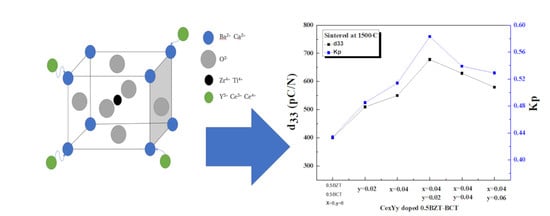
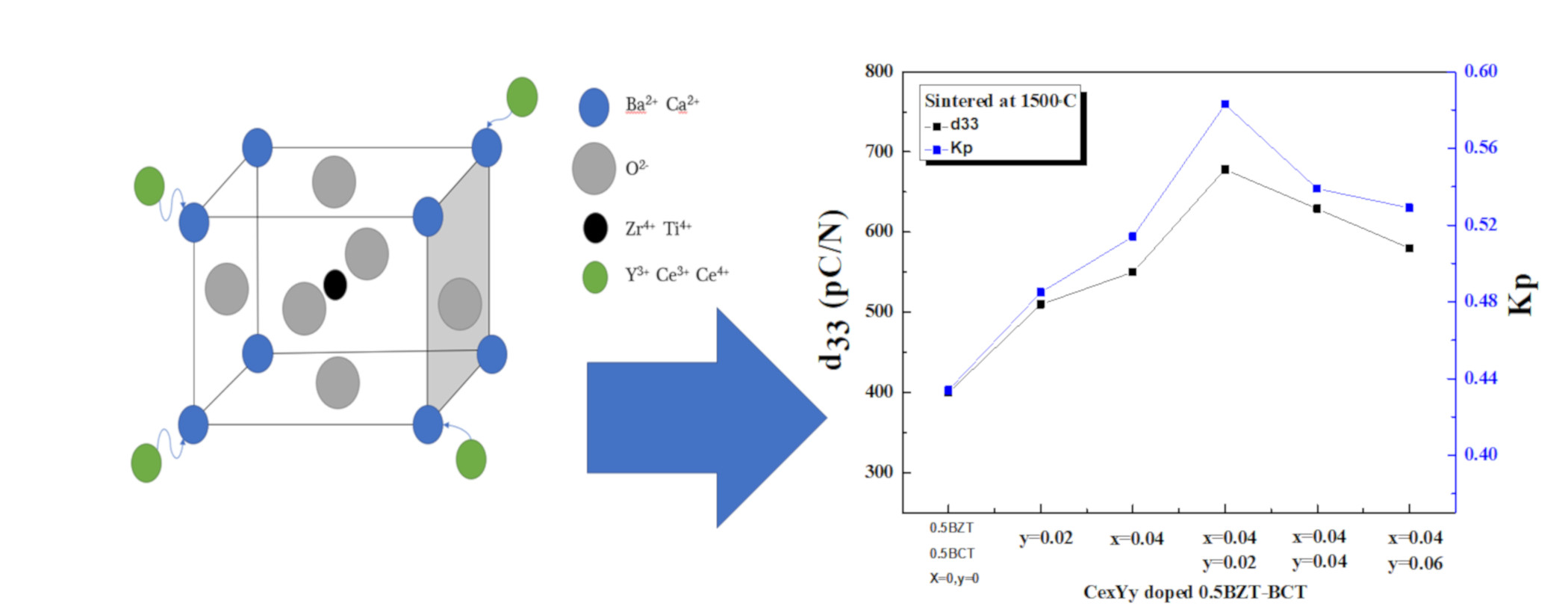
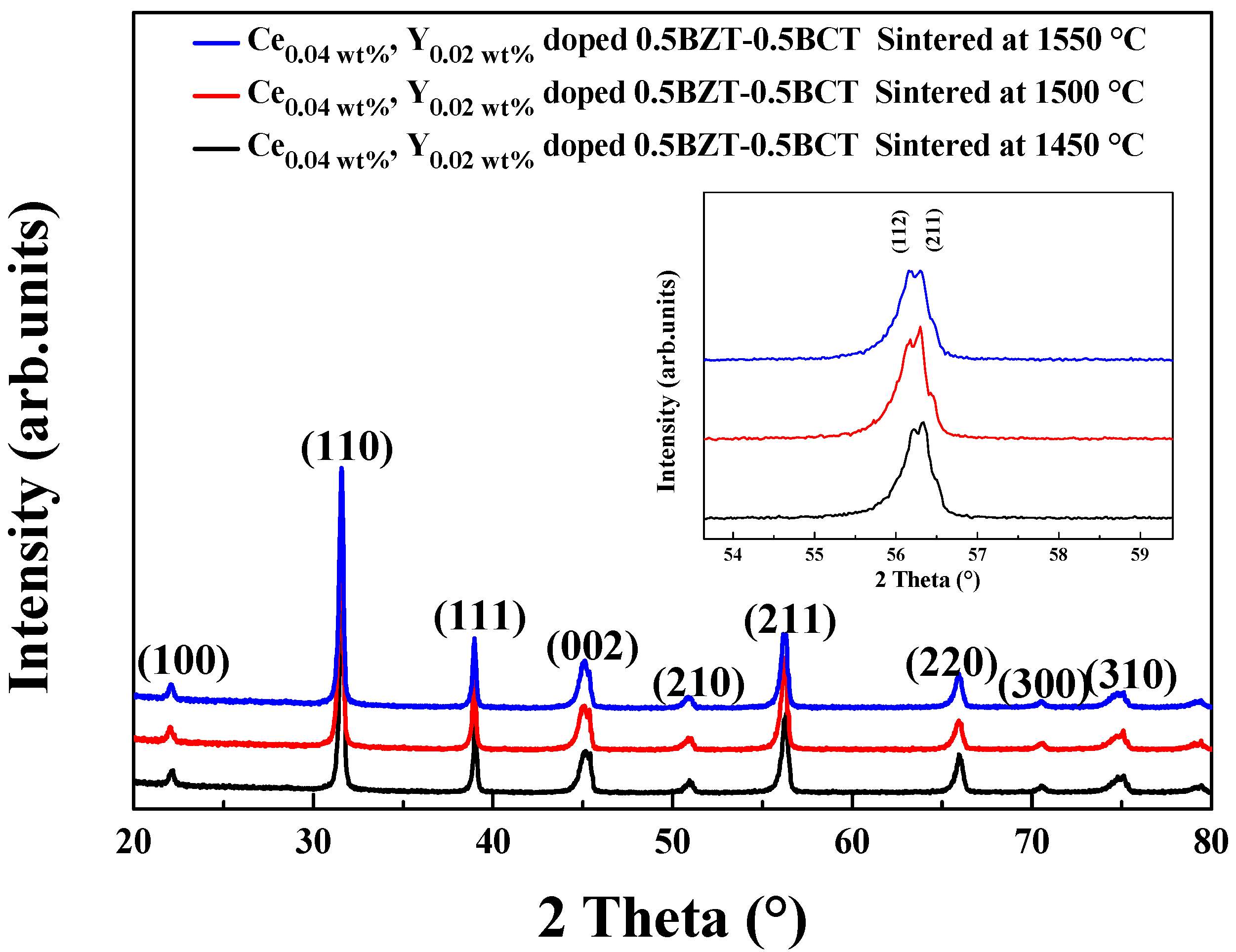
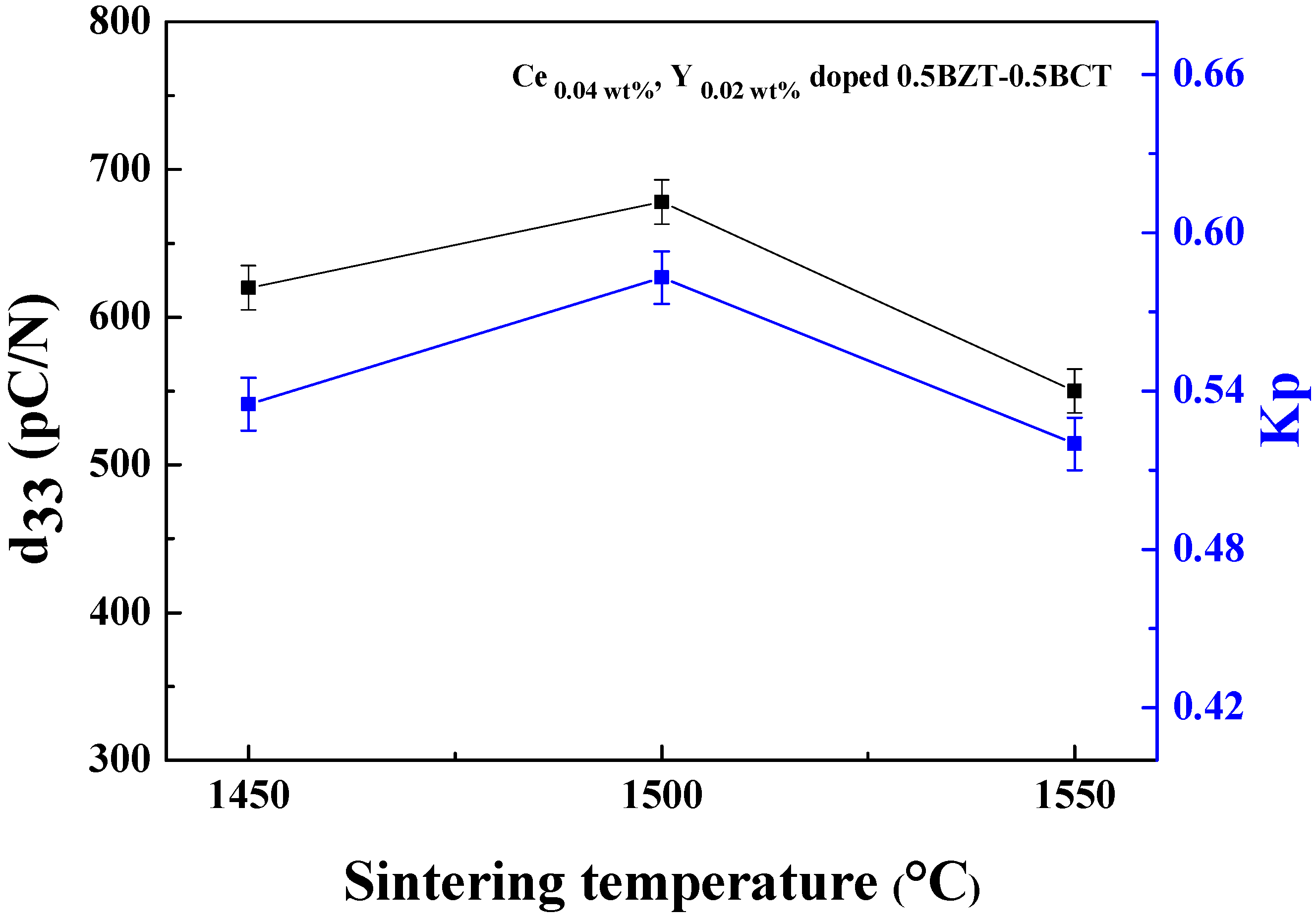
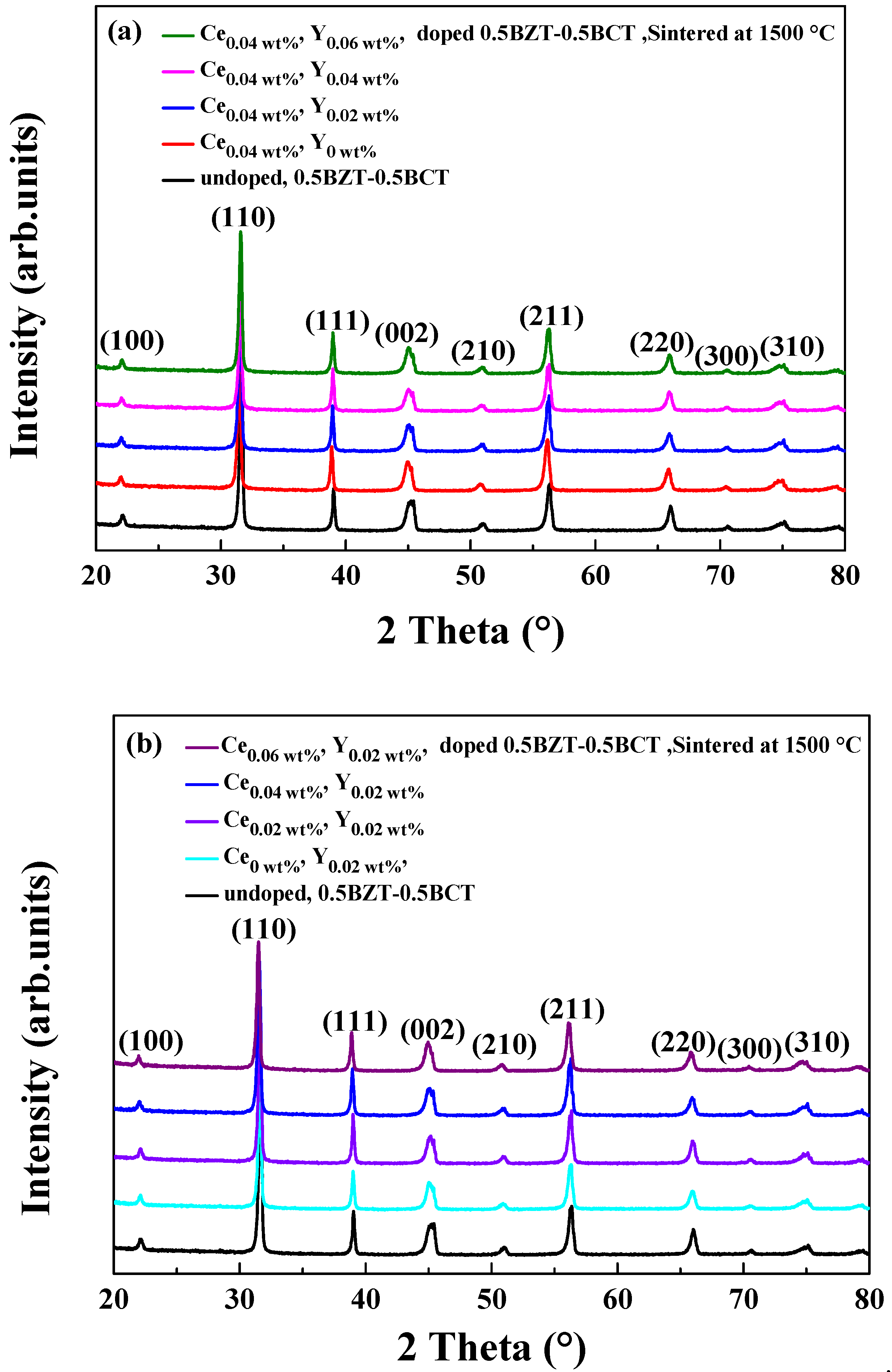
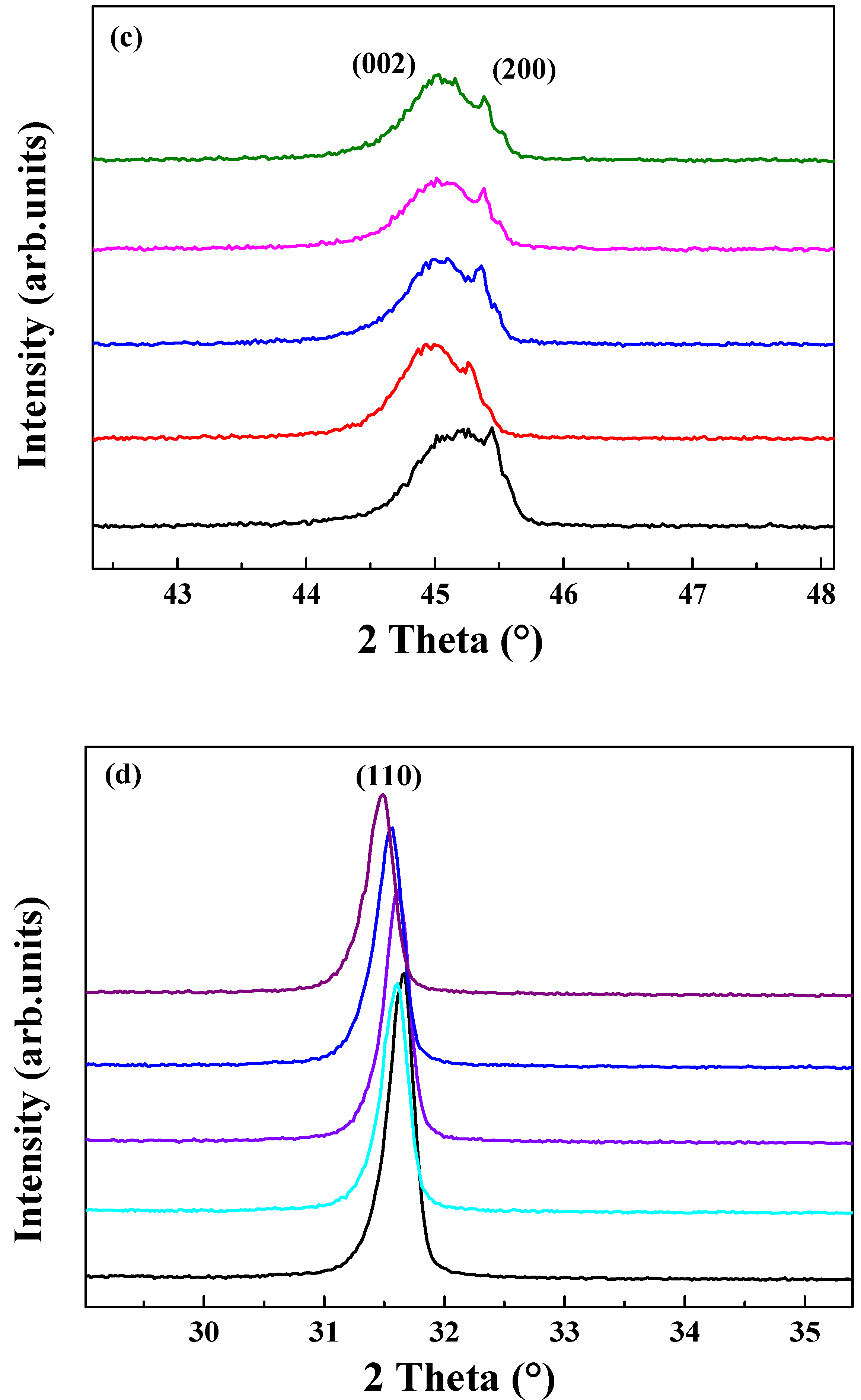
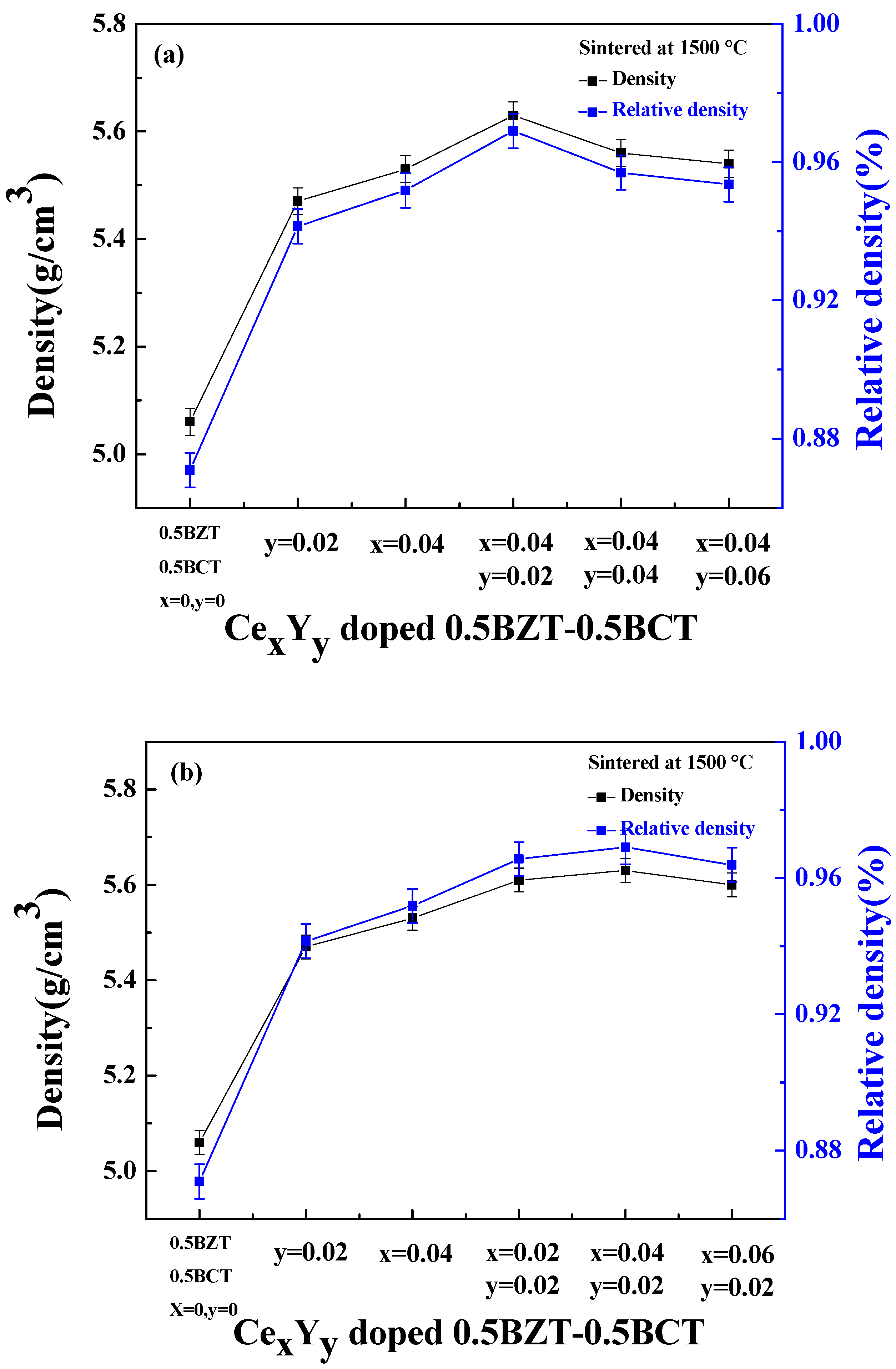
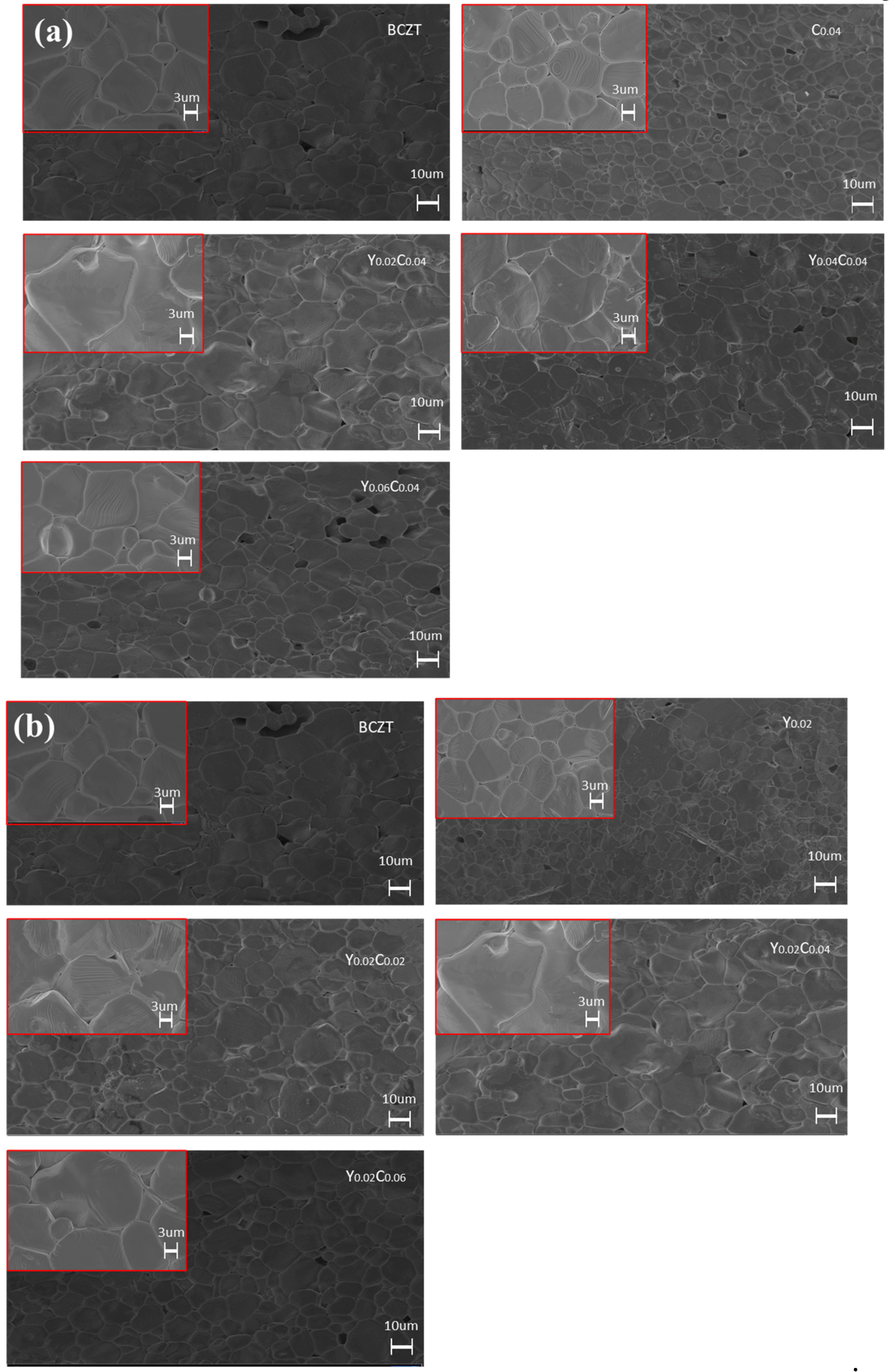
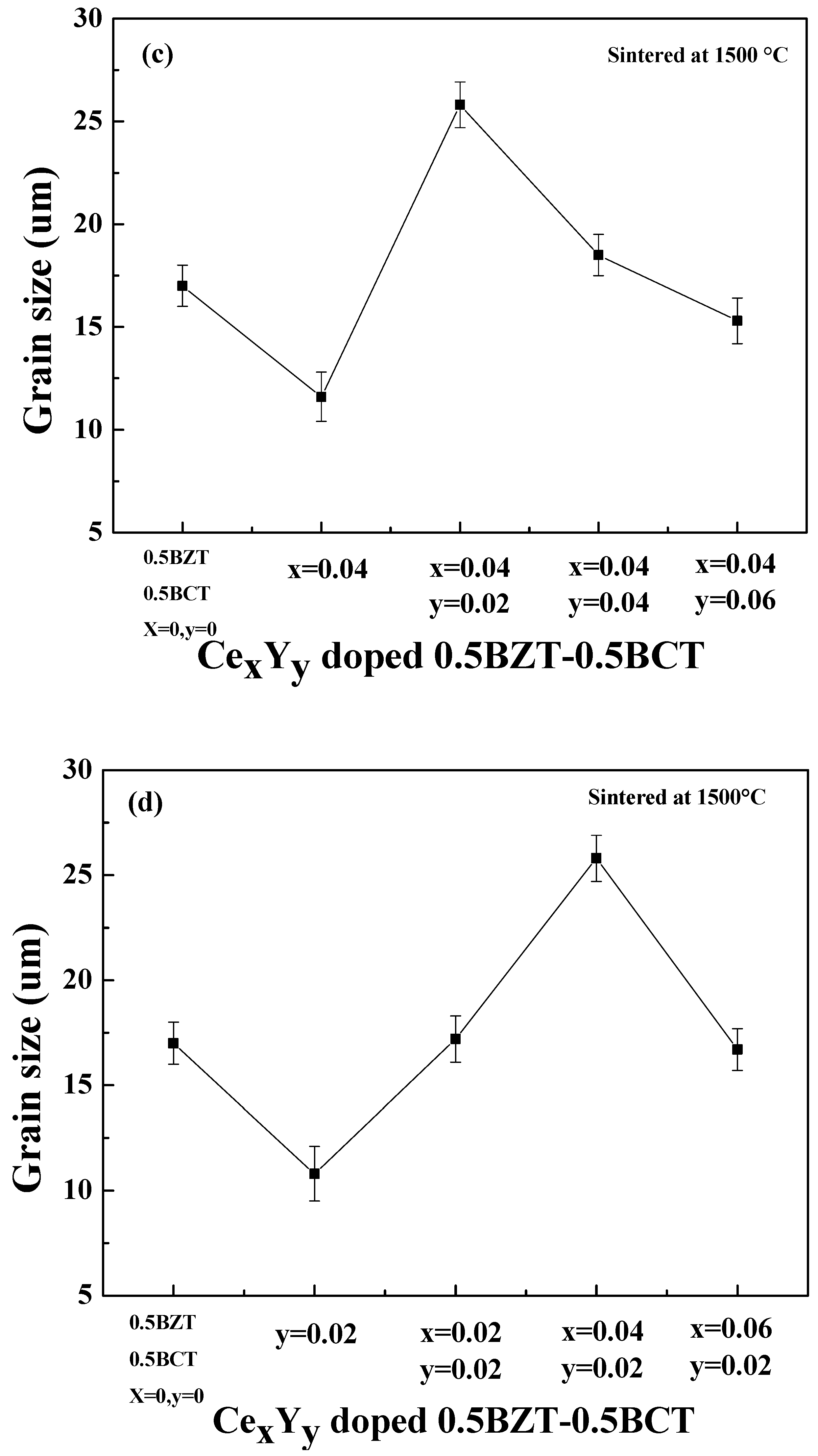
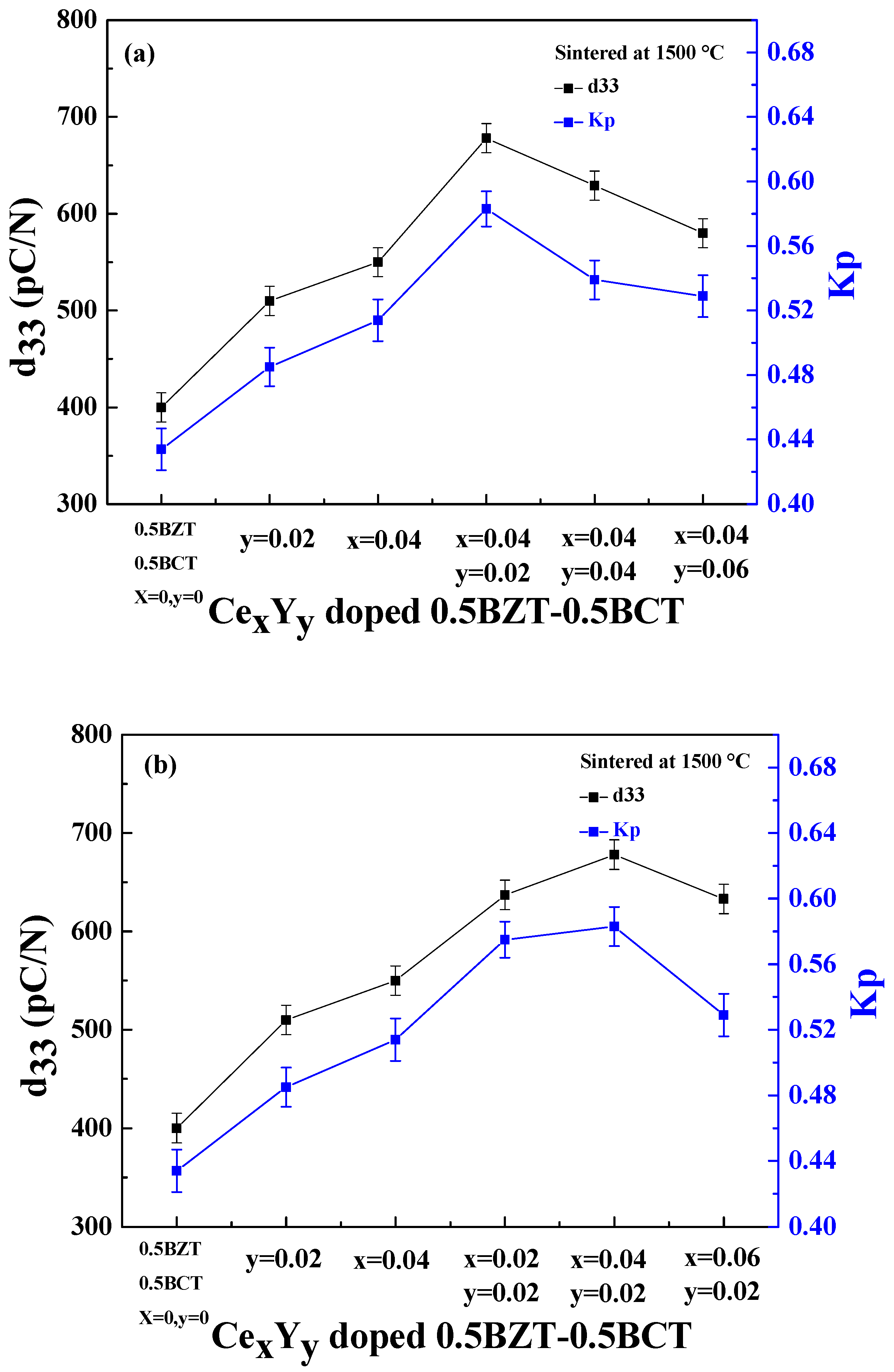
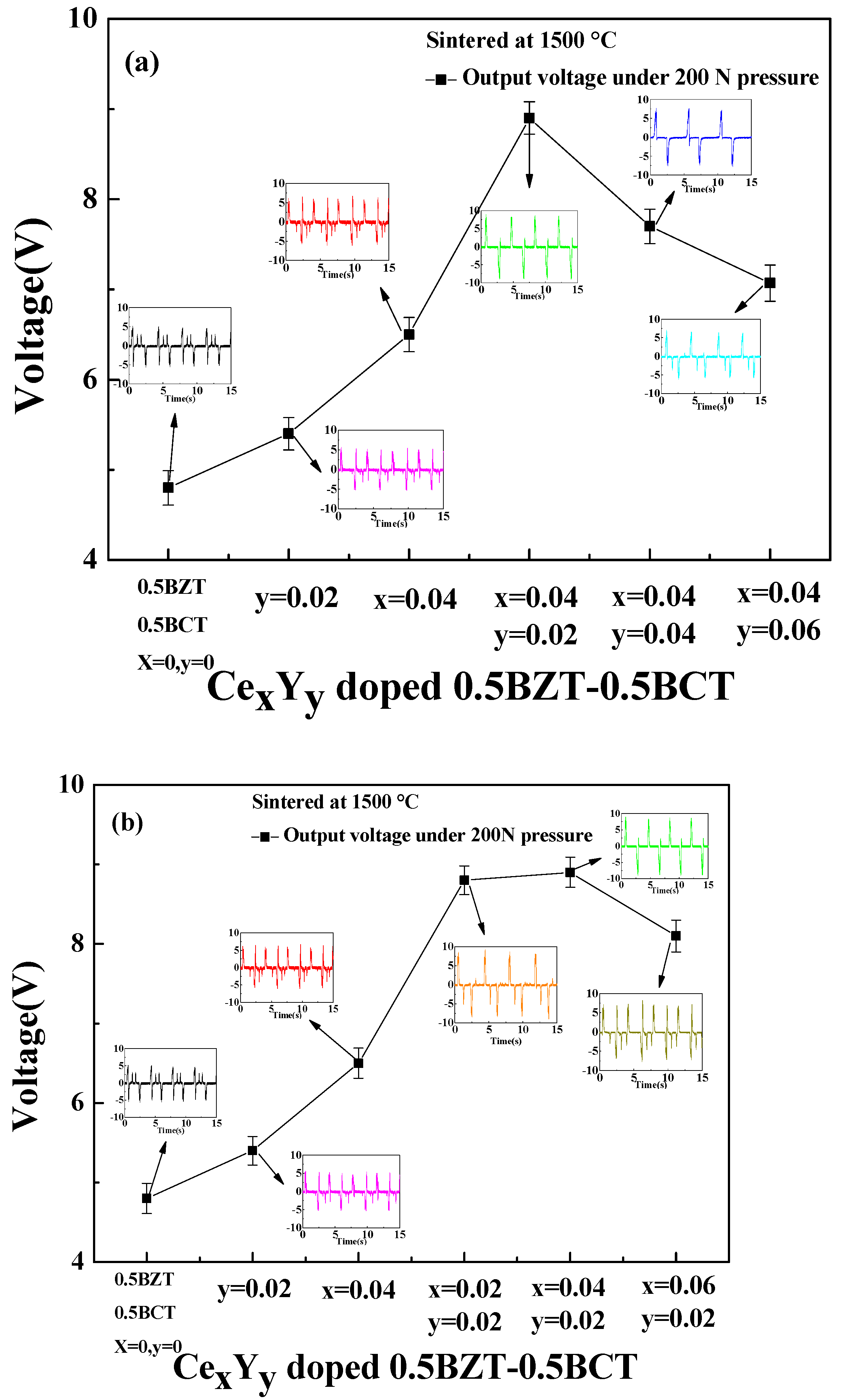
CeO2 and Y2O3 were co-doped to (Ba0.85Ca0.15)(Zr0.1Ti0.9)O3 ceramics and sintered by conventional solid-state reaction process to form x wt.% CeO2-y wt.% Y2O3 doped (Ba0.85Ca0.15)(Zr0.1Ti0.9)O3 (CexYy-BCZT) ceramics. The effects of different contents of CeO2-Y2O3 dopants to the (Ba0.85Ca0.15) (Zr0.1Ti0.9)O3 composition were analyzed by studying the phase, surface microstructure, piezoelectric and ferroelectric properties of BCZT ceramics. In this study, we have shown that co-doping a small amount of CeO2 and Y2O3 will not change the phase structure of (Ba0.85Ca0.15)(Zr0.1Ti0.9)O3 ceramics. However, the proper introduction of CeO2 and Y2O3 can improve the piezoelectric constant and electromechanical coupling coefficient of BCZT ceramic samples. Moreover, these dopants can promote the grain growth process in (Ba0.85Ca0.15) (Zr0.1Ti0.9)O3 ceramics. C0.04Y0.02 doped (Ba0.85Ca0.15)(Zr0.1Ti0.9)O3 ceramic has the best piezoelectric properties compared with other composition, the results are as follows: Relative density = 96.9%, Kp = 0.583, and d33 = 678 pC/N, V = 8.9 V. It means that this Ce0.04Y0.02 doped (Ba0.85Ca0.15)(Zr0.1Ti0.9)O3 ceramic is a desired material in the application of lead-free ceramics.
Keywords: lead-free ceramics; co-doped; piezoelectric lead-free ceramics; co-doped; piezoelectric
Graphical Abstract