Article

Well Rehabilitation via the Ultrasonic Method and Evaluation of Its Effectiveness from the Pumping Test

1
Faculty of Environmental Sciences, Czech University of Life Sciences Prague, Kamýcká 129, 165 00 Prague-Suchdol, Czech Republic
2
VODNĺ ZDROJE, a.s., Jindřicha Plachty 535/16, 150 00 Praha 5, Czech Republic
3
Department of Agricultural Machines, Faculty of Engineering, Czech University of Life Sciences Prague, Kamýcká 129, 165 00 Prague-Suchdol, Czech Republic
*
Authors to whom correspondence should be addressed.
Coatings 2021, 11(10), 1250; https://doi.org/10.3390/coatings11101250

Submission received: 10 September 2021 / Revised: 11 October 2021 / Accepted: 12 October 2021 / Published: 14 October 2021

Abstract

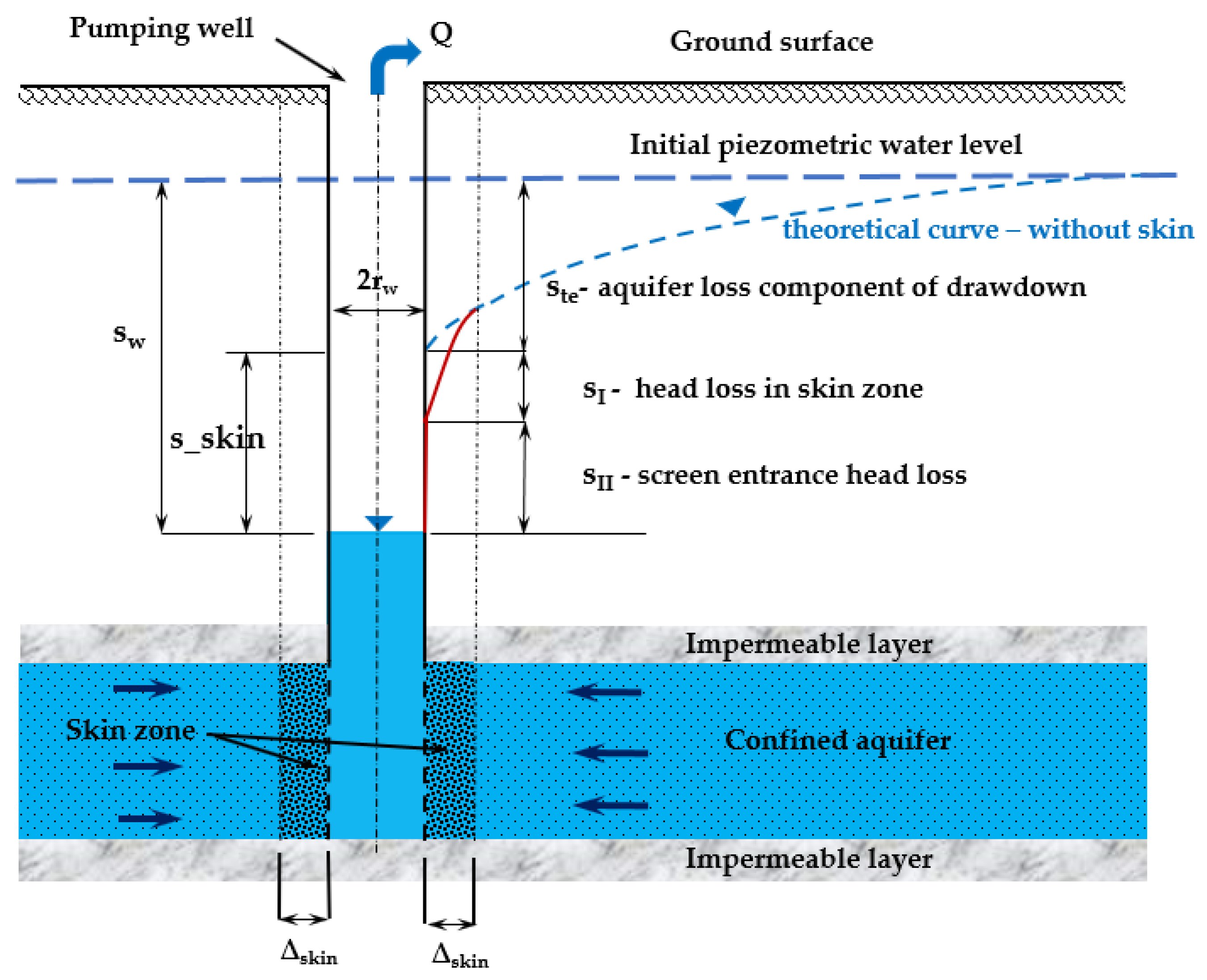
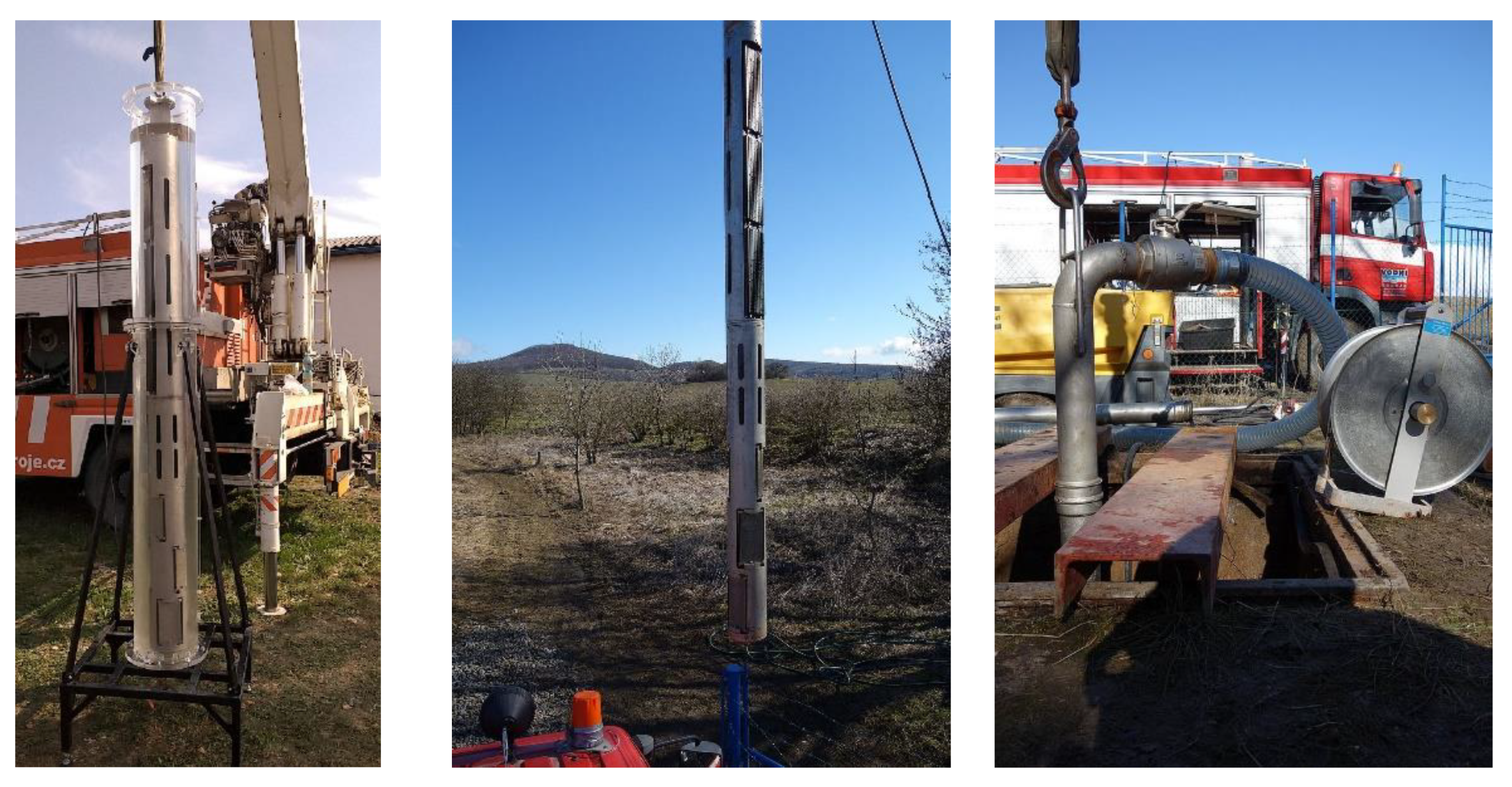
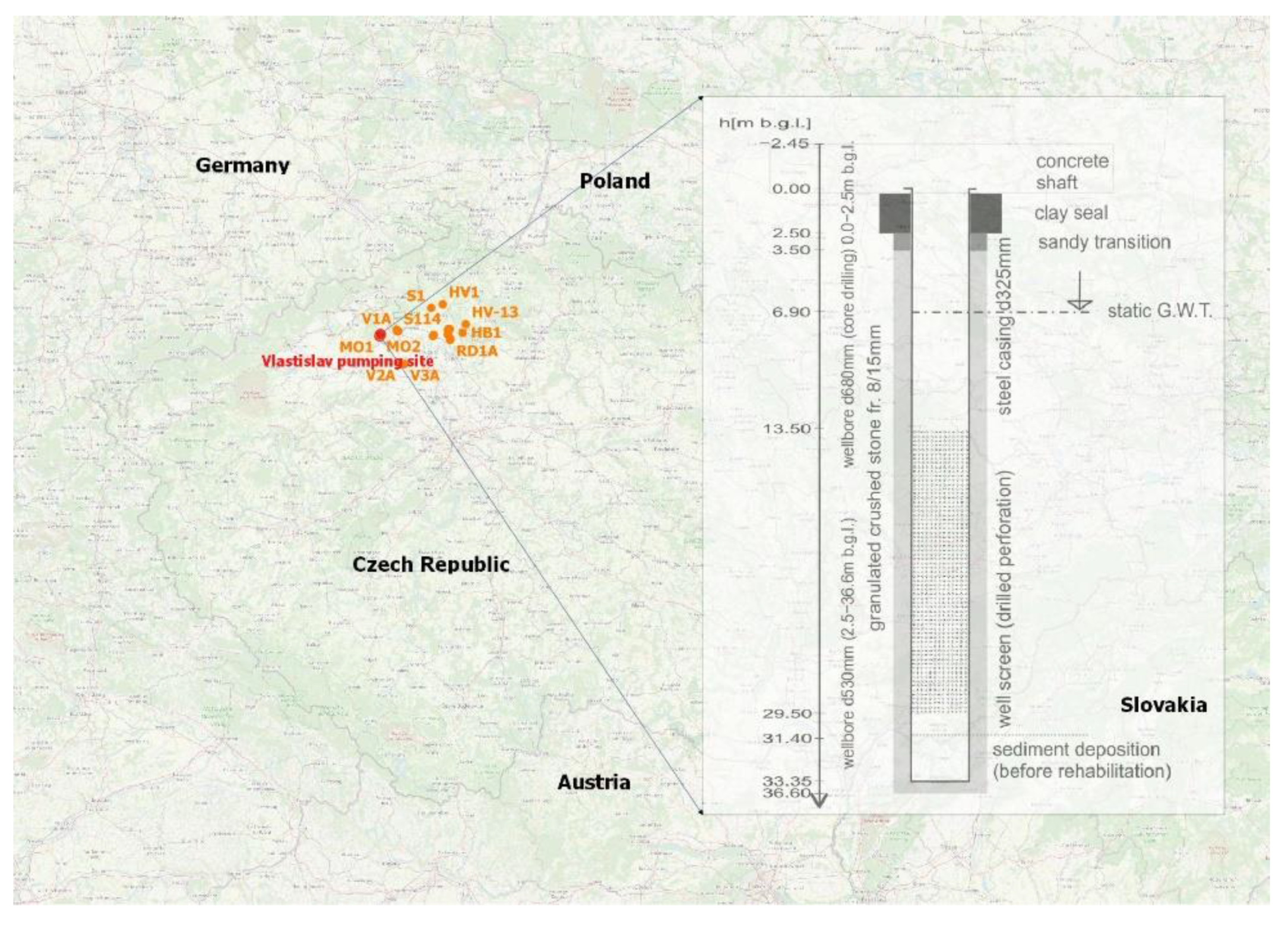
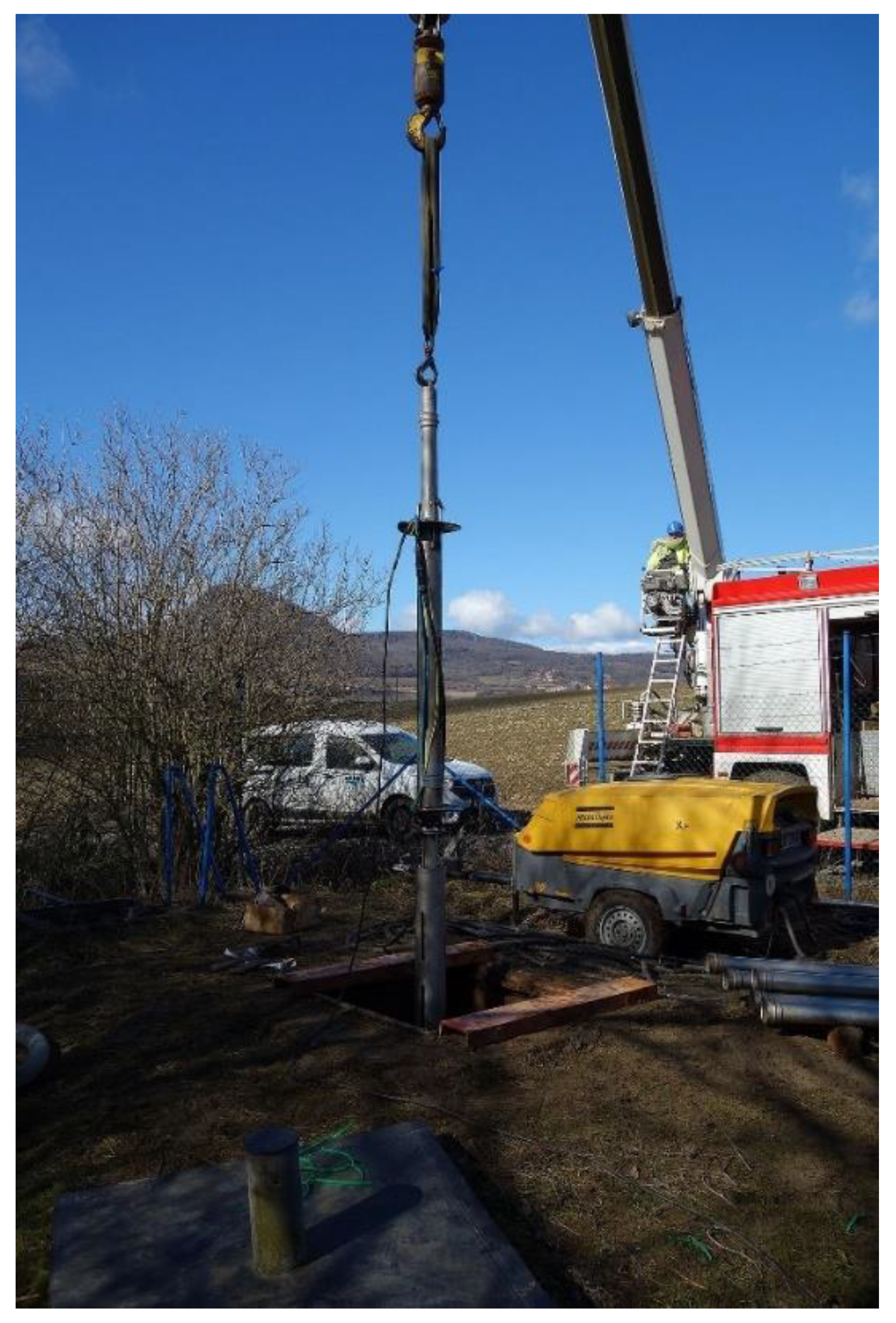
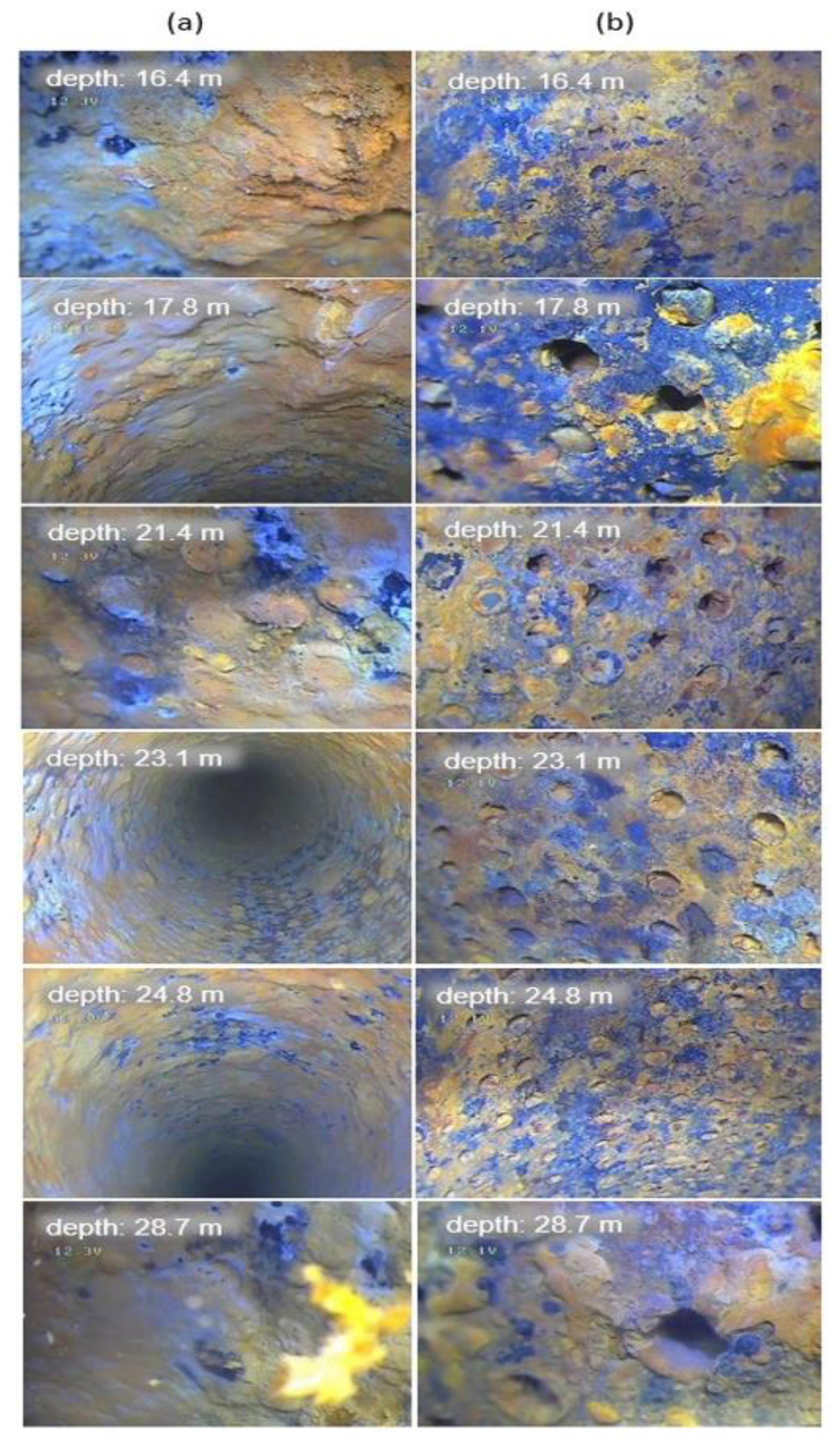
The exploitation of groundwater reserves, especially for drinking purposes, is becoming increasingly important. This fact has created the need to maintain wells in the best possible functional condition. However, wells are subject to an ageing process during intensive use, which entails an increase in up-to-date resistances in the well itself and its immediate surroundings (the skin zone). This causes a decrease in the efficiency of the well (a decrease in the pumped quantity, a decrease in the specific yield, an increase of the drawdown in the well, and creation of the skin zone). The increased hydraulic gradient in the skin zone causes an increase in the inflow rate to the well, thereby inducing the movement of fine material towards the casing. This material can clog the well casing and injection ports, which is compounded by an increase in chemical and biological plugging of the skin zone. In cooperation with the company SONIC Technologies, GmbH. (Sailauf, Germany), an experimental ultrasonic technology-based well rehabilitation assembly was developed and successfully tested. This article describes the prototype development of the ultrasonic device, including its incorporation into the rehabilitation set and a demonstration of its pilot deployment in the MO-4 pumping well in Czech Republic with an evaluation of the rehabilitation effects using the authors’ software (Dtest_ULTRA). Based on visual inspection and the results of hydraulic and geophysical analysis, the high efficiency of the tested technology was demonstrated in virtually all monitored parameters, where an improvement in the range of 25–55% compared to the original condition was identified.
Keywords: additional resistances; hydrodynamic well test; physical rehabilitation; ultrasound; software additional resistances; hydrodynamic well test; physical rehabilitation; ultrasound; software