Factors Influencing the Adoption of Social Media Analytics for Enhanced Organizational Intellectual Capital: A Systematic Literature Review
 , , ,
, , ,
Abstract
1. Introduction
- To identify the factors influencing the adoption of social media analytics for enhanced organizational intellectual capital;
- To reveal challenges hindering the incorporation of social media analytics in organizations for enhanced intellectual capital.
- Which factors influence the adoption of social media analytics for enhanced organizational intellectual capital?
- What are the challenges associated with the implementation of social media analytics in organizations for enhanced intellectual capital?
- What framework can support the effective incorporation of social media analytics for enhanced organizational intellectual capital?
Related Research
2. Materials and Methods
2.1. Planning of Systematic Literature Review (SLR)
- To identify the factors influencing the adoption of social media analytics for enhanced organizational intellectual capital;
- To reveal challenges hindering the incorporation of social media analytics in organizations for enhanced intellectual capital.
2.2. Search Strategy
2.3. Study Selection Process
2.4. Quality Assessment and Risk of Bias
2.5. Data Extraction
- Author(s) and publication year;
- Journal/source;
- Factors influencing adoption of social media analytics;
- Challenges in implementation.
2.6. Data Synthesis
- Adoption factors of social media analytics for intellectual capital enhancement;
- Organizational and technological challenges;
- Geographic and disciplinary distribution;
- Methodological approaches used in literature.
3. Results
3.1. Summary of the Extracted Dataset
3.2. Geographical Distribution of the Selected Studies
3.3. Research Methods Used in the Selected Studies
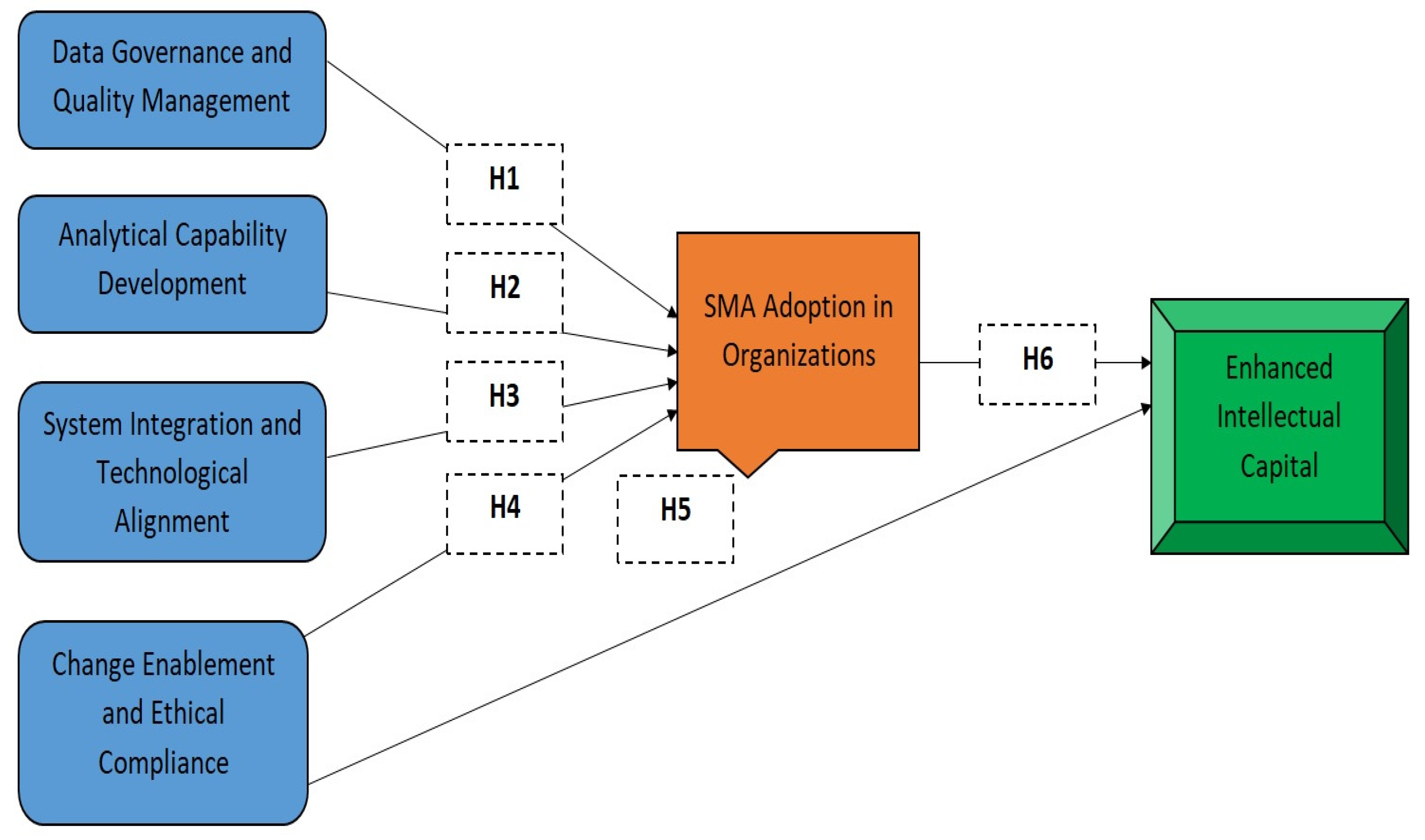
3.4. Factors Influencing the Adoption of SMA for Enhanced Organizational Intellectual Capital
3.4.1. Human Capital (HC)
3.4.2. Technological Infrastructure
3.4.3. Social Networks
3.4.4. Knowledge Management (KM)
3.4.5. Big Data Analytics
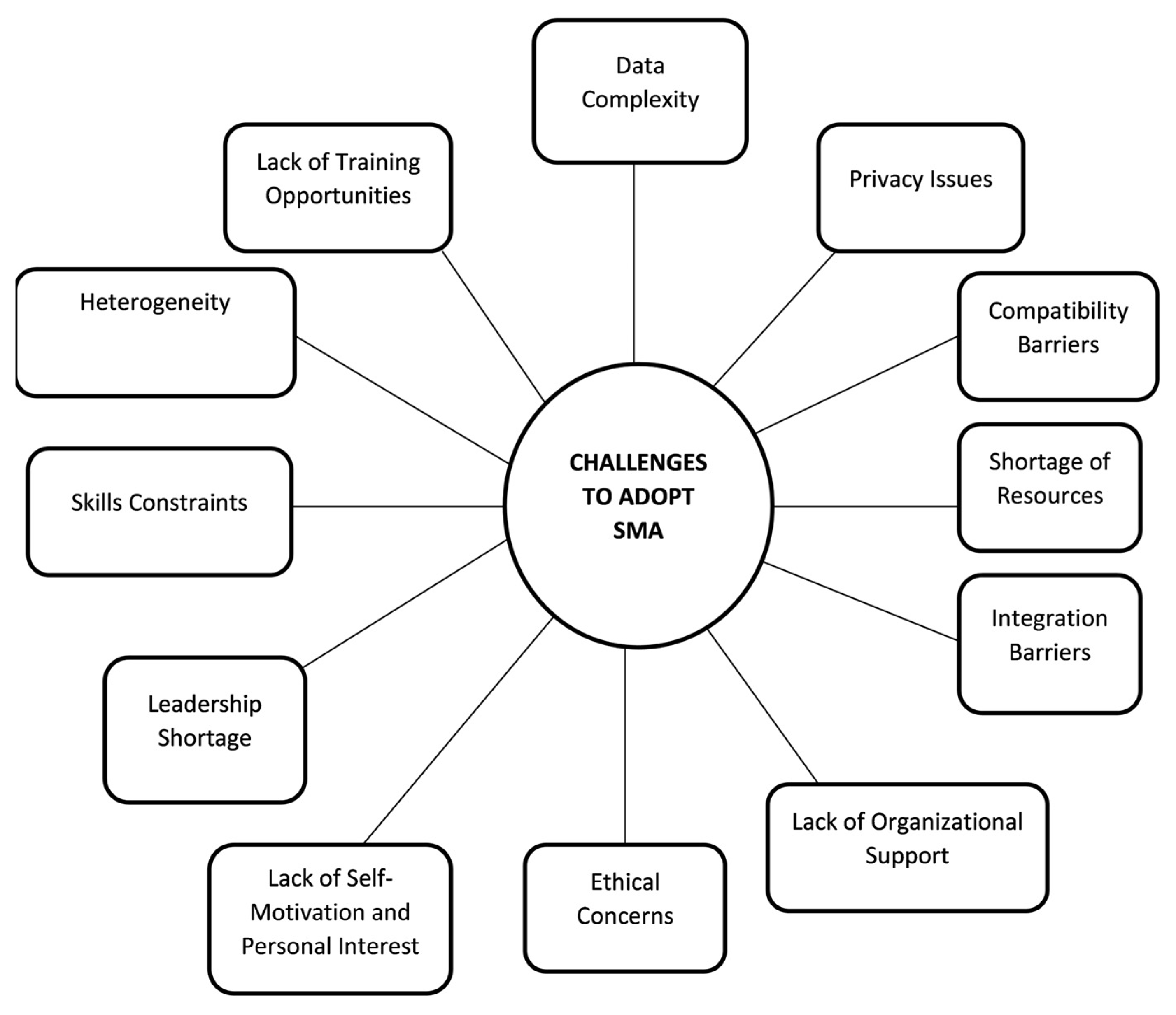
3.5. Challenges to Incorporate SMA in Organizations for Enhanced Intellectual Capital
3.5.1. Data Complexity
3.5.2. Skills Constraints
3.5.3. Integration Barriers
3.5.4. Ethical Concerns
4. Discussion
5. Conclusions
6. Limitations
7. Future Research Directions
Author Contributions
Funding
Data Availability Statement
Acknowledgments
Conflicts of Interest
Abbreviations
| SLR | Systematic Literature Review |
| SMA | Social Media Analytics |
| IC | Intellectual Capital |
| PRISMA | Preferred Reporting Items for Systematic Reviews and Meta-Analyses |
| INFORMS | Institute for Operations Research and the Management Sciences |
| CASP | Critical Appraisal Skills Programme |
| HC | Human Capital |
| KM | Knowledge Management |
| BDA | Big Data Analytics |
Appendix A

| Section and Topic | Item # | Checklist Item | Location Where Item is Reported |
|---|---|---|---|
| TITLE | |||
| Title | 1 | Identify the report as a systematic review. | Title page (“systematic literature review”) |
| ABSTRACT | |||
| Abstract | 2 | See the PRISMA 2020 for Abstracts checklist. | Abstract section (structured according to PRISMA 2020 for Abstracts checklist) |
| INTRODUCTION | |||
| Rationale | 3 | Describe the rationale for the review in the context of existing knowledge. | Section 1: Introduction |
| Objectives | 4 | Provide an explicit statement of the objective(s) or question(s) the review addresses. | Section 1; (objectives + research questions) |
| METHODS | |||
| Eligibility criteria | 5 | Specify the inclusion and exclusion criteria for the review and how studies were grouped for the syntheses. | Table 2 (inclusion/exclusion criteria) |
| Information sources | 6 | Specify all databases, registers, websites, organizations, reference lists and other sources searched or consulted to identify studies. Specify the date when each source was last searched or consulted. | Section 2.1 (databases listed) |
| Search strategy | 7 | Present the full search strategies for all databases, registers and websites, including any filters and limits used. | Table 4 (search queries & filters) |
| Selection process | 8 | Specify the methods used to decide whether a study met the inclusion criteria of the review, including how many reviewers screened each record and each report retrieved, whether they worked independently, and if applicable, details of automation tools used in the process. | Section 2.2 (selection + PRISMA explanation) |
| Data collection process | 9 | Specify the methods used to collect data from reports, including how many reviewers collected data from each report, whether they worked independently, any processes for obtaining or confirming data from study investigators, and if applicable, details of automation tools used in the process. | Section 2.5 (data extraction process) |
| Data items | 10a | List and define all outcomes for which data were sought. Specify whether all results that were compatible with each outcome domain in each study were sought (e.g., for all measures, time points, analyses), and if not, the methods used to decide which results to collect. | Section 2.4 (“adoption factors” “challenges” “contextual variables”) |
| 10b | List and define all other variables for which data were sought (e.g., participant and intervention characteristics, funding sources). Describe any assumptions made about any missing or unclear information. | Table 5 (study characteristics) | |
| Study risk of bias assessment | 11 | Specify the methods used to assess risk of bias in the included studies, including details of the tool(s) used, how many reviewers assessed each study and whether they worked independently, and if applicable, details of automation tools used in the process. | Section 2.3 (CASP checklist, Table 5) |
| Effect measures | 12 | Specify for each outcome the effect measure(s) (e.g., risk ratio, mean difference) used in the synthesis or presentation of results. | Not applicable (no meta-analysis; qualitative synthesis) |
| Synthesis methods | 13a | Describe the processes used to decide which studies were eligible for each synthesis (e.g., tabulating the study intervention characteristics and comparing against the planned groups for each synthesis (item #5)). | Section 2.6 (data synthesis) |
| 13b | Describe any methods required to prepare the data for presentation or synthesis, such as handling of missing summary statistics, or data conversions. | Section 2.3 and Section 2.4 (extraction + thematic synthesis) | |
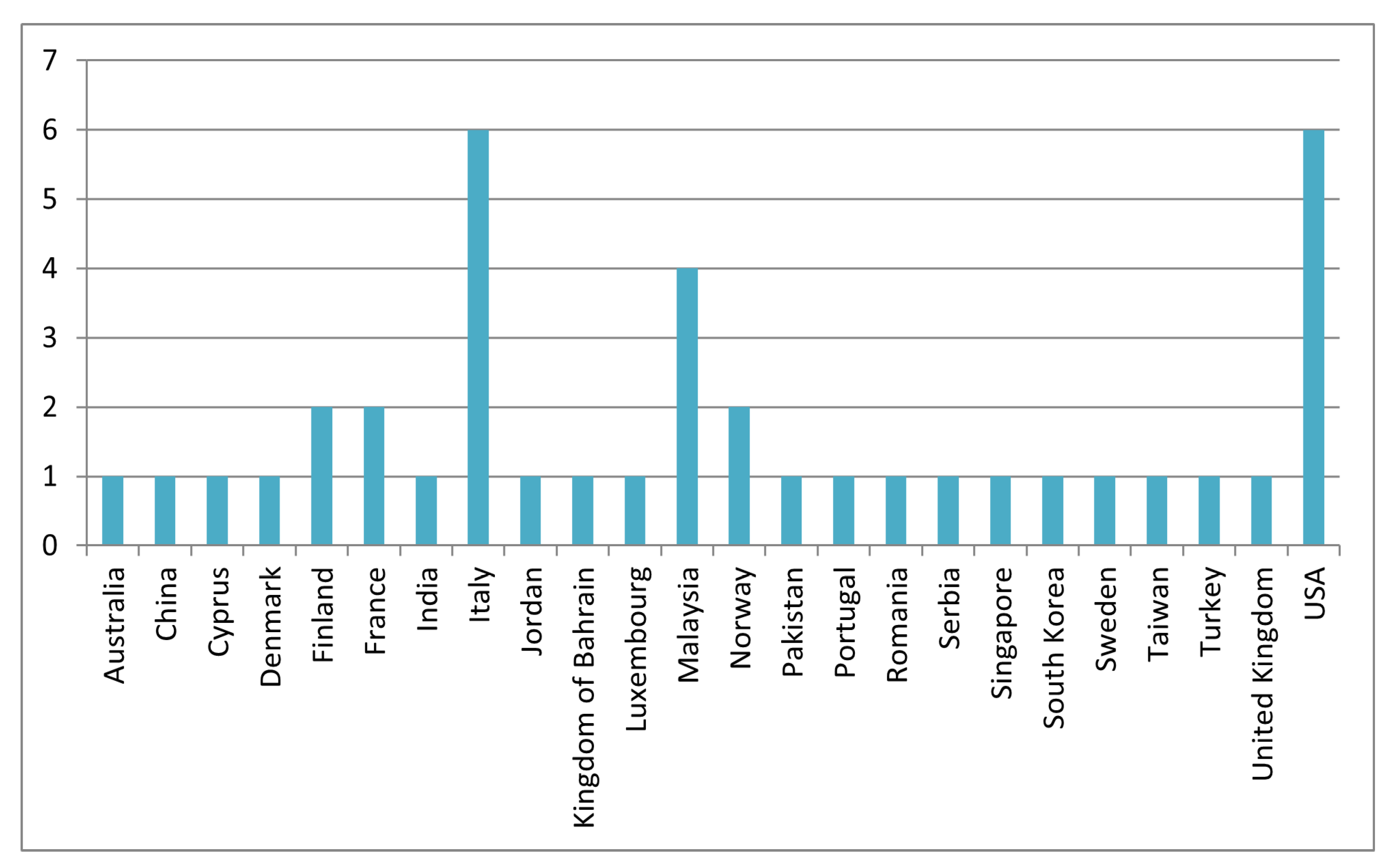
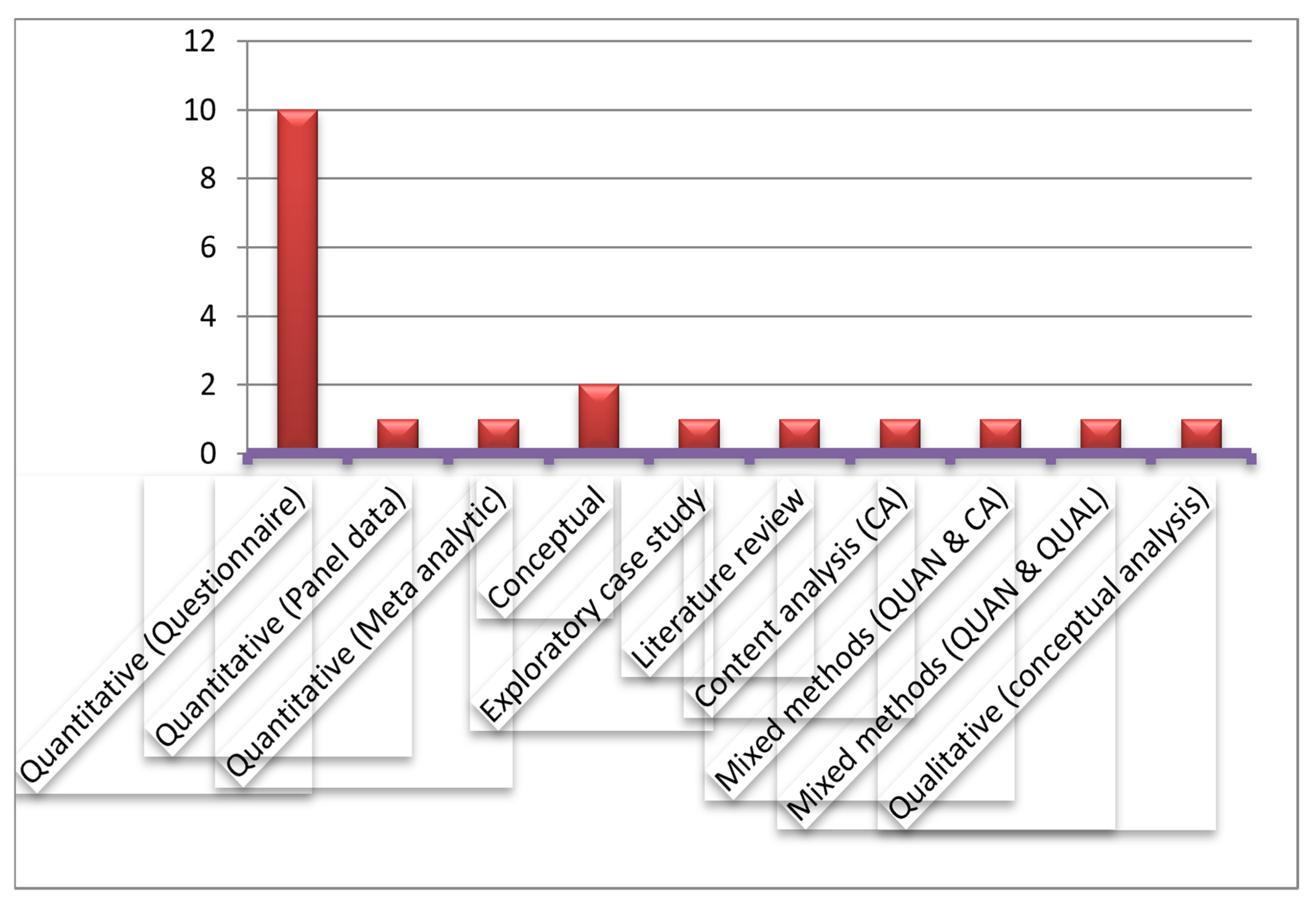
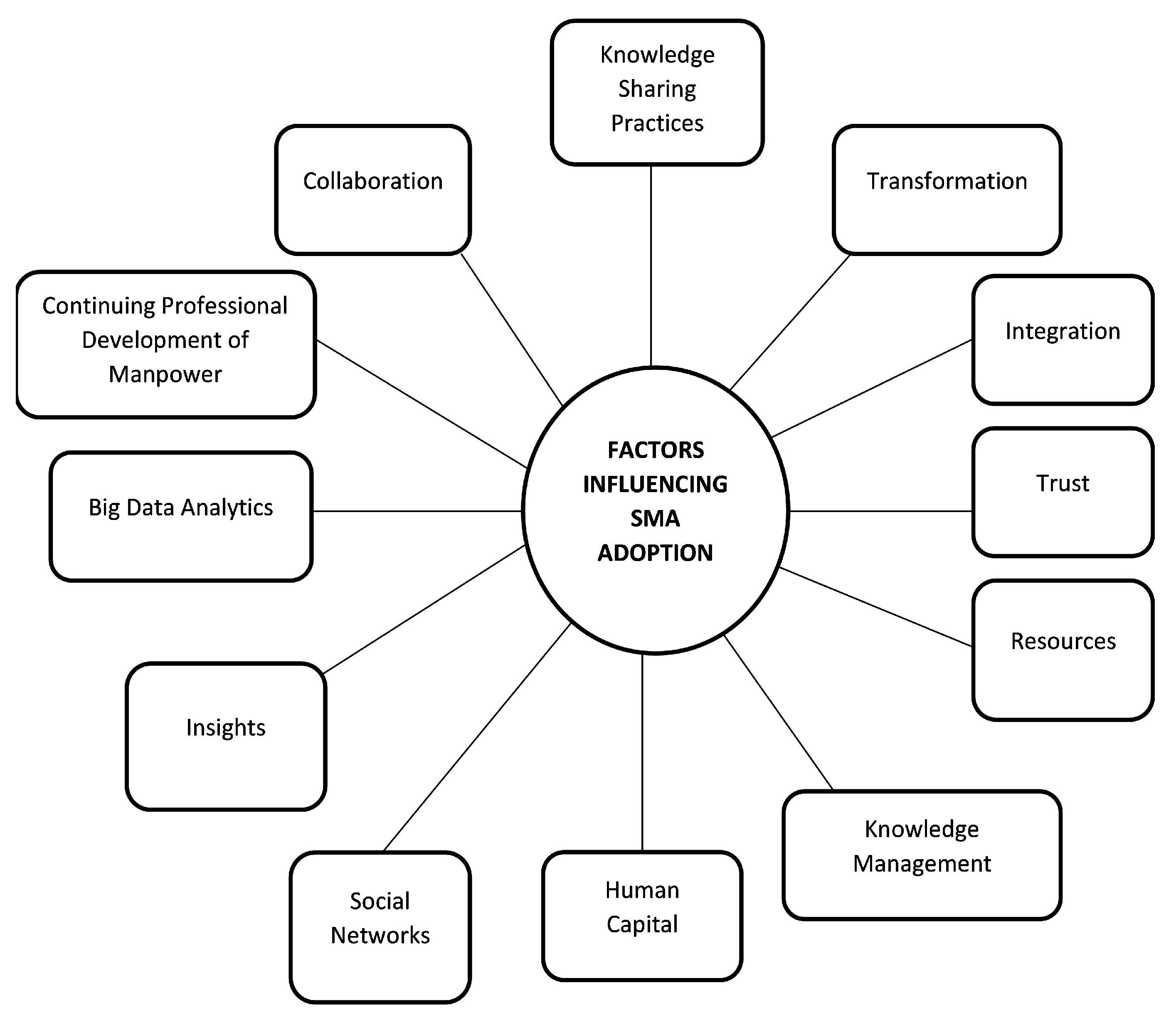
| 13c | Describe any methods used to tabulate or visually display results of individual studies and syntheses. | Table 7, Figure 2, Figure 3, Figure 4, Figure 5 and Figure 6 | |
| 13d | Describe any methods used to synthesize results and provide a rationale for the choice(s). If meta-analysis was performed, describe the model(s), method(s) to identify the presence and extent of statistical heterogeneity, and software package(s) used. | Section 2.4 (thematic analysis) | |
| 13e | Describe any methods used to explore possible causes of heterogeneity among study results (e.g., subgroup analysis, meta-regression). | Not applicable | |
| 13f | Describe any sensitivity analyses conducted to assess robustness of the synthesized results. | Not applicable | |
| Reporting bias assessment | 14 | Describe any methods used to assess risk of bias due to missing results in a synthesis (arising from reporting biases). | Not applicable |
| Certainty assessment | 15 | Describe any methods used to assess certainty (or confidence) in the body of evidence for an outcome. | Not applicable |
| RESULTS | |||
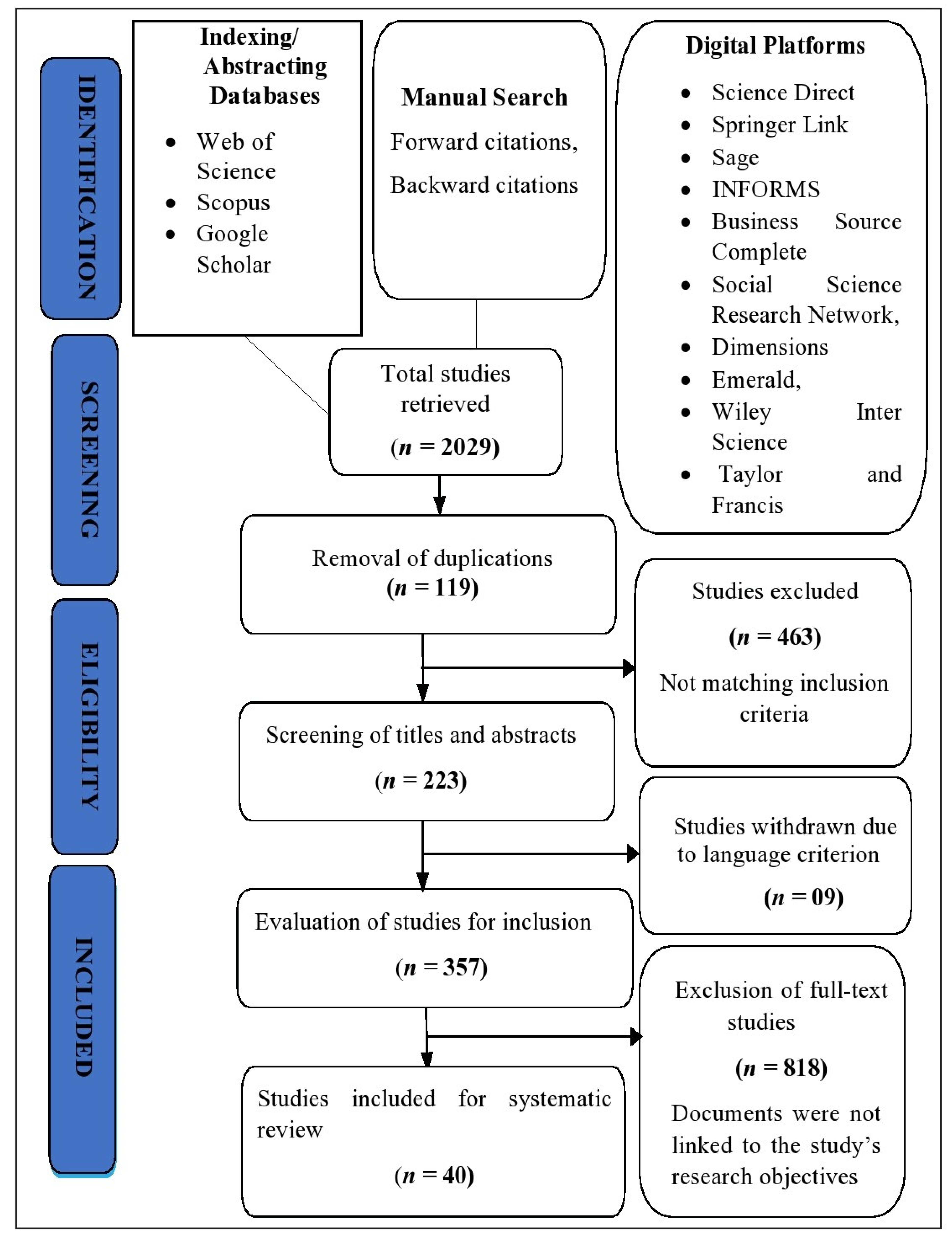
| Study selection | 16a | Describe the results of the search and selection process, from the number of records identified in the search to the number of studies included in the review, ideally using a flow diagram. | Figure 1 (PRISMA flow diagram) |
| 16b | Cite studies that might appear to meet the inclusion criteria, but which were excluded, and explain why they were excluded. | Section 2.2 (exclusion explanation) | |
| Study characteristics | 17 | Cite each included study and present its characteristics. | Table 7 |
| Risk of bias in studies | 18 | Present assessments of risk of bias for each included study. | Table 5 (CASP quality assessment results) |
| Results of individual studies | 19 | For all outcomes, present, for each study: (a) summary statistics for each group (where appropriate) and (b) an effect estimate and its precision (e.g., confidence/credible interval), ideally using structured tables or plots. | Table 7 (study-level extracted data) |
| Results of syntheses | 20a | For each synthesis, briefly summarize the characteristics and risk of bias among contributing studies. | Section 3.2, Section 3.3, Section 3.4 and Section 3.5 |
| 20b | Present results of all statistical syntheses conducted. If meta-analysis was done, present for each the summary estimate and its precision (e.g., confidence/credible interval) and measures of statistical heterogeneity. If comparing groups, describe the direction of the effect. | Not applicable | |
| 20c | Present results of all investigations of possible causes of heterogeneity among study results. | Not applicable | |
| 20d | Present results of all sensitivity analyses conducted to assess the robustness of the synthesized results. | Not applicable | |
| Reporting biases | 21 | Present assessments of risk of bias due to missing results (arising from reporting biases) for each synthesis assessed. | Not applicable |
| Certainty of evidence | 22 | Present assessments of certainty (or confidence) in the body of evidence for each outcome assessed. | Not applicable |
| DISCUSSION | |||
| Discussion | 23a | Provide a general interpretation of the results in the context of other evidence. | Section 4: Discussion |
| 23b | Discuss any limitations of the evidence included in the review. | Section 6 (limitations) | |
| 23c | Discuss any limitations of the review processes used. | Section 6 | |
| 23d | Discuss implications of the results for practice, policy, and future research. | Section 4 + Section 5 | |
| OTHER INFORMATION | |||
| Registration and protocol | 24a | Provide registration information for the review, including register name and registration number, or state that the review was not registered. | Section 2.1 (OSF link) |
| 24b | Indicate where the review protocol can be accessed, or state that a protocol was not prepared. | Section 2.1 (OSF statement) | |
| 24c | Describe and explain any amendments to information provided at registration or in the protocol. | Not applicable | |
| Support | 25 | Describe sources of financial or non-financial support for the review, and the role of the funders or sponsors in the review. | Funding section |
| Competing interests | 26 | Declare any competing interests of review authors. | Declared in Conflicts of Interest section |
| Availability of data, code and other materials | 27 | Report which of the following are publicly available and where they can be found: template data collection forms; data extracted from included studies; data used for all analyses; analytic code; any other materials used in the review. | Data Availability Statement |
References
- Al-Omoush, K.S.; Alghusin, N.S. Intellectual Capital and Social Media Analytics: The Ripple Effect on Competitive Intelligence and Banking Entrepreneurship. Hum. Behav. Emerg. Technol. 2024, 2024, 6754824. [Google Scholar] [CrossRef]
- Dumay, J. A Critical Reflection on the Future of Intellectual Capital: From Reporting to Disclosure. J. Intellect. Cap. 2016, 17, 168–184. [Google Scholar] [CrossRef]
- Ndou, V.; Secundo, G.; Dumay, J.; Gjevori, E. Understanding Intellectual Capital Disclosure in Online Media Big Data: An Exploratory Case Study in a University. Meditari Account. Res. 2018, 26, 499–530. [Google Scholar] [CrossRef]
- De Santis, F.; Presti, C. The Relationship between Intellectual Capital and Big Data: A Review. Meditari Account. Res. 2018, 26, 361–380. [Google Scholar] [CrossRef]
- Schiuma, G.; Raimo, N.; Bresciani, S.; Ricciardelli, A.; Vitolla, F. Intellectual Capital Information via Twitter: The Effect on Firm Value. J. Intellect. Cap. 2024, 25, 1439–1463. [Google Scholar] [CrossRef]
- Vătămănescu, E.M.; Andrei, A.G.; Dumitriu, D.L.; Leovaridis, C. Harnessing Network-Based Intellectual Capital in Online Academic Networks. From the Organizational Policies and Practices towards Competitiveness. J. Knowl. Manag. 2016, 20, 594–619. [Google Scholar] [CrossRef]
- Bharati, P.; Zhang, W.; Chaudhury, A. Better Knowledge with Social Media? Exploring the Roles of Social Capital and Organizational Knowledge Management. J. Knowl. Manag. 2015, 19, 456–475. [Google Scholar] [CrossRef]
- Chen, C.H.V.; Chen, Y.C. Influence of Intellectual Capital and Integration on Operational Performance: Big Data Analytical Capability Perspectives. Chin. Manag. Stud. 2022, 16, 551–570. [Google Scholar] [CrossRef]
- Ozgun, A.H.; Tarim, M.; Delen, D.; Zaim, S. Social Capital and Organizational Performance: The Mediating Role of Innovation Activities and Intellectual Capital. Healthc. Anal. 2022, 2, 100046. [Google Scholar] [CrossRef]
- Sagić, Z.; Diković, L.; Trumbulović, L.; Vujović, S. Intellectual Capital and Leading Information Technology Trends as Components of a Modern Company Development. Ekon. Preduz. 2019, 67, 288–304. [Google Scholar] [CrossRef]
- Iqbal, A.; Latif, F.; Marimon, F.; Sahibzada, U.F.; Hussain, S. From Knowledge Management to Organizational Performance: Modelling the Mediating Role of Innovation and Intellectual Capital in Higher Education. J. Enterp. Inf. Manag. 2019, 32, 815–833. [Google Scholar] [CrossRef]
- Kianto, A.; Sáenz, J.; Aramburu, N. Knowledge-Based Human Resource Management Practices, Intellectual Capital and Innovation. J. Bus. Res. 2017, 81, 11–20. [Google Scholar] [CrossRef]
- Kwahk, K.Y.; Park, D.H. The Effects of Network Sharing on Knowledge-Sharing Activities and Job Performance in Enterprise Social Media Environments. Comput. Hum. Behav. 2016, 55, 826–836. [Google Scholar] [CrossRef]
- Gupta, M.; George, J.F. Toward the Development of a Big Data Analytics Capability. Inf. Manag. 2016, 53, 1049–1064. [Google Scholar] [CrossRef]
- Al-Sartawi, A.M.A.M. Social Media Disclosure of Intellectual Capital and Firm Value. Int. J. Learn. Intellect. Cap. 2020, 17, 312. [Google Scholar] [CrossRef]
- Razmerita, L.; Kirchner, K.; Nielsen, P. What Factors Influence Knowledge Sharing in Organizations? A Social Dilemma Perspective of Social Media Communication. J. Knowl. Manag. 2016, 20, 1225–1246. [Google Scholar] [CrossRef]
- Erevelles, S.; Fukawa, N.; Swayne, L. Big Data Consumer Analytics and the Transformation of Marketing. J. Bus. Res. 2016, 69, 897–904. [Google Scholar] [CrossRef]
- Fang, R.; Landis, B.; Zhang, Z.; Anderson, M.H.; Shaw, J.D.; Kilduff, M. Integrating Personality and Social Networks: A Meta-Analysis of Personality, Network Position, and Work Outcomes in Organizations. Organ. Sci. 2015, 26, 1243–1260. [Google Scholar] [CrossRef]
- Rippa, P.; Secundo, G. Digital Academic Entrepreneurship: The Potential of Digital Technologies on Academic Entrepreneurship. Technol. Forecast. Soc. Change 2019, 146, 900–911. [Google Scholar] [CrossRef]
- Ferraris, A.; Mazzoleni, A.; Devalle, A.; Couturier, J. Big Data Analytics Capabilities and Knowledge Management: Impact on Firm Performance. Manag. Decis. 2019, 57, 1923–1936. [Google Scholar] [CrossRef]
- Bag, S.; Wood, L.C.; Xu, L.; Dhamija, P.; Kayikci, Y. Big Data Analytics as an Operational Excellence Approach to Enhance Sustainable Supply Chain Performance. Resour. Conserv. Recycl. 2020, 153, 104559. [Google Scholar] [CrossRef]
- Shela, V.; Ramayah, T.; Noor Hazlina, A. Human Capital and Organisational Resilience in the Context of Manufacturing: A Systematic Literature Review. J. Intellect. Cap. 2023, 24, 1205–1236. [Google Scholar] [CrossRef]
- Çolak, H.; Saraç, B.; Kağnicioğlu, C.H. Enhancing Supply Chain Resilience via Digital Technologies in Knowledge Economy with an Emphasis on Human Capital: An Integrated Systematic Literature Review and SF-AHP Approach. J. Knowl. Econ. 2025, 16, 11547–11582. [Google Scholar] [CrossRef]
- Leonardi, P.M. Social Media, Knowledge Sharing, and Innovation: Toward a Theory of Communication Visibility. Inf. Syst. Res. 2014, 25, 796–816. [Google Scholar] [CrossRef]
- Nambisan, S.; Lyytinen, K.; Majchrzak, A.; Song, M. Digital Innovation Management: Reinventing Innovation Management Research in a Digital World. MIS Q. Manag. Inf. Syst. 2017, 41, 223–238. [Google Scholar] [CrossRef]
- Cenamor, J.; Parida, V.; Wincent, J. How Entrepreneurial SMEs Compete through Digital Platforms: The Roles of Digital Platform Capability, Network Capability and Ambidexterity. J. Bus. Res. 2019, 100, 196–206. [Google Scholar] [CrossRef]
- Trainor, K.J.; Andzulis, J.; Rapp, A.; Agnihotri, R. Social Media Technology Usage and Customer Relationship Performance: A Capabilities-Based Examination of Social CRM. J. Bus. Res. 2014, 67, 1201–1208. [Google Scholar] [CrossRef]
- Wamba, S.F.; Gunasekaran, A.; Akter, S.; Ren, S.J.F.; Dubey, R.; Childe, S.J. Big Data Analytics and Firm Performance: Effects of Dynamic Capabilities. J. Bus. Res. 2017, 70, 356–365. [Google Scholar] [CrossRef]
- Akter, S.; Wamba, S.F.; Gunasekaran, A.; Dubey, R.; Childe, S.J. How to Improve Firm Performance Using Big Data Analytics Capability and Business Strategy Alignment? Int. J. Prod. Econ. 2016, 182, 113–131. [Google Scholar] [CrossRef]
- Maroufkhani, P.; Wagner, R.; Wan Ismail, W.K.; Baroto, M.B.; Nourani, M. Big Data Analytics and Firm Performance: A Systematic Review. Information 2019, 10, 226. [Google Scholar] [CrossRef]
- Khan, S.A.; Shahzad, K.; Shabbir, O.; Iqbal, A. Developing a Framework for Fake News Diffusion Control (FNDC) on Digital Media (DM): A Systematic Review 2010–2022. Sustainability 2022, 14, 15287. [Google Scholar] [CrossRef]
- Iqbal, A.; Shahzad, K.; Khan, S.A.; Chaudhry, M.S. The Relationship of Artificial Intelligence (AI) with Fake News Detection (FND): A Systematic Literature Review. Glob. Knowl. Mem. Commun. 2023, 74, 1617–1637. [Google Scholar] [CrossRef]
- Ahmmad, M.; Shahzad, K.; Iqbal, A.; Latif, M. Trap of Social Media Algorithms: A Systematic Review of Research on Filter Bubbles, Echo Chambers, and Their Impact on Youth. Societies 2025, 15, 301. [Google Scholar] [CrossRef]
- Ayokunmi, L.A.; Abu Seman, N.A.; Rashid, U.K.; Mohamad, A. The Role of Social Media Marketing as an ICT Tool in Improving Supply Chain Sustainability of SMEs: A Systematic Literature Review. Procedia Comput. Sci. 2025, 253, 1392–1401. [Google Scholar] [CrossRef]
- Khallaf, F.; El-Shafai, W.; El-Rabaie, E.M.; Abd El-Samie, F.E. A Systematic Review of New Technologies for Cybersecurity Healthcare Applications: A Systematic and Comprehensive Study. Trans. Emerg. Telecommun. Technol. 2025, 36, e70183. [Google Scholar] [CrossRef]
- Cosa, M.; Pedro, E.; Urban, B. How to Assess the Intellectual Capital of Firms in Uncertain Times: A Systematic Literature Review and a Proposed Model for Practical Adoption. J. Intellect. Cap. 2023, 25, 1129–1158. [Google Scholar] [CrossRef]
- Badiei, M.; Estiri, M.; Nargesian, A. A Systematic Literature Review (SLR): How Do Social Networks Increase Social Capital? Int. J. Nonlinear Anal. Appl. Press 2024, 15, 193–210. [Google Scholar]
- Shahzad, K.; Khan, S.A.; Javeed, A.M.D.; Iqbal, A. Factors Influencing Cyberbullying among Citizens: A Systematic Review of Articles Published in Refereed Journals from 2010 to 2023. Glob. Knowl. Mem. Commun. 2024, 75, 1170–1204. [Google Scholar] [CrossRef]
- Tariq, M.; Shahzad, K.; Sulehri, I.G. Factors Influencing the Adoption of Green Libraries for Environmental Sustainability: A Systematic Literature Review. Libri 2025, 75, 1–18. [Google Scholar] [CrossRef]
- Tranfield, D.; Denyer, D.; Smart, P. Towards a Methodology for Developing Evidence-Informed Management Knowledge by Means of Systematic Review. Br. J. Manag. 2003, 14, 207–222. [Google Scholar] [CrossRef]
- Snyder, H. Literature Review as a Research Methodology: An Overview and Guidelines. J. Bus. Res. 2019, 104, 333–339. [Google Scholar] [CrossRef]
- Tariq, M.; Shahzad, K.; Iqbal, A.; Ahmmad, M. Adoption of Linked Data Technology in Library Settings: Influencing Factors and Challenges. Electron. Libr. 2026, 1–33. [Google Scholar] [CrossRef]
- Shahzad, K.; Tariq, M. Factors Influencing the Adoption of Metaverse Technologies in Academic Libraries: A Systematic Literature Review. J. Librariansh. Inf. Sci. 2025, 58, 765–785. [Google Scholar] [CrossRef]
- Côrte-Real, N.; Oliveira, T.; Ruivo, P. Assessing Business Value of Big Data Analytics in European Firms. J. Bus. Res. 2017, 70, 379–390. [Google Scholar] [CrossRef]
- Mikalef, P.; Pappas, I.O.; Krogstie, J.; Giannakos, M. Big Data Analytics Capabilities: A Systematic Literature Review and Research Agenda. Inf. Syst. E-bus. Manag. 2018, 16, 547–578. [Google Scholar] [CrossRef]
- Mikalef, P.; Boura, M.; Lekakos, G.; Krogstie, J. Big Data Analytics Capabilities and Innovation: The Mediating Role of Dynamic Capabilities and Moderating Effect of the Environment. Br. J. Manag. 2019, 30, 272–298. [Google Scholar] [CrossRef]
- Cao, X.; Guo, X.; Vogel, D.; Zhang, X. Exploring the Influence of Social Media on Employee Work Performance. Internet Res. 2016, 26, 1122–1147. [Google Scholar] [CrossRef]
- Tajvidi, R.; Karami, A. The Effect of Social Media on Firm Performance. Comput. Hum. Behav. 2021, 115, 106186. [Google Scholar] [CrossRef]
- Parveen, F.; Jaafar, N.I.; Ainin, S. Social Media Usage and Organizational Performance: Reflections of Malaysian Social Media Managers. Telemat. Inform. 2015, 32, 635–647. [Google Scholar] [CrossRef]
- Mention, A.-L. Intellectual Capital, Innovation and Performance: A Systematic Review of the Literature. Bus. Econ. Res. 2012, 2, 25–40. [Google Scholar] [CrossRef]
- Inkinen, H. Review of Empirical Research on Intellectual Capital and Firm Performance. J. Intellect. Cap. 2015, 16, 176–197. [Google Scholar] [CrossRef]
- Del Giudice, M.; Della Peruta, M.R. The Impact of IT-Based Knowledge Management Systems on Internal Venturing and Innovation: A Structural Equation Modeling Approach to Corporate Performance. J. Knowl. Manag. 2016, 20, 1149–1172. [Google Scholar] [CrossRef]
- Ainin, S.; Parveen, F.; Moghavvemi, S.; Jaafar, N.I.; Shuib, N.L.M. Factors Influencing the Use of Social Media by SMEs and Its Performance Outcomes. Ind. Manag. Data Syst. 2015, 115, 569–588. [Google Scholar] [CrossRef]
- Ahani, A.; Rahim, N.Z.A.; Nilashi, M. Forecasting Social CRM Adoption in SMEs: A Combined SEM-Neural Network Method. Comput. Hum. Behav. 2017, 75, 719–731. [Google Scholar] [CrossRef]
- Chatterjee, S.; Rana, N.P.; Tamilmani, K.; Sharma, A. The Effect of AI-Based CRM on Organization Performance and Competitive Advantage: An Empirical Analysis in the B2B Context. Ind. Mark. Manag. 2021, 97, 156–168. [Google Scholar] [CrossRef]
- Santoro, G.; Vrontis, D.; Thrassou, A.; Dezi, L. The Internet of Things: Building a Knowledge Management System for Open Innovation and Knowledge Management Capacity. Technol. Forecast. Soc. Change 2018, 136, 11–21. [Google Scholar] [CrossRef]
- Radwan, A.; Amarneh, M.; Alawneh, H.; Ashqar, H.I.; AlSobeh, A.; Magableh, A.A.A.R. Predictive Analytics in Mental Health Leveraging LLM Embeddings and Machine Learning Models for Social Media Analysis. Int. J. Web Serv. Res. 2024, 21, 1–22. [Google Scholar] [CrossRef]
- Khan, A.A.; Wang, M.Z.; Ehsan, S.; Nurunnabi, M.; Hashmi, M.H. Linking Sustainability-Oriented Marketing to Social Media and Web Atmospheric Cues. Sustain. 2019, 11, 2663. [Google Scholar] [CrossRef]


| Study | Focus | Methodology | Key Findings | Limitation/Gap |
|---|---|---|---|---|
| Al-Omoush and Alghusin (2024) [1] | IC and SMA | Empirical | SMA enhances intellectual capital and competitiveness | Limited generalization |
| Ndou et al. (2018) [3] | IC disclosure in digital media | Case study | Digital platforms enhance IC visibility | Lack of scalability and general framework |
| De Santis and Presti (2018) [4] | Big data and IC | Review | Big data supports IC development | Fragmented conceptual integration |
| Vătămănescu et al. (2016) [6] | Network IC | Empirical | Networks enhance knowledge sharing | Limited digital analytics integration |
| Bharati et al. (2015) [7] | Social media & KM | Survey | Social capital improves knowledge sharing | Weak IC linkage |
| Chen and Chen (2022) [8] | Big data capability | Empirical | Analytics improves performance via IC | Limited SMA perspective |
| Iqbal et al. (2019) [11] | KM and performance | SEM | IC mediates KM-performance link | No SMA integration |
| Kianto et al. (2017) [12] | HRM and IC | Survey | HR practices enhance IC and innovation | No digital analytics focus |
| Kwahk and Park (2016) [13] | Enterprise social media | Survey | Social media improves knowledge sharing | Limited IC framework |
| Gupta and George (2016) [14] | BDA capability | Conceptual | Analytics capability drives value | No SMA-specific IC linkage |
| Razmerita et al. (2016) [16] | Knowledge sharing | Survey | Social media supports KM behavior | Limited analytics dimension |
| Erevelles et al. (2016) [17] | Big data analytics | Conceptual | Analytics transforms marketing decisions | No IC integration |
| Leonardi (2014) [24] | Communication visibility | Field study | Visibility enhances knowledge recombination | No IC framework |
| Nambisan et al. (2017) [25] | Digital innovation | Conceptual | Digitalization reshapes innovation logic | No SMA-IC synthesis |
| Cenamor et al. (2019) [26] | Digital platforms | Empirical | Platform capability improves innovation | Weak IC linkage |
| Trainor et al.(2014) [27] | Social CRM | Empirical | CRM improves customer performance | Limited IC focus |
| Wamba et al. (2017) [28] | Big data analytics | Empirical | BDA improves firm performance | No SMA + IC integration |
| Akter et al. (2016) [29] | BDA capability | Empirical | Alignment improves performance | No SMA focus |
| Maroufkhani et al. (2019) [30] | BDA & performance | SLR | BDA improves firm outcomes | Lack of IC synthesis |
| Schiuma et al. (2024) [5] | Twitter-based IC disclosure | Empirical | Social media IC disclosure affects firm value | Platform-specific focus |
| Sr. No. | Parameter | Inclusion Criteria | Exclusion Criteria |
|---|---|---|---|
| 1 | Language | Studies published in English | Non-English studies |
| 2 | Coverage | Documents addressing the study’s objectives | Documents unrelated to the objectives |
| 3 | Time Span | Articles from 1 January 2012 to 31 December 2025 | Articles prior to 2012 |
| 4 | Variables | Studies on social media analytics for organizational intellectual capital and adoption challenges | Studies without relevant variables |
| 5 | Content Type | Peer-reviewed journal articles (empirical, conceptual, review, and theory-building studies) | Conference papers, proceedings, book reviews, books, theses, reports, gray literature, magazines, newspapers |
| 6 | Sources | Research indexed in key academic databases | Blogs, repositories, social media, search engines |
| 7 | Relevancy | Addressing at least one objective | Irrelevant to all objectives |
| S. No. | Approach | Objective |
|---|---|---|
| 1 | Derive themes from the formulated research questions | Determine the primary concepts and key terms |
| 2 | Use article titles as core search phrases | Maintain strong alignment with the topic |
| 3 | Incorporate alternative spellings | Account for linguistic and regional differences |
| 4 | Choose keywords consistent with research objectives | Preserve clarity and direction of the study |
| 5 | Formulate a comprehensive research question | Provide a structured basis for systematic searching |
| 6 | Utilize keyword combinations from related studies | Maintain methodological consistency |
| 7 | List equivalent terms and related expressions | Increase the scope of literature retrieval |
| 8 | Apply the Boolean operator “AND” | Restrict results to overlapping concepts |
| 9 | Apply the Boolean operator “OR” | Expand results to include alternative terms |
| 10 | Apply the Boolean operator “NOT” | Eliminate irrelevant or unwanted records |
| Database | Search Query | Applied Limiters | Results Retrieved |
|---|---|---|---|
| Google Scholar | (“Social Media Analytics” OR “Social Media Data Analytics” OR “Enterprise Social Media”) AND (“Intellectual Capital” OR “Human Capital” OR “Structural Capital” OR “Relational Capital”) AND (“Adoption” OR “Implementation” OR “Big Data Capability” OR “Analytics Capability”) AND (“Challenges” OR “Barriers” OR “Integration issues” OR “Organizational constraints”) | Language: English Years: 2012–2025 Document type: Peer-reviewed articles | 1240 |
| Web of Science | (“Social Media Analytics” OR “Big Data Analytics”) AND (“Intellectual Capital disclosure” OR “Organizational intellectual capital”) AND (“Adoption factors” OR “Determinants”) AND (“Barriers” OR “Challenges”) | Language: English Years: 2012–2025 Document type: Articles | 312 |
| Scopus | (“Social media analytics” OR “Enterprise social media”) AND (“Intellectual capital” OR “Knowledge management” OR “Social capital”) AND (“Adoption” OR “Integration”) AND (“Challenges” OR “Resistance”) | Language: English Years: 2012–2025 Source type: Journals | 428 |
| SAGE | (“Social media” AND “Intellectual capital”) AND (“Organizational performance” OR “Competitive intelligence”) AND (“Adoption factors” OR “Barriers”) | Language: English Years: 2012–2025 Publication type: Peer-reviewed | 96 |
| ScienceDirect | (“Social Media Analytics” OR “Big Data capability”) AND (“Intellectual capital” OR “Human capital” OR “Structural capital”) AND (“Adoption” OR “Organizational integration”) AND (“Challenges”) | Language: English Years: 2012–2025 Research articles | 515 |
| SpringerLink | (“Digital technologies” OR “Social media analytics”) AND (“Intellectual capital management”) AND (“Adoption determinants” OR “Implementation barriers”) | Language: English Years: 2012–2025 Article type: Journal articles | 267 |
| INFORMS | (“Analytics capability” OR “Big data analytics”) AND (“Organizational performance” OR “Intellectual capital”) AND (“Adoption factors” OR “Barriers”) | Language: English Years: 2012–2025 Journals | 143 |
| Business Source Complete | (“Social media analytics” OR “Enterprise social media”) AND (“Intellectual capital disclosure” OR “Knowledge management practices”) AND (“Adoption” OR “Implementation”) AND (“Challenges” OR “Organizational resistance”) | Language: English Years: 2012–2025 Peer-reviewed articles | 384 |
| Social Science Research Network (SSRN) | (“Social media analytics” OR “Big data analytics”) AND (“Intellectual capital” OR “Firm value”) AND (“Adoption” OR “Digital transformation”) | Language: English Years: 2012–2025 Scholarly papers | 158 |
| Dimensions | (“Social media disclosure” OR “Online media big data”) AND (“Intellectual capital”) AND (“Adoption drivers” OR “Barriers”) | Language: English Years: 2012–2025 Articles | 296 |
| Emerald | (“Social media analytics” OR “Knowledge management”) AND (“Intellectual capital” OR “Human capital”) AND (“Adoption factors” OR “Organizational challenges”) | Language: English Years: 2012–2025 Peer-reviewed journals | 221 |
| Wiley InterScience | (“Big data analytics capability” OR “Social media data”) AND (“Intellectual capital” OR “Innovation performance”) AND (“Adoption determinants” OR “Integration challenges”) | Language: English Years: 2012–2025 Research articles | 189 |
| Taylor & Francis | (“Enterprise social media” OR “Digital analytics”) AND (“Intellectual capital disclosure” OR “Organizational knowledge”) AND (“Adoption” OR “Barriers”) | Language: English Years: 2012–2025 Peer-reviewed articles | 174 |
| QA ID | Checklist Questions |
|---|---|
| QA 1 | Are the study’s objectives clear? |
| QA 2 | Has an appropriate research methodology been applied? |
| QA 3 | How have sampling methods been recruited? |
| QA 4 | Has required data been collected through rigorous techniques? |
| QA 5 | Have confounding and bias factors been considered? |
| QA 6 | Has the gathered data been analyzed efficiently? |
| QA 7 | Are the results clear and credible? |
| QA 8 | Is the study clear overall? |
| QA 9 | Is the study rigorous throughout? |
| QA 10 | Are all the study’s sections relevant to one another? |
| Study (Author, Year) | QA1 | QA2 | QA3 | QA4 | QA5 | QA6 | QA7 | QA8 | QA9 | QA10 | Total (/20) |
|---|---|---|---|---|---|---|---|---|---|---|---|
| Al-Omoush & Alghusin (2024) [1] | 2 | 2 | 1.5 | 2 | 1.5 | 2 | 2 | 2 | 1.5 | 2 | 18.5 |
| Ndou et al. (2018) [3] | 2 | 1.5 | 1.5 | 1.5 | 1 | 1.5 | 2 | 1.5 | 1.5 | 1.5 | 15 |
| De Santis & Presti (2018) [4] | 2 | 2 | 1.5 | 1.5 | 1 | 1.5 | 2 | 1.5 | 1.5 | 2 | 16.5 |
| Vătămănescu et al. (2016) [6] | 2 | 2 | 1.5 | 2 | 1.5 | 2 | 2 | 2 | 1.5 | 2 | 18.5 |
| Bharati et al. (2015) [7] | 2 | 1.5 | 1 | 1.5 | 1 | 1.5 | 1.5 | 1.5 | 1 | 1.5 | 14 |
| Chen & Chen (2022) [8] | 2 | 2 | 1.5 | 2 | 1.5 | 2 | 2 | 2 | 1.5 | 2 | 18.5 |
| Schiuma et al. (2024) [5] | 2 | 2 | 1.5 | 2 | 1.5 | 2 | 2 | 2 | 1.5 | 2 | 18.5 |
| Al-Sartawi (2020) [15] | 2 | 1.5 | 1.5 | 1.5 | 1 | 1.5 | 2 | 1.5 | 1.5 | 1.5 | 15 |
| Ozgun et al. (2022) [9] | 2 | 2 | 1.5 | 2 | 1.5 | 2 | 2 | 2 | 1.5 | 2 | 18.5 |
| Sagić et al. (2019) [10] | 2 | 1.5 | 1 | 1.5 | 1 | 1.5 | 1.5 | 1.5 | 1 | 1.5 | 14 |
| Iqbal et al. (2019) [11] | 2 | 2 | 1.5 | 2 | 1.5 | 2 | 2 | 2 | 1.5 | 2 | 18.5 |
| Kianto et al. (2017) [12] | 2 | 2 | 1.5 | 2 | 1.5 | 2 | 2 | 2 | 1.5 | 2 | 18.5 |
| Kwahk & Park (2016) [13] | 2 | 1.5 | 1.5 | 1.5 | 1 | 1.5 | 2 | 1.5 | 1 | 1.5 | 15 |
| Gupta & George (2016) [14] | 2 | 2 | 1.5 | 2 | 1.5 | 2 | 2 | 2 | 1.5 | 2 | 18.5 |
| Razmerita et al. (2016) [16] | 2 | 1.5 | 1.5 | 1.5 | 1 | 1.5 | 2 | 1.5 | 1 | 1.5 | 15 |
| Erevelles et al. (2016) [17] | 2 | 2 | 1.5 | 2 | 1.5 | 2 | 2 | 2 | 1.5 | 2 | 18.5 |
| Fang et al. (2015) [18] | 2 | 1.5 | 1 | 1.5 | 1 | 1.5 | 1.5 | 1.5 | 1 | 1.5 | 14 |
| Rippa & Secundo (2019) [19] | 2 | 2 | 1.5 | 2 | 1.5 | 2 | 2 | 2 | 1.5 | 2 | 18.5 |
| Ferraris et al. (2019) [20] | 2 | 2 | 1.5 | 2 | 1.5 | 2 | 2 | 2 | 1.5 | 2 | 18.5 |
| Bag et al. (2020) [21] | 2 | 2 | 1.5 | 2 | 1.5 | 2 | 2 | 2 | 1.5 | 2 | 18.5 |
| Côrte-Real et al. (2017) [44] | 2 | 2 | 1.5 | 2 | 1.5 | 2 | 2 | 2 | 1.5 | 2 | 18.5 |
| Mikalef et al. (2018) [45] | 2 | 2 | 1.5 | 2 | 1.5 | 2 | 2 | 2 | 1.5 | 2 | 18.5 |
| Wamba et al. (2017) [28] | 2 | 2 | 1.5 | 2 | 1.5 | 2 | 2 | 2 | 1.5 | 2 | 18.5 |
| Akter et al. (2016) [29] | 2 | 2 | 1.5 | 2 | 1.5 | 2 | 2 | 2 | 1.5 | 2 | 18.5 |
| Mikalef et al. (2019) [46] | 2 | 2 | 1.5 | 2 | 1.5 | 2 | 2 | 2 | 1.5 | 2 | 18.5 |
| Leonardi (2014) [24] | 2 | 1.5 | 1 | 1.5 | 1 | 1.5 | 2 | 1.5 | 1 | 1.5 | 14 |
| Cao et al. (2016) [47] | 2 | 1.5 | 1.5 | 1.5 | 1 | 1.5 | 2 | 1.5 | 1.5 | 1.5 | 15 |
| Trainor et al. (2014) [27] | 2 | 2 | 1.5 | 2 | 1.5 | 2 | 2 | 2 | 1.5 | 2 | 18.5 |
| Tajvidi & Karami (2021) [48] | 2 | 2 | 1.5 | 2 | 1.5 | 2 | 2 | 2 | 1.5 | 2 | 18.5 |
| Parveen et al. (2015) [49] | 2 | 1.5 | 1.5 | 1.5 | 1 | 1.5 | 2 | 1.5 | 1 | 1.5 | 15 |
| Mention (2012) [50] | 2 | 1.5 | 1 | 1.5 | 1 | 1.5 | 1.5 | 1.5 | 1 | 1.5 | 14 |
| Inkinen (2015) [51] | 2 | 1.5 | 1.5 | 1.5 | 1 | 1.5 | 1.5 | 1.5 | 1 | 1.5 | 14.5 |
| Del Giudice & Della Peruta (2016) [52] | 2 | 2 | 1.5 | 2 | 1.5 | 2 | 2 | 2 | 1.5 | 2 | 18.5 |
| Nambisan et al. (2017) [25] | 2 | 2 | 1.5 | 2 | 1.5 | 2 | 2 | 2 | 1.5 | 2 | 18.5 |
| Cenamor et al. (2019) [26] | 2 | 2 | 1.5 | 2 | 1.5 | 2 | 2 | 2 | 1.5 | 2 | 18.5 |
| Ainin et al. (2015) [53] | 2 | 1.5 | 1.5 | 1.5 | 1 | 1.5 | 2 | 1.5 | 1 | 1.5 | 15 |
| Ahani et al. (2017) [54] | 2 | 2 | 1.5 | 2 | 1.5 | 2 | 2 | 2 | 1.5 | 2 | 18.5 |
| Chatterjee et al. (2021) [55] | 2 | 2 | 1.5 | 2 | 1.5 | 2 | 2 | 2 | 1.5 | 2 | 18.5 |
| Maroufkhani et al. (2019) [30] | 2 | 2 | 1.5 | 2 | 1.5 | 2 | 2 | 2 | 1.5 | 2 | 18.5 |
| Santoro et al. (2018) [56] | 2 | 2 | 1.5 | 2 | 1.5 | 2 | 2 | 2 | 1.5 | 2 | 18.5 |
| Author(s) and Publishing Years | Affiliations | Journals | Factors Influencing the Adoption of SMA for Enhanced Organizational Intellectual Capital | Adoption Challenges of SMA in Organizations |
|---|---|---|---|---|
| Ahani et al. (2017) [54] | Malaysia | Computers in Human Behavior |
|
|
| Ainin et al. (2015) [53] | Malaysia | Industrial Management & Data Systems |
|
|
| Akter et al. (2016) [29] | Australia | International Journal of Production Economics |
|
|
| Al-Omoush and Alghusin (2024) [1] | Jordan | Human Behavior and Emerging Technologies |
|
|
| Al-Sartawi (2020) [15] | Kingdom of Bahrain | International Journal of Learning and Intellectual Capital |
| Measuring the impact of IC disclosure on firm value Data credibility and accuracy on social media Limited guidance on standardized IC reporting via social media |
| Bag et al. (2020) [21] | France | Resources, Conservation and Recycling |
|
|
| Bharati et al. (2015) [7] | USA | Journal of Knowledge Management |
| Resistance to knowledge sharing Information overload Knowledge quality and credibility issues |
| Cao et al. (2016) [47] | China | Internet Research |
|
|
| Cenamor et al. (2019) [26] | Sweden | Journal of Business Research |
|
|
| Chatterjee et al. (2021) [55] | India | Industrial Marketing Management |
|
|
| Chen and Chen (2022) [8] | Taiwan | Chinese Management Studies |
| Lack of effective coordination among key stakeholders |
| Côrte-Real et al. (2017) [44] | Portugal | Journal of Business Research |
|
|
| Del Giudice and Della Peruta (2016) [52] | Italy | Journal of Knowledge Management |
|
|
| De Santis and Presti (2018) [4] | Italy | Meditari Accountancy Research |
|
|
| Erevelles et al. (2016) [17] | USA | Journal of Business Research |
|
|
| Fang et al. (2015) [18] | Singapore | Organization Science |
| Cyber security threats |
| Ferraris et al. (2019) [20] | Italy | Management Decision |
|
|
| Gupta and George (2016) [14] | USA | Information & Management |
|
|
| Inkinen (2015) [51] | Finland | Journal of Intellectual Capital |
|
|
| Iqbal et al. (2019) [11] | Pakistan | Journal of Enterprise Information Management |
| Lack of personal interest |
| Kianto et al. (2017) [12] | Finland | Journal of Business Research |
| Unauthentic datasets |
| Kwahk and Park (2016) [13] | South Korea | Computers in Human Behavior |
|
|
| Leonardi (2014) [24] | USA | Information Systems Research |
|
|
| Maroufkhani et al. (2019) [30] | Malaysia | Information |
|
|
| Mention (2012) [50] | Luxembourg | Business and Economic Research |
|
|
| Mikalef et al. (2018) [45] | Norway | Information Systems and e-Business Management |
|
|
| Mikalef et al. (2019) [46] | Norway | British Journal of Management |
|
|
| Nambisan et al. (2017) [25] | USA | MIS Quarterly |
|
|
| Ndou et al. (2018) [3] | Italy | Meditari Accountancy Research |
|
|
| Ozgun et al. (2022) [9] | Turkey | Healthcare Analytics |
| Integration issues |
| Parveen et al. (2015) [49] | Malaysia | Telematics and Informatics |
|
|
| Razmerita et al. (2016) [16] | Denmark | Journal of knowledge Management |
|
|
| Rippa and Secundo (2019) [19] | Italy | Technological Forecasting and Social Change |
| Lack of skilled workforce |
| Sagic et al. (2019) [10] | Serbia | Ekonomika preduzeca |
| Leadership shortage |
| Santoro et al. (2018) [56] | Cyprus | Technological Forecasting and Social Change |
|
|
| Schiuma et al. (2024) [5] | Italy | Journal of Intellectual Capital |
| Data reliability and authenticity on social media Difficulty in linking IC disclosure to firm value Managing large volumes of social media information |
| Trainor et al. (2014) [27] | USA | Journal of Business Research |
|
|
| Tajvidi and Karami (2021) [48] | United Kingdom | Computers in Human Behavior |
|
|
| Vatamanescu et al. (2016) [6] | Romania | Journal of knowledge management |
|
|
| Wamba et al. (2017) [28] | France | Journal of Business Research |
|
|
Disclaimer/Publisher’s Note: The statements, opinions and data contained in all publications are solely those of the individual author(s) and contributor(s) and not of MDPI and/or the editor(s). MDPI and/or the editor(s) disclaim responsibility for any injury to people or property resulting from any ideas, methods, instructions or products referred to in the content. |
© 2026 by the authors. Licensee MDPI, Basel, Switzerland. This article is an open access article distributed under the terms and conditions of the Creative Commons Attribution (CC BY) license.
Share and Cite
Shahzad, K.; Iqbal, A.; Javeed, A.M.D.; Latif, M.; Mohamed, O. Factors Influencing the Adoption of Social Media Analytics for Enhanced Organizational Intellectual Capital: A Systematic Literature Review. Information 2026, 17, 564. https://doi.org/10.3390/info17060564
Shahzad K, Iqbal A, Javeed AMD, Latif M, Mohamed O. Factors Influencing the Adoption of Social Media Analytics for Enhanced Organizational Intellectual Capital: A Systematic Literature Review. Information. 2026; 17(6):564. https://doi.org/10.3390/info17060564
Chicago/Turabian StyleShahzad, Khurram, Abid Iqbal, Asfa Muhammed Din Javeed, Mujahid Latif, and Osama Mohamed. 2026. "Factors Influencing the Adoption of Social Media Analytics for Enhanced Organizational Intellectual Capital: A Systematic Literature Review" Information 17, no. 6: 564. https://doi.org/10.3390/info17060564
APA StyleShahzad, K., Iqbal, A., Javeed, A. M. D., Latif, M., & Mohamed, O. (2026). Factors Influencing the Adoption of Social Media Analytics for Enhanced Organizational Intellectual Capital: A Systematic Literature Review. Information, 17(6), 564. https://doi.org/10.3390/info17060564