You are currently viewing a new version of our website. To view the old version click .
Information
  • Article
  • Open Access

17 December 2025

An Empirical Case Study of Digital Government Transformation in Saudi Arabia

and
1
Department of Information Systems, King Khalid University, Abha 61421, Saudi Arabia
2
Department of Information Systems, King Saud University, Riyadh 11451, Saudi Arabia
*
Author to whom correspondence should be addressed.

Abstract

Digital transformation has emerged as a key driver of modernization in the private and public sectors. In recent years, governments worldwide have turned to digital technologies to improve efficiency, reduce costs, and enhance citizen engagement. Saudi Arabia, through Vision 2030, launched one of the most ambitious national digital transformation programs, aiming to reposition the country as a leading digital government. The Saudi government initiated a wide range of digital initiatives across ministries, agencies, and public institutions—marking a critical period of structural, technological, and cultural change in the public sector. Despite the scale and significance of this transformation, academic research on Saudi Arabia’s DT efforts remains limited. Most available insights are derived from media reports, conference presentations, or informal commentary, with minimal empirical evaluation. This study addresses that gap by conducting a comprehensive qualitative case study to assess the progress, challenges, and outcomes of digital government transformation in Saudi Arabia during the 2017–2020 period. This research examines digital transformation in the public sector of an emerging economy. It highlights three essentials: institutional coordination, systems to track progress, and long-term investment in digital skills and infrastructure. The researcher interviewed staff from the digital unit and ministry teams, conducted fieldwork, and analyzed official documents and websites. The findings indicate substantial progress in digitizing public services and enhancing user access. However, persistent challenges remain, particularly in data integration, policy alignment, and inter-agency collaboration.

1. Introduction

Digital technology is now a dominant force shaping human behavior and redefining how organizations function [1]. It plays a central role in transforming core business areas like human resources, customer service, procurement, investment, and marketing across both the public and private sectors [2]. These digital tools enable faster service delivery, lower operating costs, and support data-driven decision making, allowing organizations to adapt continuously to changing conditions [2].
This global shift has pushed major companies—like Disney and Amazon—to abandon traditional, manual systems and fully embrace digitized operations [3]. The advantages of this transformation have been clear, with participants achieving rapid scalability, improved customer experience, and sustained growth [3]. This shift illustrates the broader concept of digital transformation (DT). While definitions vary across the literature, they all converge on the same idea—DTs involve the integration of digital technologies into business models and operations to create value and boost performance [3].
Scholars have framed DT as both a technological process and a strategic evolution. Liu et al. (2011) describe it as “the integration of digital technologies into business processes” [4], while Bharadwaj et al. (2013) view it as “an organizational strategy leveraging digital resources to create differential value” [5]. Morakanyane (2017) emphasizes its capacity to generate targeted impacts across an organization [2]. Mazzone (2014) refers to DT as the “deliberate and ongoing digital evolution” of ideas, processes, and business models [6]. Based on these definitions, and for the purposes of this study, DT is defined as an evolutionary process that leverages digital and technical capabilities to create value, enhance business models and processes, and improve user experience [2].
Recent studies argue that successful digital transformation requires more than technological adoption—it must include organizational restructuring, workforce skill development, and managerial innovation. Mariani and Bianchi [7,8] note that “a mere shift towards digital technologies is not sufficient in the absence of related organizational change”, emphasizing the transformation of infrastructures, processes, and institutional culture as a broader condition for innovation. Similarly, Galdino de Magalhães Santos [9] stresses that DT reformulates governance models, internal management practices, and human capital capabilities. A study published in the Information journal [10] further confirms that digital government initiatives demand “large-scale investments in digital infrastructure and user-centered systems aligned with workforce competencies”. Together, these perspectives establish that DT represents a systemic transformation of management, people, and technology—rather than being a purely technical modernization effort.
Driven by the success of digital transformation in the private sector, governments around the world are increasingly adopting similar strategies to improve efficiency, cut through bureaucracy, and deliver better public services [11]. In the public sector, DT holds significant potential to streamline operations, increase citizen satisfaction, and stimulate economic growth [11].
However, as Deloitte’s research points out, making DT work in government is not just about technology—it demands a complete rethink of workforce skills, strategic priorities, and institutional culture [11]. Critical success factors include strong leadership, clear strategic alignment, a skilled workforce, active user engagement, and a culture that is open to change [1]. While many governments have launched DT efforts, their success varies widely. Progress in digital transformation is frequently held back by practical challenges—limited funding, vague or fragmented strategies, gaps in technical expertise, and ongoing cybersecurity concerns [1]. Importantly, there is no one-size-fits-all approach to digital transformation; each country must design its own path based on its level of technological readiness, societal priorities, cultural landscape, and infrastructure capacity [1].
A central goal of Saudi Arabia’s Vision 2030 is the development of a robust digital economy. This vision is underpinned by broad public sector transformation, enhanced service delivery, and strategic investment in human capital [12].
Saudi Arabia started a number of significant digital transformation initiatives between 2017 and 2020. The establishment of the ABC entity, which was instrumental in forming and directing the nation’s digital agenda, was one of the most important actions taken during this period. The ABC entity was in charge of advising government agencies, coordinating digital policies, and promoting digital advancement across various industries.
Despite significant progress, academic research on Saudi Arabia’s digital transformation remains limited in scope. Most existing studies concentrate on specific sectors—such as healthcare or education—or focus narrowly on themes like leadership or infrastructure. As a result, there is a lack of comprehensive analysis that captures the broader, system-wide dynamics of the country’s national digital transformation journey.
Importantly, the United Nations E-Government Survey (2016) [13] provides a foundational global framework for understanding and benchmarking digital government maturity. Its indicators—particularly the E-Government Development Index (EGDI) and the E-Participation Index (EPI)—offer valuable comparative tools for assessing national progress. This survey serves as the conceptual and analytical basis for situating Saudi Arabia’s digital transformation within the broader global landscape, guiding the interpretation and comparative analysis presented in this study.
This study aims to fill that gap by providing an in-depth, qualitative analysis of Saudi Arabia’s digital transformation efforts during this pivotal period.
It examines the historical context, unpacks the structure and role of the ABC entity, evaluates the digital capabilities of government agencies, and assesses the broader cultural and institutional readiness for meaningful transformation.
The research is guided by the following questions:
What is the current state of digital transformation in Saudi Arabia?
What major risks and obstacles does the ABC entity face?
How can digital transformation be effectively managed across government agencies?
Do the current strategies, skills, and capabilities align with the country’s transformation goals?
How does Saudi Arabia’s approach to DT compare with international models?
What challenges remain, and how effective are the existing solutions?
This study contributes to the evolving discourse on digital governance by offering insights from a national case study that is both complex and ambitious. It not only highlights the challenges but also identifies opportunities for enhancing digital maturity across Saudi government institutions.
The remainder of this study is structured as follows: Section 2 presents the research methodology, including data collection methods, the analytical framework, and the evaluation criteria used to assess digital transformation maturity. Section 3 provides an overview of Saudi Arabia’s digital transformation context and the role of the ABC entity within Vision 2030. Section 4 discusses the findings from four case studies—covering the Ministries A, B, C, and D—based on the Deloitte Digital Maturity Model. Finally, Section 5 presents an analysis of the results, and Section 6 provides our conclusions.

2. Research Methodology

The research methodology describes the research design, methods for collecting data, data analysis, data validations, and the maturity model used to evaluate DT in SA.
Digital transformation in government is still a relatively new concept, and its implementation depends on the specific conditions in a given country—its budget, culture, and what it considers a priority. There is no one-size-fits-all method for digital transformation in government, and different approaches work for different governments.
After reviewing previous research [14,15,16,17], the case study method emerged as the most suitable approach to examining the ways in which digital transformation is managed within a real-world government context. This study specifically uses an exploratory case study approach, which fits because the topic is broad, evolving, and not yet well-structured.
The goal of this research is to better understand how digital transformation is being implemented in Saudi Arabia and to identify the role which the ABC entity plays in the process.
According to Yin [17], a case study helps explore real-world phenomena when the boundaries between the subject and its context are not clearly defined. That is exactly the situation here—there is a lot of complexity, and this method enables us to delve deep.
Research Design: The research is guided by a set of exploratory questions aimed at understanding the current state of digital transformation (DT) in Saudi Arabia, identifying the key risks faced by the ABC entity, examining how DT is being managed in terms of skills, strategies, and capabilities, and exploring the ways in which the approach to DT in Saudi Arabia is distinct [13]. This study also investigates the main challenges encountered during implementation and the effectiveness of the solutions applied. Given the emerging and fluid nature of the field, no formal propositions were developed; instead, this study takes an open-ended approach to generate insight rather than testing predefined hypotheses. The focus of our analysis is the ABC entity, a central government body responsible for leading the country’s DT efforts. In the absence of formal propositions, the research questions served as the primary guide for data collection and analysis [7]. As there are no universally fixed criteria for interpreting the findings, in this study, we evaluate the results by drawing comparisons with global digital transformation practices and benchmarks.

2.1. Data-Collection Method

To ensure the reliability and validity of the research findings, a combination of primary and secondary data sources was used. Primary data were collected along with supporting documentation from the 2017–2020 period, which marks a crucial stage in Saudi Arabia’s Vision 2030 implementation. This time frame was chosen deliberately to evaluate digital transformation during its formative and most active years, ensuring the consistency and relevance of the findings. The data were collected through on-site observations and semi-structured interviews. The field visits were conducted at DEF entity [18], and the ABC entity, along with validation visits with key ministries: A, B, C, and D. Eight semi-structured interviews were carried out, with a mixture of face-to-face meetings, phone calls, and email correspondence. The interviews were conducted through a purposive selection process, whereby each participating ministry designated its own representative. In most cases, the interviews were conducted with senior officials responsible for digital transformation and policy development, ensuring that the discussion reflected a high level of institutional knowledge and strategic oversight regarding the ministry’s digital initiatives. Each interview lasted between 45 and 60 min, mostly comprising open-ended questions tailored to the interviewee’s area of expertise. Data handling varied depending on participant preferences—some interviews were recorded, while others were documented immediately afterward through transcripts and notes. Despite initial challenges in scheduling and gaining participants’ trust, the interviews proved to be one of the richest sources of insight for the study. The validity of the interview content was verified through a systematic review process, which involved cross-checking the interview transcripts and confirming the accuracy of all recorded information with the interviewees. This step ensured that the collected data accurately reflected the participants’ perspectives and institutional realities. In addition, a podcast [19] featuring the senior officials of the ABC entity was used as a key primary source, offering relevant and practical information. The inclusion of the podcast was instrumental in triangulating and synthesizing information obtained from various sources. It provided contextual depth and helped establish connections between different insights shared during the interviews, thereby enhancing the coherence and interpretive strength of the overall analysis. Other sources of primary data included official government websites and formal government documents, which were obtained directly through official communications with the relevant ministries, and were used to track ongoing developments and access validated information. Insights from on-site observations enabled a clearer understanding of operational mechanisms, including the workflow structure, spatial organization of work units, and coordination among departments. Participation in selected meetings further provided valuable exposure to internal decision-making processes and facilitated a deeper comprehension of how digital transformation initiatives were being implemented in practice.
Secondary data supported and supplemented the primary findings. These sources included published reports, government newsletters, and conference materials in both Arabic and English. They were used to clarify uncertainties, provide background and context, and broaden our understanding of digital transformation strategies and initiatives in Saudi Arabia.
The data analysis process was designed to ensure methodological transparency and analytical validity through a structured, multi-layered approach. All collected materials—including interview transcripts, on-site observation notes, podcast discussions, formal government documents, and quarterly reports—were first compiled and organized, then they were subjected to a thorough review to determine completeness and internal consistency. This preparatory stage involved transcription, verifying the accuracy of the recorded data, and the anonymization of all identifiable information to uphold research ethics.
Following data preparation, a thematic analysis was conducted. This process involved the open coding of all qualitative material to identify recurring patterns and concepts related to digital transformation within public institutions. Codes were initially grouped by descriptive categories (e.g., “strategy”, “leadership”, “capability building”, “coordination”, and “digital culture”) and subsequently refined through axial coding to establish connections between categories. These relationships were then mapped against the core components of the Dynamic Capabilities Framework—sensing, seizing, and transforming—to capture the way in which ministries adapt their structures and processes in response to digital change.
To strengthen analytical reliability, a triangulation strategy was applied, comparing findings across data sources: interview insights were validated against on-site observations, policy documents, and podcast discussions. This cross-verification not only enhanced the internal validity of the findings but also helped in identifying discrepancies between formal narratives and actual implementation practices.
Finally, the coded data were synthesized into thematic matrices aligned with the study’s research questions and analytical framework. Patterns and themes were interpreted in light of institutional theory and public sector capability-building literature, allowing for a deeper understanding of the mechanisms driving digital maturity across ministries. This iterative, evidence-based process ensured that interpretations were grounded in verifiable data, systematically derived, and closely aligned with the study’s overarching objectives.

2.2. Maturity Model

This study employs a maturity model as a foundational tool to assess the current state of digital transformation (DT) in Saudi Arabia. Given the absence of a universally accepted framework for evaluating national-level DT, the Deloitte Maturity Model [1] was selected due to its comprehensive structure and relevance to public sector environments. The model encompasses the key domains necessary for assessing institutional readiness and progress, including strategy, leadership, workforce capabilities, digital focus, and organizational culture.
To capture the differences in progress across government entities, the evaluation used three maturity levels: high for cases where criteria were fully met, medium for cases where there was partial fulfillment with clear efforts to improve, and low for cases where major gaps still exist. The goal of this assessment is not to generalize across all institutions, but to offer a focused analysis of selected government agencies based on the data gathered [8,9,10].
Four ministries were selected for evaluation: A, B, C, and D. Each was assessed across five digital maturity domains, using specific criteria for each. For instance, the strategy domain sought to determine whether a clear and coherent digital strategy was in place; leadership considered both digital awareness and the capacity to drive transformation; the workforce domain evaluated skill development and digital literacy; and the digital focus and culture domains measured responsiveness to citizen needs, innovation, and collaboration practices.
The full structure of this evaluation—including the criteria and maturity ratings for each domain across the four ministries—is summarized in Table 1.
Table 1. Evaluation of e-government maturity.
To ensure the findings were solid and credible, the research used a triangulated approach—drawing from multiple data sources that consistently pointed to common themes. The evaluation focused specifically on the period from 2017 to 2020, aligning with key milestones in the rollout of Saudi Arabia’s Vision 2030 [20]. This defined timeframe helped keep the analysis consistent and captured a crucial phase in the country’s digital transformation. Observing developments over these years also made it possible to compare progress over time and to lend greater weight to the study’s conclusions.
Analytical Framework: Integrating EGDI/EPI with the Deloitte Digital Maturity Model [21].
To enhance analytical robustness and ensure vertical consistency between national digital objectives and institutional implementation, this study integrates the United Nations E-Government Development Index (EGDI) [13] and the E-Participation Index (EPI) with the Deloitte Digital Maturity Model (DMM) [3]. The EGDI and EPI provide macro-level indicators that assess national readiness, ICT infrastructure, human capital, and citizen engagement, whereas the DMM captures micro-level organizational dimensions—strategy, leadership, workforce capability, digital focus, and culture—within individual ministries.
This integration allows for a coherent analytical bridge between Saudi Arabia’s national digital transformation goals and the operational maturity of key ministries. Specifically, some of the EGDI’s components, Online Service, Telecommunication Infrastructure, and Human Capital, align conceptually with the following DMM dimensions: Strategy, Leadership, and Workforce. Meanwhile, some of the EPI indicators, E-Consultation and E-Decision-Making, correspond to the DMM’s Digital Focus and Culture dimensions, emphasizing the role of citizen participation and organizational openness in sustaining digital transformation.
Below, we illustrate the conceptual alignment between the various frameworks.
-
Deloitte DMM Dimension: Strategy
Corresponding UN Indicator (EGDI/EPI): EGDI—Online Service Index; E-Infrastructure Index.
Conceptual Link: Both assess the strategic alignment and technological foundations that enable digital service delivery.
-
Deloitte DMM Dimension: Leadership
Corresponding UN Indicator (EGDI/EPI): EGDI—Human Capital Index.
Conceptual Link: These reflect the digital literacy and leadership capacity required to drive digital transformation.
-
Deloitte DMM Dimension: Workforce (User)
Corresponding UN Indicator (EGDI/EPI): EGDI—Human Capital Index; EPI—E-Information.
Conceptual Link: These capture the role of workforce development and citizen readiness in sustaining digital initiatives.
-
Deloitte DMM Dimension: Digital Focus
Corresponding UN Indicator (EGDI/EPI): EPI—E-Consultation; E-Decision-Making.
Conceptual Link: Evaluates the extent of citizen engagement and participatory governance through digital platforms.
-
Deloitte DMM Dimension: Culture
Corresponding UN Indicator (EGDI/EPI): EGDI/EPI (combined).
Conceptual Link: Represent the organizational openness, innovation culture, and collaboration essential for adaptive digital governance.
By aligning the EGDI/EPI with the Deloitte DMM, the analysis not only benchmarks Saudi Arabia’s ministerial maturity against international standards but also enables a multidimensional understanding of digital transformation—linking policy intent to institutional capability and citizen outcomes.

3. About the ABC Entity

The ABC entity is responsible for leading, accelerating, and coordinating digital transformation (DT) efforts in Saudi Arabia. Its work is directly aligned with the goals of Vision 2030, providing strategic direction and oversight by fostering collaboration between public and private sector entities. The Saudi Arabian government aims to improve the global digital standing of Saudi Arabia by driving sustainable economic growth, promoting innovation, and investing in young talent and emerging technologies.
Participant A, representing the ABC entity, outlined the role of the ABC entity in Vision 2030 through five key goals [19]:
Developing a robust digital economy.
Localizing technology and knowledge through the Public Investment Fund.
Promoting a culture of innovation and entrepreneurship.
Advancing e-government services and ensuring public sector responsiveness to citizen feedback—putting the “customer first”.
Participant B, representing the ABC entity, emphasized that the unit’s mandate is grounded in a royal decree, positioning it as a key driver of the Kingdom’s digital transformation objectives under Vision 2030.
Providing a further explanation of the role of DT, Participant C, representing the ABC entity, stated the following [19,22,23]: “Digital transformation is about adapting business models to better serve beneficiaries, using digital data, technology, and institutional capabilities. It is a form of business re-engineering—developing new, citizen-centered models that eliminate bureaucracy and increase operational efficiency”.
He also elaborated on ABC entity’s operational scope: “ABC entity prepares and refines DT initiatives for policy discussion and decision-making. It also functions as a center of excellence under the Vision 2030 program, supporting the implementation of delivery plans and providing consultation services to government agencies. It works proactively with ministries to activate and accelerate DT initiatives”.
More broadly, ABC entity’s mission includes growing the digital economy by increasing GDP, investing in Fourth Industrial Revolution (4IR) technologies, and enhancing sectors such as digital governance, digital health, and digital education. Initiatives like smart city development and support for e-commerce aim to improve the quality of life while building digital capacity across the population. These efforts also contribute to building a stronger innovation and entrepreneurship ecosystem.
In November 2018, the ABC entity launched its Digital Transformation Strategy during an online conference [22].
The strategy focused on the following initiatives:
Aligning government agencies’ efforts.
Offering digital consultation and guidance.
Strengthening partnerships with the private sector.
Addressing key challenges to implementation.
Supporting the rollout of DT initiatives across public agencies and Vision 2030 programs.

3.1. ABC Entity’s Strategic Plans

Digital transformation (DT) must begin with a clear and structured plan that is implemented through a coordinated set of programs and initiatives. This strategic approach aims to achieve organizational goals while enhancing customer satisfaction, promoting economic efficiency, increasing productivity, and fostering innovation and informed decision-making. According to participant C, representing the ABC entity, such a strategy should be built around a forward-looking vision, guided by data-driven governance, streamlined operational processes, and a capable, future-ready workforce [19]. The strategy also includes a roadmap for overcoming institutional challenges, building capabilities, and identifying solutions.
To design this roadmap, the ABC entity benchmarked international best practices from leading digital nations such as Estonia, Canada, the United States, the United Kingdom, and the United Arab Emirates, as well as other global institutions. Expert consultants from both the private sector and the ABC entity contributed to building a flexible, user-centered strategy. Participant C stated that “The digital transformation process must prioritize the user, workforce capability, and organizational culture”, emphasizing that “ABC entity is focused on Digital Culture and the Digital Citizen”.
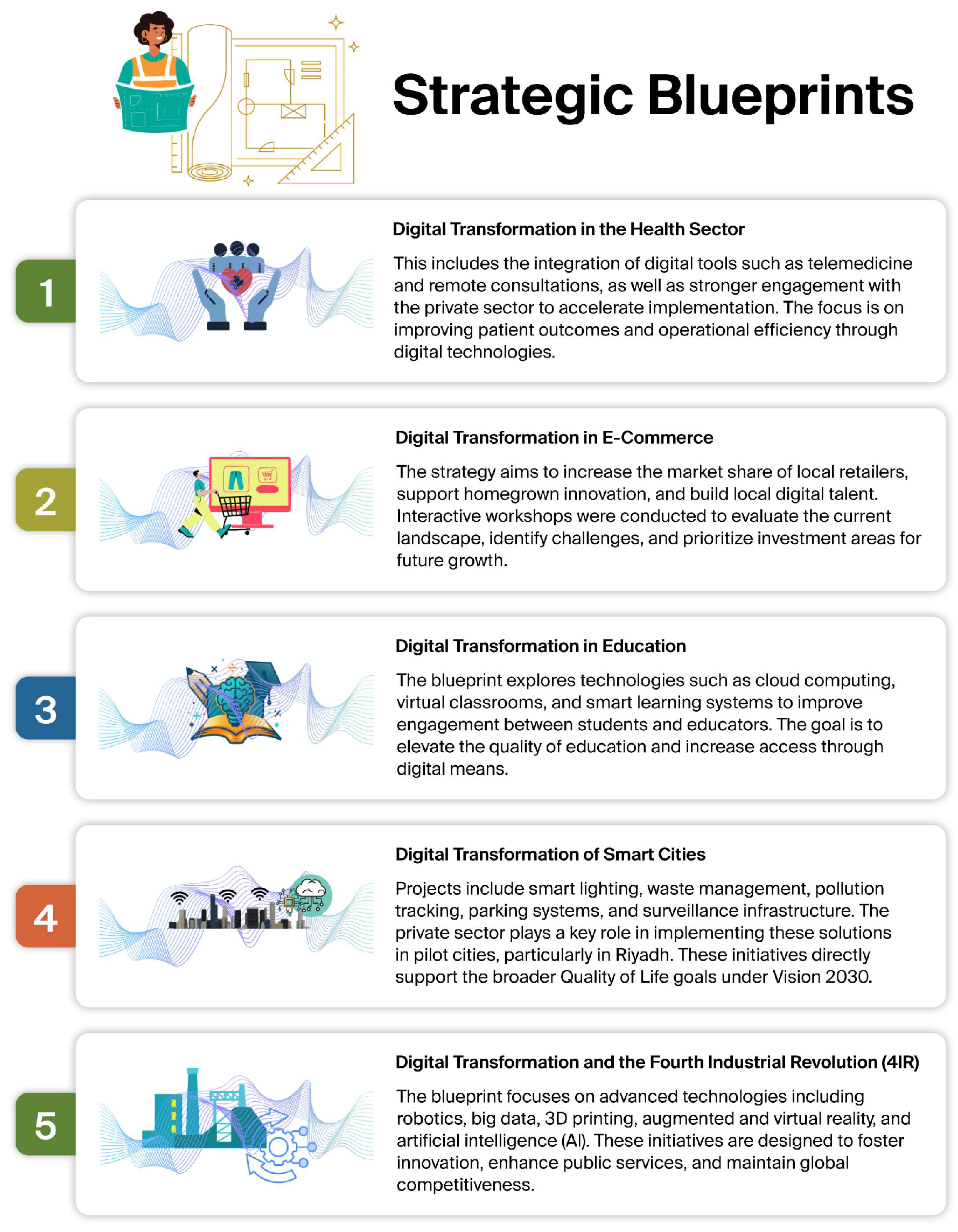
He further explained that ABC entity’s strategic plans rely on detailed blueprints, each consisting of three key components: (1) a vision for the future of the sector, (2) an assessment of the current state of the sector, and (3) a step-by-step strategy to bridge the gap between the two. Each project is tailored with its own timeline, budget, and implementation framework. He added that “The ABC entity focuses on developing these plans through intensive workshops”, in which “ABC entity, relevant ministries, and other stakeholders identify problems and propose solutions”. Once a plan is developed, it is handed over to the relevant authority for execution, while the ABC entity maintains an oversight role through monthly reporting mechanisms.
Reinforcing this approach, participant A noted that “these blueprints are the product of collaborative workshops involving ministries, officials, the ABC entity, and citizens. During these sessions, challenges are identified, initiatives are proposed, and plans are formalized and approved”.
Regarding plan approval, participant C explained: “Once strategies are developed, they are submitted to the relevant ministry. After ministerial approval, the ABC entity’s role becomes supervisory, ensuring implementation through regular reporting by the executing agency”.
Figure 1 illustrates the strategic blueprints that have been developed as part of this national effort.
Figure 1. Strategic blueprints.
Each government agency has its own Digital Transformation (DT) office or team, which works directly with the ABC entity to track plans and progress. According to participants C and B at the ABC entity, these offices are usually led by senior officials—either deputy ministers or undersecretaries. This leadership structure helps move decisions forward faster, with fewer bottlenecks [24].
Funding for digital projects is decentralized: each ministry covers its own costs from its internal budget, while the ABC entity receives a set annual subsidy.
Participant B noted that the ABC entity’s day-to-day work varies depending on the needs of each department. This includes attending workshops, running training sessions, and producing regular reports—weekly or monthly, depending on the case.
Table 2 illustrates some roles and dimensions of the DVO and the equivalent in the ABC entity.
Table 2. Some roles and dimensions of the DVO and the equivalent in the ABC entity.

3.2. Collaboration Between the ABC Entity and Other Agencies

The Digital Community and Partnerships Office plays a central role in advancing digital transformation across sectors by formulating strategic digital development plans in collaboration with relevant stakeholders. This office not only provides support in the execution of these initiatives but also fosters robust partnerships between public institutions and the private sector. To enhance its capabilities, the office engages experts, consultants, and specialists in digital transformation research—both internally within the ABC entity and through external collaborations.
The primary responsibilities of the Digital Community Management and Partnerships Office (referred to as “Digital Saudi”) include the following:
Designing and supporting the execution of sector-specific digital transformation strategies in coordination with relevant entities.
Aligning initiatives with Vision Realization Programs (VRPs).
Facilitating strategic partnerships between corporate and public sector actors.
To date, ten ministries have been directly engaged in these efforts: the Ministry of Health, the Ministry of Education, the Ministry of Communications, the Ministry of Municipal and Rural Affairs, the Ministry of Civil Service, the Ministry of Hajj and Umrah, the Ministry of Commerce, the Ministry of Media, the Ministry of Energy and Mineral Resources, and the Interior Ministry. Additionally, the office collaborates with 26 other government entities, such as the Center of Spending Efficiency, the Saudi Arabian Monetary Agency, the Saudi Health Council, the Delivery and Rapid Intervention Center, the National Cybersecurity Authority, the e-Government Program, and King Abdulaziz City for Science and Technology (KACST).
This cooperation also extends to 13 private and non-profit organizations, including multinational technology firms such as Cisco, Oracle, and General Electric (GE). The office contributes to six major Vision Realization Programs: the Privatization Program, the Quality of Life Program, the National Industrial Development and Logistics Program, the Financial Sector Development Program, the National Transformation Program 2020, and the Human Capacity Development Program.
Collaboration extends beyond the development of digital government services; it also aims to equip public sector employees with the latest tools and tailored professional development opportunities. According to participant D at the Ministry A, this collaborative approach focuses on providing employees with modern technologies and targeted training programs that address their specific professional needs, thereby enhancing both individual performance and institutional efficiency.
Building on this institutional collaboration, partnerships with the private sector are equally significant. When interviewed, participant B emphasized that such collaboration is demand-driven: “Cooperation is based on actual need and is essential for any organization aiming for success”. Regarding whether these partnerships are mediated exclusively through the ABC entity, he clarified: “No—while the ABC entity can engage vendors, individual ministries are also authorized to contract directly with companies for their digital initiatives”.
Participant C previously recommended that each government entity should establish a dedicated digital transformation team, headed by a deputy minister, to enable faster decision-making. While participant B acknowledged this structure as beneficial, he stressed that the actual cooperation model depends on the nature of inter-ministerial projects and their alignment with digital transformation objectives.
Most agencies maintain internal DT offices or teams led by high-ranking officials, typically deputy ministers or undersecretaries. These units are tasked with planning, execution, and continuous coordination with the ABC entity. The National Strategy for Digital Transformation outlines a governance framework designed to formalize this coordination, ensuring regular follow-up and alignment across agencies. The DT teams are responsible for project planning, standard-setting, and staff appointments for implementation efforts.
Field visits conducted during the study revealed that the internal structure for digital transformation varies across ministries. While some maintain full-fledged DT offices, others rely on dedicated personnel within existing departments. Despite these structural differences, all agencies reported having a designated point of contact with whom they could liaise with the ABC entity.

4. Results

Digital transformation involves redesigning traditional business models to fully leverage data, digital tools, and applications for improved efficiency and user experience. It emphasizes reengineering business processes and activating technologies to help users perform tasks more effectively.
According to participant A, successful digital transformation requires three key pillars:
Strategy: A clear, user-focused vision supported by strong governance, data-driven operations, an empowered workforce, capability development, and proactive challenge management.
User Focus: Ensuring that digital services are designed around user needs through continuous feedback, service redesign for clarity, and agile, responsive development processes.
Organizational Culture: Creating a flexible and collaborative work environment led by influential leaders who champion change, align employees with new digital values, and promote skill development.
Workforce development remains one of the greatest challenges. It can be addressed by adopting flexible recruitment practices, investing in continuous training, building in-house academies, emphasizing soft skills, and enhancing public engagement to attract and retain digital talent.
Digital transformation (DT) in Saudi Arabia represents a comprehensive, multi-entity ecosystem rather than simply comprising the work of a single organization. The ABC entity plays a primarily coordinating and advisory role, focusing on policies, legislation, inter-agency cooperation, and supporting other entities through guidance and shared expertise.
Each ministry independently develops and implements its own DT plans—identifying specific needs, execution methods, and timelines. When projects require collaboration across multiple agencies, the ABC entity acts as a facilitator, although some inter-ministerial cooperation occurs without its direct involvement.
Participant A emphasized that overlapping achievements are natural because DT is an integrated framework, involving several key institutions:
The Ministry of Communications and Information Technology (MCIT) is responsible for infrastructure, the local technology industry, and developing human capital.
The Yesser Program oversees e-government and smart government initiatives.
The National Cybersecurity Authority manages cybersecurity policies and asset protection.
The National Data Center focuses on activating the use of data.
The National Industrial Intelligence Authority leads artificial intelligence initiatives.
Participant A concluded that the ABC entity’s success is inherently tied to the broader national DT progress—its achievements are measured by how effectively Saudi Arabia as a whole advances in digital transformation across all sectors.

4.1. Summary of Digital Transformation Progress (Mid-2018 to Mid-2019)

The period from mid-2018 marked the foundational phase of the digital transformation (DT) journey, primarily focused on strategic planning, inter-agency meetings, and assessments of environmental readiness. This stage served as the groundwork for future initiatives, emphasizing situational analysis and the alignment of organizational structures with digital objectives.
Given the evolving nature of technology, this early phase was characterized by experimentation, adaptive planning, and the accommodation of both initial setbacks and incremental gains. A critical outcome during this period was the establishment of inter-governmental cooperation—an essential condition for long-term success in national digital transformation efforts.
In contrast, the first half of 2019 witnessed a notable acceleration in DT activities. This period marked a transition from planning to execution, with a significant number of digital initiatives and e-government applications being deployed. Positive performance indicators began to emerge, reflecting the tangible results of earlier groundwork and policy coordination.

4.2. Measuring the Maturity of Digital Transformation in Saudi Arabia

To obtain a clearer, evidence-based picture of digital transformation (DT) maturity across selected Saudi government agencies, a structured assessment was conducted. This evaluation was based on data gathered through interviews, document analysis, and a review of official digital initiatives. The researchers selected agencies that provided sufficient information to ensure data reliability and depth of analysis.
The assessment followed the Deloitte Digital Maturity Model (DMM), which contains the essential dimensions of DT: strategy, leadership, workforce capabilities, digital focus, and culture. The purpose of applying this model was to identify strengths and weaknesses across these key dimensions and to determine how deficiencies in any single area may hinder or delay the overall transformation process.
A three-level rubric was adopted to enhance traceability and allow consistent comparison across ministries:
High (5)—fully satisfies the criteria and demonstrates consistent performance.
Medium (3)—meets most criteria but shows some shortcomings that are being addressed.
Low (1)—displays significant weaknesses or lacks clear progress.
To improve transparency, both hard measures and soft measures were employed.
The hard measures were as follows:
The presence and clarity of a digital transformation strategy.
Existence of measurable objectives and performance indicators.
Evidence of operational improvements (e.g., reduced processing time, integration of data systems, and service expansion).
Soft measures were derived from qualitative evidence, such as
Interview insights with digital leaders and transformation officers.
Content analysis of government websites and public reports.
Review of cross-ministerial initiatives and service design practices.
Sociological factors, including leadership behavior, collaboration, and workforce adaptability.
The maturity assessment, therefore, combined observable performance (hard data) with interpretive analysis (soft data), enhancing reliability and contextual understanding.

4.2.1. Evaluation Criteria

Table 3 specifies the measured indicators within each dimension of the DMM framework:
Table 3. Evaluation criteria.

4.2.2. Digital Transformation Maturity Evaluation Rubric (Based on Deloitte DMM)

  • Strategy
High (5): The ministry has a clear, coherent digital strategy fully aligned with Vision 2030. Objectives, KPIs, and roadmaps are defined and regularly monitored. Digital initiatives are data-driven and integrated into organizational planning.
Medium (3): A digital strategy exists but lacks full alignment or measurable KPIs. Some initiatives are ongoing but fragmented or inconsistently monitored.
Low (1): No formal digital strategy or roadmap. Digital activities are isolated, lacking measurable goals or coordination.
2.
Leadership
High (5): Senior leadership demonstrates a strong understanding of digital trends and champions transformation. Clear governance, accountability, and communication structures are in place.
Medium (3): Leadership is aware of the importance of digital transformation, but engagement is inconsistent. Governance and accountability mechanisms are partially established.
Low (1): Limited or no leadership involvement in digital transformation. Decision-making is traditional, with minimal digital vision or direction.
3.
Workforce (User)
High (5): Workforce is digitally skilled, with continuous training programs and talent acquisition mechanisms (e.g., hackathons). Citizen digital competencies are actively developed.
Medium (3): Workforce has partial digital skills; training initiatives exist but are irregular. Talent attraction and retention require strengthening.
Low (1): Workforce lacks sufficient digital skills or motivation. No structured training or talent recruitment for digital transformation.
4.
Digital Focus
High (5): Services are fully user-centered, developed through continuous feedback, agile processes, and co-creation with citizens. Transparency and engagement are strong.
Medium (3): Some services reflect users’ needs, but feedback integration and agility are limited. Co-creation practices are emerging but not systematized.
Low (1): Services are designed internally with little or no user input. Limited transparency, engagement, and responsiveness.
5.
Culture
High (5): The organization promotes innovation, agility, and collaboration. Teams are empowered to experiment, learn quickly, and share digital practices across units.
Medium (3): Culture encourages limited experimentation. Some collaboration occurs but without systematic mechanisms for innovation or risk-taking behaviors.
Low (1): Culture is hierarchical and risk-averse. Innovation and cross-departmental collaboration are minimal or absent.
To provide a structured overview of the current state of digital transformation (DT) within Saudi government agencies, the researchers conducted a targeted assessment of DT maturity levels across a sample of entities. These agencies were selected based on the availability and reliability of relevant information. The aim was to identify both strengths and gaps in essential digital transformation components that could influence overall progress.
The maturity model applied in this assessment is built around core DT elements and is intended to highlight areas of excellence and underperformance. Weaknesses in any of the model’s dimensions may contribute to delays or inefficiencies in the broader transformation process. Agencies were evaluated using a three-tier scale:
High: Fully meets the criteria.
Medium: Partial compliance with ongoing improvements.
Low: Significant gaps present.
The evaluation combined both quantitative and qualitative approaches, as follows:
Hard measures included evidence from official meetings, strategic documentation, and tangible outcomes—particularly in an effort to determine whether agencies have articulated and implemented a coherent digital strategy, and how successfully they have navigated key challenges.
Soft measures were informed by interviews, analysis of official agency websites, and review of government-led digital initiatives. These insights helped evaluate the broader cultural and organizational alignment with digital goals.
The assessment also considered aspects from both the e-government maturity model and sociological perspectives, focusing on the following aspects:
Leadership’s understanding of digital trends.
Leadership’s ability to guide digital strategy.
Investment in citizens’ digital competencies.
Workforce readiness and capability.
The role of citizen demand in driving digital initiatives.
Strategic focus on improving citizen experience, interaction, and accountability.
Co-creation of digital services.
Additional indicators included improvements in planning, process quality, system characteristics, and the value of information. Cultural dimensions—such as a willingness to experiment, embrace agile methods, and foster innovation and collaboration—were also examined as key enablers of sustained digital transformation.
The result of applying the Deloitte [3] maturity model is shown in Table 4.
Table 4. Result of evaluating e-government maturity.

4.3. Evaluation of Digital Transformation Maturity in Selected Government Agencies

To assess the current state of digital transformation (DT) within Saudi Arabia’s public sector, a maturity evaluation was conducted across four key ministries based on a three-level classification: high (criteria met), medium (some shortcomings with active improvements), and low (significant gaps). The evaluation considered both hard indicators (strategic clarity and implementation outcomes) and soft indicators (interviews, website analysis, and participation in national initiatives).
Ministry A
The Ministry A demonstrated a high level of maturity in its DT strategy and alignment with Vision 2030 objectives. Clear strategic goals and implementation plans were evident, contributing to the success of programs [20]. Interviews confirmed a structured internal approach aimed at improving efficiency, including reduced processing times. The ministry’s achievements in this area have been externally recognized through awards. While its leadership’s digital awareness and workforce capabilities were rated at a medium level, this was attributed to normal challenges faced during early implementation stages, which the ministry is actively addressing.
The Ministry A has focused on standardizing the process of disbursing financial allocations to government entities by restructuring the distribution mechanism and linking it through an integrated digital program. This system enables the continuous monitoring of financial expenditures, helping to detect irregularities such as unexpected or unauthorized increases in spending and ensuring better control over allocated budgets.
Regarding its internal workforce, the Ministry A has emphasized professional development by designing training programs tailored to employees’ specific needs. Skills assessments are conducted to identify individual competency gaps, after which each employee is directed to relevant training courses. The progress and performance of each participant are subsequently monitored by their direct supervisor, ensuring that professional growth aligns with both individual development goals and institutional objectives.
Ministry B
The Ministry B received a high rating for its strategic direction and leadership’s understanding of digital trends, as reflected in its clear communication of goals and the effective delivery of citizen-facing services. However, workforce skills in executing the DT strategy were rated low, reflecting a broader national challenge in sourcing specialized digital talent. Other criteria were assessed as medium, acknowledging ongoing efforts to close existing gaps without major disruption to service delivery.
The Ministry B has prioritized enhancing the digital literacy of both administrative staff and medical professionals by implementing training programs on how to effectively use newly introduced digital platforms—particularly the W system. These initiatives aim to ensure that all healthcare workers can fully utilize digital services and provide accessible care to patients across the Kingdom. In preparation for the upcoming Unified Health Record project, which forms part of the Ministry’s long-term strategic plan, these efforts serve to strengthen digital readiness within the sector. Additionally, the Ministry has encouraged physicians to engage in digital consultations through the S platform, thereby expanding the reach and efficiency of healthcare services through digital channels.
Ministry C
The Ministry C was rated high for both strategic clarity and leadership’s digital awareness, particularly due to its successful shift to fully electronic services and recognition through the “Best Governmental Communication” award [25]. Similarly to Ministry B, workforce readiness remained a key limitation, resulting in a low rating in that area. The remaining dimensions were scored medium, given the presence of manageable challenges that the ministry continues to address.
The Ministry C’s achievement in reaching its current level of digital maturity and receiving multiple awards was not accomplished easily. The Ministry placed great emphasis on fundamentally restructuring its infrastructure and work processes to ensure that all services were fully aligned with digital transformation objectives—eliminating the need for in-person visits entirely.
It pursued this transformation through a well-defined strategy that combined technological modernization with human resource development. Employees were actively engaged in the decision-making process and enrolled in tailored professional development programs based on identified needs. Moreover, the Ministry’s strong managerial oversight and continuous performance monitoring played a crucial role in maintaining the momentum of change, ultimately contributing to the Ministry’s success in delivering efficient, accessible, and citizen-centric digital justice services.
Ministry D
The Ministry D had not yet adopted a formal DT strategy at the time of assessment, and thus, many evaluation criteria remained unfulfilled. A medium rating was assigned for leadership’s understanding of digital trends and investment in citizen skills, driven by ongoing efforts in educational agencies to foster digital capabilities. However, low ratings were given for leadership’s ability to lead digital strategy and for workforce execution capacity, as digital awareness and operational readiness among key decision-makers remained limited. The ministry’s Digital Transformation Office is currently working to resolve these issues.
Case Analysis and Institutional Observations
The broader institutional landscape reveals several challenges impeding the full realization of digital transformation goals, and these are described here.
Fragmentation and overlap: Multiple agencies are involved in DT efforts, often with overlapping mandates. This lack of coordination has led to confusion, reduced clarity in responsibilities, and diminished effectiveness of the services delivered to end users.
Weak collaboration with the ABC entity: There is limited strategic cooperation between the ABC entity and other government entities, which undermines its role as a central facilitator.
Role conflicts with other institutions: There is significant overlap between the ABC entity’s responsibilities and those of the Ministry of Communications and Information Technology (MCIT), particularly in infrastructure and digital capability development. Similar functional redundancies exist between the ABC entity and the e-Government Program, despite both operating under the same administrative umbrella.
Independent progress among ministries: While the ABC entity is mandated to provide legislative guidance and digital planning support, many ministries have successfully developed and executed digital strategies independently, often without direct support from the ABC entity.
Inconsistencies in communication: Field interviews and site visits revealed conflicting information between ABC entity staff and between ABC entity and various government entities, indicating a need for better internal coordination and external engagement.
Policy and advisory capabilities: Although the ABC entity has made visible progress in policy development and legislative work, its effectiveness as a consultative body remains underdeveloped and requires further strengthening.
Lack of standardized metrics: The absence of unified indicators and criteria for measuring digital transformation progress continues to hinder systematic evaluation. The process to develop a follow-up and assessment framework has been slow and is still ongoing.
Partial progress: While a good portion of foundational work has been completed, significant challenges and unaddressed projects remain. The ABC entity continues to face operational and strategic obstacles in executing its mandate.
Nevertheless, given the ABC entity’s relatively recent establishment, there is optimism that its performance and impact will improve over time. According to feedback from government agencies, several core responsibilities assigned to the ABC entity remain unfulfilled, including the following:
Reviewing and evaluating current DT plans and executive programs.
Proposing and facilitating mechanisms to accelerate digital service development.
Developing a national strategy for scaling digital capabilities.
These findings suggest that, while foundational progress has been made, further institutional alignment, role clarification, and capacity building are essential for the ABC entity to fully realize its intended role within Saudi Arabia’s digital transformation landscape.

5. Discussion

This study examined the current state of digital transformation (DT) across government agencies in Saudi Arabia (SA), seeking to answer questions related to maturity, coordination, institutional roles, and key challenges. While notable progress has been made, findings indicate that, during the 2017–2020 period, Saudi Arabia was still in the early stages of DT, with significant variation in maturity levels across sectors.
Agencies such as the Ministry A demonstrated advanced digital maturity, attributed to a clear strategy, streamlined responsibilities, and a focused service scope. Award-winning government programs reflect this maturity through measurable operational efficiency and national recognition. Conversely, ministries such as C and D —although they are successful in automating several services—face challenges related to the complexity of their mandates, broader user bases, and the technical diversity of end users. For instance, while the Ministry C reduced in-person service dependency and the Ministry B improved service accessibility, both were found to struggle with workforce capability and system scalability. The Ministry D, meanwhile, has not yet formally launched its DT strategy, largely due to the complexity of its structure, the scale of its target population, and the vast scope of services involved.
A key observation from this research is that agencies with narrower mandates and simpler service delivery models tend to achieve a higher level of digital maturity faster. Agencies managing large-scale, diverse, and citizen-facing services require more time and resources to reach similar levels of transformation. Furthermore, the role of the ABC entity as a coordinating body appears to be underutilized. Many agencies reported that, while the ABC entity provides strategic documents and policy guidance, its practical engagement is limited. In many cases, agencies have independently developed and executed their digital initiatives, often relying on external consulting firms rather than seeking support from the ABC entity.
The lack of a clear, unified governance structure for DT is evident in the functional overlaps between the ABC entity, the Ministry of Communications and Information Technology (MCIT), and the e-Government Program. In practice, this has led to confusion over mandates, duplicative efforts, and inconsistent communication between stakeholders. While the ABC ENTITY has achieved progress in legislative and policy development, its capacity to act as an operational advisory center remains limited. Fieldwork revealed inconsistent messaging between ABC entity staff and between the ABC entity and other government entities, which affects collaboration.
In contrast, the BDF entity, which is responsible for the e-Government Program, has demonstrated a more structured and successful approach. It has developed a clear, incremental model for tracking agency progress, regularly convening agencies for updates, deploying field support teams, and issuing performance-based recommendations. Its maturity measurement methodology has proven effective and could serve as a model for the ABC entity to adopt or align with.
Infrastructure continues to be a critical barrier to DT success in SA. Many regions still lack the necessary connectivity, integration, and system interoperability. Moreover, staffing shortages, limited technical capabilities, and frequent leadership changes—especially within the ABC entity—hinder institutional continuity and knowledge retention. Some agencies face delays in project funding, while others report lags in the enactment of enabling policies and regulations.
Another challenge lies in the digital divide. Variability in users’ technical proficiency—especially among older populations and in rural areas—limits adoption. Despite improvements in ICT accessibility and the integration of digital literacy into school curricula, gaps persist. Cultural resistance to advanced digital channels and limited broadband coverage remain pressing issues.
The COVID-19 pandemic presented a real-time stress test for Saudi Arabia’s digital infrastructure and services. Despite its challenges, the crisis confirmed that government systems were largely capable of supporting remote operations. Ministries and agencies were forced to confront operational weaknesses, thereby accelerating improvements. The pandemic highlighted the importance of resilience, agility, and user-centric service delivery—pushing DT efforts further into the national spotlight.
It is important to recognize that Saudi ministries began implementing DT strategies as early as 2016, under the National Transformation Program, before the establishment of the ABC entity in late 2017. As a result, many ministries initially operated independently, developing their own strategies, selecting technology partners, and setting performance benchmarks. This autonomy contributed to progress but also led to fragmentation.
Comparatively, while countries like the UAE and Singapore focus DT efforts in a sector-by-sector manner, under centralized frameworks, Saudi Arabia has pursued a more integrated, whole-government approach. Although this strategy increases complexity, it also enables a broader and more interconnected digital ecosystem. Unlike the UK and US, which emphasize government services alone, SA has extended its digital focus to sectors such as e-commerce and national data economy development.
In terms of usability and citizen engagement, Saudi Arabia has made commendable strides. Government platforms are generally intuitive, visually engaging, and supported by educational content on social media and official websites—features not consistently present in comparator countries like the UAE. Nevertheless, the simultaneous rollout of DT across all regions and services adds layers of difficulty and requires enhanced coordination and governance.
The transition of the ABC entity from the Ministry of Economy and Planning to the MCIT caused disruptions in funding and administrative continuity, leading to delays in several projects and the cancellation of vendor contracts. This transition also affected the ABC entity’s capacity to deliver on its core mandates, including data governance and digital capability development.
To address persistent issues such as data ownership, security, and integration, the government has established specialized entities like the Saudi Authority for Data and Artificial Intelligence (SDAIA) and the National Cybersecurity Authority. These bodies aim to strengthen oversight, manage risk, and ensure that the foundational elements of DT—data and trust—are effectively governed.
Despite challenges, Saudi Arabia has demonstrated meaningful progress in digital transformation. Ministries have earned regional recognition for innovation and excellence, including the Ministry A’s “Best Use of Innovative Technology in the Financial Sector” award and the Ministry C’s award for “Best Governmental Communication” in the Arab world. These accolades reflect the seriousness and scale of national efforts.
In conclusion, while institutional overlap, infrastructure gaps, talent shortages, and uneven maturity remain, Saudi Arabia is on a credible path toward achieving its DT goals. The experience of COVID-19 has underscored the urgency and value of transformation, offering a real-world validation of efforts made to date. For the ABC entity to fulfill its intended role, it must clearly define the scope of the e-government Program to improve coordination, accountability, and measurable impact across the public sector.

6. Conclusions

Despite clear and sustained efforts by government agencies in Saudi Arabia to advance digital transformation (DT), the overall maturity level remains in its early developmental stages. Between 2017 and 2020, significant research and pilot projects were initiated to explore digital governance models, develop early-stage digital services, and experiment with infrastructure modernization. These efforts provided critical groundwork but also revealed persistent structural and operational challenges that hinder the full realization of DT goals.
During this period, ministries largely adopted a “user-first” approach, launching various applications, platforms, and citizen-centered initiatives. However, the implementation revealed gaps in inter-agency coordination, underdeveloped infrastructure, and an absence of standardized benchmarks to measure digital maturity. While certain entities made significant progress—particularly those with focused service mandates—others struggled due to the scale and complexity of their responsibilities.
A key outcome of this study is the recognition of the ABC entity as a pivotal yet underutilized actor in the digital transformation ecosystem [25]. As a neutral coordinating entity, the ABC entity holds strategic potential to guide national DT initiatives, unify fragmented efforts, and offer practical support to government bodies. Yet, its current role is constrained by limited resources, unclear mandates, and a reactive posture in policy execution.
To address these gaps and accelerate transformation, we recommend the following measures:
Strengthening the operational and consultative functions of the ABC entity to ensure proactive engagement.
Establishing and institutionalizing a national DT maturity model and performance indicators.
Conducting internal assessments to identify transformation bottlenecks and provide actionable recommendations through structured reporting.
Addressing organizational resistance and change management issues that exist within certain agencies.
Investing in workforce development through continuous training and skills enhancement programs.
Modernizing national infrastructure, particularly in areas where current service providers fall short of digital transformation needs.
Defining clear milestones, timelines, and success criteria for ABC entity-led programs.
Increasing the ABC entity workforce to match its cross-government responsibilities and workload.
Creating mechanisms that incentivize cooperation and secure data exchange across ministries.
Several research limitations were encountered during this study:
The decentralized and rapidly evolving nature of DT in Saudi Arabia complicated our efforts to define and evaluate consistent processes.
Limited access to key agencies, including the ABC entity, delayed data collection, and narrowed the study scope.
Interviews were often cut short or declined entirely, even after initial approvals were granted.
Reluctance to share sensitive or internal data contributed to gaps in assessing the ABC entity’s actual role.
As many digital programs remain under development, conclusive insights were sometimes difficult to establish.
Future research should prioritize the following:
Developing a robust, nationally tailored DT maturity framework for Saudi Arabia.
Exploring strategies to modernize and integrate digital infrastructure at scale.
Designing effective change management models that support cultural and operational shifts across ministries.
Strengthening institutional alignment to ensure that digital transformation is not only a technological initiative but also a governance-driven effort backed by skilled personnel and sustainable policy frameworks.
Achieving a fully digital government requires more than technology. It depends on cohesive strategy, cross-sector collaboration, institutional capacity, and the political will to drive long-term reform.

Author Contributions

Conceptualization, formal analysis, investigation, resources, data curation, and writing—original draft preparation, S.A.; writing—review and editing, supervision, O.A. All authors have read and agreed to the published version of the manuscript.

Funding

This research received no external funding.

Institutional Review Board Statement

All information was obtained through interviews and surveys voluntarily conducted with representatives from various governmental institutions. The data focused solely on organizational practices and general institutional characteristics, without including any personal or identifiable information. According to the practice of the Information Systems Department at King Saud University, formal ethics approval from an Institutional Review Board (IRB) is obtained at the discretion of the thesis committee and is not required for non-interventional, minimal-risk studies such as this one. All participating institutions were informed about the research objectives, participated voluntarily, and were given the opportunity to review the thesis prior to publication.

Data Availability Statement

For any data requests, please contact salkorbi@kku.edu.sa.

Acknowledgments

The authors thank the anonymous reviewers of the journal for their constructive suggestions, which significantly improved the quality of the article.

Conflicts of Interest

The authors declare no conflicts of interest.

Abbreviations

The following abbreviations are used in this manuscript:
DTDigital Transformation
KPIsKey Performance Indicators
SASaudi Arabia
CIOChief Information Officer
GDPGross Domestic Product
4IRFourth Industrial Revolution
DVODigital Vision Office
VRPsVision Realization Programs
ICTInformation and Communication Technology

References

  1. Eggers, W.; Bellman, J. The Journey to Government’s Digital Transformation p. 40, 2015. Available online: https://www.deloitte.com/mt/en/Industries/government-public/perspectives/digital-government-transformation.html (accessed on 21 November 2025).
  2. Morakanyane, R.; Grace, A.; O’Reilly, P. Conceptualizing Digital Transformation in Business Organizations: A Systematic Review of Literature. In Proceedings of the Digital Transformation—From Connecting Things to Transforming Our Lives, Bled 2017 Proceedings, Bled, Slovenia, 18–21 June 2017; pp. 427–443. [Google Scholar] [CrossRef]
  3. Kane, G.C.; Palmer, D.; Nguyen, A.P.; Kiron, D.; Buckley, N. Strategy, Not Technology, Drives Digital Transformation. MIT Sloan Manag. Rev. Deloitte. 2015. Available online: https://sloanreview.mit.edu/projects/strategy-drives-digital-transformation/.
  4. Liu, D.; Chen, S.; Chou, T. Resource fit in digital transformation. Manag. Decis. 2011, 49, 1728–1742. [Google Scholar] [CrossRef]
  5. Bharadwaj, A.; El Sawy, O.A.; Pavlou, P.A.; Venkatraman, N. Digital Business Strategy: Toward a Next Generation of Insights. MIS Q. 2013, 37, 471–482. Available online: http://www.jstor.org/stable/43825919 (accessed on 21 November 2025). [CrossRef]
  6. Mazzone, D.M. Digital or Death: Digital Transformation: The Only Choice for Business to Survive Smash and Conquer; Smashbox Consulting Inc.: Mississauga, ON, Canada, 2014. [Google Scholar]
  7. Mariani, I.; Bianchi, I. Conceptualizing Digital Transformation in Cities: A Multi-Dimensional Framework for the Analysis of Public Sector Innovation. Sustainability 2023, 15, 8741. [Google Scholar] [CrossRef]
  8. Ndrecaj, V.; Tlemsani, I.; Hashim, M.A.M. Unveiling Dynamic Capabilities in Public Procurement: Myths, Realities, and Strategic Transformation. Adm. Sci. 2025, 15, 134. [Google Scholar] [CrossRef]
  9. de Magalhães Santos, L.G. Dynamic capabilities in the public sector: Research agenda in the context of digital transformation. eJ. eDemocr. Open Gov. 2024, 16, 74–87. [Google Scholar] [CrossRef]
  10. Saeed, S. Digital Transformation in Governmental Public Service Provision and Usable Security Perception in Saudi Arabia. Information 2025, 16, 247. [Google Scholar] [CrossRef]
  11. Siddiquee, N.A. E-government and transformation of service delivery in developing countries. Transform. Gov. People Process Policy 2016, 10, 368–390. [Google Scholar] [CrossRef]
  12. Ministry of Communications and Information Technology. Available online: https://www.mcit.gov.sa/en (accessed on 20 October 2025).
  13. Government Transformation Strategy—GOV.UK. Available online: https://www.gov.uk/government/publications/government-transformation-strategy-2017-to-2020/government-transformation-strategy (accessed on 21 November 2025).
  14. Arfeen, M.I.; Kamal, M.M. Future of e-government in pakistan: A case study approach. In Proceedings of the 20th Americas Conference on Information Systems, AMCIS 2014, Savannah, GA, USA, 7–9 August 2014; No. 2003. pp. 1–13. [Google Scholar]
  15. Franke, R.; Eckhardt, A. Crucial factors for E government implementation success and failure: Case study evidence from Saudi Arabia. In Proceedings of the 20th Americas Conference on Information Systems, AMCIS 2014, Savannah, GA, USA, 7–9 August 2014; pp. 1–13. [Google Scholar]
  16. Cordella, A.; Barca, C. Seconds out, round two: Contextualizing e-government projects within their institutional milieu: A London Local Authority case. Scand. J. Inf. Syst. 2006, 18, 37–60. [Google Scholar]
  17. Yin, R.K. Case Study Research Design and Methods, 4th ed.; Sage: Thousand Oaks, CA, USA, 2009; Volume 5, Available online: https://books.google.com.sa/books?hl=ar&lr=&id=FzawIAdilHkC&oi=fnd&pg=PR1&dq=Yin,+R.K.+Case+Study+Research+Design+and+Methods,+4th+ed.%3B+Sage:+Thousand+Oaks,+CA,+USA,+2009&ots=l-3T5bnXYx&sig=QX0SfJPJN6fvRmL99DfwV_6xxOY&redir_esc=y#v=onepage&q=Yin%2C%20R.K.%20Case%20Study%20Research%20Design%20and%20Methods%2C%204th%20ed.%3B%20Sage%3A%20Thousand%20Oaks%2C%20CA%2C%20USA%2C%202009&f=false (accessed on 21 November 2025).
  18. Yasser. Available online: https://esconsulting.com.sa/en/ (accessed on 21 November 2025).
  19. Socratte. Available online: https://thmanyah.com/post/7412_1jhggnmybp (accessed on 21 November 2025).
  20. Vision2030. Available online: https://www.vision2030.gov.sa/en (accessed on 21 November 2025).
  21. Concha, G.; Astudillo, H.; Porrúa, M.; Pimenta, C. E-Government procurement observatory, maturity model and early measurements. Gov. Inf. Q. 2012, 29, S43–S50. [Google Scholar] [CrossRef]
  22. Weerakkody, V.; Omar, A.; El-Haddadeh, R.; Al-Busaidy, M. Digitally-enabled service transformation in the public sector: The lure of institutional pressure and strategic response towards change. Gov. Inf. Q. 2016, 33, 658–668. [Google Scholar] [CrossRef]
  23. The Ministry of Finance Wins the Award for the Best Use of Innovative Technology in the Financial Sector. Available online: https://www.mof.gov.sa/mediacenter/news/Pages/News_07102019.aspx (accessed on 21 November 2025).
  24. The Ministry of Finance Wins the Smart Government Shield for 2019. Available online: https://www.mof.gov.sa/mediacenter/news/Pages/News_27032019.aspx (accessed on 21 November 2025).
  25. Reward. Available online: https://www.moj.gov.sa/ar/MediaCenter/News/Pages/NewsDetails.aspx?itemId=1030 (accessed on 21 November 2025).
Disclaimer/Publisher’s Note: The statements, opinions and data contained in all publications are solely those of the individual author(s) and contributor(s) and not of MDPI and/or the editor(s). MDPI and/or the editor(s) disclaim responsibility for any injury to people or property resulting from any ideas, methods, instructions or products referred to in the content.

Article Metrics

Citations

Article Access Statistics

Multiple requests from the same IP address are counted as one view.