
Geopolitical Ramifications of Cybersecurity Threats: State Responses and International Cooperations in the Digital Warfare Era


Abstract
1. Introduction
2. Methodology and Data Collection
3. Literature Review
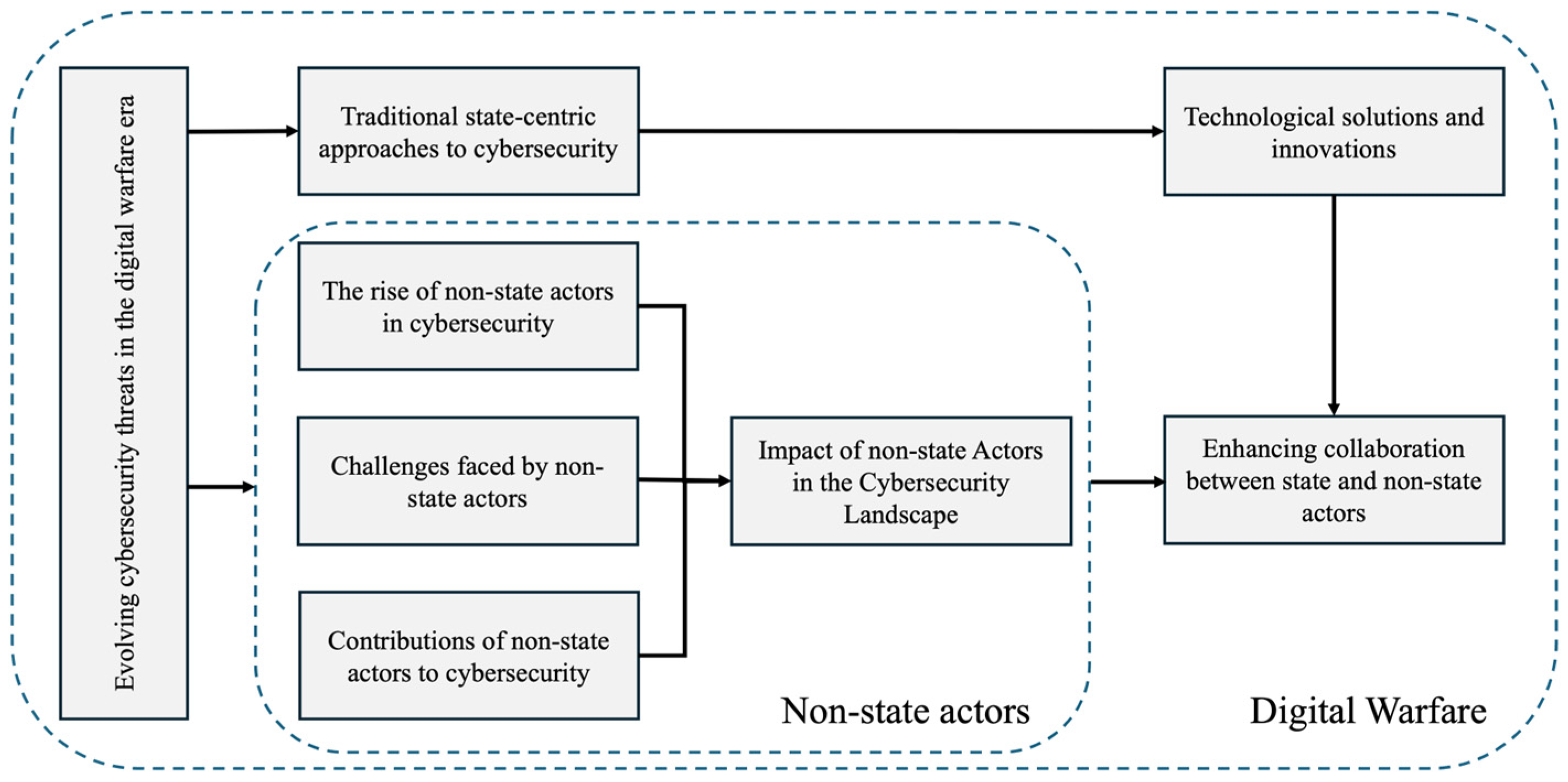
3.1. Evolving Cybersecurity Threats in the Digital Warfare Era
3.2. Traditional State-Centric Approaches to Cybersecurity
3.3. The Rise of Non-State Actors in Cybersecurity
3.4. Contributions of Non-State Actors to Cybersecurity
3.5. Challenges Faced by Non-State Actors
3.6. Impact of Non-State Actors in the Cybersecurity Landscape
3.7. Enhancing Collaboration Between State and Non-State Actors
3.8. Technological Solutions and Innovations
3.9. Emerging Threats in Cybersecurity
3.10. Analysis of Non-State Actors in Modern Warfare
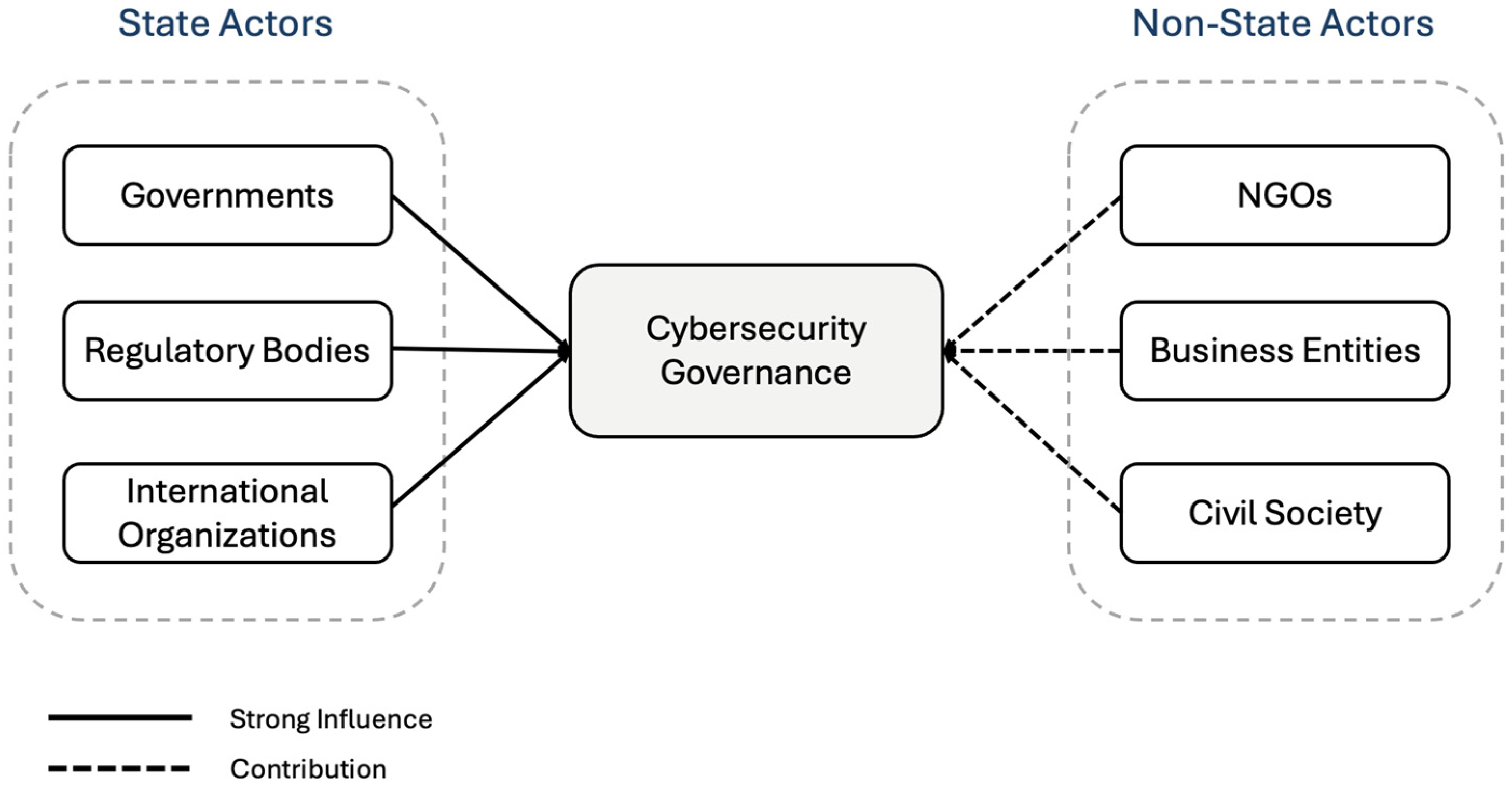
3.11. Analysis of International Cybersecurity Governance
4. Case Studies
4.1. Case Study 1: Multi-Stakeholder Collaboration in Creating Cybersecurity Standards
4.2. Case Study 2: Civil Society Organisations’ Role in Cyber Policy Development
4.3. Case Study 3: Industry-Led Collaborative Initiatives for Cyber Resilience
5. Discussion
5.1. Study Limitations and Future Works
5.2. Recommendations for Stakeholders
Practical Recommendations
6. Conclusions
Funding
Conflicts of Interest
References
- Johnstone, I.; Sukumar, A.; Trachtman, J. The way ahead for multistakeholder cyber diplomacy. In Building an International Cybersecurity Regime; Edward Elgar Publishing: Cheltenham, UK, 2023; pp. 257–265. [Google Scholar]
- Sukumar, A.; Broeders, D.; Kello, M. The pervasive informality of the international cybersecurity regime: Geopolitics, non-state actors and diplomacy. Contemp. Secur. Policy 2024, 45, 7–44. [Google Scholar] [CrossRef]
- Liu, J. Rethinking Chinese multistakeholder governance of cybersecurity. In Building an International Cybersecurity Regime; Edward Elgar Publishing: Cheltenham, UK, 2023; pp. 185–200. [Google Scholar]
- Cîrnu, C.-E.; Rotuna, C.; Vasiloiu, I.-C. Comparative Analysis on Cyber Diplomacy in EU and US. Rom. Cyber Secur. J. 2023, 5, 77–86. [Google Scholar] [CrossRef]
- Sukumar, A. The geopolitics of multistakeholder cyber diplomacy: A comparative analysis. In Building an International Cybersecurity Regime; Edward Elgar Publishing: Cheltenham, UK, 2023; pp. 20–58. [Google Scholar]
- Ampratwum, G.; Osei-Kyei, R.; Tam, V.W.Y. Exploring the concept of public-private partnership in building critical infrastructure resilience against unexpected events: A systematic review. Int. J. Crit. Infrastruct. Prot. 2022, 39, 100556. [Google Scholar] [CrossRef]
- Whyte, C.; Mazanec, B. Understanding Cyber-Warfare: Politics, Policy and Strategy; Routledge: Abingdon, UK, 2023. [Google Scholar]
- Vaismoradi, M.; Jones, J.; Turunen, H.; Snelgrove, S. Theme development in qualitative content analysis and thematic analysis. J. Nurs. Educ. Pr. 2016, 6, 100. [Google Scholar] [CrossRef]
- Ness, S.; Khinvasara, T. Emerging Threats in Cyberspace: Implications for National Security Policy and Healthcare Sector. J. Eng. Res. Rep. 2024, 26, 107–117. [Google Scholar] [CrossRef]
- Sigholm, J. Non-state actors in cyberspace operations. J. Mil. Stud. 2013, 4, 1–37. [Google Scholar] [CrossRef]
- Work, J. In wolf’s clothing: Complications of threat emulation in contemporary cyber intelligence practice. In Proceedings of the 2019 International Conference on Cyber Security and Protection of Digital Services (Cyber Security), Oxford, UK, 3–4 June 2019. [Google Scholar]
- Kumar, I. Emerging threats in cybersecurity: A review article. Int. J. Appl. Nat. Sci. 2023, 1, 1–8. [Google Scholar]
- Mijwil, M.; Unogwu, O.J.; Filali, Y.; Bala, I.; Al-Shahwani, H. Exploring the top five evolving threats in cybersecurity: An in-depth overview. Mesopotamian J. Cybersecur. 2023, 2023, 57–63. [Google Scholar] [CrossRef]
- Asbaş, C.; Tuzlukaya, Ş.E. Cyberwarfare: War Activities in Cyberspace. In Handbook of Research on War Policies, Strategies, and Cyber Wars; Özsungur, F., Ed.; IGI Global: Hershey, PA, USA, 2023; pp. 128–145. [Google Scholar]
- Egloff, F.J.; Shires, J. The better angels of our digital nature? Offensive cyber capabilities and state violence. Eur. J. Int. Secur. 2023, 8, 130–149. [Google Scholar] [CrossRef]
- Usman, H.; Mir, S.; Rehman, A. Beyond Conventional War: Cyber Attacks and the Interpretation of Article 2(4) of the UN Charter. Glob. Leg. Stud. Rev. 2023, VIII, 16–26. [Google Scholar] [CrossRef]
- Thomas, J.E. Individual cyber security: Empowering employees to resist spear phishing to prevent identity theft and ransomware attacks. Int. J. Bus. Manag. 2018, 12, 1–23. [Google Scholar] [CrossRef]
- Alqudhaibi, A.; Albarrak, M.; Aloseel, A.; Jagtap, S.; Salonitis, K. Predicting cybersecurity threats in critical infrastructure for industry 4.0: A proactive approach based on attacker motivations. Sensors 2023, 23, 4539. [Google Scholar] [CrossRef] [PubMed]
- Ferdous, J.; Islam, R.; Mahboubi, A.; Islam, Z. A Review of State-of-the-Art Malware Attack Trends and Defense Mechanisms. IEEE Access 2023, 11, 121118–121141. [Google Scholar] [CrossRef]
- Aslan, Ö.; Aktuğ, S.S.; Ozkan-Okay, M.; Yilmaz, A.A.; Akin, E. A comprehensive review of cyber security vulnerabilities, threats, attacks, and solutions. Electronics 2023, 12, 1333. [Google Scholar] [CrossRef]
- Riggs, H.; Tufail, S.; Parvez, I.; Tariq, M.; Khan, M.A.; Amir, A.; Vuda, K.V.; Sarwat, A.I. Impact, vulnerabilities, and mitigation strategies for cyber-secure critical infrastructure. Sensors 2023, 23, 4060. [Google Scholar] [CrossRef]
- Sjøen, M.M.; Mattsson, C. Depoliticising political violence: State-centric and individualised discourses in the Norwegian counterterrorism policy field. Scand. J. Educ. Res. 2023, 67, 950–963. [Google Scholar] [CrossRef]
- Lilli, E.; Painter, C. 9 Soft power and cyber security: The evolution of US cyber diplomacy. In Soft Power and the Future of US Foreign Policy; Hendrik, W.O., Ed.; Manchester University Press: Manchester, WA, USA, 2023; pp. 161–179. [Google Scholar]
- Liebetrau, T.; Monsees, L. Assembling Publics: Microsoft, Cybersecurity, and Public-Private Relations. Politics Gov. 2023, 11, 157–167. [Google Scholar] [CrossRef]
- Schaefer, D. Spies and scholars in the cyber age: Researching intelligence in Australian policy and regional security. Aust. J. Int. Aff. 2024, 78, 102–122. [Google Scholar] [CrossRef]
- Petrosyan, M. The Role of Non-State Actors in Modern Warfare: The Case of Syria and Nagorno-Karabakh. J. Balk. Near East. Stud. 2024, 26, 149–163. [Google Scholar] [CrossRef]
- Gabrielli, G. Individual Criminal Responsibility of Non-State Actors Operating in Cyberspace for War Crimes Under the ICC Statute. EU Comp. Law Issues Chall. Ser. (ECLIC) 2023, 7, 286–315. [Google Scholar]
- Madnick, B.; Huang, K.; Madnick, S. The evolution of global cybersecurity norms in the digital age: A longitudinal study of the cybersecurity norm development process. Inf. Secur. J. A Glob. Perspect. 2024, 33, 204–225. [Google Scholar] [CrossRef]
- Shukla, V. A Brief Study of International Law in the Age of Cybersecurity. EPRA Int. J. Multidiscip. Res. (IJMR) 2023, 9, 269–273. [Google Scholar] [CrossRef]
- Maschmeyer, L. Subversion, cyber operations, and reverse structural power in world politics. Eur. J. Int. Relat. 2023, 29, 79–103. [Google Scholar] [CrossRef]
- Azubuike, C.F. Cyber Security and International Conflicts: An Analysis of State-Sponsored Cyber Attacks. Nnamdi Azikiwe J. Political Sci. 2023, 8, 101–114. [Google Scholar]
- Maulana, Y.I.; Fajar, I. Analysis of cyber diplomacy and its challenges for the digital era community. IAIC Trans. Sustain. Digit. Innov. (ITSDI) 2023, 4, 169–177. [Google Scholar] [CrossRef]
- Kosenkov, A. Cyber conflicts as a new global threat. Future Internet 2016, 8, 45. [Google Scholar] [CrossRef]
- Abdullahi, A.; Musa, I.G. The legitimacy of international law: Challenges and the emerging issues. J. Glob. Soc. Sci. 2023, 4, 14–34. [Google Scholar] [CrossRef]
- Utkirovich, R.U. Navigating the Cyber Legal Landscape: Protecting Legal Entities through Comprehensive Cyber-security Strategies. Uzb. J. Law Digit. Policy 2023, 1. [Google Scholar] [CrossRef]
- Lewis, E.J.; Baez, M.D. A Critical Analytical View of Control Theory and the Geopolitical and Economic Drivers Affecting Cyber Security Warfare. In Applied Research Approaches to Technology, Healthcare, and Business; Burrell, D.N., Ed.; IGI Global: Hershey, PA, USA, 2023; pp. 28–45. [Google Scholar]
- Diro, A.; Kaisar, S.; Vasilakos, A.V.; Anwar, A.; Nasirian, A.; Olani, G. Anomaly detection for space information networks: A survey of challenges, techniques, and future directions. Comput. Secur. 2024, 139, 103705. [Google Scholar] [CrossRef]
- Painter, C. US multistakeholder engagement in cyber stability issues. In Building an International Cybersecurity Regime; Edward Elgar Publishing: Cheltenham, UK, 2023; pp. 143–164. [Google Scholar]
- Zhao, B. Granting legitimacy from non-state actor deliberation: An example of women’s groups at the United Nations Framework Convention on Climate Change. Environ. Policy Gov. 2023, 34, 236–255. [Google Scholar] [CrossRef]
- Dunn Cavelty, M.; Smeets, M. Regulatory cybersecurity governance in the making: The formation of ENISA and its struggle for epistemic authority. J. Eur. Public Policy 2023, 30, 1330–1352. [Google Scholar] [CrossRef]
- Sivan-Sevilla, I. Supranational security states for national security problems: Governing by rules & capacities in tech-driven security spaces. J. Eur. Public Policy 2023, 30, 1353–1378. [Google Scholar]
- Radanliev, P. Cyber diplomacy: Defining the opportunities for cybersecurity and risks from Artificial Intelligence, IoT, Blockchains, and Quantum Computing. J. Cyber Secur. Technol. 2024, 1–51. [Google Scholar] [CrossRef]
- Sullivan, J.; Nurse, J.R. Cyber Security Incentives and the Role of Cyber Insurance; RUSI Emerging Insights Paper; Technical report; Royal United Services Institute for Defence and Security Studies (RUSI): London, UK, 2021. [Google Scholar]
- Heath, B. Before the Breach: The Role of Cyber Insurance Incentivizing Data Security. Georg. Wash. Law Rev. 2018, 86, 1115. [Google Scholar]
- Wolff, J. The role of insurers in shaping international cyber-security norms about cyber-war. Contemp. Secur. Policy 2024, 45, 141–170. [Google Scholar] [CrossRef]
- Arslan, A.S. Neorealist Analysis of Security Dilemma in Cyberspace; A Quantitative Study. APSA Prepr. 2024; preprint. [Google Scholar] [CrossRef]
- Iacono, M.; Mastroianni, M. Evaluation of the Effectiveness of National Promotion Strategies for the Improvement of Privacy and Security. Computers 2024, 13, 87. [Google Scholar] [CrossRef]
- Girdhar, K.; Singh, C.; Kumar, Y. AI and Blockchain for Cybersecurity in Cyber-Physical Systems: Challenges and Future Research Agenda. In Blockchain for Cybersecurity in Cyber-Physical Systems; Maleh, Y., Alazab, M., Romdhani, I., Eds.; Springer International Publishing: Cham, Switzerland, 2023; pp. 185–213. [Google Scholar]
- Tyagi, A.K. Blockchain and Artificial Intelligence for Cyber Security in the Era of Internet of Things and Industrial Internet of Things Applications. In AI and Blockchain Applications in Industrial Robotics; IGI Global: Hershey, PA, USA, 2024; pp. 171–199. [Google Scholar]
- Lone, A.N.; Mustajab, S.; Alam, M. A comprehensive study on cybersecurity challenges and opportunities in the IoT world. Secur. Priv. 2023, 6, e318. [Google Scholar] [CrossRef]
- Kaur, I.; Gupta, V.; Verma, V.; Kaur, S. Securing healthcare records using blockchain: Applications and challenges. In AI and Blockchain in Healthcare; Springer: Singapore, 2023; pp. 57–66. [Google Scholar] [CrossRef]
- Vegesna, V.V. Privacy-Preserving Techniques in AI-Powered Cyber Security: Challenges and Opportunities. Int. J. Mach. Learn. Sustain. Dev. 2023, 5, 1–8. [Google Scholar]
- Rees, J.; Rees, C.J. Cyber-Security and the Changing Landscape of Critical National Infrastructure: State and Non-state Cyber-Attacks on Organisations, Systems and Services. In Applications for Artificial Intelligence and Digital Forensics in National Security; Springer: Berlin/Heidelberg, Germany, 2023; pp. 67–89. [Google Scholar]
- Vegesna, V.V. Enhancing cyber resilience by integrating AI-Driven threat detection and mitigation strategies. Trans. Latest Trends Artif. Intell. 2023, 4. Available online: https://ijsdcs.com/index.php/TLAI/article/view/396/140 (accessed on 16 October 2024).
- Saeed, S.; Altamimi, S.A.; Alkayyal, N.A.; Alshehri, E.; Alabbad, D.A. Digital transformation and cybersecurity challenges for businesses resilience: Issues and recommendations. Sensors 2023, 23, 6666. [Google Scholar] [CrossRef]
- Safitra, M.F.; Lubis, M.; Fakhrurroja, H. Counterattacking cyber threats: A framework for the future of cybersecurity. Sustainability 2023, 15, 13369. [Google Scholar] [CrossRef]
- Alrumaih, T.N.I.; Alenazi, M.J.F.; AlSowaygh, N.A.; Humayed, A.A.; Alablani, I.A. Cyber resilience in industrial networks: A state of the art, challenges, and future directions. J. King Saud Univ. Comput. Inf. Sci. 2023, 35, 101781. [Google Scholar] [CrossRef]
- Melaku, H.M. A dynamic and adaptive cybersecurity governance framework. J. Cybersecur. Priv. 2023, 3, 327–350. [Google Scholar] [CrossRef]
- Oppenheimer, H. How the process of discovering cyberattacks biases our understanding of cybersecurity. J. Peace Res. 2024, 61, 28–43. [Google Scholar] [CrossRef]
- Shah, V. Machine Learning Algorithms for Cybersecurity: Detecting and Preventing Threats. Rev. Esp. Doc. Cient. 2021, 15, 42–66. [Google Scholar]
- Trachtman, J. Developing multistakeholder structures for cybersecurity norms: Learning from experience. In Building an International Cybersecurity Regime; Edward Elgar Publishing: Cheltenham, UK, 2023; pp. 85–110. [Google Scholar]
- Kaur, R.; Gabrijelčič, D.; Klobučar, T. Artificial intelligence for cybersecurity: Literature review and future research directions. Inf. Fusion 2023, 97, 101804. [Google Scholar] [CrossRef]
- Raymond, M.; Sherman, J. Authoritarian multilateralism in the global cyber regime complex: The double transformation of an international diplomatic practice. Contemp. Secur. Policy 2024, 45, 110–140. [Google Scholar] [CrossRef]
- Traitware. Should Governments Require Stronger Security? 2024. Available online: https://traitware.com/should-governments-step-in-to-require-stronger-cybersecurity-for-companies/ (accessed on 14 October 2024).
- Nanni, R. Digital sovereignty and Internet standards: Normative implications of public-private relations among Chinese stakeholders in the Internet Engineering Task Force. In The Geopolitics of Chinese Internets; Routledge: Abingdon, UK, 2024; pp. 8–28. [Google Scholar]
- Anagnostakis, D. The External Face of the EU’s Cybersecurity Policies: Promoting Good Cybersecurity Governance Abroad? In EU Good Governance Promotion in the Age of Democratic Decline; Springer: Berlin/Heidelberg, Germany, 2022; pp. 237–257. [Google Scholar]
- Nhan, J.; Carroll, B.A. The offline defense of the Internet: An examination of the electronic frontier foundation. SMU Sci. Technol. Law Rev. 2011, 15, 389. [Google Scholar]
- Hewling, M. Cyber Intelligence: A Framework for the Sharing of Data; Academic Conferences International Limited: Reading, PA, USA, 2018; pp. 637–644. [Google Scholar]
- Yatagan, C. Interaction Between the U.S. Intelligence Community and the Private Sector in Sharing Cyber Threat Intelligence; American University: Washington, DC, USA, 2022; p. 103. [Google Scholar]
- Haklai, B. Cybersecurity Private-Public Partnerships: A Bridge to Advance Global Cybersecurity. Tex. Tech. Law Rev. 2023, 56, 627–688. [Google Scholar]


| Inclusion Criteria | Exclusion Criteria |
|---|---|
| Publications accessible in the English language | Publications that were not accessible in the English language. |
| Research conducted on cybersecurity includes empirical investigations, theoretical frameworks, case studies, analysis, and reviews. | None |
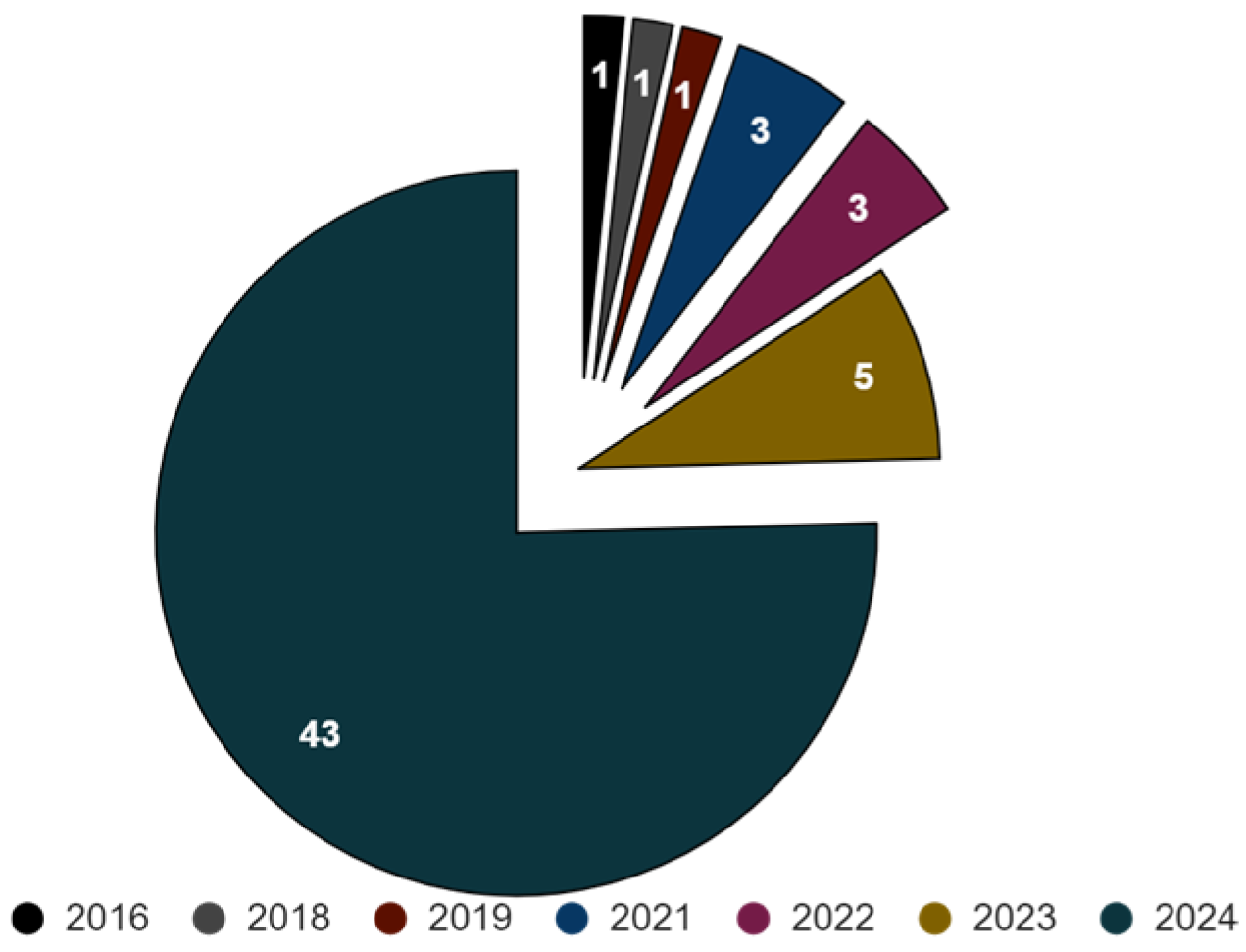
| To maintain relevance, publications dated between 2016 and 2024. | None |
| Articles that discuss the main ideas given in the research question. | None |
| Focus Areas | Search Criteria and Search Keywords |
|---|---|
| Evolving cybersecurity threats in the digital warfare era | Identification and analysis of significant cybersecurity risks; Examination of the dynamic nature of cyber threats keywords: “cyber threats”, “digital warfare” |
| Traditional state-centric approaches to cybersecurity | An examination of conventional state-led cybersecurity measures and an evaluation of their inherent shortcomings. keywords: “cybersecurity measures”, “governmental approach”, “state-centric” |
| The rise of non-state actors in cybersecurity | Overview of non-state actors; Analysis of distinctive capacities keywords: “cybersecurity”, “non-state actors”, “warfare”, “capacities” |
| Contributions of non-state actors to cybersecurity | Analysis of endeavours; Case studies demonstrating achievements keywords: “contribution”, cybersecurity”, “non-state actors”, “warfare” |
| Challenges faced by non-state actors | Obstacle identification; Analysis of limitations in resources, legal impediments, and coordination difficulties keywords: “cybersecurity challenges”, “non-state actors”, “warfare” |
| Impact of non-state actors in the cybersecurity landscape | Evaluation of the impact on societal norms and policies; Assessment of the efficacy keywords: “cybersecurity”, “impacts”, “non-state actors” |
| Enhancing collaboration between state and non-state actors | Potential avenues for collaboration; Suggestions for establishing relationships keywords: “cybersecurity”, “collaborations”, “non-state actors”, “state actors” |
| Technological solutions and innovations | Technological solutions overview; Emerging technologies analysis keywords: “cybersecurity”, “technical solutions”, “innovations”, “warfare” |
| Reference | Category | Methodology | Correlation to Study |
|---|---|---|---|
| [34] | Cybersecurity (Legislation) | Qualitative analysis of legal frameworks and case studies. | This paper investigates non-state actors’ legal uncertainty and jurisdictional challenges when dealing with cybercrimes, emphasising the need for stronger legal institutions to manage cybersecurity. They also explained the effects of emerging issues like “cybersecurity, climate change, evolving nature of the international law”, which might make the legitimacy of international law challenging. The paper suggests the importance of having a structure in the international arena. It sees international law as a result of decisions made collectively by states who choose to adhere to agreed rules. |
| [9,18,53,54] | Cybersecurity (Threat Detection) | Case study and statistical analysis | The papers propose novel cybersecurity prediction techniques that forecast potential attack methods against critical infrastructure (CI) systems, depending on specific CI and attacker motivations. Their approach uses improved machine learning models to predict potential cyberattacks against CI systems. They highlight that predicting cyberattacks can help CI security teams better defend and protect their systems, conduct urgent cybersecurity awareness and training, and match the needs of new project plans and budgets. |
| [53,54] | These studies investigate threats in cyberspace and their implications, for instance for national security policy and the healthcare sector. The studies explored the efficacy of AI models and technologies in fortifying cyber defences (e.g., for IoT) by enabling proactive threat identification and response mechanisms. They also evaluate the resilience of AI-integrated systems in dynamically adapting to the constantly mutating nature of cyber threats. | ||
| [57] | Cybersecurity | Case studies and survey analysis (Literature review) | Offers valuable perspectives on the ability of industrial networks to withstand cyberattacks, focusing on the difficulties and approaches to strengthening cybersecurity in vital infrastructure. This study identifies the main technical and human-related challenges, practical limitations, and current cyber resilience needs of industrial networks, particularly focusing on industrial control systems (ICSs) and industrial Internet of Things (IoT). |
| [6] | Alliance Building | Literature review and comparative analysis | The study pinpoints the objectives of public–private partnerships (PPPs) in building critical infrastructure resilience (CIR) by analysing 12 selected publications and 10 governmental and institutional reports. It highlights the limited research attention dedicated to the concept of PPP in CIR despite its recognition as a mechanism for building CIR. |
| [46] | Analysis | Neorealist analysis and statistical modelling | The research delves into how cyberspace’s ancient security problem is linked to neorealist theory. It suggests that the absence of clear lines and attribution in the cyber realm heightens the security problem. States’ actions to boost their cybersecurity can unintentionally jeopardise others, fuelling a race in cyber capabilities. The study highlights the challenges of establishing mutual security in cyberspace, given the mistrust and the secretive aspect of cyber operations. |
| [14,19] | Cybersecurity | Literature review and qualitative analysis | The studies emphasise how countries adjust their military policies and tactics to deal with cybersecurity threats, acknowledging cyberspace as a crucial battleground where the lines between war and peace are increasingly blurred. It stresses the importance of cooperation in navigating the challenges of cyber warfare effectively. The research also highlights the importance of global cooperation in countering the growing dangers of malicious software by promoting sophisticated defence strategies. Overall, these findings underscore the crucial role of united responses to address the impacts of cyber threats, in a world. |
| [20] | Cybersecurity | Case study approach and qualitative analysis | The study advocates for an international commitment to crafting and executing cybersecurity strategies using cutting-edge technologies to minimise the impacts of such threats. It stresses the importance of countries working together and taking proactive measures at the state level to tackle the increasing challenges posed by cybersecurity. |
| [31] | Cybersecurity (Strategy and Diplomacy) | Case study analysis and interviews | The research looks into how state cyberattacks have evolved into a key weapon in conflicts, with countries turning to cyber activities more and more to reach their goals. It underscores the importance of coordination among countries and setting standards and treaties to reduce the dangers and potential for escalation of these cyber dangers on a worldwide scale. |
| [4] | Cybersecurity | Statistical and case studies analysis | The article examines how the EU and the US engage in cyber diplomacy, with the EU emphasising cooperation and normative structures, while the US focuses on alliances and defence capabilities. It underscores the importance of collaboration across the Atlantic to tackle the consequences of cyber threats, proposing that aligning these strategies may boost cyber governance and resilience on a scale. |
| [43] | Cyber Insurance Challenges | Review of existing industry reports and academic research | The research highlights how cyber insurance is now being seen as a way to encourage improved cybersecurity practices among businesses, which could help minimise the effects of cyberattacks. It proposes that cyber insurance and government strategies can contribute significantly to promoting collaboration and strengthening the worldwide cybersecurity environment by linking financial incentives with increased security precautions. |
| [37] | Cybersecurity (Anomaly Detection) | Survey analysis and comparative study | Examines the ever-changing nature of cyber threats and emphasises the need for adaptable cybersecurity strategies, underscoring the necessity for non-state entities to adjust and innovate to effectively face emerging cyber risks. It stresses the importance of collaborating internationally to enhance detection methods. Given the dependence on space assets worldwide, they have become prime targets in today’s era of digital warfare. This has far-reaching consequences for security at both the national and global levels. |
| [40] | Cybersecurity (Regulatory Governance) | Interviews and policy analysis | Explores non-state actors’ challenges in influencing regulatory cybersecurity governance, emphasising state-centric opposition and the need for inclusive policymaking. The research explores the challenges faced by the European Union Agency for Cybersecurity (ENISA) in establishing itself as a leading authority in cybersecurity governance within the EU. It underscores the significance of boosting ENISA’s influence and funding to promote stronger state responses and cooperation, which are critical factors in tackling cybersecurity challenges in the era. |
| [15] | Cybersecurity | Qualitative analysis and case studies | The study examines how states’ development and deployment of offensive cyber capabilities can escalate conflicts and increase the likelihood of state-sponsored cyberattacks. It argues that international cooperation and the establishment of norms to regulate the use of offensive cyber operations are urgently needed to mitigate these risks and prevent their potential to destabilise global security. |
| [27] | Cybersecurity (Legislation) | Legal analysis and case studies | The article explores the legal challenges of holding non-state actors accountable for war crimes committed in cyberspace under the International Criminal Court (ICC) framework to address the complexities of detecting and prosecuting cybercriminals to uphold in the warfare landscape. |
| [42,48,49] | Cybersecurity (Technological Solutions) | Experimental studies and qualitative analysis. | The papers collectively highlight the dual role of emerging technologies like AI, IoT, blockchains, and quantum computing in both enhancing cybersecurity and introducing new risks, emphasising the need for proactive cyber diplomacy to manage these challenges. They encourage collaboration to establish frameworks and standards that harness AI and blockchain technology to boost security for systems in the domains of the IoT and industrial IoT. Additionally, they tackle the security issues posed by these technologies in the landscape of digital warfare. |
| [1] | Advocacy | Survey analysis and literature review | The study points out that cybersecurity governance calls for asking states, private sector players, and society to join hands in diplomatic initiatives aimed at establishing an international cybersecurity framework. It underscores the importance of cooperation and open communication in tackling the ever-changing nature of cybersecurity risks in the age of digital warfare to create a secure and robust cyber space. |
| [12,13] | Cybersecurity | Literature review and case studies | They explain advanced persistent threats (APTs) and their persistence, complexity, and network strategy. The articles underscore how cyber threats, such as ransomware attacks and supply chain weaknesses, are evolving quickly and becoming more complex. These threats raise serious concerns for security and underscore the importance of prompt action and collaboration among nations to create strategies and frameworks capable of dealing with these emerging challenges. |
| [36] | Cybersecurity (Coordination Study) | Case study analysis and surveys | This study investigates non-state actors’ coordination challenges in combating cyberattacks, focusing on conflicting interests and the need for better communication and trust to strengthen cybersecurity efforts. The study examines the ways in which geopolitical and economic aspects influence state behaviours in cyber warfare control theory to analyse these dynamics. The study emphasises the importance of comprehending these factors in order to develop state strategies and promote cooperation. These actors play a role in shaping the responses and policies required to tackle the challenges posed by cybersecurity threats in today’s era of digital warfare. |
| [24] | Cybersecurity (Capacity Building) | Case studies and interviews | The research looks at how big companies, such as Microsoft, are influencing cybersecurity measures. It emphasises the importance of collaborations between the public and private sectors in shaping cybersecurity policies and dealing with cybersecurity issues. It stresses the significance of enhanced international cooperation and united governmental efforts to tackle the challenges posed by threats in today’s digital landscape, where the sector’s role is growing. |
| [23] | Cybersecurity (Diplomacy) | Literature review and case studies | The research examines how the US has been turning to soft power in its cyber diplomacy efforts to shape global cybersecurity norms and encourage cooperation. It points out that navigating the landscape of digital conflict calls for utilising soft power to forge partnerships, inspire trust, and create a joint cybersecurity framework to tackle new threats. |
| [3] | Policy Development | Literature review and policy analysis, comparative study | The research paper highlights that Chinese multi-stakeholder cybersecurity governance emphasises state-centric control, while incorporating various actors to manage threats. Nevertheless, it faces challenges in balancing national authority with international cooperation. Also, it underscores the need for a reformed international cybersecurity regime that accommodates various governance models and effectively enhances collaborative efforts to address the global nature of cyber threats. |
| [50] | Cybersecurity | Surveys and case studies | Examining non-state actors’ coordination challenges in cyberattack resolution, highlighting the need for better communication and trust to improve cybersecurity. The research shows that the increase in IoT devices escalates cybersecurity issues because of their vulnerabilities and the challenge of securing connected systems. It points out ways to strengthen security by implementing standards, encryption methods, and improved incident response plans, underscoring the importance of cooperation among stakeholders in tackling these emerging threats. |
| [28,38] | Cybersecurity (Norm Development) | Surveys and interviews | Explores how non-state actors influence cybersecurity norms and governance frameworks, emphasising the importance of cooperation in promoting accountability and adherence. The first research paper [28] explores the evolution of cybersecurity norms, showing a shift towards structured frameworks as countries and global organisations focus more on cybersecurity in light of growing digital threats. The second paper [38] talks about the influence of US engagement in shaping cybersecurity stability on a global scale and underlines the significance of diverse viewpoints in boosting collaborative defence mechanisms and strengthening cybersecurity frameworks. |
| [30] | Cybersecurity (Strategy and Diplomacy) | Case study analysis and interviews | The study delves into how cyber operations are employed as a means of subversion, enabling states to exert influence by undermining the foundations of other nations through means of warfare. This article combines intelligence scholarship with international relations theory to create a novel theory of subversion as a form of reverse structural power. It emphasises how this power shift disrupts responses while underscoring the importance of international cooperation and standards in addressing the destabilising impacts of cyber risks within geopolitics. |
| [32] | Cybersecurity (Strategy and Diplomacy) | Qualitative analysis and survey | The study underlines that cyber diplomacy is becoming increasingly crucial in addressing the complex cybersecurity challenges, as it facilitates international cooperation and conflict resolution in the digital era. However, it also identifies significant challenges, such as differing national interests, legal frameworks, and the rapid growth of technological change, which complicate the development of effective global cyber policies. |
| [58] | Cybersecurity (Policy Development) | Policy analysis and theoretical framework | The document suggests a flexible cybersecurity governance system that aims to boost resilience against changing cyber threats by integrating real-time data analysis, cooperation among stakeholders, and ongoing policy adjustments. It emphasises the need for governance frameworks that can swiftly respond to challenges and promote collaboration to mitigate global cybersecurity risks effectively. |
| [7] | Cybersecurity | Literature review and case studies (textbook) | The authors highlight that state responses to cybersecurity threats in the digital warfare era increasingly underline the development of robust cyber defence strategies and international partnerships. The book stresses the necessity of global cooperation, including establishing norms and frameworks, to counter the escalating risks posed by cyber threats effectively. This also mitigates the potential ramifications of cyber warfare on national and international security. |
| [59] | Cybersecurity (Cognitive Analysis) | Experimental studies and qualitative analysis | Examines cognitive biases in cybersecurity research and analysis, emphasising the need to address institutional constraints and biases to develop effective cybersecurity approaches. The study shows that state reactions to cyber dangers are usually responsive and depend on how attacks are discovered, which affects their views of threat landscapes. This bias underscores the importance of enhancing global collaboration and sharing efforts to create cybersecurity strategies and gain insight into the extent and impacts of cyber threats in the age of digital warfare. |
| [26] | Cyber Warfare Strategies | Case studies | The study indicates that non-state actors problematise state responses to cybersecurity threats, as they often exploit digital warfare tools outside traditional state control. It underscores the significance of cooperation in handling the cybersecurity challenges posed by these entities. Their involvement in conflicts like those in Syria and Nagorno-Karabakh highlights the need for coordinated global initiatives to reduce the effects of cyber threats. |
| [21,56] | Cybersecurity (Mitigation Strategy) | Literature review and case studies | Investigates the impact, vulnerabilities, and mitigation strategies for cyber-secure critical infrastructure. The first study [21] emphasises the increasing vulnerability of critical infrastructure to cyber threats and calls for governmental actions to prioritise enhancing safeguarding measures and international collaboration to defend these crucial systems. The second study [56] endorses a proactive approach, suggesting that state-led countermeasures and global cooperative frameworks are essential to mitigate the risks of cyber warfare in the digital era. |
| [55] | Cybersecurity (Businesses and State-Owned Firms) | Case studies and literature review | This study shows that digital transformation (DT) increases efficiency and productivity but presents new challenges related to cybersecurity risks, such as data breaches and cyberattacks. The paper emphasises the importance of a comprehensive knowledge of cybersecurity threats during DT implementation to prevent interruptions due to malicious activities or unauthorised access. The article highlights that state responses to digital warfare must involve robust cybersecurity policies and international cooperation to address the increasing complexities of cybersecurity threats. It emphasises that coordinated global efforts and shared cybersecurity frameworks are crucial for enhancing business resilience against cyberattacks in the digital era. |
| [25] | Cybersecurity (Legislation) | Legal analysis and case studies | The main point of the article is that there is a limited treatment of intelligence by IR and strategic studies academics in Australia. This impacts research outcomes and public comprehension of policymaking in Canberra. It stresses the importance of increasing academic attention towards understanding the role and value of intelligence in Australia’s foreign and defence policies. This study discusses how state responses in the digital warfare era require enhanced intelligence-sharing and international cooperation to counter cybersecurity threats effectively. |
| [60] | Cybersecurity (Machine Learning) | Literature review and case study | The article emphasises the need to incorporate advanced machine learning algorithms to detect and prevent cyberattacks effectively during digital warfare. It underscores the significance of countries collaborating to share technological advancements and data to improve overall cybersecurity defences. |
| [29,41] | Capacity Building | Case studies and survey analysis | The studies stress the importance of international legal frameworks and supranational governance structures to respond to cybersecurity threats in the digital age. They underscore how cooperation guided by legal standards and security capabilities can help tackle the security issues caused by technology worldwide. |
| [22] | Policy Development | Policy analysis and literature review | The study sheds light on how Norway’s counterterrorism strategies in the digital age aim to remove politics from violence by using a state-centred and personalised approach to tackling cybersecurity challenges. It emphasises the importance of working together internationally and coordinating actions to deal with the wide-ranging effects of cybersecurity in counterterrorism, underscoring the significance of grasping the complexities of violence in global cybersecurity strategies. |
| [5] | Cybersecurity (Strategy and diplomacy) | Case studies and comparative analysis | The article emphasises how leading countries like the United States, China, Russia, and France and the European Union increasingly see and deploy multi-stakeholder cyber diplomacy (MCD) efforts as tools to advance their own pursuits. The article highlights the importance of effectively addressing challenges in the era by advocating cyber diplomacy. In this strategy, governments, companies, and civil society collaborate to shape norms, stressing the significance of working together and reviewing national approaches, which are crucial for establishing a robust cybersecurity system to address cyber risks. |
| [2] | Policy Development | Survey analysis and case studies | Examines how non-state actors shape informal governance structures in the global cybersecurity environment, emphasising their influence on policymaking and innovation. The article claims that the international cybersecurity regime is characterised by pervasive informality, where non-state actors and informal diplomatic channels play a significant role in shaping responses to cyber threats. It emphasises that state responses and international cooperation must adapt to this informality by engaging various actors and leveraging flexible diplomatic approaches to effectively manage the geopolitical complexities of cybersecurity in the digital warfare era. |
| [17] | Cybersecurity | Qualitative case study | The article emphasises that providing employees with cybersecurity training plays a vital state response role in mitigating the threats of spear phishing, identity theft, and ransomware attacks during warfare. It also emphasises the significance of international collaboration to create guidelines and best practices for training programs that can strengthen global resilience against cybersecurity threats. |
| [61] | Norm Development | Policy analysis and case studies | The article highlights the significance of building multi-stakeholder structures that include governments, the private sector, and civil society to establish cybersecurity norms in the age of digital warfare. It stresses the need for cooperation and exchanging insights from past incidents when developing solid cybersecurity frameworks to address growing threats. |
| [16] | Cybersecurity (Legislation) | Legal analysis and case studies | This article focuses on the challenge of interpreting Article 2(4) of the UN Charter in the context of warfare, such as cyberattacks. The paper highlights the complexities in determining what qualifies as the “use of force” in cyber warfare. It underscores the significance of establishing a legal framework for categorising cyberattacks and shaping how states respond. It also underscores the difficulties and ambiguity in applying traditional laws to cyberattacks utilising advanced technologies. |
| [35] | Cybersecurity (Legislation) | Legal analysis and case studies | Explores navigating the cyber legal landscape and protecting legal entities through comprehensive cybersecurity strategies. The article emphasises that state responses in the digital warfare era should include comprehensive cybersecurity strategies tailored to protect legal entities from evolving cyber threats. It also looks at how AI is being used in global dispute resolution and touches on how blockchain technology enhances legal protections in the digital economy. |
| [62] | Cybersecurity (Mitigation Strategy) | Literature review | The article underlines the importance of Artificial Intelligence (AI) in strengthening state defences against cybersecurity risks by providing cutting-edge technologies for detecting and responding to threats in the age of warfare. It also underscores the importance of collaborative efforts in researching AI and setting up worldwide norms to tackle the complex and evolving challenges caused by cyber threats. |
| [7] | Cybersecurity (Strategy and Diplomacy) | Literature review (textbook) | Discusses politics and strategies in cybersecurity. This textbook comprehensively introduces global cyber conflict, covering its historical, technical, and strategic dimensions. It explains various topics, including the transformation of warfare, diverse views on digital warfare, policies and approaches, challenges in ensuring adherence to international standards, and the influence of technologies such as AI and quantum computing. The book underlines that governments must address threats with an integrated blend of politics in the digital age, underscoring the importance of national cybersecurity frameworks that can adapt. The book underscores the value of across borders as it calls upon joint endeavours to define cybersecurity guidelines and strategies for mitigating the impact of cyber threats more efficiently. |
| [45] | Norm Development | Policy analysis and case studies | Examines the role of insurers in shaping international cybersecurity norms about cyber war. The argument made is about how insurance companies influence worldwide actions by influencing views on government behaviour in online spaces through their strategies for dealing with the risks and responsibilities arising from cyber activities and warfare. This point is highlighted by discussing the 2017 NotPetya cyberattack, which sparked discussions between insurance providers and policyholders on whether Russia’s actions should be considered an act of war. This could result in such incidents falling outside the coverage provided by typical war exclusion clauses. |
| [11] | Cybersecurity | Literature review | Explores the challenges of simulating threats in modern cyber intelligence operations. The research indicates that the significant growth of threat intelligence within the private sector has resulted in a complex environment involving multiple stakeholders, causing various outcomes, such as diminished warning readiness. The dynamics among operational roles advancing attacker skills and deceptive techniques have added layers to cyberattacks, affecting organisations’ ability to manage crises. |
| [39] | Policy Development | Policy analysis and qualitative analysis | Examines non-state actors’ roles in policy discussions and decision making to promote cybersecurity governance transparency and inclusivity. This article shows that the rise in cyberattacks has underscored the importance of countries working together to respond effectively to cyber threats. Collaborative strategies and mechanisms are key to tackling the challenges of cyber warfare and security risks/vulnerabilities. |
| Threat Category | Description |
|---|---|
| Advanced Persistent Threats (APTs) | Advanced, targeted attacks by nations or groups. Use malware, social engineering, and network exploitation. |
| Ransomware Attacks | Significant rise targeting all-sized organisations. Data encryption for ransom causes financial loss and service disruption. |
| IoT Vulnerabilities | Concern over more Internet-connected items. Cybercriminals exploit smart appliance, wearable, and home automation vulnerabilities. |
| Social Engineering | Trick people into giving crucial information. Emails, calls, impersonation, and pretexting are prominent phishing methods. |
| Threat Category | Mitigation Strategies |
|---|---|
| Advanced Persistent Threats (APTs) | Segment networks, use advanced threat detection, and audit security. |
| Ransomware Attacks | Regular data backups, phishing awareness training, and strong endpoint security. |
| IoT Vulnerabilities | Device authentication, data in transit encryption, firmware updates, and network segmentation. |
| Social Engineering | Employee cybersecurity training, multi-factor authentication, and phishing simulations. |
Disclaimer/Publisher’s Note: The statements, opinions and data contained in all publications are solely those of the individual author(s) and contributor(s) and not of MDPI and/or the editor(s). MDPI and/or the editor(s) disclaim responsibility for any injury to people or property resulting from any ideas, methods, instructions or products referred to in the content. |
© 2024 by the authors. Licensee MDPI, Basel, Switzerland. This article is an open access article distributed under the terms and conditions of the Creative Commons Attribution (CC BY) license (https://creativecommons.org/licenses/by/4.0/).
Share and Cite
Adeyeri, A.; Abroshan, H. Geopolitical Ramifications of Cybersecurity Threats: State Responses and International Cooperations in the Digital Warfare Era. Information 2024, 15, 682. https://doi.org/10.3390/info15110682
Adeyeri A, Abroshan H. Geopolitical Ramifications of Cybersecurity Threats: State Responses and International Cooperations in the Digital Warfare Era. Information. 2024; 15(11):682. https://doi.org/10.3390/info15110682
Chicago/Turabian StyleAdeyeri, Aisha, and Hossein Abroshan. 2024. "Geopolitical Ramifications of Cybersecurity Threats: State Responses and International Cooperations in the Digital Warfare Era" Information 15, no. 11: 682. https://doi.org/10.3390/info15110682
APA StyleAdeyeri, A., & Abroshan, H. (2024). Geopolitical Ramifications of Cybersecurity Threats: State Responses and International Cooperations in the Digital Warfare Era. Information, 15(11), 682. https://doi.org/10.3390/info15110682