1. Introduction
Harbors in typhoon-prone regions are exposed to severe risks from storm-generated waves. When typhoons are located far offshore, radiated swells can propagate long distances and penetrate harbor entrances, reducing tranquility and affecting port operations. During nearby typhoons, energetic swell waves may directly impact breakwater structures and threaten their stability (Burcharth, 1987) [
1]. The associated long-period infragravity (IG, approximately 20–200 s periods) waves, which increase with swell peak periods and wave heights, can interact with harbor geometry and induce resonance (Rabinovich, 2009) [
2]. The resulting resonance can amplify oscillatory motions and then disrupt port operations and damage mooring facilities. Under extreme conditions, these amplified motions may further trigger wave overtopping at localized sections of the harbor, thus leading to dock inundation (Maravelakis et al., 2021) [
3]. Therefore, a clear understanding of harbor oscillations is essential for developing effective mitigation measures and guiding engineering design strategies.
With advances in computational techniques, numerical wave models have become valuable tools for reproducing harbor oscillations and providing a scientific foundation for engineering solutions to mitigate tranquility problems. Two main categories of wave models are commonly used in harbor studies: wave-averaged models and wave-resolving models. Both approaches were originally developed for open-coast environments, such as sandy beaches. Wave-averaged models describe the statistical evolution of wind and swell (SW, periods of 5–20 s) waves, typically based on linear wave theory implemented with empirical parameterizations to account for wave transformation and IG waves (Ardhuin et al., 2014 [
4]; Rijnsdorp et al., 2021 [
5]). In contrast, wave-resolving models explicitly capture nonlinear interactions and long-wave generation by resolving individual waveforms in both time and space. This capability enables a detailed simulation of reflection, diffraction, and breaking, thus providing a more realistic representation for nearshore hydrodynamics (Shi et al., 2012 [
6]; Zijlema and Stelling, 2008 [
7]). Consequently, wave-resolving models are increasingly regarded as the preferred tools for harbor engineering applications (Guerrini et al., 2014) [
8].
Among wave-resolving models, mild-slope equations (MSEs), including both hyperbolic and elliptic formulations, are widely used for long-wave amplification within harbors (Bellotti and Franco, 2011 [
9]; Guerrini et al., 2014 [
8]; Cuomo and Guza, 2017 [
10]). To accurately specify the boundary condition of MSEs, incident long waves are typically prescribed using empirical or analytical approaches derived from offshore wave parameters such as significant wave heights, peak periods, and water depth. However, the inherent linear wave assumptions fundamentally restrict their ability to represent nonlinear wave interactions and associated energy transfers. As a result, more advanced Boussinesq-type and non-hydrostatic models have emerged as powerful wave-resolving models to address these complex nonlinear processes with improved physical fidelity.
Boussinesq-type models solve weakly dispersive and weakly nonlinear forms of the governing equations and have been extensively applied to simulate wave amplification and resonance modes in harbors (Guerrini et al., 2014 [
8]; Kofoed-Hansen et al., 2005 [
11]; Kwak et al., 2020 [
12]; Kofoed-Hansen et al., 2012 [
13]). Non-hydrostatic models solve nonlinear shallow-water equations with an additional pressure term, accounting for resolving wave propagation, group-induced long waves, and frequency-dependent dispersion over complex bathymetry. These capabilities make them suited for modeling wave–structure interactions and harbor resonance (Wong, 2016 [
14]; Maroudi and Reijmerink, 2020 [
15]). Both model types have demonstrated skills in reproducing observed resonance frequencies, nodal–antinodal structures, and energy amplification patterns in harbors. Continued advances in computational performance have further broadened the application of wave-resolving models to investigate harbor oscillations at realistic field scales.
Despite extensive numerical studies on harbor oscillations, few have explicitly simulated energetic meteorological conditions that lead to significant harbor oscillations. Youngan Harbor in southwestern Taiwan often experiences significant harbor oscillations at a specific berth and wave overtopping onto a specific dock during typhoon events. Prior to proposing any mitigation measures, it is essential to elucidate the underlying mechanisms driving these phenomena. However, the limited availability of in situ wave measurements makes it difficult to identify these processes, underscoring the need for numerical modeling. Advanced wave-resolving models are therefore employed to reproduce and interpret the harbor’s dynamics. In this study, two such models—FUNWAVE-TVD, a Boussinesq-type model, and XBeach-NH, a non-hydrostatic model—are applied to simulate typhoon-induced harbor oscillations and evaluate their predictive capabilities. The comparative assessment provides scientific insights for linking modeled oscillation patterns to harbor tranquility issues. Moreover, the results support the design of future field measurement campaigns and offer guidance for engineering decisions on harbor modification and improvement.
2. Study Site
2.1. Harbor Description
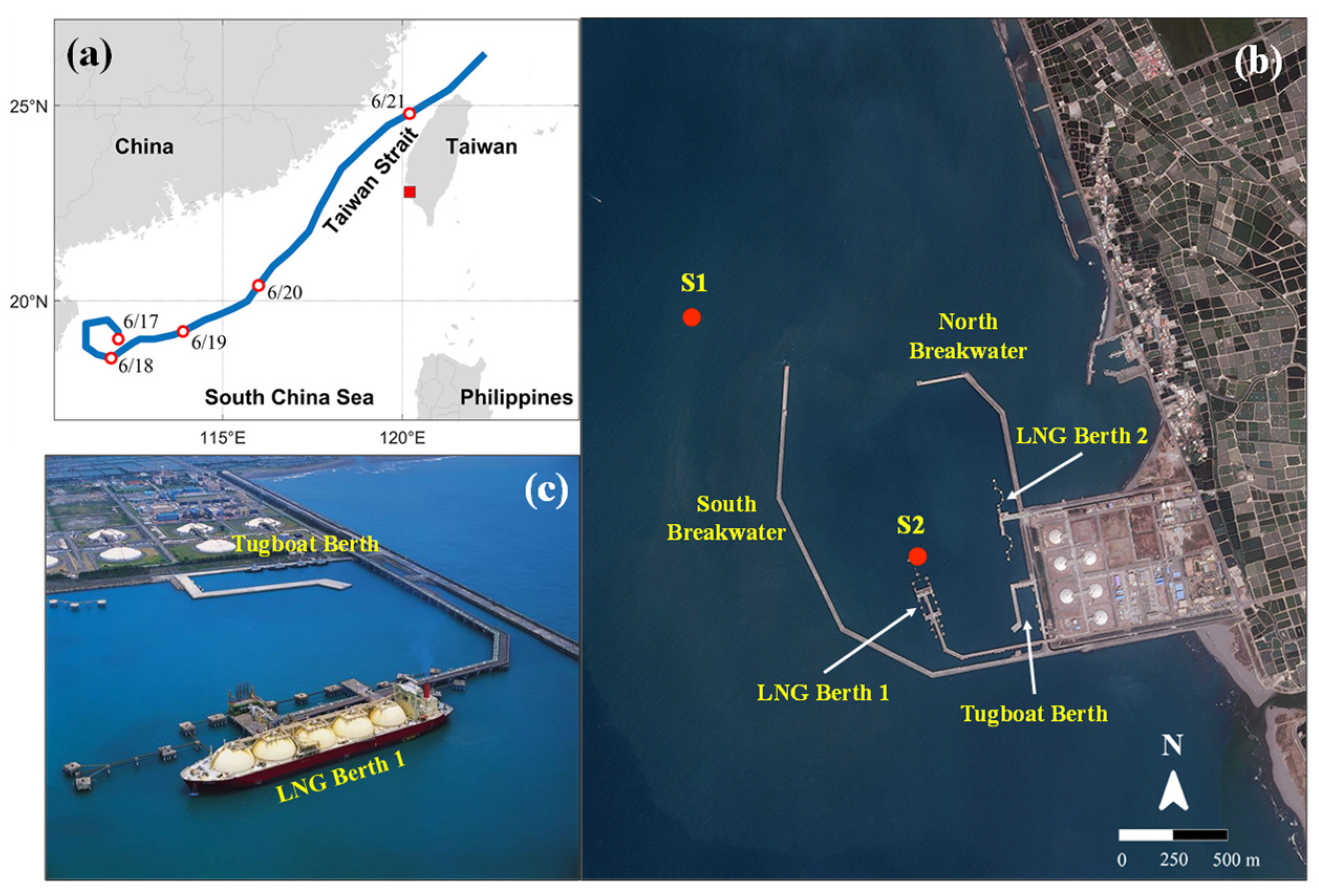
Youngan Harbor is located on the southwest coast of Taiwan (
Figure 1a). It is the largest liquefied natural gas (LNG)-receiving terminal in Taiwan, with a total storage capacity of 4.5 million tons. The construction of the harbor was completed in 2005. The harbor platform is approximately rectangular with a length of 1.6 km and a width of 1.2 km, enclosing a water surface area of about 3.0 km
2, and a mean depth of 15.0 m. Two LNG berths were built inside the harbor basin (
Figure 1b). The study area is characterized by mixed, microtidal conditions, with a mean tidal range of 0.75 m.
The harbor is protected from prevailing seasonal waves by a main (southern) breakwater and a secondary (northern) breakwater (
Figure 1b). The 2520 m long main breakwater is designed to protect the harbor from predominant southwest waves in the summer. Meanwhile, the 1030 m long secondary breakwater, which extends along the eastern and northern lateral boundaries, shelters the harbor from minor northwest waves in the winter. The 650 m wide harbor entrance is oriented toward the north and directly exposed to the open sea. Additionally, a tugboat dock is located in the corner of the inner basin, enclosing a 320 m long and 90 m wide berthing basin.
The passage of typhoons in the region between the Taiwan Strait and the South China Sea exerts a distinct influence on harbor oscillations, the magnitude of which depends on their distance from the site. Due to the limited protection of the main breakwater against typhoon waves, diffracted swells propagate into the harbor and cause a significant reduction in harbor tranquility. LNG Berth 1 and the tugboat berth are hot spots for this (
Figure 1c). The post-typhoon observations made by harbor personnel at LNG Berth 1 indicate that oscillations within the basin can persist for nearly one day after the typhoon warning is lifted before tranquility is fully restored. Furthermore, reported instances of wave overtopping at the tugboat dock present considerable risks to crew safety and the stability of moored barges. These two recurring phenomena, namely the oscillations at LNG Berth 1 and the wave overtopping at the tugboat dock, were the main operational issues observed during typhoon events. Such occurrences reveal critical vulnerabilities of harbor operations under typhoon conditions and underscore the necessity of effective mitigation strategies.
2.2. Field Measurements for Typhoon Waves
According to feedback from harbor personnel, harbor oscillations intensified and persisted for extended periods as typhoons approached the harbor. To investigate this phenomenon, CPC Corporation, which is the harbor authority, conducted short-term wave measurements during selected typhoon events. This study focuses on the dataset collected in June 2012.
Two wave instruments were deployed outside and inside the harbor (
Figure 1b). Station S1, located approximately 700 m seaward of the harbor entrance at a water depth of about 16 m, measured offshore wave conditions, while station S2, positioned inside the harbor, recorded wave characteristics near the LNG berth. During the observation period from 17 June to 21 June 2012, Typhoon Talim passed through the study site (
Figure 1a). The recorded parameters were significant wave height (H
S), peak period (T
P), and the corresponding wave direction of T
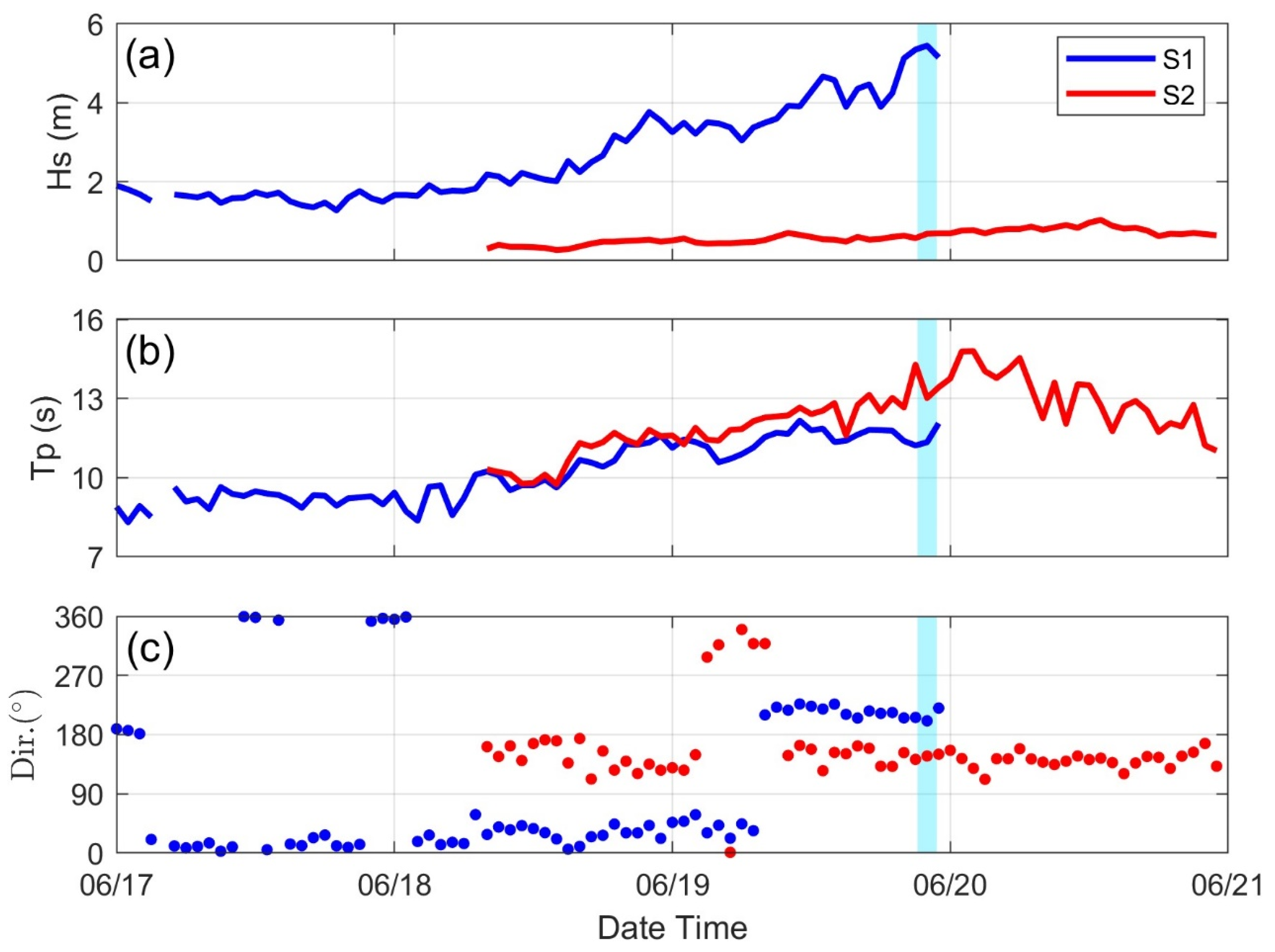
P, as depicted in
Figure 2.
Wave information for offshore station S1 was available only until 0:00 on 20 June. The subsequent absence of data was likely due to instrument failure caused by extreme wave conditions as the typhoon transited the study site. This data gap limited the ability to capture the largest wave height during the event. Within the available record at S1, the maximum HS was 5.44 m, with a corresponding TP of 11.34 s and a wave direction from the southwest (220°) at 22:00 on 19 June.
Station S2 began recording wave data at 08:00 on 18 June. S2 measured an HS of 0.68 m with a corresponding TP of 13.02 s when S1 registered its maximum wave height. Measurements at S2 continued until 21 June, during which HS gradually increased, reaching a maximum of 1.03 m with a TP of 12.73 s at 13:00 on 20 June, when data from S1 were unavailable.
A comparison of wave data from the offshore station (S1) and the in-harbor station (S2) during the maximum Hs event at S1 highlights the considerable wave attenuation. The measured HS of 5.44 m at S1 was reduced to 0.68 m at S2, an approximately 87% reduction attributable to the sheltering effect of the breakwaters. The longer TP at S2 reflects the selective attenuation of shorter-period components and the subsequent dominance of relatively longer-period waves within the harbor. Furthermore, the diffracted waves that entered the harbor were trapped, and subsequent multiple reflections resulted in a directional spreading between 120° and 160°, approximately corresponding to the south–southeast sector.
It is important to note that this study was limited by the data provided by the harbor authority, which consisted only of processed bulk wave characteristics. The lack of time series water levels precluded a full spectral analysis to resolve energy contributions across different frequency bands. Consequently, a direct quantification of low-frequency wave energy during the observation period was not possible.
4. Results and Discussion
4.1. Wave Characteristics at the Measured Location Inside the Harbor
Model validation is typically performed by comparing simulated and observed significant wave heights (HS), as HS serves as a fundamental measure of both wave energy and model accuracy. In common practice, HS is derived from the integration of power spectral densities over the full frequency range, thereby incorporating contributions across all relevant bands (Equation (8)). In the 2012 observational dataset used in this study, the wave instruments recorded 1024 s segments every hour at a 2 Hz sampling resolution. This record length is sufficient to capture the SW and IG bands but is inadequate to resolve VLF motions. Consequently, the measured HS values exclude contributions from the VLF band.
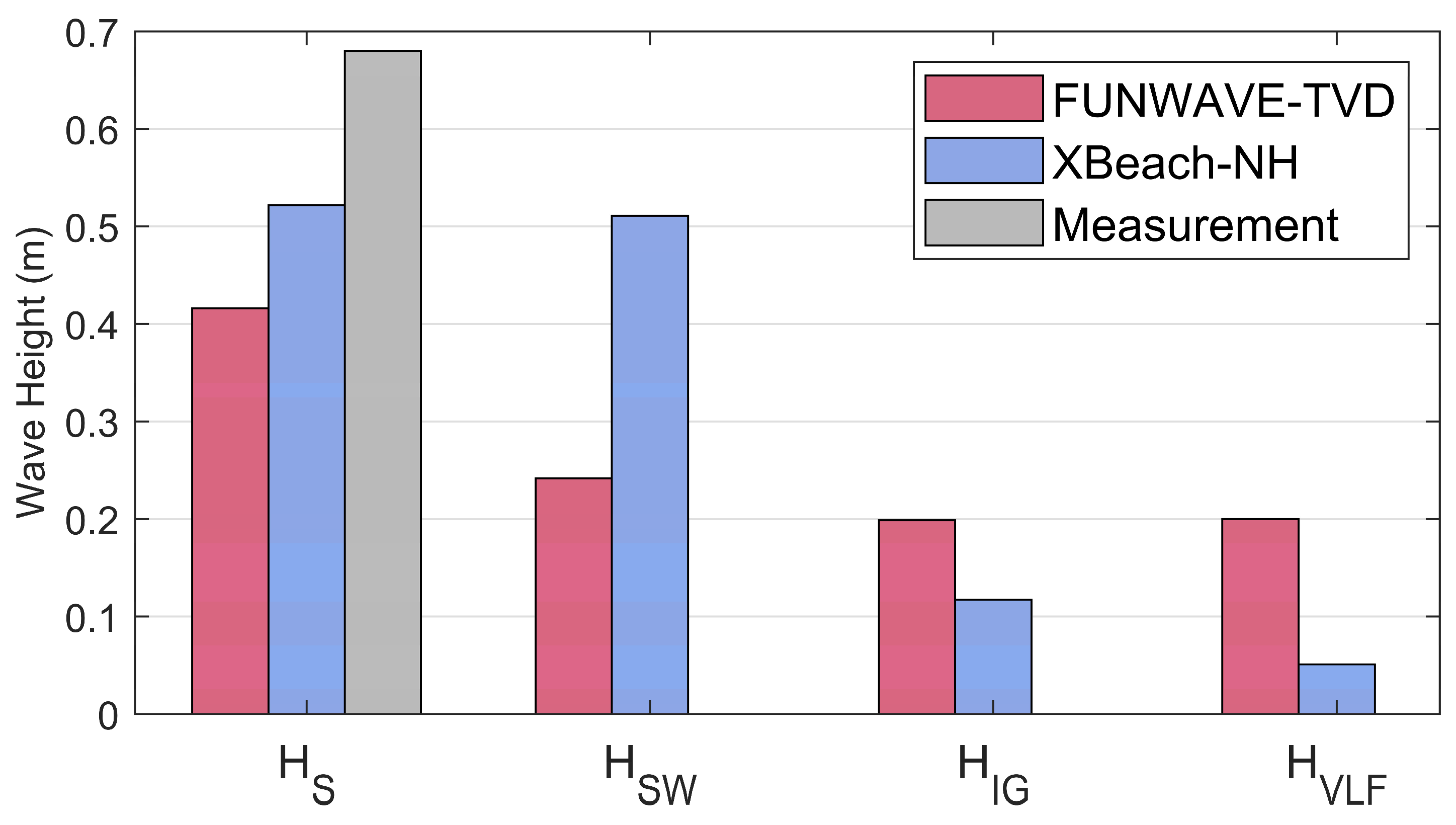
Figure 4 presents a comparison of the simulated H
S at station S2 with measurements, along with the decomposed components H
SW, H
IG, and H
VLF from the two models. Both models underestimated H
S relative to the measured value of 0.68 m. XBeach-NH showed closer agreement, with a 25% error, compared to 38% for FUNWAVE-TVD. This underestimation of H
S by FUNWAVE-TVD in harbor applications is consistent with previous studies (Su and Ma, 2025 [
22]; Malej et al., 2021 [
18]). Malej et al. (2021) [
18] specifically noted model limitations in representing wave diffraction and the scattering of shorter waves, which may have contributed to the underprediction. Similar discrepancies have also been reported for XBeach-NH in harbor environments (Alabart et al., 2014 [
23]; Dusseljee et al., 2014 [
24]). Collectively, these findings underscore the difficulty both models face in resolving short-wave energy in harbor basins, a factor critical for reliable assessments of harbor tranquility.
Since the observational dataset does not provide decomposed values for the SW, IG, and VLF bands, the comparison is based solely on the model results. For HSW, XBeach-NH predicted nearly twice the value of FUNWAVE-TVD, thus suggesting stronger short-wave penetration into the harbor. In contrast, FUNWAVE-TVD produced larger HIG and HVLF, implying a more effective nonlinear transfer of energy from shorter to longer periods. The enhanced low-frequency energy of FUNWAVE-TVD is particularly relevant to harbor resonance, as it may contribute to stronger oscillations and longer decay times compared with XBeach-NH.
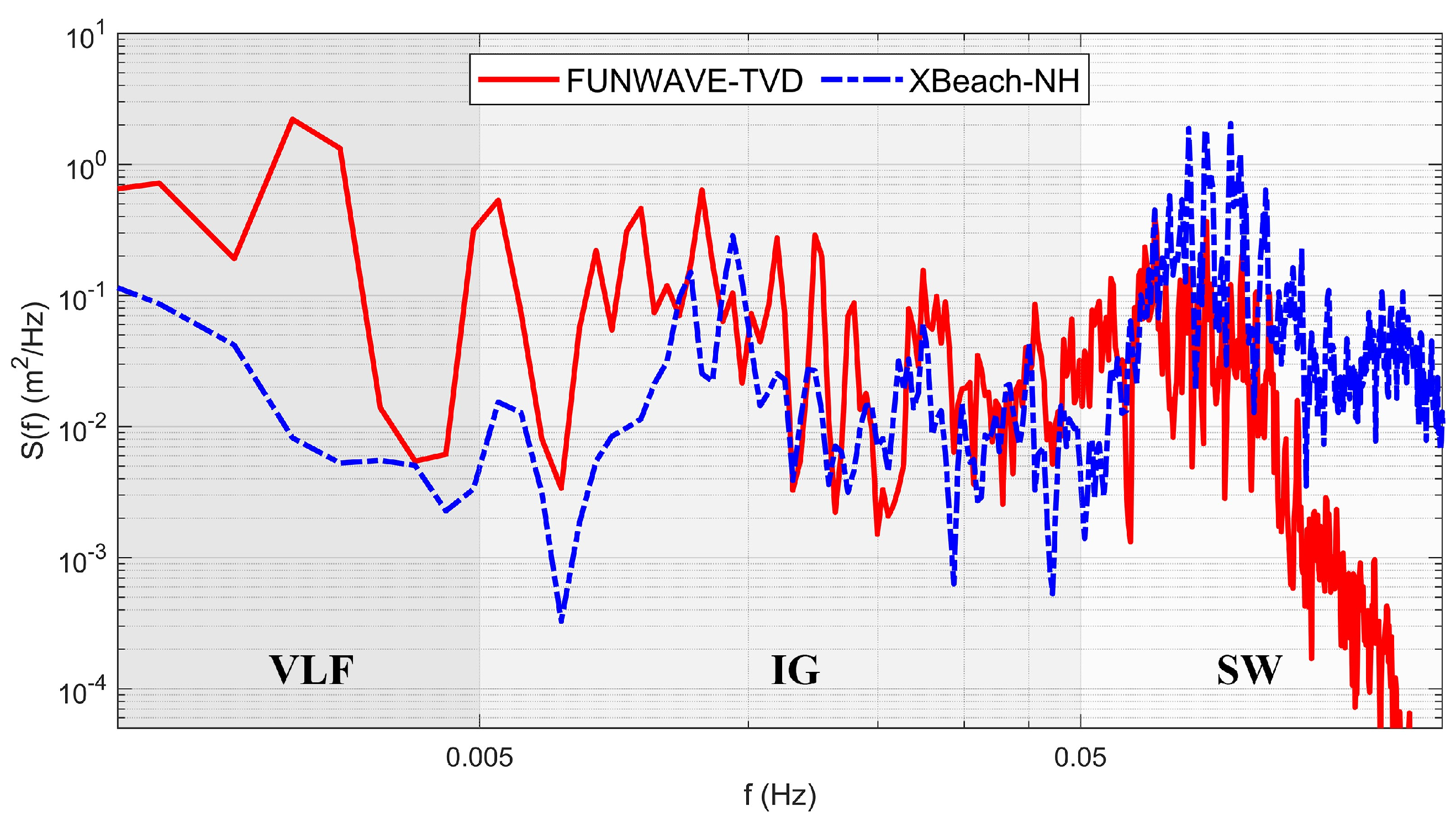
Figure 5 presents a comparison of the power spectral densities of the two models at station S2. In the SW band, XBeach-NH generally exhibited higher energy densities, although FUNWAVE-TVD produced relatively greater energy at the lower end of this range. At higher SW frequencies, the FUNWAVE-TVD spectrum declined sharply relative to XBeach-NH, primarily due to its inherent limitations in resolving wave diffraction and scattering of high-frequency wave components. In the IG band, FUNWAVE-TVD consistently predicted larger energy densities, particularly at the lower end, suggesting stronger nonlinear wave interactions transferring energy from short to long waves. In the VLF band, FUNWAVE-TVD exceeded XBeach-NH by one to two orders of magnitude. The presence of large VLF waves inside the harbor has been previously documented using FUNWAVE-TVD (Malej et al., 2021 [
18]). The existence of large VLF waves was initially attributed to unresolved long-wave reflections from the lateral boundaries, which could contaminate the long-wave field due to accumulation effects during extended simulations. However, in this study, periodic boundary conditions at the lateral boundaries were implemented in FUNWAVE-TVD specifically to minimize reflections. Therefore, the simulated large VLF waves cannot be attributed to the effect of the lateral boundary. This discrepancy between the two models indicates that further field observations are required to clarify the mechanisms governing VLF band dynamics. In addition, the presence of multiple spectral peaks within the IG and VLF bands suggested potential for harbor resonance through coupling with the natural resonance modes of the basin.
4.2. Spatial Distribution of Wave Heights in SW, IG, and VLF Bands
The spatial distributions of wave heights in the SW, IG, and VLF bands are commonly employed to emphasize the necessity of distinguishing frequency components, since oscillations from different bands affect moored vessels in distinct ways. The distribution of H
SW generally reflects the offshore waves penetrating the harbor and their associated diffraction, primarily governing vessel motions in the vertical plane, including heave, pitch, and roll (López and Iglesias, 2014 [
21]). In contrast, the distributions of H
IG and H
VLF reveal the amplification of long waves within harbors, arising from their resonance with the harbor geometry (Wong, 2016 [
14]; Malej et al., 2021 [
18]; Su and Ma, 2025 [
22]). Such long-period oscillations mainly excite horizontal ship motions, particularly sway, surge, and yaw (López and Iglesias, 2014) [
21]. Furthermore, harbor resonance has been associated with wave overtopping at harbor structures (Maravelakis et al., 2021) [
3]. This phenomenon has been observed by the operational staff at the tugboat dock of Youngan Harbor.
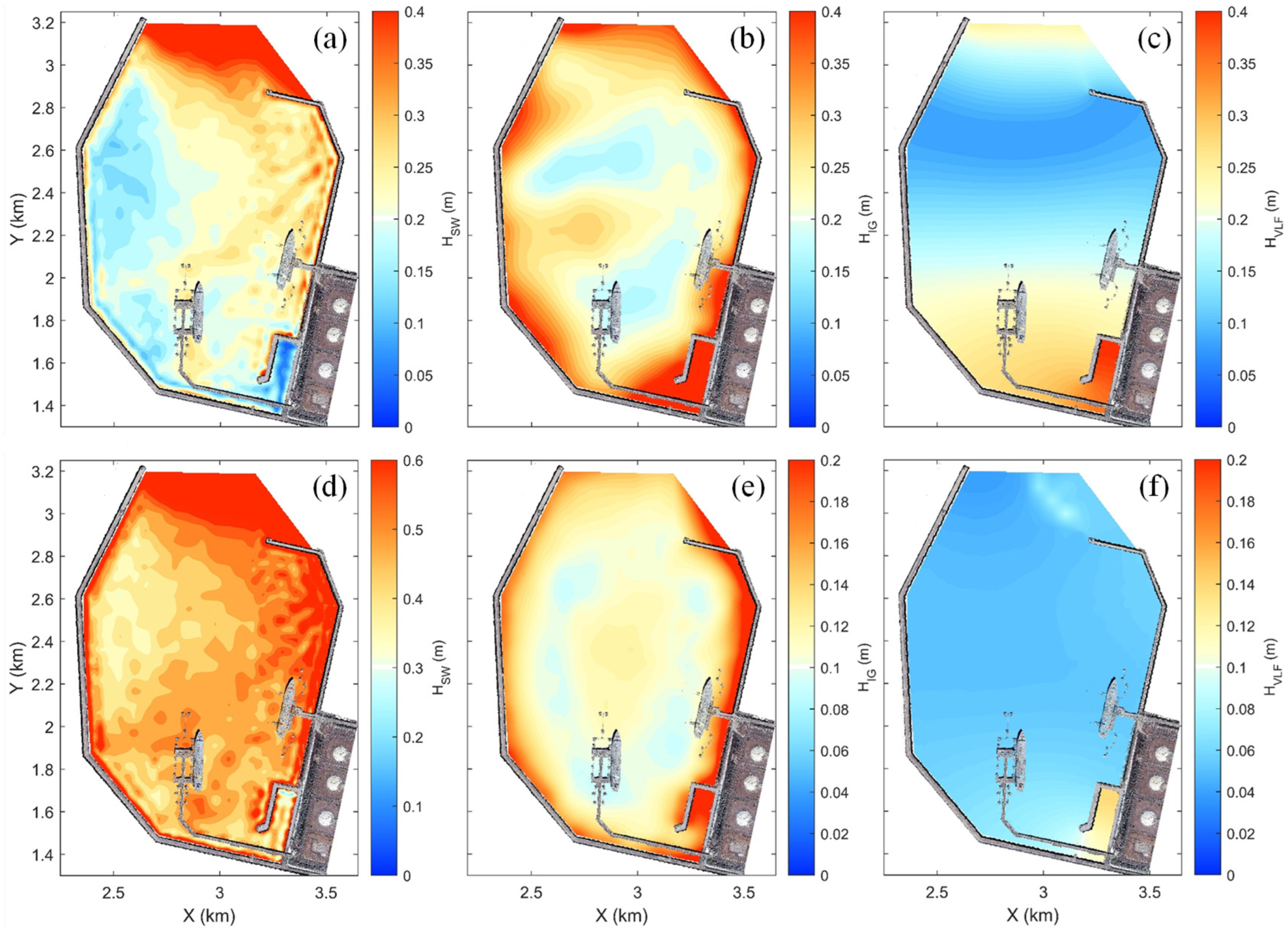
Figure 6 shows the spatial distributions of the simulated H
SW, H
IG, and H
VLF inside the harbor obtained for both models. These results highlight hot spots significantly affected by harbor oscillations. We first examined the FUNWAVE-TVD simulations, with the contour range limited to a maximum of 0.4 m (
Figure 6a–c). For H
SW, larger values are focused along the interior north breakwater. This pattern arose because diffracted waves penetrating the harbor were reflected from the interior north breakwater and subsequently propagated toward LNG Berth 1 (Goda, 2000) [
25]. The tugboat berth, which is the most sheltered area, exhibited the lowest H
SW with an average of 0.1 m inside the harbor. For H
IG, substantial wave energy was localized along the harbor side of the breakwaters. The largest H
IG of approximately 0.8 m occurred in the tugboat berth due to wave trapping and amplification within the confined area. In contrast, relatively low energy appeared in parts of the central basin, including LNG Berth 1. For H
VLF, a distinct quasi nodal line developed near the harbor entrance, producing minimal oscillations, whereas an antinode structure occurred in the innermost part of the harbor, leading to considerable energy around the tugboat berth. Therefore, the larger H
IG and H
VLF around the tugboat berth were consistent with operational staff reports of overtopping at the tugboat dock during typhoon events (Maravelakis et al., 2021) [
3].
The XBeach-NH simulations are presented with contour ranges adjusted to reflect their respective magnitudes in
Figure 6d–f. For H
SW, the spatial distribution resembled that of FUNWAVE-TVD, with higher values near the north breakwater and lower values near the south breakwater. For H
IG, pronounced energy was distributed along the interior sides of breakwaters, forming two quasi nodal lines. LNG Berth 1 was close to one of these nodal lines, which is consistent with the FUNWAVE-TVD result. Additionally, distinct amplification appeared in the tugboat berth, underscoring the tendency of long waves to accumulate within the confined basin. For H
VLF, energy levels are generally low throughout the harbor, except for a clear amplification in the tugboat berth.
Both models consistently identified that the largest oscillations occurred in the innermost tugboat berth, where long waves were trapped and amplified within the confined geometry (Su and Ma, 2025) [
22]. Overall, the XBeach-NH simulations emphasized the role of short-period SWs in driving harbor oscillations, whereas the FUNWAVE-TVD simulations revealed the dominant influence of long-period IG and VLF waves.
4.3. Identification of Natural Resonance Periods of Harbor
Harbor natural resonance periods are typically characterized by distinct spectral peaks, since low-frequency energy is generally concentrated around resonance modes (Dong et al., 2020 [
26]; Thotagamuwage and Pattiaratchi, 2014 [
27]; López et al., 2012 [
28]). These natural periods are fundamentally determined by harbor geometry and bathymetry (Thotagamuwage and Pattiaratchi, 2014) [
19]. However, spectral peaks may be underestimated or even absent if measurements are spatially limited, particularly if instruments are located near the nodal regions of the standing-wave system. Hence, while spectral analysis provides a practical approach for estimating natural periods, reliable identification requires dense measurements covering the entire harbor basin.
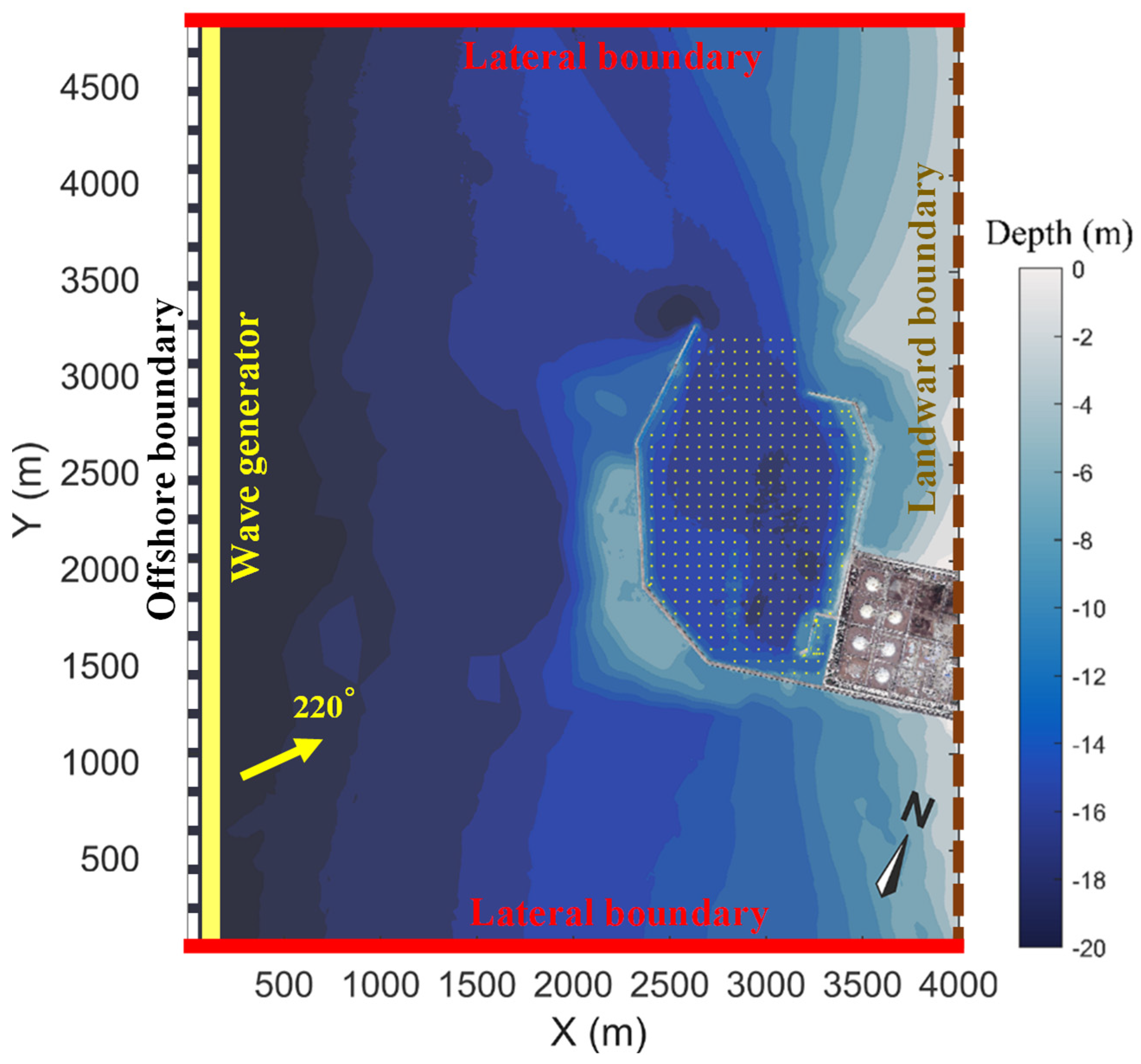
To overcome this limitation, a dense grid of 500 points (
Figure 3) was uniformly distributed throughout the harbor to simulate water surface elevations, providing a high-resolution spatial coverage. A spectral analysis of the resulting time series was then conducted to identify energy concentrations in the IG and VLF bands. Subsequently, significant peaks were extracted using the MATLAB R2024b (MathWorks, Natick, MA, USA) function findpeaks, which employed a robust adaptive threshold based on the median and median absolute deviation, with constraints on peak height, prominence, and frequency separation. The aggregated peak frequencies were then analyzed using kernel density estimation (KDE) via the MATLAB function ksdensity to obtain a smoothed probability density over frequency (Silverman, 1998) [
29]. A higher probability density indicates a greater concentration of spectral peaks around that frequency, thus implying a stronger likelihood of resonance in the corresponding period. Finally, closely spaced peaks in the estimated spectrum were merged to determine robust dominant modes representing the natural resonance periods.
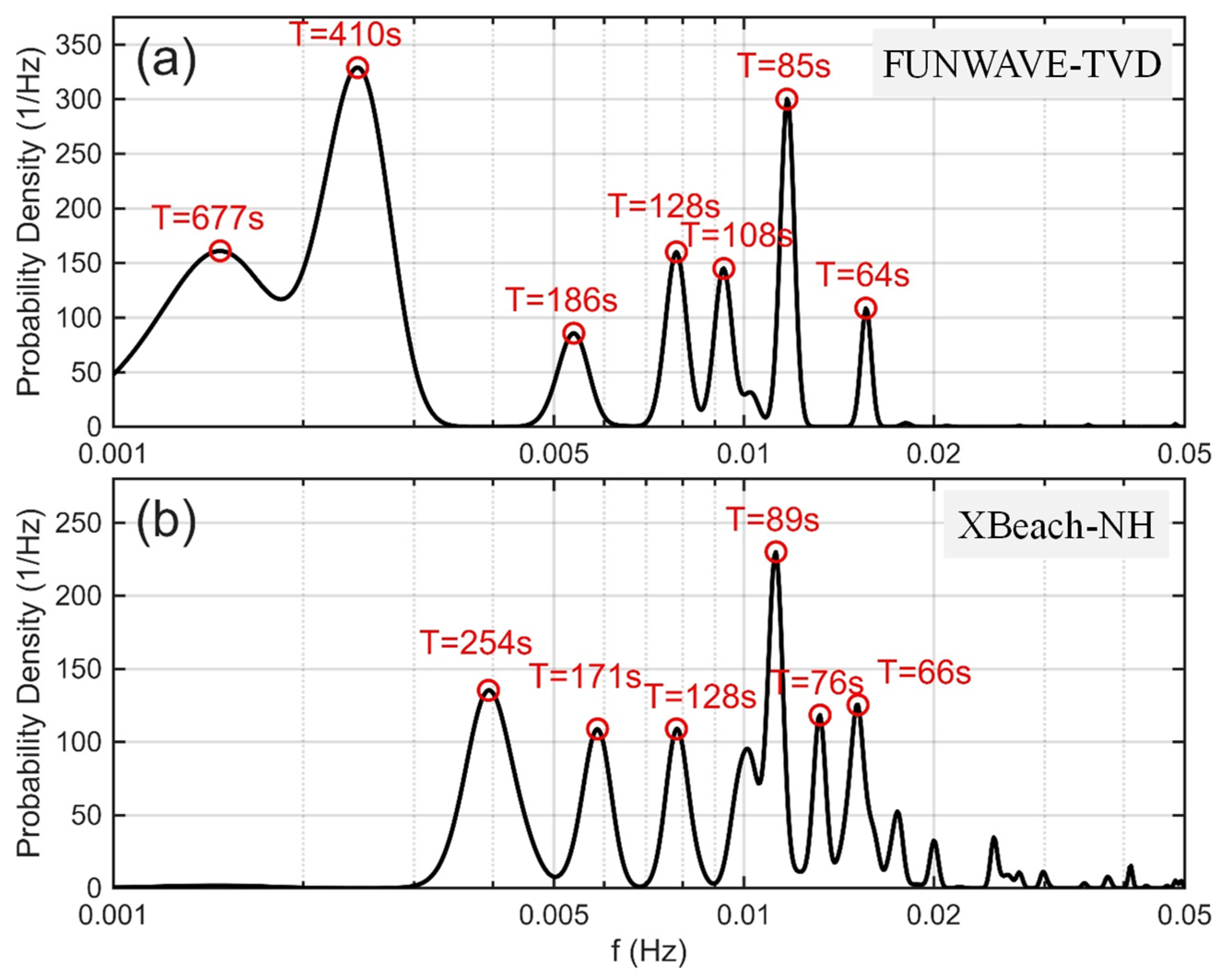
Figure 7 presents the spectral peaks extracted using KDE analysis, which identified the dominant natural resonance periods inside the harbor for the two models. The FUNWAVE-TVD results (
Figure 7a) revealed prominent periods at 677 s, 410 s, 186 s, 128 s, 108 s, 85 s, and 64 s. Notably, the model captured VLF oscillations at 677 s and 410 s, indicating high sensitivity to long-period wave dynamics. In contrast, the XBeach-NH results (
Figure 7b) showed dominant modes at 254 s, 171 s, 128 s, 89 s, 76 s, and 66 s within the IG band, with the strongest concentration at 89 s. Despite these differences, both models consistently reproduced a robust mode at 128 s and identified resonance modes in comparable frequency ranges. Specifically, FUNWAVE-TVD peaks at 85 s and 64 s correspond closely to XBeach-NH peaks at 89 s and 66 s. Residual discrepancies can be attributed to differences in numerical formulations and their sensitivity to specific long-wave processes.
Natural resonance periods within the VLF band have been documented in several harbors from long-duration field observations, including 667 s in Marina di Carrara, Italy (Bellotti et al., 2012) [
30]; 400 s in Hambantota Port, Sri Lanka (Dong et al., 2020) [
26]; 489 s in the harbor of Chania, Greece (Maravelakis et al., 2021) [
3]; and 588 s in the Port of Ferrol, Spain (López et al., 2012) [
28]. The longer periods simulated by FUNWAVE-TVD, particularly at 677 s and 410 s, are consistent with these reported values. In contrast, XBeach-NH produced only a shorter VLF mode at 254 s. For the comparison of resonance wave heights between the two models, the longest-period VLF mode at 677 s was excluded, since it was not captured by XBeach-NH. This exclusion ensured a consistent and meaningful comparison of the simulated resonance behavior.
Table 1 summarizes six peak frequencies within the IG and VLF bands for both models.
4.4. Spatial Distribution of Natural Resonance Modes
In this section, we investigate the spatial structures of the identified resonance modes to elucidate their distribution within the harbor basin. Analyzing the standing-wave patterns is essential, as it reveals the locations of nodal (minimum oscillation) and antinodal (maximum oscillation) regions. This information is critical for assessing whether specific berths, particularly the LNG and tugboat berths, are affected by harbor resonance. Furthermore, understanding these spatial resonance patterns would provide a crucial basis for mitigation planning and future harbor improvement.
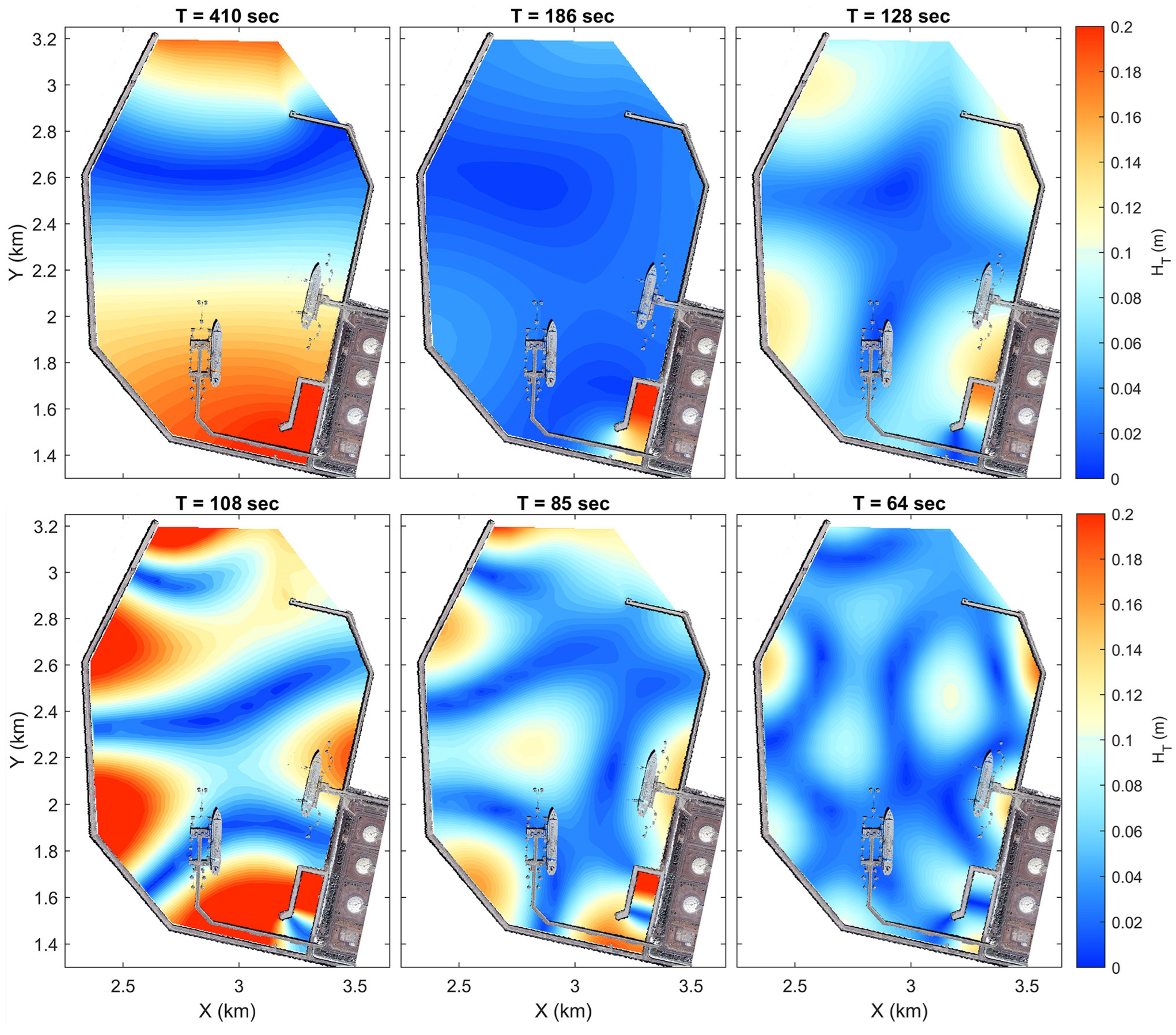
Figure 8 illustrates the spatial distribution of significant wave heights for six resonant modes simulated by FUNWAVE-TVD. For the 410 s mode, the pattern represents a fundamental longitudinal-direction (
Y-axis) mode, characterized by a transverse (
X-axis) nodal line near the harbor entrance and antinodes at both ends. LNG Berth 1 is located in the transition region of the standing-wave structure, and the tugboat is in the largest antinodal region. For the 186 s mode, the largest antinode appears at the tugboat berth, while much of the harbor basin remains relatively calm. LNG Berth 1 is located in a transitional region of the standing-wave structure, with small wave heights. For the 128 s mode, the longitudinal and transverse nodal lines intersect within the harbor basin, forming four antinodal regions concentrated at the interior breakwater corners. The tugboat berth coincides with an antinodal region, indicating amplified oscillations, whereas LNG Berth 1 lies within a nodal region with minimal oscillations. For the 108 s mode, transverse nodal lines divide the harbor into alternating regions of low and high oscillations. Antinodal regions are concentrated near the breakwater corners, again leading to strong oscillations at the tugboat berth. In contrast, LNG Berth 1 is at a nodal region with minimal oscillations. Finally, the 85 s and 64 s modes exhibit complex resonance characteristics, with alternating nodal and antinodal regions distributed across the basin. For the 85 s mode, amplified oscillations are concentrated at the tugboat berth. In both modes, LNG Berth 1 is generally located near a nodal region with relatively weaker oscillations.
Overall, the analysis reveals that LNG Berth 1 is consistently located within or near the nodal regions of the simulated resonance modes. According to standing-wave theory, these nodal points are characterized by minimal vertical surface oscillation but maximum horizontal current velocity. Therefore, this finding strongly implies that ship motion at LNG Berth 1 at these resonance periods is predominantly induced by horizontal currents associated with nodal standing waves, rather than by direct vertical wave height amplification.
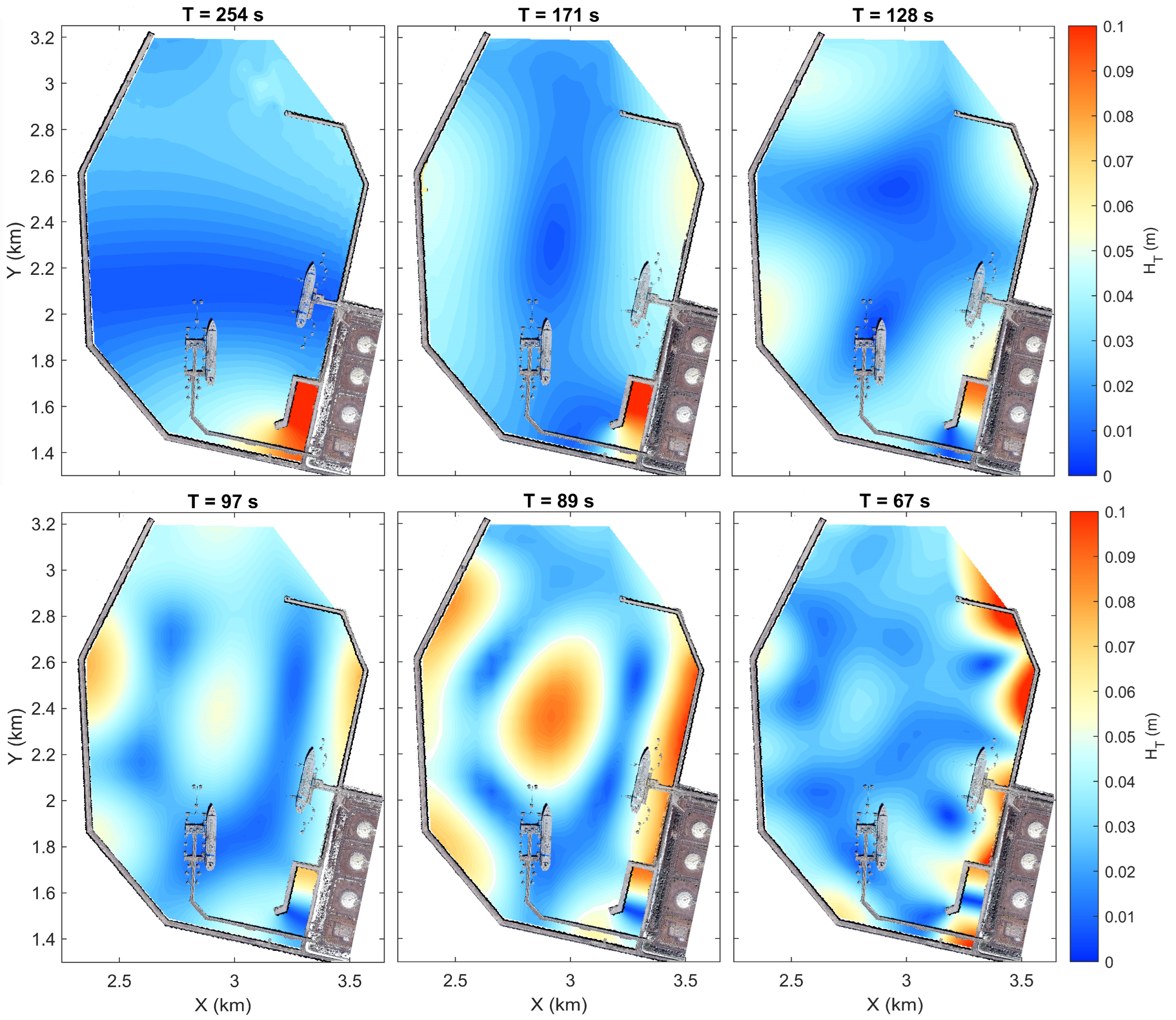
Figure 9 shows the spatial distribution of significant wave heights for six resonant modes simulated by XBeach-NH. The 254 s mode represents a fundamental longitudinal (
Y-axis) resonance mode, characterized by a distinct nodal line near the harbor entrance and a wide antinodal region covering the inner harbor basin. LNG Berth 1 is located in the transition region of the standing-wave structure. For the 171 s mode, a node line extends along the longitudinal basin, which is flanked by antinodal regions on either side. The tugboat berth is in an antinodal region, whereas LNG Berth 1 falls within a nodal region. For the 128 s mode, the spatial structure is identical to that simulated by FUNWAVE-TVD, but it exhibits relatively lower wave heights. The 97 s mode is characterized by alternating standing-wave structures, with lower oscillations in the tugboat berth. LNG Berth 1 falls within a nodal region. For the 89 s mode, a pronounced antinode develops at the central basin, surrounded by nodal structures. LNG Berth 1 is located within the region where nodal lines intersect. For the 67 s mode, multiple nodal and antinodal structures appear throughout the basin, producing amplified oscillations along the north breakwater. LNG Berth 1 is again situated in the transition region of a standing-wave structure.
In contrast to LNG Berth 1, the harbor authority did not report tranquility problems at LNG Berth 2, which is consistent with the model results. LNG Berth 2 is located near the eastern section of the harbor basin, positioned at the transition zone between an antinode and a node of the standing-wave pattern across all simulated resonance modes (
Figure 8 and
Figure 9). This region is characterized by mild vertical oscillations and weak horizontal currents, thus resulting in a relatively calm hydrodynamic environment. Consequently, no significant motion or resonance-induced disturbances were observed at LNG Berth 2 during typhoon events.
The comparative study of the spatial distributions of resonance modes obtained from the two model simulations highlights a clear contrast in the impact on key infrastructure. LNG Berth 1 is consistently located in the nodal regions, which are characterized by minimal vertical oscillations but elevated horizontal velocity (López and Iglesias, 2014) [
21]. In contrast, the tugboat berth is situated in antinodal regions, where large vertical oscillations occur due to harbor resonance and localized amplification. Therefore, wave overtopping at the tugboat is frequently triggered by typhoon-induced long-period oscillations. To substantiate these modeled mechanisms, current measurements inside the harbor are required to verify the nodal and antinodal structures and confirm the current-driven ship motions inferred at LNG Berth 1.
5. Conclusions
This study compared two wave-resolving models, the Boussinesq-type FUNWAVE-TVD and the non-hydrostatic XBeach-NH, for simulating typhoon-induced oscillations in Youngan Harbor. Both models underestimated the significant wave height across the full frequency range; however, their performance diverged across different frequency bands. XBeach-NH reproduced stronger energy in the swell and wind-wave bands, indicating more pronounced short-wave penetration, whereas FUNWAVE-TVD generated larger energy in the infragravity and very-low-frequency bands, reflecting more effective nonlinear energy transfer to long waves. The resonance analysis clarified the physical mechanisms behind compromised harbor tranquility. LNG Berth 1 was consistently located in nodal regions, where minimal vertical oscillations coincided with elevated horizontal currents that induced ship motions. In contrast, the tugboat berth was situated in antinodal regions, where amplified vertical oscillations explained the recurrent overtopping at the tugboat dock under typhoon conditions. The comparative results showed that no single model was universally superior. Model selection depended on whether short-period swell penetration or long-period infragravity wave resonance was the primary concern, thus suggesting that the complementary use of both models may be beneficial. Future monitoring should include in-harbor current measurements to verify the resonance structure and directly assess ship response. In addition, deploying wave sensors at the tugboat berth and LNG Berth 2 would capture site-specific oscillations, thereby improving model validation. Overall, this study provided a useful framework for future applications of numerical models in harbor tranquility assessment and offered practical insights for harbor management under extreme weather conditions.