You are currently viewing a new version of our website. To view the old version click .
Journal of Marine Science and Engineering
  • Article
  • Open Access

18 November 2024

Modal Parameter Identification of Jacket-Type Offshore Wind Turbines Under Operating Conditions

,
,
,
,
,
,
and
1
State Key Laboratory of Coastal and Offshore Engineering, Dalian University of Technology, Dalian 116024, China
2
NingBo Institute of Dalian University of Technology, Ningbo 315000, China
3
Department of Marine Technology, Norwegian University of Science and Technology, Jonsvannsveien 82, 7050 Trondheim, Norway
*
Author to whom correspondence should be addressed.
This article belongs to the Topic Wind, Wave and Tidal Energy Technologies in China

Abstract

Operational modal analysis (OMA) is essential for long-term health monitoring of offshore wind turbines (OWTs), helping identifying changes in structural dynamic characteristics. OMA has been applied under parked or idle states for OWTs, assuming a linear and time-invariant dynamic system subjected to white noise excitations. The impact of complex operating environmental conditions on structural modal identification therefore requires systematic investigation. This paper studies the applicability of OMA based on covariance-driven stochastic subspace identification (SSI-COV) under various non-white noise excitations, using a DTU 10 MW jacket OWT model as a basis for a case study. Then, a scaled (1:75) 10 MW jacket OWT model test is used for the verification. For pure wave conditions, it is found that accurate identification for the first and second FA/SS modes can be achieved with significant wave energy. Under pure wind excitations, the unsteady servo control behavior leads to significant identification errors. The combined wind and wave actions further complicate the picture, leading to more scattered identification errors. The SSI-COV based modal identification method is suggested to be reliably applied for wind speeds larger than the rated speed and with sufficient wave energy. In addition, this method is found to perform better with larger misalignment of wind and wave directions. This study provides valuable insights in relation to the engineering applications of in situ modal identification techniques under operating conditions in real OWT projects.

1. Introduction

As global warming intensifies, sustainable energy development has gained significant attention as a means to reduce fossil fuel dependence and limit carbon emissions. Offshore wind energy, in particular, has experienced substantial growth in recent years [1], with the global installed capacity of offshore wind turbines (OWTs) surpassing 60 GW by 2023 [2]. It is anticipated that this trend will increase significantly soon. However, OWTs face more challenging operational environmental conditions than those exposed to onshore, resulting in greater structural reliability challenges and higher operational maintenance (O&M) costs [3]. It is reported that the O&M costs for OWT projects can potentially account for 30% of the total project costs [4], which represents a significant financial burden. Therefore, structural health monitoring for OWTs plays a critical role in observing structural state in real time and providing precise decision support for O&M cost reduction [5,6].
Operational modal analysis (OMA) plays a crucial role in extracting modal parameters, which are vital for monitoring the structural health of OWTs, offering critical insights for assessing operational conditions, identifying structural damage, and providing guidance for structural design [7]. This facilitates the development of a data-driven numerical model that closely represents the physical OWT structure, enabling the prediction of structural responses and assessment of structural health and lifetime [8,9,10]. In recent decades, OMA techniques have been developed significantly across frequency and time domains. Within the frequency domain, methodologies like the peak-picking (PP) [11], PolyMax method [12], and frequency domain decomposition (FDD) [13] were introduced. In terms of the time domain, techniques such as Random Decrement Technique (RDT) [14], the Eigensystem Realization Algorithm (ERA) [15], Natural Excitation Technique (NExT) [16], Auto-Regressive Moving Average (ARMA) [17], Data-Driven Stochastic Subspace Identification (SSI-DATA) [18], and Covariance-Driven Stochastic Subspace Identification (SSI-COV) [19] were introduced. OMA techniques have been successfully applied to damage detection for wind turbine blades [20,21]. Shirzadeh et al. [22] established the OMA technique and evaluated the damping ratio of the fundamental fore–aft (FA) mode for an offshore wind turbine under overspeed stop tests and ambient excitation conditions. Weijtjens et al. [23] attempted to apply the OMA technique to monitor the scour at the foundation of an offshore wind turbine. Zhou et al. [24] explored the dynamic characteristics of monopile OWT using ERA, SSI, and weak-mode identification (WMI) through sea tests. Among these methods, SSI has become one of the most widely considered OMA methods for OWT monitoring due to its high computational efficiency and accuracy in experimental environment [8,25], with promising potential for in situ applications [26].
Long-term monitoring of structural modal parameters is essential to assess the reliability of structures thoroughly [10,27]. Magalhães et al. [28] proposed an innovative automatic SSI-COV method for modal parameters identification of bridges based on long-term online monitoring. Subsequently, the automatic SSI-COV method was considered for OWT structural monitoring, and the results indicated that this method has high identification accuracy during idle or parked states [6]. Several studies also point out that OMA technology performs better when the OWT is in a parked state compared to operating states with blade rotation [5,26], mainly due to the limitations imposed by OMA’s fundamental assumptions. Specifically, OMA technique assumes that the identified system is linear, time-invariant, and subject to stationary, white-noise-type excitation with no temporal or spatial correlation [29].
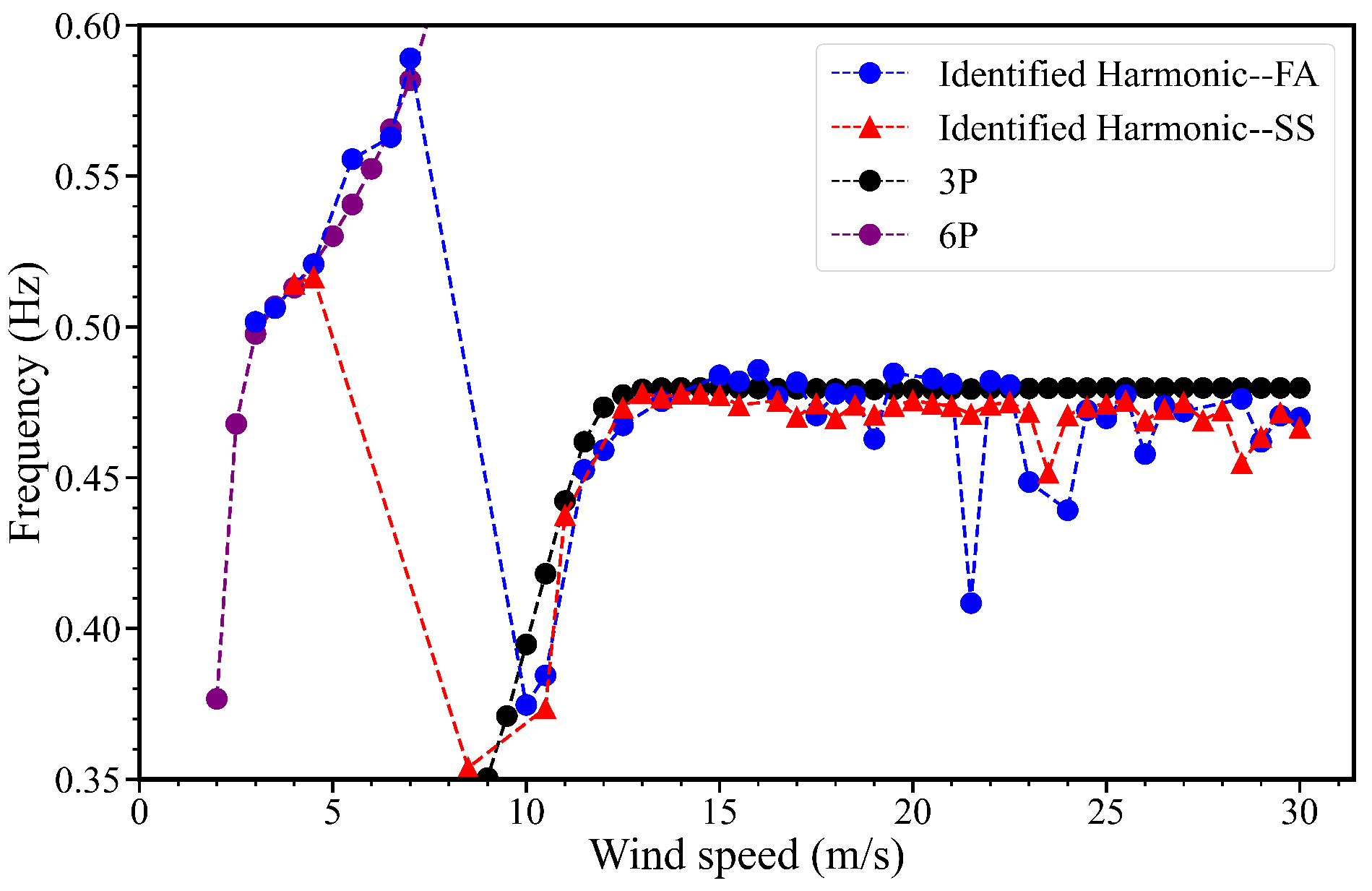
However, the OWTs continuously adjust the nacelle orientation (yaw) and blade pitch angle during the operation, resulting in nonlinear and nonstationary dynamic behavior [30,31]. Harmonic excitations, including 3P and 6P introduced by blade rotation lead to significant deviation from the white noise assumption [32]. Distinguishing between modes becomes challenging when the harmonic frequencies (i.e., 3P or 6P) approach the structural modal frequency. It also encounters onerous environmental conditions, including stochastic wind turbulence and wave excitations, which strictly violate the assumption of white-noise excitation [8]. Nevertheless, OWTs are mostly in operation during their lifetime. It is therefore vital to make full use of in situ data under normal operating conditions to largely improve structural monitoring. The high nonlinearity of structural dynamics and the complex variations in the marine environment pose challenges to reliable modal identification. It is therefore essential to clarify the effect of those complex factors on the identification results of OWTs.
Relatively few studies have tackled these challenges directly. Some researchers have explored the effects of signal noise, measurement time, vibration amplitudes, and stationarity of the ambient response on the identification of damping, as opposed to the modal frequencies and mode shapes using SSI-COV method [5]. For non-white noise harmonic excitation, Dong et al. [33] introduced the harmonic modification SSI method to isolate the harmonic components. However, its limitation lies in the assumption that the input harmonic frequencies must remain time-invariant and need to be known, whereas these frequencies are typically unknown. Several studies indicated that the identified modal frequency significantly changes especially when the turbines are in operation, primarily due to nonlinear and nonstationary effects such as varying pitch angle, and nacelle angle [34,35,36,37]. However, the existing research has not addressed whether the OMA method remains accurate when environmental excitations and structural nonlinearity do not conform to white noise excitation. To summarize, there is a notable research gap regarding the impact of load excitations, including turbulent winds and stochastic irregular waves, and blade rotation on the results of the OMA methods. Thus, it is imperative to investigate the applicability of the methods under operating environments, which will significantly enhance their reliability.
This research intends to explore the influence of non-white noise excitations, including turbulent winds and stochastic sea states on the OWT modal parameter identification accuracy. In addition, most modal parameter identification techniques were investigated for monopile-support OWTs. With the trend toward deeper offshore installations, the advantage of jacket-type OWT shows up for its higher OWT installation capacity. Furthermore, SSI-COV method is focused in the present study due to its high computational efficiency for online OWT monitoring [8]. Therefore, in the present study, the intention is to provide guidance for the engineering implementation of SSI-COV method for identifying modal parameters in real projects for structural monitoring and in situ online safety assessment for jacket-type OWTs.
The remainder of the paper is structured as follows: the next section introduces the basic theory of the automated SSI-COV method. Section 3 describes the considered numerical model of the jacket OWT, as well as the considered typical operating environments. Section 4 analyzes the identification results under different operating environments, followed by a discussion on the influence of environmental excitations on the identification results. Section 5 presents further verification through experimental data from scaled model testing of a jacket-type OWT. The conclusions are presented in Section 6.

2. Method

2.1. SSI-COV Method

The SSI-COV method [19] primarily estimates the state and output matrices of the state-space system using output-only measurements. The state-space system equation is described as follows:
x k + 1 = A x k + w k y k = C x k + v k
where x k R n denotes a state vector of the system at time instant k, y k R m denotes the output vector. A R n × n is a state matrix, and C R m × n is an output matrix. w k R n is a modeling noise vector, v k R m is a measurement noise vector. They are uncorrelated with zero mean. The covariance matrices of w k and v k are represented by the following formulation:
E w p v p w q T v q T = Q S S T R δ p q
where E denotes the expected operator, p and q are the two arbitrary time instants, δ p q denotes the Kronecker delta, T represents the transpose of a matrix, and Q, S, and R are constant.
The output covariance matrix R i is defined as
R i = E y k + i y k T
where i denotes any time lag for covariance calculation. Then, the output covariance matrices are gathered in a Toeplitz matrix T 1 | i ,
T 1 | i = R i R i 1 R i + 1 R i R 1 R 2 R 2 i 1 R 2 i 2 R i
The Toeplitz matrix is further decomposed of singular value decomposition (SVD) and the Moore–Penrose pseudo-inverse, and the exact derivation is given in the literature. Finally, the state-space matrices can be obtained as
A ^ C ^ = X ^ i + 1 Y i | i X ^ i
where A ^ R n s × n s , C ^ R m × n s , n s denotes the selected model order, Y i | i R m × j represents a Hankel matrix with one block row, X ^ i R n × j is a state sequence, and superscript † denotes the Moore–Penrose pseudo-inverse. To obtain the modal parameters, an eigenvalue analysis of the continuous time system matrix A ^ is carried out as follows [26]:
= Ψ 1 A ^ Ψ
where ∧ represents the eigenvalue matrix, Ψ denotes the eigenvector of A ^ . The eigenvector matrix of the continuous time system matrix A ^ C is identical to that of A ^ . Let c = ln / Δ t ; Δ t is the sampling time interval, c is the eigenvalue matrix of A ^ c , ω i = λ c , 2 i 1 is the natural frequency, ξ i = R e a l ( λ c , 2 i 1 ) / ω is the damping ratio, Φ = C ^ Ψ is the mode shape of the structure, λ c , 2 i 1 represents the diagonal element of the matrix c , and the subscript 2 i 1 indicates the utilization of only alternate eigenvalues. Complex conjugate pairs are constituted by these eigenvalues, and modal parameters corresponding to a specific vibration mode are obtained by each pair.

2.2. Automated Clustering Algorithm

Choosing the appropriate order of the state space model is crucial for identifying the system matrix A. It is also challenging to obtain the model order that accurately reflects the response of structures in reality. The stabilization diagram serves as an effective method for the selection of system order and estimation of stable modes [38]. In a stabilization diagram, stable poles are modes with similar frequency, mode shape, and damping ratio in most system orders. If the modal parameters between adjacent orders fall within acceptable limits, the pole is considered similar and stable. Otherwise, it is deemed as a spurious mode. However, the modal parameters need to be judged based on the experience after obtaining the stabilization diagram, and the selection of different stable poles might result in varying results, which can not be directly applied to automatic estimation as part of long-term monitoring.
The hierarchical clustering algorithm can be used for clustering stable poles in an automatic process [28,39]. The algorithm constructs a tree-like hierarchy. Each object is treated as an individual cluster, while the two closest clusters are merged into one single cluster step by step. A large cluster will be obtained. The basic workflow of the hierarchical clustering algorithm is briefly discussed as follows.
Firstly, calculate the similarity among all pairs of estimated stable modes. The Euclidean distance between the objects is used for estimation of the similarity. The Euclidean distance is calculated using the similarity measures derived from natural frequency and mode shape estimates. In addition, the distance d i j between two modes (i and j) is calculated based on Equation (7),
d i j = f i f j f j + 1 MAC i , j
where f i is the natural frequency of the mode i, and M A C i , j is the modal assurance criterion between the ith and jth mode shapes. If the distance is small, they are considered to be identical physical modes, and ought to be grouped into one cluster. The hierarchical tree is established using a single linkage. The minimum distance between any pair of points sourced from each respective cluster is defined as the distance between two clusters. Equation (7) shows how to calculate the distance. The level of the hierarchical tree cut depends on the number of clusters, which is usually unknown. A criterion for the hierarchical tree cut is to enforce a maximum threshold on the distance from each point to its closest neighbor within one cluster [28]. The physical modes are determined for a cluster with a higher number of elements. Finally, the average of each cluster is output as the physical modal parameters.
In the application of SSI-COV, several hyperparameters should be determined, including the time lag for covariance calculation (Ts), the maximal value of the model order (Nmax), frequency difference (eps_freq), damping difference (eps_zeta), and modal confidence criterion difference (eps_MAC). It is important to note that the term “difference” specifically refers to the relative error. The selection of those hyperparameters could be essential for the identification, but such influence might also be ignorable. In this study, various hyperparameter settings were attempted to minimize their impact on the identification results across extensive conditions, while also incorporating engineering practical experience [26,28,40]. Ultimately, Ts was set to 20 s, Nmax to 20, eps_freq to 10%, eps_MAC to 10%, and eps_zeta to 10%. This study focuses on the automated evaluation of natural frequency and mode shape, with no further discussion on damping ratio estimation.

3. Case Study for Jacket Offshore Wind Turbine

3.1. Model Description

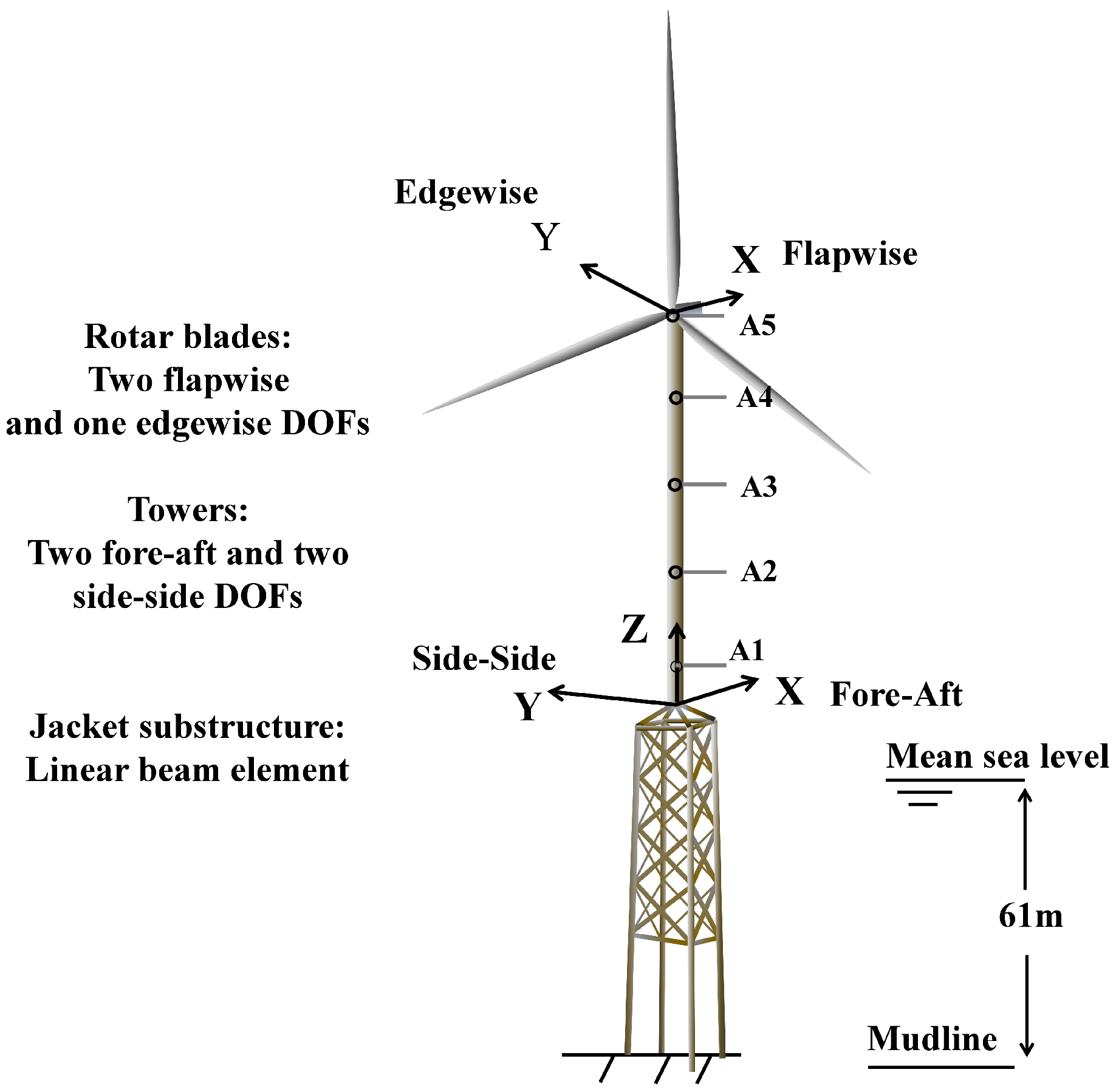
Investigation on the applicability of SSI-COV was carried out based on a 10 MW jacket OWT. Its main structural parameters are illustrated in Figure 1 and summarized in Table 1. The DTU 10 MW wind turbine [41] was applied. The design of the tower and the jacket support structure refers to [42].
Figure 1. Illustration of the considered jacket OWT.
Table 1. The structural parameters and properties of the DTU 10 MW OWT structure.
A coupled numerical model for the simulation of jacket OWT dynamics was established in FAST v8, which includes the modules ElastoDyn, SubDyn, AeroDyn, HydroDyn, ServoDyn, and InflowWind [43]. The Rotor-Nacelle Assembly (RNA) including blades, nacelle, drivetrain, and hub, were modeled in the ElastoDyn module. The blade flexibilities were simulated by two flapwise modes and one edgewise mode, while the nacelle was set with two DOFs (i.e., yaw and pitch). The tower was modeled by beam elements with variable cross-sections, considering two DOFs in the fore–aft (FA) and side-to-side (SS) directions. BModes [44] was used to calculate the modes of the blades and tower, and these modes served as the input to the ElastoDyn module. The jacket foundation was modeled in the SubDyn module based on linear finite-element beam theory and the Craig–Bampton (C-B) method. The aerodynamic loads on the blades and the tower were computed by the AeroDyn module. HydroDyn module was utilized to calculate the hydrodynamic loads on the structure.

3.2. Description of the Operating Environmental Conditions

The case study focused on the SSI-COV-based structural modal identification under three main environmental conditions, i.e., irregular waves, turbulent wind, and combined wave and wind conditions. Although the OWT operates in a complex environment with both wave and wind, the use of pure wave or wind excitation allows a detailed investigation of the mechanism of jacket OWT modal identification under different environmental conditions.
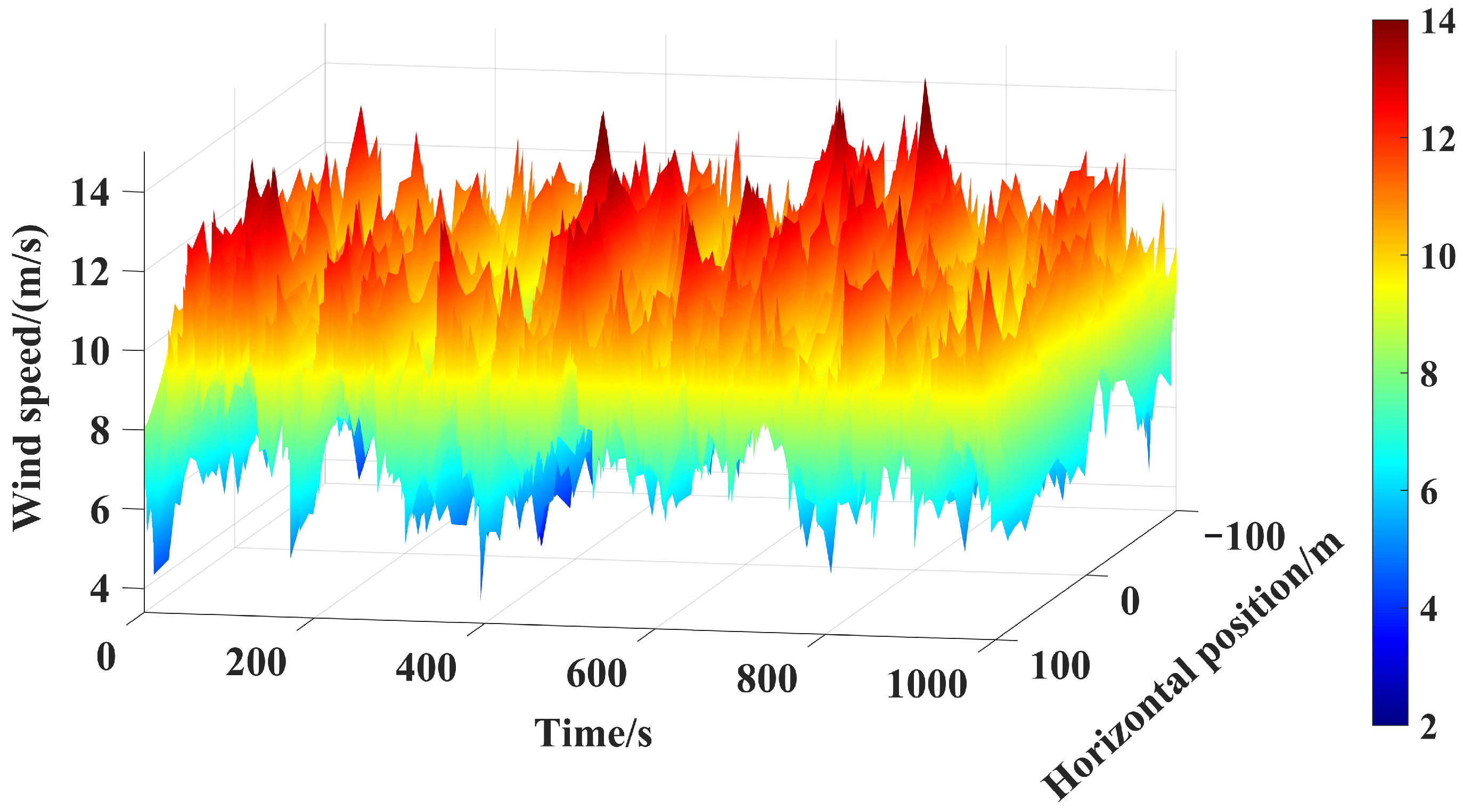
The JONSWAP spectrum [45] was used for the sea state simulation. A total of 187 sea states were applied, as shown in Table 2, with the peak period (Tp) ranging from 0.5 s to 16.5 s and the significant wave height (Hs) ranging from 6.5 m to 16.5 m. The wave direction aligns with the FA direction of the structure. For turbulent wind conditions, 57 groups were selected as shown in Table 3, covering wind speeds from 0.5 m/s to 30 m/s, with corresponding turbulence intensity ranging from 13.11% to 49.7%. The stochastic, full-field, turbulent wind was simulated using TurbSim [46] based on standard B of the IEC Kaimal spectral model. Figure 2 shows the 3D map of a turbulent wind simulated by Turbsim, reflecting the stochastic statistical characteristics of turbulent wind speeds for a duration of 1000 s, with an average wind speed of 9.5 m/s, a turbulence level of 18.75%, a horizontal width of 200 m, and centered at a hub height of 119 m. The simulated wind speeds were fed into the Inflow Wind module of FAST. The wind also aligns with the FA direction of the OWT. A total of 600 combined wave and wind conditions were included as shown in Table 4, with wind speeds ranging from 2 m/s to 30 m/s (and Tp from 0.5 s to 16.5 s with Hs from 6.5 m to 16.5 m as already mentioned above). The values of Hs, Tp, and wind turbulence intensity, were widely selected covering the most interesting ranges. Their combinations almost cover all real operating environmental conditions, effectively facilitating the exploration of the method’s applicability.
Table 2. Irregular wave conditions.
Table 3. Turbulent wind conditions.
Figure 2. The 3D turbulent wind map at a turbulence level of 18.75% simulated by Turbsim.
Table 4. The combined wind and wave conditions.

3.3. Vibration Response and Processing

Acceleration responses serve as the input for modal parameter identification based on SSI-COV. Five channels of acceleration responses, denoted by A1 to A5, are assumed to be monitored. The synthetic signals of tower accelerations at different positions were generated based on numerical simulations. Their positions are illustrated in Figure 1. These recorded acceleration data are along the X- and Y-axes of the global reference coordinate system, and the responses serve as input for modal identification in the FA and SS directions, respectively. The duration of each synthetic monitoring record was assumed to be 10 min for each environmental condition. The sampling frequency is 20 Hz.
Synthetic signals were polluted by noise for more realistic signal simulations. Gaussian white noise at a noise level of 5% was added. The white noise, characterized by a mean of 0 and variance of 1, is scaled by the root mean square of the signal, with the noise level expressed as a percentage. The noise level is described as
noise level = n = 0 N 1 s ( n ) x ( n ) 2 n = 0 N 1 x 2 ( n )
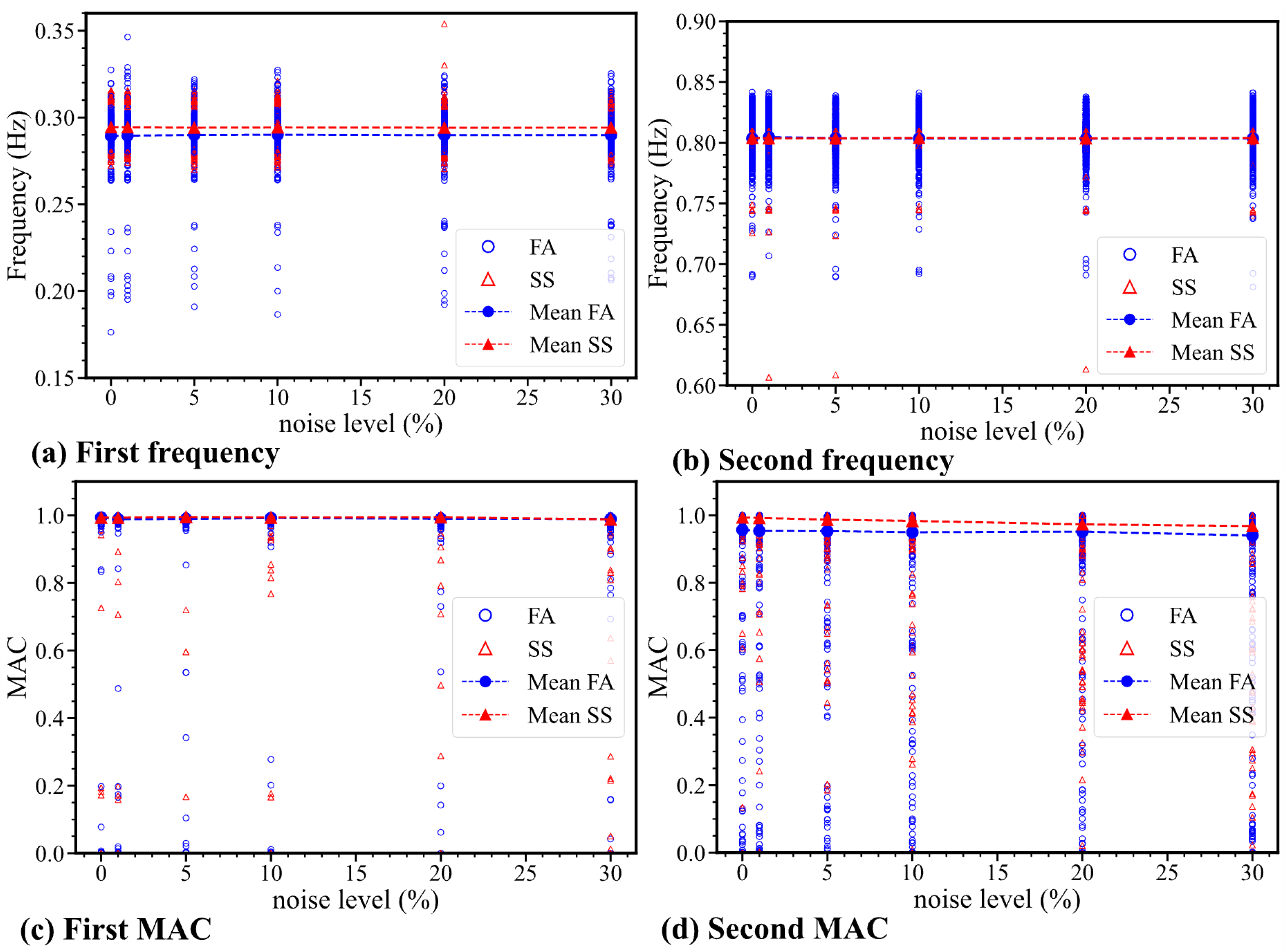
where x denotes the true response, and s is the noise-polluted signal. The identification results under different environmental conditions are discussed based on the synthetic response signals with 5% noise. To provide a more objective evaluation of the method, the effect of low noise levels ranging from 0% to 30% on the identification results is further studied.
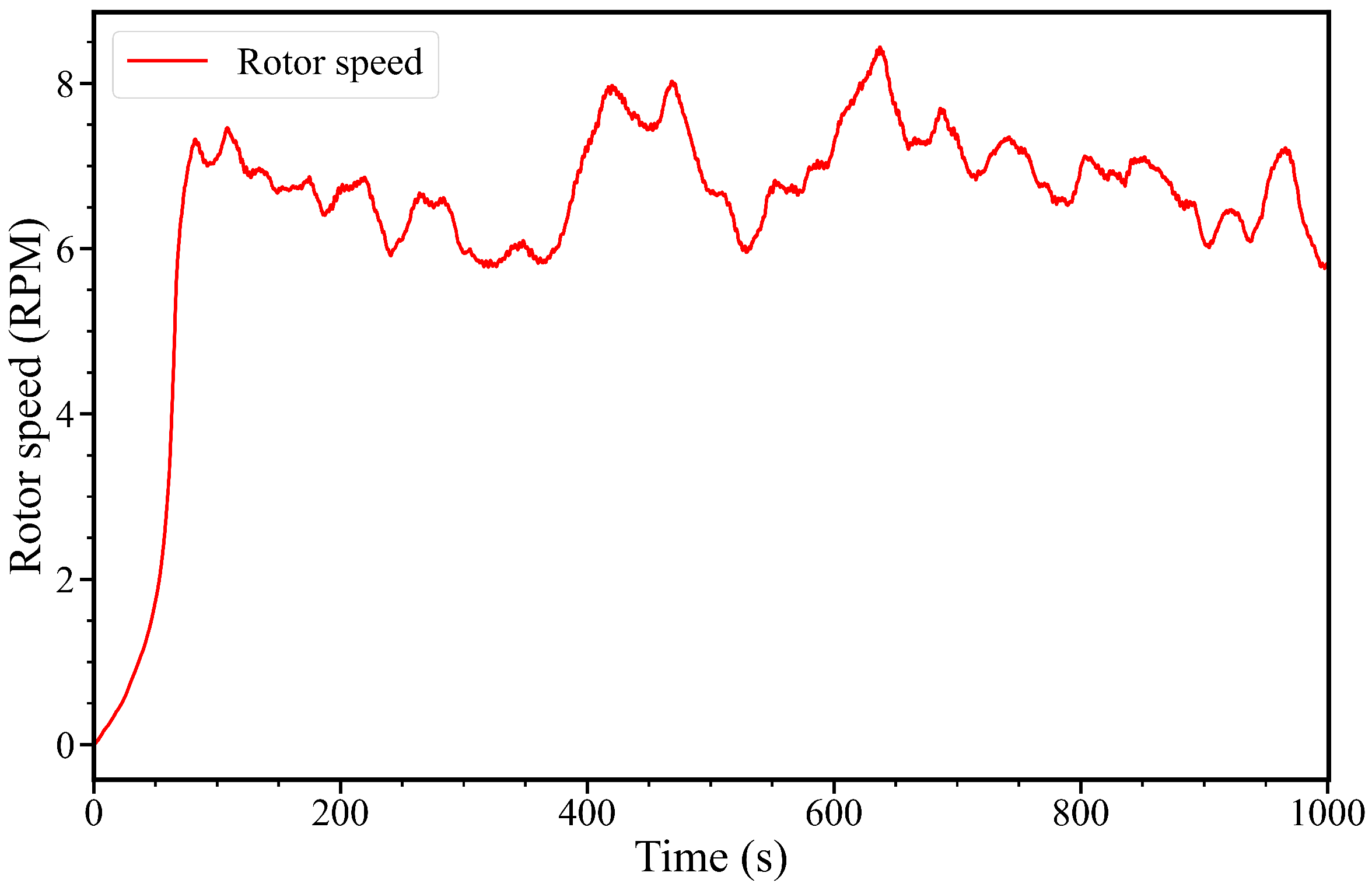
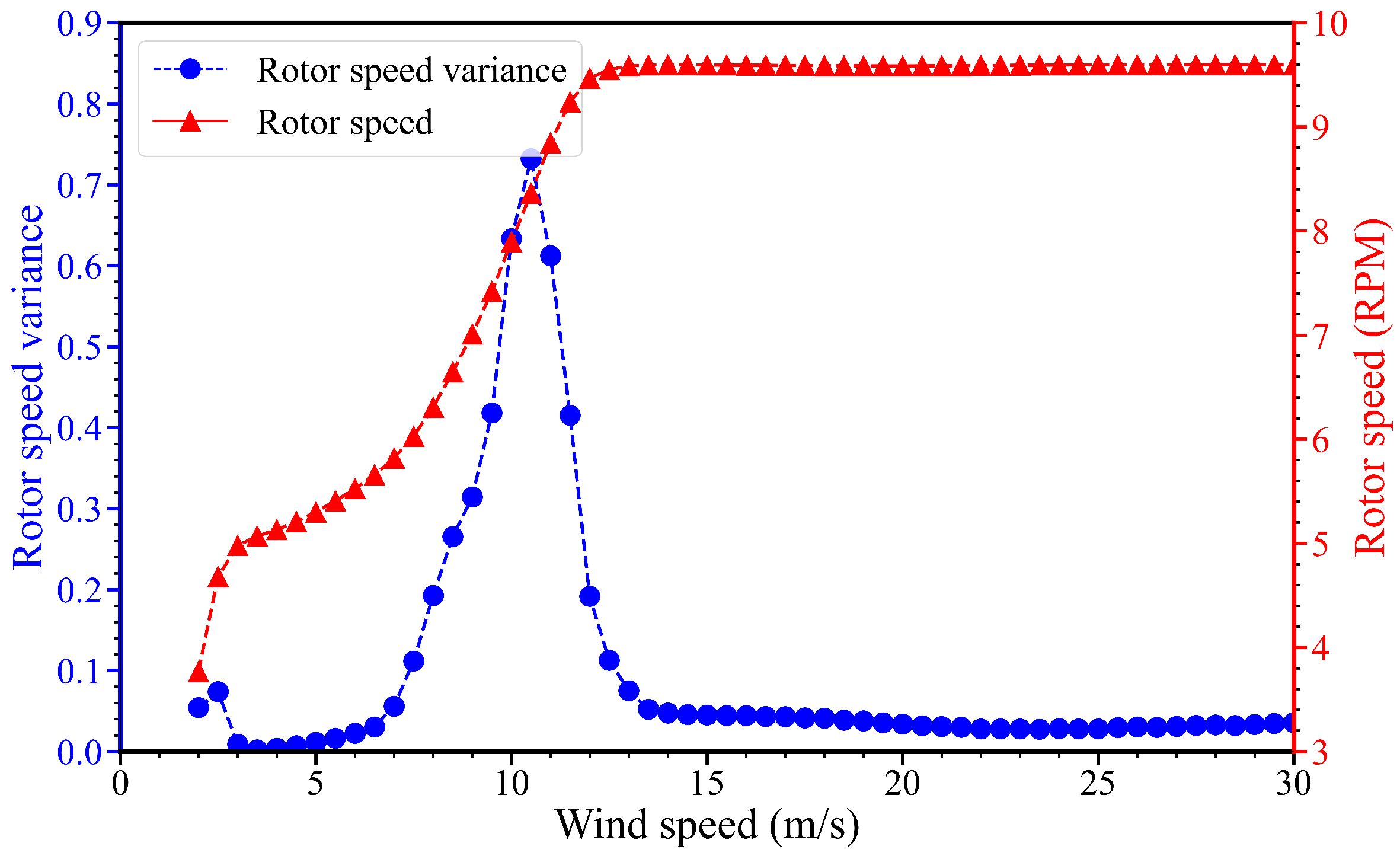
Understanding the dynamic properties of the OWT during operation is essential for analyzing the influence on modal parameter identification. Figure 3 illustrates the time series of rotor speed for a wind speed of 9.5 m/s. The average rotor speed and coefficient of variance for the rotor speed varying with different wind speeds are illustrated in Figure 4. The transient effect of the structural dynamics right after the startup of the wind turbine is truncated. The average and variance of the rotor speed were calculated for the period from 400 s to 1000 s. The structure operates in a non-generating state before reaching the cut-in wind speed of 4m/s with a notably low average rotor speed. For the wind speeds between the cut-in and the rated (i.e., 4 m/s and 11.4 m/s) magnitudes, the turbine operates below its rated power. Consequently, the average rotor speed gradually rises as the wind speed increases. Upon surpassing the rated wind speed, the turbine reaches the rated power operation, while the average rotor speed remains constant due to the servo control. The high variability of the rotor speed within the range of 8 m/s to 12 m/s is primarily related to the significant stochastics of the wind turbulence. The potential influence of rotor speed variations on identification results is discussed in the subsequent analysis.
Figure 3. Rotor speed time history at a wind speed of 9.5 m/s.
Figure 4. Average rotor speed and variance of the rotor speed over different wind speeds.

3.4. Validation of Modal Parameters Identification Method

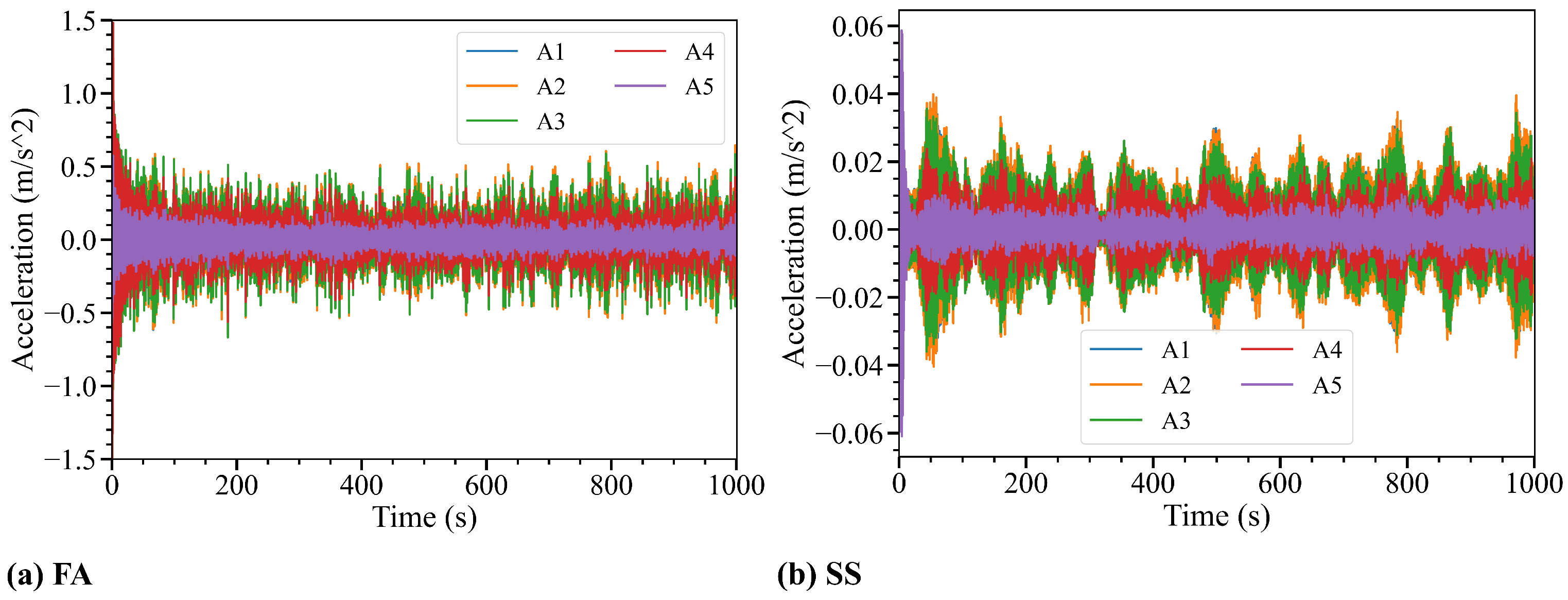
The applied SSI-COV method for jacket OWT modal parameter identification was first validated based on white noise excitation loads. The signals were generated based on the accelerations under the white noise excitation along the FA directions. Figure 5 shows the five channels of acceleration responses.
Figure 5. Acceleration response signals in FA and SS directions excited by a white noise spectrum.
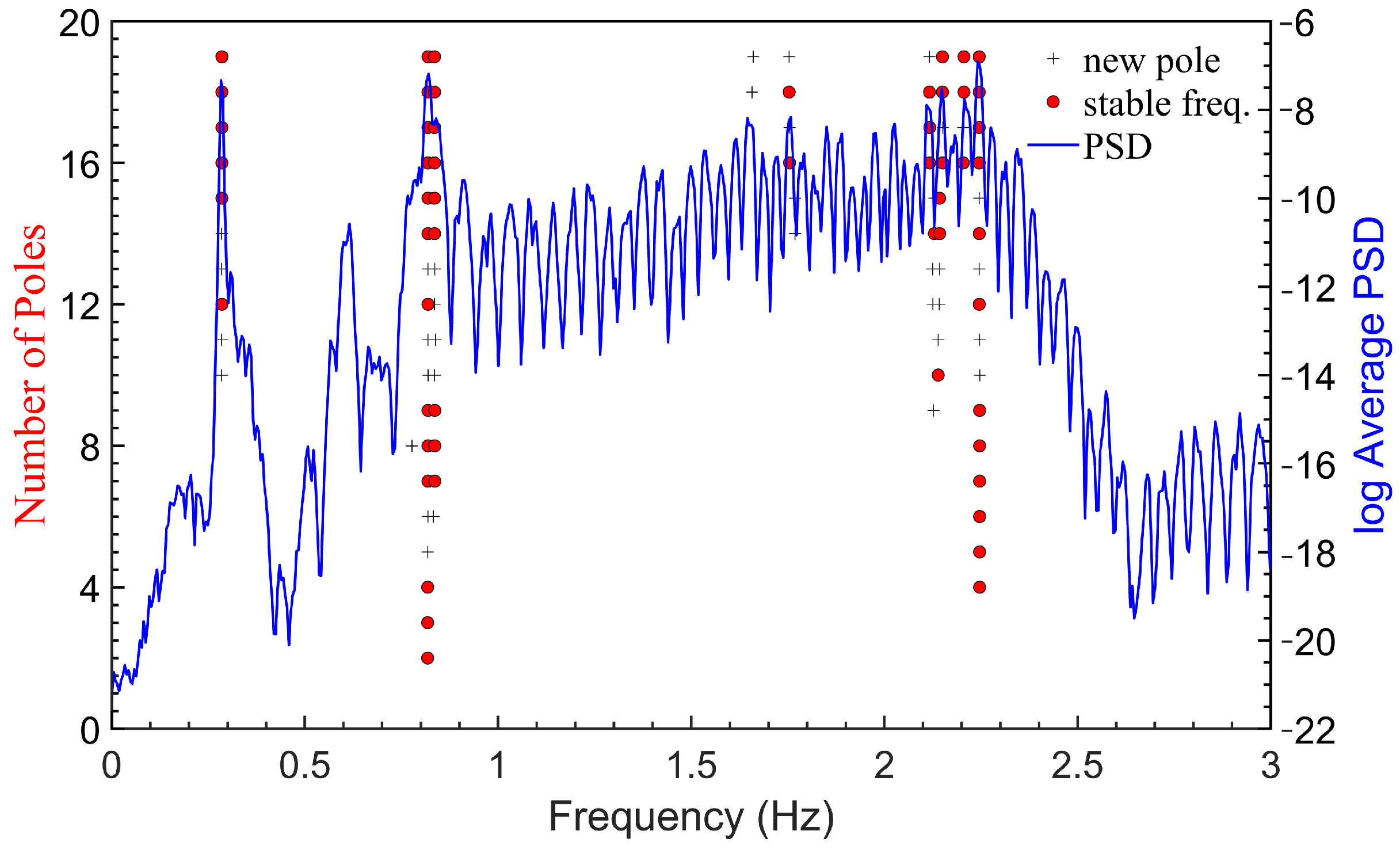
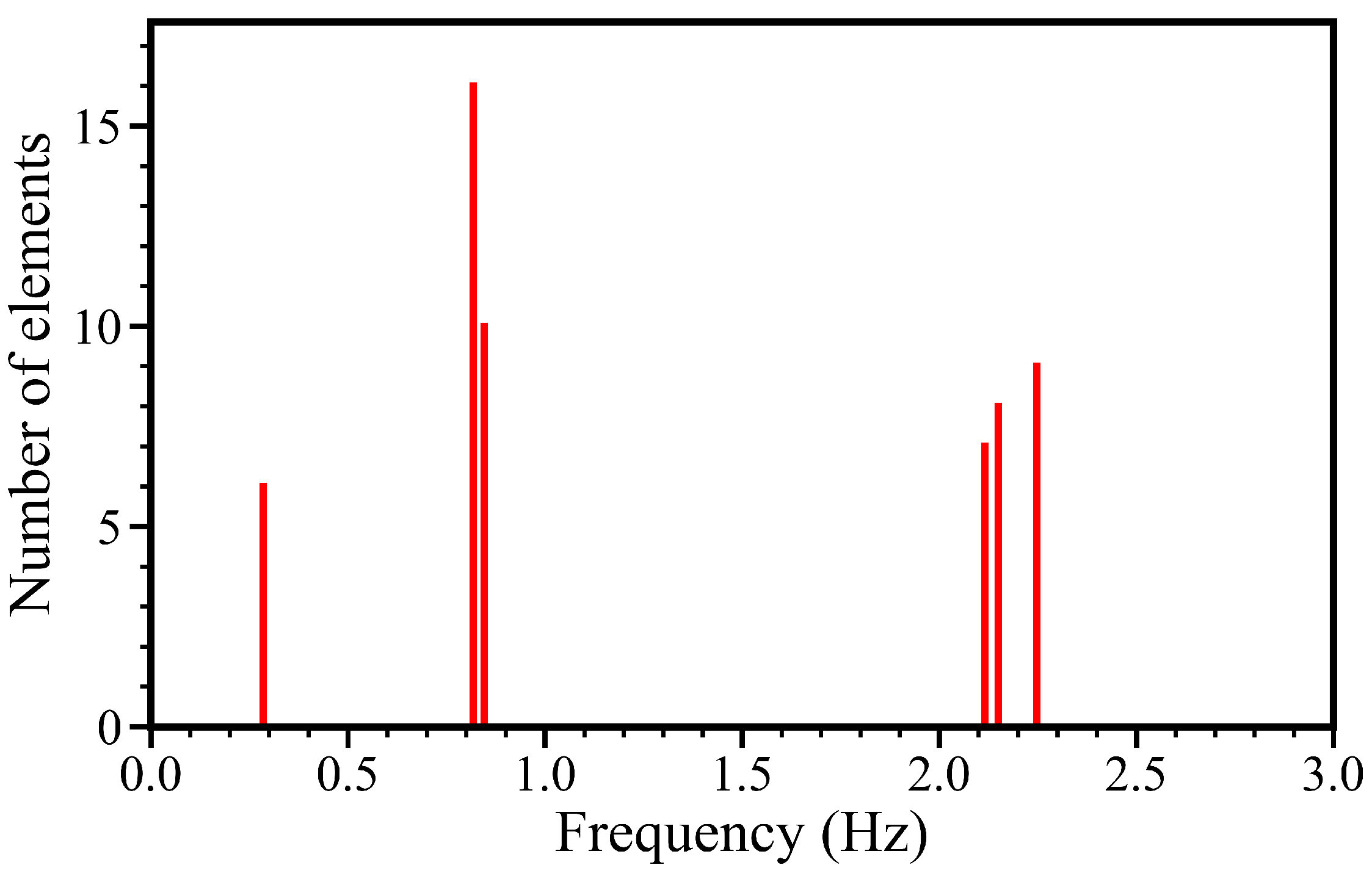
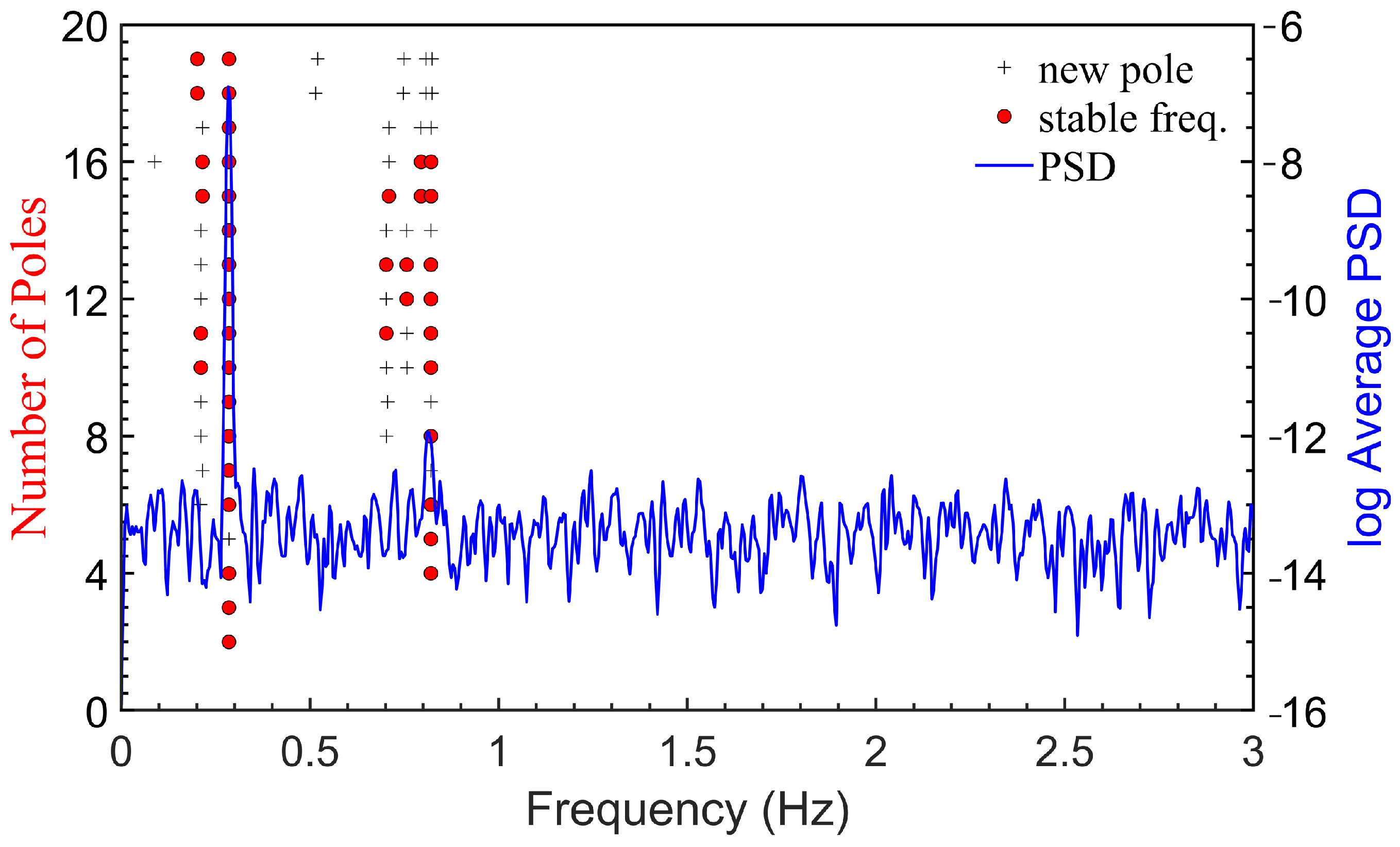
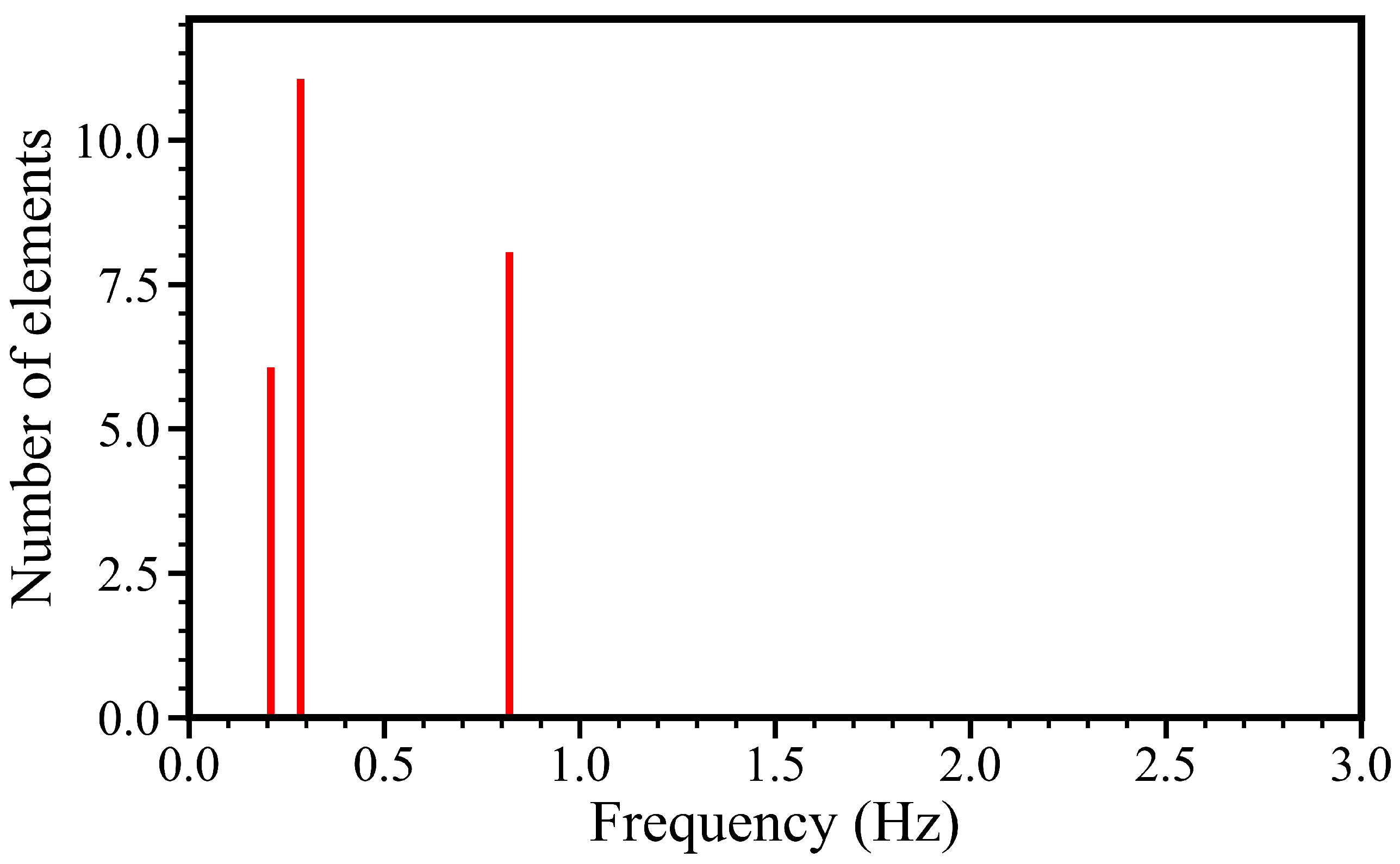
The stabilization diagram using 10 min of acceleration in the FA direction under a white noise condition is shown in Figure 6. Figure 7 shows the consequent selection of stable modes of the stability diagram in Figure 6 using the hierarchical clustering algorithm. Each cluster is characterized by a vertical line, the horizontal axis denotes the mean natural frequency of the cluster, and the vertical axis represents a height of the line equal to the number of elements inside the cluster. Clusters with more than 5 elements are considered to be physical modes of the structure.
Figure 6. Stabilization diagram using 10 min acceleration response in the FA direction of the OWT when excited by white noise.
Figure 7. Clustering results of the stable points under a white noise condition.
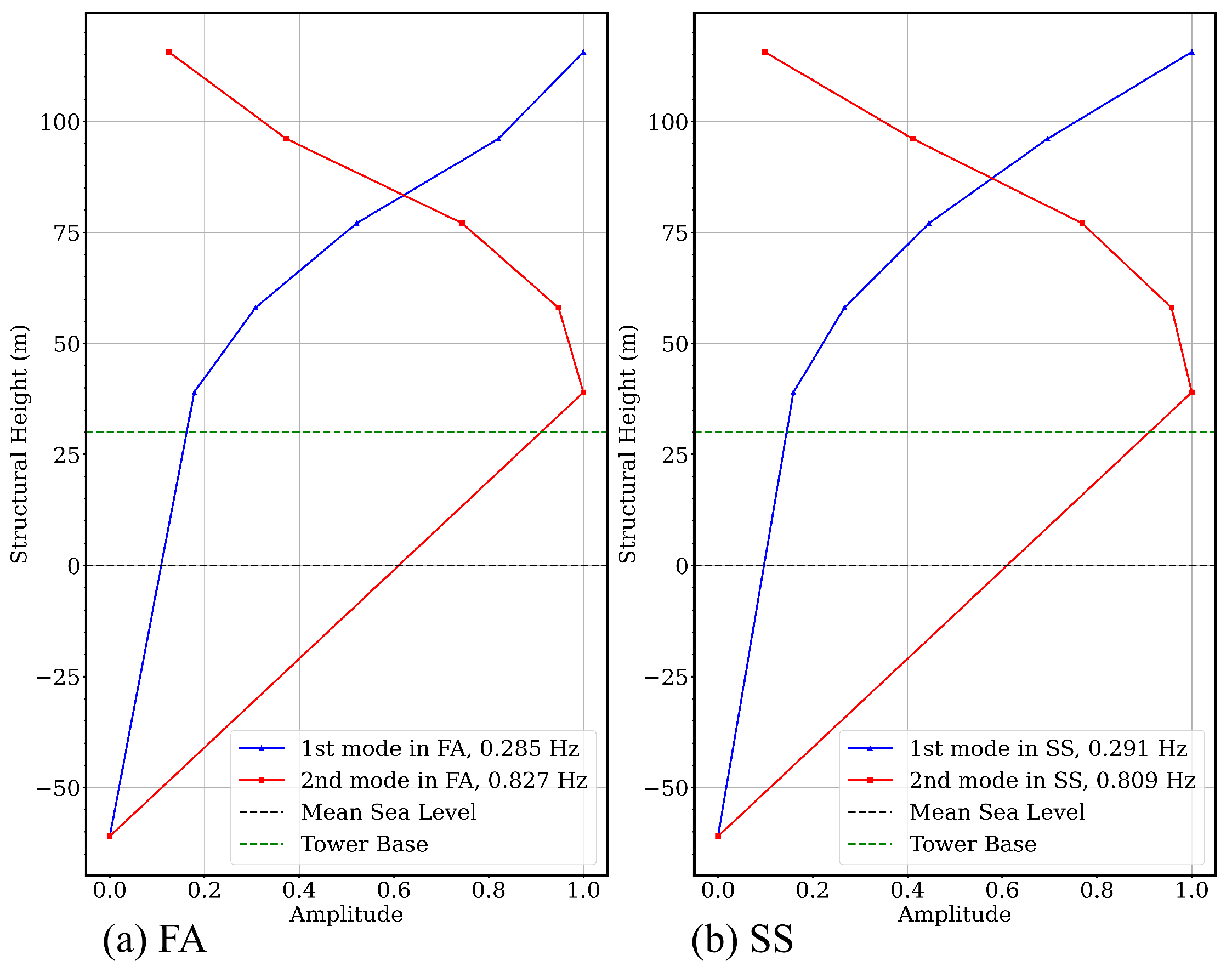
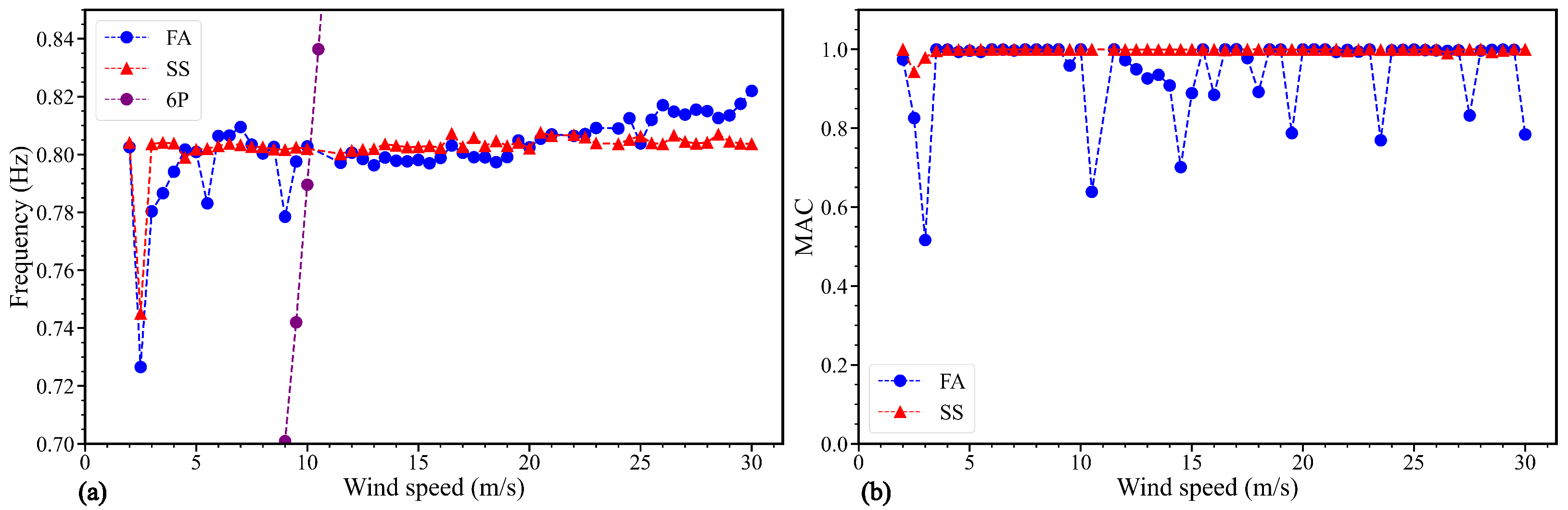
The first two FA/SS modes for the operating OWT were extracted using the peak-picking method based on tower acceleration responses computed by FAST under Gaussian white noise conditions [47]. The first two modal frequencies in FA direction of the overall structure were identified as 0.285 Hz and 0.827 Hz. The modal frequencies and shapes of these two modes were taken as the reference mode values. It should be emphasized that these two modes should be considered as the first two FA modes of the integrated global OWT structure under its operating condition. The reference mode shapes are shown in Figure 8. The MAC was introduced to describe the differences between the identified mode shape and the reference mode shape,
M A C = φ 1 T · φ 2 2 φ 1 T · φ 1 × φ 2 T · φ 2
where φ 1 and φ 2 are the two modes, with T denoting vector transpose. A MAC value closer to 1 indicates a higher similarity between the two modes.
Figure 8. The first two reference mode shapes in FA/SS directions.
The first two modes identified by SSI-COV and reference modes are presented in Table 5. The results indicate an accurate identification of the first two natural frequencies and modes in both the FA and SS directions for the white-noise excitation. The first modes for the FA and SS directions are crucial for fatigue life analysis, while the second modes in both directions contain valuable structural stiffness information for model correction and damage identification [26]. The identification of the higher-order modes under operational conditions is still challenging. Hence, the discussion in this study is limited to the first two modes.
Table 5. The first two FA/SS modes using SSI-COV and FAST.

6. Conclusions

This research explores the impact of various environmental operating conditions on the modal parameter identification for a jacket OWT structure. The numerical model of a 10MW jacket-typed OWT was set up using FAST.v8. The modal parameters under operating conditions were identified using an automated SSI-COV approach. In addition, experimental data based on a scaled 10MW jacket-type OWT was used for the verification of findings. The conclusions are as follows:
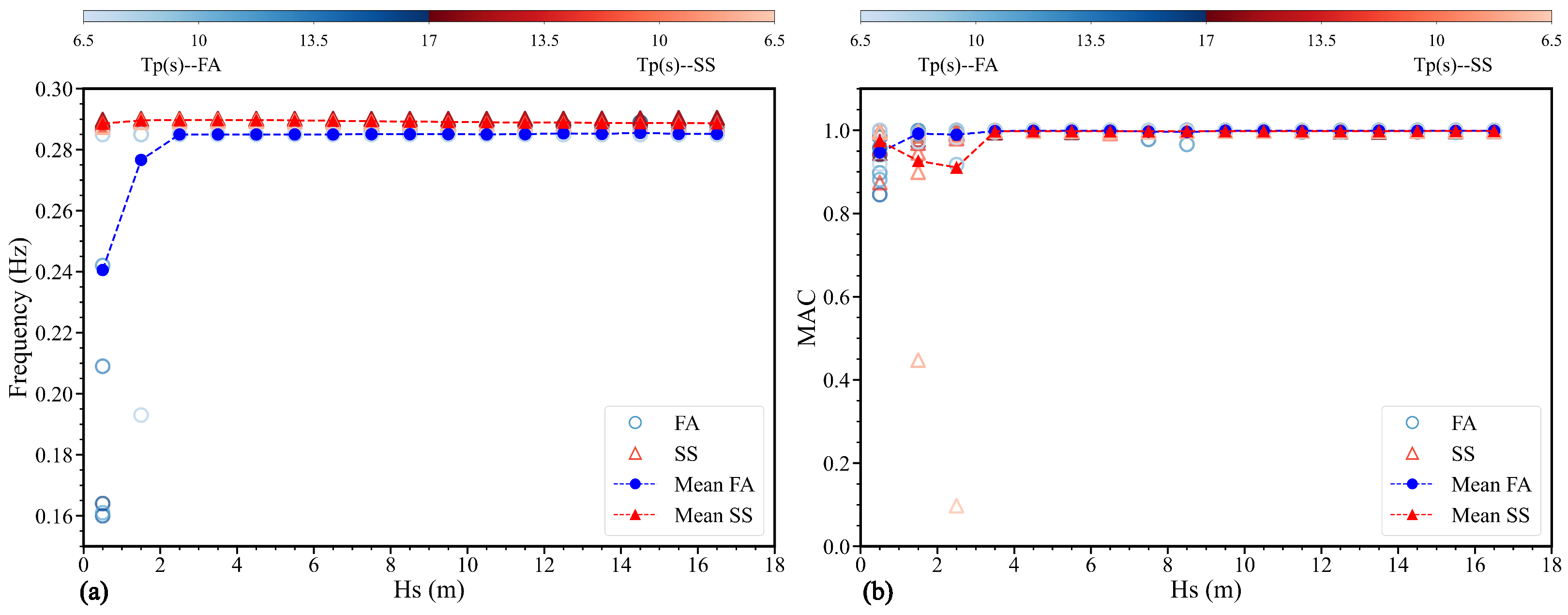
  • The first two modal parameters of the OWT structure can be accurately obtained in the majority of irregular wave conditions, except for the cases with very small Hs. Only irregular wave excitation has limited influence on the identification accuracy but requires a sufficiently strong energy.
  • Under gust wind conditions with different turbulence, the method performs well when wind speeds exceed the rated speed of 11.4 m/s. The 3P or 6P harmonic is between the first and second frequencies, which interfere with the identification results during the automatic identification process. But those 3P and 6P frequencies can be easily eliminated as they are known values. For wind speed near the rated value, the identification accuracy was highly affected due to the significant nonstationary effect, with the identified error reaching up to about 7%.
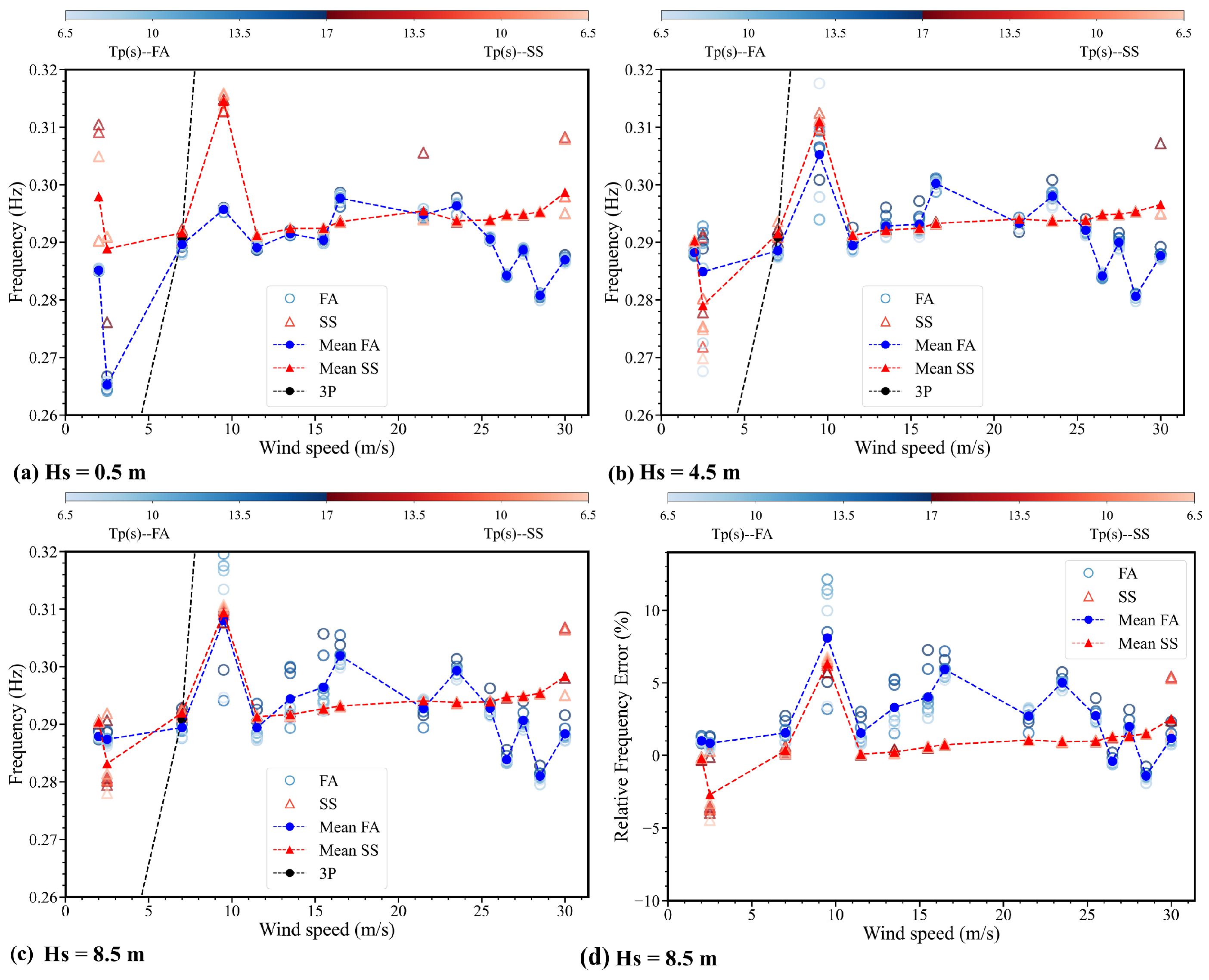
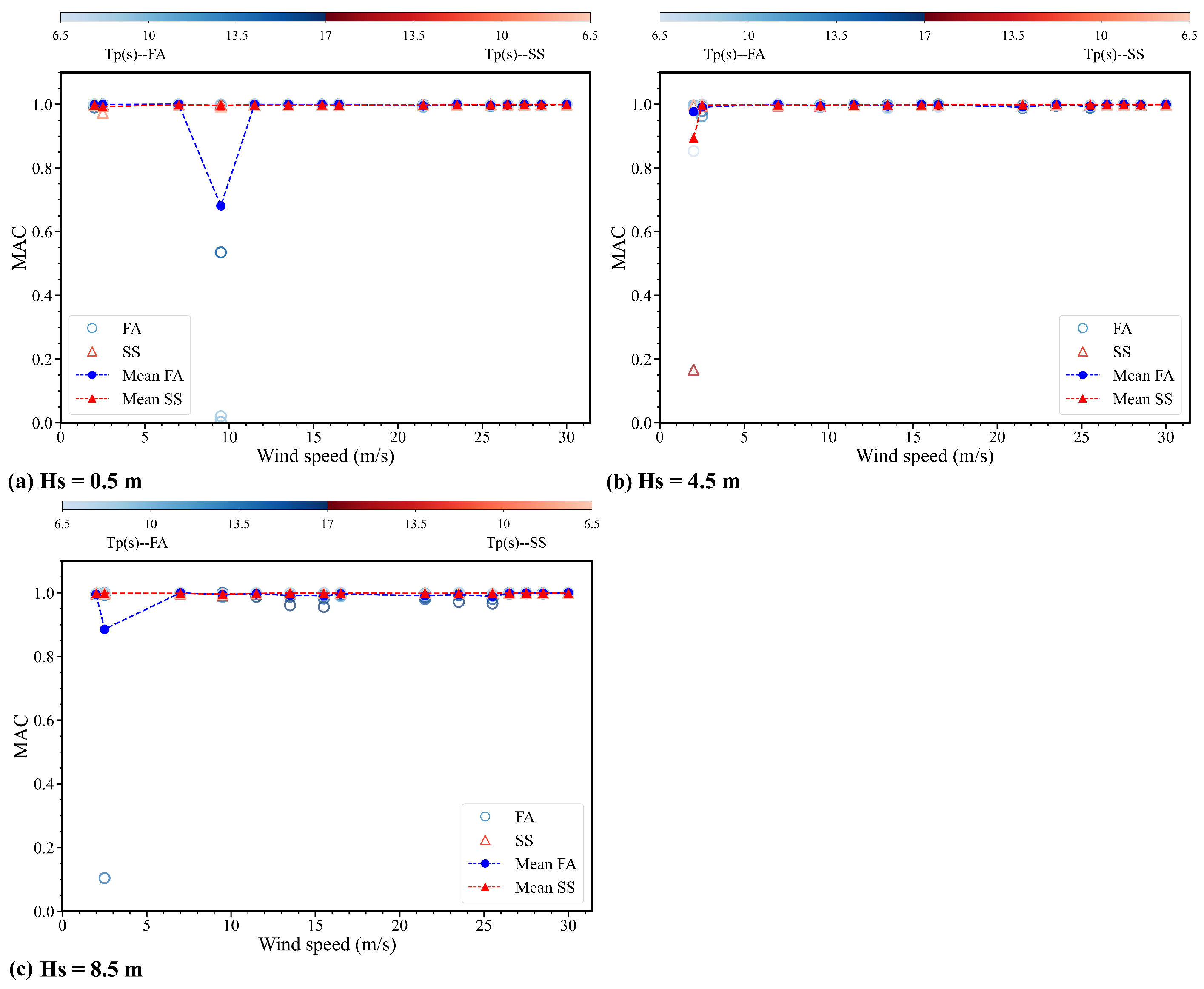
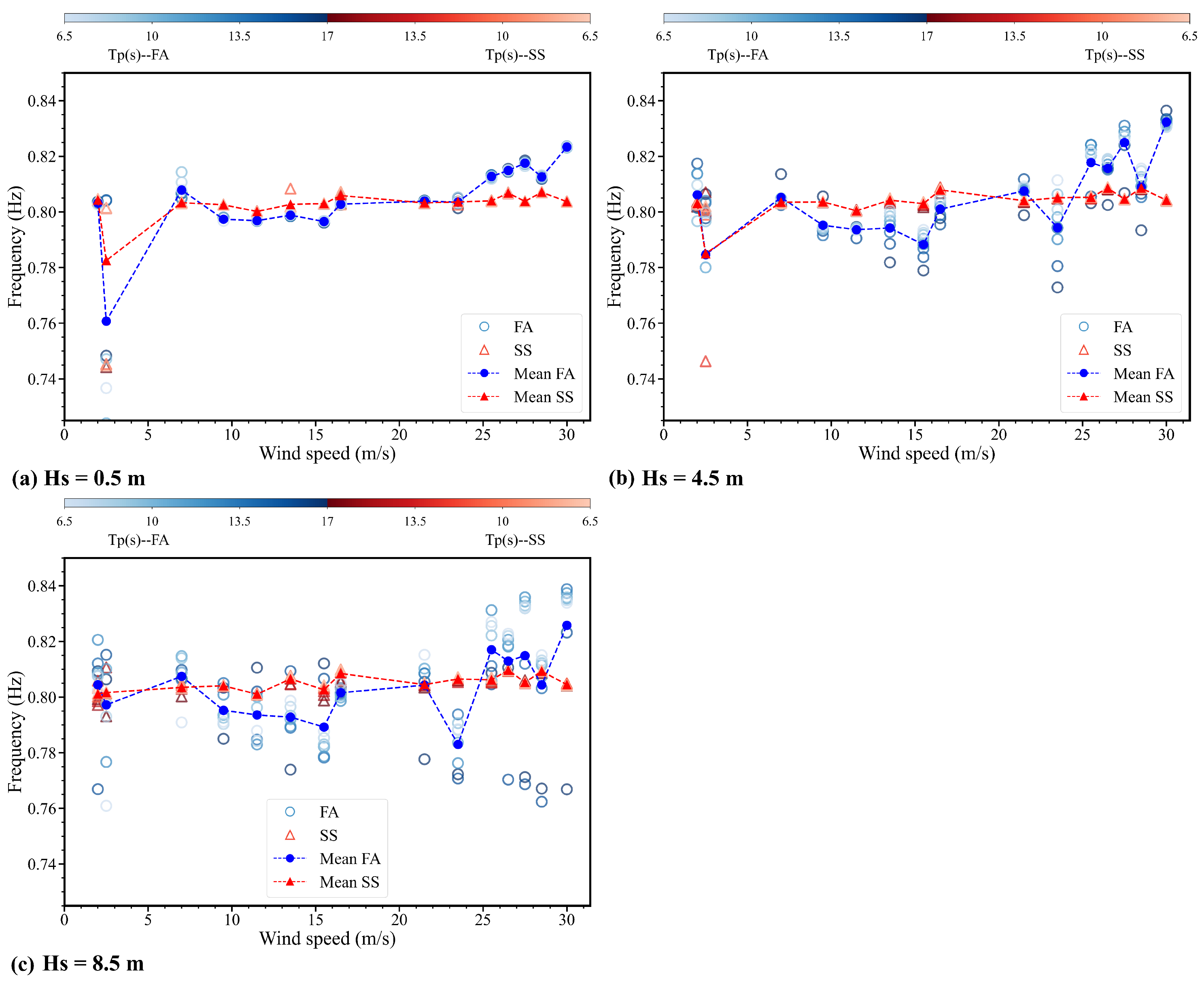
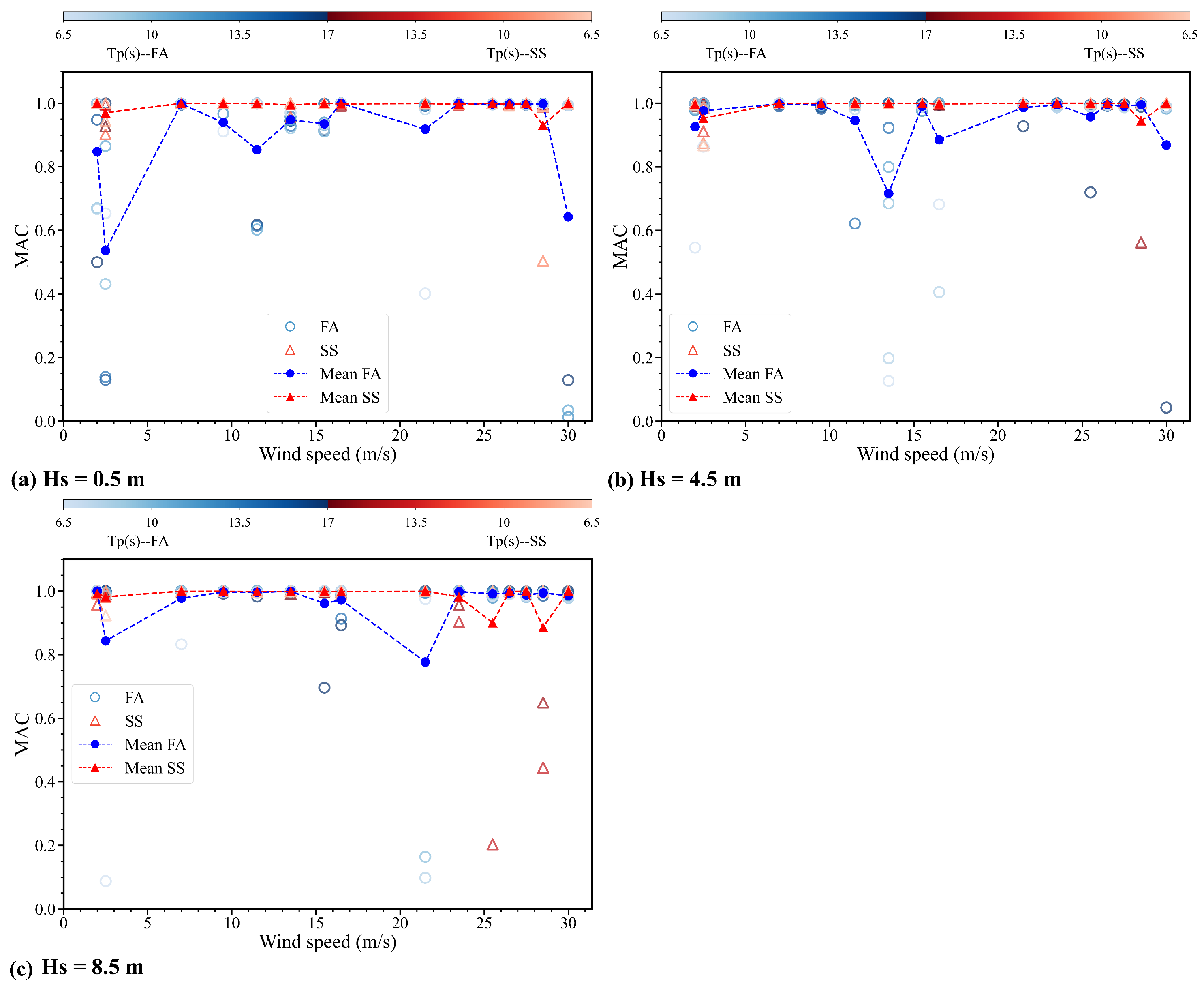
  • The first modes can be accurately identified for wind speed higher than the rated speed in conditions of gust wind combined with irregular waves. With the increase in Hs, the identification of the second mode in the FA varies greatly in different Tp conditions with errors fluctuating by approximately 8% compared to the reference modes. However, the second mode in the SS direction can be identified accurately.
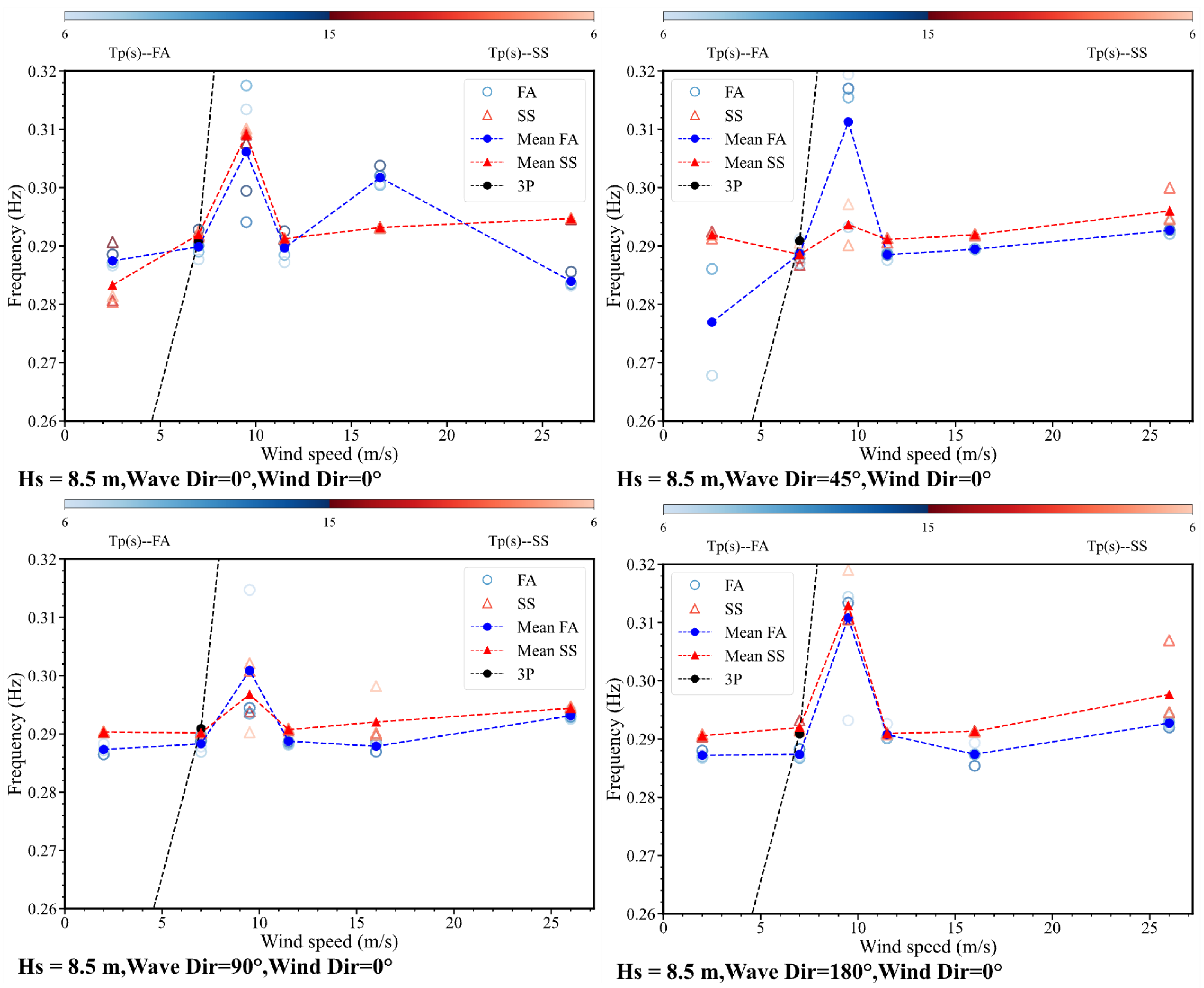
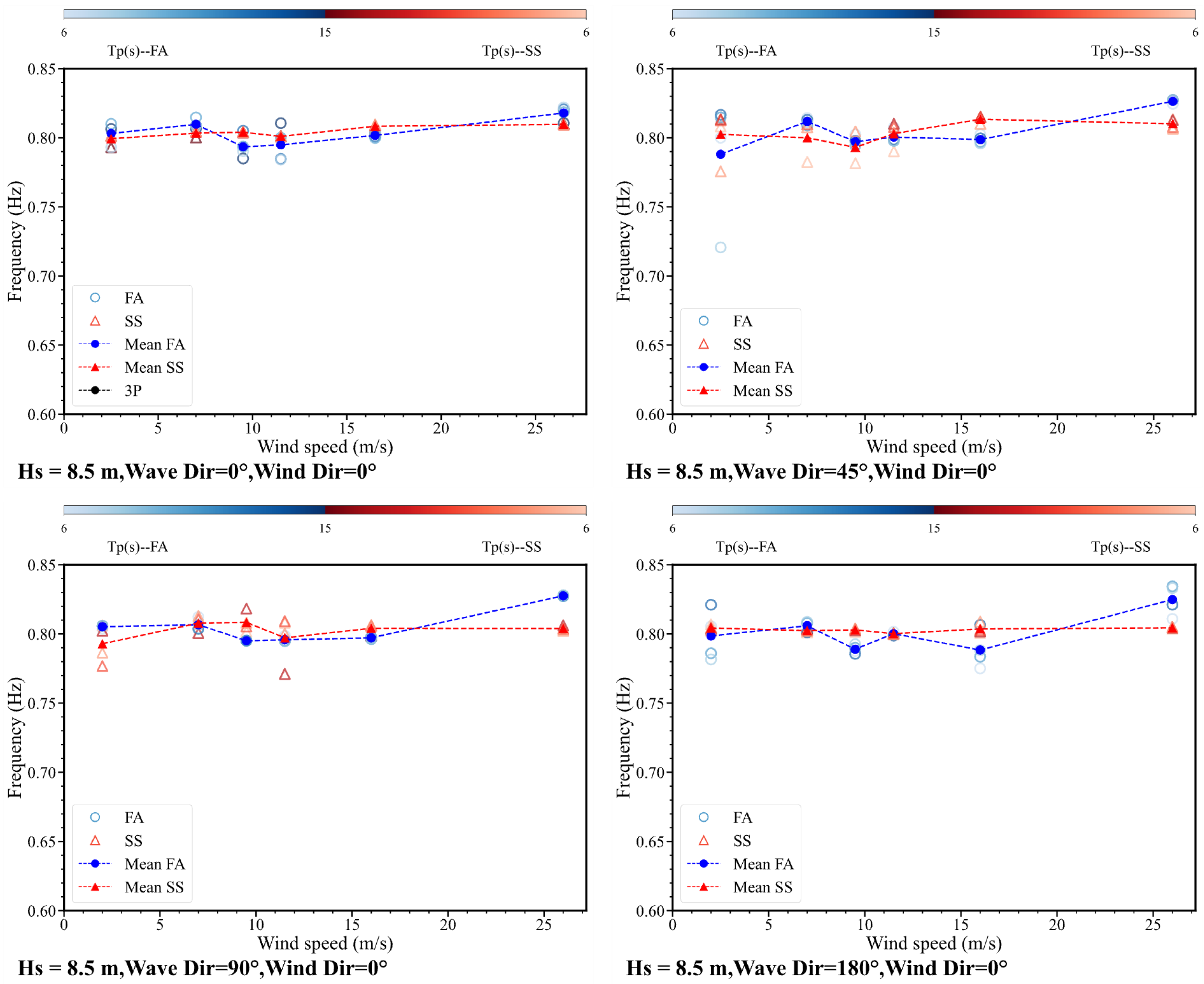
  • The method is more suitable for applications under broadband excitation, and the identification of first FA natural frequencies is improved by appropriately increasing the angles of wave and wind from 0° to 180°. However, the effect of rotor speed variation on the identification is significantly higher than that of the wave and wind pinch angle, especially when the rotor speed variance is large. The performance in SS consistently outperformed the FA direction under all conditions.
This study suggests the good applicability of SSI-COV method-based structural modal identification for wind speed larger than the rated speed with significant wave energy. Further studies might consider methodology modification to enhance the performance of modal identification under specific conditions with significant identification errors. Last but not least, it is challenging but very interesting to continue to validate relevant techniques using more comprehensive experimental data as well as in situ offshore monitoring and inspection data from engineering projects.

Author Contributions

Conceptualization, C.Z. and X.H.; methodology, C.Z. and C.L.; software, C.Z.; validation, C.Z.; formal analysis, C.Z. and X.H.; investigation, C.Z.; resources, C.Z. and X.H.; data curation, D.L.; writing—original draft preparation, C.Z.; writing—review and editing, X.H., B.J.L., S.S., W.S. and C.L.; visualization, C.Z.; supervision, X.L. and X.H.; project administration, X.L. and X.H.; funding acquisition, X.L. and X.H. All authors have read and agreed to the published version of the manuscript.

Funding

This research was funded by the National Key R&D Program of China (2022YFB4201300). This paper is also partially funded by Fundamental Research Funds for the Central Universities (DUT22RC(3)069).

Institutional Review Board Statement

Not applicable.

Data Availability Statement

Data that support the findings of this study are available from the corresponding author upon reasonable request.

Conflicts of Interest

The authors declare that they have no conflicts of interest.

References

  1. REN21. Renewables 2023 Global Status Report; Technical Report; REN21: Paris, France, 2023. [Google Scholar]
  2. Global Wind Energy Council. GWEC|Global Wind Report 2023; Technical Report; Global Wind Energy Council: Brussels, Belgium, 2023. [Google Scholar]
  3. European Wind Energy Association. EWEA| The Economics of Wind Energy; Technical Report; European Wind Energy Association: Brussels, Belgium, 2009. [Google Scholar]
  4. van Vondelen, A.A.; Navalkar, S.T.; Iliopoulos, A.; van der Hoek, D.C.; van Wingerden, J.W. Damping identification of offshore wind turbines using operational modal analysis: A review. Wind. Energy Sci. 2022, 7, 161–184. [Google Scholar] [CrossRef]
  5. Bajrić, A.; Høgsberg, J.; Rüdinger, F. Evaluation of damping estimates by automated operational modal analysis for offshore wind turbine tower vibrations. Renew. Energy. 2018, 116, 153–163. [Google Scholar] [CrossRef]
  6. Devriendt, C.; Magalhães, F.; Weijtjens, W.; De Sitter, G.; Cunha, Á.; Guillaume, P. Structural health monitoring of offshore wind turbines using automated operational modal analysis. Struct. Health Monit. 2014, 13, 644–659. [Google Scholar] [CrossRef]
  7. Zhang, G.; Ma, J.; Chen, Z.; Wang, R. Automated eigensystem realisation algorithm for operational modal analysis. J. Sound Vib. 2014, 333, 3550–3563. [Google Scholar] [CrossRef]
  8. Augustyn, D.; Smolka, U.; Tygesen, U.T.; Ulriksen, M.D.; Sørensen, J.D. Data-driven model updating of an offshore wind jacket substructure. Appl. Ocean Res. 2020, 104, 102366. [Google Scholar] [CrossRef]
  9. Moynihan, B.; Mehrjoo, A.; Moaveni, B.; McAdam, R.; Rüdinger, F.; Hines, E. System identification and finite element model updating of a 6 MW offshore wind turbine using vibrational response measurements. Renew. Energy. 2023, 219, 119430. [Google Scholar] [CrossRef]
  10. Xu, P.; Chen, J.; Li, J.; Fan, S.; Xu, Q. Using Bayesian updating for monopile offshore wind turbines monitoring. Ocean Eng. 2023, 280, 114801. [Google Scholar] [CrossRef]
  11. Andersen, P.; Brincker, R.; Peeters, B.; De Roeck, G.; Hermans, L.; Krämer, C. Comparison of system identification methods using ambient bridge test data. In Proceedings of the 17th International Modal Analysis Conference (IMAC), Kissimmee, FL, USA, 8–11 February 1999; Society for Experimental Mechanics: Aalborg, Denmark, 1999; pp. 1035–1041. [Google Scholar]
  12. Liu, X.; Luo, Y.; Karney, B.W.; Wang, Z.; Zhai, L. Virtual testing for modal and damping ratio identification of submerged structures using the PolyMAX algorithm with two-way fluid–structure Interactions. J. Fluids Struct. 2015, 54, 548–565. [Google Scholar] [CrossRef]
  13. Brincker, R.; Zhang, L.; Andersen, P. Modal identification of output-only systems using frequency domain decomposition. Smart Mater. Struct. 2001, 10, 441. [Google Scholar] [CrossRef]
  14. Cole, H.A., Jr. On-Line Failure Detection and Damping Measurement of Aerospace Structures by Random Decrement Signatures; Technical Report; NASA: Washington, DC, USA, 1973. [Google Scholar]
  15. Juang, J.N.; Pappa, R.S. Effects of noise on modal parameters identified by the eigensystem realization algorithm. J. Guid. Control Dyn. 1986, 9, 294–303. [Google Scholar] [CrossRef]
  16. James, G.H. The natural excitation technique (NExT) for modal parameter extraction from operating structures. J. Anal. Exp. Modal. Anal. 1995, 10, 260. [Google Scholar]
  17. Lardies, J. Modal parameter identification based on ARMAV and state–space approaches. Arch. Appl. Mech. 2010, 80, 335–352. [Google Scholar] [CrossRef]
  18. Peeters, B.; De Roeck, G. Reference-based stochastic subspace identification for output-only modal analysis. Mech. Syst. Signal Process. 1999, 13, 855–878. [Google Scholar] [CrossRef]
  19. Van Overschee, P.; De Moor, B. Subspace algorithms for the stochastic identification problem. Automatica 1993, 29, 649–660. [Google Scholar] [CrossRef]
  20. Ulriksen, M.D.; Tcherniak, D.; Kirkegaard, P.H.; Damkilde, L. Operational modal analysis and wavelet transformation for damage identification in wind turbine blades. Struct. Health Monit. 2016, 15, 381–388. [Google Scholar] [CrossRef]
  21. Lorenzo, E.D.; Petrone, G.; Manzato, S.; Peeters, B.; Desmet, W.; Marulo, F. Damage detection in wind turbine blades by using operational modal analysis. Struct. Health Monit. 2016, 15, 289–301. [Google Scholar] [CrossRef]
  22. Shirzadeh, R.; Devriendt, C.; Bidakhvidi, M.A.; Guillaume, P. Experimental and computational damping estimation of an offshore wind turbine on a monopile foundation. J. Wind. Eng. Ind. Aerodyn. 2013, 120, 96–106. [Google Scholar] [CrossRef]
  23. Weijtjens, W.; Verbelen, T.; Capello, E.; Devriendt, C. Vibration based structural health monitoring of the substructures of five offshore wind turbines. Procedia Eng. 2017, 199, 2294–2299. [Google Scholar] [CrossRef]
  24. Zhou, L.; Li, Y.; Liu, F.; Jiang, Z.; Yu, Q.; Liu, L. Investigation of dynamic characteristics of a monopile wind turbine based on sea test. Ocean Eng. 2019, 189, 106308. [Google Scholar] [CrossRef]
  25. Zahid, F.B.; Ong, Z.C.; Khoo, S.Y. A review of operational modal analysis techniques for in-service modal identification. J. Braz. Soc. Mech. Sci. Eng. 2020, 42, 398. [Google Scholar] [CrossRef]
  26. Song, M.; Mehr, N.P.; Moaveni, B.; Hines, E.; Ebrahimian, H.; Bajric, A. One year monitoring of an offshore wind turbine: Variability of modal parameters to ambient and operational conditions. Eng. Struct. 2023, 297, 117022. [Google Scholar] [CrossRef]
  27. Song, M.; Moaveni, B.; Ebrahimian, H.; Hines, E.; Bajric, A. Joint parameter-input estimation for digital twinning of the Block Island wind turbine using output-only measurements. Mech. Syst. Signal Process. 2023, 198, 110425. [Google Scholar] [CrossRef]
  28. Magalhães, F.; Cunha, A.; Caetano, E. Online automatic identification of the modal parameters of a long span arch bridge. Mech. Syst. Signal Process. 2009, 23, 316–329. [Google Scholar] [CrossRef]
  29. Brincker, R.; Ventura, C. Introduction to Operational Modal Analysis; John Wiley & Sons: Hoboken, NJ, USA, 2015. [Google Scholar]
  30. Tygesen, U.; Worden, K.; Rogers, T.; Manson, G.; Cross, E. State-of-the-art and future directions for predictive modelling of offshore structure dynamics using machine learning. In Dynamics of Civil Structures, Volume 2: Proceedings of the 36th IMAC, A Conference and Exposition on Structural Dynamics 2018; Springer: Berlin/Heidelberg, Germany, 2019; pp. 223–233. [Google Scholar]
  31. Popko, W.; Vorpahl, F.; Antonakas, P. Investigation of local vibration phenomena of a jacket sub-structure caused by coupling with other components of an offshore wind turbine. In Proceedings of the ISOPE International Ocean and Polar Engineering Conference, Anchorage, AK, USA, 30 June–5 July 2013; ISOPE: Mountain View, CA, USA, 2013; p. ISOPE–I. [Google Scholar]
  32. Van Der Tempel, J. Design of Support Structures for Offshore Wind Turbines; TU Delft: Delft, The Netherland, 2006. [Google Scholar]
  33. Dong, X.; Lian, J.; Yang, M.; Wang, H. Operational modal identification of offshore wind turbine structure based on modified stochastic subspace identification method considering harmonic interference. J. Renew. Sustain. Energy 2014, 6, 033128. [Google Scholar] [CrossRef]
  34. Dong, X.; Lian, J.; Wang, H.; Yu, T.; Zhao, Y. Structural vibration monitoring and operational modal analysis of offshore wind turbine structure. Ocean Eng. 2018, 150, 280–297. [Google Scholar] [CrossRef]
  35. Partovi-Mehr, N.; Branlard, E.; Song, M.; Moaveni, B.; Hines, E.M.; Robertson, A. Sensitivity analysis of modal parameters of a jacket offshore wind turbine to operational conditions. J. Mar. Sci. Eng. 2023, 11, 1524. [Google Scholar] [CrossRef]
  36. Shirzadeh, R.; Weijtjens, W.; Guillaume, P.; Devriendt, C. The dynamics of an offshore wind turbine in parked conditions: A comparison between simulations and measurements. Wind Energy 2015, 18, 1685–1702. [Google Scholar] [CrossRef]
  37. Zhao, Y.; Pan, J.; Huang, Z.; Miao, Y.; Jiang, J.; Wang, Z. Analysis of vibration monitoring data of an onshore wind turbine under different operational conditions. Eng. Struct. 2020, 205, 110071. [Google Scholar] [CrossRef]
  38. Peeters, B. System Identification and Damage Detection in Civil Engineering. Ph.D. Thesis, Katholieke Universiteit Leuven, Leuven, Belgium, 2000. [Google Scholar]
  39. Cheynet, E.; Jakobsen, J.B.; Snæbjörnsson, J. Damping estimation of large wind-sensitive structures. Procedia Eng. 2017, 199, 2047–2053. [Google Scholar] [CrossRef]
  40. Moser, P.; Moaveni, B. Environmental effects on the identified natural frequencies of the Dowling Hall Footbridge. Mech. Syst. Signal Process. 2011, 25, 2336–2357. [Google Scholar] [CrossRef]
  41. Bak, C.; Zahle, F.; Bitsche, R.; Kim, T.; Yde, A.; Henriksen, L.C.; Hansen, M.H.; Blasques, J.P.A.A.; Gaunaa, M.; Natarajan, A. The DTU 10-MW reference wind turbine. In Proceedings of the Danish Wind Power Research 2013, Fredericia, Denmark, 27–28 May 2013. [Google Scholar]
  42. Lu, D.; Wang, W.; Li, X. Experimental study of structural vibration control of 10-MW jacket offshore wind turbines using tuned mass damper under wind and wave loads. Ocean Eng. 2023, 288, 116015. [Google Scholar] [CrossRef]
  43. Jonkman, B.; Jonkman, J. FAST User’s Guide: Version 8.16.00; Technical Report; National Renewable Energy Laboratory: Golden, CO, USA, 2016. [Google Scholar]
  44. Bir, G. User’s Guide to BModes (Software for Computing Rotating Beam-Coupled Modes); Technical Report; National Renewable Energy Lab. (NREL): Golden, CO, USA, 2005. [Google Scholar]
  45. Hasselmann, K.; Barnett, T.P.; Bouws, E.; Carlson, H.; Cartwright, D.E.; Enke, K.; Ewing, J.; Gienapp, A.; Hasselmann, D.; Kruseman, P.; et al. Measurements of wind-wave growth and swell decay during the Joint North Sea Wave Project (JONSWAP). Dtsch. Hydrogr. Z. 1973, A12, 95. [Google Scholar]
  46. Jonkman, B. Turbsim User’s Guide v2. 00.00; Technical Report; National Renewable Energy Lab. (NREL): Golden, CO, USA, 2014. [Google Scholar]
  47. Zhang, T.; Wang, W.; Li, X.; Wang, B. Vibration mitigation in offshore wind turbine under combined wind-wave-earthquake loads using the tuned mass damper inerter. Renew. Energy 2023, 216, 119050. [Google Scholar] [CrossRef]
  48. Huan, C.; Lu, D.; Zhao, S.; Wang, W.; Shang, J.; Li, X.; Liu, Q. Experimental study of ultra-large jacket offshore wind turbine under different operational states based on joint aero-hydro-structural elastic similarities. Front. Mar. Sci. 2022, 9, 915591. [Google Scholar] [CrossRef]
Disclaimer/Publisher’s Note: The statements, opinions and data contained in all publications are solely those of the individual author(s) and contributor(s) and not of MDPI and/or the editor(s). MDPI and/or the editor(s) disclaim responsibility for any injury to people or property resulting from any ideas, methods, instructions or products referred to in the content.

Article Metrics

Citations

Article Access Statistics

Multiple requests from the same IP address are counted as one view.